3.1. Network Formation Using PA-11
A concept proof was performed using polyamide-11 particles designed for 3D printing application. PA11 has a relatively low melting temperature (200 °C) due to its high methylene/amide group ratio [
21,
28], at the same time exhibiting strong mechanical performance, print quality, and physicochemical properties of PA11 powder (~58 μm) used in 3D printing, highlighting PA11′s tensile strength and low coefficient of friction, making it a good candidate for industrial applications [
27].
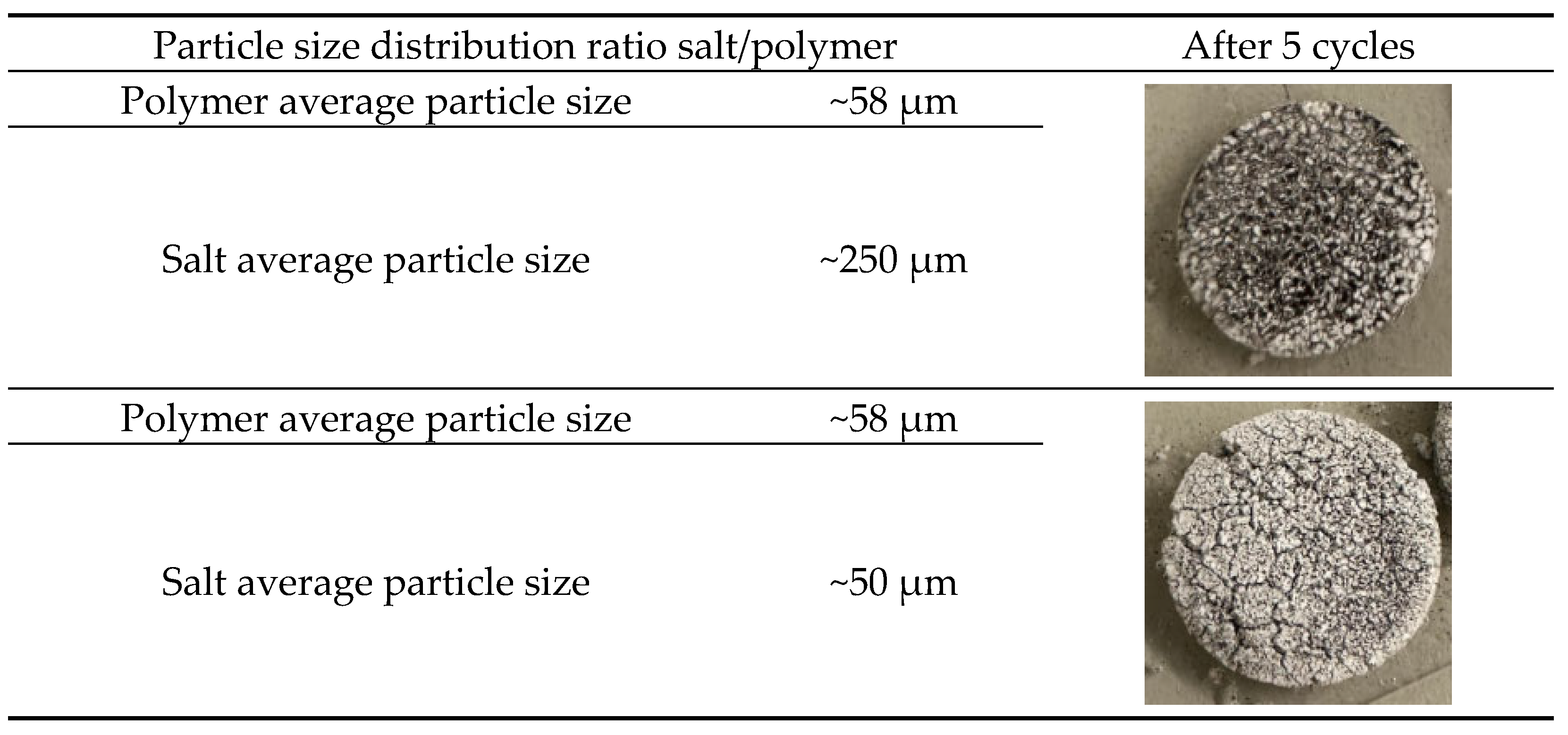
To determine the optimal salt particle size for network formation, a preliminary test was conducted using two configurations of K2CO3·1.5H2O provided by Evonik Functional Solutions GmbH: a fine powder with an average particle size of 50 μm and a coarser powder with an average particle size of 250 μm.
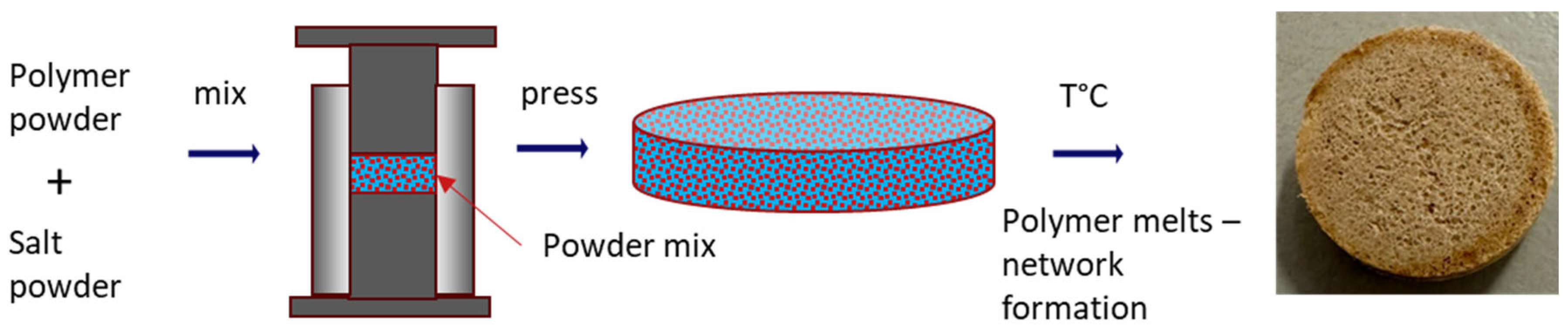
Two types of tablets were prepared as described in
Section 2.2. The first type contained 10 wt% PA11 powder and 90 wt% fine salt powder (50 μm), while the second type contained 10 wt% PA11 powder and 90 wt% coarse salt powder (250 μm). Both types of tablets were subjected to hydration/dehydration cycling, as described in
Section 2.3.3.
The visual comparison of tablets allows to conclude that network formation was significantly weaker when the salt particles were similar in size to the polymer particles, resulting in partial tablet disintegration and cracking after 5 cycles. In contrast, samples prepared with salt particles larger than the polymer particles exhibited more stable network formation without visible cracks and tablet remaining intact (
Figure 2).
This outcome can be attributed to the difference in particle sizes between the salt and the polymer. When the polymer particles are much smaller than the salt particles, the polymer particles fill up the void space between the salt particles more efficiently. Therefore, a more continuous network of polymeric particles is present. In contrast, smaller salt particles have a higher surface area, requiring more polymer for adequate coverage. If the polymer content is insufficient, this can result in weaker network structures [
28]. Based on these findings, the fine salt powder (50 μm) was excluded from further investigation. Instead, the 250 μm salt, which demonstrated more stable network formation with PA11 powder (58 μm), was selected. To ensure uniform polymer network formation, this salt was sieved to remove particles larger than 300 μm, preventing the formation of excessively large crystals that could disrupt the polymer matrix. Further investigation was conducted using ≤300 μm salt fraction.
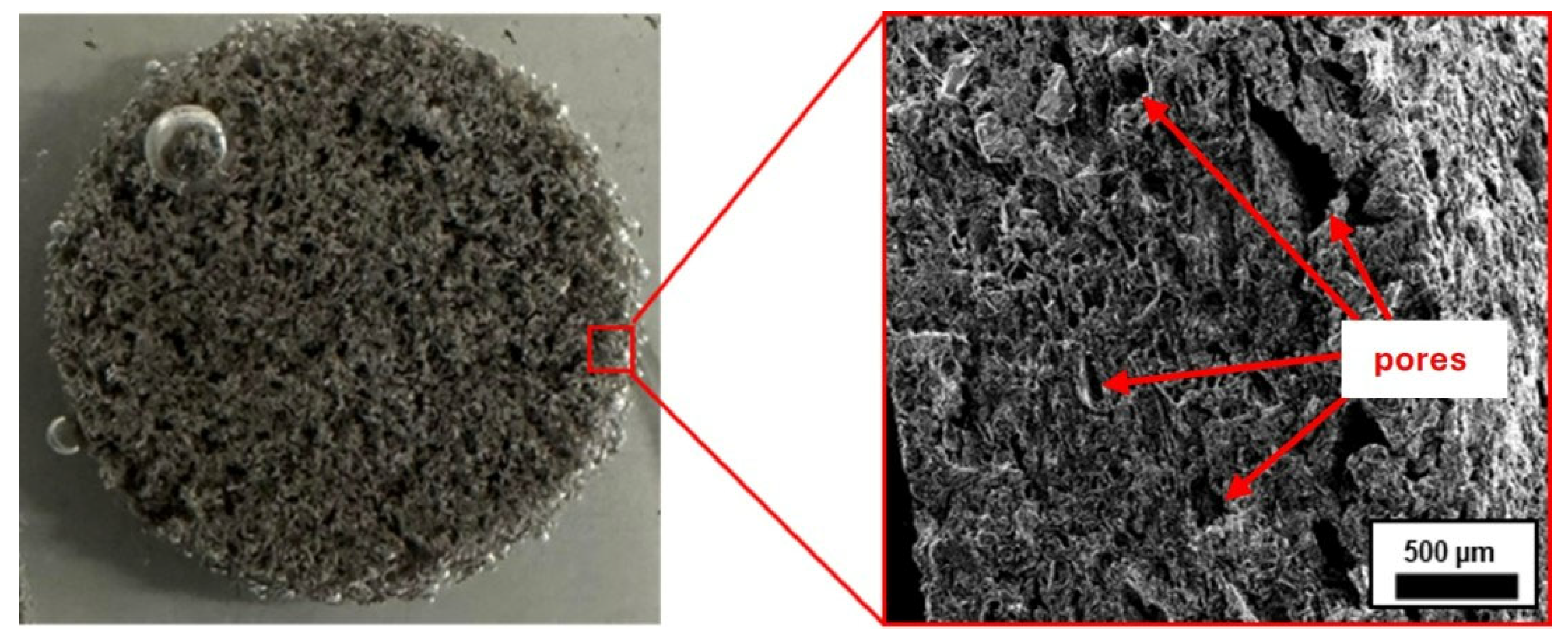
To demonstrate that melting polymeric powder inside the tablet provides an intact polymeric network, tablet was repeatedly placed in water until all salt was dissolved and a pure polymeric network was obtained (
Figure 3).
As can be seen, the remaining structure appears as a cohesive matrix, indicating the formation of a continuous polymeric phase resistant after salt dissolution. Although the pore sizes vary, they do not disrupt the integrity of the network.
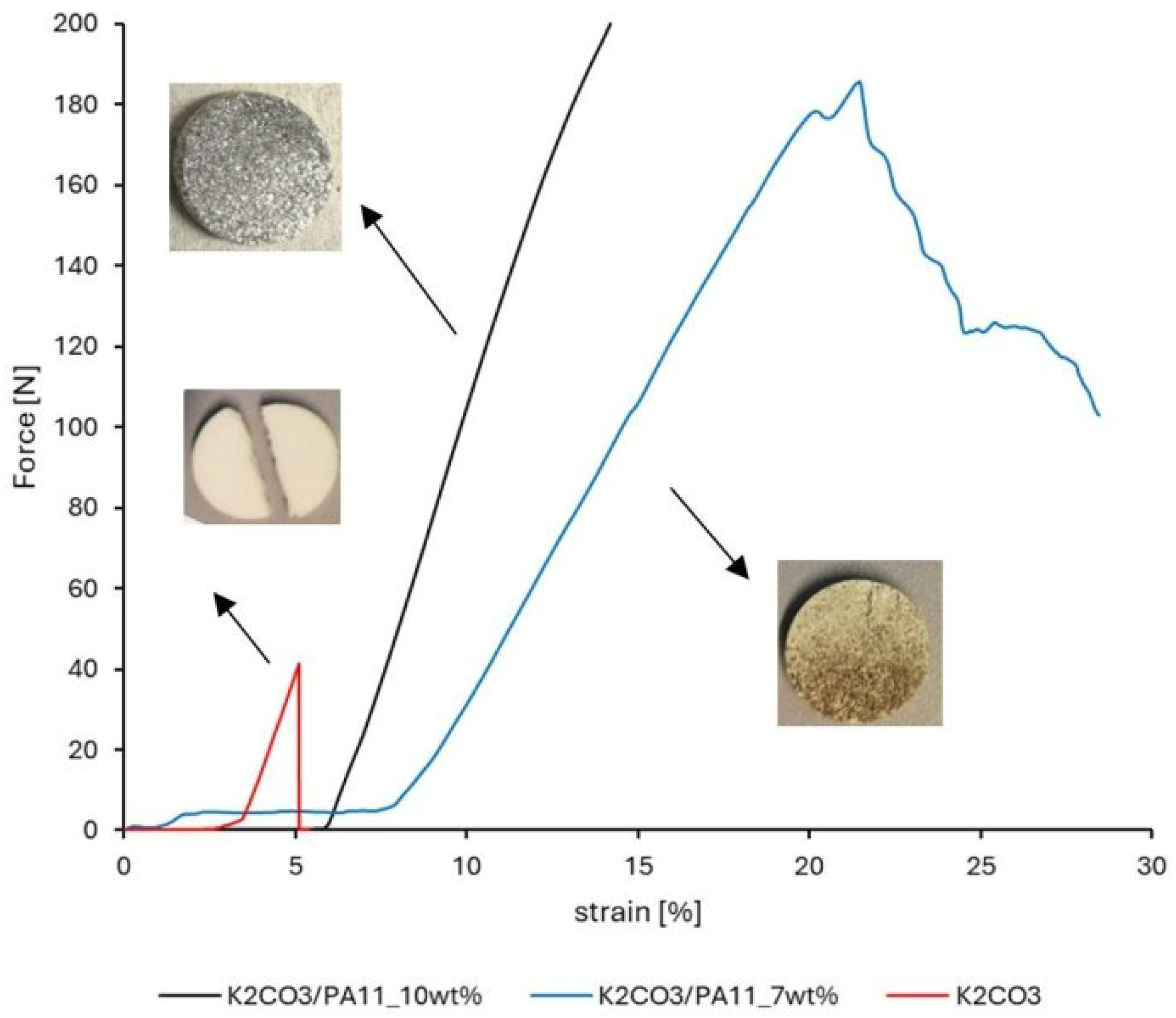
The mechanical stability of salt/polymer tablets was evaluated by a compression test. Experiments were performed with tablets having a weight fraction of polymer of 0, 7 and 10% (four to five tablets per each sample). It was observed that increased mechanical stability correlates with increasing the amount of polymer in tablet (
Figure 4).
It was determined that the minimal amount of polymeric powder in salt/powder mixture that provides network formation varies from 7 to 10 wt%. A polymer content of 10 wt% was selected for further investigation, as it provided sufficient cohesion to prevent tablet cracking. Further increasing the polymer fraction would reduce the active salt content, while lower polymer fractions did not provide effective stabilization.
3.2. Comparing Polymers
For further investigation, different thermoplastic polymers were compared. Thermoplastic polymers were selected based on literature [
29,
30,
31,
32,
33] (
Table 1). The main criteria were melting temperature and elongation at break. As the upper limit of temperature during the cycling varies up to 160 °C [
3], it is preferable that melting point of the polymer is above this range. The elongation at break is a parameter, which decides whether a flexible or rigid polymer network can be formed. During tablet volume expansion the flexibility or rigidity can have both positive and negative effects. A rigid network may potentially reduce volume expansion but can lead to crack formation, where a flexible network may potentially keep the tablet intact during swelling.
The selection of polyamide 11 (PA-11), polyetherimide (PEI), and polyvinylidene fluoride (PVDF) as polymer matrices for salt composites via melting-based processing is justified based on their melting temperatures, elongation at break, and water uptake properties, as outlined in
Table 1.
While these three polymers were chosen for their properties, the insights gained from their performance can guide the selection of other thermoplastics with similar characteristics for further optimization. This approach enables the development of a mechanically stable, thermally resistant, and adaptable polymer matrix suitable for salt composite applications in thermal energy storage.
A key requirement for the polymer matrix is to remain thermally stable throughout cycling, which involves temperatures up to 160 °C. Therefore, the melting temperature of the selected polymers must be above this range to prevent premature softening or deformation.
PA-1, PEI and PVDF all have melting points sufficiently above 160 °C, ensuring they retain their structural integrity during thermal cycling. PEI, with the highest softening temperature, offers the most thermal stability, whereas PVDF, with a slightly lower melting point, still remains within an acceptable range based on empirical processing observations. Elongation at break is a critical factor for managing tablet volume expansion during hydration and dehydration cycles. PA-11 offers high flexibility, which can help accommodate tablet swelling and reduce crack formation. This makes it a good candidate for systems where mechanical adaptability is beneficial. PEI provides a rigid but not excessively brittle network, which may help in reducing volume expansion while still maintaining some degree of elasticity to withstand stress without immediate failure. PVDF exhibits variable flexibility, depending on processing conditions. Water uptake can influence mechanical stability and long-term durability of the polymer-salt composite. PA-11 allows some moisture absorption, which may help in enhancing adhesion to the salt phase but must be controlled to avoid polymer degradation. PEI provides minimal water uptake, making it more stable in humid environments. PVDF offers a range of water resistance, where lower uptake values make it highly hydrophobic, providing chemical stability and moisture resistance in the composite.
The polymers were chosen to represent distinct classes of thermoplastics, with differing chemical structures and mechanical behavior—from flexible, partially hydrophilic PA-11, to chemically resistant and elastic PVDF, and rigid, highly stable PEI. This diversity allowed a comparative evaluation of polymer influence on network formation, rather than focusing on identifying a single optimal polymer. This study therefore serves as a proof of concept for polymer-assisted stabilization of salt hydrates and provides insights into structure–property relationships for future material optimization in scalable TCES systems. In addition to these properties, the selection of PA-11, PEI, and PVDF was influenced by their availability in powder form within the particle size range of 25–60 µm, comparable to the salt particles (50–250 µm). This was essential for achieving homogeneous mixing and consistent network formation throughout the composite.
The selected polymers provide variety of properties within selected range in terms of thermal, mechanical, and water absorption properties:
As described in
Section 3.1, the polymer content in the tablets was selected as 10 wt%. To ensure a fair comparison between different polymers, all tablet samples were prepared with the same polymer content. The following formulations were prepared as detailed in
Section 2.2: K
2CO
3/PA11 (10 wt%), K
2CO
3/PEI (10 wt%), and K
2CO
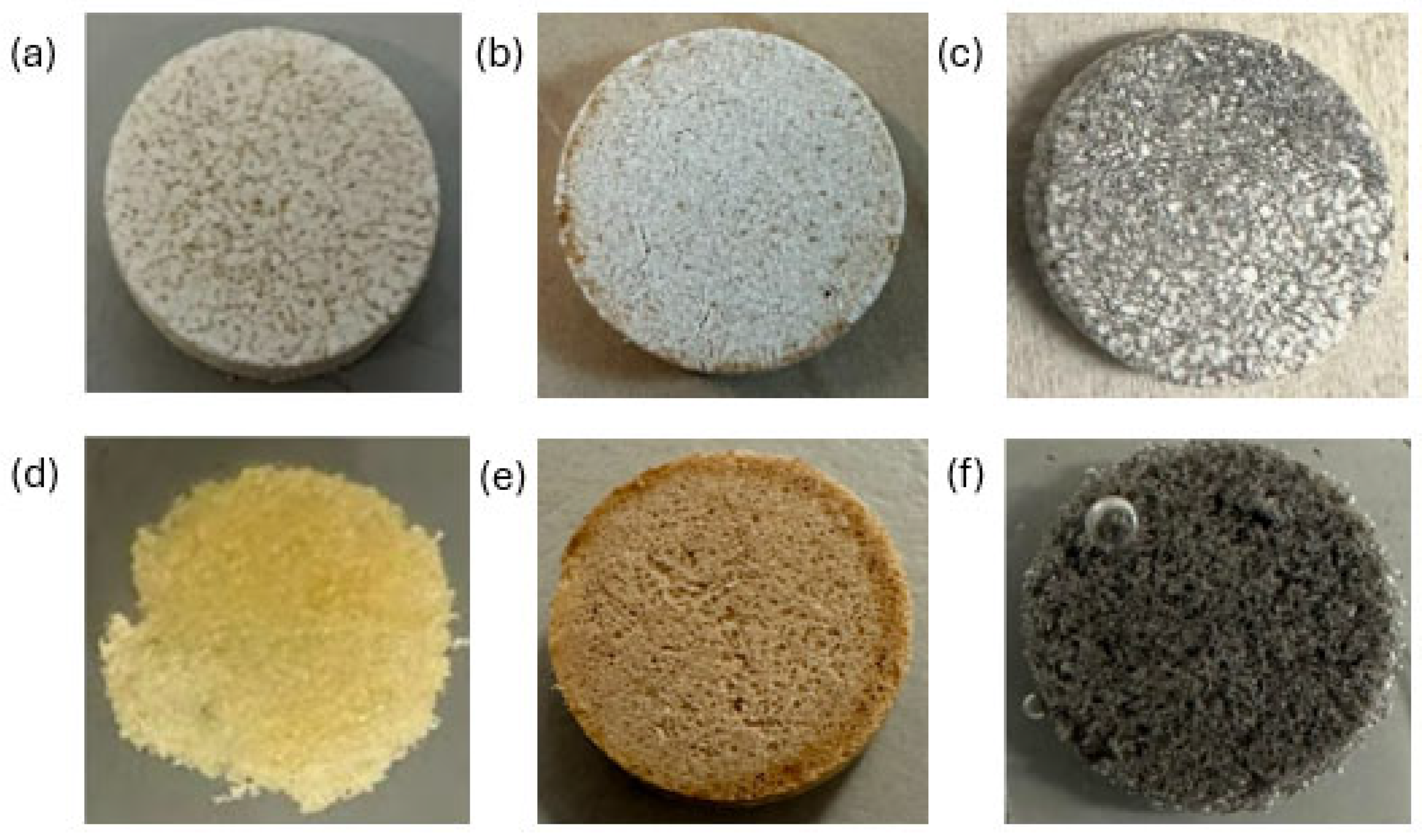
3/PVDF (10 wt%). To demonstrate intact polymeric networks, tablets were repeatedly placed in water until all salt was dissolved and a pure polymeric networks were obtained. The polymeric networks are shown in
Figure 5.
Further investigation of the tablets was performed comparing the following tablet samples: K
2CO
3/PA11 10 wt%, K
2CO
3/PEI 10 wt%, K
2CO
3/PVDF 10 wt%, prepared as described in
Section 2.2. The investigation of tablets properties such as mechanical stability, porosity, kinetics was conducted measuring characteristics over hydration/dehydration cycling, performed as described in
Section 2.3.3.
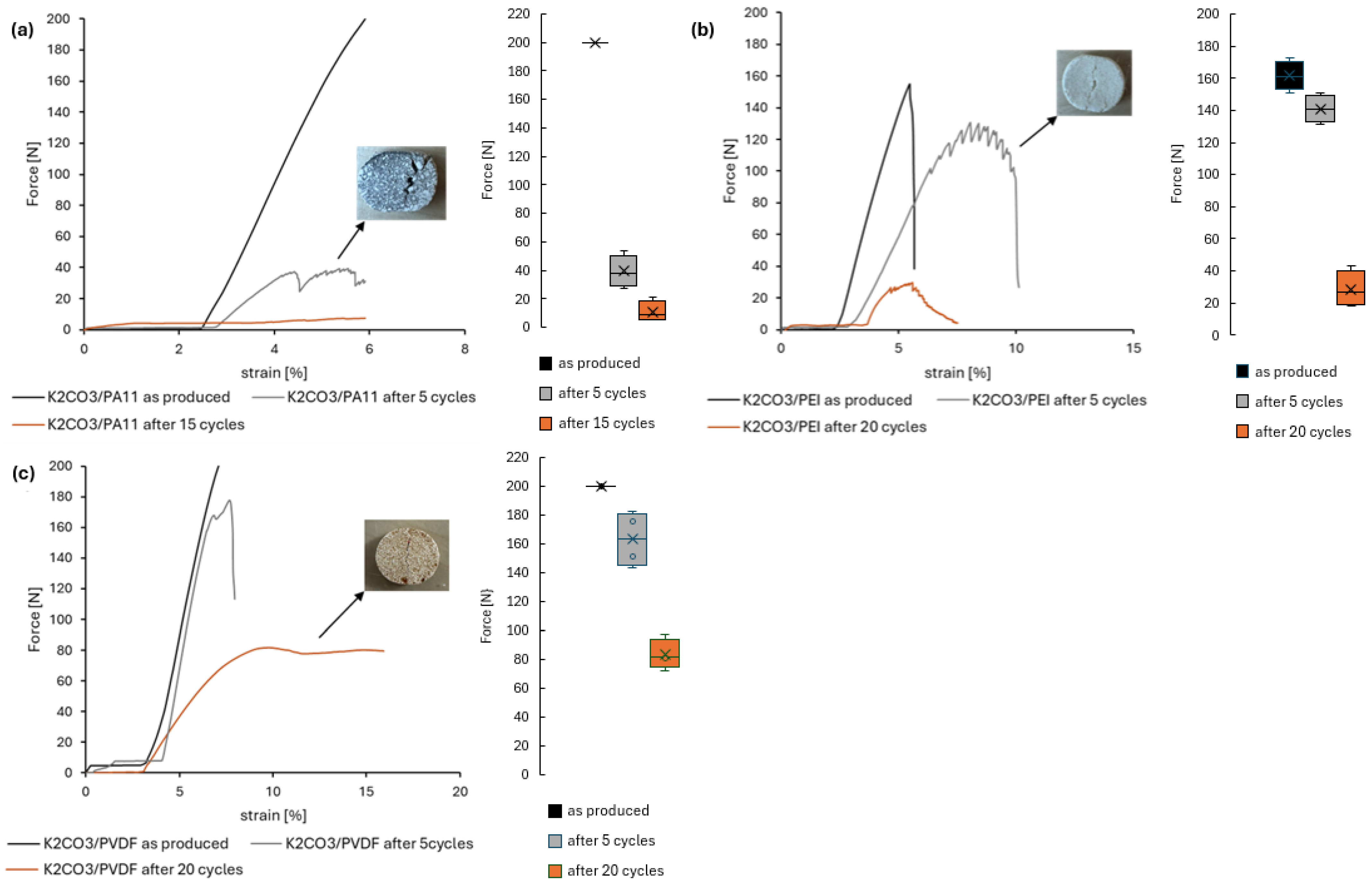
The mechanical properties of these polymer-containing composites were evaluated using compression tests (
Figure 6).
All formulations exhibited enhanced mechanical stability compared to their salt-only counterparts. However, the differences in performance among the polymers became more pronounced during cycling. For instance, K
2CO
3/PA11 tablets (
Figure 6a) demonstrated notable resilience immediately after production but showed significant strength degradation after five and ten cycles. This deterioration can be linked to the limited alkaline resistance of PA11, which may undergo hydrolytic degradation, compromising the network integrity [
32].
In contrast, K
2CO
3/PEI tablets (
Figure 6b) maintained their mechanical properties relatively well, with less pronounced reductions observed after five cycles. However, by twenty cycles, a more pronounced decrease in strength was noted.
K
2CO
3/PVDF tablets (
Figure 6c), on the other hand, exhibited deformation and relaxation behavior, remaining intact after force removal even after twenty cycles, indicating a more robust performance under cyclic conditions. A similar behavior was reported for PDMS-based flexible matrices [
16]; however, the strength level of approximately 200 N initially and about 80 N after 20 cycles represents a noticeable improvement in this case.
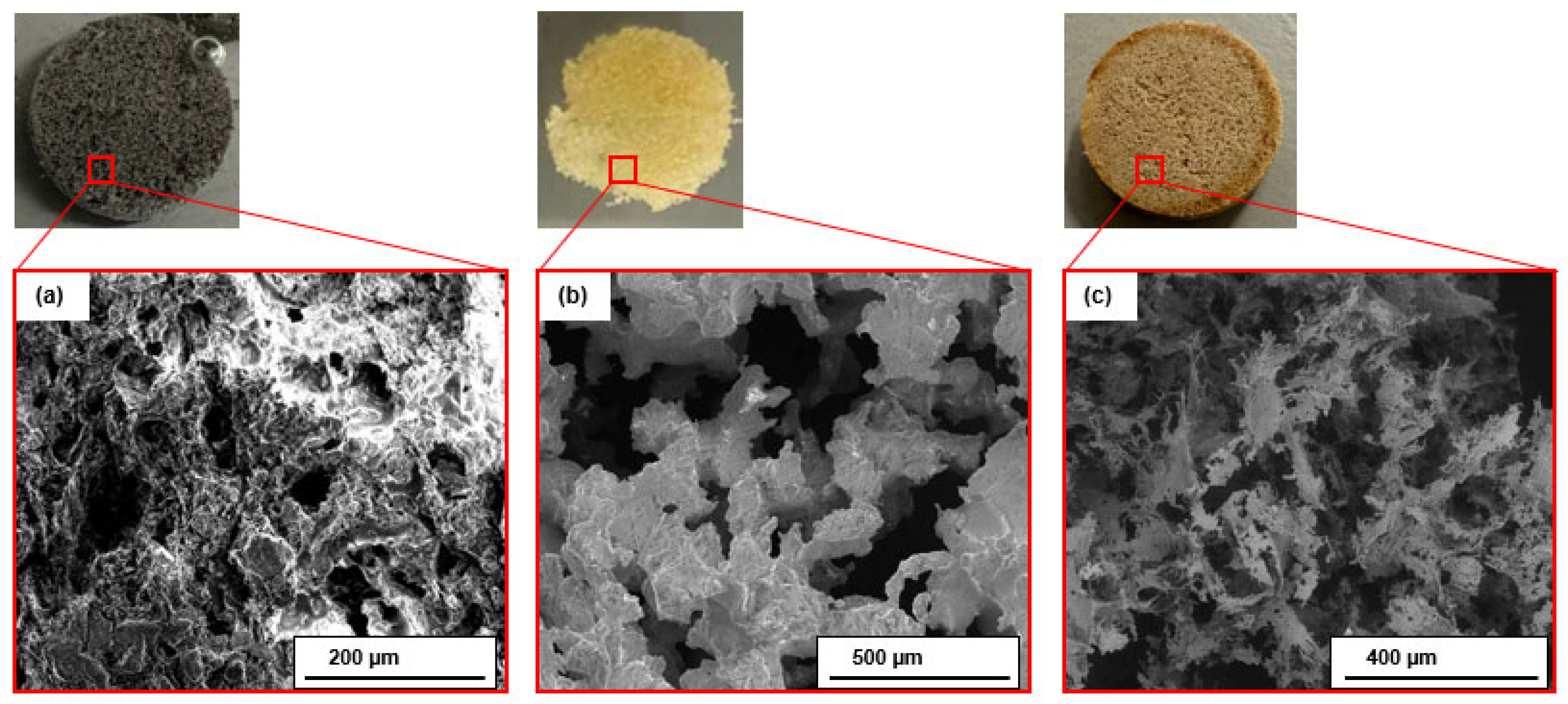
If we look at the SEM pictures of the the polymeric networks when they were just formed in the tablets, as described in
Section 2.2, followed by dissolving the salt, we can see differences between the networks formed by different polymers (
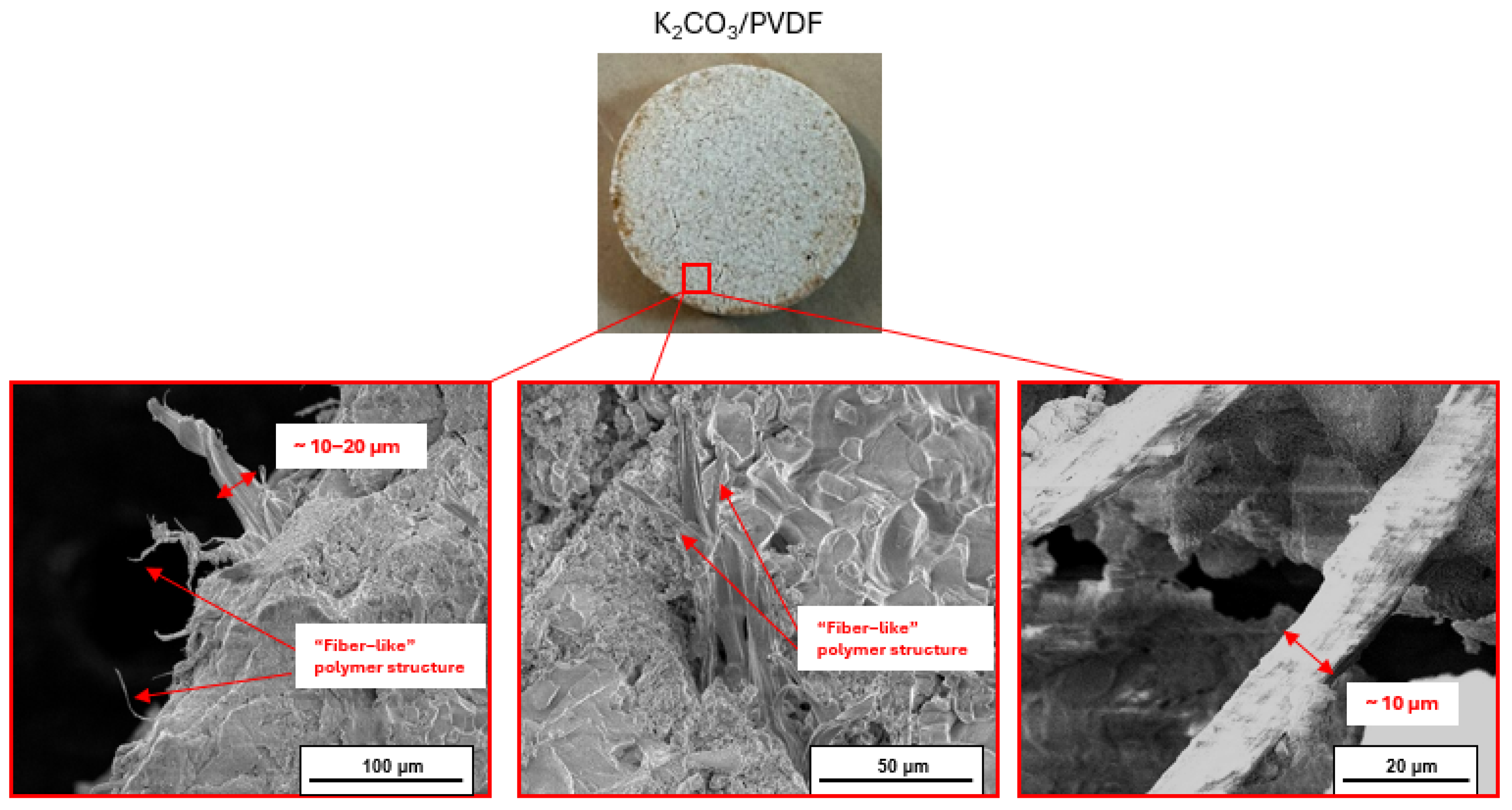
Figure 7). Dissolving salt from polymer/salt tablets allows to reveal polymeric network the way it formed within tablet structure. The structure of PVDF network contains smaller/thinner parts compared to the other two polymers as can be seen from the SEM images (
Figure 7).
The distinctive structural features of the PVDF network, characterized by smaller and thinner filaments compared to PA11 and PEI, likely contributed to its mechanical performance (
Figure 8).
These “fiber-like” structures are formed after the polymer is melted during the preparation process, at which point the polymeric network takes shape. Upon cooling, the resulting filaments enhance the incorporation of the polymer into the salt matrix, providing a higher stability [
17,
36]. This can explain the behavior of PVDF composite during compression test after cycling (
Figure 7c). The polymeric network can act as the primary load-bearing element. When a composite is subjected to mechanical stress, the load is efficiently transferred from the weaker matrix to the soft elastic polymer structure. This load transfer enhances the overall strength.
The SEM images presented in this study were analyzed qualitatively to demonstrate the morphology of the polymeric network, the distribution of the polymer phase. Quantitative morphological parameters, such as pore size distribution, polymer domain dimensions, or interconnectivity, were not determined, as the main objective of this work was to establish a proof of concept for network formation and its effect on mechanical stability over hydration/dehydration cycling. Nonetheless, such quantitative image analysis could be valuable for future investigations to provide a more detailed correlation between the structural characteristics of the polymer network and the resulting mechanical and kinetic behavior.
Polymers with higher elongation at break, such as PVDF and PA11, form a compliant network that accommodates swelling of the salt particles, absorbing strain energy and preventing fracture. However, PA11 gradually disintegrates over cycling due to higher water uptake. The fiber-like structures of PVDF (
Figure 7 and
Figure 8) act as flexible bridges within the salt tablet, distributing stress during volumetric expansion and reducing crack propagation. In contrast, more rigid polymers like PEI create localized reinforcement that limits expansion while preserving overall tablet integrity. SEM observations reveal that PVDF fibers and PA11 domains form continuous, interconnected networks, whereas PEI forms discrete networks providing localized support. These morphological features correlate with mechanical stability and cyclic performance observed in compression tests and hydration kinetics, demonstrating that polymer network architecture and mechanical properties jointly govern tablet durability under repeated hydration–dehydration cycles.
The stability of tablets over cycling was investigated by placing dry single tablets of both K
2CO
3 and K
2CO
3/polymer in a desiccator over a saturated MgCl
2 solution (relative humidity 33% at 20 °C [
25]) to induce salt hydration. The hydration rate was monitored during this phase of the cycle. For dehydration kinetics measurements, fully hydrated tablets were transferred to an oven at 130 °C instead of the desiccator.
Throughout cycling, changes in tablet mass and dimensions were tracked to assess porosity evolution and structural integrity.
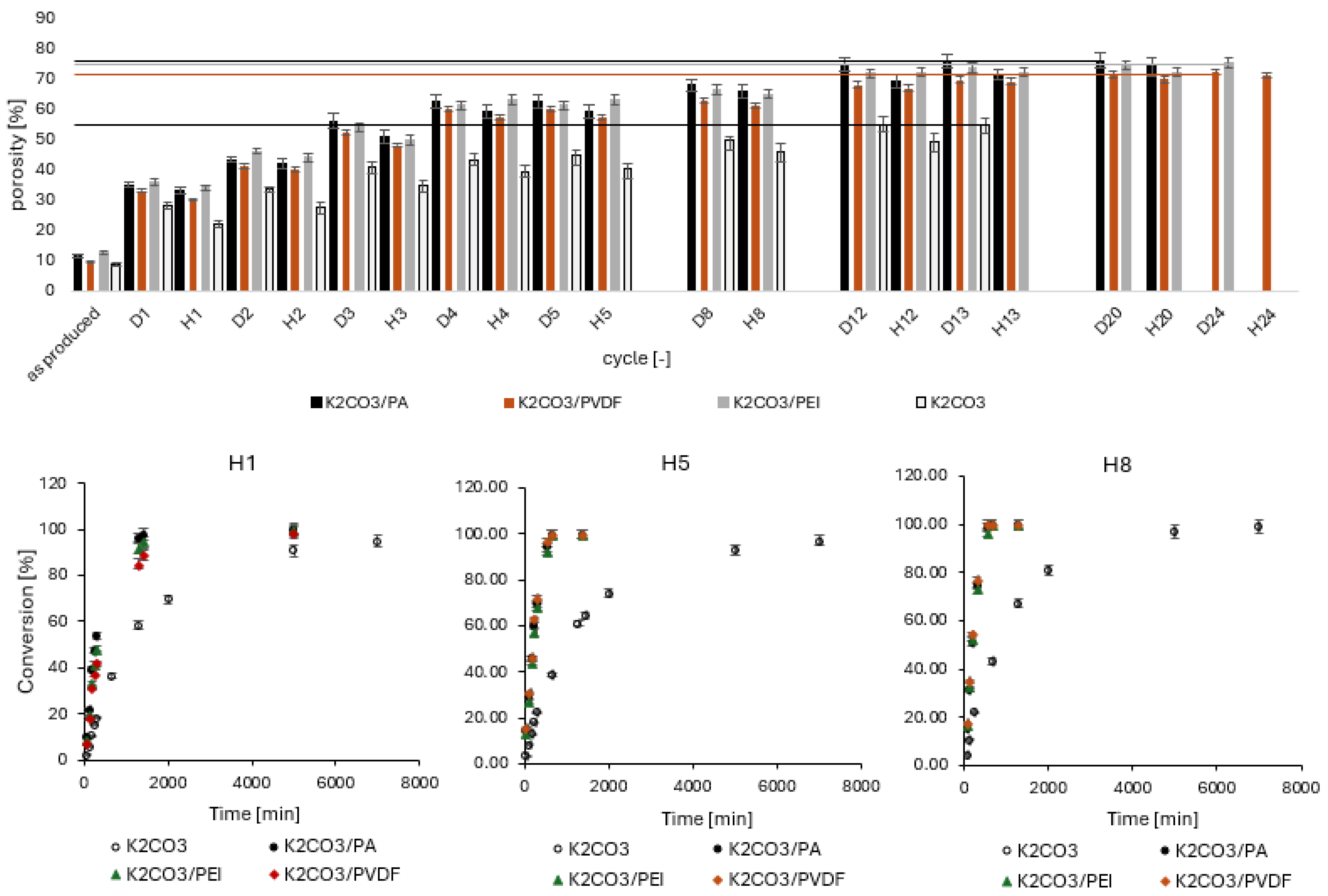
Figure 9 presents the porosity changes in pure salt and salt/polymer tablets (prepared from powder fraction ≤ 300 µm) over multiple cycles, alongside the corresponding hydration rates for some of the cycles. The lines in
Figure 9 indicate the maximum porosity level at which the tablets remain intact. Notably, while polymer-incorporated tablets can sustain significantly higher porosity levels while remaining structurally stable, pure salt tablets do not reach such high porosity before disintegrating.
A marked increase in porosity is evident after the second and third cycle across all three salt/polymer systems. This increase in porosity can likely be attributed to the swelling and shrinking behavior of the salt embedded within the polymer matrix. Unlike the salt, the polymer itself does not undergo significant swelling or shrinking, leading to the formation of additional voids early in the cycling process. The mismatch in the expansion and contraction behaviors of the salt and polymer contributes to the development of these voids.
The observed increase in porosity is consistent with a corresponding rise in the hydration rate for all salt/polymer systems tested, suggesting that the structural changes within the matrix facilitate greater water uptake. A similar trend was observed in studies employing PDMS matrices [
16]; however, unlike those systems, the volume increase in the present work slows down significantly and stabilizes after approximately 10–12 cycles.
It was observed that the hydration rate increased significantly after the first cycle for all polymer-incorporated tablets, with porosity levels rising from an initial 10% to around 37% after the first cycle, and to 65% after five cycles. In contrast, pure K
2CO
3 tablets did not exhibit such hydration rate increase. This behavior contrasts with previous encapsulation-based studies, where an increased polymer content typically led to slower hydration kinetics [
19].
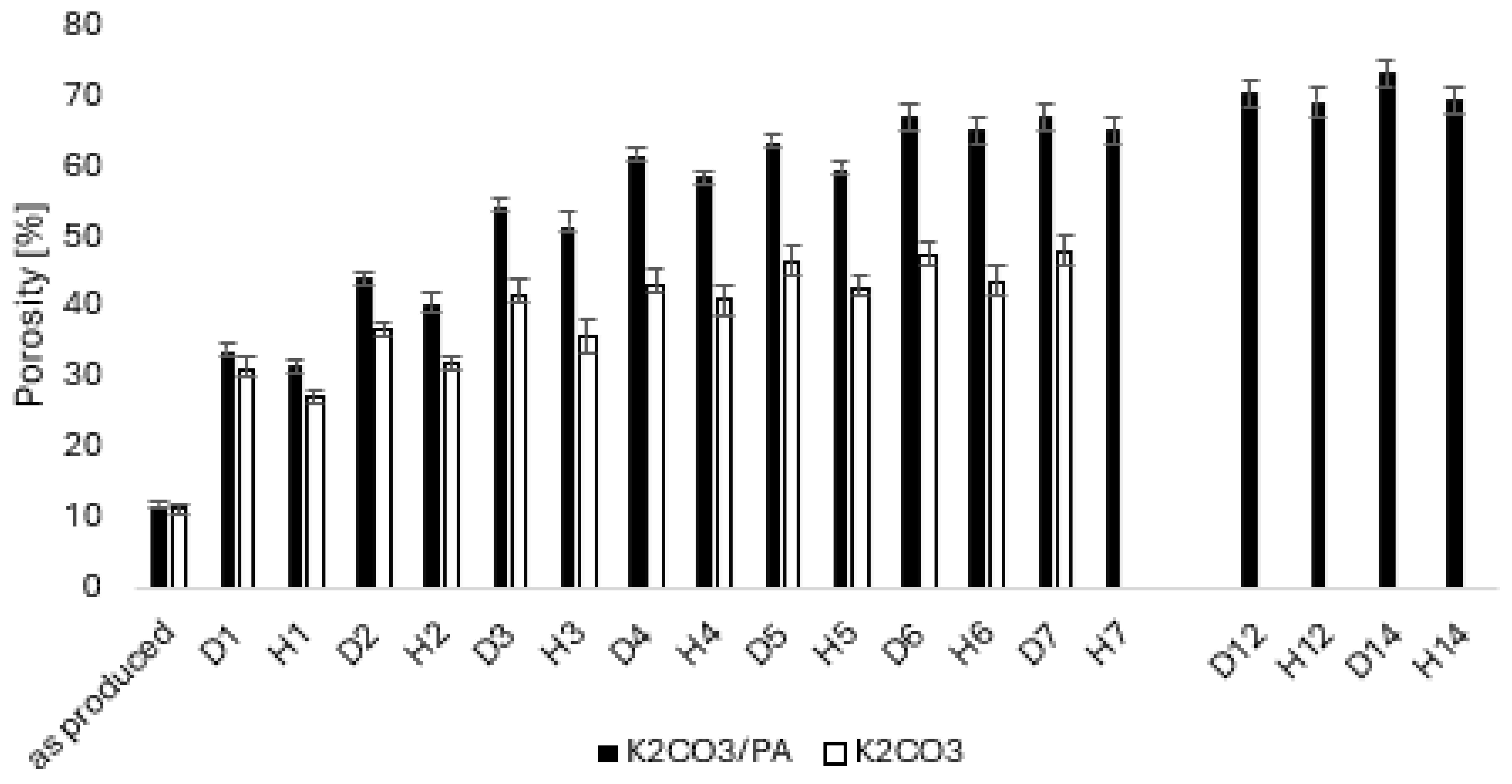
A set of tablets prepared from the 300–500 µm powder fraction, including pure K
2CO
3 tablets and K
2CO
3/PA11 (10 wt%) composites, was tested for stability over multiple cycles (
Figure 10).
The results indicated that tablets incorporating polymer exhibited greater durability and maintained a higher porosity level throughout the cycling process. However, pure salt tablets prepared from the 300–500 µm fraction remained intact for fewer cycles compared to those made from the ≤300 µm fraction. This can be attributed to the increased contact points and enhanced particle packing in the finer fraction (≤300 µm), which likely improves mechanical stability and cohesion within the tablet. In contrast, the coarser fraction (300–500 µm) may result in weaker interparticle bonding, making the tablets more prone to fragmentation and degradation over repeated cycles. This aspect would be interesting for a separate further investigation into the effects of particle packing and porosity, which could provide valuable insights for optimizing material performance.
Despite this high level of porosity (above 70%), the potassium carbonate/polymer tablets remained structurally intact throughout the cycling tests. These findings highlight the stabilizing effect of incorporating a polymer matrix, which enhances the mechanical resilience of the tablets and allows them to withstand the stresses associated with repeated cycling, even at elevated porosity levels. This demonstrates the potential of salt/polymer composites for applications requiring high porosity and stability under cyclic conditions. It is important to note that the specific polymers used in this study were selected as model systems to investigate which polymer properties could be beneficial for this application, rather than to identify a single optimal polymer for practical use. This demonstrates the potential of salt/polymer composites for applications, while also suggesting that further polymer selection and optimization could enhance performance even further.
Although a detailed economic analysis was not conducted in this study, the proposed solvent-free melt-processing method developed in this study presents a promising pathway for large-scale fabrication of mechanically stable salt–polymer composites. The use of standard thermoplastic polymers and compression or extrusion techniques allows for scalability without complex chemical processing. Considering bulk material costs, K2CO3 is typically available at ~2–2.5 EUR/kg, while thermoplastic polymers such as PA11, PEI, and PVDF range roughly from 6 to 35 EUR/kg depending on grade and source. With polymer content limited to 10 wt%, the material cost contribution remains moderate. Future work may focus on optimizing polymer selection, content, and processing conditions to enhance economic performance. Such techniques as compression molding, tableting, or extrusion are already well established in polymer and pharmaceutical manufacturing, suggesting that the polymer-stabilized salt hydrate composites could be produced at large scale with relatively low adaptation costs. Additionally, the melt-based fabrication route avoids the need for solvents or complex chemical reactions, reducing process complexity and environmental impact. Cost considerations suggest that low-cost, recyclable thermoplastics or blends thereof could offer favorable techno-economic performance compared with microencapsulation or porous matrix methods. Integrating this approach into continuous manufacturing systems could accelerate industrial deployment of polymer-stabilized thermochemical storage materials.