You are currently viewing a new version of our website. To view the old version click .
Molecules
  • Article
  • Open Access

27 October 2025

Phytochemical Profiling and Anti-Obesogenic Potential of Scrophularia aestivalis Griseb. (Scrophulariaceae)


,
,
,
,
,
,
,
,
and
1
Institute of Organic Chemistry with Centre of Phytochemistry, Bulgarian Academy of Sciences, 1113 Sofia, Bulgaria
2
Laboratory of Metabolomics, Institute of Microbiology, Bulgarian Academy of Sciences, 4000 Plovdiv, Bulgaria
3
Centre of Competence “Sustainable Utilization of Bio-Resources and Waste of Medicinal and Aromatic Plants for Innovative Bioactive Products” (BIORESOURCES BG), 1113 Sofia, Bulgaria
4
Center of Plant Systems Biology and Biotechnology, 4000 Plovdiv, Bulgaria
This article belongs to the Section Natural Products Chemistry

Abstract

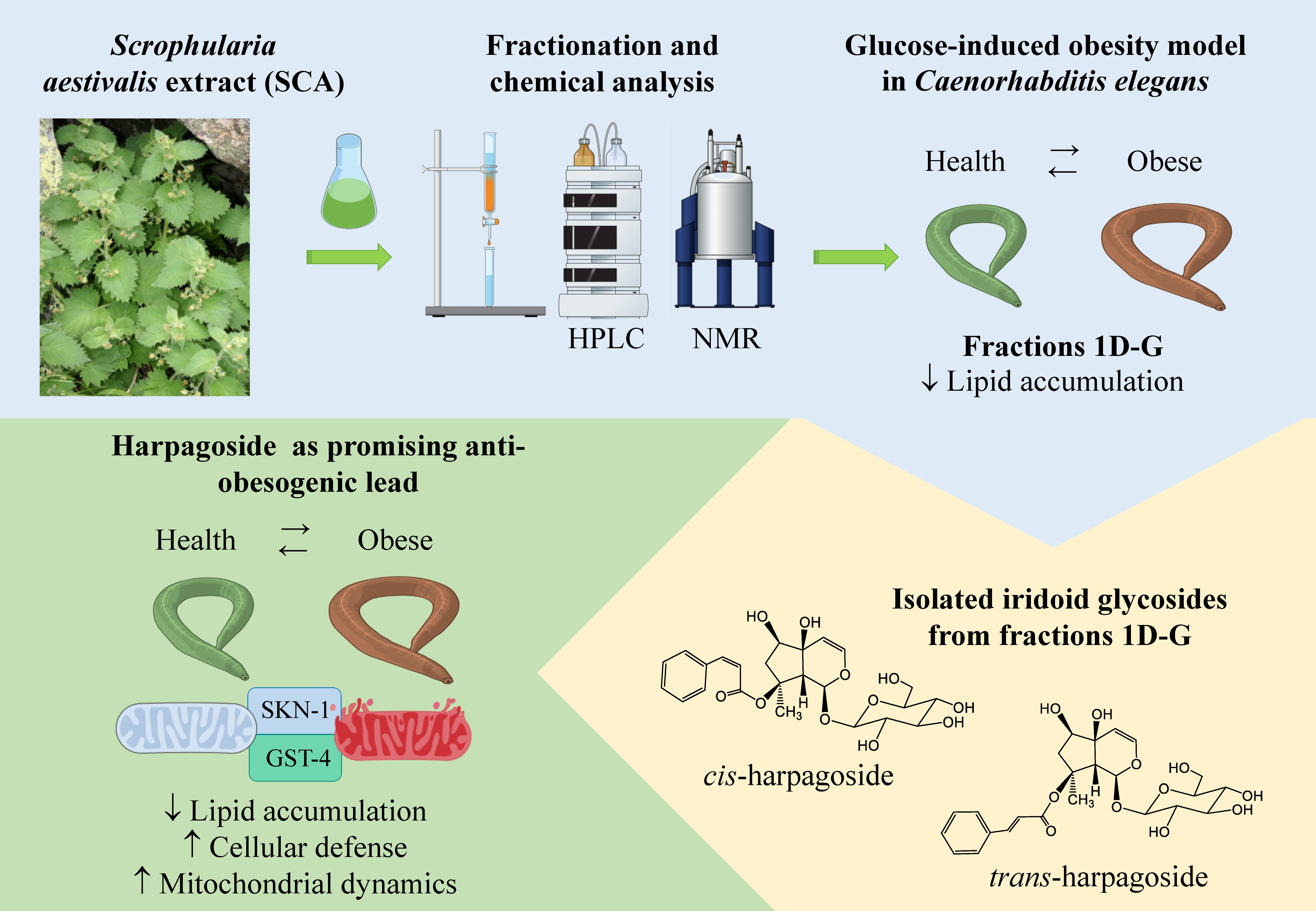
Scrophularia aestivalis Griseb. is a Balkan endemic species whose phytochemical composition and medicinal properties have not been previously investigated. The therapeutic potential of Scrophularia species has attracted considerable attention, resulting in extensive studies on their chemical and pharmacological properties, with over 200 secondary metabolites identified to date. The present study aimed to explore the phytochemical composition of Bulgarian-origin S. aestivalis, including isolation and characterization of individual secondary metabolites. From methanol extract of the plant’s aerial parts, aucubin, harpagide, 8-O-acetylharpagide, cis- and trans-harpagoside, 6-O-methyl catalpol, acylated derivatives of catalpol, and linarin were isolated and identified. The anti-obesity activity of the extract and primary fractions was evaluated in a Caenorhabditis elegans model of obesity. Significant lipid-reducing activity was demonstrated in four fractions, indicating promising anti-obesogenic properties. Following chemical profiling and quantitative analysis, the main components of the most active fractions were identified, namely the cis- and trans-harpagoside isomers. Subsequent experiments demonstrated that treatment with harpagoside reduced lipid accumulation and improved mitochondrial function in glucose-supplemented worms, with the data suggesting potential involvement of the SKN-1 signaling pathway.

1. Introduction

Obesity is a complex metabolic disorder with increasing prevalence worldwide. As a significant burden on healthcare systems and a serious contributor to reduced quality and longevity of life, obesity has become an urgent topic in contemporary drug discovery field [1,2,3]. Plant extracts and their secondary metabolites hold particular promise in this context, largely due to their multimodal mechanism of action that modulates the complex pathophysiological mechanisms underlying excessive body weight [2,4].
Within modern natural product-based approaches targeting obesity, one well-established model system is Caenorhabditis elegans. While initially introduced over half a century ago as a model for neuroscience, this tiny nematode has since been widely applied in research on aging, metabolism, metabolomics, and natural products discovery. Advantages of C. elegans include its fully sequenced genome, the presence of evolutionarily conserved genes associated with human diseases, and a well-mapped neuronal network [3,5].
Scrophularia aestivalis Griseb., a Balkan endemic species, belongs to the genus Scrophularia (Scrophulariaceae), one of the most diverse genera within the family, comprising approximately 250 species [6]. This species is native to parts of Southeastern Europe, including Bulgaria, Albania, Greece and Serbia [7]. Representatives of genus Scrophularia have been used since ancient times as remedies for scrofula, scabies, tumors, eczema, psoriasis, and various inflammatory conditions. Several countries, including China, Korea, and Japan, employ these species as anti-inflammatory and anti-cancer agents. Roots of S. ningpoensis Hemsl., S. buergeriana Miquel, Ann., and S. nodosa L. are used to treat fever, swelling, constipation, pharyngitis, neuritis, and laryngitis. In Europe, S. aquatica L. has been used as a laxative, cardiac and circulatory stimulant, and diuretic, while the roots and aerial parts of S. lucida L. were used similarly in ancient Iranian medicine [8]. These species are included in the respective national pharmacopoeias, including those of China, the UK, Japan, and France.
The high therapeutic potential of Scrophularia species has driven extensive research on their chemical composition and pharmacological properties, leading to the isolation and characterization of over 200 individual compounds. These include iridoid and phenylethanoid glycosides, flavonoids, phenolic acids, triterpene saponins, and alkaloids [8], which exhibit diverse biological activities such as antioxidant, antimicrobial, antiviral, anti-inflammatory, enzyme-inhibiting, hepatoprotective, and immunoregulatory effects.
Despite this broad spectrum of biological activity, the potential of Scrophularia species for obesity management remains largely unexplored. To date, studies have reported lipase and α-amylase inhibitory activity of aqueous and methanol extracts of S. ningpoensis [9], and on α-amylase and α-glucosidase inhibition by fractions from S. tenuipes, a species endemic to Tunisia and Algeria [10]. Phytochemical and biological (in vitro) studies have attributed the enzyme inhibitory activity primarily to phenylethanoid [11]; however, other reports have linked such activity to the presence of iridoid glycosides, a class of compounds widely distributed in the Scrophulariaceae family [12]. Despite extensive research on the phytochemical composition of several Scrophularia species [8,13], S. aestivalis, native to Bulgaria, has not yet been phytochemically profiled, and its biological effects remain unexplored.
In this context, the present study aimed to investigate the phytochemical composition and anti-obesogenic activity of the previously unexplored S. aestivalis. To obtain a comprehensive understanding of its chemical composition, individual compounds were isolated and structurally characterized, and UPLC-HRMS/MS-based profiling was performed. The anti-obesogenic potential of the crude methanolic extract, fractions, and the main constituents was evaluated in a C. elegans model. Such an integrated and stepwise approach, from crude extract to individual isolated compounds, allows robust chemical characterization and the identification of bioactive compounds, and enables a better understanding of the therapeutic potential of the plant.

2. Results

2.1. Isolation and Identification by NMR. UPLC-HRMS/MS Profiling

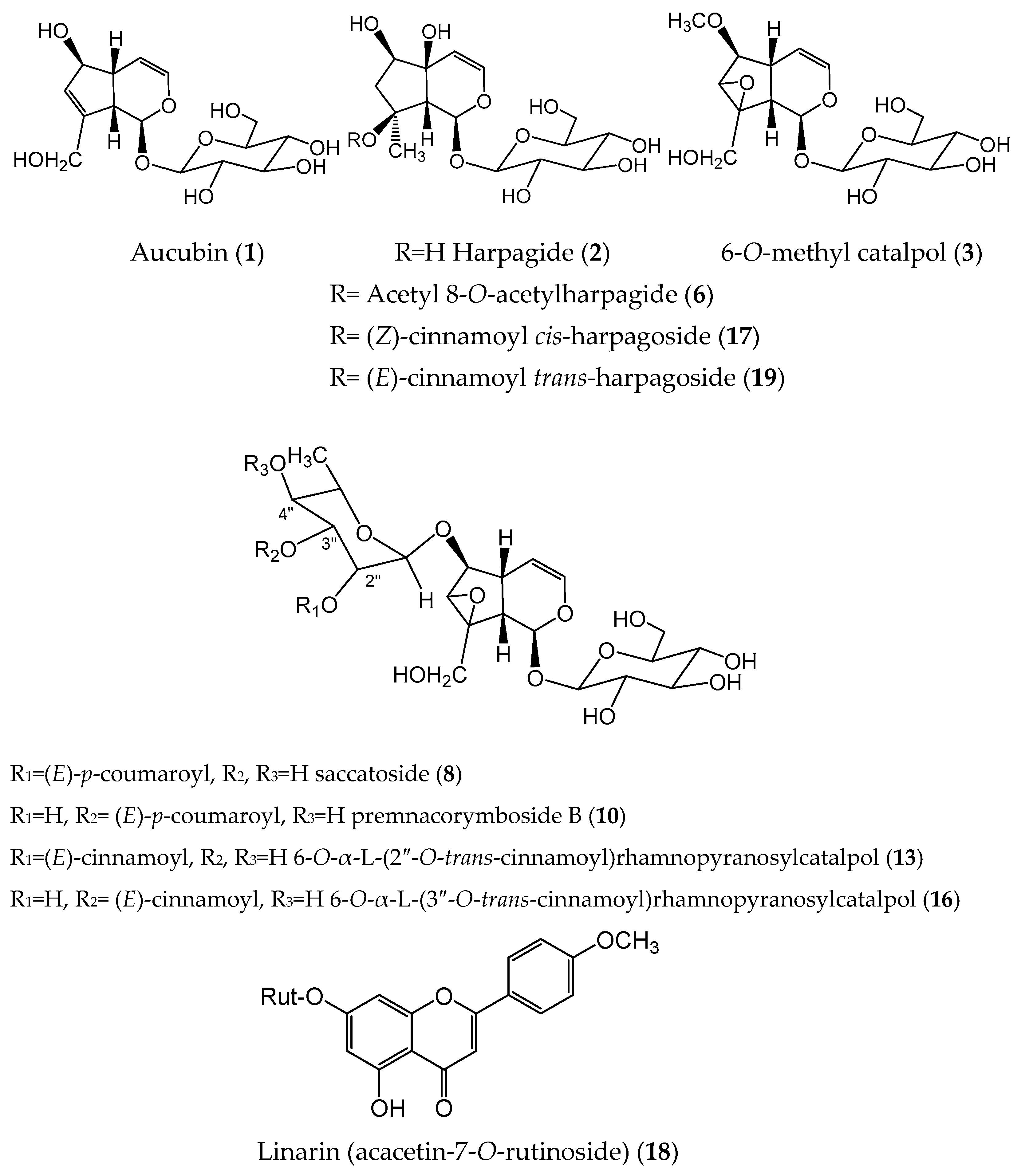
The methanol extract of S. aestivalis (SCA) was fractionated to obtain 11 crude fractions (SCA-1A-1K). As a result of subsequent separation and purification of fractions SCA-1C, SCA-1D, SCA-1E, and SCA-1J, ten known C-9 iridoid glycosides and one flavone-O-glycoside (Figure 1) were isolated and identified by comparison of their NMR spectral data with those reported in the literature: aucubin (1) [14], harpagide (2) [15], 6-O-methyl catalpol (3) [16], 8-O-acetyl harpagide (6) [17], saccatoside (8) [18], premnacorymboside B (10) [19] 6-O-α-L-(2″-O-trans-cinnamoyl)rhamnopyranosylcatalpol (13) [20], 6-O-α-L-(3″-O-trans-cinnamoyl)rhamnopyranosylcatalpol (16) [20], cis-harpagoside (17) [21], trans-harpagoside (19) [15], and linarin (acacetin-7-O-rutinoside 18) [22].
Figure 1. Structures of the compounds isolated from methanolic extract of Scrophularia aestivalis.
Compounds 1, 2, 3, 6, 17, and 19 are typical for genus Scrophularia, while the iridoids 8, 10, 13, and 16 were previously found in Verbascum ssp. [12]. Linarin (18) is characteristic of Budlleja and Linaria species [23].
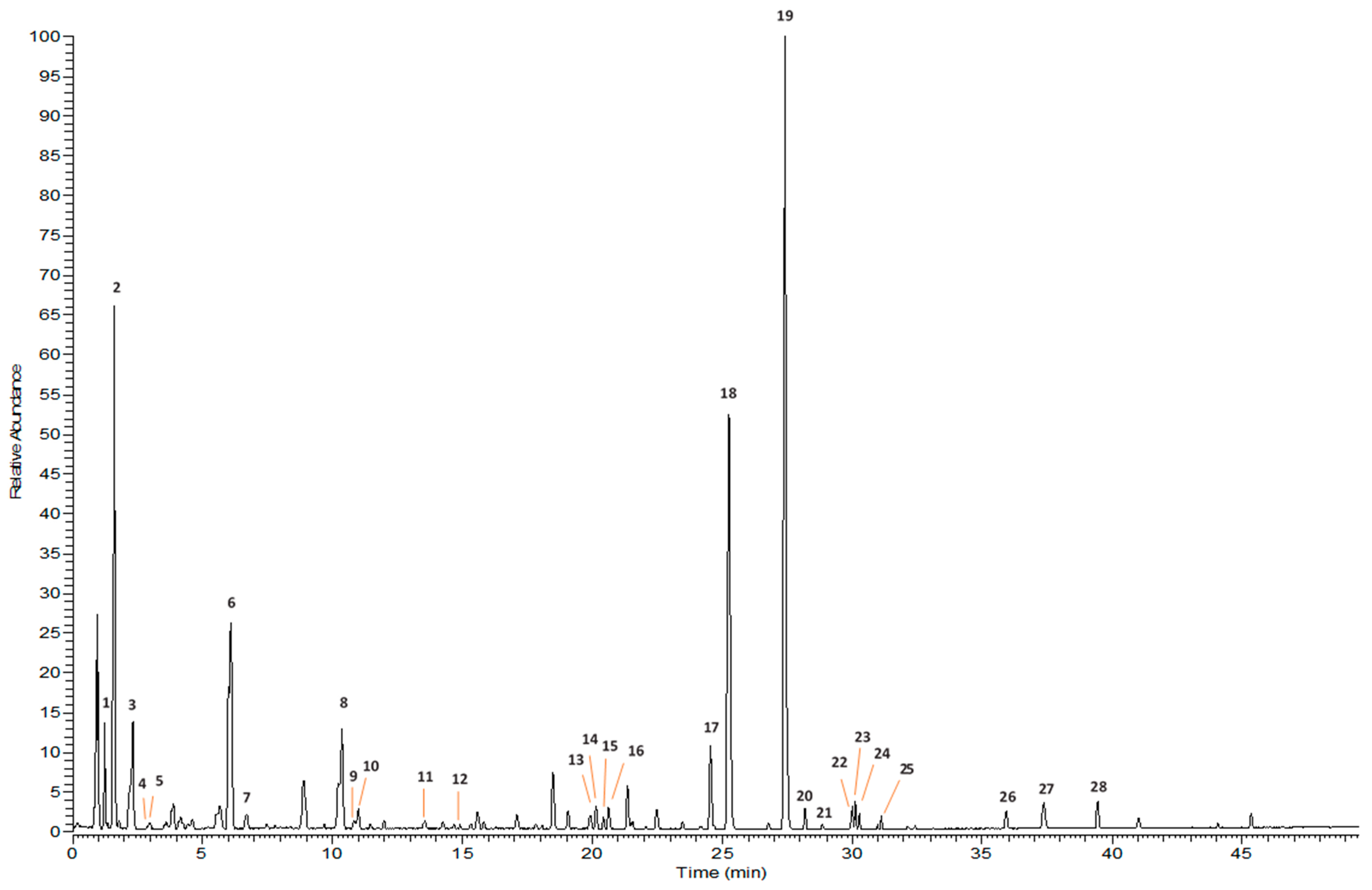
To obtain a complete phytochemical profile of the extract, ultra-high liquid chromatography with high-resolution mass spectrometry (UPLC-HRMS/MS)-based analysis was conducted in negative ion mode. Table 1 provides a summary of the retention times, molecular formulas, exact masses, delta (Δ) mass error in ppm, names of identified compounds, and proposed names of tentatively identified compounds. The number of assigned compounds corresponds to the elution order and to those indicated in Figure 1 and Figure 2.
Figure 2. UPLC-HRMS/MS base peak chromatographic profile of SCA extract in negative ionization mode.
The isolated compounds were used as standards, and several minor components were tentatively identified by comparison of their spectral data with those reported in the literature. Based on their molecular ion peaks [M+HCOO] or [M-H] and the characteristic ions in the MS/MS spectra, cis- and trans-caffeic acid, p-coumaric acid, two isomers of saccatoside (compounds 4, 5, 7, 9 and 11) [13], verbascoside, and p-coumaroyl harpagide (12 and 15) [24] were also detected. Extraction of the diagnostic ions at m/z 309.0985, 163.03993, and 145.0285 suggested that compound 14 is a p-coumaroyl-glucoside derivative, while the diagnostic ion at m/z 147.0443 indicated that compounds 23 and 24 are cinnamoyl derivatives [13,24,25].
Table 1. UPLC-HRMS/MS mass spectrometric data of tentatively identified compounds in S. aestivalis methanolic extract.
No. aRt b, minMF cExp. m/z [M-H], [M+HCOO]Calculated
Mass
Δ Mass, ppmMS/MS Product Ions [m/z]IdentificationReference
11.22C15H22O9391.1246346.12461.76183.0656, 165.0549, 139.0549, 119.0549, 89.0229AucubinStd.
21.61C15H24O10409.1351364.13690.76201.0764, 183.0657, 165.0554, 179.0556, 119.0339HarpagideStd.
32.33C16H24O10421.1359376.13691.70183.0663, 213.0769, 195.0657, 163.0395, 113.02396-O-Methyl catalpolStd.
44.11C9H8O4179.0343180.0422−4.09134.9868, 90.9968cis-Caffeic acid[13]
54.17C9H8O4179.0342180.0422−4.23134.9869, 90.9968trans-Caffeic acid[13]
66.08C17H26O11451.1462406.14751.03301.6125, 183.0656, 165.0557, 119.03378-O-acetylharpagideStd.
76.71C9H8O3163.0392164.0473−4.76119.0491p-Coumaric acid[13,25]
810.37C30H38O16653.2102654.2160−3.56377.1252, 325.8607, 315.1097, 309.0978, 291.0882, 187.0396, 181.0497, 163.0394, 145.0286, 119.0491SaccatosideStd.
910.82C30H38O16653.2102654.2160−3.54377.1250, 325.8607, 315.1096, 309.0977, 291.0883, 187.0394, 181.0498, 163.0394, 145.0286, 119.0492p-Coumaroyl rhamnopyranosylcatalopol isomer
1011.00C30H38O16653.2101654.2160−4.36377.1250, 325.8607, 315.1096, 309.0977, 291.0883, 187.0394, 181.0498, 163.0394, 145.0286, 119.0492Premnacorymboside BStd.
1113.54C30H38O16653.2100654.2160−3.89377.1250, 325.8607, 315.1096, 309.0977, 291.0883, 187.0394, 181.0498, 163.0394, 145.0286, 119.0492p-Coumaroyl rhamnopyranosylcatalopol isomer
1214.69C29H36O15623.1993624.20541.92461.1671, 161.0236, 113.0233Verbascoside[24,25]
1319.92C30H38O15683.2205638.22111.46361.1303, 215.0710, 163.0392, 147.0442, 113.02336-O-α-L-(2”-O-trans-Cinnamoyl) rhamnopyranosylcatalpolStd.
1420.15C35H32O12689.1869644.1894−0.69309.0985, 187.0394, 163.0392, 145.0285, 119.0491p-Coumaroyl glycoside[13]
1520.43C24H30O12509.1671510.17371.25201.0764, 183.0654, 163.0392, 145.0285, 119.0491p-Coumaroyl harpagide[24]
1620.65C30H38O15683.2205638.22110.87361.1297, 215.0709, 163.0391, 147.0441, 113.02396-O-α-L-(3”-O-trans-Cinnamoyl) rhamnopyranosylcatalpolStd.
1724.55C24H30O11539.1775494.1788−0.88183.0658, 165.0549, 147.0442, 103.0540cis-Harpagoside
(8-O-(Z)-Cinnamoylharpagide)
Std.
1825.26C28H32O14637.1788592.17921.26283.0616, 162.446Linarin
(Acacetin-7-O-rutinoside)
Std.
1927.40C24H30O11539.1778494.1788−1.45207.0663, 183.0656, 165.0580, 147.0443, 139.0391, 113.0233trans-Harpagoside
(8-O-(E)-Cinnamoylharpagide)
Std.
2028.20C30H34O15679.1894634.1897−1.45283.0616, 193.5697Linarin derivative
2128.86C25H32O12523.1829524.18931.46274.2028, 174.9554, 154.0627, 147.0442, 130.1828, 119.5446unknown
2229.98C30H34O15679.1895634.1897−1.37283.0616, 193.5697Linarin derivative
2330.10C25H28O11503.1780504.17882.42323.0932, 209.0969, 175.0397, 147.0443, 131.0492Cinnamoyl derivative[13]
2430.27C25H30O11505.1725506.17881.94299.1295, 195.0658, 147.0443, 133.0649, 113.0233Cinnamoyl derivative[13]
2531.12C18H32O5327.2183328.22491.91174.9924, 125.8304, 98.9845unknown
2635.91-989.5344--811.4868, 649.4336, 471.3470, 161.0447, 191.0559, 143.0339, 127.9389unknown
2737.38C16H12O5283.0613284.0684−1.69179.2318, 112.2200, 71.4901Acacetin
2839.45-957.5082--617.4067, 161.0445, 145.0497, 101.0231unknown
a Numbers of the assigned compounds correspond to the elution order, b Rt—retention time, c MF—molecular formula; Std—isolated and identified compound used as standard for UPLC-MS/MS analysis.

2.2. The SCA Fractions Modulate Lipid Accumulation in a Glucose-Induced Obesity Model

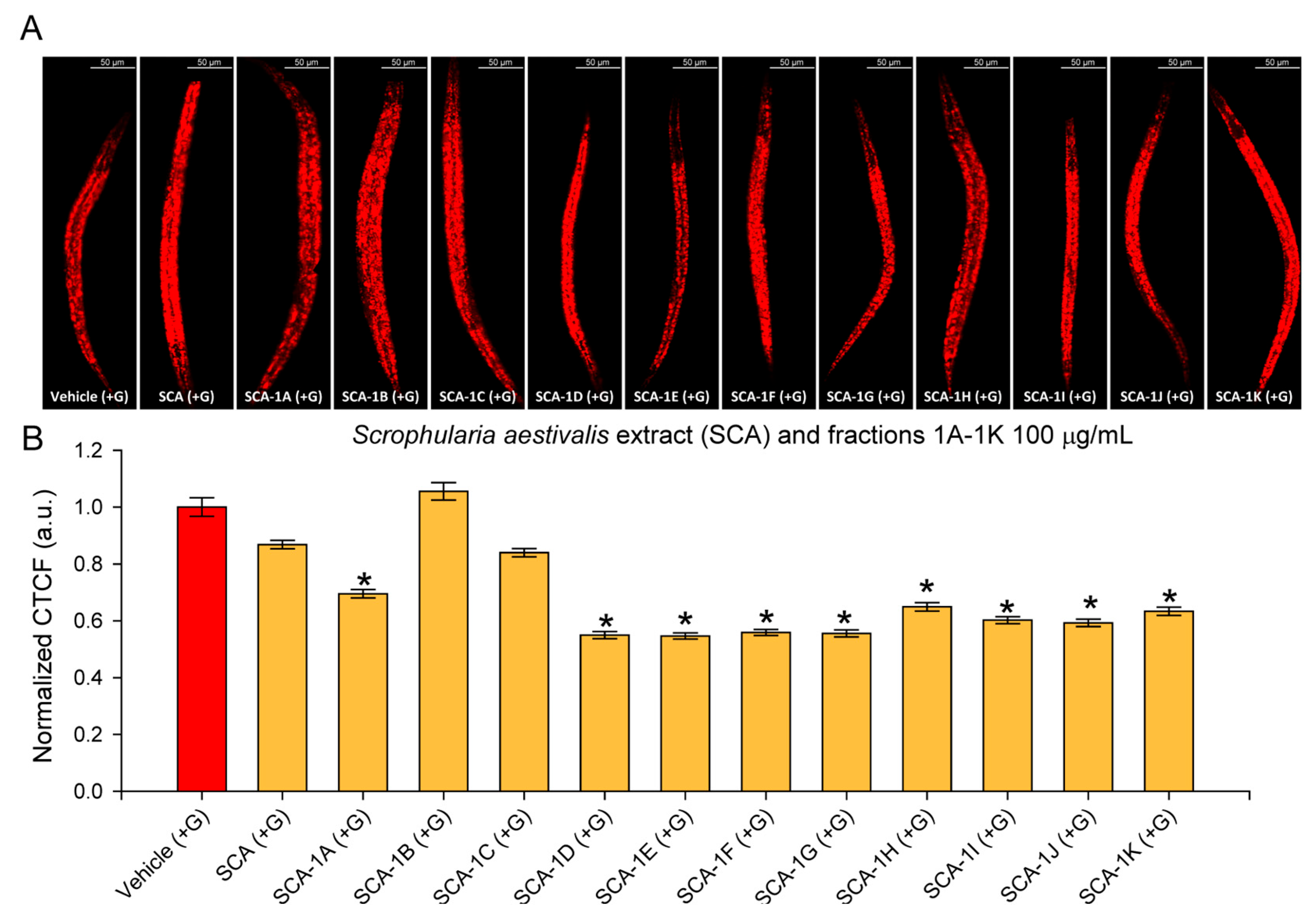
Despite the growing interest in the pharmacological potential of Scrophularia species, no information has been reported to date regarding the effect of S. aestivalis on lipid metabolism. To investigate whether the SCA extract or its fractions could alter fat storage, we employed a glucose-induced lipid accumulation model in C. elegans. For lipid quantification, Nile red staining was utilized as a widely used method for the visualization of neutral lipids in worms. While this approach has certain limitations, such as interference from gut autofluorescence and potential staining artefacts, it serves as a valuable preliminary tool for assessing the anti-obesogenic potential of natural products in C. elegans. The results revealed that, while the crude SCA extract failed to reduce fat accumulation, most of its fractions, including 1A and 1D-1K, significantly decreased the triglyceride content, with the strongest effect observed in fractions 1D-1G (Figure 3A,B). These findings raised the question of whether the biological activity could be attributed to specific components within these four primary fractions.
Figure 3. Effect of S. aestivalis extract (SCA) and its primary fractions 1A-1K on fat accumulation in C. elegans glucose-induced (+G) obesity model. (A) Representative confocal images (20× magnification, scale bar: 50 μm) of glucose-fed C. elegans supplemented with 100 μg/mL of SCA or its fractions (1A-1K). (B) Quantification of lipid accumulation. Fluorescence intensity for each worm was calculated as Correlated Total Cell Fluorescence (CTCF) using the formula: CTCF = Integrated Density − (Area × Mean background fluorescence). Values were normalized to the mean CTCF of the vehicle-treated (+G) group. Data are presented as mean ± SEM, (n = 90 worms from three independent biological replicates). * p < 0.05 vs. vehicle (+G) using ANOVA on ranks with Dunn’s post hoc test.

2.3. Qualitative Analysis by UPLC-HRMS/MS of SCA Active Fractions

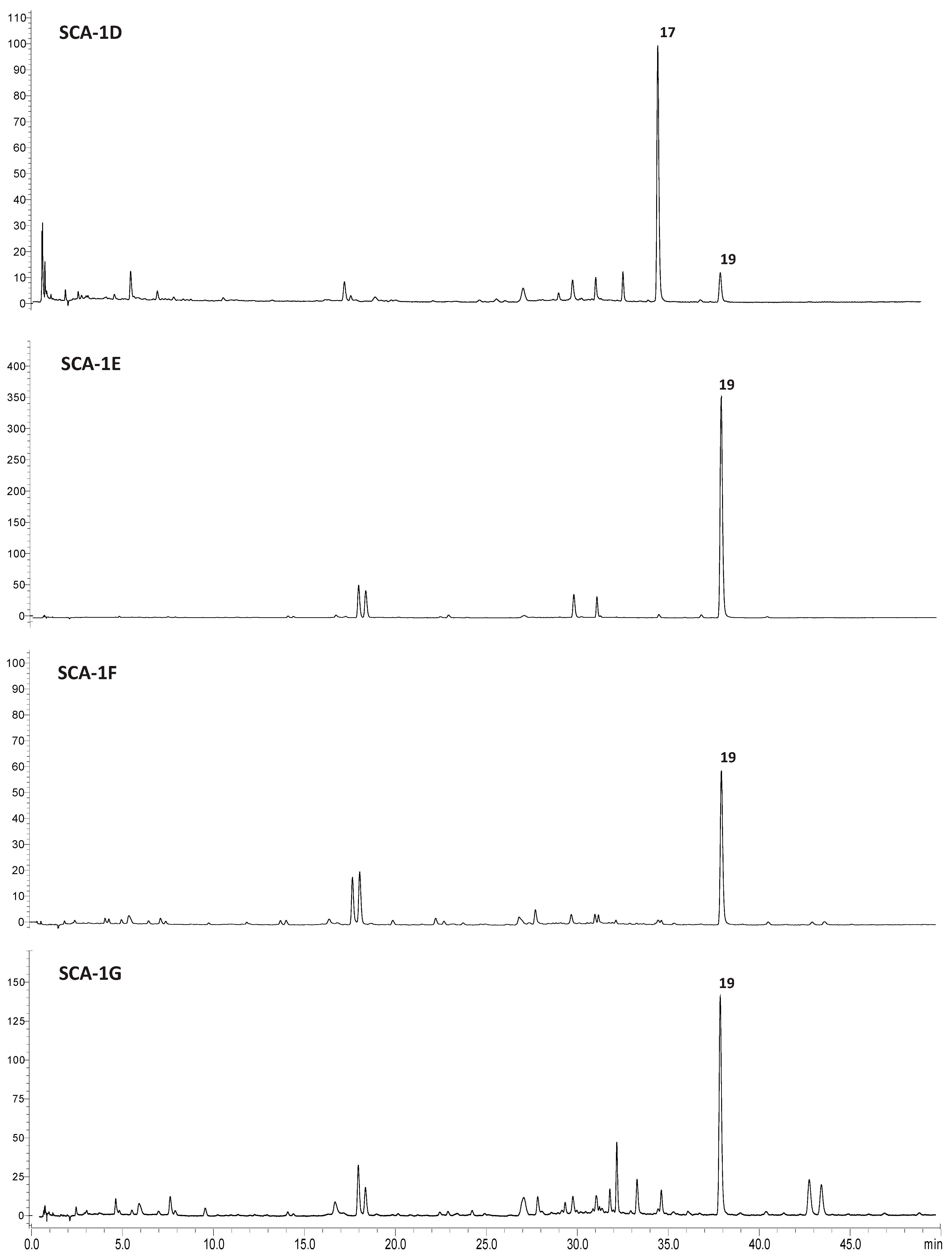
To address the possibility of compound-dependent biological activity, the most active fractions (SCA-1D-1G) were analyzed by the UPLC-HRMS/MS method applied to the total extract. Based on MS peak areas of individual compounds in ion chromatograms, cis- and trans-harpagoside (17 and 19) were found to be the most abundant compounds in all four fractions. In addition, two isomers of compound 13 and martynoside were detected [13] (Table S2, Figures S1 and S2 in Supplementary Material).

2.4. Quantitative Analysis by HPLC-UV of SCA Extract and Active Fractions

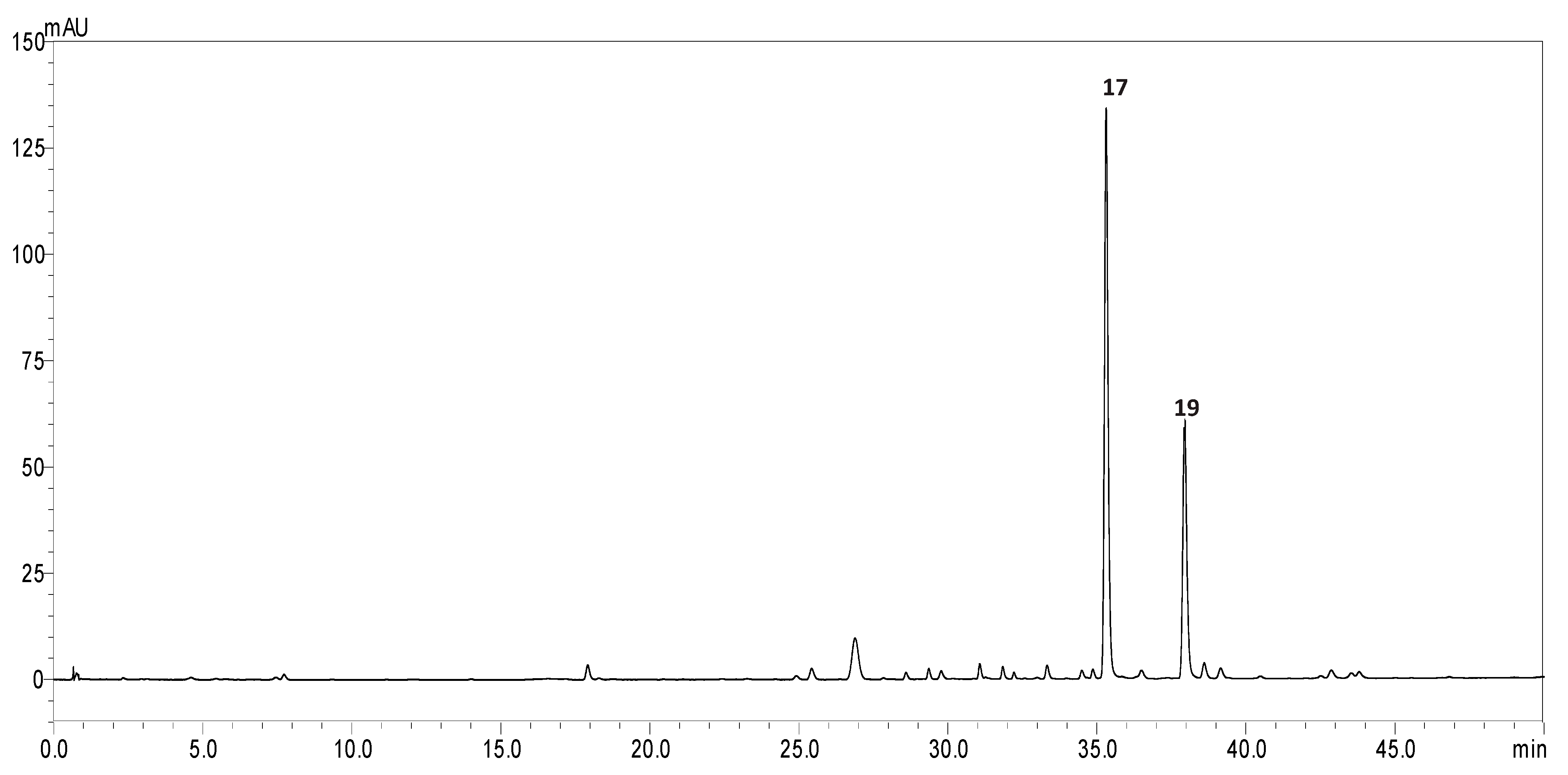
Since cis- and trans-harpagoside are the major compounds and likely key contributors to the anti-obesogenic activity of the fractions, we further focused on their quantitative determination. HPLC-UV was utilized and their presence in the studied extract and its fractions was confirmed by comparing the retention times (RT) and UV spectra with those of the isolated compounds used as reference standards. The target compounds showed HPLC peak purities of 90% for cis-harpagoside and 95% for trans-harpagoside. Additionally, the UV spectra of the harpagoside isomers revealed maxima at 267.02 and 334.29 nm for cis-harpagoside and 280.52 nm for trans-harpagoside, respectively, and all chromatograms were monitored at 275 nm.
Quantification was performed using six-point calibration curves (Figure S3) established for both cis-harpagoside (RT: 35.311 min y = 9155.9x − 19874; r2 = 0.996; range: 5.00–100.00 µg/mL) and trans-harpagoside (RT: 37.944 min; y = 11,000x − 57480; r2 = 0.999; range: 15.00–200.00 µg/mL). The limits of detection (LOD) and quantification (LOQ) for both compounds were calculated based on the standard deviation of the y-intercept of the regression line. The LOD and LOQ were estimated at 5.67 µg/mL and 17.20 µg/mL for cis-harpagoside, and 4.51 µg/mL and 13.67 µg/mL for trans-harpagoside, respectively. Furthermore, the method demonstrated peak resolution greater than 1.5 and peak symmetry close to 1.0, indicating high chromatographic efficiency and suitability for quantitative analysis (Supplementary Figure S4).
In conclusion, the method demonstrated selectivity for both studied compounds, exhibiting linearity (R2 > 0.99) across both studied concentration ranges, minimal deviation in intra- and inter-day precision (RSD < 2%), and acceptable LOD and LOQ values. Representative UV chromatographic profiles at 275 nm of the SCA extract and fractions SCA-1D to SCA1G are shown in Figure 4 and Figure 5, respectively.
Figure 4. HPLC-UV chromatographic profile of total methanolic SCA extract at 275 nm, where 17 is cis-harpagoside and 19 is trans-harpagoside.
Figure 5. HPLC-UV chromatographic profiles recorded at 275 nm for fractions SCA-1D–1G, where 17 is cis-harpagoside and 19 is trans-harpagoside.
Accordingly, the proposed HPLC was successfully applied to quantify the major iridoid glucosides both in the total extract and its active fractions. The quantitative analysis data are summarized in Table 2.
Table 2. Quantity assessment of the S. aestivalis total methanolic extract and its primary fractions, presented as mg per g dry extract (μg/mgd. extr.).
Trans-harpagoside was identified as the most abundant iridoid in fraction E with a concentration of 501.06 ± 0.33 μg/mg d. extr., followed by fraction G (121.45 ± 0.16 μg/mg d. extr.). A lower amount of trans-harpagoside was detected in the total SCA extract, measured as 45.17 ± 0.44 μg/mg d. extr. In contrast, cis-harpagoside was found to be the predominant iridoid in the total extract, with a concentration of 85.35 ± 0.42 μg/mg d. extr. The only fraction containing cis-harpagoside was fraction D (58.25 ± 0.53 μg/mg d. extr.), which showed a 27.1% lower amount of the compound compared to the total extract.
Based on these quantitative results, the concentrations of both isomers in the crude extract and in the four primary fractions (SCA-1D–1G) exhibiting the highest anti-obesogenic potential were recalculated to reflect their actual levels under. The concentrations of cis- and trans-harpagoside (expressed in μg/mL and μM) are presented in Table 3. Among all analyzed fractions, fraction E exhibited the highest level of trans-harpagoside, corresponding to approximately 100 μM at the tested concentration (100 μg/mL). Based on this finding, the same molar concentration was selected for the subsequent biological assays with both cis- and trans-harpagoside.
Table 3. Concentration of cis- and trans-harpagoside in SCA and fractions (1D-G), expressed in both μg/mL and μM, respectively.

2.5. Anti-Obesogenic Effect of Isolated cis- and trans-Harpagoside in C. elegans

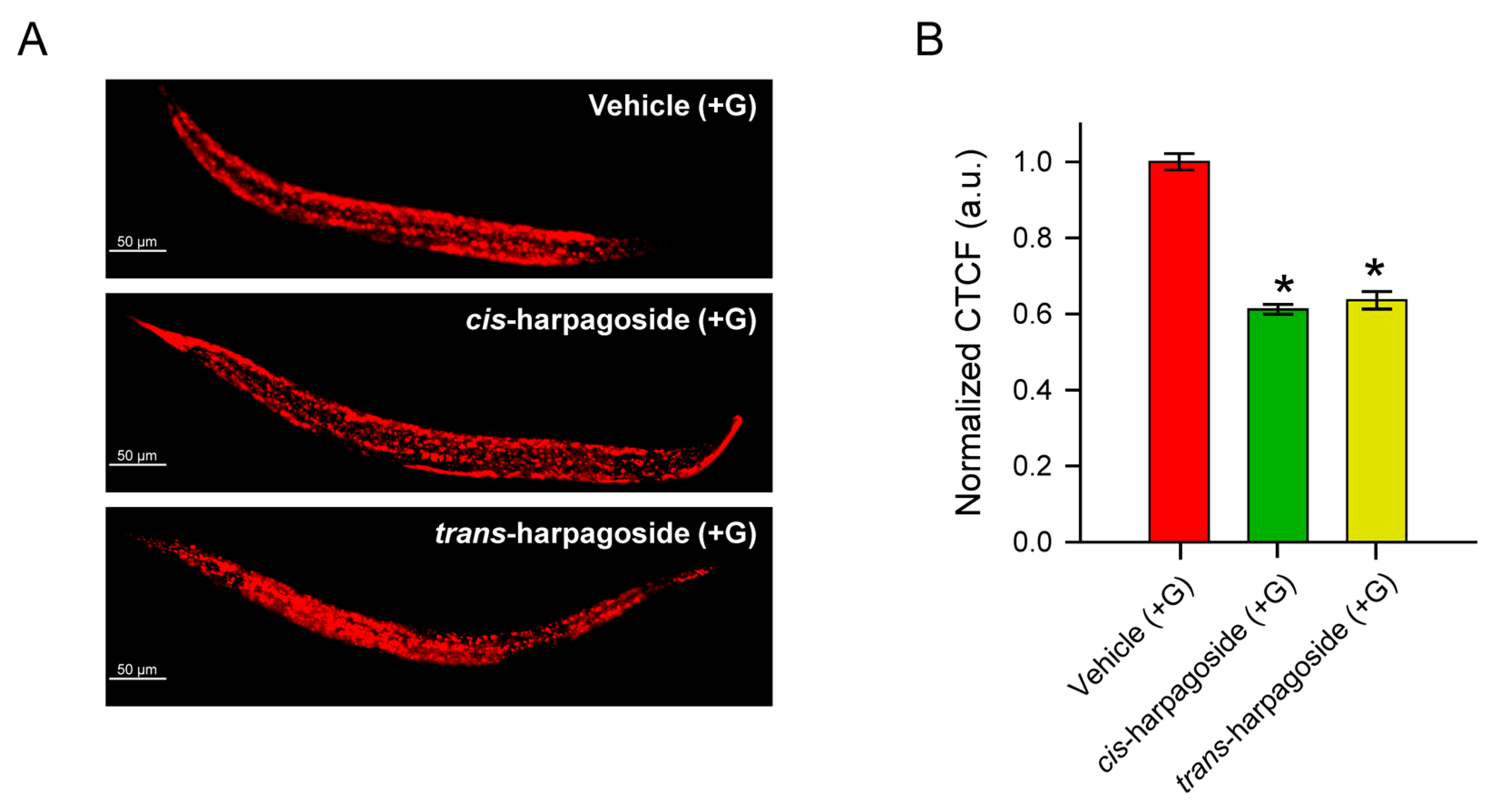
Harpagoside is a naturally occurring iridoid glycoside with well-documented biological activities, including anti-inflammatory, anti-rheumatic, and cardioprotective effects. Some evidence also suggests that it may prevent obesity-induced atherosclerosis [26,27,28,29,30]. In this context, and given the fat-lowering activity of the four most active fractions, which are rich in harpagoside, we investigated whether the isolated cis- and trans-harpagoside isomers could modulate glucose-induced fat accumulation in C. elegans. The results revealed that both isomers significantly reduced lipid content (Figure 6A,B), strongly supporting the hypothesis that harpagoside is the principal bioactive constituent responsible for the lipid-lowering effect observed in these fractions.
Figure 6. Effect of cis- and trans-harpagoside isomers on fat accumulation in C. elegans. (A) Representative confocal images (20× magnification, scale bar: 50 μm) of Nile red-stained C. elegans treated with 100 μM cis- or trans-harpagoside. (B) Quantification of lipid accumulation. Fluorescence intensity of each worm was calculated as Correlated Total Cell Fluorescence (CTCF) using the formula: CTCF = Integrated Density − (Area × Mean background fluorescence). Values were normalized to the mean CTCF of the vehicle (+G) group. Data are presented as mean ± SEM, (n = 90, from three independent biological replicates), * p < 0.05 vs. vehicle (+G) group using ANOVA on ranks with Dunn’s post hoc test.

2.6. Harpagoside Isomers Alleviate Glucose-Induced Mitochondrial Dysfunction in C. elegans

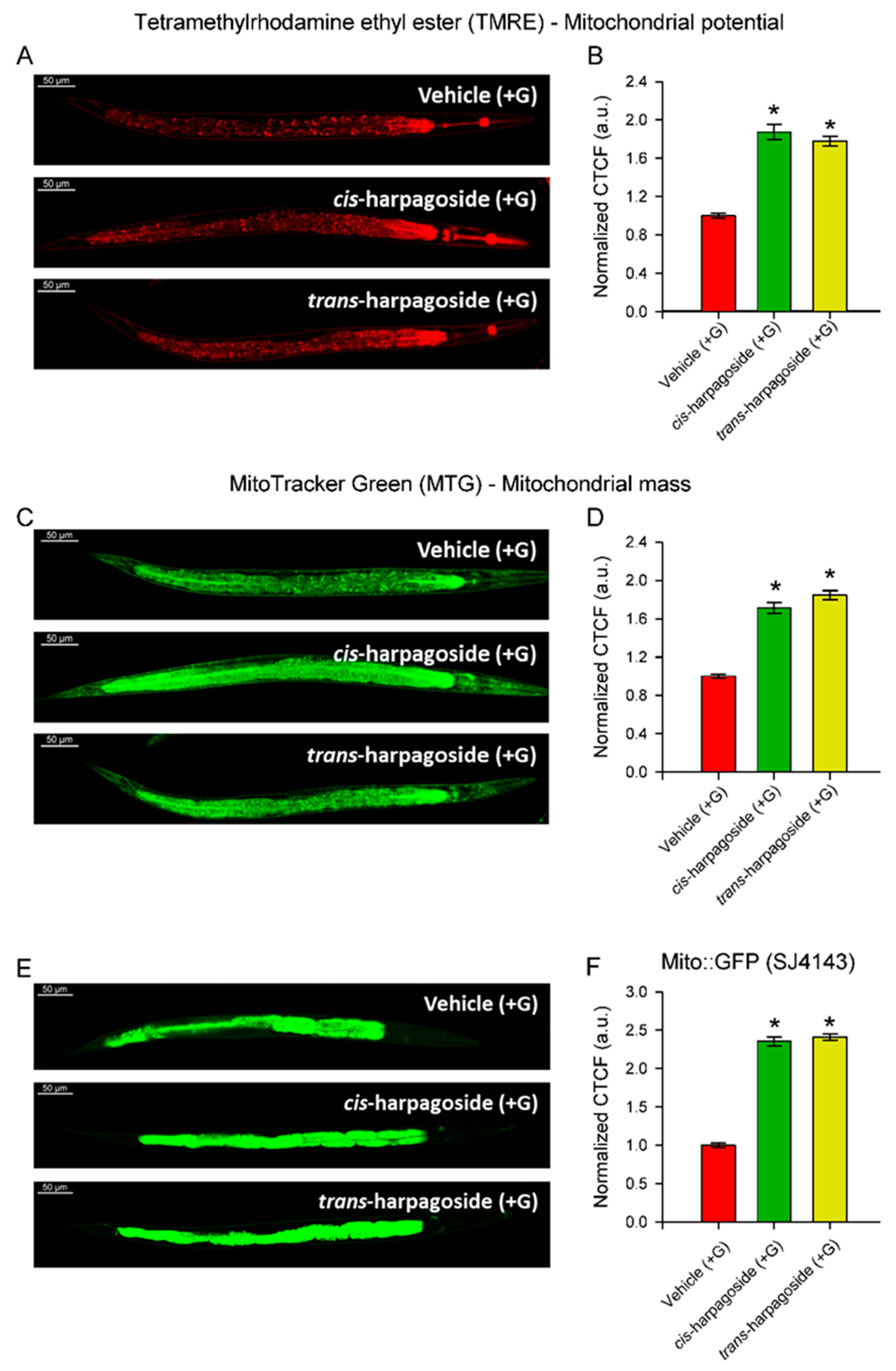
Since both isomers significantly reduced lipid deposition in glucose-supplemented worms, we next examined whether this effect could be associated with improved mitochondrial function. Mitochondrial membrane potential and mass were evaluated using co-staining with Tetramethylrhodamine ethyl ester (TMRE) and MitoTracker Green (MTG), respectively. The assessment of mitochondrial membrane potential (Figure 7A,B) and mass (Figure 7C,D) revealed that both parameters were significantly increased following harpagoside treatment compared to the vehicle (+G) group. In addition, intestinal mitochondrial activity was analyzed in the transgenic strain SJ4143 (Figure 7E,F), which demonstrated a pronounced increase in mitochondrial mass, consistent with the results obtained from MTG staining (Figure 7A,B). Collectively, these findings indicate that both cis- and trans-harpagoside exhibit a similar capacity to improve mitochondrial health under conditions of glucose-induced mitochondrial dysfunction.
Figure 7. The two isomers of harpagoside improve mitochondrial health in a model of glucose (+G)-induced mitochondrial dysfunction. (A) Representative confocal images (20× magnification, scale bar: 50 μm) showing TMRE fluorescence (red channel) in glucose-fed N2 worms supplemented with 100 µM cis- or trans-harpagoside. (B) Quantification of mitochondrial membrane potential. Red channel fluorescence intensity was calculated for each worm as Correlated Total Cell Fluorescence (CTCF): CTCF = Integrated Density − (Area × Mean background fluorescence). Values were then normalized to the mean CTCF of the vehicle (+G)-treated group. Data are presented as mean ± SEM (n = 60 worms from three independent biological replicates). * p < 0.05 vs. vehicle (+G), ANOVA on ranks with Dunn’s post hoc test. (C) Representative confocal images (20× magnification, scale bar: 50 μm) showing green channel fluorescence (MTG) of glucose-fed N2 worms supplemented with cis- or trans-harpagoside. (D) Quantification of mitochondrial mass. Green channel fluorescence intensity calculated as CTCF and normalized to vehicle (+G) as in (B). n = 60, 3 replicates. * p < 0.05 vs. vehicle (+G), ANOVA on ranks with Dunn’s post hoc test. (E) Representative confocal images (20× magnification, scale bar: 50 μm) of SJ4143 zcIs17 [ges-1::GFP(mit)] worms treated with cis- or trans-harpagoside. (F) Quantification of GFP signal (green channel), calculated as CTCF and normalized to vehicle (+G). Data are presented as mean ± SEM (n = 60 worms from three independent biological replicates). * p < 0.05 vs. vehicle (+G), ANOVA on ranks with Dunn’s post hoc test.

2.7. The Transcription Factor SKN-1 and Its Downstream Target gst-4 Are Upregulated upon cis- and trans-Harpagoside Treatment

The transcription factor skinhead-1 (SKN-1), the C. elegans ortholog of human nuclear factor erythroid 2-related factor 2 (NRF2), has been shown to play important role in regulating mitochondrial homeostasis, particularly under conditions of mitochondrial dysfunction. It is also crucial for metabolic adaptation, ensuring proper cellular function [3,31,32,33].
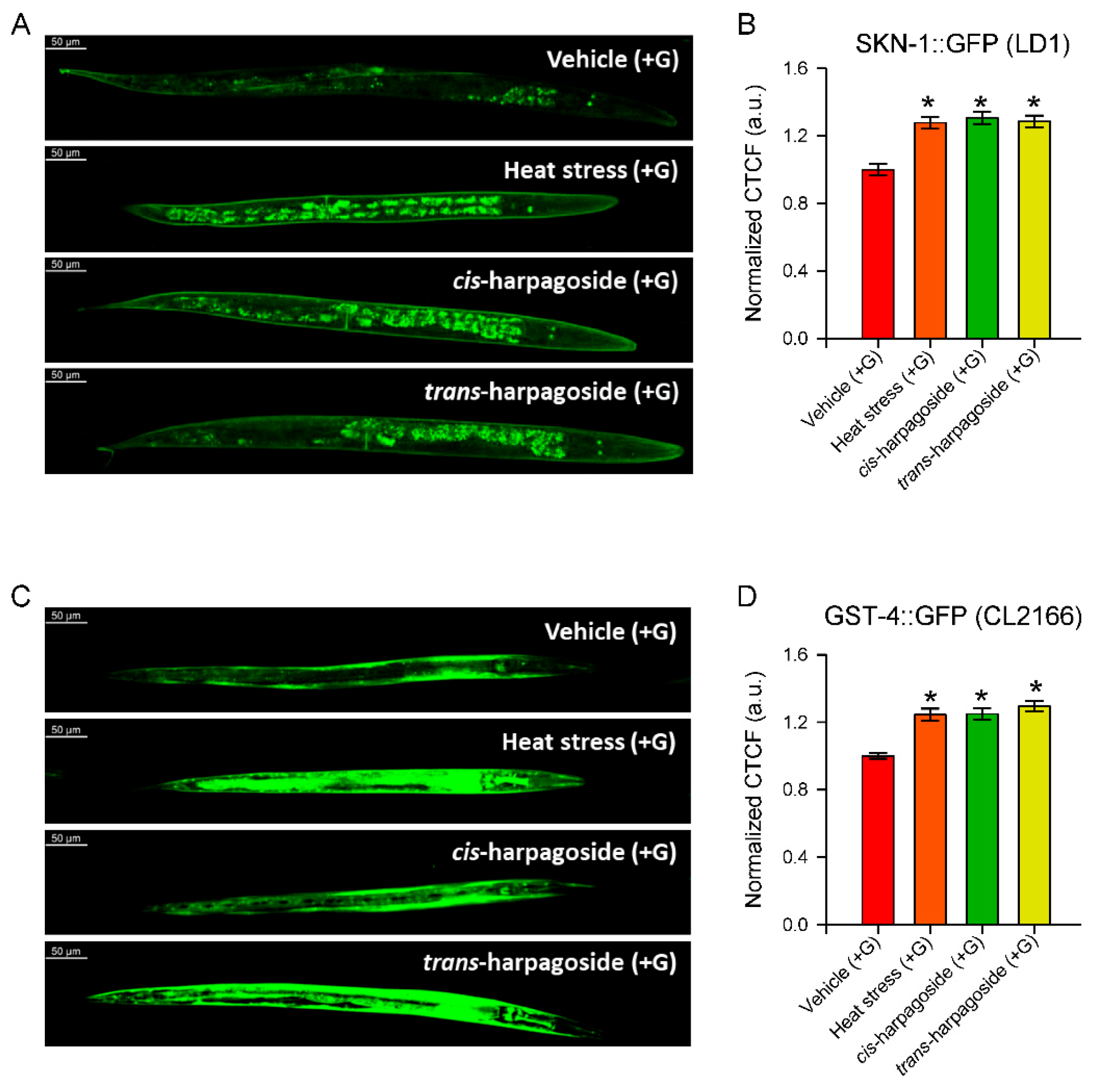
Based on our current experimental evidence that both isomers reduce lipid accumulation under glucose supplementation (Figure 6), as well as their effects on mitochondrial function in a model of glucose-induced dysfunction (Figure 7), we investigated whether SKN-1 could mediate these effects. To address this, we utilized the transgenic reporter strain LD1, which expresses SKN-1::GFP, allowing visualization and quantification of SKN-1 activity, along with its downstream target glutathione S-transferase 4 (gst-4) [3,5].
Fluorescence analysis revealed that treatment with both cis- and trans-harpagoside significantly increased SKN-1 nuclear localization in LD1 nematodes (Figure 8A,B) and enhanced gst-4 expression in the CL2166 strain (Figure 8C,D). These findings confirm our hypothesis that SKN-1 signaling is correlated with the lipid-lowering and mitochondrial-protective effects of both harpagoside isomers.
Figure 8. Upregulation of SKN-1 and gst-4 in response to cis- or trans-harpagoside treatment. (A,C) Representative confocal fluorescence images (20× magnification, scale bar: 50 μm) of (A) LD1 and (C) CL2166 worms treated with vehicle (+G), exposed to heat stress (+G; 37 °C for 5 min), or supplemented with cis- or trans-harpagoside. (B,D) For each worm, fluorescence was calculated as Correlated Total Cell Fluorescence (CTCF): CTCF = Integrated Density − (Area × Mean background fluorescence). Values were normalized to the mean value of vehicle (+G) group and expressed in arbitrary units (a.u.). Data are presented as mean ± SEM (n = 60 worms from three independent biological replicates). * p < 0.05 vs. vehicle (+G), ANOVA on ranks with Dunn’s post hoc test.

3. Discussion

Obesity is a global health burden, and its prevention and treatment are of great importance not only for individual well-being but also for the stability of healthcare systems worldwide [1,2]. Moreover, obesity is the major risk factor for the development of chronic diseases such as type 2 diabetes, cardiovascular disorders, and osteoarthritis, as well as for accelerated aging [1]. In the context of therapeutic approaches, numerous studies have highlighted the promising anti-obesity activity of both plant extracts and their secondary metabolites [3,34,35]. This underscores the relevance of exploring the broad spectrum of plant-derived secondary metabolites as a potential strategy for obesity management. In this regard, a key aspect of natural products research is the precise and robust characterization of extracts and compounds of interest.
A proper understanding of the anti-obesity potential of plant extracts and their fractions begins with analysis of their bioactive compounds using appropriate analytical methodologies. In the present study, a phytochemical composition of a previously unexplored S. aestivalis was investigated through chemical profiling of the total methanolic extract and its fractions, along with isolation of individual compounds. Ten C-9 iridoid glycosides and one flavone-O-glycoside were isolated and structurally characterized, while additional iridoids, phenolic acids and a phenylethanoid glycoside were tentatively identified. Among the compounds, two iridoid glycosides—cis- and trans-harpagoside—were detected as the major constituents of S. aestivalis, and a HPLC method was developed for their quantification. In parallel with extract characterization and the identification of its main secondary metabolites, the anti-obesogenic activity was evaluated in vivo using C. elegans model of glucose-induced lipid accumulation. The effects of SCA extract, its fractions, and both cis- and trans-harpagoside assessed. In addition, harpagoside, identified as the major compound in the four most potent fractions, was further tested for its protective potential on mitochondrial homeostasis and its modulatory effect on SKN-1, a transcription factor essential for cellular integrity, and its downstream target gst-4.
The family Scrophulariaceae, commonly known as figworts, is well recognized for its diverse range of biological activities, primarily attributed to its rich content of iridoids. In plants, iridoids play an important protective role, while in humans and animals they have been associated with anti-inflammatory, antidiabetic, hepatoprotective, neuroprotective, wound-healing, and antiviral effects [36,37,38]. With regard to metabolic regulation, several Scrophularia species are important components of anti-obesity and antihypertensive herbal formulations. An example is the dried roots of S. ningpoensis, which are traditionally used in Chinese and Vietnamese medicine [39,40,41]. However, Scrophularia species from the Balkan region, including S. aestivalis, have not been sufficiently evaluated for their effect on metabolic disorders [42].
In the present study, treatment with the crude SCA extract did not reduce triglyceride content at 100 μg/mL in glucose-fed nematodes. The absence of lipid-lowering activity may be related to matrix effects [43,44]. In contrast, both methanolic and aqueous extracts of S. ningpoensis have been reported to inhibit pancreatic lipase and α-amylase, with stronger activity observed for the methanolic extract [9]. Such discrepancies could arise from species-specific differences or from the distinct experimental models employed. Interestingly, four primary SCA fractions exhibited marked lipid-reducing activity at the same supplementation dose (100 μg/mL). Metabolite profiling further indicated that harpagoside was the predominant constituent detected in the fractions.
Harpagoside is well known for its potential in the treatment of chronic non-communicable diseases such as arthritis, in which dysregulated inflammatory responses play a central role [27,45]. In addition, harpagoside has been shown to exert anti-osteoporotic activity by modulating bone Morphogenetic Protein 2 and Wnt signaling in osteoblasts, while inhibiting osteoclast differentiation [46]. A study investigating its anti-obesity potential in 3T3-L1 adipocytes showed that harpagoside inhibited tumor necrosis factor-α (TNF-α)-induced adipokine expression by activating of peroxisome proliferator-activated receptor gamma (PPAR-γ) [47]. Other structurally related iridoids from Scrophularia species have also shown protective effects in various pathological contexts. For instance, harpagide, a major constituent of S. ningpoensis, was reported to protect rat cortical neurons subjected to oxygen-glucose deprivation and reoxygenation, a model of cerebral ischemia–reperfusion injury, by attenuating endoplasmic reticulum stress [48]. As the 8-O-cinnamoyl ester of harpagide, harpagoside may share, and potentially enhance, some of these protective properties.
Our results suggest that both cis- and trans-harpagoside exhibit comparable anti-obesogenic activity at the tested concentration (100 μM). Quantitative analysis of harpagoside in SCA and its fractions revealed that the extent of lipid-reducing activity did not directly correspond with the measured harpagoside content. In fraction 1E, the concentration of trans-harpagoside was similar to that used in the assays with both isolated isomers, whereas other active fractions contained lower levels or different isomer ratios. These observations suggest that overall biological activity may be influenced by the complex matrix composition, potentially through interactions among multiple constituents leading to synergistic effects [49]. Interestingly, an extract from another source of harpagoside, Harpagophytum procumbens, has been reported to suppress appetite via activation of growth hormone secretagogue receptor (GHS-R1a), although the harpagoside itself did not exhibit similar activity [50].
Glucose supplementation not only alters lipid metabolism, leading to excessive triglyceride accumulation in C. elegans, but also compromises mitochondrial health [51]. In obesity, mitochondrial homeostasis is typically deteriorated, with energy metabolism playing a central role in these processes [3,31]. To the best of our knowledge, this is the first report demonstrating that both isomers of harpagoside can improve mitochondrial function in a glucose-induced model of obesity in C. elegans. Previous studies have also suggested beneficial effects of harpagoside on mitochondria, specifically regarding the restoration of mitophagy flux and the reduction in mitochondrial oxidative stress through modulation of key proteins involved in mitophagy, such as PINK 1 and Parkin [30]. In another study, harpagoside counteracted rotenone-induced mitochondrial impairment in cellular models of Parkinson’s disease by restoring complex I activity and alleviating mitochondrial swelling [52].
In our experimental model, glucose supplementation is known to induce negative mitochondrial changes—including disrupted morphology, reduced content, and decreased membrane potential—which have been closely associated with muscle degradation, impaired ATP production, accelerated aging, and increased susceptibility to stress in C. elegans [53,54,55]. Here, we demonstrate that both harpagoside isomers enhance mitochondrial mass and membrane potential, thereby mitigating glucose-induced mitochondrial dysfunction.
The transcription factor SKN-1, the C. elegans ortholog of human NRF2, plays an essential role in regulating mitochondrial dynamics, particularly under conditions of mitochondrial dysfunction. It is also crucial for metabolic adaptation and the maintenance of cellular homeostasis [31,32,33]. Additionally, NRF2 is typically associated with oxidative stress response, while acting interdependently with other mediators of cellular adaptation. On the other hand, mechanistic studies investigating the activity of harpagoside have mainly focused on inflammation-related pathways, including cytokines such as interleukin-6 and TNF-α, and transcription factors such as c-FOS, c-Jun, nuclear factor kappa-light-chain-enhancer of activated B cells (NF-κB), CCAAT/enhancer-binding protein β (C/EBPβ) [28,56].
We demonstrate that both cis- and trans-harpagoside activated SKN-1 and its downstream target gst-4 in transgenic reporter strains, suggesting that the metabolic effects of these isomers may at least in part involve this conserved stress-response pathway. Supporting this, treatment with H. procumbens extract, have been shown to increase NRF2 levels in neurons, thus reducing oxidative stress [56]. However, further mechanistic studies are needed to confirm and extend the hypothesis regarding the involvement of this signaling pathway.

4. Materials and Methods

4.1. General Experimental Procedures

For the qualitative analysis Q Exactive Plus® hybrid quadrupole-Orbitrap® mass spectrometer (HRMS/MS) equipped with heated electrospray ionization source (HESI) coupled with a Vanquish UPLC system (Thermo Fisher Scientific, Bremen, Germany) was used. The quantitative analysis was conducted using a Shimadzu (Nexera-LC40 XS, Kyoto, Japan) chromatograph equipped with a vacuum degasser (DGU-405), a binary pump (LC-40D XS), an autosampler (SIL-40C XS), a column oven (CTO-40C) and a PDA detector (M40). Final purification of the isolated compounds was carried out using Pure C-850 FlashPrep chromatography system with integrated UV and ELSDs and a glass column FP Select 230 × 15 mm (Buchi, Uster, Switzerland) (C18 Silica Gel, 20 g, 230 × 15 mm). The NMR spectra were recorded on Bruker AVANCE NEO 400 and Bruker AVANCE NEO 600 spectrometers (Biospin GmbH, Rheinstetten, Germany). The NMR spectra of compounds were performed in CH3OH-d4 purchased from Deutero-GmbH (Kastellaun, Germany). The spectra are processed with the Topspin 4.1.4 program.

4.2. Caenorhabditis Elegans Maintenance and Treatment

The N2 wild-type strain (Bristol), LD1 ldIs7 [skn-1b/c::GFP + rol-6(su1006)], CL2166 dvIs19 [(pAF15)gst-4p::GFP::NLS] III, SJ4143 zcIs17 [ges-1::GFP(mit)] of C. elegans and Escherichia coli OP50 were obtained from the Caenorhabditis Genetics Center (CGC, University of Minnesota, MN, USA), which is funded by the NIH Office of Research Infrastructure Programs (P40 OD010440). Nematodes were cultured at 20 °C under standard laboratory conditions on Nematode Growth Medium (NGM) agar plates seeded with E. coli OP50.
For the assays, a glucose was added to the NGM to a final concentration of 2% [3,34]. Synchronized worm populations were obtained using a standard hypochlorite bleaching method [5]. For the experimental treatments, E. coli OP50 was heat-inactivated by incubation at 65 °C for 30 min and subsequently concentrated tenfold by centrifugation. The test substances were added directly to the inactivated bacterial suspension, which was then seeded on the NGM plates.
Following synchronization, the worms were transferred onto the supplemented plates. The treatments included the crude extract (SCA), its fractions (1A to 1K), each applied at a final concentration of 100 μg/mL, and the isolated pure compounds cis- and trans-harpagoside, at a final concentration of 100 μM. The control group received 0.2% DMSO as a vehicle treatment.

4.3. Chemicals and Reagents

For fractionation of the extract and separation of prime fractions column chromatography (CC) was performed on Polyamide 6 (Sigma-Aldrich, St. Luis, MO, USA) and Sephadex LH-20 (25–100 µm, Pharmacia Fine Chemicals, Uppsala, Sweden). Detection of separation was achieved by thin layer chromatography (TLC) on 60 F254 plates (Merck, Darmstadt, Germany) under UV light at 254 and 366 nm and spraying with 20% (v/v) H2SO4 in EtOH solution. For isolation and purification of the individual compounds flash chromatography C18 Silica Gel, 20 g Merck, Darmstadt, Germany) was used. All solvents used for chromatographic purposes were of analytical grade. Acetonitrile and methanol (LC-MS Chromasolv-grade), used for LC-HRMS/MS analysis, were supplied by Honeywell-Riedel-de Haen (Seelze, Germany). Formic acid (97.5–98.5% purity, LC-MS Lichropur™, CAS: 64-18-6) was obtained from Sigma-Aldrich (Buchs, Switzerland). Acetonitrile and methanol (HPLC-grade), used for LC-UV analysis, were purchased from Sigma-Aldrich (Steinheim, Germany). Deionized water with a resistivity of ≤0.55 μS/cm was produced using a Smart2Pure 12UV/UF water purification system (Thermo Electron LED GmbH, Langenselbold, Germany).
Nematode Growth Medium (NGM; Cat. No. MBS652667) was obtained from MyBiosource Inc. (San Diego, CA, USA). Agar powder (Cat. No. 05039), LB Broth Lennox (Cat. No. L3022), and M9 Minimal Salts (Cat. No. M6030) were purchased from Sigma-Aldrich (St. Louis, MO, USA). Fluoroshield histology mounting medium (Cat. No. F6182) and Nile red (NR; Cat. No. 72485) were also obtained from Sigma-Aldrich (St. Louis, MO, USA). Tetramethylrhodamine, ethyl ester (TMRE, Cat. No. 11560796) was supplied from Invitrogen. MitoTracker Green FM (MTG, Cat. No. HY-135056) was purchased from MedChemExpress (Sollentuna, Sweden).

4.4. Plant Material

Aerial parts of S. aestivalis were collected during flowering period of the species in June 2023 from Rila Mt. North of Padala village, Rila municipality 1750 m alt. (GPS 28 June 2023, 42.16381° N, 23.18497° E). Voucher specimen (SOM 179574) has been deposited in the Herbarium of Institute of Biodiversity and Ecosystem Research, BAS.

4.5. Extraction Procedure and Isolation

The air-dried and grounded plant material (120 g) was extracted with 100% MeOH (2 L) through maceration at room temperature (2 × 48 h). Then, crude methanol extracts were combined, filtered and concentrated to dryness (11.5 g). Part of obtained extract (8.3 g) was dissolved in distilled H2O and subjected to column chromatography on Polyamide 6 eluted gradually with distilled H2O (500 mL), 25% MeOH (400 mL), 50% MeOH (450 mL), 75% MeOH (500 mL) and 100% MeOH (700 mL), to afford eleven main fractions (SCA-1A–SCA-1K). For further separation and isolation of secondary metabolites from the remaining fractions, Sephadex LH-20 column chromatography was performed using methanol (MeOH) as the eluent. Additionally, flash chromatography was applied using a mobile phase consisting of water (Solvent A) and methanol (Solvent B), with the following elution gradient: 0–60 min, 0 → 70% B; 60–65 min, 70 → 100% B; and 65–75 min, 100% B. During the analysis, the flow rate was maintained at 10 mL/min. Detection was performed using an Evaporative Light Scattering Detector (ELSD), and UV absorbance was monitored at multiple wavelengths: 205, 254, 280, and 350 nm. Thus, a part of SCA-1C (350 mg) was dissolved in MeOH and applied on Sephadex column and a subfraction (180 mg) was additionally separated by flash chromatography to afford aucubin (1, 14.2 mg), harpagide (2, 18.0 mg), 6-O-methyl catalpol (3, 12.1 mg) and 8-acetyl harpagide (6, 18.8 mg). Fraction SCA-1D (132 mg) was directly subjected on flash chromatography and as result 17.2 mg of pure cis-harpagoside (17, 17.0 mg) was isolated. 350 g of SCA-1E were also applied on Sephadex LH-20 column and the obtained two subfractions a1 (145 mg) and a2 (118 mg) were additionally separated by flash chromatography.
As result, saccatoside (8, 14.1 mg), premnacorymboside B (10, 14.0 mg) and trans-harpagoside (19, 31.0 mg), 6-O-α-L-(2″-O-(E)-cinnamoyl)rhamnopyranosylcatalpol (13, 4.7 mg), 6-O-α-L-(3″-O-(E)-cinnamoyl)rhamnopyranosylcatalpol (16, 5.5 mg) were isolated. Approximately 1 g of SCA-1J was dissolved in MeOH and subjected on Sephadex column and a subfraction (68 mg) was purified to obtaining of 13.7 mg linarin (18).

4.6. Qualitative Analysis by UPLC-HRMS/MS

LC-MS analysis was conducted using a high-resolution Q Exactive Plus® hybrid quadrupole-Orbitrap® mass spectrometer (HRMS/MS) equipped with HESI coupled with a Vanquish UHPLC system (Thermo Fisher Scientific, Bremen, Germany). Chromatographic separation of S. aestivalis compounds was achieved using an Accucore™ C18 analytical column (150 × 2.1 mm, 2.6 µm; Thermo Fisher Scientific™, Germany). The mobile phase comprised water with 0.1% (v/v) formic acid (Solvent A), and acetonitrile with 0.1% (v/v) formic acid (Solvent B). The flow rate was maintained at 0.3 mL/min, and the injection volume was 3 µL. Thus, the compounds’ elution occurred over a 50-min period with fallowing gradient program: 0–25 min, 7 → 22% % B; 25–30 min, 22 → 30% B; 30–40 min, 30 → 35% B; 40–50 min, 35 → 50% B; 50–55 min, 50 → 85% B; 55–60 min, 95 → 7% B, followed by 10-min re-equilibration to initial conditions. The operating conditions for the HESI source were as follows: 2.90 kV spray voltage; 320 °C capillary temperature; sheath gas flow rate, 30 arb. units; auxiliary gas flow, 6 arb. units; sweap gas flow, 0 arb. units, S-Lens RF level, 50 V. Full-scan mass spectra over the range 120–1200 were acquired in negative and positive ionization mode at resolution settings of 70,000, automatic gain control (AGC) target of 1e6, and a maximum injection time (IT) of 80 ms. Data acquisition and processing were carried out using Xcalibur software 4.2 SP1 and FreeStyle 1.5 (Thermo Fisher Scientific). The tentative identification of the phytochemicals was assigned in negative ion mode as [M-H] and [M+HCOO].

4.7. Quantitative Analysis by HPLC-UV

Quantitative analyses were conducted using a Shimadzu (Nexera-LC40 XS, Kyoto, Japan) chromatograph equipped with a vacuum degasser (DGU-405), a binary pump (LC-40D XS), an autosampler (SIL-40C XS), a column oven (CTO-40C) and a PDA detector (M40). Chromatographic separation of S. aestivalis’ constituents was carried out using an Accucore™ C18 analytical column (150 × 2.1 mm, 2.6 µm; Thermo Fisher Scientific™, Germany) using a 0.5 mL/min flow rate, a 5-μL injection volume, and a 40 °C oven temperature. The mobile phase encompassed water with 0.1% (v/v) formic acid (Solvent A), and 60% (v/v) acetonitrile in 0.1% (v/v) formic acid (Solvent B). Using the selected mobile phases, the following gradient was chosen as optimal for profiling all extract compounds: 0–25 min, 7 → 22% B; 25–30 min, 22 → 30% B; 30–40min, 30 → 35% B; 40–50 min, 35 → 50% B; 50–55 min, 50 → 85% B; 55–60 min, 95 → 7% B, followed by 10-min re-equilibration to initial conditions. Prior the analysis the mobile phases were filtered through an Olimpeak™ Nylon membrane filter (0.25 µm pore size, 47 mm diameter, Teknokroma Analitica SA, Barcelona, Spain). During the analysis, the autosampler temperature was maintained at 8 °C. The photodiode array (PDA) detector was configured to scan across a wavelength range of 200–700 nm (±0.01 nm), with peak areas quantified at 275 nm. Data acquisition and processing were carried out using LabSolutions software DB version 5.114 (Shimadzu, Kyoto, Japan).
In addition, method linearity for cis- and trans-harpagoside was established by correlating peak area with the concentration of standard solutions (μg/mL). System suitability was assessed by comparing chromatograms of mobile phase blanks with those of sample solutions with no co-eluting impurities. Method precision was evaluated through repeated injections of six standard solutions for intra-day analysis, and across three separate days for inter-day analysis.

4.8. LC Sample Preparation

For quantitative analysis, 3 mg of the dry S. aestivalis extract was accurately weighed and dissolved in 100% MeOH. From a starting concentration of 2 mg/mL, a volume of 500 μL was diluted to 1.5 mL with mobile phase A.
For qualitative analysis, appropriate quantities of the total SCA dry extract were purified using a solid-phase extraction (SPE) procedure with Supelco™ Superclean LC-18 tubes (3 μm particle diameter), purchased from Sigma-Aldrich (Taufkirchen, Germany). The final eluate was diluted to 10 mL with an 80% methanol-in-water solution, yielding a final concentration of 540 μg/mL.
The SCA fractions were prepared as follows: 1 mg of each dried fraction (1D, 1E, 1F, and 1G) was dissolved in 1 mL of 100% methanol. Subsequently, 500 μL of each stock solution was diluted with 1 mL of mobile phase A prior to analysis.
The stock standard solution was prepared by individually weighing appropriate amounts of cis- and trans-harpagoside, followed by dissolution in 100% methanol. Aliquots of this solution containing both standard compounds were subsequently diluted with mobile phase A to achieve the concentrations previously established for the construction of calibration curves for each compound.
All sample and standard solutions were filtered through Olimpeak™ PTFE membrane syringe filters (25 mm diameter; 0.20 μm pore size), obtained from Teknokroma Analitica SA (Barcelona, Spain), and stored at 10 °C in the LC autosampler prior to injection into the column.

4.9. Nile Red Triglyceride Staining

After exposure to the experimental treatments for 24 h, approximately 1000–1500 worms (L3–L4 larval stage) per experimental group were collected and washed three times with M9 buffer. Each sample was then fixed with 600 μL of 40% isopropanol for 3 min, followed by centrifugation and removal of the supernatant. Nile red staining solution was added to the pellet, and the samples were incubated for 2 h. After staining, the samples were centrifuged, the dye was removed, and the worms were incubated in PBST (phosphate-buffered saline with 0.1% Tween™ 20) for 30 min. The stained nematodes were mounted on glass microscope slides using a histology mounting medium [3,5]. Lipid depositions were visualized using a Stellaris 5 confocal system equipped with an inverted DMi8 microscope (Leica Microsystems, Wetzlar, Germany). Quantification of fluorescence intensity as corrected total cell fluorescence (CTCF) was performed using ImageJ software, version 1.53t. The data were normalized to the glucose-supplemented vehicle and represented in arbitrary units (a.u.).

4.10. Mitochondrial Mass and Potential Assay

The mitochondrial membrane potential (ΔΨm) was assessed using the TMRE dye, and mitochondrial mass was evaluated with the MTG dye. The co-staining procedure followed previously established protocols [5,57]. Both dyes were diluted in heat-inactivated, tenfold-concentrated E. coli OP50 containing the cis- or trans-harpagoside treatments to final concentrations of 100 nM for TMRE and 4 μM for MTG. For each experimental group, at least 1000 synchronized L4 worms were incubated at 20 °C overnight. Following staining, worms from each group were transferred to treatment and stain-free plates for 1 h to clear residual dye from the gut. Imaging was performed using a Stellaris 5 confocal system coupled with an inverted DMi8 microscope (Leica, Wetzlar, Germany). For each experiment, around 40 nematodes were randomly captured and in a blind manner at least 20 were scored for quantification of fluorescence intensity. Quantification was performed using ImageJ (version 1.53t), as previously described [5]. The experiment was performed in at least three independent biological replicates.

4.11. Detection of GFP-Fluorescence of SJ4143, CL2166, and LD1 Strains

For fluorescence detection in the transgenic C. elegans strains, worms were exposed to cis- and trans-harpagoside or Vehicle (+G) for 24 h, mounted on microscopy slides, and visualized. A brief heat stress (37 °C for 5 min) was applied as a positive control. Imaging was performed at 10× or 20× magnification using the GFP filter on a Leica Stellaris 5 confocal system equipped with an inverted DMi8 microscope. Fluorescence intensity was quantified using ImageJ software (version 1.53t) [5,57]. Quantification was normalized to the Vehicle (+G) group, and results were expressed as normalized CTCF.

4.12. Statistical Analysis

Statistical analyses were performed using SigmaPlot version 11.0 (Systat Software GmbH, Erkrath, Germany). Data are presented as mean ± standard error of the mean (SEM). Statistical significance was considered at p * < 0.05. When the assumption of normality was violated, non-parametric tests were applied (ANOVA on ranks followed by Dunn’s multiple comparison test). The quantitative HPLC results are presented as the mean assay ± relative standard deviation (% RSD, n = 3) from three sequentially injected aliquots of a single sample.

5. Conclusions

This study demonstrates that the previously unexplored Scrophularia aestivalis exhibits significant therapeutic potential, as several of its primary fractions showed significant anti-obesity properties in a glucose-supplemented C. elegans model. Our findings indicate that the secondary metabolites present, particularly cis- and trans-harpagoside, not only modulate lipid metabolism but also enhance mitochondrial function and activate SKN-1/gst-4 pathway. Together, these results highlight S. aestivalis as a promising source of natural compounds for the development of plant-based anti-obesity therapies.

Supplementary Materials

The following supporting information can be downloaded at https://www.mdpi.com/article/10.3390/molecules30214202/s1, Table S1: 1H NMR data for cis- and trans-harpagoside (400 MHz, in CD3OD, δ in ppm, J in Hz); Table S2: UPLC-HRMS/MS mass spectrometric data of identified compounds in S. aestivalis fractions; Figure S1: UPLC-HRMS base peak chromatogram of SCA-1D and SCA-1E; Figure S2: UPLC-HRMS/MS base peak chromatogram of SCA-1F and SCA-1G; Figure S3: Calibration curves of (A) cis-harpagoside and (B) trans-harpagoside estimated by HPLC at 275 nm; Figure S4: HPLC-UV chromatogram of a standard solution containing: (1) cis-harpagoside (50 µg/mL) and (2) trans-harpagoside (110 µg/mL) at 275 nm.

Author Contributions

Conceptualization, M.P.P., M.I.G. and K.A.; methodology, M.P.P., M.I.G. and K.A.; investigation, K.P., M.N.T., V.I.G., M.S.S., S.K. and Z.P.; plant sample collection S.S.; writing—original draft preparation, M.N.T., V.I.G., M.S.S. and K.A.; writing—review and editing, M.P.P., M.I.G. and K.A.; visualization, M.N.T., V.I.G. and M.S.S.; supervision, M.I.G. and K.A.; project administration, K.A.; funding acquisition, M.P.P., M.I.G. and K.A. All authors have read and agreed to the published version of the manuscript.

Funding

This research received funding from the Bulgarian National Science Fund (contract number: KП-06-H79/6).

Institutional Review Board Statement

Not applicable.

Data Availability Statement

The original contributions presented in this study are included in the article. Further inquiries can be directed to the corresponding authors.

Acknowledgments

Research equipment (flash chromatography and LC systems, and NMR spectrometers), provided by the Centre of Competence “Sustainable Utilization of Bio-resources and Waste of Medicinal and Aromatic Plants for Innovative Bioactive Products” (BIORESOURCES BG), project BG16RFPR002-1.014-0001, funded by the Program “Research, Innovation, and Digitization for Smart Transformation” 2021–2027, co-funded by the EU, was used in this investigation.

Conflicts of Interest

The authors declare no conflicts of interest.

Abbreviations

The following abbreviations are used in this manuscript:
CTCFCorrelated total cell fluorescence
gst-4Glutathione S-transferase 4
NRF2Nuclear factor erythroid 2-related factor 2
PPAR-γPeroxisome proliferator-activated receptor gamma
SCAScrophularia aestivalis
SKN-1Protein skinhead-1
TNF-αTumor necrosis factor-α
UPLC-HRMS/MSultra-high liquid chromatography with high-resolution mass spectrometry

References

  1. Blüher, M. The past and future of obesity research. Nat. Rev. Endocrinol. 2025; in press. [Google Scholar] [CrossRef]
  2. Müller, T.D.; Blüher, M.; Tschöp, M.H.; DiMarchi, R.D. Anti-obesity drug discovery: Advances and challenges. Nat. Rev. Drug Discov. 2021, 21, 201–223. [Google Scholar] [CrossRef] [PubMed]
  3. Savova, M.S.; Todorova, M.N.; Binev, B.K.; Georgiev, M.I.; Mihaylova, L.V. Curcumin enhances the anti-obesogenic activity of orlistat through SKN-1/NRF2-dependent regulation of nutrient metabolism in Caenorhabditis elegans. Int. J. Obes. 2025, 49, 516–526. [Google Scholar] [CrossRef] [PubMed]
  4. Nielsen, J. Engineering yeast to produce plant-derived anti-obesity agent. Nat. Chem. 2023, 15, 1204–1205. [Google Scholar] [CrossRef]
  5. Todorova, M.N.; Savova, M.S.; Mihaylova, L.V.; Georgiev, M.I. Punica granatum L. leaf extract enhances stress tolerance and promotes healthy longevity through HLH-30/TFEB, DAF16/FOXO, and SKN1/NRF2 crosstalk in Caenorhabditis elegans. Phytomedicine 2024, 134, 155971. [Google Scholar] [CrossRef]
  6. Scheunert, A.; Heubl, G. Against all odds: Reconstructing the evolutionary history of Scrophularia (Scrophulariaceae) despite high levels of incongruence and reticulate evolution. Org. Divers. Evol. 2017, 17, 323–349. [Google Scholar] [CrossRef]
  7. WFO. World Flora Online. 2025. Available online: https://zenodo.org/records/15704590 (accessed on 24 September 2025).
  8. Pasdaran, A.; Hamedi, A. The genus Scrophularia: A source of iridoids and terpenoids with a diverse biological activity. Pharm. Biol. 2017, 55, 2211–2233. [Google Scholar] [CrossRef]
  9. Buchholz, T.; Chen, C.; Zhang, X.Y.; Melzig, M.F. Pancreatic lipase and a-amylase inhibitory activities of plants used in Traditional Chinese Medicine (TCM). Pharmazie 2016, 71, 420–424. [Google Scholar] [CrossRef]
  10. Chaibeddra, Z.; Akkal, S.; Ouled-Haddar, H.; Silva, A.M.S.; Zellagui, A.; Sebti, M.; Cardoso, S.M. Scrophularia tenuipes Coss and Durieu: Phytochemical composition and biological activities. Molecules 2020, 25, 1647. [Google Scholar] [CrossRef]
  11. Grover, P.; Mehta, L.; Malhotra, A.; Kapoor, G.; Nagarajan, K.; Kumar, P.; Chawla, V.; Chawla, P.A. Exploring the multitarget potential of iridoids: Advances and applications. Curr. Top. Med. Chem. 2022, 23, 371–388. [Google Scholar] [CrossRef]
  12. Thabet, A.A.; Ayoub, I.M.; Youssef, F.S.; Al-Sayed, E.; Efferth, T.; Singab, A.N.B. Phytochemistry, structural diversity, biological activities and pharmacokinetics of iridoids isolated from various genera of the family Scrophulariaceae Juss. Phytomed. Plus 2022, 2, 100287. [Google Scholar] [CrossRef]
  13. Xu, S.; Tan, Y.; Xia, Y.; Tang, H.; Li, J.; Tan, N. Targeted characterization and guided isolation of chemical components in Scrophulariae Radix based on LC-MS. J. Pharm. Biomed. Anal. 2023, 235, 115569. [Google Scholar] [CrossRef]
  14. Akdemir, Z.; Calis, I.; Junior, P. Iridoid and phenylpropanoid glycosides from Pedicularis condensate. Phytochemistry 1991, 30, 2401–2402. [Google Scholar] [CrossRef]
  15. Li, Y.-M.; Jiang, S.-H.; Gao, W.-Y.; Zhu, D.-Y. Iridoid glycosides from Scrophularia ningpoensis. Phytochemistry 1999, 50, 101–104. [Google Scholar] [CrossRef]
  16. Gutierrez, R.M.P.; Solis, R.V.; Baez, E.G.; Martinez, F.M. Effect on capillary permeability in rabbits of iridoids from Buddleia scordioides. Phytother. Res. 2006, 20, 542–545. [Google Scholar] [CrossRef]
  17. Kuria, K.M.; Chepkwony, H.; Govaerts, C.; Roets, E.; Busson, R.; De Witte, P.; Zupko, I.; Hoornaert, G.; Quirynen, L.; Maes, L.; et al. The antiplasmodial activity of isolates from Ajuga remota. J. Nat. Prod. 2002, 65, 789–793. [Google Scholar] [CrossRef] [PubMed]
  18. Otsuka, H.; Sasaki, Y.; Yamasaki, K.; Takeda, Y.; Seki, T. Iridoid Diglycoside monoacyl esters from the leaves of Premna japonica. J. Nat. Prod. 1990, 53, 107–111. [Google Scholar] [CrossRef]
  19. Hang, N.T.B.; Ky, P.T.; Van Minh, C.; Cuong, N.X.; Thao, N.P.; Van Kiem, P. Study on the chemical constituents of Premna integrifolia L. Nat. Prod. Commun. 2008, 3, 1449–1452. [Google Scholar] [CrossRef]
  20. Helfrich, E.; Rimpler, H. Iridoid glycosides and phenolic glycosides from Holmskioldia sanguinea. Phytochemistry 1999, 50, 619–627. [Google Scholar] [CrossRef]
  21. Potterat, O.; Saadou, M.; Hostettmann, K. Iridoid glucosides from Rogeria adenophylla. Phytochemistry 1991, 30, 889–892. [Google Scholar] [CrossRef]
  22. Ye, Y.; Chen, Z.; Wu, Y.; Gao, M.; Zhu, A.; Kuai, X.; Luo, D.; Chen, Y.; Li, K. Purification process and in vitro and in vivo bioactivity evaluation of pectolinarin and linarin from Cirsium japonicum. Molecules 2022, 27, 8695. [Google Scholar] [CrossRef]
  23. Mottaghipisheh, J.; Taghrir, H.; Dehsheikh, A.B.; Zomorodian, K.; Irajie, C.; Sourestani, M.M.; Iraji, A. Linarin, a glycosylated flavonoid, with potential therapeutic attributes: A comprehensive review. Pharmaceuticals 2021, 14, 1104. [Google Scholar] [CrossRef]
  24. Xie, G.; Jiang, Y.; Huang, M.; Zhu, Y.; Wu, G.; Qin, M. Dynamic analysis of secondary metabolites in various parts of Scrophularia ningpoensis by liquid chromatography tandem mass spectrometry. J. Pharm. Biomed. Anal. 2020, 186, 113307. [Google Scholar] [CrossRef]
  25. You-Hua, C.; Jin, Q.; Jing, H.; Bo-Yang, Y. Structural characterization and identification of major constituents in Radix Scrophulariae by HPLC coupled with electrospray ionization quadrupole time-of-flight tandem mass spectrometry. Chin. J. Nat. Med. 2014, 12, 47–54. [Google Scholar] [CrossRef]
  26. Fakhri, S.; Iranpanah, A.; Gravandi, M.M.; Moradi, S.Z.; Ranjbari, M.; Majnooni, M.B.; Echeverría, J.; Qi, Y.; Wang, M.; Liao, P.; et al. Natural products attenuate PI3K/Akt/mTOR signaling pathway: A promising strategy in regulating neurodegeneration. Phytomedicine 2021, 91, 153664. [Google Scholar] [CrossRef] [PubMed]
  27. Georgiev, M.I.; Ivanovska, N.; Alipieva, K.; Dimitrova, P.; Verpoorte, R. Harpagoside: From Kalahari Desert to pharmacy shelf. Phytochemistry 2013, 92, 8–15. [Google Scholar] [CrossRef]
  28. Haseeb, A.; Ansari, M.Y.; Haqqi, T.M. Harpagoside suppresses IL-6 expression in primary human osteoarthritis chondrocytes. J. Orthop. Res. 2017, 35, 311–320. [Google Scholar] [CrossRef] [PubMed]
  29. Kim, J.Y.; Cheon, Y.H.; Ahn, S.J.; Kwak, S.C.; Chung, C.H.; Lee, C.H.; Lee, M.S. Harpagoside attenuates local bone erosion and systemic osteoporosis in collagen-induced arthritis in mice. BMC Complement. Med. Ther. 2022, 22, 214. [Google Scholar] [CrossRef]
  30. Li, W.; Wang, X.; Liu, T.; Zhang, Q.; Cao, J.; Jiang, Y.; Sun, Q.; Li, C.; Wang, W.; Wang, Y. Harpagoside protects against doxorubicin-induced cardiotoxicity via P53-Parkin-mediated mitophagy. Front. Cell Dev. Biol. 2022, 10, 813370. [Google Scholar] [CrossRef]
  31. Bauzá-Thorbrügge, M.; Peris, E.; Zamani, S.; Micallef, P.; Paul, A.; Bartesaghi, S.; Benrick, A.; Wernstedt Asterholm, I. NRF2 is essential for adaptative browning of white adipocytes. Redox Biol. 2023, 68, 102951. [Google Scholar] [CrossRef] [PubMed]
  32. Gumeni, S.; Papanagnou, E.D.; Manola, M.S.; Trougakos, I.P. Nrf2 activation induces mitophagy and reverses Parkin/Pink1 knock down-mediated neuronal and muscle degeneration phenotypes. Cell Death Dis. 2021, 12, 671. [Google Scholar] [CrossRef]
  33. Zweig, J.A.; Caruso, M.; Brandes, M.S.; Gray, N.E. Loss of NRF2 leads to impaired mitochondrial function, decreased synaptic density and exacerbated age-related cognitive deficits. Exp. Gerontol. 2020, 131, 110767. [Google Scholar] [CrossRef] [PubMed]
  34. Mladenova, S.G.; Todorova, M.N.; Savova, M.S.; Georgiev, M.I.; Mihaylova, L.V. Maackiain mimics caloric restriction through aak-2-mediated lipid reduction in Caenorhabditis elegans. Int. J. Mol. Sci. 2023, 24, 17442. [Google Scholar] [CrossRef] [PubMed]
  35. Savova, M.S.; Mihaylova, L.V.; Tews, D.; Wabitsch, M.; Georgiev, M.I. Targeting PI3K/AKT signaling pathway in obesity. Biomed. Pharmacother. 2023, 159, 114244. [Google Scholar] [CrossRef]
  36. Chen, Y.; Zhang, L.; Gong, X.; Gong, H.; Cheng, R.; Qiu, F.; Zhong, X.; Huang, Z. Iridoid glycosides from Radix Scrophulariae attenuates focal cerebral ischemia reperfusion injury via inhibiting endoplasmic reticulum stress mediated neuronal apoptosis in rats. Mol. Med. Rep. 2020, 21, 131–140. [Google Scholar] [CrossRef]
  37. Cock, I.E.; Baghtchedjian, L.; Cordon, M.E.; Dumont, E. Phytochemistry, medicinal properties, bioactive compounds, and therapeutic potential of the genus Eremophila (Scrophulariaceae). Molecules 2022, 27, 7734. [Google Scholar] [CrossRef]
  38. Renda, G.; Kadıoğlu, M.; Kılıç, M.; Korkmaz, B.; Kırmızıbekmez, H. Anti-inflammatory secondary metabolites from Scrophularia kotschyana. Hum. Exp. Toxicol. 2021, 40, S676–S683. [Google Scholar] [CrossRef] [PubMed]
  39. Nguyen, D.T.H.; Tang, H.K.; Nguyen, A.T.H.; Le, L.B. Survey on the herbal combinations in traditional Vietnamese medicine formulas for obesity treatment based on literature. Obes. Med. 2025, 51, 100598. [Google Scholar] [CrossRef]
  40. Zhang, S.; Liu, Z.; Zhang, H.; Zhou, X.; Wang, X.; Chen, Y.; Miao, X.; Zhu, Y.; Jiang, W. Effect and mechanism of Qing Gan Zi Shen decoction on heart damage induced by obesity and hypertension. J. Ethnopharmacol. 2023, 319, 117163. [Google Scholar] [CrossRef]
  41. Zhu, Y.; Huang, J.J.; Zhang, X.X.; Yan, Y.; Yin, X.W.; Ping, G.; Jiang, W.M. Qing Gan Zi Shen Tang alleviates adipose tissue dysfunction with up-regulation of SIRT1 in spontaneously hypertensive rat. Biomed. Pharmacother. 2018, 105, 246–255. [Google Scholar] [CrossRef]
  42. Mihaylova, R.; Elincheva, V.; Gevrenova, R.; Zheleva-Dimitrova, D.; Momekov, G.; Simeonova, R. Targeting inflammation with natural products: A mechanistic review of iridoids from Bulgarian medicinal plants. Molecules 2025, 30, 3456. [Google Scholar] [CrossRef]
  43. Choi, H.; Lee, D.; Park, S.; Jang, Y.; Ahn, J.; Ha, T.; Jung, C.H. Antiobesity effects of the combination of Patrinia scabiosifolia root and Hippophae rhamnoides leaf extracts. J. Food Biochem. 2020, 44, e13214. [Google Scholar] [CrossRef]
  44. Zhao, Q.; Luan, X.; Zheng, M.; Tian, X.-H.; Zhao, J.; Zhang, W.-D.; Ma, B.-L. Synergistic mechanisms of constituents in herbal extracts during intestinal absorption: Focus on natural occurring nanoparticles. Pharmaceutics 2020, 12, 128. [Google Scholar] [CrossRef] [PubMed]
  45. Gxaba, N.; Manganyi, M.C. The fight against infection and pain: Devil’s Claw (Harpagophytum procumbens) a rich source of anti-inflammatory activity: 2011–2022. Molecules 2022, 27, 3637. [Google Scholar] [CrossRef] [PubMed]
  46. Chung, H.-J.; Kim, W.K.; Oh, J.; Kim, M.-R.; Shin, J.-S.; Lee, J.; Ha, I.-H.; Lee, S.K. Correction to Antiosteoporotic activity of harpagoside by upregulation of the BMP2 and WNT signaling pathways in osteoblasts and suppression of differentiation in osteoclasts. J. Nat. Prod. 2019, 82, 1398. [Google Scholar] [CrossRef] [PubMed]
  47. Kim, T.K.; Park, K.S. Inhibitory effects of harpagoside on TNF-α-induced pro-inflammatory adipokine expression through PPAR-γ activation in 3T3-L1 adipocytes. Cytokine 2015, 76, 368–374. [Google Scholar] [CrossRef]
  48. Wang, K.; Lou, Y.; Xu, H.; Zhong, X.; Huang, Z. Harpagide from Scrophularia protects rat cortical neurons from oxygen-glucose deprivation and reoxygenation-induced injury by decreasing endoplasmic reticulum stress. J. Ethnopharmacol. 2020, 253, 112614. [Google Scholar] [CrossRef]
  49. Caesar, L.K.; Cech, N.B. Synergy and antagonism in natural product extracts: When 1 + 1 does not equal 2. Nat. Prod. Rep. 2019, 36, 869–888. [Google Scholar] [CrossRef]
  50. Torres-Fuentes, C.; Theeuwes, W.F.; McMullen, M.K.; McMullen, A.K.; Dinan, T.G.; Cryan, J.F.; Schellekens, H. Devil’s Claw to suppress appetite—Ghrelin receptor modulation potential of a Harpagophytum rocumbens root extract. PLoS ONE 2014, 9, e103118. [Google Scholar] [CrossRef] [PubMed]
  51. Zong, Y.; Li, H.; Liao, P.; Chen, L.; Pan, Y.; Zheng, Y.; Zhang, C.; Liu, D.; Zheng, M.; Gao, J. Mitochondrial dysfunction: Mechanisms and advances in therapy. Signal Transduct. Target Ther. 2024, 9, 124. [Google Scholar] [CrossRef]
  52. Lang, J.; Xiong, Z. Protective effects of harpagoside on mitochondrial functions in rotenone-induced cell models of Parkinson’s disease. Biomed. Rep. 2025, 22, 64. [Google Scholar] [CrossRef]
  53. Beaudoin-Chabot, C.; Wang, L.; Celik, C.; Abdul Khalid, A.T.; Thalappilly, S.; Xu, S.; Koh, J.H.; Lim, V.W.X.; Low, A.D.; Thibault, G. The unfolded protein response reverses the effects of glucose on lifespan in chemically-sterilized C. elegans. Nat. Commun. 2022, 13, 5889. [Google Scholar] [CrossRef]
  54. Feng, X.; Wang, X.; Zhou, L.; Pang, S.; Tang, H. The impact of glucose on mitochondria and life span is determined by the integrity of proline catabolism in Caenorhabditis elegans. J. Biol. Chem. 2023, 299, 102881. [Google Scholar] [CrossRef] [PubMed]
  55. Mao, K.; Ji, F.; Breen, P.; Sewell, A.; Han, M.; Sadreyev, R.; Ruvkun, G. Mitochondrial Dysfunction in C. elegans Activates Mitochondrial Relocalization and Nuclear Hormone Receptor-Dependent Detoxification Genes. Cell Metab. 2019, 29, 1182–1191. [Google Scholar] [CrossRef] [PubMed]
  56. Hong, J.Y.; Kim, H.; Lee, J.; Jeon, W.J.; Lee, Y.J.; Ha, I.H. Harpagophytum procumbens inhibits iron overload-induced oxidative stress through activation of Nrf2 signaling in a rat model of lumbar spinal stenosis. Oxid. Med. Cell Longev. 2022, 2022, 3472443. [Google Scholar] [CrossRef] [PubMed]
  57. Daskalaki, I.; Markaki, M.; Gkikas, I.; Tavernarakis, N. Local coordination of mRNA storage and degradation near mitochondria modulates C. elegans ageing. EMBO J. 2023, 42, e112446. [Google Scholar] [CrossRef]
Disclaimer/Publisher’s Note: The statements, opinions and data contained in all publications are solely those of the individual author(s) and contributor(s) and not of MDPI and/or the editor(s). MDPI and/or the editor(s) disclaim responsibility for any injury to people or property resulting from any ideas, methods, instructions or products referred to in the content.

Article Metrics

Citations

Article Access Statistics

Multiple requests from the same IP address are counted as one view.