


Valorization of Bioactive Compounds from Lingonberry Pomace and Grape Pomace with Antidiabetic Potential


Abstract
1. Introduction
2. Results and Discussions
2.1. Total Phenolic and Total Flavonoid Contents (TPC and TFC)
2.2. High-Performance Liquid Chromatography with Photodiode Array Detector (Hplc-Pda) Analysis of Individual Phenolic Compounds
2.3. Determination of Antioxidant Activity
2.4. Antidiabetic Potential Testing-α-Amylase and α-Glucosidase Inhibition Activity
3. Materials and Methods
3.1. Chemicals and Reagents
3.2. Sample Preparation and Extraction Protocols for Phenolic Compounds
3.2.1. Ultrasound-Assisted Extraction (UAE)
3.2.2. Accelerated Solvent Extraction (ASE)
3.3. Analytical Methods
3.3.1. Determination of Total Phenolic and Flavonoids Content (TPC and TFC)
3.3.2. HPLC Determination of Individual Phenolic Compounds
3.4. Antioxidant Assays
3.4.1. DPPH Radical Scavenging Activity
3.4.2. Reducing Power Activity
3.5. Enzymes Inhibition Activity
3.5.1. Amylase Inhibition Assay
3.5.2. α-Glucosidase Inhibition
3.6. Statistical Analysis
4. Conclusions
Author Contributions
Funding
Institutional Review Board Statement
Informed Consent Statement
Data Availability Statement
Conflicts of Interest
References
- More, P.R.; Jambrak, A.R.; Arya, S.S. Green, environment-friendly and sustainable techniques for extraction of food bioactive compounds and waste valorization. Trends Food Sci. Technol. 2022, 128, 296–315. [Google Scholar] [CrossRef] [Scilit]
- Del Rio Osorio, L.L.; Flórez-López, E.; Grande-Tovar, C.D. The Potential of Selected Agri-Food Loss and Waste to Contribute to a Circular Economy: Applications in the Food, Cosmetic and Pharmaceutical Industries. Molecules 2021, 26, 515. [Google Scholar]
- Esposito, B.; Sessa, M.R.; Sica, D.; Malandrino, O. Towards circular economy in the agri-food sector. A systematic literature review. Sustainability 2020, 12, 7401. [Google Scholar] [CrossRef] [Scilit]
- Iqbal, A.; Schulz, P.; Rizvi, S.S.H. Valorization of bioactive compounds in fruit pomace from agro-fruit industries: Present Insights and future challenges. Food Biosci. 2021, 44, 101384. [Google Scholar] [CrossRef] [Scilit]
- Castrica, M.; Rebucci, R.; Giromini, C.; Tretola, M.; Cattaneo, D.; Baldi, A. Total phenolic content and antioxidant capacity of agri-food waste and by-products. Ital. J. Anim. Sci. 2019, 18, 336–341. [Google Scholar] [CrossRef] [Scilit]
- Vilkickyte, G.; Petrikaite, V.; Pukalskas, A.; Sipailiene, A.; Raudone, L. Exploring, Vaccinium vitis-idaea L. as a potential source of therapeutic agents: Antimicrobial, antioxidant, and anti-inflammatory activities of extracts and fractions. J. Ethnopharmacol. 2022, 292, 115207. [Google Scholar] [CrossRef] [Scilit]
- Shamilov, A.A.; Bubenchikova, V.N.; Chernikov, M.V.; Pozdnyakov, D.I.; Garsiya, E.R. Vaccinium vitis-idaea L.: Chemical contents, pharmacological activities. Pharmaceut. Sci. 2020, 26, 344–362. [Google Scholar] [CrossRef] [Scilit]
- Anhe, F.F.; Varin, T.V.; Le Barz, M.; Pilon, G.; Dudonne, S.; Trottier, J.; St-Pierre, P.; Harris, C.S.; Lucas, M.; Lemire, M. Arctic berry extracts target the gut–liver axis to alleviate metabolic endotoxaemia, insulin resistance and hepatic steatosis in diet-induced obese mice. Diabetologia 2018, 61, 919–931. [Google Scholar] [CrossRef] [Scilit]
- Reichert, K.P.; Schetinger, M.R.C.; Gutierres, J.M.; Pelinson, L.P.; Stefanello, N.; Dalenogare, D.P.; Baldissarelli, J.; Lopes, T.F.; Morsch, V.M. Lingonberry extract provides neuroprotection by regulating the purinergic system and reducing oxidative stress in diabetic rats. Mol. Nutr. Food Res. 2018, 62, 1800050. [Google Scholar] [CrossRef] [Scilit]
- Kitrytė, V.; Kavaliauskaitė, A.; Tamkutė, L.; Pukalskienė, M.; Syrpas, M.; Venskutonis, P.R. Zero waste biorefining of ligonberry (Vaccinium vitis-idaea L.) pomace into functional ingredients by consecutive high pressure and enzyme assisted extractions with green solvents. Food Chem. 2020, 322, 126767. [Google Scholar] [CrossRef] [Scilit]
- Laroze, L.E.; Díaz-Reinoso, B.; Moure, A.; Zúñiga, M.E.; Domínguez, H. Extraction of antioxidants from several berries pressing wastes using conventional and supercritical solvents. Eur. Food Res. Technol. 2010, 231, 669–677. [Google Scholar] [CrossRef] [Scilit]
- Coelho, C.R.V.; Peters, G.; Zhang, J.; Abdollahi, M.; Undeland, I. Fish beyond fillets: Life cycle assessment of cross-processing herring and lingonberry co-products into a food product. Resour. Conserv. Recycl. 2023, 188, 106703. [Google Scholar] [CrossRef] [Scilit]
- Kowalska, K. Lingonberry (Vaccinium vitis-idaea L.) fruit as a source of bioactive compounds with health-promoting effects-A review. Int. J. Mol. Sci. 2021, 22, 5126. [Google Scholar] [CrossRef] [Scilit] [PubMed]
- Liu, P.; Lindstedt, A.; Markkinen, N.; Sinkkonen, J.; Suomela, J.-P.; Yang, B. Characterization of metabolite profiles of leaves of bilberry (Vaccinium myrtillus L.) and lingonberry (Vaccinium vitis-idaea L.). J. Agric. Food Chem. 2014, 62, 12015–12026. [Google Scholar] [CrossRef] [Scilit]
- Fan, M.; Li, T.; Li, Y.; Qian, H.; Zhang, H.; Rao, Z.; Wang, L. Vaccinium bracteatum Thunb. as a promising resource of bioactive compounds with health benefits: An updated review. Food Chem. 2021, 356, 129738. [Google Scholar] [CrossRef] [Scilit]
- Szakiel, A.; Paczkowski, C.; Koivuniemi, H.; Huttunen, S. Comparison of the triterpenoid content of berries and leaves of lingonberry Vaccinium vitis-idaea from Finland and Poland. J. Agric. Food Chem. 2012, 60, 4994–5002. [Google Scholar] [CrossRef] [Scilit]
- Xu, J.; Li, H.; Yang, H.; Wang, T.; Chang, Y.; Nie, C.; Nie, S.; Fu, Y. Lingonberry (Vaccinium vitis-idaea L.) fruits: Potential characterization of flavor and functional profiles during ripening based on UHPLC-QqQ-MS/MS. J. Food Compos. Anal. 2024, 130, 106143. [Google Scholar] [CrossRef] [Scilit]
- Esposito, D.; Overall, J.; Grace, M.H.; Komarnytsky, S.; Lila, M.A. Alaskan berry extracts promote dermal wound repair through modulation of bioenergetics and integrin signaling. Front. Pharmacol. 2019, 10, 1058. [Google Scholar] [CrossRef] [Scilit]
- Kivimaki, A.S.; Ehlers, P.I.; Siltari, A.; Turpeinen, A.M.; Vapaatalo, H.; Korpela, R. Lingonberry, cranberry and blackcurrant juices affect mRNA expressions of inflammatory and atherothrombotic markers of SHR in a long-term treatment. J. Funct. Foods 2012, 4, 496–503. [Google Scholar] [CrossRef] [Scilit]
- Sodhi, G.K.; Kaur, G.; Nancy, G.; Kaur, W.H.; Sillu, D.; Rath, S.K.; Saxena, S.; Rios-Solis, L.; Dwibedi, V. Waste to wealth: Microbial-based valorization of grape pomace for nutraceutical, cosmetic, and therapeutic applications to promote circular economy. Process Saf. Environ. Prot. 2024, 188, 1464–1478. [Google Scholar] [CrossRef] [Scilit]
- Mohamed Ahmed, I.A.; Ozcan, M.M.; Al Juhaimi, F.; Babiker, E.F.E.; Ghafoor, K.; Banjanin, T.; Osman, M.A.; Gassem, M.A.; Alqah, H.A. Chemical composition, bioactive compounds, mineral contents, and fatty acid composition of pomace powder of different grape varieties. J. Food Process Preserv. 2020, 44, e14539. [Google Scholar]
- Onache, P.A.; Geana, E.-I.; Ciucure, C.T.; Florea, A.; Sumedrea, D.I.; Ionete, R.E.; Tița, O. Bioactive Phytochemical Composition of Grape Pomace Resulted from Different White and Red Grape Cultivars. Separations. 2022, 9, 395. [Google Scholar] [CrossRef] [Scilit]
- Chen, L.; Pu, Y.; Xu, Y.; He, X.; Cao, J.; Ma, Y.; Jiang, W. Anti-diabetic and antiobesity: Efficacy evaluation and exploitation of polyphenols in fruits and vegetables. Food Res. Int. 2022, 157, 111202. [Google Scholar] [CrossRef] [Scilit] [PubMed]
- Sabra, A.; Netticadan, T.; Wijekoon, C. Grape bioactive molecules, and the potential health benefits in reducing the risk of heart diseases. Food Chem. X 2021, 12, 100149. [Google Scholar] [CrossRef] [Scilit] [PubMed]
- Salehi, B.; Vlaisavljevic, S.; Adetunji, C.O.; Adetunji, J.B.; Kregiel, D.; Antolak, H.; Pawlikowska, E.; Uprety, Y.; Mileski, K.S.; Devkota, H.P. Plants of the genus Vitis: Phenolic compounds, anticancer properties and clinical relevance. Trends Food Sci. Technol. 2019, 91, 362–379. [Google Scholar]
- Anghel, L.; Milea, A.; Constantin, O.E.; Barbu, V.; Chițescu, C.; Enachi, E.; Rapeanu, G.; Mocanu, G.D.; Stanciuc, N. Dried grape pomace with lactic acid bacteria as a potential source for probiotic and antidiabetic value-added powders. Food Chem X 2023, 19, 100777. [Google Scholar] [CrossRef] [Scilit]
- Mir-Cerda, A.; Nunez, O.; Granados, M.; Sentellas, S.; Saurina, J. An overview of the extraction and characterization of bioactive phenolic compounds from agri-food waste within the framework of circular bioeconomy. Trends Anal. Chem. 2023, 161, 116994. [Google Scholar] [CrossRef] [Scilit]
- Yahfoufi, N.; Alsadi, N.; Jambi, M.; Matar, C. The immunomodulatory and anti-inflammatory role of polyphenols. Nutrients 2018, 10, 1618. [Google Scholar] [CrossRef] [Scilit]
- Zhang, Y.J.; Gan, R.Y.; Li, S.; Zhou, Y.; Li, A.N.; Xu, D.P.; Bin Li, H.; Kitts, D.D. Antioxidant phytochemicals for the prevention and treatment of chronic diseases. Molecules 2015, 20, 21138–21156. [Google Scholar] [CrossRef] [Scilit]
- Dos Santos Silva, M.E.; Grisi, C.V.B.; da Silva, S.P.; Madruga, M.S.; da Silva, F.A.P. The technological potential of agro-industrial residue from grape pulping (Vitis spp.) for application in meat products: A review. Food Biosci. 2022, 49, 101877. [Google Scholar]
- Unusan, N. Proanthocyanidins in grape seeds: An updated review of their health benefits and potential uses in the food industry. J. Funct. Foods 2020, 67, 103861. [Google Scholar] [CrossRef] [Scilit]
- Zhang, L.; Chen, J.; Liao, H.; Li, C.; Chen, M. Anti-inflammatory effect of lipophilic grape seed proanthocyanidin in RAW 264.7 cells and a zebrafish model. J. Funct. Foods 2020, 75, 104217. [Google Scholar] [CrossRef] [Scilit]
- Angulo-L’opez, J.E.; Flores-Gallegos, A.C.; Ascacio-Valdes, J.A.; Contreras Esquivel, J.C.; Torres-Le’on, C.; Rúelas-Ch’acon, X.; Aguilar, C.N. Antioxidant dietary fiber sourced from agroindustrial byproducts and its applications. Foods 2022, 12, 159. [Google Scholar] [CrossRef] [Scilit]
- Lama-Muñoz, A.; Contreras, M.D.M. Extraction systems and analytical techniques for food phenolic compounds: A review. Foods 2022, 11, 3671. [Google Scholar] [CrossRef] [Scilit] [PubMed]
- Zhang, Y.; Cai, P.; Cheng, G.; Zhang, Y. A brief review of phenolic compounds identified from plants: Their extraction, analysis, and biological activity. Nat. Prod. Commun. 2022, 17, 1934578X211069721. [Google Scholar] [CrossRef] [Scilit]
- Ameer, K.; Shahbaz, H.M.; Kwon, J.H. Green extraction methods for polyphenols from plant matrices and their byproducts: A. review. Compr. Rev. Food Sci. Food Saf. 2017, 16, 295–315. [Google Scholar] [CrossRef] [Scilit]
- Dash, D.R.; Pathak, S.S.; Pradhan, R.C. Improvement in novel ultrasound assisted extraction technology of high value-added components from fruit and vegetable peels. J. Food Process Eng. 2021, 44, 1–11. [Google Scholar] [CrossRef] [Scilit]
- Gündüz, M.; Çiçek, Ş.K.; Topuz, S. Extraction and optimization of phenolic compounds from butterbur plant (Petasites hybridus) by ultrasound-assisted extraction and determination of antioxidant and antimicrobial activity of butterbur extracts. J. Appl. Res Med. Aromat. Plants 2023, 35, 100491. [Google Scholar] [CrossRef] [Scilit]
- Bouloumpasi, E.; Skendi, A.; Christaki, S.; Biliaderis, G.C.; Irakli, M. Optimizing conditions for the recovery of lignans from sesame cake using three green extraction methods: Microwave-, ultrasound- and accelerated-assisted solvent extraction. Ind. Crops Prod. 2024, 207, 117770. [Google Scholar] [CrossRef] [Scilit]
- Conidi, C.; Cassano, A.; Drioli, E. Membrane diafiltration for enhanced purification of biologically active compounds from goji berries extracts. Sep. Purif. Technol. 2022, 282, 119991. [Google Scholar] [CrossRef] [Scilit]
- WHO. Noncommunicable Diseases. 2021. Available online: https://www.who.int/news-room/fact-sheets/detail/noncommunicable-diseases (accessed on 26 July 2022).
- Khalil, H. Diabetes microvascular complications—A clinical update. Diabetes Metab. Syndr. Clin. Res. Rev. 2017, 11, S133–S139. [Google Scholar] [CrossRef] [Scilit]
- Kato-Schwartz, C.G.; Corrêa, R.C.G.; Lima, D.S.; Sá-Nakanishi, A.B.; Gonçalves, G.A.; Seixas, F.A.V.; Haminiuk, C.W.I.; Barros, L.; Ferreira, I.C.F.R.; Bracht, A.; et al. Potential anti-diabetic properties of Merlot grape pomace extract: An in vitro, in silico and in vivo study of α-amylase and α-glucosidase inhibition. Food Res. Intern. 2020, 137, 109462. [Google Scholar] [CrossRef] [Scilit]
- Ong, K.W.; Hsu, A.; Song, L.; Huang, D.; Tan, B.K.H. Polyphenols-rich Vernonia amygdalina shows anti-diabetic effects in streptozotocin-induced diabetic rats. J. Ethnopharmacol. 2011, 133, 598–607. [Google Scholar] [CrossRef] [Scilit]
- Lv, Y.; Hao, J.; Liu, C.; Huang, H.; Ma, Y.; Yang, X.; Tang, L. Anti-diabetic effects of a phenolic-rich extract from Hypericum attenuatum Choisy in KK-Ay mice mediated through AMPK/PI3K/Akt/GSK3β signaling and GLUT4, PPARγ, and PPARα expression. J. Funct. Foods 2019, 61, 103506. [Google Scholar] [CrossRef] [Scilit]
- Gowd, V.; Xie, L.; Sun, C.; Chen, W. Phenolic profile of bayberry followed by simulated gastrointestinal digestion and gut microbiota fermentation and its antioxidant potential in HepG2 cells. J. Funct. Foods. 2020, 70, 103987. [Google Scholar] [CrossRef] [Scilit]
- Granato, D.; Mocan, A.; Câmara, J.S. Is a higher ingestion of phenolic compounds the best dietary strategy? A scientific opinion on the deleterious effects of polyphenols in vivo. Trends Food Sci. Technol. 2020, 98, 162–166. [Google Scholar] [CrossRef] [Scilit]
- Gil-Sánchez, I.; Cueva, C.; Sanz-Buenhombre, M.; Guadarrama, A.; Moreno-Arribas, M.V.; Bartolomé, B. Dynamic gastrointestinal digestion of grape pomace extracts: Bioaccessible phenolic metabolites and impact on human gut microbiota. J. Food Comp. Anal. 2018, 68, 41–52. [Google Scholar] [CrossRef] [Scilit]
- Marín, L.; Miguélez, E.M.; Villar, C.J.; Lombó, F. Bioavailability of dietary polyphenols and gut microbiota metabolism: Antimicrobial properties. BioMed Res. Int. 2015, 2015, 905215. [Google Scholar] [CrossRef] [Scilit]
- Adeshirlarijaney, A.; Gewirtz, A.T. Considering gut microbiota in treatment of type 2 diabetes mellitus. Gut Microbes 2020, 11, 253–264. [Google Scholar] [CrossRef] [Scilit]
- Fava, F.; Rizzetto, L.; Tuohy, K.M. Gut microbiota and health: Connecting actors across the metabolic system. Proc. Nutr. Soc. 2019, 78, 177–188. [Google Scholar] [CrossRef] [Scilit]
- Gu, Y.; Li, X.; Chen, H.; Sun, Y.; Yang, L.; Ma, Y.; Chan, E.C.Y. Antidiabetic effects of multi-species probiotic and its fermented milk in mice via restoring gut microbiota and intestinal barrier. Food Biosci. 2022, 47, 101619. [Google Scholar] [CrossRef] [Scilit]
- Cisneros-Yupanqui, M.; Zagotto, A.; Alberton, A.; Lante, A.; Zagotto, G.; Ribaudo, G.; Rizzi, C. Study of the phenolic profile of a grape pomace powder and its impact on delaying corn oil oxidation. Nat. Prod. Res. 2020, 36, 455–459. [Google Scholar] [CrossRef] [Scilit]
- Kukula-Koch, W.; Aligiannis, N.; Halabalaki, M.; Skaltsounis, A.-L.; Glowniak, K.; Kalpoutzakis, E. Influence of extraction procedures on phenolic content and antioxidant activity of Cretan barberry herb. Food Chem. 2013, 138, 406–413. [Google Scholar] [CrossRef] [Scilit]
- Romanini, E.B.; Rodrigues, L.M.; Finger, A.; Chierrito, T.P.C.; da Silva Scapim, M.R.; Madrona, G.S. Ultrasound assisted extraction of bioactive compounds from BRS Violet grape pomace followed by alginate-Ca2+ encapsulation. Food Chem. 2021, 338, 128101. [Google Scholar] [CrossRef] [Scilit] [PubMed]
- de Souza, V.R.; Pereira, P.A.P.; da Silva, T.L.T.; de Oliveira Lima, L.C.; Pio, R.; Queiroz, F. Determination of bioactive compounds, antioxidant activity and chemical composition of Brazilian blackberry, red raspberry, strawberry, blueberry and sweet cherry fruits. Food Chem. 2014, 154, 362–368. [Google Scholar] [CrossRef] [Scilit] [PubMed]
- Pan, Z.; Qu, W.; Ma, H.; Atungulu, G.G.; McHugh, T.H. Continuous and pulsed ultrasound-assisted extractions of antioxidants from pomegranate peel. Ultrason. Sonochem. 2012, 19, 365–372. [Google Scholar] [CrossRef] [Scilit]
- Wen, C.; Zhang, J.; Zhang, H.; Dzah, C.S.; Zandile, M.; Duan, Y.; Luo, X. Advances in ultrasound assisted extraction of bioactive compounds from cash crops–a review. Ultrason. Sonochem. 2018, 48, 538–549. [Google Scholar] [CrossRef] [Scilit]
- Bouafia, M.; Colak, N.; Ayaz, F.A.; Benarfa, A.; Harrat, M.; Gourine, N.; Yousfi, M. The optimization of ultrasonic-assisted extraction of Centaurea sp. antioxidative phenolic compounds using response surface methodology. J. Appl. Res. Med. Aromat. Plants 2021, 25, 100330. [Google Scholar] [CrossRef] [Scilit]
- Paun, G.; Neagu, E.; Albu, C.; Alecu, A.; Seciu-Grama, A.-M.; Radu, G.L. Antioxidant and Antidiabetic Activity of Cornus mas L. and Crataegus monogyna Fruit Extracts. Molecules 2024, 29, 3595. [Google Scholar] [CrossRef] [Scilit]
- Spínola, V.; Pinto, J.; Castilho, P.C. Hypoglycemic, anti-glycation and antioxidant in vitro properties of two Vaccinium species from Macaronesia: A relation to their phenolic composition. J. Funct. Foods 2018, 40, 595–605. [Google Scholar] [CrossRef] [Scilit]
- Cabrita, L.; Froystein, N.Å.; Andersen, M. Oyvind. Anthocyanin trisaccharides in blue berries of Vaccinium padifolium. Food Chem. 2000, 69, 33–36. [Google Scholar] [CrossRef] [Scilit]
- Lima, E.C.; Baptista, J.B.; Albuquerque, L.M. Antioxidant capacity versus total phenolic, total flavonoid and anthocyanin content of endemic azorean Vaccinium cymindraceum: Comparison with commercial bilberry and highbush blueberry. Acta Hortic. 2009, 810, 901–910. [Google Scholar] [CrossRef] [Scilit]
- Beaulieu, L.-P.; Harris, C.S.; Saleem, A.; Cuerrier, A.; Haddad, P.S.; Martineau, L.C.; Arnason, J.T. Inhibitory effect of the Cree traditional medicine Wiishichimanaanh (Vaccinium vitis-idaea) on advanced glycation end product formation: Identification of active principles. Phytother. Res 2010, 24, 741–747. [Google Scholar]
- Garzón, G.A.; Narváez, C.E.; Riedl, K.M.; Schwartz, S.J. Chemical composition, anthocyanins, non-anthocyanin phenolics and antioxidant activity of wild bilberry (Vaccinium meridionale Swartz) from Colombia. Food Chem. 2010, 122, 980–986. [Google Scholar] [CrossRef] [Scilit]
- Drozdz, P.; Šežiene, V.; Wójcik, J.; Pyrzynska, K. Evaluation of Bioactive Compounds, Minerals and Antioxidant Activity of Lingonberry (Vaccinium vitis-idaea L.) Fruits. Molecules 2018, 23, 53. [Google Scholar] [CrossRef] [Scilit] [PubMed]
- Bujor, O.C.; Ginies, C.; Popa, I.V.; Dufour, C. Phenolic compounds and antioxidant activity of lingonberry (Vaccinium vitis-idaea L.) leaf, stem and fruit at different harvest periods. Food Chem. 2018, 252, 356–365. [Google Scholar] [CrossRef] [Scilit] [PubMed]
- Cisneros-Yupanqui, M.; Rizzi, C.; Mihaylova, D.; Lante, A. Efect of the distillation process on polyphenols content of grape pomace. Eur. Food Res. Technol. 2022, 248, 929–935. [Google Scholar] [CrossRef] [Scilit]
- Frum, A.; Georgescu, C.; Gligor, F.G.; Stegarus, D.I.; Dobrea, C.M.; Tita, O.; Blaga, L.; Sciences, A.; Industry, F.; Street, I.R.; et al. Identification and Quantification of Phenolic Compounds from Red Grape Pomace. Sci. Study Res. Chem. Chem. Eng. Biotechnol. Food Ind. 2018, 19, 45–52. [Google Scholar]
- Grzesik, M.; Naparło, K.; Bartosz, G.; Sadowska-Bartosz, I. Antioxidant properties of catechins: Comparison with other antioxidants. Food Chem. 2018, 241, 480–492. [Google Scholar] [CrossRef] [Scilit]
- Sancho, R.A.S.; Pastore, G.M. Evaluation of the effects of anthocyanins in type 2 diabetes. Food Res. Internat 2012, 46, 378–386. [Google Scholar] [CrossRef] [Scilit]
- Wang, S.Y.; Camp, M.J.; Mark, K. Antioxidant capacity and a-glucosidase inhibitory activity in peel and flesh of blueberry (Vaccinium spp.) cultivars Ehlenfeldt. Food Chem. 2012, 132, 1759–1768. [Google Scholar] [CrossRef] [Scilit]
- Dipayan, S.; Widya, A.; Woods, F.; Elina, C.; Edgar, V.; Kalidas, S. In vitro screening and evaluation of phenolic antioxidant-linked anti-hyperglycemic functions of rabbit-eye blueberry (Vaccinium ashei) cultivars. J. Berry Res. 2017, 7, 163–177. [Google Scholar]
- Sri Harsha, P.S.C.; Lavelli, V. Use of Grape Pomace Phenolics to Counteract Endogenous and Exogenous Formation of Advanced Glycation End-Products. Nutrients 2019, 11, 1917. [Google Scholar] [CrossRef] [Scilit]
- Ryyti, R.; Hamalainen, M.; Peltola, R.; Moilanen, E. Beneficial effects of lingonberry (Vaccinium vitis-idaea L.) supplementation on metabolic and inflammatory adverse effects induced by high-fat diet in a mouse model of obesity. PLoS ONE 2020, 15, e0232605. [Google Scholar] [CrossRef] [Scilit]
- Fernandes, A.C.; Martins, I.M.; Moreira, D.K.; Macedo, G.A. Use of agro-industrial residues as potent antioxidant, antiglycation agents, and α-amylase and pancreatic lipase inhibitory activity. J. Food Process. Preserv. 2020, 44, e14397. [Google Scholar] [CrossRef] [Scilit]
- Cisneros Yupanqui, M.; Lante, A.; Mihaylova, D.; Krastanov, A.I. The αAmylase and αGlucosidase Inhibition Capacity of Grape Pomace: A Review Corrado Rizzi. Food Bioprocess Technol. 2023, 16, 691–703. [Google Scholar] [CrossRef] [Scilit] [PubMed]
- Dilworth, L.; Facey, A.; Omoruyi, F. Diabetes mellitus and its metabolic complications: The role of adipose tissues. Int. J. Mol. Sci. 2021, 22, 7644. [Google Scholar] [CrossRef] [Scilit]
- Fernandes, A.C.; Santana, A.L.; Martins, I.M.; Moreira, D.K.T.; Macedo, J.A.; Macedo, G.A. Anti-glycation effect and the α-amylase, lipase, and α-glycosidase inhibition properties of a polyphenolic fraction derived from citrus wastes. Prep. Biochem. Biotech. 2020, 50, 794–802. [Google Scholar] [CrossRef] [Scilit]
- Hogan, S.; Zhang, L.; Li, J.; Sun, S.; Canning, C.; Zhou, K. Antioxidant rich grape pomace extract suppresses postprandial hyperglycemia in diabetic mice by specifically inhibiting alpha-glucosidase. Nutr. Metab. 2010, 7, 71. [Google Scholar] [CrossRef] [Scilit]
- Huamán-Castilla, N.L.; Campos, D.; García-Ríos, D.; Parada, J.; Martínez-Cifuentes, M.; Mariotti-Celis, M.S.; Pérez-Correa, J.R. Chemical properties of vitis vinifera carménère pomace extracts obtained by hot pressurized liquid extraction, and their inhibitory effect on type 2 diabetes mellitus related enzymes. Antioxidants 2021, 10, 472. [Google Scholar] [CrossRef] [Scilit]
- Lavelli, V.; Sri Harsha, P.S.C.; Ferranti, P.; Scarafoni, A.; Iametti, S. Grape skin phenolics as inhibitors of mammalian α-glucosidase and α-amylase—Effect of food matrix and processing on efficacy. Food Funct. 2016, 7, 1655–1663. [Google Scholar] [CrossRef] [Scilit]
- Sardabi, F.; Azizi, M.H.; Gavlighi, H.A.; Rashidinejad, A. Potential benefits of Moringa peregrina defatted seed: Effect of processing on nutritional and anti-nutritional properties, antioxidant capacity, in vitro digestibility of protein and starch, and inhibition of α-glucosidase and α-amylase enzymes. Food Chem. Adv. 2022, 1, 100034. [Google Scholar] [CrossRef] [Scilit]
- Kong, F.; Qin, Y.; Su, Z.; Ning, Z.; Yu, S. Optimization of extraction of hypoglycemic ingredients from grape seeds and evaluation of α-glucosidase and α-amylase inhibitory effects in vitro. J. Food Sci. 2018, 83, 1422–1429. [Google Scholar] [CrossRef] [Scilit]
- Paun, G.; Neagu, E.; Alecu, A.; Albu, C.; Seciu-Grama, A.-M.; Radu, G.L. Evaluating the Antioxidant and Antidiabetic Properties of Medicago sativa and Solidago virgaurea Polyphenolic-Rich Extracts. Molecules 2024, 29, 326. [Google Scholar] [CrossRef] [Scilit]
- Singleton, V.L.; Orthofer, R.; Lamuela-Raventos, R.M. [14] Analysis of total phenols and other oxidation substrates and antioxidants by means of folin-ciocalteu reagent. Methods Enzymol. 1999, 299, 152–178. [Google Scholar]
- Lin, J.-Y.; Tang, C.-Y. Determination of total phenolic and flavonoid contents in selected fruits and vegetables, as well as their stimulatory effects on mouse splenocyte proliferation. Food Chem. 2007, 101, 140–147. [Google Scholar] [CrossRef] [Scilit]
- Bondet, V.; Brand-Williams, W.; Berset, C. Kinetics and mechanism of antioxidant activity using the DPPH free radical method. Lebensm Wiss Technol. 1997, 30, 609–615. [Google Scholar] [CrossRef] [Scilit]
- Epure, A.; Pârvu, A.E.; Vlase, L.; Benedec, D.; Hanganu, D.; Gheldiu, A.M.; Al Toma, V.; Oniga, I. Phytochemical profile, anti-738 oxidant, cardioprotective and nephroprotective activity of romanian chicory extract. Plants 2021, 10, 64. [Google Scholar] [CrossRef] [Scilit]
- Berker, K.; Guclu, K.; Tor, I.; Apak, R. Comparative evaluation of Fe (III) reducing power-based antioxidant capacity assays in the presence of phenanthroline, batho-phenanthroline, tripyridyltriazine (FRAP) and ferricyanide reagents. Talanta 2007, 72, 1157–1165. [Google Scholar] [CrossRef] [Scilit]
- Ranilla, L.G.; Kwon, Y.I.; Apostolidis, E.; Shetty, K. Phenolic compounds, antioxidant activity and in vitro inhibitory potential against key enzymes relevant for hyperglycemia and hypertension of commonly used medicinal plants, herbs and spices in Latin America. Bioresour. Technol. 2010, 101, 4676–4689. [Google Scholar] [CrossRef] [Scilit]
- Queiroz, D.P.K.; Ferreira, A.G.; Lima, A.S.; Lima, E.S.; Lima, M.P. Isolation and identification of α-glucosidase, α-amylase and lipase inhibitors from hortia longifolia. Int. J. Pharm. Pharm. Sci. 2013, 5, 336–339. [Google Scholar]
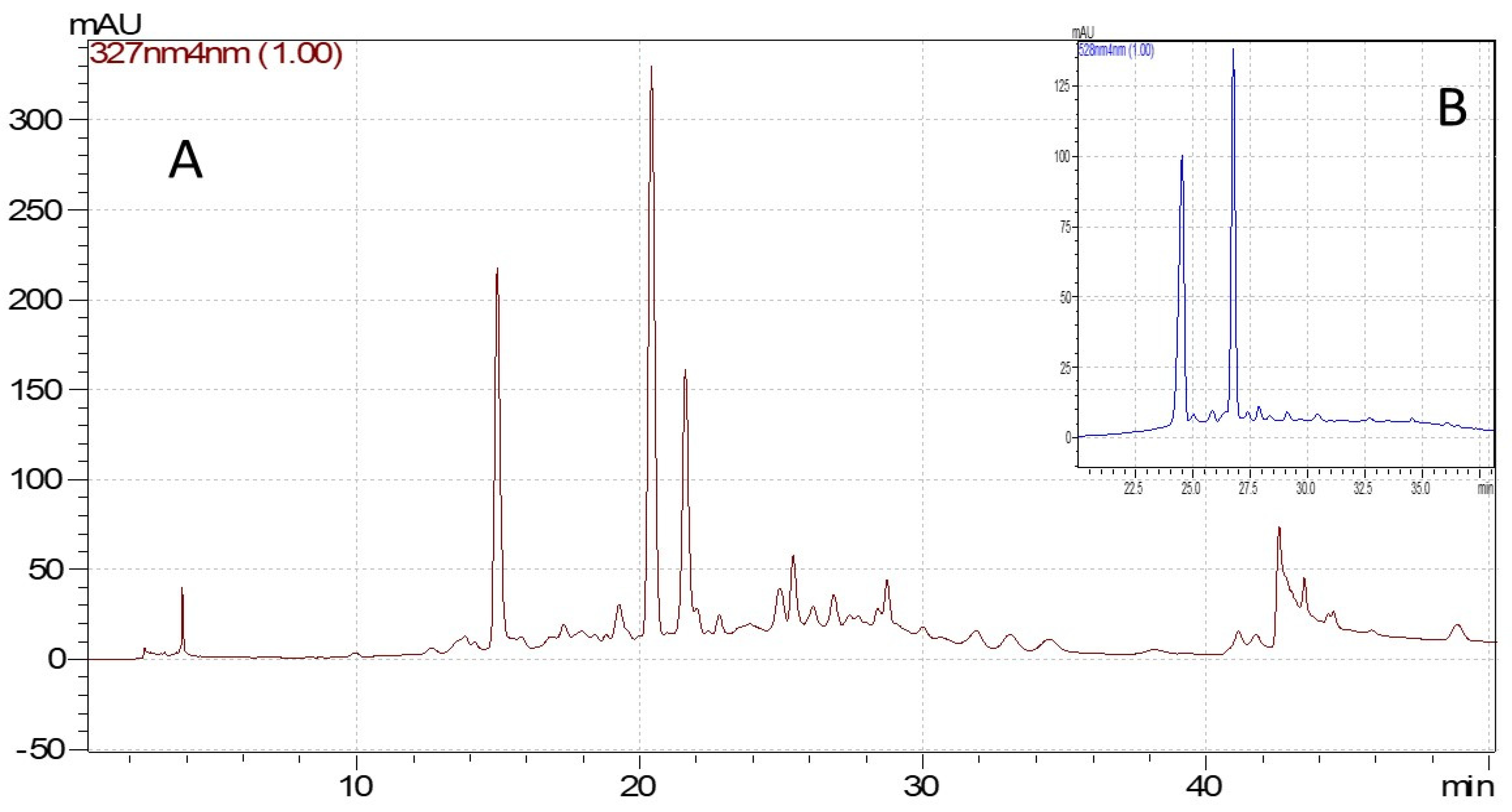
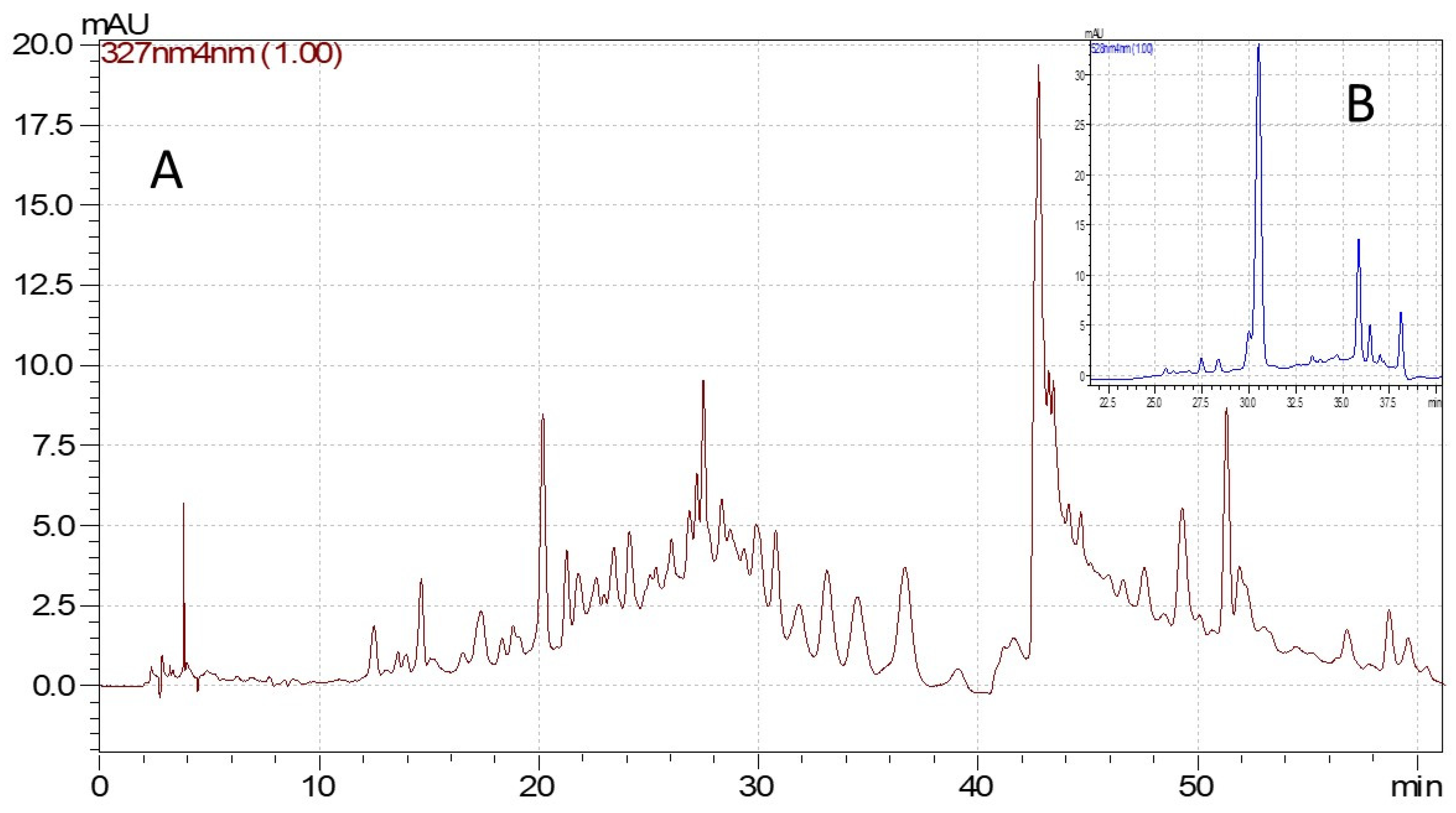

| Samples | Polyphenol Concentration ± SD (CAE μg/mL) | Flavonoid Concentration ± SD (RE μg/mL) | |||
|---|---|---|---|---|---|
| UAE | ASE | UAE | ASE | ||
| Lingonberry pomace extracts | Microfiltrate | 1277.50 ± 15.67 | 1804.37 ± 24.36 | 219.50 ± 8.58 | 336.25 ± 12.31 |
| Concentrate | 1653.75 ± 27.89 | 2440.62 ± 14.56 | 287.75 ± 6.32 | 495.65 ± 22.52 | |
| F | p-value | F crit | |||
| 34.25 | 0.001 | 5.98 | |||
| Grape pomace extracts | Microfiltrate | 744.67 ± 15.32 | 446.93 ± 11.23 | 81.20 ± 2.58 | 55.10 ± 2.13 |
| Concentrate | 1041.12 ± 26.25 | 571.51 ± 10.56 | 124.40 ± 5.62 | 70.65 ± 1.35 | |
| F | p-value | F crit | |||
| 22.75 | 0.003 | 5.98 | |||
| Compound | Extract UAE | Extract ASE | ||
|---|---|---|---|---|
| Initial Concentration ± SD | Concentrate Concentration ± SD | Initial Concentration ± SD | Concentrate Concentration ± SD | |
| μg/mL | μg/mL | μg/mL | μg/mL | |
| Gallic acid | 4.88 ± 0.23 | 5.14 ± 0.25 | 6.86 ± 0.42 | 8.89 ± 0.42 |
| (+)-Catechin | 241.26 ± 12.56 | 279.39 ± 18.6 | 328.27 ± 21.06 | 331.66 ± 15.63 |
| Chlorogenic acid | 60.51 ± 3.56 | 71.79 ± 4.89 | 47.98 ± 3.21 | 89.09 ± 4.65 |
| Caffeic acid | 13.05 ± 0.89 | 13.02 ± 0.78 | 21.47 ± 1.76 | 27.76 ± 1.89 |
| (−)-Epicatechin | 22.01 ± 1.89 | 29.35 ± 1.32 | 21.89 ± 1.78 | 43.39 ± 2.56 |
| p-Coumaric acid | 2.21 ± 0.15 | 2.58 ± 0.19 | 2.63 ± 0.12 | 5.64 ± 0.39 |
| Rutin | 7.32 ±0.56 | 8.56 ± 0.46 | 13.73 ± 0.89 | 22.19 ± 1.56 |
| Ellagic acid | 7.32 ± 0.32 | 5.70 ± 0.23 | 12.85 ± 0.89 | 21.91 ± 1.24 |
| Quercetin 3-β-D-glucoside | 6.49 ± 0.37 | 7.47 ± 0.35 | 10.93 ± 0.75 | 16.52 ± 0.89 |
| Quercitrin | 14.06 ± 0.7 | 5.70 ± 0.31 | 18.28 ± 0.95 | 44.16 ± 2.56 |
| Myricetin | 4.67 ± 0.23 | 5.70 ± 0.25 | 3.15 ± 0.12 | 7.04 ± 0.35 |
| Quercetin | 5.70 ± 0.21 | 5.93 ± 0.12 | 7.91 ± 0.51 | 8.89 ± 0.56 |
| Luteolin | - | - | - | - |
| Kaempferol | 0.44 ± 0.02 | 0.46 ± 0.01 | 0.54 ± 0.02 | 0.53 ± 0.03 |
| Isorhamnetin | - | - | - | - |
| F | p-value | F crit | ||
| 119.98 | 6.8 × 10⁻²⁷ | 2.01 | ||
| Delphinidin-3-glucoside | 75.85 ± 2.36 | 84.57 ± 3.56 | 69.03 ± 2.36 | 73.22 ± 5.63 |
| Cyanidin-3-glucoside | 74.34 ± 3.52 | 74.56 ± 2.89 | 55.13 ± 2.14 | 65.33 ± 3.56 |
| Petunidin-3-glucoside | 1.28 ± 0.06 | 1.58 ± 0.56 | 0.77 ± 0.02 | 0.88 ± 0.05 |
| Peonidin-3-glucoside | 1.16 ± 0.03 | 1.24 ± 0.38 | 1.19 ± 0.05 | 1.08 ± 0.07 |
| Malvidin-3-glucoside | 0.78 ± 0.04 | 1.07 ± 0.26 | 0.16 ± 0.01 | 0.59 ± 0.03 |
| Delphinidin | 0.42 ± 0.01 | 0.46 ± 0.02 | 0.39 ± 0.02 | 0.37 ± 0.01 |
| Cyanidin | 0.53 ± 0.02 | 0.55 ± 0.03 | 0.44 ± 0.01 | 0.48 ± 0.01 |
| F | p-value | F crit | ||
| 261.54 | 1.3 × 10⁻¹⁸ | 2.57 | ||
| Compound | Extract UAE | Extract ASE | ||
|---|---|---|---|---|
| Initial Concentration ± SD | Concentrate Concentration ± SD | Initial Concentration ± SD | Concentrate Concentration ± SD | |
| μg/mL | μg/mL | μg/mL | μg/mL | |
| Gallic acid | 3.59 ± 0.12 | 4.93 ± 0.25 | 4.83 ± 0.14 | 4.96 ± 0.02 |
| (+)-Catechin | 7.38 ± 0.34 | 13.35 ± 0.56 | 10.78 ± 0.3 | 13.20 ± 0.85 |
| Chlorogenic acid | 0.97 ± 0.02 | 2.72 ± 0.12 | 0.52 ± 0.02 | 0.75 ± 0.04 |
| Caffeic acid | 0.56 ± 0.03 | 1.24 ± 0.05 | 0.46 ± 0.02 | 0.51 ± 0.02 |
| (−)-Epicatechin | 10.72 ± 0.75 | 13.97 ± 0.29 | 21.02 ± 1.36 | 22.59 ± 1.35 |
| p-Coumaric acid | - | - | - | - |
| Rutin | 4.93 ± 0.02 | 6.18 ± 0.23 | 1.73 ± 0.07 | 1.12 ± 0.08 |
| Ellagic acid | 1.88 ± 0.04 | 2.35 ± 0.06 | 0.54 ± 0.02 | 0.54 ± 0.03 |
| Quercetin 3-β-D-glucoside | 5.60 ± 0.28 | 6.25 ± 0.34 | 3.96 ± 0.13 | 3.91 ± 0.18 |
| Quercitrin | 5.18 ± 0.32 | 12.88 ± 0.89 | 7.29 ± 0.36 | 9.69 ± 0.57 |
| Myricetin | 0.27 ± 0.01 | 0.60 ± 0.02 | 0.77 ± 0.05 | 1.05 ± 0.06 |
| Quercetin | 1.62 ± 0.02 | 2.34 ± 0.07 | 0.90 ± 0.06 | 0.76 ± 0.05 |
| Luteolin | 0.55 ± 0.01 | 0.17 ± 0.01 | 0.35 ± 0.02 | 0.36 ± 0.02 |
| Kaempferol | 0.36 ± 0.02 | 0.50 ± 0.02 | 0.33 ± 0.01 | 0.32 ± 0.01 |
| Isorhamnetin | 0.21 ± 0.01 | 0.18 ± 0.01 | 0.13 ± 0.01 | 0.11 ± 0.01 |
| F | p-value | F crit | ||
| 23.29 | 4.5 × 10⁻¹⁵ | 1.96 | ||
| Delphinidin-3-glucoside | 0.88 ± 0.04 | 1.18 ± 0.08 | 1.46 ± 0.58 | 3.03 ± 0.02 |
| Cyanidin-3-glucoside | 0.74 ± 0.04 | 1.23 ± 0.07 | 1.70 ± 0.06 | 2.25 ± 0.18 |
| Petunidin-3-glucoside | 0.53 ± 0.03 | 0.39 ± 0.02 | 0.76 ± 0.05 | 0.76 ± 0.05 |
| Peonidin-3-glucoside | 1.77 ± 0.06 | 1.59 ± 0.01 | 1.44 ± 0.06 | 1.65 ± 0.01 |
| Malvidin-3-glucoside | 19.79 ± 0.89 | 21.76 ± 1.56 | 18.97 ± 0.69 | 20.36 ± 1.56 |
| Delphinidin | - | - | - | - |
| Cyanidin | 0.43 ± 0.02 | 0.41 ± 0.03 | 0.50 ± 0.02 | 0.84 ± 0.05 |
| Malvidin | 0.48 ± 0.01 | 0.42 ± 0.02 | 0.55 ± 0.04 | 0.67 ± 0.03 |
| F | p-value | F crit | ||
| 523.11 | 9.7 × 10⁻²³ | 2.57 | ||
| Samples | DPPH Radical Scavenging Activity IC50 (µg/mL) | Reducing Power Activity EC50 (µg/mL) | |||
|---|---|---|---|---|---|
| UAE | ASE | UAE | ASE | ||
| Lingonberry pomace extracts | Microfiltrate | 1.24 ± 0.02 * | 1.17 ± 0.08 * | 61.83 ± 2.35 ** | 78.60 ± 3.15 ** |
| Concentrate | 0.67± 0.01 * | 0.69 ± 0.02 * | 50.02 ± 1.56 ** | 50.52 ± 1.25 ** | |
| Grape pomace extracts | Microfiltrate | 1.60 ± 0.05 * | 1.39 ± 0.03 * | 86.81 ± 4.52 ** | 67.51 ± 3.23 ** |
| Concentrate | 0.46 ± 0.02 * | 0.30 ± 0.01 * | 60.45 ± 2.13 ** | 39.39 ± 1.56 ** | |
| Vitamin C | 1.18 ± 0.02 | 42.47 ± 1.32 | |||
| Samples | α-Amylase Inhibition IC50 (µg/mL) | α-Glucosidase Inhibition IC50 (µg/mL) | |||
|---|---|---|---|---|---|
| UAE | ASE | UAE | ASE | ||
| Lingonberry pomace extracts | Microfiltrate | 3.67 ± 0.12 * | 4.75 ± 0.15 * | 2.92 ± 0.12 * | 2.84 ± 0.13 * |
| Concentrate | 1.64 ± 0.09 * | 3.49 ± 0.21 * | 1.46 ± 0.06 * | 2.32 ± 0.15 * | |
| Grape pomace extracts | Microfiltrate | 1.84 ± 0.08 * | 0.98 ± 0.02 * | 1.58 ± 0.08 * | 0.93 ± 0.02 * |
| Concentrate | 0.69 ± 0.01 * | 0.30 ± 0.01 * | 1.12 ± 0.07 * | 0.60 ± 0.01 * | |
| Acarbose | 0.30 ± 0.01 | 0.57 ± 0.02 | |||
Disclaimer/Publisher’s Note: The statements, opinions and data contained in all publications are solely those of the individual author(s) and contributor(s) and not of MDPI and/or the editor(s). MDPI and/or the editor(s) disclaim responsibility for any injury to people or property resulting from any ideas, methods, instructions or products referred to in the content. |
© 2024 by the authors. Licensee MDPI, Basel, Switzerland. This article is an open access article distributed under the terms and conditions of the Creative Commons Attribution (CC BY) license (https://creativecommons.org/licenses/by/4.0/).
Share and Cite
Neagu, E.; Paun, G.; Albu, C.; Radu, G.L. Valorization of Bioactive Compounds from Lingonberry Pomace and Grape Pomace with Antidiabetic Potential. Molecules 2024, 29, 5443. https://doi.org/10.3390/molecules29225443
Neagu E, Paun G, Albu C, Radu GL. Valorization of Bioactive Compounds from Lingonberry Pomace and Grape Pomace with Antidiabetic Potential. Molecules. 2024; 29(22):5443. https://doi.org/10.3390/molecules29225443
Chicago/Turabian StyleNeagu, Elena, Gabriela Paun, Camelia Albu, and Gabriel Lucian Radu. 2024. "Valorization of Bioactive Compounds from Lingonberry Pomace and Grape Pomace with Antidiabetic Potential" Molecules 29, no. 22: 5443. https://doi.org/10.3390/molecules29225443
APA StyleNeagu, E., Paun, G., Albu, C., & Radu, G. L. (2024). Valorization of Bioactive Compounds from Lingonberry Pomace and Grape Pomace with Antidiabetic Potential. Molecules, 29(22), 5443. https://doi.org/10.3390/molecules29225443

