You are currently viewing a new version of our website. To view the old version click .
Molecules
  • Article
  • Open Access

6 February 2023

A Liquid Chromatography Tandem Mass Spectrometry Method for the Simultaneous Estimation of the Dopamine Receptor Antagonist LE300 and Its N-methyl Metabolite in Plasma: Application to a Pharmacokinetic Study


,
,
,
,
,
and
1
Department of Pharmaceutical Chemistry, College of Pharmacy, King Saud University, Riyadh 11451, Saudi Arabia
2
Department of Analytical Chemistry, Faculty of Pharmacy, Mansoura University, Mansoura 35516, Egypt
3
Department of Pharmaceutics, College of Pharmacy, King Saud University, Riyadh 11451, Saudi Arabia
4
Department of Pharmacognosy, College of Pharmacy, King Saud University, Riyadh 11451, Saudi Arabia
This article belongs to the Special Issue Mass Spectrometry Analysis II

Abstract

LE300 is a novel dopamine receptor antagonist used to treat cocaine addiction. In the current study, a sensitive and fast liquid chromatography–tandem mass spectrometry (LC-MS/MS) has been established and validated for the simultaneous analysis of LE300 and its N-methyl metabolite, MLE300, in rat plasma with an application in a pharmacokinetic study. The chromatographic elution of LE300, MLE300, and Ponatinib (IS, internal standard), was carried out on a 50 mm C18 analytical column (ID: 2.1 mm and particle size: 1.8 μm) maintained at 22 ± 2 °C. The run time was 5 min at a flow rate of 0.3 mL/min. The mobile phase consisted of 42% aqueous solvent (10 mM ammonium formate, pH: 4.2 with formic acid) and 58% organic solvent (acetonitrile). Plasma samples were pretreated using protein precipitation with acetonitrile. The electrospray ionization (ESI) source was used to generate an ion-utilizing positive mode. A multiple reaction monitoring mass analyzer mode was utilized for the quantification of analytes. The linearity of the calibration curves in rat plasma ranged from 1 to 200 ng/mL (r2 = 0.9997) and from 2 to 200 ng/mL (r2 = 0.9984) for LE300 and MLE300, respectively. The lower limits of detection (LLOD) were 0.3 ng/mL and 0.7 ng/mL in rat plasma for LE300 and MLE300, respectively. Accuracy (RE%) ranged from −1.71% to −0.07% and −4.18% to −1.48% (inter-day), and from −3.3% to −1.47% and −4.89% to −2.15% (intra-day) for LE300 and MLE300, respectively. The precision (RSD%) was less than 2.43% and 1.77% for the inter-day, and 2.77% and 1.73% for intra-day of LE300 and MLE300, respectively. These results are in agreement with FDA guidelines. The developed LC-MS/MS method was applied in a pharmacokinetic study in Wistar rats. Tmax and Cmax were 2 h and 151.12 ± 12.5 ng/mL for LE300, and 3 h and 170.4 ± 23.3 ng/mL for MLE300.

1. Introduction

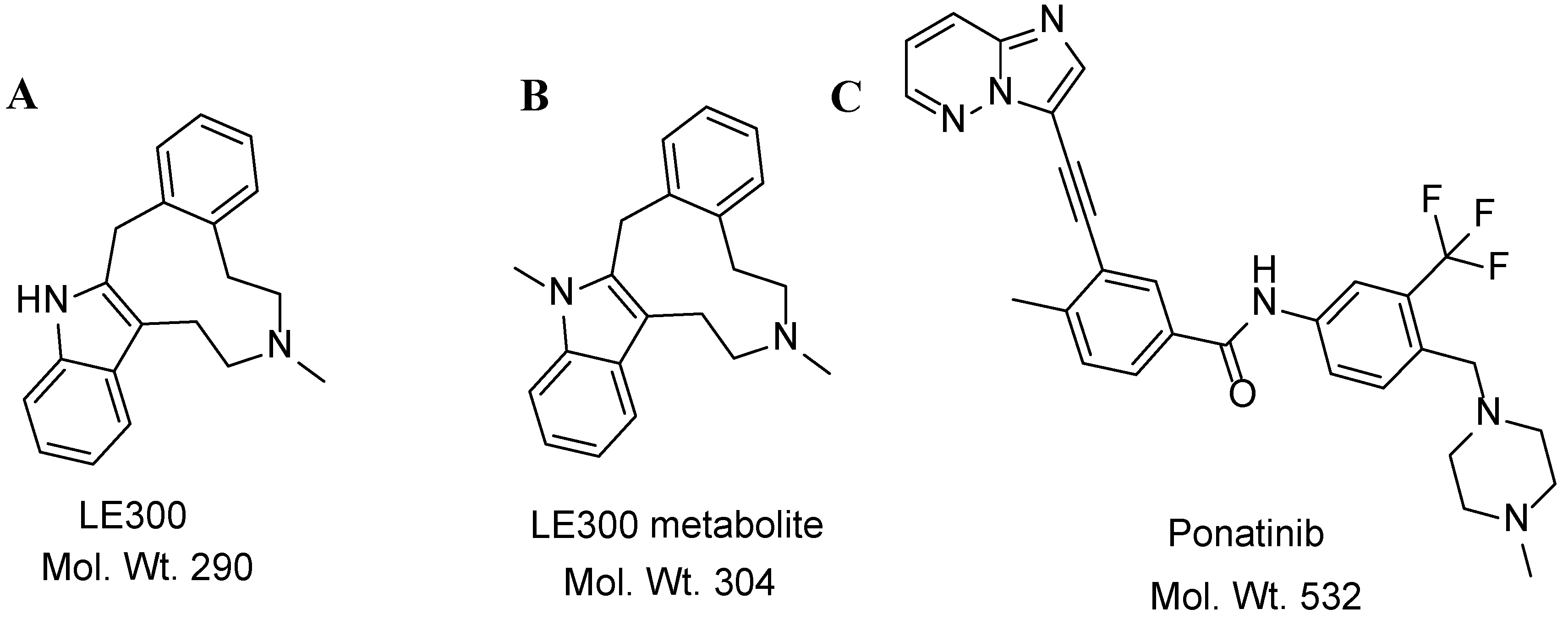
LE300 (7-methyl-6,7,8,9,14,15-hexahydro-5Hbenz[d]indolo[2,3-g]azecine) (Figure 1A) is a member of a dopamine receptor ligand class combining structural core elements of dopamine and serotonin. It is an antagonist for the azecine-type dopamine (D) receptor and is characterized by higher affinities for dopamine receptors and exclusive selectivity profiles against D1-like receptors [1,2,3]. D1 is a brain neurotransmitter that is thought to be involved in several physiological functions, including cognition, behavior, locomotion, motivation, and learning. Many neuropsychiatric disorders have been linked to dopaminergic system dysfunction [4].
Figure 1. Chemical structures of LE300 (A), MLE300 (B), and Ponatinib (C).
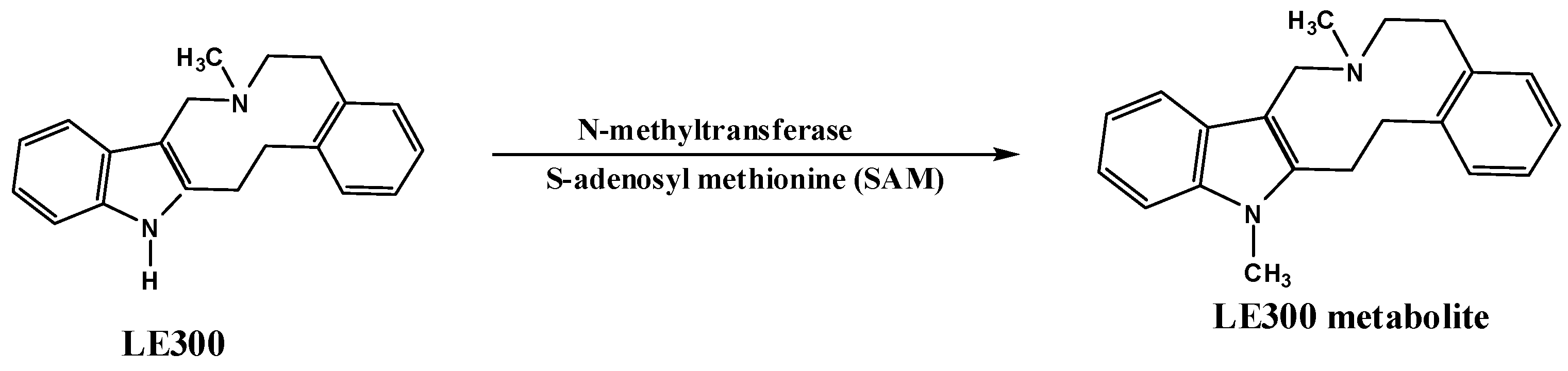
Methylation is a relatively minor conjugation pathway in drug metabolism, but it is very important in the biosynthesis of endogenous compounds, such as epinephrine and melatonin; and in the catabolism of biogenic amines, such as dopamine, serotonin, and histamine. In many cases, this conjugation results in compounds with decreased biological activity [5]. Methylation is a two-step process. First, the methyl-transferring coenzyme, S-adenosylmethionine (SAM), is biosynthesized mostly from methionine in a reaction catalyzed by methionine adenosyltransferase. Then, the SAM is utilized in the transfer of the activated methyl group to the acceptor molecule (LE300), as shown in Figure 2. Heterocyclic nitrogen atoms molecule such as LE300 are susceptible to N-methylation in human results in compounds with decreased biological activity.
Figure 2. Metabolism pathway of LE300.
Upon a literature review, we found three analytical methods to quantify LE300 and MLE300 [6,7,8]. When using the spectrofluorimetric method [6], the linearity ranges from 5 to 100 ng/mL, which is less sensitive than our method and involves a longer sample preparation time. In the HPLC–Fluorescence method [7], the linearity ranges from 4 to 500 ng/mL, which is less sensitive than our method and consumes a lot of solvents, as the flow rate is 1 mL/min. In the microemulsion liquid chromatography method [8], the linearity ranges from 10 to 400 ng/mL for LE-300, which is much lower in comparison to our developed methodology. Hence, our established method is more sensitive, faster, and consumes less solvent than previously reported methods. No LC-MS/MS method has been reported for the analysis of LE300 and/or its N-methyl metabolite. This work describes, for the first time, the establishment and validation of an LC-MS/MS method for the simultaneous quantification of LE300 and its metabolite, MLE300 (Figure 1B), in rat plasma using a 50 mm C18 column using Ponatinib (Figure 1C) as the internal standard.
The established bio-analytical method was validated following FDA guidelines [9]. Analytical method validation is necessary to demonstrate the suitability for any desired pharmacokinetic application. The method has to produce precise, reproducible, and accurate results; this is necessary for bioavailability, pharmacodynamics, pharmacokinetics, bioequivalence, or toxicological studies, since such methods are used in analyte quantification of various biological matrices, such as plasma or urine [10,11,12,13].

2. Results and Discussion

2.1. Chromatography and Mass Spectrometry Parameters

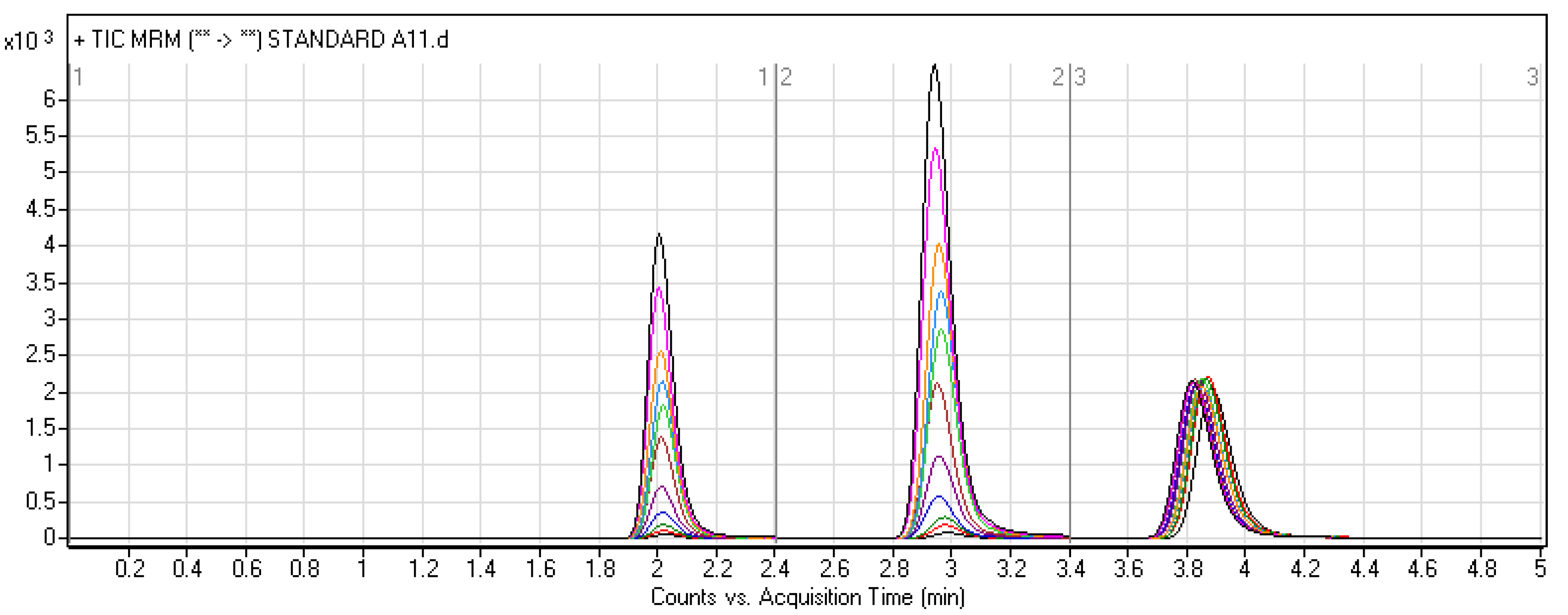
Numerous trials were performed to obtain the maximum mass response by adjusting all chromatographic parameters so as to enhance resolution and sensitivity. The pH of the aqueous portion of the elution system can improve the analytes’ ionization and adjust peak shape. Various mobile phase compositions were tested. The adjusted condition was as follows: 42% ACN, 58% 10 mM ammonium formate in water (pH~4.2). LE300, MLE300, and Ponatinib (IS) elution times were 2.0, 3.0, and 3.8 min, respectively, using the optimized chromatographic conditions. We investigated the use of different internal standards such as pemigatinib, nateglinide, repaglinide, chloroquine, and hydroxychloroquine, but such internal standards either showed poor peaks or led to overlapping with LE300 or MLE300. Ponatinib was selected as the method’s IS, whereas it has a higher extraction recovery (≥99%) and performance characteristics for LE300 and MLE300 [9]. Sample processing by liquid–liquid extraction and protein precipitation using different solvents was tried. It was found that protein precipitation utilizing acetonitrile is the optimum method with regard to simplicity, affordability and easier sample processing. A 5 min run time was enough to achieve complete elution of the three analytes (LE300, MLE300, and IS) without carryover being noticed in a blank rat plasma sample. Figure 3 shows overlayed chromatograms with good resolution for the calibration levels of LE300, MLE300, and IS in rat plasma.
Figure 3. Overlayed TIC chromatograms of MRM of LE300 (1–200 ng/mL), MLE300 (2–200 ng/mL), and IS (20 ng/mL).
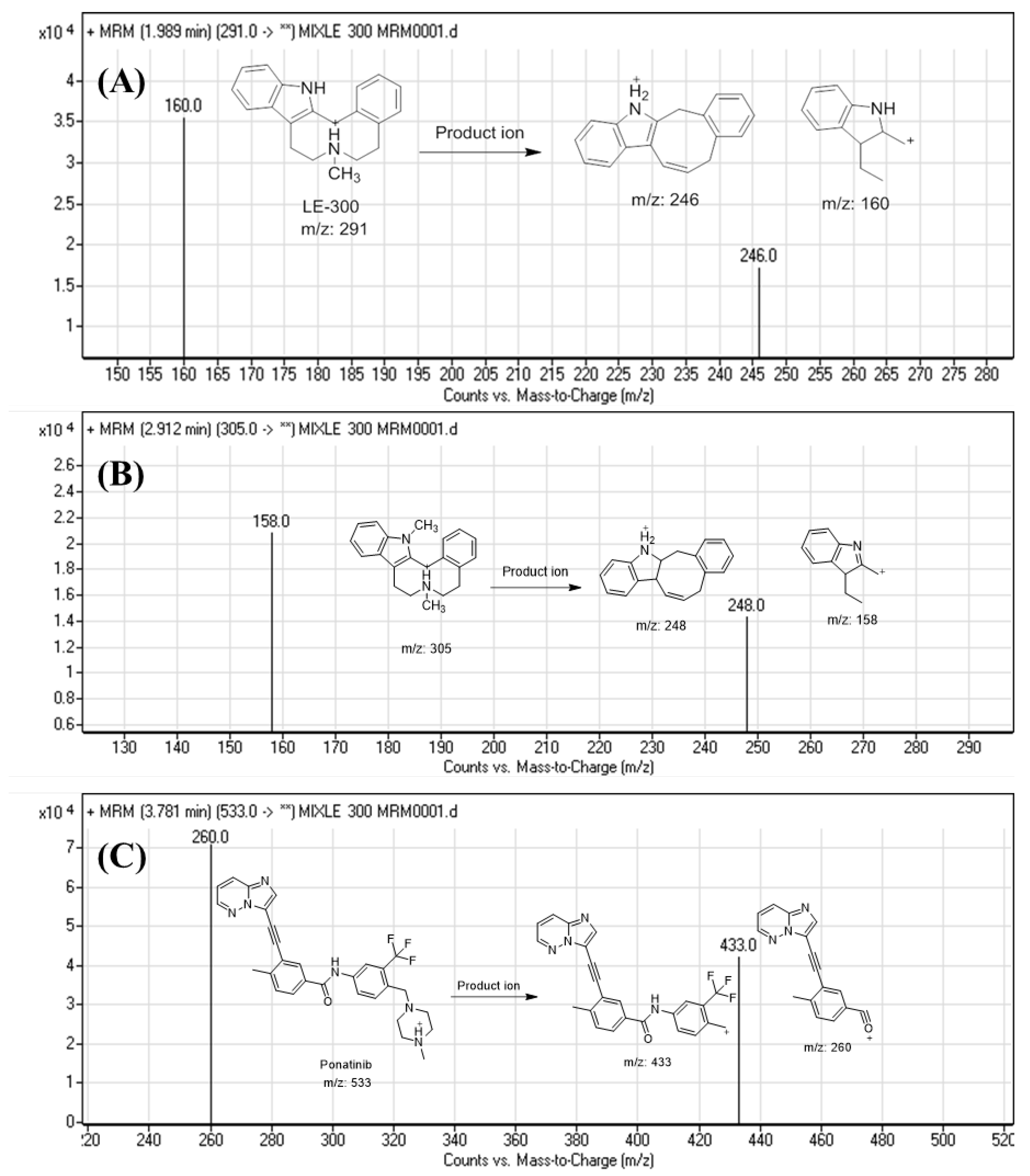
Mass spectrometry chromatographic parameters were optimized to increase the ionization of the molecular ions of the parent and its PIs for LE300, MLE300, and IS. MRM mode was utilized in this work to erase any expected interferences and increase the method’s sensitivity. The full mass scans spectra of analytes composed of one molecular ion were detected at m/z 291, m/z 305, and m/z 533 for LE300, MLE300, and IS, respectively. A positive PI scan for LE300 (m/z 292) generated major product ions at m/z 160 and m/z 246. A positive PI scan for MLE300 (m/z 305) generated major product ions of [M + H]+ at m/z 158 and m/z 248. A positive PI scan for Ponatinib (m/z 533) generated a two-fragment ion of [M + H]+ at m/z 260 and m/z 433. These ions were chosen for quantification of LE300, MLE300, and IS using MRM mode (Figure 4, Table 1).
Figure 4. MRM spectra and the proposed PIs of (A) LE300, (B) MLE300, and (C) IS.
Table 1. MRM mode parameters.

2.2. Method Validation

2.2.1. Selectivity

The analytical method selectivity was validated by a comparison between the MRM chromatograms of drug-free rat plasma and the equivalent spiked samples at LLOQ levels after injection of MLE300 and LE300. The retention times of LE300, MLE300, and IS were 2.0, 3.0, and 3.8 min, respectively. No noticeable endogenous material interference was seen in the MRM chromatograms of the drug-free plasma at the elution times of the two analytes and IS. The carryover in the blank sample was less than 20% of LLOQ for LE300 and MLE300, and less than 5% of the response for IS after injection of the upper limit of quantification (ULOQ) of the calibration curve [9].

2.2.2. Calibration Curve

The proposed method was reliable and sensitive for LE300 and MLE300 determination in rat plasma. The least-square statistical method was used for the linear regression analysis of the outcomes. The linearity of the method ranged from 1 to 200, and from 2 to 200 ng/mL, with a correlation coefficient (r2) >0.9997 and 0.9984 in LE300 and MLE300, respectively, as seen in the calibration curve. The regression equations of LE300 and MLE300 calibration curves were y = 0.0034x + 0.0179 and y = 0.0129x + 0.0238, respectively. LLODs were found to be 0.3 and 0.7 ng/mL in rat plasma for LE300 and MLE300, respectively, confirming the applicability of the developed assay for the quantification of trace concentrations LE300 and MLE300 in plasma. The high r2 value showed good linearity. The low values of standard deviations of the slope and the intercept revealed the calibration standard points’ validity, and those points were used to establish the calibration curve (Table 2).
Table 2. Validation parameters for the established LC-MS/MS method of LE300 and MLE300.
The relative SD values of each calibration standard level (six repeats) did not exceed 2.39% and 2.20% for LE300 and MLE300, respectively. Calibration standards and QC samples of LE300 and MLE300 in rat plasma samples (eleven levels) were back-calculated in order to find the best methodology performance. The accuracy and precision for LE300 and MLE300 in rat plasma samples ranged from 0.056 to 2.199%, from 0.865% to 2.39%, from −1.64% to −0.87%, and from −3.819% to −1.1%, respectively. The average LE300, MLE300, and Ponatinib (IS) recoveries were 99.49 ± 1.53%, 99.03 ± 1.52% and 99.49 ± 1.53% in rat plasma samples, respectively (Table 3).
Table 3. Back-calculated data of LE300 and MLE300 of the calibration levels from rat plasma.

2.2.3. Accuracy and Precision

The analytical method reproducibility was confirmed using intra- and inter-day accuracy and precision measurements at four concentrations of QC samples (LLOQ, LQC, MQC, and HQC) in six replicates for LE300 and MLE300, respectively. Precision and accuracy were expressed by percentage relative SD (% RSD) and percentage error (% error) values, respectively. As mentioned in Table 4, the accuracies (RE%) ranged from −7.00% to −1.94%, and −6.50% to −2.62% for the inter-day, and from −6.00% to −1.70% and −5.50% to −2.39% for the intra-day of LE300 and MLE300, respectively. The corresponding precisions (RSD %) were less than 2.86% and 3.17%, and less than 2.62% and 2.18% for LE300 and MLE300, respectively. These values met the acceptance criteria of the guidelines; LLOQ within 20% and the other QCs within 15% [9].
Table 4. Intra-day and inter-day precision and accuracy results of LE300 and MLE300 in rat plasma (Mean, n = 6).

2.2.4. Matrix Effects and Extraction Recovery

The extraction recoveries of LE300 and MLE300 QC samples from rat plasma are summarized in Table 5. The outcomes were reproducible, reliable, and accurate. To confirm the lack of matrix effect on the LE300 and MLE300 analysis, six different batches of rat plasma samples were extracted and spiked with 3 ng/mL LE300 (LQC), 75 ng/mL LE300 (MQC), and 175 ng/mL LE300 (HQC) for LE300, 6 ng/mL MLE300 (LQC), 90 ng/mL MLE300 (MQC), and 180 ng/mL MLE300 (HQC) for MLE300, and IS (20 ng/mL) to form set 1. Set 2 was prepared in a similar way, with similar concentrations of LE300 and MLE300 and IS solubilized in the mobile phase. For the estimation of the matrix effect, the average peak area ratio of set 1/set 2 × 100 was calculated. The rat plasma samples containing LE300 and MLE300 had values of 98.67 ± 2.5% and 98.29 ± 1.62%, respectively. The mean RSD was 1.3–1.9% and 0.94–1.42% for LE300 and MLE300 in rat plasma samples, respectively. From the previous results, we conclude that rat plasma has no noticeable effect on the ionization of LE300, MLE300, and IS.
Table 5. Recovery of LE300 and MLE300 QC samples in rat plasma.

2.2.5. Stability

LE300 and MLE300 stabilities in stock preparations and in rat plasma were measured using laboratory conditions that samples might be subjected to before analysis. LE300 and MLE300 exhibited perfect stability in stock preparations after being kept at −80 °C for 28 days. The stability values ranged from 98.2 to 99.1% and from 98.4 to 99.5% for LE300 and MLE300, respectively, in rat plasma samples (as shown in Table 6). There was no observed loss of the analytes after short-term storage, autosampler storage, three freeze–thaw cycles, and long-term storage. The results indicate that perfect stability of LE300 and MLE300 had been achieved.
Table 6. Stability of LE300 and MLE300.

2.3. Pharmacokinetic Study

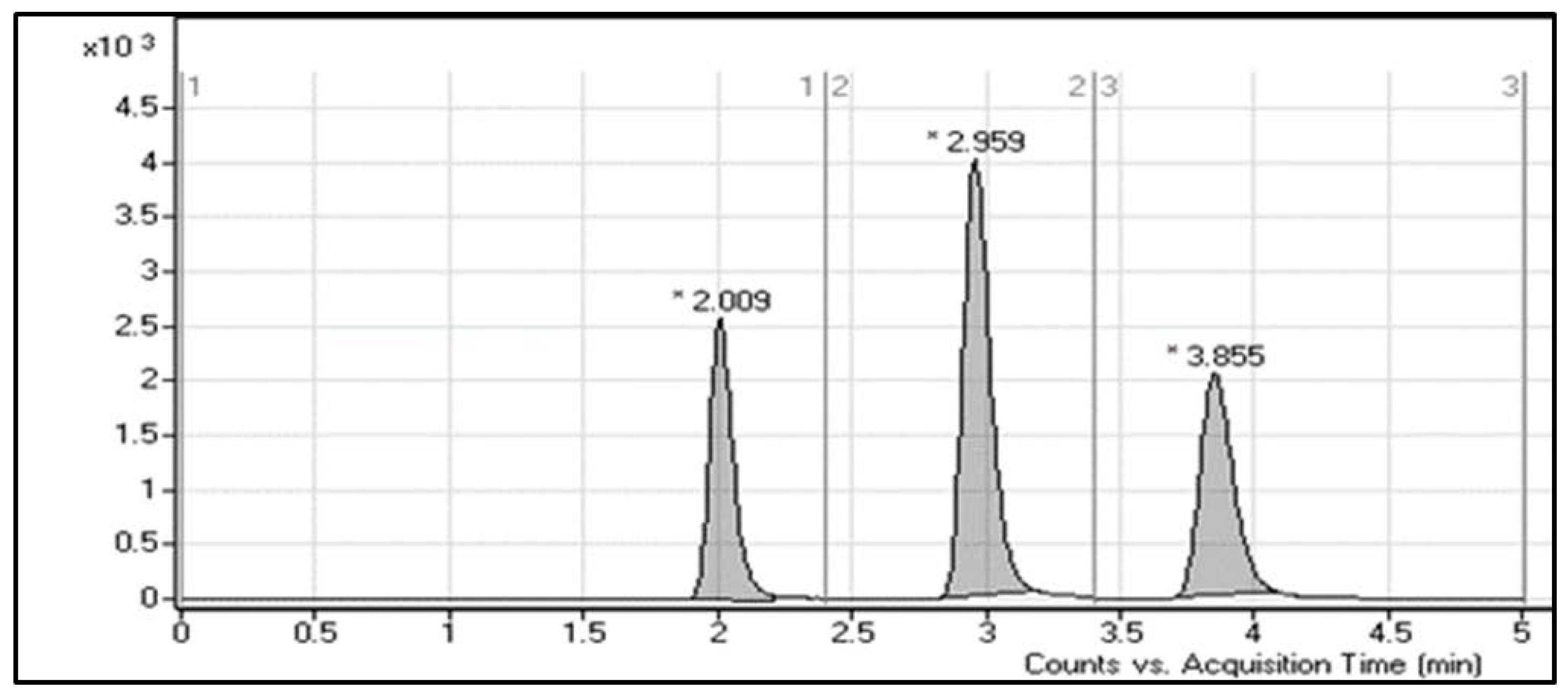
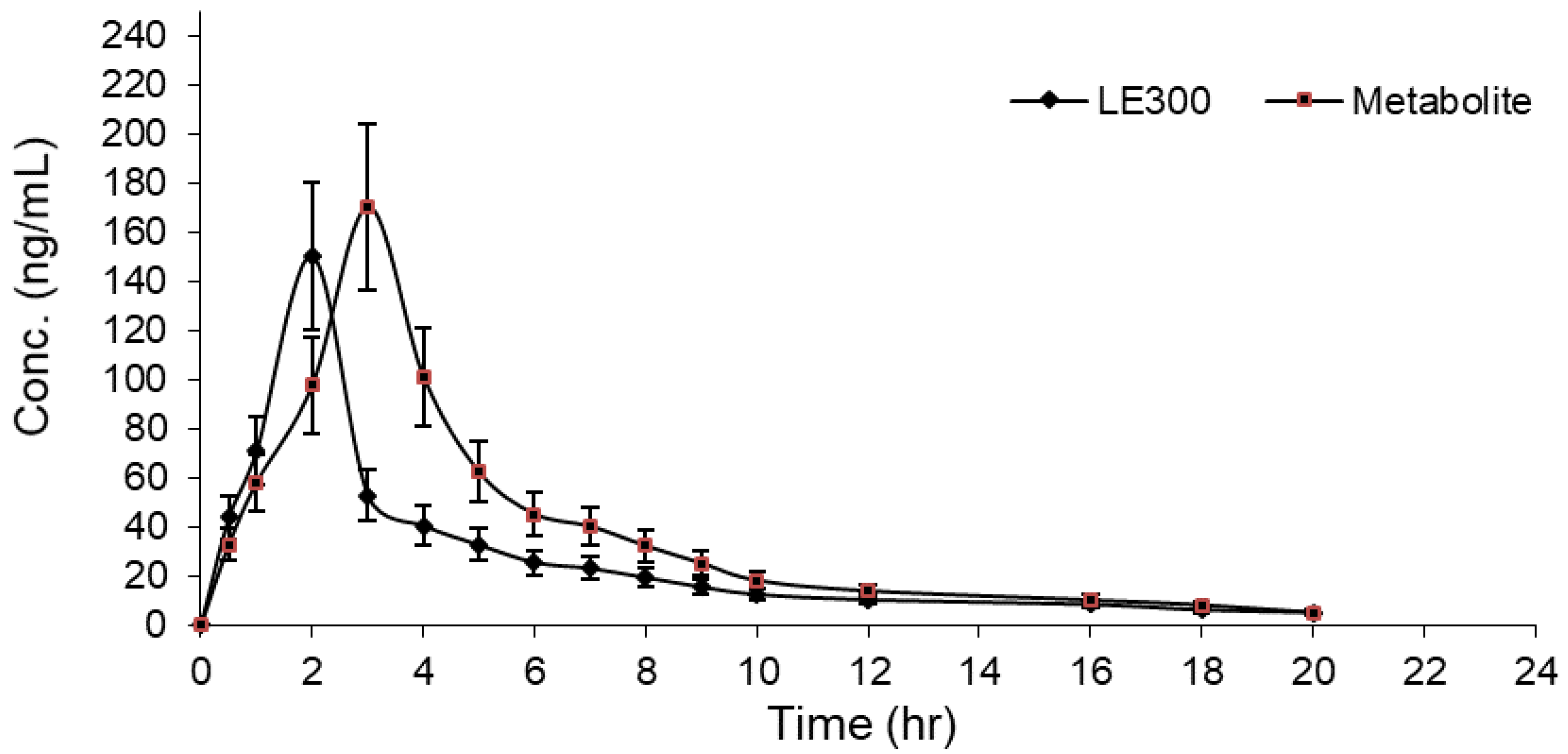
The established LC-MS/MS methodology was used in a pharmacokinetic study of LE300 in rats. The concentrations of LE300 and MLE300 in rat plasma were determined individually at different time intervals after oral administration of 10 mg/kg of LE300 [14]. The typical MRM chromatograms of rat plasma 2.0 h after oral administration are presented in Figure 5. A plasma concentration–time curve is shown in Figure 6, and the PK parameters are summarized in Table 7. The mean values of Tmax and C max were 2 h and 150.15 ± 17.68 ng/mL for LE300, and 3 h and 170.4 ± 23.3 ng/mL for MLE300, respectively. The AUC0–24 for LE300 was found to be 523.61 ± 24.26 ng·h/mL. The AUC0–∞ for LE300 was found to be 576.82 ± 22.36 ng·h/mL. The elimination half-life (t1/2kel) for LE300 was found to be 7.38 ± 0.17. Samples obtained from the control animals that were treated with a vehicle-free drug showed no peaks at LE300 and MLE300 elution times. This indicates that N-methylation may be the metabolic reaction rather than any other pathway.
Figure 5. Typical multiple reaction monitoring (MRM) chromatograms for in vivo rat plasma sample 2.0 h after oral (gavage) administration of 10 mg/kg LE300; LE300 (2.01 min), KLE300 (2.96 min) and IS (3.86 min).
Figure 6. Concentration vs. time profile of LE300 and MLE300 in rat plasma after LE300 (10 mg/kg) oral administration. Each data represents the mean ± SD of six rats.
Table 7. Pharmacokinetic parameters of LE300 and MLE300 after a single oral dose (10 mg/kg) in rat.

3. Material and Methods

3.1. Materials

All chemicals used in the current study are mentioned in detail in Table 8. Maintenance of rats was performed following the Animal Care Center guidelines of the College of Pharmacy (King Saud University, Saudi Arabia). The protocol that was used for animal experiments was approved by the Institutional Review Board. The animal research ethics committee approved this research (approval number KSU-SE-18-19). After the experiment was complete, the animals were left for a wash-out period (i.e., two weeks), then they were either used in other animal studies in our laboratory or euthanized.
Table 8. List of materials and chemicals.

3.2. LC–MS/MS Analysis

All chromatographic LC-MS/MS parameters were adjusted to achieve fast elution with high resolution (Table 9). Quantification of analytes was conducted using MRM mode (Figure 4).
Table 9. LC-MS/MS methodology.

3.3. Calibration Standard Solutions and QC Sample Preparation

LE300 and MLE300 stock solutions were prepared separately in a mixture of methanol and water (1:1) at a concentration of 1 mg/mL. Ponatinib (IS) stock solution was prepared in DMSO at 1 mg/mL. All solutions were kept at −20 °C for stabilization. Successive working solutions of LE300 and MLE300 were additionally obtained through dilution using ultrapure water at concentrations of 0.05, 0.5, 5, and 20 µg/mL. A working solution of IS was prepared in ultrapure water at a concentration of 20 ng/mL. Two calibrators at concentrations ranged from 1 to 200 ng/mL and 2 to 200 ng/mL for LE300 and MLE300, respectively, were prepared in blank rat plasma from the intermediate solutions. Different quality control samples for LE300 at 1.0 ng/mL for the LLOQ, 3.0 ng/mL for the QC sample at low concentration, (LOQ), 75 ng/mL for the QC sample at mid concentration (MQC), and 175 ng/mL for the QC sample at high concentration (HQC) were prepared by spiking an appropriate volume of the intermediate solutions with blank rat plasma. Similarly, different quality control samples for MLE300 at 2.0, 6.0, 90, and 180 ng/mL for LLOQ, LOQ, MQC, and HQC were prepared. The peak area ratios of LE300 and MLE300 to IS were treated to obtain the calibration curve of each drug. Alternatively, the corresponding regression equation was derived.

3.4. Sample Preparation

Fifty µL of each calibrator and quality controls plasma samples was transferred to 2.0 mL disposable polypropylene centrifuge tubes. Fifty µL of IS (20 ng/mL) was added equally to each tube, then diluted to 750 µL with ultrapure water and vortexed for 0.5 min. An amount of 500 µL of acetonitrile was added to the spiked plasma samples to precipitate the plasma proteins and mixed for 1 min. The tubes were subsequently vortexed for 1 min and centrifuged at 10,000 rpm at 5 °C for 12 min. Next, 500 µL of supernatants were collected to clean tubes, then evaporated to dryness under nitrogen. Residues were reconstituted using 500 µL of mobile phase, 10 mM ammonium formate, acetonitrile (42:58 v/v), and then filtered through a 0.22-μm ChromTech Nylon Membrane Filter (ChromTech, Kent, UK). Filtrates were loaded in HPLC vials in the well plate sampler tray, and 5 μL of the eluent was injected into the chromatographic LC-MS/MS system. Rat plasma samples from treated rats were prepared in a similar way as previously mentioned.

3.5. Method Validation

The guidelines for bio-analytical method validation of the Food and Drug Administration (US-FDA) were followed for validation purposes [9]. Validation of the developed method in the rat plasma was carried out using specificity, sensitivity, linearity, precision, accuracy, extraction recovery, stability, dilution integrity, and matrix effect [14,15,16,17].

3.6. Application to Pharmacokinetic Studies

All animal experiments were conducted according to the standards set forth in the experimental animals use and care guidelines by the National Institute of Health (NIH) [18]. Approval for the study was granted by the Animal Ethics Committee of the Pharmacology Department at the College of Pharmacy in King Saud University (Saudi Arabia; number KSU-SE-18-19). Six healthy Wistar male rats (250 ± 30 g) were kindly gifted from the Experimental Animal Care Center. The animals were maintained in a well-ventilated room inside cages under a 12 h day/night cycle at specific conditions (40–60% relative humidity and 24–27 °C temperature). All the rats had free access to water, while the diet was stopped for 12 h prior to drug loading. The rats were kept for one week in a laboratory before the experiments were performed. On the day of experiments, rats were treated by gavage administration with a single oral dose of 10 mg/kg LE300 dissolved in 1% DMSO/saline [19]. Blood samples (300 μL) were collected into heparinized 1.5 mL polythene tubes containing ethylenediamine tetraacetic acid dipotassium (EDTA K2) (anticoagulant) before drug administration, and at 0.5, 1, 2, 4, 6, 8, 12, 18, and 24 h after oral administration of a single oral dose of 10 mg/kg LE300 [14]. The samples were directly centrifuged at 3000 rpm for 10 min at 4 °C. The plasma obtained was stored at −80 °C until analysis. The same method of extraction described under calibration standards preparation (2.4.) was used for sample preparation. The PK parameters of LE300 and MLE300, such as Cmax, Tmax, t1/2kel, AUC0–24, and AUC0–∞, were calculated by fitting the data to a non-compartmental analysis (NCA) model with PK Solver Add-In software [20].

4. Conclusions

A sensitive, rapid, and simple LC-MS/MS methodology was established and validated to estimate LE300 and MLE300 in rat plasma. The developed method exhibited a linear range from 1 to 200 and 2 to 200 ng/mL with LLOQ values less than 1 and 2 ng/mL for LE300 and MLE300, respectively. The elution time was fast (5 min) with lower solvent consumption. Estimating LE300 and MLE300 samples on the same day and/or on consecutive days demonstrated acceptable levels of precision and accuracy of the established protocol. The developed LC-MS/MS methodology was also characterized by minimal sample preparation, and good accuracy and precision. Therefore, this method is useful for the toxicological and therapeutic monitoring of LE300 in clinical practice. The developed method was used successfully for the pharmacokinetic study of LE300 in rats.

Author Contributions

Conceptualization, writing and original draft, M.M.H., A.A.E.-G. and M.W.A.; methodology and investigation, A.A.A. and A.S.E.-A.; data analysis, M.W.A. and M.A.E.-G.; pharmacokinetic study, Y.A.B.J.; writing—reviewing and editing, equal contribution of all authors; project administration, M.M.H.; funding acquisition, M.M.H. and M.A.E.-G. All authors have read and agreed to the published version of the manuscript.

Funding

This study was funded by the Deputyship for Research & Innovation, Ministry of Education in Saudi Arabia for funding this research work through the project no. (IFKSURG-2-1021).

Institutional Review Board Statement

The study was conducted according to the guidelines of the Declaration of Helsinki and approved by the Institutional Animal Care and Use Committee (IACUC) guidelines, King Saud University, with the ethical approval number KSU-SE-18-19.

Data Availability Statement

Not applicable.

Acknowledgments

The authors extend their appreciation to the Deputyship for Research & Innovation, Ministry of Education in Saudi Arabia for funding this research work through the project no. (IFKSURG-2-1021).

Conflicts of Interest

The authors declare no conflict of interest.

Sample Availability

Samples of the compounds are not available from the authors.

References

  1. Witt, T.; Hock, F.J.; Lehmann, J. 7-Methyl-6, 7, 8, 9, 14, 15-hexahydro-5 H-benz [d] indolo [2, 3-g] azecine: A new heterocyclic system and a new lead compound for dopamine receptor antagonists. J. Med. Chem. 2000, 43, 2079–2081. [Google Scholar] [CrossRef] [PubMed]
  2. Decker, M.; Schleifer, K.-J.; Nieger, M.; Lehmann, J. Dopamine/serotonin receptor ligands. Part VIII [1]: The dopamine receptor antagonist LE300-modelled and X-ray structure plus further pharmacological characterization, including serotonin receptor binding, biogenic amine transporter testing and in vivo testings. Eur. J. Med. Chem. 2004, 39, 481–489. [Google Scholar] [PubMed]
  3. Hoefgen, B.; Decker, M.; Mohr, P.; Schramm, A.M.; Rostom, S.A.; El-Subbagh, H.; Schweikert, P.M.; Rudolf, D.R.; Kassack, M.U.; Lehmann, J. Dopamine/Serotonin Receptor Ligands. 10: 1 SAR studies on azecine-type dopamine receptor ligands by functional screening at human cloned D1, D2L, and D5 receptors with a microplate reader based calcium assay lead to a novel potent D1/D5 selective antagonist. J. Med. Chem. 2006, 49, 760–769. [Google Scholar] [PubMed]
  4. Robaa, D.; Kretschmer, R.; Siol, O.; AbulAzm, S.E.; ElKhawass, E.; Lehmann, J.; Enzensperger, C. Residues at the Indole-NH of LE300 Modulate Affinities and Selectivities for Dopamine Receptors. Arch. Der Pharm. 2011, 344, 28–36. [Google Scholar] [CrossRef] [PubMed]
  5. Silverman, R.B.; Holladay, M.W. The Organic Chemistry of Drug Design and Drug Action, 3rd ed.; Academic Press: Cambridge, MA, USA, 2014. [Google Scholar]
  6. Hefnawy, M.; Mohamed, M.; Abunassif, M.; Alanazi, A.; Al-Majed, A.; Jochen, L.; Mostafa, G.A.H. Spectrofluorimetric determination of dopamine receptor antagonist LE 300 in mice plasma. Luminescence 2016, 31, 63–66. [Google Scholar] [CrossRef] [PubMed]
  7. Hefnawy, M.; Alanazi, A.; Abounassif, M.; Mohammed, M.; Al-Swaidan, I.; Attia, S.; Mostafa, G.; El-Subbagh, H.; Lehmann, J. Selective Analysis of Dopamine Receptor Antagonist LE300 and its N-Methyl Metabolite in Mouse Sera at the Trace Level by HPLC–Fluorescence Detection. Chromatographia 2015, 78, 655–661. [Google Scholar] [CrossRef]
  8. Al-Majed, A.A.; Hefnawy, M.M.; Mohammed, M.S.; Attia, S.M.; Lehmann, J. Selective microemulsion liquid chromatography analysis of dopamine receptor antagonist LE300 and its N-methyl metabolite in mouse sera by using a monolithic silica column. J. Chromatogr. B 2015, 989, 104–111. [Google Scholar] [CrossRef] [PubMed]
  9. United State of America–Food and Drug Administration. Bioanalytical Method Validation Guidance for Industry. 2018. Available online: https://www.fda.gov/ucm/groups/fdagov-public/@fdagov-drugsgen/documents/document/ucm070107.pdf (accessed on 5 December 2022).
  10. Hubert, P.; Nguyen-Huu, J.-J.; Boulanger, B.; Chapuzet, E.; Chiap, P.; Cohen, N.; Compagnon, P.-A.; Dewé, W.; Feinberg, M.; Lallier, M. Harmonization of strategies for the validation of quantitative analytical procedures: A SFSTP proposal–part II. J. Pharm. Biomed. Anal. 2007, 45, 70–81. [Google Scholar] [CrossRef] [PubMed]
  11. Sennbro, C.J.; Knutsson, M.; Timmerman, P.; Van Amsterdam, P. Anticoagulant counter ion impact on bioanalytical LC–MS/MS assay performance: Additional validation required? Bioanalysis 2011, 3, 2389–2391. [Google Scholar] [CrossRef] [PubMed]
  12. González, O.; Blanco, M.E.; Iriarte, G.; Bartolomé, L.; Maguregui, M.I.; Alonso, R.M. Bioanalytical chromatographic method validation according to current regulations, with a special focus on the non-well defined parameters limit of quantification, robustness and matrix effect. J. Chromatogr. A 2014, 1353, 10–27. [Google Scholar] [CrossRef] [PubMed]
  13. Mohammed, M.S.; Hefnawy, M.M.; Al-Majed, A.A.; Alrabiah, H.K.; Algrain, N.A.; Obaidullah, A.J.; Altamimi, A.S.; Bin Jardan, Y.A.; Al-Hossaini, A.M. Development and Validation of a Chiral Liquid Chromatographic Assay for Enantiomeric Separation and Quantification of Verapamil in Rat Plasma: Stereoselective Pharmacokinetic Application. Molecules 2021, 26, 2091. [Google Scholar] [CrossRef] [PubMed]
  14. Hefnawy, M.; Al-Majed, A.; Alrabiah, H.; Algrain, N.; Mohammed, M.; Bin Jardand, Y. Rapid and sensitive LC-MS/MS method for the enantioanalysis ofverapamil in rat plasma using superficially porous silicaisopropyl-cyclofructan 6 chiral stationary phase after SPE: Applicationto a stereoselective pharmacokinetic study. J. Pharm. Biomed. Anal. 2021, 201, 114108. [Google Scholar] [CrossRef] [PubMed]
  15. Al-Shehri, M.; Hefnawy, M.; Abuelizz, H.; Alzamil, A.; Mohammed, M.; Alsaif, N.; Almehizia, A.; Alkahtani, H.; Abounassif, M. Development and validation of an UHPLC-MS/MS method for simultaneous determination of palbociclib, letrozole and its metabolite carbinol in rat plasma and pharmacokinetic study application. Arab. J. Chem. 2020, 13, 4024–4034. [Google Scholar] [CrossRef]
  16. Hefnawy, M.; Hammad, S.; Kadi, A.; Alsaif, N.; Mohammed, M.; Al-Hossaini, A.; Bin Jardan, Y.; Attwa, M.; Abou-El-Alamin, M. Effective quantification of ravidasvir (an NS5A inhibitor) and sofosbuvir in rat plasma by validated LC-MS/MS method and its application to pharmacokinetic study. Arab. J. Chem. 2020, 13, 8160–8171. [Google Scholar] [CrossRef]
  17. Council, N.R. Guide for the Care and Use of Laboratory Animals; National Academies Press: Washington, DC, USA, 2010. [Google Scholar]
  18. Hefnawy, M.M.; Alanazi, M.M.; Al-Hossaini, A.M.; Alnasser, A.I.; El-Azab, A.S.; Bin Jardan, Y.A.; Attwa, M.W.; El-Gendy, M.A. A Rapid and Sensitive Liquid Chromatography-Tandem Mass Spectrometry Bioanalytical Method for the Quantification of Encorafenib and Binimetinib as a First-Line Treatment for Advanced (Unresectable or Metastatic) Melanoma—Application to a Pharmacokinetic Study. Molecules 2023, 28, 79. [Google Scholar] [CrossRef]
  19. Decker, M.; Lehmann, J. LE300—New results on its ability to antagonize the discriminative stimulus effects of cocaine. Pharmazie 2006, 61, 248–250. [Google Scholar] [PubMed]
  20. Zhang, Y.; Huo, M.; Zhoua, J.; Xie, S. PKSolver: An add-in program for pharmacokinetic and pharmacodynamic data analysis in Microsoft Excel. Comput. Methods Programs Biomed. 2010, 99, 306–314. [Google Scholar] [CrossRef] [PubMed]
Disclaimer/Publisher’s Note: The statements, opinions and data contained in all publications are solely those of the individual author(s) and contributor(s) and not of MDPI and/or the editor(s). MDPI and/or the editor(s) disclaim responsibility for any injury to people or property resulting from any ideas, methods, instructions or products referred to in the content.

Article Metrics

Citations

Article Access Statistics

Multiple requests from the same IP address are counted as one view.