


Antiviral Plants from Marajó Island, Brazilian Amazon: A Narrative Review

 ,
,  , ,
, ,
Abstract
1. Introduction
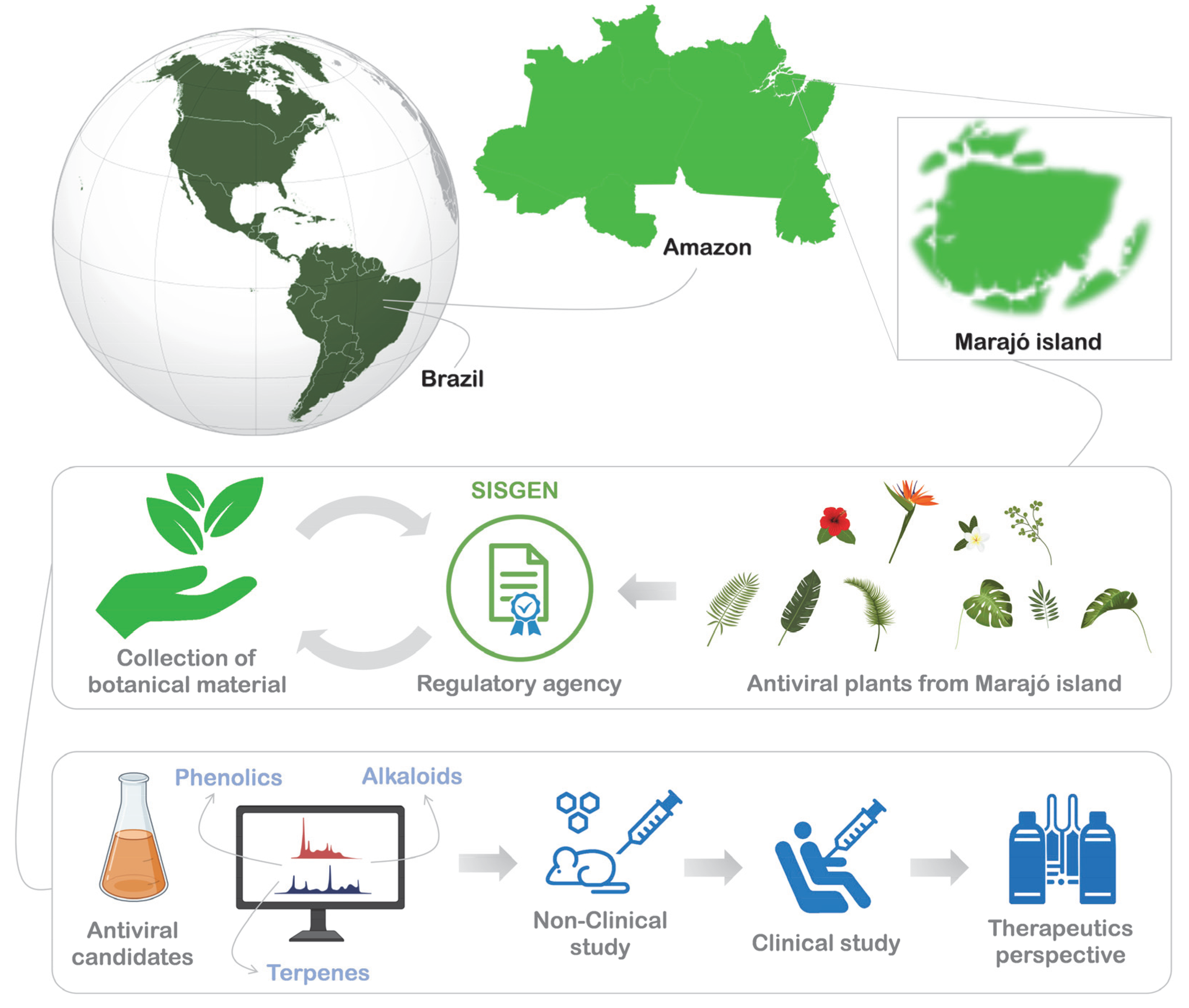
2. Data Research Methodology
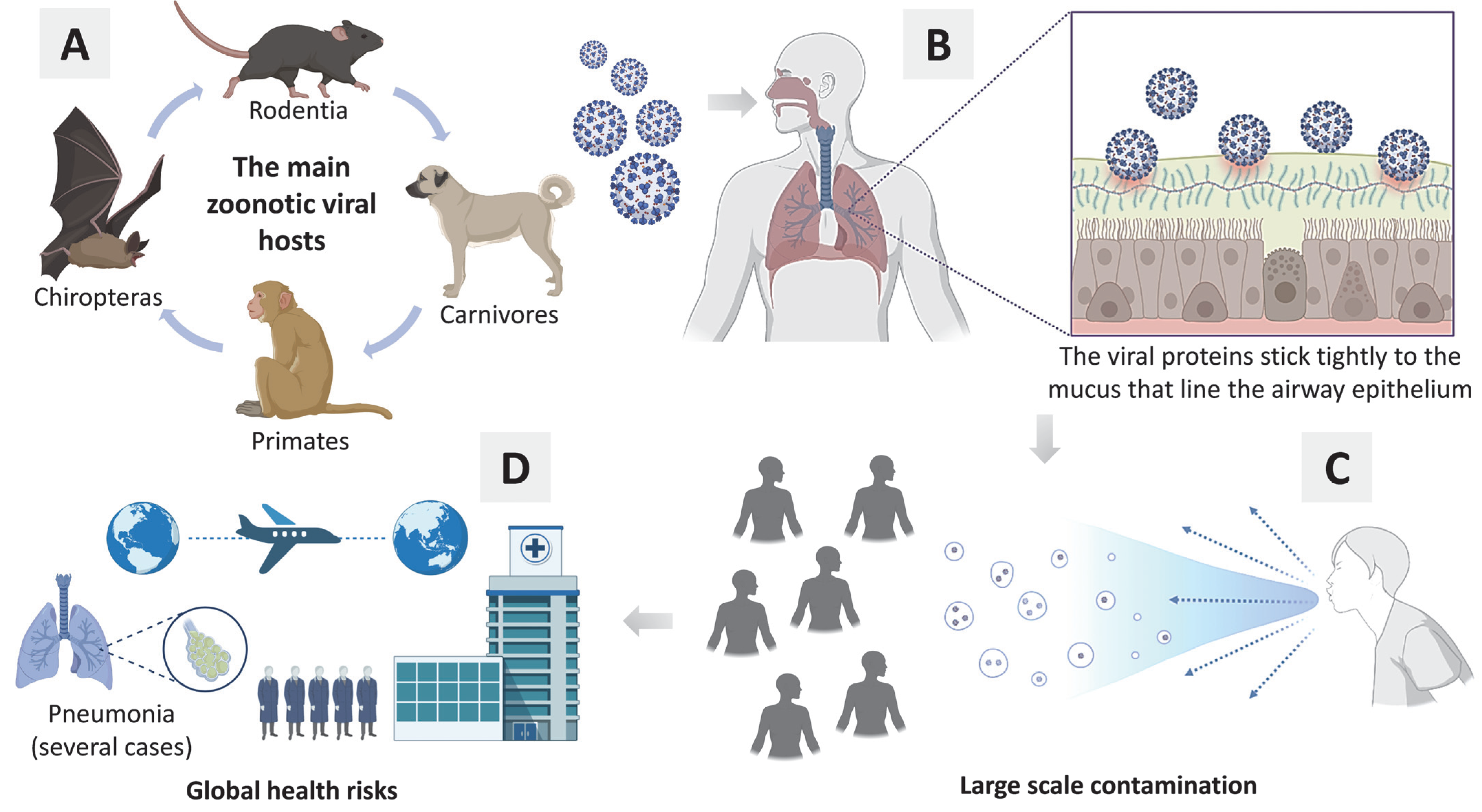
3. Main Vectors of Diseases Caused by Pathogenic Viruses
4. The Main Antiviral Plants Used to Treat Viral Diseases in Marajó Island
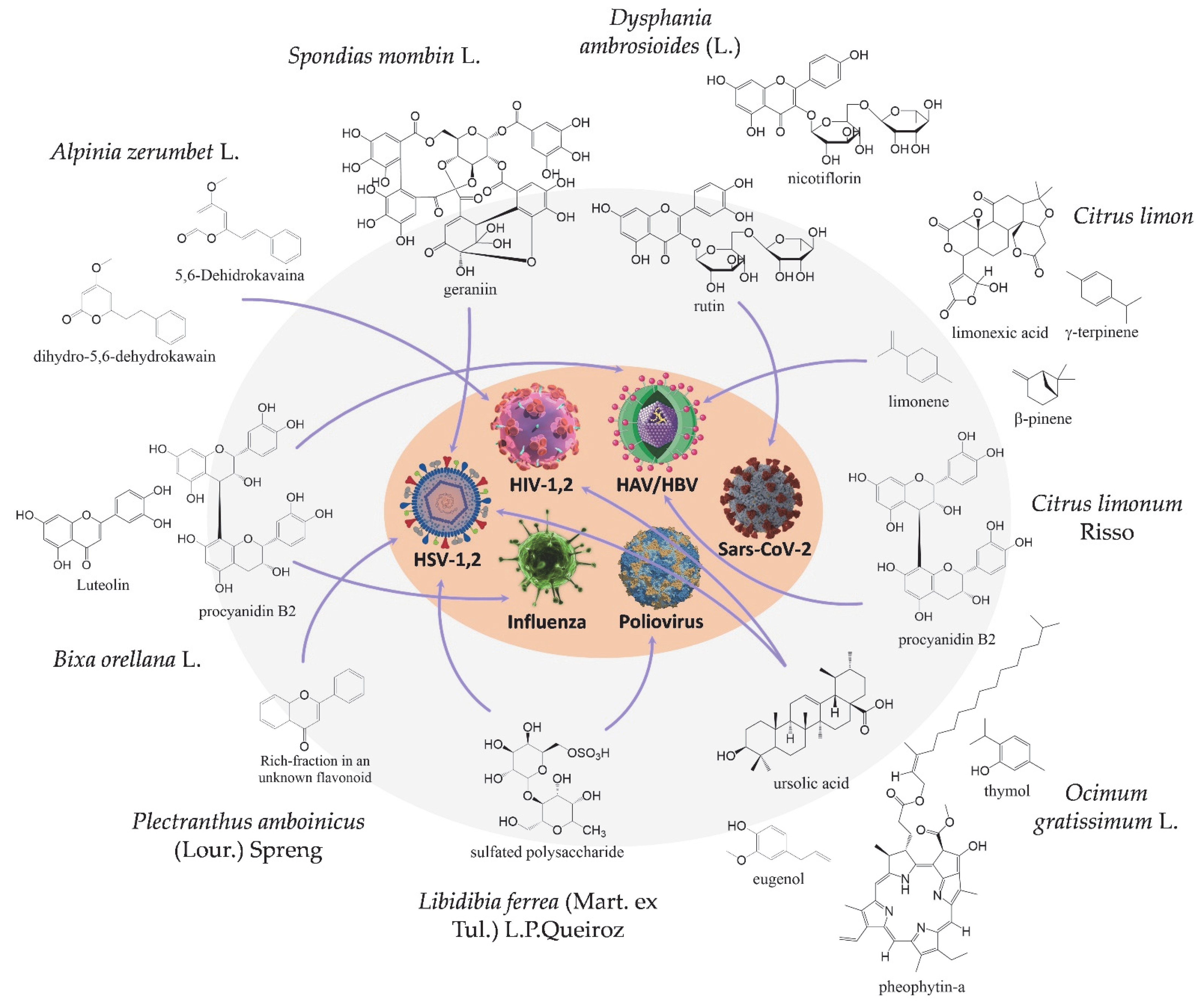
5. Antiviral Compounds of Medicinal Plants from Marajó
5.1. Alpinia zerumbet L.
5.2. Bixa Orellana

| Medicinal Plant | Classes Chemical | Assignment Viral | Antiviral Agents | Methods | Action Mechanism | IC50 (µg/mL) | References |
|---|---|---|---|---|---|---|---|
| Alpinia zerumbet L. | Aromatic heterocycles | HIV-1 | 5,6-Dehidrokavaina (DK) | Multiple integration assay | Inhibition HIV-1 integrase and Neuraminidase Activity | 4.4 μg/mL | [11] |
| Dihydro-5,6-dehydrokawain (DDK) | 3.6 μg/mL | ||||||
| Bixa orellana L. | Polyphenols | Influenza virus and hepatitis B virus | procyanidin B2 | CPE inhibition assay | Blockage of viral binding to the cell receptors | 50.85–56.02 μg/mL | [14,15,16] |
| lutein | ELISA assay | Inhibition of HBV transcription | 40 μg/mL | ||||
| Citrus limon | Terpenes | Hepatitis A virus (HAV) | Limonene, β-pinene, andγ-terpinene Limonexic acid | Reed and Muench method | Reducing HAV infectivity | 2.84 log TCID50/mL | [17,18] |
| Citrus limonum Risso | Flavonoids | Hepatitis A Virus (HAV) | procyanidin B2 | Reed and Muench method | The slight reduction in virus infectivity | 2.84 log TCID50/mL | [17] |
| Dysphania ambrosioides( L.) | Flavonoids | SARS-CoV-2 | rutin and nicotiflorin | 3CLpro and RdRp | Molecular docking with 3CLpro (main protease (Mpro)) | in silico | [19,20,21,22] |
| Libidibia ferrea (Mart. ex Tul.) L.P.Queiroz | Polysaccharide | HSV-1 | Sulfated polysaccharide | Plaque reduction assay | Antiviral activity by its ability to prevent viral replication | 405 μg/mL | [23] |
| Poliovirus (PV) | 1.25-10 μg/mL | ||||||
| Ocimum gratissimum L. | Terpenes and Alkaloid | HSV-1,2 | Eugenol | Plaque-based assays (PFU) method | Inhibition of virus replication | 16.2, and 250 µg/mL | [24,25] |
| HIV-1,2 | Thymol, and ursolic acidPheophytin-a | Direct destruction of the virion | 7 µM | ||||
| Plectranthus amboinicus (Lour.) Spreng | Flavonoids | HSV-1 | Flavonoids | cleavage of peptide substrate | HIV-1 protease inhibitor | 100 µg/mL | [26] |
| Spondias mombin L. | Flavonoids and phenolic acids | HSV-1 | tannin-rich fraction | Vero E6 cells | Glycoproteins gB and gD of HSV-1 surface | 17.35 µg/mL | [27] |
| geraniin | 20.40 µg/mL |
5.3. Citrus limon
5.4. Citrus limonum Risso
5.5. Dysphania ambrosioides
5.6. Libidibia ferrea
5.7. Ocimum gratissimum L.
5.8. Plectranthus amboinicus
5.9. Spondias mombin L.
6. Future Perspectives
7. Conclusions
Author Contributions
Funding
Institutional Review Board Statement
Informed Consent Statement
Data Availability Statement
Acknowledgments
Conflicts of Interest
References
- Mishra, S.; Pandey, A.; Manvati, S. Coumarin: An emerging antiviral agent. Heliyon 2020, 6, e03217. [Google Scholar] [CrossRef] [Scilit]
- Liu, C.; Zhou, Q.; Li, Y.; Garner, L.V.; Watkins, S.P.; Carter, L.J.; Smoot, J.; Gregg, A.C.; Daniels, A.D.; Jervey, S.; et al. Research and Development on Therapeutic Agents and Vaccines for COVID-19 and Related Human Coronavirus Diseases. ACS Cent. Sci. 2020, 6, 315–331. [Google Scholar] [CrossRef] [Scilit]
- Chattopadhyay, D. Role and scope of ethnomedical plants in the development of antivirals. Pharmacologyonline 2006, 3, 64–72. [Google Scholar]
- Maryam, M.; Te, K.K.; Wong, F.C.; Chai, T.T.; Low, G.K.K.; Gan, S.C.; Chee, H.Y. Antiviral activity of traditional Chinese medicinal plants Dryopteris crassirhizoma and Morus alba against dengue virus. J. Integr. Agric. 2020, 19, 1085–1096. [Google Scholar] [CrossRef] [Scilit]
- Pedrollo, C.T.; Kinupp, V.F.; Shepard, G.; Heinrich, M. Medicinal Plants at Rio Jauaperi, Brazilian Amazon: Ethnobotanical Survey and Environmental Conservation. Available online: https://reader.elsevier.com/reader/sd/pii/S0378874116301696?token=D504E2452034E7AC5CEE858FB49534EFC37C1F90F2654F0DD575E5CEA955D7A2D873350A9B77375198B7736F3E20EC3F&originRegion=us-east-1&originCreation=20220120202522 (accessed on 20 January 2022).
- Divya, M.; Vijayakumar, S.; Chen, J.; Vaseeharan, B.; Durán-Lara, E.F. South Indian medicinal plants can combat deadly viruses along with COVID-19?—A review. Microb. Pathog. 2020, 148, 104277. [Google Scholar] [CrossRef] [Scilit] [PubMed]
- Artika, I.M.; Wiyatno, A.; Ma’Roef, C.N. Pathogenic viruses: Molecular detection and characterization. Infect. Genet. Evol. 2020, 81, 104215. [Google Scholar] [CrossRef] [Scilit] [PubMed]
- Neto, E.M.C.; Resende, J.J. A percepção de animais como “insetos” e sua utilização como recursos medicinais na cidade de Feira de Santana, Estado da Bahia, Brasil. Acta Sci. Biol. Sci. 2004, 26, 143–149. [Google Scholar] [CrossRef] [Scilit]
- Monteiro, M.V.B.; Rodrigues, S.T.; Vasconcelos, A.L.F. Plantas medicinais utilizadas na medicina etnoveterinária praticada na ilha do Marajó. Embrapa Amaz. Orient.-Doc. 2012, 380, 1–33. [Google Scholar]
- Azevedo, M.V.D.M.P.D.S.; Lins, S.R.D.O. Aplicações Terapêuticas da Alpinia Zerumbet (Colônia) Baseado na Medicina Tradicional: uma Revisão Narrativa (2010–2020)/Therapeutic Applications of the Alpinia Zerumbet (Colônia) Based on Traditional Medicine: A Narrative Review (2010–2020). Braz. J. Dev. 2020, 6, 84222–84242. [Google Scholar] [CrossRef] [Scilit]
- Upadhyay, A.; Chompoo, J.; Kishimoto, W.; Makise, T.; Tawata, S. HIV-1 Integrase and Neuraminidase Inhibitors from Alpinia zerumbet. J. Agric. Food Chem. 2011, 59, 2857–2862. [Google Scholar] [CrossRef] [Scilit]
- Gonçalves, M.L.L.; da Mota, A.C.C.; Deana, A.M.; Cavalcante, L.A.D.S.; Horliana, A.C.R.T.; Pavani, C.; Motta, L.J.; Fernandes, K.P.S.; Mesquita-Ferrari, R.A.; da Silva, D.F.T.; et al. Antimicrobial photodynamic therapy with Bixa orellana extract and blue LED in the reduction of halitosis—A randomized, controlled clinical trial. Photodiagn. Photodyn. Ther. 2020, 30, 101751. [Google Scholar] [CrossRef] [Scilit]
- Kar, B.; Chandar, B.; Rachana, S.S.; Bhattacharya, H.; Bhattacharya, D. Antibacterial and genotoxic activity of Bixa orellana, a folk medicine and food supplement against multidrug resistant clinical isolates. J. Herb. Med. 2021, 32, 100502. [Google Scholar] [CrossRef] [Scilit]
- Nascimento Moraes Neto, R.N.M.; Guedes Coutinho, G.; de Oliveira Rezende, A.; de Brito Pontes, D.; Larissa Pinheiro Soares Ferreira, R.; de Araújo Morais, D.; Pontes Albuquerque, R.; Gonçalves Lima-Neto, L.; Cláudio Nascimento da Silva, L.; Quintino da Rocha, C.; et al. Compounds isolated from Bixa orellana: Evidence-based advances to treat infectious diseases. Rev. Colomb. Cienc. Químico-Farm. 2020, 49, 581–601. [Google Scholar] [CrossRef] [Scilit]
- Yang, Z.-F.; Bai, L.-P.; Huang, W.-B.; Li, X.-Z.; Zhao, S.-S.; Zhong, N.-S.; Jiang, Z.-H. Comparison of in vitro antiviral activity of tea polyphenols against influenza A and B viruses and structure–activity relationship analysis. Fitoterapia 2014, 93, 47–53. [Google Scholar] [CrossRef] [Scilit]
- Pang, R.; Tao, J.-Y.; Zhang, S.-L.; Zhao, L.; Yue, X.; Wang, Y.-F.; Ye, P.; Dong, J.-H.; Zhu, Y.; Wu, J.-G. In vitro antiviral activity of lutein against hepatitis B virus. Phytother. Res. 2010, 24, 1627–1630. [Google Scholar] [CrossRef] [Scilit] [PubMed]
- Battistini, R.; Rossini, I.; Ercolini, C.; Goria, M.; Callipo, M.R.; Maurella, C.; Pavoni, E.; Serracca, L. Antiviral Activity of Essential Oils against Hepatitis A Virus in Soft Fruits. Food Environ. Virol. 2019, 11, 90–95. [Google Scholar] [CrossRef] [Scilit]
- Shi, Y.-S.; Zhang, Y.; Li, H.-T.; Wu, C.-H.; El-Seedi, H.R.; Ye, W.-K.; Wang, Z.-W.; Li, C.-B.; Zhang, X.-F.; Kai, G.-Y. Limonoids from Citrus: Chemistry, anti-tumor potential, and other bioactivities. J. Funct. Foods 2020, 75, 104213. [Google Scholar] [CrossRef] [Scilit]
- Da Silva, F.M.A.; Da Silva, K.P.A.; De Oliveira, L.P.M.; Costa, E.V.; Koolen, H.H.; Pinheiro, M.L.B.; De Souza, A.Q.L.; De Souza, A.D.L. Flavonoid glycosides and their putative human metabolites as potential inhibitors of the SARS-CoV-2 main protease (Mpro) and RNA-dependent RNA polymerase (RdRp). Mem. Inst. Oswaldo Cruz 2020, 115, 1–8. [Google Scholar] [CrossRef] [Scilit]
- Wu, C.; Liu, Y.; Yang, Y.; Zhang, P.; Zhong, W.; Wang, Y.; Wang, Q.; Xu, Y.; Li, M.; Li, X.; et al. Analysis of therapeutic targets for SARS-CoV-2 and discovery of potential drugs by computational methods. Acta Pharm. Sin. B 2020, 10, 766–788. [Google Scholar] [CrossRef] [Scilit]
- Francis, D.; Variyar, E.J. Repurposing simeprevir, calpain inhibitor IV and a cathepsin F inhibitor against SARS-CoV-2 and insights into their interactions with Mpro. J. Biomol. Struct. Dyn. 2020, 40, 325–336. [Google Scholar] [CrossRef]
- Ganeshpurkar, A.; Saluja, A.K. The Pharmacological Potential of Rutin. Saudi Pharm. J. 2017, 25, 149–164. [Google Scholar] [CrossRef] [Scilit]
- Lopes, N.; Faccin-Galhardi, L.C.; Espada, S.F.; Pacheco, A.C.; Ricardo, N.; Linhares, R.E.C.; Nozawa, C. Sulfated polysaccharide of Caesalpinia ferrea inhibits herpes simplex virus and poliovirus. Int. J. Biol. Macromol. 2013, 60, 93–99. [Google Scholar] [CrossRef] [Scilit]
- Tshilanda, D.D.; Ngoyi, E.M.; Kabengele, C.N.; Matondo, A.; Bongo, G.N.; Inkoto, C.L.; Mbadiko, C.M.; Gbolo, B.Z.; Lengbiye, E.M.; Kilembe, J.T.; et al. Ocimum Species as Potential Bioresources against COVID-19: A Review of Their Phytochemistry and Antiviral Activity. Int. J. Pathog. Res. 2020, 5, 42–54. [Google Scholar] [CrossRef] [Scilit]
- Ayisi, N.K.; Nyadedzor, C. Comparative in vitro effects of AZT and extracts of Ocimum gratissimum, Ficus polita, Clausena anisata, Alchornea cordifolia, and Elaeophorbia drupifera against HIV-1 and HIV-2 infections. Antivir. Res. 2003, 58, 25–33. [Google Scholar] [CrossRef] [Scilit]
- Thayil, S.; Thyagarajan, S.P. PA-9: A Flavonoid Extracted from Plectranthus amboinicus Inhibits HIV-1 Protease. Int. J. Pharmacogn. Phytochem. Res. 2016, 8, 1020–1024. [Google Scholar]
- Siqueira, E.M.D.S.; Lima, T.L.C.; Boff, L.; Lima, S.G.M.; Lourenço, E.M.G.; Ferreira, É.G.; Barbosa, E.G.; Machado, P.; Farias, K.J.S.; Ferreira, L.D.S.; et al. Antiviral Potential of Spondias mombin L. Leaves Extract Against Herpes Simplex Virus Type-1 Replication Using In Vitro and In Silico Approaches. Planta Med. 2020, 86, 505–515. [Google Scholar] [CrossRef] [Scilit]
- Del Río, J.; Fuster, M.; Gómez, P.; Porras, I.; García-Lidón, A.; Ortuño, A. Citrus limon: A source of flavonoids of pharmaceutical interest. Food Chem. 2004, 84, 457–461. [Google Scholar] [CrossRef] [Scilit]
- De Souza, R.C.; Modesto, S.P.B.; Maués, K.M.G.; Dos Santos, J.C.; Farias, A.N.; Biancalana, A.; Biancalana, F.S.C. Avaliação da ocorrência de fungos demáceos em espinhos de limoeiro-taiti (citrus latifólia tanaka) no município de Soure-Pa/Evaluation of the occurrence of demaceous fungus in spines of lemon-taiti (citrus latifólia tanaka) in Soure-Pa municipality. Braz. J. Health Rev. 2020, 3, 14894–14910. [Google Scholar] [CrossRef] [Scilit]
- Prall, S.; Bowles, E.J.; Bennett, K.; Cooke, C.G.; Agnew, T.; Steel, A.; Hausser, T. Effects of essential oils on symptoms and course (duration and severity) of viral respiratory infections in humans: A rapid review. Adv. Integr. Med. 2020, 7, 218–221. [Google Scholar] [CrossRef] [Scilit]
- Sheppard, E.P.; Boyd, E.M. Lemon oil as an expectorant inhalant. Pharmacol. Res. Commun. 1970, 2, 1–16. [Google Scholar] [CrossRef] [Scilit]
- Osong Public Health and Research Perspectives. Osong Public Health Res. Perspect. 2012, 3, 62. [CrossRef] [Scilit]
- Gumisiriza, H.; Birungi, G.; Olet, E.A.; Sesaazi, C.D. Medicinal plant species used by local communities around Queen Elizabeth National Park, Maramagambo Central Forest Reserve and Ihimbo Central Forest Reserve, South western Uganda. J. Ethnopharmacol. 2019, 239, 111926. [Google Scholar] [CrossRef] [Scilit]
- Moura-Costa, G.F.; Nocchi, S.R.; Ceole, L.F.; de Mello, J.C.P.; Nakamura, C.V.; Filho, B.P.D.; Temponi, L.G.; Ueda-Nakamura, T. Antimicrobial activity of plants used as medicinals on an indigenous reserve in Rio das Cobras, Paraná, Brazil. J. Ethnopharmacol. 2012, 143, 631–638. [Google Scholar] [CrossRef] [Scilit]
| Species | Occurrence * | Native Name in Marajó | Part of Plant | Use and Indication | |
|---|---|---|---|---|---|
| Continent | Region | ||||
| Alpiniazerumbet L. | Southern America | Brazil | Vindicá | L, B | Infusion used to treat common viruses |
| Bixa Orellana L. | Europe, Southern America | Northern europe, Brazil | Urucum | L | Infusion used to treat flu |
| Citruslimon | Southern America | Brazil | Limãozinho | JF | Juice used to treat flu |
| Citrus limonum Risso | Southern America | Brazil | Limoeiro | BF | Infusion used to eliminate secretion from the lungs |
| Dysphania ambrosioides (L.) | Europe, Southern America | Northern europe, Brazil | Mastruz | L | Juice is used to eliminate secretion from the lungs in viral infections |
| Libidibia ferrea (Mart. ex Tul.) L.P.Queiroz | Southern America | Brazil | Jucá | S | Infusion used to treat flu |
| Ocimum gratissimum L. | Southern America | Brazil | Alfavacão | L | Tea used to treat flu and cough |
| Plectranthus amboinicus (Lour.) Spreng | South Africa, Southern America | Kenya, Angola, Mozambique, Swaziland, northern Natal, Brazil | Hortelã-Grande | L | Tea used to treat inflammation and sore throat |
| Spondias mombin L. | Southern America | Brazil | Taperebazeiro | L, B | Infusion used against herpes virus |
Publisher’s Note: MDPI stays neutral with regard to jurisdictional claims in published maps and institutional affiliations. |
© 2022 by the authors. Licensee MDPI, Basel, Switzerland. This article is an open access article distributed under the terms and conditions of the Creative Commons Attribution (CC BY) license (https://creativecommons.org/licenses/by/4.0/).
Share and Cite
Gomes, P.W.P.; Martins, L.; Gomes, E.; Muribeca, A.; Pamplona, S.; Komesu, A.; Bichara, C.; Rai, M.; Silva, C.; Silva, M. Antiviral Plants from Marajó Island, Brazilian Amazon: A Narrative Review. Molecules 2022, 27, 1542. https://doi.org/10.3390/molecules27051542
Gomes PWP, Martins L, Gomes E, Muribeca A, Pamplona S, Komesu A, Bichara C, Rai M, Silva C, Silva M. Antiviral Plants from Marajó Island, Brazilian Amazon: A Narrative Review. Molecules. 2022; 27(5):1542. https://doi.org/10.3390/molecules27051542
Chicago/Turabian StyleGomes, Paulo Wender P., Luiza Martins, Emilli Gomes, Abraão Muribeca, Sônia Pamplona, Andrea Komesu, Carissa Bichara, Mahendra Rai, Consuelo Silva, and Milton Silva. 2022. "Antiviral Plants from Marajó Island, Brazilian Amazon: A Narrative Review" Molecules 27, no. 5: 1542. https://doi.org/10.3390/molecules27051542
APA StyleGomes, P. W. P., Martins, L., Gomes, E., Muribeca, A., Pamplona, S., Komesu, A., Bichara, C., Rai, M., Silva, C., & Silva, M. (2022). Antiviral Plants from Marajó Island, Brazilian Amazon: A Narrative Review. Molecules, 27(5), 1542. https://doi.org/10.3390/molecules27051542

