Article

Estimation of Soil Depth Using Bayesian Maximum Entropy Method


1
Department of Bioenvironmental Systems Engineering, National Taiwan University, No. 1, Section 4, Roosevelt Rd., Taipei 10617, Taiwan
2
Hetengtech Company Limited, New Taipei City 24250, Taiwan
*
Author to whom correspondence should be addressed.
Entropy 2019, 21(1), 69; https://doi.org/10.3390/e21010069
Submission received: 6 November 2018 / Revised: 4 January 2019 / Accepted: 11 January 2019 / Published: 15 January 2019
(This article belongs to the Special Issue Entropy Applications in Environmental and Water Engineering II)

Abstract

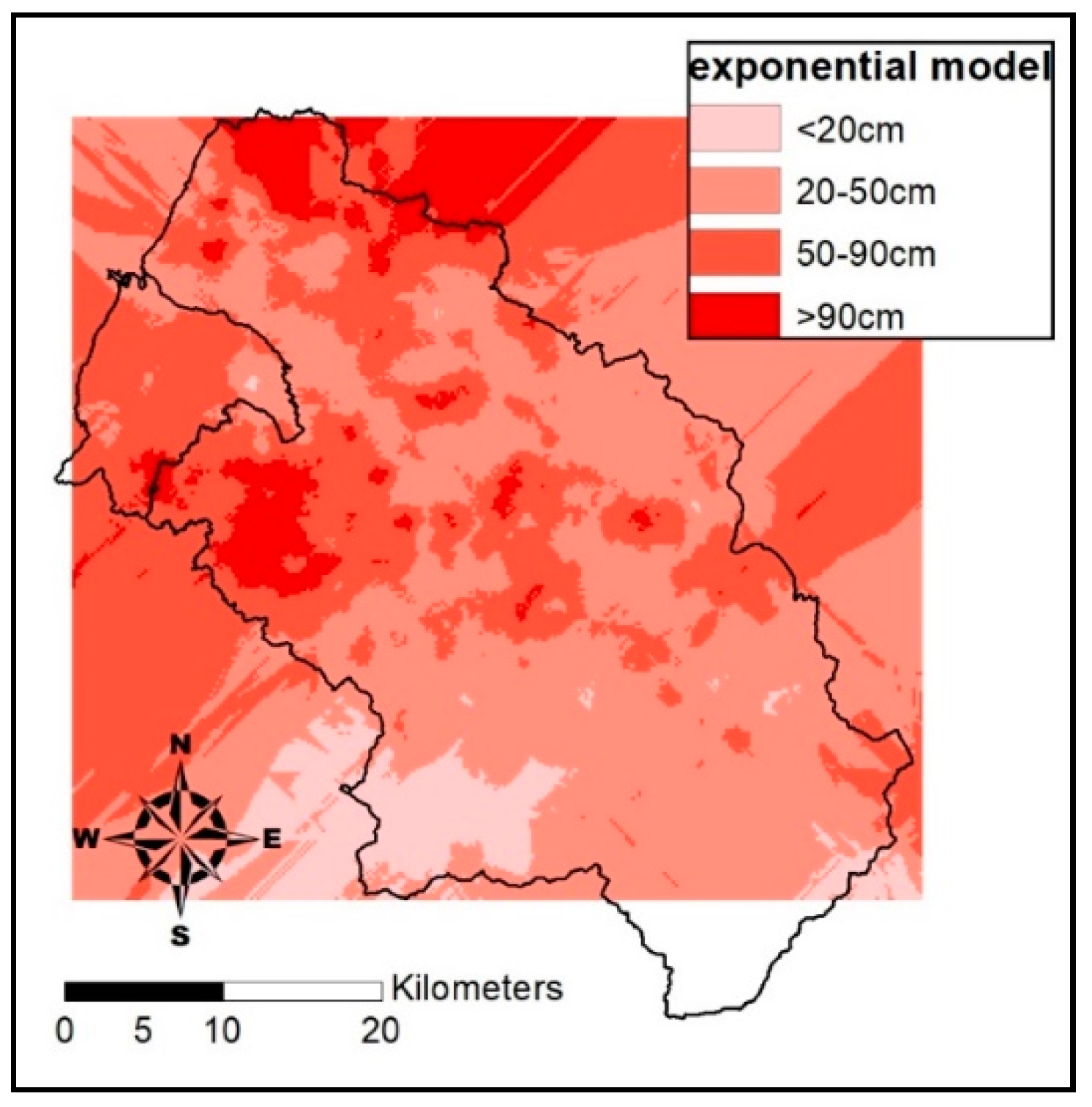
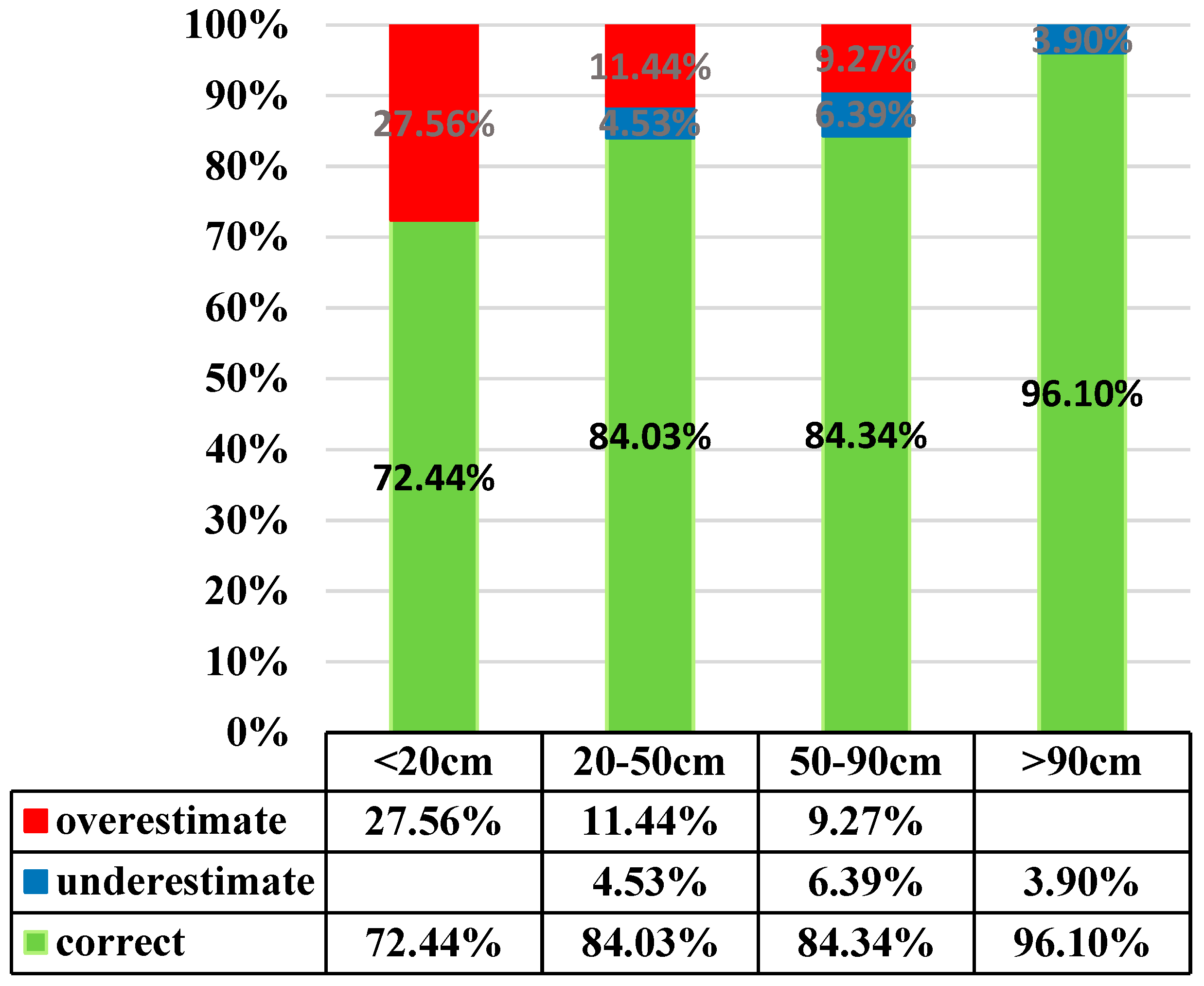
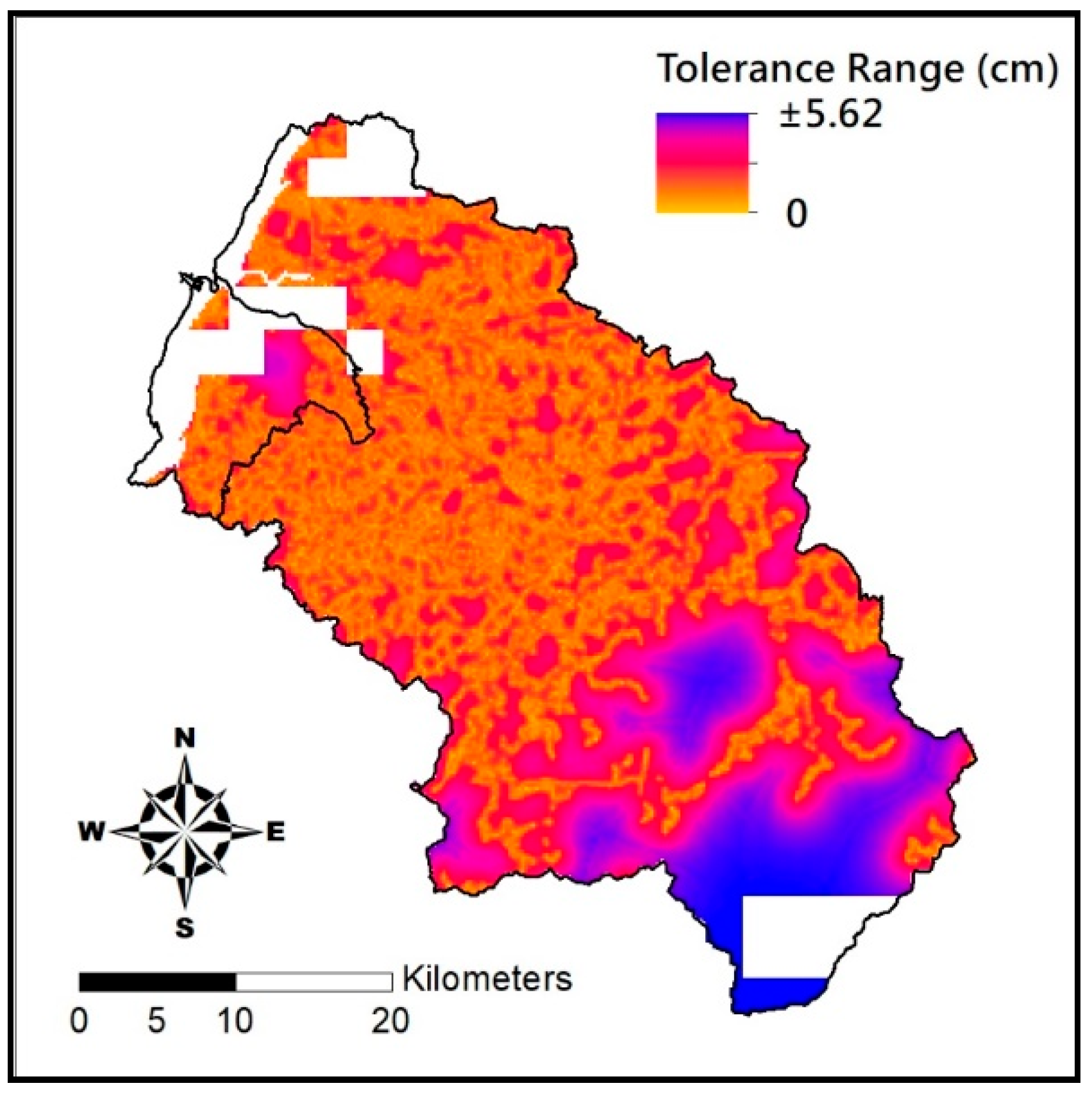
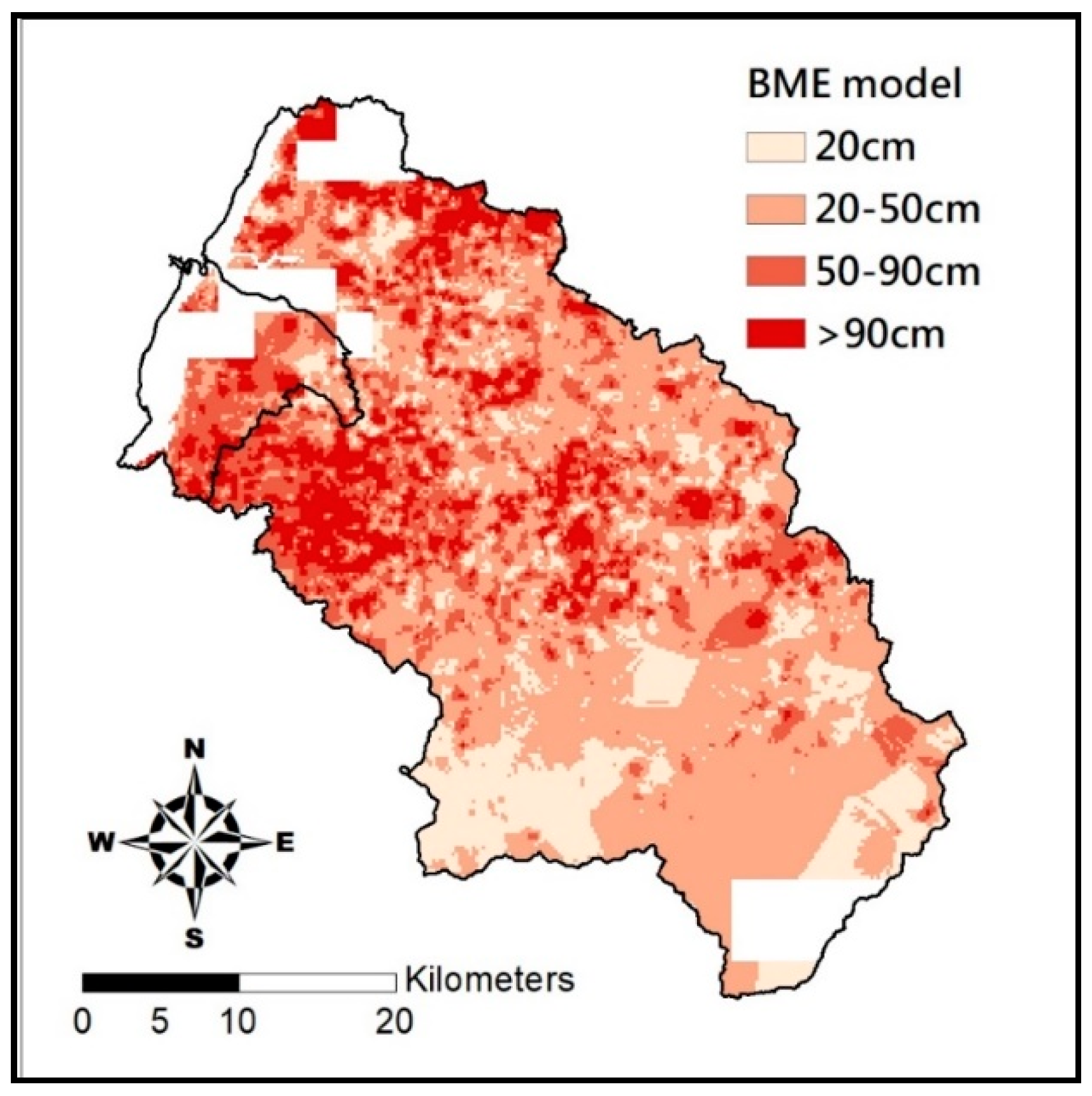
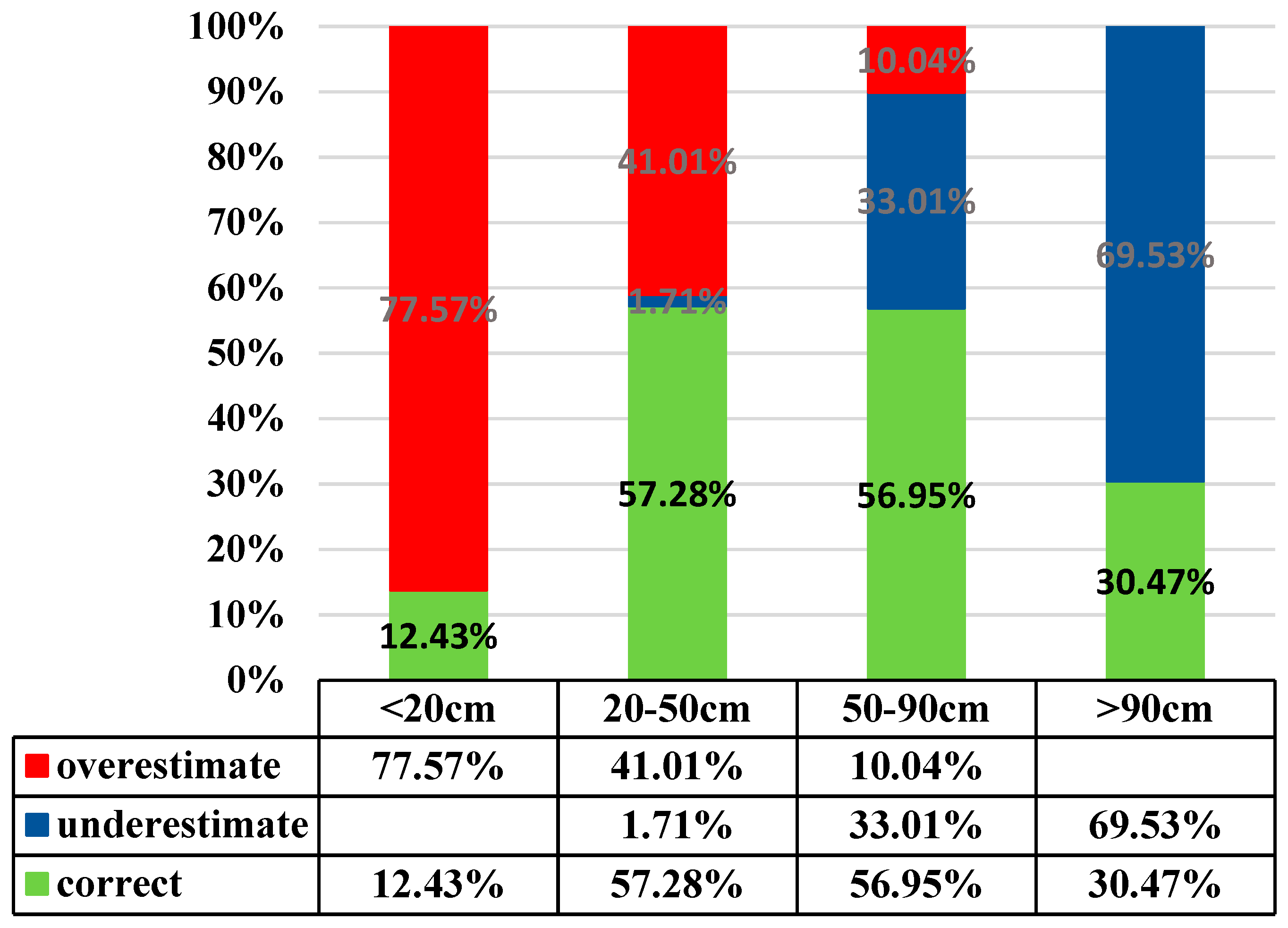
Soil depth plays an important role in landslide disaster prevention and is a key factor in slopeland development and management. Existing soil depth maps are outdated and incomplete in Taiwan. There is a need to improve the accuracy of the map. The Kriging method, one of the most frequently adopted estimation approaches for soil depth, has room for accuracy improvements. An appropriate soil depth estimation method is proposed, in which soil depth is estimated using Bayesian Maximum Entropy method (BME) considering space distribution of measured soil depth and impact of physiographic factors. BME divides analysis data into groups of deterministic and probabilistic data. The deterministic part are soil depth measurements in a given area and the probabilistic part contains soil depth estimated by a machine learning-based soil depth estimation model based on physiographic factors including slope, aspect, profile curvature, plan curvature, and topographic wetness index. Accuracy of estimates calculated by soil depth grading, very shallow (<20 cm), shallow (20–50 cm), deep (50–90 cm), and very deep (>90 cm), suggests that BME is superior to the Kriging method with estimation accuracy up to 82.94%. The soil depth distribution map of Hsinchu, Taiwan made by BME with a soil depth error of ±5.62 cm provides a promising outcome which is useful in future applications, especially for locations without soil depth data.
Keywords: slopeland; Bayesian Maximum Entropy; soil depth; physiographic factors slopeland; Bayesian Maximum Entropy; soil depth; physiographic factors