Article

The Influence of Service Quality and Psychosocial Motivations on Continuance Tipping Intention Toward Couriers in Online Food Delivery Services


1
Department of Restaurant, Hotel and Institutional Management, Fu Jen Catholic University, Xinzhuang, New Taipei City 242062, Taiwan
2
Department of Food & Beverage Management, Taipei City University of Science and Technology, Taipei 112302, Taiwan
3
Ph.D. Program in Nutrition and Food Science, Fu Jen Catholic University, Xinzhuang, New Taipei City 242062, Taiwan
*
Authors to whom correspondence should be addressed.
J. Theor. Appl. Electron. Commer. Res. 2026, 21(7), 235; https://doi.org/10.3390/jtaer21070235
Submission received: 8 June 2026 / Revised: 15 July 2026 / Accepted: 18 July 2026 / Published: 20 July 2026

Abstract

Online food delivery services (OFDSs) have become an integral component of consumers’ daily dining habits, making it important to understand consumers’ continuance tipping intention toward OFDS couriers. On the basis of stimulus–organism–response theory and social exchange theory, the present study examined how service quality and psychosocial motivations influence consumers’ continuance tipping intention toward OFDS couriers in Taiwan. Purposive sampling was adopted, and an online questionnaire survey was administered to OFDS consumers who had recently tipped delivery couriers. In total, 845 valid questionnaires were collected, and structural equation modeling was employed to test several proposed hypotheses. The results indicated that past tipping behavior was significantly and positively associated with continuance tipping intention. Perceived value partially mediated the relationships between perceived service quality and tipping behavior, as well as between perceived service quality and continuance tipping intention. In addition, psychosocial motivations, including gratitude, social obligation, and helping couriers, were significantly and positively associated with continuance tipping intention. Finally, the findings highlight the roles of service evaluations and psychosocial motivations in explaining consumers’ continuance tipping intention toward OFDS couriers.

1. Introduction

Online food delivery services (OFDSs) connect restaurants and consumers through websites or applications, increasing the convenience of dining [1]. The COVID-19 pandemic has increased demand for contactless delivery and accelerated the growth of OFDSs, contributing to the consistent expansion of the global online food delivery market [2]. The pandemic also reshaped Taiwanese consumers’ dining habits by rendering OFDSs crucial to daily food consumption [3]. OFDSs enhance convenience, and the development of these services has increasingly been focused on delivery efficiency, operational management, and sustainable operations [4]. Nevertheless, OFDSs require the financial support of patrons to remain sustainable.
The term tipping refers to additional compensation that is voluntarily provided by consumers to service providers to express gratitude and reward labor [5]. Tipping behavior varies across customers and situations [6], and although it is not universal and is often concentrated in service settings such as restaurants and bars [5,6], it persists because it provides incentives to service providers to perform well [7]. In Taiwan, OFDS platforms such as Foodpanda and Uber Eats have introduced online tipping functions, which indicates that tipping may help support couriers in the region financially and sustain and improve service quality.
Service quality is a key determinant of tipping behavior [8]. In restaurants, service quality predicts tipping behavior [9]. However, tipping may not be motivated exclusively by strategic concerns or by expectations regarding future service; in other words, frequent patronage is not necessarily associated with greater tipping or an expectation of higher service quality [10]. Research suggests that tipping also reflects the psychological and social motives of consumers. Lynn [11] demonstrated that restaurant tipping rates have increased over the past half-century, suggesting that consumers may tip to avoid negative social evaluations, obtain benefits, maintain positive interactions, or signal social image.
Consumer motives for tipping are diverse. Service quality influences which OFDS platform a consumer chooses to use [12], and tipping may motivate employees, fulfill consumers’ desire to adhere to social norms, encourage positive service experiences, and secure future service [10,13]. Positive motives for tipping include expressing empathy, rewarding a job well done, maintaining service quality, preventing delivery of inferior service, gaining social respect, recognizing effort, and fulfilling consumer duty, whereas nontipping may reflect money-saving concerns, resistance to unequal power relations, or a desire to avoid appearing privileged [13]. Overall, tipping behavior reflects monetary decisions and evaluations of service as well as broader psychosocial motives such as the desire to adhere to social norms and to express or avoid value judgments.
Tipping originates in Western social customs and has become a crucial source of income for service employees in many countries. Because of its association with service quality, tipping is inextricably linked to financial and service management, although it varies across service industries and interaction contexts [6,14]. Because behavioral intentions predict behavior [15] and because continued consumer use of OFDSs provides a stable income to couriers [16], consumers’ continuance tipping intention toward OFDS couriers may predict future tipping behavior, enhance the stability of couriers’ income, contribute to sustained service quality, and promote the social sustainability of platform service ecosystems.
Although tipping behavior and continuance tipping intention have been extensively examined in restaurants e.g., [5,9,17] research on tipping behavior and continuance tipping intention in OFDSs remains limited. This gap is particularly notable in Taiwan, where tipping is not culturally institutionalized [10]. Previous studies have mainly examined tipping in traditional restaurant settings or have focused on consumers’ adoption and continued use of OFDS platforms, rather than on their intention to continue tipping individual couriers. Moreover, limited research has integrated service-evaluation mechanisms with psychosocial motivations to explain continuance tipping intention among consumers with actual recent tipping experience. Accordingly, the present study examined how delivery service quality and consumer psychosocial motives influence continuance tipping intention toward OFDS couriers in Taiwan. Specifically, this study investigated whether service quality affects continuance tipping intention through perceived value and examined the influence of gratitude, social obligation, helping couriers, generosity, and service control on continuance tipping intention. Because continuance intention presupposes prior behavioral experience, this study specifically focused on consumers who had recently tipped OFDS couriers rather than on the initial formation of tipping intention among all OFDS users.

2. Theoretical Background and Hypotheses

2.1. Theoretical Background

Stimulus–organism–response (SOR) theory posits that environmental stimuli trigger cognitive and affective responses, which subsequently shape behavior [18]. Studies have extensively applied SOR theory in digital platform and consumer contexts to explain how service-related stimuli influence consumers’ perceptions and evaluations, which subsequently shape behavioral intentions and behaviors e.g., [19]. Accordingly, the present study adopted SOR theory as an overarching framework, conceptualizing service quality as the stimulus, perceived value as the organism, and continuance tipping intention toward OFDS couriers as the response. This framework explains how consumers develop continuance tipping intention toward OFDS couriers on the basis of perceptions of service quality and psychosocial motivations.
Continuance tipping intention differs from general purchase intentions because tipping involves reciprocity, reward, and helping behaviors. Therefore, this study further incorporated social exchange theory, which posits that individuals tend to reciprocate when they perceive services or assistance from others to be valuable [20], to examine tipping behavior by consumers of OFDSs. Consumers of OFDSs who perceive couriers as providing reliable and valuable service may feel gratitude, a sense of social obligation, and a willingness to help couriers financially, which may enhance continuance tipping intention. Social exchange theory can thus help to explain the reciprocal and reward mechanisms underlying tipping behavior.
To strengthen the explanatory power of the model employed in the current study, generosity and service control were also evaluated. Generosity reflects a prosocial willingness to voluntarily provide resources that exceed requirements [21]. The present study therefore hypothesized that tipping reflects generosity. By contrast, service control refers to consumer perceptions of the level of control they hold over service processes or outcomes [21]. In OFDS contexts, In OFDS contexts, service control reflects consumers’ belief that tipping may influence courier effort or delivery outcomes, particularly when tips are provided before service and promote positive evaluations of service, thereby enhancing continuance tipping intention. Overall, this study integrated SOR theory and social exchange theory to explain how service quality, perceived value, psychosocial motives, generosity, and service control influence continuance tipping intention toward OFDS couriers. Specifically, SOR theory explains how courier service quality, as an external service stimulus, is cognitively evaluated through perceived value and subsequently associated with tipping behavior and continuance tipping intention. Social exchange theory, by contrast, explains the reciprocal and prosocial motivations underlying tipping, particularly gratitude, social obligation, and helping couriers. SOR theory alone cannot sufficiently account for relational and normative motivations that extend beyond consumers’ evaluations of service quality and value. Conversely, social exchange theory does not specify the cognitive pathway through which courier service quality is translated into perceived value and behavioral responses. Integrating the two theories therefore provides a more comprehensive explanation of both evaluation-based and social-relational pathways to continuance tipping intention.

2.2. Tipping in Online Food Delivery Services

Tipping originated in 16th-century England, where it was used to encourage prompt and attentive service [22]. Tipping has thus long been embedded in service encounters and linked to consumer evaluations of service. Nevertheless, tipping is a unique economic phenomenon because it is voluntary and common across service settings. Consumers often tip to express gratitude and compensate service professionals for their labor [5,6]. Tipping also reflects consumer responses to service quality, social customs, and cultural expectations.
Tipping originated in Western societies and varies across cultures, genders, service industries, and interactions [14]. Notably, it has not become a consistent social norm in Taiwan, where restaurant bills often include a 10% service charge. In this context, consumers may distinguish the commonly charged service fee from an optional platform tip, which may be interpreted as a transaction-specific expression of gratitude or support rather than a culturally prescribed payment. However, the growth of OFDSs has increased the prevalence of tipping. Cheng et al. [23] reported that approximately 26% of Taiwan’s population uses OFDSs, with Uber Eats and Foodpanda being the dominant platforms. These platforms enable consumers to reward couriers for excellent service by tipping them and encourage continuation of such service [3].
Tipping of OFDS couriers may occur through platform-based pre-tipping, post-service credit card tipping, or face-to-face cash tipping. Therefore, even in the absence of a strong tipping culture, OFDS consumer tipping behavior in Taiwan may be influenced by consumer evaluations of service quality and psychosocial motives.

2.3. Factors Influencing OFDS Consumers’ Continuance Tipping Intention

2.3.1. Tipping Behavior and Continuance Tipping Intention

Behavioral intentions predict behavior; the stronger the intentions are, the more likely an individual is to perform a behavior [24]. Studies have suggested that tipping behaviors are often initially guided by conscious decision-making but that with repetition, they may become internalized as habits, which increases the likelihood that such behaviors will be normalized [25,26].
Prior behaviors have been reported to predict subsequent intentions across consumption contexts. For example, research has reported that purchasing organic food positively affects intentions to purchase such food in the future [27], prior purchase experience predicts continuance intentions [28], and past dietary behavior enhances intentions to adopt sustainable and healthy diets [29]. Therefore, consumers with prior tipping experience are more likely to exhibit stronger continuance tipping intention toward OFDS couriers. Accordingly, this study proposed the following hypothesis:
Hypothesis 1 (H1).
OFDS consumers’ tipping behavior positively influences continuance tipping intention.

2.3.2. Service Quality, Perceived Value, Tipping Behavior, and Continued Tipping Intentions

The term service quality refers to overall consumer evaluations of service performance, with these evaluations based on a comparison of expectations and actual experiences [30]. In OFDS contexts, service quality is vital to platform performance and consumer relationships and involves reliability, food quality and hygiene, service assurance, safety, system efficiency, and traceability [23,31]. Because couriers directly connect consumers and OFDS platforms, their appearance, politeness, communication, and timeliness may shape consumers’ service experiences and behavioral responses [23]. Studies have also linked service quality to tipping behavior, tip amounts [32], and food service reliability [33]. Therefore, positive perceptions of courier service quality may promote tipping behavior and continuance tipping intention.
Service quality also enhances perceived value, which reflects consumers’ judgment of a service’s overall worth after considering the benefits obtained relative to the costs involved [34]. Perceived value reflects the net benefit of service quality or performance relative to price [35] and predicts both consumer satisfaction with services and intentions to repeat patronage [36]. In OFDS settings, reliable, high-quality, and convenient services are likely to generate higher perceived value. Studies have also demonstrated that service quality, food quality, and value for money influence OFDS continuance purchase intention [37], indicating that service quality enhances perceived value and behavioral intentions in foodservice settings [38]. Recent OFDS research has further shown that performance expectancy, habit, satisfaction, service quality, and perceived value are associated with consumers’ continuance usage or purchase intentions in platform-mediated food delivery contexts [37,39,40,41]. These findings provide contemporary empirical support for examining how service evaluations and post-adoption experiences are associated with tipping behavior and continuance tipping intention.
Perceived value may mediate the relationship between service quality and behavioral responses such as tipping. Service quality and perceived value positively affect consumer satisfaction [42], and perceived value mediates the relationship between service quality and consumer loyalty [43]. This suggests that consumers have behavioral responses to both service quality and the value they perceive the service experience to provide. In OFDS tipping contexts, when consumers perceive delivery services as valuable, they may be more likely to tip and develop continuance tipping intention [6,44].
Perceived value may strengthen continuance tipping intention through tipping behavior. Consumer satisfaction has been reported to increase tipping intentions [45], and because past behavior is a key predictor of future behavioral intention [46], tipping behavior may enhance consumers’ future intentions to continue tipping through higher perceived value.
This study posited that the perceived service quality provided by couriers influences tipping behavior and continuance tipping intention directly and indirectly through perceived value. In addition, tipping behavior may mediate the relationship between perceived value and continuance tipping intention. Accordingly, the following hypotheses are proposed:
Hypothesis 2a (H2a).
Perceived service quality positively influences OFDS consumers’ tipping behavior.
Hypothesis 2b (H2b).
Perceived service quality positively influences OFDS consumers’ continuance tipping intention.
Hypothesis 3 (H3).
Perceived service quality positively influences OFDS consumers’ perceived value.
Hypothesis 4a (H4a).
Perceived value positively influences OFDS consumers’ tipping behavior.
Hypothesis 4b (H4b).
Perceived value positively influences OFDS consumers’ continuance tipping intention.
Hypothesis 5a (H5a).
Perceived value mediates the relationship between perceived service quality and OFDS consumers’ tipping behavior.
Hypothesis 5b (H5b).
Perceived value mediates the relationship between perceived service quality and OFDS consumers’ continuance tipping intention.
Hypothesis 5c (H5c).
OFDS consumers’ tipping behavior mediates the relationship between perceived value and continuance tipping intention.

2.3.3. Psychosocial Motivations and Continuance Tipping Intention

Tipping is a voluntary and altruistic form of reciprocal compensation that reflects consumer satisfaction and psychosocial motivations [14]. Such motivations may stem from internal needs, such as desires to express gratitude, convey generosity, and preserve self-worth; they may also be related to external social factors, such as the desire to conform to social norms, meet cultural expectations, and maintain social image [10,13]. Lynn [13] proposed a framework that identifies five motives for tipping: acquiring social esteem, rewarding excellent service, complying with social norms, supporting service workers, and maintaining future service quality. Drawing on this literature, the present study selected five motivations that represent conceptually distinct reasons for tipping in OFDS contexts. Gratitude captures a reciprocal response to service received; social obligation reflects a perceived normative duty; generosity concerns consumers’ self-perceptions and the expression of personal values; helping couriers reflects other-oriented concern for couriers’ welfare; and service control represents an instrumental expectation that tipping may influence service outcomes. Together, these constructs capture reciprocal, normative, self-expressive, prosocial, and strategic motivations and were therefore examined separately rather than treated as a single psychosocial factor. Recent platform-based delivery studies also suggest that consumers’ tipping decisions reflect not only evaluations of service performance but also concerns regarding courier effort, compensation, and working conditions [32,47].
In addition to the abovementioned motivations, gratitude can promote reciprocal behavior [48] such as tipping, and it often results from consumer satisfaction with service and recognition of worker efforts. Because gratitude promotes reciprocity and prosocial behavior [49,50], consumers who perceive OFDS couriers to be prompt, reliable, courteous, or working under demanding conditions may reward them through tipping.
Gratitude may also strengthen continuance tipping intention because tipping is often regarded as an appropriate response to courier efforts [51]. Studies have linked gratitude to consumer loyalty [52,53]. Repeated gratitude-based tipping may develop into a consistent response pattern, increasing consumers’ intentions to continue tipping [54]. Because motivation predicts behavioral intentions [55], this study proposed the following hypothesis:
Hypothesis 6a (H6a).
OFDS consumers’ gratitude motivation positively influences continuance tipping intention.
Social obligation refers to perceptions of having some form of responsibility in the context of social interactions. Although tipping is an addition to required expenses, some consumers may provide a tip because of cultural norms and social expectations [56]. Even dissatisfied consumers may tip because of the influences of social pressure, guilt, and internalized cultural expectations, suggesting that tipping reflects both evaluations of service and perceptions of obligation [57].
Tipping on third-party delivery platforms is often viewed as a means of supplementing courier income, rewarding excellent service, and responding to concerns that platforms do not provide couriers with fair pay [47]. Hence, tipping OFDS couriers may be perceived as a social obligation. If this obligation is internalized, consumers may be more likely to continue tipping to fulfill perceived social expectations and role responsibilities. Accordingly, this study proposed the following hypothesis:
Hypothesis 6b (H6b).
OFDS consumers’ social obligation motivation positively influences continuance tipping intention.
Generosity is closely linked to consumer self-value and self-identity. The psychological utility of tipping is often reflected in increased satisfaction or happiness [10]; by tipping, consumers may experience positive emotions and reinforce a self-image of being generous [58]. Such emotional rewards and psychological satisfaction may be key motivators for tipping behavior [10,58].
Consumers may also gain social status and respect through tipping and use this status to project a generous self-image [13,59]. Hence, tipping reflects both evaluations of service and consumers’ desires to appear generous. Tipping may also provide an emotional reward by affirming consumers’ self-concepts as generous and prosocial individuals [21,58]. When tipping is consistent with consumers’ personal values and produces positive self-evaluation, they may be more willing to repeat the behavior to maintain consistency between their self-image and subsequent actions. Therefore, generosity was expected to be positively associated with continuance tipping intention. Accordingly, this study proposed the following hypothesis:
Hypothesis 6c (H6c).
OFDS consumers’ generosity motivation positively influences continuance tipping intention.
Delivery workers’ labor conditions may constitute an important basis for consumers’ tipping motivations. In New York City, app-based food couriers often face low and unstable earnings, delayed payments, and reduced or missing tips [60]. In Taiwan, many delivery workers rely on platform work as either a supplementary or primary income source, reflecting similar limited wage stability and job security [61]. These findings suggest that delivery work is often characterized by economic uncertainty and labor vulnerability.
Consumers’ motivations to help couriers may therefore arise from empathy for their demanding working conditions. When consumers recognize that couriers frequently complete deliveries under conditions of adverse weather, traffic congestion, time pressure, order delays, and consumer complaints, they may develop an appreciation for the effort and hardship involved [51,54,62,63]. Such an awareness may encourage consumers to express support for couriers through tipping. Lynn [14] reported that motivation to help service workers positively influences consumer attitudes toward tipping. Therefore, when consumers perceive couriers as deserving help or requiring support, they are more likely to tip and to continue tipping. Accordingly, this study proposed the following hypothesis:
Hypothesis 6d (H6d).
OFDS consumers’ helping couriers’ motivation positively influences continuance tipping intention.
In addition to reciprocal and prosocial motivations, consumers may tip for strategic reasons when they believe that tipping gives them some influence over the service process. Service control therefore refers to consumers’ perceived ability to affect courier effort or delivery outcomes through tipping, rather than to the objective effectiveness of tips in improving service. This motivation is particularly relevant in pre-tipping contexts, in which consumers may expect a higher tip to signal priority, encourage additional effort, or reduce uncertainty regarding delivery performance [21].
Some empirical evidence supports this expectation. Duhaime and Woessner [64] reported that couriers receiving higher advance tips were more likely to prioritize orders and complete deliveries more rapidly and consistently. Accordingly, consumers who believe that pre-tipping can influence courier effort may be more willing to use tipping again in future transactions. Therefore, service control was expected to be positively associated with continuance tipping intention. This study proposed the following hypothesis:
Hypothesis 6e (H6e).
OFDS consumers’ service control motivation positively influences continuance tipping intention.
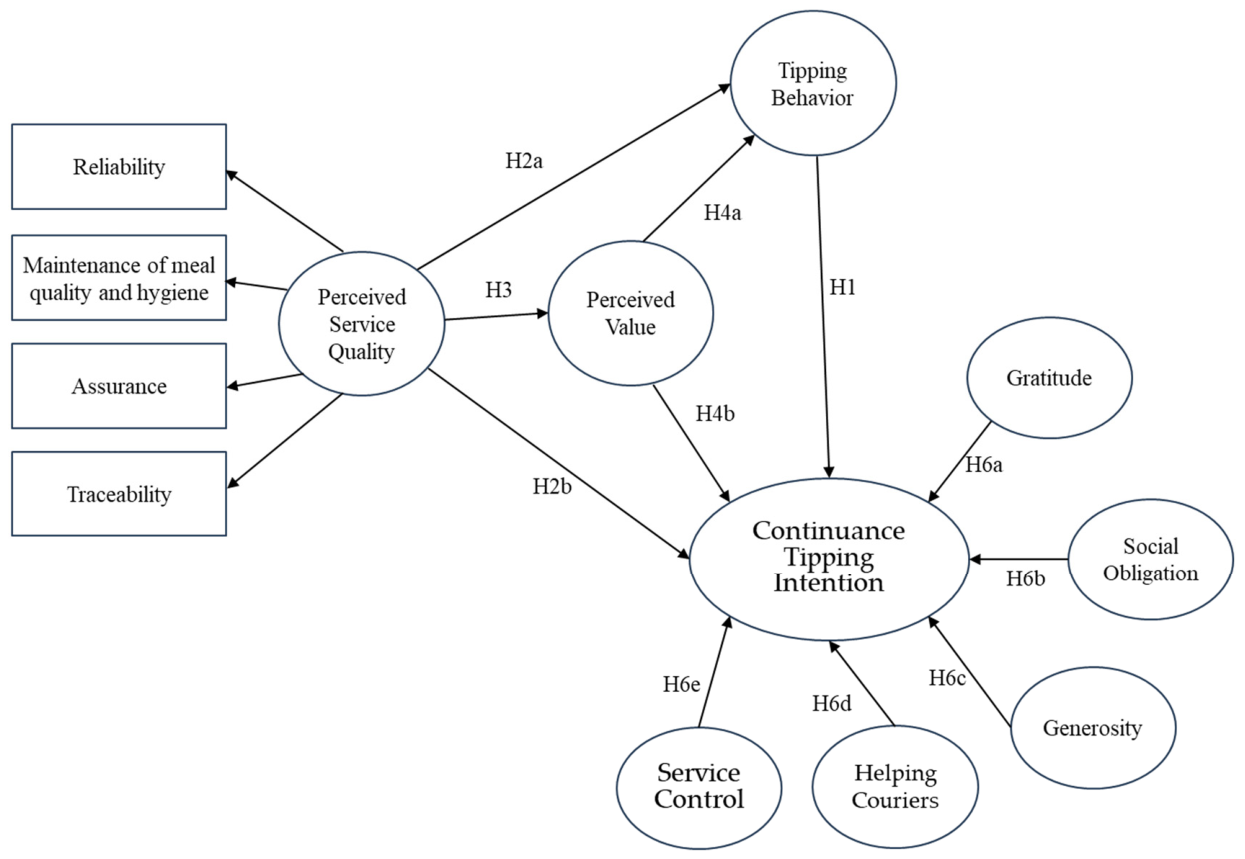
The conceptual model developed in this study is depicted in Figure 1.

3. Materials and Methods

3.1. Research Sample and Sampling Design

This study employed a purposive sampling method to survey Taiwanese consumers who had used OFDSs and had tipped couriers within the past month. The one-month screening criterion was adopted to ensure that respondents had actual and sufficiently recent tipping experience on which to base their evaluations. Accordingly, the target population comprised recent tippers, consistent with the study’s focus on continuance tipping intention. Data were collected through an online questionnaire. A market research company was commissioned to design the questionnaire on the SurveyCake Pro version latform, and the survey link was distributed to OFDS consumers through an official LINE social media account.
To increase the response rate, respondents who completed the questionnaire received LINE Points that could be redeemed for cash. A total of 1000 questionnaires were returned. After questionnaires on which respondents had selected the same response option for all items or which were incomplete had been removed, 845 valid questionnaires were retained, yielding an effective response rate of 84.5%.

3.2. Questionnaire Design

This study employed a structured questionnaire to measure nine constructs: (1) perceived service quality and (2) perceived value; consumers’ psychosocial motivations, namely (3) gratitude, (4) social obligation, (5) generosity, (6) helping couriers, and (7) service control; (8) tipping behavior and (9) continuance tipping intention. All items were rated on a 5-point Likert scale ranging from 1 (strongly disagree) to 5 (strongly agree).
Perceived service quality was measured using items adapted from Cheng et al. [23]. To measure consumers’ perceptions of courier service quality, 21 items representing four dimensions—reliability, meal quality and hygiene, assurance, and traceability—were employed. Sample items include “The courier’s uniform is clean and tidy,” “The courier maintains the appearance of meals,” “The courier delivers meals quickly,” and “The courier proactively informs me of the expected delivery time.” All 21 items were retained in the analysis. The mean score of the items within each of the four dimensions—reliability, maintenance of meal quality and hygiene, assurance, and traceability—was calculated. These four dimension-level composite scores were then used as indicators of the higher-order perceived service quality construct. The perceived value scale was adapted from Suhartanto et al. [43] and consisted of three items, including “The OFDS offers a reasonable price.” Perceived value was operationalized as consumers’ overall evaluation of the specific OFDS transaction, including price reasonableness, cost–benefit, and convenience. Thus, it represents transaction-level value rather than value attributable solely to the courier.
In addition, this study adapted measurement items proposed by Chen [65], Becker et al. [21], Futrell [66], and Saayman and Saayman [67] to assess the dimensions of gratitude, social obligation, generosity, helping couriers, and service control as psychosocial motivational factors underlying tipping behavior. Example items for these dimensions include “I tip to thank couriers,” “I tip because society expects it,” “Tipping makes me feel generous,” “Tipping contributes to couriers’ livelihood,” and “I tip to control service quality.” A total of 14 items were adapted.
Past tipping behavior was operationalized as the overall magnitude of respondents’ recent tipping and was measured using two items adapted from Futrell [66]: “How much did you tip the courier?” and “What percentage of your total expenditure did you give as a tip?” The two indicators capture the absolute and relative expressions of recent tipping magnitude, respectively. They were not combined directly using their original measurement units because the PLS-SEM algorithm z-standardizes all indicators before model estimation by setting their means to zero and standard deviations to one [68]. The construct of continuance tipping intention was adapted from Zhao and Bacao [69] and Zhao et al. [70] and comprised four items. Sample items include “I intend to continue tipping couriers,” “I will continue to tip couriers,” “I have a positive attitude toward continuing to tip couriers,” and “I am willing to continue tipping couriers.” The demographic variables assessed included gender, age, marital status, education level, occupation, monthly income, and number of orders through OFDSs in the past month.
Finally, to ensure the content validity of the questionnaire, three hospitality scholars with expertise in OFDSs or tipping behavior research were invited to review the instrument. On the basis of their feedback, appropriate revisions were made to content, structure, and wording before the formal survey was administered.

3.3. Data Analysis

Data were analyzed using SPSS 26.0 and SmartPLS 4.0. Descriptive statistics, reliability analysis, Pearson’s correlation analysis, and partial least squares structural equation modeling (PLS-SEM) were employed to examine the relationships among the variables and to test the proposed hypotheses. Given the cross-sectional design, the structural paths were interpreted as statistical associations rather than causal effects.

4. Results

In terms of gender, 498 respondents (58.9%) were women and 347 (41.1%) were men. In terms of marital status, 426 respondents (50.4%) were unmarried, and 419 (49.6%) were married. Regarding age, the majority of the respondents were aged 36–45 years (n = 352, 41.7%), followed by those aged 26–35 years (n = 251, 29.7%), 46–55 years (n = 119, 14.1%), 18–25 years (n = 96, 11.4%), and ≥56 years (n = 27, 3.2%). Regarding educational attainment, the majority of the respondents held a bachelor’s degree (n = 525, 62.1%), followed by those with a junior college degree (n = 113, 13.4%), senior high school or vocational school diploma (n = 112, 13.3%), a master’s degree or higher (n = 86, 10.2%), and junior high school or lower education (n = 9, 1.1%). Regarding occupation, the largest group was employed in the commercial or service sector (n = 301, 35.6%), followed by those employed in the industrial or manufacturing sector (n = 240, 28.4%); self-employed individuals (n = 82, 9.7%); students (n = 56, 6.6%); individuals working in the military, civil servants, and teachers (n = 54, 6.4%); homemakers, retirees, or unemployed individuals (n = 47, 5.6%); professionals (n = 45, 5.3%); and others (n = 20, 2.4%). Regarding average monthly income, the majority of the respondents earned <NT$40,000 (n = 458, 54.2%), followed by those earning NT$40,001–$NT60,000 (n = 250, 29.6%), NT$60,001–NT$80,000 (n = 87, 10.3%), and >NT$80,001 (n = 40, 5.9%). Regarding the timing of tipping, most respondents reported tipping in person (n = 363, 43.0%) upon delivery, followed by tipping through the service platform after the service had been provided (n = 275, 32.5%) and pre-tipping (n = 207, 24.5%).

4.1. Structural Model Analysis and Hypothesis Testing

4.1.1. Measurement Model Assessment

Because SmartPLS is particularly suitable for analyzing complex models with multiple constructs [71], this study employed SmartPLS 4.0 to analyze the data. The measurement model was evaluated by examining standardized factor loadings, composite reliability, and average variance extracted (AVE). As indicated in Table 1, the standardized factor loadings ranged from 0.724 to 0.929, all exceeding the recommended threshold of 0.50, indicating satisfactory indicator reliability. The composite reliability values ranged from 0.795 to 0.922, exceeding the threshold of 0.70, which indicates adequate internal consistency among the constructs. Furthermore, the AVE values ranged from 0.631 to 0.784, all exceeding the recommended threshold of 0.50, confirming good convergent validity [72]. To assess discriminant validity, this study adopted the criterion proposed by Fornell and Larcker [73], comparing the square root of the AVE values with the values of the interconstruct correlations. The results indicated that the square root of the AVE values for each construct ranged from 0.794 to 0.885, exceeding the corresponding interconstruct correlation coefficients (r = 0.073 to 0.605; Table 2). In addition, the heterotrait–monotrait ratio values for all constructs ranged from 0.162 to 0.830, which are below the recommended threshold of 0.90 [74], confirming satisfactory discriminant validity among the constructs (Table 3). Specifically, the HTMT values among gratitude, helping couriers, and continuance tipping intention were below 0.90, supporting their empirical distinctiveness despite some similarity in item wording. Overall, these results demonstrate that the measurement model exhibited adequate reliability and validity, indicating its suitability for use in structural model analysis. Although tip amount and tip percentage represent absolute and relative expressions of tipping, respectively, both indicators exhibited satisfactory standardized loadings of 0.929 and 0.803. The tipping behavior construct also demonstrated satisfactory composite reliability (CR = 0.859) and convergent validity (AVE = 0.754), supporting the interpretation that the two indicators jointly represent the overall magnitude of recent tipping behavior.

4.1.2. Hypothesis Testing

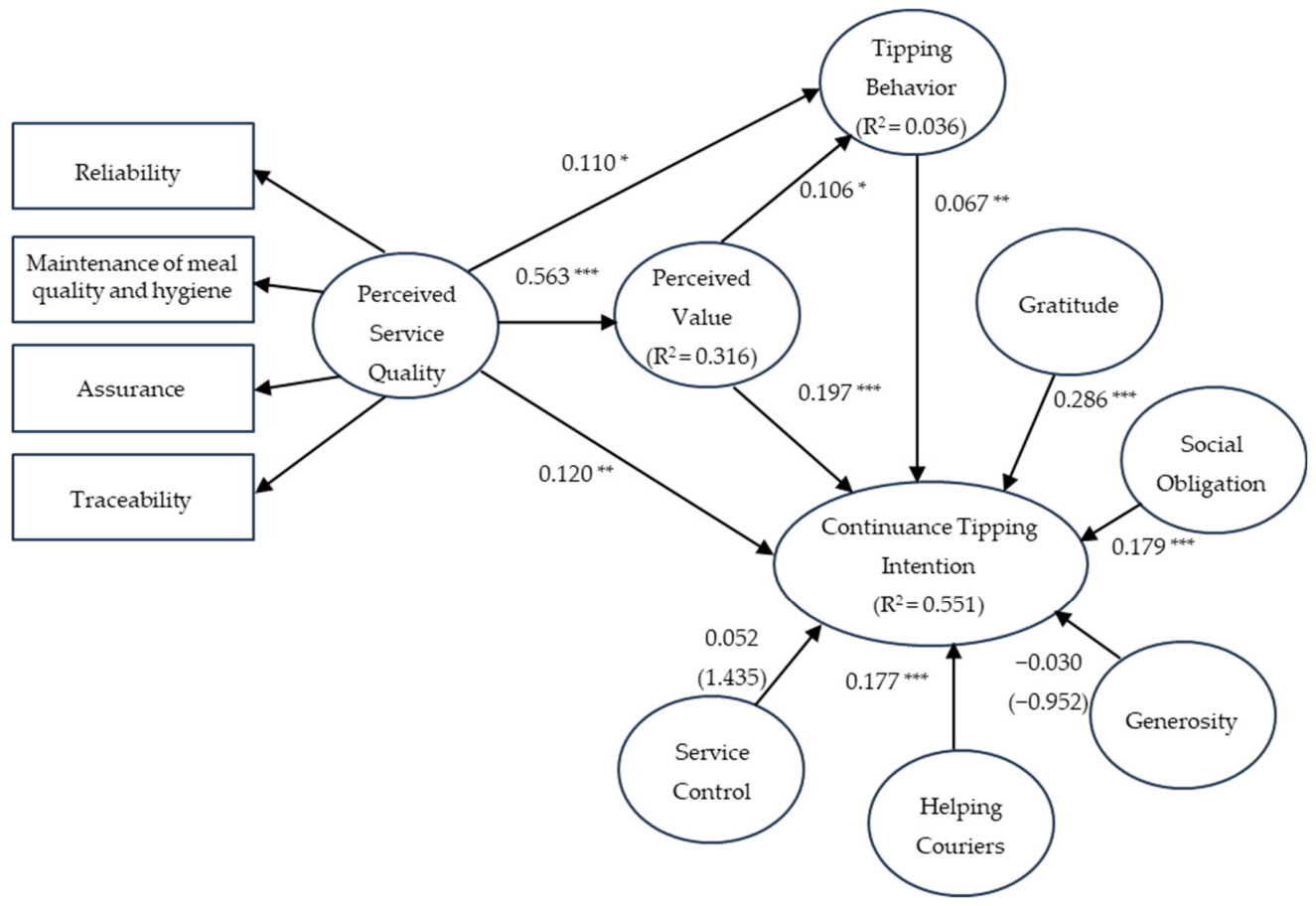
The measurement model assessments presented in Table 1, Table 2 and Table 3 indicate that all constructs exhibited satisfactory reliability and validity. Accordingly, this study employed SmartPLS to estimate the structural model and test the proposed hypotheses. Following the recommendations of Hair et al. [68], the structural model was evaluated using model fit (SRMR), collinearity (VIF), coefficients of determination (R2), effect sizes (f2), and the significance of the structural paths based on bootstrapping. As shown in Table 4, the estimated model demonstrated acceptable fit (SRMR = 0.079), which was below the recommended threshold of 0.08. The inner VIF values ranged from 1.000 to 1.849, all below the recommended threshold of 5.0, indicating that multicollinearity was not a concern. The model accounted for 31.6% of the variance in perceived value (R2 = 0.316), 3.6% of the variance in tipping behavior (R2 = 0.036), and 55.1% of the variance in continuance tipping intention (R2 = 0.551). In addition, the f2 values indicated that the effects of perceived service quality and perceived value on tipping behavior, as well as the effect of tipping behavior on continuance tipping intention, were negligible, whereas the remaining structural relationships ranged from small to large effect sizes (Table 4). The direct, indirect, and total effects are presented in Table 5.
As indicated in Figure 2 and Table 4, the structural model results showed that tipping behavior was significantly and positively associated with continuance tipping intention (β = 0.067, p < 0.01), thereby supporting H1. Perceived service quality was significantly and positively associated with both tipping behavior (β = 0.110, p < 0.05) and continuance tipping intention (β = 0.120, p < 0.01), thereby supporting H2a and H2b, respectively.
Perceived service quality was also significantly and positively associated with perceived value (β = 0.562, p < 0.001), supporting H3. Perceived value was significantly and positively associated with tipping behavior (β = 0.106, p < 0.05), supporting H4a. Similarly, perceived value was significantly and positively associated with continuance tipping intention (β = 0.197, p < 0.001), supporting H4b.
As shown in Table 5, the indirect effect of perceived service quality on tipping behavior through perceived value was significant (β = 0.059, t = 2.560, p = 0.010), and the 95% bootstrap confidence interval excluded zero. Because the corresponding direct effect remained significant, perceived value partially mediated the relationship between perceived service quality and tipping behavior, supporting H5a. Similarly, the indirect effect of perceived service quality on continuance tipping intention through perceived value was significant (β = 0.111, t = 5.527, p < 0.001), and the 95% bootstrap confidence interval also excluded zero. Because the corresponding direct effect remained significant, perceived value partially mediated the relationship between perceived service quality and continuance tipping intention, supporting H5b.
By contrast, the indirect effect of perceived value on continuance tipping intention through tipping behavior was very small (β = 0.007, t = 1.823, p = 0.068). Although the 95% bootstrap confidence interval excluded zero, the corresponding two-tailed p value did not reach the conventional significance level. Because the two inferential statistics yielded inconsistent conclusions, the mediation effect was interpreted conservatively, and H5c was not considered supported.
With regard to psychosocial motivations, gratitude was significantly and positively associated with continuance tipping intention (β = 0.286, p < 0.001), supporting H6a. Social obligation was also significantly and positively associated with continuance tipping intention (β = 0.179, p < 0.001), supporting H6b. However, generosity was not significantly associated with continuance tipping intention (β = −0.030, p > 0.05); therefore, H6c was not supported. By contrast, helping couriers was significantly and positively associated with continuance tipping intention (β = 0.177, p < 0.001), supporting H6d. Finally, service control was not significantly associated with continuance tipping intention (β = 0.052, p > 0.05); therefore, H6e was not supported.

5. Discussion and Implications

5.1. Discussion

Tipping warrants scholarly attention because it affects low-wage service workers’ livelihoods and can help firms monitor service performance [6]. In OFDS contexts, consumers’ continuance tipping intention reflects their recognition of service performance and may further shape couriers’ income incentives and service interactions [17]. However, in contrast to tipping research on full-service restaurants, tipping for OFDSs remains underexplored, particularly in Taiwan, where explicit tipping norms have yet to be established.
The present study examined the relationships between couriers’ service quality, consumers’ psychosocial motivations, and continuance tipping intention toward OFDS couriers. The present findings indicate that prior tipping behavior was positively associated with continuance tipping intention. In addition, positive evaluations of courier service quality were indirectly associated with tipping behavior and continuance tipping intention through perceived value. Gratitude, social obligation, and helping couriers were also positively associated with continuance tipping intention.
A prior study indicated that performance expectancy, habit, online reviews, and satisfaction influence consumers’ intentions to continue using OFDSs [39]. Fernandez et al. [17] additionally reported that repeat consumers of full-service restaurants were more likely than first-time consumers to tip and leave generous tips. Consistent with these findings, the present study found that prior tipping behavior was positively associated with continuance tipping intention toward OFDS couriers. This finding is consistent with the view that prior behavioral experience is associated with stronger subsequent behavioral intentions.
With respect to service quality, studies on restaurants have generally reported a weak to moderate association between service employee effort and tipping amounts [6,75,76,77,78]. Wung et al. [32] reported that service quality strongly predicted whether consumers tipped and the amount tipped. In a study of OFDS consumers, Nguyen and Nguyen [40] demonstrated that service quality positively affected intentions to repeat patronage, and Zaheer et al. [41] reported that perceived value positively predicted purchase intentions and mediated the relationships between various service-related factors and purchase intentions. Extending these findings, the present study found that perceived value served as a statistically significant but partial mediator linking perceived service quality with both tipping behavior and continuance tipping intention. These findings suggest that consumers’ value perceptions represent one pathway linking perceived service quality to tipping-related responses rather than the sole explanatory mechanism.
Nevertheless, the statistically significant effects on tipping behavior should be interpreted cautiously because their effect sizes were negligible. Perceived service quality and perceived value jointly explained only 3.6% of the variance in tipping behavior, indicating limited explanatory value for consumers’ actual tip amounts and percentages. This finding also suggests that important determinants of tipping behavior may not have been captured by the proposed model. Previous research suggests that tipping behavior may also be shaped by economic and situational factors, including consumer income, bill size, and payment method [17], as well as by digital tipping prompts and interface design [79]. Prior behavioral experience may also contribute to the persistence of tipping behavior over time [28]. Thus, perceived service quality and perceived value should be regarded as statistically reliable but weak contributing factors rather than strong determinants of actual tipping behavior. By contrast, the model explained 55.1% of the variance in continuance tipping intention, suggesting that its explanatory relevance is substantially greater for consumers’ future tipping intentions than for their current tipping behavior.
From a psychosocial perspective, Azar [80] reported that consumers in the United States and Israel primarily tip because of social norms, gratitude, recognition of workers’ dependence on tips, and a desire to avoid guilt or embarrassment, whereas strategic motives linked to future service are less influential. Azar [6] argued that consumers frequently continue tipping when traveling, even when they do not expect future interactions with service providers, which suggests that tipping is often motivated more by emotional and social motives than by expectations of future service benefits. Consistent with this argument, gratitude, social obligation, and helping couriers were significantly and positively associated with continuance tipping intention, whereas generosity and service control were not significantly associated with continuance tipping intention. The nonsignificant effect of generosity suggests that feeling generous, affirming personal values, or experiencing positive self-evaluation through tipping may not be sufficient to sustain future tipping intention in the OFDS context. This finding may also be partly attributable to the characteristics of platform-mediated tipping, where opportunities to reinforce positive self-perceptions through tipping may be less salient than in face-to-face service encounters [59,79]. The nonsignificant effect of service control may also reflect the inclusion of post-service tippers, for whom tipping could not influence the already completed delivery process. Moreover, because OFDS delivery is largely coordinated through platform algorithms, consumers may perceive limited ability to influence service performance through tipping [16]. Taken together, these findings suggest that continuance tipping intention in the Taiwanese OFDS context may be driven more strongly by reciprocal and prosocial motivations than by self-oriented generosity or strategic attempts to control service outcomes. These findings further suggest that not all motivations identified in conventional restaurant tipping contexts are equally applicable to digitally mediated OFDS environments, highlighting the importance of considering contextual differences when explaining tipping behavior. Overall, continuance tipping intention toward OFDS couriers appears to be motivated primarily by emotional and social considerations. In Taiwan, the significant roles of gratitude, social obligation, and helping couriers may reflect emerging platform-specific norms rather than a long-established general tipping convention.
This study extends research on tipping from traditional full-service restaurant settings to OFDSs, addressing the lack of studies on continuance tipping intention in platform-based services. By applying SOR theory, the present findings suggest that perceived service quality was associated with tipping behavior and continuance tipping intention through perceived value, supporting the usefulness of SOR theory for understanding tipping decisions in OFDS contexts. In addition, the findings highlight the explanatory importance of psychosocial motivations, particularly gratitude, social obligation, and helping couriers, suggesting that continuance tipping intention is associated with both evaluations of service value and emotional and social exchanges. The theoretical contribution therefore lies not merely in applying these theories to a new service context but in demonstrating their complementary explanatory roles. The nonsignificant associations of generosity and service control further suggest that some conventional tipping motivations may have more limited explanatory relevance in platform-mediated contexts where tipping norms are weak. Together, these findings suggest that the motivational mechanisms underlying continuance tipping intention vary according to service context and platform characteristics, thereby extending the applicability of tipping theory to digitally mediated service environments.

5.2. Managerial Implications

This study has distinct managerial implications for platform operators, delivery companies, and policymakers. First, for platform operators, prior tipping behavior was positively associated with continuance tipping intention. This finding is consistent with the argument that repeated tipping experiences and the repeated expression of protipping attitudes may contribute to greater behavioral consistency over time [81]. Accordingly, platforms may provide an optional and transparent tipping function while avoiding incentives or messages that could create consumer pressure.
Second, service quality, price, delivery time, and meal condition are important considerations in OFDS use [12]. Although courier service quality and perceived value were significantly associated with tipping behavior, their effect sizes and explanatory contribution were limited. Therefore, improvements in courier reliability, food handling, communication, and delivery traceability may modestly encourage tipping, but platforms should not expect such improvements alone to produce substantial changes in tip amounts or percentages. These practices nevertheless remain important because they were associated with higher perceived value and continuance tipping intention, for which the proposed model demonstrated substantially greater explanatory power. Accordingly, service-quality improvements should be regarded as one component of a broader strategy rather than a standalone approach to encouraging tipping. Platforms may therefore combine service-quality improvements with other approaches, such as transparent tipping options, convenient payment mechanisms, and context-sensitive prompts.
Third, gratitude, social obligation, and helping couriers were positively associated with continuance tipping intention. These findings suggest that consumers may regard tipping as a voluntary expression of appreciation and social recognition rather than merely a financial transaction. Accordingly, platforms may emphasize appreciation for couriers’ efforts through neutral, informative messages while ensuring that any tipping prompt remains transparent, voluntary, and noncoercive.
Finally, for policymakers, tipping should be regarded only as a voluntary supplementary payment and should not substitute for platforms’ responsibility to provide fair compensation and labor protection. OFDS platforms should also adopt transparent and noncoercive tipping systems and clearly disclose whether tips are fully transferred to couriers. Such transparency may alleviate consumer concerns regarding compensation fairness, strengthen consumer trust, and foster more supportive relationships among consumers, couriers, and platforms, thereby contributing to a more socially sustainable platform ecosystem.

5.3. Limitations and Directions for Future Research

This study has several limitations. Because of constraints in time and resources, this study focused on service quality and psychosocial motivations as key factors associated with Taiwanese OFDS consumers’ continuance tipping intention. However, previous studies have suggested that service providers’ personality traits [8] and physical attractiveness [78] may also be associated with tipping behavior. Accordingly, future research should incorporate couriers’ personality traits and physical attractiveness as additional predictors to provide a more comprehensive explanation of continuance tipping intention.
Furthermore, Hall [82] noted that tip amounts are highly discretionary and may vary according to consumer characteristics, service settings, industry type, and cultural background. Future studies should therefore conduct cross-cultural or cross-national comparisons to examine the determinants of continuance tipping intention across different cultural and institutional contexts. Because the present study was conducted exclusively in Taiwan, where tipping is not an institutionalized social norm and restaurant service charges are common, the findings may not be directly generalizable to countries with more established tipping cultures or different service-payment practices. In addition, perceived service quality primarily assessed courier performance, whereas perceived value reflected consumers’ evaluations of the overall OFDS transaction. Future studies should therefore employ measures with more closely aligned evaluation targets or separately model courier-, platform-, and transaction-level evaluations.
The findings may also have limited generalizability beyond consumers with recent tipping experience. Future research should compare recent tippers, infrequent tippers, and non-tippers and examine tip amount and tip percentage as separate behavioral outcomes because these measures may have different determinants. Researchers should also distinguish among pre-tipping, platform-based post-service tipping, and face-to-face cash tipping, as these payment modes involve different temporal sequences and decision processes. In particular, because post-service tipping occurs after delivery and cannot influence an already completed service encounter, future studies should examine whether the meaning and relevance of service control differ between pre-tipping and post-service tipping contexts.
Finally, because all variables were measured simultaneously through a cross-sectional survey, temporal ordering could not be established, and reverse, or reciprocal relationships among the constructs cannot be ruled out. For example, consumers with stronger continuance tipping intention may subsequently report higher perceived value or stronger gratitude and helping-courier motivations. Future studies should employ longitudinal designs to establish temporal precedence and experimental designs to provide stronger evidence regarding the direction and causal nature of the proposed relationships.

Author Contributions

Conceptualization, H.-F.L. and P.-C.L.; methodology, H.-F.L., P.-C.L. and M.-Y.L.; software, H.-F.L. and M.-Y.L.; validation, H.-F.L., P.-C.L., M.-Y.L. and W.-H.K.; formal analysis, H.-F.L., M.-Y.L. and Y.-X.X.; investigation, H.-F.L., M.-Y.L. and Y.-X.X.; resources, H.-F.L. and P.-C.L.; data curation, H.-F.L., M.-Y.L. and Y.-X.X.; writing—original draft preparation, H.-F.L. and P.-C.L.; writing—review and editing, H.-F.L., P.-C.L. and W.-H.K.; visualization, H.-F.L., P.-C.L. and M.-Y.L.; supervision, H.-F.L., P.-C.L. and W.-H.K.; project administration, H.-F.L. and P.-C.L.; funding acquisition, H.-F.L. All authors have read and agreed to the published version of the manuscript.

Funding

This research received no external funding.

Institutional Review Board Statement

The study employed an anonymous online questionnaire survey of consumers in Taiwan who had experience with online food delivery services and had recently tipped delivery couriers. The study did not involve minors, prisoners, Indigenous peoples, pregnant women, persons with physical or mental disabilities, patients with mental illness, or other vulnerable groups. Participation was voluntary, and informed consent was obtained from all participants before completing the questionnaire. No personally identifiable information was collected, and all data were analyzed anonymously and used only for academic research purposes. The study involved no more than minimal risk to participants. According to the official announcement “Scope of Human Subjects Research Cases Exempt from Review by a Research Ethics Review Committee” issued by the Department of Health, Executive Yuan, Taiwan (Wei-Shu-Yi-Tzu No. 1010265075, 5 July 2012), human subjects research may be exempt from review when the risks encountered by participants do not exceed minimal risk.

Informed Consent Statement

Informed consent was obtained from all subjects involved in the study.

Data Availability Statement

The data presented in this study are available from the corresponding author upon reasonable request.

Conflicts of Interest

The authors declare no conflict of interest.

References

  1. Shroff, A.; Shah, B.J.; Gajjar, H. Online food delivery research: A systematic literature review. Int. J. Contemp. Hosp. Manag. 2022, 34, 2852–2883. [Google Scholar] [CrossRef]
  2. Statista. Online Food Delivery—Worldwide. 2025. Available online: https://www.statista.com/outlook/emo/online-food-delivery/worldwide?currency=USD#key-market-indicators (accessed on 8 June 2026).
  3. Tsai, P.H.; Chen, C.J.; Hsiao, W.H.; Lin, C.T. Factors influencing the consumers’ behavioural intention to use online food delivery service: Empirical evidence from Taiwan. J. Retail. Consum. Serv. 2023, 73, 103329. [Google Scholar] [CrossRef]
  4. Chiang, K.-L. Multi-objective optimization for sustainable food delivery in Taiwan. Sustainability 2026, 18, 330. [Google Scholar] [CrossRef]
  5. Tang, J.; Raab, C.; Zemke, D.M.V.; Choi, C. The effect of the minimum server wage on restaurant guest tipping behavior. J. Foodserv. Bus. Res. 2022, 25, 1–32. [Google Scholar] [CrossRef]
  6. Azar, O.H. The economics of tipping. J. Econ. Perspect. 2020, 34, 215–236. [Google Scholar] [CrossRef]
  7. Conlin, M.; Lynn, M.; O’Donoghue, T. The norm of restaurant tipping. J. Econ. Behav. Organ. 2003, 52, 297–321. [Google Scholar] [CrossRef]
  8. Norris, C.; Taylor, S., Jr.; Taylor, D.C. Just the tip: Exploring the tipped restaurant employee perspective. Int. Hosp. Rev. 2024, 38, 221–238. [Google Scholar] [CrossRef]
  9. Akinbola, O.A.; Sanni, S.A.; Akinbola, O.S.; Akintoye, Z.A. Drivers of customers’ tipping behavior in restaurants in Lagos state, Nigeria. Niger. J. Manag. Sci. 2022, 23, 44–56. [Google Scholar]
  10. Azar, O.H. Do people tip because of psychological or strategic motivations? An empirical analysis of restaurant tipping. Appl. Econ. 2010, 42, 3039–3044. [Google Scholar] [CrossRef]
  11. Lynn, M. How have US restaurant tips changed over time? Int. J. Hosp. Manag. 2025, 124, 103969. [Google Scholar] [CrossRef]
  12. Saad, A.T. Factors affecting online food delivery service in Bangladesh: An empirical study. Br. Food J. 2021, 123, 535–550. [Google Scholar]
  13. Lynn, M. Service gratuities and tipping: A motivational framework. J. Econ. Psychol. 2015, 46, 74–88. [Google Scholar] [CrossRef]
  14. Lynn, M. Explanations of service gratuities and tipping: Evidence from individual differences in tipping motivations and tendencies. J. Behav. Exp. Econ. 2015, 55, 65–71. [Google Scholar] [CrossRef]
  15. Ajzen, I. The theory of planned behavior. Organ. Behav. Hum. Decis. Processes 1991, 50, 179–211. [Google Scholar] [CrossRef]
  16. Nguyen, T.; Huang, E.; Nguyen, D.M. Food delivery app continuance: A dual model and segmentation approach. Int. J. Retail Distrib. Manag. 2023, 51, 569–589. [Google Scholar] [CrossRef]
  17. Fernandez, S.; Gössling, S.; Martin-Rios, C.; Fointiat, V.; Pasamar, S.; Isaac, R.; Lunde, M. To tip or not to tip? Explaining tipping behavior in restaurants with service-inclusive pricing. Int. J. Hosp. Manag. 2024, 117, 103640. [Google Scholar] [CrossRef]
  18. Mehrabian, A.; Russell, J.A. An Approach to Environmental Psychology; The MIT Press: Cambridge, MA, USA, 1974. [Google Scholar]
  19. Cai, X.; Suh, W. Exploring the impact of streamer competencies and situational factors on consumers’ purchase intention in live commerce: A stimulus–organism–response perspective. J. Theor. Appl. Electron. Commer. Res. 2025, 20, 296. [Google Scholar] [CrossRef]
  20. Blau, P. Exchange and Power in Social Life; Routledge: Abingdon, UK, 2017. [Google Scholar]
  21. Becker, C.; Bradley, G.T.; Zantow, K. The underlying dimensions of tipping behavior: An exploration, confirmation, and predictive model. Int. J. Hosp. Manag. 2012, 31, 247–256. [Google Scholar] [CrossRef]
  22. Brenner, M.L. Tipping for Success: Secrets for How to Get in and Get Great Service; Brenmark: Sherman Oaks, CA, USA, 2001. [Google Scholar]
  23. Cheng, C.C.; Chang, Y.Y.; Chen, C.T. Construction of a service quality scale for the online food delivery industry. Int. J. Hosp. Manag. 2021, 95, 102938. [Google Scholar] [CrossRef]
  24. Engel, J.F.; Blackwell, R.D.; Miniard, P.W. Consumer Behavior, 7th ed.; The Dryden Press: New York, NY, USA, 1995. [Google Scholar]
  25. Limayem, M.; Hirt, S.G.; Cheung, C.M.K. How habit limits the predictive power of intention: The case of information systems continuance. MIS Q. 2007, 31, 705–737. [Google Scholar] [CrossRef]
  26. Venkatesh, V.; Thong, J.; Xu, X. Consumer acceptance and use of information technology: Extending the unified theory of acceptance and use of technology. MIS Q. 2012, 36, 157–178. [Google Scholar] [CrossRef]
  27. Koklic, M.K.; Golob, U.; Podnar, K.; Zabkar, V. The interplay of past consumption, attitudes and personal norms in organic food buying. Appetite 2019, 137, 27–34. [Google Scholar] [CrossRef] [PubMed]
  28. Venkatesh, V.; Davis, F.D.; Zhu, Y. Competing roles of intention and habit in predicting behavior: A comprehensive literature review, synthesis, and longitudinal field study. Int. J. Inf. Manag. 2023, 71, 102644. [Google Scholar] [CrossRef]
  29. Chen, X.; Jiang, X.; Wu, L. Drivers of consumers’ intention to adopt sustainable healthy dietary patterns: Evidence from China. Front. Sustain. Food Syst. 2024, 7, 1269242. [Google Scholar] [CrossRef]
  30. Grönroos, C. An applied service marketing theory. Eur. J. Mark. 1982, 16, 30–41. [Google Scholar] [CrossRef]
  31. Wu, M.; Gao, J.; Hayat, N.; Long, S.; Yang, Q.; Al Mamun, A. Modelling the significance of food delivery service quality on customer satisfaction and reuse intention. PLoS ONE 2024, 19, e0293914. [Google Scholar] [CrossRef] [PubMed]
  32. Wung, E.A.; Haruna, A.; Wirajing, M.A.K.; Pascal, K.E.A. Service quality and tipping behaviors: Examining the role of football games and the COVID-19. J. Qual. Assur. Hosp. Tour. 2025, 1–24. [Google Scholar] [CrossRef]
  33. Were, S.O.; Miricho Moses, N.; Maranga, V.N. Restaurant clients’ tipping behavior and its stimulus on hospitality’s service reliability in Kenya: A food and beverage service quality approach. Int. J. Tour. Hotel Manag. 2020, 2, 23–27. [Google Scholar]
  34. Zeithaml, V.A. Consumer perceptions of price, quality, and value: A means-end model and synthesis of evidence. J. Mark. 1988, 52, 2–22. [Google Scholar] [CrossRef]
  35. Patterson, P.G.; Spreng, R.A. Modelling the relationship between perceived value, satisfaction and repurchase intentions in a business-to-business, services context: An empirical examination. Int. J. Serv. Ind. Manag. 1997, 8, 414–434. [Google Scholar] [CrossRef]
  36. Canny, I.U. Measuring the mediating role of dining experience attributes on customer satisfaction and its impact on behavioral intentions of casual dining restaurant in Jakarta. Int. J. Innov. Manag. Technol. 2014, 5, 25–29. [Google Scholar] [CrossRef]
  37. Teo, S.C.; Liew, T.W.; Lim, H.Y. Factors influencing consumers’ continuance purchase intention of local food via online food delivery services: The moderating role of gender. Cogent Bus. Manag. 2024, 11, 2316919. [Google Scholar] [CrossRef]
  38. Seo, K.H.; Lee, J.H. The Impact of Service Quality on Perceived Value, Image, Satisfaction, and Revisit Intention in Robotic Restaurants for Sustainability. Sustainability 2025, 17, 7422. [Google Scholar] [CrossRef]
  39. Kurniawan, A.C.; Rachmawati, N.L.; Ayu, M.M.; Ong, A.K.S.; Redi, A.A.N.P. Determinants of satisfaction and continuance intention towards online food delivery service users in Indonesia post the COVID-19 pandemic. Heliyon 2024, 10, e23298. [Google Scholar] [CrossRef] [PubMed]
  40. Nguyen, T.; Nguyen, D.M. What will make Generation Y and Generation Z to continue to use online food delivery services: A uses and gratifications theory perspective. J. Hosp. Mark. Manag. 2024, 33, 415–442. [Google Scholar]
  41. Zaheer, M.A.; Anwar, T.M.; Iantovics, L.B.; Raza, M.A.; Khan, Z. Enticing attributes of consumers’ purchase intention to use online food delivery applications (OFDAs) in a developing country. J. Electron. Bus. Digit. Econ. 2024, 3, 295–317. [Google Scholar] [CrossRef]
  42. Tsai, C.M.; Lin, A. An empirical study of the effects of service quality, perceived value, and perceived risk on customer satisfaction of online food delivery during the COVID-19 in Taiwan. Int. J. Intell. Technol. Appl. Stat. 2022, 15, 115. [Google Scholar]
  43. Suhartanto, D.; Helmi Ali, M.; Tan, K.H.; Sjahroeddin, F.; Kusdibyo, L. Loyalty toward online food delivery service: The role of e-service quality and food quality. J. Foodserv. Bus. Res. 2019, 22, 81–97. [Google Scholar]
  44. Lynn, M. The effects of minimum wages on tipping: A state-level analysis. Compens. Benefits Rev. 2020, 52, 98–108. [Google Scholar] [CrossRef]
  45. Whaley, J.E.; Kim, S.H.; Kim, Y.K. Drivers and impact of restaurant tipping behavior. J. Foodserv. Bus. Res. 2019, 22, 117–131. [Google Scholar] [CrossRef]
  46. Vallejos, T.; Engler, A.; Nahuelhual, L.; Gelcich, S. From past behavior to intentions: Using the theory of planned behavior to explore noncompliance in small-scale fisheries. Ocean Coast. Manag. 2023, 239, 106615. [Google Scholar] [CrossRef]
  47. Chong, A.; Yoo, J.S.; Cheshire, C. Perceptions of fairness in technology-mediated marketplaces. In Proceedings of the 2024 CHI Conference on Human Factors in Computing Systems; Association for Computing Machinery: New York, NY, USA, 2024; pp. 1–13. [Google Scholar]
  48. Bock, D.E.; Folse, J.A.G.; Black, W.C. Gratitude in service encounters: Implications for building loyalty. J. Serv. Mark. 2016, 30, 341–358. [Google Scholar] [CrossRef]
  49. Bartlett, M.Y.; DeSteno, D. Gratitude and prosocial behavior: Helping when it costs you. Psychol. Sci. 2006, 17, 319–325. [Google Scholar] [CrossRef] [PubMed]
  50. Ma, L.K.; Tunney, R.J.; Ferguson, E. Does gratitude enhance prosociality? A meta-analytic review. Psychol. Bull. 2017, 143, 601–635. [Google Scholar] [CrossRef] [PubMed]
  51. Chen, M.; Hu, M.; Wang, J. Food delivery service and restaurant: Friend or foe? Manag. Sci. 2022, 68, 6539–6551. [Google Scholar] [CrossRef]
  52. Emma, K.B.; Alex, W. Gratitude mediates consumer responses to marketing communications. Eur. J. Mark. 2017, 51, 44–64. [Google Scholar] [CrossRef]
  53. Raggio, R.D.; Walz, A.M.; Godbole, M.B.; Folse, J.A.G. Gratitude in relationship marketing: Theoretical development and directions for future research. Eur. J. Mark. 2014, 48, 2–24. [Google Scholar] [CrossRef]
  54. Li, C.; Mirosa, M.; Bremer, P. Review of online food delivery platforms and their impacts on sustainability. Sustainability 2020, 12, 5528. [Google Scholar] [CrossRef]
  55. Westaby, J.D. Behavioral reasoning theory: Identifying new linkages underlying intentions and behavior. Organ. Behav. Hum. Decis. Processes 2005, 98, 97–120. [Google Scholar] [CrossRef]
  56. Lin, T.C. Economic behavior of restaurant tipping. Econ. Bull. 2007, 4, 1–10. [Google Scholar]
  57. Azar, O.H. The social norm of tipping: A review. J. Appl. Soc. Psychol. 2007, 37, 380–402. [Google Scholar] [CrossRef]
  58. Azar, O.H. What sustains social norms and how they evolve? The case of tipping. J. Econ. Behav. Organ. 2004, 54, 49–64. [Google Scholar] [CrossRef]
  59. Lynn, M. Tipping customs and status seeking: A cross-country study. Int. J. Hosp. Manag. 1997, 16, 221–224. [Google Scholar] [CrossRef]
  60. Figueroa, M.; Guallpa, L.; Wolf, A.B.; Tsitouras, G.; Colón-Hernandez, H. Essential but Unprotected: App-Based Food Couriers in New York City; Cornell University ILR School: Ithaca, NY, USA, 2023; Available online: https://ecommons.cornell.edu/entities/publication/7236a5cb-ebf7-4629-bf02-505efd1ce1d5 (accessed on 8 June 2026).
  61. Peng, H.-M. Uber Eats Discloses That Delivery Partners Earn an Average Net Income of NT$270 per Hour for the First Time. Economic Daily News, 9 May 2025. [CrossRef]
  62. Parwez, S.; Ranjan, R. The platform economy and the precarisation of food delivery work in the COVID-19 pandemic: Evidence from India. Work Organ. Labour Glob. 2021, 15, 11–30. [Google Scholar] [CrossRef]
  63. Puram, P.; Gurumurthy, A.; Narmetta, M.; Mor, R.S. Last-mile challenges in on-demand food delivery during COVID-19: Understanding the riders’ perspective using a grounded theory approach. Int. J. Logist. Manag. 2022, 33, 901–925. [Google Scholar]
  64. Duhaime, E.P.; Woessner, Z.W. Explaining the decline of tipping norms in the gig economy. J. Manag. Psychol. 2019, 34, 233–245. [Google Scholar] [CrossRef]
  65. Chen, H.-Y. A Study of the Motivations Driving Consumer Tipping Behavior. Master’s Thesis, Providence University, Taichung City, Taiwan, 2018. [Google Scholar]
  66. Futrell, G.D. Reciprocity as an antecedent of restaurant tipping: A look at gratitude and obligation. Am. J. Tour. Res. 2015, 4, 44–51. [Google Scholar]
  67. Saayman, M.; Saayman, A. Understanding Tipping Behaviour—An Economic Perspective. Tour. Econ. 2015, 21, 247–265. [Google Scholar] [CrossRef]
  68. Hair, J.F., Jr.; Hult, G.T.M.; Ringle, C.M.; Sarstedt, M.; Danks, N.P.; Ray, S. Partial Least Squares Structural Equation Modeling (PLS-SEM) Using R: A Workbook; Springer: New York, NY, USA, 2021. [Google Scholar] [CrossRef]
  69. Zhao, Y.; Bacao, F. What factors determining customer continuingly using food delivery apps during 2019 novel coronavirus pandemic period? Int. J. Hosp. Manag. 2020, 91, 102683. [Google Scholar] [CrossRef] [PubMed]
  70. Zhao, J.D.; Huang, J.S.; Su, S. The effects of trust on consumers’ continuous purchase intentions in C2C social commerce: A trust transfer perspective. J. Retail. Consum. Serv. 2019, 50, 42–49. [Google Scholar] [CrossRef]
  71. Sarstedt, M.; Ringle, C.M.; Hair, J.F. Partial least squares structural equation modeling. In Handbook of Market Research; Homburg, C., Klarmann, M., Vomberg, A., Eds.; Springer: New York, NY, USA, 2021; pp. 587–632. [Google Scholar]
  72. Hair, J.F., Jr.; Matthews, L.M.; Matthews, R.L.; Sarstedt, M. PLS-SEM or CB-SEM: Updated guidelines on which method to use. Int. J. Multivar. Data Anal. 2017, 1, 107–123. [Google Scholar] [CrossRef]
  73. Fornell, C.R.; Larcker, D.F. Evaluating structural equation models with 23 unobservable variables and measurement error. J. Mark. Res. 1981, 18, 39–50. [Google Scholar] [CrossRef]
  74. Henseler, J.; Ringle, C.M.; Sarstedt, M. A new criterion for assessing discriminant validity in variance-based structural equation modeling. J. Acad. Mark. Sci. 2015, 43, 115–135. [Google Scholar]
  75. Caulton, T.G. The Link Between Tipping and Effort in the Restaurant Industry. Master’s Thesis, Miami University, Oxford, OH, USA, 2022. [Google Scholar]
  76. Kwortnik, R.J., Jr.; Lynn, W.M.; Ross, W.T., Jr. Buyer monitoring: A means to insure personalized service. J. Mark. Res. 2009, 46, 573–583. [Google Scholar] [CrossRef]
  77. Lynn, M. Should US restaurants abandon tipping? A review of the issues and evidence. Psychosociological Issues Hum. Resour. Manag. 2017, 5, 120–159. [Google Scholar] [CrossRef]
  78. Rønhovde, A.S. Relationship Between Service Quality and Tipping in Norway: Do Perceived Service Quality and Other Factors Have a Relationship with Tip Size in Norwegian Restaurants? Master’s Thesis, University of Stavanger, Stavanger, Norway, 2012. [Google Scholar]
  79. Fan, A.; Wu, L.; Liu, Y. To display tip suggestion or not? Examining tip suggestion’s impact in technology-facilitated preservice tipping encounters. J. Hosp. Tour. Res. 2024, 48, 32–57. [Google Scholar]
  80. Azar, O.H. Tipping motivations and behavior in the US and Israel. J. Appl. Soc. Psychol. 2010, 40, 421–457. [Google Scholar] [CrossRef]
  81. Glasman, L.R.; Albarracín, D. Forming attitudes that predict future behavior: A meta-analysis of the attitude-behavior relation. Psychol. Bull. 2006, 132, 778–822. [Google Scholar] [CrossRef] [PubMed]
  82. Hall, B. The tipping point: Network effects of tipping quick-service restaurant cashiers. Notre Dame J. Law Ethics Public Policy 2024, 38, 569–592. [Google Scholar] [CrossRef]
Figure 1. Research model.
Jtaer 21 00235 g001
Figure 2. Structural Model Path Coefficients. Note: * p < 0.05; ** p < 0.01; *** p < 0.001.
Jtaer 21 00235 g002
Table 1. Results of the Measurement Model Analysis.
Variable/Indicator ItemStandardized Factor LoadingsComposite ReliabilityAverage Variance Extracted
Perceived Service Quality 0.9220.748
   Reliability (dimension mean score)0.891
   Maintenance of Meal Quality and Hygiene: Maintains the appearance of meals (dimension mean score)0.866
   Assurance: Delivers meals quickly (dimension mean score)0.879
   Traceability: Informs customers of the expected delivery time (dimension mean score)0.823
Perceived Value 0.8370.633
   PV1: Reasonable price0.802
   PV2: Favorable cost–benefit ratio0.855
   PV3: Overall convenience of the OFDS0.724
Tipping Behavior 0.8590.754
   TB1: Tip amount.0.929
   TB2 Tip percentage.0.803
Continuance Tipping Intention 0.9060.708
   CTI1: Intend to continue tipping couriers0.837
   CTI2: Will continue tipping couriers 0.858
   CTI3: Positive attitude toward continued tipping0.820
   CTI4: Willing to continue tipping couriers0.850
Gratitude 0.8370.631
   GR1: Tip to thank the couriers0.792
   GR2: Tip in return for the service received0.814
   GR3: Tip more for better service0.776
Social Obligation 0.8620.676
   SO1: Tip because it is proper0.843
   SO2: Tip because society expects it0.781
   SO3: Feel obligated to tip0.841
Generosity 0.9160.784
   GE1: Feel generous when tipping0.865
   GE2: Generosity reflects my values0.915
   GE3: Feel good about myself when tipping0.875
Helping Couriers 0.7950.659
   HC1: Tip because couriers lack fixed salaries0.793
   HC2: Tipping supports couriers’ income 0.831
Service Control 0.8670.685
   CS1: High tips encourage special effort0.828
   CS2: Tip to control service quality0.864
   CS3: Higher tips lead to better service0.790
Note: The four perceived service quality indicators represent the mean scores of their respective dimensions calculated from the original 21 items.
Table 2. Discriminant Validity Analysis Results.
DimensionMeanStandard DeviationAVEF1F2F3F4F5F6F7F8F9
F14.0140.4200.6830.827
F23.7300.5760.6330.5830.796
F32.7711.1820.7540.1720.1670.868
F43.8640.5660.7080.5370.5380.2320.841
F54.1110.5260.6310.3520.4010.1860.6050.794
F63.4000.7230.6760.2910.3910.1660.4620.3120.822
F73.2840.8640.7840.1970.2810.0730.2930.1970.5720.885
F83.7890.6400.6590.4360.3810.1390.5370.5180.3480.3070.812
F93.5700.7320.6850.3460.3640.1210.4250.3520.5190.5470.4300.828
Note: (1) The bold diagonal values are the square roots of the average variance extracted (AVE). Note: (2) F1: = Perceived Service Quality; F2 = Perceived Value; F3 = Tipping Behavior; F4 = Continuance Tipping Intention; F5 = Gratitude; F6 = Social Obligation; F7 = Generosity; F8 = Helping Couriers; F9 = Service Control.
Table 3. Intercorrelations of the HTMT variables.
F1F2F3F4F5F6F7F8F9
F1
F20.707
F30.2030.236
F40.6160.6880.287
F50.7040.5640.2430.766
F60.3340.5320.2290.5590.407
F70.2000.3600.1040.3350.2490.711
F80.6520.6520.2320.8300.8770.5840.481
F90.3800.4810.1620.5080.4500.6820.6820.677
Note: F1: = Perceived Service Quality; F2 = Perceived Value; F3 = Tipping Behavior; F4 = Continuance Tipping Intention; F5 = Gratitude; F6 = Social Obligation; F7 = Generosity; F8 = Helping Couriers; F9 = Service Control.
Table 4. Path Analysis and Test.
HypothesisPathβtR2f2VIF95% CI LL95% CI ULResults
H1TB → CTI0.067 **2.7260.5510.0091.0590.0190.115Supported
H2aPSQ → TB0.110 *2.5850.0360.0091.4620.0280.192Supported
H2bPSQ → CTI0.120 **2.9880.5510.0171.8490.0410.200Supported
H3PSQ → PV0.562 ***21.0070.3160.4621.0000.5090.614Supported
H4aPV → TB0.106 *2.5630.0360.0081.4620.0220.184Supported
H4bPV → CTI0.197 ***5.4010.5510.0531.6420.1270.269Supported
H6aGR → CTI0.286 ***9.4070.5510.1061.7230.2260.347Supported
H6bSO → CTI0.179 ***5.6700.5510.0401.7640.1170.240Supported
H6cGE → CTI−0.0300.9520.5510.0011.729−0.0930.035Not Supported
H6dHC → CTI0.177 ***5.8680.5510.0441.5830.1180.237Supported
H6eSC → CTI0.0521.4350.5510.0031.757−0.0180.124Not Supported
Note: * p < 0.05; ** p < 0.01; *** p < 0.001; PSQ: Perceived Service Quality; PV: Perceived Value; TB: Tipping Behavior; CTI: Continuance Tipping Intention; GR: Gratitude; SO: Social Obligation; GE: Generosity; HC: Helping Couriers; SC: Service Control.
Table 5. Direct, Indirect, and Total Effects of the Structural Model.
HypothesisIVMediating VariableDVPath CoefficientsResults
Direct EffectIndirect
Effect
95%
CI LL
95%
CI UL
Total Effect
H5aPSQPVTB0.110 **
(2.612)
0.059 *
(2.560)
0.0130.1040.169Supported
H5bPSQPVCTI0.120 **
(2.995)
0.111 ***
(5.527)
0.0720.1510.231Supported
H5cPVTBCTI0.197 ***
(5.447)
0.007
(1.803)
0.0010.0160.204Not Supported
Note: * p < 0.05; ** p < 0.01; *** p < 0.001; PSQ: Perceived Service Quality; PV: Perceived Value; TB: Tipping Behavior; CTI: Continuance Tipping Intention.
Disclaimer/Publisher’s Note: The statements, opinions and data contained in all publications are solely those of the individual author(s) and contributor(s) and not of MDPI and/or the editor(s). MDPI and/or the editor(s) disclaim responsibility for any injury to people or property resulting from any ideas, methods, instructions or products referred to in the content.