Article

The Role of Product Transparency and Pricing Strategy on Customer Behavior: Moderating Impact of Market Competition


1
Business School, Sichuan University, Chengdu 610207, China
2
School of Economics and Management, Tongji University, Shanghai 200092, China
*
Author to whom correspondence should be addressed.
J. Theor. Appl. Electron. Commer. Res. 2026, 21(4), 101; https://doi.org/10.3390/jtaer21040101
Submission received: 26 December 2025 / Revised: 17 March 2026 / Accepted: 19 March 2026 / Published: 26 March 2026
(This article belongs to the Section Digital Marketing and the Evolving Consumer Experience)

Abstract

This study investigates the influence of Product Transparency (PT) and Pricing Strategy (PS) on customer behavior, specifically examining Market Competition (MC) as a moderating factor. Grounded in Signal Theory, the Theory of Planned Behavior (TPB), and Social Exchange Theory (SET), we propose a model where customer trust and perceived value mediate the impact of firm strategies on purchase decisions and customer retention. Using a two-wave time-lagged design with anonymous respondent matching, data were analyzed from e-commerce consumers in China and Pakistan using PLS-SEM multi-group analysis. The findings reveal that market competition undermines the positive relationships in the model, with a greater impact in China than in Pakistan. In general, the results suggest that market competition negatively influences the efficiency of product transparency and pricing strategies in shaping customer trust, perceived value, customer retention, and purchase decisions, which is why firms should be able to adjust these strategies to the levels of market competition and country context. This research provides critical theoretical insights into signal translation and offers practical guidance for international e-commerce managers to refine their customer relationship strategies in highly competitive digital environments.

1. Introduction

As markets evolve, customers become increasingly discerning in their buying behavior [1]. From the businesses’ perspective, Product Transparency (PT) and Pricing Strategy (PS) are essential for shaping customers’ perceptions. Ineffective PS, combined with inadequate transparency, causes trust and loyalty to fade (lower retention).
In highly digitalized e-commerce contexts, intense competition presents consumers with multiple overlapping signals that tend to undermine transparency and pricing strategies, thereby shaping trust and purchase behavior. This real-life dilemma has become even more significant in the modern Internet market. While trust and value have been explored as mediating variables in the literature concerning consumer behavior [2], the literature has failed to present the critical theoretical and empirical gaps regarding the joint role of transparency and pricing cues in different market competition levels to impact Customer Retention (CR) and Purchase Decision (PD) [3]. The literature also inadequately explains how Market Competition (MC) influences the roles of PT and PS in shaping consumer trust (CT) and perceived value (PV), especially in B2C environments. Although transparency and pricing are conventionally expected to enhance trust and value, in extremely competitive digital markets, this supposition becomes a mere theoretical weak point, as overlapping signals can confuse how consumers perceive the firm’s signals.
Therefore, the three gaps associated with this study include: (i) a theoretical gap existing as a result of insufficient signal-behavior-exchange explanations of transparency and pricing under competitive pressure; (ii) a methodological gap that is related to the limited available two-wave time-lagged empirical evidence that test such relationships; and (iii) a contextual gap that is determined by the limited evidence in emerging Asian e-commerce markets.
This study thus considers the effects of PT and PS on CT and PV, which, in turn, determine CR and PD under different degrees of MC. An additional contribution to the literature is the role of MC as a “statistical moderating” factor, analyzed using Signal Theory, the Theory of Planned Behavior, and Social Exchange Theory. Conceptually, MC is also a boundary condition that defines the case in which signaling effects weaken under competitive pressure.
This research explores customer behavior in B2C markets, with a particular focus on PT and PS. It investigates PT, PS to CT, PV, CR, and PD with an MC as a moderating variable. The research is primarily relevant to retail, e-commerce, and services sectors that are seeking transparency and PS on PD. The aim is to build trust between buyers and sellers. When the buyer is satisfied that the prices being offered to him are competitive, he will make a more optimal decision. China and Pakistan offer a compelling case for comparative analysis of competitive impact: China is a highly developed, highly competitive digital marketplace, while Pakistan is an emerging, moderately competitive e-commerce marketplace. Such a contrast permits the empirical investigation of the conditions of competitive intensity, exploring the effectiveness of transparency and pricing signals across market maturities.
While previous research has focused on the effects of transparency and pricing on purchase behavior, little research has examined the indirect roles of PT and PV. Bürgin and Wilken [4], for instance, partitioned pricing with fair-trade components and found that purchase intentions increased due to enhanced price transparency. Di Domenico, et al. [5] illustrated the “Pick-Your-Price” model and explained how it helps increase brand attitude and revenue by improving pricing model transparency. Slapø, et al. [6] focus on purchase behavior for fruits and vegetables. Although these studies advanced the field, none of them investigated the role MC plays in these relationships. This study fills that gap. In addition, the available literature is mainly cross-sectional, thus constraining causal inferences regarding the development of trust and value over time into retention and purchase outcomes.
This study evaluated the impact of PT and PS on CT, PV, CR, and PD simultaneously in a single framework. This conceptual model integrates the dissociated literature on consumer behavior. According to this framework, PT and PS can be explained through market signals. This framework incorporates the Theory of Planned Behavior, which explains the CT and PV. The CR and PD are presented by the Social Exchange Theory, which is also applied. In particular, Signal Theory describes PT and PS as external market signals; the Theory of Planned Behavior describes CT and PV as attitudinal versions of those signals; and the Social Exchange Theory describes CR and PD as relationship derivatives of those attitudinal versions. This integration is thus more of a sequential rather than an additive theoretical framework. This study adds to the competitive strategy literature by integrating MC as a moderating variable to examine its impact on market decisions. This paper combines practice and theory aspects to master consumer behavior in several competitive markets. The methodology can be improved with a two-wave time-lagged panel design and anonymous respondent matching to better control for common-method bias and improve causal inference.
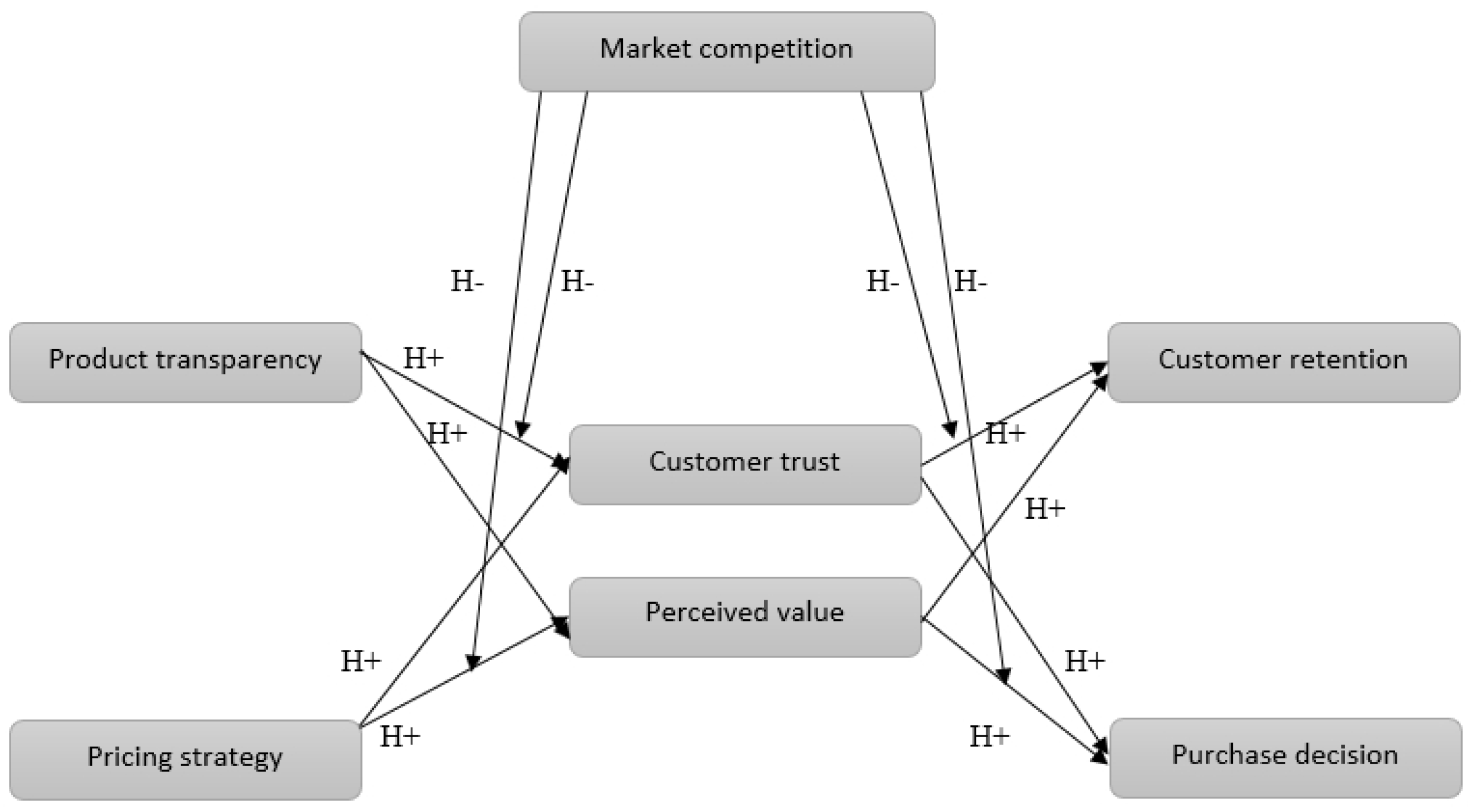
Although the concepts of transparency and pricing are commonly thought to reinforce trust and value, their theoretical underpinnings are quite weak in highly competitive digital markets, where principal signals can confuse how consumers interpret firm signals. Signal Theory describes how companies give cues to the market but does not describe how consumers rationally process the signals when facing competition. On the same note, the Theory of Planned Behavior elucidates the formation of attitudes but fails to explain how competition conditions are used to signal interpretation. Social Exchange Theory elucidates the outcomes of relations, but it needs boundary conditions to explain when interactions based on trust and value deteriorate. Hence, this paper encompasses the three views into an explanatory sequential model that connects firm signals, consumer meaning, and relational consequences in different degrees of market rivalry. The proposed model is given in Figure 1.
The objectives of this research are:
  • To analyze the direct impacts of PT and PS on CT and PV.
  • To explore how PT and PS indirectly influence CR and PD.
  • To investigate the moderating impact of MC on these relationships.
This research thus combines Signal Theory, the Theory of Planned Behavior, and the Social Exchange Theory to explain the role of transparency and pricing signals created by firms in consumer thinking and relationship behavior under low and high market competition.
This paper is organized as follows:
Section 1 introduces the study, while Section 2 formulates the theoretical model and hypothesis. As for Section 3, the methodology is defined; Section 4 summarizes the results; and Section 5 provides a conclusion and implications.

2. Conceptual Framework

2.1. Theoretical Framework

This paper reviews consumer behavior by combining Signal Theory, the Theory of Planned Behavior (TPB), and Social Exchange Theory to determine how Product Transparency (PT) and Pricing Strategy (PS) affect customer trust, perceived value, retention, and purchase decision under competitive conditions. Integrating these theories enables a more detailed view of how market signals are conveyed, decoded, and translated into relational outcomes.
Signal Theory cannot be used in isolation, since it describes how firms transmit market signals but not how consumers cognitively interpret them or how those interpretations can become relational outcomes. Similarly, the Theory of Planned Behavior not only explains the formation of attitudes but also fails to fully account for how competition influences the interpretation of the firm-generated signals. The Social Exchange Theory is applicable for explaining relational outcomes, yet it has some boundary conditions that explain why trust- and value-based exchanges are undermined in competition. This is why the three perspectives are incorporated into a consecutive explanatory model in the current research.
To elaborate, Signal Theory views the use of transparency and pricing strategy as signals to the market; Social Exchange Theory explains the phenomena of trust and transparency; and the Theory of Planned Behavior describes the consumer behavior phenomena shaped by prevailing beliefs and attitudes. The functions of each of the theories are different: Signal Theory accounts for the presence of PT and PS as external market signals; TPB accounts for the presence of CT and PV as attitudinal interpretations of these signals; and Social Exchange Theory accounts for the presence of CR and PD as relational consequences of these interpretations. This integration is thus a sequential rather than an additive theoretical framework.

2.1.1. Signal Theory

The signaling theory [7] analyzes how companies use price and price signals (PT, PS) to convey value, trust, and reliability. Certainty and trust, especially for uncertain environments (with asymmetric information), rely on these signals. Firms utilize strategic price-point communication to shape consumers’ and buyers’ perceptions and choices. Higher CT (consumer trust) and PV (perceived value) would result from strengthened PT and PS signals (more pronounced, clearer pricing and longer pointers in product descriptions). The effectiveness and explicitness of the signals are directly proportional. However, the effectiveness of signals may be affected by market competition (MC). More competitive settings require stronger signals. Compromising on risk by venturing into price signaling rather than augmented price communication reduces risk from a consumer’s perspective [8]. Based on this, this research will assume that market competition undermines the efficacy of PT and PS as market signals and as arbiters of trust and perceived value in highly competitive markets.

2.1.2. Theory of Planned Behavior

Researchers have noted that, according to the Theory of Planned Behavior (TPB), attitudes, subjective norms, and perceived behavioral control can affect consumer behavior [9,10,11]. At the point of purchase, a consumer’s expectations and perceptions of a brand’s value and promise influence purchase intention, loyalty, and/or retention. The beliefs one holds about price and transparency regarding product attributes affect purchase and retention decisions. The model explains the primary role of CT and PV in the structure of attitudes. Within this structure, PT and PS serve as market signals that prompt consumers to think and decide. This results in brand loyalty and brand retention. According to the theory of planned behavior (TPB), consumer perceptions of the marketplace, equity, and transparency positively affect attitudes, purchase behavior, and retention.
Therefore, CT and PV are attitudinal processes that transform PT and PS into behavioral outcomes.

2.1.3. Social Exchange Theory

Mishra and Mund [12] define social exchange theory as the view that every interaction between people aims solely to satisfy both parties, including the firm and the customer. Customer loyalty and purchase behavior will not occur without some form of exchange. When stakeholders experience an equitable exchange of value, receive quality service, and have visibility into operations, trust is built. This will not only reduce churn but also enhance the CR. When a firm believes in itself and its price knowledge, it probably creates customer value and strengthens brand loyalty. Consequently, positive interactions affect customer retention and customer loyalty. Pfajfar, et al. [13] suggest that retention and loyalty result from optimized exchange. The clarity and consistency of a firm’s message will most likely boost retention and loyalty.
In this logic, CR and PD are outcomes of a successful exchange, triggered by effective signaling and positive attitudinal construction.

2.1.4. Integrated Theoretical Framework

The three theoretical perspectives, rather than acting independently, complement one another in their explanations of how firms’ strategic signals translate into customer outcomes. Signal Theory describes how companies can convey product transparency and pricing policies as information signals that provide less information uncertainty in online markets. The Theory of Planned Behavior elucidates the effects that these signals have on consumers’ cognitive assessments, namely trust and perceived value, which dictate attitudes and behavioral intentions. The next step is the Social Exchange Theory, which describes how these judgments are translated into relationship deliverables (customer retention and purchase decisions) through a reciprocal value exchange between firms and customers. The three views together present an explanatory sequential mechanism in which firm signals shape consumer thinking and, consequently, affect consumer relational action to varying degrees across different levels of market competition.

2.2. Theoretical Analysis and Research Hypotheses

The current models mainly presuppose that transparency and price signals always increase trust and perceived value, but they ignore the possibility that competitive environments can distort the interpretation of these signals and weaken relationships.

2.2.1. Product Transparency

Detailed, accurate information about a company’s products and services is known as PT. Transparency increases the opportunities for CT by eliminating information asymmetry. PT is the primary point at which a company dispels any consumer skepticism, thereby increasing CT and PV [14]. In the current era of intense competition, the importance of PT has increased dramatically, as consumers have numerous options and rely on highly visible, transparent signals when selecting a brand.
However, MC diminishes the positive influence of PT on consumer behavior; increased competition weakens transparency signals, compelling companies to increase their PT [15].
Therefore, although PT serves as a trust-building cue, it is likely to lose its effectiveness when competition is high.
H1a: 
PT is positively related to CT.
H1b: 
PT positively influences PV.

2.2.2. Pricing Strategy

Pricing strategy (PS) involves determining a product’s price based on its quality, market competition, brand strategy, and other relevant factors. PS is another essential indicator for consumers of a product’s quality: whether it is high-quality and thus premium-priced or low-quality and therefore affordably priced. PS can affect CT and PV through shaped perceptions of the product’s value [16]. MC can shift the impact of pricing signals within competitive contexts. For example, in competitive markets, price-sensitive consumers tend to value price more, and in non-competitive markets, high prices signal premium quality [17].
To this extent, PS acts as a value signal, whose performance can be affected by the competition environment.
H2a: 
CT is built based on a favorable PS.
H2b: 
A favorable PS enhances PV.

2.2.3. Customer Trust

As per Hride, et al. [18], Customer Trust (CT) refers to a customer’s belief in a company’s ability to fulfill promises regarding product quality, price, and service. Belief is an essential factor in building successful relationships, fostering customer loyalty, driving repeat purchasing, and generating positive word of mouth. The Commitment-Trust Theory posits that trust and commitment are the foundations of stable, strong business relationships [19]. According to the Social Exchange Theory in Psychology, trust also helps maintain customer relationships over the long term.
As long as customer satisfaction is evident, trust is a positive factor in customer retention (CR) in both physical and digital marketplaces. Trust in e-commerce influences shoppers’ purchase intentions and repurchase behavior differently across customer demographic segments [20]. Moreover, corporate clients and retail customers build trust in different ways when it comes to value co-creation. Internal issues, such as market competition, which are external to the business, diminish the influence of trust on customer retention and purchase decisions.
H3a: 
CT positively influences CR.
H3b: 
CT has a positive effect on PD.

2.2.4. Perceived Value

The term perceived value (PV) refers to users’ perceptions of the benefits of satisfaction, in cost terms, which are proprietary to the brand and vital to brand affiliation [21]. The theory of customer value holds that the PV has functional and emotional dimensions that drive PD. In terms of future usage intentions, PV in service contexts such as mobile banking is shaped by cognitive and affective experiences. According to Mainardes and Freitas [22], PV affects satisfaction and loyalty in both classic and fintech banks. Furthermore, satisfaction mediates the relationship between PV and loyalty in traditional banking and satisfaction in fintech banking. PV also engages consumers to purchase products across multiple industries, including the tourism souvenir industry [23], green cosmetics, and fashion products. PV plays a vital role in consumer decision-making and brand loyalty across sectors. This research examines how marketplace competition may mitigate PV’s impact on customer outcomes, thereby establishing a boundary condition for this relationship.
H4a: 
PV positively influences CR.
H4b: 
PV positively influences PD.

2.2.5. Customer Retention

It is a business concern to retain customers. It ensures that the relationship with clients continues over a long period. Moreover, it denotes loyal, satisfied customers. Furthermore, it costs less to get new customers [24]. Customer fidelity is based on commitment and trust, which is the foundation of the commitment-trust theory. Social Exchange Theory. Additionally, customers will remain loyal to your business if they perceive value. Trust is the foundation of relationship marketing in banking, while satisfaction solidifies trust [25]. Website layout and user interaction prioritize retention and trust in digitally responsive businesses for transactions in digital commerce [26]. To maintain customer relationships, integrated omnichannel retailers must deliberately cultivate trust through strategy. The different omnichannel and digital commerce business models thus indicate that trust plays an integral role in customer support.
Customer retention (CR), therefore, is a relational payoff that results from the trust and perceived value produced by strong signaling and positive exchange relationships.

2.2.6. Purchase Decision

The Purchase Decision (PD) is the process a consumer undertakes to decide whether to purchase, considering product characteristics, price, brand image, and the emotional responses involved [27]. Within the Theory of Planned Behavior (TPB), PD is a function of a consumer’s beliefs and attitudes about a product. Trust is crucial in the online PD process, especially for sustainable products, such as those sold at Rizomyliotis [28], because high ratings, good and reliable reviews, and a trust certificate from a site sponsor boost buying confidence—even at exorbitant prices. This trust is crucial for unknown brands, as the perceived security, privacy, and risk factors that consumers associate with a brand drive their purchase intentions. In addition, the perceived value (PV), as it relates to utilitarian, hedonic, and social dimensions, encourages continuous buying of live-streaming and cross-border e-commerce, while perceived risk discourages it [29].
Based on this, PD is the behavioral response to attitudinal judgments based on trust and perceived value.

2.2.7. Market Competition

Market Competition (MC) refers to the level of competition among firms in a given field of business, which affects customer decisions and business strategies [30]. Based on the Social Exchange Theory and the Theory of Planned Behavior, MC serves as a contextual moderator, influencing customer trust, value, and retention within the environmental market context [30]. Studies show that high competition can limit firms’ transparency efforts due to proprietary risks and alter the impact of product features on satisfaction and repurchase intentions. Additionally, pricing strategies, marketing communication, and the democratization of luxury goods all interact with MC to shape PV and purchase behavior [31].
Expanding on this, this paper hypothesizes that the model’s positive relationships are statistically moderated by market competition, which reduces the impacts of the PT and PS signals on the CT and PV, and consequently on the CR and PD.
In principle, MC is also a boundary condition that should be used to indicate the times when signaling and relational effects are likely to be weakened.
H5a: 
MC moderates the relationship of PT on CT, so that the effect is weaker in highly competitive markets.
H5b: 
MC moderates the relationship of PS on PV, such that the effect is weaker in highly competitive markets.
H5c: 
MC moderates the relationship of CT on CR, so that the effect is weaker in highly competitive markets.
H5d: 
MC moderates the impact of PV on PD, such that in highly competitive markets, the effect is weaker.

3. Methodology

3.1. Data Collection

The study collected data in two phases, yielding a two-wave time-lagged survey design with anonymous respondent matching across two cultures: Chinese and Pakistani. This temporal separation is consistent with prior research suggesting that trust and behavioral outcomes evolve, e.g., Maxwell, et al. [32]. The questionnaire was meticulously finalized and modified in line with expert opinion to enhance respondents’ knowledge and accountability. The survey was conducted across various online platforms, including WhatsApp, Facebook, and WeChat [33]. The first wave (1 April to 30 April; Time 1) captures the information on independent variables (PT, PS), mediators (CT, PV), and the moderating variable (MC). Data for the dependent variables (CR, PD) were collected during the next time period, 1–30 August (Time 2).
To enable comparisons between Time 1 and Time 2 and to ensure privacy, participants wrote a self-constructed, non-identifying code in a regular format (e.g., letters in the name and birth-year numbers). To minimize errors and inconsistencies in the input, the instructions were made clear, and the responses were filtered for missing, inconsistent, or duplicated codes. Observations with good, consistent identifiers in both waves were matched.
The choice of 4 months as the time gap was based on the fact that trust or perceived value develops immediately after exposure to transparency and pricing signals, and that retention and purchase outcomes are usually realized after several cycles of transactions.
To limit non-response in the survey, a small gift was offered, and the collected data was ensured to be used strictly for academic purposes. It was the willingness to share sensitive information, such as the income question. The overall Internet survey among Chinese and Pakistani people was not published and is still being tested.
We have received 522 responses, which include China (247) and Pakistan (275). Due to 15 and 20 percent attrition rates for Time 2, there were 400 usable responses. Out of 522 responses received at the first instance, 400 were matched in both waves, meaning a matching rate of 76.6%. Attrition was assessed only after verifying that matched anonymous codes were present across both waves. The Multi-Group Analysis (MGA) indicated the sample was balanced, with 200 respondents per country. Convenience sampling concentrated on people with relevant shopping experience and educated respondents. This limits the study’s generalizability because of the large proportion of educated, higher-income individuals. Because data were collected across different online platforms, sampling variation may be present; however, the recruitment process was consistent across both countries, limiting systematic platform bias.

3.2. Measurement Items Development

The study questionnaire had two parts, with response options on a five-point Likert scale. Section two measures the key constructs of interest. People responded on a scale from “strongly disagree” (1) to “strongly agree” (5). The initial section of the questionnaire was designed to collect the demographic data of the subjects. This part aimed to collect descriptive information from respondents, including gender, age, highest qualification attained, employment status, and employment duration. A copy of the questionnaire is available at the link in the Supplementary Materials.
The second section of the questionnaire is dedicated to PT, PS, CT, PV, CR, PD, and MC. PT was derived from Nitzko [34], Fu, et al. [35], and Zhou, et al. [36], and consists of four items. PS was derived from Steenhuis, et al. [37], Ratnawita, et al. [38], and Tiwari [39] and consists of four items. CT was derived from Ginting, et al. [40], Mofokeng [26], and Albarq [41] and consists of four items. PV was derived from Miao, et al. [42] and Yin and Qiu [43], and comprises four items.
The four items of CR are from Leong, et al. [44] and Li, et al. [45]. PD, having four items, is from Ridwan [46] and Bukhari, et al. [47]. MC is from Chong and Chong and Rundus [48] and has four items.
Measurement items were all presented in English, a language commonly known to educated respondents in both samples; slight wording adjustments were made after expert review to ensure the items were understandable across contexts.

3.3. Responders’ Demographic Profile

The study included 400 respondents from China (n = 200) and Pakistan (n = 200). The sample had equal representation of both sexes. Most people surveyed were 18–40 years old, with bachelor’s and master’s degrees in aeronautical engineering. In China, the proportion of students (40%) was higher than in Pakistan (25%), and the other respondents from China were neither housewives nor pensioners. The way income was distributed was very different in the two regions. Accepting $500 or more was concentrated among higher-income households in the Chinese region; in the Pakistani region, it was distributed across middle- and lower-income segments. The purchase frequency shows a preference for weekly and monthly frequency, with Electronics and Clothing as the most frequently purchased categories. Table 1 gives frequencies and percentages for the various demographic groups in that sample.

3.4. Rationale for Multi-Group Analysis

Multi-group analysis (MGA) was used to investigate the possibility of structural relationships across national market settings characterized by varying degrees of competitive intensity. This research examines how competition, in China (a competitive market) and Pakistan (a reasonably competitive market), affects Pricing, Trust, and Value (PT), which comprises trust and competitive value, including monetary trust and competitive value. Based on this, MGA allows empirical evaluation of whether the moderating effect of competition on the market varies across market-maturity contexts.
Measurement invariance between the Chinese and Pakistani samples was tested in SmartPLS using the measurement invariance composite models (MICOM) procedure before conducting multi-group analysis (MGA). The findings established configural invariance and compositional invariance of all constructs. The permutation tests also indicated partial measurement invariance, a valid criterion for group comparisons in PLS-SEM.

3.5. Structural Equation Modeling Technique

Anderson and Gerbing [49] proposed a two-step approach, which is used in this research with PLS-SEM and SmartPLS 3. The first step focuses on cross-cultural research invariance and cross-invariance on the measurement model (convergent, discriminant) and sample validity. The second step involves hypothesized and moderated structural model relationships; moderation refers to the extent to which other proposed variables or phenomena will influence the hypothesized relationships. PLS-SEM is used for non-normal data distributions, complex models, and the estimation of direct, indirect, and moderating effects. Configural equivalence was achieved before the multi-group analysis by applying the same measurement models and indicators, and the same estimation procedures, in both groups, which is in line with recommended practices for cross-group comparisons in PLS-SEM.

4. Results

4.1. Measurement Model Assessment

Reliability denotes the consistency of scores or determinations [50]. For an assessment to be considered reliable, the item loadings must be 0.7 or higher. According to Kennedy [51], a composite reliability is acceptable if Cronbach’s Alpha is 0.7 or higher. Values between 0.7 and 0.95 are considered excellent. Validity is calculated by averaging the squared loadings of items related to the construct. According to Sarstedt, et al. [52], AVE is a standard for assessing a construct’s convergent validity; if AVE is >0.5, more than 50% of the construct’s variance is explained. Composite reliability, Cronbach’s Alpha, and AVE values exceed the threshold, indicating convergent validity.

4.1.1. Internal Consistency, Reliability, and Convergent Validity

As the results suggest, all the constructs and their indicators satisfied the requirements for reflective measurement. All indicators had loadings greater than 0.7, and the AVEs were more than 0.5. Composite reliabilities are all above 0.70, and Cronbach’s alpha values in Table 2 are within a reasonable range. The findings suggest that all indicators are valid, the data are internally consistent, and convergent validity has been established. These findings confirm the appropriateness of the measurement model in accordance with the recommended reliability and validity levels and that it can be further subjected to structural analysis.

4.1.2. Discriminant Validity and HTMT

The HTMT ratio in Table 3 primarily assesses the discriminant validity of the constructs. The results indicate discriminant validity, as they satisfy the HTMT threshold of 0.9 [53]. As such, the constructs are empirically distinct and exhibit discriminant validity.

4.1.3. Assessment of Common Method Bias and Collinearity

Concerns related to common method bias (CMB) and multicollinearity were identified using a process (two-wave design, anonymity, randomization of questions) and a statistical test [54]. To further test for common-method bias, the Harman single-factor test was used. The findings show that the initial unrotated factor explains 36.53% of the overall variance, which is less than 50%, suggesting that common method bias is unlikely to be a significant issue.
Table 4 shows that outer VIF values for all indicators ranged from 1.000 to 5.068. These numbers indicate that the measurement model is free of troublesome collinearity [55]. These findings demonstrate that the validity of the reported relationships is not at risk from potential method bias.
Using the full collinearity VIF technique established by Kock [56], CMB is found to be a non-issue. As observed in Table 4, the inner VIF values for all latent variables range from an extremely low 1.002 to 1.393. According to the findings, neither CMB nor multicollinearity is a serious concern.

4.2. Structural Model Assessment

4.2.1. Model Fit Summary

The model’s overall fit is quite good. NFI is also good, with a score of 0.912, while the model’s SRMR is 0.044, which is still below the 0.08 threshold. These model fit indices suggest that the model has good structural fit to the observed data (Table 5). Based on this, the observed covariance structure is sufficiently depicted by the proposed theoretical model.

4.2.2. Quality Criterion F-Squared and R-Squared

The results showcased in Table 6: Quality criterion F-squared and R-squared show the model’s quality and relevance. According to Chicco, et al. [57], R-squared statistics ranging from 0.487 (for CT) to 0.626 (for PV) indicate that the model explains a meaningful share of variance in all endogenous constructs. Moreover, the Q-squared statistics for all endogenous variables are positive and substantial (e.g., CR = 0.322, PV = 0.468). This indicates that the model has strong predictive ability and can accurately predict data. The f-squared effect sizes suggest that most direct causal paths have medium to large effects; for instance, PS -> CT is 0.346, and PT -> CT is 0.542, while the different moderating effects have small to medium effects.
Large effects are confirmed by the sign of f-squared exceeding 0.35, indicating that transparency and pricing cues are significantly influential predictors of trust and perceived value in the market.

4.2.3. Path Coefficients and Specific Indirect Effects

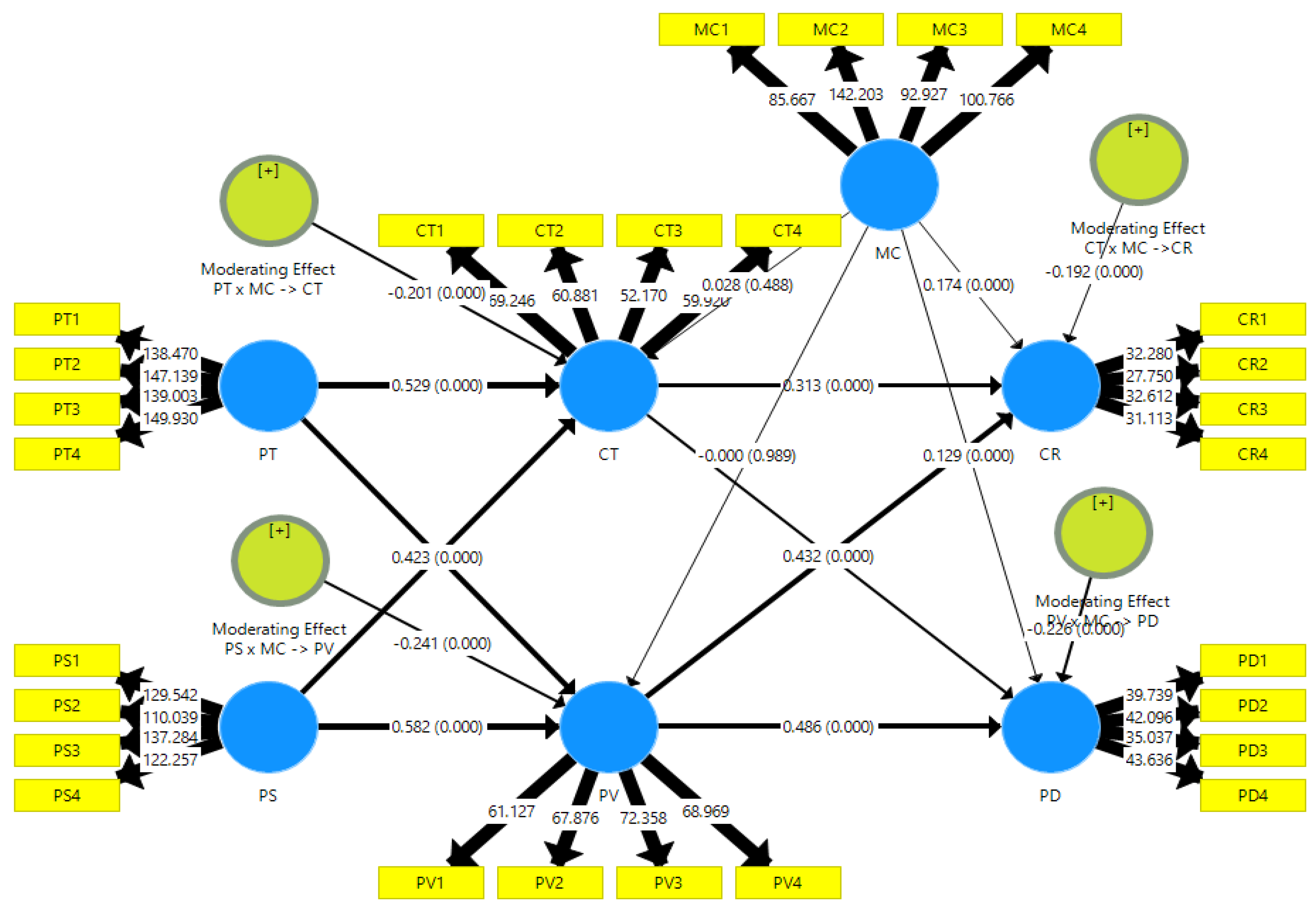
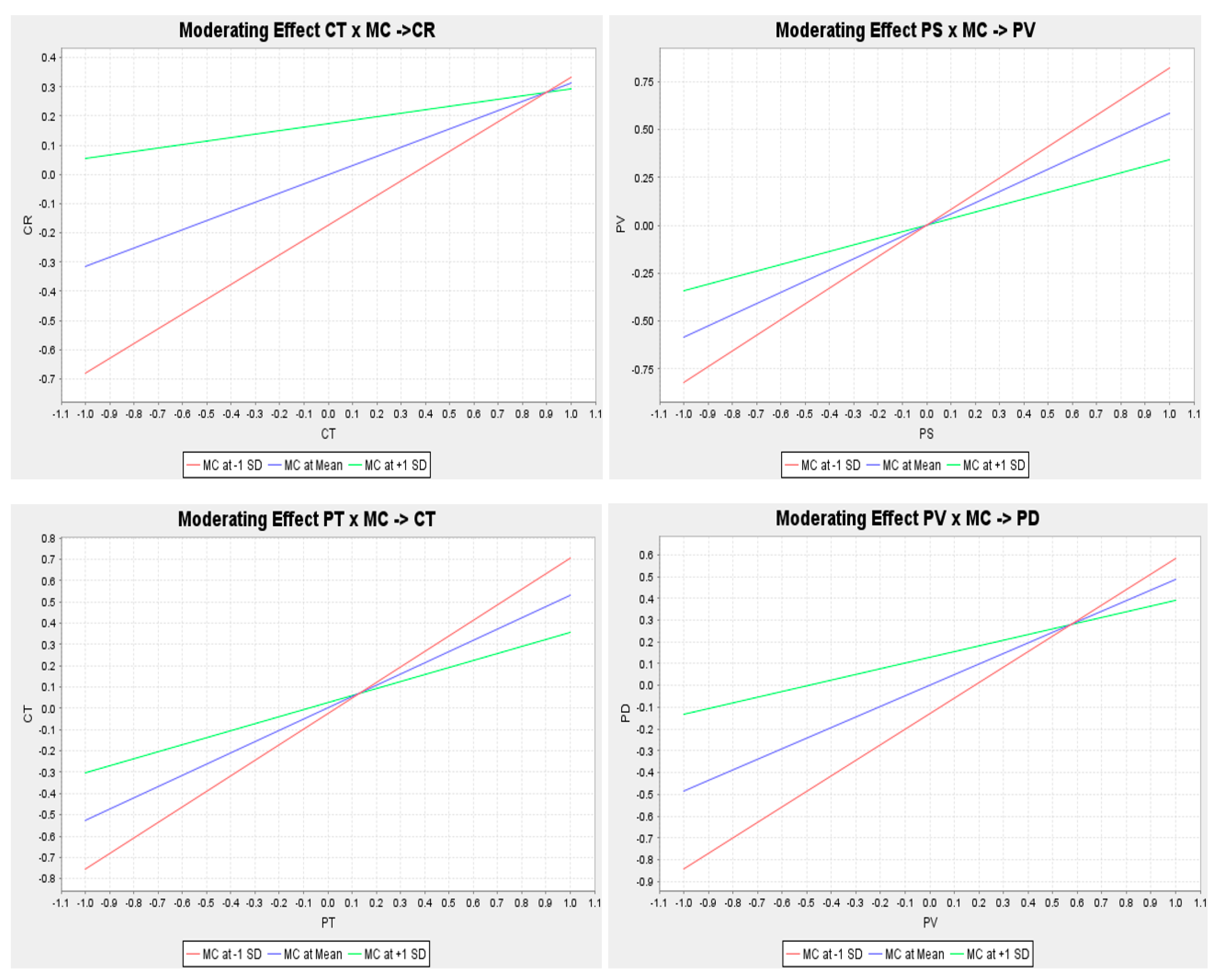
As shown in Table 7 and Table 8, and in Figure 2: SEM, the results support all hypothesized direct relationships, with all p-values < 0.05 [58], calculated with 5000 bootstrap samples. Therefore, the structural model has good empirical validity. The results of the Mediation Analysis indicate that variables influence each other through mediating pathways. The results confirm the presence of significant specific indirect effects, such as PT -> PV -> CR (O = 0.194, p < 0.001) and PS -> CT -> PD (O = 0.096, p < 0.001). Importantly, the results of the Moderation analysis demonstrated that the latent variable MC (Moderating Construct) is a negative moderator, weakening the positive effect in all tested relationships (e.g., PT -> CT and PS -> PV) by flattening the slopes. This negative influence is also supported by the significant moderated indirect effect of PT × MC -> CT -> CR (O = −0.063, p < 0.001), indicating that MC significantly impacts these complex relational pathways.
On the whole, these results suggest that market competition always dilutes the effectiveness of transparency and pricing signals on consumer outcomes.

4.2.4. Moderation Analysis

To ease the interpretation of the moderation effect, simple slope plots were created to depict the four interaction relationships (Figure 3). The plots demonstrate that the positive relationships between trust, pricing strategy, transparency in product, perceived value, and customer outcomes may decrease with increased market competition, thereby confirming the hypothesized attenuating effect of competition.

4.3. Multi-Group Analysis Results

Measurement invariance between the Chinese and the Pakistani samples of multi-group analysis (MGA) was measured before conducting the multi-group analysis (MGA) with the measurement of the Measurement Invariance of Composite Models (MICOM) procedure. Compositional invariance was built into all constructs, as indicated in Table 9, as all permutation p-values at Step 2 were greater than 0.05. The findings of Step 3 also suggest partial measurement invariance, as not all constructs supported equality of means and variances. In accordance with the usual PLS-SEM guidelines, partial measurement invariance is sufficient for valid cross-group comparisons. In this regard, an MGA based on permutation was performed to determine whether the structural relationships between the Chinese and Pakistani samples differ.
The results of the MGA are reported in Table 10. Although cross-group differences in most structural paths were not significant across the two countries, the direct effects of market competition on customer retention (MC → CR) and purchase decision (MC → PD), and all four moderating effects, showed statistically significant cross-group differences. Specifically, significant differences were observed for MC → CR (p = 0.024), MC → PD (p = 0.042), MC × CT → CR (p = 0.024), MC × PS → PV (p < 0.001), MC × PT → CT (p < 0.001), and MC × PV → PD (p = 0.001). These results suggest that the market-competition role varies significantly between the Chinese and Pakistani markets, especially in how competition dilutes the influence of transparency, pricing, trust, and perceived value on customer outcomes.
Table 11, which presents the group-specific bootstrapping results, provides additional information on these differences. The market competition had direct relationships with customer retention (MC → CR) and purchase decision (MC → PD) that were statistically insignificant in China (p = 0.106 and p = 0.327, respectively), but significant in Pakistan (both p < 0.001). The moderating market competition forces were stronger in China, by contrast. In particular, CT × MC → CR and PT × MC → CT were significant in the Chinese sample (both p < 0.001), whereas these relationships were not significant in Pakistan (p = 0.086 and p = 0.166, respectively). In addition, the interaction effects MC × PS → PV and MC × PV → PD were considerable in China and weak or insignificant in Pakistan. In general, these findings indicate that competition in the highly competitive Chinese digital market is more attenuating, as consumers are exposed to a greater number of competing signals and options than in the relatively low-competition Pakistani market.

5. Discussion

The current two-wave time-lagged study with anonymous respondent matching sheds light on how PT and PS influence CT, PV, retention, and PD in business contexts. It also contributes to the literature on consumer behavior and customer relationship management by demonstrating the impact of operational-level customer management techniques on customer behavior and perceptions.
The results are explanatory in the sense that they explain how and why market conditions condition the appropriateness of transparency and pricing signals to influence customer reactions. As shown in Figure 1, PT positively impacts CT (H1a), supporting the view that business transparency affects trust and value. When it comes to bankable assets, their owners have a view of their value. Credibility, price, and transparency around fairness help in that regard. Other metrics that help build confidence materially further assist in the stake of these assets [59]. The literature has gaps that this study seeks to fill. In particular, there is the complex interaction between consumer trust and transparency as proposed by Ren, et al. [60]. As they rightly pointed out, less candour leads to weaker transparency, which is likely more advantageous in settings where protected information is at risk of disclosure. Moreover, recent findings indicate that companies tend to strategically trade-off between actual transparency and more convincing signals when obtaining consumer consent and engagement, because such trade-offs may affect trust formation and perceived integrity in digital markets [61]. Our findings indicate that signals associated with transparency influence consumer acceptance of firms’ e-commerce practices by enhancing perceived fairness and credibility, thereby facilitating trust and value assessment in a purchasing setting.
H1b is previously elaborated upon, for instance, in Solakis, Pena-Vinces and Lopez-Bonilla [16], which examines the link between transparency and PV. There are several instances in which some degree of transparency improves the perception of price and quality; however, in almost all cases, transparency does not correlate with inefficiencies in bureaucratic structures. In line with our model, PT and PV (H1b) drive market competition, undermining the efficiency of transparency signals in fostering trust (H5a) by diverting attention and augmenting substitute offers.
The research by Milman and Tasci [62] and Riquelme, et al. [63] has demonstrated that PS affects CT positively (H2a). Our research shows that the lack of a viable, affordable market has always been a friction in establishing market trust. Additionally, PS positively influences PV (H2b) as noted by Zeng, et al. [64]; however, this impact is diminished in competitive markets (H5b) where price-based differentiation is less predictable.
Indeed, regarding H3a above, it has been established that CT positively influences CR, as shown by Hidayat and Idrus [25]. On the other hand, in H5c, market competition weakens this relationship, particularly in China, where consumers are spoiled for choice and have low switching costs. Thus, in these markets, it can be argued that trust is a necessary but insufficient condition for retention. Regarding H3b, CT is shown to positively influence PD, as demonstrated by the study by Wang, Shahzad, Ahmad, Abdullah and Hassan [20]. Nonetheless, Varga and Albuquerque [65] documented that negative reviews do, in fact, lower purchase intention.
As for H4a, it has been confirmed that PV positively influences CR, supporting the findings of Menidjel and Bilgihan [66], who found that relationship investments have a positive impact on PV and loyalty. Nonetheless, this is not always the case, as it depends on the context. For example, Matsuoka [67] demonstrates that in the hotel industry, revenue management can lower PV and increase loyalty. Overall, the study shows that PV enhances CR and PD; however, in highly competitive markets like China (H5d), the PV → PD relationship is weakened, as price discounting is a competitive disadvantage.
Moreover, we are finding that exposing product inner workings can boost consumer confidence and readiness to pay by shaping perceptions of product value, enabling consumers to make sense of product performance through transparency signaling [68].
A significant finding is that the market competition has a direct effect on customer retention and purchase decision, but no significant direct effect on perceived value. This implies that behavioral reactions depend primarily on competitive circumstances rather than on cognitive judgments. Consumers in highly competitive markets face a variety of choices and promotional cues, which increase switching opportunities and directly affect retention and purchase decisions despite comparatively unchanged perceived value judgments. It means that market competition has a stronger effect on the behavioral decision stage than on the cognitive evaluation stage, supports its direct effect on retention and purchase choices, and does not have a significant effect on perceived value.
As a result, competition diminishes the positive relationship between PT and PS with CT and PV. In competitive industries, firms are likely to conceal some proprietary elements of their strategies, which reduces consumers’ trust in the firm [69]. Competition reduces the effectiveness of differentiation-based pricing strategies when consumers are aware of the market [64]. Furthermore, Liu, et al. [70] suggest that competition weakens the positive relationships between trust and value and retention and PD, and goes so far as to argue that competitive rivalry can undermine retention and PD to such an extent that even trust and value are eliminated.
The varying impacts of the two nations (China and Pakistan) imply that the intensity of competition can also affect the interpretability of firm signals, thereby undermining trust- and value-based processes in highly saturated markets. That is why some moderation effects are larger than anticipated and why the direct effects of market competition are important for behavioral outcomes (CR, PD) but not for PV.

5.1. Theoretical Implications

According to the study, the integrated framework draws on Signal Theory, the Theory of Planned Behavior (TPB), and Social Exchange theory, providing first-hand insights into consumer behavior. We believe that competitive markets reduce market clarity and pricing signals, thereby weakening the consumer trust-value relationship within Signal Theory. In competitive environments, consumers often become skeptical due to diluted signals from competitors.
This understanding is consistent with the new FT50 data, which indicates that transparency-related cues (and the strategic decision to mix them with persuasive cues) do influence trust-related judgments in online environments [61].
We further propose that the competitive market, as discussed, will create a trust-and-retention equilibrium under Social Exchange Theory. We further argue that competition weakens consumer attitudes (favorable trust and perceived value) and behaviors (purchase and retention) in some countries, according to the Theory of Planned Behavior. A dual-pathway model was proposed, in which trust is positioned as a central construct for CR, and value leads to PD. The impact of distrust and devaluation imposes different levels of competitive pressure.
Also, our results complement evidence that increasing consumers’ product diagnostic knowledge (a transparency-related process) can lead to higher valuations and, consequently, support the theoretical importance of transparency signals in shaping perceived value and downstream decisions [68].

5.2. Managerial Implications

Findings reveal the roles of PT and PS in generating CT and CR, respectively. Leaders must curate a fault-free product description at a reasonable price while maintaining continuous customer engagement to instill a sense of value. Simply being transparent and competitive in pricing in the market is not enough in China. Businesses have to provide unique value and build loyalty. In markets like Pakistan’s, companies need to combine trust-building with competitive positioning to enable direct competition.
Managers should also understand that transparency programs may need to be carefully designed: overly persuasive consent and information practices might yield short-term compliance benefits but introduce trust-related risks when subject to regulatory scrutiny and shocks caused by data [61].

5.3. Practical Implications

The study is useful for B2C firms, marketers, strategists, and policymakers. To establish CT, companies need to disclose information about their products, including descriptions, origins, production processes, and quality guarantees. Enhancing Third-party Approvals And User-Generated Content to Sales Credibility. What the customer pays should be equal to what the customer gets. All firms in China need to focus on both personalized and discount-based retention services. You can achieve retention through customer service or product communities so that customers won’t switch to competitors. With the rising share of B2C e-commerce transactions, competition should be contextualized, and the system of value should be made flexibly relevant to strengthen loyalty.
Practically, transparency can be strengthened through more diagnostic product communication (e.g., structured explanations or visual breakdowns of product components), which can increase consumers’ confidence in product performance and thus elevate perceived value.

5.4. Limitations and Future Research Directions

The research design is a two-wave time-lagged design in which Time 1 and Time 2 have anonymous matching respondents. But it gives the attrition rates in China and Pakistan at 15% and 20%, respectively. Also, the convenience sample reduces its generalizability. Future research should test the model in B2B contexts and use probability sampling to enhance external validity. Verbal protocol analysis and other qualitative methods can assess cross-national consumer behavior through culture and economics. Using qualitative methods can help reduce social desirability bias, which may otherwise jeopardize the design of behavioral data-based research. Subsequent investigation could evaluate brand attachment across dissimilar social and economic conditions and employ different approaches, such as Machine Learning, to assess complex phenomena.

6. Conclusions

This survey examines the relationships among PT, PS, CT, PV, CR, and PD, with Market Competition (MC) as a moderating factor. A two-wave time-lagged study with anonymous respondent matching shows that PT and PS play fundamental roles in facilitating CT and PV, which in turn lead to CR and PD. Though using two waves and matching respondents, the study is not a completely balanced longitudinal panel and should be viewed as a time-lagged survey with matched responses. According to this study, trust and value have richer meanings. Market competition mitigates these positive effects. The study shows that the effect is stronger in China than in Pakistan. This article develops a framework that integrates signal theory, TPB, and SET to account for how the firm’s transparency and pricing signals are translated into relational-level outcomes. This study offers several theoretical and practical implications about customer relationship management strategies in a competitive world. In general, the results affirm that the effects of market competition always weaken the efficacy of transparency and pricing policies in influencing customers’ trust, value perceptions, retention, and buying decisions across varying levels of market maturity.

Supplementary Materials

The Questionnaire is available at https://osf.io/eyn4v/?view_only=b71720335b4a4c0596c2114764aee0b0 (accessed on 18 March 2026).

Author Contributions

U.K. conceptualized the research and wrote the original draft. J.Y. supervised, conceptualized the study, and performed formal analysis. N.K. participated in conceptualization and edited the manuscript. All authors have read and agreed to the published version of the manuscript.

Funding

This work was supported by the project “Research on the Innovative Upgrading and Development of the Digital Economy Industry in Jingyang District” (Grant No. H231006).

Institutional Review Board Statement

This study involved the collection of anonymous questionnaire data and presented minimal risk to participants. In accordance with the institutional guidelines of Sichuan University, the study was reviewed and determined to be exempt from formal ethical approval by the academic ethics committee of the Business School, Sichuan University. The research was conducted in accordance with the principles of the Declaration of Helsinki.

Informed Consent Statement

All participants provided informed consent before taking part in the study. Consent was obtained through an online implied-consent procedure: participants were informed of the study’s purpose and their rights in the questionnaire’s introductory section, and completing the questionnaire indicated their voluntary agreement to participate.

Data Availability Statement

The data for this study is available at the following link: https://osf.io/eyn4v/?view_only=b71720335b4a4c0596c2114764aee0b0 (accessed on 18 March 2026).

Conflicts of Interest

The authors declare no conflicts of interest.

References

  1. Schweidel, D.A.; Bart, Y.; Inman, J.J.; Stephen, A.T.; Libai, B.; Andrews, M.; Rosario, A.B.; Chae, I.; Chen, Z.; Kupor, D. How consumer digital signals are reshaping the customer journey. J. Acad. Mark. Sci. 2022, 50, 1257–1276. [Google Scholar] [CrossRef]
  2. Laradi, S.; Alrawad, M.; Lutfi, A.; Agag, G. Understanding factors affecting social commerce purchase behavior: A longitudinal perspective. J. Retail. Consum. Serv. 2024, 78, 103751. [Google Scholar] [CrossRef]
  3. Moriuchi, E.; Takahashi, I. The role of perceived value, trust and engagement in the C2C online secondary marketplace. J. Bus. Res. 2022, 148, 76–88. [Google Scholar] [CrossRef]
  4. Bürgin, D.; Wilken, R. Increasing consumers’ purchase intentions toward fair-trade products through partitioned pricing. J. Bus. Ethics 2022, 181, 1015–1040. [Google Scholar] [CrossRef]
  5. Di Domenico, G.; Premazzi, K.; Cugini, A. “I will pay you more, as long as you are transparent!”: An investigation of the pick-your-price participative pricing mechanism. J. Bus. Res. 2022, 147, 403–419. [Google Scholar] [CrossRef]
  6. Slapø, H.; Schjøll, A.; Strømgren, B.; Sandaker, I.; Lekhal, S. Efficiency of in-store interventions to impact customers to purchase healthier food and beverage products in real-life grocery stores: A systematic review and meta-analysis. Foods 2021, 10, 922. [Google Scholar] [CrossRef]
  7. Connelly, B.L.; Certo, S.T.; Reutzel, C.R.; DesJardine, M.R.; Zhou, Y.S. Signaling theory: State of the theory and its future. J. Manag. 2025, 51, 24–61. [Google Scholar] [CrossRef]
  8. Yoo, S.; Lee, D.-J.; Atamja, L. Influence of online information quality and website design on user shopping loyalty in the context of e-commerce shopping malls in Korea. Sustainability 2023, 15, 3560. [Google Scholar] [CrossRef]
  9. Aschwanden, D.; Strickhouser, J.E.; Sesker, A.A.; Lee, J.H.; Luchetti, M.; Terracciano, A.; Sutin, A.R. Preventive behaviors during the COVID-19 pandemic: Associations with perceived behavioral control, attitudes, and subjective norm. Front. Public Health 2021, 9, 662835. [Google Scholar] [CrossRef]
  10. Fischer, R.; Karl, J.A. Predicting behavioral intentions to prevent or mitigate COVID-19: A cross-cultural meta-analysis of attitudes, norms, and perceived behavioral control effects. Soc. Psychol. Personal. Sci. 2022, 13, 264–276. [Google Scholar] [CrossRef]
  11. La Barbera, F.; Ajzen, I. Moderating role of perceived behavioral control in the theory of planned behavior: A preregistered study. J. Theor. Soc. Psychol. 2021, 5, 35–45. [Google Scholar] [CrossRef]
  12. Mishra, M.; Mund, P. Fifty-two years of consumer research based on social exchange theory: A review and research agenda using topic modeling. Int. J. Consum. Stud. 2024, 48, e13074. [Google Scholar] [CrossRef]
  13. Pfajfar, G.; Shoham, A.; Małecka, A.; Zalaznik, M. Value of corporate social responsibility for multiple stakeholders and social impact–Relationship marketing perspective. J. Bus. Res. 2022, 143, 46–61. [Google Scholar] [CrossRef]
  14. Ospital, P.; Masson, D.; Beler, C.; Legardeur, J. Toward product transparency: Communicating traceability information to consumers. Int. J. Fash. Des. Technol. Educ. 2023, 16, 186–197. [Google Scholar] [CrossRef]
  15. Mollenkopf, D.A.; Peinkofer, S.T.; Chu, Y. Supply chain transparency: Consumer reactions to incongruent signals. J. Oper. Manag. 2022, 68, 306–327. [Google Scholar] [CrossRef]
  16. Solakis, K.; Pena-Vinces, J.; Lopez-Bonilla, J.M. Value co-creation and perceived value: A customer perspective in the hospitality context. Eur. Res. Manag. Bus. Econ. 2022, 28, 100175. [Google Scholar] [CrossRef]
  17. Wu, M.; Ran, Y.; Zhu, S.X. Optimal pricing strategy: How to sell to strategic consumers? Int. J. Prod. Econ. 2022, 244, 108367. [Google Scholar] [CrossRef]
  18. Hride, F.T.; Ferdousi, F.; Jasimuddin, S.M. Linking perceived price fairness, customer satisfaction, trust, and loyalty: A structural equation modeling of Facebook-based e-commerce in Bangladesh. Glob. Bus. Organ. Excell. 2022, 41, 41–54. [Google Scholar] [CrossRef]
  19. Badrinarayanan, V.; Ramachandran, I. Relational exchanges in the sales domain: A review and research agenda through the lens of commitment-trust theory of relationship marketing. J. Bus. Res. 2024, 177, 114644. [Google Scholar] [CrossRef]
  20. Wang, J.; Shahzad, F.; Ahmad, Z.; Abdullah, M.; Hassan, N.M. Trust and consumers’ purchase intention in a social commerce platform: A meta-analytic approach. Sage Open 2022, 12, 21582440221091262. [Google Scholar] [CrossRef]
  21. Blut, M.; Chaney, D.; Lunardo, R.; Mencarelli, R.; Grewal, D. Customer perceived value: A comprehensive meta-analysis. J. Serv. Res. 2024, 27, 501–524. [Google Scholar] [CrossRef]
  22. Mainardes, E.W.; Freitas, N.P.d. The effects of perceived value dimensions on customer satisfaction and loyalty: A comparison between traditional banks and fintechs. Int. J. Bank Mark. 2023, 41, 641–662. [Google Scholar] [CrossRef]
  23. Wang, W.; Yaoyuneyong, G.; Sullivan, P.; Burgess, B. The influence of value perceptions on tourist souvenir purchase decisions. Int. J. Tour. Res. 2024, 26, e2611. [Google Scholar] [CrossRef]
  24. Thangeda, R.; Kumar, N.; Majhi, R. A neural network-based predictive decision model for customer retention in the telecommunication sector. Technol. Forecast. Soc. Change 2024, 202, 123250. [Google Scholar] [CrossRef]
  25. Hidayat, K.; Idrus, M.I. The effect of relationship marketing towards switching barrier, customer satisfaction, and customer trust on bank customers. J. Innov. Entrep. 2023, 12, 29. [Google Scholar] [CrossRef] [PubMed]
  26. Mofokeng, T.E. Antecedents of trust and customer loyalty in online shopping: The moderating effects of online shopping experience and e-shopping spending. Heliyon 2023, 9, e16182. [Google Scholar] [CrossRef] [PubMed]
  27. Skwara, F. Effects of mental accounting on purchase decision processes: A systematic review and research agenda. J. Consum. Behav. 2023, 22, 1265–1281. [Google Scholar] [CrossRef]
  28. Rizomyliotis, I. Consumer Trust and Online Purchase Intention for Sustainable Products. Am. Behav. Sci. 2024, 70, 706–724. [Google Scholar] [CrossRef]
  29. Wu, Y.; Huang, H. Influence of perceived value on consumers’ continuous purchase intention in live-streaming e-commerce—Mediated by consumer trust. Sustainability 2023, 15, 4432. [Google Scholar] [CrossRef]
  30. Leong, L.-Y.; Hew, T.-S.; Ooi, K.-B.; Metri, B.; Dwivedi, Y.K. Extending the theory of planned behavior in the social commerce context: A meta-analytic SEM (MASEM) approach. Inf. Syst. Front. 2023, 25, 1847–1879. [Google Scholar] [CrossRef]
  31. De Toni, D.; Reche, R.A.; Milan, G.S. Effects of market orientation, innovation strategies and value-based pricing on market performance. Int. J. Product. Perform. Manag. 2022, 71, 3556–3580. [Google Scholar] [CrossRef]
  32. Maxwell, S.E.; Delaney, H.D.; Kelley, K. Designing Experiments and Analyzing Data: A Model Comparison Perspective; Routledge: London, UK, 2017. [Google Scholar]
  33. Witte, N.; Schaurer, I.; Schröder, J.; Décieux, J.P.; Ette, A. Enhancing participation in probability-based online panels: Two incentive experiments and their effects on response and panel recruitment. Soc. Sci. Comput. Rev. 2023, 41, 768–789. [Google Scholar] [CrossRef]
  34. Nitzko, S. Consumer requirements for food product transparency. Ernahr. Umsch 2019, 66, 198–203. [Google Scholar]
  35. Fu, S.; Liu, X.; Lamrabet, A.; Liu, H.; Huang, Y. Green production information transparency and online purchase behavior: Evidence from green agricultural products in China. Front. Environ. Sci. 2022, 10, 985101. [Google Scholar] [CrossRef]
  36. Zhou, L.; Wang, W.; Xu, J.D.; Liu, T.; Gu, J. Perceived information transparency in B2C e-commerce: An empirical investigation. Inf. Manag. 2018, 55, 912–927. [Google Scholar] [CrossRef]
  37. Steenhuis, I.H.; Waterlander, W.E.; De Mul, A. Consumer food choices: The role of price and pricing strategies. Public Health Nutr. 2011, 14, 2220–2226. [Google Scholar] [CrossRef]
  38. Ratnawita, R.; Jodi, I.W.G.A.S.; Violin, V.; Nurofik, A.; Utami, D.A. The Influence of Celebrity Endorser, Personal Selling And Pricing Strategy On Teenage Customers Response Toward Prepaid Card Products. J. Econ. Manag. Account. 2023, 9, 2371–2376. [Google Scholar] [CrossRef]
  39. Tiwari, G. Unveiling the Dimensionality of Pricing Strategy in the Tourism Industry: An Exploratory Factor Analysis. J. Interdiscip. Stud. 2023, 12, 93–111. [Google Scholar] [CrossRef]
  40. Ginting, Y.; Chandra, T.; Miran, I.; Yusriadi, Y. Repurchase intention of e-commerce customers in Indonesia: An overview of the effect of e-service quality, e-word of mouth, customer trust, and customer satisfaction mediation. Int. J. Data Netw. Sci. 2023, 7, 329–340. [Google Scholar] [CrossRef]
  41. Albarq, A.N. The impact of CKM and customer satisfaction on customer loyalty in Saudi banking sector: The mediating role of customer trust. Adm. Sci. 2023, 13, 90. [Google Scholar] [CrossRef]
  42. Miao, M.; Jalees, T.; Zaman, S.I.; Khan, S.; Hanif, N.-u.-A.; Javed, M.K. The influence of e-customer satisfaction, e-trust and perceived value on consumer’s repurchase intention in B2C e-commerce segment. Asia Pac. J. Mark. Logist. 2022, 34, 2184–2206. [Google Scholar] [CrossRef]
  43. Yin, J.; Qiu, X. AI technology and online purchase intention: Structural equation model based on perceived value. Sustainability 2021, 13, 5671. [Google Scholar] [CrossRef]
  44. Leong, V.S.; Hj Ahady, D.M.; Muhamad, N. Corporate image as an enabler of customer retention. Int. J. Qual. Serv. Sci. 2022, 14, 486–503. [Google Scholar] [CrossRef]
  45. Li, B.; Mousa, S.; Reinoso, J.R.R.; Alzoubi, H.M.; Ali, A.; Hoang, A.D. The role of technology innovation, customer retention and business continuity on firm performance after post-pandemic era in China’s SMEs. Econ. Anal. Policy 2023, 78, 1209–1220. [Google Scholar] [CrossRef]
  46. Ridwan, M. Purchasing Decision Analysis in Modern Retail. Akad. J. Mhs. Ekon. Bisnis 2022, 2, 1–9. [Google Scholar] [CrossRef]
  47. Bukhari, F.; Hussain, S.; Ahmed, R.R.; Mubasher, K.A.; Naseem, M.R.; Rizwanullah, M.; Nasir, F.; Ahmed, F. Consumers’ purchase decision in the context of western imported food products: Empirical evidence from Pakistan. Heliyon 2023, 9, e20358. [Google Scholar] [CrossRef] [PubMed]
  48. Chong, V.K.; Rundus, M.J. Total quality management, market competition and organizational performance. Br. Account. Rev. 2004, 36, 155–172. [Google Scholar] [CrossRef]
  49. Anderson, J.C.; Gerbing, D.W. Structural equation modeling in practice: A review and recommended two-step approach. Psychol. Bull. 1988, 103, 411. [Google Scholar] [CrossRef]
  50. Sürücü, L.; Maslakçi, A. Validity and reliability in quantitative research. Bus. Manag. Stud. Int. J. 2020, 8, 2694–2726. [Google Scholar] [CrossRef]
  51. Kennedy, I. Sample size determination in test-retest and Cronbach alpha reliability estimates. Br. J. Contemp. Educ. 2022, 2, 17–29. [Google Scholar] [CrossRef]
  52. Sarstedt, M.; Adler, S.J.; Ringle, C.M.; Cho, G.; Diamantopoulos, A.; Hwang, H.; Liengaard, B.D. Same model, same data, but different outcomes: Evaluating the impact of method choices in structural equation modeling. J. Prod. Innov. Manag. 2024, 41, 1100–1117. [Google Scholar] [CrossRef]
  53. Rasoolimanesh, S.M. Discriminant validity assessment in PLS-SEM: A comprehensive composite-based approach. Data Anal. Perspect. J. 2022, 3, 1–8. [Google Scholar]
  54. Podsakoff, P.M.; MacKenzie, S.B.; Lee, J.-Y.; Podsakoff, N.P. Common method biases in behavioral research: A critical review of the literature and recommended remedies. J. Appl. Psychol. 2003, 88, 879. [Google Scholar] [CrossRef] [PubMed]
  55. Hair, J.F., Jr.; Hult, G.T.M.; Ringle, C.; Sarstedt, M. A Primer on Partial Least Squares Structural Equation Modeling (PLS-SEM); Sage Publications: Thousand Oaks, CA, USA, 2016. [Google Scholar]
  56. Kock, N. Common method bias in PLS-SEM: A full collinearity assessment approach. Int. J. e-Collab. 2015, 11, 1–10. [Google Scholar] [CrossRef]
  57. Chicco, D.; Warrens, M.J.; Jurman, G. The coefficient of determination R-squared is more informative than SMAPE, MAE, MAPE, MSE and RMSE in regression analysis evaluation. Peerj Comput. Sci. 2021, 7, e623. [Google Scholar] [CrossRef]
  58. Anderson, S.F. Misinterpreting p: The discrepancy between p values and the probability the null hypothesis is true, the influence of multiple testing, and implications for the replication crisis. Psychol. Methods 2020, 25, 596. [Google Scholar] [CrossRef]
  59. Kidron, A. Investigating trust in the Israeli banking system from the reciprocating perspectives of customers and bankers: A mixed methods study. Int. J. Bank Mark. 2021, 39, 167–188. [Google Scholar] [CrossRef]
  60. Ren, L.; Li, C.; Zhang, R.; Yuan, R.; Khaliq, N. Customer Concentration and Information Transparency: Evidence From China. SAGE Open 2023, 13, 21582440231208615. [Google Scholar] [CrossRef]
  61. D’Assergio, C.; Manchanda, P.; Montaguti, E.; Valentini, S. The Race for Data: Utilizing Informative or Persuasive Cues to Gain Opt-In? J. Mark. 2025, 89, 36–59. [Google Scholar] [CrossRef]
  62. Milman, A.; Tasci, A.D. The influence of dynamic pricing on consumer trust, value, and loyalty relationships in theme parks. J. Vacat. Mark. 2023, 29, 386–408. [Google Scholar] [CrossRef]
  63. Riquelme, I.P.; Román, S.; Cuestas, P.J.; Iacobucci, D. The dark side of good reputation and loyalty in online retailing: When trust leads to retaliation through price unfairness. J. Interact. Mark. 2019, 47, 35–52. [Google Scholar] [CrossRef]
  64. Zeng, S.; Xu, X.; Gu, Y.; Zhang, J. Uniform pricing effect: The influence of uniform pricing on product value judgement and purchase intention. Int. J. Consum. Stud. 2023, 47, 1364–1376. [Google Scholar] [CrossRef]
  65. Varga, M.; Albuquerque, P. The impact of negative reviews on online search and purchase decisions. J. Mark. Res. 2024, 61, 803–820. [Google Scholar] [CrossRef]
  66. Menidjel, C.; Bilgihan, A. How perceptions of relationship investment influence customer loyalty: The mediating role of perceived value and the moderating role of relationship proneness. J. Strateg. Mark. 2023, 31, 296–319. [Google Scholar] [CrossRef]
  67. Matsuoka, K. Effects of revenue management on perceived value, customer satisfaction, and customer loyalty. J. Bus. Res. 2022, 148, 131–148. [Google Scholar] [CrossRef]
  68. Kang, S.Y.; Kim, J.; Lakshmanan, A. Anatomical Depiction: How Showing a Product’s Inner Structure Shapes Product Valuations. J. Mark. 2025, 89, 56–76. [Google Scholar] [CrossRef]
  69. Ryou, J.W.; Tsang, A.; Wang, K.T. Product market competition and voluntary corporate social responsibility disclosures. Contemp. Account. Res. 2022, 39, 1215–1259. [Google Scholar] [CrossRef]
  70. Liu, S.; Gao, B.; Gallivan, M.; Gong, Y. Free add-on services and perceived value in competitive environments: Evidence from online hotel reviews. Int. J. Hosp. Manag. 2020, 90, 102611. [Google Scholar] [CrossRef]
Figure 1. Conceptual Model.
Jtaer 21 00101 g001
Figure 2. SEM.
Figure 2. SEM.
Jtaer 21 00101 g002
Figure 3. Moderation Slopes.
Jtaer 21 00101 g003
Table 1. Respondents’ Demographic Profile.
DescriptionFrequency ChinaFrequency
Pakistan
China %Pakistan %Total
Frequency
Total
Percentage %
LocationCountry200200100100400100
GenderMale9510547.552.520050
Female1059552.547.520050
Age18–30 years old7080354015037.5
31–40 years old756537.532.514035
41–50 years old454022.5208521.25
More than 50 years old101557.5256.25
Education LevelAssociate Degree30551527.58521.25
Bachelor’s Degree9090454518045
Master’s Degree654032.52010526.25
Doctorate/PhD15157.57.5307.5
Others000000
OccupationWorking8070403515037.5
Self-Employed303015156015
Unemployed101557.5256.25
Housewife025012.5256.25
Pensioner/Retired01005102.5
Student8050402513032.5
Per month Income (USD)Less than $2000400204010
$200 to $5003080154011027.5
$500 to $10009060453015037.5
More than $1000751537.57.59022.5
Prefer not to say552.52.5102.5
Frequency of PurchasesWeekly8070403515037.5
Monthly100110505521052.5
Quarterly202010104010
Annually000000
Product
Categories
Electronics504025209022.5
Clothing405020259022.5
Household Goods303015156015
Food & Beverages304015207017.5
Services252012.5104511.25
All mentioned above252012.5104511.25
Table 2. Construct Reliability and Validity.
Construct/IndicatorOuter LoadingCronbach’s Alpharho_AComposite Reliability (CR)AVE
CR0.7900.7910.8640.613
CR10.791
CR20.774
CR30.779
CR40.789
CT0.8800.8820.9180.736
CT10.867
CT20.859
CT30.846
CT40.860
MC0.9520.9670.9650.873
MC10.924
MC20.948
MC30.929
MC40.937
PD0.8470.8480.8970.686
PD10.824
PD20.830
PD30.818
PD40.840
PS0.9470.9480.9620.863
PS10.930
PS20.923
PS30.934
PS40.928
PT0.9540.9540.9670.879
PT10.936
PT20.940
PT30.933
PT40.939
PV0.8950.8960.9270.761
PV10.863
PV20.874
PV30.878
PV40.875
Single-Component Terms
Moderating Effect CT × MC -> CR1.0531.0001.0001.0001.000
CT * MC1.053
Moderating Effect PS × MC -> PV1.0091.0001.0001.0001.000
PS * MC1.009
Moderating Effect PT × MC -> CT0.9401.0001.0001.0001.000
PT * MC0.940
Moderating effect PV × MC -> PD1.0801.0001.0001.0001.000
PV * MC1.080
Table 3. Heterotrait–Monotrait Ratio (HTMT).
CRCTMCModerating Effect CT × MC -> CRModerating Effect PS × MC -> PVModerating Effect PT × MC -> CTModerating effect PV × MC -> PDPDPSPTPV
CR
CT0.670
MC0.1800.056
Moderating Effect
CT × MC -> CR
0.3490.1260.040
Moderating Effect
PS × MC -> PV
0.2650.0470.0160.425
Moderating Effect
PT × MC -> CT
0.1330.1780.1020.4360.075
Moderating effect
PV × MC -> PD
0.3360.1880.1400.4330.5480.429
PD0.7500.6000.0970.2460.2910.1220.408
PS0.4720.4600.0790.0440.0950.0230.2850.582
PT0.5100.5700.0590.1510.0210.0410.0480.3960.014
PV0.7420.5760.0330.1910.3140.0570.2370.7500.6560.487
Table 4. Collinearity: Outer VIF and Inner VIF.
Construct/IndicatorValue
Outer VIFs (Indicator-Level Collinearity)
CR11.566
CR21.529
CR31.566
CR41.573
CT * MC1.000
CT12.279
CT22.177
CT32.151
CT42.328
MC14.369
MC25.048
MC34.418
MC44.378
PD11.901
PD21.864
PD31.831
PD41.969
PS * MC1.000
PS14.144
PS23.953
PS34.508
PS44.198
PT * MC1.000
PT14.842
PT25.068
PT34.399
PT44.889
PV * MC1.000
PV12.376
PV22.439
PV32.530
PV42.505
Inner Values (Construct Relationships)
CT → CR1.359
MC → CR1.002
Mod. CT × MC → CR1.036
PV → CR1.386
MC → CT1.018
Mod. PT × MC → CT1.011
PS → CT1.005
PT → CT1.005
CT → PD1.366
PV → PD1.393
Mod. PV × MC → PD1.080
MC → PS1.021
PS → PS (Self-Correlation)1.014
MC → PT1.009
PT → PT (Self-Correlation)1.003
Mod. PS × MC → PV1.009
Table 5. Model Fit Summary.
Saturated ModelEstimated Model
SRMR0.0390.044
d_ULS0.6130.794
d_G0.3310.344
Chi-Square795.29809.051
NFI0.9140.912
Table 6. Quality criterion F-squared and R-squared.
Construct/PathR2R2 AdjustedQ2F2 (Effect Size)
I. Model Explanatory Power and Relevance (Endogenous Constructs)
CR0.5350.5310.322
CT0.4870.4810.353
PD0.5390.5350.358
PV0.6260.6230.468
II. Predictor Effect Sizes (F2)
Paths Targeting CR:
PV → CR0.289
CT → CR0.155
Mod. CT × MC → CR0.085
MC → CR0.065
Paths Targeting PV:
PS → PV0.894
PT → PV0.539
PV → PD (Self-Path)0.369
Mod. PS × MC → PV0.157
CT → PV0.081
Paths Targeting PD:
PV → PD0.369
Mod. PV × MC → PD0.120
MC → PD0.035
Paths Targeting CT:
PT → CT0.542
PS → CT0.346
Mod. PT × MC → CT0.069
MC → CT0.001
Table 7. Summary of Hypothesis Results.
HypothesisPathResult
H1aPT → CTSupported
H1bPT → PVSupported
H2aPS → CTSupported
H2bPS → PVSupported
H3aCT → CRSupported
H3bCT → PDSupported
H4aPV → CRSupported
H4bPV → PDSupported
H5aMC × PT → CTSupported
H5bMC × PS → PVSupported
H5cMC × CT → CRSupported
H5dMC × PV → PDSupported
Table 8. Path Coefficients and Specific Indirect Effects.
Original Sample (O)Sample Mean (M)Standard Deviation (STDEV)T Statistics (|O/STDEV|)p Values
CT -> CR0.3130.3140.0388.2000.000
CT -> PD0.2260.2260.0435.2080.000
MC -> CR0.1740.1750.0354.9340.000
MC -> CT0.0280.0270.0400.6930.488
MC -> PD0.1290.1280.0373.4880.000
MC -> PV0.0000.0000.0350.0140.989
Moderating Effect CT × MC -> CR -> CR−0.192−0.1920.0375.1270.000
Moderating Effect PS × MC -> PV -> PV−0.241−0.2400.0337.4060.000
Moderating Effect PT × MC -> CT -> CT−0.201−0.1990.0405.0170.000
Moderating effect PV × MC -> PD -> PD−0.226−0.2250.0376.0780.000
PS -> CT0.4230.4240.03312.8310.000
PS -> PV0.5820.5830.03119.0040.000
PT -> CT0.5290.5290.03415.6550.000
PT -> PV0.4490.4490.03214.0320.000
PV -> CR0.4320.4310.03911.2080.000
PV -> PD0.4860.4860.04211.5420.000
PT -> PV -> CR0.1940.1940.0228.7980.000
PS -> PV -> CR0.2510.2510.0279.4420.000
Moderating Effect PT × MC -> CT -> CT -> PD−0.045−0.0450.0133.5790.000
PT -> PV -> PD0.2190.2180.0268.5660.000
MC -> PV -> PD0.0000.0000.0170.0140.989
PS -> PV -> PD0.2830.2840.0309.5420.000
MC -> PV -> CR0.0000.0000.0150.0140.989
Moderating Effect PT × MC -> CT -> CT -> CR−0.063−0.0620.0144.4820.000
MC -> CT -> PD0.0060.0060.0090.6780.498
PS -> CT -> PD0.0960.0960.0204.7800.000
Moderating Effect PS × MC -> PV -> PV -> PD−0.117−0.1160.0186.4750.000
PS -> CT -> CR0.1320.1330.0206.6000.000
PT -> CT -> CR0.1650.1660.0247.0250.000
Moderating Effect PS × MC -> PV -> PV -> CR−0.104−0.1030.0176.1400.000
MC -> CT -> CR0.0090.0080.0130.6870.492
PT -> CT -> PD0.1200.1200.0254.7880.000
Table 9. Measurement Invariance and Multi-Group Differences (China vs. Pakistan).
Path/ConstructChina (β)Pak (β)Diff (Δβ)2.50%97.50%Permutation p-ValueStep2_p (Compositional Invariance)Step3a_p (Equal Means)Step3b_p (Equal Variances)Inference
I. MGA Path Differences
CT -> CR0.2950.327−0.032−0.1480.1520.672Not significant
CT -> PD0.2080.257−0.049−0.1730.1760.575Not significant
MC -> CR0.0850.242−0.157−0.1390.1380.024Significant difference
MC -> CT0.080−0.0010.080−0.1590.1550.316Not significant
MC -> PD0.0530.207−0.154−0.1460.1490.042Significant difference
MC -> PV0.050−0.0250.075−0.1370.1440.294Not significant
MC × CT -> CR−0.258−0.086−0.172−0.1520.1520.024Significant difference
MC × PS -> PV−0.336−0.105−0.231−0.1290.1310.000Significant difference
MC × PT -> CT−0.351−0.069−0.282−0.1540.1570.000Significant difference
MC × PV -> PD−0.303−0.051−0.252−0.1470.1510.001Significant difference
PS -> CT0.4730.3750.098−0.1320.1290.136Not significant
PS -> PV0.6140.5670.046−0.1190.1190.440Not significant
PT -> CT0.5350.550−0.015−0.1300.1330.830Not significant
PT -> PV0.4230.478−0.055−0.1260.1220.393Not significant
PV -> CR0.4560.3870.068−0.1560.1530.377Not significant
PV -> PD0.4740.484−0.010−0.1660.1690.911Not significant
II. MICOM (Invariance)
CR0.9070.2180.161Partial invariance
CT0.3520.6800.463Partial invariance
MC0.7280.0000.117Partial invariance
PD0.8900.3330.004Partial invariance
PS0.3140.4730.418Partial invariance
PT0.6330.5020.920Partial invariance
PV0.2760.2310.323Partial invariance
Note. Δβ = βChina − βPakistan. Permutation p-values are two-tailed.
Table 10. Path Coefficients-MGA.
Path Coefficients-Diff
(China—Pakistan)
p-Value Original 1-Tailed
(China vs. Pakistan)
p-Value New
(China vs. Pakistan)
CT -> CR−0.0320.6600.679
CT -> PD−0.0490.7130.573
MC -> CR−0.1570.9870.026
MC -> CT0.0800.1650.330
MC -> PD−0.1540.9810.039
MC -> PV0.0750.1390.278
Moderating Effect
CT × MC -> CR -> CR
−0.1720.9900.021
Moderating Effect
PS × MC -> PV -> PV
−0.2310.9970.007
Moderating Effect
PT × MC -> CT -> CT
−0.2820.9970.005
Moderating Effect
PV × MC -> PD -> PD
−0.2520.9970.006
PS -> CT0.0980.0720.144
PS -> PV0.0460.2210.441
PT -> CT−0.0150.5880.823
PT -> PV−0.0550.8130.374
PV -> CR0.0680.1900.380
PV -> PD−0.0100.5490.901
Table 11. Bootstrapping Results.
Path
Coefficients Original (China)
Path
Coefficients Original
(Pakistan)
Path
Coefficients Mean (China)
Path
Coefficients Mean
(Pakistan)
STDEV (China)STDEV (Pakistan)t-Value (China)t-Value (Pakistan)p-Value (China)p-Value (Pakistan)
CT -> CR0.2950.3270.3000.3280.0520.0565.6935.8280.0000.000
CT -> PD0.2080.2570.2090.2590.0570.0663.6833.9120.0000.000
MC -> CR0.0850.2420.0800.2440.0520.0491.6194.9250.1060.000
MC -> CT0.080−0.0010.0790.0020.0640.0521.2520.0140.2110.989
MC -> PD0.0530.2070.0480.2050.0540.0510.9814.0480.3270.000
MC -> PV0.050−0.0250.050−0.0230.0520.0460.9720.5330.3310.594
Moderating
Effect
CT × MC
-> CR -> CR
−0.258−0.086−0.256−0.0860.0510.0505.1161.7180.0000.086
Moderating
Effect
PS × MC
-> PV -> PV
−0.336−0.105−0.329−0.1060.0520.0446.4892.3930.0000.017
Moderating
Effect
PT × MC
-> CT -> CT
−0.351−0.069−0.344−0.0670.0600.0505.8581.3850.0000.166
Moderating
Effect
PV × MC
-> PD -> PD
−0.303−0.051−0.300−0.0520.0480.0646.2570.8060.0000.420
PS -> CT0.4730.3750.4720.3770.0500.0449.5518.4510.0000.000
PS -> PV0.6140.5670.6150.5680.0430.04314.43413.2530.0000.000
PT -> CT0.5350.5500.5360.5500.0490.04510.98012.3470.0000.000
PT -> PV0.4230.4780.4200.4790.0470.0419.08811.6490.0000.000
PV -> CR0.4560.3870.4550.3890.0520.0588.8316.6630.0000.000
PV -> PD0.4740.4840.4760.4840.0550.0638.6247.6970.0000.000
Disclaimer/Publisher’s Note: The statements, opinions and data contained in all publications are solely those of the individual author(s) and contributor(s) and not of MDPI and/or the editor(s). MDPI and/or the editor(s) disclaim responsibility for any injury to people or property resulting from any ideas, methods, instructions or products referred to in the content.