
Article

From Click to Regret: Investigating Impulsive Buying and Post-Purchase Cognitive Dissonance Through the S-O-R Lens


by
Afruza Haque
1,
Rasheda Akter Rupa
2,
Md. Faisal-E-Alam
3,
Most. Sadia Akter
2 and
Nahida Sultana
2,*
1
Department of Humanities and Social Sciences, Dhaka University of Engineering & Technology (DUET), Gazipur 1707, Bangladesh
2
Department of Management Information Systems (MIS), Faculty of Business Studies, University of Dhaka, Dhaka 1000, Bangladesh
3
Department of Management Studies, Begum Rokeya University, Rangpur 5404, Bangladesh
*
Author to whom correspondence should be addressed.
J. Theor. Appl. Electron. Commer. Res. 2026, 21(3), 90; https://doi.org/10.3390/jtaer21030090
Submission received: 10 November 2025 / Revised: 9 December 2025 / Accepted: 23 December 2025 / Published: 13 March 2026
(This article belongs to the Topic Digital Marketing Dynamics: From Browsing to Buying)

Abstract

In the online shopping context, the proliferation of digital platforms has contributed to an increase in impulsive buying behavior (IBB), which can sometimes lead to regret. This study aims to explore the intrinsic and extrinsic stimuli that influence consumers’ online impulsive buying behavior, which subsequently affects their post-purchase cognitive dissonance, with the moderating role of price consideration (PC). The conceptual framework was formulated using the Stimulus–Organism–Response (S-O-R) model. A total of 813 responses were collected and analyzed using Partial Least Squares Structural Equation Modeling (PLS-SEM). The findings revealed that perceived utilitarian value (PUV), perceived enjoyment (PE), fear of missing out (FOM), and green trust (GT) positively impact online impulsive buying behavior (IBB), which, in turn, positively impacts post-purchase cognitive dissonance (PCD). Moreover, a significant moderating role of PC is found in the relationship between IBB and PCD, suggesting that consumers with low price consideration tend to regret their impulsive buying more. The findings provide insights that guide online retail sellers and digital marketers to develop or implement customized strategies based on the intrinsic and extrinsic stimuli that influence customers’ impulsive buying and subsequent post-purchase cognitive dissonance.

1. Introduction

The rise of digital platforms has transformed how consumers make purchases, with many choosing online shopping [1]. Consumers generally favor online shopping for its time-saving convenience and the wide variety of available goods and services [2]. Since the mid-1990s, online shopping has progressively become one of the leading platforms of E-commerce [3]. While Southeast Asia entered the online market later than the Western world, its e-commerce sector has grown significantly since the mid-2010s. Between 2016 and 2021—particularly during the pandemic—the accumulated value of e-commerce sales increased fivefold, or about 40% annually [4]. The number of online shoppers will be rising to approximately 3.6 billion globally, with 259.7 million in Southeast Asia and 15.9 million in Bangladesh [5]. Different social media platforms and vlogs are surging, which changes customers’ purchasing intentions [6]. Platforms such as Facebook enable customers to purchase products, who have no intention of buying [7].
The proliferation of digital platforms has simplified access to products and services [8,9] and streamlined purchasing processes such as online payment [10]. This convenience has contributed to an increase in impulsive buying—purchases made on the spur of the moment [11]. Nearly 40% of all online purchases fall into the category of impulsive buying [12]. Impulsive buying behavior (IBB) refers to an unplanned purchase driven by a strong stimulus, excluding vigilant or rational decision-making [13]. This is a recurrent consumption attitude in modern day-to-day life of citizens [14] and a common practice among online shoppers [15]. Previous research on IBB entails two streams. One stream focuses on the factors influencing IBB [16,17] and the other on the likely consequences of IBB [18,19,20].
In Bangladesh, the propensity of buying online surged by 70% in 2020 during the COVID-19 pandemic [21], and social media is the most convenient platform for online shopping [22]. A study revealed that more than 80% of online shoppers had purchased impulsively at least once [23]. Several empirical studies have explored IBB in the context of Bangladesh. For instance, one study investigated intrinsic triggering factors (e.g., hedonic and utilitarian) that influence Bangladeshi consumers in impulsive buying during online shopping [16]. Conversely, another study found that extrinsic factors (e.g., website quality) significantly stimulated both impulsive and compulsive purchasing behaviors among Bangladeshi online shoppers [24]. A case study of approximately 100 supermarket shoppers explored extrinsic factors, such as in-store setting, point-of-sale displays, promotional discounts, and attractive packaging, as significant drivers of impulse purchases in Bangladeshi supermarkets [25].
Although earlier studies in Bangladesh have explored intrinsic (hedonic, utilitarian) and extrinsic (website quality, in-store environment) factors of impulsive buying, integrating psychological, trust-related, and review-based triggers has been overlooked. Furthermore, most studies merely identified the determinants of impulsive buying, disregarding its post-purchase consequences, specifically cognitive dissonance. Additionally, no existing research has examined the moderating effect of price consideration on the relationship between impulsive buying and post-purchase consequences. This gap in incorporating psychological, trust, and review-based factors with post-purchase outcomes and moderating influences provides a critical opportunity for the present study. The present study uses the Stimulus–Organism–Response (SOR) framework to describe how external stimuli affect internal organism states, which, in turn, drive response behaviors in the online shopping context [26]. As external stimuli, this study incorporates psychological triggers such as fear of missing out, trust factors such as green trust, and evaluation-based antecedents such as online reviews, with the existing explored determinants—perceived utilitarian value and enjoyment. Impulsive buying behavior and post-purchase cognitive dissonance are examined as internal organism state and response behavior, respectively. Additionally, this research integrates price consideration as a moderating variable between the internal organism state and response behavior. Hence, the study aims to respond to the subsequent research questions:
RQ1: What are the intrinsic and extrinsic stimuli influencing consumers’ online impulsive buying behavior, which subsequently affects their post-purchase cognitive dissonance?
RQ2: To what extent does price consideration moderate the association between impulsive buying behavior and post-purchase cognitive dissonance?
This study extends the prevailing literature on impulsive buying by integrating psychological, trust, and review-based antecedents and examining post-purchase consequences, with price consideration as a novel moderator. The findings will guide e-commerce businesses of Bangladesh in strategizing online sales to boost impulse triggers and reduce buyer regret.
The following sections provide an overview of the related literature, the development of the theoretical lens, the study method, the analysis and findings, the discussion of the results, and the concluding remarks.

2. Related Literature

2.1. Impulsive Buying

Impulsive buying refers to the situation in which consumers make a spontaneous purchase of a product without careful consideration [27]. It is spurred on by a stimulation that makes consumers feel cognitively dissonant [28]. Although several factors influence consumers’ impulsive buying tendencies, four main attributes substantially impact impulsive buying, external cues, internal triggers, contextual factors, and product-specific characteristics, as well as demographic and socio-cultural determinants [29]. Impulsive buying can be perceived as a second-order concept comprising four elements: pure, reminder, suggestion, and planned impulse buying [30]. A pure impulsive purchase is a hedonic-oriented buying behavior [31], which occurs when advertisements target consumers’ emotions instead of their intellect [27].
In contrast, a suggestion impulse purchase is a utilitarian-driven buying behavior [31], which usually starts when buyers discover new things while browsing, either independently or by means of advertisements. Since consumers consider the overall utility when buying a product, it is a type of rational purchase. In addition, reminder impulse buying refers to the acquisition of popular products that the buyer had not intended to purchase [32]. Here, external stimuli, such as seeing the product in an outlet, act as reminders for customers. Likewise, planned impulse buying reflects a tendency to seek out and leverage lower prices and coupon offers [32]. Consumers’ prior thoughts about what they intend to purchase are the basis of planned impulsive buying behavior.

2.2. Post-Purchase Cognitive Dissonance

Cognitive dissonance theory posits that consumers experience psychological distress when holding beliefs or behaviors that are connected yet conflicting [33]. Researchers have applied this theory across different contexts to evaluate consumer behavior [34]. Following the study of Harmon-Jones and Mills, research on cognitive dissonance has been on the rise [35,36]. Cognitive dissonance drives psychological discomfort and encourages consumers to escape from inhibiting factors to regain cognitive balance [37].
Post-purchase cognitive dissonance implies the regret or discomfort of consumers after making purchases, mainly through an impulsive decision [38]. It denotes the psychological anxiety that occurs when a purchase is not in line with the consumer’s desire [39]. Typically, post-purchase cognitive dissonance occurs when shoppers feel concerned about the limited utility of impulsive purchases and strive to validate their decision by justifying prospective utility [38]. Eventually, this often reduces interest in purchased products or services, caused by a sense of remorse and cognitive dissonance arising from impulsive buying [39].

2.3. Stimulus–Organism–Response (S-O-R) Theory

Mehrabian and Russell first conceptualized the S-O-R theory within the context of environmental psychology [26]. This theory illustrates how external factors (stimuli) impact people’s internal circumstances (organism), which in turn produce specific behavioral responses [40]. S-O-R theory explains that physiological and psychological processes regulate consumers’ attitudes toward external stimuli, thereby providing insights into their buying habits. Diverse stimuli can provoke both spiritual and cognitive inward reactions, hence affecting behavioral consequences [9]. In different research domains, scholars have employed the S-O-R framework to examine how attributes, such as website design, product reviews, and discount promotions, trigger consumers’ impulsive and spontaneous responses [40]. This model is also applied to examine the impact of scarcity-driven promotions on consumers’ unplanned purchases in the setting of live broadcast [41]. To measure consumers’ behavior, this model is used in the context of e-commerce [42] and instant messaging applications [43]. This model is also applied in the field of social media marketing [44,45], consumers’ adoption of mobile applications [46], and education [47].

2.4. Conceptual Framework and Hypothesis Development

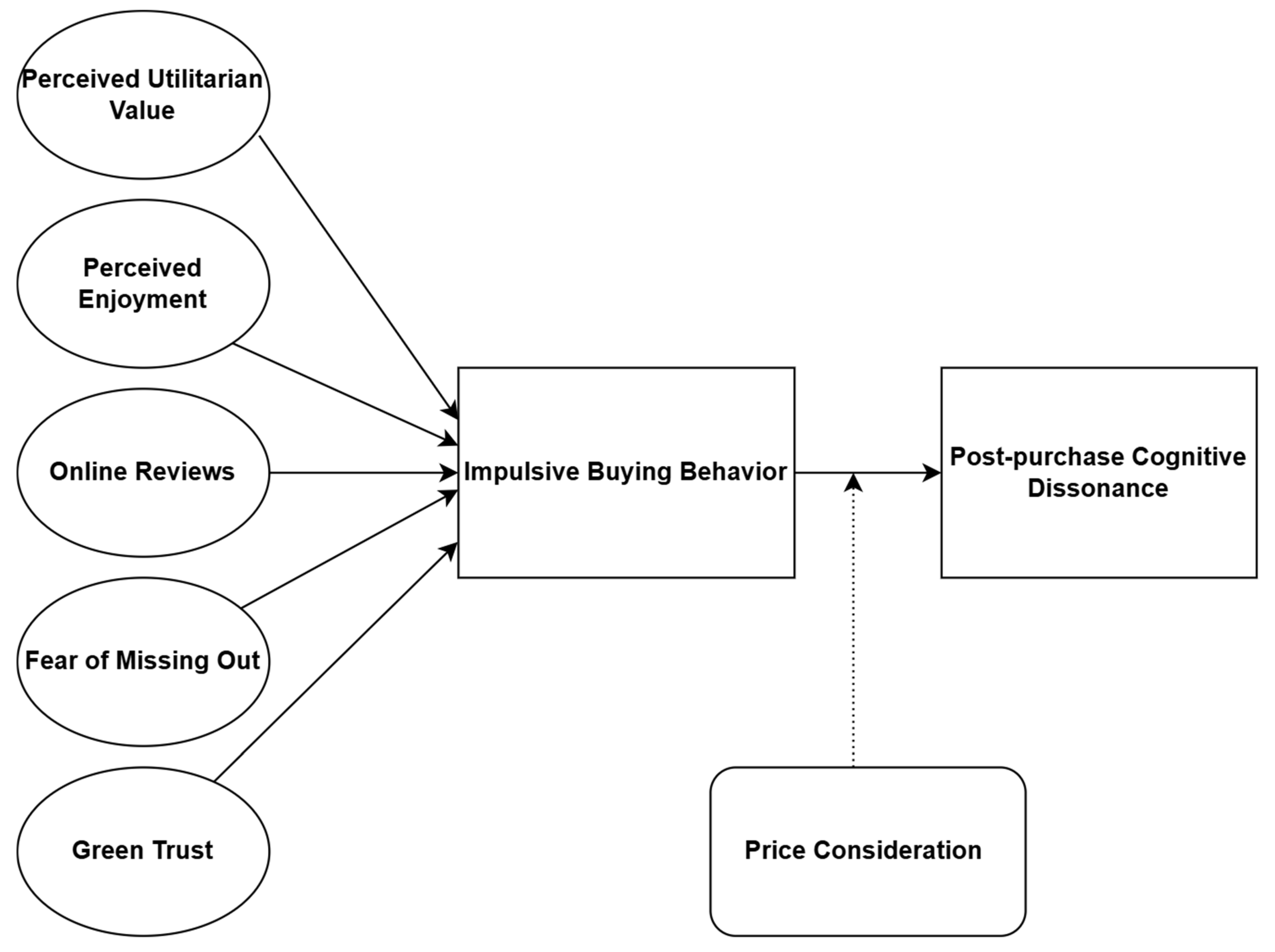
This study employs the S-O-R framework because of the model’s ability to systematically link external stimuli with inner psychological processes to predict and explain consumer behavior. In this study, the authors used S-O-R theory to determine the impact of stimuli (perceived utilitarian value, perceived enjoyment, online reviews, fear of missing out, and green trust) on the organism (online impulsive buying behavior), which, in turn, influences consumers’ responses (post-purchase cognitive dissonance). As PCD represents a psychological and emotional consequence, this study conceptualized it as a response (R) within the S-O-R framework. Prior research demonstrates that response attributes can reflect affective outcomes rather than merely capture observable behaviors [48]. Thus, PCD can be constructed as an immediate affective response derived from the organism’s state, IBB.
To deepen our understanding of the psychological mechanism linking stimulus to response through the S-O-R model, this study draws on behavioral economics, self-regulation theory, and affective decision-making theory. The stimuli used in this study, PUV, PE, OR, FOM, and GT, trigger numerous validated cognitive heuristics, for example, social proof [49], dearth and anxiety of loss [50], and trust indicators [51]. All these heuristics-based alternatives limit individuals’ analytical thinking capability of assessment [52], thereby accelerating the tendency toward impulsive buying.
At the same time, stimuli create affective outcomes, for example, a feeling of joy and mental fatigue stemming from overwhelming internet-based information. Based on the affective decision-making theory, an increased state of emotions transforms buyers from a logical decision-making process to a swift, emotion-driven mode [53], which ultimately increases impulsiveness and generates intuitive decisions.
When emotional and cognitive stress interact with self-regulation processes, emotional arousal reduces the buyers’ self-control mechanism [54]. In these situations, customers often engage in online impulsive buying behavior, which corresponds to the organism phase of the S-O-R model. Following the purchase, buyers can assess their decisions more logically as their emotional intensity reduces and self-control returns. This post-purchase logical evaluation increases consumers’ understanding of discrepancies across their long-term perspectives and preferences and of impulsive behaviors, which subsequently enhances the likelihood of post-purchase cognitive dissonance [33]. The response phase of the S-O-R model presents this emotional outcome of post-purchase.
The authors also added price consideration as a moderator between IBB and PCD. Figure 1 illustrates the conceptual framework of this study.
Grounded on the conceptual framework, the researchers of this study articulate the following hypotheses.

2.4.1. Perceived Utilitarian Value (PUV) and Online Impulsive Buying Behavior (IBB)

PUV refers to the practical and functional aspects of shopping, emphasizing efficiency and effectiveness in securing the product or service [55]. Utilitarian value (UV) offers a more realistic evaluation of a product [56]. UV in online purchases is driven by rational attributes, for example, product variety, convenience, efficiency, and affordability [56]. In the domain of online shopping, several studies have shown a positive association between UV and online IBB [57,58]. When consumers perceive substantial UV, they are more inclined to consider online platforms efficient for achieving their purchase objectives, thereby increasing their likelihood of making impulsive purchases [15]. The reason for this is that confidence in efficiency and convenience minimizes cognitive effort, reduces perceived risks, and creates a shopping environment that encourages impulsive buying behaviors [59]. However, no significant correlation was found between PUV and the urge to buy impulsively on m-commerce [60]. This suggests that impulsive buying is typically associated with hedonism rather than rational motivation. This fragmented evidence highlights the need for a more context-specific examination of UV in the online shopping environment in an emerging economy. Therefore, this study proposes the following hypothesis:
H1: 
PUV positively impacts online IBB.

2.4.2. Perceived Enjoyment (PE) and Online Impulsive Buying Behavior (IBB)

PE denotes the inherent amusement, pleasure, or entertainment that plays a vital role in consumers’ purchasing behavior [17]. An enjoyable online environment triggers positive emotions that raise consumers’ excitement and urge to purchase impulsively, eventually contributing to actual impulsive buying behavior. In the domain of marketing, several studies found a positive correlation between PE and IBB. Social media signals during livestream shopping promote enjoyment and stimulation [61], which, in turn, heighten the desire to make an impulsive purchase. Furthermore, live shopping with real-time interaction increases perceived enjoyment, which, in turn, favorably boosts impulsive buying behavior [62]. These study outcomes imply that consumers are more inclined to make unplanned purchases when they enjoy online shopping. In contrast, an insignificant association is found between shopping enjoyment and impulsive buying behavior in Pakistan [63]. This indicates that this finding is not universal and may vary across cultural and contextual settings. Addressing these mixed findings and contextual gaps, this study offers the following hypothesis to examine how PE influences impulsive buying in online shopping in an emerging country like Bangladesh:
H2: 
PE positively impacts online IBB.

2.4.3. Online Reviews (ORs) and Online Impulsive Buying Behavior (IBB)

Before buying any items, consumers intend to analyze the experiences of users who have already tested the products or used the service. The emergence of the internet and online reviews makes this process more compatible with consumer preferences [64]. Therefore, ORs have emerged as a popular way to determine whether a product or service is worthwhile, thereby shaping consumers’ purchasing intentions [65]. The relationship between ORs and IBB is a matter of debate in different contexts. Some claim that reviews may trigger impulsive buying, as positive word of mouth prompts customers to make spontaneous decisions [66], while others argue that consumers do not consider reviews when buying impulsively [67]. In most cases, online reviews significantly affect impulsive buying [68]. Encountering positive reviews is positively correlated with the likelihood of making an impulsive online purchase. The growth of online shopping has enabled consumers to compare product attributes and prices, offering the most convenient way to make a purchase [69]. However, there may be an insignificant relationship between online reviews driven by electronic word of mouth and impulsive buying [70]. Because consumers do not evaluate rationally or consciously, even rational or informational reviews might not affect their impulsive buying behavior. Given the fragmented findings regarding the association between ORs and IBB, we anticipate that when consumers encounter positive online reviews, they will be more likely to engage in impulsive buying behavior. In contrast, negative online reviews will prevent them from doing so. Hence, we can hypothesize:
H3: 
ORs positively impact online IBB.

2.4.4. Fear of Missing Out (FOM) and Online Impulsive Buying Behavior (IBB)

Fear of missing out (FOM) is a feeling of anxiety deriving from the nervousness of missing valuable experiences, which always triggers people towards impulsive behavior [71]. Flash discounts, special offers, and peer-influenced purchasing patterns are prevalent for online shopping to take advantage of FOM [38]. Through FOM-laden appeals, marketers often try to initiate and stimulate purchases by using what is termed a “direct call for action” [72]. Several studies demonstrate that FOM undermines logical decision-making, compelling consumers to make impulsive purchases triggered by a sense of urgency [72,73]. Prior studies also revealed that marketing strategies influenced by FOM accelerate online impulsive buying behavior, especially amid time-bound promotions on Shopee [74,75]. Conversely, minimal impact was found between FOM and impulsive buying among the Gen Z population [76], suggesting their familiarity with online platforms reduces the emotional impact of missing out. This variation in prior findings calls for further examination of FOM in IBB, especially in the online setting. This study aims to identify the impact of FOM on IBB among online shoppers in a developing country in Southeast Asia. Based on the findings of most of the prior studies, we can hypothesize the following:
H4: 
FOM positively impacts online IBB.

2.4.5. Green Trust (GT) and Online Impulsive Buying Behavior (IBB)

GT refers to consumers’ confidence and beliefs in the environmental claims of a product, service, or brand’s ecological claims, along with their trust in the product, service, or brand’s ability to meet their environmental responsibilities [77]. Prior studies confirm a positive correlation between GT and consumers’ purchase decisions. Consumers’ green attitudes influence impulsive buying tendencies [78]. Similarly, greater environmental sustainability awareness among e-commerce consumers triggers impulsive buying [79]. Moreover, digital and swift trust in blockchain influences impulsive buying of green agricultural products [80].
Most of the existing literature did not explicitly examine green trust (GT) as a driver of impulsive buying behavior in the online shopping context; instead, they emphasized its effect on general purchase intentions. The lack of concrete evidence on the role of GT in impulsive buying warrants further investigation. To address this gap, the following hypothesis is proposed: if GT alleviates doubts about product efficacy and ethical assertions, it will enhance the urge to purchase impulsively. Therefore, GT serves as an essential criterion that reduces cognitive barriers and encourages quick, emotion-driven decision-making in the context of online shopping. Hence, the following hypothesis aims to examine the relationship in the context of an emerging economy.
H5: 
GT positively impacts online IBB.

2.4.6. Online Impulsive Buying Behavior (IBB) and Post-Purchase Cognitive Dissonance (PCD)

The post-purchase appraisal of a deal’s positive and negative aspects always results in either fulfillment or cognitive discomfort [64]. All purchases do not have to be accompanied by cognitive dissonance [81]. When a buying decision is not aligned with a personal goal, it is deemed incongruent, which can ultimately lead to post-purchase dissonance and adverse emotions [64]. Several studies in the context of marketing examine the impact of impulse buying on post-purchase cognitive dissonance and find that a substantial proportion of participants are likely to experience remorse and frustration following their purchases [20,82]. Impulse buying is typically considered illogical, thereby triggering psychological distress and guilt [83].
However, much of the prior literature is conducted in traditional retail settings, which offer limited insights into how IBB influences PCD in online purchases. This gap highlights the need to examine the psychological consequences of online impulsivity in the context of an emerging Southeast Asian country. Therefore, this study posits the following hypothesis:
H6: 
Online IBB positively impacts PCD.

2.4.7. Price Consideration (PC) as Moderator

PC reflects the degree to which a consumer devotes time and energy to finding low prices [84]. Consumers who place high importance on price tend to be more aware of their spending, which, on the grounds of impulsive buying, increases the likelihood of experiencing regret. This is due to their heightened awareness of the disparity between their impulsive purchases and budgetary constraints, which intensifies their sense of discomfort and remorse [85]. On the other hand, less price-sensitive consumers tend to experience less regret even when making impulsive purchases. Several studies explore the moderating effect of price consciousness. For example, price consideration moderates the relationship between curiosity and impulsive buying behavior [86]. Conversely, a negative moderating effect of price consciousness is found on the relationship between purchase intention and actual second-hand clothing purchases [87]. To the authors’ knowledge, no study has yet examined the moderating role of PC in the relationship between IBB and PCD. Examining the moderating effect of PC is crucial for understanding how consumers’ price sensitivity influences the intensity of cognitive dissonance following an impulsive purchase. To address this gap, this study posits the following hypothesis:
H7: 
PC moderates the relationship between IBB and PCD.

3. Methodology

3.1. Target Population, Sample Size, and Sampling Techniques

This study investigated the online impulsive buying behavior and post-cognitive dissonance of consumers. To achieve the study objectives, this study targets online consumers who make hedonic purchases on e-commerce platforms, as they are more likely to exhibit impulsive buying tendencies. The purposive sampling technique was applied to select sample respondents as it guarantees the selection of the participants with pertinent experience and involvement in online purchase [88,89]. Moreover, this sampling technique targets individuals with specific characteristics, such as active online shoppers, who can provide valuable data on impulsive purchasing behavior, post-purchase dissonance, and price sensitivity for this study context [90]. This non-probability sampling method enables authors to focus on respondents most likely to exhibit psychological and behavioral patterns fundamental to the research objectives. The minimum sample size is determined following several guidelines. For example, if the population exceeds one million, 384 should be minimum sample size for nonprobability sampling [91]. Moreover, for structural equation modelling (SEM), a sample size of 200 is sufficient [92].

3.2. Questionnaire Development and Data Collection

The questionnaire items for this study were collected from the literature and slightly modified to fit the present research context. Measurement items for all constructs are presented in Appendix A. This study uses a five-point Likert scale that ranges from “strongly disagree” (1) to “strongly agree” (5) for the structured questionnaire. The questionnaire was formulated, consisting of 31 measurement items, demographic details, and general contextual questions. A description of the measurement instruments is provided in Table 1.
This questionnaire was disseminated to 1025 prospective respondents using different online platforms. After deleting all incomplete and invalid responses, 813 questionnaires were used for final analysis, yielding a response rate of 79.3%. The total time taken for data collection was four months, from June to September 2025.

3.3. Methods of Data Analysis

Partial Least Squares Structural Equation Modeling (PLS-SEM) was used with SmartPLS 4.1.1.5 for data analysis. This method is preferable to CB-SEM for managing latent constructs, providing precise indicator estimates, and offering greater statistical efficiency [96]. The analysis phase is divided into two parts: the first stage uses the measurement model to understand model reliability and validity, and the second stage uses the structural model to test hypotheses.

3.4. Ethical Approval

The research procedure was conducted in accordance with ethical standards. All participants were informed about the purpose of the study and provided consent to respond. They were assured that the responses would be retained anonymously, that the results would be aggregated, and that they would be used solely for academic purposes. To guarantee that the research protocol adheres to international standards for human subject research, it was granted ethical approval by the departmental ethics committee (Reference no: IBDUREC-2025-10). Before data collection, researchers ensured the informed consent of all survey participants. To ensure anonymity, no personally identifiable information was recorded.

4. Analysis and Findings

4.1. Demographic Statistics

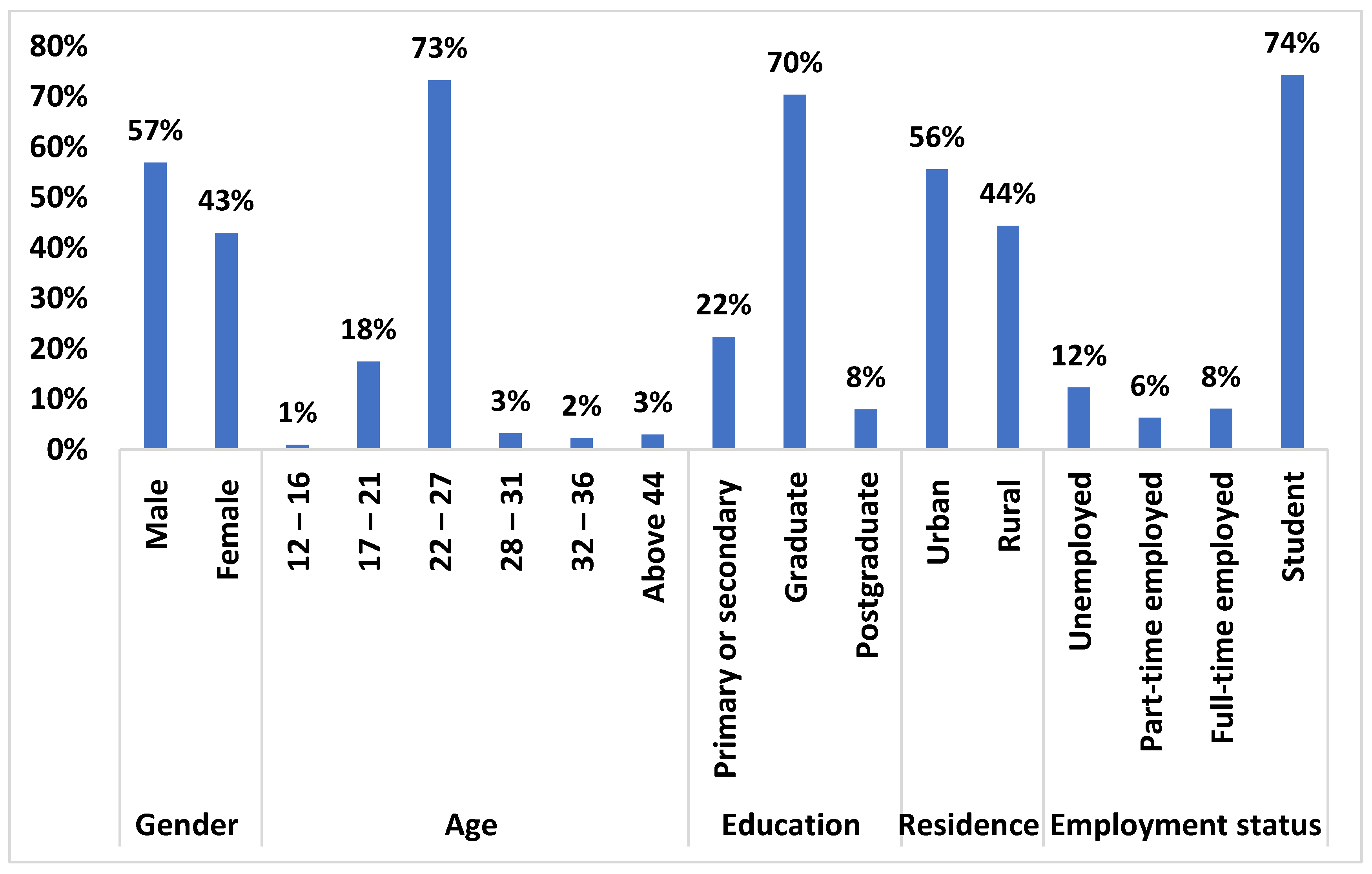
Figure 2 displays the results of demographic features such as gender, age, education, and place of residence. The participants were 73% male and 43% female. Most internet buyers (73%) are in the 22–27 age range. Of those surveyed, 56% lived in cities, and 70% were graduates. Moreover, 74% of respondents were students.
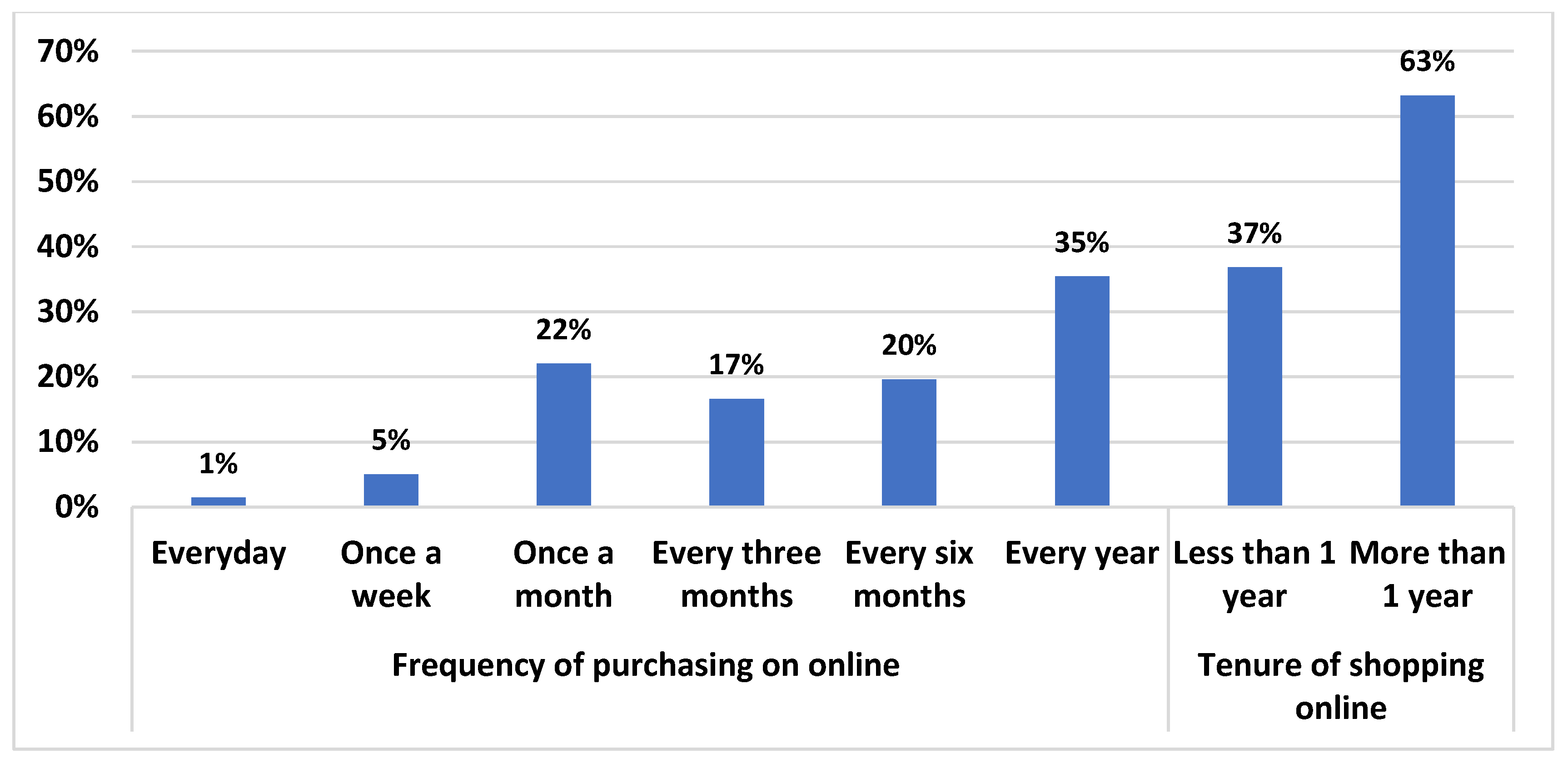
Figure 3 depicts the frequency of online purchases and the length of time spent shopping online. Most online buyers (35%) make purchases once a year, 22% shop once a month, and 20% do so every six months. Furthermore, 63% of them have been buying online for more than a year, according to tenure data.
The demographic data suggests that online shopping is a popular activity for both men and women. The bulk of online consumers are younger people, consisting of students and graduates. Compared to rural consumers, urban consumers are more likely to make online purchases. Most participants had previously shopped online and do so once a year.

4.2. Measurement Model Analysis

To support the inclusion of the constructs in the path model, the reflective measurement model evaluation assesses their validity and reliability [97]. Reliability assessments require factor loadings (FL), Cronbach’s alpha (CA), and composite reliability (CR) values, which assess indicator and internal consistency reliability. The scores must exceed the threshold of 0.70 [96]. Table 2 shows the values of item reliability and internal consistency values within the accepted range, facilitating further analysis.
Average Variance Extracted (AVE) defines the degree to which a latent variable accounts for the variance of its indicators [97]. To validate convergent validity, all values of AVE should be above 0.50 [96], and Table 2 presents all the values above 0.50, which confirms convergent validity.
Table 3 presents the discriminant validity assessment using the Heterotrait–Monotrait (HTMT) ratio of correlations [96]. These values are below 0.90 and within the acceptable range [96], indicating sufficient discriminant validity.

4.3. Structural Model Analysis

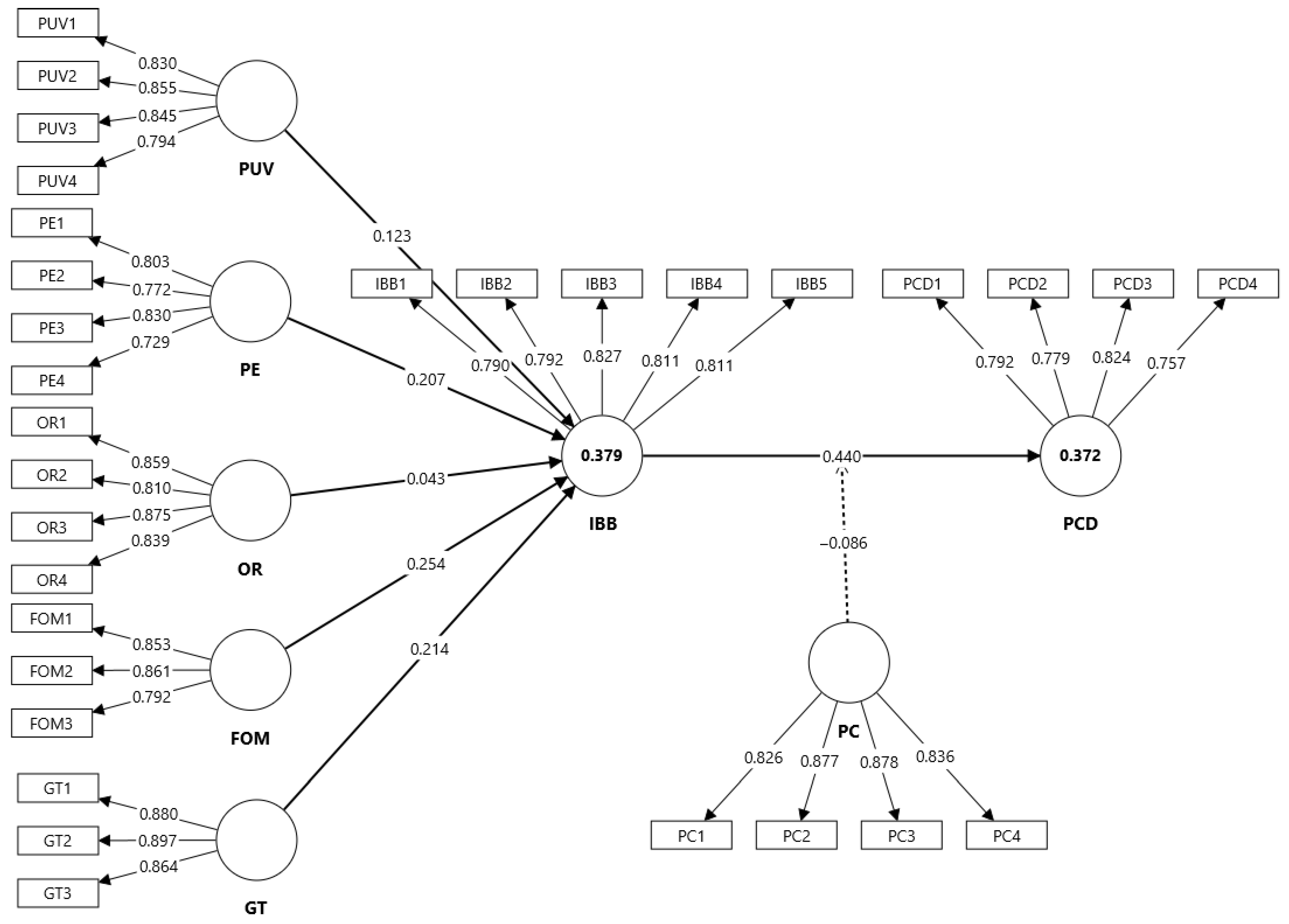
Figure 4 presents the path model showing the relationships among independent and dependent variables, including path coefficients, p-values, outer loadings, and R2 values. The direction (positive/negative) and magnitude of all relationships are detailed in the corresponding result table (Table 4).
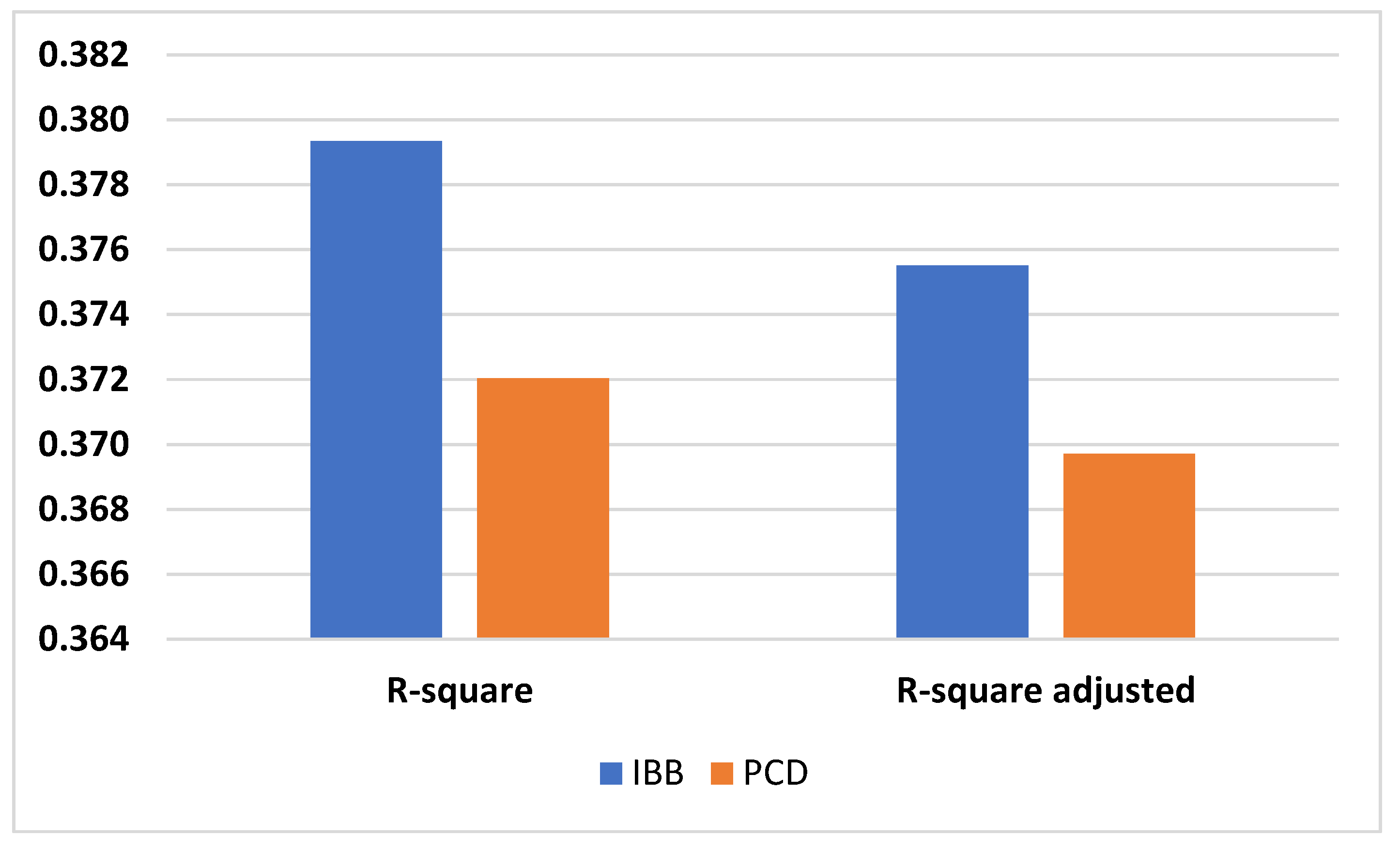
Figure 5 shows the R-square values for IBB and PCD. The model explains 37.9% of the variance in IBB by PUV, PE, OR, FOM, and GT and 37.2% of the variance in PCD, which is ascribed to IBB and PC. An R-square value of 0.20 is considered strong within the context of consumer behavior [97]. The current study’s model demonstrates robust predictive capacity for consumers’ online impulsive buying behavior.

4.3.1. Analysis of Direct Path Relationships

The results of the structural model in Table 4 show that perceived utilitarian value (PUV), perceived enjoyment (PE), fear of missing out (FOM), and green trust (GT) significantly affect online impulsive buying behavior (IBB), while online reviews (ORs) do not. FOM (β = 0.254, t-value = 7.289, p < 0.05) has the strongest influence on IBB, followed by GT (β = 0.214, t-value = 5.216, p < 0.05), PE (β = 0.207, t-value = 5.231, p < 0.05), and PUV (β = 0.123, t-value = 2.813, p < 0.05). Conversely, there is no discernible correlation between ORs and IBB (β = 0.043, t-value = 0.969, p = 0.332). Additionally, post-purchase cognitive dissonance (PCD) is significantly influenced by IBB (β = 0.440, t-value = 12.637, p < 0.05). Thus, all the hypotheses (H1, H2, H4, H5, and H6) are supported except H3.
Variance inflation factor (VIF) values were computed to investigate common method bias and the existence of collinearity problems. A threshold of less than three indicates that the collinearity issue is not significant [97]. All VIF values in Table 4 are significantly below the threshold, ranging from 1.259 to 1.931, indicating that multicollinearity is not present.
Additionally, the effect size is shown to indicate the relative contribution of each predictor to its dependent variable. Following guidelines regarding effect size (0.02 = small, 0.15 = medium, 0.35 = large) [98], the strongest effect is observed for the path IBB → PCD (f2 = 0.243, medium), followed by FOM → IBB (f2 = 0.082, small), GT → IBB (f2 = 0.049, small), PE → IBB (f2 = 0.041, small), and PUV → IBB (f2 = 0.023, small). These findings underscore the role of online IBB in affecting post-purchase cognitive dissonance and highlight the role of FOM and GT as the key drivers of impulsive buying behavior.

4.3.2. Analysis of Moderation and Its Simple Slope

The moderating role of PC between IBB and PCD (β = −0.086, t-value = 3.420, p < 0.05) is summarized in Table 5, which supports H7. The negative coefficient indicates that higher levels of PC weaken the positive effect of IBB on PCD. The model has no collinearity issues with a VIF of 1.191 (VIF < 3). Moreover, the f2 value of 0.028 reflects a small effect size [98] and suggests that although the moderating influence of PC is statistically significant, its magnitude is modest.
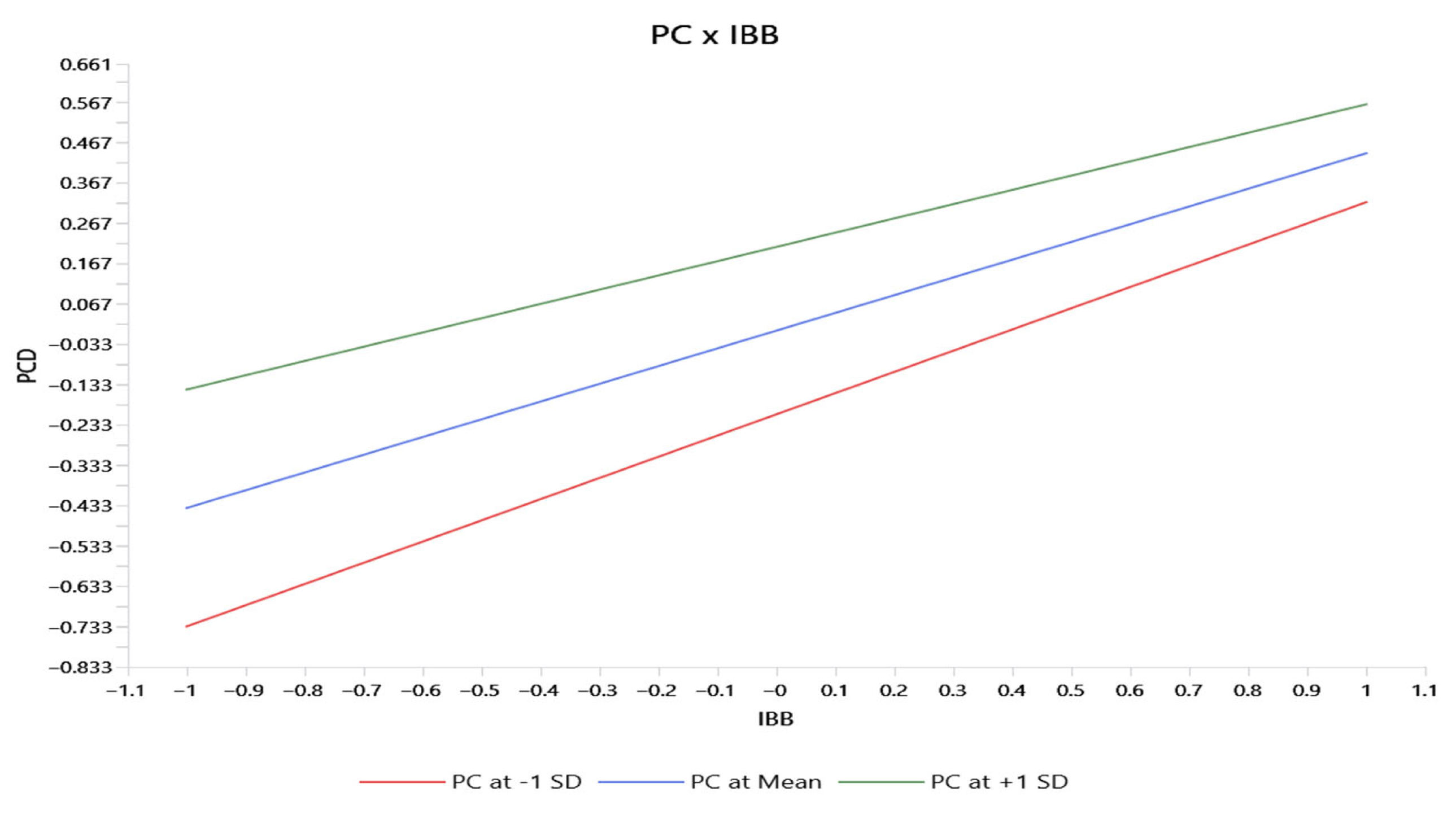
To further interpret the moderation, a simple slope analysis was conducted, as shown in Figure 6. This plot shows that when customers’ price consciousness (PC) is low, the positive relationship between IBB and PCD is stronger (red), whereas when PC is high, it becomes weaker (green). This pattern suggests that less price-sensitive consumers are more likely to experience post-purchase cognitive dissonance following impulsive buying, whereas those who carefully consider price are less prone to such dissonance even when impulsive purchases occur.

5. Discussion

This study employs S-O-R theory to determine the impact of stimuli (perceived utilitarian value, perceived enjoyment, online reviews, fear of missing out, and green trust) on the organism (online impulsive buying behavior), which, in turn, influences consumers’ responses (post-purchase cognitive dissonance). Moreover, this study has identified the moderating role of price consideration (PC).
Perceived utilitarian value (PUV) positively influences online impulsive buying behavior (IBB), supporting H1. In the online shopping context, when a website or platform gives different customized options such as an easy way to collect product information, fast delivery, and a secure payment method, customers feel more interested in purchasing. This finding is highly consistent with previous research [56,57]. Perceived enjoyment (PE) has positively influenced online IBB (H2), which is statistically significant and highly consistent with the findings of a previous study [61]. The finding indicates that when customers perceive a website or platform as enjoyable or fun, they are more likely to engage in browsing, exploring products, and interacting with product communications, increasing the likelihood of making many unplanned purchases.
Online reviews (ORs) have no positive impact on online IBB (H3). This result did not match previous findings [99,100]. The outcome suggested that external online reviews, such as social reviews, do not directly drive impulsive buying behavior. Customers are not relying on positive reviews to make impulsive purchases. They are more motivated by other practical strategies, such as customized recommendations, visual appeal, or other promotions. Additionally, online shoppers do not rely on rational processes, such as collecting or checking online reviews, to make impulsive purchases; they make decisions to buy based on emotional cognitive shortcuts. Likewise, fear of missing (FOM) has a positive impact on online IBB (H4), consistent with previous results [74,75]. In the online shopping context, this fear is accelerated by emotional arousal and scarcity cues, such as time-limited discounts and limited-stock notifications. This provokes a sense of urgency by reducing rational thinking and encouraging unplanned purchases.
Next, online IBB was significantly impacted by green trust (GT), supporting H5. This finding suggests that when customers have confidence in the brand of products, that the product is genuinely eco-friendly and socially responsible, they tend more to make an instant purchase without thinking further, which is highly consistent with earlier outcomes [101,102]. Moreover, online IBB positively influences post-purchase cognitive dissonance (PCD), supporting H6. Naturally, impulsive buying behavior has occurred under different emotional instability, limited evaluation, and instant-benefit motives. After this excitement fades, customers may experience dissonance, which leads to regret or anxiety. This finding matches the findings of prior studies [64,83]. Additionally, younger, more educated shoppers are now highly concerned about sustainability. They think that their irrational purchase may encourage them to buy environmentally harmful products, leading to greater discomfort or regret. Their dissonance is heightened when their impulsive buying tendencies may conflict with environmental standards and long-term goals, undermining responsible consumer practices.
Finally, the moderation analysis indicated that the relationship between online impulsive buying behavior and post-purchase cognitive dissonance is highly undermined by price consideration, supporting H7. This outcome is in line with the findings of earlier studies, which concluded that consumers who are more price conscious are less likely to buy impulsively [86], and those who are less sensitive to price tend to use impulsive services more [87]. However, in the current context, it offers novel insights into the existing literature, concluding that customers with high price consciousness purchase products impulsively and experience less cognitive dissonance afterwards, as their spending conflicts with their everyday concerns. On the other hand, customers with low price consciousness are more affected by such dissonance, as price is their secondary concern when purchasing any products. This implies that those who do not pay attention to price experience a loss of control and regret unplanned online purchases more. Therefore, price consciousness can weaken the relationship between IBB and PCD based on the buyer’s price sensitivity.

6. Conclusions, Implications, and Limitations

6.1. Conclusions

This study aims to understand various online shopping stimuli that influence impulsive purchasing behavior and how such behavior influences post-purchase cognitive dissonance within the SOR framework. In this research, perceived utilitarian value, enjoyment, fear of missing out, and green trust are strongly connected to impulsive online purchases. Accordingly, this study reflects the combined influence of functional, emotional, and sustainability-focused factors on the e-business environment. On the other hand, online reviews did not serve as a significant indicator of impulsive purchase decisions in this context. The outcomes also support the idea that impulsive buying functions as an internal psychological state that leads to greater cognitive dissonance afterward. But price consideration reduces consumer feelings of regret when making unplanned purchases by providing a reasonable basis for evaluation. Thus, this study expands our understanding of how digital stimuli shape consumer behavior and provides direction for online retailers seeking to manage emotional buying effectively. Ultimately, this research lays the foundation for developing specific marketing strategies and improving consumer satisfaction in the e-shopping context.

6.2. Implications

6.2.1. Theoretical Implications

The study makes some significant contributions to the theoretical framework. First, this study extends the conventional theoretical model, Stimuli–Organism–Response (S-O-R), by integrating emotional, psychological, and environmental triggers, providing a comprehensive understanding of consumer behavior. This advances theoretical discourse in the context of online buying and customer behavior dynamics. Second, linking impulsive buying to post-purchase cognitive dissonance advances consumer behavior theory by showing that unplanned or sudden shopping decisions may lead to regret. This implies that consumers’ behavior does not remain the same before and after a purchase resulting from an impulsive action. They might regret the decisions they made to purchase without a plan. Third, integrating green trust as one of the stimuli of impulsive buying is a novel addition to the theory. This will add greater value to the theory by understanding how the sustainability attitude of consumers shapes their purchasing decisions. Also, eco-centric trust in a product influences consumers to buy impulsively, advancing the sustainability-oriented consumer literature. The findings further reveal a deeper conceptual mechanism. Green trust triggers impulsive buying and subsequently leads to cognitive dissonance. So, consumers may reinterpret their eco-friendly purchases as a potential “mistake.” This occurs particularly when consumers realize that their spontaneous buy did not align with their sustainable consumption values, thereby expanding theoretical discourse on ethical decision inconsistency. Finally, price considerations as a moderator between impulsive buying and post-purchase regret provide an original contribution to existing consumer theories. It suggests that consumers who consider price less often experience more regret after impulsive buying. Although the moderation effect is statistically significant with a small effect size, the results indicate that low-price-consideration consumers are more likely to experience post-purchase regret. Their unplanned behavior is not rationally explained in terms of price-conscious consumers who seek to reduce dissonance. This expands the concept of consumer behavior by demonstrating the role of justification mechanisms in shaping the emotional consequences of impulsive decision-making.

6.2.2. Practical Implications

This study offers several practical insights for online retail sellers and digital marketers. Firstly, the results illustrate that perceived utilitarian value and perceived enjoyment have a significant effect on online impulsive buying behavior. So, e-commerce websites should focus on making their sites easier to use, adding features that speed up checkout, and creating content that makes shopping more fun. Limited time offers, recommendations, and interactive product displays can get people excited and encourage them to buy. As the fear of missing out also triggers impulse buying, flash sales, countdown timers, and real-time stock alerts can be practical tools to encourage quick decision-making. As OR does not influence shoppers to purchase impulsively, this gives suggestions for e-retailers to incorporate emotions, convenience, and immediate gratification rather than traditional rational processes to engage customers more with their purchase. However, an efficient review system remains essential for credibility and product reassurance.
Secondly, green trust is found to be a significant factor that boosts impulse buying. E-businesses should highlight eco-friendly products supported by explicit environmental claims, sustainability certifications, and ethical practices. Consequently, green trust attracts environmentally conscious consumers who are more likely to act impulsively when they perceive a purchase as favorable to sustainability.
Finally, impulsive buying behavior leads to post-purchase cognitive dissonance. Thus, companies must formulate strategies to reduce regret and build satisfaction for an extended period. Easy return policies, post-purchase authorizations, and follow-ups can help reduce stress after an impulse purchase. Price sensitivity negatively moderates this relationship, with a small effect. This implies that pricing strategy alone, including discounts, coupons, competitive pricing, etc., might have limited practical contribution in lessening consumer dissonance. As such, companies need to use more intensive psychological buffers alongside pricing-based approaches such as post-purchase justification cues, value reminders, or customized reassurance messages. Finally, these psychological reinforcements are better placed to alleviate regret amongst consumers who have made impulse purchases. These findings suggest that emotional shopping experience improvement, communication sustainability, and post-purchase attention can maximize positive outcomes while limiting psychological drawbacks for online consumers.

6.3. Limitations and Future Study Directions

This study acknowledges several limitations. First, the data of this study was collected through a cross-sectional survey. Hence, recall bias may be present, and causal inferences among variables may be limited. For that reason, future studies could employ a longitudinal or experimental design to examine changes and establish stronger causal relationships. Second, the sample was collected from a specific demographic segment in a single country. Cultural or demographic differences or comparative insights may affect consumers’ perceptions of utility value, enjoyment, fear of missing out, online reviews, and sustainability cues. Future research is recommended across different geographical regions and demographics to enhance the generalizability of the findings. Third, the model included only selected psychological and environmental stimuli, and online reviews were found to be nonsignificant in predicting impulsive buying in this scope. Other critical factors that could better describe consumer responses in a digital environment include social influence, website aesthetics, and personalized advertisements. Further studies could extend the S-O-R framework by adding moderating factors such as digital literacy, perceived risk, and personality traits to provide a better understanding of online impulsive buying dynamics. Fourth, the results should be interpreted with caution for broader population segments, as the sample is heavily skewed toward students and males. However, this suggests that most of the people who are engaged in social media and digital platforms are males and students. Moreover, most responses come from young, urban, and highly educated online shoppers in Bangladesh, reflecting the behaviors of the young generation, such as Gen Z or Y, which limits the generalizability of the findings. Further studies are encouraged to use more balanced or stratified sampling techniques to validate and extend the findings across diverse demographic groups, including non-students, older consumers, and female consumers, to generalize the findings.

Author Contributions

Conceptualization, A.H., R.A.R., M.F.-E.-A. and N.S.; methodology, M.S.A. and A.H.; validation, N.S., R.A.R. and M.F.-E.-A.; formal analysis, R.A.R. and N.S.; investigation, A.H., R.A.R. and M.S.A.; data curation, A.H., R.A.R., M.S.A. and M.F.-E.-A.; writing—original draft preparation, A.H., R.A.R., M.F.-E.-A., M.S.A. and N.S.; writing—review and editing, A.H., R.A.R., M.F.-E.-A., M.S.A. and N.S.; visualization, R.A.R. and N.S. All authors have read and agreed to the published version of the manuscript.

Funding

This research received no external funding. The authors would like to acknowledge the financial support of the University of Dhaka for the article processing charge (APC).

Institutional Review Board Statement

The study was conducted in accordance with the Declaration of Helsinki, and approved by the Ethics Committee of Department of International Business, Faculty of Business Studies, University of Dhaka (protocol code IBDUREC-2025-10, 25 May 2025).

Informed Consent Statement

Informed consent was obtained from all subjects involved in the study.

Data Availability Statement

The data presented in this study is available on request from the corresponding author.

Conflicts of Interest

The authors declare no conflicts of interest.

Appendix A. Survey Instruments

ConstructsItems
Perceived Utilitarian ValuePUV1: Shopping through online offers a more relaxed and easier shopping experience.
PUV2: Online shopping through different websites provides easy access to large amounts of product and service information.
PUV3: Online shopping platforms help me find the products I need quickly and efficiently.
PUV4: I find it convenient to compare different products and prices on online shopping platforms.
Perceived EnjoymentPE1: Shopping online is an enjoyable activity for me.
PE2: Shopping online is a way I would like to spend some of my free time.
PE3: Searching for new and unique products on online shopping platforms excites me.
PE4: Watching product demonstrations and live-streaming sessions adds to my shopping enjoyment.
Online ReviewsOR1: When I want to purchase something online, I refer to online reviews to make my final decision.
OR2: Online store recommendations provide me with useful information to make an informed selection.
OR3: I find it important to seek advice through online reviews to make a purchase decision.
OR4: Checking online reviews is a crucial step when shopping online.
Fear of Missing outFOM1: When an item is almost out of stock, I rush into buying it without thinking of the consequences.
FOM2: When there is a countdown timer on an item on sale online, I am afraid I will miss out on the opportunity and end up buying the product.
FOM3: When an item is trending on social media, I feel anxious about not buying it and being up to date with my friends.
Green TrustGT1: I feel that green product is generally reliable.
GT2: I think I can buy a green product because they are dependable.
GT3: I think I feel that organic products environmental concern meets my expectation.
Price ConsiderationPC1: I find myself checking the prices of the products I want to buy.
PC2: I am willing to go through extra effort to find a lower price
PC3: I will shop for products at more than one store to take advantage of low prices.
PC4: I would always shop at more than one store to find low prices.
Online Impulsive Buying BehaviorIBB1: I have the desire to purchase products that do not pertain to my specific shopping goals when browsing the online shopping platform.
IBB2: I have a desire to purchase a particular product when the general information in the online shopping platform reminds me of a product that meets my needs.
IBB3: When I browse a particular product for the first time, I have the urge to buy it if it is displayed nicely
IBB 4: I plan to buy a particular product, but I purchase other products that are discounted in the online shopping platform
IBB5: I plan to buy a particular product, but I purchase other products based on the ratings in the online shopping platform
Post-Purchase Cognitive DissonancePCD1: I frequently have a feeling of anxiety after purchasing items that I had not meant to purchase before browsing online retailers.
PCD2: I frequently feel that internet purchases I make randomly are of little value.
PCD3: When I buy an item on an impulse online, I attempt to persuade myself that it would help in the future, and I will use it.
PCD 4: I occasionally do not feel interested anymore in items I have already bought online.

References

  1. Tan, T.L.; Nguyen Chau Ngoc, K.; Thanh, H.L.T.; Thu, H.N.T.; Hoang, U.V.T. Enhancing Repurchase Intention on Digital Platforms Based on Shopping Well-Being Through Shopping Value, Trust and Impulsive Buying. SAGE Open 2024, 14, 21582440241278454. [Google Scholar] [CrossRef]
  2. Rahman, M.A.; Islam, M.A.; Esha, B.H.; Sultana, N.; Chakravorty, S. Consumer Buying Behavior Toward Online Shopping: An Empirical Study on Dhaka City, Bangladesh. Cogent Bus. Manag. 2018, 5, 1514940. [Google Scholar] [CrossRef]
  3. Nikhashemi, S.R.; Yasmin, F.; Haque, A.; Khatibi, A. Study on Customer Perception Toward Online Ticketing in Malaysia. Indian J. Commer. Manag. Stud. 2011, 2, 3–13. [Google Scholar]
  4. McKinsey & Company. E-Commerce Is Entering a New Phase in Southeast Asia: Are Logistics Players Prepared? Available online: https://www.mckinsey.com/industries/logistics/our-insights/e-commerce-is-entering-a-new-phase-in-southeast-asia-are-logistics-players-prepared (accessed on 5 August 2025).
  5. Statista. eCommerce-Bangladesh. Available online: https://www.statista.com/outlook/emo/ecommerce/bangladesh (accessed on 5 August 2025).
  6. Tiago, M.T.P.M.B.; Veríssimo, J.M.C. Digital Marketing and Social Media: Why Bother? Bus. Horiz. 2014, 57, 703–708. [Google Scholar] [CrossRef]
  7. Phan, Q.P.T.; Ngo, V.M.; Phuoc, N.C.L. How Social Commerce Characteristics Influence Consumers’ Online Impulsive Buying Behavior in Emerging Markets. In Research Anthology on Social Media Advertising and Building Consumer Relationships; IGI Global: Hershey, PA, USA, 2022; pp. 177–193. [Google Scholar] [CrossRef]
  8. Wang, Y.; Pan, J.; Xu, Y.; Luo, J.; Wu, Y. The Determinants of Impulsive Buying Behavior in Electronic Commerce. Sustainability 2022, 14, 7500. [Google Scholar] [CrossRef]
  9. Chen, J.V.; Su, B.; Widjaja, A.E. Facebook C2C Social Commerce: A Study of Online Impulse Buying. Decis. Support Syst. 2016, 83, 57–69. [Google Scholar] [CrossRef]
  10. Liu, Q.; Zhang, F. Study on the Influencing Factors of Mobile Users’ Impulse Purchase Behavior in a Large Online Promotion Activity. J. Electron. Commer. Organ. 2019, 17, 88–101. [Google Scholar] [CrossRef]
  11. Zhao, Y.; Li, Y.; Wang, N.; Zhou, R.; Luo, X. A Meta-Analysis of Online Impulsive Buying and the Moderating Effect of Economic Development Level. Inf. Syst. Front. 2021, 24, 1667–1688. [Google Scholar] [CrossRef] [PubMed]
  12. Liu, Y.; Li, H.; Hu, F. Website Attributes in Urging Online Impulse Purchase: An Empirical Investigation on Consumer Perceptions. Decis. Support Syst. 2013, 55, 829–837. [Google Scholar] [CrossRef]
  13. Rook, D.W. The Buying Impulse. J. Consum. Res. 1987, 14, 189–199. [Google Scholar] [CrossRef]
  14. Hofmann, W.; Baumeister, R.F.; Förster, G.; Vohs, K.D. Everyday Temptations: An Experience Sampling Study of Desire, Conflict, and Self-Control. J. Pers. Soc. Psychol. 2012, 102, 1318–1335. [Google Scholar] [CrossRef] [PubMed]
  15. Cuong, D.T. Online Impulsive Buying Behavior Using Partial Least Squares Algorithm. J. ICT Stand. 2023, 11, 217–236. [Google Scholar] [CrossRef]
  16. Akter, M.; Niloy, M.A.R. What Makes Consumers Impulsive During Online Shopping: Hedonic vs. Utilitarian Browsing? Bangladesh J. MIS 2024, 10, 136–152. [Google Scholar] [CrossRef]
  17. Karim, M.W.; Chowdhury, M.A.M.; Masud, M.A.A.; Arifuzzaman, M. Analysis of Factors Influencing Impulse Buying Behavior towards E-Tailing Sites: An Application of S-O-R Model. Contemp. Manag. Res. 2021, 17, 97–126. [Google Scholar] [CrossRef]
  18. Chou, C.-H.; Chien, S.-F.; Tien, H.-K. Do Consumers’ Post-Purchase Regrets Reinforce or Inhibit Future Impulse Buying Behavior propensity? Assessing the Moderating Effect of Neuroticism and Temporal Perspective. Curr. Psychol. 2025, 44, 11036–11048. [Google Scholar] [CrossRef]
  19. Beikverdi, L.; Sipilä, J.; Tarkiainen, A. Post-Purchase Effects of Impulse Buying: A Review and Research Agenda. J. Consum. Behav. 2023, 23, 1512–1527. [Google Scholar] [CrossRef]
  20. Lim, S.H.; Lee, S.; Kim, D.J. Is Online Consumers’ Impulsive Buying Beneficial for E-Commerce Companies? An Empirical Investigation of Online Consumers’ Past Impulsive Buying Behaviors. Inf. Syst. Manag. 2017, 34, 85–100. [Google Scholar] [CrossRef]
  21. Enam, A.; Azad, I.I.; Afrin, S. Exploring Online Shopping Behavior in Dhaka, Bangladesh. Transp. Res. Interdiscip. Perspect. 2024, 25, 101081. [Google Scholar] [CrossRef]
  22. Vithayathil, J.; Dadgar, M.; Osiri, J.K. Social media use and consumer shopping preferences. Int. J. Inf. Manag. 2020, 54, 102117. [Google Scholar] [CrossRef]
  23. Gong, X.; Yee, C.L.; Lee, S.Y.; Cao, E.Y.; Saif, A.N.M. Knowledge Mapping of Impulsive Buying Behavior Research: A Visual Analysis Using CiteSpace. Humanit. Soc. Sci. Commun. 2024, 11, 967. [Google Scholar] [CrossRef]
  24. Rahman, M.F.; Hossain, M.S. The Impact of Website Quality on Online Compulsive Buying Behavior: Evidence from Online Shopping Organizations. South Asian J. Mark. 2023, 4, 1–16. [Google Scholar] [CrossRef]
  25. Alauddin, M.; Hossain, M.M.; Ibrahim, M.; Hoque, M.A. Perceptions of Consumer Impulse Buying Behavior in the Super Store: A Case Study of Some Selected Super Store in Bangladesh. Asian Soc. Sci. 2015, 11, 68–75. [Google Scholar] [CrossRef]
  26. Mehrabian, A.; Russell, J.A. An Approach to Environmental Psychology; MIT Press: Cambridge, MA, USA, 1974. [Google Scholar]
  27. Lim, S.Y.; Tan, Y.; Loh, X.M.; Cham, T.H.; Ooi, M.Y.; Tan, G.W.H. It’s Not All Fun and Games: Gamification in E-Commerce on Consumers’ Impulse Buying of Retail Food Products. Br. Food J. 2025, 127, 1098–1113. [Google Scholar] [CrossRef]
  28. Stern, H. The Significance of Impulse Buying Today. J. Mark. 1962, 26, 59–62. [Google Scholar] [CrossRef]
  29. Muruganantham, G.; Bhakat, R.S. A Review of Impulse Buying Behavior. Int. J. Mark. Stud. 2013, 5, 149–160. [Google Scholar] [CrossRef]
  30. Zafar, A.U.; Qiu, J.; Shahzad, M. Do Digital Celebrities’ Relationships and Social Climate Matter? Impulse Buying in F-Commerce. Internet Res. 2020, 30, 1731–1762. [Google Scholar] [CrossRef]
  31. Nigam, A.; Behl, A.; Pereira, V.; Sangal, S. Impulse purchases during emergency situations: Exploring permission marketing and the role of blockchain. Ind. Manag. Data Syst. 2023, 123, 155–187. [Google Scholar] [CrossRef]
  32. Zhang, G.; Yue, X.; Ye, Y.; Peng, M.Y.-P. Understanding the Impact of the Psychological Cognitive Process on Student Learning Satisfaction: Combination of the Social Cognitive Career Theory and SOR Model. Front. Psychol. 2021, 12, 712323. [Google Scholar] [CrossRef]
  33. Festinger, L. A Theory of Cognitive Dissonance; Stanford University Press: Stanford, CA, USA, 1957. [Google Scholar]
  34. Kim, Y.S. Application of the Cognitive Dissonance Theory to the Service Industry. Serv. Mark. Q. 2011, 32, 96–112. [Google Scholar] [CrossRef]
  35. Harmon-Jones, E.; Mills, J. An introduction to cognitive dissonance theory and an overview of current perspectives on the theory. In Cognitive Dissonance: Reexamining a Pivotal Theory in Psychology, 2nd ed.; Harmon-Jones, E., Ed.; American Psychological Association: Washington, DC, USA, 2019; pp. 3–24. [Google Scholar]
  36. Ibrahim Awwad, R.; Ibrahim, B.; George, C.; Hamdan, S.; Nair, K. Facts or Belief: Examining the Effect of the Cognitive Dissonance on Brand Switching, Purchase Regret and Satisfaction Level. Glob. Knowl. Mem. Commun. 2025, 74, 1209–1222. [Google Scholar] [CrossRef]
  37. Banerjee, S.; Ghosh, A. Till Death Do Us Part—Customer Commitment after Negative Publicity: The Role of Relational Variables and Cognitive Dissonance. Asia-Pac. J. Bus. Adm. 2023, 15, 649–672. [Google Scholar] [CrossRef]
  38. Charles, C.E.; Immanuel, D.M. FOMO, Materialism and the Gen Z Shopping Behavior: The Impact on Online Impulse Buying and Post-Purchase Regret (with a Gender Perspective). J. Apl. Manaj. 2025, 23, 134–157. [Google Scholar] [CrossRef]
  39. Lazim, N.A.M.; Sulaiman, Z.; Zakuan, N.; Mas’od, A.; Chin, T.A.; Awang, S.R. Measuring Post-Purchase Regret and Impulse Buying in Online Shopping Experience from Cognitive Dissonance Theory Perspective. In Proceedings of the 2020 6th International Conference on Information Management (ICIM), London, UK, 27–29 March 2020; IEEE: New York, NY, USA, 2020; pp. 7–13. [Google Scholar] [CrossRef]
  40. Chen, C.C.; Yao, J.Y. What Drives Impulse Buying Behaviors in a Mobile Auction? The Perspective of the Stimulus-Organism-Response Model. Telemat. Inform. 2018, 35, 1249–1262. [Google Scholar] [CrossRef]
  41. Qu, Y.; Khan, J.; Su, Y.; Tong, J.; Zhao, S. Impulse Buying Tendency in Live-Stream Commerce: The Role of Viewing Frequency and Anticipated Emotions Influencing Scarcity-Induced Purchase Decision. J. Retail. Consum. Serv. 2023, 75, 103534. [Google Scholar] [CrossRef]
  42. Huang, Q.; Dastane, O.; Cham, T.-H.; Cheah, J.-H. Is ‘She’ More Impulsive (to Pleasure) than ‘Him’ during Livestream E-Commerce Shopping? J. Retail. Consum. Serv. 2024, 78, 103707. [Google Scholar] [CrossRef]
  43. Li, J.; Zhang, S.; Ao, W. Why Is Instant Messaging Not Instant? Understanding Users’ Negative Use Behavior of Instant Messaging Software. Comput. Hum. Behav. 2023, 142, 107655. [Google Scholar] [CrossRef]
  44. Nyrhinen, J.; Sirola, A.; Koskelainen, T.; Munnukka, J.; Wilska, T.-A. Online Antecedents for Young Consumers’ Impulse Buying Behavior. Comput. Hum. Behav. 2024, 153, 108129. [Google Scholar] [CrossRef]
  45. Yang, P.; Sheng, H.; Yang, C.; Feng, Y. How Social Media Promotes Impulsive Buying: Examining the Role of Customer Inspiration. Ind. Manag. Data Syst. 2024, 124, 698–723. [Google Scholar] [CrossRef]
  46. Ashari, H.; Abbas, I.; Abdul-Talib, A.-N.; Zamani, S.N.M. Entrepreneurship and Sustainable Development Goals: A Multigroup Analysis of the Moderating Effects of Entrepreneurship Education on Entrepreneurial Intention. Sustainability 2022, 14, 431. [Google Scholar] [CrossRef]
  47. Zhang, L.; Shao, Z.; Li, X.; Feng, Y. Gamification and Online Impulse Buying: The Moderating Effect of Gender and Age. Int. J. Inf. Manag. 2021, 61, 102267. [Google Scholar] [CrossRef]
  48. Ahmed, A.G.; Ebeid, A.Y.; Mohamed, M.F. Online Buying Dynamics: Exploring the Nexus of Internal and External Drivers on Online Impulsive Buying Behavior and Post-Purchase Cognitive Dissonance on E-Consumers. IBIMA Bus. Rev. 2025, 2025, 928763. [Google Scholar] [CrossRef]
  49. Cialdini, R.B. Influence: Science and Practice, 4th ed.; Pearson Education: Boston, MA, USA, 2009; pp. 51–96. [Google Scholar]
  50. Tversky, A.; Kahneman, D. Prospect Theory: An Analysis of Decision under Risk. Econometrica 1979, 47, 263–292. [Google Scholar] [CrossRef]
  51. Metzger, M.J.; Flanagin, A.J. Credibility and Trust of Information in Online Environments: The Use of Cognitive Heuristics. J. Pragmat. 2013, 59, 210–220. [Google Scholar] [CrossRef]
  52. Arvai, J. Thinking, Fast and Slow, Daniel Kahneman, Farrar, Straus & Giroux. J. Risk Res. 2013, 16, 1322–1324. [Google Scholar] [CrossRef]
  53. Loewenstein, G.F.; Weber, E.U.; Hsee, C.K.; Welch, N. Risk as Feelings. Psychol. Bull. 2001, 127, 267–286. [Google Scholar] [CrossRef]
  54. Baumeister, R.F. Yielding to Temptation: Self-Control Failure, Impulsive Purchasing, and Consumer Behavior. J. Consum. Res. 2002, 28, 670–676. [Google Scholar] [CrossRef]
  55. Hashmi, H.; Attiq, S.; Rasheed, F. Factors Affecting Online Impulsive Buying Behavior: A Stimulus-Organism-Response Model Approach. Mark. Forces 2019, 14, 19–42. [Google Scholar]
  56. Kang, J.W.; Namkung, Y. The Role of Service Quality Attributes and Perceived Value in US Consumers’ Impulsive Buying Intentions for Fresh Food E-Commerce. J. Theor. Appl. Electron. Commer. Res. 2024, 19, 1893–1906. [Google Scholar] [CrossRef]
  57. Rezaei, S.; Ali, F.; Amin, M.; Jayashree, S. Online impulse buying of tourism products: The role of web site personality, utilitarian and hedonic web browsing. J. Hosp. Tour. Technol. 2016, 7, 60–83. [Google Scholar] [CrossRef]
  58. Gao, Y.; Ahmad, A.; Azman, N. Impact of External and Internal Stimuli on Online Impulsive Buying Behavior: Mediating Role of Hedonic and Utilitarian Shopping Value. Int. J. Prof. Bus. Rev. 2023, 8, e03459. [Google Scholar] [CrossRef]
  59. Akram, U.; Hui, P.; Khan, M.K.; Tanveer, Y.; Mehmood, K.; Ahmad, W. How Website Quality Affects Online Impulse Buying: Moderating Effects of Sales Promotion and Credit Card Use. Asia Pac. J. Mark. Logist. 2018, 30, 235–256. [Google Scholar] [CrossRef]
  60. Yang, F.; Tang, J.; Men, J.; Zheng, X. Consumer Perceived Value and Impulse Buying Behavior on Mobile Commerce: The Moderating Effect of Social Influence. J. Retail. Consum. Serv. 2021, 63, 102683. [Google Scholar] [CrossRef]
  61. Xia, Y.X.; Chae, S.W.; Xiang, Y.C. How Social and Media Cues Induce Live-Streaming Impulse Buying? SOR Model Perspective. Front. Psychol. 2024, 15, 1379992. [Google Scholar] [CrossRef]
  62. Indriastuti, H.; Hidayati, T.; Asnawati; Martiyanti, D.; Ayu, A.R.F.; Putit, L. How Real-Time Interactivity Influences Impulse Buying Behaviour in Generation Z During Live-Streaming Shopping: The Mediating Role of Perceived Enjoyment. Econ. Innov. Econ. Res. J. 2024, 12, 279–291. [Google Scholar] [CrossRef]
  63. Ahmad, M.B.; Ali, H.F.; Malik, M.S.; Humayun, A.A.; Ahmad, S. Factors Affecting Impulsive Buying Behavior with Mediating Role of Positive Mood: An Empirical Study. Eur. Online J. Nat. Soc. Sci. 2019, 8, 17–35. [Google Scholar]
  64. Chetioui, Y.; El Bouzidi, L. An Investigation of the Nexus Between Online Impulsive Buying and Cognitive Dissonance among Gen Z Shoppers: Are Female Shoppers Different? Young Consum. 2023, 24, 406–426. [Google Scholar] [CrossRef]
  65. Eslami, S.P.; Ghasemaghaei, M. Effects of Online Review Positiveness and Review Score Inconsistency on Sales: A Comparison by Product Involvement. J. Retail. Consum. Serv. 2018, 45, 74–80. [Google Scholar] [CrossRef]
  66. Sun, J.; Li, T.; Sun, S. Factors Affecting Users’ Impulse Purchases in Online Group Buying: Online Consumer Reviews, Countdowns and Self-Control. Asia Pac. J. Mark. Logist. 2024, 36, 224–240. [Google Scholar] [CrossRef]
  67. Masitoh, M.R.; Wibowo, H.A.; Prihatma, G.T.; Miharja, D.T. The Influence of Interactivity, Online Customer Reviews, and Trust on Shopee Live Streaming Users’ Impulse Buying. Greenomika 2024, 6, 41–53. [Google Scholar] [CrossRef]
  68. Hong, L.M.; Dzulkefly, N.H.; Zulkiflli, W.F.W.; Nawi, N.C.; Anuar, N.I.M. The Effects of Online Review on Online Impulse Buying Behaviour. In Finance, Accounting and Law in the Digital Age; Contributions to Management Science; Mansour, N., Vadell, L.M.B., Eds.; Springer: Cham, Switzerland, 2023. [Google Scholar] [CrossRef]
  69. Chetioui, Y.; Lebdaoui, H.; Chetioui, H. Factors Influencing Consumer Attitudes Toward Online Shopping: The Mediating Effect of Trust. EuroMed J. Bus. 2021, 16, 544–563. [Google Scholar] [CrossRef]
  70. Fadila, N.; Susilowati, F.; Sumarmi, S. What Drives Impulse Buying on Shopee? Exploring the Influences of Live Streaming, Online Trust, and e-WOM. J. Ilmu Manaj. 2025, 14, 201–212. [Google Scholar] [CrossRef]
  71. Ratnaningsih DS, Y.R.; El Halidy, A. Pengaruh FOMO, Kesenangan Berbelanja dan Motivasi Belanja Hedonis Terhadap Keputusan Pembelian Tidak Terencana di E-Commerce Shopee pada Waktu Harbolnas. Eqien-J. Econ. Bus. 2022, 11, 1477–1487. [Google Scholar]
  72. Good, M.C.; Hyman, M.R. Direct and indirect effects of fear-of-missing-out appeals on purchase likelihood. J. Consum. Behav. 2021, 20, 564–576. [Google Scholar] [CrossRef]
  73. Morsi, N.; Sá, E.; Silva, J. Walking away: Investigating the adverse impact of FOMO appeals on FOMO-prone consumers. Bus. Horiz. 2025, 68, 197–212. [Google Scholar] [CrossRef]
  74. Ghaniyah, S.H. The Impact of Fear of Missing Out on Impulsive Buying. Int. J. Bus. Stud. 2024, 8, 220–232. [Google Scholar] [CrossRef]
  75. Mukti, A.H.; Sastrodiharjo, I.; Hariyanto, O.I. Financial Literacy, Financial Management, Social Legitimacy and Being FOMO on Impulsive Buying: Evidence on Leisure Activity Coldplay Concert Euphoria on Indonesian Gen Z Generation. Atestasi J. Ilm. Akunt. 2024, 7, 639–660. [Google Scholar] [CrossRef]
  76. Christin, L.; Siratan, E.D.; Pangaribuan, C.H.; Budiyanto, V.; Vincent, N.; Krisna, F. Impact of Social Media Compulsive Use on Impulsive Buying with FOMOO and Materialism as Mediators. In Proceedings of the 2025 4th International Conference on Creative Communication and Innovative Technology (ICCIT), Kota Cirebon, Indonesia, 15–16 August 2025; IEEE: New York, NY, USA, 2025; pp. 1–7. [Google Scholar]
  77. Chen, Y.-S. The Drivers of Green Brand Equity: Green Brand Image, Green Satisfaction and Green Trust. J. Bus. Ethics 2010, 93, 307–319. [Google Scholar] [CrossRef]
  78. Hayat, K.; Zhang, Q.; Sousa, M.J. From Attitude to Action: A Moderated Mediation Model for the Engagement of Green Attitude, Green Impulse Buying, and Consumer Citizenship Behavior. Bus. Strategy Environ. 2025, 34, 5803–5827. [Google Scholar] [CrossRef]
  79. Hayat, K.; Jianjun, Z.; Zameer, H.; Iqbal, S. Understanding the Influence of Corporate Social Responsibility Practices on Impulse Buying. Corp. Soc. Responsib. Environ. Manag. 2020, 27, 1454–1464. [Google Scholar] [CrossRef]
  80. Liu, H.; Ma, R.; He, G.; Lamrabet, A.; Fu, S. The Impact of Blockchain Technology to the Online Purchase Behavior of Green Agricultural Products. J. Retail. Consum. Serv. 2023, 74, 103387. [Google Scholar] [CrossRef]
  81. Sweeney, J.C.; Hausknecht, D.; Soutar, G.N. Measuring Cognitive Dissonance: A Multidimensional Scale. Psychol. Mark. 2000, 17, 369–385. [Google Scholar] [CrossRef]
  82. Wood, M. Socio-Economic Status, Delay of Gratification, and Impulse Buying. J. Econ. Psychol. 1998, 19, 295–320. [Google Scholar] [CrossRef]
  83. Grigsby, J.L.; Jewell, R.D.; Campbell, C. Have Your Cake and Eat It Too: How Invoking Post-Purchase Hyperopia Mitigates Impulse Purchase Regret. Mark. Lett. 2021, 32, 75–89. [Google Scholar] [CrossRef]
  84. Zheng, G.W.; Akter, N.; Siddik, A.B.; Masukujjaman, M. Organic Foods Purchase Behavior among Generation Y of Bangladesh: The Moderation Effect of Trust and Price Consciousness. Foods 2021, 10, 2278. [Google Scholar] [CrossRef]
  85. George, B.P.; Yaoyuneyong, G. Impulse Buying and Cognitive Dissonance: A Study Conducted Among the Spring Break Student Shoppers. Young Consum. 2010, 11, 291–306. [Google Scholar] [CrossRef]
  86. Gong, X.; Yee, C.L.; Lee, S.Y.; Saif, A.N.M.; Liu, M.; Anonthi, F. Unveiling the Enigma of Blind Box Impulse Buying Curiosity: The Moderating Role of Price Consciousness. Heliyon 2024, 10, e40564. [Google Scholar] [CrossRef]
  87. Syahrivar, J.; Kusuma, K.; Pahlevi, R.A.; Wei, Y.; Chairy, C.; Genoveva, G. No Longer Look Down: Investigating Second-Hand Clothing Purchase in Indonesia. Int. Rev. Public Nonprofit Mark. 2023, 20, 319–339. [Google Scholar] [CrossRef]
  88. Kurniawan, Y.; Sadjidah, P.D.; Riza, F.S.; Sephiana, B. The Influence of Using Digital Banking on Impulsive Buying Behavior (The Students’ Perspective). J. Sci. Technol. Policy Manag. 2025, in press. [Google Scholar] [CrossRef]
  89. Tewu, I.T.; Lapian, J.; Tielung, M. The Influence of E-Wallet for Payment Transaction on Impulsive Buying Behavior in Manado. J. EMBA 2022, 10, 580–586. [Google Scholar] [CrossRef]
  90. Campbell, S.; Greenwood, M.; Prior, S.; Shearer, T.; Walkem, K.; Young, S.; Bywaters, D.; Walker, K. Purposive Sampling: Complex or Simple? Research Case Examples. J. Res. Nurs. 2020, 25, 652–661. [Google Scholar] [CrossRef]
  91. Sekaran, U.; Bougie, R. Research Methods for Business: A Skill-Building Approach, 7th ed.; Wiley: Hoboken, NJ, USA, 2016. [Google Scholar]
  92. Kline, R.B. Principles and Practice of Structural Equation Modeling, 5th ed.; Guilford Publications: New York, NY, USA, 2023. [Google Scholar]
  93. Sharif, S.P.; She, L.; Yeoh, K.K.; Naghavi, N. Heavy Social Networking and Online Compulsive Buying: The Mediating Role of Financial Social Comparison and Materialism. J. Mark. Theory Pract. 2022, 30, 213–225. [Google Scholar] [CrossRef]
  94. Goel, P.; Garg, A.; Sharma, A.; Rana, N.P. Impact of Sensory Perceptions on the Urge to Buy Impulsively. J. Comput. Inf. Syst. 2024, 64, 469–485. [Google Scholar] [CrossRef]
  95. Mabkhot, H. Factors Affecting Millennials’ Green Purchase Behavior: Evidence from Saudi Arabia. Heliyon 2024, 10, e25639. [Google Scholar] [CrossRef] [PubMed]
  96. Hair, J.F.; Risher, J.J.; Sarstedt, M.; Ringle, C.M. When to Use and How to Report the Results of PLS-SEM. Eur. Bus. Rev. 2019, 31, 2–24. [Google Scholar] [CrossRef]
  97. Hair, J.F., Jr.; Hult, G.T.M.; Ringle, C.M.; Sarstedt, M.; Danks, N.P.; Ray, S. Partial Least Squares Structural Equation Modeling (PLS-SEM) Using R: A Workbook; Springer Nature: Cham, Switzerland, 2021. [Google Scholar] [CrossRef]
  98. Cohen, J. Statistical Power Analysis for the Behavioral Sciences, 2nd ed.; Lawrence Erlbaum Associates: Hillsdale, NJ, USA, 1988. [Google Scholar] [CrossRef]
  99. Chen, T.; Samaranayake, P.; Cen, X.; Qi, M.; Lan, Y.-C. The Impact of Online Reviews on Consumers’ Purchasing Decisions: Evidence from an Eye-Tracking Study. Front. Psychol. 2022, 13, 865702. [Google Scholar] [CrossRef]
  100. Zhang, K.Z.K.; Xu, H.; Zhao, S.; Yu, Y. Online Reviews and Impulse Buying Behavior: The Role of Browsing and Impulsiveness. Internet Res. 2018, 28, 522–543. [Google Scholar] [CrossRef]
  101. Rana, S.; Shafi, F.; Rasheed, A.; Malik, M.I. Online Environmental Platforms Service and Green Consumer Behavior Nexus: A Multi-Mediator Study. Future Bus. J. 2024, 10, 3. [Google Scholar] [CrossRef]
  102. Wu, M.; Long, R. How do Perceptions of Information Usefulness and Green Trust Influence Intentions Toward Eco-Friendly Purchases in a Social Media Context? Front. Psychol. 2024, 15, 1429454. [Google Scholar] [CrossRef] [PubMed]
Figure 1. Conceptual Framework.
Jtaer 21 00090 g001
Figure 2. Demographic features of respondents.
Jtaer 21 00090 g002
Figure 3. Online purchasing and shopping statistics.
Jtaer 21 00090 g003
Figure 4. A path model diagram of the study.
Jtaer 21 00090 g004
Figure 5. R2 and R2 adjusted values of the model.
Jtaer 21 00090 g005
Figure 6. Simple slope analysis for the moderation between SE and IBB.
Jtaer 21 00090 g006
Table 1. Description of measurement items (see Appendix A).
Types of ConstructsLatent ConstructsNo of ItemsSources
Exogeneous variablePUV4[93,94]
PE4[17]
OR4[64,69]
FOM3[64]
GT3[95]
Endogenous variableIBB5[27,32]
PCD4[64]
Moderating variablePC4[86]
Table 2. Analysis of the measurement model.
ConstructsItemsFLCACRAVE
Perceived Utilitarian Value (PUV)PUV10.8300.8520.8560.692
PUV20.855
PUV30.845
PUV40.794
Perceived Enjoyment (PE)PE10.8030.7910.7950.615
PE20.772
PE30.830
PE40.729
Online Reviews (ORs)OR10.8590.8670.8700.716
OR20.810
OR30.875
OR40.839
Fear of Missing Out (FOMO)FOMO10.8530.7840.7860.699
FOMO20.861
FOMO30.792
Green Trust (GT)GT10.8800.8550.8570.775
GT20.897
GT30.864
Online Impulsive Buying Behavior (IBB)IBB10.7900.8650.8650.650
IBB20.792
IBB30.827
IBB40.811
IBB50.811
Post-Purchase Cognitive Dissonance (PCD)PCD10.7920.7970.8010.622
PCD20.779
PCD30.824
PCD40.757
Price Consideration (PC)PC10.8260.8770.8780.730
PC20.877
PC30.878
PC40.836
Table 3. HTMT ratios.
FOMOGTIBBORPCPCDPE
FOMO
GT0.413
IBB0.5430.533
OR0.2840.5920.455
PC0.2910.5930.5230.642
PCD0.4500.4710.6700.4820.539
PE0.5200.4840.5830.6190.4720.446
PUV0.2630.5240.4740.7190.6160.504
Table 4. Results of direct relationship analysis.
HPathPath CoefficientT-Valuep-Value *VIFf2Decision
H1PUV → IBB0.1232.8130.0051.8200.023Accepted
H2PE → IBB0.2075.2310.0001.7020.041Accepted
H3OR → IBB0.0430.9690.3321.9310.002Not Accepted
H4FOM → IBB0.2547.2890.0001.2590.082Accepted
H5GT → IBB0.2145.2160.0001.5050.049Accepted
H6IBB → PCD0.44012.6370.0001.2640.243Accepted
Notes: PUV = perceived utilitarian value, PE = perceived enjoyment, ORs = online reviews, FOM = fear of missing out, GT = green trust, IBB = online impulsive buying behavior, PCD = post-purchase cognitive dissonance. * At the significance level of <0.05.
Table 5. Results of moderation analysis.
HPathPath CoefficientT-Valuep-Value *VIFf2Decision
H7PC × IBB → PCD−0.0863.4200.0011.1910.028Accepted
Notes: IBB = online impulsive buying behavior, PC = price consideration, PCD = post-purchase cognitive dissonance. * At the significance level of <0.05.
Disclaimer/Publisher’s Note: The statements, opinions and data contained in all publications are solely those of the individual author(s) and contributor(s) and not of MDPI and/or the editor(s). MDPI and/or the editor(s) disclaim responsibility for any injury to people or property resulting from any ideas, methods, instructions or products referred to in the content.