
Article

From Immersion to Purchase: How Live Streaming Catalyzes Impulse Buying Among Consumers

College of Fashion and Design, Donghua University, Shanghai 200051, China
*
Author to whom correspondence should be addressed.
These authors contributed equally to this work and should be regarded as co-first authors.
J. Theor. Appl. Electron. Commer. Res. 2026, 21(2), 68; https://doi.org/10.3390/jtaer21020068
Submission received: 9 November 2025 / Revised: 5 January 2026 / Accepted: 28 January 2026 / Published: 20 February 2026
(This article belongs to the Section Digital Marketing and the Evolving Consumer Experience)

Abstract

Under the rapid development of live commerce, impulse buying has become a core consumption phenomenon, yet its psychological triggering pathways across different consumer groups remain to be fully elucidated. Drawing on the S–O–R framework, this study conceptualizes live-stream interactivity, novelty, and streamer attractiveness as external “stimuli,” and positions immersive experience as the core “organism” mechanism, thereby constructing and testing an integrated “stimulus–experience–response (impulse buying intention)” model. Using a mixed-method approach that combines structural equation modeling (SEM) and fuzzy-set qualitative comparative analysis (fsQCA), the results show that all three live-stream features significantly enhance impulse buying intention, primarily by strengthening immersive experience, with immersion exerting a significant partial mediating effect. Moreover, consumers’ loneliness significantly amplifies the indirect effect of live-stream features on impulse buying via immersive experience. The fsQCA further uncovers multiple equivalent pathways leading to high impulse buying intention, including a strong-experience pattern centered on “streamer attractiveness + immersive experience,” as well as a social compensation pattern centered on “high interactivity + high loneliness.” This study provides a testable theoretical framework, actionable operational strategies, and sustainable ethical guidance for live commerce, offering a pathway for the industry to achieve a “high experience × high conversion × high well-being” triple-win outcome.

1. Introduction

Against the backdrop of digital technologies being deeply embedded in everyday life, live commerce has become a major form of online consumption in China [1]. Compared with traditional text-and-image e-commerce, live commerce is characterized by real-time interaction, a strong social atmosphere, and heightened situational perception, and it has been shown to more easily trigger unplanned purchase decisions [2]. Public data indicate that by the end of 2023, the number of live-streaming users in China had exceeded 700 million, with the transaction scale of live commerce continuing to grow, and impulsive consumption being particularly prominent. Explaining the psychological mechanisms through which consumers make frequent, unplanned purchase decisions in a short period of time within live-streaming scenarios has thus become a key issue for understanding emerging digital consumption behaviors.
Existing research on live commerce largely starts from external stimuli such as streamer characteristics, interactivity, and promotion intensity to explain their impact on impulse buying [3]; meanwhile, studies on immersion suggest that highly immersive states can weaken individuals’ self-monitoring and sense of time, potentially amplifying immediate emotional responses [4]. However, these two lines of research have not yet been systematically integrated in the live-streaming context. On the one hand, most studies link live-streaming stimuli directly to impulse buying, lacking a fine-grained depiction of the “organism state”; on the other hand, immersive experience is more often used to explain satisfaction and loyalty, with limited attention to the specific pathways through which it is transformed into impulse buying. Research on loneliness, from a different angle, shows that individuals who lack offline social connections are more inclined to seek emotional compensation and identity affirmation through online activities and consumption behaviors. The companionship provided by streamers spontaneously formed “bullet-screen” communities, and virtual sense of belonging may, while alleviating loneliness, also alter these individuals’ risk perception and consumption restraint mechanisms [5]. Yet, there is still a lack of systematic testing within a unified model regarding how loneliness and immersive experience jointly influence impulse buying in live-streaming scenarios.
Based on the above limitations, this study, drawing on the classical S–O–R theoretical framework, constructs an integrated model of “live-stream situational characteristics–immersive experience–consumer loneliness–impulsive buying.” In contrast to existing live-streaming e-commerce research, which predominantly links situational cues directly to purchase outcomes while paying limited attention to the internal psychological mechanisms of the organism, this study conceptualizes live-stream situational characteristics as the stimulus (S), defines immersive experience and loneliness as core organism-level psychological states (O), and treats impulsive purchase intention as the behavioral response (R). It systematically explores how live streaming induces impulsive buying by shaping viewers’ affective and cognitive processing. On this basis, the main innovations of this study are as follows: (1) it repositions “immersive experience” from a general positive usage outcome to a mediating state that connects live-stream stimuli with impulsive buying, thereby refining the internal structure of the “organism” in the S–O–R model; (2) it incorporates consumer loneliness into the same framework, revealing that loneliness not only serves as an important psychological background factor influencing the level of immersion but may also amplify the emotion-driven effect through which immersion is transformed into impulsive buying; and (3) from the perspective of “affect–cognition interaction,” it elucidates how, under conditions of high immersion and high loneliness, emotional momentum can suppress rational evaluation and thereby reshape decision-making pathways.
The remainder of this paper is structured as follows. Section 2 reviews the relevant literature on live commerce, immersive experience, consumer loneliness, and impulse buying intention, and it proposes the research hypotheses. Section 3 presents the research design and data collection methods. Section 4 and Section 5 report the results of the structural equation modeling and fsQCA analyses, respectively. Section 6 discusses the main findings, including theoretical and practical implications, as well as research limitations and future directions.

2. Literature Review and Theoretical Foundation

2.1. Impulse Buying Intention

Impulse buying intention, originating from Rook’s seminal work [6], refers to a purchase motivation that arises when consumers, under specific situational influences from internal and external stimuli, engage in spontaneous and immediate buying without deliberate consideration. It constitutes a core source of commercial value that distinguishes live commerce from traditional shelf-based e-commerce. In recent years, with the widespread diffusion of digital environments and social media, the connotation of impulse buying intention has continued to expand, extending from traditional offline retail settings to diversified contexts such as online shopping, mobile commerce, and social platforms [7].
Impulse buying in live-streaming rooms is not triggered by a single stimulus but is instead the outcome of multiple stimuli working in concert to construct a “purchasing atmosphere.” Shi et al. found that the real-time interactivity of live streaming encompasses not only interactions between the streamer and viewers but also interactions among viewers themselves [2]. When consumers feel “as if they are on the scene” and co-present with an active community, their positive emotions are aroused and cognitive defenses are lowered, making them more prone to develop impulse buying intentions. Hao et al. examined in depth the mechanism of scarcity appeals and showed that “limited quantity” and “limited time” operate through distinct psychological pathways as follows: “limited quantity” primarily enhances perceived product value by evoking a sense of competition, whereas “limited time” creates decision urgency and prompts consumers to bypass careful deliberation [8]. Ou et al. conceptualized herd behavior in live-streaming rooms and demonstrated its strong driving effect on impulse buying. The constantly updating “XXX items sold” counters, screens filled with “order placed” bullet comments, and the streamer’s verbal emphasis on other users’ purchases collectively evoke a fear of missing out (“if I don’t buy now, I will miss my chance”) in individuals, thereby greatly accelerating unplanned purchasing [9].

2.2. Stimulus-Organism-Response (S–O–R)

Since being proposed by Mehrabian and Russell [10], the Stimulus–Organism–Response (S–O–R) framework has become an important theoretical lens for explaining individuals’ behavioral responses in specific situations. In recent years, with the rapid development of cognitive neuroscience, behavioral economics, artificial intelligence, and related fields, the S–O–R model has shown renewed theoretical vitality and application potential in interdisciplinary research. In its classic formulation, the environment is conceptualized as “stimuli (S),” individuals’ cognitive and affective states are treated as the “organism (O),” and the final behavioral decision is regarded as the “response (R).” Studies have found that the multi-sensory stimuli present in live shopping (e.g., streamer–viewer interaction, real-time comments, and product demonstrations) can effectively elicit consumers’ emotional and cognitive reactions, thereby influencing their purchase intentions and behaviors [11]. Moreover, positive emotional and cognitive states (O) not only facilitate one-off purchase behavior (R1), but they can also motivate users to share their experiences and recommend products on social media (R2), thus creating sustained value for brands [12]. Building on the S–O–R framework, this paper argues that the collective atmosphere constructed by live-streaming scenarios can significantly enhance consumers’ sense of social presence—i.e., the perception of “being together with others” (S)—which directly strengthens their trust in the streamer and the products. At the same time, highly entertaining and immersive live content can trigger consumers’ immersive experience (O), placing them in a state of heightened attentional focus and reduced cognitive defenses, making them more receptive to the streamer’s recommendations and ultimately leading to the “response” (R)—impulse buying intention.

2.3. Research Hypotheses

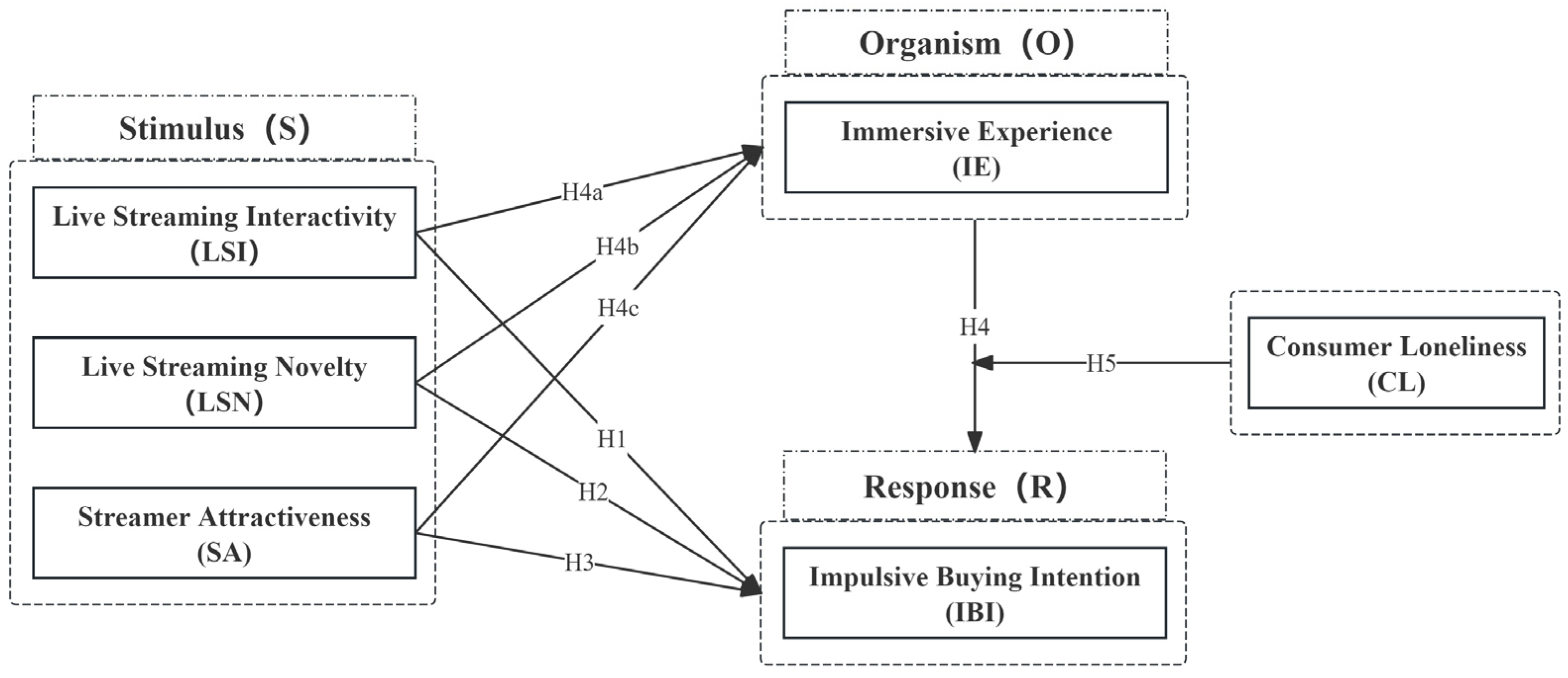
Based on the above literature review and the S–O–R theoretical framework, this paper constructs a mediation model of “live-streaming situational characteristics–immersive experience–impulsive purchase intention” and incorporates consumer loneliness as a moderating variable. The research model is shown in Figure 1.

2.3.1. Effects of Live-Streaming Contextual Features on Impulsive Buying

Drawing on prior research and considering the common characteristics of live shopping, this study extracts three key dimensions of live-streaming situational features—socially driven, stimulus-driven, and personification-driven—operationalized as live-stream interactivity, live-stream novelty, and streamer attractiveness, respectively.
(1)
Live-stream interactivity and impulse buying intention
Interactivity refers to the extent to which users can participate in and influence media content and its presentation in real time [13]. Cross-media studies have shown that highly interactive environments can enhance users’ sense of control, perceived information mastery, and emotional connection [14], thereby increasing pleasure and trust while reducing decision uncertainty [15]. In live shopping, interactive formats such as bullet-screen comments, real-time Q&A, personalized shout-outs, and tailored recommendations help foster parasocial relationships and social presence. Research in information systems and marketing has found that such interactions not only alleviate consumers’ concerns about information asymmetry in online shopping but also promote impulsive decision-making through emotional arousal and entertaining experiences [16]. Therefore, we propose the following:
H1: 
Live-stream interactivity has a significant positive effect on consumers’ impulse buying intention.
(2)
Live-stream novelty and impulse buying intention
Novelty refers to the degree of uniqueness, freshness, and distinctiveness perceived by individuals regarding a particular object or experience. In an era of information overload and scarce consumer attention, novelty serves as the “first key” to capturing users’ minds. Wu et al. found that the entertainment value of live streams—which inherently contains the pleasure brought by novelty—is an important antecedent attracting consumers to continue watching and to develop purchase intentions [17]. Hilvert-Bruce et al. pointed out that live-streaming platforms can effectively enhance users’ exploratory motivation and enthusiasm for participation by continuously innovating their content and modes of interaction [18]. Novel live-stream content not only satisfies consumers’ curiosity but also stimulates their psychological need for new experiences [19]. Accordingly, we propose the following hypothesis:
H2: 
Live-stream novelty has a significant positive effect on consumers’ impulse buying intention.
(3)
Streamer attractiveness and impulse buying intention
The core of live commerce revolves around the “streamer” as a personalized focal node. Streamer attractiveness is a multidimensional construct that extends far beyond mere physical appearance. According to classical communication theories, it typically comprises the following three dimensions: physical attractiveness, social attractiveness, and task attractiveness [20]. In the context of live streaming, streamer attractiveness is a pivotal variable shaping consumers’ attitudes and behaviors. First, the streamer’s physical attractiveness remains an important factor influencing viewers’ initial attention. Based on empirical analyses of major live-streaming platforms in China, Tang et al. found that physical attractiveness has a significant positive effect on users’ first clicks and short-term viewing duration, but its impact on long-term loyalty is limited [21]. Second, the streamer’s professional competence and content innovativeness become key drivers of attractiveness. Liu et al. pointed out that professionalism in content planning, presentation skills, and knowledge delivery can significantly enhance viewers’ sense of identification and trust, thereby strengthening their attachment to the platform [22]. Accordingly, we propose the following hypothesis:
H3: 
Streamer attractiveness has a direct and positive effect on consumers’ impulse buying intention.

2.3.2. Immersive Experience and Impulse Purchase Intention

Flow experience is a psychological state in which individuals are fully absorbed in an activity, and it is widely recognized as a key variable for explaining user behavior in digital environments. In the context of live-streaming e-commerce, flow is not a singular construct; rather, it is multidimensional, comprising cognitive, affective, and social facets. This study posits that flow experience serves as the core psychological bridge that transforms specific live-room functions and interactions into consumers’ impulsive buying intentions. Cognitive immersion is the heightened concentration of attention and deep allocation of cognitive resources while viewing a live stream. Research indicates that the platform’s technological enablement—such as high-definition video quality and low-latency streaming—is foundational to achieving cognitive immersion [14]. Affective immersion is the emotional resonance and connection that users develop with the live content, the streamer, and other viewers. Evidence suggests that the streamer’s emotional performance and authenticity are key triggers for affective immersion [23]. Social immersion is the most distinctive dimension in the live-streaming context, referring to users’ sense of belonging and interactive engagement as members of the live-room “community.” It arises from the deepening of parasocial relationships and viewers’ social presence. Collective interactions among viewers via bullet comments (danmu) and similar mechanisms can foster an “imagined community,” and this horizontal sense of social connectedness is crucial for sustaining long-term immersion [4].
In sum, cognitive, affective, and social immersion are not only core pathways for enhancing user experience on live-streaming platforms but may also play a mediating role in how the live-stream environment shapes consumers’ impulsive buying intentions. Accordingly, we propose the following hypotheses:
H4: 
Flow experience mediates the effect of live-stream contextual features on consumers’ impulsive buying intention.
H4a: 
Flow experience mediates the relationship between live-stream interactivity and consumers’ impulsive buying intention.
H4b: 
Flow experience mediates the relationship between live-stream novelty and consumers’ impulsive buying intention.
H4c: 
Flow experience mediates the relationship between streamer attractiveness and consumers’ impulsive buying intention.

2.3.3. Consumer Loneliness and Impulse Purchase Intention

In recent years, as the pace of life has accelerated and digital lifestyles have proliferated, consumer loneliness has emerged as a pivotal psychological variable influencing online behavior. Loneliness not only affects individuals’ emotional states but also significantly moderates their consumption decisions and behavioral responses in digital environments [24]. Research shows that consumers with higher levels of loneliness are more inclined to participate in highly interactive online activities—such as live streaming and social commerce—to satisfy social needs and a sense of emotional belonging [25]. Related empirical evidence further indicates that loneliness not only directly affects purchasing behavior but also significantly moderates the strength of the effect of shopping enjoyment on users’ impulsive buying intention [26]. In other words, lonelier consumers are more likely to experience flow when confronted with the rich interactive and social cues of live-streaming platforms, thereby further stimulating impulsive buying intentions. Accordingly, based on the foregoing analysis, this study proposes the following hypotheses:
H5: 
Consumer loneliness moderates the pathways through which live-stream contextual features influence flow experience and impulsive buying intention.
H5a: 
Consumer loneliness moderates the pathway through which live-stream interactivity influences flow experience and impulsive buying intention.
H5b: 
Consumer loneliness moderates the pathway through which live-stream novelty influences flow experience and impulsive buying intention.
H5c: 
Consumer loneliness moderates the pathway through which streamer attractiveness influences flow experience and impulsive buying intention.

3. Research Methods and Data Sources

3.1. Data-Analytic Techniques and Research Procedure

This study adopts a mixed analytical strategy that combines structural equation modeling (SEM) with fuzzy-set qualitative comparative analysis (fsQCA). This combination is not a mere technical juxtaposition but is grounded in a nuanced understanding of the complexity of consumer decision-making, aiming—through the dual logic of “mechanism testing–pattern identification”—to achieve methodological triangulation and theoretical complementarity. First, conventional SEM analysis focuses on examining the net effects among variables and their linear transmission paths. In this study, SEM is used to validate, at a macro level, the general influence mechanism of live-stream situational characteristics on impulsive purchase intention, with particular emphasis on testing the theoretical validity of immersive experience as a core mediator. It should be noted that, although immersive experience is theoretically multidimensional—encompassing cognitive, affective, and social attributes—given the instantaneous and holistic nature of live-stream shopping decisions, this study models it in SEM as a single higher-order global construct, so as to accurately capture its overall driving effect as a psychological state on behavioral responses. This addresses the foundational question of “which factors are important in aggregate, and how they operate through an overall psychological mechanism.”
However, impulsive buying in live-stream shopping contexts is often characterized by strong contextual dependence and causal asymmetry; that is, the combinations of causes that lead to high impulsive buying are not simply the inverse of those that lead to low impulsive buying. SEM is limited in its ability to capture such complex conjunctural causation and equifinality. Therefore, this study introduces fsQCA to provide the following critical incremental insights: fsQCA not only complements the verification of the effects of individual factors but also transcends SEM’s average-effect perspective by identifying which specific configurations of antecedent conditions—under high loneliness or particular interaction contexts—can trigger high-intensity impulsive purchase intentions.
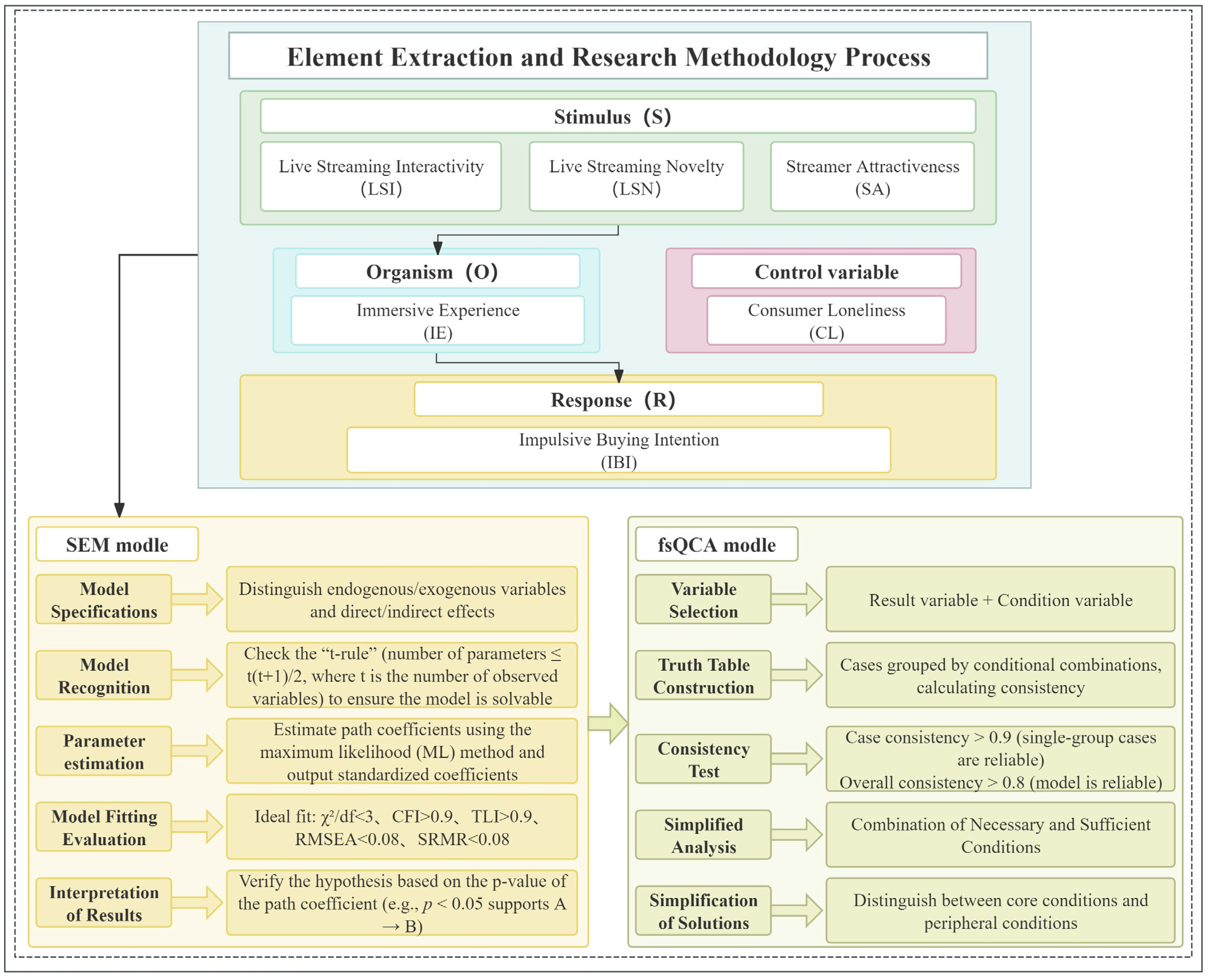
In short, SEM establishes the robustness of the theoretical model and its core causal chain, whereas fsQCA further uncovers the diverse pathways through which different types of consumers arrive at purchasing behavior. The integration of the two methods enables the study to move from “average trends” to “segmented patterns,” thereby offering a more multi-faceted and fine-grained theoretical explanation than either method alone. The methodological procedure of this study is shown in Figure 2.

3.2. Questionnaire Design

This study collected data using a structured questionnaire, the content of which closely revolves around the core variables of immersive experience, live-streaming characteristics, and impulse purchase intention. The questionnaire is divided into two main parts as follows: (1) Demographic characteristics of respondents, including gender, age, educational level, average monthly consumption, frequency of watching live streams, and frequency of purchases made via live streams, so as to describe the sample structure and enable subsequent group analyses. (2) Measurement items for core variables, covering primary dimensions such as live-stream interactivity, live-stream novelty, streamer attractiveness, immersive experience, consumer loneliness, and impulse purchase intention, as well as their corresponding secondary explanatory variables. All measurement items adopt a five-point Likert scale (1 = “strongly disagree,” 5 = “strongly agree”). The specific measurement contents are shown in Table 1.
To ensure the scientific rigor and validity of the questionnaire, all measurement items were developed with reference to the classic literature and established scales in the fields of marketing, consumer psychology, and human–computer interaction and were appropriately adapted and localized in light of the unique context and consumption culture of China’s live-streaming e-commerce. The initial draft of the questionnaire was reviewed by experts in marketing, psychology, and e-commerce to ensure its professional quality and applicability. Subsequently, a small-scale pilot test was conducted with consumers who have extensive experience in live-stream shopping. Based on their feedback, we refined and revised items that were ambiguously worded or difficult to understand. The finalized questionnaire features a well-structured design and scientifically grounded content and is able to comprehensively capture the actual status of core variables such as consumers’ immersive experience, psychological state, and impulse purchase intention in live-streaming contexts, thereby providing a solid data foundation for subsequent empirical analyses and model testing.

3.3. Data Collection and Procedure

The core of this study is to examine consumers’ impulse buying behavior in live-streaming contexts; therefore, the target respondents are defined as Chinese consumers who have watched live streams and made purchases within the past six months. This criterion ensures that all respondents possess direct experience and clear awareness of the phenomenon, thereby providing valid feedback for subsequent variable measurement. Given the large size and inaccessibility of the overall population, this study adopts a combination of convenience sampling and purposive sampling within the framework of non-probability sampling. Specifically, questionnaires were primarily distributed via “Wenjuanxing,” one of China’s largest online survey platforms. With its extensive sample pool, the platform can preliminarily screen respondents based on basic demographic characteristics (e.g., age and educational level) and behavioral characteristics (e.g., frequency of watching live streams), thus enabling purposive sampling. At the same time, to enhance the diversity of sample sources, we additionally disseminated the questionnaire via social media platforms and e-commerce shopping communities, using convenience sampling to reach a larger number of eligible potential respondents.
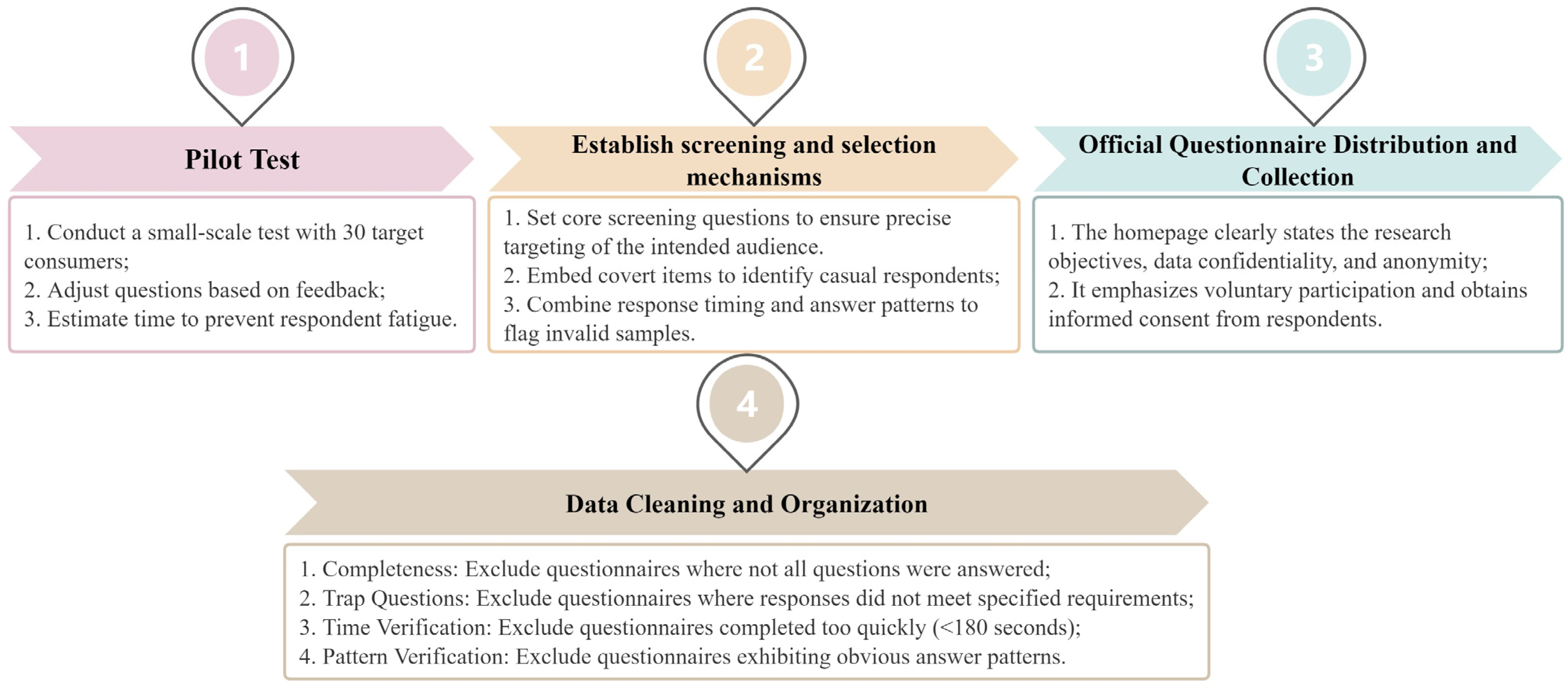
Data collection was conducted from 1 May to 31 May 2025, spanning one month. To ensure data quality, we implemented a rigorous collection procedure, as illustrated in Figure 3. Ultimately, among the 548 returned questionnaires, 481 were valid, yielding an effective response rate of 87.8%. These high-quality data provide a solid foundation for subsequent model testing and in-depth analysis using SEM and fsQCA. In the next step, we will perform descriptive statistical analysis of the demographic characteristics of the valid sample.

4. SEM Analysis

4.1. Descriptive Statistics

This study obtained a total of 481 valid questionnaires through online channels. Females account for 65.5% of the sample and males for 34.5%, which is broadly consistent with the “female-dominated” consumption structure reported in existing research on live-streaming e-commerce. The sample is mainly composed of young people as follows: respondents aged 18–25 account for 33.1%, those aged 26–35 for 45.3%, and those aged 36 and above for 21.6%, indicating that live-stream shopping is primarily concentrated among “digital natives” and individuals in the early to middle stages of their careers. The overall educational level is relatively high, with more than 80% holding an associate degree or above; specifically, 62.8% hold a bachelor’s degree and 17.7% hold a master’s degree or above. This is conducive to ensuring respondents’ understanding of abstract concepts such as immersive experience and loneliness, as well as the quality of their responses.
With respect to consumption and live-streaming behavior, monthly expenditure is mainly concentrated in the range of CNY 3001–8000 (59.0%), suggesting that the sample possesses a certain level of disposable income and actual purchasing power. User behavior exhibits strong stickiness as follows: respondents who watch live streams 3–5 times per week or almost every day together account for more than 60%; those who make purchases “2–3 times per month” or “about once per week” are close to two-thirds. Overall, the sample is dominated by active users characterized by high-frequency viewing and continuous purchasing. This not only aligns with the typical profile of core users in current live-streaming e-commerce but also maintains a certain degree of heterogeneity in terms of gender, age, and consumption capacity, thereby providing a representative and discriminative empirical basis for subsequent path testing and configurational comparison using SEM and fsQCA.

4.2. Reliability and Validity Testing

To ensure the scientific rigor of the measurement instruments and the reliability of the data, this study conducted systematic reliability and validity tests on the questionnaire scales. First, the quality of the measurement model was evaluated, with a focus on the reliability and convergent validity of each latent variable. Reliability primarily reflects the consistency and stability of measurement results, whereas validity assesses the extent to which the measurement instruments accurately capture the theoretical constructs. SPSS 26.0 and AMOS 24.0 were used for data analysis. Reliability was examined using Cronbach’s alpha (Cronbach’s α) and composite reliability (CR), while convergent validity was assessed via the average variance extracted (AVE).
As shown in Table 2, the Cronbach α values for all variables range from 0.786 to 0.878 and the CR values from 0.789 to 0.878, all well above the recommended threshold of 0.70, indicating high internal consistency and good reliability of the measurement items for each variable. In addition, the AVE values for all variables fall between 0.553 and 0.706, exceeding the 0.50 cutoff, suggesting that each variable explains a substantial proportion of the variance in its measurement items and exhibits strong convergent validity. Overall, the reliability and validity indicators meet high academic standards and can effectively support the theoretical modeling and empirical analyses conducted in this study.
According to the results in Table 3, the KMO value is 0.901, which is well above the commonly accepted threshold of 0.8, indicating strong correlations among variables and good suitability of the data for factor analysis. At the same time, the chi-square value of Bartlett’s test of sphericity is 4539.569 with 153 degrees of freedom, and the p-value is 0.000, which is significantly lower than 0.05. This further suggests that the correlation matrix is not an identity matrix and that there are significant correlations among the variables. Therefore, the KMO and Bartlett test results both support subsequent factor analysis, demonstrating that the questionnaire data possess good structural validity and can provide a reliable basis for further measurement model and structural model analyses.
Table 4 presents the results of discriminant validity tests among the latent variables based on the Fornell–Larcker criterion, indicating that the latent variables exhibit good distinctiveness and meet the basic requirements for discriminant validity in structural equation modeling. In addition, Table 5 further examines discriminant validity using the heterotrait–monotrait ratio (HTMT), with all HTMT values falling below the threshold of 0.85, thereby providing additional evidence for the distinctiveness among the latent variables. The application of these two complementary methods not only enhances the rigor of the study but also reflects a multidimensional control over the measurement structure of the latent constructs. Taken together, the Fornell–Larcker criterion and HTMT assessment results suggest that the scales employed in this study achieve satisfactory levels of discriminant validity and convergent validity required for academic research, thus providing a solid measurement foundation for subsequent structural equation model analyses.

4.3. Structural Model Evaluation

According to the results in Table 6, all fit indices of the confirmatory factor analysis (CFA) model reach satisfactory standards, indicating good model fit. Regarding absolute fit indices, the CMIN/DF is 1.707, lower than the threshold of 3; GFI and AGFI are 0.954 and 0.934, respectively, both above 0.9; and RMSEA is 0.038, below 0.05, all of which demonstrate a high degree of fit between the model and the data. For incremental fit indices, the values of NFI, TLI, IFI, CFI, and RFI are all greater than 0.9—specifically, 0.956, 0.976, 0.981, 0.981, and 0.943—further confirming the excellent goodness of fit of the model. The parsimony fit indices PCFI, PNFI, and PGFI are 0.769, 0.749, and 0.669, respectively, all exceeding 0.5, suggesting that the model achieves good parsimony while maintaining an adequate level of fit. In summary, all fit indices meet or surpass the recommended criteria, indicating that the CFA model possesses sound structural validity and provides a solid foundation for subsequent structural equation modeling analyses.

4.4. Hypothesis Testing

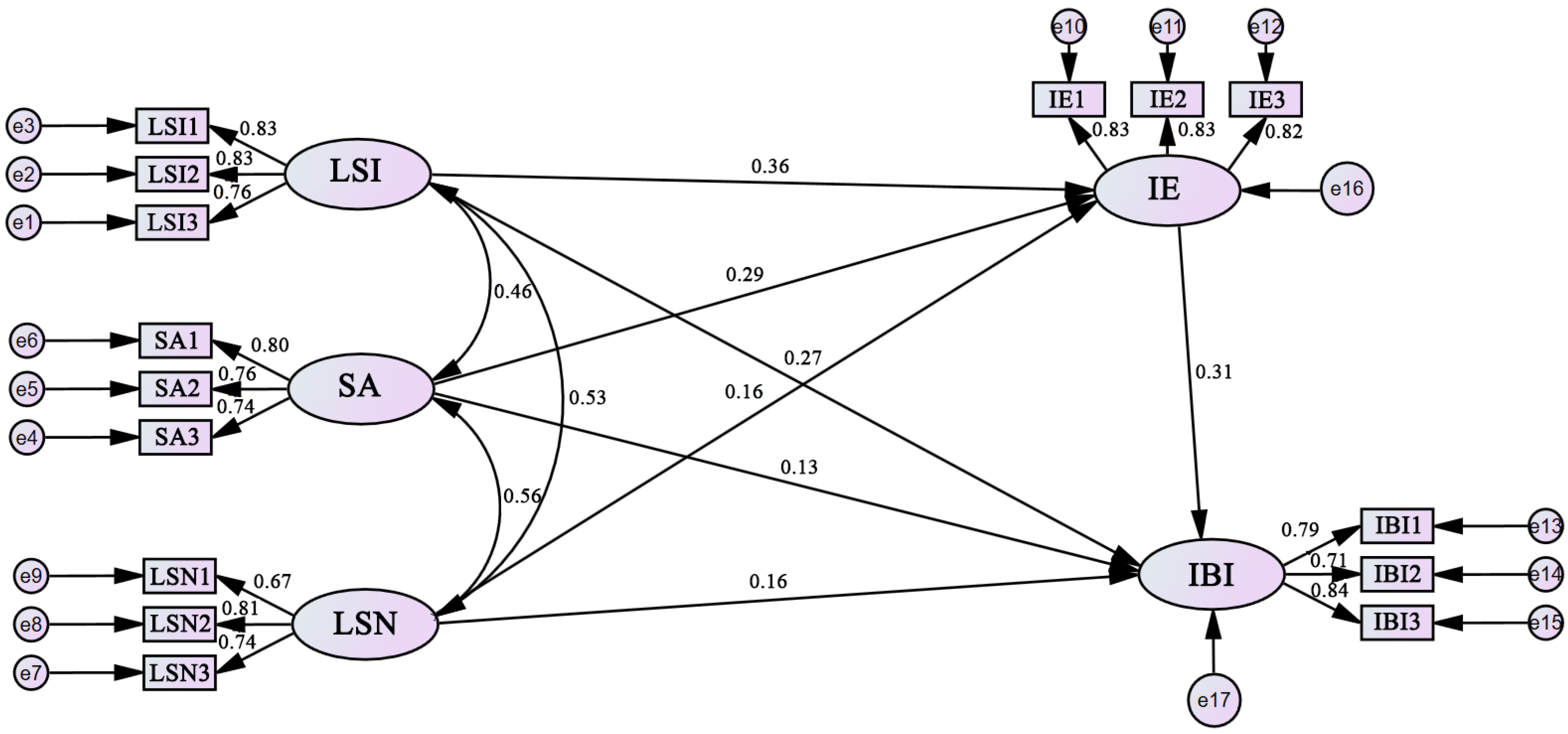
According to the model estimation results reported in Table 7 and Figure 4, all hypothesized paths are statistically supported, indicating significant relationships among the variables. Specifically, live-stream interactivity (LSI), live-stream novelty (LSN), streamer attractiveness (SA), and immersive experience (IE) all exert significant positive effects on impulse purchase intention (IBI) (H1: β = 0.270, p < 0.001; H2: β = 0.178, p = 0.010; H3: β = 0.153, p = 0.031; H4: β = 0.268, p < 0.001), suggesting that multidimensional experiential factors in live-streaming contexts can effectively trigger consumers’ impulse buying behavior. In addition, live-stream interactivity (H4a: β = 0.412, p < 0.001), live-stream novelty (H4b: β = 0.203, p = 0.012), and streamer attractiveness (H4c: β = 0.387, p < 0.001) all have significant positive impacts on immersive experience, further confirming the core mediating role of immersive experience in live-stream consumption.
This study not only systematically verifies the direct effects of live-stream interactivity, live-stream novelty, and streamer attractiveness on impulse purchase intention, but it also reveals the bridging role of immersive experience as a mediating variable. These findings enrich theoretical explanations of consumer psychology and behavioral mechanisms in digital consumption scenarios and highlight the synergistic stimulating effect of multidimensional live-stream experiences on consumers’ impulse buying. In particular, the mediating role of immersive experience provides a theoretical basis and empirical support for the optimization of live-stream marketing strategies and the design of personalized experiential journeys.

4.5. Mediation Analysis

Based on the mediation analysis results reported in Table 8, this study conducted a systematic examination of the mediating effects of immersive experience (IE) on the relationships between live-stream interactivity (LSI), live-stream novelty (LSN), streamer attractiveness (SA), and impulse purchase intention (IBI). The findings indicate that the indirect effects along all three mediating paths are significant (p < 0.05), and their confidence intervals do not include zero, suggesting that immersive experience exerts a significant mediating role between the above variables and impulse purchase intention. At the same time, both the direct effects and total effects reach statistical significance, implying that immersive experience not only partially mediates the impact of live-stream characteristics on impulse purchase intention, but that there also exist direct effect paths. The innovation of this study lies in the introduction of immersive experience as a mediating variable for the first time, systematically uncovering the mechanisms through which multidimensional live-stream characteristics influence consumers’ impulse purchase intentions. This enriches theoretical explanations of user behavior in the field of live-streaming e-commerce and provides new empirical evidence for enhancing the effectiveness of live-stream marketing.

4.6. Moderation Analysis

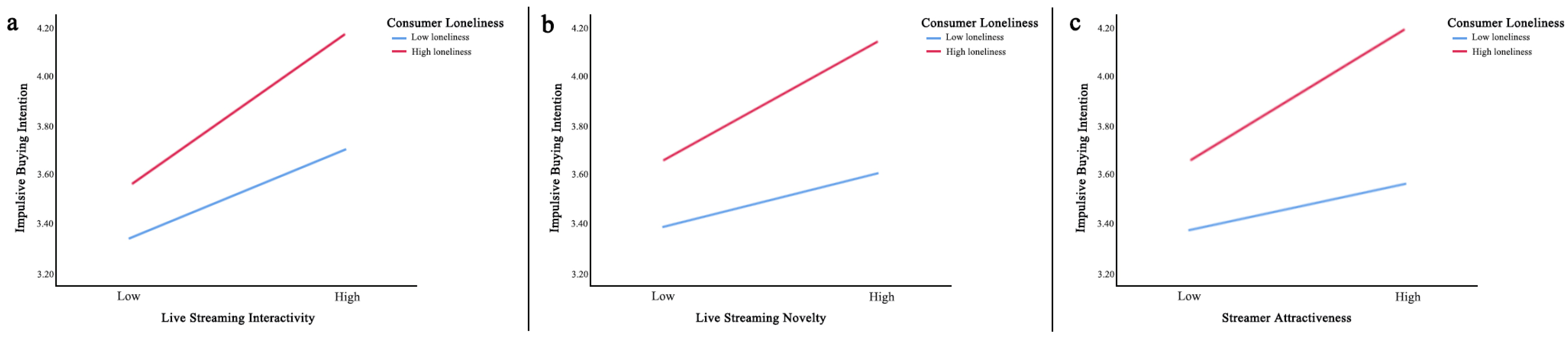
According to the moderation analysis results reported in Table 9 and Figure 5, consumer loneliness (CL) exhibits significant moderating effects on the paths through which live-stream interactivity (LSI), live-stream novelty (LSN), and streamer attractiveness (SA) influence impulse purchase intention (IBI) via immersive experience (IE). Specifically, the indirect effect of the interaction term between CL and LSI on IBI via IE is 0.067 (T = 2.072, 95% confidence interval [0.003, 0.131]); the indirect effect of the interaction term between CL and LSN is 0.080 (T = 2.283, 95% confidence interval [0.011, 0.148]); and the indirect effect of the interaction term between CL and SA is 0.106 (T = 2.595, 95% confidence interval [0.026, 0.187]). None of the confidence intervals for these moderating effects include zero, indicating that all moderating effects are statistically significant. This study is the first to systematically reveal consumers’ psychological moderation mechanisms in live-stream consumption contexts. The results show that consumer loneliness not only directly affects impulse purchase intention but also amplifies the indirect effects of live-stream interactivity, novelty, and streamer attractiveness on impulse purchase intention via immersive experience. These findings enrich the theoretical understanding of individual-difference moderation effects in the domain of digital consumption behavior and underscore the critical role of socio-psychological factors in the live-streaming economy.

5. Fuzzy-Set Qualitative Comparative Analysis

5.1. Variable Selection and Calibration

In fuzzy-set qualitative comparative analysis (fsQCA), continuous variables must first be transformed into set membership scores ranging from 0 to 1. Following the recommendations of Ragin [27] and Fiss [28], this study combines theoretical judgment with the empirical distribution of the sample and adopts the direct calibration method. For each condition and outcome variable, three qualitative anchors are specified as follows: the 95th, 50th, and 5th percentiles of the sample are used as the thresholds for full membership (membership = 0.95), the crossover point (membership = 0.50), and full non-membership (membership = 0.05), respectively. The crossover point represents the “maximum zone of ambiguity” in membership, that is, the critical value at which cases shift from “non-membership” to “membership.”
Taking the outcome variable impulsive purchase intention (IBI) as an example (Table 10), its crossover point is set at an original score of 3.67. Cases with a mean score higher than 3.67 are assigned to the “high impulsive purchase intention set” (membership > 0.5), whereas cases with a mean score lower than 3.67 are assigned to the “non-high impulsive purchase intention set” (membership < 0.5). The corresponding thresholds for full membership and full non-membership delineate the substantive boundaries between the “high” and “low” levels of this construct.

5.2. Analysis of Necessary Conditions

Table 11 presents the necessity analysis for each condition variable to examine whether any single condition is necessary for high impulsive purchase intention. The results show that the consistency values for necessity for all conditions (LSI, LSN, SA, IE, and CL) do not exceed the commonly used threshold of 0.80; even the highest values—for streamer attractiveness (SA) and immersive experience (IE)—are only 0.723 and 0.725, respectively. Therefore, it can be concluded that no single condition constitutes a necessary condition for high impulsive purchase intention. The coverage values of all conditions are around 0.81, indicating that although they each cover a large proportion of the high-outcome cases, they are still insufficient to be regarded as “indispensable” prerequisites. The consistency and coverage of the logically negated conditions (e.g., ~LSI, ~LSN) are all lower than those of the corresponding positive conditions, further suggesting that the formation of high impulsive purchase intention is characterized by multiplicity and complexity and is unlikely to be determined by any single factor.

5.3. Sufficiency Analysis

Table 12 presents four sufficient configurations (NH1–NH4) for high impulsive purchase intention (IBI). The results show that NH1, NH2, and NH3 all take streamer attractiveness (SA) and immersive experience (IE) as core conditions, indicating that the combination of “streamer charisma + high immersion” constitutes an important pathway driving high impulsive purchasing, with NH2 and NH3 further incorporating live-stream novelty (LSN). By contrast, NH4 takes live-stream interactivity (LSI) and consumer loneliness (CL) as core conditions, suggesting that, in addition to the “streamer charisma pathway,” there also exists an alternative pathway characterized by “high interaction + high loneliness.” The consistency values of all configurations exceed 0.92, and the overall solution consistency is well above the commonly used threshold of 0.75, indicating that these configurations have strong explanatory power for high impulsive purchase intention. The overall solution coverage is approximately 0.61, meaning that the four configurations collectively account for about 61% of the high impulsive purchase cases. The raw coverage and unique coverage reflect, respectively, the overall and unique explanatory scope of each configuration. Overall, high impulsive purchase intention exhibits a clear multi-path feature and should be understood in terms of combinations of multiple factors rather than single variables.

6. Discussion and Conclusions

6.1. Discussion

This study systematically verifies the effects of live-stream interactivity (LSI), live-stream novelty (LSN), and streamer attractiveness (SA) on consumers’ impulsive purchase intention (IBI) and reveals the critical mediating role of immersive experience (IE). Consistent with prior live-streaming e-commerce research showing that interactivity, novelty, and other features can enhance immersion and purchase propensity [29,30], the theoretical advancement of this study lies in the following: within the stimulus–organism–response (S–O–R) framework, it no longer treats multiple internal psychological states in a parallel manner, but it instead defines “immersive experience” as a core mechanism integrating cognitive focus, emotional engagement, and attenuation of time perception, thereby explaining how external stimuli are transformed into impulsive purchasing responses.
This study innovatively finds that consumer loneliness (CL) significantly amplifies the indirect effect of live-stream features on purchase intention via immersive experience. This not only supports the deficiency-compensation hypothesis in uses-and-gratifications theory [31], but it also more deeply uncovers the socio-psychological nature of live-streaming e-commerce; for highly lonely individuals, the live-stream room is not merely a shopping venue, but it may also serve functions of psychological compensation and social connection. However, this finding also entails important ethical implications, outlined as follows: if highly immersive mechanisms on live-stream platforms lack appropriate guidance, they may exert unintended negative impacts on highly lonely groups. Because such users strongly crave social interaction, they may more readily relax rational defenses under algorithmic recommendation and parasocial interaction, thereby engaging in irrational compensatory consumption. In addition, while discussing the effectiveness of live-stream marketing, attention should also be paid to its potential impact on psychologically vulnerable groups, which provides an empirical basis for subsequent research on digital responsibility and consumer well-being.
Furthermore, the configurational analysis based on fsQCA further reveals the causal complexity and equifinality of impulsive purchases in live-streaming contexts. The results indicate that “streamer attractiveness + immersive experience” appears as a core condition in multiple paths, suggesting that consumers may develop stable parasocial relationships through identification with a streamer’s personality and values, and, within an immersive context, make spur-of-the-moment purchase decisions that go with the flow. This is highly consistent with existing research on the influencer economy and fan-driven consumption [32]. A path characterized by “high interactivity + high loneliness” as core conditions—without relying on high streamer attractiveness—is likewise sufficient to produce high impulsive purchasing. This suggests that some consumers may primarily obtain emotional comfort and a sense of community belonging through frequent bullet-screen comments, instant replies, and feelings of group interaction, and they may subsequently make purchase decisions under the sway of collective emotions and atmosphere.
At the practical and ethical levels, on the one hand, from the perspective of platforms and merchants, different configurational paths can be directly translated into differentiated operational strategies as follows: top-tier streamers can build “parasocial–immersion” live-stream rooms centered on personal charisma and situational storytelling, whereas emerging or less charismatic streamers can increase interaction density and strengthen the sense of community. On this basis, algorithmic recommendation can more accurately match different users with live-stream scenarios better aligned with their psychological needs, thereby improving retention and conversion. On the other hand, precisely this efficient content-matching mechanism, together with the amplified effect of immersion among highly lonely individuals, raises concerns about over-immersion. This implies that if platforms single-mindedly pursue conversion rates, they may inadvertently intensify vulnerable groups’ tendencies toward irrational consumption. Therefore, it is recommended that platforms and regulators incorporate mechanisms for identifying and protecting susceptible users into algorithm design and encourage the development of live-streaming formats oriented toward emotional support and quality of companionship rather than sheer transaction volume. Future research could, across different national cultures and social commerce contexts, further examine the dynamic relationships among algorithmic recommendation, immersive experience, and long-term well-being, thereby providing stronger empirical support for balancing effective persuasion with digital well-being.

6.2. Research Limitations and Future Directions

Despite the fact that this study systematically uncovers the mechanisms through which live-stream interactivity, live-stream novelty, streamer attractiveness, immersive experience, and consumer loneliness influence impulsive purchase intention, and it enriches the theoretical account via multi-path configurational analysis, several limitations remain and call for further refinement. First, the data are drawn mainly from live-streaming e-commerce users in mainland China. This specific institutional and cultural context may shape users’ understanding of and responses to interactivity, immersive experience, and streamer attractiveness, thereby constraining the cross-cultural external validity of the conclusions. At the level of mechanisms, what is highly specific and contextually salient in Chinese live-streaming e-commerce is how price incentives, limited-time promotions, and fan identification—under fan culture and an intensive marketing tempo—are amplified into “herd-like” impulsive purchasing. By contrast, from an S–O–R perspective, the basic logic of treating live-stream situational features as stimuli, immersive experience as the psychological bridge linking external stimuli and impulsive purchase, and social emotions such as loneliness as amplifiers should, in principle, be extendable to other live or social commerce contexts, even though the concrete forms of cues, the strength of their effects, and their ethical implications may differ across cultures and platform institutions. Future research could conduct multi-site or cross-cultural comparative studies in different countries and cultural settings to systematically test the applicability, stability, and potential cultural moderating effects of the present model and configurational pathways.
Second, this study relies on cross-sectional, self-report survey data, with all variables measured at a single time point from the same source. This makes it difficult to fully rule out common method bias, self-report bias, and social desirability effects, and it prevents a strict verification of the temporal ordering required for causal inference. Although we adopted several control measures in questionnaire design and data processing—such as anonymous responses and random presentation of items—future studies should integrate multi-source data, experimental manipulations, and longitudinal designs to enhance the rigor of causal inference and reduce the impact of self-report bias. Moreover, this paper does not further decompose the multidimensional structure of immersive experience, nor does it distinguish the potentially different roles of various types of loneliness in live-stream contexts. As AI streamers, virtual avatars, VR, and other emerging technologies increasingly penetrate live-streaming e-commerce, subsequent research could, in richer technical settings, combine psychometric assessment, behavioral data, and experimental methods to more finely delineate the complex relationships among different forms of immersive experience, loneliness, and parasocial relationships. This would provide more targeted theoretical and practical support for personalized live-streaming marketing strategies and the protection of users’ psychological well-being.

Author Contributions

Conceptualization, Y.W. (Yonggang Wang) and H.T.; methodology, H.T.; software, H.T.; validation, Y.W. (Yonggang Wang) and H.T.; formal analysis, Y.W. (Yonggang Wang); investigation, H.T.; resources, H.T.; data curation, H.T.; writing—original draft preparation, Y.W. (Yonggang Wang); writing—review and editing, H.T.; visualization, J.Z. and Y.W. (Yubo Wang); supervision, H.T.; project administration, X.L.; funding acquisition, X.L. All authors have read and agreed to the published version of the manuscript.

Funding

The authors gratefully acknowledge 2024 Shanghai Art Science Planning Project: Research on Regeneration Design of Shanghai Rural Landscape under the Perspective of ‘Beautiful China’ Construction (Project Number: 2024-G-068); 2025 Applied Arts Research Project: Research on the Innovation System for Inheritance and Revitalization of Rural Applied Arts from a Cultural Gene Perspective (Project Number: CNACS2025-A-II-1); the support provided by the Fundamental Research Funds for the Central Universities (Project Number: CUSF-DH-T-2025012).

Institutional Review Board Statement

The study was conducted in accordance with the Declaration of Helsinki and approved by the Donghua University Ethics Committee on Science and Technology (protocol code is RLSSZYJ202509010048 and date of approval is 10 February 2025).

Informed Consent Statement

Informed consent has been obtained from all subjects to publish this paper.

Data Availability Statement

Data will be provided upon request.

Acknowledgments

The author extend their gratitude to the judging experts and all members of the team for their insightful advice.

Conflicts of Interest

The authors declare no conflict of interest.

References

  1. Lu, Y.; Siegfried, P. E-Commerce Live Streaming—An Emerging Industry in China and a Potential Future Trend in the World. ACC J. 2021, 27, 73–89. [Google Scholar] [CrossRef]
  2. Shi, W.; Li, F.; Hu, M. The Influence of Atmospheric Cues and Social Presence on Consumers’ Impulse Buying Behaviors in e-Commerce Live Streaming. Electron. Commer. Res. 2025, 25, 3325–3353. [Google Scholar] [CrossRef]
  3. Li, M.; Wang, Q.; Cao, Y. Understanding Consumer Online Impulse Buying in Live Streaming E-Commerce: A Stimulus-Organism-Response Framework. Int. J. Environ. Res. Public Health 2022, 19, 4378. [Google Scholar] [CrossRef]
  4. Huang, Z.; Zhu, Y.; Hao, A.; Deng, J. How Social Presence Influences Consumer Purchase Intention in Live Video Commerce: The Mediating Role of Immersive Experience and the Moderating Role of Positive Emotions. J. Res. Interact. Mark. 2022, 17, 493–509. [Google Scholar] [CrossRef]
  5. Zou, M.; Mu, D. Bullet-Screen Engagement in Videos and Deindividualized Online Behavior: The Chain Mediating Role of Belonging and Loneliness. Curr. Psychol. 2024, 43, 19162–19170. [Google Scholar] [CrossRef]
  6. Rook, D.W. The Buying Impulse. J. Consum. Res. 1987, 14, 189–199. [Google Scholar] [CrossRef]
  7. Qasim, I. Omnichannel Touchpoints and Spontaneous Purchases: A Study on the Impulse Buying Behavior of Modern Consumers. Euromid J. Bus. Tech-Innov. 2024, 3, 1–10. [Google Scholar] [CrossRef]
  8. Hao, S.; Huang, L. The Persuasive Effects of Scarcity Messages on Impulsive Buying in Live-Streaming e-Commerce: The Moderating Role of Time Scarcity. Asia Pac. J. Mark. Logist. 2024, 37, 441–459. [Google Scholar] [CrossRef]
  9. Ou, C.-C.; Chen, K.-L.; Tseng, W.-K.; Lin, Y.-Y. A Study on the Influence of Conformity Behaviors, Perceived Risks, and Customer Engagement on Group Buying Intention: A Case Study of Community E-Commerce Platforms. Sustainability 2022, 14, 1941. [Google Scholar] [CrossRef]
  10. Mehrabian, A.; Russell, J.A. An Approach to Environmental Psychology; The MIT Press: Cambridge, MA, USA, 1974; 266p, ISBN 978-0-262-13090-5. [Google Scholar]
  11. Huo, C.; Wang, X.; Sadiq, M.W.; Pang, M. Exploring Factors Affecting Consumer’s Impulse Buying Behavior in Live-Streaming Shopping: An Interactive Research Based upon SOR Model. Sage Open 2023, 13, 21582440231172678. [Google Scholar] [CrossRef]
  12. Ismagilova, E.; Slade, E.L.; Rana, N.P.; Dwivedi, Y.K. The Effect of Electronic Word of Mouth Communications on Intention to Buy: A Meta-Analysis. Inf. Syst. Front. 2020, 22, 1203–1226. [Google Scholar] [CrossRef]
  13. Liu, Y.; Shrum, L.J. What Is Interactivity and Is It Always Such a Good Thing? Implications of Definition, Person, and Situation for the Influence of Interactivity on Advertising Effectiveness. J. Advert. 2002, 31, 53–64. [Google Scholar] [CrossRef]
  14. Sun, Y.; Shao, X.; Li, X.; Guo, Y.; Nie, K. How Live Streaming Influences Purchase Intentions in Social Commerce: An IT Affordance Perspective. Electron. Commer. Res. Appl. 2019, 37, 100886. [Google Scholar] [CrossRef]
  15. Chen, C.-C.; Lin, Y.-C. What Drives Live-Stream Usage Intention? The Perspectives of Flow, Entertainment, Social Interaction, and Endorsement. Telemat. Inform. 2018, 35, 293–303. [Google Scholar] [CrossRef]
  16. Xu, X.; Wu, J.-H.; Li, Q. What Drives Consumer Shopping Behavior in Live Streaming Commerce? J. Electron. Commer. Res. 2020, 21, 144–167. [Google Scholar]
  17. Wu, Y.; Huang, H. Influence of Perceived Value on Consumers’ Continuous Purchase Intention in Live-Streaming E-Commerce—Mediated by Consumer Trust. Sustainability 2023, 15, 4432. [Google Scholar] [CrossRef]
  18. Hilvert-Bruce, Z.; Neill, J.T.; Sjöblom, M.; Hamari, J. Social Motivations of Live-Streaming Viewer Engagement on Twitch. Comput. Hum. Behav. 2018, 84, 58–67. [Google Scholar] [CrossRef]
  19. Abdhy; Eliana, R.; Fadillah, A. Entertaining to Buy: Exploring the Role of Immersion in Live Streaming and Its Influence on Purchase Intention in Student Social Commerce. Pena Justisia Media Komun. Dan Kaji. Huk. 2025, 24, 6528–6543. [Google Scholar] [CrossRef]
  20. McCroskey, J.C.; McCain, T.A. The Measurement of Interpersonal Attraction. Speech Monogr. 1974, 41, 261–266. [Google Scholar] [CrossRef]
  21. Tang, X.; Hao, Z.; Li, X. The Influence of Streamers’ Physical Attractiveness on Consumer Response Behavior: Based on Eye-Tracking Experiments. Front. Psychol. 2024, 14, 1297369. [Google Scholar] [CrossRef]
  22. Liu, X.; Wang, D.; Gu, M.; Yang, J. Research on the Influence Mechanism of Anchors’ Professionalism on Consumers’ Impulse Buying Intention in the Livestream Shopping Scenario. Enterp. Inf. Syst. 2023, 17, 2065457. [Google Scholar] [CrossRef]
  23. Chi, F.; Wang, H.; Wang, D.; Hu, T. Feeling in Sync: Exploring Emotional Contagions between Live Streamers and Viewers in Tourism Live Streaming. J. Travel Res. 2025, 472875251372454. [Google Scholar] [CrossRef]
  24. Huang, S.; Li, M. Consumer Loneliness: A Systematic Review and Research Agenda. Front. Psychol. 2023, 14, 1071341. [Google Scholar] [CrossRef] [PubMed]
  25. Peng, L.; Xia, X.; Su, X. The Effect of Consumer’s Loneliness on Impulse Buying in the Internet Era: A Model Based on Para-Social Interaction. In Proceedings of the 2020 2nd International Conference on Economic Management and Model Engineering (ICEMME), Chongqing, China, 20–22 November 2020; pp. 843–848. [Google Scholar]
  26. Le, M.T.H. Psychological Drivers of E-Impulsive Buying: Investigating the Mediating Role of Loneliness Coping Strategies in Fintech Adoption Contexts. Electron. Gov. Int. J. 2025, 21, 523–545. [Google Scholar] [CrossRef]
  27. Ragin, C.C. Redesigning Social Inquiry: Fuzzy Sets and Beyond; University of Chicago Press: Chicago, IL, USA, 2009; ISBN 978-0-226-70279-7. [Google Scholar]
  28. Fiss, P.C. Building Better Causal Theories: A Fuzzy Set Approach to Typologies in Organization Research. Acad. Manag. J. 2011, 54, 393–420. [Google Scholar] [CrossRef]
  29. Li, Q.; Zhao, C.; Cheng, R. How the Characteristics of Live-Streaming Environment Affect Consumer Purchase Intention: The Mediating Role of Presence and Perceived Trust. IEEE Access 2023, 11, 123977–123988. [Google Scholar] [CrossRef]
  30. Ma, X.; Jin, J.; Liu, Y. The Influence of Interpersonal Interaction on Consumers’ Purchase Intention under e-Commerce Live Broadcasting Mode: The Moderating Role of Presence. Front. Psychol. 2023, 14, 1097768. [Google Scholar] [CrossRef]
  31. Hu, M.; Zhang, M.; Wang, Y. Why Do Audiences Choose to Keep Watching on Live Video Streaming Platforms? An Explanation of Dual Identification Framework. Comput. Hum. Behav. 2017, 75, 594–606. [Google Scholar] [CrossRef]
  32. Li, S.; Zhang, Y.; Tang, Y.; Zhao, W.; Yu, Z. Impact Mechanisms of Consumer Impulse Buying in Accumulative Social Live Shopping: Considering Para-Social Relationship Moderating Role. J. Theor. Appl. Electron. Commer. Res. 2025, 20, 66. [Google Scholar] [CrossRef]
Figure 1. Research hypothesis diagram.
Jtaer 21 00068 g001
Figure 2. Research methodology flowchart.
Jtaer 21 00068 g002
Figure 3. Data collection flowchart.
Jtaer 21 00068 g003
Figure 4. Structural equation modeling diagram.
Jtaer 21 00068 g004
Figure 5. Moderating role of consumer loneliness in the relationship between live-stream contextual features and impulsive buying intention (a). moderating effect of consumer loneliness on the relationship between live-stream interactivity and impulsive buying intention; (b). moderating effect of consumer loneliness on the relationship between live-stream novelty and impulsive buying intention; and (c). moderating effect of consumer loneliness on the relationship between streamer attractiveness and impulsive buying intention).
Jtaer 21 00068 g005
Table 1. Questionnaire scale design.
Primary Dimension Secondary Explanatory Variable Questionnaire Item Description
Live-Streaming Interactivity
(LSI)
Interaction FrequencyThe number of interactions within a unit of time, serving as the quantitative basis for interactivity.
Interaction QualityThe effectiveness and relevance of interaction content, such as whether the streamer responds to questions in a targeted manner.
Interaction DepthWhether the interaction involves deeper communication, such as emotional exchange or sharing of personal experiences.
Live-Streaming Novelty
(LSN)
Content NoveltyWhether the live-streaming content is unique, interesting, or unexpected, e.g., cross-industry collaborations or scenario-based streaming.
Format NoveltyWhether the organizational format of the live stream is innovative, such as blind box streaming, plot-driven sales, or multi-host PK sessions.
Technological AttractivenessWhether the technological features used in the live stream are novel, such as VR try-on, AR effects, or virtual red envelope rain.
Streamer Attractiveness
(SA)
Physical AttractivenessThe attractiveness brought by the streamer’s appearance, image, and temperament.
Social AttractivenessThe streamer’s qualities such as approachability, sense of humor, and charisma that make viewers willing to interact with them.
Professional AttractivenessThe credibility derived from the streamer’s expertise, experience, and skills in specific product domains.
Immersive Experience
(IE)
Cognitive ImmersionThe degree of focused attention and deep involvement of users while watching live streams.
Emotional ImmersionThe extent to which users emotionally resonate and connect with the content, streamer, and other viewers.
Social ImmersionThe sense of belonging and interaction users perceive as members of the live-streaming “community.”
Consumer Loneliness
(CL)
Emotional LonelinessThe sense of loneliness resulting from a lack of intimate and trustworthy emotional attachment relationships.
Social LonelinessThe loneliness caused by a lack of a broad, affiliative social network or group of friends.
Existential LonelinessThe deepest form of loneliness, referring to the individual’s awareness of an insurmountable gap between themselves and others or the world.
Impulsive Buying Intention
(IBI)
Impulsive Buying IntentionThe tendency to make purchases without careful consideration or regard for consequences.
Emotional ImpulsivenessThe tendency to make immediate purchases driven by strong and sudden emotions or desires.
Behavioral ImpulsivenessThe tendency to make quick purchase decisions and take action within a short period of time.
Table 2. Reliability and convergent validity test results of each latent variable.
Construct Estimate Cronbach’s α CR AVE
LSILSI 10.7670.8480.8490.653
LSI 20.825
LSI 30.831
LSNLSN 10.7470.8100.7890.553
LSN 20.815
LSN 30.661
SASA 10.7390.7860.8110.588
SA 20.761
SA 30.800
IEIE 10.8200.8640.8640.680
IE 20.828
IE 30.825
CLCL 10.8500.8780.8780.706
CL 20.836
CL 30.835
IBIIBI 10.8360.8220.8240.611
IBI 20.714
IBI 30.790
Note. LSI: Live-Streaming Interactivity; LSN: Live-Streaming Novelty; SA: Streamer Attractiveness; IE: Immersive Experience; CL: Consumer Loneliness; IBI: Impulsive Buying Intention.
Table 3. KMO and Bartlett’s test.
KMO 0.901
Bartlett’s sphericityspherical test4539.569
df-value153
p-value0.000
Table 4. Distinctive validity (Fornell–Larker matrix).
IBI CL IE SA LSN LSI
IBI0.739
CL0.3930.855
IE0.5250.4190.960
SA0.3300.3020.3930.547
LSN0.3680.4720.3960.3280.626
LSI0.4430.4580.4840.2930.3600.742
Note. 1. The bolded elements along the diagonal represent the mean variance divided by the square root of the standard deviation for each variable. 2. The off-diagonal elements represent the correlations between constructs. 3. LSI: Live-Streaming Interactivity; LSN: Live-Streaming Novelty; SA: Streamer Attractiveness; IE: Immersive Experience; CL: Consumer Loneliness; IBI: Impulsive Buying Intention.
Table 5. Discrimination validity (HTMT matrix).
IBI CL IE SA LSN LSI
IBI
CL0.495
IE0.6230.463
SA0.5190.4420.543
LSN0.5410.6460.5110.560
LSI0.5980.5750.5730.4600.528
Note. 1. The diagonal elements represent the square root of the AVE value for each variable. 2. The off-diagonal elements represent the correlations between constructs. 3. LSI: Live-Streaming Interactivity; LSN: Live-Streaming Novelty; SA: Streamer Attractiveness; IE: Immersive Experience; CL: Consumer Loneliness; IBI: Impulsive Buying Intention.
Table 6. Model fit for confirmatory factor analysis.
Category Fit Index Fit Criterion Model Result Model Fit Status
Absolute fit indicesCMIN/DF<31.707Yes
GFI>0.90.954Yes
AGFI>0.90.934Yes
RMSEA≤0.050.038Yes
Incremental fit indicesNFI>0.90.956Yes
TLI>0.90.976Yes
IFI>0.90.981Yes
CFI>0.90.981Yes
RFI>0.90.943Yes
Parsimonious fit indicesPCFI≥0.50.769Yes
PNFI≥0.50.749Yes
PGFI≥0.50.669Yes
Table 7. Hypothesis test results.
Hypothesis Estimate S.E. C.R. p Testing the Hypothesis
H1IBI<---LSI0.2700.0614.4580.000 ***Established
H2IBI<---LSN0.1780.0692.5730.010 **Established
H3IBI<---SA0.1530.0712.1550.031Established
H4IBI<---IE0.2680.0544.9780.000 ***Established
H4aIE<---LSI0.4120.0686.0930.000 ***Established
H4bIE<---LSN0.2030.0812.5000.012 *Established
H4cIE<---SA0.3870.0824.7110.000 ***Established
Note. *** indicates p < 0.001; ** indicates p < 0.01; * indicates p < 0.05; LSI: Live-Streaming Interactivity; LSN: Live-Streaming Novelty; SA: Streamer Attractiveness; IE: Immersive Experience; IBI: Impulsive Buying Intention.
Table 8. Mediation analysis of immersive experience.
Mediation Path Effect Estimate Lower Upper p
LSI—IE—IBIIndirect Effect0.1110.0500.1880.001
Direct Effect0.2710.1230.4000.001
Total Effect0.3820.2200.5100.001
LSN—IE—IBIIndirect Effect0.0500.0040.1020.033
Direct Effect0.1640.0260.3090.025
Total Effect0.2140.0720.3630.005
SA—IE—IBIIndirect Effect0.0900.4200.1510.001
Direct Effect0.1330.0100.2750.029
Total Effect0.2230.0930.3680.001
Note. LSI: Live-Streaming Interactivity; LSN: Live-Streaming Novelty; SA: Streamer Attractiveness; IE: Immersive Experience; IBI: Impulsive Buying Intention.
Table 9. Moderation analysis of consumer loneliness.
Hypothesis Effect Type Effect Size Standard Deviation T Confidence Interval
LLCI ULCI
H5aCL × LSI→IE→IBI0.0670.0322.0720.0030.131
H5bCL × LSN→IE→IBI0.0800.0352.2830.0110.148
H5cCL × SA→IE→IBI0.1060.0412.5950.0260.187
Note. LSI: Live-Streaming Interactivity; LSN: Live-Streaming Novelty; SA: Streamer Attractiveness; IE: Immersive Experience; CL: Consumer Loneliness; IBI: Impulsive Buying Intention.
Table 10. Calibration points for each variable.
Variable Fully Affiliated Points Crossing Points Fully Unaffiliated Points
Outcome VariableIBI4.673.672
Condition VariableLSI54.331.67
LSN4.6742
SA4.6742
IE541.67
CL54.331.67
Note. LSI: Live-Streaming Interactivity; LSN: Live-Streaming Novelty; SA: Streamer Attractiveness; IE: Immersive Experience; CL: Consumer Loneliness; IBI: Impulsive Buying Intention.
Table 11. Necessity test.
Variable High Outcome Variables
Consistency Coverage
LSI0.6779110.815748
~LSI0.5687780.643598
LSN0.6921660.821271
~LSN0.5409570.620380
SA0.7231140.826557
~SA0.5110390.608435
IE0.7250830.815679
~IE0.4997170.605097
CL0.6726560.814752
~CL0.5729520.644360
Note. In the table, “~” denotes the logical “NOT”. LSI: Live-Streaming Interactivity; LSN: Live-Streaming Novelty; SA: Streamer Attractiveness; IE: Immersive Experience; CL: Consumer Loneliness.
Table 12. Resulting variable configuration table.
Conditional Variable NH1 NH2 NH3 NH4
LSI
LSN
SA
IE
CL⊗⊗
Original Coverage0.4085950.5027680.3711510.234621
Unique Coverage0.03107950.123150.02977470.0345915
Consistency0.9228610.9243380.9497350.920383
Solution Coverage0.552973
Solution Consistency0.925778
Note. “●” Indicates the core condition is present; “•” indicates the peripheral condition is present; “⊗” indicates the core condition is absent; “⊗” indicates the peripheral condition is absent; a blank space indicates the presence or absence of the condition variable is irrelevant. LSI: Live-Streaming Interactivity; LSN: Live-Streaming Novelty; SA: Streamer Attractiveness; IE: Immersive Experience; CL: Consumer Loneliness.
Disclaimer/Publisher’s Note: The statements, opinions and data contained in all publications are solely those of the individual author(s) and contributor(s) and not of MDPI and/or the editor(s). MDPI and/or the editor(s) disclaim responsibility for any injury to people or property resulting from any ideas, methods, instructions or products referred to in the content.