


Abstract
With the development of information technology, live shopping has emerged as a new approach to product marketing and has attracted considerable attention. However, in the context of an aging population, little is known about the factors influencing the intention of the elderly to engage in live shopping. The aim of this study is to determine the psychological and cognitive mechanisms that influence the willingness of elderly people to engage in live shopping. This study integrated the Flow Theory and the Information System Success Model to construct a live shopping acceptance model for the elderly based on the Stimulus–Organism–Response model. It was used for in-depth insight into the live shopping behaviors of elderly users. The structural equation model was used in the study to analyze 337 valid questionnaires. The results showed that interactivity, authenticity, attractiveness, and entertainment could improve the flow in livestreaming shopping among elderly users. Entertainment and attractiveness had a positive influence on perceived pleasure, and flow in live shopping, and perceived pleasure had a direct and significant influence on the elderly’s intention to make a live purchase. The factors of information quality and ease of use have no direct impact on perceived pleasure. This study enriched the user behavior theory of live shopping and provided inspiration for the aging-friendly and sustainable development of live shopping services of shopping platforms, live streamers, and service providers.
1. Introduction
With the development of information technology, users have multiple ways of entertainment and shopping, one of which is livestreaming shopping. As an emerging product sales model [1], livestreaming shopping is also known as “livestreaming commerce” [2]. Livestreaming is a user-centered new media sales method, providing real-time multi-dimensional interaction for multiple users [3]. It relies on real-time interaction of live streamers to bring an immersive feeling to the audience [4], namely, live streamers introduce products through livestreaming and communicate with the audience in real time, and the audience can buy the products introduced by live streamers at any time while watching the livestream [5].
Livestreaming e-commerce is developing rapidly [6]. Taking China as an example, it showed that the number of netizens in China reached 1.067 billion by December 2022, an increase of 3.4% year-on-year, and the internet penetration rate reached 75.6% according to the report [7]. The number of webcast users reached 751 million, an increase of 47.28 million compared with December 2021, accounting for 70.3% of the total number of online users. Data showed that webcasts became an important form of leisure, entertainment, and cloud-based shopping for Chinese people. In this trend, the decision-making environment for the elderly consumer group is becoming increasingly complex. They are confronted with both the challenges of technological adaptation and the need for social companionship. Since live streaming can not only increase the conversion rates of physical stores and online stores, but also enhance the brand’s public visibility [8], while e-commerce can only meet the needs of some users because the cost of physical retail is higher [9]. Therefore, Taobao, Pinduoduo, and other e-commerce platforms of well-known enterprises and brands in China have also implemented the livestreaming function and carried out product marketing through livestreaming. The ultimate goal of online commerce is to increase page views and the purchase rate of consumers [10]. As a kind of online commerce, the goal of livestreaming is consistent and clear. However, due to the low conversion cost of viewers on live streaming platforms, it is gradually becoming more difficult for brands to retain users [11]. Therefore, it is necessary to conduct a systematic study on users’ intentions for livestreaming purchases.
Studies on livestreaming have attracted the attention of many scholars in recent years [11,12,13,14]. For example, Yu and Zhang [13] analyzed the factors influencing young consumers’ intention to buy agricultural products through public welfare livestreaming from the perspectives of platform, product, and consumer. The results showed that young consumers’ attitude towards agricultural products had a positive influence on their intention to make a livestreaming purchase. Perceived interactivity, subjective norms, and altruistic value had a positive effect on consumers’ attitudes towards agricultural products through mobile livestreaming. In addition, subjective norms would also directly affect consumers’ purchase intention. However, for the elderly consumer group, their decision-making motivations are usually derived from the alleviation of social loneliness and the satisfaction of practical needs, rather than merely the pursuit of shopping experiences. Wu and Huang [15] studied the influence of perceived value on trust and on consumers’ intention to continue purchasing in livestreaming e-commerce. Research confirms that value had a positive influence on trust. Users’ trust in the products and live streamers had a significant influence on their intention to continue purchasing. In addition, Ng et al. [16] discussed the role of user satisfaction and cognitive assimilation in livestreaming from the perspectives of perceived contingency, emotion, and cognition. The results showed that the contingency, presentation quality, and social presence of livestreaming shopping would directly affect the perceived value and indirectly influence the consumer’s satisfaction and cognitive assimilation. Compared to younger users, the elderly group is more likely to be influenced by factors such as time pressure, excessive cognitive load, and fear of new technologies in the purchasing decision-making process. Moreover, although digital immigrants believe that e-commerce services are difficult to use, their usefulness factors motivate them to adopt online shopping [17]. Wang et al. [18] conducted an online survey of 560 elderly people and found that the level of internet-intelligent health services used by Chinese elderly is relatively low, and pointed out that addressing the issue of trust is an important key to improving this digital literacy. Thangavel and Chandra [17] pointed out that although Indian digital immigrants find it difficult to use e-commerce services, they will adopt and use e-commerce due to its high perceived value. Therefore, exploring the use of e-commerce by older users will bring valuable insights to the industry and society [17].
The 21st century is an era of population aging. China is one of the developing countries to enter the aging society early. At present, the aging of the population is accelerating, and the process is much faster than that in many middle- and low-income as well as high-income countries. In China, the average life expectancy at birth has increased from 44.6 years in 1950 to 75.3 years in 2015, and it is expected to reach approximately 80 years by 2050 [19]. There were 280.04 million people aged 60 years or above in China by the end of 2022, accounting for 19.8% of the total population [20]. By 2030, the proportion of people aged 60 and above in rural and urban areas of China will reach 21.8% and 14.8%, respectively [21]. In the next 25 years, the proportion of elderly people aged 60 and above in China’s total population is expected to increase by more than double, from 12.4% (168 million) in 2010 to 28% (402 million) in 2040 [19]. This large group of elderly people may mainly seek emotional comfort, obtain convenience in life, and maintain social connections when participating in live-stream shopping. This might be partly demonstrated by the data that 70.7% of the elderly population aged 60 and above use online payment [7]. With the prevalence of livestreaming shopping, the elderly are an important consumer group, but the digital divide faced by the elderly is becoming increasingly prominent. Older consumers face complex constraints in their decisions regarding live-streamed shopping, including difficulties in technical operation, insufficient information discrimination ability, and limited economic affordability. In the current context of an aging population, if we fail to assist the elderly in completing their daily activities themselves, the vulnerability of the elderly will increase [22]. Live-streaming and other internet technologies can be regarded as a form of social therapy, which can provide more social interaction and connection for elderly users, helping them achieve re-socialization and thereby to some extent alleviate feelings of loneliness and depression [23,24]. For the elderly group, live-streamed shopping is not only a consumption behavior but also an important way to meet their emotional needs and social participation desires. This combined action constitutes the unique decision-making environment foundation for them. Online shopping, online medical services, and other internet information technologies for the elderly can enable them to better integrate into society [25]. Li et al. [26] pointed out that the use of the internet has certain benefits for the health of the elderly, but it is regulated by physical activities. Therefore, it is necessary to formulate time-limited digital health intervention measures and popularization education programs to provide guidance for digital health policies for the elderly.
However, research on elderly digital immigrants has been scarce or often overlooked [17], as it is believed that they will eventually adapt to technology and will adopt it at a faster rate than their younger peers [27,28]. While few studies have focused on the elderly’s livestreaming shopping in the context of the current aging population, even fewer studies have analyzed the influence of livestreaming features on user behavior [29]. Moreover, existing studies have paid insufficient attention to the influence of flow in livestreaming shopping on user decision-making [11]. Therefore, exploring the potential factors that promote the use of e-commerce, such as live-streaming shopping among the elderly, is an important addition to the existing literature [30]. Thus, in the context of the prevalence of live-streaming shopping and the aging of the population, understanding which factors influence the intention of the elderly to engage in live-streaming shopping is the research question that this study aims to address. Therefore, our research was intended to explore the factors that affected elderly users’ intention to make purchases through livestreaming. The study integrated the Flow Theory and the Information System Success Model (ISSM) based on the Stimulus–Organism–Response (SOR) model. It took the features of livestreaming shopping, such as interactivity, authenticity, attractiveness, entertainment, information quality, and ease of use as the stimulus variables, took flow and perceived pleasure as the organic variables, and took intention on livestreaming purchase as the response variables. This study constructed and empirically verified an elderly live-streaming shopping acceptance model, enriching the theoretical framework of aging research in the field of digital consumption behavior. It provides a theoretical framework from the perspective of cognitive psychology for understanding how the elderly adapt to and accept emerging digital technologies. This research enriches the study of user decision-making mechanisms in live-streaming shopping under the background of aging and can provide practical guidance for enhancing consumers’ purchase intentions in live-streaming shopping, as well as evidence-based support for formulating more precise digital aging-friendly policies. It promotes the construction of an age-friendly digital ecosystem, avoids the marginalization of the elderly in the digital wave, and realizes inclusive digital development throughout society. This has profound significance for building an elderly friendly society and promoting intergenerational digital equity.
The remaining structure of this manuscript is as follows: Section 2 discusses related theories and develops research hypotheses based on relevant literature; Section 3 presents the research methods, including research objects, measurement, and statistical analysis methods; Section 4 reports the results; Section 5 discusses the results; and Section 6 offers conclusions, contributions, limitations, and future directions.
2. Literature Review and Hypotheses Development
The SOR model, as a classic framework in consumer behavior research, provides a fundamental framework for understanding how external stimuli influence behavioral responses through internal mechanisms, and can systematically explain how the external environment affects consumer behavior through internal psychological processes [31]. However, it has limitations in explaining the emotional experiences and cognitive processing of the elderly, particularly in terms of its relatively weak explanatory power at the “organism” level, especially for the complex emotional cognitive processes of the elderly [32]. The Flow Theory supplements the SOR model’s explanatory power regarding the “organism” aspect of deep immersion experiences and is particularly suitable for explaining the psychological mechanisms by which the elderly pursue emotional satisfaction and social connections in livestream shopping. The limitation of the Flow Theory lies in its primary focus on the individual’s internal experience process, with relatively insufficient explanation of how external environmental factors trigger flow experiences [33]. The Information Systems Success Model provides a theoretical basis in the dimension of technical features, helping to identify the key factors influencing the digital experiences of the elderly. However, this model’s deficiency is its excessive emphasis on functional and rational factors, with insufficient attention paid to users’ emotional experiences and hedonic needs [34]. Especially for elderly users, this model has difficulty capturing their social-emotional needs and experience-oriented decision-making characteristics in digital consumption [35]. The integration of these three theories forms a complete explanatory chain of “technical features—emotional experience—behavioral intention”, compensating for the insufficiency of a single theory in explaining the complex digital consumption behaviors of the elderly. Considering the complexity and uniqueness of the digital consumption behaviors of the elderly, that is, the elderly are influenced by the functional aspects of technical features in livestream shopping, while also pursuing deep emotional experiences and social connections, and these factors influence their behavioral decisions through specific psychological mechanisms. A single theory cannot comprehensively explain this multi-dimensional and multi-level behavioral mechanism. Therefore, this study, based on the unique cognitive mechanisms of the elderly’s digital consumption behaviors, deeply integrates theories such as the SOR model, Flow Theory, and the Information Systems Success Model.
2.1. Livestreaming Shopping
With the development of internet technology, livestreaming has become increasingly popular in recent years, which has become a way for companies to promote sales of their products [36]. Livestreaming shopping attracts consumers to buy products through real-time interaction between live streamers and audiences and rich demonstrations of products [12]. The sense of experience brought to users by live streamers will increase the affinity and closeness of users to live streamers, which may also be transferred to livestreaming platforms or products [5]. Audiences can place orders in the livestreaming studio by watching the full range of products displayed by the live streamers and interacting through rewards and comments. Livestreaming shopping can provide users with different experiences through the responsiveness and humor of live streamers, so as to bring users fun and incentives [37]. It is precisely because of these incentives that streamers will constantly improve their livestreaming methods and communication skills to enrich users’ viewing experience and increase their intention to reward or buy products [38].
2.2. SOR Theory
Stimulus-organism-response (SOR) theoretical model [39] is a theory used to study the effect of various external stimuli on users’ cognitive or psychological responses and their subsequent behavioral responses. It can be used to explore the influence of external factors on user behavior. SOR theory has provided a theoretical basis for researchers to study consumers’ behavior [40]. It is also widely used as an important basic theory in the study of user behavior. For example, Baker et al. [41] used the SOR model as a framework to confirm the influence of user emotion on impulse purchase intention. Liu et al. [42] investigated the availability of products and the ease of use of websites in online shopping based on SOR theory, which would react to users’ emotions, and ultimately affect users’ purchasing behaviors. Although there were few studies on applying the SOR model to user behavior in livestreaming over recent years, there were still some individual studies that had attracted attention. For example, Guo et al. [43] studied the influence of livestreaming function on users’ cross-border purchase intention from perceived value and perceived uncertainty based on the SOR model. Stimuli refer to external environmental factors that can affect users’ cognition and emotions, and ultimately trigger users’ behavioral responses in the SOR theory [38]. Therefore, this study deemed that the elderly’s livestreaming shopping behavior would also be stimulated by external factors and their corresponding emotional responses in the context of livestreaming shopping. Hence, our research took the SOR as the framework and took the characteristics of livestreaming shopping as the external stimuli, which proposed to study the influence of livestreaming shopping behavior through users’ emotional responses, aiming to enrich the literature on livestreaming shopping and provide insights for the consumption decision-making behavior of elderly users. Therefore, specifically, considering technical system characteristics such as interactivity, authenticity, attractiveness, information quality, entertainment, and ease of use, etc., they are regarded as external stimulating factors, which are also considered stimuli in the SOR theory. While perceived pleasure and Flow represent the users’ emotional experiences, they are regarded as organisms in the SOR theory. In this study, response refers to the elderly’s intention towards live-streaming shopping.
2.3. Flow Theory
Flow refers to a positive mental state in which users are fully engaged and involved in an activity according to the Flow Theory proposed by Csikszentmihalyi [44]. Flow is a key intrinsic motivation for human–computer interaction [45], which includes perceived control and concentration [46]. Flow represents the user’s state of immersion in an activity [47].
Flow Theory has provided new insights into the interpretation of consumers’ experience [48]. Flow represents the strong involvement of the user, which influences the user’s purchase intention [49]. It is an important influencing factor of the user’s behavioral intention [50]. Obad [51] pointed out that flow was an important factor influencing the user’s intention and behavior. Zhao and Khan [52] argued that the flow of student users had a positive impact on the continuous intention of their English learning on the online platform. Feng and Lu [53] suggested that livestreaming could make users feel a sense of participation and control, provide a good immersive experience, and thus generate purchase intention. Flow represents consumers’ state of focus and enjoyment in livestreaming shopping activities [54]. While consumers’ enjoyment and focus will increase users’ purchase intention [55,56]. Therefore, this study suggests that when elderly people enter a state of enjoyment and concentration during live shopping activities, their shopping intentions will increase. That is to say, the elderly experience a higher level of live shopping flow, and their desire for live shopping may be stronger. This flow experience stems from the professional explanations of the host, the vivid display of the products, and the real-time interaction, which brings an immersive feeling to the elderly during the viewing process, generating a strong sense of participation and pleasure, thereby stimulating their purchasing intentions and forming a positive transformation mechanism from psychological experience to purchasing behavior. Hence, we propose:
H1:
Flow in livestreaming shopping has a positive impact on the elderly’s intention to make livestreaming purchases.
2.4. ISSM
ISSM [57] includes information quality, system quality, and service quality. This theory is often applied to the user research of the system. Information provided by shopping platforms is an important prerequisite for users to browse [58], while product information has an important influence on users’ use of mobile shopping platforms [59]. Wu et al. [60] defined information as the richness and novelty of product descriptions provided by mobile shopping platforms. Liu et al. [61] pointed out that the richness, vividness, and reliability of website information positively affected users’ pleasure. The study on a sound information platform by Shim et al. [62] indicated that information quality had a positive influence on consumer’s satisfaction and perceived benefits. In addition, Jiang et al. [63] suggested that the richness of website information had a positive influence on users’ online shopping intention. These research findings are particularly important for the elderly population, as elderly consumers rely more on detailed and accurate product information to reduce the risks associated with their purchases. Live streamers display product information from multiple angles and let the audience know as much product information as possible through sampling and trying on by well-known live streamers in livestreaming shopping. Compared with traditional e-commerce, livestreaming shopping can present product information in a dynamic way, and even take live streamers as product spokespersons, providing a high-quality presentation and proof of product information quality. In summary, our study deemed that the information quality provided by livestreaming shopping platforms might also have an important influence on the elderly’s perceived pleasure. Hence, we propose:
H2:
Information quality positively influences perceived pleasure.
2.5. Perceived Pleasure
Perceived pleasure is defined as the state of physical and mental pleasure felt by users during activities [64], which can also be understood as the real-time pleasant experience obtained by users through the use of mobile shopping services [65]. It emphasizes the inner feelings of users, which is the intrinsic motivation for users to respond. Users will have a positive emotional response to a product or activity when they receive certain stimuli, and such positive emotions encourage consumers to reward themselves through purchase and other response behaviors [66]. Lowry et al. [67] pointed out that pleasure and technology adoption were related. Groß et al. [68] mentioned that perceived pleasure was closely related to users’ intention of mobile shopping behavior. Thong et al. [69] proved that perceived pleasure had a significant effect on the adoption of mobile internet services. At the same time, the study by Akhlaq et al. [70] confirmed the positive influence of perceived pleasure on consumers’ online shopping intention. In addition, Kim et al. [71] pointed out that the pleasure experienced by mobile phone users had a direct influence on their attitude and intention toward mobile shopping. For the elderly population, the significance of perceived enjoyment becomes even more prominent. After retirement, the elderly have more time to pursue spiritual pleasure. Meanwhile, the social interaction feature of livestream shopping precisely meets their need for emotional communication. The currently popular livestream shopping mostly takes place on mobile devices. When elderly users experience positive emotions during the process of purchasing products through livestreaming, it will enhance their recognition and active participation in the products or activities, thereby influencing their purchase intentions. That is to say, the stronger the pleasure evoked in elderly users, the more likely they are to show a willingness to purchase through livestreaming. This pleasure often stems from factors such as the cordial interaction of the host, professional recommendations, and time-limited discounts. Especially when the host can patiently answer the questions of the elderly and provide considerate services, it is more likely to promote the formation of their consumption decisions. Hence, we propose:
H3:
Perceived pleasure has a direct influence on the intention to engage in livestreaming shopping.
2.6. External Stimulating Factors
2.6.1. Interactivity
Audience interacts with live streamers through consulting, “likes”, rewarding, sharing, and other means in the context of livestreaming [72], while a live streamer is prepared to interact with the audience in real time in addition to displaying products [73]. This interaction enhances user participation [61] and brings greater enjoyment [74]. As confirmed by the study of Huang and Hsu Liu [75], namely, the audience was more likely to have flow when the livestreaming had high interactivity. Liu et al. [76] pointed out the key role of interactivity in livestreaming. Souki et al. [77] suggested that interactive marketing would stimulate the interaction between products and users in marketing, making users willing to make consumption decisions. The better the interactive capability of live streamers in livestreaming shopping, the greater the audience’s sense of flow, and the stronger their desire to buy the products [11]. This discovery holds particular significance for the elderly consumer group, as interactivity not only meets the social needs of the elderly but also reduces their anxiety about using new technologies through immediate communication. The setting of a multi-interaction mode in the livestreaming context can make consumers temporarily removed from reality and completely immersed in the livestreaming, thus enhancing the sense of participation and having flow [78]. Given the special needs of the elderly population for social interaction and their varying adaptability in the digital shopping environment, the interactivity, as a key factor influencing their live-streaming shopping experience, needs to be explored in depth through the introduction of a research framework. Hence, we propose:
H4:
Interactivity significantly affects flow in livestreaming shopping.
2.6.2. Authenticity
Taking into account the fact that the elderly group has a high demand for information authenticity and is easily influenced by false advertisements, authenticity, as an important factor affecting their shopping decisions, needs to be given special attention and analysis in the research. Authenticity is interpreted as the user’s assessment of the authenticity of the information received [38]. Users cannot have a comprehensive insight into products and see the real products in traditional e-commerce [79]. Users may be deceived by static, enhanced pictures of products. However, the livestreaming process is real-time in the new sales model of livestreaming shopping, in which products are presented by live streamers from multiple angles together with their use methods, supplemented by the product explanation and recommendation by live streamers. It enriches users’ understanding of the information of livestreaming products and increases their interest in watching livestreaming [61]. In addition, if a live streamer with brand endorsement is a celebrity, the authority and reliability of the live streamer himself/herself is the embodiment of authenticity. Meanwhile, the products recommended by the live streamer are more authentic and trustworthy, which will enhance the audience’s attention and interest in livestreaming and stimulate their positive experience in livestreaming shopping. This study suggests that live broadcasts that are truly authentic are more likely to attract elderly viewers and bring them into specific product usage scenarios. Through the genuine demonstrations and sincere recommendations of the hosts, elderly consumers can feel the practical value of the products and the necessity of purchasing, thereby creating a positive emotional experience for the users. Hence, we propose:
H5:
Authenticity positively affects flow in livestreaming shopping.
2.6.3. Attractiveness
Attractiveness is interpreted as the degree to which users are attracted by the content on the shopping platforms [80]. This content includes the products, graphics, and live streamers. Webcasts can enhance the attractiveness of the products of the brands they endorse [81]. Xiang et al. [82] suggested that attractive products and other graphic displays in online stores could bring users a sense of immersive experience and, at the same time, elicit positive emotions. As part of a brand, attractive visual elements are the embodiment of brand value, which will affect the desires and behaviors of customers on a shopping platform [83]. Adelaar et al. [84] pointed out that visual appeal significantly affected users’ positive emotional responses. In other words, vivid and personalized attractive visual graphics displays would attract users, while generating positive emotional responses and interest [84]. This mechanism may be more evident in the elderly consumer group, as the elderly rely more on visual cues to make judgments and prefer a gentle and friendly visual style. Meanwhile, Guo et al. [37] indicated that live streamers serve as spokespersons for commodities or brands. Live streamers with high attractiveness are more likely to attract audiences, thus enriching their favorable impression on live streamers and products [85]. The attractiveness of live streamers will bring the audience a sense of enjoyment [86], so that they will be immersed in the process of livestreaming shopping and enjoy the flow [87]. Dong et al. [11] mentioned that audiences would have positive and beautiful emotions towards attractive live streamers and transfer them to the products sold by live streamers. Therefore, live streamers with strong attractiveness can connect more closely with the audience to establish a good relationship and enhance the audience’s love for live streamers and products. Those livestreaming situations with good audiovisual effects can bring users a sense of being on the scene, creating a sense of participation and enjoyment, and enabling users to have flow [11]. Therefore, this study holds that the higher the appeal of live shopping, the stronger the users’ flow experience will be, and the more positive emotions, such as enjoyment, they will generate. Especially for the elderly group, the charisma of the host, the clarity of product display, and the comfort of the shopping environment, etc., which are highly attractive aspects, will directly affect their viewing experience and purchasing decisions. Therefore, considering the sensitivity of the elderly to visual and auditory stimuli and the particularity of their aesthetic preferences, attractiveness, as a key factor influencing their viewing behavior and purchasing intention, needs to be included in the research model for analysis. Thus, the following research hypotheses are proposed:
H6:
Attractiveness significantly affects flow in livestreaming shopping.
H7:
Attractiveness significantly affects perceived pleasure.
2.6.4. Entertainment
Given the increased demand for entertainment and social activities among the elderly after retirement, as well as their psychological tendency to seek novel experiences beyond traditional shopping methods, the entertainment aspect, as an important motivation influencing their participation in live shopping, requires attention and should be included in the research analysis. Entertainment with shopping functions, such as video and audio, can increase users’ enjoyment in the shopping process on the shopping platform [88]. Liu et al. [42] suggested that background music in the process of product demonstration could improve users’ entertainment perception. Ghani [89] argued that entertainment increased users’ perception of fun and attention. Live streamers increase the entertainment of livestreaming shopping through humorous words in the livestreaming studio, which will bring users a different experience. In addition, grabbing red envelopes [90], coupons, and other activities in the livestreaming studio not only increases entertainment but also brings benefits to users and enhances their sense of enjoyment and immersion. For the elderly, entertainment not only offers a way to pass the time, but more importantly, it fills the void of social interaction and meets their spiritual and cultural needs. Chen and Lin [4] pointed out that users liked to use media to relax and satisfy their entertainment needs. The real-time interaction of live streamers and their triggered topics, as well as the livestreaming activities such as “liked” and receiving coupons, were the embodiment of entertainment in the process of livestreaming shopping. Ma et al. [91] showed that entertainment had a positive influence on users’ purchase intention. In addition, Chen et al. [4] pointed out that entertainment in livestreaming e-commerce could not only positively affect users’ attitude but also affect users’ flow. In summary, this study argued that various forms of entertainment in livestreaming shopping could increase flow and entertainment experience of elderly users, especially through the entertaining interactions of the hosts, the gamified shopping segments, and the social sharing functions, which provide the elderly group with abundant mental pleasure and social satisfaction. Hence, we propose:
H8:
Entertainment has a direct influence on flow in livestreaming shopping.
H9:
Entertainment has a direct influence on perceived pleasure.
2.6.5. Easy to Use
Davis [92] defines ease of use as the degree to which users believe that using a system is easy. Ease-of-use in online shopping means that users think that shopping on the internet is effortless [93]. Users’ perception of system pleasure will also increase when their experience, such as ease of use, is enhanced. After all, the system that brings users a rich experience provides users with a pleasant experience [94]. Liu et al. [42] studied the influence of the ease of use of a website on users’ positive pleasure emotions and purchasing behaviors in online shopping based on SOR theory. Lowry et al. [67] pointed out that utilitarian factors such as ease of use would trigger users’ emotional pleasure responses, thus enhancing users’ intention to use new technologies. In Sajid and Rashid’s [95] study on the changing trend of consumers’ online purchasing behaviors during the COVID-19 epidemic, ease of use was confirmed to have a significant influence on consumers’ perceived pleasure. Therefore, this study holds that in the context of live shopping, usability has a positive impact on perceived enjoyment. Especially when the operation interface is simple and clear, and the purchase process is smooth and convenient, elderly users can more easily focus on the products themselves and the shopping pleasure, rather than being troubled by complex technical operations. Considering the limitations of the elderly group in using digital technologies and the learning costs, as well as their preference for simple and intuitive operation interfaces, usability, as a fundamental factor influencing the live shopping experience of the elderly, needs to be included in the research model for in-depth analysis. Hence, we propose:
H10:
Ease of use significantly affects perceived pleasure.
To sum up, this study proposed a research model (Figure 1).
Figure 1.
The research model.
3. Methods
3.1. Data Collection and Samples
Study data were collected using paper questionnaires with samples of elderly people. In one of the countries experiencing a rapid process of population aging, choosing to conduct research on elderly users in China holds certain practical significance. Coupled with the rapid development of e-commerce, such as live-streaming shopping, this also represents an important current social context. The sample of this study is Chinese elderly people. The researchers recruited them through purposive sampling methods in urban leisure public places where the elderly gather, including parks, communities, leisure squares, etc. The selection of these places was based on the consideration that the elderly population is relatively concentrated and the areas where the elderly live cover a wide range. Only those aged 60 years old or above, having three years of livestreaming shopping experience, and able to take care of themselves met the inclusion criteria for this study. All samples voluntarily agreed to the research after fully understanding the purpose and content of the study. A total of 337 valid data points were collected. The number of questionnaires complies with Kerlinger’s [96] recommendation that, in the context of structural equation models, the sample size should be at least 10 times the number of questions. The demographic characteristics of the valid samples are shown in Table 1. Among them, 47.2% were males and 52.8% were females. Overall, 151 were at the age of 60~69 years old, 134 at the age of 70~79 years old, and 52 at the age of 80 years old or above. A total of 176 people had the highest education level of junior high school and below. Altogether 40.1% of the elderly said that they had 1~9 livestreaming shopping experiences in the past three years. The number of respondents with more than 30 livestreaming shopping experiences was the smallest, with only 21 people. The ethical application of this research was approved by the Academic Committee of Guangdong Ocean University in the early stage of the research.
Table 1.
Demographics.
3.2. Measurement
The measurement tool in this study included 9 dimensions, all of which were measured using the 7-Point Likert Scale, ranging from 1 to 7. All dimensions were adapted from previous mature scale literature under the context of the subject of this study in order to ensure the reliability and validity of the measurement items. The whole measurement tool contained 31 measurement indexes. Among them, interactivity was changed from that of Liu et al. [38] and Zheng et al. [97]; authenticity was adapted from that of Liu et al. [38] and Tong [98]; attractiveness were adapted from those of Zhu et al. [99] and Zheng et al. [97]; entertaining was adapted from that of Chen and Lin [4] and Lv et al. [100]; information quality dimension were adapted from those of Chi [101]; ease of use was adapted from that of Saprikis et al. [102] and Chan et al. [65]; flow was adapted from that of Chen and Lin [4]; perceived pleasure was referred to that of Saprikis et al. [102] and Zhu et al. [99]; and intention on livestreaming purchase was referred to that of Sun et al. [103] and Zhu et al. [99]. Before the formal scale was adopted, the researchers conducted a pre-test on the scale. This involved inviting 3 elderly people to read the questionnaire, providing suggestions for the wording and so on, and also inviting 32 elderly people to conduct a questionnaire-filling test. The internal consistency of the scale met the requirements.
3.3. Analytical Method
SPSS 25 was used for data processing in our research. Leguina [104] pointed out that partial least squares structural equation modeling (PLS-SEM) was applicable to small samples and non-normal distribution data, which could handle complex structural equation models. Meanwhile, it was also suitable for theoretical test analysis [105]. Therefore, PLS-SEM was also used for analysis in this study.
4. Results
4.1. Reliability and Validity
As shown in Table 2, the standard load value of each measurement index was between 0.614 and 0.932, meeting the criteria of higher than 0.5 [106], indicating that the measurement index could better explain the potential variables [107]. Cronbach’s alpha coefficient was used as the index of reliability test. The results of this study showed that the Cronbach’s α value of each measurement dimension was between 0.765 and 0.915. The combined reliability (CR) value was between 0.854 and 0.940, which was 0.7 higher than the criteria [108], indicating that the reliability of the measurement tool met the requirements [109]. The validity of the questionnaire could be tested through convergence validity and discriminant validity according to the suggestion of Bagozzi and Yi [109]. It indicated that the questionnaire had convergence validity when the Average Variance Extracted (AVE) of the construct was higher than the threshold of 0.5 [106]. The results showed that the AVE value of each dimension was >0.5, indicating that the convergence validity of the scale in this study was good. Fornell and Larcker [106] suggested that it indicated the questionnaire had discriminant validity when the square root of the AVE value of each construct was higher than the correlation coefficient between constructs. Table 3 shows that the AVE square root value was higher than the correlation between variables, which meant the measurement tool met the criteria of discriminant validity.
Table 2.
Reliability and validity.
Table 3.
Discriminant validity.
4.2. Common Method Bias
This study examined common method bias (CMB). In addition to reducing the possible common method bias through anonymous questionnaire responses, Harman’s single-factor analysis was carried out according to the suggestion of Podsakoff et al. [110]. The study showed that the variance of the largest single factor was 25.629%, which did not exceed 50%. This suggests that the effect of CMB is not obvious.
4.3. Results of Hypothesis Validation
Coefficient of determination (R2) represents the variance explained by exogenous variables [111], which can be used to test the explanatory power of the model. R2 values higher than 10% indicate that the model has explanatory power [112]. R2 values of flow in livestreaming shopping, intention on livestreaming purchase, and perceived pleasure were 0.208, 0.299, and 0.253, respectively, in this study, indicating that this research model had explanatory power. Q2, the cross-validated redundancy index of endogenous variables, is an evaluation index of the predictive power of the model. It indicates that the structural model has predictive relevance (Q 2) for endogenous variables when the Q2 value is higher than 0 [113]. Q2 values of flow in livestreaming shopping, intention on livestreaming purchase, and perceived pleasure were 0.159, 0.198, and 0.188, respectively, in this study, indicating that this model had predictive power. Meanwhile, Tenenhaus et al. [114] pointed out that the Goodness of Fit (GOF) could be used to evaluate the Goodness of Fit of the model. It indicated that the model had a high Goodness of Fit when GOF exceeded 0.36. The Goodness of Fit of the model calculated in this study was 0.433, which was higher than the criteria of high Goodness of Fit with 0.36. At the same time, Tenenhaus et al. [114] indicated that it also indicated the model had good Goodness of Fit when the Standardized Root Mean Square Residual (SRMR) was lower than 0.08. The SRMR value of the model in this study was 0.053, meeting the criteria of lower than 0.08. In a word, the model in this study had a high Goodness of Fit.
The path coefficient and hypothesis testing results of the conceptual model in this research are shown in Table 4. Among them, flow in livestreaming shopping (β = 0.273, p < 0.001) and perceived pleasure (β = 0.378, p < 0.001) had a positive influence on the intention of livestreaming purchase, so H1 and H3 were supported. In addition, the research results showed that information quality had no significant influence on perceived pleasure (β = −0.028, p = 0.715), so H2 was not supported. Interactivity (β = 0.096, p < 0.05), authenticity (β = 0.130, p < 0.05), attractiveness (β = 0.186, p < 0.01), and entertainment (β = 0.214, p < 0.01) had a positive influence on flow in livestreaming shopping, so H4, H5, H6, and H8 were supported. Attractiveness (β = 0.257, p < 0.001) and entertainment (β = 0.335, p < 0.001) had a positive influence on perceived pleasure, so H7 and H9 were supported. The influence of ease of use on perceived pleasure was not significant (β = −0.060, p = 0.248), so H10 was not supported.
Table 4.
Results of hypothesis testing.
From the above analysis, it can be concluded that the results show that interactivity, authenticity, attractiveness, and entertainment can enhance the flow experience of elderly users in live shopping. Entertainment and attractiveness have a positive impact on perceived entertainment. The flow experience in live shopping and perceived entertainment have a direct and significant impact on the willingness of elderly users to engage in live shopping. At the same time, information quality and ease of use have no direct impact on perceived pleasure. This indicates that the pleasure experienced by users in live shopping is not directly influenced by the quality of live information or the ease of use of the live platform, but is affected by attractiveness and entertainment. Moreover, elderly users pay more attention to interactivity, authenticity, attractiveness, and entertainment in live shopping. This study enriches the user behavior theory of live shopping and provides important theoretical and practical significance for the research on user behavior in live shopping, which is helpful for promoting the adoption of live shopping by elderly users.
5. Discussion
Our research integrated the Flow Theory and the ISSM using the SOR model as the framework. Using the characteristics of livestreaming shopping, such as interactivity, authenticity, attractiveness, entertainment, information quality, and ease of use as stimulus variables and taking flow and perceived pleasure as organic variables, this study explored their influence on the elderly’s intention to make a livestreaming purchase. This study confirmed that stimulus variables such as interactivity, authenticity, attractiveness, and entertainment influence the organic variables of flow and perceived pleasure, which in turn affect the elderly’s intention to make purchases via livestreaming. The results can provide a theoretical basis and practical reference for research on user behavior in livestreaming shopping.
Our research revealed the important role of flow in the elderly’s intention on livestreaming purchase, which was consistent with the results of previous studies on flow [4,54]. This indicated that the increase in positive emotions would make elderly users immersed in the livestreaming scene, leading them to make purchase decisions when they experience a strong sense of flow during livestreaming shopping. However, for the elderly to achieve this state of flow, they must possess basic digital operation skills and a sense of trust in technology. The lack of digital literacy often becomes a significant obstacle for them to enjoy the immersive shopping experience. From the perspective of designers and livestreaming platforms, designers integrating digital technology to build a “flow state detection and maintenance system” may increase the shopping intention of elderly users. That is, a design behavior data monitoring mechanism should be established, which can identify the flow state of elderly users in real time through indicators such as their dwell time, interaction frequency, and eye-tracking. When the system detects that a user has entered a flow state, it should avoid interruptive push notifications and complex operation prompts to maintain the continuity of the current experience. At the same time, a “flow continuation strategy” should be designed, such as intelligently recommending relevant content, introducing new interactive challenges at the right time, and creating a “just right” difficulty gradient, to enable elderly users to remain immersed in the optimal experience zone. By maintaining and extending the flow experience through technical means, the shopping intention and conversion rate of elderly users can be effectively enhanced. In addition, the results also showed that perceived pleasure positively affected elderly users’ intention on livestreaming purchase, indicating that the pleasure felt by users during the process of watching livestreaming improved their inner satisfaction and enabled them to make positive response decisions. Therefore, livestreaming shopping service providers or live streamers should focus on increasing users’ flow and pleasure experience. For instance, live streaming platforms can utilize the real-life livestreaming rooms of their products. When selling elderly furniture, for example, they can set up scenes such as the living room or bedroom where the furniture is located, to enhance the atmosphere and provide a familiar and immersive experience for elderly viewers, thereby increasing the users’ flow experience. Live streamers should always focus on users, respond to the audiences’ consultation in products in a humorous, enthusiastic, and timely interactive way, especially by using words, speaking speeds and attitudes that are appropriate for the elderly, as well as maintaining a respectful service approach, bring the audience a cordial and warm feeling, close the distance between live streamers and the audience, products and the audience, and among audience members themselves, bringing the audience a pleasant experience, thus increasing their purchase intention. Certainly, what is more important is that apart from selecting attractive live streamers such as “internet celebrities”, livestreaming platforms should also focus on increasing the professional business capability training of live streamers. Audiences can improve their favor and trust in live streamers and products through professional livestreaming, professional recommendations, and professional interactions with live streamers, enhancing users’ shopping intentions. Overall, designers should optimize the experience from an emotional design perspective: add fun interactive elements such as lottery games and knowledge quizzes, design simple and friendly pop-up functions to encourage social participation; adopt warm and comfortable colors, moderate fonts, and clear layouts to enhance visual pleasure; integrate a sense of ceremony in product displays such as demonstrations of exquisite packaging, and combine nostalgic elements and life-like scenes to create emotional resonance, transforming shopping into an enjoyable leisure and entertainment activity, thereby meeting the hedonic needs of elderly users and enhancing their shopping willingness. In summary, from the perspective of social psychology, after retirement, the elderly face a shrinking social circle and a transformation of social roles. Live-streaming shopping provides them with a new way to participate in society. Research has found that the significant influence of flow experience and perceived entertainment on shopping willingness precisely reflects the deep needs of the elderly group to seek social connection and emotional comfort through digital consumption. This discovery, based on the unique social psychological state of the elderly, provides important insights into the changes in consumption behavior in an aging society and helps to re-examine the value creation ability and market potential of elderly consumers.
This study showed that attractiveness had a direct positive influence on the flow in livestreaming shopping, which was consistent with the research results of Dong et al. [11]. In addition, the results of our research showed that attractiveness also had a significant influence on perceived pleasure. The content presented by mobile shopping media was extremely limited due to the confined screen size, with mobile phones providing limited physical images of livestreaming shopping [115]. Therefore, good attractiveness can arouse the audience’s attention and generate a positive emotional response and flow. For the elderly group, the accessibility of interface design is of greater significance. It is necessary to take into account their physiological characteristics, such as vision deterioration and decreased finger dexterity, as well as the cognitive burden of operating complex interfaces. As livestreaming shopping service providers, it is necessary to rationally arrange and design the product information, images of live streamers, and interactive areas of livestreaming in the limited physical space by means of proportion, color, image, and information, so as to meet the audience’s aesthetic taste and increase the attraction. More importantly, the colors, images, and information should conform to the cognitive habits of the elderly. For instance, the font size should be larger, a clear font style should be used, and even the contrast between the font color and the background should be enhanced to improve recognition. In addition, the personal attractiveness of live streamers is also extremely important. Therefore, livestreaming platforms should conduct a comprehensive investigation on the appearance, connotation, language capability, and interaction capability of live streamers in various aspects to select live streamers with high attractiveness in order to increase users’ attention and interest, even choosing those hosts who have a more friendly and patient way of expressing themselves, in order to win the affection of the elderly. Overall, designers should focus on creating multi-level visual and content appeal. In terms of visual design, use warm and comfortable color combinations and clear interface layouts to create an aesthetically pleasing viewing environment. In terms of content design, they should incorporate nostalgic elements, life stories, and emotional resonance points. Through carefully designed product display rhythms and interactive segments, designers could continuously capture the attention of elderly users, allowing them to deeply immerse themselves in the live shopping experience and more easily enter the state of flow.
E-commerce live streamers attract consumers through the real display of products, thus increasing conversion rate [116]. Our research showed that authenticity had a positive influence on elderly users’ flow in livestreaming shopping. The live streamer will truly display the product in front of the audience in the context of livestreaming. Users will perceive the real content of the product, such as the details of the product, through the real trial experience of the live streamer (e.g., trying on, sampling, etc.), which increases the user’s understanding and recognition of the product and the live streamer. With the product displayed by the live streamer, the audience becomes part of a product-service scenario, immersing themselves in the atmosphere of product use alongside the live streamer. Due to the lack of digital native experience, the elderly group has a relatively weak ability to identify false information online. Therefore, they rely more on authenticity to build trust in platforms and hosts. Only live streamers display products authentically, and the degree of the consumer’s recognition of the product will be high. Consumers hold a more rational consumption attitude at present, especially the elderly group. Therefore, livestreaming shopping platforms and live streamers are required to have a responsible attitude towards the audience, authentically carry out product recommendations, and engage in emotional interaction that attracts the audience through authentic product livestreaming, thus bringing the audience a real immersive experience. For instance, by combining the trust theory and the authenticity communication theory, designers can attempt to construct a “transparent real display system”. That is, in the live streaming room, they can design real-time product detail display functions, such as multi-angle camera switching, candid display of product defects, real-time scrolling playback of real user reviews, etc. They can establish a real identity authentication mark for the host and a visual display of historical reputation, allowing elderly users to clearly understand the background of the host. At the same time, a “real usage scenario” display module can be designed, showcasing the host’s daily living environment and sharing real usage experiences, rather than overly packaged commercial scenes, to create a natural and trustworthy atmosphere. This transparent design can eliminate the doubts of elderly users and make it easier for them to enter a focused state of flow based on trust.
Some studies [116,117] pointed out that the interaction between live streamers and audiences could prompt the audiences to change their cognition and emotion towards live streamers and products during livestreaming. This is due to the interactive and authentic features of livestreaming, which enable the audience to participate in the interaction in time and be completely immersed in it, so as to obtain satisfaction and happiness [4]. This study found that interactivity had a positive influence on the elderly’s flow in livestreaming shopping, which was also confirmed by Dong et al. [11]. This indicated that the user’s buying experience would be affected by the interactivity during the purchase process. A stronger sense of flow will be experienced by users when they feel highly immersed in the process of livestreaming shopping and when the interactive content and methods are novel enough. However, for elderly users with low digital literacy, overly complex interaction methods may increase their technological anxiety. Therefore, a balance needs to be struck between the richness of interaction and the simplicity of operation. Therefore, live streamers should strive to carry out interactive innovation to improve the frequency, methods, and quality of interaction during livestreaming, so that users can increase their understanding of product information in the process of interacting with live streamers, and bring the audience a high-quality interactive experience. For instance, during a live broadcast, a certain amount of time should be set aside for elderly users to ask questions. The ways of asking questions can be diverse, including written questions, verbal messages, direct connections, etc. The audience’s sense of interaction and pleasure can be increased through the interaction between live streamer and audience, audience and audience, and merchant and audience, so that audiences can forget the surrounding affairs and immerse themselves in the livestreaming situation, thus enriching their flow in livestreaming shopping. It can be said that, based on the positive impact of interactivity on the state of flow, combined with the theory of social presence and the theory of flow, designers can attempt to construct a “layered interactive participation mechanism”. They can also design different difficulty levels of interactive sections where the primary level provides simple emotional expression tools (such as likes, sending flowers), the intermediate level sets up topic discussions and experience sharing sections, and the advanced level introduces gamification interactions (such as guessing prices, product knowledge quizzes). Through progressive participation design, designers can allow elderly users to choose the depth of interaction according to their own abilities and maintain the state of flow in the continuous challenge-skill balance. At the same time, an immediate feedback mechanism can be established to ensure that each interaction receives timely responses from the host or the system, strengthening the sense of participation and achievement, thereby promoting a deep immersive experience.
Previous studies [62] have confirmed the influence of information quality on perceived enjoyment. Shi et al. [64] showed that information quality had a direct positive influence on consumers’ perceived pleasure. However, our research did not confirm this view. One of the possible reasons for this is that the sample user groups in the two studies were different. Shi et al. [64] focused on the sharing and transmission of high-quality information by users, while users might pay more attention to the information quality from the perspective of sharing. In our study, the elderly participants may place more emphasis on emotions. That is to say, in the live streaming scenario, compared to the quality of product information, elderly users may have a greater expectation for the emotional value provided by the host during the live introduction of the product or interaction with the elderly. They are more concerned about the hedonic aspect brought by the host’s attractiveness. This phenomenon reflects the adaptation strategy of the elderly group during the process of digital transformation: they compensate for limited technical ability through emotional connections, simplifying the complex shopping decision into a judgment based on trust and emotions. One of the reasons for this phenomenon might be that these elderly viewers of live streaming, to a certain extent, regard it as a form of entertainment and a way to pass the time. Their original intention might not be shopping, but it is merely an incidental action. Another reason why information quality has no direct impact on perceived enjoyment is that, from the perspective of cognitive load theory, the information processing ability of the elderly is relatively limited. Excessive product information may cause cognitive overload, thereby reducing the enjoyment of the experience. From the perspective of socioemotional choice theory, as people age, they place more emphasis on emotional goals rather than information acquisition goals. Therefore, emotional connection might be what elderly users care more about. Therefore, designers of live shopping services should shift the design focus of live shopping from information transmission to creating emotional experiences. First, they should strengthen emotional interaction design. By creating a warm live streaming environment and designing friendly host image packaging, they can enhance the companionship and sense of belonging of elderly users, making the live streaming room more like a family gathering scene rather than a commercial display space. Secondly, they should simplify the way products are presented, reduce complex parameter explanations, and instead adopt experiential display methods, such as real use demonstrations by the host and sharing of user stories, for scenario-based display. This way, elderly users can directly experience the improvement and pleasure brought by the products. The design of the live interface should also be simplified, highlighting the core selling points and usage effects of the products. Such design strategies can better meet the psychological needs of elderly users in live shopping for enjoyment and emotional satisfaction and enhance their overall shopping experience.
Finally, the direct impact of ease of use on perceived pleasure was not confirmed in this study. This is different from the research results of Sajid and Rashid [95]. One possible reason for this is that Sajid and Rashid’s [95] research was conducted during the COVID-19 period. The particularity of that period made elderly users pay more attention to the usability and other attributes of a product or technology, in order to efficiently understand and familiarize themselves with the product’s usage. At the same time, during that period, the leisure activities of elderly users were restricted, and their entertainment activities decreased. Therefore, these reasons may have to some extent promoted users’ attention to the usability attributes of the product and its positive impact on their perception of entertainment. However, this study was conducted during a period other than the COVID-19 outbreak. This might be because in the context of live shopping, elderly users hold a more “spectator” and “leisure” mindset towards live streaming. This phenomenon deeply reflects the current insufficiency of digital inclusiveness among the elderly group. They often passively accept technical services rather than actively utilize technical functions. They are not concerned with the live streaming system platform based on mobile devices and its usability, but rather focus on the host and the content of the live stream. Furthermore, there might be a “digital divide” phenomenon in the research sample. That is, the elderly who have already participated in livestream shopping usually have a certain level of technological acceptance ability. For them, basic usability might no longer be a problem. On the contrary, the elderly who have not participated in livestream shopping due to technical obstacles might better demonstrate the importance of usability. However, they are excluded from the sample, resulting in selection bias. At the same time, theoretical boundaries might also explain this result. From the perspective of the adaptive behavior theory, when elderly people come into contact with new technologies, they will gradually establish coping strategies. Once the initial technical obstacles are overcome, their enjoyment experience mainly comes from the content itself rather than the convenience of operation. From the perspective of the attention resource theory, when the elderly focus their attention on the livestream content, their attention to the operational aspect is relatively reduced. Therefore, for the technologies or services provided to the elderly, enterprise developers may need to consider different factors such as time or environment. Only by fully considering the deep-seated needs of elderly users by taking into account factors such as timing can the technology products or services truly win the affection and use of the elderly.
6. Conclusions and Contribution
6.1. Conclusions
This study used the SOR model as the framework and took the characteristics of livestreaming shopping as stimulus variables to investigate the influence of stimuli on organisms and their responses. The study hypotheses were tested by structural equation model. The research results showed that stimulus variables such as interactivity, authenticity, attractiveness, and entertainment had significant influence on the organic variable of flow, while entertainment and attractiveness had positive influence on the organic variable of perceived pleasure. Meanwhile, ease of use and information quality had no significant impact on perceived pleasure. In addition, as a response variable, intention on livestreaming purchase was directly affected by two organic variables of flow and perceived pleasure. Our research provides important theoretical and practical value for the study of user behavior in livestreaming shopping, and helped to promote elderly users purchase in livestreaming. This research holds significant value in the field of population aging, particularly in its in-depth exploration of how the unique characteristics of elderly consumers shape their responses to live-streaming shopping. From the perspective of the physiological and cognitive characteristics of the elderly population, as they age, there are notable differences in their visual perception, information processing speed, and technical operation capabilities. Through empirical analysis, this study found that traditional factors such as information quality and usability have little impact on the elderly’s perception of entertainment. This reveals the differences in cognitive responses between elderly consumers and younger groups in the digital environment. The elderly rely more on emotional and experiential stimuli, such as interactivity, authenticity, attractiveness, and entertainment, which reflects their unique psychological characteristics of focusing more on emotional satisfaction rather than functional needs during information processing. The research provides policy implications for inclusive social development.
6.2. Contribution
6.2.1. Theoretical Contributions
This study has certain theoretical value. First, traditional research on aging mostly focuses on issues such as health and care, and pays less attention to the behavioral mechanisms of the elderly in emerging digital consumption scenarios. This study, based on the Stimulus-Organism-Response model, Flow Theory, and the Information System Success Model, constructed and empirically verified an acceptance model for elderly people’s live-stream shopping, enriching the research and application fields of aging studies in digital consumption behavior theory, providing a cognitive psychology-based theoretical framework for understanding how the elderly adapt and accept emerging digital technologies. This theoretical model can be used to precisely explain the satisfaction process of the elderly’s complex psychological needs and can be used to predict digital consumption behaviors such as livestream shopping of elderly users. This study expanded the theoretical framework of SOR and enriched the application field of SOR theory. Second, starting from the characteristics of livestreaming shopping, such as interactivity, this study treated these as stimulus factors and used perceived pleasure as the organism to discuss the mechanisms influencing the shopping behavior of elderly users, enriching the content of the current study. It was an improvement to the previous studies’ lack of research on livestreaming shopping characteristics and user perception [29]. Third, as an emerging sales model, livestreaming shopping is attracting increasing attention. Compared with the huge market, the existing academic research is still insufficient. This study enriched the research literature on livestreaming shopping. In addition, the current research focused on the elderly, which was a further subdivision and enrichment of the research on livestreaming shopping users. Fourth, the research provides empirical support for the concept of active aging. The study found that factors such as entertainment and attractiveness can significantly enhance the flow experience and perceived entertainment of elderly users, which is highly consistent with the concept of active aging proposed by the WHO. The results indicate that the elderly are not passive recipients of technology but can obtain pleasant experiences and a sense of social participation through digital shopping, providing empirical evidence for building a digital society that is friendly to the elderly and breaking the stereotype of their limited digital capabilities.
6.2.2. Practice Implications
Firstly, this study can provide inspiration for enriching users’ livestreaming shopping experience. This study showed that the interactivity, authenticity, entertainment, attractiveness, and other features of livestreaming shopping had a direct influence on the flow in livestreaming shopping and perceived pleasure among the elderly, thus affecting their intention to make purchases via livestreaming. Therefore, service providers should strengthen the features of livestreaming shopping products and services and enhance users’ sense of participation, so as to enrich elderly users’ experience of livestreaming shopping. Second, the study can provide a reference for the enhancement of the livestreaming capability of live streamers. As the spokespersons of products and brands, the livestreaming sales capability of live streamers is particularly important. This study confirmed that interactivity, attractiveness, authenticity, and entertainment were extremely important for users’ flow and pleasure perception. Therefore, live streamers should enrich the ways and frequencies of interaction with audiences while truly, objectively, and comprehensively recommending products. They should strive to increase attractiveness and improve the user’s shopping experience. Third, our research can provide a reference for policy formulation of livestreaming shopping. As an emerging product marketing model, livestreaming shopping needs to be guided by a series of policies and norms in order to achieve sound and sustainable development. This study focused on the characteristics of livestreaming shopping and elderly users, which could provide references for livestreaming shopping service providers and relevant government authorities and departments when formulating relevant service standards or policies and norms, and providing inspiration for the specific content or dimension of their standards or norms. Fourth, this research holds significant guiding significance for the digital transformation of the elderly industry. In the context of the deepening aging population, the silver economy has become an important growth point. The key influencing factors, such as interactivity, authenticity, attractiveness, and entertainment value, revealed by the research provide scientific guidance for the design of digital services in the elderly industry. This helps to promote the transformation of traditional elderly services towards digitalization and intelligence, achieve the sustainable development of the elderly industry, and promote the prosperity of the elderly consumption market.
6.3. Limitations and Further Research
Some limitations need to be addressed. First, the consumption decision-making behavior of elderly users is a complex process. Although many factors were included in this study, the livestreaming shopping behavior of elderly people might be affected by other factors and even by some moderating effects, requiring further sorting out and studying. Then, a questionnaire survey was adopted in the study. Although respondents all expressed that they had relevant experience in livestreaming shopping, experimental studies close to real situations might be helpful for in-depth insights. Therefore, multiple methods can be integrated in the future study to improve the richness of research results. Finally, the respondents of this study were Chinese elderly people, which affected the universality of the research results to a certain extent. It should be extended to users from countries or regions with different cultures in future studies.
Author Contributions
Conceptualization, T.H.; methodology, T.H. and C.H.; formal analysis, Z.W. and C.H.; investigation, T.H.; data curation, T.H.; writing—original draft preparation, T.H. and Z.W.; writing—review and editing, T.H. and Z.W.; funding acquisition, T.H. All authors have read and agreed to the published version of the manuscript.
Funding
This research was funded by Fujian Provincial Social Science Foundation Project (No.: FJ2025MGCA042); 2024 Fujian Provincial Lifelong Education Quality Improvement Project-Lifelong Education Research Project (Key Project): (No.: ZS24005); Xiamen University of Technology High-level Talent Research Project (No.: YSK24016R); Construction of a talent cultivation model for design Based on Disciplinary integration (No.: SKHZ24010); The “2022 Annual Higher Education Research Planning Project” of the China Association of Higher Education (No.: 22SZH0219); Education and Teaching Research Project of Xiamen University of Technology (No.: JYCG202448); 2025 Lujiang Scholar Research Funding Project (No.: 0151-401050125004).
Institutional Review Board Statement
The study was conducted in accordance with the Declaration of Helsinki and approved by the Academic Committee of Guangdong Ocean University (Approval Code: No. 202302002, Approval Date: 29 February 2023).
Informed Consent Statement
Informed consent was obtained from all subjects involved in the study.
Data Availability Statement
The data from this study have been presented in the manuscript.
Conflicts of Interest
The authors declare no conflicts of interest. The funders had no role in the design of the study; in the collection, analyses, or interpretation of data; in the writing of the manuscript; or in the decision to publish the results.
References
- Sun, K.; Liu, L.; Liu, C. Consumers’ impulsive purchase intention from the perspective of affection in live streaming e-commerce. China Bus. Mark. 2022, 36, 33–42. [Google Scholar]
- Ming, J.; Jianqiu, Z.; Bilal, M.; Akram, U.; Fan, M. How social presence influences impulse buying behavior in live streaming commerce? The role of SOR theory. Int. J. Web Inf. Syst. 2021, 17, 300–320. [Google Scholar]
- Kang, K.; Lu, J.; Guo, L.; Li, W. The dynamic effect of interactivity on customer engagement behavior through tie strength: Evidence from live streaming commerce platforms. Int. J. Inf. Manag. 2021, 56, 102251. [Google Scholar] [CrossRef] [Scilit]
- Chen, C.-C.; Lin, Y.-C. What drives live-stream usage intention? The perspectives of flow, entertainment, social interaction, and endorsement. Telemat. Inform. 2018, 35, 293–303. [Google Scholar]
- Zhang, M.; Liu, Y.; Wang, Y.; Zhao, L. How to retain customers: Understanding the role of trust in live streaming commerce with a socio-technical perspective. Comput. Hum. Behav. 2022, 127, 107052. [Google Scholar] [CrossRef] [Scilit]
- Xie, C.; Yu, J.; Huang, S.S.; Zhang, J. Tourism e-commerce live streaming: Identifying and testing a value-based marketing framework from the live streamer perspective. Tour. Manag. 2022, 91, 104513. [Google Scholar] [CrossRef] [Scilit]
- China Internet Network Information Center. The 51th Statistical Report on China’s Internet Development; China Internet Network Information Center: Beijing, China, 2023. [Google Scholar]
- Xue, J.; Liu, M.T. Investigating the live streaming sales from the perspective of the ecosystem: The structures, processes and value flow. Asia Pac. J. Mark. Logist. 2023, 35, 1157–1186. [Google Scholar]
- Jain, P.; Dhall, K.; Muthu Kumar, M.; Jain, R. Value e-Commerce: The Next Big Leap in India’s Retail Market. Available online: https://www.kearney.com/consumer-retail/article/?/a/value-ecommerce-the-next-big-leap-in-india-retail-market (accessed on 6 November 2024).
- Ma, Y. To shop or not: Understanding Chinese consumers’ live-stream shopping intentions from the perspectives of uses and gratifications, perceived network size, perceptions of digital celebrities, and shopping orientations. Telemat. Inform. 2021, 59, 101562. [Google Scholar]
- Dong, W.-W.; Wang, Y.-Q.; Qin, J. An empirical study on impulse consumption intention of livestreaming e-commerce: The mediating effect of flow experience and the moderating effect of time pressure. Front. Psychol. 2022, 13, 8719. [Google Scholar]
- Ang, T.; Wei, S.; Anaza, N.A. Livestreaming vs. pre-recorded: How social viewing strategies impact consumers’ viewing experiences and behavioral intentions. Eur. J. Mark. 2018, 52, 2075–2104. [Google Scholar] [CrossRef] [Scilit]
- Yu, Z.; Zhang, K. The Determinants of Purchase Intention on Agricultural Products via Public-Interest Live Streaming for Farmers during COVID-19 Pandemic. Sustainability 2022, 14, 13921. [Google Scholar] [CrossRef] [Scilit]
- Zhang, M.; Qin, F.; Wang, G.A.; Luo, C. The impact of live video streaming on online purchase intention. Serv. Ind. J. 2020, 40, 656–681. [Google Scholar] [CrossRef] [Scilit]
- Wu, Y.; Huang, H. Influence of Perceived Value on Consumers’ Continuous Purchase Intention in Live-Streaming E-Commerce—Mediated by Consumer Trust. Sustainability 2023, 15, 4432. [Google Scholar] [CrossRef] [Scilit]
- Ng, M.; Law, M.; Lam, L.; Cui, C. A study of the factors influencing the viewers’ satisfaction and cognitive assimilation with livestreaming commerce broadcast in Hong Kong. Electron. Commer. Res. 2022, 23, 1565–1590. [Google Scholar] [CrossRef] [Scilit]
- Thangavel, P.; Chandra, B. Digital immigrants versus digital natives: Decoding their e-commerce adoption behavior. SAGE Open 2024, 14, 21582440241282437. [Google Scholar] [CrossRef] [Scilit]
- Wang, Z.; Yu, P.; Yue, Z.; Ren, Q.; Yan, Z.; Ma, Y.; Chen, C.; Liu, C.; Hao, Y. Internet-based healthcare services use patterns and barriers among middle-aged and older adults in China: A cross-sectional study. BMC Public Health 2025, 25, 2188. [Google Scholar] [CrossRef] [Scilit]
- United Nations Department of Economic and Social Affairs (UN DESA). World Population Prospects: The 2012 Revision. Volume II: Demographic Profiles. Available online: http://esa.un.org/WPP/ (accessed on 6 November 2024).
- National Bureau of Statistics of China. 2022 the National Economy Will Rise to a New Level Despite the Pressure. Available online: http://www.stats.gov.cn/sj/zxfb/202302/t20230203_1901709.html (accessed on 4 May 2024).
- Cai, F.; Wang, D. Demographic Transition: Implications for Growth. China Boom Its Discontents 2005, 34, 158–172. [Google Scholar]
- Guner, H.; Acarturk, C. The use and acceptance of ICT by senior Citizens: A comparison of technology acceptance model (TAM) for elderly and young adults. Univers. Access Inf. Soc. 2020, 19, 311–330. [Google Scholar] [CrossRef] [Scilit]
- Chen, E.; Wood, D.; Ysseldyk, R. Online social networking and mental health among older adults: A scoping review. Can. J. Aging/La Rev. Can. Vieil. 2022, 41, 26–39. [Google Scholar] [CrossRef] [Scilit]
- Gunnes, M.; Løe, I.-C.; Kalseth, J. Exploring the impact of information and communication technologies on loneliness and social isolation in community-dwelling older adults: A scoping review of reviews. BMC Geriatr. 2024, 24, 215. [Google Scholar] [CrossRef] [Scilit]
- Ahn, J.; Jung, Y. The common sense of dependence on smartphone: A comparison between digital natives and digital immigrants. New Media Soc. 2016, 18, 1236–1256. [Google Scholar] [CrossRef] [Scilit]
- Li, Y.; Cai, J.; Yu, H. The double-edged sword of internet use in China’s aging population: Thresholds, mediation and digital health policy. Front. Public Health 2025, 13, 1643510. [Google Scholar] [CrossRef] [Scilit] [PubMed]
- Manor, I.; Kampf, R. Digital nativity and digital diplomacy: Exploring conceptual differences between digital natives and digital immigrants. Glob. Policy 2022, 13, 442–457. [Google Scholar] [CrossRef] [Scilit]
- Peral-Peral, B.; Villarejo-Ramos, Á.F.; Arenas-Gaitán, J. Self-efficacy and anxiety as determinants of older adults’ use of Internet Banking Services. Univers. Access Inf. Soc. 2020, 19, 825–840. [Google Scholar] [CrossRef] [Scilit]
- Lin, K.; Fong, L.H.N.; Law, R. Live streaming in tourism and hospitality: A literature review. Asia Pac. J. Tour. Res. 2022, 27, 290–304. [Google Scholar] [CrossRef] [Scilit]
- Shafiq Obeidat, M.; Young, W.D. An assessment of the recognition and use of online shopping by digital immigrants and natives in India and China. J. Int. Consum. Mark. 2017, 29, 293–302. [Google Scholar] [CrossRef] [Scilit]
- Mehta, R.; Dubinsky, A.J.; Anderson, R.E. Leadership style, motivation and performance in international marketing channels: An empirical investigation of the USA, Finland and Poland. Eur. J. Mark. 2003, 37, 50–85. [Google Scholar] [CrossRef] [Scilit]
- Donovan, R.J.; Rossiter, J.R. Store atmosphere: An environmental psychology. In Retailing: Critical Concepts. 3, 2. Retail Practices and Operations; Taylor & Francis: Oxfordshire, UK, 2002; Volume 2, p. 77p. [Google Scholar]
- Engeser, S.; Rheinberg, F. Flow, performance and moderators of challenge-skill balance. Motiv. Emot. 2008, 32, 158–172. [Google Scholar] [CrossRef] [Scilit]
- Van der Heijden, H. User acceptance of hedonic information systems. MIS Q. 2004, 28, 695–704. [Google Scholar] [CrossRef] [Scilit]
- Venkatesh, V.; Thong, J.Y.; Xu, X. Consumer acceptance and use of information technology: Extending the unified theory of acceptance and use of technology. MIS Q. 2012, 36, 157–178. [Google Scholar] [CrossRef] [Scilit]
- Mao, Z.; Du, Z.; Yuan, R.; Miao, Q. Short-term or long-term cooperation between retailer and MCN? New launched products sales strategies in live streaming e-commerce. J. Retail. Consum. Serv. 2022, 67, 102996. [Google Scholar]
- Guo, Y.; Zhang, K.; Wang, C. Way to success: Understanding top streamer’s popularity and influence from the perspective of source characteristics. J. Retail. Consum. Serv. 2022, 64, 102786. [Google Scholar] [CrossRef] [Scilit]
- Liu, X.; Zhang, L.; Chen, Q. The effects of tourism e-commerce live streaming features on consumer purchase intention: The mediating roles of flow experience and trust. Front. Psychol. 2022, 13, 995129. [Google Scholar] [CrossRef] [Scilit] [PubMed]
- Mehrabian, A.; Russell, J.A. An Approach to Environmental Psychology Cambridge; Massachusetts Institute of Technology: Cambridge, MA, USA, 1974; Volume 8. [Google Scholar]
- Song, Z.; Liu, C.; Shi, R. How Do Fresh Live Broadcast Impact Consumers’ Purchase Intention? Based on the SOR Theory. Sustainability 2022, 14, 14382. [Google Scholar] [CrossRef] [Scilit]
- Baker, J.; Parasuraman, A.; Grewal, D.; Voss, G.B. The influence of multiple store environment cues on perceived merchandise value and patronage intentions. J. Mark. 2002, 66, 120–141. [Google Scholar] [CrossRef] [Scilit]
- Liu, Y.; Li, H.; Hu, F. Website attributes in urging online impulse purchase: An empirical investigation on consumer perceptions. Decis. Support Syst. 2013, 55, 829–837. [Google Scholar] [CrossRef] [Scilit]
- Guo, J.; Li, Y.; Xu, Y.; Zeng, K. How live streaming features impact consumers’ purchase intention in the context of cross-border E-commerce? A research based on SOR theory. Front. Psychol. 2021, 12, 767876. [Google Scholar] [CrossRef] [Scilit]
- Csikszentmihalyi, M. Beyond Boredom and Anxiety; Jossey-Bass: Hoboken, NJ, USA, 2000. [Google Scholar]
- Sung, J.; Yun, Y. Toward a more robust usability concept with perceived enjoyment in the context of mobile multimedia service. Int. J. Hum. Comput. Interact. 2010, 1, 12–32. [Google Scholar]
- Lee, K.C.; Kang, I.; McKnight, D.H. Transfer from offline trust to key online perceptions: An empirical study. IEEE Trans. Eng. Manag. 2007, 54, 729–741. [Google Scholar] [CrossRef] [Scilit]
- Csikszentmihalyi, M.; Csikszentmihalyi, I.S. Optimal Experience: Psychological Studies of Flow in Consciousness; Cambridge University Press: Cambridge, UK, 1992. [Google Scholar]
- Hyun, H.; Thavisay, T.; Lee, S.H. Enhancing the role of flow experience in social media usage and its impact on shopping. J. Retail. Consum. Serv. 2022, 65, 102492. [Google Scholar] [CrossRef] [Scilit]
- Xu, P.; Cui, B.-J.; Lyu, B. Influence of streamer’s social capital on purchase intention in live streaming E-commerce. Front. Psychol. 2022, 12, 6194. [Google Scholar] [CrossRef] [Scilit]
- Gao, L.; Bai, X. Online consumer behaviour and its relationship to website atmospheric induced flow: Insights into online travel agencies in China. J. Retail. Consum. Serv. 2014, 21, 653–665. [Google Scholar] [CrossRef] [Scilit]
- Obadă, D.R. Flow theory and online marketing outcomes: A critical literature review. Procedia Econ. Financ. 2013, 6, 550–561. [Google Scholar]
- Zhao, H.; Khan, A. The students’ flow experience with the continuous intention of using online English platforms. Front. Psychol. 2022, 12, 807084. [Google Scholar] [CrossRef] [Scilit] [PubMed]
- Feng, J.; Lu, M. The empirical research on impulse buying intention of live marketing in mobile internet era. Soft Sci. 2020, 34, 128–133. [Google Scholar]
- Yang, H.; Lee, H. Exploring user acceptance of streaming media devices: An extended perspective of flow theory. Inf. Syst. E-Bus. Manag. 2018, 16, 1–27. [Google Scholar]
- Wu, L.; Chiu, M.-L.; Chen, K.-W. Defining the determinants of online impulse buying through a shopping process of integrating perceived risk, expectation-confirmation model, and flow theory issues. Int. J. Inf. Manag. 2020, 52, 102099. [Google Scholar] [CrossRef] [Scilit]
- Tong, X.; Chen, Y.; Zhou, S.; Yang, S. How background visual complexity influences purchase intention in live streaming: The mediating role of emotion and the moderating role of gender. J. Retail. Consum. Serv. 2022, 67, 103031. [Google Scholar] [CrossRef] [Scilit]
- DeLone, W.H.; McLean, E.R. The DeLone and McLean model of information systems success: A ten-year update. J. Manag. Inf. Syst. 2003, 19, 9–30. [Google Scholar]
- Sohn, S. A contextual perspective on consumers’ perceived usefulness: The case of mobile online shopping. J. Retail. Consum. Serv. 2017, 38, 22–33. [Google Scholar] [CrossRef] [Scilit]
- Chen, H.-J. What drives consumers’ mobile shopping? 4Ps or shopping preferences? Asia Pac. J. Mark. Logist. 2018, 30, 797–815. [Google Scholar] [CrossRef] [Scilit]
- Wu, S.-I.; Chen, R.J. The influence of the frequency of the internet use on the behavioral relationship model of the mobile device-based shopping. Int. J. Bus. Manag. 2016, 11, 32–46. [Google Scholar] [CrossRef] [Scilit]
- Li, Y.; Li, X.; Cai, J. How attachment affects user stickiness on live streaming platforms: A socio-technical approach perspective. J. Retail. Consum. Serv. 2021, 60, 102478. [Google Scholar] [CrossRef] [Scilit]
- Shim, M.; Jo, H.S. What quality factors matter in enhancing the perceived benefits of online health information sites? Application of the updated DeLone and McLean Information Systems Success Model. Int. J. Med. Inform. 2020, 137, 104093. [Google Scholar] [CrossRef] [Scilit] [PubMed]
- Jiang, J.J.; Hsu, M.K.; Klein, G.; Lin, B. E-commerce user behavior model: An empirical study. Hum. Syst. Manag. 2000, 19, 265–276. [Google Scholar] [CrossRef] [Scilit]
- Shi, R.; Wang, M.; Liu, C.; Gull, N. The Influence of Short Video Platform Characteristics on Users’ Willingness to Share Marketing Information: Based on the SOR Model. Sustainability 2023, 15, 2448. [Google Scholar] [CrossRef] [Scilit]
- Chan, X.Y.; Rahman, M.K.; Mamun, A.A.; A. Salameh, A.; Wan Hussain, W.M.H.; Alam, S.S. Predicting the intention and adoption of mobile shopping during the COVID-19 lockdown in Malaysia. Sage Open 2022, 12, 21582440221095012. [Google Scholar] [CrossRef] [Scilit]
- Cunningham, M.R.; Steinberg, J.; Grev, R. Wanting to and having to help: Separate motivations for positive mood and guilt-induced helping. J. Personal. Soc. Psychol. 1980, 38, 181. [Google Scholar]
- Lowry, P.B.; Gaskin, J.; Twyman, N.; Hammer, B.; Roberts, T. Taking ‘fun and games’ seriously: Proposing the hedonic-motivation system adoption model (HMSAM). J. Assoc. Inf. Syst. 2012, 14, 617–671. [Google Scholar] [CrossRef] [Scilit]
- Groß, M.; Sohn, S. Understanding the consumer acceptance of mobile shopping: The role of consumer shopping orientations and mobile shopping touchpoints. Int. Rev. Retail. Distrib. Consum. Res. 2021, 31, 36–58. [Google Scholar]
- Thong, J.Y.; Hong, S.-J.; Tam, K.Y. The effects of post-adoption beliefs on the expectation-confirmation model for information technology continuance. Int. J. Hum.-Comput. Stud. 2006, 64, 799–810. [Google Scholar] [CrossRef] [Scilit]
- Akhlaq, A.; Ahmed, E. Digital commerce in emerging economies: Factors associated with online shopping intentions in Pakistan. Int. J. Emerg. Mark. 2015, 10, 634–647. [Google Scholar] [CrossRef] [Scilit]
- Kim, J.; Jin Ma, Y.; Park, J. Are US consumers ready to adopt mobile technology for fashion goods? An integrated theoretical approach. J. Fash. Mark. Manag. Int. J. 2009, 13, 215–230. [Google Scholar]
- Yu, E.; Jung, C.; Kim, H.; Jung, J. Impact of viewer engagement on gift-giving in live video streaming. Telemat. Inform. 2018, 35, 1450–1460. [Google Scholar] [CrossRef] [Scilit]
- Wang, S.; Liu, M.T. Celebrity endorsement in marketing from 1960 to 2021: A bibliometric review and future agenda. Asia Pac. J. Mark. Logist. 2023, 35, 849–873. [Google Scholar] [CrossRef] [Scilit]
- Foster, J.K.; McLelland, M.A.; Wallace, L.K. Brand avatars: Impact of social interaction on consumer–brand relationships. J. Res. Interact. Mark. 2022, 16, 237–258. [Google Scholar] [CrossRef] [Scilit]
- Huang, T.-L.; Hsu Liu, F. Formation of augmented-reality interactive technology’s persuasive effects from the perspective of experiential value. Internet Res. 2014, 24, 82–109. [Google Scholar] [CrossRef] [Scilit]
- Liu, X.; Li, H.; Zhou, H.; Li, Z. Reversibility between ‘cocreation’and ‘codestruction’: Evidence from Chinese travel livestreaming. Curr. Issues Tour. 2023, 26, 18–30. [Google Scholar] [CrossRef] [Scilit]
- Souki, G.Q.; Chinelato, F.B.; Gonçalves Filho, C. Sharing is entertaining: The impact of consumer values on video sharing and brand equity. J. Res. Interact. Mark. 2022, 16, 118–136. [Google Scholar] [CrossRef] [Scilit]
- Fengjun, L.; Lun, M.; Siyun, C.; Kun, D. Study on the influence and mechanism of online celebrity live streaming on consumers’ purchase intention. Chin. J. Manag. 2020, 17, 94–104. [Google Scholar]
- Lu, B.; Fan, W.; Zhou, M. Social presence, trust, and social commerce purchase intention: An empirical research. Comput. Hum. Behav. 2016, 56, 225–237. [Google Scholar] [CrossRef] [Scilit]
- Parboteeah, D.V.; Valacich, J.S.; Wells, J.D. The influence of website characteristics on a consumer’s urge to buy impulsively. Inf. Syst. Res. 2009, 20, 60–78. [Google Scholar] [CrossRef] [Scilit]
- Leite, F.P.; Baptista, P.d.P. Influencers’ intimate self-disclosure and its impact on consumers’ self-brand connections: Scale development, validation, and application. J. Res. Interact. Mark. 2022, 16, 420–437. [Google Scholar] [CrossRef] [Scilit]
- Xiang, L.; Zheng, X.; Lee, M.K.; Zhao, D. Exploring consumers’ impulse buying behavior on social commerce platform: The role of parasocial interaction. Int. J. Inf. Manag. 2016, 36, 333–347. [Google Scholar] [CrossRef] [Scilit]
- Filieri, R.; Chen, W.; Lal Dey, B. The importance of enhancing, maintaining and saving face in smartphone repurchase intentions of Chinese early adopters: An exploratory study. Inf. Technol. People 2017, 30, 629–652. [Google Scholar] [CrossRef] [Scilit]
- Adelaar, T.; Chang, S.; Lancendorfer, K.M.; Lee, B.; Morimoto, M. Effects of media formats on emotions and impulse buying intent. J. Inf. Technol. 2003, 18, 247–266. [Google Scholar] [CrossRef] [Scilit]
- Chen, J.; Liao, J. Antecedents of viewers’ live streaming watching: A perspective of social presence theory. Front. Psychol. 2022, 13, 839629. [Google Scholar] [CrossRef] [Scilit]
- Liu, L.-L. Linear Model Predictive Control for Physical Attractiveness and Risk: Application of Cosmetic Medicine Service. Mathematics 2020, 8, 975. [Google Scholar] [CrossRef] [Scilit]
- Kim, M.; Kim, H.-M. What online game spectators want from their twitch streamers: Flow and well-being perspectives. J. Retail. Consum. Serv. 2022, 66, 102951. [Google Scholar] [CrossRef] [Scilit]
- Eroglu, S.A.; Machleit, K.A.; Davis, L.M. Empirical testing of a model of online store atmospherics and shopper responses. Psychol. Mark. 2003, 20, 139–150. [Google Scholar] [CrossRef] [Scilit]
- Ghani, J.A. Flow in human-computer interactions: Test of a model. In Human Factors in Information Systems: Emerging Theoretical Bases; Ablex Publishing Corp.: New York, NY, USA, 1995; pp. 291–311. [Google Scholar]
- Wu, J.; Liu, L.; Huang, L. Consumer acceptance of mobile payment across time: Antecedents and moderating role of diffusion stages. Ind. Manag. Data Syst. 2017, 117, 1761–1776. [Google Scholar] [CrossRef] [Scilit]
- Ma, L.; Gao, S.; Zhang, X. How to use live streaming to improve consumer purchase intentions: Evidence from China. Sustainability 2022, 14, 1045. [Google Scholar] [CrossRef] [Scilit]
- Davis, F.D. Perceived usefulness, perceived ease of use, and user acceptance of information technology. MIS Q. 1989, 13, 319–340. [Google Scholar] [CrossRef] [Scilit]
- Al-Azzam, A.F.M.; Fattah, M. Evaluating effect of social factors affecting. consumer behavior in purchasing home furnishing products in Jordan. Br. J. Mark. Stud. 2014, 2, 80–94. [Google Scholar]
- Monsuwé, T.P.; Dellaert, B.G.; De Ruyter, K. What drives consumers to shop online? A literature review. Int. J. Serv. Ind. Manag. 2004, 15, 102–121. [Google Scholar] [CrossRef] [Scilit]
- Sajid, S.; Rashid, R.M. Changing Trends of Consumers’ Online Buying Behaviour During COVID-19 Pandemic with Moderating Role of Payment Mode and Gender. Front. Psychol. 2022, 13, 919334. [Google Scholar] [CrossRef] [Scilit]
- Kerlinger, F.N. Foundations of Behavioral Research; Holt, Rinehart and Winston: New York, NY, USA, 1966. [Google Scholar]
- Zheng, S.; Chen, J.; Liao, J.; Hu, H.-L. What motivates users’ viewing and purchasing behavior motivations in live streaming: A stream-streamer-viewer perspective. J. Retail. Consum. Serv. 2023, 72, 103240. [Google Scholar] [CrossRef] [Scilit]
- Tong, J. A study on the effect of web live broadcast on consumers’ willingness to purchase. Open J. Bus. Manag. 2017, 5, 280. [Google Scholar] [CrossRef]
- Zhu, P.; Liu, Z.; Li, X.; Jiang, X.; Zhu, M.X. The influences of livestreaming on online purchase intention: Examining platform characteristics and consumer psychology. Ind. Manag. Data Syst. 2023, 123, 862–885. [Google Scholar] [CrossRef] [Scilit]
- Lv, X.; Zhang, R.; Su, Y.; Yang, Y. Exploring how live streaming affects immediate buying behavior and continuous watching intention: A multigroup analysis. J. Travel Tour. Mark. 2022, 39, 109–135. [Google Scholar] [CrossRef] [Scilit]
- Chi, T. Understanding Chinese consumer adoption of apparel mobile commerce: An extended TAM approach. J. Retail. Consum. Serv. 2018, 44, 274–284. [Google Scholar] [CrossRef] [Scilit]
- Saprikis, V.; Markos, A.; Zarmpou, T.; Vlachopoulou, M. Mobile shopping consumers’ behavior: An exploratory study and review. J. Theor. Appl. Electron. Commer. Res. 2018, 13, 71–90. [Google Scholar] [CrossRef] [Scilit]
- Sun, Y.; Shao, X.; Li, X.; Guo, Y.; Nie, K. How live streaming influences purchase intentions in social commerce: An IT affordance perspective. Electron. Commer. Res. Appl. 2019, 37, 100886. [Google Scholar] [CrossRef] [Scilit]
- Leguina, A. A Primer on Partial Least Squares Structural Equation Modeling (PLS-SEM); SAGE: London, UK, 2015. [Google Scholar]
- Hair, J.F.; Black, W.C.; Babin, B.J.; Anderson, R.E. Multivariate Data Analysis, 7th ed.; Prentice Hall: Englewood Cliffs, NJ, USA, 2010. [Google Scholar]
- Fornell, C.; Larcker, D.F. Evaluating structural equation models with unobservable variables and measurement error. J. Mark. Res. 1981, 18, 39–50. [Google Scholar] [CrossRef] [Scilit]
- Hulland, J. Use of partial least squares (PLS) in strategic management research: A review of four recent studies. Strateg. Manag. J. 1999, 20, 195–204. [Google Scholar] [CrossRef]
- Nunnally, J. Psychometric Theory, 3rd ed.; Tata McGraw-Hill Education: New York, NY, USA, 1994. [Google Scholar]
- Bagozzi, R.P.; Yi, Y. On the evaluation of structural equation models. J. Acad. Mark. Sci. 1988, 16, 74–94. [Google Scholar] [CrossRef]
- Podsakoff, P.M.; MacKenzie, S.B.; Lee, J.-Y.; Podsakoff, N.P. Common method biases in behavioral research: A critical review of the literature and recommended remedies. J. Appl. Psychol. 2003, 88, 879–903. [Google Scholar] [CrossRef] [Scilit]
- Kline, R.B. Principles and Practice of Structural Equation Modeling; Guilford Publications: New York, NY, USA, 2015. [Google Scholar]
- Falk, R.F.; Miller, N.B. A Primer for Soft Modeling; University of Akron Press: Akron, OH, USA, 1992. [Google Scholar]
- Chin, W.W. The partial least squares approach to structural equation modeling. Mod. Methods Bus. Res. 1998, 295, 295–336. [Google Scholar]
- Tenenhaus, M.; Vinzi, V.E.; Chatelin, Y.-M.; Lauro, C. PLS path modeling. Comput. Stat. Data Anal. 2005, 48, 159–205. [Google Scholar] [CrossRef] [Scilit]
- Natarajan, T.; Balasubramanian, S.A.; Kasilingam, D.L. The moderating role of device type and age of users on the intention to use mobile shopping applications. Technol. Soc. 2018, 53, 79–90. [Google Scholar] [CrossRef] [Scilit]
- Zhang, B.; Zhang, Q.; Zhao, C.P. The influence of webcast characteristics on consumers’ purchase intention under e-commerce live broadcasting mode—The mediating role of consumer perception. China Bus. Mark. 2021, 35, 52–61. [Google Scholar] [CrossRef]
- Hou, F.; Guan, Z.; Li, B.; Chong, A.Y.L. Factors influencing people’s continuous watching intention and consumption intention in live streaming: Evidence from China. Internet Res. 2020, 30, 141–163. [Google Scholar] [CrossRef] [Scilit]
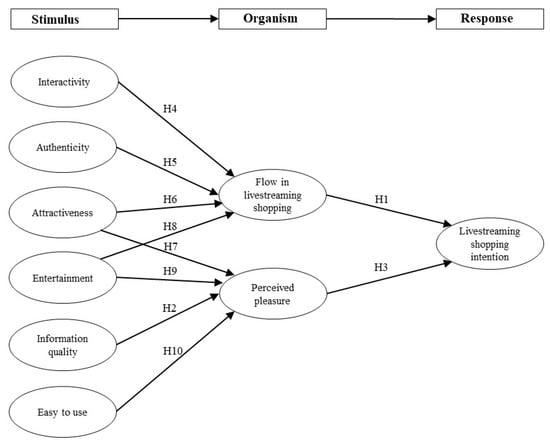
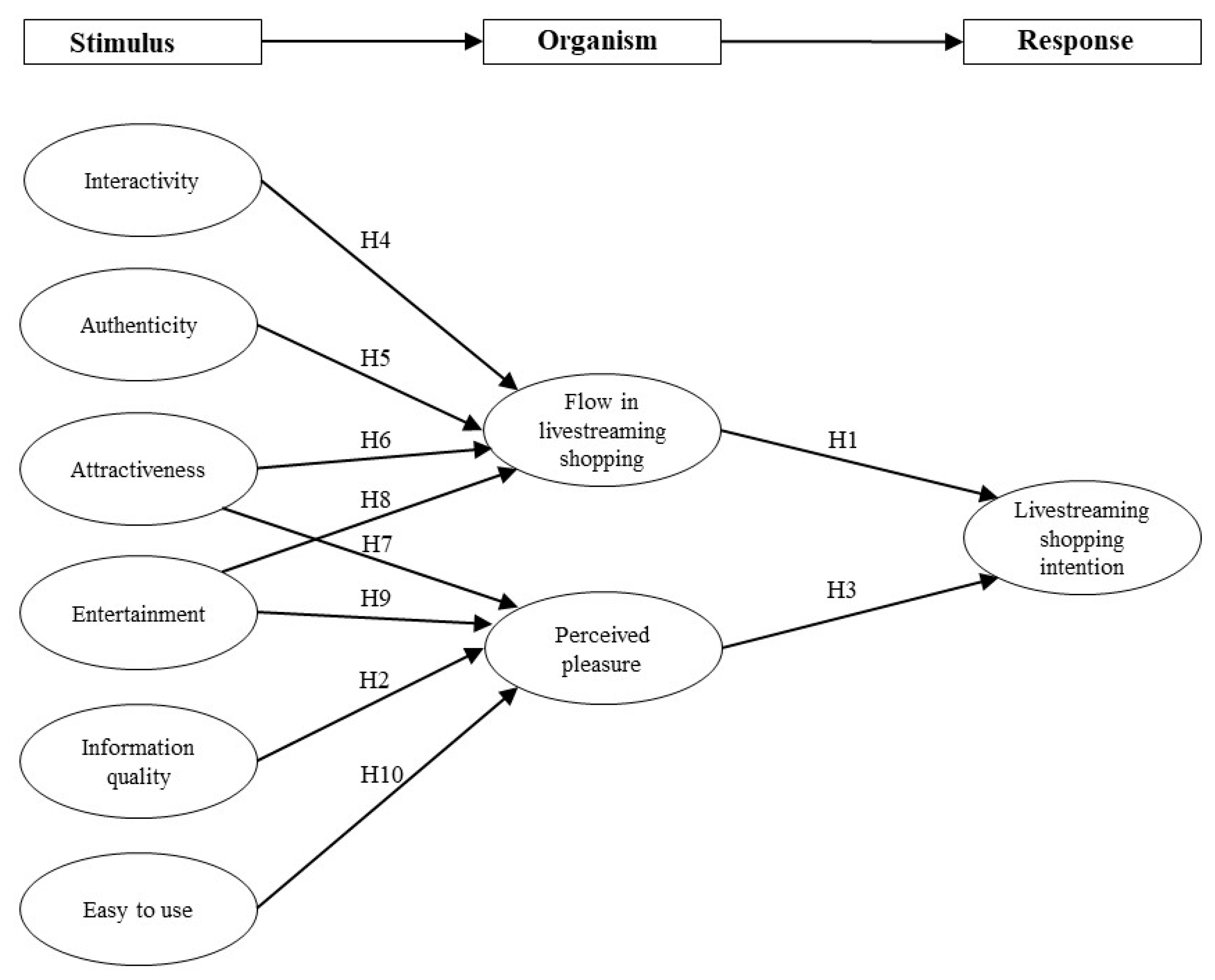

Disclaimer/Publisher’s Note: The statements, opinions and data contained in all publications are solely those of the individual author(s) and contributor(s) and not of MDPI and/or the editor(s). MDPI and/or the editor(s) disclaim responsibility for any injury to people or property resulting from any ideas, methods, instructions or products referred to in the content. |
© 2026 by the authors. Licensee MDPI, Basel, Switzerland. This article is an open access article distributed under the terms and conditions of the Creative Commons Attribution (CC BY) license.