Abstract
Despite the wealth of studies on bilingual education, there is a dearth of meta-research on the worldwide development and trends of this area of investigation over the past few decades. The occupation of this gap allows scholars to take stock of current states of research, get overviews of the contributions made to the field, foresee future research trends, and identify research needs and gaps that may be addressed in future investigation. This study analyses the evolution and trends of bilingual education research during a 50-year period (1969–2018) from a bibliometric perspective. The results show a steady increase in the number of publications, and was exponential in the last decade, mainly in the form of research articles, which makes bilingual education a truly consolidated and increasingly evolving research field. The US is the leading country with respect to the number of publications, affiliations, and sponsors, followed, primarily, by some other North American (e.g., Canada), European (e.g., UK and Spain), and Asian (e.g., China) countries, as well as Australia. There is a large research network cluster led by the US involving intercontinental interaction among institutions from Europe, Asia, and, to a lesser extent, South America. However, a scant level of internationalisation of scholars publishing works on bilingual education was observed, with most author collaboration being limited to different US institutions. The most influential authors belong to institutions from the US, Canada, Spain, and Israel, and, to a lesser extent, Australia. The main research topics in the field depend on the contexts and include regulations of language institutions, bilingual education models, language skills, pedagogical strategies, education levels, and ages, among others. These results may contribute to the identification of new research needs and therefore, to the development of future directions in bilingual education research.
1. Introduction
The development of bilingual education worldwide has skyrocketed since the early 1990s, hoarding most of the international scientific production on language and education in recent decades. Indeed, few research fields can boast of having undergone such a dramatic shift in so little time. In less than 50 years, bilingualism and bilingual education have changed from being nearly unnoticed to be included in the main guidelines of most of the worldwide educational stakeholders for the 21st century. The concern for this widespread educational phenomenon has triggered the development of an ever-increasing body of research [1].
Despite an existing wealth of studies on bilingual education, there is a dearth of research on the worldwide development and trends of this research area over the past few decades. The analysis of the evolution of a particular research area through meta-research is significant because it allows experts to explore research tendencies according to time issues, geographical areas, institutional support, main sources, and research subfields and topics. Such information may help scholars to take stock of current states of research, to get an overview of the contributions made to the field, to foresee future research trends, and to identify research needs and gaps that may be addressed in future investigation [2].
Bibliometric research has recently evolved into a standard procedure for the analysis of research development [3]. Through the analysis of bibliometric data from research databases, these studies contribute to identifying the research evolution and trends in the scientific production of a particular research area [4]. Some advantages of bibliometric studies include the analysis of data of relevant research results, since in virtually all disciplines, studies that are not published in relevant research databases are usually considered non-important [5]. Additionally, bibliometric data can currently be easily found and evaluated for a broad spectrum of disciplines using appropriate databases, such as Scopus or Web of Science (WoS), which allows researchers to examine large numbers of research items [2].
Although bibliometric studies have gained momentum in natural science and technical research areas [6], bibliometric research within social sciences and humanities is still in its initial stage, primarily due to complexities regarding the appropriate analytical methods required to analyse the extensive volume of research data [7] and the use of reliable research databases where the literature of these fields of knowledge is well represented [8]. This study seeks to fill this gap by analysing, from a bibliometric perspective, the worldwide evolution of the scientific production in an ever-increasing research area, i.e., bilingual education, which, to the authors’ knowledge, has not been addressed in the research literature to date. For this purpose, it uses the well-recognised Scopus research database, which, due to its rapid digital development in the last few years, allows researchers to gather and work with large volumes of research items from a broad spectrum of disciplines, including language and education studies, with reasonable effort [2]. In particular, the evolution in time, the types of publications, the main countries, affiliations, sponsors, cooperation relation networks, the level of internationalisation of authors, the impact of publications, and sources, which show an extensive volume of literature on this topic during a 50-year period (1969–2018), are examined. Additionally, the specific topics that this research field has dealt with, both in general and in the most productive countries and affiliations, are analysed. We believe that the provision of an overview of the research output on this matter from the last half century will contribute to the identification of new research needs and, therefore, to the development of future directions in bilingual education research.
2. Bilingual Education: Concept and Types
For a thorough understanding of the evolution and the varied nature of the research output in this field, it is first necessary to conceptualise this topic and explore the rationale that has triggered the unprecedented amount of research developed in the field in the last few decades. Bilingual education is an educational phenomenon spreading worldwide. The conceptualisation of this term has engaged scholars for a long time. Generally, bilingual education is defined as education provided in more than one language [9]. Ref. [10] (p. 6) pinned down the concept by pointing out, as the key defining feature of the term, that “the languages are used to teach subject matter content rather than just the languages themselves.” The term was recently extended by [11], who referred to bilingual education as any education programme in which two or more languages are used to teach non-language-related academic subject matters in contexts where the language of instruction and the language of the home or community do not match. She also pointed out in her definition the wide variety and influence of the reasons to incorporate the languages and the specific languages involved, as well as the programme structure and the relation between the language(s) of education and the community on the educational outcomes.
Bilingual education can be traced back to many centuries ago, even to Greek and Roman times [10]. Nevertheless, it is only since the end of the 20th century that there has been a wider development of this educational model. Since the first French immersion programmes reported in Canada and the bilingual education experiences in North America [12,13,14,15], bilingual education has rapidly extended to other countries and continents [16,17]. Currently, a wide number of countries across the globe offer some form of bilingual education [9,10], which is recently accessible to other contexts and social environments.
The nature and purposes of bilingual education programmes vary extensively across contexts [18]. Notwithstanding the flurry of different bilingual education types found in the literature, there are some broad forms that consistently encompass the different contexts and purposes pursued through its implementation. In some settings, the aim of bilingual education programmes is to promote biliteracy through the use of a second (minority) language (L2) as a medium of education among learners from the majority language group. This is known as enrichment bilingual education [14] and it is the model found primarily in French immersion programmes in Canada [13], and in European International Schools [19]. In other contexts, the purpose is to enable speakers of minority languages to develop skills in the majority language while maintaining their home language. This is what has been reported by research literature as maintenance bilingual education [18], and can be found in contexts such as Spain with the Basque or Catalan languages, the UK with Welsh, or the USA with Spanish [10,20]. Other bilingual education settings focus on the use of the home minority language (L1) in earlier educational settings, with the aim of shifting to the dominant language in subsequent educational stages to cope with mainstream education. This is known as transitional bilingual education [21] and has been common in US bilingual programmes for Spanish native speakers (or Latinos) from the late 20th century onwards [22]. Additional forms of bilingual education in the USA are those in which language-majority (e.g., native English speakers) and language-minority students (e.g., native speakers of another language, such as Spanish) are integrated and provided with content instruction and language development in both languages. These are known as two-way immersion (TWI) or two-way bilingual programmes [23]. This model gained momentum in the US from the mid-1980s onwards due to the increased attention to foreign language (FL) learning for English speakers, the development of research on effective programmes for educating language-minority students, and the availability of federal and state funding for programmes using this approach [24]. TWI was considered in the late 20th century to be an effective model for educating non-native English-speaking students, developing L2 skills in English-speaking students by conserving the Ll skills of minority students and enhancing cross-cultural understanding and appreciation. Finally, other forms, such as heritage bilingual education, have been associated with education through indigenous languages, e.g., aboriginal languages in Australia [25], among others.
Despite such high context specificity and the different languages involved in the vast body of research on bilingual education, a myriad of studies has reported the innumerable advantages of this educational phenomenon, being evident mainly at language, cognitive, attitude, and content learning levels [26,27,28,29]. Such advantages have given rise to innumerable research studies in different contexts and from different pedagogical approaches. From a pedagogical perspective, the development of bilingual education has materialised through the implementation of different educational approaches, which has resulted in a plethora of bilingual educational models with different terminology and pedagogical practices often related to different geographical areas and/or educational stages [30]. These include, among others, Content-Based Instruction (CBI), Language Across the Curriculum (LAC), and immersion programmes (IP), primarily found in North America [31], and the widespread Content and Language Integrated Learning (CLIL) born in Europe and considered the European bilingual education approach of reference of the last two decades. Considered the successor of the Canadian immersion programmes and defined as a “dual-focused educational approach in which an additional language is used for the learning and teaching of both content and language” [32] (p. 1), CLIL has spread dramatically throughout the European continent and beyond in the last 20 years, triggering an ever-growing myriad of research studies. The rationale behind the increasing popularity of the CLIL approach is supported by reactive and proactive reasons [33]. The former involves the response to situations where different L1s lead to the adoption of an L2 as the language of education, or where there is insufficient L2/FL competence that needs to be strengthened [28], whereas the latter refers to the way to create situations to reinforce the level of bi- and multilingualism.
Whereas the previous approaches are currently more associated with bilingual education in earlier educational stages, such as primary or secondary education, some other models have recently emerged in the literature regarding bilingual education at the tertiary level as a result of the internationalisation processes undergone by higher education institutions. This has triggered a new body of scientific publications on bilingual education within the framework of different models and labels, such as English-Medium Instruction (EMI) [30,34], Integrating Content and Language in Higher Education (ICLHE) [35,36], English-Medium Teaching (EMT) [31], and more recently, English-Medium Education in Multilingual University Settings (EMEMUS) [37].
Due to the nature of this study, no distinction among the varied labels and the different educational approaches on bilingual education will be made in the analysis when not strictly necessary. Instead, an overall view of the worldwide evolution of the scientific production of bilingual education in the last 50 years will be provided in a loose sense.
Since no previous research, to our knowledge, has explored this topic from a bibliometric perspective, this study aims to fill that gap. For this purpose, the following research questions are addressed:
- What is the evolution of the scientific production of bilingual education worldwide in the last 50 years in terms of the number of publications, document types, countries, affiliations, funding sponsors, cooperation relation networks, the level of internationalisation of authors, the impact of publications, and sources?
- What is the evolution of the scientific production on bilingual education worldwide in the last 50 years in terms of research topics (i.e., keywords), both overall and in the most productive countries and affiliations of bilingual education research?
In particular, we aim to explore the development of bilingual education research according to time issues, geographical areas, institutional support, main sources, and research subfields and topics.
3. Materials and Methods
This study was conducted from a bibliometric perspective. This type of research requires an extensive amount of bibliographic information commonly gathered from bibliographic databases, which are usually composed of “a set of records with bibliographic information,” including, but not limited to, “authors’ name, title, name of the source, date of publication, keywords, citations,” among others [6] (p. 402).
In the scientific field of humanities and social sciences, two major scientific databases containing the research production with the highest international impact have traditionally coexisted: Clarivate Analytics (the former Web of Science (WoS) in the USA) and Scopus (Elsevier) in the Netherlands. The overlap between these databases has been thoroughly analysed. According to some studies, more than 80% of the Clarivate research documents are indexed in Scopus, whereas just over half of the Scopus research documents are indexed in Clarivate [38], which makes the use of the Scopus scientific database more appropriate for bibliometric analyses [6,38,39]. This is the reason why the data for our analysis were gathered from the Scopus database. Research items were collected through a complete search using the following subfields: title, abstract, and keywords, in order to search for publications addressing the subject of bilingual education.
The search was conducted for a 50-year period (1969–2018) in order to gather sufficient and relevant information, and because some research items published prior to the 1970s might not be well documented in the research database [8]. As suggested by some authors [40], searches in bibliometric studies should be as focused as possible in order to avoid duplicates and misleading results. Therefore, the data series was limited to the fields of social sciences and humanities, as they represent the areas of knowledge within which the research topic is embedded: language (humanities) and education (social sciences). For this purpose, the following search query was used: “TITLE-ABS-KEY (‘bilingual education’) AND (LIMIT-TO (SUBJAREA, ‘SOCI’) OR (LIMIT-TO (SUBJAREA, ‘ARTS’)) AND (EXCLUDE (PUBYEAR, 2019)).” The language of the search query was English. As reported in numerous studies, more than 75% of the articles in the social sciences and humanities and well over 90% in the natural sciences from the mid-20th century onwards are written in English [41], a percentage that has increased in the last decade [39]. For this reason, we decided to use this language, as we considered that the number of publications in other languages would be residual.
The year 2019 was excluded intentionally because there were publications from that year that were still not included in the database at the point of data gathering. After gathering all the publications, they were appropriately processed using the open-source OpenRefine coding tool, which allowed the analysis of disorganised, conflicting, or unsorted text [42].
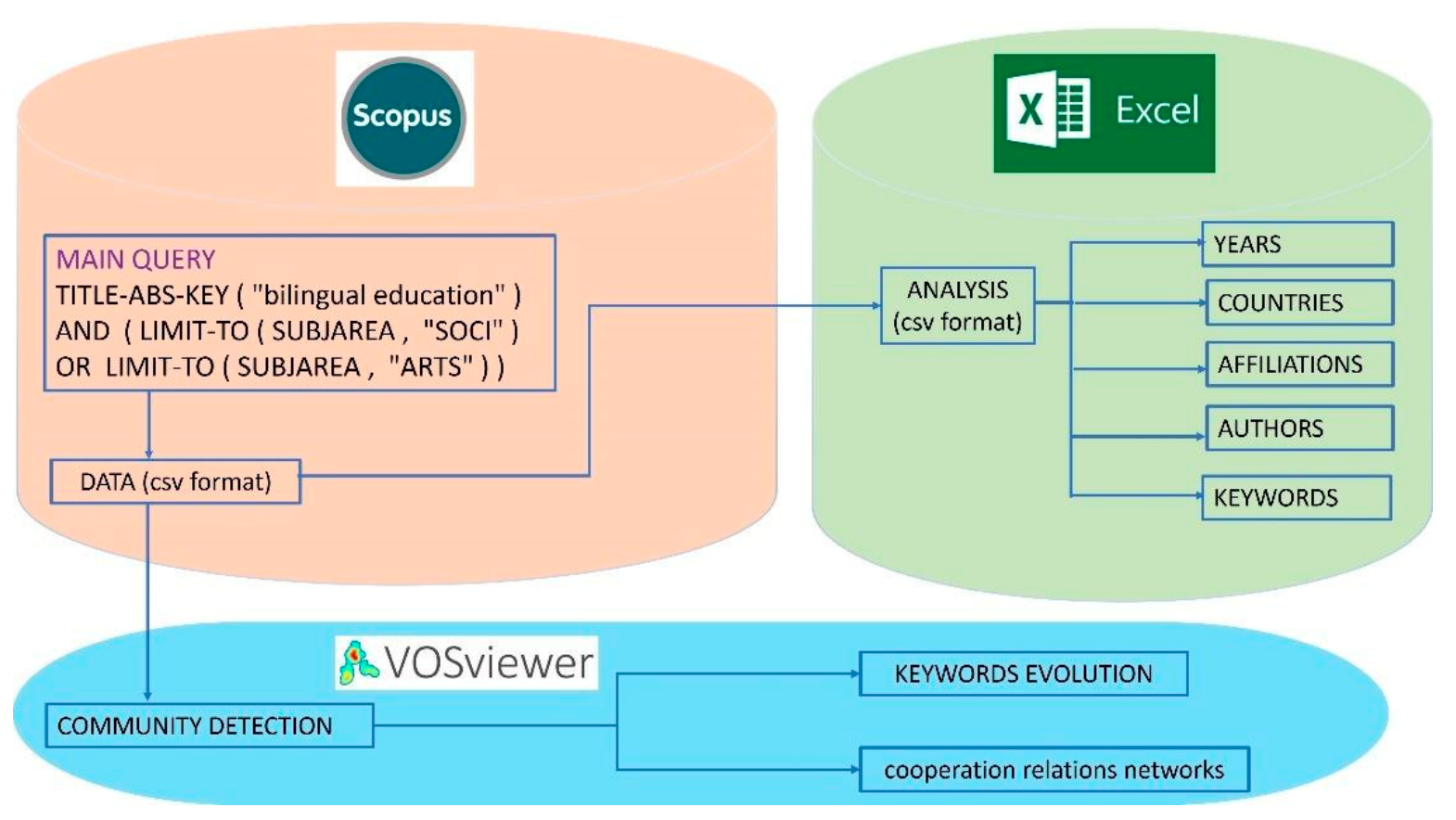
Once the records were conveniently processed, a total of 2204 research items was obtained, and they were analysed in accordance with the following variables: (a) number of publications per year, (b) publication type, (c) country, (d) affiliation, (e) funding sponsor, (f) cooperation relation networks, (g) level of internationalisation of authors, (h) impact of publications, (i) source of publication, and (j) keywords. The analysis of these variables allowed the researchers to identify the evolution in time of the scientific output on bilingual education within the time period analysed (1969–2018), the level of consolidation of the research field, the countries with the highest number of scientific publications on bilingual education, the institutions that provided the highest number of publications and greater support of and investment in bilingual education research, the collaboration networks among countries and scholars, the influence of the publications on the research community and the general public, the top-ranked sources through which the research output in the field was disseminated, and the topics with which bilingual education research has dealt. The last variable (keywords) was also analysed in the most productive countries and affiliations of bilingual education research in order to provide a more focused view on the main research topics in different geographical areas. Figure 1 shows a diagram illustrating the steps and tools used to conduct the study.
Figure 1.
Diagram of the methodology employed.
4. Results
4.1. Time Evolution of the Publications
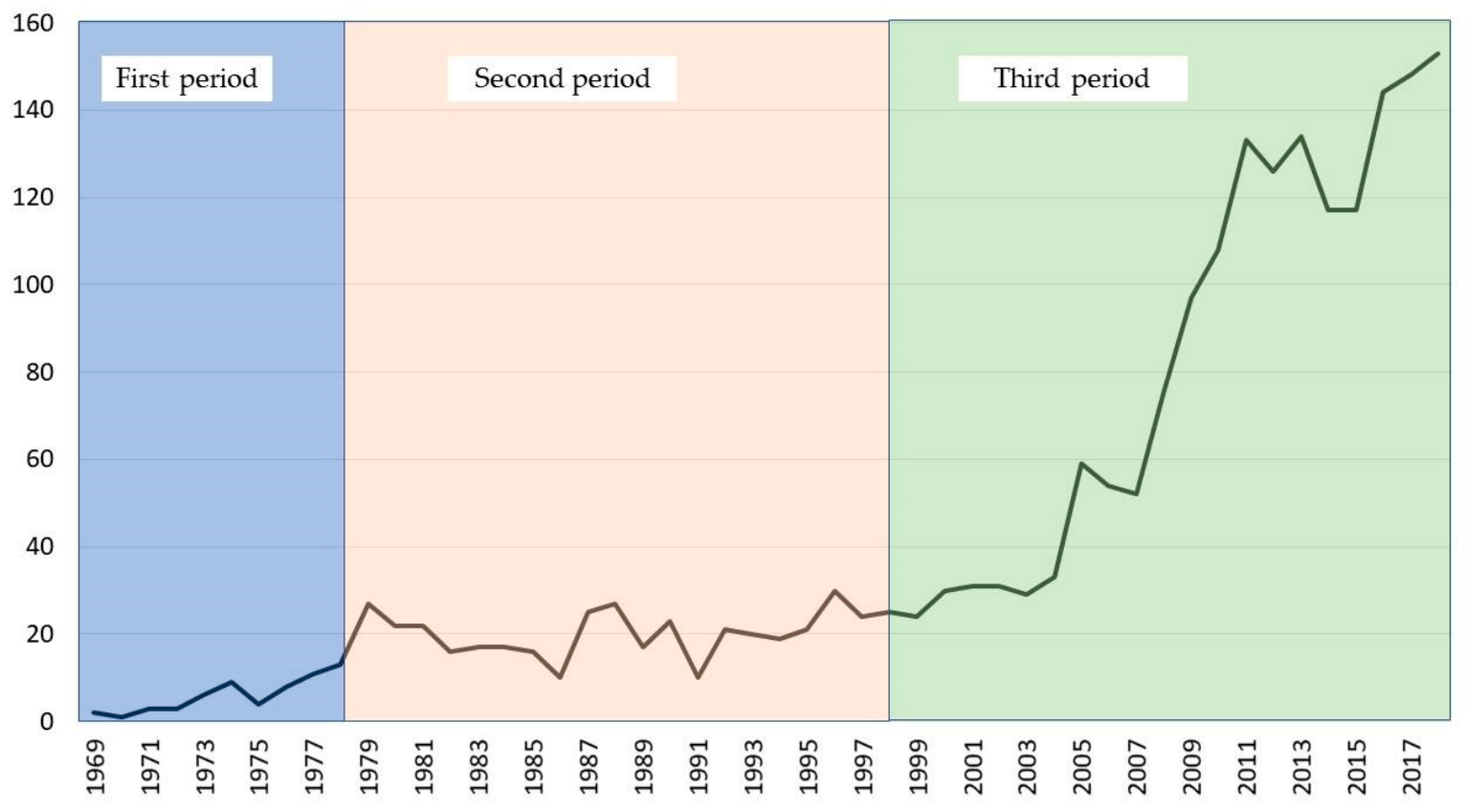
The number of publications on bilingual education has grown significantly from 1969 until today (Figure 2). The analysis of the data per decade shows that in the first period (1969–1978), six documents on the topic were published on average per year. This number tripled in the two subsequent decades (1979–1988 and 1989–1998), with 20 and 21 documents published, respectively. The number doubled again in the 1999–2008 period, with 42 documents published per year. The last period of analysis (2009–2018) was by far the most productive one in terms of the number of publications on the topic, with 132 documents published on average per year.
Figure 2.
Evolution of the number of publications in the periods of analysis (1969–2018).
4.2. Publication Distribution per Type of Document
The 2204 publications gathered in the period of analysis (1969–2018) were categorised into nine types of documents (Table 1). Scientific papers, both in the form of articles and, to a lesser extent, reviews, were the most prominent types of contributions since the first decade of study, and roughly maintained in the following two decades. Book chapters and books appeared in the late 20th and early 21st centuries, with a steady evolution in the last decade. Finally, conference papers also appeared in the 1999–2008 period, and increased in the following decade, whereas notes were more abundant in the early 1970s, and diminished in subsequent decades.
Table 1.
Percentage of publications on bilingual education per type of document.
4.3. Publication Distribution per Country
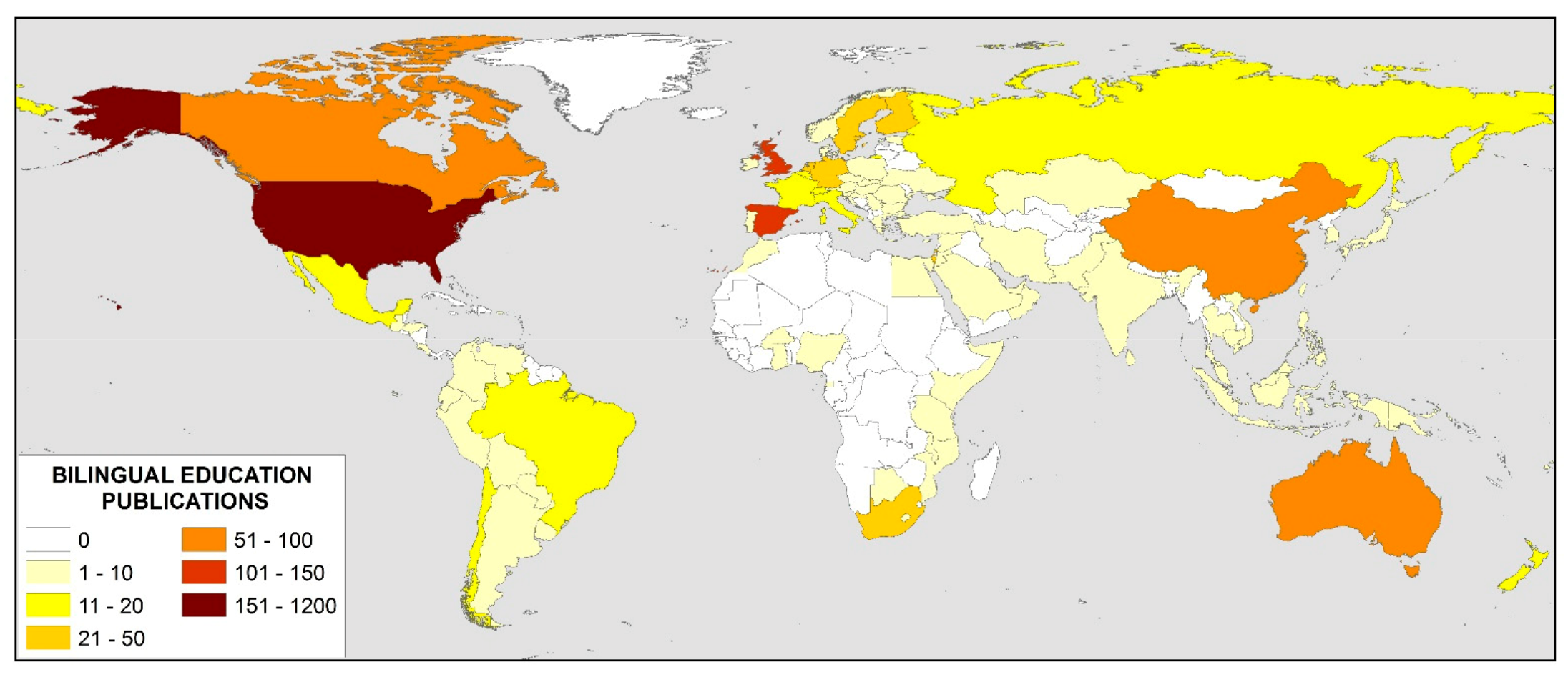
According to the data analysed, a total of 95 countries published research documents on bilingual education in the studied period. Most publications were unquestionably from the USA, with 1150 documents published, which made up more than half (52%) of the overall research output (Figure 3). This position was followed, albeit by a wide margin, by Spain and the United Kingdom, with a similar number of documents published during the studied period (136 and 135, respectively), which accounted for 6% of the total number of documents published each. That ranking was followed by Canada, with 93 published documents (4%), and China and Australia, with 92 (4%) and 73 (3%) documents, respectively. Israel, the Netherlands, South Africa, and Germany completed, in the indicated order, the top 10 countries in terms of the number of publications. A low contribution from other geographical areas such as African, South American, and Middle Eastern countries is noteworthy.
Figure 3.
Number of publications per country in the period of analysis (1969–2018).
4.4. Publication Distribution per Affiliation
The top 10 affiliated institutions in accordance with the number of documents published were again indisputably from the USA (Table 2), except for the University of Toronto (Canada). The Canadian affiliation, ranked in the sixth position, stood out as the most productive institution from this country, and is the university that contained the highest number of total citations, which is indicative of the great impact of the research produced by that institution on the scientific community of bilingual education. The University of Hong Kong (China), ranked in the 13th position, appearing as the most productive institution from that country.
Table 2.
Number of documents, countries, and Scopus bibliometric data of the top affiliations.
4.5. Publication Distribution per Funding Sponsor
A total of 119 funding institutions supporting publications on bilingual education were found in the period of analysis (1969–2018). As can be observed, the ranking of the top 10 was indisputably led by institutions from the USA, having funded nearly 70% of the research documents included in this block (Table 3). The British Economic and Social Research Council, ranked in the second position, also showed UK’s relevant investment in bilingual education research. The Social Sciences and Humanities Research Council of Canada completed the ranking of the top five funding sponsors.
Table 3.
Top funding sponsors.
The few non-US funding organisations found in subsequent positions and the scant number of publications funded by them (three to four each) illustrates the limited institutional support provided to bilingual education research in other areas beyond North America and, albeit to a lesser extent, Europe. The cases of China and Australia are noteworthy in these results. Despite being ranked in fourth and fifth place, respectively, in the previous analysis of the number of publications per country in the period of study, few Chinese or Australian funding institutions were found in the present ranking. Only a few sponsors were found from the 80th position onwards.
4.6. Cooperation Relation Networks
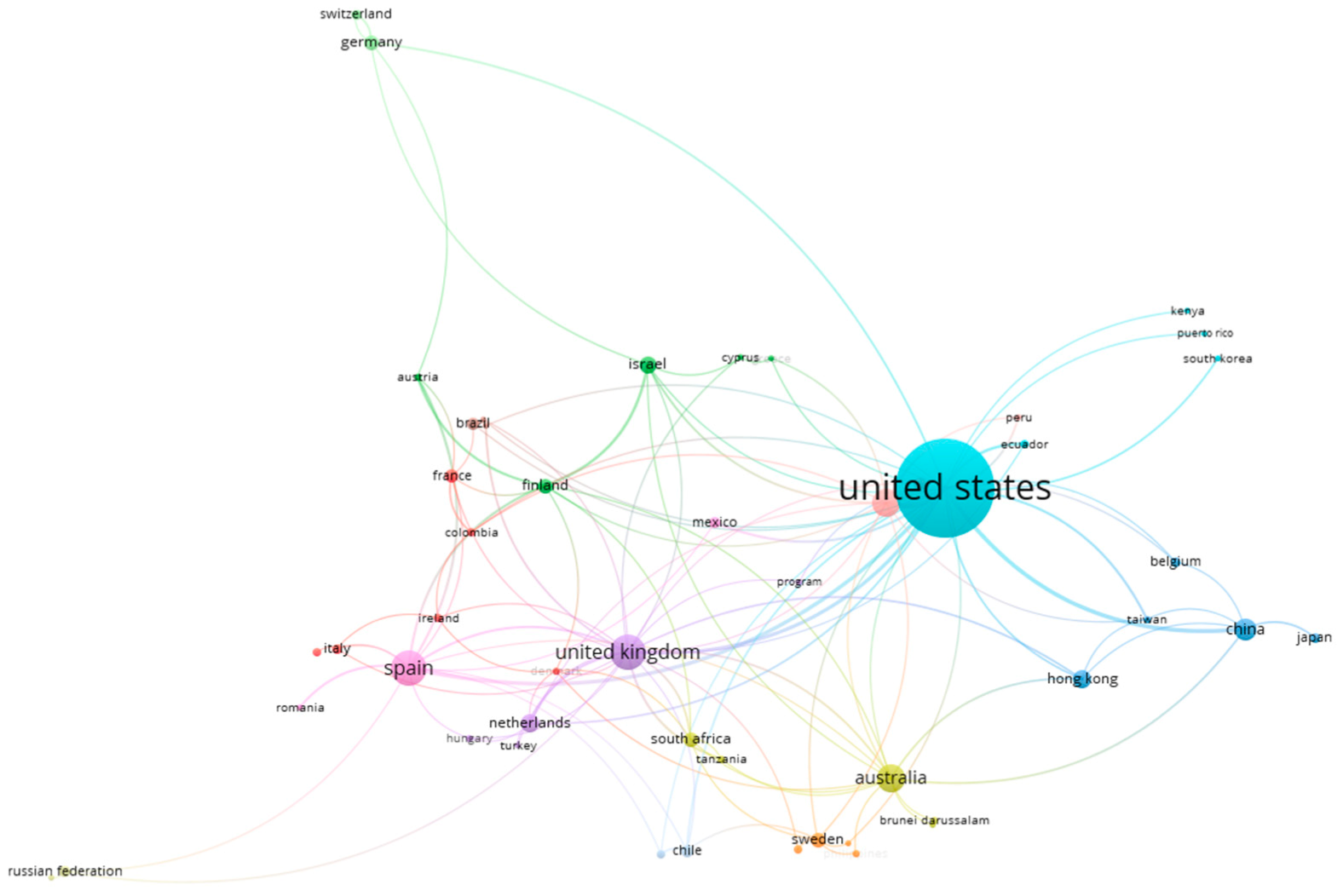
Figure 4 shows the interconnection between the research carried out on bilingual education among countries. As can be observed, there was a large community cluster involving intercontinental interaction between institutions from the US, Europe, Asia, and, to a lesser extent, South America. Some of the countries belonging to this cluster are the UK, Germany, Spain, the Netherlands, Belgium, China, Hong Kong (The data refer to the period of British colonialism and before its incorporation into the People’s Republic of China in 1997), Taiwan, Japan, Taiwan, South Korea, Peru, Ecuador, and Puerto Rico. Another intercontinental cluster was found among the UK and other countries such as the Netherlands, Spain, South Africa, Australia, and Hong Kong. Similarly, there was another cluster involving European countries such as Spain, the UK, Italy, Ireland, and France. A fourth one included China, Japan, Belgium, and Hong Kong, and another relevant one included Australia, the UK, South Africa, and Tanzania. The cases of Switzerland, the Russian Federation, Japan, and some Latin American and African countries such as Puerto Rico and Kenya, respectively, are examples of lack of international connection on bilingual education research.
Figure 4.
Research cooperation networks among countries.
4.7. Level of Internationalisation of Authors
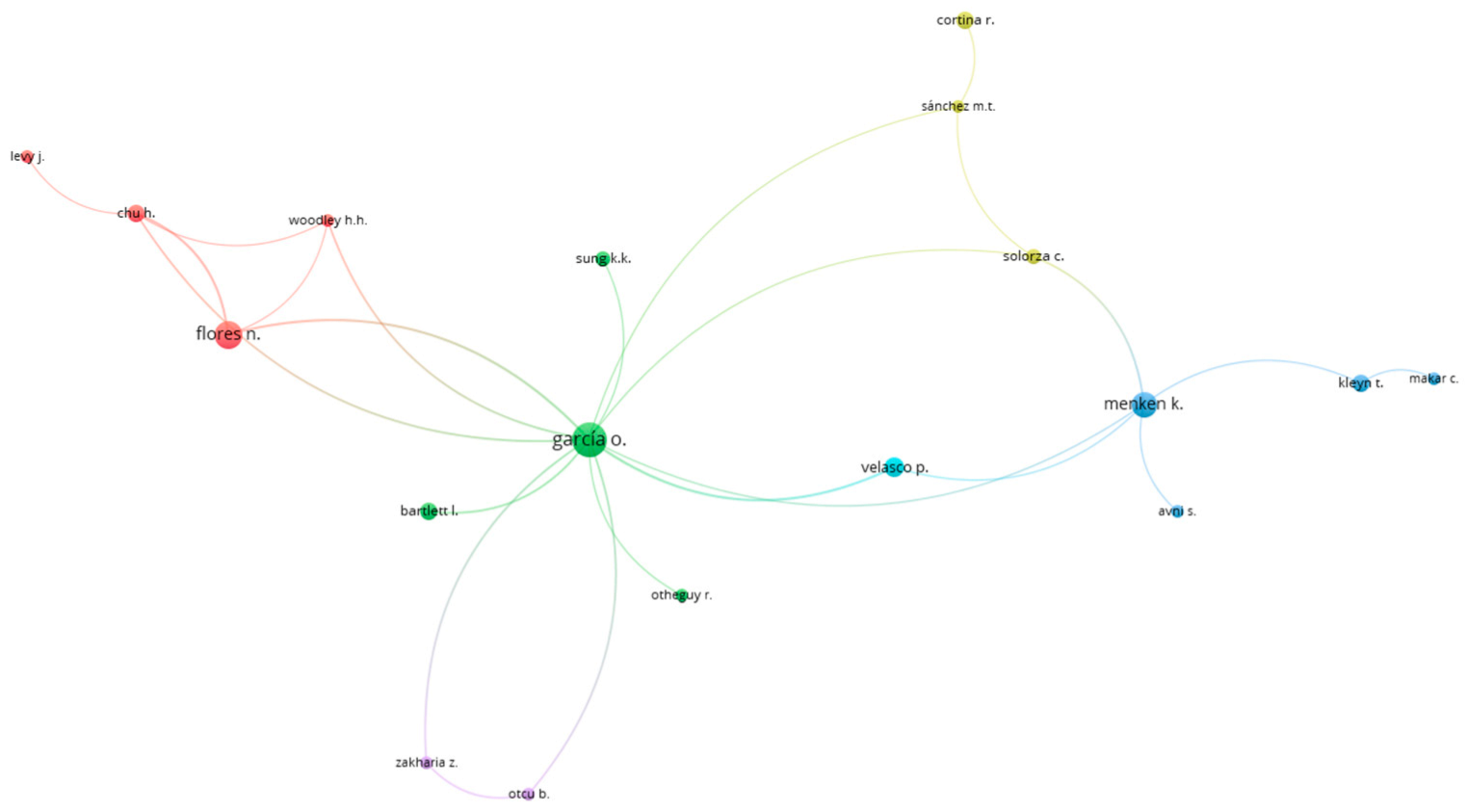
Figure 5 shows the cooperation relation networks among researchers on bilingual education. As can be observed, a strong endogamous collaboration involving researchers from US institutions was found. In particular, three main clusters were observed in terms of cooperation among scholars. The largest cluster corresponds to that composed by scholars such as O. García from the City University of New York (USA), L. Bartlett from the University of North Carolina (USA), R. Otheguy from the Doctorate-Granting Institution of the City University of New York (USA), K. K. Sung from Rowan University (USA), and other researchers such as H. H. Woodley from New York University (USA), N. Flores from the University of Pennsylvania (USA), P. Velasco from Queens College, City University of New York (USA); C. R. Solorza from the Bank Street College of Education in New York (USA); Z. Zakharia from the University of Maryland (USA) and M. T. Sánchez from Hunter College, City University of New York (USA).
Figure 5.
Research cooperation networks among authors.
Another cluster was found comprising researchers such as N. Flores from the University of Pennsylvania (USA), H. H. Woodley from New York University (USA), H. Chu from WestEd (San Francisco), and H. Levy from George Mason University (USA). A third cluster was found composed of researchers such as K. Menken from the City University of New York (USA); P. Velasco from Queens College, City University of New York (USA); T. Kleyn from The City College of New York (USA); C. Makar from City University of New York (USA); S. Avni from Borough of Manhattan Community College (USA); and C. R. Solorza from the Bank Street College of Education in New York (USA).
Two smaller clusters were found, one composed of three members (M. T. Sánchez from Hunter College, City of New York (USA); R. Cortina from Columbia University in New York (USA); and C. R. Solorza from the Bank Street College of Education in New York (USA)), and another one composed of two members (Z. Zakharia from the University of Maryland (USA) and B. Otcu from Mercy College (USA)).
4.8. Impact of the Publications on the Research Community and the General Public
The impact of publications on a research community is commonly measured through the number of citations, that is, the number of times a publication is cited by subsequent publications. The number of citations is commonly regarded as a measure of the usefulness, impact, or influence of a publication [43]. In order to measure the impact of the publications about bilingual education on the research community, a list of the top 10 cited authors on bilingual education was examined (Table 4). As can be observed, O. García from City University of New York (USA) stood out as the most-cited author with 4002 citations, an h-index of 29, and a speciality index of 14.4%, meaning that 14% of her total research outcome dealt explicitly with bilingual education, as indicated either in the title, abstract, or keywords of her published documents. J. Cummins from the University of Toronto (Canada) stood out as the second most-cited author with 3960 citations, an h-index of 30, and a speciality index of 23.3%, followed by N.H. Hornberger from the University of Pennsylvania (USA) with 2908 citations, an h-index of 23, and a speciality index of 24.1%. J. Cenoz from Universidad del País Vasco (Spain) and N. Flores from the University of Pennsylvania (USA) completed the list of the five most-cited authors, with 2556 citations (h-index of 25 and a speciality index of 24.1%) and 1804 citations (h-index of 19 and a speciality index of 27%), respectively. Additional authors from Israel (M. Schwartz), Spain (A. Huguet), the US (K. Escamilla, E.J. Johnson), and Australia (B. Devlin) completed the list of the 10 most-cited authors on bilingual education research, with 601 to 49 citations (h-index from 14 to 4, and index of speciality of 27.8 to 81.8).
Table 4.
Top 10 most-cited authors according to Scopus.
As for the impact of the publications about bilingual education on the general public, data were gathered from the web search engine Google Scholar, as it provides free access to scholarly literature to both the specialised and non-specialised audience. For this purpose, the label “bilingual education” was searched, and the top 10 most-cited authors were classified (Table 5). As can be observed, O. García stood out as the most cited author also on this list, followed by S. May from the University of Auckland (Australia) and D. Coyle from the University of Aberdeen (UK). I. Piller from Macquarie University (Australia) and G.E Garcia from the University of Illinois (USA) were in the fourth and fifth position in terms of number of citations, respectively. Additional authors from US institutions completed the list of the top 10 most-cited, and therefore, most influential authors on bilingual education research (i.e., J. MacSwan, N. Flores, E.D. Jong, C. Bratt Paulston, and Y. Kanno).
Table 5.
Top 10 most-cited authors according to Google Scholar.
4.9. Publication Distribution per Source
The analysis of the sources that published research documents on bilingual education during the period of analysis shows that the Bilingual Research Journal encompassed the highest number of documents in the field, with 366 (This number includes both the publications from the journal currently known as Bilingual Research Journal (1992–present) and those from the journal formerly known as NABE (National Association for Bilingual Education) Journal (1975–1991)) documents, which accounted for 8.1% of the overall scientific production (Table 6). This source was followed by the International Journal of Bilingual Education and Bilingualism, which made up 3.9% (177 documents) of the overall scientific production. These two journals led the publication of sources on bilingual education research in the last half-century, according to these findings. The third-ranked source was the Journal of Multilingual and Multicultural Development, with 77 documents (1.7%), followed by the journals Language and Education and Language Culture and Curriculum, with 49 (1.1%) and 40 (0.9%) documents published, respectively.
Table 6.
Number of publications and Scopus bibliometric data of the top 10 sources.
Regarding the impact factor (IF), the journal that led the ranking was the International Journal of Bilingual Education and Bilingualism (Q1), followed by the journals Multilingual and Multicultural Development (Q1), Language and Education (Q2), and Language Culture and Curriculum (Q1), in the indicated order. The case of the Bilingual Research Journal is noteworthy. Despite being the journal with the largest number of publications on the matter and with the highest h-index and total citations, it had no impact factor as it was not indexed in JCR, which shows that the number of documents published on bilingual education in a given journal is not necessarily related to the IF.
4.10. Publication Distribution per Keyword
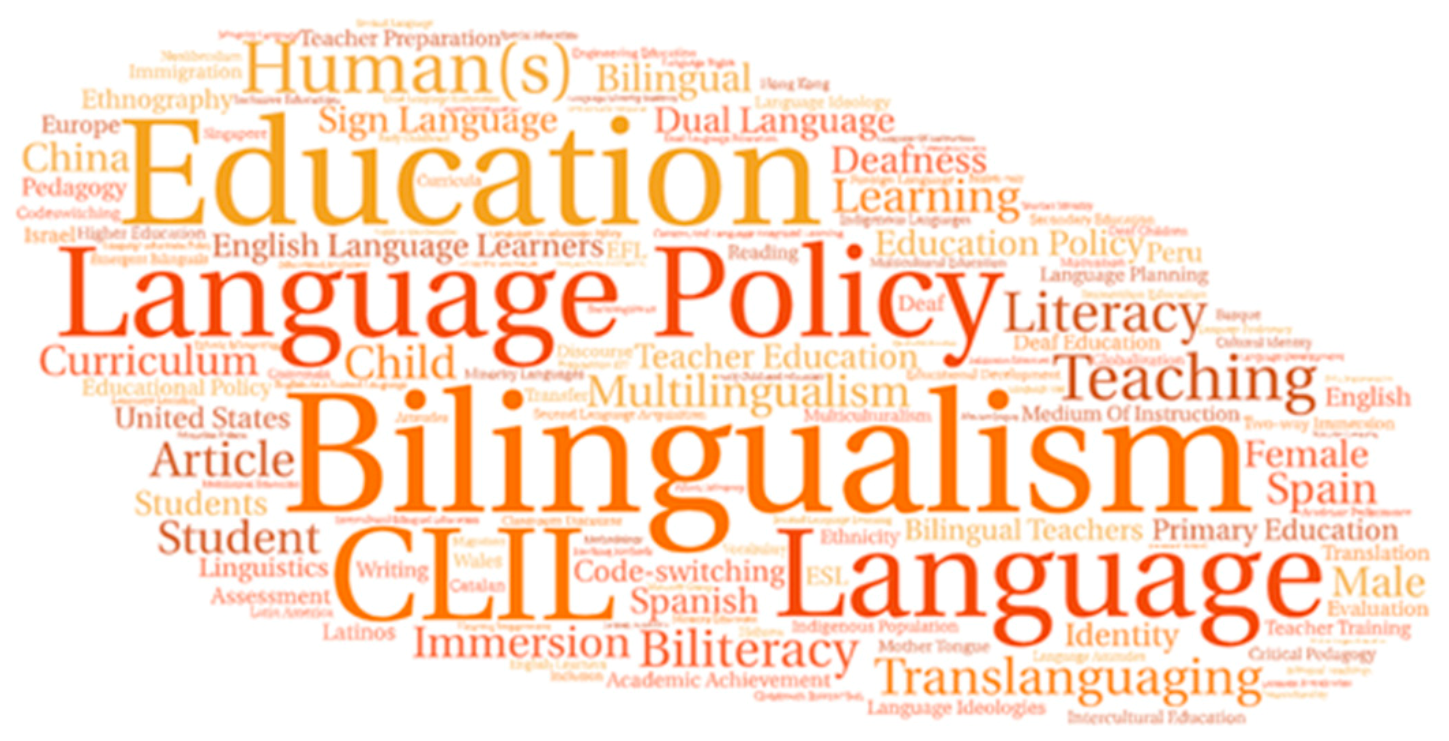
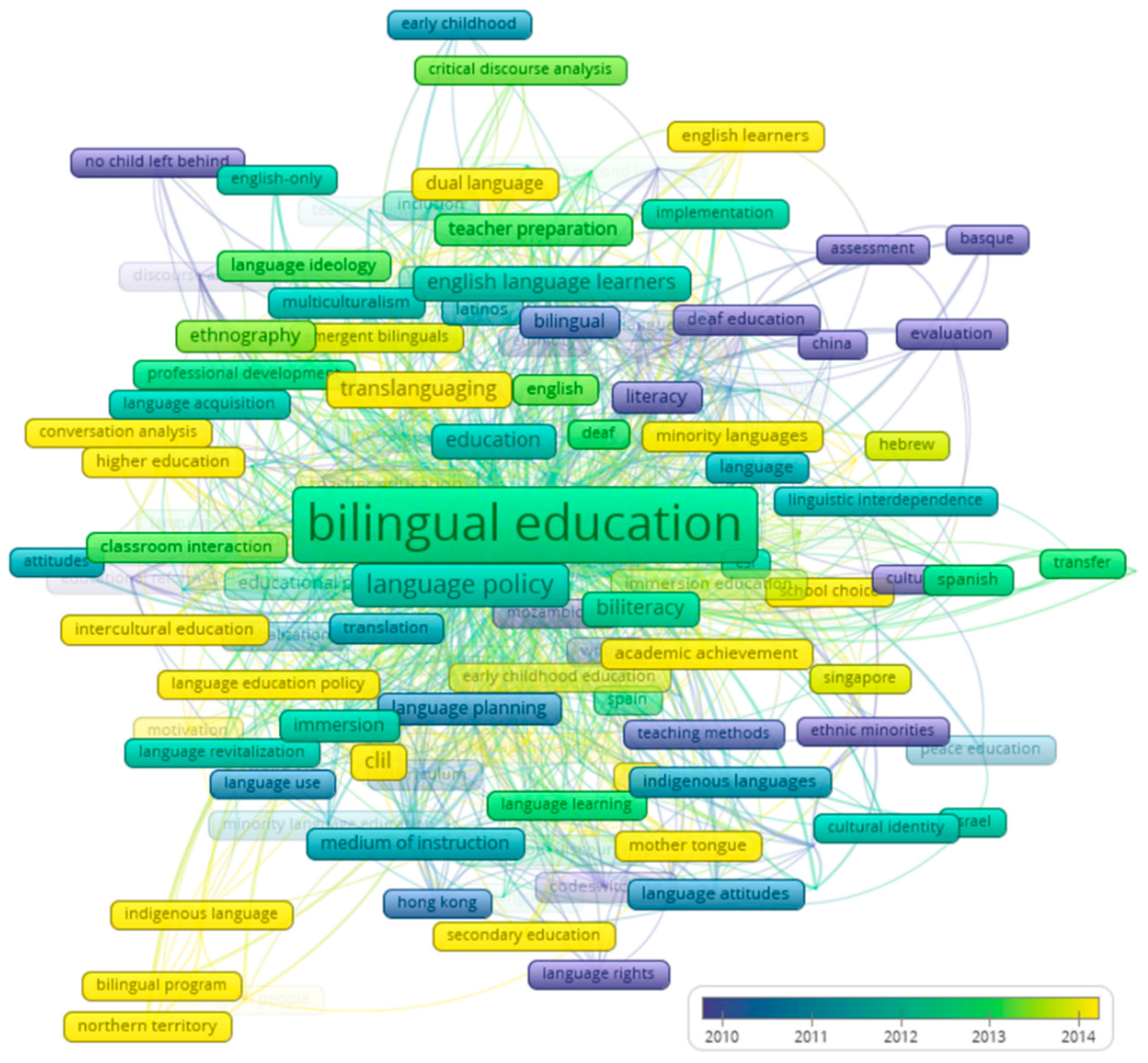
In an attempt to frame their contributions in the subject area most directly linked to the topic addressed, scientific authors usually list a series of keywords in their research documents. Academic editors and reviewers can expand those keywords with additional terms from other databases according to the subject matter [6]. Keywords therefore allow the focus of publications to be identified. In order to easily pinpoint the main topics on which research output on bilingual education was dealing with, a word cloud was created in accordance with the number of keywords found in the whole period of analysis (1969–2018), where the word size and the number of keywords found are directly proportional (Figure 6). Additionally, the evolution in time of the keywords found in the research output of the period analysed can be found in Figure 7.
Figure 6.
Word cloud of the keywords found in the period of analysis (1969–2018).
Figure 7.
Time evolution of the keywords.
The results show that the most prominent keywords related to bilingual education research related, to a large extent, to the name of the research field of analysis (“bilingualism,” “education,” and “language”), to institutional regulations on language education (“language policy”), and to certain bilingual education approaches (e.g., “CLIL”). The prominence of further keywords shows the abundance of studies on bilingual education dealing with the concept of bilingualism applied to human beings (“humans”), language skills (“literacy,” “biliteracy”), instruction issues (“teaching”), additional bilingual education models (“immersion”), and certain pedagogical strategies on L1–L2 use (“translanguaging”), among others.
The analysis of keywords by decades (Table 7) showed a scant number of rather complex keywords in the first period of study (1969–1978), which indicates that in the 1970s, few studies included keywords in their publications. In the following decade, studies on bilingual education related to cognitive and neurologic aspects (e.g., “central nervous system”) began to burgeon. In the decade of the 1990s, a trend similar to the previous decade was observed, although new studies on bilingual education for minority and indigenous language speakers were developed (e.g., “indigenous people”). The beginning of the 21st century remained roughly similar to previous decades. Nevertheless, additional new keywords upstaged the ones previously related to indigenous language-related issues, and research conducted on institutional language regulations (e.g., “language policy”) became relevant. The last decade (2009–2018), which matched the period with the highest volume of documents published in the field (cf. Section 4.1), can be highlighted by the consolidation of the research on the design, development, and analysis of language and bilingual education regulations, as well as on instruction issues. However, this decade was chiefly characterised by the sound increase of studies on CLIL.
Table 7.
Top five keywords per decade.
4.10.1. Distribution of Main Keywords per Country
In order to provide a more focused view of the main topics dealt with in bilingual education research in different geographical areas, the five most abundant keywords in the top 10 most productive countries of bilingual education research, in terms of the number of publications, were collected (Table 8). According to these findings, most countries referred in their studies to the phenomenon (bilingualism) in the fields of study (education and languages) it which it was embedded. The spread of research on language regulations and policies in these many contexts, such as the USA, Australia, South Africa, and, to a lesser extent, China, is also remarkable.
Table 8.
Top five keywords in the 10 most productive countries.
The presence of “CLIL” as the main keyword in Spain is noteworthy. The geographical area was also highly relevant in bilingual education research. In some cases, the country where the research was conducted was used as a keyword (e.g., “Israel,” “Australia,” “Spain,” and “Hong Kong”). This also occurred with the languages involved in bilingual education settings (e.g., “Hebrew” in Israel, “French immersion” in Canada; “community” and “indigenous languages” in Australia, and “minority languages” in the UK).
Additional different, albeit related, keywords were found in most of these countries, regarding primarily different bilingual education models (e.g., “immersion” in Canada and Germany and “medium of instruction” in China), language skill command (“biliteracy” in South Africa and “literacy” in Canada), different educational levels and ages (“preschool bilingual education” in Israel, “primary education” in Spain, and “child” in the Netherlands), as well as particular foci of interest in specific contexts, for example, “bilingual education for peace” in Israel.
4.10.2. Distribution of Main Keywords per Affiliation
Table 9 shows a distribution of the three main keywords found in the documents published by the top 15 affiliations.
Table 9.
Main keywords per affiliation (Bilingual education excluded).
As occurred in the distribution of keywords per country, there seemed to be a remarkable concern for language regulations and policies in the research output of most of these affiliations, as the keywords “language policy” appeared as the second or third most abundant keyword in nearly half of the top 15 affiliations. Some ideological concerns regarding bilingual education were also noted (e.g., “language ideologies” at the University of Texas at Austin, “identity” at the University of Toronto, and “language activism” at the University of Pennsylvania). A notable concern for specific types of bilingual education models was also observed (e.g., “emergent bilinguals” at the University of Texas at Austin, City University of New York, and The Doctorate-Granting Institution of the City University of New York; “transitional bilingual education” at the University of Texas at Austin; “dual language” at the University of Texas at Austin, Arizona State University, and University of Texas at San Antonio; and “bilingual and immersion programs” at the University of Toronto). This similarly occurred with the languages involved in bilingual education settings, where English stood as the main language explored (e.g., “English language learners” at Arizona State University, University of Texas at San Antonio, University of California Los Angeles, University of Illinois at Urbana-Champaign, and Texas A&M University), although some instances of research carried out on minority languages (e.g., “Quechua” in University of Pennsylvania) and languages for people with hearing impairments (e.g., “American Sign Language” in University of Toronto) were also found.
Additional relevant keywords were observed regarding instruction and organisational issues (e.g., “bilingual teachers” at the University of Colorado at Boulder and “teacher education” at the University of Washington, Seattle and “language planning” at the University of Arizona and University of Pennsylvania; “bilingual programming” at the University of Arizona), pedagogical strategies on L1–L2 use (e.g., “translanguaging” at the University of Texas at Austin, City University of New York, Columbia University in the City of New York, and The Doctorate-Granting Institution of the City University of New York), language skills (e.g., “biliteracy” at the University of Pennsylvania and Texas A&M University, and “literacy” at Columbia University in the City of New York), certain educational contexts (e.g., “Arizona” at Arizona State University, and “Ghanaian education” and “Latinos” at Columbia University in the City of New York), benefits of bilingual education (e.g., “advantages of bilingualism” at the University of Toronto, “academic achievement” at Texas A&M University), and cultural aspects related to bilingual education (e.g., “bilingual intercultural education” at the University of Pennsylvania and “culture” at Texas A&M University).
5. Discussion and Conclusions
This study provides an overall account of the worldwide research production of bilingual education in the last 50 years from a bibliometric perspective, a study that, to the authors’ knowledge, has not been conducted to date. To respond to the research questions, the evolution of bilingual education research in terms of time issues, geographical areas, institutional support, cooperation relation networks, the level of internationalisation of authors, the impact of publications, main sources, and research subfields and topics in bilingual education research was analysed.
Overall, the time evolution of publications on bilingual education showed a steady increase in the number of research items published per year, and was exponential in the last decade. This tendency is indicative of the increasing awareness of bilingual education within the scientific community. This confirms what some authors already forecasted regarding the recent setup of a truly global research scene on bilingual education, particularly from the early 21st century onwards, which has come to stay [28]. Given the trend found in the results, it is expected that the number of publications on this topic will continue increasing in the coming years.
Dissemination of new knowledge on bilingual education was primarily done in the form of scientific articles. Whereas novel and developing research is usually disseminated through other means, such as conference papers, progress in consolidated research fields is disseminated by means of scientific papers [42]. These results evidence that the field of bilingual education is a well-established research field whose development is shared with the scientific community mainly in the form of scientific articles [6].
The US was indisputably the worldwide leading provider of bilingual education research in the period of analysis, both in terms of number of publications and institutional support received, followed by Spain, the UK, Canada, China, and Australia. These results may be explained by the well-acknowledged tradition of bilingual education research in the US [12,13,14,15], mainly in the forms of maintenance bilingual education to enable speakers of minority languages to develop skills in the majority language while maintaining their home language [18]; transitional bilingual education [20], common in US bilingual programmes for Spanish native speakers (or Latinos) where the L1 is used in earlier educational settings; or TWI, in which language-majority and -minority students are integrated to receive content instruction and language development in both languages [23], revealing a progressive increasing focus on FL immersion in that country. Regarding Spain, the remarkable number of research documents provided by that country evidences that it has recently become one of the European leaders in bilingual education practices and research, in particular concerning maintenance bilingual education in areas where different official languages co-exist [18], and especially on CLIL, and as some authors attest [16,17] it has even outpaced Canada, one of the forerunners of current bilingual programmes in Europe and beyond in terms of the number of publications during the period of analysis. The case of the United Kingdom merits special attention. Despite being considered one of the less prominent European countries in the implementation and development of bilingual education programmes [44], the pervasive amount of research output in the field can be explained by the valuable and extensive contributions made to the field by some key figures. For example, the work developed by the well-recognised Colin Baker or Do Coyle— the latter referred to as a “beacon” in guiding good bilingual education practices [33] (p. 8) by, among others, the theorising, analysis, and application of bilingual education approaches—is widespread, abundant, and largely acknowledged by the scientific community across the globe. Additionally, the support provided by UK organisations to bilingual education research compared to that of other geographical areas (cf. Section 4.5) can explain the number of publications from that country. The substantial research output from China on this subject matter can be explained by the bulk of studies focused on minority-language students [45] and English–Chinese bilingual education, especially in Hong Kong after British colonialism [46,47]. Australian scientific production can be attributed to the notable number of studies on bilingual education focused on indigenous-language speakers [25,48], immigrant groups [49], and mainstream English speakers seeking additional language study during the late 20th and early 21st centuries [50], among others. The plentiful scientific output of European countries can be attributed to the boundless proliferation of studies on CLIL developed in Central Europe in the last two decades [33]. The cases of Israel and South Africa show a rapid and productive development on bilingual education research, especially from the early 21st century onwards, primarily on Palestinian–Jewish bilingual education in the case of the former [51] and on the use of English and African languages as a medium of education in additive bilingual contexts after the British colonisation in the case of the latter [52]. The low contribution from other geographical areas, such as African, South American, and Middle Eastern countries, is noteworthy, and evidences that much remains to be done in the development and dissemination of research on bilingual education in these countries, some of which (e.g., Latin America) have a long tradition of bilingualism and bilingual education [53,54].
Regarding affiliations and sponsors, the US institutions unsurprisingly led the affiliations that published and funded most worldwide research conducted on bilingual education, except for Canada and China. Overall, these results concur with the findings of the analysis on the number of publications found per country in the period of analysis (1969–2018), which placed the USA as the worldwide leader in the scientific production of bilingual education, followed, by a wide margin, by other countries such as Canada, China, and, by a long distance, other European institutions. These findings reinforce the overall assumption of US hegemony on research funding [55], which can explain the outstanding number of publications provided by that country during the last half-century. The few non-US funding organisations found in subsequent positions and the scant number of publications funded by them reveal the limited institutional support provided to bilingual education research in other areas beyond North America and, albeit to a lesser extent, Europe. This inevitably affects the development and dissemination of research findings on bilingual education in other less explored contexts. A notable shortage of Chinese and Australian financial support was, however, noted, which contrasts with their position in the top-five ranking of countries in terms of the number of publications. This may be indicative of many research studies developed in these countries being funded by other external organisations.
With respect to the cooperation relation networks on bilingual education research, there was a large community cluster led by the US involving intercontinental interaction among institutions from Europe, Asia, and, to a lesser extent, South America. This may be indicative of the substantial financial support provided by the US for bilingual education research that allows the development of joint or collaborative research with researchers from other countries and continents. Other smaller clusters included some European countries (e.g., UK, the Netherlands, and Spain), South Africa, Asian countries, and Australia. However, some countries such as Switzerland, the Russian Federation, and Japan showed lack of international cooperation in bilingual education research, probably due to the scant financial support provided in those countries for this purpose.
As for the collaboration of authors in bilingual education research, a limited level of internationalisation was observed, with only three clusters found, all composed of scholars from US institutions, revealing that despite the existence of research cooperation among countries, at the level of research collaboration among authors, studies seem to be mostly carried out within borders, especially in the US.
Regarding the impact of the publications on bilingual education on the research community and the general public, the results show that most of the cited authors belonged to institutions from the US, Canada, Spain, and Israel, and, to a lesser extent, Australia, with O. García being the most cited, and therefore, influential author on bilingual education research according to both Scopus and Google Scholar. However, the difference found in the list of most-cited authors depending on the search source is noteworthy. For example, S. May from the University of Auckland (Australia) and D. Coyle from the University of Aberdeen (UK) appeared as the second and third most-cited authors according to Google Scholar, respectively, whereas they were not included in the top-10 most-cited author list according to Scopus. This may be explained by the fact that Google Scholar includes documents from other indexed and/or non-indexed sources and that there may be scholars who do not have an updated profile in that search engine. Anyway, further investigation should be conducted to explore the real impact on the research carried out on bilingual education on the general public through additional different and contrasted search sources.
As for publication sources, the journal that led the scientific production on bilingual education in terms of the number of publications was the Bilingual Research Journal. However, despite showing the highest number of documents, it had no impact factor, which indicates that the number of publications on bilingual education in a journal is not directly related to the IF [6].
The analysis of keywords showed a pervasive tendency to use terms directly related to the field of study to frame research contributions in the first place. The appearance of additional keywords related to cognitive and neurologic aspects in the 1979–1988 decade can be explained by the upsurge in the number of studies addressing bilingual education for learners with special needs in this period, especially with hearing impairments [56]. The proliferation of studies on as CLIL in the last decade (2009–2018) reinforces the assumption that this bilingual educational model constitutes the European bilingual education approach of reference in the early 21st century, particularly in Europe [27,31,32]. As for the keywords analysed by country, a sound interest in language and education regulations, especially in the USA, Australia, and South Africa, was found. Similarly, a widespread concern for CLIL, particularly in Spain, was observed. This was expected due to the myriad of studies conducted on this approach in that country in the last two decades [17]. The geographical area where the research was conducted and the languages involved in different bilingual education contexts were also relevant. Further common interests such as bilingual education models, education levels, and ages, as well as particular foci of interest in specific contexts, appeared as relevant topics. For example, in Israel, the fact that peace education appeared as the third-ranked position of the most numerous keywords in publications from that country indicates that the development of bilingual education in conflict-ridden environments to promote respect and mutual understanding is of great relevance for bilingual education research in that Middle Eastern country [51]. The aforementioned tendency was also observed when exploring the main keywords of the top 15 affiliations in terms of the number of publications on bilingual education, which were reflected as primary research concerns for issues related to language regulations and policies, types of bilingual education models, and languages involved, among others, with English being the main language explored in these settings in this case, probably due to the fact that the vast majority of these institutions are located in the US.
Despite the valuable insights provided by the results of this study, some limitations should be acknowledged. For example, the analysis of documents was limited to the year 2018, as the search in the Scopus database was completed in September 2019 and complete information for the whole year was not yet available. Therefore, the scientific output of that year was not included. Moreover, additional publications published in languages other than English or unavailable in the Scopus database, which could have been of interest for the study, such as grey literature (recent books, project reports, PhD theses, etc.), were not considered for analysis, which may have constituted a source of bias. Furthermore, we used keywords to identify the main topics of the publications analysed. Prospective studies can analyse additional elements such as words from abstracts in order to get more detailed results. Finally, the review of such a wide field of enquiry with different research paradigms and subtopics prevented the authors from delving deeper into the variables analysed and from including additional interesting variables of analysis due to length limitations.
Notwithstanding the above, this bibliometric analysis provides a broad picture of the research production worldwide on bilingual education in the last half-century that can be used as a baseline for further analysis and comparisons. The results of this study can be potentially useful for future deeper research into particular aspects or (sub) topics on this subject matter and on specific contexts and/or particular geographical areas. For example, they may allow researchers to conduct comparative analyses of specific contexts in order to identify different interests or socio-political and economic processes that may underlie the variety of foci in bilingualism and bilingual education research, a truly consolidated research field that has hoarded most of the international scientific production on language use and learning in recent decades, which, in view of the results of this study, is envisaged to continue growing.

Author Contributions
Conceptualization, M.d.M.S.-P.; methodology, M.d.M.S.-P. and F.M.-A.; software, M.d.M.S.-P. and F.M.-A.; validation, M.d.M.S.-P. and F.M.-A.; formal analysis, M.d.M.S.-P.; investigation, M.d.M.S.-P.; resources, M.d.M.S.-P. and F.M.-A.; data curation, M.d.M.S.-P. and F.M.-A.; writing—original draft preparation, M.d.M.S.-P.; writing—review and editing, M.d.M.S.-P.; visualization, M.d.M.S.-P. and F.M.-A.; supervision, M.d.M.S.-P. and F.M.-A. All authors have read and agreed to the published version of the manuscript.
Funding
This research received no external funding.
Institutional Review Board Statement
Not applicable.
Informed Consent Statement
Not applicable.
Data Availability Statement
Not applicable.
Acknowledgments
The authors would like to thank the reviewers of this journal for their contributions to publishing this article. This study has been conducted within the framework of the following teaching innovation projects of the University of Almeria: 1. “Desarrollo de material didáctico para el aprendizaje autónomo de la gramática en lengua inglesa” (Development of didactic material for independent learning of English grammar); 2. “Desarrollo de asignaturas multimodales para la integración de contenido y lengua extranjera en educación superior” (Development of multimodal subjects for the integration of content and foreign language in higher education); 3 “ZTestUalBot, Desarrollo de una herramienta interactiva basada en Telegram para la evaluación del progreso en el aula” (ZTestUalBot, Development of a Telegram-based interactive tool for classroom progress assessment), as reference (21_22_1_09C).
Conflicts of Interest
The authors declare no conflict of interest.
Abbreviations and Acronyms
| CBI | Content-Based Instruction |
| CLIL | Content- and Language-Integrated Learning |
| EMEMUS | English-medium education in multilingual educational settings |
| EMI | English-medium instruction |
| EMT | English-medium teaching |
| FL | foreign language |
| ICLHE | integrating content and language in higher education |
| IF | impact factor |
| IP | immersion programmes |
| L1 | mother tongue |
| L2 | second language |
| LAC | Language Across the Curriculum |
| TWI | Two-way immersion |
| WoS | Web of Science |
References
- García, O. Bilingual Education in the 21st Century: A Global Perspective; Basil/Blackwell: Oxford, UK, 2009. [Google Scholar]
- Bornmann, L.; Leydesdorff, L. Scientometrics in a changing research landscape: Bibliometrics has become an integral part of research quality evaluation and has been changing the practice of research. EMBO Rep. 2014, 15, 1228–1232. [Google Scholar] [CrossRef] [PubMed] [Green Version]
- Bornmann, L.; Marx, W. How to evaluate individual researchers working in the natural and life sciences meaningfully? A proposal of methods based on percentiles of citations. Scientometrics 2014, 98, 487–509. [Google Scholar] [CrossRef] [Green Version]
- Cobo, M.J.; Martínez, M.A.; Gutiérrez-Salcedo, M.; Fujita, H.; Herrera-Viedma, E. 25 years at knowledge-based systems: A bibliometric analysis. Knowl. Based Syst. 2015, 80, 3–13. [Google Scholar] [CrossRef]
- Holden, G.; Rosenberg, G.; Barker, K. Tracing thought through time and space: A selective review of bibliometrics in social work. Soc. Work. Health Care 2015, 41, 1–34. [Google Scholar] [CrossRef] [PubMed]
- Padilla, F.M.; Gallardo, M.; Manzano-Agugliaro, F. Global trends in nitrate leaching research in the 1960–2017 period. Sci. Total. Environ. 2018, 643, 400–413. [Google Scholar] [CrossRef]
- Hood, W.W.; Wilson, C.S. The literature of bibliometrics, scientometrics, and informetrics. Scientometrics 2001, 52, 291–314. [Google Scholar] [CrossRef]
- Hammarfelt, B. Beyond Coverage: Toward a Bibliometrics for the Humanities. In Research Assessment in the Humanities; Ochsner, M.M., Hug, S., Daniel, H.D., Eds.; Springer: Dordrecht, The Netherlands, 2016; pp. 115–131. [Google Scholar]
- Baker, C. Foundations of Bilingual Education and Bilingualism; Multilingual Matters: Clevedon, UK, 2011. [Google Scholar]
- Cummins, J. Bilingual education and content and language integrated learning (CLIL): Research and its classroom implications. Rev. Padres Y Maest. J. Parents Teach. 2013, 349, 6–10. [Google Scholar]
- Bialystok, E. Bilingual education for young children: Review of the effects and consequences. Int. J. Biling. Educ. Biling. 2018, 2, 666–679. [Google Scholar] [CrossRef]
- Cummins, J. Empowering Minority Students; California Association for Bilingual Education: Sacramento, CA, USA, 1989. [Google Scholar]
- Cummins, J.; Swain, M. Bilingualism in Education: Aspects of Theory, Research and Practice; Longman: London, UK, 1986. [Google Scholar]
- Lambert, W.E.; Tucker, G.R. Bilingual Education of Children: The St. Lambert Experiment; Newbury House Publishers: Rowley, MA, USA, 1972. [Google Scholar]
- Lapkin, S.; Hart, D.; Swain, M. Early and middle French immersion programs: French language outcomes. Can. Mod. Lang. Rev. 1991, 48, 11–40. [Google Scholar] [CrossRef]
- Coyle, D. Content and language integrated learning: Towards a connected research agenda for CLIL pedagogies. Int. J. Biling. Educ. Biling. 2007, 10, 543–562. [Google Scholar] [CrossRef]
- Fortanet, I.; Ruiz-Garrido, M.F. Sharing CLIL in Europe. In Content and Language Integrated Learning: Leveraging Cultural Diversity; Carrió Pastor, M.L., Gimeno, A., Eds.; Peter Lang: Bern, Switzerland, 2009; pp. 47–76. [Google Scholar]
- May, S. Bilingual/Immersion education: What the research tells us. In Encyclopedia of Language and Education; Cummins, J., Hornberger, N.H., Eds.; Springer: Cham, Switzerland, 2008; pp. 19–34. [Google Scholar]
- Baetens Beardsmore, H. European Models of Bilingual Education; Multilingual Matters: Clevedon, UK, 1993. [Google Scholar]
- Gorter, D.; Cenoz, J. Multilingual education for European minority languages: The Basque Country and Friesland. Int. Rev. Educ. 2011, 57, 651–666. [Google Scholar] [CrossRef] [Green Version]
- De Mejia, A. Power, Prestige and Bilingualism: International Perspectives on Elite Bilingual Education; Multilingual Matters: Clevedon, UK, 2002. [Google Scholar]
- Ramírez, J.; Yuen, S.; Ramey, D. Final Report: Longitudinal Study of Structured English Immersion Strategy, Early-Exit and Late-Exit Transitional Bilingual Education Programs for Language-Minority Children; Aguirre International: San Mateo, CA, USA, 1991. [Google Scholar]
- Christian, D. Two-way immersion education: Students learning through two languages. Mod. Lang. J. 1996, 80, 66–76. [Google Scholar] [CrossRef]
- Howard, E.R.; Christian, D. Two-Way Immersion: Designing and Implementing a Two-Way Immersion Education Program at the Elementary Level; Center for Research on Education, Diversity and Excellence: Santa Cruz, CA, USA, 2002. [Google Scholar]
- Harris, S.; Devlin, B. Bilingual programs involving aboriginal languages in Australia. In Encyclopedia of Language and Education; Cummins, J., Corson, D., Eds.; Kluwer: Dordrecht, The Netherlands, 1997; pp. 1–14. [Google Scholar]
- Cenoz, J. Towards Multilingual Education. Basque Educational Research from an International Perspective; Multilingual Matters: Clevedon, UK, 2009. [Google Scholar]
- Fortanet, I. Multilingualism in Higher Education: Towards a Multilingual Language Policy; Multilingual Matters: London, UK, 2013. [Google Scholar]
- Dalton-Puffer, C. Discourse in Content and Language Integrated Learning (CLIL) Classrooms; John Benjamins Publishing Company: Amsterdam, The Netherlands, 2007. [Google Scholar]
- Kirss, L.; Säälik, Ü.; Leijen, Ä.; Pedaste, M. School Effectiveness in Multilingual Education: A Review of Success Factors. Educ. Sci. 2021, 11, 193. [Google Scholar] [CrossRef]
- Macaro, E. English Medium Instruction; Oxford University Press: Oxford, UK, 2018. [Google Scholar]
- Coleman, J. English-medium teaching in European higher education. Lang. Teach. 2006, 39, 1–14. [Google Scholar] [CrossRef] [Green Version]
- Coyle, D.; Hood, P.; Marsh, D. CLIL: Content and Language Integrated Learning; Cambridge University Press: Cambridge, UK, 2010. [Google Scholar]
- Pérez Cañado, M.L. CLIL research in Europe: Past, present, and future. Int. J. Biling. Educ. Biling. 2012, 15, 315–341. [Google Scholar] [CrossRef]
- Sanchez-Perez, M.M. Teacher Training for English-Medium Instruction in Higher Education; IGI-Global PE: Hershey, PA, USA, 2020. [Google Scholar]
- Valcke, J.; Wilkinson, R. Integrating Content and Language in Higher Education: Perspectives on Professional Practice; Peter Lang: Frankfurt am Main, Germany, 2017. [Google Scholar]
- Sanchez-Perez, M.M. Predicting content proficiency through disciplinary-literacy variables in English-medium writing. System 2021, 97, 102463. [Google Scholar] [CrossRef]
- Dafouz, E.; Smit, U. ROAD-MAPPING English-Medium Education in the Internationalised University; Palgrave Macmillan: London, UK, 2020. [Google Scholar]
- Gavel, Y.; Iselid, L. Web of Science and Scopus: A journal title overlap study. Online Inf. Rev. 2008, 32, 8–21. [Google Scholar] [CrossRef]
- Miguel, S.; De Oliveira, T.E.F.; Cabrini, M.C. Scientific production on open access: A worldwide bibliometric analysis in the academic and scientific context. Publications 2016, 4, 1. [Google Scholar] [CrossRef] [Green Version]
- Kulczycki, E.; Engels, T.C.E.; Pölönen, J.; Bruun, K.; Dušková, M.; Guns, R.; Noworniak, R.; Petr, M.; Sivertsen, G.; Starčič, A.I.; et al. Publication patterns in the social sciences and humanities: Evidence from eight European countries. Scientometrics 2018, 116, 463–486. [Google Scholar] [CrossRef] [Green Version]
- Hamel, R.E. The dominance of English in the international scientific periodical literature and the future of language use in science. AILA Rev. 2007, 20, 53–71. [Google Scholar] [CrossRef]
- Garrido-Cárdenas, J.A.; Manzano-Agugliaro, F. The metagenomics worldwide research. Curr. Gen. 2017, 63, 819–829. [Google Scholar] [CrossRef] [PubMed]
- Aksnes, D.W.; Langfeldt, L.; Wouters, P. Citations, Citation Indicators, and Research Quality: An Overview of Basic Concepts and Theories. Sage Open 2019, 9, 1–17. [Google Scholar] [CrossRef] [Green Version]
- Ullmann, M. History and Geography through French: CLIL in a UK secondary school. In Learning Through a Foreign Language. Models, Methods and Outcomes; Masih, J., Ed.; Centre for Information on Language Teaching and Research: London, UK, 1999; pp. 96–105. [Google Scholar]
- Gao, X.; Ren, W. Controversies of bilingual education in China. Int. J. Biling. Educ. Biling. 2019, 22, 267–273. [Google Scholar] [CrossRef]
- Evans, S. The evolutionary dynamics of postcolonial Englishes: A Hong Kong case study. J. Socioling. 2014, 18, 571–603. [Google Scholar] [CrossRef]
- Evans, S. The making of a colonial school: A study of language policies and practices in nineteenth-century Hong Kong. Lang. Educ. 2008, 22, 345–362. [Google Scholar] [CrossRef]
- Simpson, J.; Caffery, J.; McConvell, P. Gaps in Australia’s Indigenous Language Policy: Dismantling Bilingual Education in the Northern Territory. 2009. Available online: www.aiatsis.gov.au/_files/ntru/DP242009Simpson.pdf (accessed on 20 February 2020).
- Gibbons, J. Australian bilingual education. In Encyclopedia of Language and Education; Cummins, J., Corson, D., Eds.; Kluwer: Dordrecht, The Netherlands, 1997; pp. 209–215. [Google Scholar]
- Lo Bianco, J.; Slaughter, Y. Bilingual education in Australia. In Encyclopedia of Language and Education; García, O., Ed.; Springer: Cham, Switzerland, 2017; pp. 347–358. [Google Scholar]
- Bekerman., Z.; Shhadi, N. Bekerman. Z.; Shhadi, N. Palestinian-Jewish bilingual education in Israel: Its Influence on cultural identities and its impact on intergroup conflict. J. Multiling. Multic. Develop. 2003, 24, 473–484. [Google Scholar] [CrossRef]
- Banda, F. The dilemma of the mother tongue: Prospects for bilingual education in South Africa. Lang. Cult. and Curric. 2000, 13, 51–66. [Google Scholar] [CrossRef]
- Aikman, S. Language, literacy and bilingual education: An Amazon people’s strategies for cultural maintenance. Int. J. Educ. Develop. 1995, 15, 411–422. [Google Scholar] [CrossRef]
- Joya, M.; Cerón, A. Reflections on the Process of Bilingual Education in Latin America: A Perspective from Globalization. Gist. Educ. Learn. Res. J. 2013, 7, 230–244. [Google Scholar]
- Wang, X.W.; Liu, D.; Ding, K.; Wang, X.R. Science funding and research output: A study on 10 countries. Scientometrics 2011, 91, 591–599. [Google Scholar] [CrossRef]
- Bruck, M. Language impaired children’s performance in an additive bilingual programme. App. Psycholing. 1982, 3, 45–60. [Google Scholar] [CrossRef]
Publisher’s Note: MDPI stays neutral with regard to jurisdictional claims in published maps and institutional affiliations. |
© 2021 by the authors. Licensee MDPI, Basel, Switzerland. This article is an open access article distributed under the terms and conditions of the Creative Commons Attribution (CC BY) license (https://creativecommons.org/licenses/by/4.0/).