
Need Help?
12 May 2026
Interview with Dr. Gowthami Mahendran—Winner of the Biology Outstanding Reviewer Award
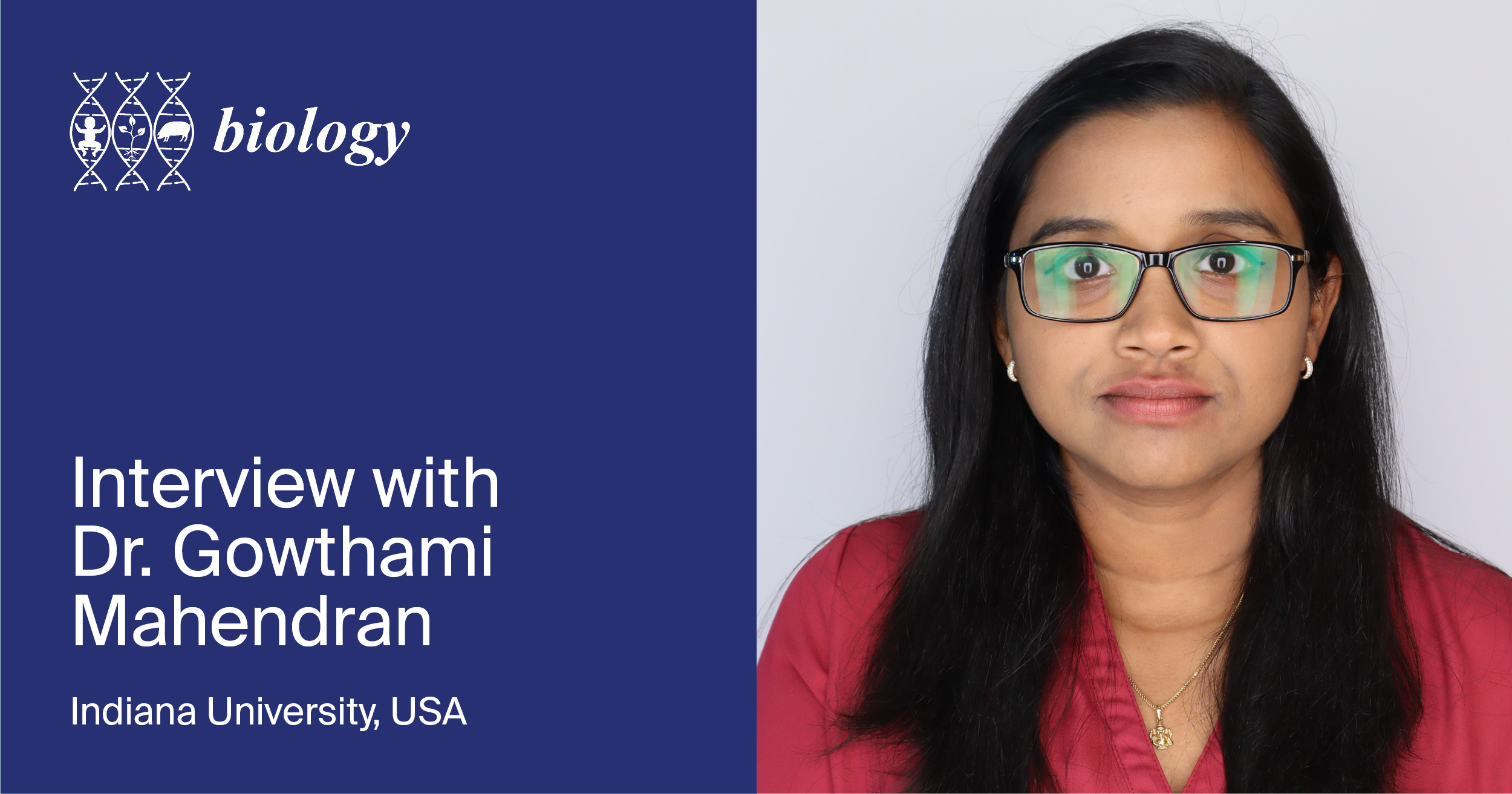
Name: Dr. Gowthami Mahendran
Affiliation: Indiana University, USA
Research interests: multi-omics approaches to neurodevelopmental disorders, with particular emphasis on the molecular pathogenesis of Miller-Dieker Syndrome and the phosphoproteomic profiling of hydrocephalus toward biomarker discovery and therapeutic development.
- How does receiving this award resonate with you, and what does it mean for your journey in peer review?
Receiving this Outstanding Reviewer Award is truly meaningful to me, as it recognizes my contributions to peer review and validates the time and effort I have invested in providing constructive, thoughtful feedback to support high-quality scientific publications. Peer review plays a critical role in maintaining the integrity and rigor of the scientific community, and I am honored to contribute to that process. I look at peer reviewing not merely as an obligation, but as an opportunity to contribute to the advancement of science, support fellow researchers, and continually refine my own critical thinking and scientific perspective. - What key aspects do you prioritize when evaluating a manuscript?
When I review a manuscript, I look at how clearly the research question is defined, whether the experimental approach is appropriate, and if the data are analyzed and presented in a way that supports the conclusions being drawn. I also pay attention to the overall contribution of the work, whether it adds something meaningful or new to the field. Alongside that, clarity in writing and organization is also an important factor. Equally important to me is providing feedback that is constructive and helpful, with the goal of improving the quality of the work and supporting the authors in strengthening their study. - What common weaknesses do you see in academic writing, and how can authors improve the reviewability of their manuscripts?
One common weakness I have observed during the peer-review process is a lack of logical flow between paragraphs and sections. This is particularly evident in review and systematic review articles, but it also appears in some research papers, especially in the organization and sequencing of results. When ideas are not presented in a coherent and structured manner, it becomes challenging to follow the narrative and fully assess the study. Careful organization and thorough proofreading can significantly improve a manuscript. Ensuring a clear progression of ideas and a well-structured presentation not only enhances readability but also facilitates a more efficient and effective review process, allowing the scientific contribution to be communicated more clearly. - How has reviewing others’ work informed or shaped your own research?
Reviewing others’ work has broadened my perspective on how research questions can be approached and communicated. It has exposed me to different experimental strategies and ways of interpreting data, which has influenced how I design my own studies and think about potential limitations early on. It has also made me more aware of the importance of anticipating the reader’s perspective. Overall, the experience has encouraged me to be more critical, but also more thoughtful and balanced in my own research. - With AI-assisted writing and detection tools on the rise, how do you envision the future of peer review?
With the growing use of AI in writing and screening manuscripts, I think peer review will gradually adapt rather than change completely. AI tools can definitely help with things like language clarity, formatting, or even flagging potential issues, which could make the process more efficient. That said, I don’t think they can replace the role of a reviewer. Assessing the significance of a study, interpreting results, and understanding the broader context still require human judgment and experience.
