

Impact of Ostomy on Quality of Life in Patients with Colorectal Cancer: A Systematic Review and Meta-Analysis

 , , ,
, , ,  , , and
Highlights
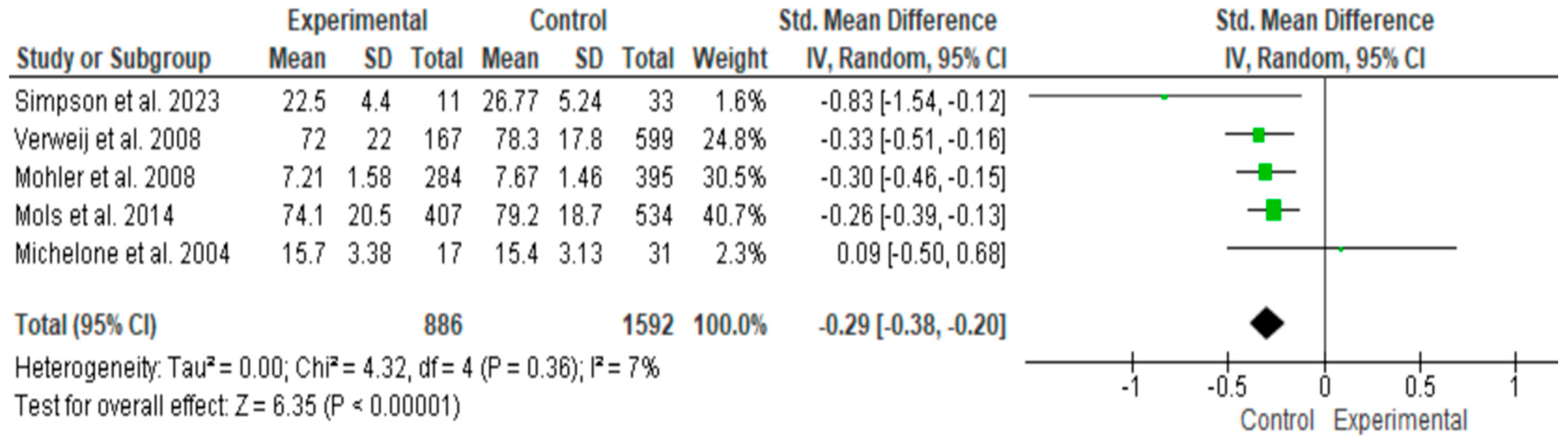
- Ostomized patients with colorectal cancer have significantly lower quality of life compared to non-ostomized patients (pooled effect size = −0.29).
- The negative impact of ostomy is consistent across study designs and follow-up periods, confirming the robustness of the findings.
- Healthcare professionals should provide tailored psychosocial and rehabilitative support to improve adaptation and emotional well-being in ostomized patients.
- Future research should explore targeted interventions to enhance social reintegration and long-term quality of life in this population.
Abstract
1. Introduction
2. Methods
2.1. Literature Search Strategy
2.2. Eligibility Criteria
- Study design:
- Case–control studies comparing patients with colorectal cancer and a stoma (cases) versus patients with colorectal cancer without a stoma (controls), with assessment of quality of life.
- Experimental or interventional studies in which patients with colorectal cancer undergo ostomy creation, with quality of life evaluated both before and after the intervention.
- Population: human adults (≥18 years) diagnosed with colorectal cancer.
- Outcome measure: assessed health-related quality of life or related patient-reported outcomes.
- Intervention/Exposure: Surgical creation of a stoma (colostomy or ileostomy) as part of the treatment for colorectal cancer. The intervention group included patients who underwent stoma formation, either temporary or permanent, while the comparison group comprised patients who received colorectal surgery without stoma creation.
- Included pediatric populations (<18 years).
- Were case reports, letters, editorials, reviews, or conference abstracts.
- Focused exclusively on non-human subjects.
- Did not provide sufficient data on quality of life or related outcomes.
2.3. Study Selection and Data Collection
2.4. Primary Outcome and Effect Size
2.5. Risk of Bias and Quality Assessments
2.6. Quality Data Synthesis
2.7. Quantitative Data Synthesis and Analysis
3. Results
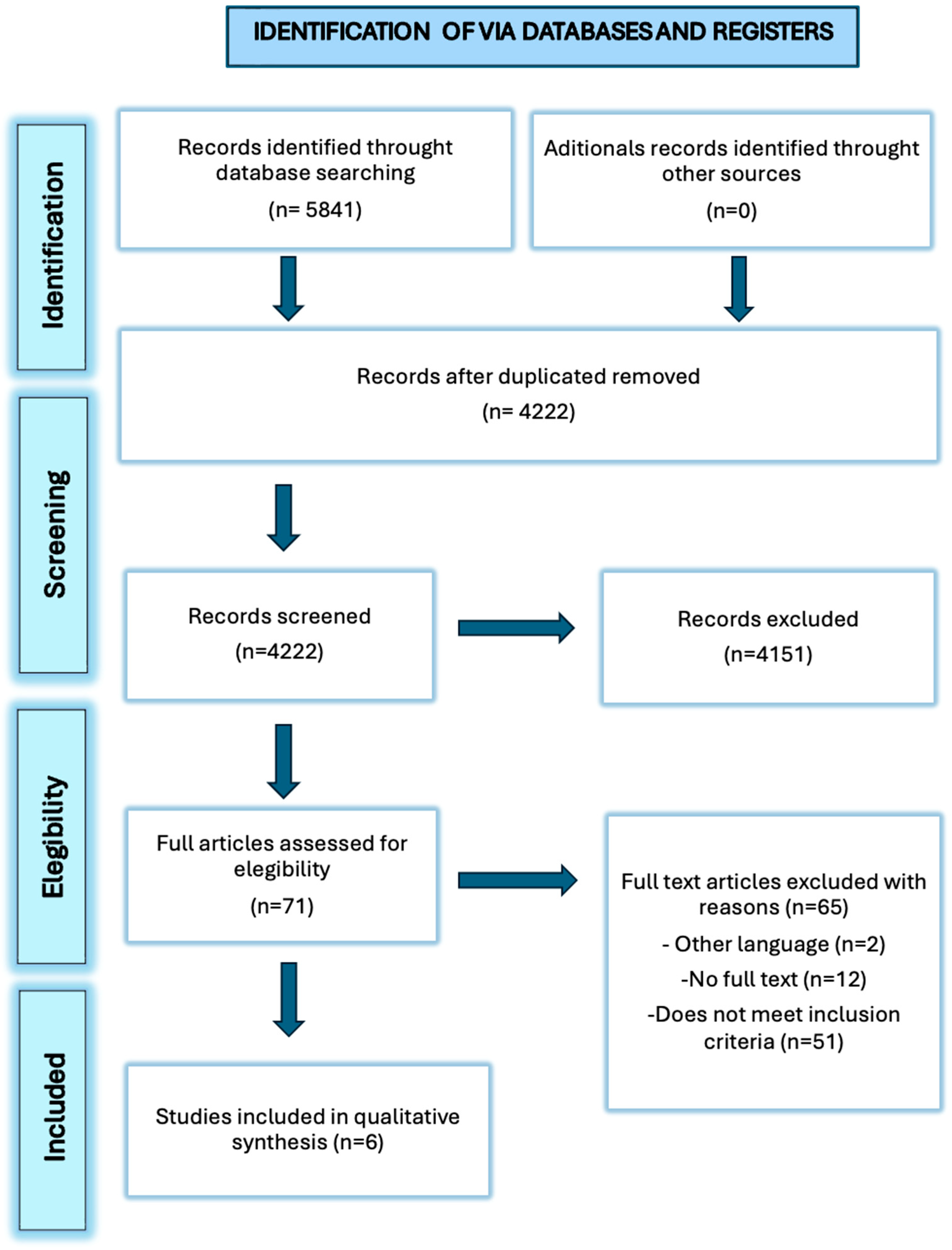
3.1. Study Selection and Characteristics
3.2. Qualitative Results of Quality of Life
3.3. Effect Size
3.4. Quality Assessment
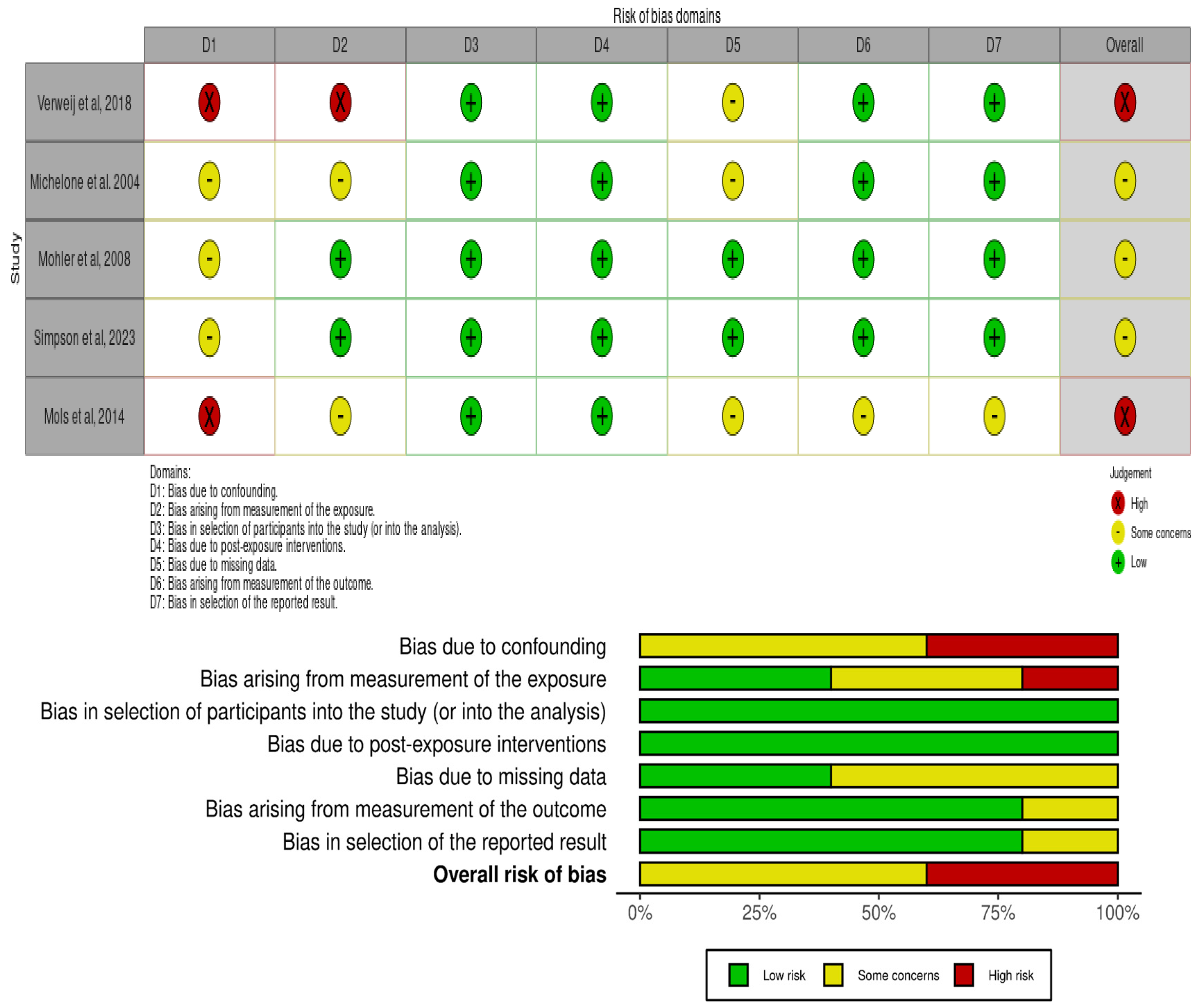
3.5. Risk of Bias
3.6. Sensitivity Analysis
3.7. Certainty of the Evidence
4. Discussion
4.1. Strengths and Limitations
4.2. Clinical Implications
5. Conclusions
Supplementary Materials
Author Contributions
Funding
Institutional Review Board Statement
Informed Consent Statement
Data Availability Statement
Conflicts of Interest
Abbreviations
| BIPQ | Brief Illness Perception Questionnaire |
| CD-RISC | Connor-Davidson Resilience Scale |
| CI | Confidence Interval |
| CRC | Colorectal Cancer |
| EORTC QLQ-C30 | European Organisation for Research and Treatment of Cancer Quality of Life Questionnaire–Core 30 |
| EORTC QLQ-C38 | European Organisation for Research and Treatment of Cancer Quality of Life Questionnaire–Core 38 |
| GHQ-12 | General Health Questionnaire–12 items |
| HADS | Hospital Anxiety and Depression Scale |
| HRQoL | Health-Related Quality of Life |
| MD | Mean Difference |
| mCOH–QOL | Modified City of Hope–Quality of Life |
| NOS | Newcastle–Ottawa Scale |
| PSS | Perceived Stress Scale |
| QoL | Quality of Life |
| RFIPC | Rating Form of Inflammatory Bowel Disease Patients’ Concerns |
| REML | Restricted Maximum Likelihood |
| SCQ | Self-administered Comorbidity Questionnaire |
| SD | Standard Deviation |
| SE | Standard Error |
| SF-36 | Short Form Health Survey |
| SF-36 V2 | Short Form Health Survey, version 2 |
| SMD | Standardized Mean Difference |
| UK | United Kingdom |
| USA | United States of America |
| WEMWBS | Warwick–Edinburgh Mental Well-Being Scale |
| WHO | World Health Organization |
| WHOQOL-BREF | World Health Organization Quality of Life–BREF |
References
- Matsuda, T.; Fujimoto, A.; Igarashi, Y. Colorectal Cancer: Epidemiology, Risk Factors, and Public Health Strategies. Digestion 2025, 106, 91–99. [Google Scholar] [CrossRef]
- Sung, H.; Ferlay, J.; Siegel, R.L.; Laversanne, M.; Soerjomataram, I.; Jemal, A.; Bray, F. Global Cancer Statistics 2020: GLOBOCAN Estimates of Incidence and Mortality Worldwide for 36 Cancers in 185 Countries. CA Cancer J. Clin. 2021, 71, 209–249. [Google Scholar] [CrossRef]
- World Health Organization (WHO). Available online: https://www.who.int (accessed on 31 October 2025).[Green Version]
- Vieira, A.R.; Abar, L.; Chan, D.S.M.; Vingeliene, S.; Polemiti, E.; Stevens, C.; Greenwood, D.; Norat, T. Foods and Beverages and Colorectal Cancer Risk: A Systematic Review and Meta-Analysis of Cohort Studies, an Update of the Evidence of the WCRF-AICR Continuous Update Project. Ann. Oncol. 2017, 28, 1788–1802. [Google Scholar] [CrossRef] [PubMed]
- Keum, N.; Giovannucci, E. Global Burden of Colorectal Cancer: Emerging Trends, Risk Factors and Prevention Strategies. Nat. Rev. Gastroenterol. Hepatol. 2019, 16, 713–732. [Google Scholar] [CrossRef] [PubMed]
- Mao, J.-X.; Gao, R.; Wang, Y.; Yan, X.-B.; Wang, H.-H. Surgical Treatment of Colorectal Cancer: A Multidimensional Review. World J. Gastrointest. Surg. 2025, 17, 107785. [Google Scholar] [CrossRef] [PubMed]
- Mulita, F.; Lotfollahzadeh, S. Intestinal Stoma. In StatPearls; StatPearls Publishing: Treasure Island, FL, USA, 2025. [Google Scholar]
- Couwenberg, A.M.; Burbach, J.P.M.; van Grevenstein, W.M.U.; Smits, A.B.; Consten, E.C.J.; Schiphorst, A.H.W.; Wijffels, N.A.T.; Heikens, J.T.; Intven, M.P.W.; Verkooijen, H.M. Effect of Neoadjuvant Therapy and Rectal Surgery on Health-Related Quality of Life in Patients With Rectal Cancer During the First 2 Years After Diagnosis. Clin. Color. Cancer 2018, 17, e499–e512. [Google Scholar] [CrossRef]
- Walma, M.S.; Kornmann, V.N.N.; Boerma, D.; de Roos, M.A.J.; van Westreenen, H.L. Predictors of Fecal Incontinence and Related Quality of Life After a Total Mesorectal Excision With Primary Anastomosis for Patients With Rectal Cancer. Ann. Coloproctol. 2015, 31, 23–28. [Google Scholar] [CrossRef]
- Richbourg, L.; Thorpe, J.M.; Rapp, C.G. Difficulties Experienced by the Ostomate After Hospital Discharge. J. Wound Ostomy Cont. Nurs. 2007, 34, 70. [Google Scholar] [CrossRef]
- Suárez, L.R. 2. Cáncer colorrectal: Calidad de vida y educación para la salud de los pacientes con ostomías digestivas. Dir. NPunto 2022, 47, 33–51. [Google Scholar]
- Cabilan, C.J.; Hines, S. The Short-Term Impact of Colorectal Cancer Treatment on Physical Activity, Functional Status and Quality of Life: A Systematic Review. JBI Evid. Synth. 2017, 15, 517. [Google Scholar] [CrossRef]
- Vonk-Klaassen, S.M.; de Vocht, H.M.; den Ouden, M.E.M.; Eddes, E.H.; Schuurmans, M.J. Ostomy-Related Problems and Their Impact on Quality of Life of Colorectal Cancer Ostomates: A Systematic Review. Qual. Life Res. Int. J. Qual. Life Asp. Treat. Care Rehabil. 2016, 25, 125–133. [Google Scholar] [CrossRef]
- Neuberger, L.; Braude, P.; Weeks, K.; Braude, P.; Halliday, R.; McCarthy, K.; Carter, B. A New Stoma for an Older Person—An Association with Quality of Life and Physical Function: A Systematic Review. J. Am. Geriatr. Soc. 2022, 70, 2415–2425. [Google Scholar] [CrossRef] [PubMed]
- Redeker, C.; Grunfeld, E.; Miles, A. The Impact of an Ostomy on Body Image and Sexual Function of Patients With Colorectal Cancer: A Systematic Review and Meta-Analysis. Psychooncology 2025, 34, e70249. [Google Scholar] [CrossRef]
- Kristensen, H.Ø.; Thyø, A.; Christensen, P. Systematic Review of the Impact of Demographic and Socioeconomic Factors on Quality of Life in Ostomized Colorectal Cancer Survivors. Acta Oncol. 2019, 58, 566–572. [Google Scholar] [CrossRef]
- Heydari, A.; Manzari, Z.S.; Pouresmail, Z. Nursing Intervention for Quality of Life in Patients with Ostomy: A Systematic Review. Iran. J. Nurs. Midwifery Res. 2023, 28, 371–383. [Google Scholar] [CrossRef] [PubMed]
- Moher, D.; Shamseer, L.; Clarke, M.; Ghersi, D.; Liberati, A.; Petticrew, M.; Shekelle, P.; Stewart, L.A. PRISMA-P Group Preferred Reporting Items for Systematic Review and Meta-Analysis Protocols (PRISMA-P) 2015 Statement. Syst. Rev. 2015, 4, 1. [Google Scholar] [CrossRef] [PubMed]
- Stroup, D.F.; Berlin, J.A.; Morton, S.C.; Olkin, I.; Williamson, G.D.; Rennie, D.; Moher, D.; Becker, B.J.; Sipe, T.A.; Thacker, S.B.; et al. Meta-Analysis of Observational Studies in EpidemiologyA Proposal for Reporting. JAMA 2000, 283, 2008–2012. [Google Scholar] [CrossRef]
- Altman, D.G.; Simera, I.; Hoey, J.; Moher, D.; Schulz, K. EQUATOR: Reporting Guidelines for Health Research. Lancet 2008, 371, 1149–1150. [Google Scholar] [CrossRef]
- Stone, P.W. Popping the (PICO) Question in Research and Evidence-Based Practice. Appl. Nurs. Res. 2002, 15, 197–198. [Google Scholar] [CrossRef]
- Higgins, J.P.T.; Morgan, R.L.; Rooney, A.A.; Taylor, K.W.; Thayer, K.A.; Silva, R.A.; Lemeris, C.; Akl, E.A.; Bateson, T.F.; Berkman, N.D.; et al. A Tool to Assess Risk of Bias in Non-Randomized Follow-up Studies of Exposure Effects (ROBINS-E). Environ. Int. 2024, 186, 108602. [Google Scholar] [CrossRef]
- Wells, G.; Wells, G.; Shea, B.; Shea, B.; O’Connell, D.; Peterson, J.; Welch, V.; Losos, M.; Tugwell, P.; Ga, S.W. The Newcastle-Ottawa Scale (NOS) for Assessing the Quality of Nonrandomised Studies in Meta-Analyses; The Ottawa Hospital: Ottawa, ON, Canda, 2014. [Google Scholar]
- Verweij, N.M.; Bonhof, C.S.; Schiphorst, A.H.W.; Maas, H.A.; Mols, F.; Pronk, A.; Hamaker, M.E. Quality of Life in Elderly Patients with an Ostomy—A Study from the Population-based PROFILES Registry. Color. Dis. 2018, 20, O92–O102. [Google Scholar] [CrossRef] [PubMed]
- de Michelone, A.P.C.; Santos, V.L.C.G. Qualidade de vida de adultos com câncer colorretal com e sem ostomia. Rev. Lat. Am. Enferm. 2004, 12, 875–883. [Google Scholar] [CrossRef]
- Jane Mohler, M.; Joel Coons, S.; Hornbrook, M.C.; Herrinton, L.J.; Wendel, C.S.; Grant, M.; Krouse, R.S. The Health-Related Quality of Life in Long-Term Colorectal Cancer Survivors Study: Objectives, Methods and Patient Sample. Curr. Med. Res. Opin. 2008, 24, 2059–2070. [Google Scholar] [CrossRef][Green Version]
- Simpson, E.; Pourshahidi, K.; Davis, J.; Slevin, M.; Lawther, R.; O’Connor, G.; Porrett, T.; Marley, J.; Gill, C. Living with and without an Intestinal Stoma: Factors That Promote Psychological Well-being and Self-care: A Cross-sectional Study. Nurs. Open 2023, 10, 7811–7825. [Google Scholar] [CrossRef]
- Mols, F.; Lemmens, V.; Bosscha, K.; Van Den Broek, W.; Thong, M.S.Y. Living with the Physical and Mental Consequences of an Ostomy: A Study among 1–10-year Rectal Cancer Survivors from the Population-based PROFILES Registry. Psychooncology 2014, 23, 998–1004. [Google Scholar] [CrossRef]
- Carlsson, E.; Berndtsson, I.; Hallén, A.-M.; Lindholm, E.; Persson, E. Concerns and Quality of Life Before Surgery and During the Recovery Period in Patients With Rectal Cancer and an Ostomy. J. Wound Ostomy Cont. Nurs. 2010, 37, 654–661. [Google Scholar] [CrossRef]
- Reese, J.B.; Handorf, E.; Haythornthwaite, J.A. Sexual Quality of Life, Body Image Distress, and Psychosocial Outcomes in Colorectal Cancer: A Longitudinal Study. Support. Care Cancer Off. J. Multinatl. Assoc. Support. Care Cancer 2018, 26, 3431–3440. [Google Scholar] [CrossRef] [PubMed]
- Li, G.; He, X.; Qin, R.; Yao, Q.; Dong, X.; Li, P. Linking Stigma to Social Isolation among Colorectal Cancer Survivors with Permanent Stomas: The Chain Mediating Roles of Stoma Acceptance and Valuable Actions. J. Cancer Surviv. Res. Pract. 2025, 19, 2037–2046. [Google Scholar] [CrossRef] [PubMed]
- Ercolano, E.; Grant, M.; Sun, V.; Tallman, N.; Mo, J.; Pitcher, P.; Hornbrook, M.C.; Yonsetto, P.; Bojorquez, O.; Raza, S.; et al. Self-Management Goals of Cancer Survivors with an Ostomy. J. Cancer Surviv. 2023, 17, 1480–1487. [Google Scholar] [CrossRef]
- Marcomini, I.; Iovino, P.; Rasero, L.; Manara, D.F.; Vellone, E.; Villa, G. Self-Care and Quality of Life of Ostomy Patients: A Structural Equation Modeling Analysis. Nurs. Rep. 2024, 14, 3417–3426. [Google Scholar] [CrossRef]
- Yang, F.; Feng, F.; Gu, H.; Liang, H.; Zhang, J.; Cheng, Y.; Zhang, W. Resilience and Vulnerability of Post-Ostomy Patients with Early-Onset Colorectal Cancer from the Perspective of Social-Ecological Theory: A Qualitative Study. Front. Psychiatry 2025, 15, 1497428. [Google Scholar] [CrossRef]
- Asefa, T.; Endale, H.T.; Getnet, M.; Aragie, H.; Negash, H.K.; Gela, Y.Y.; Tesfaye, W. The Impact of Ostomy on Colorectal Cancer Patients and Caregivers: A Qualitative Study. Support. Care Cancer 2025, 33, 1030. [Google Scholar] [CrossRef] [PubMed]
- Diant, L.B.E.F.; Sordes, F.; Chaubard, T. Psychological impact of ostomy on the quality of life of colorectal cancer patients: Role of body image, self-esteem and anxiety. Bull. Cancer 2018, 105, 573–580. [Google Scholar] [CrossRef]
- Sivero, L.; Bottone, M.; Siciliano, S.; Volpe, S.; Maione, R.; Chini, A.; Pollastro, M.; Iovino, S.; Sivero, S. Post-Operative Oncological and Psychological Evaluation of Patients with Colostomy for Colorectal Cancer. Ann. Ital. Chir. 2022, 93, 435–438. [Google Scholar]
- Song, Q.; Liu, C.; Lv, X.; Wang, J.; Yin, G. Course and Predictors of Psychological Distress among Colorectal Cancer Survivors with Ostomies: A Longitudinal Study. Eur. J. Oncol. Nurs. 2022, 59, 102170. [Google Scholar] [CrossRef] [PubMed]
- Geng, H.; Chuang, D.; Yang, F.; Yang, Y.; Liu, W.; Liu, L.; Tian, H. Prevalence and Determinants of Depression in Caregivers of Cancer Patients. Medicine 2018, 97, e11863. [Google Scholar] [CrossRef]
- Nasiriziba, F.; Saati, M.; Haghani, H. Correlation between Self-Efficacy and Self-Esteem in Patients with an Intestinal Stoma. Br. J. Nurs. 2020, 29, S22–S29. [Google Scholar] [CrossRef] [PubMed]
- Bulkley, J.E.; McMullen, C.K.; Grant, M.; Wendel, C.; Hornbrook, M.C.; Krouse, R.S. Ongoing Ostomy Self-Care Challenges of Long-Term Rectal Cancer Survivors. Support. Care Cancer Off. J. Multinatl. Assoc. Support. Care Cancer 2018, 26, 3933–3939. [Google Scholar] [CrossRef]
- Choudhary, M.; Kaur, H. Experiences of Living with Intestinal Ostomy: A Qualitative Meta-Synthesis. Indian J. Palliat. Care 2020, 26, 421–427. [Google Scholar] [CrossRef]
- Brown, H.; Randle, J. Living with a Stoma: A Review of Literature. J. Clin. Nurs. 2005, 14, 74–81. [Google Scholar] [CrossRef]
- Collado-Boira, E.J.; Machancoses, F.H.; Folch-Ayora, A.; Salas-Medina, P.; Bernat-Adell, M.D.; Bernalte-Martí, V.; Temprado-Albalat, M.D. Self-Care and Health-Related Quality of Life in Patients with Drainage Enterostomy: A Multicenter, Cross Sectional Study. Int. J. Environ. Res. Public Health 2021, 18, 2443. [Google Scholar] [CrossRef] [PubMed]
- Jin, Y.; Tian, X.; Li, Y.; Jiménez-Herrera, M.; Wang, H. Effects of Continuous Care on Health Outcomes in Patients with Stoma: A Systematic Review and Meta-Analysis. Asia-Pac. J. Oncol. Nurs. 2021, 9, 21–31. [Google Scholar] [CrossRef]
- Mo, J.; Wendel, C.S.; Sloan, J.A.; Sun, V.; Hornbrook, M.C.; Grant, M.; Ercolano, E.; Malkowicz, S.B.; Tallman, N.J.; McCorkle, R.C.; et al. Stoma Location and Ostomy-Related Quality of Life among Cancer Survivors with Ostomies: A Pooled Analysis. Am. J. Surg. 2022, 223, 963–968. [Google Scholar] [CrossRef] [PubMed]
- Skibsted, C.V.; Jensen, B.T.; Juul, T.; Kristensen, H.Ø. Patient Reported Outcome Measures Assessing Quality of Life in Patients with an Intestinal Stoma: A Systematic Review. Color. Dis. Off. J. Assoc. Coloproctol.Great Br. Irel. 2022, 24, 1128–1139. [Google Scholar] [CrossRef] [PubMed]



| Study | Study Design | Population (n) | Groups (n) | Ostomy Status | Age (Year) | Outcomes | Results |
|---|---|---|---|---|---|---|---|
| Verweij et al. (2018) [24] | Case–control study | CRC patients (2299) | Case group (494) | Ostomy patients | 60.2 | Quality of life (EORTC QLQ-C30 and EORTC QLQ-C38) | Elderly CRC patients with an ostomy report more limitations in physical functioning compared without an ostomy. |
| Control group (1805) | No Ostomy patients | 60.4 | |||||
| Michelone et al. (2004) [25] | Case–control study | CRC patients (48) | Case group (17) | Ostomy patients | 66.5 | Quality of life (WHOQOL) | No significant differences were found in the quality of life between ostomates and non-ostomates. |
| Control group (31) | No Ostomy patients | 60.9 | |||||
| Mohler et al. (2008) [26] | Case–control study | CRC patients (679) | Case group (284) | Ostomy patients | 72.4 | Quality of life (mCOH-QOL ostomy and SF-36 V2) | The quantitative measures used were acceptable. Mixed methods design allows for assessment of long-term QOL. |
| Control group (395) | No Ostomy patients | 71.1 | |||||
| Simpson et al. (2023) [27] | Case–control study | CRC patients (278) | Case group (129) | Ostomy patients | 46 | Quality of life (WHOQOL-BREF) Psychiatric morbidity (GHQ-12) Psychiatric well-being (WEMWBS) Stress (PSS) Cope (Brief Coping Scale) Resilience (CD-RISC). | Psychological well-being and general physical health are reduced in stomates. |
| Control group (149) | No Ostomy patients | 33 | |||||
| Mols et al. (2014) [28] | Case–control study | CRC patients (946) | Case group (408) | Ostomy patients | 69.8 | Quality of life (EORTC QLQ-C30 and EORTC QLQ-C38) Depression and Anxiety (HADS) Comorbidity (SCQ) Perception of the illness (BIPQ) | Survivors with colorectal cancer and stoma have lower QOL and worse illness perceptions than those without stoma 1 to 10 years after diagnosis. |
| Control group (538) | No Ostomy patients | 67.9 | |||||
| Carlsson et al. (2010) [29] | Intervention | Rectal Cancer (57) | Ostomy patients (57) | Colostomy (44) Ileostomy(13) | 66 | Quality of life (SF-36) Worries (RFIPC) | Surgical management of rectal cancer raises concerns and profoundly impairs QOL during the first several postoperative months. |
| Control group (22) | No ostomy patients | - |
Disclaimer/Publisher’s Note: The statements, opinions and data contained in all publications are solely those of the individual author(s) and contributor(s) and not of MDPI and/or the editor(s). MDPI and/or the editor(s) disclaim responsibility for any injury to people or property resulting from any ideas, methods, instructions or products referred to in the content. |
© 2026 by the authors. Licensee MDPI, Basel, Switzerland. This article is an open access article distributed under the terms and conditions of the Creative Commons Attribution (CC BY) license.
Share and Cite
Díaz-Sánchez, C.; Rodríguez-Muñoz, P.M.; Navarro-López, V.; Carmona-Torres, J.M.; Sánchez-Gil, A.; Sánchez-González, J.L.; Rivera-Picón, C. Impact of Ostomy on Quality of Life in Patients with Colorectal Cancer: A Systematic Review and Meta-Analysis. Healthcare 2026, 14, 444. https://doi.org/10.3390/healthcare14040444
Díaz-Sánchez C, Rodríguez-Muñoz PM, Navarro-López V, Carmona-Torres JM, Sánchez-Gil A, Sánchez-González JL, Rivera-Picón C. Impact of Ostomy on Quality of Life in Patients with Colorectal Cancer: A Systematic Review and Meta-Analysis. Healthcare. 2026; 14(4):444. https://doi.org/10.3390/healthcare14040444
Chicago/Turabian StyleDíaz-Sánchez, Cristina, Pedro Manuel Rodríguez-Muñoz, Víctor Navarro-López, Juan Manuel Carmona-Torres, Alba Sánchez-Gil, Juan Luis Sánchez-González, and Cristina Rivera-Picón. 2026. "Impact of Ostomy on Quality of Life in Patients with Colorectal Cancer: A Systematic Review and Meta-Analysis" Healthcare 14, no. 4: 444. https://doi.org/10.3390/healthcare14040444
APA StyleDíaz-Sánchez, C., Rodríguez-Muñoz, P. M., Navarro-López, V., Carmona-Torres, J. M., Sánchez-Gil, A., Sánchez-González, J. L., & Rivera-Picón, C. (2026). Impact of Ostomy on Quality of Life in Patients with Colorectal Cancer: A Systematic Review and Meta-Analysis. Healthcare, 14(4), 444. https://doi.org/10.3390/healthcare14040444