1. Introduction
Vibrotactile feedback is a mechanical stimulation that is produced with actuators placed on the skin [
1]. This form of stimulation has applications in gaming and virtual reality [
2], movement training [
3], rehabilitation after stroke [
4], and neuromodulation in Parkinson’s disease [
5]. Research shows that investigating the specifics of vibration perception is essential for the usability of haptic interfaces, particularly in human–computer interaction applications [
6]. For haptic feedback with vibrotactile stimulation to advance in these areas, it is necessary to understand how different parameters impact how people respond to the stimulation. Stimulating the upper extremities is interesting for applications like upper-extremity stroke rehabilitation (i.e., hemiparesis) and teaching new motor skills like playing a musical instrument.
How different parameters of vibrotactile stimulation applied to the upper extremities impact sensation and perception has not been previously investigated. In our study, we focused not only on sensation intensity but also on the participants’ feedback on the vibration. Most prior studies did not examine how participants experience vibrotactile stimulation, which is important in developing human–computer interaction devices. In this work, we address the following questions: How does varying ERM motor parameters affect sensation and perception regarding upper-extremity muscles? How does upper-extremity movement affect sensation intensity? How does stimulating one versus multiple motors affect sensation? Our hypothesis was that ERM parameters would be strongly correlated with sensation intensity but not perceived pleasantness, for which more heterogeneous responses would be exhibited due to different factors, including age, gender, and skin temperature. We further hypothesized that movement would reduce sensation intensity and that most participants would be able to identify the locations of at least three simultaneously vibrating motors on their upper extremities. In this work, we present a study on 15 healthy participants that analyzed the effects of changing the vibration signal voltage on sensation and perception. Our contributions include (1) an analysis of sensation intensity and perceived pleasantness when changing the voltage stimulation parameter across the upper extremity, (2) a comparison of sensation intensity when the upper extremity is still and when it is actively in movement, and (3) an analysis of how accurately participants can identify the vibrating motors or the stimulated muscles from tactile feedback.
2. Related Work
Vibrotactile feedback has been shown to be effective for delivering tactile cues, as the small size of these systems enables them to be embedded in lightweight garments that do not hinder the movement of the participant [
3]. This could help in developing tactile motion guidance for motor learning or rehabilitation therapy, so that participants can practice motions on their own without the presence of a coach or therapist. Previous work has studied the effects of some vibrotactile stimulation parameters in older adults with and without a history of stroke [
1]. However, stimulation was limited to the hand and the forearm. Gtat et al. [
7] found that a pulse width of 15 ms had an average perceptibility of 50%, thus making it the absolute detection threshold for the average participant. Ng et al. [
8] found that high-amplitude and low-frequency stimuli were perceived more intensely than high-frequency and low-amplitude stimuli. Our study focuses on the effects of changing the voltage parameter of ERM motors when the stimulation is applied on the shoulder, upper arm, lower arm, and index finger. Other studies have focused on understanding the effect of the stimulation pattern on controlling an upper-limb prosthetic [
9]. They found that the stimulation pattern had no significant effect on sensation intensity. Furthermore, they did not observe a significant difference between the effects of amplitude and frequency on sensation intensity. In our work, we used ERM motors, where voltage affects the rotational speed of the motors. The vibration frequency and vibration amplitude of ERM motors are linked and proportional to the voltage [
10]. We chose ERM motors because of their common use in haptic devices [
4,
11]. We are interested in studying the effects of changing the voltage on sensation, perception, and motor identification in healthy adults. In future work, we plan to investigate different types of motors, where frequency and voltage are not linked.
It is known that tactile sensation in the hand decreases when it is in movement [
12], and our work examines whether this effect can also be observed throughout the upper extremities. Bark et al. [
3] evaluated the effect of vibrotactile feedback on the learning of arm motions. The vibrating motors were placed on the forearm without regard to placing the motors consistently on the same muscles. In our work, we placed the motors on important muscles in the upper extremity, which can help to study the effects of vibrotactile stimulation in teaching new muscle coordination patterns. Shah et al. [
13] developed a study to distinguish stimuli thresholds in the upper extremities using both sequential and simultaneous vibration frequencies. They observed that the discrimination threshold in the front of the forearm was on average 10 Hz lower than the threshold for the back of the forearm. Their results showed that sequentially delivered stimuli were identified more accurately than simultaneously delivered stimuli. We investigated in our study if participants could identify simultaneous vibrating motors in different regions of their upper extremities and at what threshold values.
3. Materials and Methods
We present in this section the vibrotactile stimulation system developed for this study. The system consists of a microcontroller obtained from Arduino (Mega 2560) Shenzhen, China, that has 15 digital pins which can be used for pulse width modulation (PWM) signals. The maximum voltage value of the digital pins is 5 V. The pins are connected to ERM vibrating motors obtained from Seeed Technology (Model # 316040001). We used ERM vibrating motors, where vibration voltage and frequency are linked [
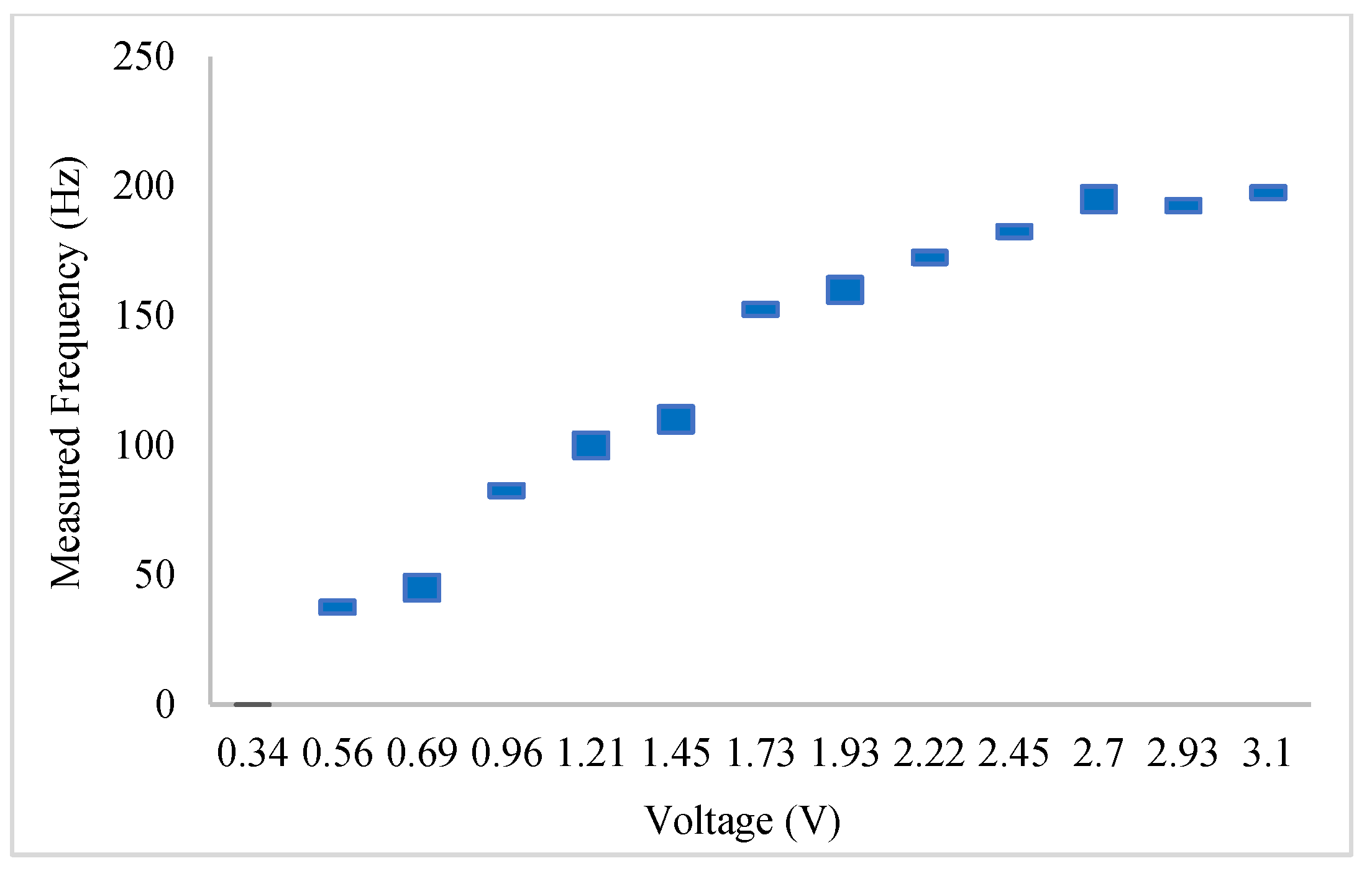
10]. To verify the relation between voltage and frequency in ERM motors, we measured the vibration frequency using an accelerometer (SparkFun KX134, Boulder, CO, USA) fed into a Fourier transform function. In
Figure 1, we show how the measured frequencies and voltages are linked in ERM motors based on a representative sample ERM motor. We placed 8 motors on specific muscles on the shoulder, upper arm, and lower arm and 1 vibrating motor on the index finger.
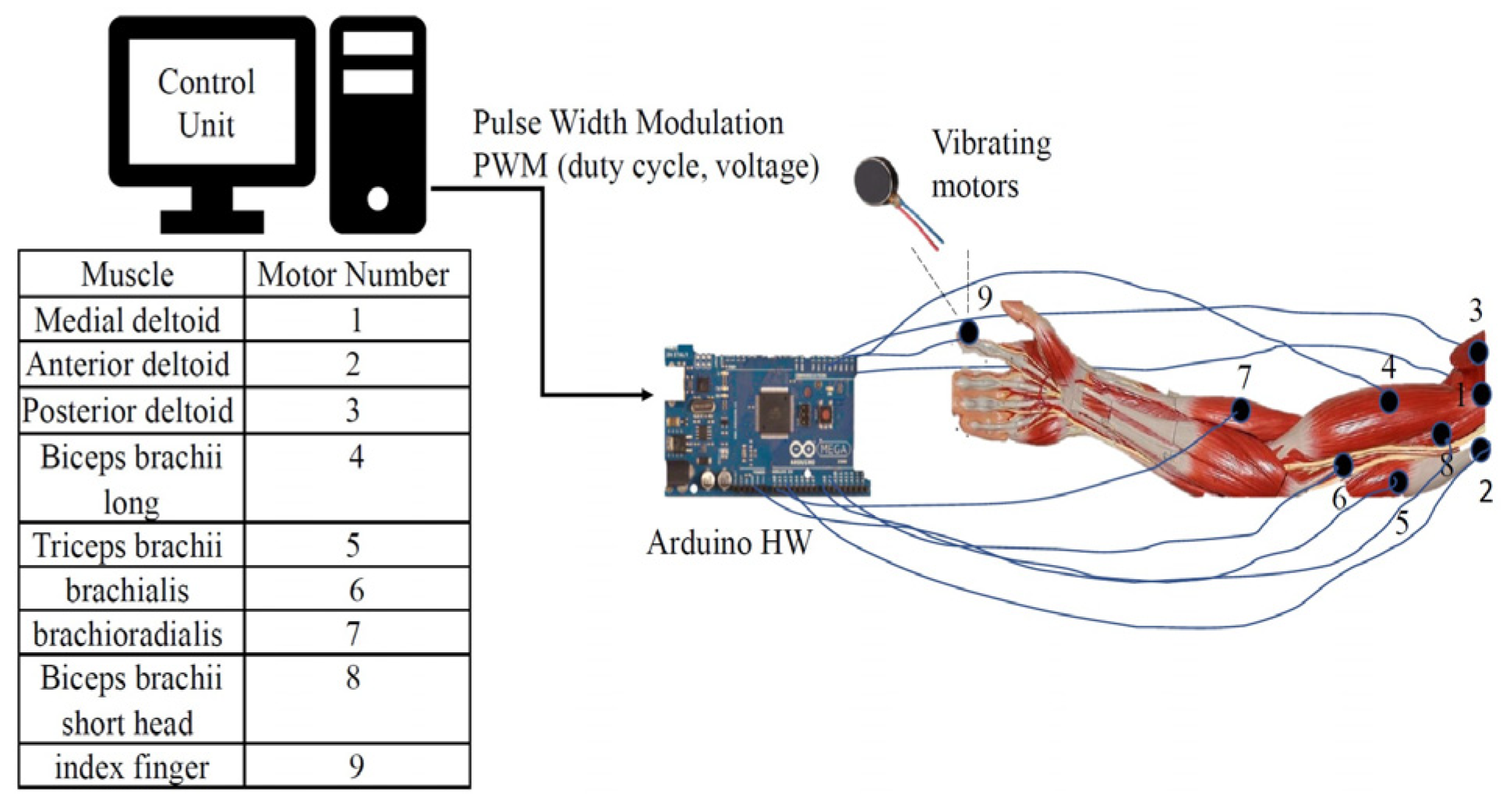
Figure 2 provides a general description of the system components and shows the placement of the motors on the upper-extremity muscles and on the index finger. We chose these locations for motor placement based on the major muscles in the upper extremity. These muscles are often targeted in haptic devices for rehabilitation (e.g., after stroke), virtual reality training, and motor learning. We also added the index finger, which has dense skin receptors, for comparison with the muscle locations. The control unit of the vibrotactile system was developed in MATLAB (R2021/R2022b). The vibrotactile signal is generated with PWM sent to the Arduino digital pins connected to the vibrating motors. We controlled the vibrating signal voltage and duration in real time. We recorded the participant’s verbal response to the changes in these parameters. The control unit communicates with the motors individually via serial communication. We changed the voltage value entered to the motors by changing the PWM duty cycle using the writePWMDutyCycle function in MATLAB [
14].
4. Sensation and Perception Studies and Protocol
We conducted three separate studies on each participant to investigate how they sensed and perceived the stimulation when the upper extremity was still, how they sensed the stimulation during movement, and to characterize their conscious awareness of which motor was vibrating. Throughout the paper we will use “sensation” to refer to the level of sensation intensity felt on a scale from 1 to 4 (1 = not felt, 2 = low, 3 = medium, 4 = high). We will use the term “perception” to refer to the perceived pleasantness of the stimulation. This will be rated on a scale from 1 to 3 (1 = unpleasant, 2 = neutral, 3 = pleasant). We chose those three values to gain a general understanding of perception as we changed the voltage from low to high. We describe more customized feedback by participants in the Discussion section. One of our objectives was to determine how changing the stimulus’s voltage affects sensation intensity and perceived pleasantness. The studies were conducted on 15 healthy adults (13 males and 2 females) with an average age of 26.6 ± 5.2 years. Participants were recruited for this study voluntarily without consideration of sex or age (minimum age of 18 years old). Each participant participated in the three studies on the same day in consecutive sessions. Participants were given an opportunity to take a break between sessions. The total time for the experiments was an hour per participant. The sample size was chosen based on similar behavioral studies [
1]. Participants understood and consented to the protocol approved by the Institutional Review Board of the University.
4.1. Initial Setup
At the start of the session, we asked the participant to be seated, and we placed the vibrotactile device on their dominant upper extremity. The vibrating motors were placed directly on the skin, and they were attached by an elastic tape. The motors were placed on the belly of the following muscles for all participants: anterior deltoid, medial deltoid, posterior deltoid, triceps brachii, brachioradialis, brachialis, biceps brachii long head, and biceps brachii short head. An additional motor was placed on the index finger. We acknowledge that we followed the best protocols in identifying the bellies of the muscles across all participants; however, human errors could have occurred due to variation in the participants’ upper-arm weights and sizes. In addition, the use of plastic tape to attach the motors might have led to some variance in the locations. For haptic design, the use of fabric and textiles for the upper arm will be needed to ensure the right fit and stable attachment of the motors [
15]. We started the session by applying random vibrotactile stimulations for two minutes with different voltage values to accustom the participants to the vibrations.
4.2. Still Upper Extremity Study
The objective of this study was to analyze how sensation and perception are affected by changes in vibrotactile voltage. We were also investigating whether participants could identify the locations on the upper extremity of the vibrating motors, without visual feedback.
Protocol
One motor (out of nine) was chosen at random and stimulated for 30 cycles, which lasted for about 10 s. We generated various voltage values, as shown in
Table 1. After each motor vibrated, the participants were asked to rate the sensation intensity and the perceived pleasantness on a scale from 1 to 4 and 1 to 3, respectively.
Participants were also asked if they could identify the location of the vibrating motor precisely, vaguely, or not at all, and without looking at the upper-extremity device. If the response was vague, they were asked to identify the upper-extremity region (i.e., the shoulder, upper arm, or lower arm). Participants answers were entered into the running application and recorded in a csv file for further processing.
4.3. Moving Upper Extremity Study
In this study, we aimed to determine the effects of a simple, everyday movement (i.e., reaching) on sensation and motor identification across the upper extremity.
Protocol
Participants performed reaching movements back and forth at their chosen pace for the duration of the study, which was less than 7 min. We focused in this study on the upper-extremity muscles, with a simple reaching movement that engages these muscles. Different voltage values were chosen randomly, using the same random values for voltage in the previous protocol. We applied vibration on the medial deltoid, triceps brachii, biceps brachii short head, and brachioradialis. A subset of the motors was chosen compared to the still study to reduce the duration of the experiment and reduce participant fatigue.
4.4. Multiple Vibrating Motors Study
In this last study, we vibrated multiple motors simultaneously across the upper extremity with the goal of determining whether participants could identify which motors were vibrating, or whether we could observe differences between certain upper-extremity muscles and regions.
Protocol
In this study, three motors vibrated simultaneously for 60 s, and participants were asked to identify which motors were vibrating. The three motors were chosen from one of the following sets: (1) the anterior deltoid, biceps brachii long head, and triceps brachii; (2) the medial deltoid, posterior deltoid, and biceps brachii short head; (3) the brachioradialis, brachialis and biceps brachii long head; and (4) the triceps brachii, brachioradialis, and biceps brachii short head. The sets were chosen so that the muscles spanned different regions in the upper extremity. For this experiment, we applied a voltage of 5 V, which corresponded to an average of 2.56 V ± 0.02 measured voltage, on all motors. After each set of motors stopped vibrating, the participant was asked to evaluate the motor locations (i.e., precisely, vaguely, or not at all). If they responded vaguely, then they were asked to identify the regions where the motors were vibrating (i.e., shoulder, upper arm, or lower arm). During this experiment, participants were asked not to look at their upper extremity to ensure they did not identify the vibrating motors with visual feedback instead of tactile feedback. All answers were recorded interactively in the running application and sent to a csv file for further processing.
6. Discussion
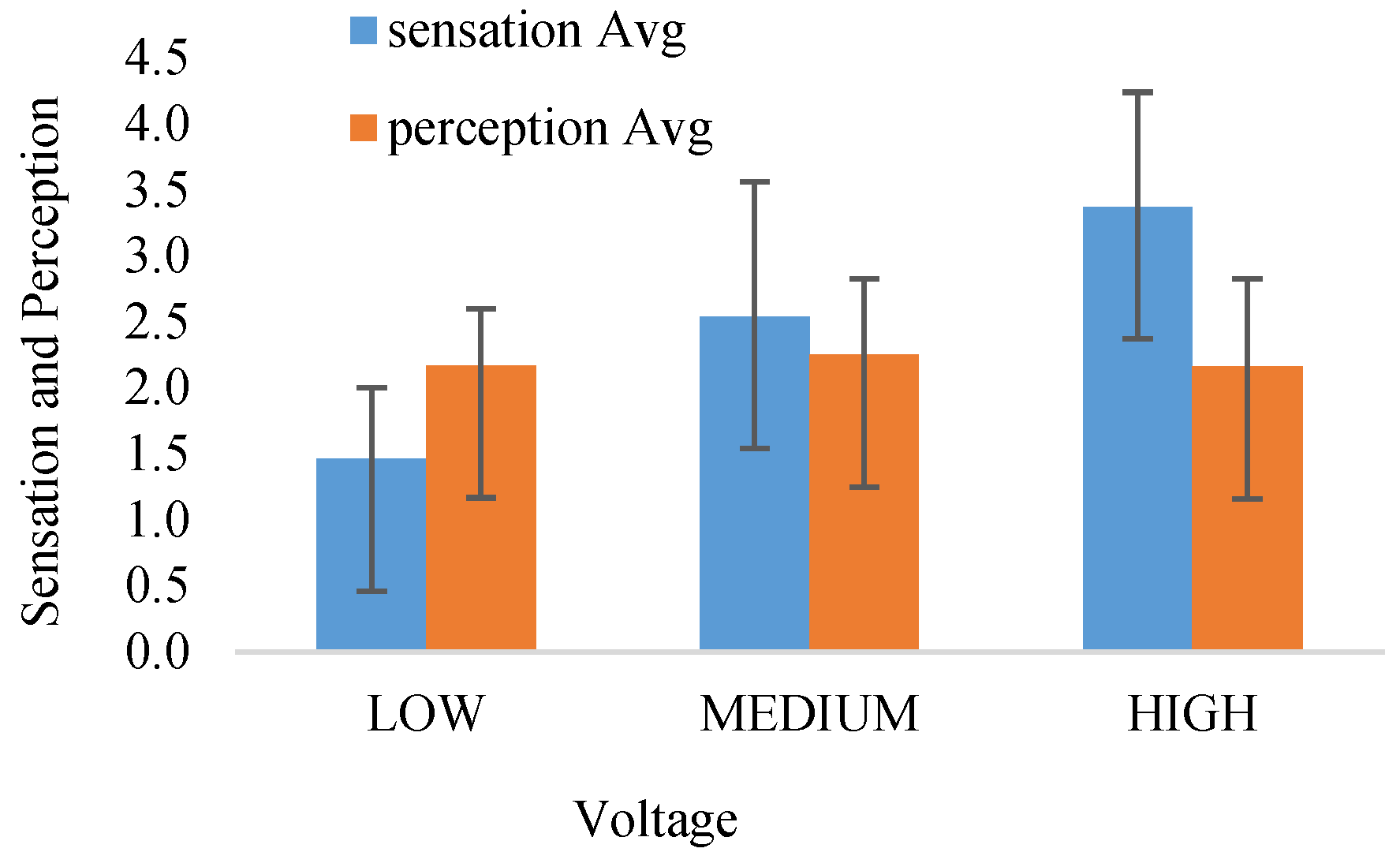
In the sensation study on the still upper extremity, we found that increasing the vibrotactile stimuli voltage resulted in higher sensation intensity, with moderate to strong positive linear correlations of r = 0.39. Previous work in psychophysics noted a power law relationship between stimulus amplitude and sensation intensity [
17,
18]. We did not observe a strong power law relationship in our data set (i.e., most of the variance in sensation intensity was not explained by the stimulus amplitude). We speculate that this may be due to our stimulus parameters not being discretized finely enough or their range of values being too restrictive. In prior work, it was found that sensation intensity increases with frequencies of up to 100 Hz and then plateaus [
8]. Other authors found that high-amplitude and low-frequency stimuli were perceived more intensely than high-frequency and low-amplitude stimuli [
8]. We could not investigate this in this work, as we used ERM motors, where frequency and voltage are linked together.
In future work, it would be interesting to investigate different kinds of motors, such as Linear Resonant Actuators for high-frequency stimulation [
1], and examine the use of electrotactile feedback, where frequency and voltage can be controlled separately [
19]. As for the perceived pleasantness, we did not see a significant difference (i.e., perception values stayed in the neutral range) when changing the voltage, on average.
Compared to other work in the area, Seim et al. [
1] reported that subjects in both a stroke group and a healthy group were dissatisfied with a stimulation that they could not sense and enjoyed high-voltage stimuli. We did not see a significant correlation between high-voltage stimuli and perceived pleasantness on average. In our work, we found that participants on an individual level expressed different feelings with respect to the stimulation, some reporting neutral perception across the range of voltage values, others indicating a more pleasant feeling with a higher voltage, and others indicating an unpleasant feeling with high-voltage values. Some participants reported that the stimulation applied at certain locations on the upper extremity created a feeling of annoyance, tingling, or massaging. Because we did not find a strong aggregate-level correlation between these parameters and the perceived pleasantness of the simulation, this indicates the need for customizing the parameter tuning to the individual person. One limitation of our work is that we did not vary the vibration patterns or durations. In future work, it could be interesting to investigate the effects of these parameters on perception, as some subjects reported that they might have felt differently if the vibration duration was increased. Seim et al. [
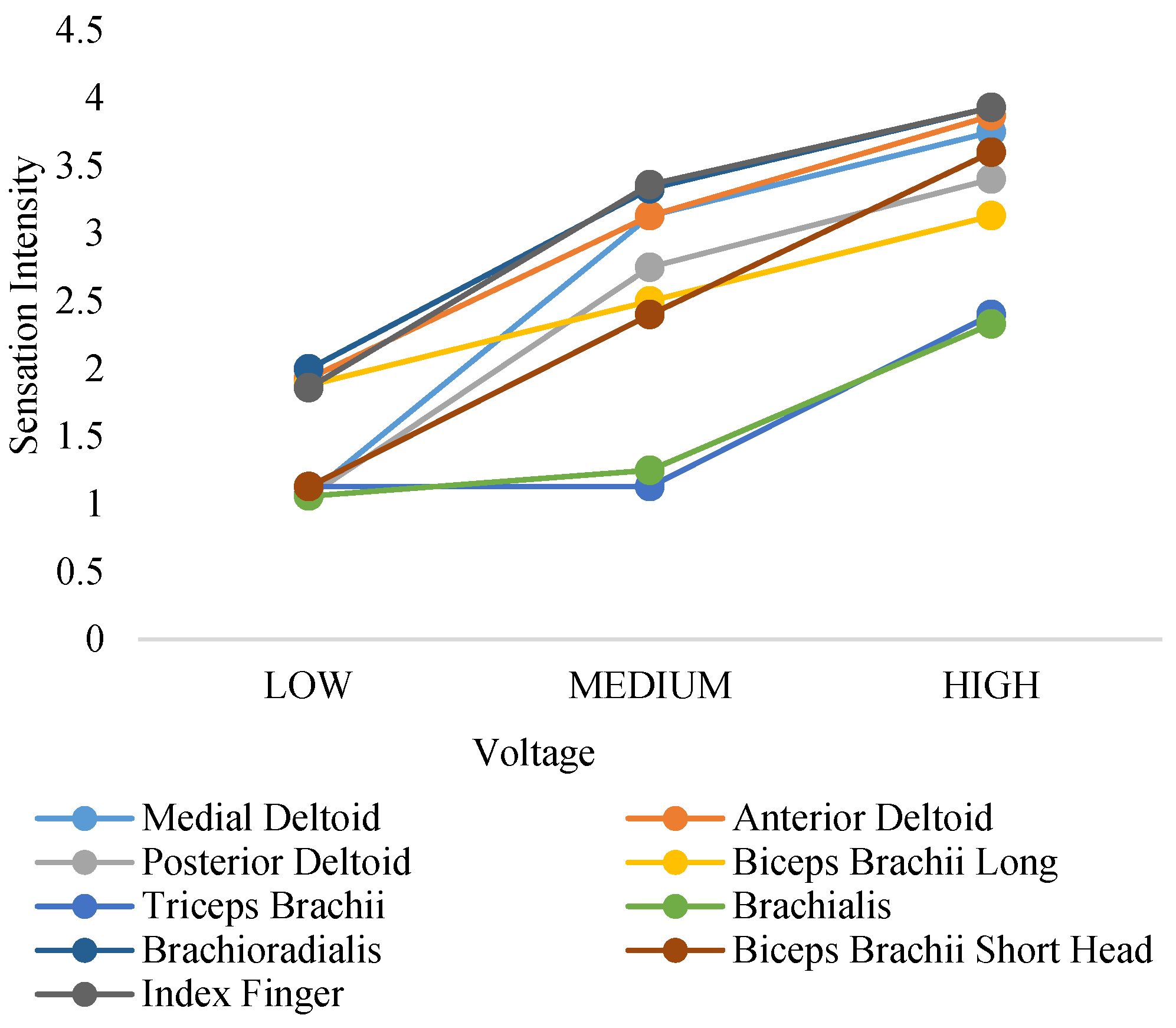
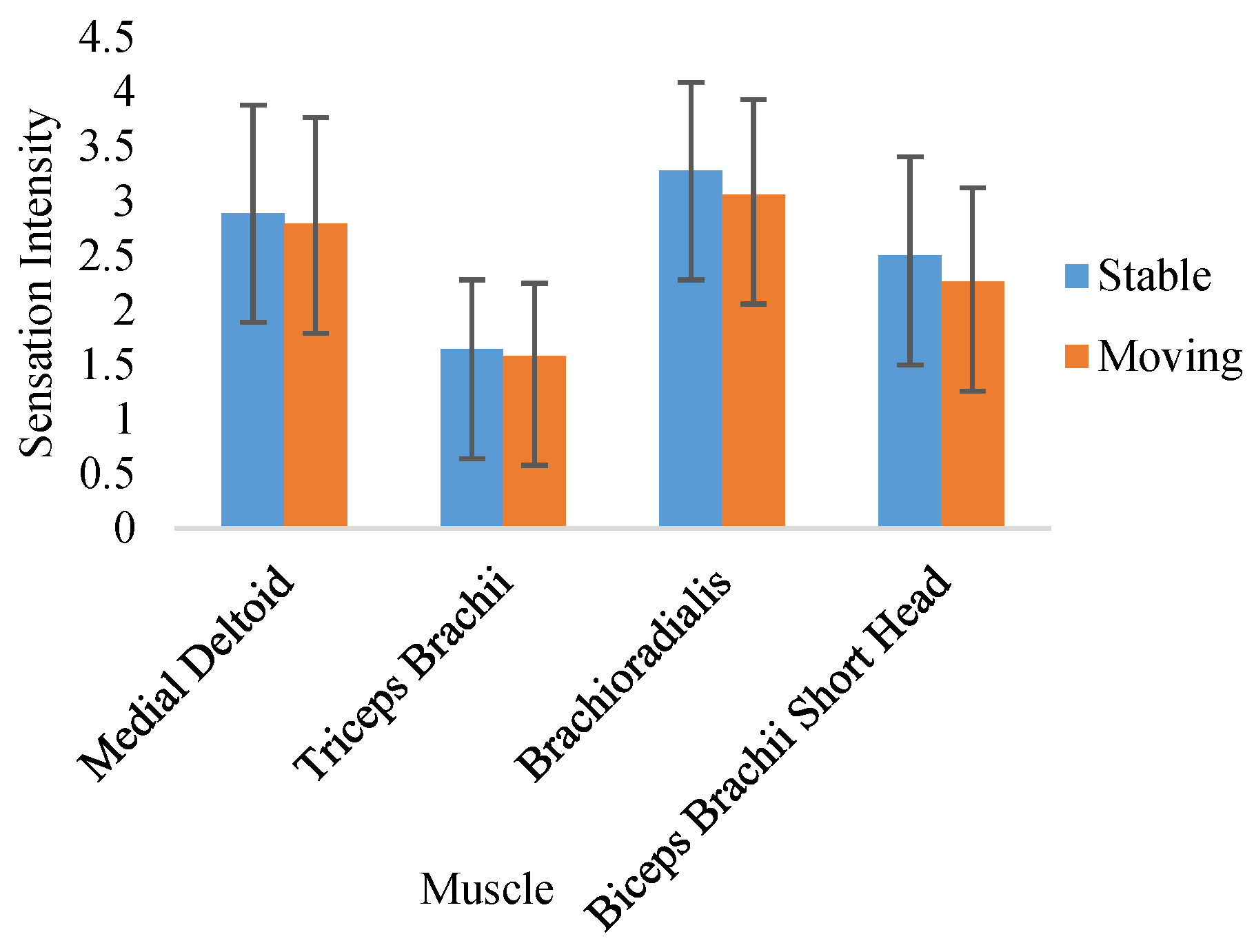
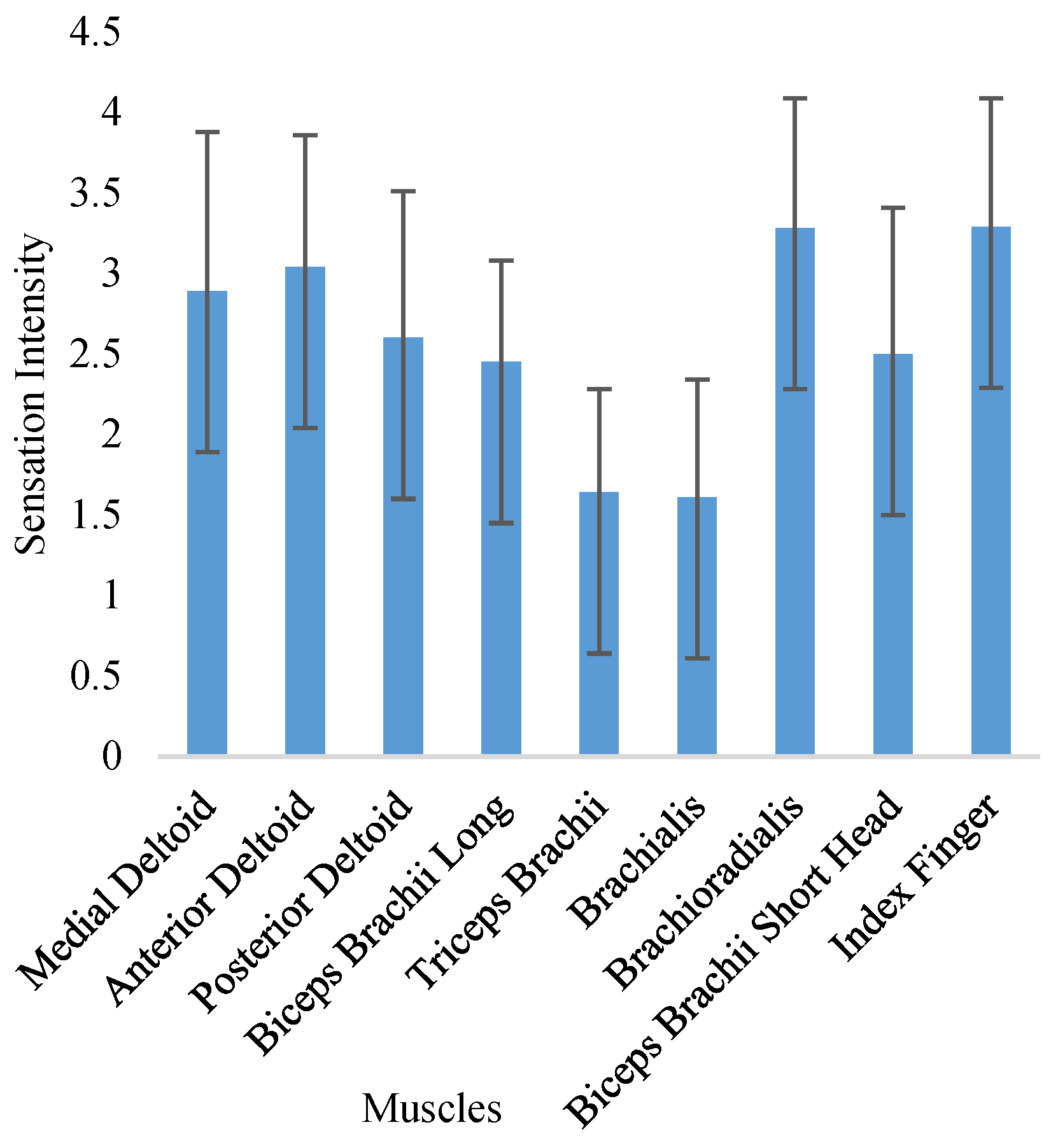
1] observed that participants reported a lower sensation intensity when the stimulation was applied in the lower arm (however, they did not target specific muscles in the lower arm). In contrast, we found that certain lower arm muscles such as the brachioradialis produce a high sensation intensity (see
Figure 12). This finding can help in developing haptic devices and in understanding at what locations the stimulation should be applied.
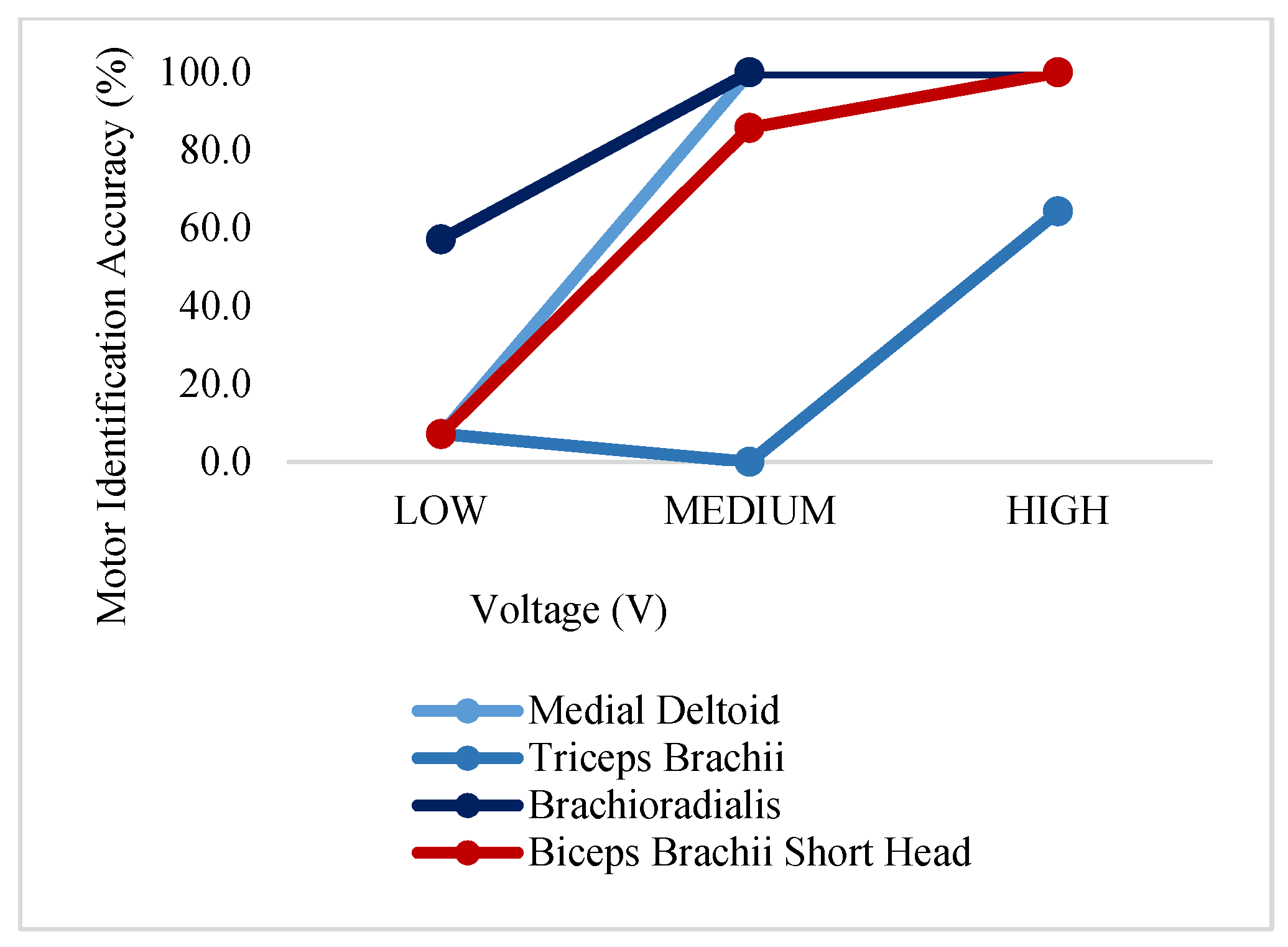
In the moving upper extremity study, we found that sensation intensity also increased with increasing voltage, but on average the increase was less than the measured one in the still study by 5.9 ± 2.9% (see
Figure 5). Related work in the field [
12] found that sensation intensity in the hand decreases when it is moving. Our work confirms that we observed the same pattern across the upper extremity. One limitation of our work is that we asked participants to perform simple reaching movements in the moving study, which would have impacted certain muscles in the upper extremity more than others. A matter of potential interest in future work would be to determine whether other upper-extremity movements or the degree of fatigue produce significantly different sensation intensity results.
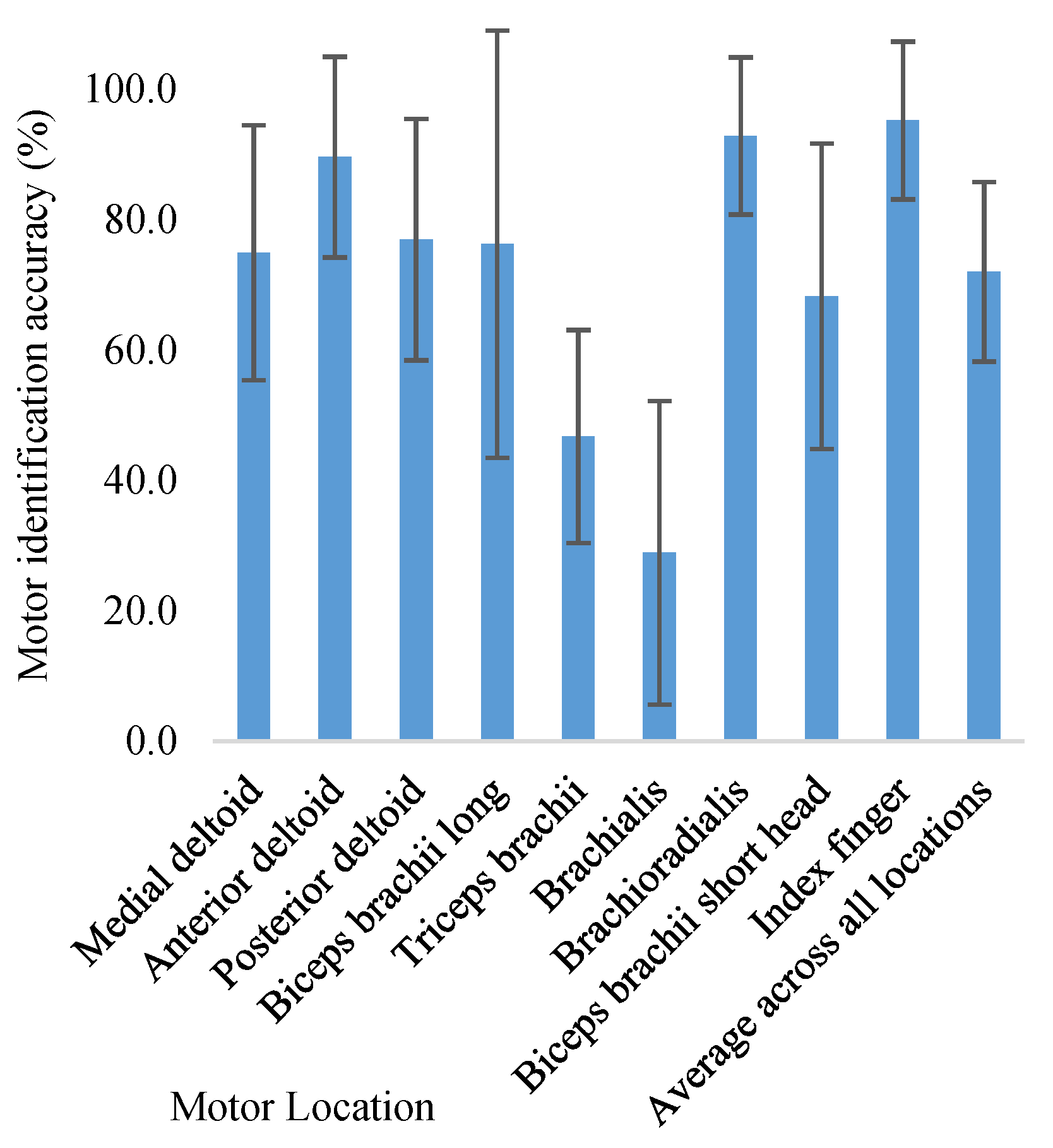
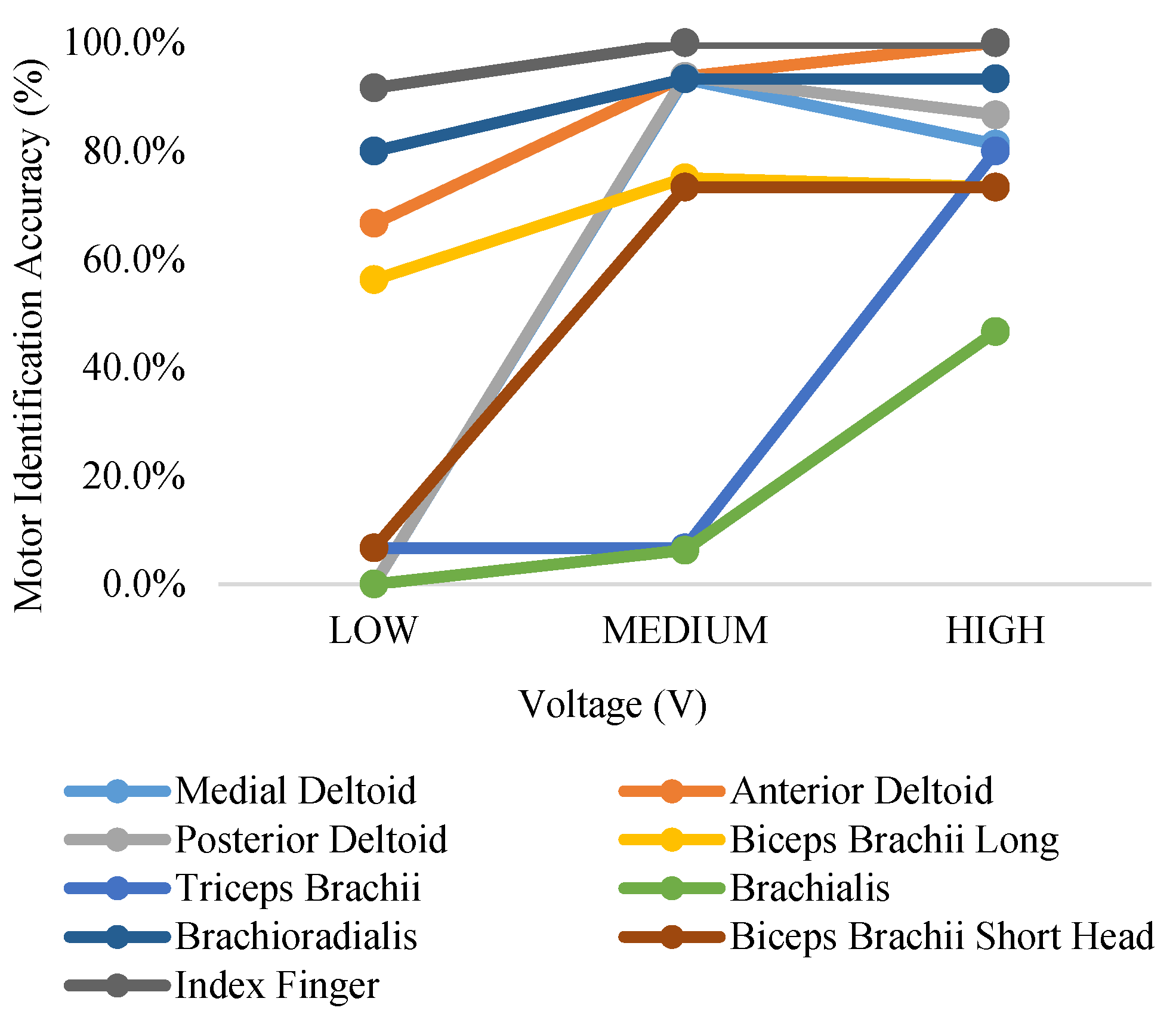
In the motor identification study, our goal was to determine whether participants were able to locate the vibrating motors in certain areas more than others, without visual feedback. We found that the brachioradialis muscle has a higher motor identification accuracy with low stimuli compared to other muscles like the triceps, brachialis, and biceps brachii short head (see
Figure 9). This is consistent with our results shown in
Figure 4 that indicate that participants reported a higher sensation intensity for the brachioradialis than for the other muscles. These differences in sensation intensity might be explained by differences in the densities of the mechanoreceptors across the upper extremities, but these have not yet been characterized [
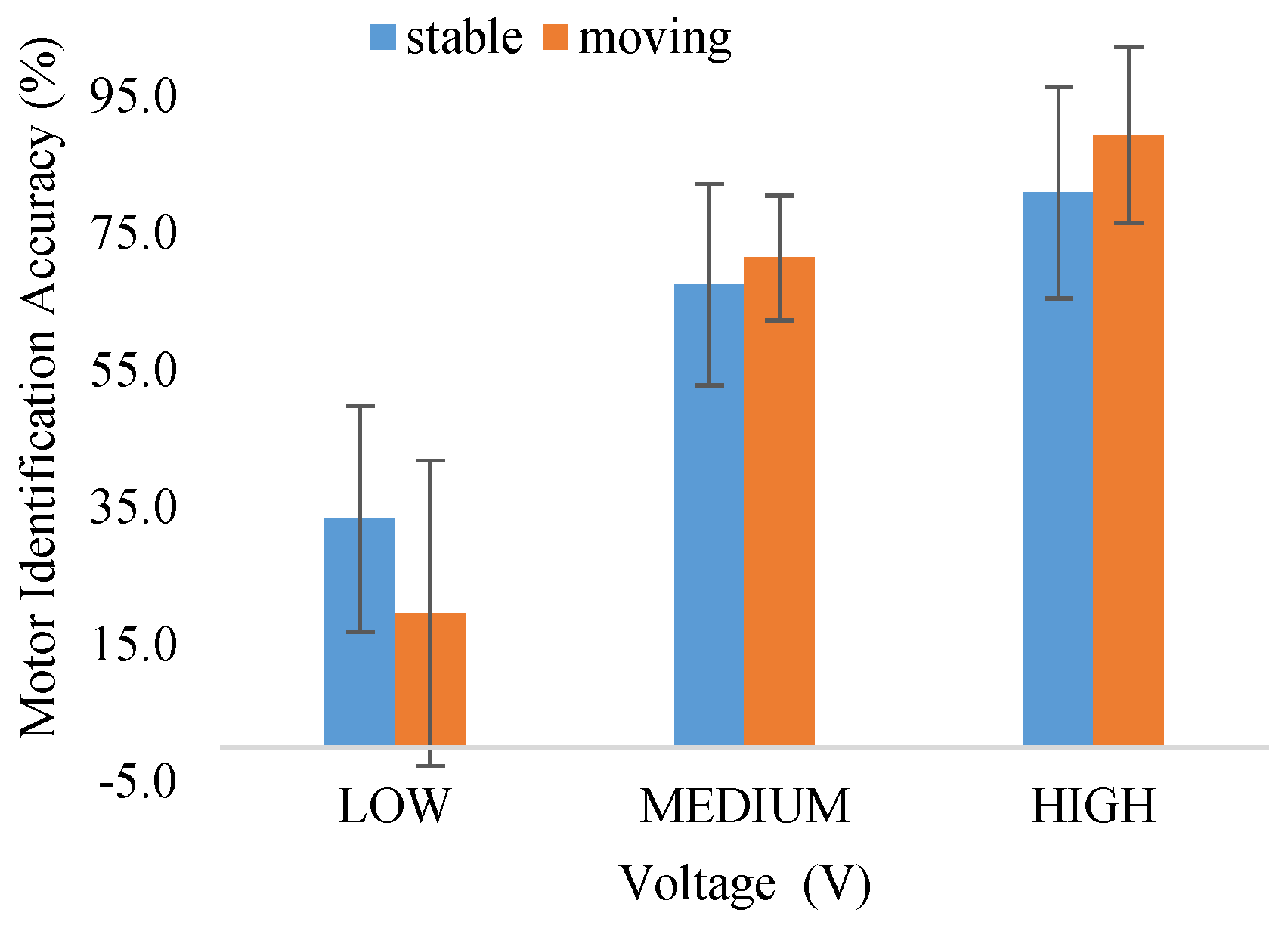
13]. Intuitively, we also found that motor identification accuracy broadly increased as we increased the voltage parameter, as shown in
Figure 10. However, for the highest voltage value we observed that the motor identification accuracy decreased for most locations. This indicates that participants start losing motor identification accuracy when the stimulus intensity of the vibrating motor increases above a threshold value. One of the limitations of our work is that participants did not have noise-cancelling headphones to prevent them from using auditory feedback to identify the motors. Another limitation regarding the hardware of the vibrating motors is that we cannot guarantee that all motors gave the same stimuli intensity with the same set of parameters. It is known that ERM motors exhibit various frequencies as they accelerate and decelerate during a given activation [
20]. It would be interesting to examine other muscles and locations in the upper extremity to stimulate in addition to those examined in this work (see
Figure 2). We should also add that variation in participants’ skin temperature or hydration can affect sensation intensity and perception.
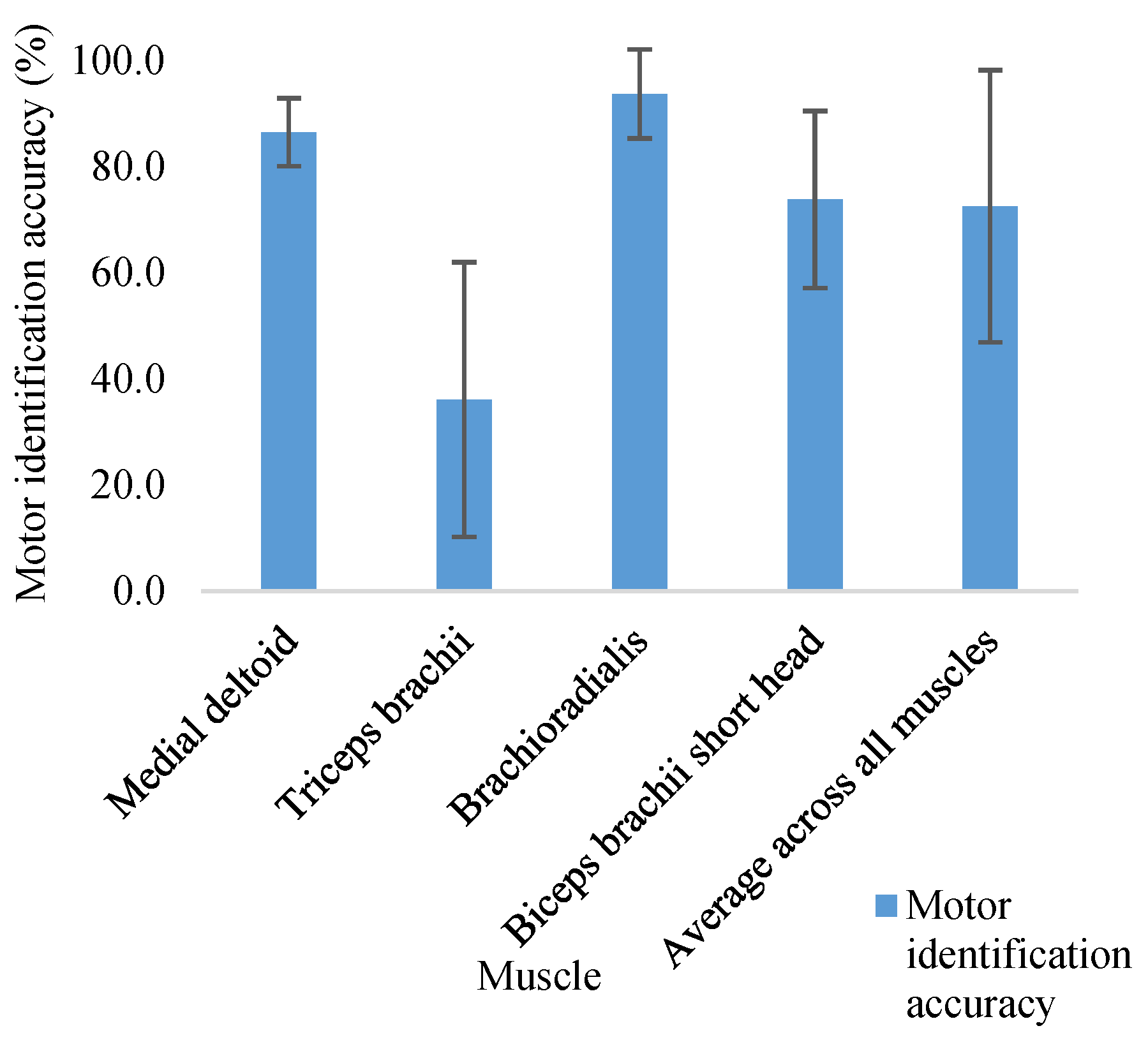
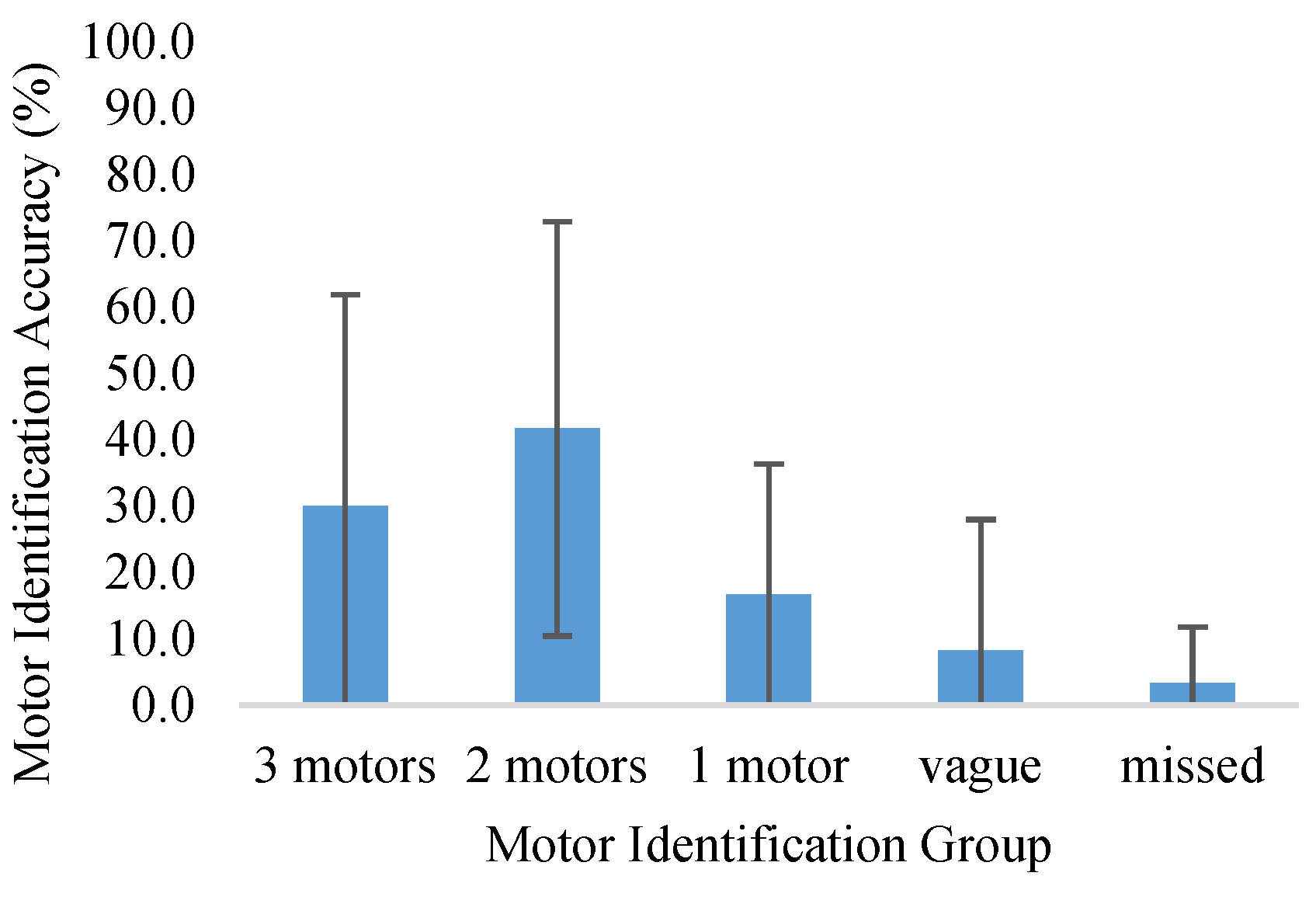
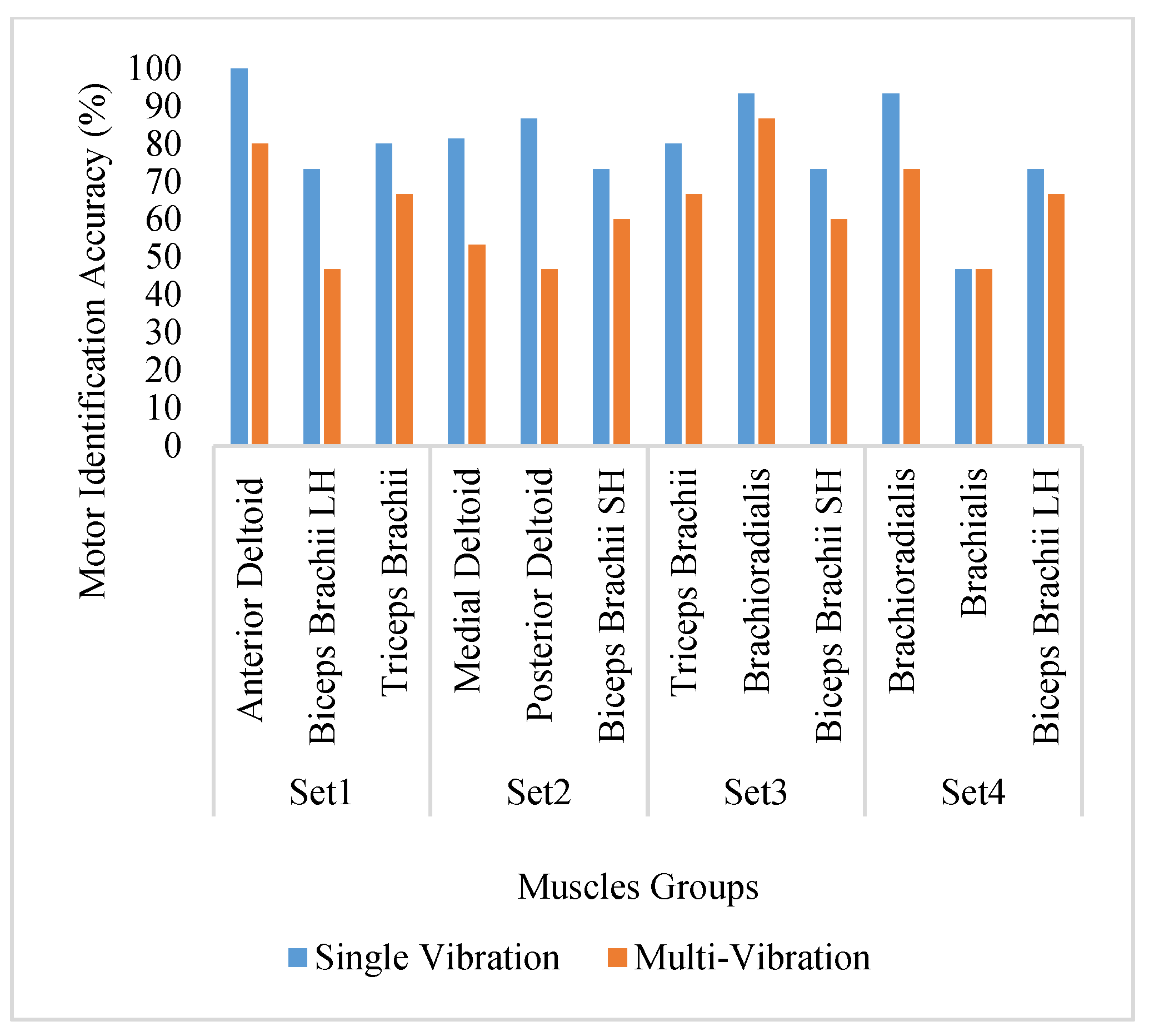
Our final study focused on motor identification accuracy with simultaneously vibrating motors. We found that participants were able to accurately identify two out of three vibrating motors 41.7% of the time compared to 30% of the time for identifying all three motors. Examining the cases where only two motors were identified accurately, we observed that participants were able to more easily identify the motors at different regions on the upper extremity (see
Figure 13). Shah et al. [
13] found that sequential vibrotactile stimuli result in better intensity discrimination than simultaneous stimuli, independently of whether the pair of motors were located within the same dermatome or across dermatomes. In our work, we found that simultaneous stimulation across the upper extremity decreases motor identification accuracy compared to single-motor stimulation (see
Figure 13). Bark et al. [
3] found that vibrotactile stimulation can help in learning simple arm movements involving one degree of freedom, but no significant effect was found in more complex movements involving two or three degrees of freedom. The results are consistent with those of our study showing that most participants could only identify two vibrating motors at a time, such that the ability to teach complex movements could be limited. Teaching complex movements would likely require more vibrating motors, which could indicate the need to investigate new vibrotactile stimulation strategies that only activate a small number of motors simultaneously and that use sequential vibration strategies to teach new muscle coordination patterns. While we focused in this study on the effects of vibration parameters on sensation and perceived pleasantness, we acknowledge the lack of exploration of interaction effects between participants and the stimulation. We believe that this issue is worth investigating as it may be critical for practical applications and the design of customized haptic devices. Two additional limitations are worth mentioning. Firstly, our sample size was small, consisting of 15 participants. Secondly, we recruited participants blindly with regard to sex, resulting in an imbalanced sample set, with the majority of participants being male. The small sample size and imbalanced data set could have affected the generalizability of our findings. Prior studies indicate no statistically significant difference in sensation between males and females [
21]. Future work could involve a more diverse group and thoroughly investigate the effects of gender, age, and other physiological factors on sensation and perception.