



Application of Ergonomic Lighting Indicator in Workplaces: A Comparative Study in Two Different Climates
 , and
, and
Abstract
1. Introduction
2. Literature Review
2.1. Light and Human Body Response
2.2. Ergonomic Lighting and Subjective Tools for Assessing Light Quality
2.3. How ELI Can Support the Occupants
3. Materials and Methods
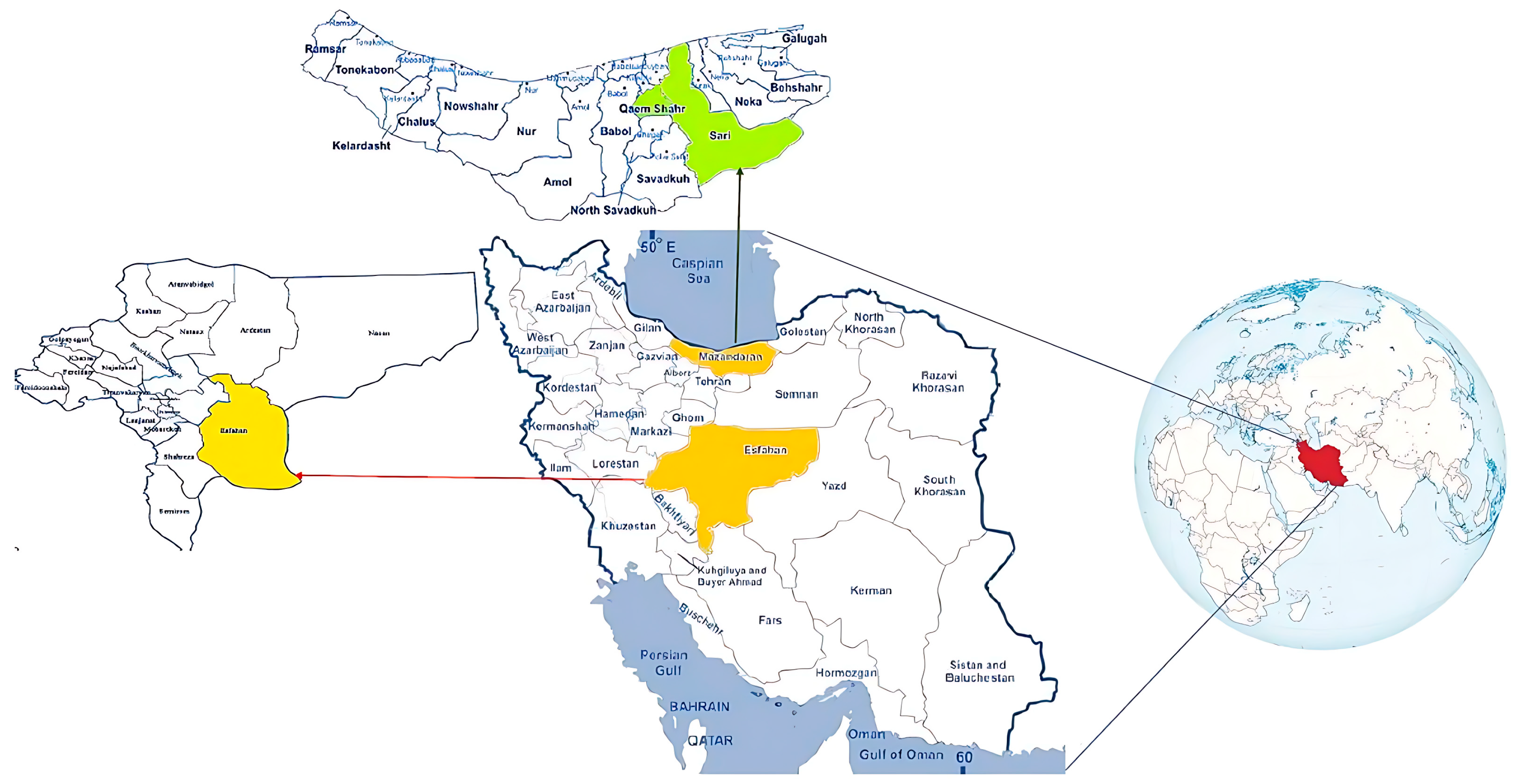
3.1. Study Areas
3.2. Participants
3.3. Ergonomic Lighting INDICATOR Questionnaire
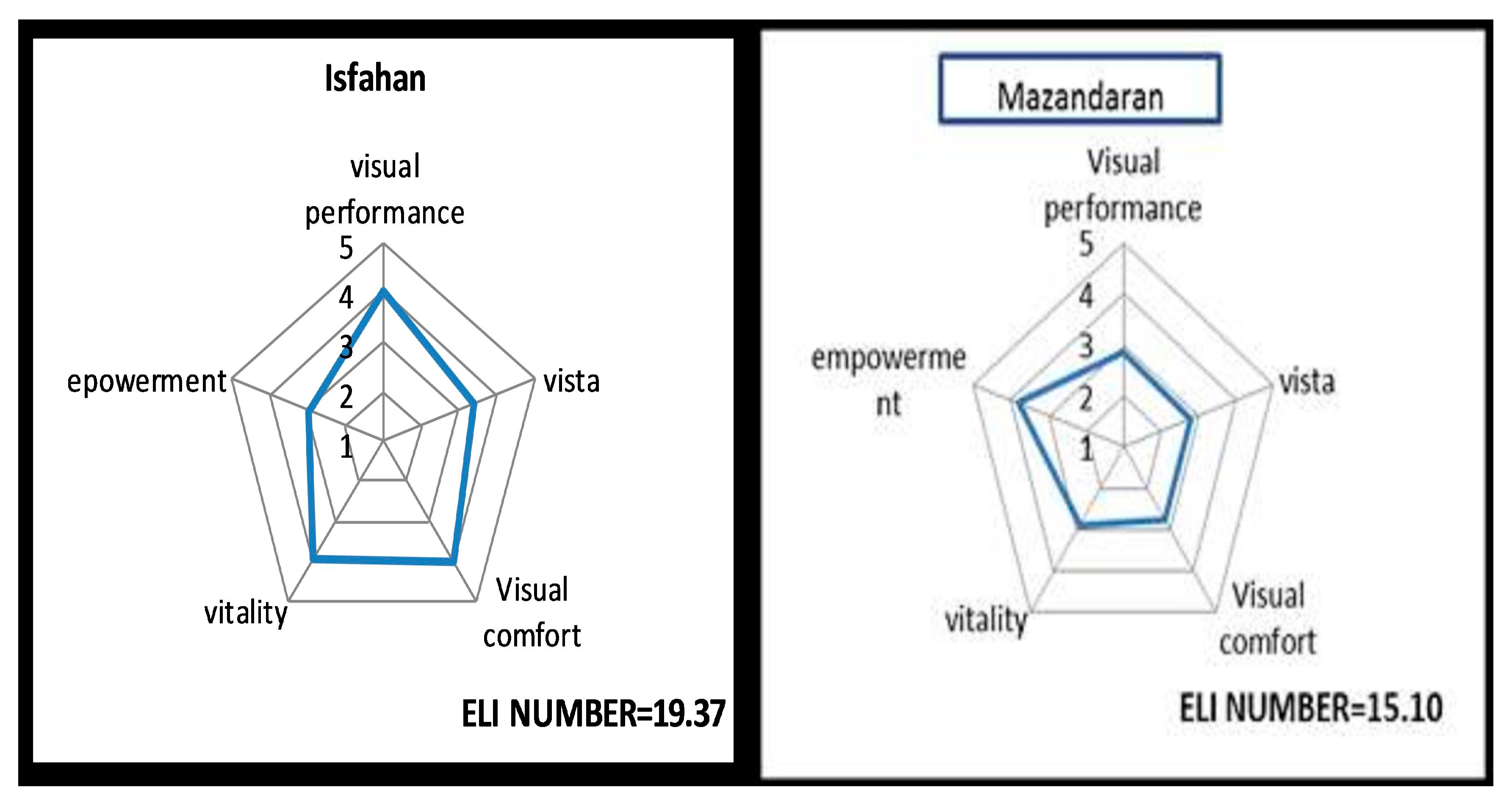
4. Results
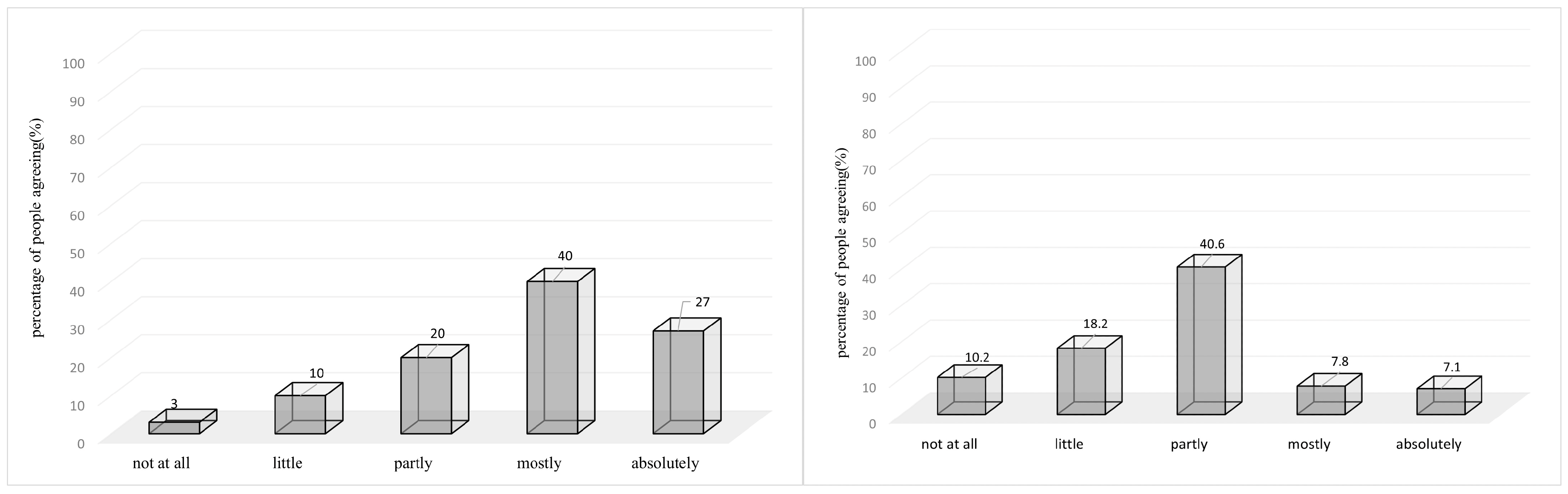
5. Discussion
6. Conclusions
Author Contributions
Funding
Institutional Review Board Statement
Informed Consent Statement
Data Availability Statement
Acknowledgments
Conflicts of Interest
References
- Vetter, C.; Pattison, P.M.; Houser, K.; Herf, M.; Phillips, A.J.; Wright, K.P.; Skene, D.J.; Brainard, G.C.; Boivin, D.B.; Glickman, G. A review of human physiological responses to light: Implications for the development of integrative lighting solutions. Leukos 2022, 18, 387–414. [Google Scholar] [CrossRef] [Scilit]
- Webb, A.R. Considerations for lighting in the built environment: Non-visual effects of light. Energy Build 2006, 38, 721–727. [Google Scholar] [CrossRef] [Scilit]
- Gou, Z.; Gou, B.; Liao, W.; Bao, Y.; Deng, Y. Integrated lighting ergonomics: A review on the association between non-visual effects of light and ergonomics in the enclosed cabins. Build. Environ. 2023, 243, 110616. [Google Scholar] [CrossRef] [Scilit]
- Ferlazzo, F.; Piccardi, L.; Burattini, C.; Barbalace, M.; Giannini, A.M.; Bisegna, F. Effects of new light sources on task switching and mental rotation performance. J. Environ. Psychol. 2014, 39, 92–100. [Google Scholar] [CrossRef] [Scilit]
- Bear, A.R.; Bell, R.I. The CSP index: A practical measure of office lighting quality as perceived by the office worker. Light. Res. Technol. 1992, 24, 215–225. [Google Scholar] [CrossRef] [Scilit]
- Vandewalle, G.; Maquet, P.; Dijk, D.-J. Light as a modulator of cognitive brain function. Trends Cogn. Sci. 2009, 13, 429–438. [Google Scholar] [CrossRef] [Scilit]
- Newsham, G.R.; Veitch, J.A. Determinants of Lighting Quality I: State of the Science AU. J. Illum. Eng. Soc. 1998, 27, 92–106. [Google Scholar]
- de Jong, M.; Jeninga, L.; Ouyang, J.Q.; van Oers, K.; Spoelstra, K.; Visser, M.E. Dose-dependent responses of avian daily rhythms to artificial light at night. Physiol. Behav. 2016, 155, 172–179. [Google Scholar] [CrossRef] [Scilit] [PubMed]
- Hye Oh, J.; Ji Yang, S.; Rag Do, Y. Healthy, natural, efficient and tunable lighting: Four-package white LEDs for optimizing the circadian effect, color quality and vision performance. Light Sci. Appl. 2014, 3, e141. [Google Scholar] [CrossRef] [Scilit]
- Wilkins, A. A physiological basis for visual discomfort: Application in lighting design. Light. Res. Technol. 2016, 48, 44–54. [Google Scholar] [CrossRef] [Scilit]
- Mardaljevic, J.; Andersen, M.; Roy, N.; Christoffersen, J. A framework for predicting the non-visual effects of daylight—Part II: The simulation model. Light. Res. Technol. 2014, 46, 388–406. [Google Scholar] [CrossRef] [Scilit]
- Bellia, L.; Bisegna, F.; Spada, G. Lighting in indoor environments: Visual and non-visual effects of light sources with different spectral power distributions. Build. Environ. 2011, 46, 1984–1992. [Google Scholar] [CrossRef] [Scilit]
- Dai, Q.; Uchiyama, Y.; Lee, S.; Shimomura, Y.; Katsuura, T. Effect of quantity and intensity of pulsed light on human non-visual physiological responses. J. Physiol. Anthropol. 2017, 36, 22. [Google Scholar] [CrossRef] [Scilit]
- Johansson, M.; Pedersen, E.; Maleetipwan-Mattsson, P.; Kuhn, L.; Laike, T. Perceived outdoor lighting quality (POLQ): A lighting assessment tool. J. Environ. Psychol. 2014, 39, 14–21. [Google Scholar] [CrossRef] [Scilit]
- Boyce, P.R.; Eklund, N.H.; Hamilton, B.J.; Bruno, L.D. Perceptions of safety at night in different lighting conditions. Int. J. Light. Res. Technol. 2000, 32, 79–91. [Google Scholar] [CrossRef] [Scilit]
- Fornara, F.; Bonaiuto, M.; Bonnes, M. Cross-Validation of Abbreviated Perceived Residential Environment Quality (PREQ) and Neighborhood Attachment (NA) Indicators. Environ. Behav. 2010, 42, 171–196. [Google Scholar] [CrossRef] [Scilit]
- Śwituła, M.; Wolska, A. Luminance of the Surround and Visual Fatigue of VDT Operators AU. Int. J. Occup. Saf. Ergon. 1999, 5, 553–580. [Google Scholar]
- Wolska, A. Visual Strain and Lighting Preferences of VDT Users Under Different Lighting Systems AU. Int. J. Occup. Saf. Ergon. 2003, 9, 431–440. [Google Scholar] [CrossRef] [Scilit] [PubMed]
- Baron, R.A.; Rea, M.S.; Daniels, S.G. Effects of indoor lighting (illuminance and spectral distribution) on the performance of cognitive tasks and interpersonal behaviors: The potential mediating role of positive affect. Motiv. Emot. 1992, 16, 1–33. [Google Scholar] [CrossRef] [Scilit]
- Laike, T.; Kuller, R. The impact of flicker from fluorescent lighting on well-being, performance and physiological arousal AU. Ergonomics 1998, 41, 433–447. [Google Scholar]
- Dupláková, D.; Sloboda, P. The Maintenance Factor as a Necessary Parameter for Sustainable Artificial Lighting in Engineering Production—A Software Approach. Appl. Sci. 2024, 14, 8158. [Google Scholar] [CrossRef] [Scilit]
- Faranda, R.; Guzzetti, S.; Leva, S. Design and Technology for Efficient Lighting. In Paths to Sustainable Energy; Nathwani, J., Ng, A., Eds.; IntechOpen: London, UK, 2010. [Google Scholar]
- Benediktsson, G. Lighting Control: Possibilities in Cost and Energy-Efficient Lighting Control Techniques. Master’s Thesis, Lund University, Lund, Sweden, 2009. [Google Scholar]
- Rodriguez, R.G.; Monteoliva, J.M.; Pattini, A.E. A comparative field usability study of two lighting measurement protocols. Int. J. Hum. Factors Ergon. 2018, 5, 323–343. [Google Scholar] [CrossRef] [Scilit]
- Boyce, P.R. Light, lighting and human health. Light. Res. Technol. 2022, 54, 101–144. [Google Scholar] [CrossRef] [Scilit]
- Houser, K.; Boyce, P.; Zeitzer, J.; Herf, M. Human-centric lighting: Myth, magic or metaphor? Light. Res. Technol. 2021, 53, 97–118. [Google Scholar] [CrossRef] [Scilit]
- Eklund, N.H.; Boyce, P.R. The development of a reliable, valid, and simple office lighting survey. J. Illum. Eng. Soc. 1996, 25, 25–40. [Google Scholar] [CrossRef] [Scilit]
- Sivaji, A.; Shopian, S.; Nor, Z.M.; Chuan, N.-K.; Bahri, S. Lighting does matter: Preliminary assessment on office workers. Procedia-Soc. Behav. Sci. 2013, 97, 638–647. [Google Scholar] [CrossRef] [Scilit]
- Hygge, S.; Löfberg, H.A. POE Post Occupancy Evaluation of Daylight in Buildings: A Report of IEA SHC TASK 21/ECBCS ANNEX 29; Högskolan i Gävle: Gävle, Sweden, 2000. [Google Scholar]
- Veitch, J.A.; Newsham, G.R. Exercised control, lighting choices, and energy use: An office simulation experiment. J. Environ. Psychol. 2000, 20, 219–237. [Google Scholar] [CrossRef] [Scilit]
- Ruiz, V.; Rodriguez, R.; Pattini, A. Expert consensus on integrative lighting descriptors and indicators for green building rating systems: A Delphi study. Light. Res. Technol. 2025, 57, 108–126. [Google Scholar] [CrossRef] [Scilit]
- Balocco, C.; Ancillotti, I.; Trombadore, A. Natural light optimization in an existing primary school: Human centred design and daylight retrofitting solutions for students wellbeing. Sustain. Build. 2023, 6, 1. [Google Scholar] [CrossRef] [Scilit]
- Despenic, M.; Chraibi, S.; Lashina, T.; Rosemann, A. Lighting preference profiles of users in an open office environment. Build. Environ. 2017, 116, 89–107. [Google Scholar] [CrossRef] [Scilit]
- Begemann, S.H.A.; van den Beld, G.J.; Tenner, A.D. Daylight, artificial light and people in an office environment, overview of visual and biological responses. Int. J. Ind. Ergon. 1997, 20, 231–239. [Google Scholar] [CrossRef] [Scilit]
- Borisuit, A.; Linhart, F.; Scartezzini, J.-L.; Münch, M. Effects of realistic office daylighting and electric lighting conditions on visual comfort, alertness and mood. Light. Res. Technol. 2015, 47, 192–209. [Google Scholar] [CrossRef] [Scilit]
- Michael, A.; Heracleous, C. Assessment of natural lighting performance and visual comfort of educational architecture in Southern Europe: The case of typical educational school premises in Cyprus. Energy Build. 2017, 140, 443–457. [Google Scholar] [CrossRef] [Scilit]
- De Carli, M.; De Giuli, V.; Zecchin, R. Review on visual comfort in office buildings and influence of daylight in productivity. In Proceedings of the 11th International Conference Indoor Air, Copenhagen, Denmark, 17–22 August 2008. [Google Scholar]
- Shen, E.; Hu, J.; Patel, M. Energy and visual comfort analysis of lighting and daylight control strategies. Build. Environ. 2014, 78, 155–170. [Google Scholar] [CrossRef] [Scilit]
- Fasi, M.A.; Budaiwi, I.M. Energy performance of windows in office buildings considering daylight integration and visual comfort in hot climates. Energy Build. 2015, 108, 307–316. [Google Scholar] [CrossRef] [Scilit]
- Shishegar, N.; Boubekri, M. Natural light and productivity: Analyzing the impacts of daylighting on students’ and workers’ health and alertness. In Proceedings of the International Conference on “Health, Biological and Life Science” (HBLS-16), Istanbul, Turkey, 18–19 April 2016. [Google Scholar]
- Aries, M.; Aarts, M.; van Hoof, J. Daylight and health: A review of the evidence and consequences for the built environment. Light. Res. Technol. 2015, 47, 6–27. [Google Scholar] [CrossRef] [Scilit]
- Knoop, M.; Stefani, O.; Bueno, B.; Matusiak, B.; Hobday, R.; Wirz-Justice, A.; Martiny, K.; Kantermann, T.; Aarts, M.P.J.; Zemmouri, N.; et al. Daylight: What makes the difference? Light. Res. Technol. 2019, 52, 423–442. [Google Scholar] [CrossRef] [Scilit]
- Hourani, M.M.; Hammad, R.N. Impact of daylight quality on architectural space dynamics: Case study: City Mall—Amman, Jordan. Renew. Sustain. Energy Rev. 2012, 16, 3579–3585. [Google Scholar] [CrossRef] [Scilit]
- Madias, E.-N.D.; Christodoulou, K.; Androvitsaneas, V.P.; Skalkou, A.; Sotiropoulou, S.; Zervas, E.; Doulos, L.T. The effect of artificial lighting on both biophilic and human-centric design. J. Build. Eng. 2023, 76, 107292. [Google Scholar] [CrossRef] [Scilit]
- Saeedeh Mosaferchi, M.I.; Vitiello, G.; Mortezapour, A.; Naddeo, A. Towards More Trustworthy Automated Driving: Comparing Anthropomorphic and Biophilic Interfaces. In Proceedings of the CHITALY 2025, Salerno, Italy, 6–10 October 2025. [Google Scholar]
- Boubekri, M.; Cheung, I.N.; Reid, K.J.; Wang, C.-H.; Zee, P.C. Impact of windows and daylight exposure on overall health and sleep quality of office workers: A case-control pilot study. J. Clin. Sleep Med. 2014, 10, 603–611. [Google Scholar] [CrossRef] [Scilit]
- Beute, F.; de Kort, Y.A.W. Salutogenic Effects of the Environment: Review of Health Protective Effects of Nature and Daylight. Appl. Psychol. Health Well-Being 2014, 6, 67–95. [Google Scholar] [CrossRef] [Scilit] [PubMed]
- Newsham, G.; Veitch, J.; Arsenault, C.; Duval, C. Effect of dimming control on office worker satisfaction and performance. In Proceedings of the IESNA Annual Conference, Tampa, FL, USA, 25–28 July 2004. [Google Scholar]
- Day, J.K.; Futrell, B.; Cox, R.; Ruiz, S.N.; Amirazar, A.; Zarrabi, A.H.; Azarbayjani, M. Blinded by the light: Occupant perceptions and visual comfort assessments of three dynamic daylight control systems and shading strategies. Build. Environ. 2019, 154, 107–121. [Google Scholar] [CrossRef] [Scilit]
- Hammond, S.; Bowen, P.G.; Hallman, M.G.; Heaton, K. Visual Performance and Occupational Safety Among Aging Workers. Workplace Health Saf. 2019, 67, 506–511. [Google Scholar] [CrossRef] [Scilit] [PubMed]
- Ahmadi, M.; Zakerian, S.A.; Salmanzadeh, H. Prioritizing the ILO/IEA Ergonomic Checkpoints’ measures; a study in an assembly and packaging industry. Int. J. Ind. Ergon. 2017, 59, 54–63. [Google Scholar] [CrossRef] [Scilit]
- ILO. Ergonomic Checkpoints: Practical and Easy-to-Implement Solutions for Improving Safety, Health and Working Conditions, 2nd ed.; International Labour Office, Ed.; International Labour Office: Geneva, Switzerland, 2010. [Google Scholar]

| Province | Preferred Daylight (%) | Preferred Electric Lighting (%) | No Difference (%) | Not Answered (%) |
|---|---|---|---|---|
| Mazandaran | 16 | 79 | 2 | 3 |
| Isfahan | 88 | 6 | 3 | 3 |
| Criteria | Mean and SD (Isfahan/Mazandaran) | Minimum (Isfahan/Mazandaran) | Maximum (Isfahan/Mazandaran) | p-Value |
|---|---|---|---|---|
| A: Visual performance | 4.05 ± 0.87/2.86 ± 0.71 | 2.1/2.53 | 4.65/3.49 | 0.02 |
| B: Vista | 4.38 ± 0.32/2.77 ± 0.47 | 3.92/2.21 | 4.72/3.04 | 0.01 |
| C: Visual comfort | 3.99 ± 0.75/2.76 ± 0.11 | 1.9/2.48 | 4.65/3.36 | 0.03 |
| D: Vitality | 3.96 ± 0.44/2.89 ± 0.39 | 1.22/2.42 | 4.75/3.17 | 0.04 |
| E: Empowerment | 2.33 ± 0.73/3.81 ± 0.66 | 1.37/2.69 | 4.175/4.50 | 0.03 |
Disclaimer/Publisher’s Note: The statements, opinions and data contained in all publications are solely those of the individual author(s) and contributor(s) and not of MDPI and/or the editor(s). MDPI and/or the editor(s) disclaim responsibility for any injury to people or property resulting from any ideas, methods, instructions or products referred to in the content. |
© 2025 by the authors. Licensee MDPI, Basel, Switzerland. This article is an open access article distributed under the terms and conditions of the Creative Commons Attribution (CC BY) license (https://creativecommons.org/licenses/by/4.0/).
Share and Cite
Zakerian, S.A.; Rostami Aghdam Shendi, M.; Amouzadeh, E.; Mosaferchi, S.; Mortezapour, A. Application of Ergonomic Lighting Indicator in Workplaces: A Comparative Study in Two Different Climates. Theor. Appl. Ergon. 2025, 1, 11. https://doi.org/10.3390/tae1020011
Zakerian SA, Rostami Aghdam Shendi M, Amouzadeh E, Mosaferchi S, Mortezapour A. Application of Ergonomic Lighting Indicator in Workplaces: A Comparative Study in Two Different Climates. Theoretical and Applied Ergonomics. 2025; 1(2):11. https://doi.org/10.3390/tae1020011
Chicago/Turabian StyleZakerian, Seyed Abolfazl, Maryam Rostami Aghdam Shendi, Elahe Amouzadeh, Saeedeh Mosaferchi, and Alireza Mortezapour. 2025. "Application of Ergonomic Lighting Indicator in Workplaces: A Comparative Study in Two Different Climates" Theoretical and Applied Ergonomics 1, no. 2: 11. https://doi.org/10.3390/tae1020011
APA StyleZakerian, S. A., Rostami Aghdam Shendi, M., Amouzadeh, E., Mosaferchi, S., & Mortezapour, A. (2025). Application of Ergonomic Lighting Indicator in Workplaces: A Comparative Study in Two Different Climates. Theoretical and Applied Ergonomics, 1(2), 11. https://doi.org/10.3390/tae1020011



