
Abstract
Our annual environmental conference has been a pivotal platform for addressing the unique environmental challenges faced by underrepresented communities since 2006. Adapting to the global pandemic in 2021, we seamlessly transitioned to a virtual environment, enabling us to concentrate our efforts on the critical role of the diaspora in leveraging scientific knowledge. In 2023, we focused on Haiti, a nation currently facing significant political turmoil. Our one-day virtual event featured three expert panels that delved into multifaceted strategies encompassing agriculture, healthcare, political advocacy, social dynamics, and entrepreneurship. These discussions aimed to equip Haiti to navigate the impacts of climate change effectively. In partnership with the Haiti Development Initiative (HDI), we engaged in a dynamic brainstorming session to generate innovative approaches for cultivating a resilient and sustainable economy. Our guiding mantra, the Haitian Creole phrase “Chanjman atmosfè a,” reflects our commitment to transforming the environmental landscape—shifting the atmosphere. A highlight of the event was the presentation by Computational Biology students from the University of Wyoming. Their project, titled “Using R Software to Compare Climate Data,” showcased an innovative pedagogical approach to analyzing climate data using statistical software. Their presentation demonstrated the practical application of computational tools in understanding and addressing climate change, providing valuable insights and methodologies that can be applied to environmental research in Haiti and beyond.
1. Introduction
On 21 April 2023, we convened a significant virtual event: the Climate Conversation 2023—A Focus on Haiti. This timely gathering brought together experts, thought leaders, and concerned individuals to explore the intersection of climate change and Haiti’s unique challenges. The conference aimed to foster dialogue, share knowledge, and propose actionable strategies for Haiti’s climate resilience. The event featured distinguished speakers, including a keynote address by Dr. Reynold Verret, President of Xavier University of Louisiana. Dr. Verret’s insights set the tone for the day, emphasizing the urgency of addressing climate-related issues in Haiti.
A central theme of the conference was the role of the global Haitian diaspora in advancing climate resilience. Diaspora scientists and professionals represent a rich reservoir of knowledge, skills, and transnational networks [1,2]. Their contributions are particularly impactful in areas such as research collaboration, capacity-building, policy influence, and technology transfer [3,4]. In the context of Haiti, a nation grappling with climate change, health disparities, and fragile infrastructure, diaspora expertise is uniquely positioned to support recovery and development. For example, diaspora-led initiatives can aid in rebuilding agricultural systems after hurricanes, mitigating soil degradation, and strengthening public health infrastructure in underserved communities vulnerable to climate-sensitive diseases [5,6,7,8,9].
Beyond the keynote, the heart of the conference lay in its three panel discussions. Each panel assembled experts from diverse fields—agriculture, health, politics, social sciences, and business. These panelists presented innovative ideas, sparking lively discussions and engaging questions from fellow panelists and virtual participants. The collaborative spirit was palpable as we collectively explored pathways toward a more sustainable and resilient Haiti.
While climate change is often framed as an environmental or economic issue, its political ramifications in Haiti are profound. The country’s vulnerability to climate-induced disasters, such as hurricanes, droughts, and flooding, has repeatedly strained public institutions, disrupted governance, and intensified social unrest [10]. These environmental shocks often exacerbate existing political instability by overwhelming already fragile infrastructure and eroding public trust in government responses [11]. As such, climate change in Haiti is not only a humanitarian and ecological crisis but also a political one, where environmental degradation and governance challenges are deeply intertwined [12].
This report serves as a valuable resource, providing an insightful overview of the keynote address and synthesizing the outcomes of the three panels. We distill key messages, actionable recommendations, and potential avenues for further research. Our commitment extends beyond this virtual gathering; we aim to catalyze real-world impact and contribute to Haiti’s climate adaptation efforts. It is important to note that this virtual conference builds upon the foundation laid by the one-day conference established in 2021 at Xavier University of Louisiana [13]. The continuity of these conversations underscores our dedication to Haiti’s well-being and the significance of collective action.
2. Methodology: One Day Virtual Workshop
2.1. Conceptual Framework: Addressing Climate Change in Haiti
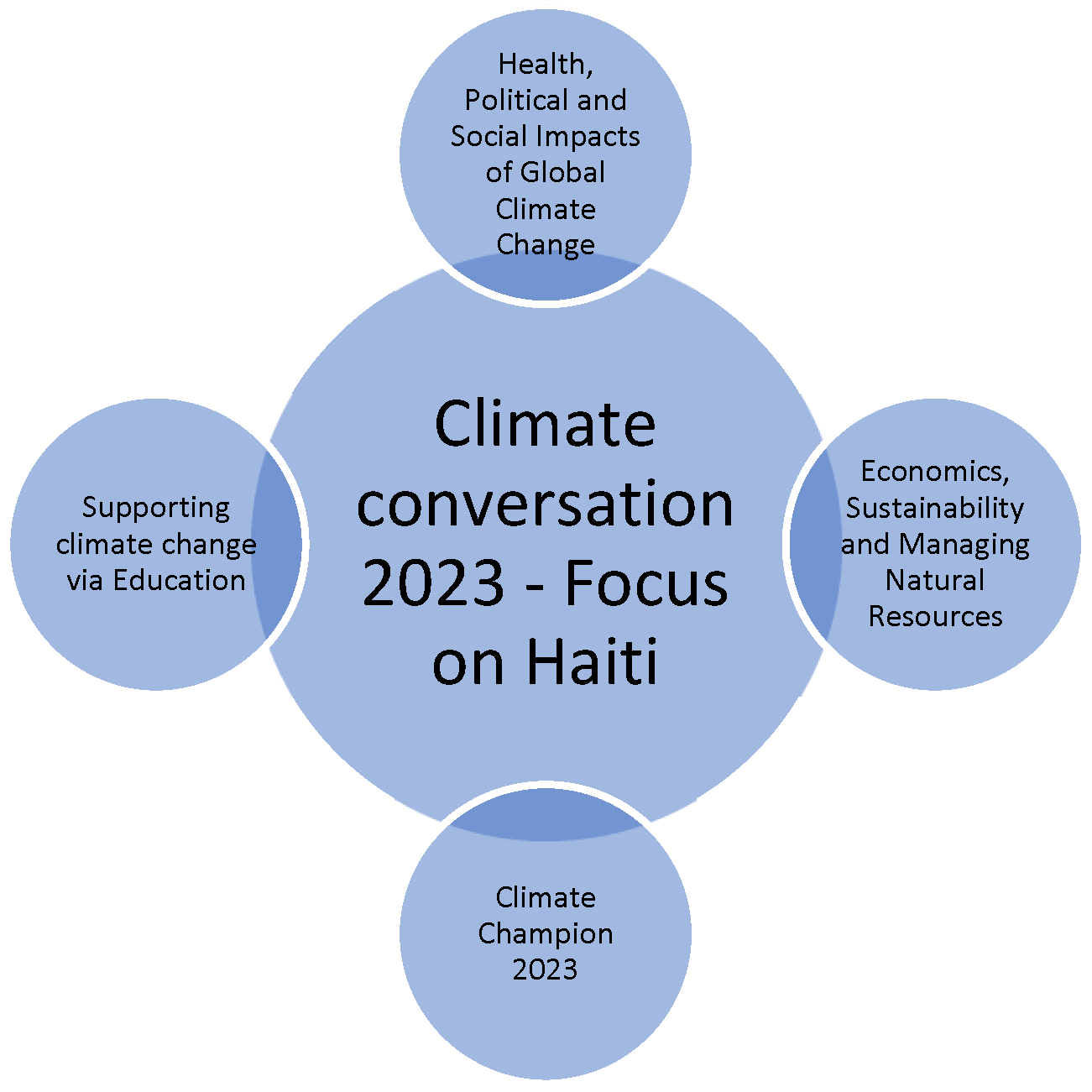
We developed a conceptual framework (Figure 1) that integrates three panels: (1) Health, Political and Social Impacts of Global Climate Change for Haiti; (2) Economics, Sustainability and Managing Haiti’s Natural Resources; and (3) Supporting climate change via Education to evaluate the role that the diaspora could play in helping Haiti, drawing on established models of diaspora engagement in development [14].
Figure 1.
Conceptual Framework for the Virtual Workshop “Climate Conversations 2023—Focus on Haiti. This framework outlines the thematic structure of the one-day virtual workshop, which centered on Haiti’s climate challenges. The event was organized around five key streams: (1) Health, Political, and Social Impacts of Global Climate Change; (2) Economics, Sustainability, and Natural Resource Management; (3) Climate Education; (4) Climate Leadership; and (5) Haiti-specific climate resilience. Each stream featured expert-led discussions designed to foster inclusive, interdisciplinary dialogue. The keynote address was delivered by Dr. Verrett, highlighting the urgency and opportunity for climate action in Haiti.
2.2. Climate Champion 2023
Each year, the selection of the Climate Champion is guided by a commitment to recognizing individuals whose work exemplifies leadership in climate action, particularly within underrepresented communities. The selection process prioritizes candidates who have made significant contributions to environmental justice, demonstrated a sustained commitment to equity in climate-related initiatives, and engaged in research or advocacy that advances understanding and solutions to climate change. This approach ensures that the Climate Champion embodies both scholarly excellence and a deep-rooted dedication to inclusive and impactful climate work. This aligns with the findings of McPherson and Clarke (2024), who, in their systematic review of leadership in climate change mitigation, emphasize the importance of equity-driven, community-engaged leadership as a cornerstone of effective climate action [15].
2.3. Climate Education Pedagogical Approach
Students in the computational class completed an assignment titled “Using R Software to Compare Climate Data,” which involved analyzing historical temperature data from Haiti and Yellowstone, Wyoming, USA. Due to limited availability of long-term weather station data from Haiti, we used data from the Island of Hispaniola, which includes both Haiti and the Dominican Republic. Specifically, we selected the Maria Montez International Airport station (DMR00078482; Latitude: 18.251°, Longitude: −71.12°), located in the Dominican Republic, as a proxy for Haiti’s climate. This station was chosen based on its geographic proximity and similar latitude to Haitian regions of interest. For comparison, data from Sylvan Lake, Yellowstone National Park, Wyoming (USS0010E06S; Latitude: 44.48°, Longitude: −110.16°), were used to represent a temperate mountainous region.
Temperature records from 1980 to 1990 were processed using R software (version 4.3.0, R Core Team, released 21 April 2023) and RStudio (version 2023.03 “Cherry Blossom”, Posit Software, released 16 March 2023). For each location, mean and standard deviation were calculated, and the probability of experiencing extremely hot or cold days (defined as events with probabilities < 0.1%) was estimated.
This comparative analysis was designed to highlight climate variability across latitudes and geographic context, specifically contrasting a tropical island environment (representing Haiti) with a temperate mountainous region (Yellowstone). The goal was to help students explore how climate extremes manifest differently in vulnerable versus temperate ecosystems.
Haiti was selected as the focal point for analysis because of its geographic location, climate vulnerability, and relevance to discussions on climate justice. Comparing Haiti to Yellowstone (Wyoming) allows students to examine extreme contrasts in weather patterns, latitude, and climate resilience. This pedagogical choice supports learning objectives related to understanding global climate variability and its societal impacts.
All materials for the activity, PowerPoint, pre-activity handouts link to the R activity are available at https://uwyo.instructure.com/courses/575469/files/? (accessed on 13 January 2025) [16]. All students accessed the R software through the university’s web browser interface. The data was collected from NOAA (https://www.ncei.noaa.gov/cdo-web/ (accessed on 21 February 2023) in a CSV format and the tidyverse package, including lubridate, was used to clean, manipulate, and perform arithmetic operations on date and time variables [17].
3. Results
Haiti, often described as the poorest country in the Western Hemisphere, grapples with multifaceted economic and environmental struggles. As the second-oldest republic in the Western Hemisphere (second only to the United States), Haiti’s developmental progress remains disproportionately slow [18]. Nestled between the Caribbean Sea and the North Atlantic Ocean, it shares the Island of Hispaniola with the Dominican Republic. However, Haiti’s geographical location places it squarely within the hurricane belt, rendering it susceptible to severe storms from June to October, alongside occasional floods, and earthquakes [19]. The use of the term Hispaniola in this context reflects the dataset’s original naming convention and geographic scope, rather than a political or cultural designation. While the dataset includes data for both nations, our analysis and interpretation are focused exclusively on Haiti, in alignment with the objectives of the conference and the thematic focus of this paper.
Climate change compounds Haiti’s vulnerabilities, exacerbating existing challenges. According to a Vulnerability Index, Haiti ranks as the fourth most vulnerable country globally in the face of climate-related impacts [20]. Nurse et al. (2014) reported projections by the Intergovernmental Panel on Climate Change (IPCC) for the Caribbean region, including Haiti: a 1.2–2.3 °C increase in surface temperature, a 5% decrease in precipitation, and a sea level rise of 0.5 to 0.6 m by 2100 compared to the baseline period of 1986–2005 [21]. These environmental shifts threaten Haiti’s economic pillars—agriculture, water management, and public health—casting a shadow over its future.
While Haiti’s vulnerability is undeniable, the Haiti Development Initiative (HDI) challenges the notion that humanitarian aid alone can sustainably uplift the nation. Mr. Monel, CEO of HDI, urges the consideration of alternative approaches: investing in the Haitian people through education, entrepreneurship, and strategic investments. By empowering individuals and fostering self-reliance, he proposes that such actions may serve as a catalyst for lasting change.
3.1. Keynote Address—Statement of the Issue
Dr. Reynold Verrett, President of Xavier University, delivered a compelling keynote address during our conference. He urged participants to harness technological advancements and leverage the diaspora’s potential to support Haiti. Dr. Verrett highlighted four critical risks facing Haiti:
- Decline of Agricultural Land: Soil erosion threatens Haiti’s arable land, jeopardizing food security.
- Single-Use Plastic Pollution: The harmful impact of plastic waste on Haiti’s fragile ecosystems demands urgent attention.
- Waste Management Challenges: Haiti grapples with inadequate waste disposal infrastructure.
- Clean and Renewable Energy: Transitioning to sustainable energy sources is essential for Haiti’s resilience.
These pressing issues intersect, creating a complex web of challenges. Our collective efforts must transcend conference discussions; they must translate into tangible actions that shift the trajectory of Haiti’s future.
3.2. Symposium Structure
After the keynote address, three panels were convened with discussions on three broad areas related to a broad conversation focused on Haiti. The conceptual concept for the virtual workshop is captured in Figure 1.
3.2.1. Health, Political, and Social Impacts of Global Climate Change for Haiti
Climate change poses a multifaceted threat to Haiti, with profound implications for public health, political stability, and social resilience. Research has shown that rising temperatures and extreme weather events are exacerbating the spread of vector-borne and water-borne diseases, disproportionately affecting vulnerable populations [22]. Moreover, the intersection of environmental stressors with weak governance structures and socioeconomic inequalities intensifies the political and social consequences of climate change in the region [23,24]. We selected this topic to foster interdisciplinary dialogue and amplify Haitian voices that are actively working toward solutions. There were two panelists, Dr. Clifford Latty and Ms. Angie Bell.
Dr. Clifford Latty combined his passion for science and chemical engineering to create innovative mixed model solutions for various industries, focusing on energy and its relationship with water and biomaterials (e.g., food), and to distill new knowledge from data. His pioneering solutions enabled advanced operational business models to scale within the process industries, creating a sustainable framework that helped conserve energy and reduce waste. His approach to optimized processes led to fundamentally higher performance, profitability, and growth. He was a subject matter expert in Quality by Design (QbD), Big Data (Predictive Modelling), and Lean Circular Manufacturing/Economy. Dr. Latty had recent patent-pending applications in the UK and US for in vitro models of human digestion. He serves as an invited presenter at various industry scientific and engineering conferences in the United Kingdom, EU, and the United States and was nominated to the Caribbean Academy of Sciences (CAS) in March 2022.
Dr. Clifford Latty emphasized the importance of predictive modeling and circular economy principles to improve energy and resource efficiency. His work suggests that Haiti could benefit from locally adapted, scalable technologies that optimize water and energy use in public services. A key recommendation from his presentation was to invest in community-based renewable energy systems that reduce dependence on imported fuels and improve resilience to climate shocks. He also advocated for training local engineers and technicians in circular manufacturing and data-driven process optimization to build sustainable infrastructure.
Ms. Angie Bell is a self-motivated, high-energy, and results-oriented individual with a solid record of success in talent management, public relations, and event planning. Angie is a marketing specialist and cultural consultant with a degree in International Business and Marketing. She founded Atizan International, a marketing and event production firm that focused on promoting Haitian music and artists. She also founded PouBèlAyiti, an artistic environmental movement aimed at keeping the streets of Haiti clean, combating deforestation, promoting a clean lifestyle, and nurturing the environment. This project was used as an educational tool to bring more awareness and action towards climate change. Recognized for her outstanding community activities, Angie Bell was a Haitian-American Chamber of Commerce 20 under 40 Young Professionals honoree, “A Beacon of Hope and Achieve Award” recipient from the General Consulate of Haiti in Miami, an award recipient of the Haitian American Youth Media Association, and a City of Miami Achievement award winner for promoting Haitian culture and language.
Ms. Angie Bell highlighted the role of community engagement and cultural identity in climate resilience. Her PouBèlAyiti movement demonstrated how art and environmental education can mobilize citizens to take action. A key strategy discussed was the integration of climate education into public school curricula, using culturally relevant materials to promote environmental stewardship. She also proposed training community health workers to recognize and respond to climate-sensitive diseases, especially in underserved urban areas.
Together, these recommendations underscore the need for interdisciplinary, locally grounded approaches that combine technology, education, and community empowerment to address the health, political, and social impacts of climate change in Haiti. Here are some specific policy actions that were suggested by this panel:
- Invest in community-based renewable energy systems to reduce dependence on imported fuels and improve resilience to climate shocks.
- Train local engineers and technicians in circular manufacturing and predictive modeling to support sustainable infrastructure development.
- Integrate climate education into public school curricula, using culturally relevant materials to promote environmental stewardship.
- Develop community health worker training programs focused on identifying and responding to climate-sensitive diseases in vulnerable populations.
- Support grassroots environmental movements like PouBèlAyiti that combine cultural engagement with public health and sustainability goals.
3.2.2. Economics, Sustainability, and Managing Haiti’s Natural Resources
The third panel addressed the urgent need for sustainable agricultural development in Haiti, a country where environmental degradation and economic vulnerability are deeply intertwined. Drawing on research that emphasizes participatory and resilience-based approaches to natural resource management, the panel explored practical strategies for improving food security and ecological sustainability [25]. The discussion was led by Ms. Florence Sergile-Etienne and Mr. Joseph James, who shared insights on innovative strategies for resource management and agricultural resilience.
Ms. Florence Sergile-Etienne is an agronomist and conservationist with more than 40 years of substantive experience in development and environmental management. She is a leader in environmental education, protected area management, and biodiversity conservation. She served as a chief of party on the USAID Trilateral cooperation project and as a faculty coordinator on several agricultural innovations and life sciences in Haiti. She began her career at the Haitian Ministry of Agriculture, Natural Resources, and Rural Development and as a landscaper, then created Haiti-Net to promote natural resource management. She spent much of her career developing projects in Haiti, the United States, and the West Indies. She earned a bachelor’s degree in agronomy from Université d’Etat d’Haïti and a master’s degree in Latin American Studies from the University of Florida.
Mr. Joe James, a 33-year Economic Development Professional, was the 2008 Purpose Prize Winner, recognized for his work to uplift poor rural and urban Communities of Color. He was also a 2020 Meta Environmental Justice Awardee and chaired the ASI’s Climate Crisis Committee. He served a 6-year term as a Secretarial appointee on the Federal Biomass R&D Technical Advisory Committee. He was an inventor and patented his Combined Remediation Biomass and Bio-Product Production (CRBBP) Process and Utilization Technologies. In 2021, he, along with the ASI Climate Crisis Committee, co-sponsored Climate Conversations 2021.
This panel was developed to address the urgent and intertwined challenges of environmental degradation, economic vulnerability, and resource mismanagement in Haiti. As a nation heavily reliant on agriculture and natural resources, Haiti faces mounting pressures from climate change, deforestation, soil erosion, and declining biodiversity—all of which threaten food security and long-term sustainability.
The panel explored resilience-based and participatory approaches to natural resource management, recognizing that sustainable development in Haiti must be rooted in both ecological stewardship and economic empowerment. Drawing on the deep expertise of Ms. Florence Sergile-Etienne in agronomy and conservation, and Mr. Joseph James in rural economic development and green technology innovation, the discussion focused on scalable strategies to address environmental degradation and economic vulnerability.
Based on the insights shared, the panel proposed the following policy recommendations to guide sustainable development efforts in Haiti:
- Promote agroecological practices and conservation agriculture to combat soil erosion, deforestation, and biodiversity loss. These approaches should be locally adapted and supported through farmer education and extension services.
- Invest in community-led natural resource management programs that integrate environmental education, participatory planning, and protected area stewardship. This empowers rural communities to sustainably manage forests, watersheds, and agricultural lands.
- Support the development and deployment of scalable green technologies, such as Mr. James’s CRBBP (Combined Remediation Biomass and Bio-Product Production) process, to remediate degraded land and generate bio-based economic opportunities in rural areas.
- Create diaspora investment models focused on sustainable agriculture and environmental restoration, leveraging the expertise and capital of Haitian professionals abroad to rebuild agricultural systems and strengthen local economies.
The discussion emphasized the need for integrated solutions that combine scientific innovation, environmental education, and inclusive economic models to build a more sustainable and equitable future for Haiti.
3.2.3. Climate Education
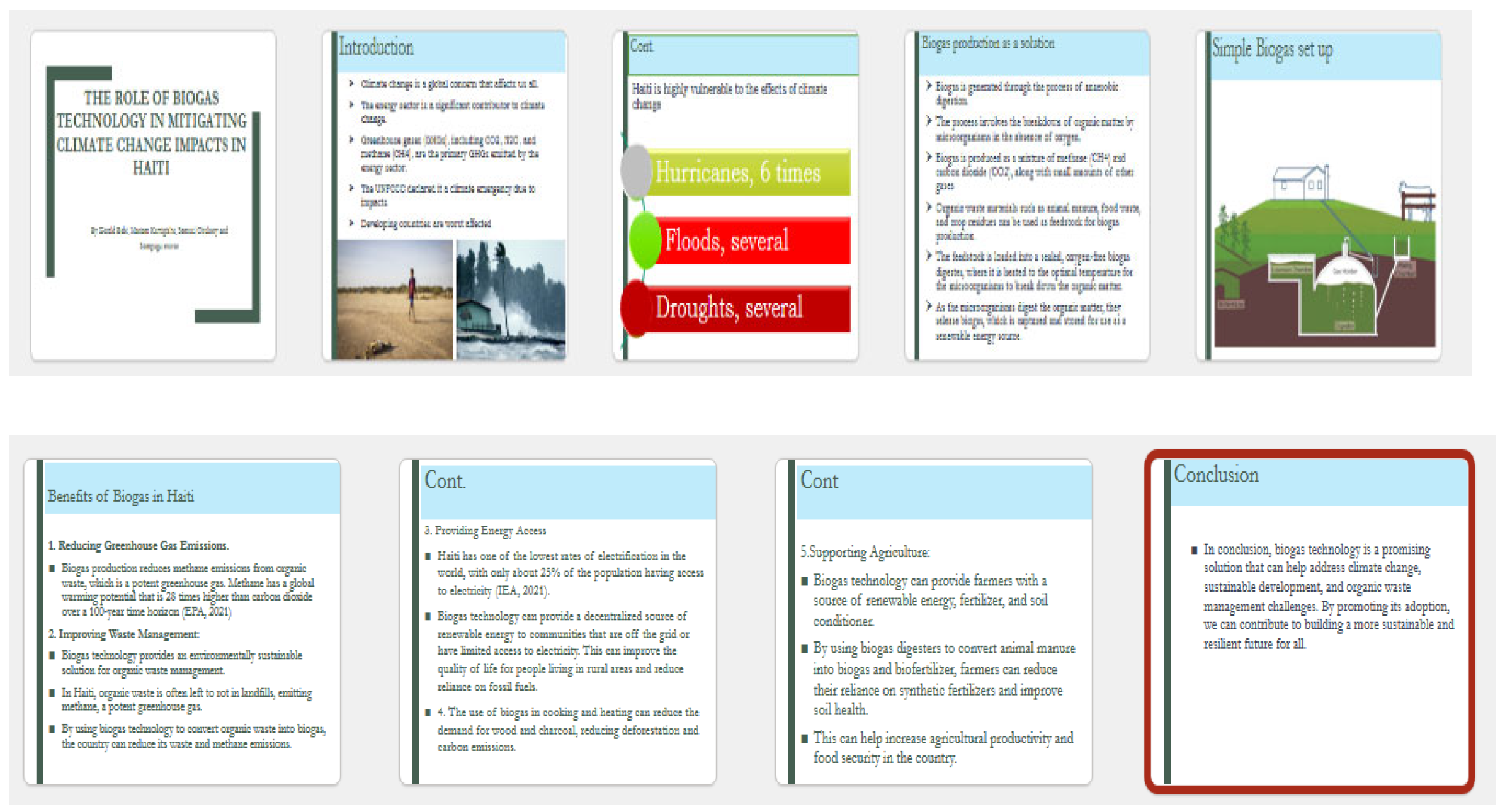
This panel showcased some of the work that is being done at educational institutions in the United States as well as international institutions. As climate change intensifies, educational systems are increasingly recognized as critical platforms for fostering environmental literacy and empowering future generations to engage in climate action [26]. Research highlights the importance of integrating interdisciplinary and transformative learning approaches to equip students with the skills needed for adaptation, mitigation, and resilience [27]. In both domestic and global contexts, climate education is evolving to include not only scientific knowledge but also civic engagement and policy literacy, reflecting its growing role in shaping sustainable societies. Professor Twesigye of Kyambogo University in Uganda and his student gave a presentation on “Using Biogas Technology to Mitigate Climate Change” (Figure 2). This presentation is part of Dr. Twesigye’s continuing work “to help mitigate risks to promote bioenergy development in developing countries which still have a substantial amount of biomass resources.
Figure 2.
Dr. Charles Tweisgye’s student gave a PowerPoint presentation on “The role of biogas technology in mitigating climate change impacts in Haiti.” They proposed that biogas technology is a promising solution that can address climate change, sustainable development, organic waste management, and specifically help with agricultural productivity and food security. The complete PowerPoint is contained in the Supplementary Materials for this paper.
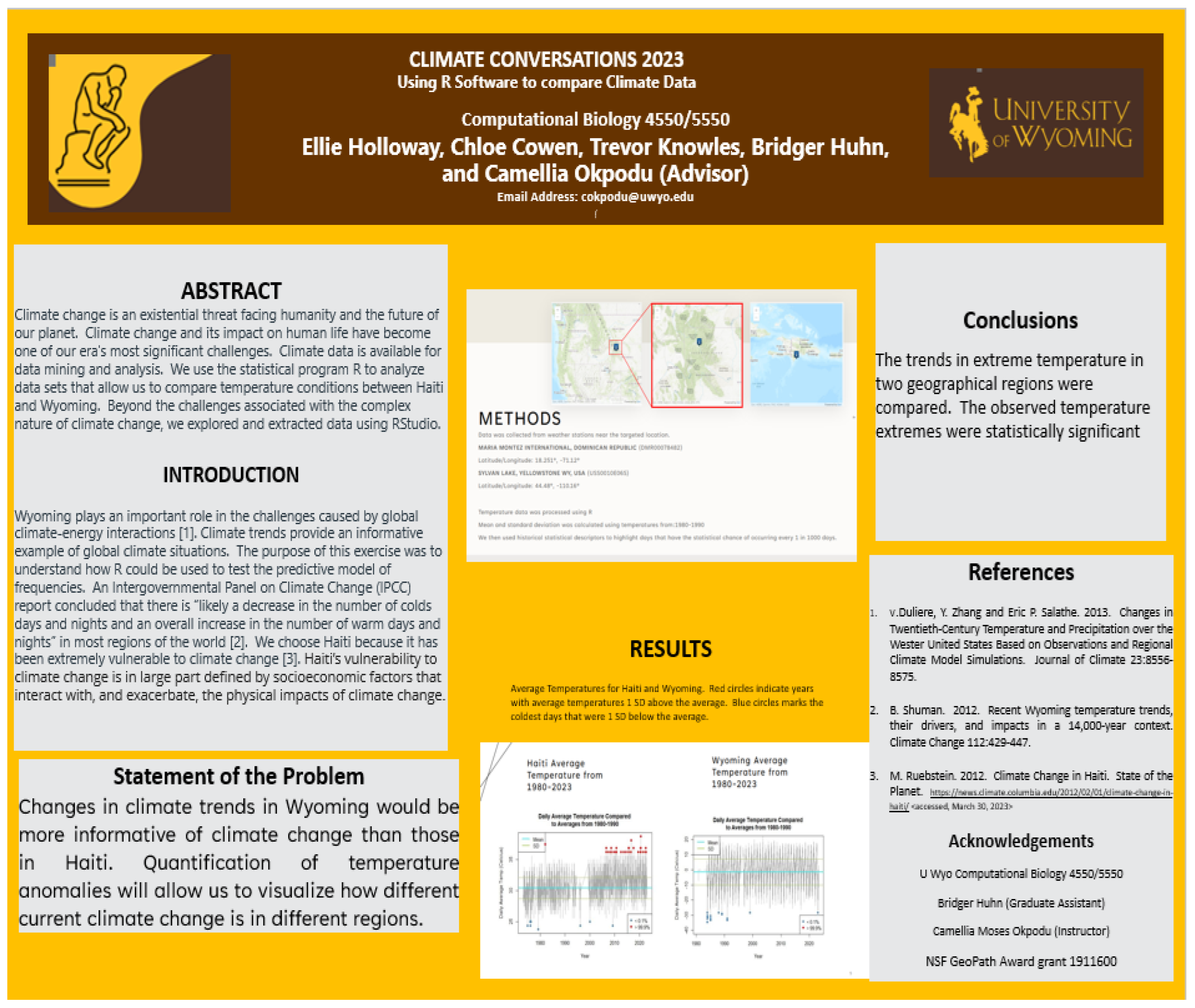
Mr. Bridger Huhn (Graduate Assistant) led Dr. Okpodu’s Computational Botany students from the University of Wyoming on a poster presentation about using R statistical software to study Climate Change (Figure 3). In addition, Dr. Okpodu gave an update on the NSF GeoPath Award grant 1911600. The climate data utilized in this study was sourced from a dataset labeled “Hispaniola,” which encompasses environmental variables for the entire island shared by Haiti and the Dominican Republic.
Figure 3.
Poster presentation created by students in Dr. Okpodu’s Computational Biology course use R software to compare climate patterns in Wyoming with Haiti. Quantification of temperature anomalies allowed them to visual how different current climate change is in different geographical regions. The were able to compare temperature extremes in two regions. This effort was supported by the NSF GeoPath Award grant 1911600.
Days with probability < 0.001% were deemed as extreme, meaning we would expect the daily average temperature to occur less than 1 out of every 100,000 days. 53 days were categorized as extremely hot in the Dominican Republic, and students compared this data to a location of their choosing in Wyoming.
Both the PowerPoint slides and the Poster can be found as the Supplementary Materials for this paper.
4. Special Recognitions—Climate Leadership
Awards, recognitions, and special presentations were part of the virtual workshop. Dr. Okpodu created the Climate Conversations Champions awards to spotlight the efforts of various professionals from all levels of achievement.
4.1. Professional Recognitions
Dr. Bernadette J. Holmes was recognized as the Climate Conversations Champion. Dr. Holmes is a full Professor of Sociology and former Director of the Criminal Justice Program at Norfolk State University, and served as the Acting Chair of the Department. She has held professorships at Old Dominion University and Hampton University (HU). Dr. Holmes earned a B.A. in Sociology from Norfolk State University and an M.A. and Ph.D. in Sociology from The Ohio State University, with a minor in Community Development. Her areas of specialization are in social psychology, gender, and criminology. She has conducted research on alternative family structures among black families and determinants of satisfaction, and her new research on Environmental Sociology was funded by the Department of Homeland Security (DHS). She developed a special topics course on Environmental Crime and Justice, taught at both the graduate and undergraduate levels. Dr. Holmes has served as a legal consultant in the areas of sexual assault and sexual harassment. She is a member of the American Criminological Society, the Academy of Criminal Justice Sciences, Southern Sociological Sociology, International Black Women’s Congress (IBWC), and the National Women’s Studies Association. While at HU, Professor Holmes was the recipient of a Fulbright/Hays Fellowship to Morocco, focusing on internationalization of the curriculum. She is the recipient of numerous community awards and honors, including the ONI Award from IBWC for Outstanding Dedication to Educating and Empowering Students of African descent. Dr. Holmes received the University Outstanding Teaching Award while serving as Departmental Chair at Hampton University. She also received the Dean’s Award for the College of Liberal Arts at HU for mentoring students. Dr. Holmes’s love of teaching was reaffirmed when she returned to her beloved Norfolk State University to assist in the development of the Criminal Justice Program. She received the NSU Sociological Honor Society-Faculty of the Year 2018, Excellence in External Funding Awards & Recognition Certificate, NSU Office of Sponsored Programs, 2019, for her work with the Department of Homeland Security, which sponsored students and facilitated the development of her special Topics Course on Environmental Crime and Justice and environmental justice. Dr. Holmes is committed to engaging students in field research as part of her teaching and research. In sum, the principles that guide her teaching philosophy and pedagogical techniques are undergirded by the saying: “To those that much is given, much is expected,” reflecting the activist/scholar traditions espoused by W.E.B. DuBois and Anna Julia Cooper.
4.2. Collaboration with Haiti Development Initiative (HDI)
Haiti Development Initiative is an organization that champions strong civic involvement. They empower local leaders, organizations, and social entrepreneurs with the skills, tools, resources, and connections necessary for community development. To support this mission, they connect philanthropists with credible local organizations and investment opportunities, resulting in truly impactful and sustainable development. Dr. Okpodu began collaborating with Mr. Monel when he founded and served as CEO of Christians for Haiti, established in 2010. Dr. Okpodu has continued this partnership to develop strategies addressing climate change and benefiting Haiti.
5. Discussion
The “Climate Conversation 2023—A Focus on Haiti” provided a dynamic platform for examining the multifaceted impacts of climate change on Haiti through interdisciplinary lenses. The findings from the keynote and panel discussions reinforce the concept that climate resilience in Haiti must be approached through a holistic framework—one that integrates environmental, social, political, economic, and educational dimensions. This aligns with previous studies emphasizing the importance of community-based adaptation strategies and the role of inclusive governance in climate resilience [1,2].
A recurring theme across all panels was the disproportionate burden of climate change on underrepresented and vulnerable communities in Haiti [28]. This observation echoes global environmental justice literature, which highlights how marginalized populations often face the greatest risks while having the least access to resources for adaptation. The emphasis on health disparities, food insecurity, and political instability as climate-related stressors underscores the need for integrated policy responses that address both immediate and structural vulnerabilities.
The panel on economics and sustainability highlighted the potential of local and diaspora-driven innovation in natural resource management. This supports earlier findings that diaspora engagement can serve as a catalyst for technology transfer, capacity building, and investment in sustainable development [29]. The discussion also revealed a growing interest in leveraging indigenous knowledge systems alongside scientific research to co-create context-specific solutions. Dorji et al. (2024) conducted a systematic literature review demonstrating how Indigenous knowledge contributes to climate change adaptation and resilience [30].
Importantly, the conference reaffirmed the value of transdisciplinary collaboration. The diversity of expertise—from agriculture and health to business and education—demonstrated that climate resilience is not the domain of any single discipline. Instead, it requires sustained dialogue and partnership across sectors. This insight aligns with the working hypothesis that inclusive, cross-sectoral engagement enhances the relevance and impact of climate adaptation strategies [31].
Looking ahead, future research should explore mechanisms for institutionalizing diaspora engagement in Haiti’s climate policy frameworks. A recent multi-country case study by the International Organization for Migration (IOM) emphasizes the importance of systematically integrating diaspora communities into climate action planning, highlighting their potential to contribute knowledge, funding, and advocacy [32]. There is also a need for longitudinal studies that assess the effectiveness of community-led adaptation initiatives and their scalability. Hügel and Davies (2020) provide a comprehensive review of public participation in climate adaptation, identifying the need for more empirical research on how local communities engage with and sustain adaptation strategies over time [33].
Additionally, further investigation into the intersection of climate change and public health in Haiti could yield actionable insights for both policy and practice. Community-based participatory approaches, as discussed in Global Sustainability, offer promising frameworks for integrating health, education, and environmental resilience in vulnerable regions [34].
In sum, the 2023 conference not only advanced the discourse on climate change in Haiti but also laid the groundwork for future collaboration, research, and action. By centering Haitian voices and experiences, and by drawing on the strengths of the global diaspora, this initiative contributes meaningfully to the broader movement for climate justice and resilience. As Haiti faces its current political struggles, we have continued to partner with the HDI to help implement solutions involving a data science approach. The University of Wyoming’s School of Computing, along with assistance from other universities in Virginia, has engaged with this organization to see if we can help them address real-life and death access to information to help those Haitian people who will now have to be repatriated due to changes in US policy.
Supplementary Materials
The following supporting information can be downloaded at https://www.mdpi.com/article/10.3390/eesp2025038001/s1. Figure S1: Dr. Charles Tweisgye’s student gave a PowerPoint presentation on “The role of biogas technology in mitigating climate change impacts in Haiti”; Figure S2: Poster presentation developed by students in Dr. Okpodu’s Computational Biology course, utilizing R software to compare climate patterns between Wyoming and Haiti.
Author Contributions
Conceptualization, C.M.O., S.O.-P., and C.M.; methodology, C.M.O.; software, B.H.; writing—original draft preparation, C.M.O.; writing—review and editing, S.O.-P., B.H., and C.M.; visualization, C.M.O. and B.H.; project administration, C.M.O.; funding acquisition, C.M.O. All authors have read and agreed to the published version of the manuscript.
Funding
This research received no external funding.
Institutional Review Board Statement
Not applicable.
Informed Consent Statement
Not applicable.
Data Availability Statement
The climate data used in this study were obtained from publicly accessible weather station records. Specifically, temperature data were collected from the Maria Montez International station in the Dominican Republic (Station ID: DMR00078482; Latitude: 18.251°, Longitude: −71.12°) and the Sylvan Lake station in Yellowstone, Wyoming, USA (Station ID: USS0010E06S; Latitude: 44.48°, Longitude: −110.16°). The dataset includes daily temperature records from the period 1980–1990. Data were processed and analyzed using R software, with the mean and standard deviation calculated for comparative analysis.
Acknowledgments
We acknowledge Arlene Maclin and Pamela Waldron-Moore for reading the manuscripts. We would also like to acknowledge members of the ASI who participated in the virtual conference. We also acknowledge Charles Twesigye and his students in the Department of Biological Sciences at Kyambogo University, Kampala, Uganda.
Conflicts of Interest
The authors declare no commercial or financial relationships that could be construed as a potential conflict of interest.
References
- Fogarty International Center. Focus: Scientists in the Diaspora. National Institutes of Health. 2022. Available online: https://www.fic.nih.gov/News/GlobalHealthMatters/march-april-2022/Pages/scientists-diaspora-overview.aspx (accessed on 30 May 2025).
- Bonilla, K.; Echeverría-King, L.F.; Serafim, M.; Mabotha, T.; Buyuktanir Karacan, D. Editorial: Engaging scientific diasporas for development: Policy and practices. Front. Res. Metr. Anal. 2023, 7, 1102805. [Google Scholar] [CrossRef] [PubMed]
- Patterson, R. Transnationalism: Diaspora-homeland development. Black Sch. 2006, 36, 44–50. [Google Scholar] [CrossRef]
- Diaspora Studies. Diaspora Studies Journal. Brill. n.d. Available online: https://brill.com/abstract/journals/bdia/bdia-overview.xml (accessed on 29 May 2025).
- Gevorkyan, A.V. Diaspora and Economic Development: A Systemic View. Eur. J. Dev. Res. 2022, 34, 1522–1541. [Google Scholar] [CrossRef] [PubMed]
- Global Diaspora Insights. Diasporas and Their Contributions: A Snapshot of the Available Evidence. iDiaspora. 2023. Available online: https://www.idiaspora.org/index.php/system/files/resources/document/gdi_briefs_diaspora05_072023.pdf (accessed on 4 March 2024).
- Bahar, D. Diasporas and economic development: A review of the evidence and policy. Comp. Econ. Stud. 2020, 62, 200–214. [Google Scholar] [CrossRef]
- Langa, P.V.; Swanzy, P.; Uetela, P. Advancing collaboration between African diaspora and Africa-based scholars. J. High. Educ. Afr./Rev. L’enseignement Supérieur Afr. 2018, 16, 135–155. [Google Scholar]
- Dajani, R. Scientists in diaspora are a powerful resource for their home countries. Nature 2023, 622, 671. [Google Scholar] [CrossRef] [PubMed]
- Lawless, R.; Flick, K.; Oregon State University. Impacts of Climate Change on Haiti. ArcGIS StoryMaps. 2021. Available online: https://storymaps.arcgis.com/stories/ce933e572c0c451a87c89f2ad3066fde (accessed on 21 May 2025).
- Happel, E.; Merope-Synge, S.; Morley, S.P. Climate Injustice in Haiti and the Case for Reparations. Haitian Studies Association. 2023. Available online: https://www.haitianstudies.org/2025/03/climate-injustice-in-haiti-and-the-case-for-reparations/ (accessed on 15 May 2025).
- Georgetown Americas Institute. Reducing Instability and Building Resilience in Haiti. 2024. Available online: https://americas.georgetown.edu/publications/reducing-instability-and-building-resilience-in-haiti (accessed on 21 May 2025).
- Okpodu, C.M.; Holmes, B.J.; Williams, M.N.; Waldron-Moore, P.; Tyson, P.; Twesigye, C.K. Climate Conversations: A One Day Virtual Symposium on the Impact That Climate Change Has on the African Diaspora. Environ. Sci. Proc. 2022, 20, 2. [Google Scholar] [CrossRef]
- Birka, I.; Wasserman, R. Developed country diaspora strategy framework. Diaspora Stud. 2023, 16, 241–263. [Google Scholar] [CrossRef]
- McPherson, C.; Clarke, A. Leadership and climate change mitigation: A systematic literature review. Climate 2024, 12, 207. [Google Scholar] [CrossRef]
- R Core Team. R: A Language and Environment for Statistical Computing. R Foundation for Statistical Computing. 2023. Available online: https://www.R-project.org/ (accessed on 21 February 2023).
- Wickham, H.; Averick, M.; Bryan, J.; Chang, W.; McGowan, L.D.; François, R.; Grolemund, G.; Hayes, A.; Henry, L.; Hester, J.; et al. Welcome to the tidyverse. J. Open Source Softw. 2019, 4, 1686. [Google Scholar] [CrossRef]
- World Bank. Haiti Overview; World Bank: Washington, DC, USA, 2025. [Google Scholar]
- Felima, C.A. Multiple Jeopardies of Haitian Vulnerability: How Socio-Economic and Political Factors Exacerbate Environmental Hazards in Haiti. Master’s Thesis, Cornell University, Ithaca, NY, USA, 2010. Cornell University eCommons. Available online: https://ecommons.cornell.edu/handle/1813/17724 (accessed on 5 June 2023).
- Verisk Maplecroft. Vulnerability Index. 2016. Available online: https://www.maplecroft.com/data/country-risk-data/climate-risk-data/ (accessed on 2 July 2025).
- Nurse, L.; McLean, R.; Agard, J.; Briguglio, L.; Duvat-Magnan, V.; Pelesikoti, N.; Tompkins, E.; Webb, A. Chapter 29: Small islands. In Climate Change 2014: Impacts, Adaptation, and Vulnerability. Part B: Regional Aspects. Contribution of Working Group II to the Fifth Assessment Report of the Intergovernmental Panel on Climate Change; Cambridge University Press: Cambridge, UK, 2014. [Google Scholar]
- Diouf, I.; Sy, I.; Diakhaté, M. Assessing climate change impacts on public health in Haiti: A comprehensive study of disease distribution, modeling, and adaptation strategies. Front. Trop. Dis. 2024, 4, 1287499. [Google Scholar] [CrossRef]
- Ngcamu, B.S. Climate change effects on vulnerable populations in the Global South: A systematic review. Nat. Hazards 2023, 118, 977–991. [Google Scholar] [CrossRef]
- Bartlett, V.L.; Doernberg, H.; Mooghali, M.; Gupta, R.; Wallach, J.D.; Nyhan, K.; Chen, K.; Ross, J.S. Published research on the human health implications of climate change. BMJ Med. 2023, 3, e000627. [Google Scholar] [CrossRef] [PubMed]
- Bunch, R.; Lopez, G. Soil Recuperation in Central America: Sustaining Innovation After Intervention. Gatekeeper Series No. 85. International Institute for Environment and Development. 1999. Available online: https://pubs.iied.org/6045iied (accessed on 30 May 2025).
- Muccione, V.; Ewen, T.; Vaghefi, S.A. A scoping review on climate change education. PLoS Clim. 2025, 4, e0000356. [Google Scholar] [CrossRef]
- Plutzer, E.; McCaffrey, M.; Hannah, A. Climate change education in U.S. middle schools: Changes over five years. J. Microbiol. Biol. Educ. 2024, 25, e00015–e00024. [Google Scholar] [CrossRef] [PubMed]
- Tiepolo, M.; Bacci, M. Tracking Climate Change Vulnerability at Municipal Level in Rural Haiti Using Open Data. In Renewing local Planning to Face Climate Change in the Tropics; Springer International Publishing: Cham, Switzerland, 2017; pp. 103–131. [Google Scholar] [CrossRef]
- Miller, J. Indigenous Design Knowledge and Placemaking in the Climate Diaspora. ARCC Conference Repository. 2019. Available online: https://www.arcc-journal.org/index.php/repository/article/view/716 (accessed on 27 May 2025).
- Dorji, T.; Rinchen, K.; Morrison-Saunders, A.; Blake, D.; Banham, V.; Pelden, S. Understanding how Indigenous Knowledge contributes to climate change adaptation and resilience: A systematic literature review. Environ. Manag. 2024, 74, 1101–1123. [Google Scholar] [CrossRef] [PubMed]
- Ludwig, D.; El-Hani, C.N.; Gatti, F.; Kendig, C.; Kramm, M.; Neco, L.; Ressiore, A.C. Transdisciplinary philosophy of science: Meeting the challenge of Indigenous expertise. Philos. Sci. 2024, 91, 1221–1231. [Google Scholar] [CrossRef]
- International Organization for Migration. Multi-Country Case Study on the Opportunities and Challenges of Engaging Diasporas in Climate Action. 2024. Available online: https://publications.iom.int/system/files/pdf/pub2024-023-el-multi-country-diaspora-climate-action_0.pdf (accessed on 4 June 2025).
- Hügel, S.; Davies, A.R. Public participation, engagement, and climate change adaptation: A review of the research literature. Wiley Interdiscip. Rev. Clim. Change 2020, 11, e645. [Google Scholar] [CrossRef] [PubMed]
- Restrepo-Mieth, A.; Perry, J.; Garnick, J.; Weisberg, M. Community-based participatory climate action. Glob. Sustain. 2023, 6, e14. [Google Scholar] [CrossRef]
Disclaimer/Publisher’s Note: The statements, opinions and data contained in all publications are solely those of the individual author(s) and contributor(s) and not of MDPI and/or the editor(s). MDPI and/or the editor(s) disclaim responsibility for any injury to people or property resulting from any ideas, methods, instructions or products referred to in the content. |
© 2025 by the authors. Licensee MDPI, Basel, Switzerland. This article is an open access article distributed under the terms and conditions of the Creative Commons Attribution (CC BY) license (https://creativecommons.org/licenses/by/4.0/).