


Abstract
Despite the significant increase in publications on construction project performance (CPP), there is a deficiency of research that rigorously assesses and synthesizes previous studies to delineate the field’s development, themes, and research gaps. This article employs quantitative and qualitative methodologies to critically evaluate studies on CPP published over the last three decades and indexed in the Scopus database. The quantitative approach includes bibliometric searches and scientometric analyses to assess the extent of research interest and achievements. The qualitative methodology aims to conduct thorough content analysis to classify existing material based on prevalent themes. The results demonstrate an exponential growth of interest in this scientific research topic. Project management, construction industry, construction projects, project performance, and critical success factors are top keywords in pertinent research publications. This research field has been investigated in over 50 nations and published in over 100 scholarly journals. The United States and the Journal of Construction Engineering and Management are the primary contributors. Prior studies were categorized according to their objectives into four main research themes: project performance assessment and prediction, project performance improvement, critical success factors, and key performance indicators. This article uncovers research gaps and suggests avenues for further investigations. Researchers and practitioners may utilize the findings of this study to evaluate and implement CPP principles.
1. Introduction
Continuous assessment of construction performance based on many specified indicators is carried out to establish whether or not a construction project was successful. The performance review of a project involves determining the degree to which the predetermined performance metrics and objectives, such as those pertaining to time, cost, and quality, have been developed and achieved. Due to the one-of-a-kind, dynamic, and ever-changing character of the construction industry, evaluating construction project performance (CPP) has become increasingly important, but it is also a tough endeavor.
The key determinants of project success should be identified and defined within the initial phases of the project to effectively evaluate its performance. Identifying critical success factors (CSFs) is a fundamental step in assessing project performance. Failure to establish the CSFs results in ineffective performance assessment [1]. Numerous studies have been undertaken to identify and investigate the critical factors contributing to project success [2,3,4,5,6]. Comprehensive research on CSFs of construction projects has resulted in enhanced project performance and delivery [7]. However, relying just on CSFs is insufficient; they must be employed alongside performance assessment tools, such as key performance indicators (KPIs), which facilitate project management, performance monitoring and controlling, and the attainment of goals and objectives.
Notwithstanding the extensive literature on CPP, there is an absence of a comprehensive review to critically evaluate the existing research. Previous research has not been adequately examined regarding CPP aspects such as project success factors, performance indicators, project performance assessment, forecasting, and improvement. This paper provides a systematic evaluation of prior research on CPP, with the following objectives:
- Determine the quantitative trends and interest in scientific research pertaining to CPP.
- Identify the primary contributors to this study domain: countries, journals, scholars, and keywords.
- Investigate the interconnections and relationships of prior studies, authors, and citations.
- Conduct a thorough examination of the publications’ content to discern predominant research themes and systematically analyze and synthesize each theme.
- Identify current limitations and research gaps while offering recommendations for future research in CPP.
2. Methodology
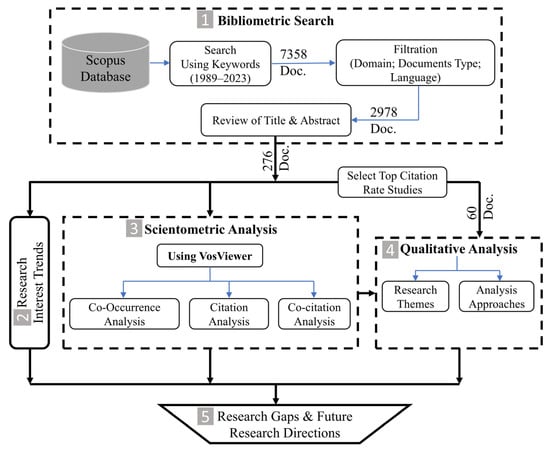
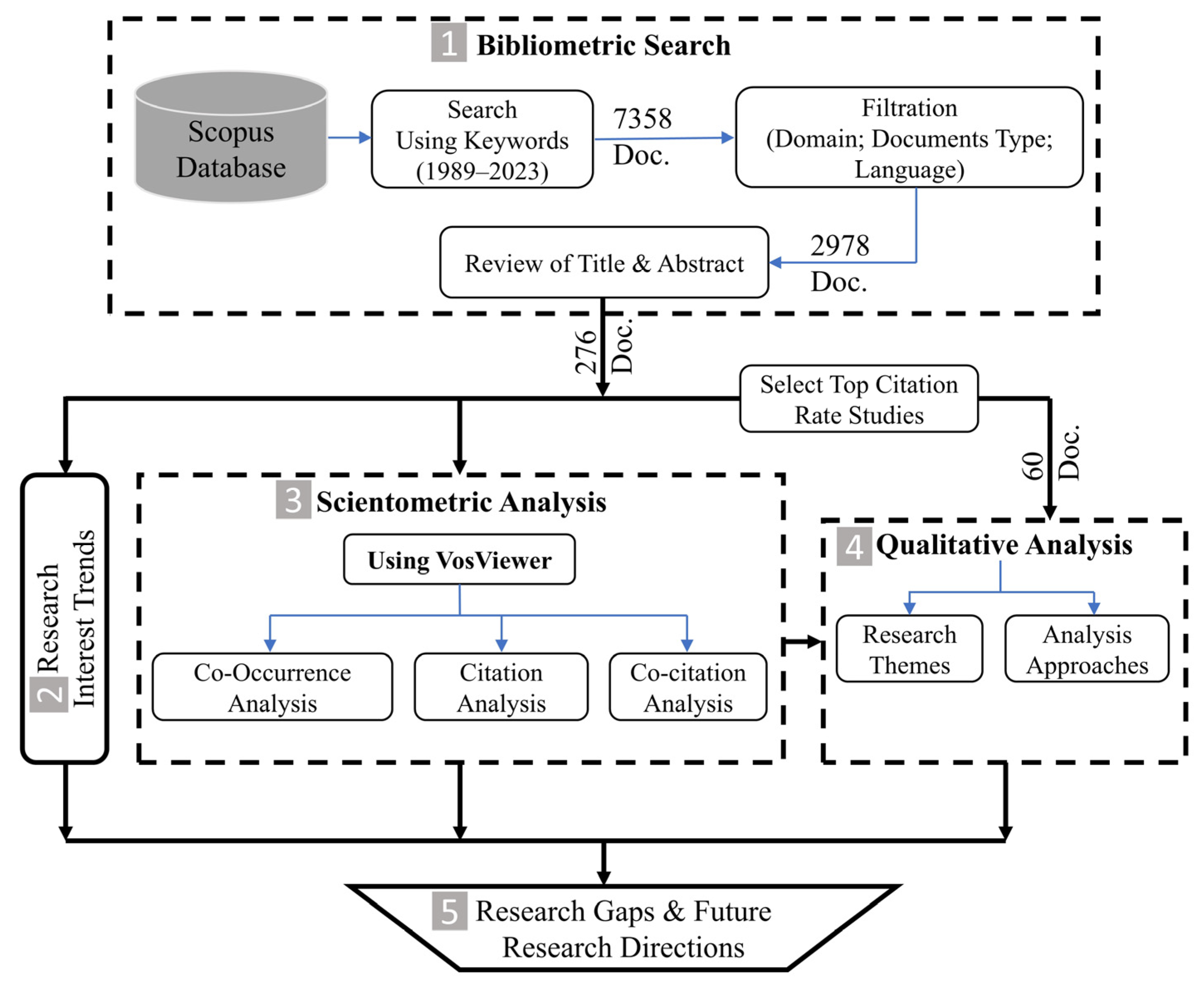
Figure 1 illustrates the methodology employed in this study to achieve the above-stated objectives. The methodology includes five main stages: (1) bibliometric search, (2) research interest trends, (3) scientometric analysis, (4) qualitative analysis, and (5) conclusions and future research directions.
Figure 1.
Research methodology.
2.1. Bibliometric Search
The two most prominent scientific research databases, Web of Science and Scopus, were investigated for pertinent previous research works. According to [8,9], the Scopus database offers a broader selection of updated publications compared to Web of Science. Thus, Scopus was chosen to fulfill the aim of this research by identifying relevant publications. The title, abstract, and keywords were chosen as the primary search criteria. The keywords used to find relevant publications include performance assessment OR CSFs OR success factors OR success criteria OR KPIs AND construction project. As a result, 7358 pertinent documents were identified, published between 1989 and 2023. The search was refined by limiting results to documents published in the engineering domain, in the English language, and categorized as technical or original articles. This yielded 2978 documents, which were then examined by the authors to select those exclusively addressing CPP. A final list of 276 articles was subsequently employed in the subsequent phases of the research methodology, including analyzing research interest trends and conducting scientometric analysis.
2.2. Research Interest Trends
The pattern of the selected 276 research articles was analyzed throughout the past 34 years of publication. The variation in publication quantity over the years signifies the level of interest among researchers and construction stakeholders in conducting effective assessments and improvements of CPP. A simple non-linear regression model was developed to estimate and forecast the number of publications over time.
2.3. Scientometric/Bibliometric Analysis
Scientometric or bibliometric analysis is a technique that employs mathematical formulas and visualization to discern structural patterns and track significant research boundaries, facilitating thorough yet succinct representation and mapping of scientific knowledge [10,11]. Numerous research studies within construction engineering and management have conducted scientometric analyses on different research topics, including green building [12,13], sustainability [11,14], system dynamics applications [15], public–private partnerships (PPP) for infrastructure projects [16], building information modeling (BIM) [17], and construction safety management [18]. Due to the rapid advancement of technology, multiple science mapping software applications are presently available for conducting scientometric analysis and visually depicting various facets of scientific research [19]. The software tools offered include VOSviewer, CitNetExplorer, Sci2, HistCit, Gephi CiteSpace, Pajek, and Bibexcel. This study employed VOSviewer, version 1.6.18, for its proficiency in information extraction and the visualization of large networks [20].
This research utilized VOSViewer to analyze and assess the leading journals, prominent scholars, and countries most engaged in the current research subject. The VOSviewer results are presented as overlays, networks, and density visualizations. Items such as authors, keywords, publications, and nations are depicted as nodes in the network visualization. The nodes are clustered and linked based on shared characteristics and correlations. The distance between nodes reflects the level of correlation among items.
2.4. Qualitative Analysis
Although scientometric analysis is advantageous for uncovering prevalent themes and correlations among research items, such as keywords, it is inadequate for performing content analysis and identifying limitations and existing research gaps. Therefore, a qualitative analysis was conducted to analyze the content of the pertinent literature, yielding a comprehensive evaluation of previous research efforts. This was accomplished through comprehensive assessment, synthesis, and categorization of prior research studies. To ensure the efficiency and reliability of this analysis, the 276 publications were shortlisted to a more manageable subset. A total of 60 high-impact papers, characterized by high citation rates (number of citations divided by the year 2024 minus the publishing year), were selected for full-text thematic analysis. This core set constitutes approximately 20% of the whole corpus (60/278 ≈ 21.6%), adhering to the 80/20 Pareto principle, wherein a relatively small subset of works generally accounts for a disproportionate percentage of scholarly impact, as indicated by citation rates. The 60 documents were carefully evaluated, and common research subjects were identified and further examined.
3. Results and Discussion
This review study elucidates the trends, subject scope, and methodological approaches pertinent to research on CPP, published between 1989 and 2023. This section delineates the overarching trend of research outputs, the results of the scientometric analyses, comprising keyword co-occurrence, citation and co-citation, journal evaluation, and collaboration networks, as well as the key insights derived from the qualitative analysis of the most cited publications. Significant attention is devoted to the variables influencing interest in project performance research, including global economic developments and technology advancements in project performance assessment. Furthermore, the following subsections address how the findings enhance the comprehension of CSFs, KPIs, research approaches, and prospective study directions in this field.
3.1. Research Interest Trajectory and Growth Patterns
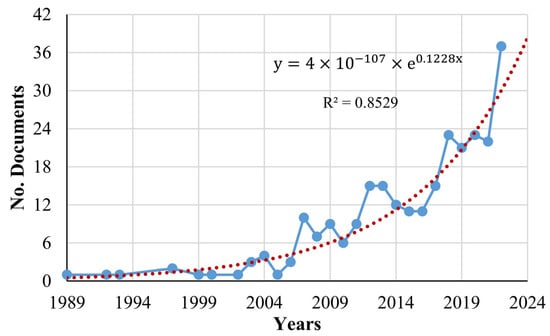
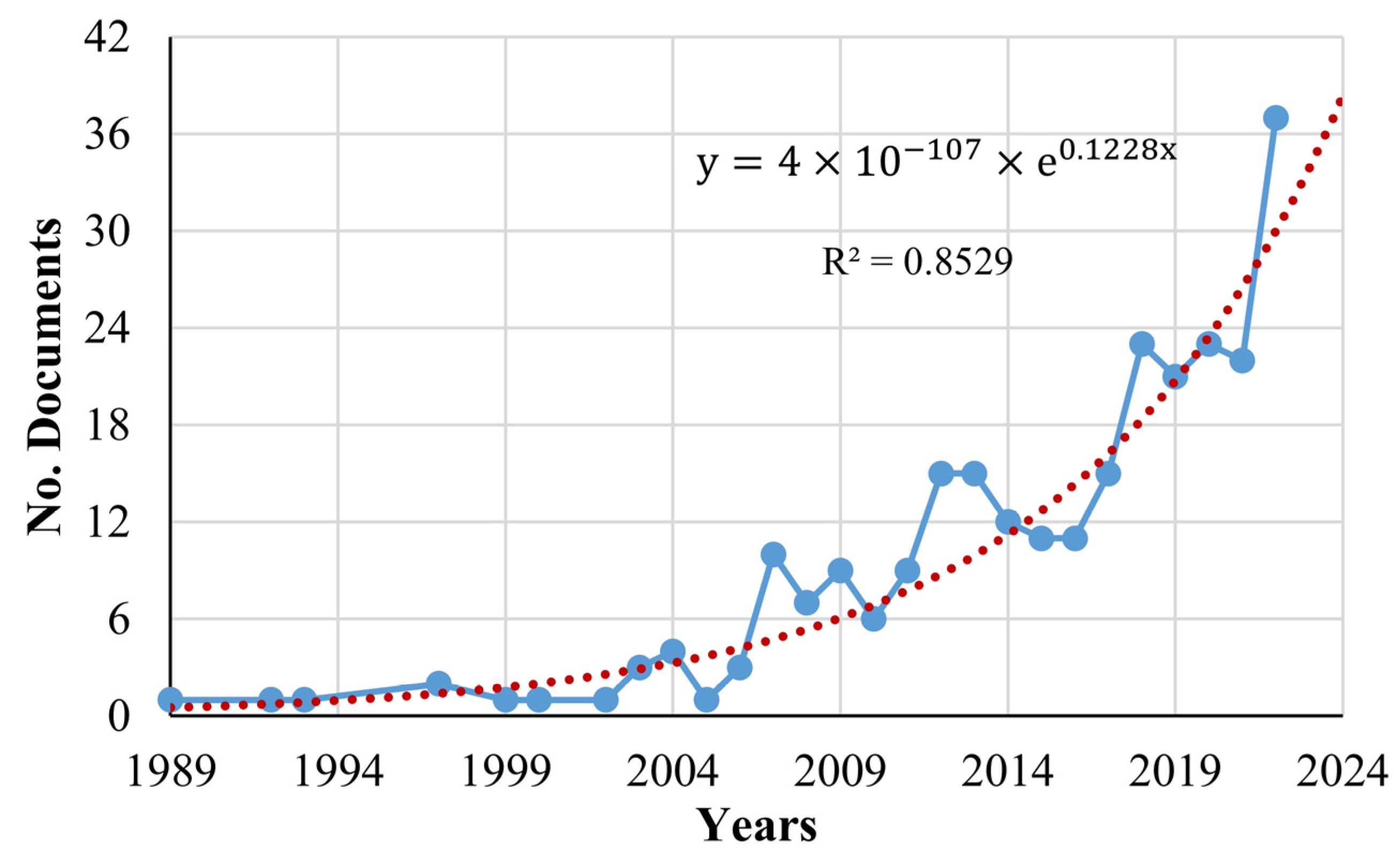
Between 1989 and 2023, an extensive database search and filtration procedure yielded 276 research articles, focusing on various aspects of CPP. Figure 2 illustrates the temporal evolution of publication volume through the past 34 years. The publication rate has an exponential growth pattern, as evidenced by an exponential regression model, represented in Equation 1, with a coefficient of determination of 0.85. The model states that
where y is the number of publications in a specific year x. This equation suggests that, barring any significant disruptions, publishing output will continue to grow exponentially. Fluctuations occur on an annual basis, yet the overall trajectory reveals a substantial increase in scholarships, particularly during the past decade. The volume of studies published from 2012 to 2023 is nearly five times greater than that published between 1989 and 2011. This considerable surge could be attributed to various factors, such as the significant impact of the 2008 global economic crisis, which heightened the emphasis among researchers and practitioners on improving project efficiency to mitigate economic risks [21,22,23,24]. Another likely contributor to this growth is the constant evolution of digital tools and software solutions that provide more accurate assessments of project performance. As construction markets have grown more competitive, stakeholders are increasingly dependent on novel metrics and systems for performance evaluation, thereby stimulating scholarly interest in the subject.
Figure 2.
Annual publications of relevant research articles.
3.2. Results of Scientometric Analysis
The following subsections present the findings of the scientometric analysis that maps the intellectual landscape of research on CPP. The results include the co-occurrence of keywords, the citation impact of relevant publications and publication venues, and the extent of collaborative networks among authors and countries. Collectively, these findings offer a structured perspective on the evolution of the research domain and its primary areas of focus.
3.3. Co-Occurrence Analysis
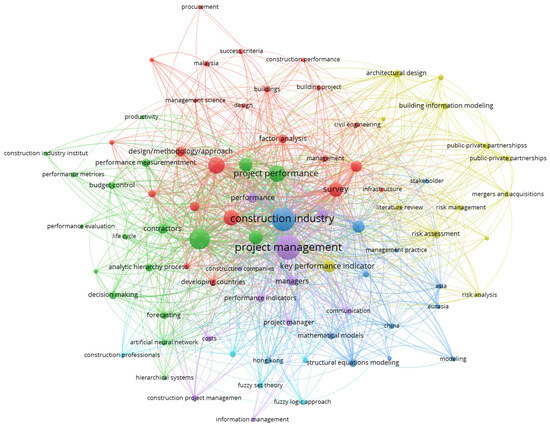
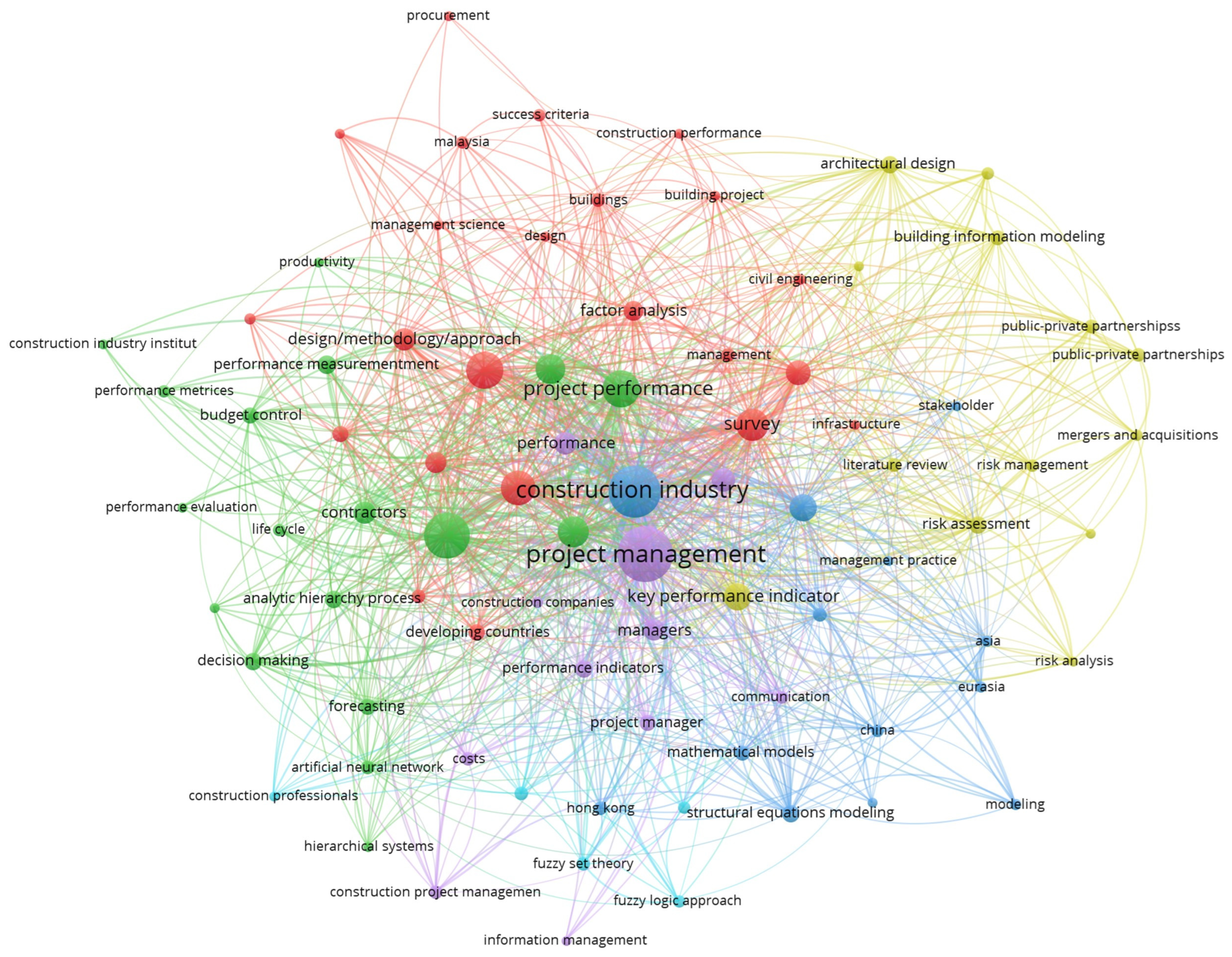
The purpose of the co-occurrence analysis is to identify the most prominent keywords in this field and unveil their interrelationships in accordance with established scientometric methodologies [25]. A total of 1466 keywords, including both authors’ and indexed keywords, were extracted from the selected corpus of publications. In accordance with the recommendations in [15,26,27], a threshold of at least five keyword occurrences was established to eliminate low-frequency, perhaps less relevant terms, resulting in 83 keywords that satisfied the specified criterion. The keywords “project management,” “construction industry,” “construction projects,” “project performance,” “CSFs,” “project success,” and “survey” exhibit the highest frequencies.
Table 1 presents the top 20 recurring keywords, reporting their frequency of occurrence, average publication year, average citation rate, and average normalized citations. The average publication year offers insights into the timeliness and relevance of a collection of publications, helping academics determine whether a subject of study is evolving or stagnant and if they are citing current sources. For example, studies on project performance were largely released around 2013, demonstrating that this topic was researched rather early. In contrast, publications addressing project success factors emerged in 2017, suggesting that these subjects have piqued academic interest in recent years and may signify future research opportunities. The average citation rate assesses the impact of publications; a high average citation rate indicates the significance of a research study within the pertinent academic community, facilitating comparisons of impact among various authors, journals, or institutions. Keywords such as questionnaire survey, performance assessment, and project management have received the most attention from the scholarly community. The average normalized citations offer a more reliable measure of research impact than simple counts, revealing the genuine importance of an author or institution. In contrast to the average citation rate, the average normalized citations allow for the reliable identification of influential keywords, such as “questionnaire survey” and “factor analysis (FA),” which exhibit the highest average normalized citations.
Table 1.
Top 20 keywords in CPP research area.
Figure 3 depicts the interconnections among all the keywords and their respective clusters. The sizes, color, spacing, and connections of the nodes signify the frequency, clustering, and co-occurrence of the keywords. Additionally, the figure delineates six thematic clusters—success evaluation, performance measurement, modeling frameworks, sustainability-oriented construction, and risk management tools—reflecting distinct yet interconnected research domains.
Figure 3.
Keyword network visualization.
3.4. Citation Analysis
Citation analysis was carried out at the document level, emphasizing the frequency of citations for individual articles. The criterion was established at 50 citations, narrowing the pool to 51 highly cited documents. Table 2 presents the 10 most cited research articles, detailing the publication year, total citations, and average normalized citations. Although older publications often accumulate more citations, the normalized citation metric ensures a more equitable comparison by accounting for the duration in which citations may be collected. The study by [7] emerges as the most referenced work overall with 500 citations), although the research by [28] has a superior average normalized citation score of 4.77, indicating a high annual impact in relation to its publication date. Although the work by [29] is the most current published research among the top 10 cited publications, it has the second highest average normalized citation count. Table 2 shows that the quantity of citations and the average normalized citations are influenced not only by the age of publications but also by several other factors, including the significance, urgency, and quality of the research area and its leading publisher. The majority of these highly cited studies concentrate on CSFs, KPIs, and success criteria, reinforcing the preeminent place these topics have in the CPP literature.
Table 2.
Top 10 most-cited research articles.
To further understand the structure of the research field, it is crucial to examine citation data at the journal level. According to [37], journal citation analyses offer valuable insights into the thematic characteristics and structural features of a research domain, while also highlighting the distinctive attributes of various journals. Furthermore, ref. [12] noted that a closer examination of publication sources enables scholars to target journals most suitable for their scholarly contributions and to gauge the impact of specific research streams. This study analyzed 276 publications published in 106 journals, representing diverse geographical regions and academic sub-disciplines.
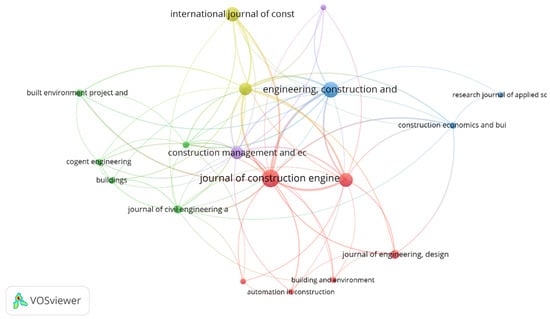
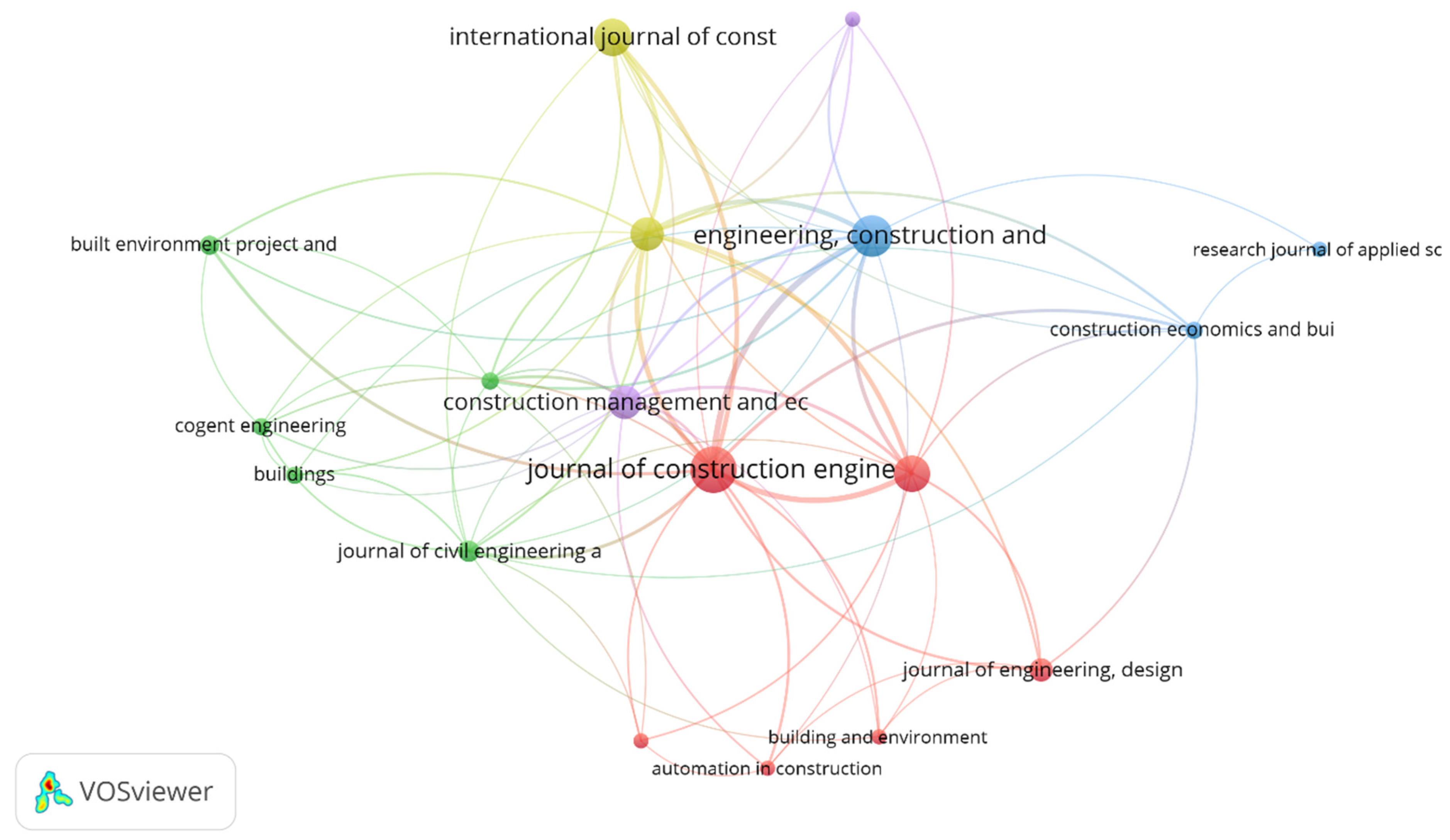
In accordance with the approach proposed by [26], the minimum acceptable publication count was set at three articles per journal, while the minimum citation threshold was determined to be 30. These thresholds ensure that each journal examined demonstrates a substantive level of engagement with the CPP literature, thus enhancing the reliability of any detected patterns. Consequently, 18 of the 106 journals met these criteria and were incorporated into the analysis. Figure 4 presents a visual depiction of the journals’ network, illustrating each source’s overall prominence based on publication frequency and total citation strength. The size of each node in the figure corresponds to the quantity of published articles, whereas the thickness of the connections indicates the extent to which the journals reference each other.
Figure 4.
Journals network visualization.
Table 3 presents a summary of the top 10 journals that fulfill these criteria, organized by metrics such as number of publications, total citations, average publication year, average citations, and average normalized citations. The data indicates that the Journal of Construction Engineering and Management published the most articles (28), followed by Engineering, Construction and Architectural Management (22), and the International Journal of Construction Management (18). The International Journal of Project Management, although publishing fewer papers on CPP, attains the highest average normalized citations with an annual citation impact of 2.50. This pattern suggests that while certain journals focus intensively on construction-related themes, others substantially impact scholarly influence per article despite a lower number of articles. These findings collectively illustrate the diversity and specialization of journals publishing CPP research, underscoring the breadth of scholarly outlets and the concentration of significant work in a limited number of influential publications.
Table 3.
Top 10 journals contributing to CPP research area.
3.5. Co-Authorship Analysis
An analysis of co-authorship at the author level highlights collaboration patterns among scholars and reveals the evolution of cooperative networks across researchers and institutions [38]. Following the approach outlined in [15], this study set a minimum threshold of two publications and a minimum of 30 citations per author, resulting in 39 authors meeting these criteria from a total of 679 contributors to the dataset. Table 4 displays the five foremost researchers who are interconnected in the co-authorship network. Chan, A.P.C. stands out for having the largest number of publications (11) and total citations (1343), in addition to the most substantial total link strength (19), reflecting a particularly prominent collaborative presence. Nevertheless, when considering average citation and average normalized citation, Scott D. exhibits significantly high values (381 and 1.96, respectively) despite having only two publications, indicating a considerable annual influence relative to the duration of their research contributions.
Table 4.
Top 5 authors connected to each other.
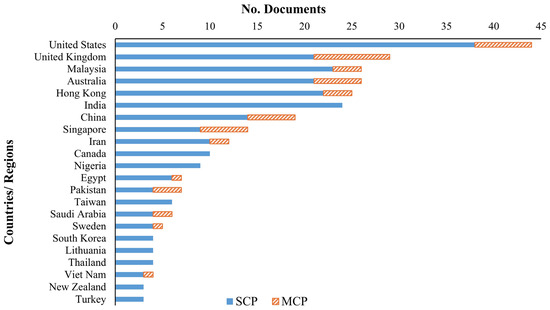
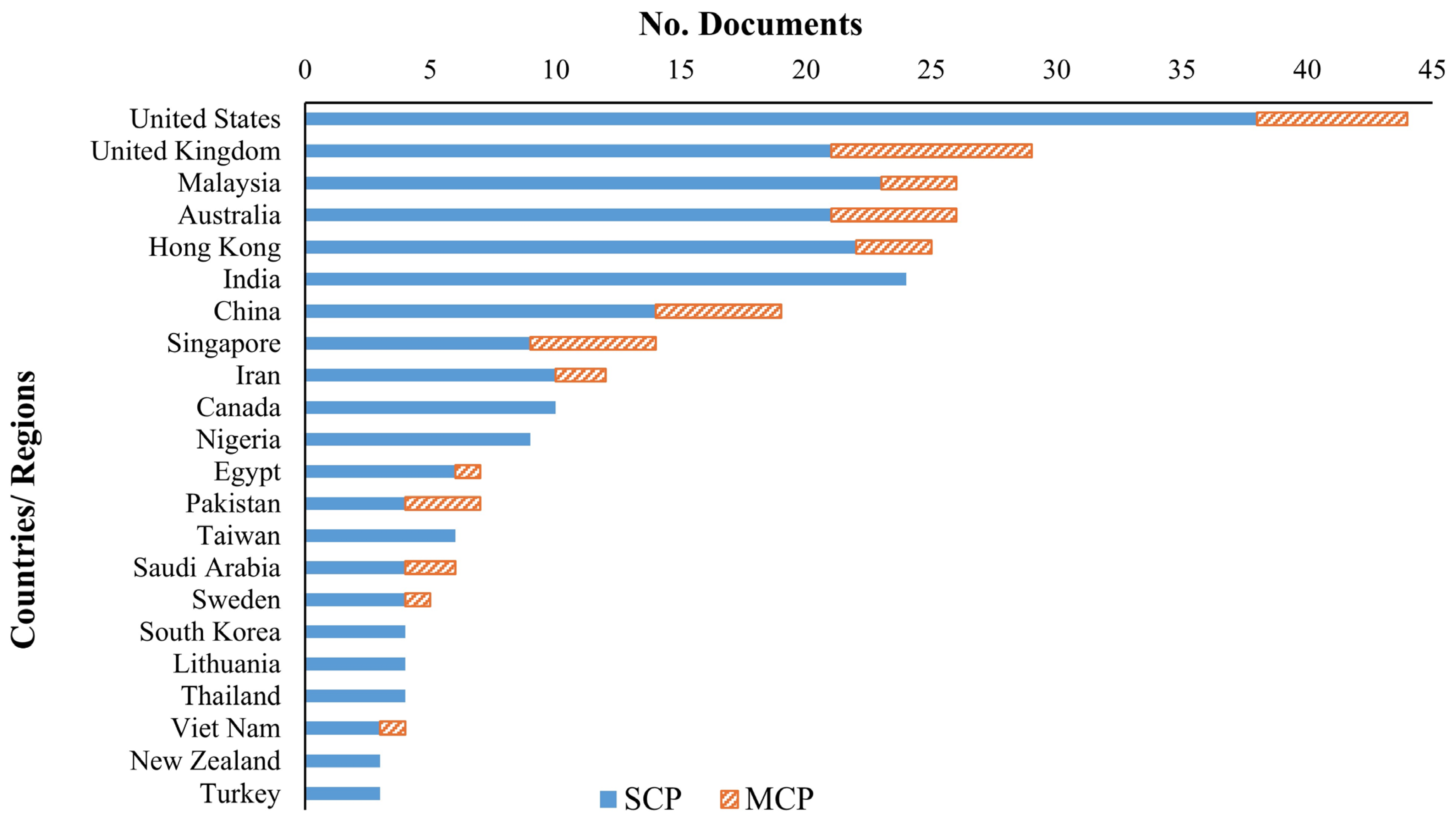
Evaluating the contributions and collaborations of authors from different geographic regions allows for the mapping of the international scope of CPP research. A total of 57 countries and regions contributed to the dataset, with 27 meeting the criteria of a minimum of two documents and 30 citations.
Figure 5 further distinguishes single-country/region publication (SCP) from multiple-country/region publication (MCP) outcomes. The United States shows 38 SCP and 6 MCP, whereas the United Kingdom records 8 MCP, representing the highest number of internationally co-authored articles among these nations and regions. China, Hong Kong, Australia, and the United Kingdom constitute a tight cluster, implying robust transnational collaborations and frequent co-authorship connections. Such networks are likely to reflect deliberate policy initiatives that promote global research partnerships in the construction domain.
Figure 5.
Number of publications by countries and regions based on corresponding author affiliation (SCP: single country/region publication; MCP: multiple county/region publication).
3.6. Co-Citation Analysis
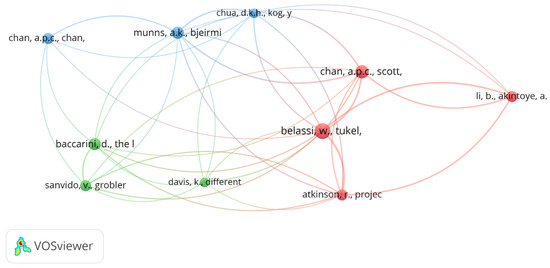
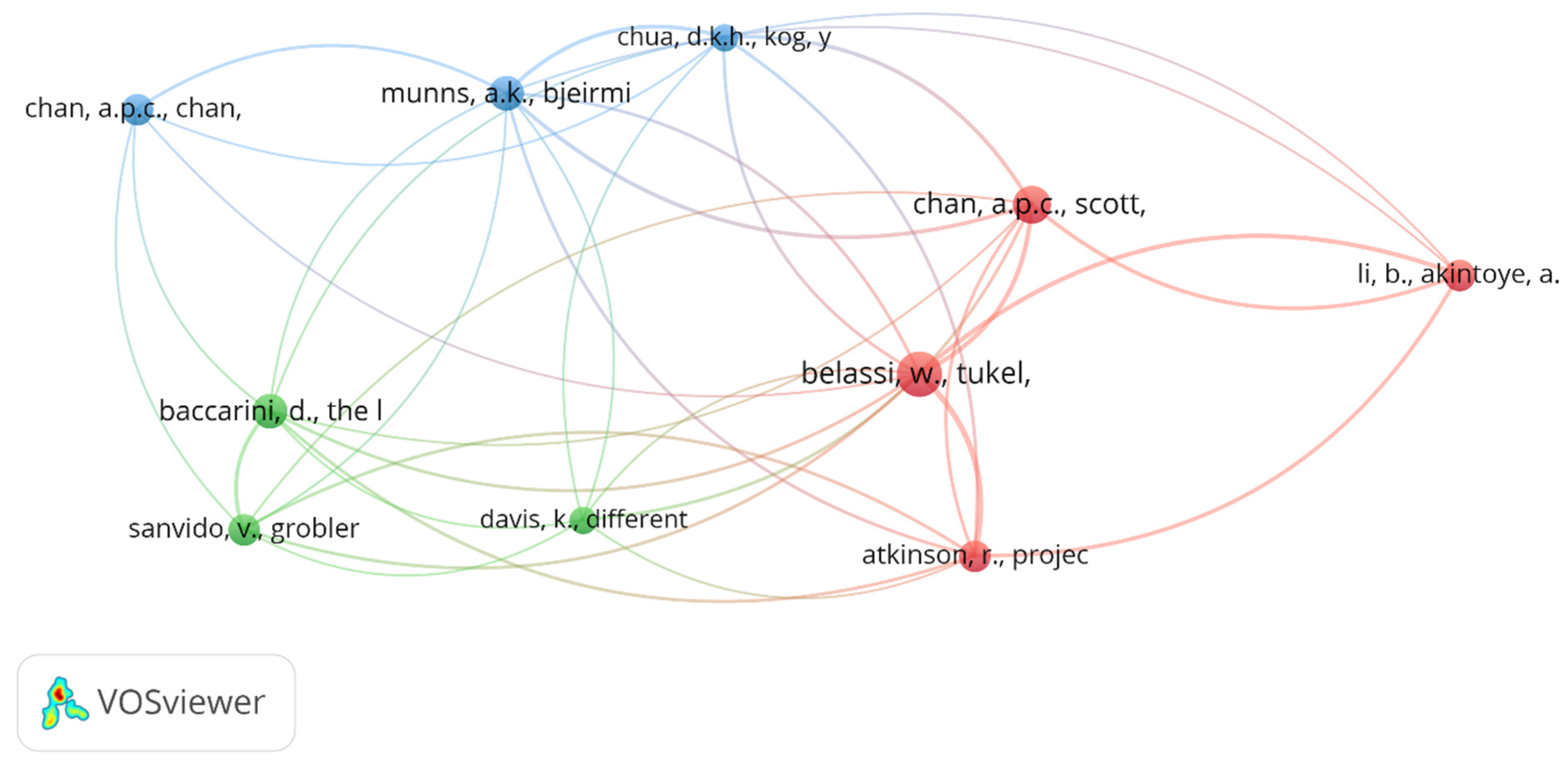
Reference co-citation analysis determines the frequency with which specific studies are mentioned together in the same bibliography, thereby reflecting the intellectual proximity or compatibility of these works. A minimum of eight co-citations per reference yielded 10 distinct references that met this criterion. Figure 6 illustrates the co-citation network, while Table 5 lists these references according to their co-citation count, alongside total citations and publication details.
Figure 6.
Co-citation of references in CPP research field.
The leading co-cited work is [39], which has 13 co-citations. It is evident that despite being published in 2004, which is more recent than the majority of highly co-referenced documents, [7] ranks as the second most cited. In contrast, ref. [40] was published in 1992; yet, it did not achieve the highest citation count. Recent studies are mentioned more frequently, confirming that the age of a research study is not the sole factor influencing citations; rather, the importance and contribution of the research play a crucial role in citation frequency.
These frequently co-cited references predominantly center on CSFs, KPIs, and various themes of project success. The emphasis on success factors and success criteria supports the findings of the previous keyword and citation analyses, highlighting the way these topics integrate diverse research agendas within the field.
Table 5.
Top 10 most co-cited references in CPP research.
3.7. Results of Qualitative Analysis
In light of the shortcomings of the quantitative analysis, a qualitative evaluation was undertaken to delineate the research trajectories and gaps. This review analyzed the top 60 articles based on citation rate, focusing on their content to discern major research themes and commonly employed analytical methods. The themes identified in this second-level review comprise CSFs, KPIs, project performance improvement, and project performance assessment and prediction. Table 6 provides details on a sample of 10 papers, including their objectives and analytical techniques.
Table 6.
Sample of the top 60 most-cited papers.
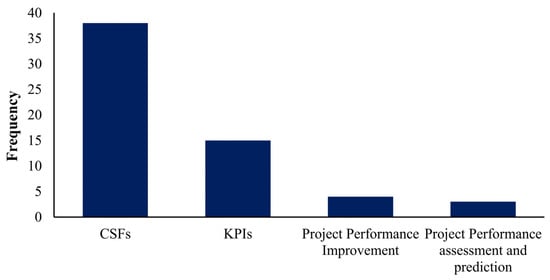
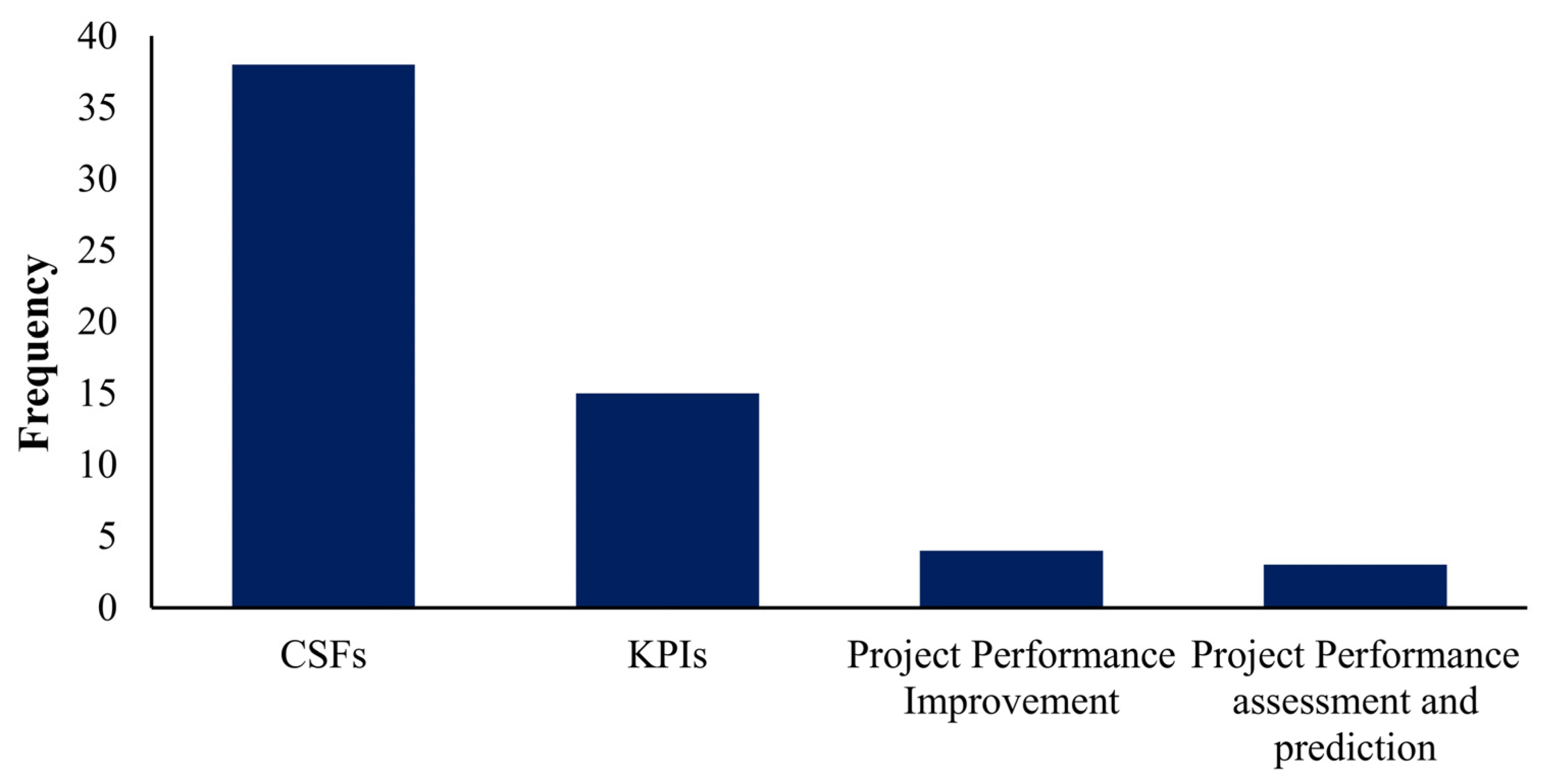
Figure 7 displays the frequency of investigation into each of the four research themes related to CPP, highlighting the significance of these themes to the body of knowledge and practice.
Figure 7.
Frequency of research themes.
- a.
- CSFs
The notion of CSFs, introduced by [51], has been applied to the construction industry to determine the essential actions or conditions required for ensuring a project’s success, rather than merely ensuring its survival. Researchers agree that universal definitions of CSFs are rare, as the significance of different factors depends on the project’s nature, contractual arrangements, cultural environment, and broader market conditions. Nonetheless, 36 out of the 60 high-impact studies (60%) examined CSFs from various angles, such as general building projects [7,31,40,52] and particular project delivery methods, including design-build [53] and public–private partnerships (PPPs) for infrastructure projects [54,55,56].
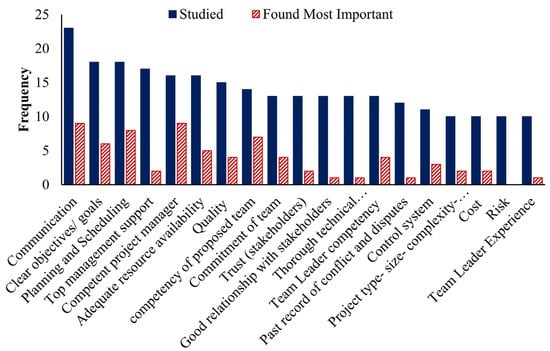
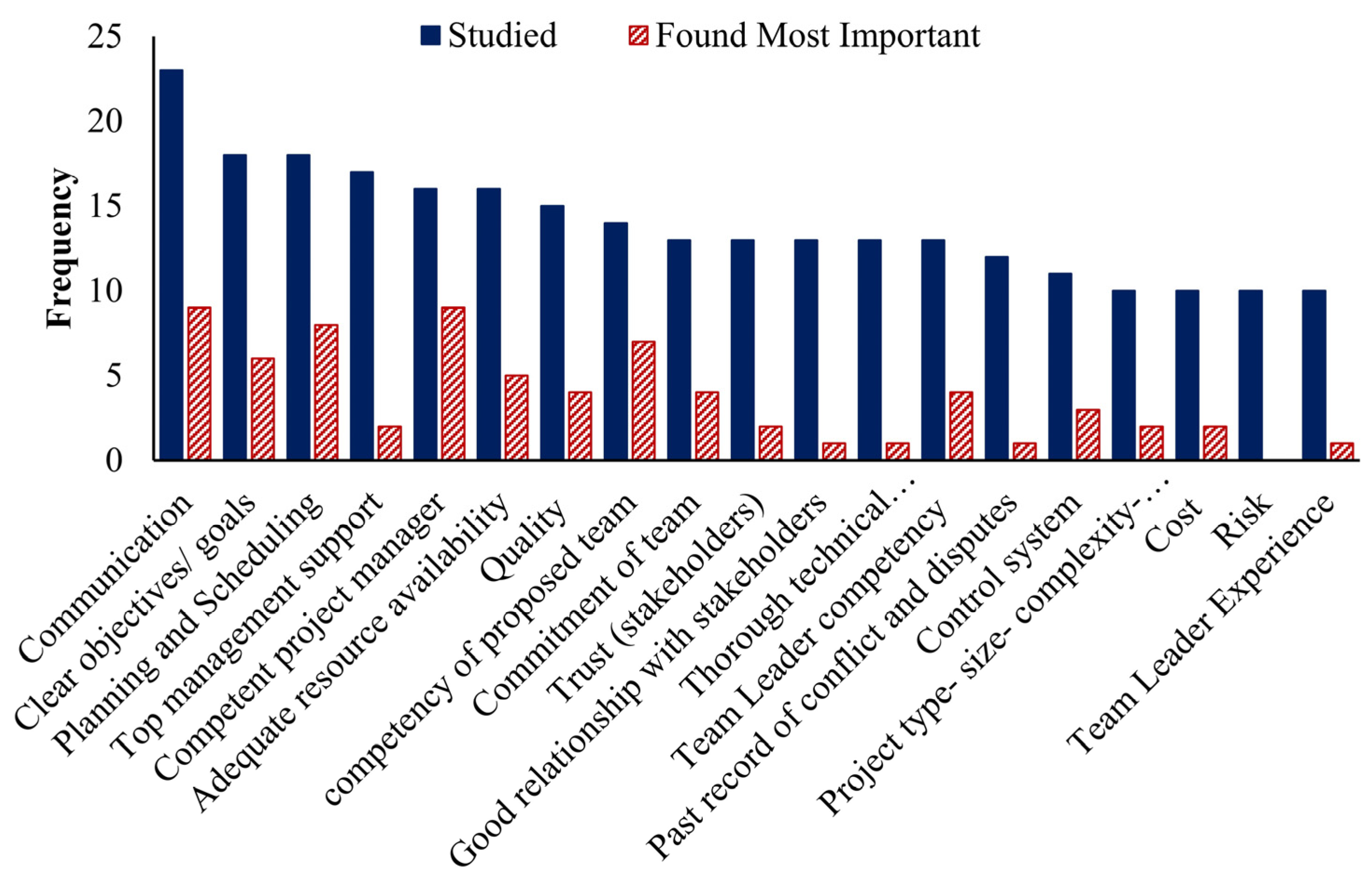
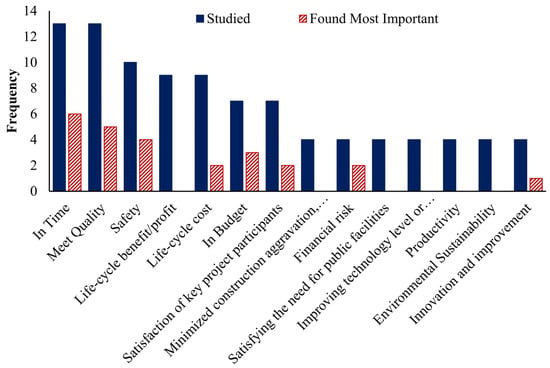
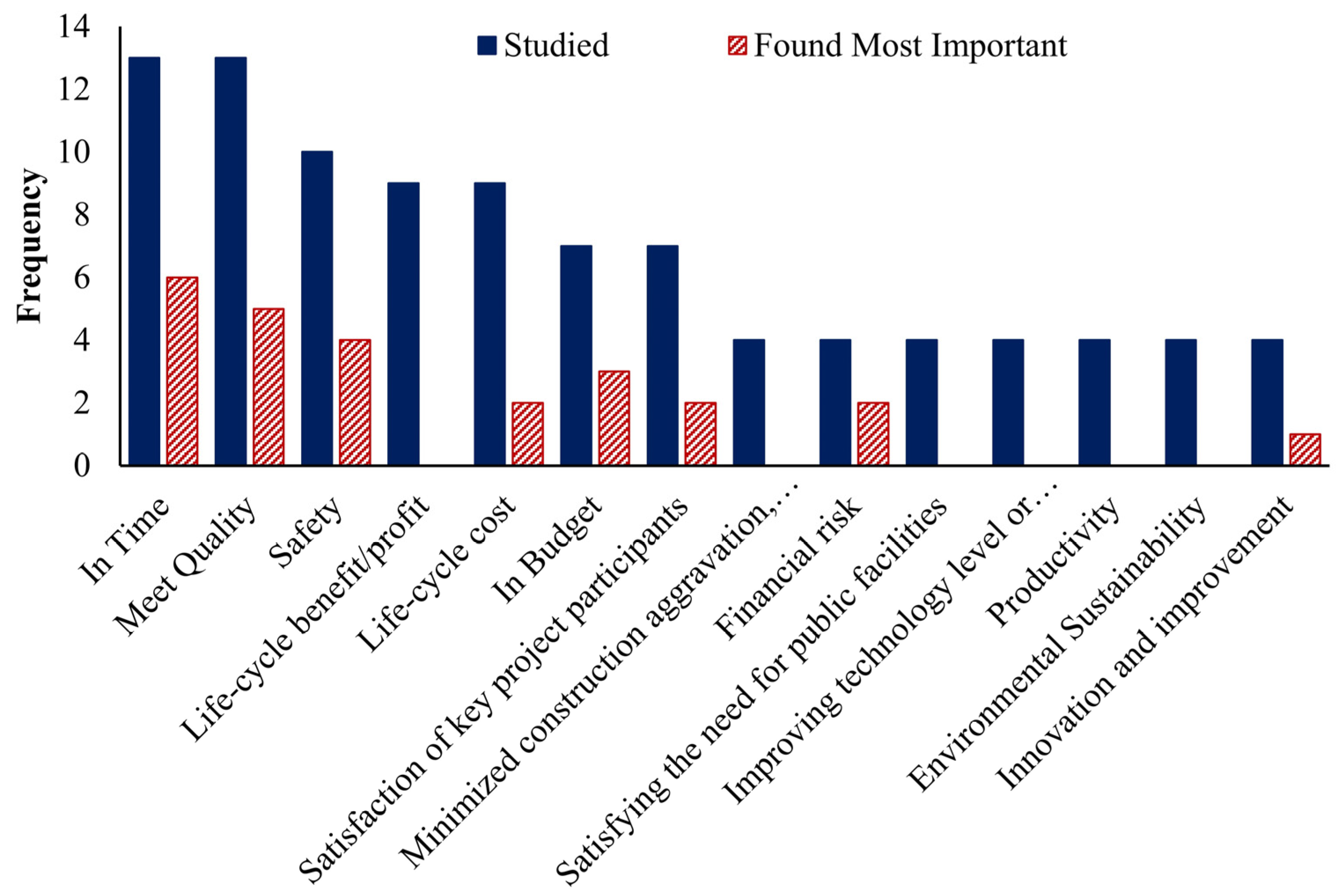
Across these studies, common CSFs in construction projects encompass effective communication, proper planning and scheduling, top management support, competent project managers, clearly defined objectives, and adequate resource availability. The recurrent identification of communication as a primary CSF in previous studies [30,57,58] underscores the significance of cultivating transparent channels among all stakeholders to efficiently coordinate roles, responsibilities, and schedules. Furthermore, some investigations focus on analyzing the impact of soft skills or emotional intelligence on project success [50,57,59], whilst others prioritize the significance of supply chain relationships [28,60]. The extensive array of topics within this CSF category and the absence of universal consensus highlight the complexity of construction projects, which involve various stakeholders, diverse contractual frameworks, and a dynamic environment that can alter the hierarchy of success factors at different phases. Figure 8 illustrates the frequency of often examined CSFs with those recognized as the most important in previous research.
Figure 8.
Frequency of investigated vs. most important CSFs.
- b.
- KPIs
A distinct yet interconnected research area centers on the identification and utilization of KPIs, which are typically quantitative measures used to evaluate or compare progress toward a project’s strategic and operational objectives. Fifteen of the sixty high-impact papers (25%) have concentrated on KPIs, addressing both general construction projects and specialized infrastructure projects [31,35]. Time, cost, quality, and safety persist as the most frequently examined KPIs in the literature [34,36,48]. Productivity measurements and client or stakeholder satisfaction indices are sometimes included, and there is growing attention to environmental sustainability indicators in line with the increasing emphasis on sustainable development.
Not all papers examined KPIs for different project delivery methods; however, a subgroup evaluates KPIs for design–build [33] or PPP [48,61] projects. This subset often broadens the scope of performance indicators to include partnership quality, relationship management, and governance structures, given the complexity of contractual interdependencies characteristic of PPP projects. Although established best practices for implementing these performance indicators exist, scholars typically observe that consistent approaches for measuring and reporting data are rare or inconsistently applied. The impetus for future endeavors is to enhance and standardize KPIs that can be effectively collected and interpreted across various construction contexts.
Figure 9 reveals the frequency of often investigated KPIs alongside those deemed most important in prior research. The most important KPIs are time [31,34,36,48,62], quality [36,48,63], and safety [31,34,35], but other metrics, including productivity and environmental sustainability [33,62], hold lesser significance.
Figure 9.
Frequency of investigated vs. most important KPIs.
- c.
- Project Performance Improvement
A relatively modest share of the studies (7%) deals explicitly with practical measures to improve project performance. This theme entails evaluating the efficacy of new technologies, methodological innovations, or managerial strategies in improving cost, schedule, quality, and safety outcomes. Various works explore the potential of advanced digital and virtual tools, including augmented reality [49], 4D BIM [64], and reconfigured construction logistics [65]. These technologies and processes facilitate real-time or near-real-time monitoring of construction progress, with the promise of improved decision-making founded on accurate and timely project data.
The integration of these technologies into conventional planning, risk management, and resource allocation frameworks continues to be a subject of interest. Some authors focus on project planning and scheduling methods, contending that robust front-end planning reduces cost and time overruns [66]. Others highlight the role of open communication, stakeholder collaboration, and emotional intelligence in mitigating misunderstandings and facilitating quicker conflict resolution [57,59]. The broad consensus is that continuous performance monitoring, data-driven learning, and adoption of integrated technologies can help address the complexities of modern construction projects. However, given the limited volume of research explicitly devoted to project performance improvement, there appears to be considerable scope for deeper investigations, particularly regarding integrating Artificial Intelligence (AI), Internet of Things (IoT) platforms, block chain for contract management, and 5D or 6D BIM solutions.
- d.
- Project Performance Assessment and Prediction
Success in construction projects often hinges on achieving cost, time, quality, safety, and environmental goals; yet the absence of standardized performance measures hinders comprehensive assessments. Effective measurement enables managers to pinpoint current shortfalls and strengthen future outcomes. Two main challenges persist: acquiring raw data on key indicators remains difficult [67], and existing methods largely emphasize cost metrics, despite the growing acknowledgement of objectives such as quality and sustainability [68].
In the United Kingdom, performance assessment aligns with the “Rethinking Construction” initiative and KPIs [68,69]. This includes considerations tied to economics, human resources, and environmental criteria, with client satisfaction and safety being paramount. Although top-down initiatives set overarching objectives, bottom-up project-driven frameworks typically foster more effective adoption, as the practical creation and management of project performance data rely heavily on project teams.
Prior to measuring performance, metrics must be specified according to the project’s emphasis, including cost, schedule adherence, safety, productivity, or environmental impact [70]. Reference [68] introduced a system that quantifies indicators related to cost and schedule, including cost efficiency, defect rates, accident frequency, and customer satisfaction [68,71]. Data collection often utilizes logs, inspection reports, or stakeholder interviews, followed by analysis such as benchmarking or variance investigation to assess planned versus actual progress. Subsequently, root cause analysis determines whether deviations stem from resource constraints, communication deficiencies, or external market fluctuations. Thorough documentation of lessons learned guides future projects towards best practices and mitigates recurrent errors.
Although financial metrics like profit margins are important, they overlook relational and environmental aspects, and do not address emerging issues [72,73,74,75,76,77]. Corrective strategies may include improved cost management, defect-minimizing quality protocols, or enhanced worker safety programs. Continuous monitoring, supported by integrated technologies like the Project Performance Monitoring System (PPMS) [71], facilitates near-real-time oversight of project health. Ultimately, transparent reporting and open communication of insights foster a culture of continuous improvement. Reference [78] suggests that dedicated collaboration among owners, engineers, and contractors can help predict outcomes from initial design to project completion, providing early warning and enabling timely managerial decisions.
Accurate forecasting underpins proactive management by signaling potential budget overruns or schedule slippage at an early stage. Nevertheless, existing predictive models often concentrate solely on cost or schedule, neglecting interrelated risks and broader performance issues [79]. This gap persists despite numerous advanced modeling methods. Reference [80] used regression analysis, while [81] utilized discriminant analysis to evaluate project performance. Reference [82] integrated statistical tools with neural networks to predict infrastructure project performance.
Additional innovations include AI-driven project success modeling [83], singularity functions for last planner metrics [84], and stochastic methodologies [85]. Research frequently assesses project schedule or cost [86], but seldom includes quality, risk, or stakeholder engagement. Some studies, such as those by [87,88,89], employ linear or Markov chains methodologies to track deviations in timelines or budgets. While these strategies enhance forecasts of specific metrics, a holistic investigation that integrates cost, schedule, and risk into a unified framework is required [79].
Accurate and reliable predictions should account for the stochastic nature and dynamic interrelations among potential influential variables. Large-scale, dynamic systems, as demonstrated in [90,91], can capture interactions among complex factors. By integrating system dynamics (SD) and AI methodologies with real-time monitoring, managers may swiftly identify at-risk targets and intervene prior to the escalation of issues. This ongoing, data-driven predictive culture ensures heightened accuracy and responsiveness for high-stakes construction environments, ultimately facilitating more strategic planning and resource allocation throughout the project lifecycle.
3.8. Clustering Relevant Literature Based on Analytical Approaches
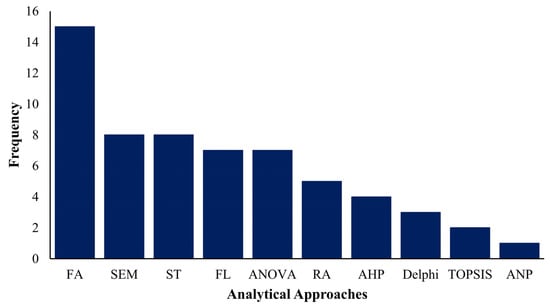
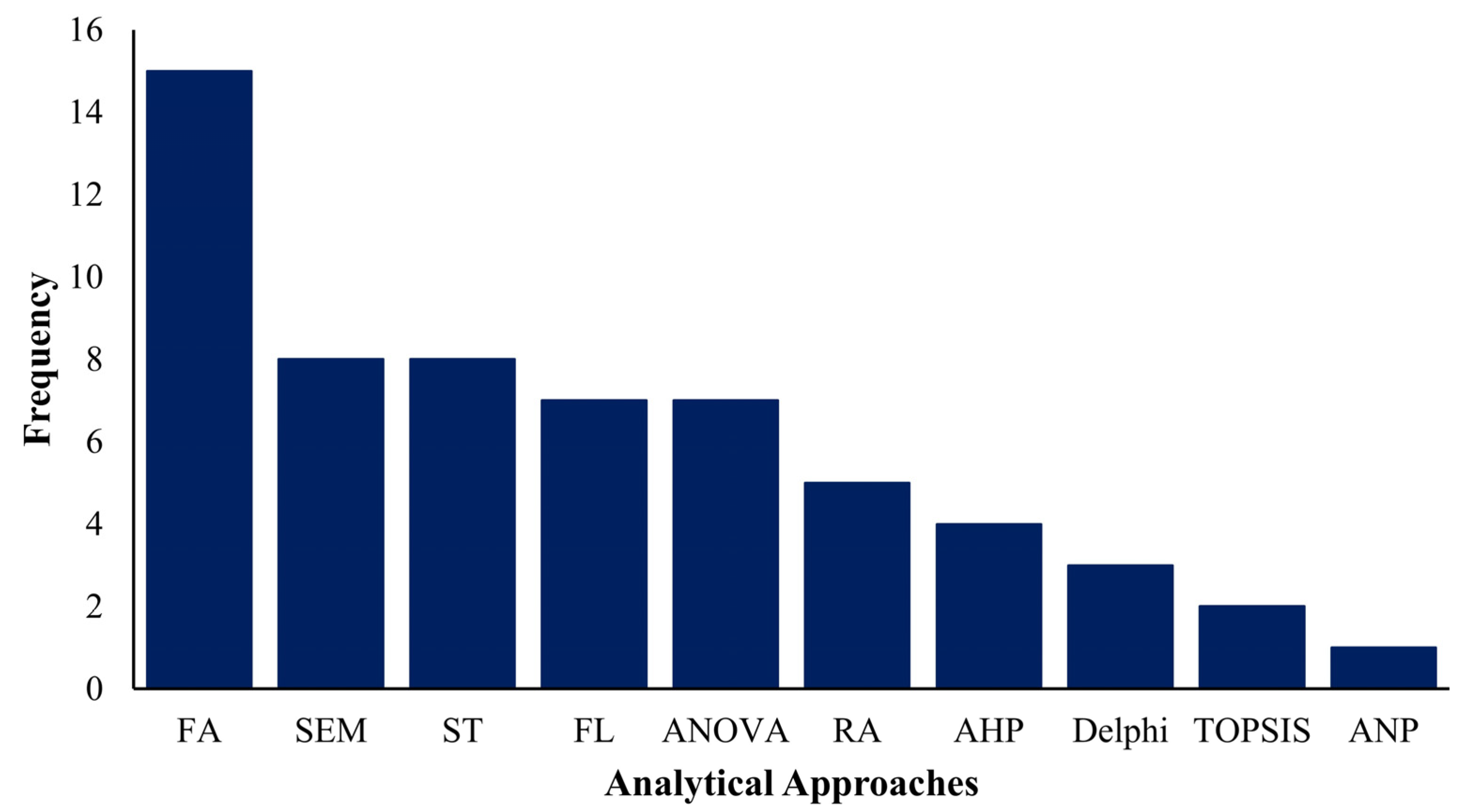
A comprehensive investigation was undertaken to identify the primary analytical methodologies employed in the 60 top influential research papers related to CPP. This investigation revealed ten core analytical approaches: factor analysis (FA), structural equation modeling (SEM), statistical testing (ST), fuzzy logic (FL), analysis of variance (ANOVA), regression analysis (RA), analytic hierarchy process (AHP), Delphi analysis, threat-oriented person screening integrated system (TOPSIS), and analytic network process (ANP). Figure 10 depicts the frequency of each method in the analyzed studies, illustrating how methodological diversity enables researchers to address complex research and practical challenges.
Figure 10.
Analytical methods used in CPP research.
FA is the most prominent technique, reflecting the tendency of scholars to condense large sets of interrelated attributes into a limited number of latent constructs. For instance, ref. [50,92] utilized FA to categorize fundamental drivers of project success, emphasizing factors such as communication, top management support, and emotional intelligence. By minimizing variability to a small number of meaningful components, FA elucidates the relative importance of different success factors.
SEM was placed second, indicating a growing focus on examining correlations among unobserved variables such as trust, collaboration, and risk perception. Reference [55] utilized SEM to examine how collaborative behaviors among public–private stakeholders influence project outcomes, while [60] incorporated SEM to explore the impact of supply chain management on overall project performance. These SEM-based studies often incorporate intangible concepts (e.g., soft skills) and quantitatively associate them with observable metrics like schedule and cost.
ST is also strongly featured. T-tests and correlation analyses evaluate the extent to which various respondent groups-contractors, owners, consultants-agree on the relative importance of success factors or performance indicators. Cronbach alpha assesses internal consistency in questionnaire surveys, while ANOVA measures variations in responses among several groups or variables. These techniques collectively validate surveys, ensure reliable measurement scales, and detect potential divergences in stakeholders’ perceptions of project success criteria.
The FL method addresses uncertainties or qualitative judgments inherent to construction projects [15]. By converting linguistic variables into numerical ranges, FL integrated with other approaches (e.g., AHP) capture expert assessments of ambiguous concepts- such as “moderate risk” or “high communication efficacy”- and incorporate them into quantitative models. RA continues to be fundamental in correlational and predictive analyses, assessing the strength of certain factors (e.g., managerial competencies, environmental conditions) in forecasting key outputs like project cost or schedule performance.
AHP and ANP facilitate decision-making with several, sometimes conflicting objectives (e.g., cost, safety, quality, sustainability). AHP-based models, however, less frequently employed than FA or SEM, elucidate priority rankings or trade-offs among competing criteria, helping practitioners and policymakers identify the most strategically advantageous approaches to improve project performance.
In summary, these ten methodological strands underscore the field’s commitment to multifaceted investigation. Quantitatively rigorous methods such as SEM, RA, and ANOVA coexist with decision-support frameworks like AHP, while FL addresses qualitative ambiguities. This eclectic mix reflects the inherent complexity of construction projects, where human behavior, organizational structures, and technological factors converge to influence project outcomes.
4. Research Gaps and Future Directions
This research study conducted extensive analysis to pinpoint limitations and gaps in the research related to CPP. Addressing these deficiencies is essential for improving evaluation methods, forecasting models, and overall project success. The identified research gaps are categorized into four primary areas: knowledge, conceptual, methodological and technological, and data-related research gaps.
Current studies fail to consider leadership, teamwork, and organizational behavior in understanding the human factors that influence the success of construction projects. Incorporating social and cultural dimensions into project performance research would yield a more holistic picture. Moreover, the existing literature has failed to acknowledge the interdependencies among CSFs, examining them independently and overlooking their mutual influence. This limits the accuracy of project performance assessments and decision-making processes. Advanced modeling techniques, such as SD, are crucial for accurately capturing these interactions and improving evaluation frameworks. The relationship between CSFs and KPIs is ambiguous, complicating the assessment of CSFs’ impact on project performance. While various performance forecasting models are available, they lack an integrated framework for prediction and management. Most studies assess performance using a limited set of KPIs, including cost, schedule, safety, and quality, without incorporating a predictive approach that utilizes CSFs. A robust forecasting system is required to facilitate early issue detection and enhance project control. Additionally, there is a deficiency of studies regarding project delivery methods. Design-build projects, although increasingly prevalent, have not been sufficiently examined in terms of performance evaluation. This strategy integrates design and construction into one entity, necessitating additional examination of its impact on project timelines, costs, and stakeholder collaboration. Approaches such as integrated project delivery (IPD), construction management at risk (CMAR), and job order contracting (JOC) require further study to assess their impact on project performance. Given that various delivery methods affect project outcomes differently, a customized evaluation framework is essential for their implementation.
Conceptual gaps remain in the definition and application of CSFs across different project types. Research has not yet determined whether a universal set of CSFs is applicable to all projects or whether specific CSFs should be used for different project categories. The performance of infrastructure projects, particularly in developing countries, is still inadequately examined. Studies should investigate the various challenges faced in these contexts and develop tailored evaluation frameworks. Additionally, success factors such as soft skills and leadership styles in construction projects remain inadequately examined. The influence of emotional intelligence, cultural practices, and organizational behavior on project success requires further examination. Addressing these gaps will yield a more comprehensive understanding of the factors that drive successful project outcomes.
From a methodological standpoint, advanced decision-making procedures are employed inconsistently. While AHP, TOPSIS, Delphi, and ANP have been used in some studies, their integration into project performance models is still limited. AI and machine learning applications have significant promise, although they are primarily used for ranking CSFs and KPIs rather than optimizing project execution. AI-based solutions should be explored to improve cost prediction, risk mitigation, and real-time project monitoring. IoT and BIM offer opportunities for enhancing CPP. IoT sensors and radio-frequency identification (RFID) tracking systems may facilitate real-time monitoring of construction activities, improving efficiency and data accuracy. Block chain-based smart contracts could enhance transparency, diminish disputes, and streamline administrative processes. Circular modular construction is an emerging field that necessitates structured methodologies for effective management. Research should focus on integrating these technologies to improve project outcomes.
Research gaps pertaining to data continue to be a concern, particularly with the reliance on subjective data. Most studies collect data using surveys, which introduce biases that reduce the reliability of findings. Expert opinions provide valuable insights; however, they must be supplemented with objective and empirical data from real-world case studies. Furthermore, many performance assessment models lack empirical validation, hence compromising their credibility. Additional research should incorporate real-world data to improve the accuracy and applicability of these models. Future research should focus on integrating forecasting models, decision-support systems, AI-driven solutions, and empirical validation techniques to address these challenges.
By addressing these research gaps, forthcoming studies can contribute to a more systematic, data-driven, and holistic approach to controlling project performance. A stronger emphasis on predictive analytics, decision-support systems, and real-world data validation will address current limitations and enhance CPP practices.
5. Conclusions
This article employed a comprehensive methodology comprising bibliometric search, scientometric analysis, and qualitative assessment of the literature to conduct a thorough review of CPP. The necessary data was obtained from the Scopus database, which contains more than 7358 relevant documents published between 1989 and 2023. The documents were filtered based on certain criteria, resulting in 276 publications for the scientometric and qualitative analyses. The historical progression, journals, academia, citations, active nations, co-citations of references, and keywords were investigated using the scientometric analysis. Ultimately, this study underlines the most relevant features of CPP research subjects.
This study demonstrates a significant exponential rise in interest regarding the examination of CPP. The United States, the United Kingdom, and Australia were identified as the primary contributors to the current research topic. This study utilized qualitative analysis to investigate the 60 most referenced research publications, highlighting the main research themes, identifying gaps in the literature, and offering suggestions for further directions and avenues. The primary research themes in this area include CSFs, KPIs, project performance improvement, and evaluation and forecasting project performance. The topic of research on CSFs is the most addressed, representing over 60%, followed by KPIs at 25%. The findings also emphasize the major analytical approaches utilized in the relevant literature, including factor analysis, structural equation model, statistical test, fuzzy logic, ANOVA, regression analysis, and analytic hierarchy process. The factor analysis method is the most prevalent, representing 27%, while the structural equation modeling approach accounts for 15%. This review paper has revealed several research gaps within this research area. Accordingly, this article presents research directions to tackle existing gaps and limitations, hence enhancing CPP practices.
The application of scientometric and bibliometric methodologies to analyze the literature on a research topic rectifies the shortcomings of traditional literature review techniques. These approaches provide comprehensive analysis and visual synthesis of the literature. This review article may help scholars identify the most prestigious journals for publication possibilities and prominent researchers for potential collaboration. It also facilitates comprehension of the current pertinent trends and hotspots to achieve a thorough understanding of the researched topic. Furthermore, practitioners might be directed in implementing best practices and cultivating additional business opportunities within the CPP domain. This review paper, while contributory, relies solely on the Scopus database for research publications regarding construction project performance, perhaps resulting in biased analysis and conclusions. Future research should investigate the potential for integrating data from multiple databases when a science mapping software can effectively do data integration.
Author Contributions
Conceptualization, A.A. (Abdelnaser Abdelhameed) and M.S.Y.; methodology, M.S.Y.; software, A.A. (Abdelnaser Abdelhameed) and A.A. (Ahmed Abdelaty); validation, M.S.Y., E.E., and H.A.E.M.; formal analysis, A.A. (Abdelnaser Abdelhameed) and M.S.Y.; investigation, A.A. (Abdelnaser Abdelhameed) and M.S.Y.; resources, A.A. (Abdelnaser Abdelhameed) and M.S.Y.; data curation, A.A. (Abdelnaser Abdelhameed); writing—original draft preparation, M.S.Y., A.A. (Abdelnaser Abdelhameed), and A.A. (Ahmed Abdelaty); writing—review and editing, E.E., A.A. (Ahmed Abdelaty), and H.A.E.M.; visualization, A.A. (Ahmed Abdelaty); supervision, M.S.Y., H.A.E.M., and E.E. All authors have read and agreed to the published version of the manuscript.
Funding
This research received no external funding.
Institutional Review Board Statement
Not applicable.
Informed Consent Statement
Not applicable.
Data Availability Statement
The datasets generated and analyzed during the current study are presented within the article.
Conflicts of Interest
The authors declare no conflicts of interest.
References
- Takim, R.; Akintoye, A.; Kelly, J. Analysis of measures of construction project success in Malaysia. In Proceedings of the 20th Annual ARCOM Conference, Heriot Watt University, Association of Researchers in Construction Management, Edinburgh, UK, 1–3 September 2004; Volume 2, pp. 1123–1133. [Google Scholar]
- Chan, A.K. An evaluation of construction time performance in the building industry. Build Environ. 1996, 31, 569–578. [Google Scholar] [CrossRef] [Scilit]
- Cooke-Davies, T. The ‘‘real’’ success factors on projects. Int. J. Proj. Manag. 2002, 20, 185–190. [Google Scholar] [CrossRef] [Scilit]
- Nicolini, D. In search of project chemistry. Constr. Manag. Econ. J. 2002, 20, 167–177. [Google Scholar] [CrossRef] [Scilit]
- Andersen, E.S.; Birchall, D.; Arne Jessen, S.; Money, A.H. Exploring project success. Balt. J. Manag. 2006, 1, 127–147. [Google Scholar] [CrossRef] [Scilit]
- Toor, A.O. Construction professionals’ perception of critical success factors for large-scale construction projects. Constr. Innov. 2009, 9, 149–167. [Google Scholar] [CrossRef] [Scilit]
- Chan, A.P.; Scott, D.; Chan, A.P. Factors affecting the success of a construction project. J. Constr. Eng. Manag. 2004, 130, 153–155. [Google Scholar] [CrossRef] [Scilit]
- Chadegani, A.A.; Salehi, H.; Yunus, M.M.; Farhadi, H.; Fooladi, M.; Farhadi, M.; Ebrahim, N.A. A comparison between two main academic literature collections Web of science and scopus databases. Asian Soc. Sci. 2013, 9, 18–26. [Google Scholar] [CrossRef] [Scilit]
- Vieira, A.G. A comparison of Scopus and Web of Science for a typical university. Scientometrics 2009, 81, 587–600. [Google Scholar] [CrossRef] [Scilit]
- Montoya, M.; Gomez, J.; Manzano-Agugliaro, F.; Alameda-Hernandez, E. The research on energy in Spain: A scientometric approach. Renew. Sustain. Energy Rev. 2014, 29, 173–183. [Google Scholar] [CrossRef] [Scilit]
- Olawumi, T.O.; Chan, D.W. A scientometric review of global research on sustainability and sustainable development. J. Clean. Prod. 2018, 183, 231–250. [Google Scholar] [CrossRef] [Scilit]
- Darko, A.; Chan, A.P.; Huo, X.; Owusu-Manu, D.G. A scientometric analysis and visualization of global green building research. Build. Environ. 2019, 149, 501–511. [Google Scholar] [CrossRef] [Scilit]
- Xiao, X.; Skitmore, M.; Li, H.; Xia, B. Mapping knowledge in the economic areas of green building using scientometric analysis. Energies 2019, 12, 3011. [Google Scholar] [CrossRef] [Scilit]
- de Toledo, R.F.; Junior, H.M.; Farias Filho, J.R.; Costa, H.G. A scientometric review of global research on sustainability and project management dataset. Data Brief 2019, 25, 104312. [Google Scholar] [CrossRef] [Scilit]
- Wu, Z.; Yang, K.; Lai, X.; Antwi-Afari, M.F. A scientometric review of system dynamics applications in construction management research. Sustainability 2020, 12, 7474. [Google Scholar] [CrossRef] [Scilit]
- Tam, N.V. Scientometric Review of Research Trends on Public Private Partnership (PPP) for Infrastructure Projects From 2000 to 2020. CSID J. Infrastruct. Dev. 2021, 4, 32–49. [Google Scholar] [CrossRef] [Scilit]
- Wu, Z.; Chen, C.; Cai, Y.; Lu, C.; Wang, H.; Yu, T. BIM-based visualization research in the construction industry: A network analysis. Int. J. Environ. Res. Public Health 2019, 16, 3473. [Google Scholar] [PubMed]
- Akinlolu, M.; Haupt, T.C.; Edwards, D.J.; Simpeh, F. A bibliometric review of the status and emerging research trends in construction safety management technologies. Int. J. Constr. Manag. 2020, 22, 2699–2711. [Google Scholar] [CrossRef] [Scilit]
- Cobo, M.J.; López-Herrera, A.G.; Herrera-Viedma, E.; Herrera, F.J. Science mapping software tools: Review, analysis, and cooperative study among tools. J. Am. Soc. Inf. Sci. Technol. 2011, 62, 1382–1402. [Google Scholar] [CrossRef] [Scilit]
- Van Eck, N.; Waltman, L. Software survey: VOSviewer, a computer program for bibliometric mapping. Scientometrics 2010, 84, 523–538. [Google Scholar] [CrossRef] [Scilit]
- Chan, T.K.; Abdul-Aziz, A.R. Financial performance and operating strategies of Malaysian property development companies during the global financial crisis. J. Financ. Manag. Prop. Constr. 2017, 22, 174–191. [Google Scholar] [CrossRef] [Scilit]
- Zhao, L.; Mbachu, J.; Liu, Z. Technical efficiency and its determinants in the Spanish construction sector pre- and post-financial crisis. Int. J. Strateg. Prop. Manag. 2015, 19, 96–109. [Google Scholar]
- Moschouli, S.; Vanelslandera, T.; Soecipto, R.M. Cost performance of transport infrastructure projects before and after the global financial crisis (GFC): Are differences observed in the conditions of project performance? Res. Transp. Econ. 2019, 75, 21–35. [Google Scholar] [CrossRef] [Scilit]
- Fadhil, G.A.; Abbas, M.B. Investigating the Effects of Economic Crisis on Construction Projects in Iraq. In Proceedings of the E3S Web of Conferences, Akre, Iraq, 22–23 June 2021; EDP Sciences: Les Ulis, France, 2021; p. 11. [Google Scholar]
- Van Eck, A.W. Visualizing bibliometric networks. In Measuring Scholarly Impact: Methods and Practice; Ding, Y., Rousseau, R., Wolfram, D., Eds.; Springer: Cham, Switzerland, 2014; pp. 285–320. [Google Scholar]
- Elshaboury, N.; Al-Sakkaf, A.; Mohammed Abdelkader, E.; Alfalah, G. Construction and Demolition Waste Management Research: A Science Mapping Analysis. Environ. Res. Public Health 2022, 19, 4496. [Google Scholar]
- Umeokafor, N.; Umar, T.; Evangelinos, K. Bibliometric and scientometric analysis-based review of construction safety and health research in developing countries from 1990 to 2021. Saf. Sci. 2022, 156, 105897. [Google Scholar] [CrossRef] [Scilit]
- Meng, X. The effect of relationship management on project performance in construction. Int. J. Proj. Manag. 2012, 30, 188–198. [Google Scholar] [CrossRef] [Scilit]
- Alzahrani, A.E.; Emsley, M.W. The impact of contractors’ attributes on construction project success: A post construction evaluation. Int. J. Proj. Manag. 2013, 31, 313–322. [Google Scholar] [CrossRef] [Scilit]
- Chua, D.K.H.; Kog, Y.C.; Loh, P.K. Critical Success Factors for Different Project Objectives. J. Constr. Eng. Manag. 1999, 125, 142–150. [Google Scholar] [CrossRef] [Scilit]
- Toor, S.R.; Ogunlana, S.O. Beyond the ‘iron triangle’: Stakeholder perception of key performance indicators (KPIs) for large-scale public sector development projects. Int. J. Proj. Manag. 2010, 28, 228–236. [Google Scholar] [CrossRef] [Scilit]
- Parfitt, M.K.; Sanvido, V.E. Checklist of Critical Success Factors for Building Projects. J. Manag. Eng. 1993, 9, 243–249. [Google Scholar] [CrossRef] [Scilit]
- Chan, A.P.; Scott, D.; Lam, E.W. Framework of success criteria for design/build projects. J. Manag. Eng. 2002, 18, 120–128. [Google Scholar] [CrossRef] [Scilit]
- Cox, R.F.; Issa, R.R.; Ahrens, D. Management’s Perception of Key Performance Indicators for Construction. J. Constr. Eng. Manag. 2003, 129, 142–151. [Google Scholar] [CrossRef] [Scilit]
- Shen, L.; Wu, Y.; Zhang, X. Key Assessment Indicators for the Sustainability of Infrastructure Projects. J. Constr. Eng. Manag. 2011, 137, 441–451. [Google Scholar] [CrossRef] [Scilit]
- Ahadzie, D.K.; Proverbs, D.G.; Olomolaiye, P.O. Critical success criteria for mass house building projects in developing countries. Int. J. Proj. Manag. 2008, 26, 675–687. [Google Scholar] [CrossRef] [Scilit]
- Liao, H.; Tang, M.; Luo, L.; Li, C.; Chiclana, F.; Zeng, X.J. A Bibliometric Analysis and Visualization of Medical Big Data Research. Sustainability 2018, 10, 166. [Google Scholar] [CrossRef] [Scilit]
- Hosseini, M.R.; Martek, I.; Zavadskas, E.K.; Aibinu, A.A.; Arashpour, M.; Chileshe, N. Critical evaluation of off-site construction research: A Scientometric analysis. Autom. Constr. 2018, 87, 235–247. [Google Scholar] [CrossRef] [Scilit]
- Belassi, W.; Tukel, O.I. A new framework for determining critical success-failure factors in projects. Int. J. Proj. Manag. 1996, 14, 141–151. [Google Scholar] [CrossRef] [Scilit]
- Sanvido, V.; Grobler, F.; Parfitt, K.; Guvenis, M.; Coyle, M. Critical success factors for construction projects. J. Constr. Eng. Manag. ASCE 1992, 118, 94–111. [Google Scholar] [CrossRef] [Scilit]
- Baccarini, D. The logical framework method for defining project success. Proj. Manag. J. 1999, 30, 25–32. [Google Scholar] [CrossRef] [Scilit]
- Munns, A.B. The role of project management in achieving project success. Int. J. Proj. Manag. 1996, 14, 81–87. [Google Scholar] [CrossRef] [Scilit]
- Atkinson, R. Project management: Cost, time and quality, two best guesses and a phenomenon, its time to accept other success criteria. Int. J. Proj. Manag. 1999, 17, 337–342. [Google Scholar] [CrossRef] [Scilit]
- Chan, C. Key performance indicators for measuring construction success. Benchmarking Int. J. 2004, 11, 203–221. [Google Scholar] [CrossRef] [Scilit]
- Li, B.; Akintoye, A.; Edwards, P.J.; Hardcastle, C. Critical success factors for PPP/PFI projects in the UK construction industry. Constr. Manag. Econ. 2005, 23, 459–471. [Google Scholar] [CrossRef] [Scilit]
- Davis, K. Different stakeholder groups and their perceptions of project success. Int. J. Proj. Manag. 2014, 32, 189–201. [Google Scholar] [CrossRef] [Scilit]
- Mavi, A.S. Critical success factors of sustainable project management in construction: A fuzzy DEMATEL-ANP approach. J. Clean. Prod. 2018, 194, 751–765. [Google Scholar] [CrossRef] [Scilit]
- Yuan, J.; Zeng, A.Y.; Skibniewski, M.J.; Li, Q. Selection of performance objectives and key performance indicators in public–private partnership projects to achieve value for money. Constr. Manag. Econ. 2009, 27, 253–270. [Google Scholar] [CrossRef] [Scilit]
- Ratajczak, J.; Riedl, M.; Matt, D.T. BIM-based and AR Application Combined with Location-Based Management System for the Improvement of the Construction Performance. Buildings 2019, 9, 118. [Google Scholar] [CrossRef] [Scilit]
- Maqbool, R.; Sudong, Y.; Manzoor, N.; Rashid, Y. The Impact of Emotional Intelligence, Project Managers’ Competencies, and Transformational Leadership on Project Success: An Empirical Perspective. Proj. Manag. J. 2017, 48, 58–75. [Google Scholar] [CrossRef] [Scilit]
- Rockart, J.F. The Changing Role of the Information System Executive: A Critical Success Factor Perspective; Working Paper No. 1297-82; MIT Sloan School of Management: Cambridge, MA, USA, 1982. [Google Scholar]
- Yong, A.M. Analysis of factors critical to construction project success in Malaysia. Eng. Constr. Archit. Manag. 2012, 19, 543–556. [Google Scholar] [CrossRef] [Scilit]
- Lam, E.W.; Chan, A.P.; Chan, D.W. Determinants of Successful Design-Build Projects. J. Constr. Eng. Manag. 2008, 134, 333–341. [Google Scholar] [CrossRef] [Scilit]
- Chen, W.T.; Chen, T.T. Critical success factors for construction partnering in Taiwan. Int. J. Proj. Manag. 2007, 25, 475–484. [Google Scholar] [CrossRef] [Scilit]
- Doloi, H. Relational partnerships: The importance of communication, trust and confidence and joint risk management in achieving project success. Constr. Manag. Econ. 2009, 27, 1099–1109. [Google Scholar] [CrossRef] [Scilit]
- Olusola Babatunde, S.; Opawole, A.; Emmanuel Akinsiku, O. Critical success factors in public-private partnership (PPP) on infrastructure delivery in Nigeria. J. Facil. Manag. 2012, 10, 212–225. [Google Scholar]
- Cheung, S.O.; Yiu, T.W.; Lam, M.C. Interweaving Trust and Communication with Project Performance. J. Constr. Eng. Manag. 2013, 139, 941–950. [Google Scholar] [CrossRef] [Scilit]
- Zuo, J.; Zhao, X.; Nguyen, Q.B.M.; Ma, T.; Gao, S. Soft skills of construction project management professionals and project success factors. Eng. Constr. Archit. Manag. 2018, 25, 425–442. [Google Scholar]
- Rezvani, A.; Khosravi, P.; Ashkanasy, N.M. Examining the interdependencies among emotional intelligence, trust, and performance in infrastructure projects: A multilevel study. Int. J. Proj. Manag. 2018, 36, 1034–1046. [Google Scholar] [CrossRef] [Scilit]
- Kim, S.Y.; Nguyen, V.T. A Structural model for the impact of supply chain relationship traits on project performance in construction. Prod. Plan. Control. 2018, 29, 170–183. [Google Scholar]
- Yeung, J.F.; Chan, A.P.; Chan, D.W.; Li, L.K. Development of a partnering performance index (PPI) for construction projects in Hong Kong: A Delphi study. Constr. Manag. Econ. 2007, 25, 1219–1237. [Google Scholar] [CrossRef] [Scilit]
- Yeung, J.F.; Chan, A.P.; Chan, D.W. Developing a Performance Index for Relationship-based Construction Projects in Australia: Delphi Study. J. Manag. Eng. 2009, 25, 59–68. [Google Scholar] [CrossRef] [Scilit]
- Al-Tmeemy, S.M.H.M.; Abdul-Rahman, H.; Harun, Z. Future criteria for success of building projects in Malaysia. Int. J. Proj. Manag. 2011, 29, 337–348. [Google Scholar] [CrossRef] [Scilit]
- Crowther, J.; Ajayi, S.O. Impacts of 4D BIM on construction project performance. Int. J. Constr. Manag. 2019, 21, 724–737. [Google Scholar] [CrossRef] [Scilit]
- Sundquist, V.; Gadde, L.E.; Hulthén, K. Reorganizing construction logistics for improved performance. Constr. Manag. Econ. 2018, 36, 49–65. [Google Scholar]
- Lee, Z.P.; Rahman, R.A.; Doh, S.I. Critical success factors for implementing design-build: Analysing Malaysian public projects. J. Eng. Des. Technol. 2020, 20, 1041–1056. [Google Scholar]
- Yu, I.; Kim, K.; Jung, Y.; Chin, S. Comparable performance measurement system for construction companies. J. Manag. Eng. 2007, 23, 131–139. [Google Scholar] [CrossRef] [Scilit]
- Cha, H.S.; Kim, C.K. Quantitative Approach for Project Performance Measurement on Building Construction in South Korea. J. Civ. Eng. 2011, 15, 1319–1328. [Google Scholar] [CrossRef] [Scilit]
- Department of Trade and Industry. Rethinking Construction; Technical Report; HMSO, The Licensing Division: Norwich, UK, 1998. [Google Scholar]
- Alarcon, L.F.; Ashley, D.B. Modeling Project Performance for Decision Making. J. Constr. Eng. Manag. 1996, 122, 265–273. [Google Scholar] [CrossRef] [Scilit]
- Cheung, S.O.; Suen, H.C.; Cheung, K.K. PPMS: A Web-based construction Project Performance Monitoring System. Autom. Constr. 2004, 13, 361–376. [Google Scholar] [CrossRef] [Scilit]
- Johnson, H.T.; Kaplan, R.S. Relevance Lost—The Rise and Fall of Management Accounting; Harvard Business Review Press: Boston, MA, USA, 1987; Volume 5. [Google Scholar]
- Boynton, A.Z. An assessment of critical success factors. Sloan Manag. Rev. 1984, 25, 17–27. [Google Scholar]
- Hayes, W.; Clark, K.B.; Wheelwright, S.C. Dynamic Manufacturing Creating the Learning Organization; Wiley: New York, NY, USA, 1988; Volume 3. [Google Scholar]
- Sanger, M. Supporting the Balanced Scorecard. Work Study 1998, 47, 197–200. [Google Scholar] [CrossRef] [Scilit]
- Ghalayini, A.N. The changing basis of performance measurement. Int. J. Oper. Prod. Manag. 1996, 16, 63–80. [Google Scholar] [CrossRef] [Scilit]
- Neely, A. The performance assessment revolution: Why now and what next? Int. J. Oper. Prod. Manag. 1999, 19, 205–208. [Google Scholar] [CrossRef] [Scilit]
- Russell, J.S.; Jaselskis, E.J.; Lawrence, S.P. Continuous Assessment of Project Performance. J. Constr. Eng. Manag. 1997, 123, 64–71. [Google Scholar] [CrossRef] [Scilit]
- Assaad, R.; El-Adaway, I.H.; Abotaleb, I.S. Predicting Project Performance in the Construction Industry. J. Constr. Eng. Manag. 2018, 146, 04020030. [Google Scholar] [CrossRef] [Scilit]
- Ling, F.Y.; Low, S.P.; Wang, S.; Egbelakin, T. Models for predicting project performance in China using project management practices adopted by foreign AEC firms. J. Constr. Eng. Manag. 2008, 134, 983–990. [Google Scholar] [CrossRef] [Scilit]
- Lee, S.H.; Thomas, S.R.; Tucker, R.L. Effective practice utilization using performance prediction software. J. Constr. Eng. Manag. 2004, 130, 576–585. [Google Scholar] [CrossRef] [Scilit]
- Attalla, M.; Hegazy, T.; Haas, R. Reconstruction of the building infrastructure: Two performance prediction models. J. Infrastruct. Syst. 2003, 9, 26–34. [Google Scholar] [CrossRef] [Scilit]
- Attalla, M.; Hegazy, T.; Haas, R. Dynamic prediction of project success using artificial intelligence. J. Constr. Eng. Manag. 2007, 133, 316–324. [Google Scholar] [CrossRef] [Scilit]
- Ezzeddine, A.; Shehab, L.; Lucko, G.; Hamzeh, F. Forecasting Construction Project Performance with Momentum Using Singularity Functions in LPS. J. Constr. Eng. Manag. 2022, 148, 04022063. [Google Scholar] [CrossRef] [Scilit]
- Barraza, G.A.; Back, W.E.; Mata, F. Probabilistic Forecasting of Project Performance Using Stochastic S Curves. J. Constr. Eng. Manag. 2004, 130, 25–32. [Google Scholar] [CrossRef] [Scilit]
- Vanhoucke, M. Project Management with Dynamic Scheduling; Springer: Berlin/Heidelberg, Germany, 2012. [Google Scholar]
- Chen, L.; Manley, K. Validation of an instrument to measure governance and performance on collaborative infrastructure projects. J. Constr. Eng. Manag. 2014, 140, 04014006. [Google Scholar] [CrossRef] [Scilit]
- Jarkas, A.M. Predicting contract duration for building construction: Is Bromilow’s time-cost model a panacea? J. Manag. Eng. 2016, 32, 05015004. [Google Scholar] [CrossRef] [Scilit]
- Rudeli, N.; Santilli, A.; Puente, I.; Viles, E. Statistical model for schedule prediction: Validation in a housing-cooperative construction database. J. Constr. Eng. Manag. 2017, 143, 04017083. [Google Scholar] [CrossRef] [Scilit]
- Blomquist, T.; Farashah, A.D.; Thomas, J. Project management self-efficacy as a predictor of project performance: Constructing and validating a domain-specific scale. Int. J. Proj. Manag. 2016, 34, 1417–1432. [Google Scholar] [CrossRef] [Scilit]
- Zhu, J.; Mostafavi, A. Discovering complexity and emergent properties in project systems: A new approach to understanding project performance. Int. J. Proj. Manag. 2016, 35, 1–12. [Google Scholar] [CrossRef] [Scilit]
- Wuni, I.Y.; Shen, G.Q. Developing critical success factors for integrating circular economy into modular construction projects in Hong Kong. Sustain. Prod. Consum. 2022, 29, 574–587. [Google Scholar] [CrossRef] [Scilit]

Disclaimer/Publisher’s Note: The statements, opinions and data contained in all publications are solely those of the individual author(s) and contributor(s) and not of MDPI and/or the editor(s). MDPI and/or the editor(s) disclaim responsibility for any injury to people or property resulting from any ideas, methods, instructions or products referred to in the content. |
© 2026 by the authors. Licensee MDPI, Basel, Switzerland. This article is an open access article distributed under the terms and conditions of the Creative Commons Attribution (CC BY) license.