Article

Vascular Flora Used in the Construction of Traditional Mayan Houses in the Yucatan Peninsula: A Case Study in Camino Real, Campeche, Mexico


by
Héctor M. J. López-Castilla
1,
William Cetzal-Ix
1,*,
Roberth A. Tuyub-Uc
1,
Verónica I. Castillo-Rodríguez
1,
Marcelina G. Antonio-Joaquín
1 and
Saikat Kumar Basu
2
1
Tecnológico Nacional de México, Instituto Tecnológico de Chiná, Campeche 24520, Mexico
2
PFS, Lethbridge, AB T1J 4B1, Canada
*
Author to whom correspondence should be addressed.
Reg. Sci. Environ. Econ. 2025, 2(4), 35; https://doi.org/10.3390/rsee2040035 (registering DOI)
Submission received: 18 September 2025 / Revised: 9 November 2025 / Accepted: 24 November 2025 / Published: 26 November 2025

Abstract

Over the centuries, human interaction with natural resources has allowed us to build knowledge that has given rise to cultures and regions around the world. In Mexico, particularly in the Yucatán Peninsula region, the traditional Mayan house (TMH) represents a symbol of identity and ancestral knowledge of the Mayan culture and a way of life for the inhabitants of rural communities. However, there is little information on the flora used as raw materials for the construction of the TMH; considering that its structure is being modified with modern materials. The objective of this study has been to identify the different plant species used as raw materials for the construction of TMHs in different Mayan communities in northern Campeche, Mexico. A total of 27 surveys were conducted in seven communities using the snowball method, using non-probability convenience sampling. In total, 100% of the respondents were male, between 18 and 86 years old, of whom 73% learned about the construction of the TMH through knowledge transferred by their parents, while the remaining 27% learned from their grandparents. For the construction of the TMH, a total of 18 plant species were recorded; 100% of the respondents mentioned that they use Sabal yapa “Xa’an guano” (in Mayan) for the construction of the roof. Another 18% mentioned the use of grass (Spartina spartinae). It can be therefore concluded that there is a hybridization of the TMH, since the roofs are replaced with zinc sheets due to the low cost of modern materials and the low availability of Sabal yapa in some areas of northern Campeche.

1. Introduction

The uses of natural resources are defined by how people protect, regulate, and distribute them for their benefit, so it is of utmost importance to identify who has access to them and how they use them [1,2]. Because of this, the inhabitants of rural communities have developed traditional knowledge about these plants, their management, and how they are being used by people [3]. This may include foods, medicinal species, honey and its derivatives, fibers, gums, and resins, as well as materials for food, fodder, fuel, fertilizer, and construction [4]. Most of these resources are obtained from ecosystems and/or are also cultivated in indigenous home gardens [5].
In the rural communities of the Yucatan Peninsula (YP), ancestral dwellings (residences) known as “Traditional Maya House” (TMHs) are still being built, and have efficient space as they are adapted to the hot climatic conditions of the region [6]. TMHs have been used for the past three thousand years and have been built with plant materials, highlighting the use of the leaves of the guano palm Sabal yapa C. Wright ex Becc. (Arecaceae) for construction of the roof of the house [7,8]. This palm has been widely used since the pre-Hispanic times to the present, and its use has a great impact on the region. In the year 2000, approximately 90,000 people used S. yapa in Quintana Roo and 360,000 people used S. yapa and S. mexicana in the YP [9]. However, recently, the roof of the TMH has undergone changes with the incorporation of other plants that are easier to obtain and cheaper, such as “k’oxolaak” grass (in Mayan), Spartina spartinae (Trin) Merr. ex Hitchc. (Poaceae); for a house of 5 × 4 m, approximately 84 rolls of leaves are required with a price of 4500 Mexican pesos (=241 USD) [10]. Furthermore, for the construction of the general structure of the TMH, other plant species have not yet been scientifically identified or are known only by their common Mayan names. For example, the vines used to tie the columns of the house are identified only as “Cop-moy” (in Mayan) [11].
Studies on the TMH are not limited solely to its construction, but also to knowledge about the diversity and frequency of plants used [12]. In this regard, Rodríguez-Sánchez et al. [2] mentioned that the frequency of extraction of timber resources in ecosystems is important, since it varies from one to two times a year, and they also affirm that the selection of wood extracted from living individuals is based on traditional knowledge involving the thickness and shape of the tree trunk. However, this knowledge has been lost due to replacement with modern houses, as well as the scarcity of wood of an appropriate age and size [13].
Currently, most young people in these communities show very little or no interest in rural work activities and lifestyle due to factors related to migration in search of better education and economic opportunities; this has subsequently resulted in social distancing from and abandonment of traditional (indigenous) Mayan knowledge [14]. Therefore, TMH construction-related information that has been maintained through generations should be rescued through the collection of data on technical, biotic, and ethnic knowledge that is part of our history and cultural heritage [11]. Therefore, the objective of this study has been to identify the flora used for the construction of the different parts of the TMH in the communities of Camino Real in northern Campeche, Mexico.

2. Materials and Methods

Interviews with TMH builders were conducted between August 2024 and August 2025 in different Mayan communities in northern Campeche, Mexico, including Becal (20°26′ N, 90°01′ W), Chunkanán (20°14′ N, 90°14′ W), Nunkiní (20°24′ N, 90°08′ W), Zodzil (20°10′ N, 90°13′ W), Tankunché (20°30′ N, 90°14′ W), Tenabo (20°02′ N, 90°13′ W), and Tinún (19°57′ N, 90°13′ W) (Figure 1). The total population of the studied communities was 37,087 inhabitants: Zodzil (n = 485), Chunkanán (n = 885), Tinún (n = 998), Takunché (n = 1006), Nunkiní (n = 5859), Becal (n = 6511), and Tenabo (n = 7543) [15]. These communities of Campeche border the Mayan communities of southern Yucatán, known as the Camino Real route, due to its connection between the main ports of the region between San Francisco de Campeche and the port of Sisal (Yucatán) during the 18th century [16]. The vegetation in this area is medium subdeciduous forest and low deciduous forest; these are dominant for the northern portion of Campeche. The climate of the region is warm and subhumid with a summer rainfall regime. The annual temperature is 26 °C and its total annual precipitation varies between 1200 and 2000 mm [17].

2.1. Previous Studies of the Traditional Mayan House

In order to identify studies documenting the use of plant species for the construction of the TMH in the YP, a bibliographic review was initially conducted based on scientific and informative articles and books, using various freely accessible digital search engines such as Google Scholar, Scopus, Dialnet, and Scielo, with the keywords ‘Sabal’ AND ‘Yucatan Peninsula’ AND ‘Ethnobiology uses’ AND ‘Mayan house’ AND ‘usos flora’ used. Subsequently, a search of the studied sites was conducted for their georeferencing and projection on a base map of vegetation with the help of Google Earth Pro © software and ArcMap © 10.7.0.10450 software (Figure 1).

2.2. Interviews with Producers and Builders

Non-probability convenience sampling was used to conduct interviews with people engaged in the construction of TMHs [18]. Furthermore, the snowball method was considered, which was based on asking the inhabitants of the studied communities about guano palm (S. yapa and S. mexicana) traders and TMH builders. The surveys ended when the same species were mentioned and repeated, and the information intake declined in a contrasting way [19]. This method has been widely applied in socioecological studies to capture detailed knowledge of complex systems with limited formal records [20]. The surveys were semi-structured and administered directly to the inhabitants who built their own homes or who work on the construction of the TMH; subsequently, the data were captured and recorded in an Excel® matrix and classified as a single surveyed population.

2.3. Data Analysis

For the processing and comparison of the descriptive results resulting from the interviews, chord diagrams were made with the frequencies of mentions, using Origin Pro 2024b 10.1.5.132 software [21]. In order to visualize the species and their different uses in the TMH, ecological interaction networks were made with Rstudio 2024.12 software with the Bipartite package [22]. To understand the cultural importance of the plant species present in the list, the relative importance index (RI) proposed by Tardío and Pardo de Santayana [23] was used.
RIs = RFCs ( max ) + RNUs ( max ) 2
Here, RFCs(max) is the relative frequency of citations obtained by dividing FCs by the maximum value of all species in this study [RFCs(max) = FCs/max (FC)], and RNUs(max) is the relative number of use categories above the maximum, obtained by dividing the number of species uses ( NU s = u = u 1 u = u N C U R u ) by the maximum value for all species in the study [RNs(max) = NUs/max (NU)]. The RI index theoretically varies between 0, when no one mentions any use of the plant, and 1, in the case that the plant is the most frequently mentioned as being useful and in the highest number of use categories.

3. Results

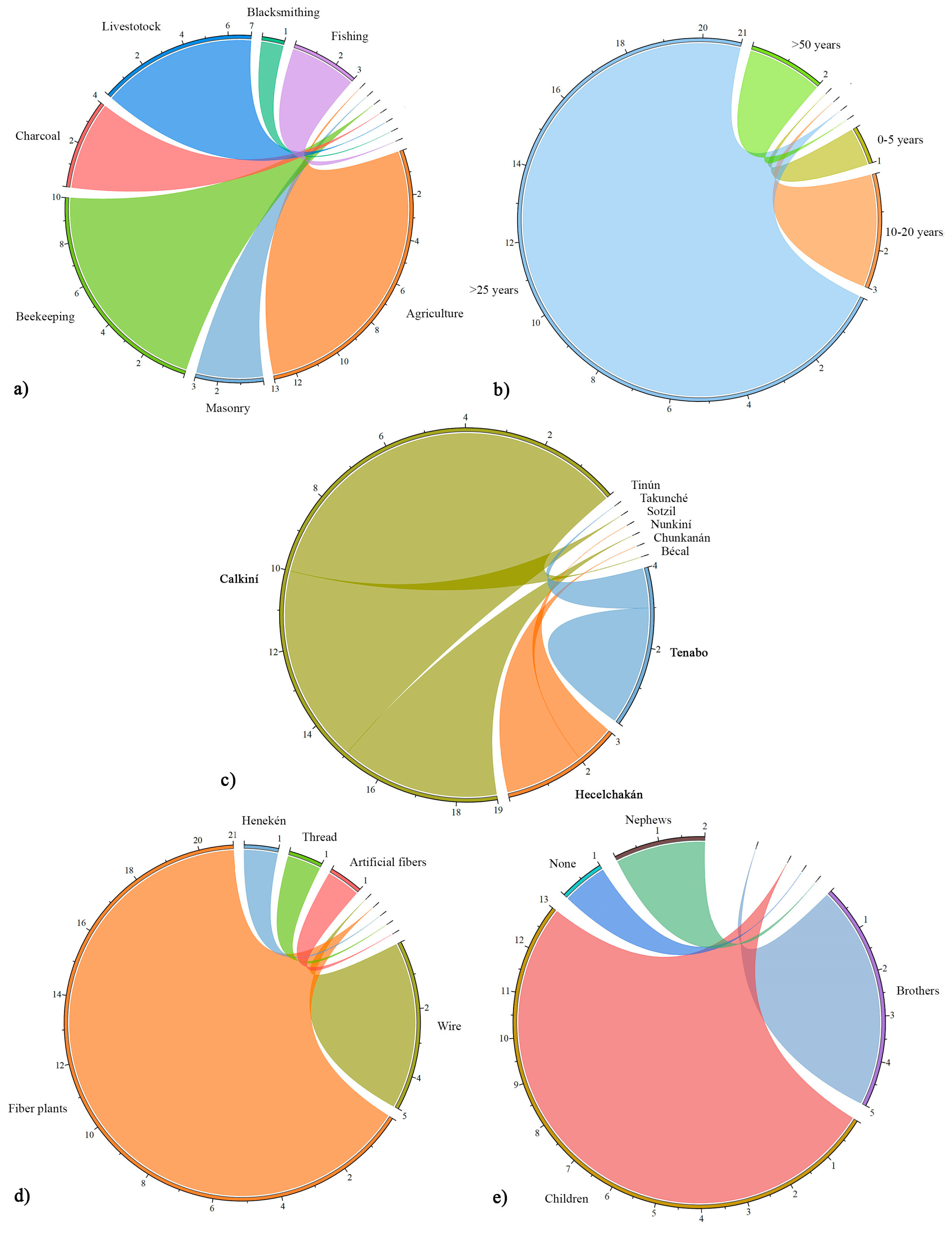
All interviewees (27 people) were male, with an age range between 18 and 66 years, and mentioned that they sell palm guano and build TMHs for economic purposes, and who at some point in their lives had built their own home with the help of their neighbors and/or relatives. The main economic activity of the interviewees was agriculture (n = 13), followed by beekeeping (n = 10) and livestock (n = 7 (Figure 2a). A total of 21 (78%) interviewees mentioned that they have been building TMHs for more than 25 years. These people are originally from the municipality of Calkiní, from the communities of Becal (n = 15) and Nunkiní (n = 4) (Figure 2b,c). Of the interviewees, 13 mentioned that they have shared their knowledge of TMH construction with their children (Figure 2e). On the other hand, 70% (n = 19) of the interviewees mentioned that they learned from their parents, and 30% (n = 8) from their grandparents. Furthermore, they mentioned that they learned from master builders or other relatives. With respect to the plants used for the construction of the TMH roof, 100% use S. yapa. Likewise, of these, four interviewees mentioned that they also use Spartina spartinae for the purpose of roof construction.
A total of 18 species were recorded in the flora associated with the construction of the TMH (Table 1); S. yapa (RI = 1) and S. mexicana (RI = 1) were found to have the highest relative importance indices for the construction of the roof. Other species with a high index were Lysiloma latisiliquun (RI = 1), Caesalpinia gaumeri (RI = 1), and Senegalia gaumeri (RI = 1), used as “Colox-che’” rods for the construction of the wall (Table 1). The species with the lowest mention and importance were Manilkara zapota (RI = 0.67), Asemnantha pubescens (RI = 0.66), and Helicteres baruensis (RI = 0.67), which are used as the main “Noh-ocom” columns for the structure of the house.
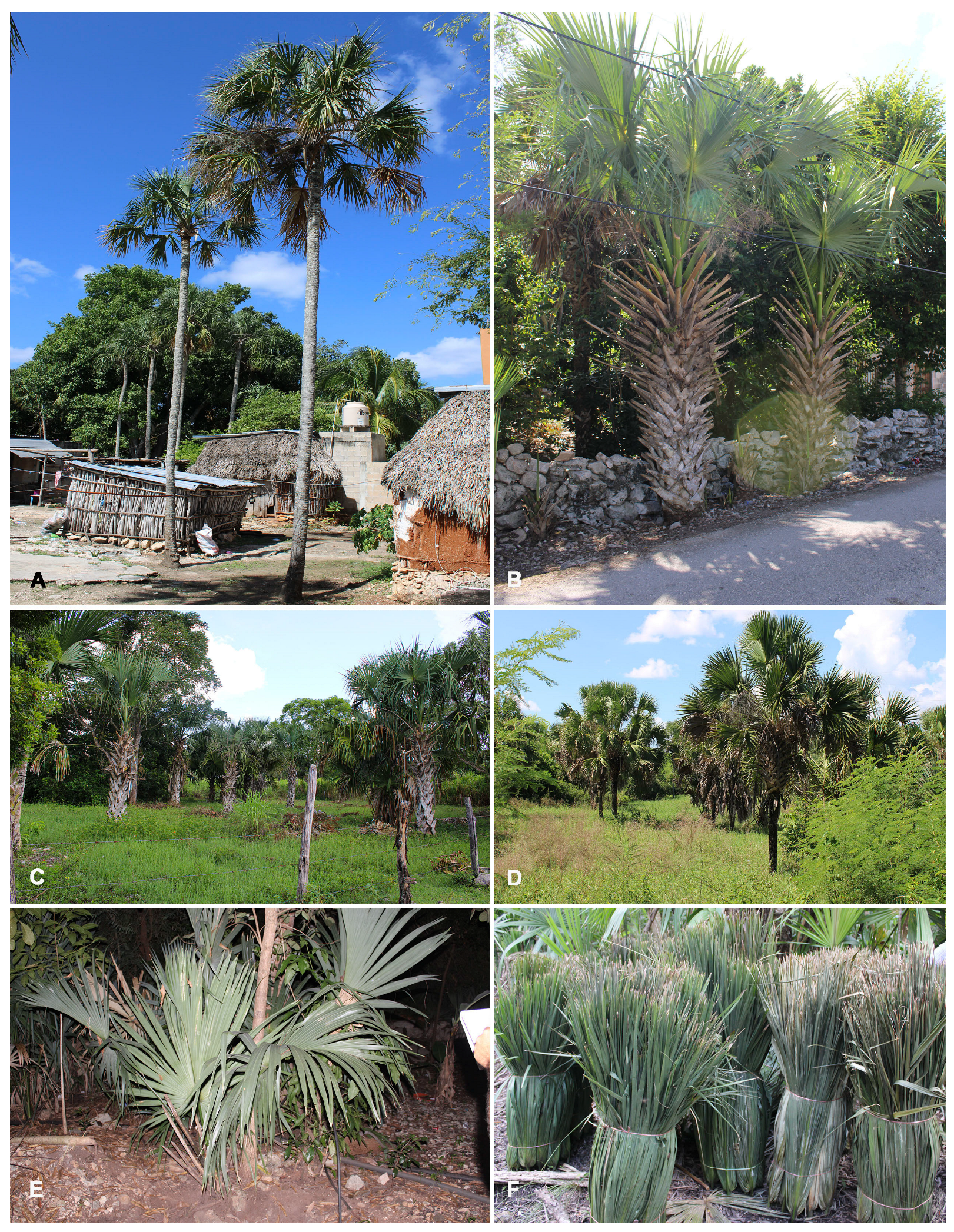
Among the plants used for roof construction, the red grass “k’oxolaak” and the guano palms Xa’an (S. yapa) and guano bon (S. mexicana) were recorded (Figure 3A,B). S. yapa is mostly used due to its greater resistance; while S. mexicana is used for some roof repairs due to its lower resistance and for the production of handicrafts (basketry, fans, mats). Both guano palms were found to be cultivated in the backyards of residents of nearby communities and within the Petenes Biosphere Reserve (Figure 3C,D). Guano palm fronds are collected in units of 50 fronds to form a roll with a price of 150 to 200 Mexican pesos (Figure 3E,F). It is important to note that there is confusion in the identification between S. yapa and S. mexicana, since both can be named by their common name “Xa’an”. For example, in the community of Tankuché (Calkiní, Campeche), they recognize S. mexicana as Xa’an, possibly because it is the most common and available species in their locality.
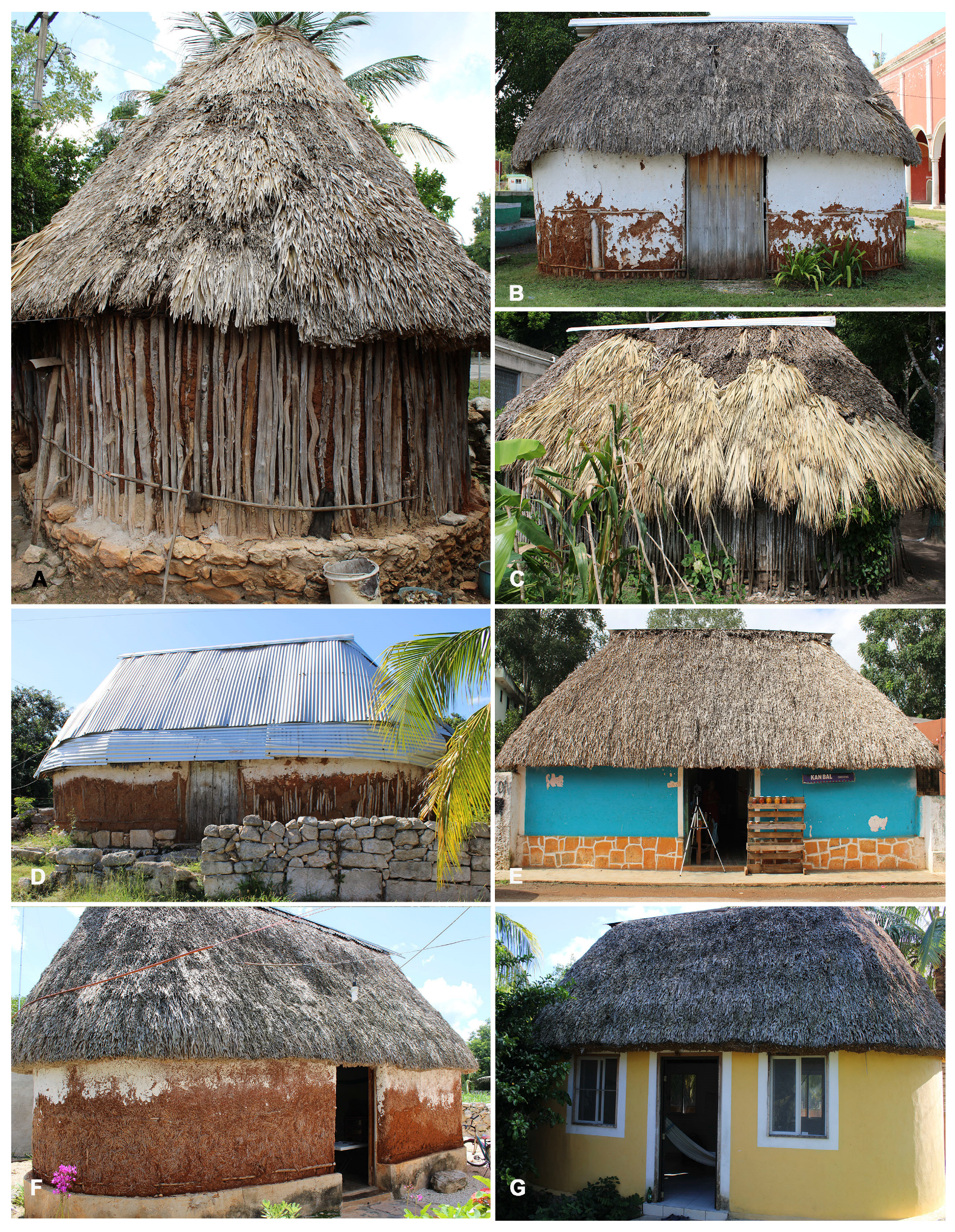
The main structure of the TMH uses four wooden pillars known as “Noh-ocom” (main columns) and four lateral pillars called “Pach-nah” (side columns). The “balo” (in Spanish) refers to the beam or truss placed between the columns, and the “scissors” refers to the elongated posts that allow the roof structure to intersect, and are placed on the balo (Figure 4A,B).
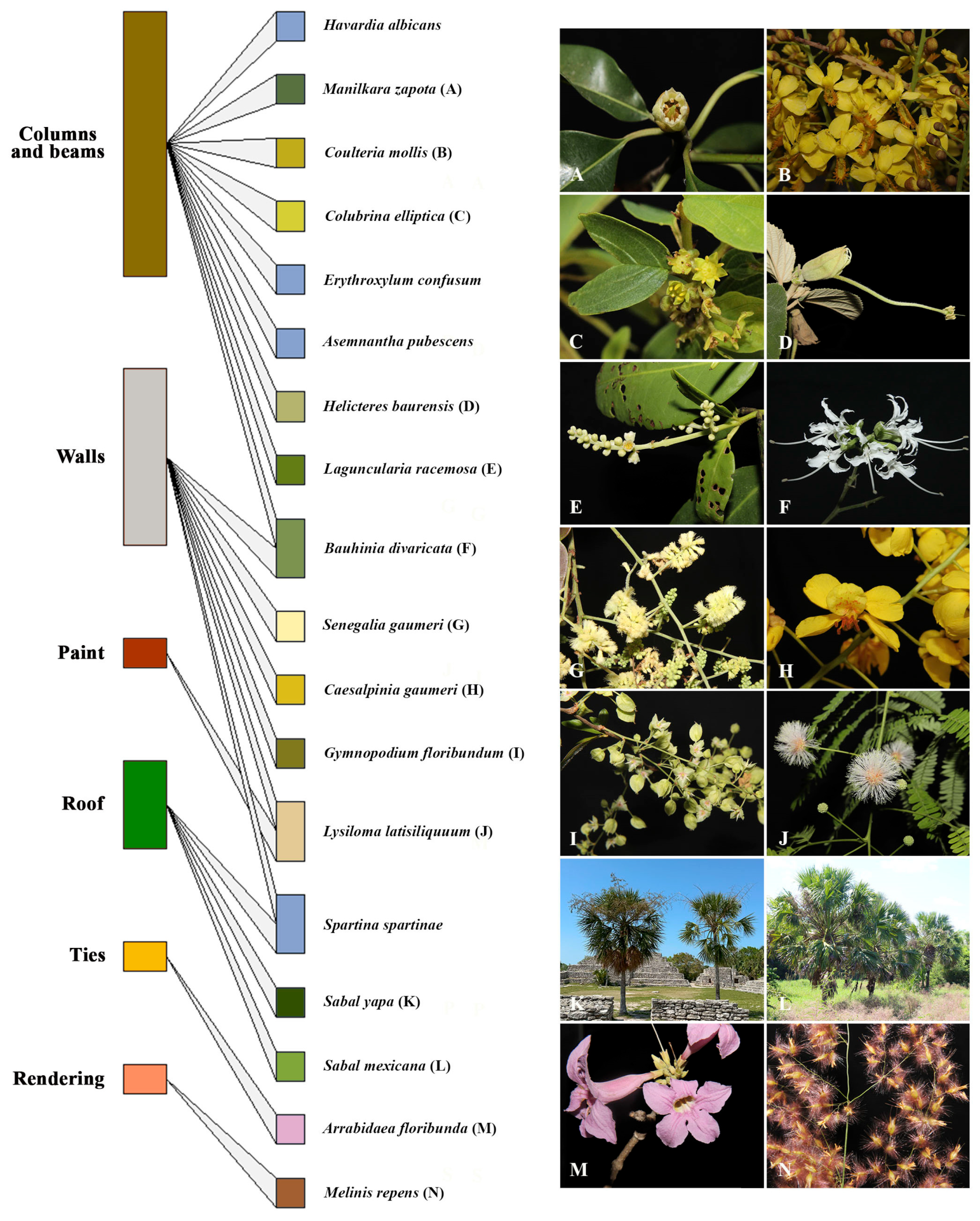
For the construction of all these structures, the local timber-yielding species used are Havardia albicans (Kunth) Britton & Rose; Manilkara zapota (L.) P. Royen; Coulteria mollis Kunth; Colubrina elliptica (Sw.) Brizicky & W.L. Stern; Erythroxylum confusum Britton; Asemnantha pubescens Hook. f.; Helicteres baruensis Jacq.; and Laguncularia racemosa (L.) C.F. Gaertn (Table 1). The latter is no longer used due to its conservation and protection status. Meanwhile, for the curved or turned portion of the TMH structure, the species used is known as Holmuch’, a local species, and Bauhinia divaricata L. is specifically used for this too (Figure 5).
Regarding the plants used to anchor the structures, 66.7% of respondents mentioned the use of “anil-kab” or white vine (A. floribunda) (Figure 4B). Respondents mentioned that they use this species year-round and that the lunar phases, specifically the full moon, is an astrological factor in obtaining good quality material. Other respondents mentioned the use of other materials for anchoring, such as raffia, wire, black thread, and henequen (Figure 4D,E).
Finally, six species have been recorded as being used for the construction of the walls (colox-che’), including catzín (Senegalia gaumeri (S. F. Blake) Britton & Rose), kitinché (Caesalpinia gaumeri Greenm.), tsalam (Lysiloma latisiliquum (L.) Benth.), ts’ ulub took’ (B. divaricata), and dzidzilché (Gymnopodium floribundum Rolfe); meanwhile, for the plaster on the wall of the house, known as “pak-kancab,” a mixture of red earth and leaves of Melinis repens (Willd.) Zizka is used (Figure 4F). During ancient times, it was painted white with lime obtained from the calcination of the trunks of the L. latisiliquum tree.

4. Discussion

This is the first comprehensive study to report on the use of vascular plants for TMH construction in northern Campeche, Mexico, and the YP (18 species of the 2327 in YP). Existing studies have only addressed anthropological aspects, such as the work of Sánchez-Suárez [11], or those who described the morphology and architecture of the Mayan house, identifying only the guano palm and the thatch grass [7,9,10,24,25]. On the other hand, studies on the distribution of S. yapa, S. mexicana, S. mauritiiformis, and S. gretheriae [26] are important to understand the distribution patterns of these palms at a regional level and to be able to differentiate them morphologically, since there is confusion in the YP about which ones are used for the construction of TMHs.
Among the species most frequently mentioned and known by those interviewed are S. yapa and S. mexicana, with S. yapa being the most preferred by residents for the purpose of roof construction due to its durability and lower cracking capacity (distributed in northern Campeche, Yucatán, and Quintana Roo). The species S. mexicana is preferred for roof repairs and for making handicrafts, and it is distributed in the southwestern strip of Campeche and southeastern Yucatán [26]. In the YP, other species of the genus Sabal are also known, with which they can be confused, such as S. mauritiiformis and S. gretherae. However, S. yapa is the species with the greatest distribution in the region [25], and thus tends to be one of the most commonly and frequently used species for the construction of TMHs. In the case of S. mauritiiformis and S. gretherae, they are only recorded as being for roof use. The former is found in the northern and northwestern portion of the YP and the latter in the eastern parts of the YP [26].
Some tropical palms produce an average of nine harvestable leaves in a one-year period; but, in the case of Sabal yapa, it is mentioned that it produces approximately five leaves in a period of six to nine months [23,27]. Because of this, knowledge of its pruning is of the utmost importance for the conservation of Sabal species by producers, where 100% of those interviewed recognize the use of pruning for the regeneration of guano palms, and after harvesting, they leave the bud (new leaf) with one to two more leaves.
On the other hand, 100% of respondents recognized the use of k’oxolaak grass (Spartina spartinae) for use in TMH roofs and palapas, among other structures. However, the majority prefer the guano palm due to its ease and aesthetics, and the shorter construction time needed during its use. Pérez-Pinelo et al. [10] mentioned that S. spatinae is a viable option due to its growth habit and because it is a perennial plant. It could be a viable substitute to reduce the harvesting of guano palm leaves in northern Yucatán, specifically for beach areas where roofing for restaurants is under construction (Figure 1).
Of the wood species used, some were previously reported for the construction of different structures of the TMH [5]. Therefore, it is important to highlight that approximately 95% of the woody species of the YP have some type of use or application within indigenous Mayan communities [28,29,30]. Among them, one of the species most mentioned by the interviewees was Chukum (H. albicans) due to its rigidity and durability, as well as dzidzilché (G. floribundum). Both species are considered to be of greater importance for the construction of the TMH [31]. In addition, another important species used for walls is S. gaumeri, which is endemic to the YP and considered important for beekeeping, as is L. racemose (a mangrove species of importance to beekeeping), which is classified as threatened by NOM-059-SEMARNAT-2010 [32].
Of the vines that were the most used for tying the TMH, the most commonly used was Arrabidaea floribunda, which can be identified by its whitish stem. However, most authors had not reported this species for tying or other purposes in the TMH [33,34,35], with the exception of Trejo-Torres et al. [36], who indicated its ethnobotanical use in tying. Furthermore, another vine called “anil-kab” (in Mayan) (Bignonia diversifolia Kunth) was recorded as having the same use, but with a darker coloration [35]. Likewise, the inhabitants do not observe the floral characteristics of the vines; they limit themselves to only calling them “anil-kab”, which does not contribute to the identification of the various Bignoniaceae species associated with tying.
The change in materials used to build traditional roofs from guano palm to red grass was observed during the visits to the different locations studied, as these are being replaced by other materials such as concrete, zinc metal sheets, and cardboard. Those interviewed mentioned that this change in materials occurs because of the high cost of guano palm and because its maintenance every four or five years is not cost-effective. In addition, they prefer to roof their homes with concrete because it is more resistant to meteorological phenomena such as northerly winds and hurricanes [10].
For the all above mentioned reasons, roofs were observed to be built with a mixture of natural and artificial materials. Some other houses described by Sánchez Suárez [11] are characterized by wattle and daub walls, which in some cases are used for rooms or cellars, houses with colox-che walls, including those used for kitchens or animal protection, and houses with masonry walls. This type of architectural variety allows us to understand how the TMH has evolved over time and according to the needs of the inhabitants of rural communities.
One of the limitations encountered in this study was the small number of people identified who had relevant knowledge and/or are involved in the construction of TMHs, because young people have less interest in these houses. It is therefore necessary to conserve and/or protect these traditional forms of housing, which are of immense cultural and ethnobiological importance. Sánchez Suárez [11] mentioned that rural housing in Mexico is part of the richness of its culture. Despite this, there have been government programs that contribute to the disappearance of the THM, because it is classified as being of a lower social class or low economic status due to the use of mud plaster on the walls and palm leaves for roofs [37].

5. Conclusions

There is little interest in traditional knowledge associated with the different natural materials and techniques used in TMH construction. This is due to the high price of construction materials and the practical need for roof maintenance every four or five years. This is unnecessary compared to concrete or zinc-sheet construction, which lasts much longer, but these houses are unfavorable during the region’s dry season because they are much warmer. Most TMH builders possess knowledge passed down from family members and perform these activities for extra income or as a secondary activity. On the other hand, ethnobotanical knowledge of guano palm pruning techniques by producers allows populations of S. yapa and S. mexicana to be preserved and maintained for subsequent harvests. Many of the woody species used for the construction of TMH structures are collected throughout the year; however, their collection season is related to the lunar phases, and some are collected without any selection criteria for their use. This pioneering work provides, for the first time, a comprehensive list of the floral species associated with the construction of the TMH, which could contribute significantly to conservation efforts to protect the cultural value and ethnobiological uses of the TMH in the YP, Mexico.

Author Contributions

Formal analysis, H.M.J.L.-C. and W.C.-I.; Investigation, V.I.C.-R. and M.G.A.-J.; Methodology, H.M.J.L.-C. and W.C.-I.; Supervision, W.C.-I. and S.K.B.; Writing—original draft, H.M.J.L.-C., W.C.-I., R.A.T.-U., V.I.C.-R. and M.G.A.-J.; Writing—review and editing, H.M.J.L.-C., W.C.-I. and S.K.B. All authors have read and agreed to the published version of the manuscript.

Funding

This research received no external funding.

Data Availability Statement

All data generated and analyzed during this study are included in this published article.

Acknowledgments

To all the residents of the communities of Becal, Nunkiní, Zodzil, Takunché, Tenabo, Ukum, and Tinún, who kindly allowed us to interview and photograph the structures of their homes. This study is part of the SECIHTI project (RENAJEB-2023-3) “Consolidación de las colecciones etnobiológicas del Jardín Etnobiológico Campeche como base de rescate, conservación, promoción y generación de conocimiento de los recursos naturales y culturales de las comunidades mayas de la península de Yucatán”. V.I.C.-R. and M.G.A.-J. thank SECIHTI for the scholarship awarded for postgraduate studies # 1229279 and 1229322, respectively.

Conflicts of Interest

The authors declare no conflicts of interest.

Abbreviations

The following abbreviations are used in this manuscript:
TMHTraditional Mayan house
YPYucatán Peninsula
RIRelative importance index

References

  1. Arce-Ibarra, A.M.; Armijo-Canto, A. Uso y Manejo de los Recursos Naturales. In Riqueza Biológica de Quintana Roo. Un Análisis para su Conservación; Pozo, C., Armijo-Canto, N., Calmé, S., Eds.; El Colegio de la Frontera Sur, Comisión Nacional para el Conocimiento y Uso de la Biodiversidad, Gobierno del Estado de Quintana Roo y Programa de Pequeñas Donaciones: Mexico City, Mexico, 2011; pp. 112–115. [Google Scholar]
  2. Rodríguez-Sánchez, P.V.; Levy-Tacher, S.I.; Ramírez-Marcial, N.; Estrada-Lugo, E.I.J. Uso y Manejo de la Vegetación Leñosa en el Fundo Legal de Yaxcabá, Yucatán, México. Acta Bot. Mex. 2020, 127, 1–27. [Google Scholar] [CrossRef]
  3. Uicab, J.C.; Sánchez, D.G.; Reyes, L.A.; Moctezuma, J.Á.; Ríos, G.L. Recursos Forestales y Etnobotánica en la Región Milpera de Yucatán, México. Rev. Chapingo Ser. Cienc. For. Amb. 2003, 9, 11–16. [Google Scholar]
  4. Toledo, V.; Argueta, A. La Tradición Contemporánea: Transformaciones Ecológico-Agrarias en México. Méx. Indígena 1989, 27, 3–9. [Google Scholar]
  5. Zamora-Crescencio, P.; Flores-Guido, J.S.; Ruenes-Morales, R. Flora Útil y su Manejo en el Cono Sur del Estado de Yucatán, México. Polibotánica 2009, 28, 227–250. [Google Scholar]
  6. Rodríguez-Viqueira, M.; Fuentes-Freixanet, V. Traditional Mayan Architecture According to Latitude and Altitude. In Proceedings of the 23rd Conference on Passive and Low Energy Architecture (PLEA 2006), Geneva, Switzerland, 6–8 September 2006; pp. 6–8. [Google Scholar]
  7. Caballero Nieto, J.; Martínez, A.; Gama, V. El Uso y Manejo Tradicional de la Palma de Guano en el Área Maya de Yucatán. Biodiversitas 2001, 39, 1–6. [Google Scholar]
  8. Martínez-Ballesté, A.; Caballero, J. Management compromises and the sustainability of palm populations in Mayan homegardens. Bot. Sci. 2015, 94, 291–300. [Google Scholar] [CrossRef]
  9. Pulido, M.T.; Caballero, J. The Impact of Shifting Agriculture on the Availability of Non-Timber Forest Products: The Example of Sabal yapa in the Maya Lowlands of Mexico. For. Ecol. Manag. 2006, 222, 399–409. [Google Scholar] [CrossRef]
  10. Pérez-Pinelo, E.A.; Cordero, W.A.; Díaz, J.J.O.; Guido, J.S.F.; Gómez-Varela, C.S. Manejo y Aprovechamiento del K’oxolaak (Spartina spartinae [Trin] Merr. ex Hitchc) para el Techado de Construcciones Tradicionales y Turísticas en Yucatán, México. Rev. Teoría Praxis 2015, 17, 145–161. [Google Scholar] [CrossRef]
  11. Sánchez Suárez, A. La Casa Maya Contemporánea: Usos, Costumbres y Configuración Espacial. Península 2006, 1, 81–105. [Google Scholar] [CrossRef]
  12. Thompson, J.E.S. Historia y Religión de Los Mayas, 1st ed.; Siglo XXI Editores: Mexico City, Mexico, 1975; p. 514. [Google Scholar]
  13. Rico-Gray, V.; Chemás, A.; Mandujano, S. Uses of Tropical Deciduous Forest Species by the Yucatecan Maya. Agrofor. Syst. 1991, 14, 149–161. [Google Scholar] [CrossRef]
  14. Herrera-Flores, B.G.; Santos-Fita, D.; Naranjo, E.J.; Hernández-Betancourt, S.F. Importancia Cultural de la Fauna Silvestre en Comunidades Rurales del Norte de Yucatán, México. Península 2019, 14, 27–55. [Google Scholar] [CrossRef]
  15. Censo de Población y Vivienda 2010. Subsistema de Información Demográfica y Social. 2010. Available online: https://www.inegi.org.mx/programas/ccpv/2010/#datos_abiertos (accessed on 12 May 2024).
  16. Rocher Salas, A. El Camino Real de Campeche a Mérida: Orígenes. Glifos 2024, 38, 6–11. [Google Scholar]
  17. Conjunto de Datos Vectoriales del Continuo Nacional. Efectos Climáticos Regionales (Mayo-Octubre) Campeche. 2012. Available online: https://www.inegi.org.mx/contenidos/productos/prod_serv/contenidos/espanol/bvinegi/productos/geografia/tematicas/Efec_may_oct_hist/702825680206.pdf (accessed on 27 August 2025).
  18. Otzen, T.; Manterola, C. Técnicas de Muestreo sobre una Población a Estudio. Int. J. Morphol. 2017, 35, 227–232. [Google Scholar] [CrossRef]
  19. Bernard, H.R. Research Methods in Anthropology: Qualitative and Quantitative Approaches, 4th ed.; Library of Congress: Lanham, MD, USA, 2006. [Google Scholar]
  20. Fedoriak, M.; Kuzmenko, A.; Karpat, Y. Mantenimiento de la salud de las abejas melíferas mediante sistemas socioecológicos: Perspectivas de las partes interesadas. J. Apic. Res. 2021, 60, 145–158. [Google Scholar] [CrossRef]
  21. Seifert, E. OriginPro 9.1: Scientific Data Analysis and Graphing Software—Software Review. J. Chem. Inf. Model. 2014, 54, 1552. [Google Scholar] [CrossRef]
  22. Dormann, C.F.; Gruber, B.; Fründ, J. Introducing the bipartite package: Analysing ecological networks. Interaction 2008, 1, 8–11. [Google Scholar]
  23. Tardío, J.; Pardo-de-Santayana, M. Cultural importance indices: A comparative analysis based on the useful wild plants of Southern Cantabria (Northern Spain). Econ. Bot. 2008, 62, 24–39. [Google Scholar] [CrossRef]
  24. Pérez, M.; Rebollar, S. Anatomía y Usos de las Hojas Maduras de Tres Especies de Sabal (Arecaceae) de la Península de Yucatán, México. Rev. Biol. Trop. 2003, 51, 333–344. [Google Scholar] [PubMed]
  25. Caballero, J.; Pulido, M.T.; Martínez, A. El uso de la palma de guano (Sabal yapa) en la industria turística de Quintana Roo, México. In Productos Forestales, Medios de Subsistencia y Conservación. Estudios de Caso Sobre Sistemas de Manejo de Productos Forestales No Maderables, 1st ed.; Alexiades, M., Shanley, P., Eds.; CIFOR-CGIAR: Bogor, Indonesia, 2004; Volume 3, pp. 365–385. [Google Scholar]
  26. Pérez-Sarabia, J.E.; de Stefano, R.D.; Cetzal-Ix, W.; Alvarado-Segura, A.A.; Basu, S.K. Conservation Assessment Using the IUCN Criterion B: A Case Study on Palms of the Mexican Portion of the Yucatán Peninsula Biotic Province. Kew Bull. 2020, 75, 1–13. [Google Scholar] [CrossRef]
  27. Calvo-Irabién, L.M.; Zapata, M.T.; Iriarte-Vivar, S. Effects of Leaf Harvest on Thrinax radiata Palm: Implications for Management and Conservation. J. Trop. For. Sci. 2009, 21, 34–44. [Google Scholar]
  28. Levy-Tacher, S.I.; Aguirre Rivera, J.R.; Martínez Romero, M.M.; Durán Fernández, A. Caracterización del Uso Tradicional de la Flora Espontánea en la Comunidad Lacandona de Lacanhá, Chiapas, México. Interciencia 2002, 27, 512–520. [Google Scholar]
  29. Nigh, R.; Diemont, S.A. The Maya Milpa: Fire and the Legacy of Living Soil. Front. Ecol. Environ. 2013, 11, 45–54. [Google Scholar] [CrossRef]
  30. Cortes-Sosa, D.M.; Levy-Tacher, S.I.; Marcial, N.R.; Gutiérrez, D.A.N.; Rodríguez-Sánchez, P.V. Diversidad y Estructura de Franjas de Árboles en una Matriz Agrícola (Tolchés) en Relación con la Intensidad de Uso Forestal en Yaxcabá, Yucatán. Bot. Sci. 2020, 1, 1. [Google Scholar] [CrossRef]
  31. Gutiérrez-Báez, C.; Ortiz-Díaz, J.J.; Flores-Guido, J.S.; Zamora-Crescencio, P. Diversidad, Estructura y Composición de las Especies Leñosas de la Selva Mediana Subcaducifolia del Punto de Unión Territorial (PUT) de Yucatán, México. Polibotánica 2012, 33, 151–174. [Google Scholar]
  32. Zúñiga-Díaz, D.; Cetzal-Ix, W.; López-Castilla, H.; Noguera-Savelli, E.; Tamayo-Cen, I.; Martínez-Puc, J.F.; Basu, S.K. A review of the melliferous flora of Yucatan Peninsula, Mexico, on the basis for the honey production cycle. J. Ethnobiol. Ethnomed. 2024, 20, 40. [Google Scholar] [CrossRef] [PubMed]
  33. De Clerck, F.A.; Negreros-Castillo, P. Plant Species of Traditional Mayan Homegardens of Mexico as Analogs for Multistrata Agroforests. Agrofor. Syst. 2000, 48, 303–317. [Google Scholar] [CrossRef]
  34. Andrade-Cetto, A.; Becerra-Jiménez, J.; Martínez-Zurita, E.; Ortega-Larrocea, P.; Heinrich, M. Disease-Consensus Index as a Tool of Selecting Potential Hypoglycemic Plants in Chikindzonot, Yucatán, México. J. Ethnopharmacol. 2006, 107, 199–204. [Google Scholar] [CrossRef] [PubMed]
  35. Flora de la Península de Yucatán. Available online: https://www.cicy.mx/sitios/flora%20digital/ficha_virtual.php?especie=1031 (accessed on 21 June 2024).
  36. Trejo-Torres, J.C.; Hayden, W.J.; Pasos-Enríquez, R.M.; Carvajal-Mejía, L.A.; Callaghan, J.M. Catálogo de la Flora de Kaxil Kiuic. Reporte Final del Proyecto “Difusión Ambiental en la Reserva Biocultural Estatal Puuc”; Kaxil Kiuic A.C. & Programa de Pequeñas Donaciones–FMAM-México–PNUD: Mérida, México, 2014; 72p. [Google Scholar]
  37. Sánchez Suárez, A.; García Quintanilla, A.; Amarella, E. La construcción simbólica y material de la casa maya. In Xa’anil Naj: La Gran Casa de los Mayas; Sánchez Suárez, A., Coord.; Ediciones de la UADY: Mérida, México, 2017; pp. 54–85. [Google Scholar]
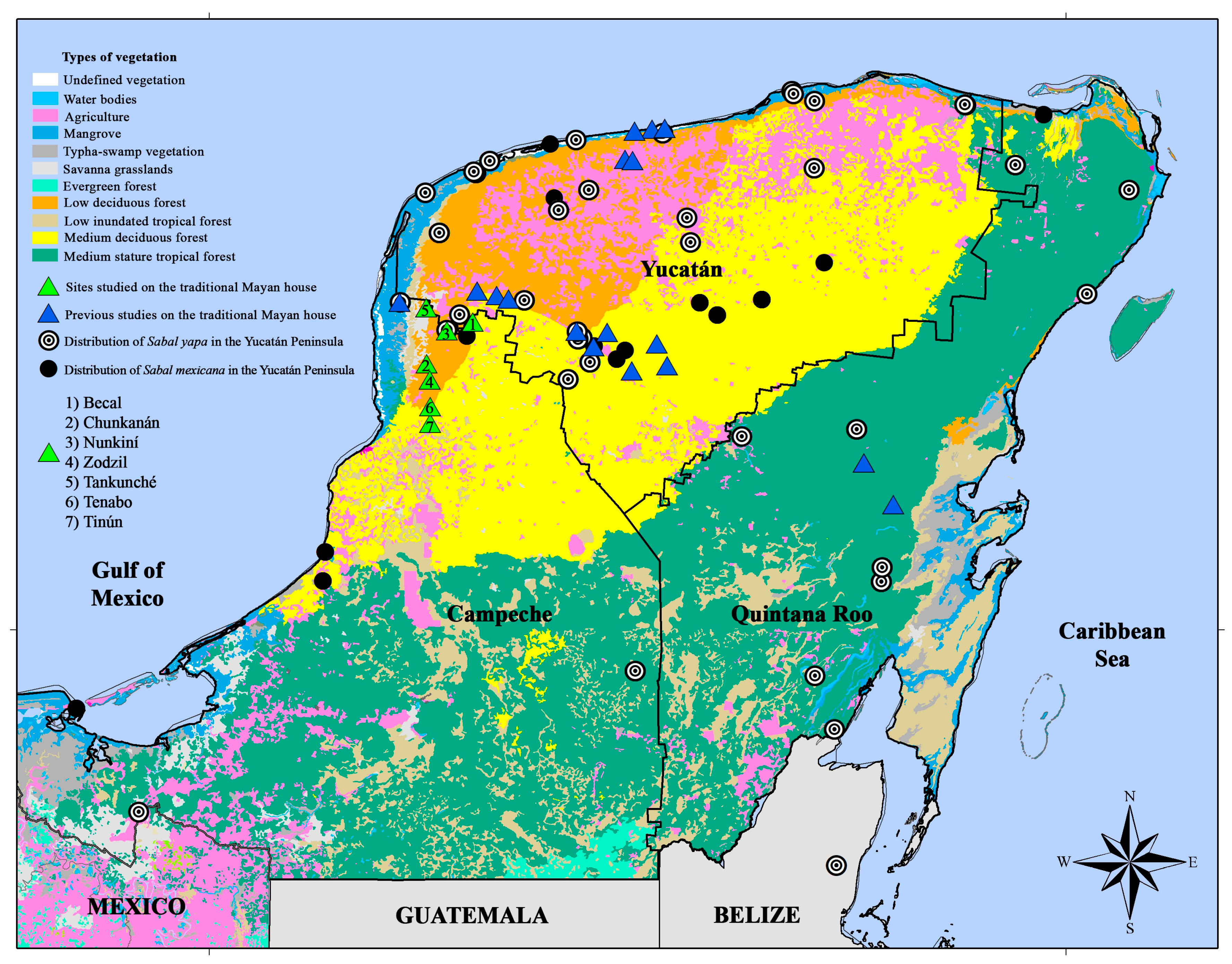
Figure 1. Sites studied here and previously on the construction of the traditional Mayan house in the Yucatan Peninsula, Mexico.
Rsee 02 00035 g001
Figure 2. Chord diagram resulting from the interviews. (a). Economic activities of the builders. (b). Age of the interviewees. (c). Municipalities of the interviewees. (d). Materials used for tying in traditional Mayan house construction. (e). Knowledge acquired for construction.
Rsee 02 00035 g002
Figure 3. Materials and palm extraction sites used for the construction of traditional Mayan houses in northern Campeche. (A). Guano Xa’an (Sabal yapa). (B). Guano Boon (S. mexicana). (C). Pasture area with Sabal species. (D). Lowland floodplain forest with S. yapa populations. (E). Guano Xa’an in a backyard in the community of Takunché, Calkiní, Campeche. (F). Collection of guano rolls in a lowland floodplain forest in the Petenes Biosphere Reserve.
Rsee 02 00035 g003
Figure 4. Traditional Mayan houses in northern Campeche. (A). Roof structure of a Mayan house. (B). Insertion of the scissors with the balo. (C). Structures of curved areas of a Mayan house. (D). Example of roof hybridization of Mayan houses with other materials like steel sheets. (E). Ties with Arrabidaea. floribunda. (F). Walls plastered with the red grass “chac-zuuc” and lime. (G). Sticks of woody species used in colox-che’.
Rsee 02 00035 g004
Figure 5. Interaction network of the parts of the traditional Mayan house and the plant species used for its construction.
Rsee 02 00035 g005
Table 1. List of species and their use for the construction of the traditional Mayan house. NE = Not evaluated, LC = Least Concern, DD = Data Deficient.
TaxaCommon Name in Spanish or MayanUsePart of the HouseGrowth HabitIUCNRI
Arrabidaea floribunda (Kunth) Loes.Anil-kabTiesBeam ties; Noh-ocom and Holmuch’VinesNE0.89
Asemnantha pubescens Hook. f.Sabac che’ColumnMain columns (Noh-ocom)TreeNE0.66
Bauhinia divaricata L.Pata vaca o ts’ ulub tookCircular columns and wallsCurved part of the house or “Holmuch” and for the formation of the Colox-che’ShrubLC1
Caesalpinia gaumeri Greenm.KitinchéWallsRods used for Colox-che’TreeLC1
Colubrina elliptica (Sw.) Brizicky & W.L. SternSacná-chéColumnMain columns (Noh-ocom)TreeLC0.78
Coulteria mollis KunthChak te’ kokColumnMain columns (Noh-ocom)TreeDD0.78
Erythroxylum confusum BrittonTossoColumnMain columns (Noh-ocom)TreeLC0.67
Gymnopodium floribundum RolfeDzidzilchéWallsRods used for Colox-che’TreeLC0.86
Havardia albicans (Kunth) Britton & RoseChukumColumn and beamsMain columns (Noh-ocom) and baloTreeLC1
Helicteres baruensis Jacq.TsutupColumnMain columns (Noh-ocom)TreeLC0.67
Laguncularia racemosa (L.) Gaertn.MangleColumn and beamsMain columns (Noh-ocom) and baloTreeLC0.67
Lysiloma latisiliquum (L.) Benth.TsalamWallsRods used for Colox-che’TreeLC1
Manilkara zapota (L.) P. RoyenZapoteColumn and beamsMain columns (Noh-ocom) and baloTreeLC0.67
Melinis repens (Willd.)Chac-zuuc o chak su’ukRebocoPlastering with red “kancab” soilHerbNE0.95
Sabal mexicana Mart.bonRoofingRoofTreeLC1
Sabal yapa C. Wright. ex Becc.Xa’anRoofingRoofTreeLC1
Senegalia gaumeri (S. F. Blake) Britton & RoseCatzínWallsRods used for Colox-che’TreeLC1
Spartina spartinae [Trin] Merr. ex Hitchck’oxolaakRoof and wall coveringRoofing and wallsHerbNE0.89
Disclaimer/Publisher’s Note: The statements, opinions and data contained in all publications are solely those of the individual author(s) and contributor(s) and not of MDPI and/or the editor(s). MDPI and/or the editor(s) disclaim responsibility for any injury to people or property resulting from any ideas, methods, instructions or products referred to in the content.