
Article

Beyond the Wild: A First Nations Perspective on Country, Sensory Knowledge, and Phenomenology Through Arts-Based Explorations

1
Science Department, School of Architecture and the Built Environment, University of Newcastle, Callaghan, NSW 2308, Australia
2
Batchelor Institute, Batchelor, NT 0845, Australia
*
Author to whom correspondence should be addressed.
Submission received: 16 December 2025 / Revised: 15 February 2026 / Accepted: 2 March 2026 / Published: 26 May 2026

Simple Summary

Many Western landscapes described as “wild” are often assumed to be unknown, untouched, or separate from people, yet for First Nations communities, these places are deeply known through long-standing relationships with land and water. This study explores how creative making can help reveal these hidden understandings by listening closely to Country through the senses. The aim was to investigate how sensory experience, repeated visits to a place, and creative practices such as drawing and mark-making can generate knowledge rather than represent it. The study found that creative making serves as a mode of learning, in which understanding emerges through touch, movement, sound, rhythm, and careful attention over time. Instead of treating land as an object to study, this approach recognizes Earth as active and responsive, shaping how knowledge is formed. The findings show that what is often called “the wild” is not unknown, but held within systems of knowledge, care, responsibility, and relationship. This work is valuable to society because it offers new ways to think about land, environment, and creativity, supporting more respectful, place-based approaches to research and environmental care that recognise Indigenous knowledge and connection to Country.

Abstract

Land and place are often framed within Western ecological traditions as “wild”, meaning pristine, uninhabited, and separate from human life, yet from a First Nations perspective no place exists without relationship, story, or responsibility. This study investigates how environmental understanding emerges when land is approached as a living, relational system rather than an object of detached observation. Guided by a sensory–phenomenological framework, the research brings together phenomenological attention to lived experience with First Nations sensory practices and arts-based methods. Fieldwork was undertaken on Dharug Country with First Nations women artists and cultural practitioners and involved walking on Country, deep listening, stillness, sensory mapping, visual making, and group yarning as interconnected ways of generating knowledge. The findings show that environmental awareness developed through attention to sound, rhythm, vibration, seasonal change, and affect, revealing Country as an active participant in knowledge formation rather than a passive setting. The study concludes that what is commonly described as “the wild” is not unknown or untouched but deeply known through sustained sensory, relational, and creative engagement, demonstrating that ecological reconnection arises through ethical, culturally grounded relationships with living systems and offering implications for more respectful, place-responsive approaches to environmental research and care.

1. Introduction

This paper begins from a fundamental tension between Western ecological concepts of the “wild” and First Nations understandings of ‘Country’—a term used to describe the tangible and intangible aspects of cultural place. In dominant environmental discourse, the wild is often imagined as a space of absence—land imagined as untouched, unpeopled, and separate from culture. This framing underpins many contemporary conservation, rewilding, and biodiversity strategies, in which ecological value is often tied to the removal or minimisation of human presence. From a First Nations perspective, however, this logic is profoundly dissonant. Country is never empty, inert, or unmanaged. It is alive with law, memory, kinship, and reciprocal obligation. Country is not an object to be protected from people, but a living system sustained through relationships.
This conceptual divide is not merely theoretical; it carries deep ethical consequences. Western models of wildness have historically justified dispossession, displacement, and the erasure of First Nations governance under the guise of protection. Conservation has often been enacted through exclusion, even as First Nations peoples have maintained complex systems of ecological care for millennia. This paper positions “Listening Beyond the Wild” as both a conceptual and ethical intervention—one that challenges inherited wilderness logics and recenters First Nations frameworks of relationality, responsibility, and sensory knowing.

1.1. Positioning Statement

As Dharug First Nations authors, we position this manuscript within a culturally grounded understanding of listening, sensing, and creative practice to examine how environmental awareness emerges through relationship, reciprocity, and embodied experience.

1.2. Glossary of Terms

1.2.1. Creative Practice as Ecological Method

An arts-based research approach in which drawing, mark-making, material experimentation, and visual mapping operate as methods of ecological inquiry. Creative making functions as a way of listening, sensing, and generating knowledge rather than illustrating pre-existing ideas.

1.2.2. Country

A First Nations understanding of land as a living, sentient system that includes people, waters, sky, plants, animals, ancestors, law, and story. Country is not a physical backdrop but an active relational presence that holds cultural authority, obligation, and knowledge.

1.2.3. Country-Guided Sensory–Phenomenological Framework

Positions Country as the primary source of knowledge and authority, with understanding emerging through embodied, sensory engagement with place. It integrates phenomenological attention to lived experience with Indigenous knowledge systems, emphasizing relational responsibility, cultural protocol, and reciprocal care rather than extraction or abstraction.

1.2.4. Listening Beyond the Wild

A sensory–relational practice of environmental engagement that extends beyond visual observation to include sound, vibration, movement, rhythm, stillness, and more-than-human presence. It describes a way of perceiving that privileges relationship, attentiveness, and ethical responsiveness over detached observation.

1.2.5. Phenomenological Perception

An approach to understanding experience as it is lived through the body. Perception is understood as active participation in the world rather than passive observation, shaped by movement, orientation, memory, and relational encounter.

1.2.6. Sensory Knowledge

Knowledge generated through embodied perception, including hearing, touch, movement, temperature, texture, and affect. In this study, sensory knowledge is treated as epistemic—capable of producing valid ecological, cultural, and relational understanding.

1.2.7. Yarning

A First Nations cultural practice of sharing knowledge through relational, conversational exchange grounded in trust, respect, and deep listening. In research contexts, yarning is used as a culturally appropriate method for generating knowledge through story, reflection, and collective meaning-making rather than structured questioning.

1.3. Beyond Wild, Wilderness and Rewilding

Current debates surrounding wildness, rewilding, and biodiversity loss are driving renewed interest in restoration, species recovery, and large-scale ecological repair. Rewilding has emerged as a concept across environmental science, policy, popular writing, and consumer culture, often framed as a technical strategy for restoring ecological functions. Others view the term as a cultural fantasy of returning nature to a pre-human state. Many First Nations people argue that the term wildness limits how we listen to Country, how we value more-than-human relations, and how we understand care.
Through an arts-based practice, the term wilderness can be productively re-argued as a limited and culturally specific framing of ecological space. Rather than approaching land through observation, measurement, and managerial control, arts-based listening repositions ecological engagement as embodied, storied, and enacted through movement, making, and multisensory attunement. In this framing, listening is not a passive act of receiving environmental data but an active, relational practice that unfolds through walking, mark-making, rhythm, sound, texture, and material response. Creative practice enables what exceeds scientific categorization to become perceptible—vibration, affect, memory, presence, and relational shifts that cannot be quantified yet remain ecologically meaningful. By privileging listening and doing as modes of ecological engagement, arts-based practice unsettles the wilderness as a distant, detached object only to be observed. Instead, it reveals a living field of relationships in which humans participate through sensing, attention, and care. Through artmaking, wildness is transformed into an embodied, storied, multisensory attunement enacted through movement, making, and being.
Drawing on First Nations sensory practices and embodied phenomenology, this research explores how environmental awareness emerges through listening, walking, stillness, and creative making as modes of active participation rather than detached observation. Listening ‘Beyond the Wild’ is positioned as a relational, sensory, and ethical framework through which land, water, sky and more-than-human life are recognised as active participants in knowledge, care, and renewal. This way of thinking positions artmaking as not illustrative or supplementary, but as a critical method for unsettling dominant ecological imaginaries and activating First Nations ways of knowing, being, and doing in the face of accelerating environmental loss.
To investigate “Beyond the wild”, we applied a Country-Guided sensory–phenomenological approach that asserts that what is framed as “the wild” is not unknown or untouched but deeply known through enduring First Nations relationships with Country. Sensory engagement, lived experience, and intergenerational knowledge reveal land, waters, and species as relational and storied, exposing “wildness” as a colonial construct that masks long-standing systems of care, governance, and responsibility rather than an absence of human presence.
A Country-Guided sensory–phenomenological approach positions Country as the primary source of knowledge, authority, and ethical guidance, while using lived sensory experience as the means through which understanding emerges. Within this framework, knowledge is not abstracted or imposed but arises through embodied engagement with place—walking, listening, touching, observing seasonal rhythms, and responding creatively to what Country reveals. Sensory experience is understood as epistemological rather than illustrative: sound, movement, texture, smell, memory, and affect are treated as legitimate ways of knowing that carry cultural, ecological, and relational meaning.
This framework operates as both a methodological and ethical orientation. It foregrounds relational accountability, cultural protocols, and reciprocal care, ensuring that sensing, interpreting, and making are undertaken with respect to Indigenous knowledge systems and responsibilities to place. As such, research functions as acts of care and foster a sense of belonging grounded in Country.
By exploring how First Nations’ sensory practices and phenomenological ways of knowing deepen environmental awareness and contribute to cultural and ecological renewal, this research demonstrates that knowledge emerges through relational presence rather than through detached observation. Articulating a Country centred sensory–phenomenological framework, the study contributes to current debates in environmental humanities, First Nations studies, environmental knowing and arts-based research by showing how knowledge is generated through relationship, responsibility, and lived experience. The findings reveal how listening beyond the wild reshapes environmental perception, strengthens relational responsibility to Country, and generates creative responses that support ecological awareness, cultural continuity, and healing.

1.4. Wild Ways of Imagining—The Contested Domain

“Wild” is not a neutral or universally shared idea; it is a culturally produced way of imagining land, life, and human–nature relations shaped through specific historical, political, and philosophical traditions. In Western thought, the wild has long been associated with purity, distance, danger, and human absence—an imaginary formed through Enlightenment dualisms, Romantic notions of sublime nature, and colonial expansion that framed land as empty, untamed, and available for possession. These historical biases continue to shape contemporary conservation, restoration, and environmental governance, where wilderness is often valued most when human presence is erased. Western ecological ideas of wilderness have been shaped by a conceptual split between humans and nature, in which the “wild” is imagined as a realm unmarked by human influence. Cronon demonstrates that wilderness is not a neutral ecological category, but a cultural invention grounded in Euro-American Romanticism, Transcendentalism, and frontier mythology, in which landscapes are valued most when imagined as pristine and untouched [1]. Crucially, this logic depends on the systematic erasure of First Nations’ presence, land management, and sovereignty, transforming inhabited and carefully governed lands into the fiction of “empty” wilderness.
Subsequent scholars have extended and sharpened this critique. Emma Marris argues that conservation continues to pursue the illusion of ecological purity, despite scientific recognition that all ecosystems are dynamic, interconnected, and shaped through long human and more-than-human histories [2]. This persistence produces what she terms the “myth of the pristine”—a fantasy that landscapes once existed in a self-contained, untouched state. Dolly Jørgensen reframes rewilding as a “plastic word”—a term that is flexible, unstable, and capable of holding contradictory meanings across science, policy, popular nature writing, and consumer marketing [3]. As the language of the wild moves between ecological restoration targets, wilderness nostalgia, and branding strategies, it becomes increasingly detached from ecological accountability. This semantic drift contributes to a widening gap between environmental policy and on-ground practice, where rewilding can signify large-scale ecological repair in one context and a marketable lifestyle ideal of escape, purity, or adventure in another.
From a First Nations perspective, nature is not separate. Land is understood as relational, lawful, storied, and continuously lived through reciprocal obligation and care. Several First Nations scholars explicitly critique the wilderness construct. Kyle Powys Whyte argues that the very landscapes settlers call “wild” are those from which First Nations peoples were forcibly removed, making wilderness both an ecological idea and a colonial narrative [4]. Zoe Todd further contends that Western theories of “pure nature” or “nonhuman agency” often appropriate First Nations relational philosophies while overlooking the colonial structures that suppress First Nations governance [5]. In Australia, scholars like Deborah Bird Rose, Bruce Pascoe, and Ambelin Kwaymullina demonstrate how First Nations relationships with Country reveal a radically different environmental ethic grounded in reciprocity, belonging, and co-responsibility [6,7,8]. This perspective includes humans not being intruders in Country but participants within its systems of care and reciprocity. The idea that humans “infect” or “contaminate” nature has no equivalent in First Nations philosophies, because responsibility—rather than removal—is the foundation of ecological balance. Where Western wilderness theory values solitude, silence, and separation, First Nations philosophies emphasise belonging, obligation, and ongoing dialogue with place [9]. Country is not an escape for self-discovery; it is a teacher and kin, offering guidance through narratives, sensory engagement, and relational ethics [10]. Damage occurs not through human presence itself but through disconnection, exploitation, or failure to uphold responsibilities within the network of living relations.

1.5. Research Case Study

This study relates to the concept of ‘the wild’ by directly challenging the notion that wildness is defined by human absence, purity, or separation from culture. Through three gatherings of Dharug artists in Dharug Country, wildness was not encountered as distant nature but as a communicative presence sensed through sound, movement, texture, memory, and creative response. In this way, the artists did not seek to represent wild landscapes as scenes of untouched nature, but to listen to, move with, and translate the living dynamics of place through making—a shift from wild being an object of observation to a process of ongoing relationship.
This study also offers a First Nations-led, arts-based, and phenomenological approach to understanding natural environments, ecological relationships, and the sensory dynamics of living systems by examining how wildness is perceived, sensed, and enacted through First Nations cultural practices that sustain ecological relationships. The study bridges scientific and experiential knowledge relevant to restoration and re-naturalization efforts by highlighting modes of ecological engagement rooted in attentiveness, reciprocity, and non-destructive interaction.

1.6. Cultural Protocols and Ethical Obligations

This research was conducted in accordance with First Nations research ethics, cultural authority, and community accountability, and adhered to First Nations data sovereignty principles and the Australian Institute of Aboriginal and Torres Strait Islander Studies Code of Ethics for Aboriginal and Torres Strait Islander Research [11]. Cultural consent was understood as ongoing rather than singular, with participants retaining full control over how knowledge, imagery, and creative works were shared. Sacred, restricted, or gendered knowledge was neither recorded nor represented. Authorship, voice, and intellectual and cultural property remained with participants and community, recognising collective authorship, the authority of cultural knowledge-holders, and the right of community to determine how knowledge is represented, circulated, and cared for.
Country was acknowledged throughout the project not as a backdrop to the research but as a co-researcher—an active presence shaping what could be known, felt, and created. The research proposal and procedures underwent rigorous ethical review, including formal approval through the University’s Human Research Ethics Committee and a presentation to the First Nations advisory group. These processes ensured that the research was grounded in cultural protocol, respectful engagement, and full accountability to Dharug community expectations and responsibilities.

1.7. Study Location

Dharug Country is in what is now central and north-western Sydney and the Blue Mountains region of New South Wales (Figure 1). It extends across the Hawkesbury–Nepean River system, the Cumberland Plain. This Country has been continuously occupied, cared for, and governed by Dharug peoples for tens of thousands of years. It is a landscape of river corridors, creeks, open woodlands, sandstone ridges, and fertile alluvial flats, all of which hold deep cultural, ecological, and spiritual significance. The research took place within bushland and riparian landscapes shaped by both enduring cultural continuity and the ongoing pressures of colonial urbanization.
Dharug Country is not a single homogeneous territory but comprises many distinct clan groups, each with specific responsibilities for places, water systems, and ancestral narratives. Each clan group maintains its own relationships to land, law, language, ceremonial practice, and food systems, while remaining part of the broader Dharug cultural network linked through kinship, songlines, and shared river systems. The term ‘Songlines’ refers to the living pathways of knowledge that trace the movements of ancestral beings through land and water, encoding law, history, ceremony, and ecological instruction within stories, songs, rhythms, and place-based practices. They connect specific sites, species, and waterways, guiding movement, responsibility, and care across Country while maintaining relationships between clan groups. In Dharug Country, river systems and songlines often intersect, reinforcing shared obligations to water, land, and life, and ensuring that knowledge is transmitted through embodied practice, listening, and continual return to place rather than through static representation. As such, Songlines challenge the concept of ‘the wild’ by demonstrating that land is already known, mapped, governed, and cared for through living systems of knowledge. Rather than representing untamed or empty space, songlines reveal that what is often labelled “wild” is in fact a network of storied pathways that guide human and more-than-human life, leaving no place outside knowledge, care, or obligation.

1.8. Participants

Participants included 12 Aboriginal women artists, cultural practitioners, and knowledge-holders from Dharug Country, along with the researcher, who served as both facilitator and participant. Participation was based on invitation, relational accountability, and shared cultural purpose rather than formal recruitment processes. Matriarchs, senior cultural practitioners, and Elders provided cultural guidance, ensured adherence to appropriate protocols, and safeguarded cultural authority throughout the process. The gathering brought together Dharug women artists working across visual art, weaving, storytelling, performance, and land-based knowledge. Participants represented multiple generations, creating an intergenerational space where memory, observation, and cultural knowledge could circulate through shared experience. Each woman entered the retreat with her own artistic language and relationship to Country, yet the process was shaped by collective purpose rather than individual authorship. The artists did not participate as research subjects but as co-creators, cultural authorities, and knowledge bearers whose lived experience on Country anchored the inquiry.

2. Materials and Methods

2.1. Combining Phenomenological Inquiry with First Nations and Arts-Based Research

The research employed a suite of arts-based and sensory methods designed to cultivate deep listening and embodied engagement with Country. These methods included:
-
Walking on Country as a listening and sensing practice;
-
Stillness, observation, and deep listening;
-
Drawing, painting, and mark-making as modes of sensory translation;
-
Material experimentation with natural media;
-
Yarning and shared storytelling;
-
Sound listening focused on birds, wind, insects, water, and landscape acoustics;
-
Somatic awareness practices attending to movement, breath, rhythm, and affect;
-
Reflective documentation through sketchbooks, journals, photography, and audio recordings.
This paper adopts an exploratory research orientation consistent with phenomenological and arts-based inquiry. Rather than testing a predefined hypothesis, the study seeks to generate interpretive and conceptual insight into human–Country relationships. The guiding research question is: How can arts-based, sensory, and phenomenological practices enable ways of listening to Country that extend beyond Western constructions of the “wild”? This framing recognises that the investigation prioritises relational understanding and experience rather than quantifiable outcomes.
Creative making functioned as both a method and an analytical process. The creative works were not treated as illustrative outcomes but as living knowledge artefacts that embodied relational, ecological, and sensory understanding—a reciprocal exchange between artist and Country. Attention to rhythm, material resistance, repetition, and pauses allowed Country to inform decisions as they unfolded, rather than to be translated after the fact. Analysis occurred through the body: in the adjustment of pressure, the response to texture, the timing of marks, and the moments of restraint. The role of creative making as a site of knowledge generation in this study is further supported by research on the creative process in art making. Mace and Ward model creativity as an emergent, iterative process that develops through ongoing interaction between intention, material engagement, reflection, and adjustment rather than through a linear sequence of predefined stages [12]. Their grounded theory analysis demonstrates that ideas and insights frequently arise during the act of making itself, shaped by feedback from materials, context, and embodied attention.
This understanding aligns closely with the present study, where creative practice on Dharug Country functioned as both method and analysis. Knowledge emerged through sensory engagement, responsiveness to place, and reflective return rather than prior conceptualization. As such, creative making operated as a situated and relational process, reinforcing the study’s framing of art practice as a legitimate and rigorous mode of inquiry grounded in attentiveness, emergence, and reciprocal relationship with Country.
In this reciprocal process, Country was not a subject to be interpreted but a co-participant in meaning-making. Creative artefacts, therefore, carried spiritual, ecological, and ethical knowledge forward, functioning as records of encounter rather than fixed conclusions. Knowledge remained active—capable of being re-read, re-felt, and re-activated—affirming creative practice as a legitimate and rigorous mode of inquiry grounded in relational accountability to Country.
Rather than imposing pre-defined analytical categories, the study remained open to emergence, allowing understanding to arise through sustained sensory attentiveness, creative making, and repeated return to Country. This openness was essential to recognising creative works as living knowledge artefacts, where meaning unfolded through engagement rather than being extracted or fixed.
Within this approach, analysis occurred through presence and repetition. Walking the same paths, sitting with the same materials, and responding creatively over time allowed subtle shifts in rhythm, sensation, and relational awareness to surface. These accumulative encounters enabled deeper ecological and spiritual knowing to emerge—knowledge held in the body, shaped by duration, patience, and attunement rather than immediacy or categorization.
Documentation occurred through layered reflective practices, including sketching experimental ideas, group yarning, audio reflection, and photographic recording of site-based encounters and artworks. Interpretation did not rely on coding or thematic abstraction alone but emerged through iterative cycles of making, returning to Country, group dialogue, and narrative reflection. This allowed for the analytical process to remain fluid and responsive to Country, ensuring that interpretation remained grounded in First Nations epistemologies of reciprocity, relationality, and lived presence.
Data collection was undertaken through an integrated suite of sensory, reflective, and visual methods designed to attend to embodied, relational, and more-than-human forms of knowing. These methods included (1) sensory, (2) visual and (3) phenomenological mapping, documentation through drawing, photography, and creative artefact development. Together, these approaches enabled the recording of multisensory, affective, and spatial knowledge that cannot be accessed through verbal or textual description alone.
(1)
Sensory Mapping
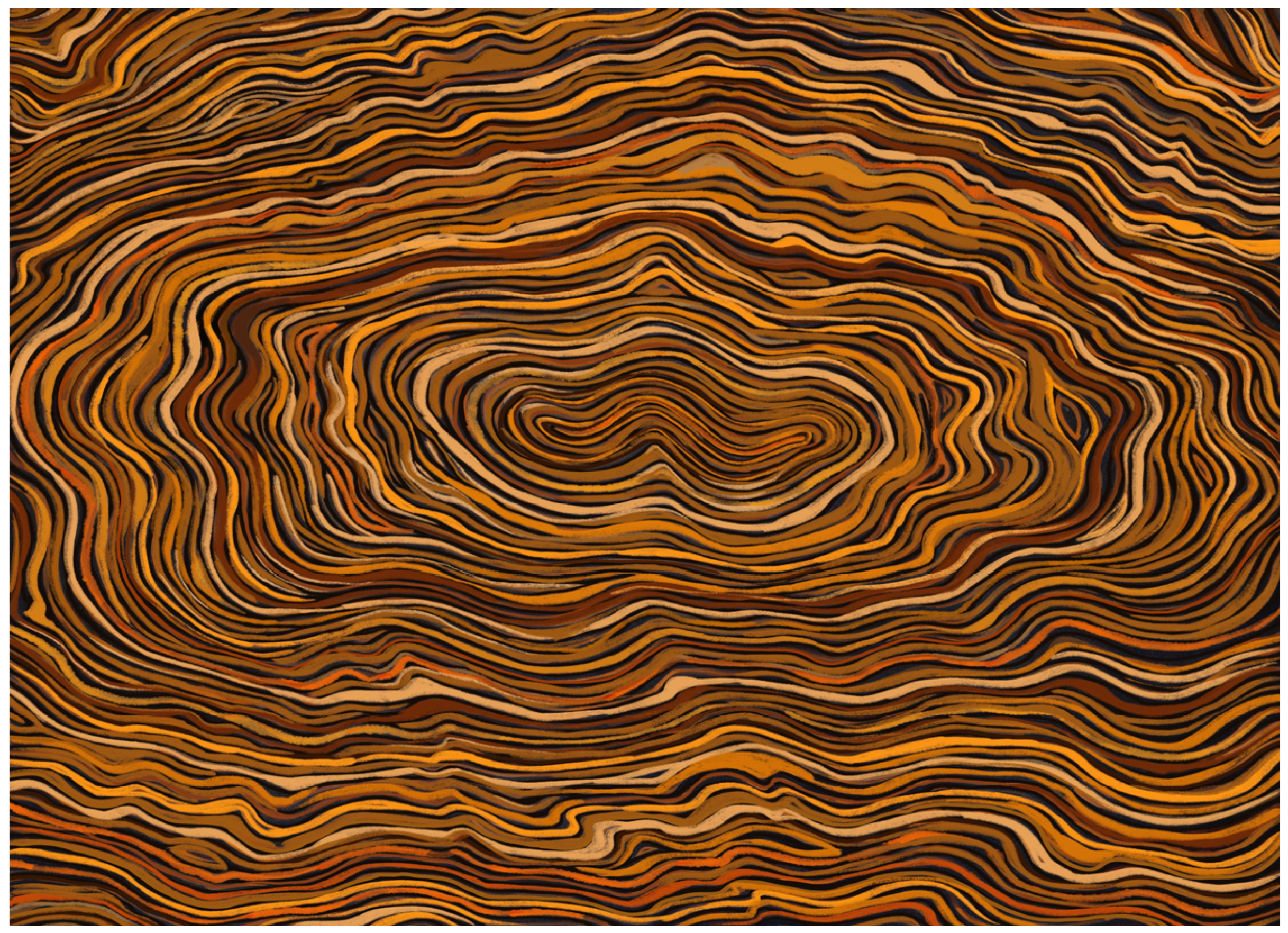
Sensory mapping was used to attune to Country through the whole sensorium, moving beyond the visual dominance that typically shapes environmental perception (Figure 2). In sensory ethnography, cultural geography, and design research, sensory mapping documents how place is known through the body rather than through visual abstraction alone. Sarah Pink describes sensory mapping as a way of recognising how sight, sound, smell, touch, movement, and affect operate together to generate place-based knowledge through lived experience [13]. Here, mapping becomes a performative and relational practice that unfolds through walking, listening, and embodied participation rather than static representation. This is also affirmed by Tim Ingold’s concept of “wayfaring,” which further frames mapping as knowledge formed along paths of encounter, where understanding emerges through movement within landscapes, not from detached or elevated viewpoints but a culturally situated act of relational listening that translates embodied, more-than-human knowledge into visual, narrative, and material forms [14].
(2)
Visual mapping
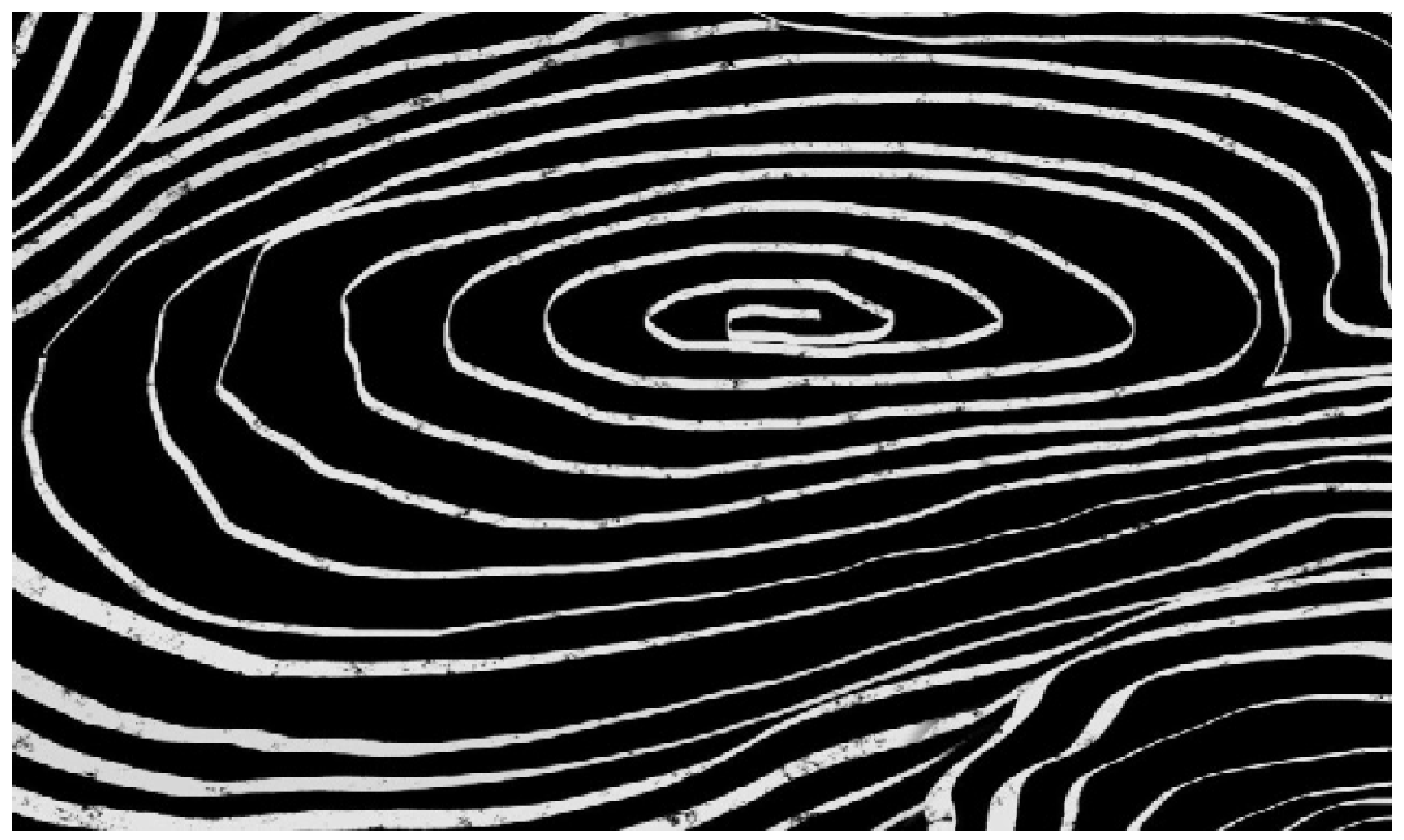
Visual documentation was undertaken through photography, drawing, painting, and material assemblage (Figure 3). In contemporary First Nations research and creative practice, visual mapping is understood as a culturally embedded act of knowledge transmission rather than a neutral recording of space. First Nations scholars emphasize that drawing, painting, patterning, and digital mapping operate as forms of spatial story work that carry ecological knowledge, ancestral memory, and relational responsibility. Margaret Somerville demonstrates that mapping through First Nations’ visual and narrative practices functions as “place learning”, where knowledge emerges through making, listening, and relational engagement with Country [15]. Rather than fixing space into abstract coordinates, visual mapping becomes a process of learning with place through movement, art-making, and intergenerational story—positioning visual data as epistemic material shaped by encounter and ethical relation. Hence, images produced in this study were not collected as aesthetic artefacts but as epistemic traces of encounters.
(3)
Phenomenological mapping
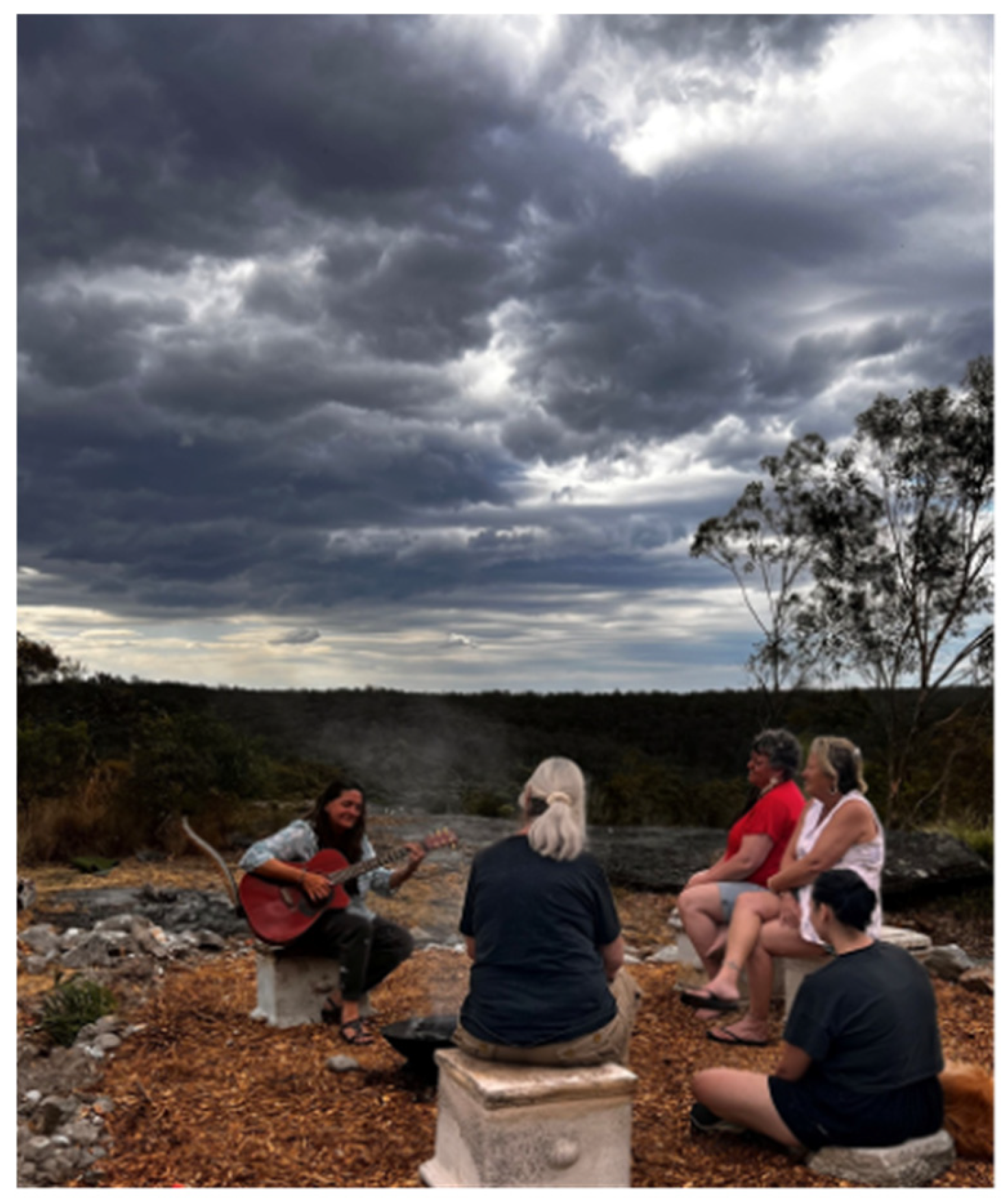
Recent First Nations scholarship reframes mapping as a relational, sensory, and ethically grounded practice rather than a visual or technical representation of space. Aileen Moreton-Robinson and First Nations geographers argue that Western cartographic systems reduce Country to abstract space, whereas First Nations mappings arise through lived relations, ancestral obligations, and ecological attunement [16]. Anne Poelina further asserts listening, feeling, and hearing Country as legitimate research methods, showing that water, sound, rhythm, and ecological change carry epistemic—not metaphorical—meaning. For Poelina, these sensory engagements form part of what she describes as “First Law”, where Country teaches through its movements, flows, and atmospheric shifts. The behaviour of water, the tempo of wind, the cadence of birds, and the silence of ecological disturbance each communicate forms of knowledge that must be interpreted through cultural protocols, relational ethics, and embodied attentiveness. These sensory narratives—sound, movement, touch, seasonal rhythm, and artistic translation—not only represent a geographical landscape but also a historical set of lived experiences passed down from one generation to the next through stories, songs, visual dialogues, and ritualised practices (Figure 4). As such, our bodily experiences with place sculpt our worldviews and attunement with place. This close relationship enables us to know what Country needs [17].

2.2. Creative Practice as Ecological Method of Knowing

Methods also applied in this study included creative practice, which functioned not as an illustration of ecological knowledge but as an ecological method in its own right. Drawing, mark-making and material experimentation became sites where sensing, reflection, memory, and ecological awareness converged. Participants consistently reported that understanding emerged through the making process rather than prior to it—aligning with Carter’s notion of material thinking, where knowledge arises in the interplay between body, material, and environment [18]. Similarly, Ingold argues that artistic processes are forms of “correspondence”, in which the maker and the environment move together in a relational field of becoming, producing knowledge that is co-generated rather than imposed [19].
Within First Nations contexts, creative practice is further understood as a culturally grounded method of ecological listening and care. Hromek describes First Nations design and artmaking as processes that “activate cultural memory through embodied engagement with Country”, emphasizing that movement, repetition, rhythm, and touch function as knowledge practices rather than aesthetic choices [20]. Cameron likewise affirms that sensory-based making constitutes a relational methodology through which creative response operates as a form of listening that carries knowledge forward through material expression [21]. These perspectives situate creative practice as a mode of ecological insight inseparable from cultural responsibility and relational ethics.
Arts-based scholars also outline the epistemic force of making. Leavy argues that arts-based inquiry produces forms of understanding inaccessible to conventional scientific methods because it registers affect, intuition, and tacit knowledge [22]. Somerville extends this by demonstrating how place-based creative practices generate embodied ecological literacy through memory, movement, and sensory attention [23]. Creative practice thus becomes a bridge between scientific forms of observation and lived, felt ecological experience.
Importantly, in this study making art became an act of listening and restoration. Returning to place, attending to sound, texture, vibration, and environmental rhythm, and translating these sensory engagements into visual or material forms deepened participants’ sense of relational accountability to Country. Creative practice, therefore, operated simultaneously as a method of ecological perception and a form of care. Rather than extracting meaning from land, meaning emerged through reciprocal engagement with it—affirming creative practice as a culturally and ecologically grounded method of knowing, responding to, and sustaining Country.
Many of the participants described key elements of Listening Beyond the Wild and their perspective on Country, sensory knowledge, and phenomenology through arts-based explorations—these included: listening as a primary mode of environmental engagement, preceding sight; bodily sensing (vibration, rhythm) as central to mapping; creative practice as knowledge emergence, not representation; Country as active and communicative through movement, sound, silence, and art-making as an ethical act, deepening their sense of responsibility and reciprocity.

2.3. Participant Reflections (Anonymised)

“I didn’t come here to draw Country. Country was drawing me. The wind, the birds, the shadows—they told me how to move my hand.”—Participant A, Dharug Gathering 1
“When I stopped looking and started listening, everything shifted. The sound of the water carried memory—old memory—and I felt myself walking with it rather than beside it.”—Participant B, Dharug Gathering 2
“Drawing helped me understand what I couldn’t explain in words. The colours, the lines, the movement—they carried the story of what the place wanted to say.”—Participant E, Dharug Gathering 2
“The making process wasn’t about producing art; it was about paying attention. Every stroke was a way of honouring Country.”—Participant H, Dharug Gathering 2

2.4. Implications and Reflections

The insights from this study have significant implications for restoration ecology, environmental education, and spatial design. In restoration contexts, a sensory–relational approach encourages attention not only to species composition and structural repair but to soundscapes, movement patterns, seasonal rhythms, and relational vitality as indicators of ecological health. In environmental education, these methods support learning through listening, walking, sensing, and creative response rather than through abstract ecological concepts alone. In spatial design, they invite practices that respond to rhythm, acoustics, materiality, and lived relational presence rather than relying solely on visual aesthetics and regulatory frameworks.
At the same time, this research raises essential reflections on the limitations of translating First Nations’ sensory experience into Western academic forms. While writing, tables, and visual figures provide necessary access for scholarly communication, they inevitably constrain the embodied, relational, and affective dimensions of the work. Specific forms of knowing—particularly those tied to sound, movement, memory, and spiritual presence—cannot be fully captured through text or image alone. This limitation signals the ongoing tension between relational knowledge systems and representational academic structures.
Comparable approaches appear within arts-based ecological research, particularly in frameworks such as Art-Based Perceptual Ecology (ABPE) and related models like the Citizen Artist approach, where artistic practice is used to extend ecological perception and engage sensory awareness alongside environmental inquiry [24]. ABPE describes art-making as a way of knowing the “language of place”, enabling embodied, multisensory engagement with landscapes and ecological change rather than simply representing them. While these practices share an emphasis on perception and experience, the orientation developed here differs in its epistemological grounding. ABPE-type work generally situates art as a methodological bridge for observing or interpreting ecological systems, often alongside scientific protocols, whereas this study situates arts-based practice within First Nations understandings of Country, where sensory engagement and listening are not representational techniques but enactments of ongoing relational responsibilities with living environments. The emphasis therefore shifts from enhancing perception of nature as an external object to deepening phenomenological and relational attunement with Country itself, foregrounding art as a mode of engagement, reciprocity, and knowing rather than ecological supplementation.
Future work could expand these methods across other ecosystems, Nations, and community settings to further explore how sensory–phenomenological and arts-based approaches support ecological understanding, restoration, and care. Longitudinal studies across seasons, collaborations with restoration practitioners, and applications within health and education contexts would deepen understanding of how Listening Beyond the Wild operates across diverse cultural and ecological systems.

3. Results

The study reveals that listening beyond the wild means attuning to the living agency and communicative presence of Country. The findings demonstrate that sound, movement, and texture function as primary communicative elements within Country’s relational systems. Participants consistently oriented to acoustic and vibrational cues—bird calls, insect resonance, wind through canopy, water movement—before attending to visual form. These sonic and kinetic signals established spatial awareness, emotional tone, and ecological rhythm before any visual mapping. Texture, temperature, and bodily sensation further shaped how participants read environmental change and presence. These sensory dimensions operated as a language through which Country communicated change, activity, disturbance, and vitality. Rather than serving as background stimuli, sound, movement, and texture were experienced as active signals that guided attention, movement, and creative response. This challenges environmental frameworks that prioritise visual data and static observation as the primary sources of ecological knowledge. (see Table 1 for Sensory, visual, and relational outcomes).

4. Discussion

This study demonstrates that Listening Beyond the Wild is not simply a metaphor or interpretive stance, but an enacted sensory–relational practice through which environmental awareness, creative knowledge, and ethical responsibility co-emerge. The results show that sound, vibration, rhythm, seasonal change, and embodied movement consistently preceded visual perception, challenging the dominance of sight that underpins many Western ecological observation practices. Listening did not function as passive reception but as an active mode of environmental orientation that shaped how participants moved, marked, and understood place. This affirms listening as an epistemic practice rather than a supplementary sensory experience.
The findings also highlight a fundamental cultural difference in how “wild” is perceived and enacted. Within dominant Western ecological traditions, wild has often been framed as nature without people—pristine, separate, and requiring protection through exclusion. In contrast, the sensory practices enacted in this study reflect a First Nations understanding in which what is often called wild is already relational, storied, and lived. Land is not approached as an external object of observation, but as a living presence with which one enters a relationship. This difference is not merely semantic; it reshapes how care, responsibility, and knowledge are enacted. Where Western wilderness thinking often privileges distance and preservation through separation, First nations relational approaches privilege proximity, attentiveness, and obligation.
The relational character of visual and sensory mapping reframes how mapping itself is understood. Rather than fixing land into spatial coordinates, participants produced marks that traced encounter, movement, and affective response. These outcomes resist representational logics and instead align with First Nations epistemologies in which knowledge is generated through relationship, repetition, and return [1]. Seasonal change further revealed ecological knowledge as dynamic, situated, and temporally responsive rather than static. Shifts in weather, phenology, water availability, and species behaviours continually reconfigured how Country was perceived and interpreted, demonstrating that understanding emerges through sustained attentiveness to environmental rhythms rather than reference to fixed baseline conditions. This temporally responsive orientation contrasts with Western environmental frameworks that prioritise stability, equilibrium, or universal ecological truths abstracted from lived experience. Instead, Indigenous ecological knowledge systems emphasise variability, adaptation, and ongoing relational engagement with living environments. Such seasonal and relational practices offer important bridges between Indigenous and scientific understandings of ecological dynamics, foregrounding change not as disturbance from a norm but as a generative condition through which ecological meaning and practical knowledge emerge [3].
Creative making emerged as a central form of knowledge rather than a method of illustration. Understanding often arises through the act of making, suggesting that cognition, sensation, memory, and emotion operate together as an integrated knowledge system. This disrupts Western separations between art and science, affect and analysis, interpretation and data. The findings show that ecological awareness was not framed through abstract concern or distant observation, but through relational accountability that deepened with repeated embodied engagement.
Significantly, the study reframes wildness not as an external ecological condition but as a relational vitality that persists through entanglement with human and more-than-human life. Rather than restoring a myth of untouched nature, environmental reconnection is shown to arise through ethical presence, attentiveness, and care. These positions of rewilding are not ecological retreats from people, but rather perceptual, relational, and ethical re-attunements grounded in cultural difference.

5. Conclusions

This research has shown that a Country-Guided sensory–phenomenological framework offers a vigorous way to rethink ecological perception, creative practice, and environmental ethics across cultural worldviews. By centering listening, embodied sensing, creative making, and relational accountability, the study demonstrates how environmental awareness emerges through lived relationship rather than detached observation. Sound, rhythm, vibration, seasonality, and movement were revealed as primary modes through which the living world communicates, reshaping how participants perceived, mapped, and cared for place.
The findings also make clear that ‘wild’ is not a universal environmental category but a culturally situated idea. Where Western traditions have often treated wild as separate from people, this study shows that First Nations perspectives understand ecological vitality as inseparable from relation, story, and responsibility. Repositioning wildness as the self-determining vitality of relational ecological systems moves environmental thinking away from ideals of human absence and toward models of ethical presence and reciprocal care.
While this paper follows the conventional separation of methods, results, and discussion to maintain clarity within academic norms, the study also recognises that arts-based, phenomenological, and relational inquiries complicate any strict division between data and interpretation. In sensory and arts-based engagements with Country, knowledge does not emerge as discrete observations awaiting later analysis, but through iterative, embodied processes in which perception, meaning, and response are co-constitutive. Alternative approaches, therefore, may involve more integrative analytic structures, reflexive narrative forms, or layered accounts that explicitly acknowledge how understanding unfolds through engagement rather than extraction. Such approaches do not replace conventional academic organisation but extend it by making visible the relational and interpretive dynamics inherent in situated, experiential research.
Consistent with relational and ethical research practice, participants were engaged not solely as contributors but as knowledge holders with interpretive authority. Participants, as a collective, were given the opportunity to review and comment on the manuscript, ensuring that interpretations, representations, and conceptual framings remained aligned with their perspectives and experiences. This process recognises that knowledge generated through engagement with Country is relational and co-constituted, and that participant review is integral to maintaining cultural and methodological integrity rather than treated as a procedural formality.
The findings point to several directions for future research and practice. Further work could explore the application of sensory and arts-based methods across diverse Country contexts, examine how temporality and seasonal variability shape ecological perception, and refine methodological frameworks capable of accommodating Indigenous epistemologies within environmental and design research. More broadly, the study highlights the need for ecological and spatial disciplines to engage approaches that foreground relationality, embodiment, and temporal responsiveness, particularly in contexts where Indigenous knowledge systems offer critical insights into human–environment relations.
In bridging First Nations Knowledge Systems, phenomenology, and environmental humanities, this study demonstrates how sensory and arts-based practices can generate knowledge that is ecological, ethical, and restorative at once. Rather than returning to ideals of pristine wilderness, reconnection is shown to arise through sustained, culturally grounded, and attentive relationships with living systems.
At a time of accelerating ecological decline, this research affirms that re-attuning perception through listening, sensing, and making is not a peripheral creative exercise, but a necessary ethical practice. Listening beyond the wild invites new ways of inhabiting ecological responsibility—where knowledge is not extracted from land, but emerges through reciprocity, care, and ongoing relationship with the more-than-human world.

Author Contributions

Conceptualization, L.C. and C.T.; methodology, L.C.; validation, L.C. and C.T.; formal analysis, L.C.; investigation, L.C.; resources, L.C.; data curation, L.C.; writing—original draft preparation, L.C.; writing—review and editing, L.C. and C.T.; visualization, L.C.; supervision, L.C.; project administration, L.C. All authors have read and agreed to the published version of the manuscript.

Funding

This research was funded by the Department of Planning, Housing and Infrastructure, NSW (grant number G2400649).

Institutional Review Board Statement

The study was conducted in accordance with the Declaration of Helsinki and approved by the Human Research Ethics Committee of the University of Newcastle, Australia (protocol code H-2025-0159). Protocol Title: Research: Bada Budyari—Eat Well Pilot Project (Caring for Country), Exploring Indigenous Knowledge of Edible Plants in the Cumberland Area through a blend of scientific studies and creative inquiries, date of approval (22 May 2025).

Informed Consent Statement

Informed consent was obtained from all subjects involved in the study. Cultural consent was understood as ongoing rather than singular, with participants retaining control over how knowledge, imagery, and creative works were shared. No participants are identifiable in this publication.

Data Availability Statement

The original contributions presented in this study are included in the article. Further inquiries can be directed to the corresponding author.

Acknowledgments

The author acknowledges the Dharug women artists and cultural practitioners who generously shared their time, knowledge, and creative practice, and whose guidance shaped the ethical and relational foundations of this study. The author also acknowledges Dharug Country as an active participant in the research, and thanks the University of Newcastle for administrative and ethical review support. Any materials used in creative practice were provided by the author. The authors reviewed, edited, and verified all content and take full responsibility for the accuracy, integrity, and interpretation of this publication.

Conflicts of Interest

The authors declare no conflicts of interest.

References

  1. Cronon, W. The trouble with wilderness: Or, getting back to the wrong nature. Environ. Hist. 1995, 1, 7–28. [Google Scholar] [CrossRef]
  2. Marris, E. Rambunctious Garden: Saving Nature in a Post-Wild World; Bloomsbury Publishing: London, UK, 2011. [Google Scholar]
  3. Jørgensen, D. Rethinking rewilding. Geoforum 2015, 65, 482–488. [Google Scholar] [CrossRef]
  4. Whyte, K.P. Settler colonialism, ecology, and environmental injustice. Environ. Soc. Adv. Res. 2018, 9, 125–144. [Google Scholar] [CrossRef]
  5. Todd, Z. Relations. In Indigenous and Posthuman Glossaries; Watts, M., Bignall, K., Eds.; Bloomsbury Publishing: London, UK, 2020. [Google Scholar]
  6. Rose, D.B. Reports from a Wild Country: Ethics for Decolonisation; University of New South Wales Press: Randwick, Australia, 2004. [Google Scholar]
  7. Pascoe, B. Dark Emu: Aboriginal Australia and the Birth of Agriculture; Magabala Books: Broome, Australia, 2018. [Google Scholar]
  8. Kwaymullina, A. Living on Stolen Land; Magabala Books: Broome, Australia, 2020. [Google Scholar]
  9. Yunkaporta, T. Sand Talk: How Indigenous Thinking Can Save the World; Text Publishing: Melbourne, Australia, 2019. [Google Scholar]
  10. Martin, K. Ways of knowing, being and doing: A theoretical framework and methods for Indigenous research and Indigenist research. J. Aust. Stud. 2003, 27, 203–214. [Google Scholar] [CrossRef]
  11. Australian Institute of Aboriginal and Torres Strait Islander Studies. Code of Ethics for Aboriginal and Torres Strait Islander Research; AIATSIS: Acton, Australia, 2020. [Google Scholar]
  12. Mace, M.-A.; Ward, T. Modeling the creative process: A grounded theory analysis of creativity in the domain of art making. Creat. Res. J. 2010, 22, 179–192. [Google Scholar] [CrossRef] [PubMed]
  13. Pink, S. Doing Sensory Ethnography, 2nd ed.; SAGE Publications: Thousand Oaks, CA, USA, 2015. [Google Scholar]
  14. Ingold, T. Being Alive: Essays on Movement, Knowledge and Description; Routledge: London, UK, 2011. [Google Scholar]
  15. Somerville, M. A place pedagogy for “global contemporaneity”. Educ. Philos. Theory 2010, 42, 326–344. [Google Scholar] [CrossRef]
  16. Moreton-Robinson, A. The White Possessive: Property, Power, and Indigenous Sovereignty; University of Minnesota Press: Minneapolis, MN, USA, 2015. [Google Scholar]
  17. Poelina, A. Indigenous Water Governance and First Law; Martuwarra Fitzroy River Council: Broome, Australia, 2023. [Google Scholar]
  18. Carter, P. Material Thinking: The Theory and Practice of Creative Research; Melbourne University Press: Carlton, Australia, 2004. [Google Scholar]
  19. Ingold, T. Making: Anthropology, Archaeology, Art and Architecture; Routledge: London, UK, 2013. [Google Scholar]
  20. Hromek, J. Aboriginal Soundscapes: Cultural Listening and the Sonic Life of Country; Australian National University Press: Canberra, ACT, Australia, 2020. [Google Scholar]
  21. Cameron, L. Indigenous ecological knowledge systems: Exploring sensory narratives. Ecol. Manag. Restor. 2022, 23, 27–32. [Google Scholar] [CrossRef]
  22. Leavy, P. Method Meets Art: Arts-Based Research Practice, 3rd ed.; Guilford Press: New York, NY, USA, 2020. [Google Scholar]
  23. Somerville, M. The Postmodern Emergence of Place; Routledge: London, UK, 2016. [Google Scholar]
  24. Woolery, L.A. Art-based perceptual ecology. Front. Ecol. Environ. 2023, 21, 111. [Google Scholar] [CrossRef]
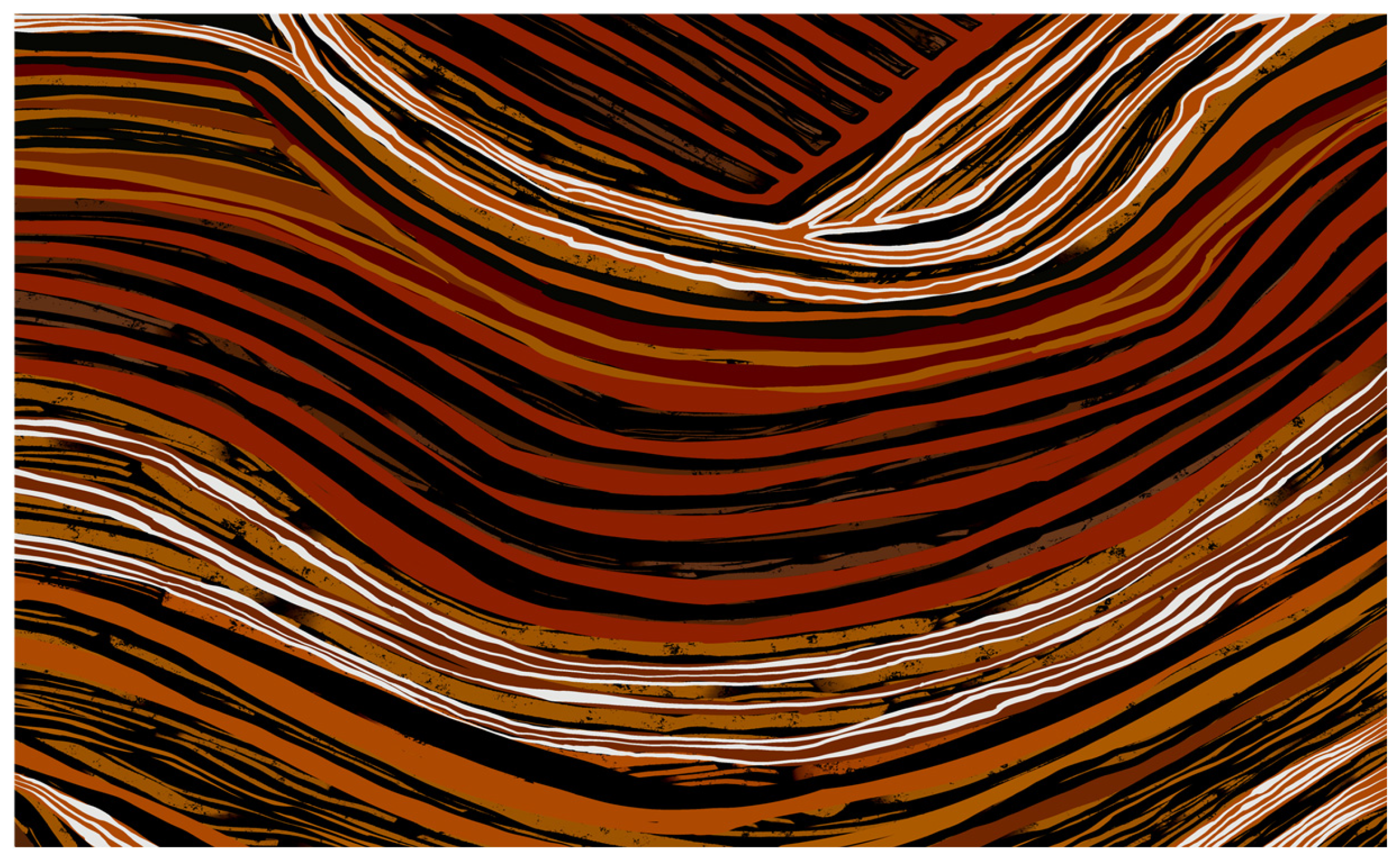
Figure 1. Dharug Country. Storyline: Rhythm on Dharug Country is felt before it is understood. It moves through winds, waters and skies. This rhythm encompasses timing, repetition, and pauses, guiding the body into alignment with the significance of place. Rhythm is sensed as vibration—an internal calibration among breath, movement, and cadence—echoing Country’s tempo. When the body settles into this tempo, knowing arises without words.
Wild 03 00022 g001
Figure 2. Sensory mapping of Country—rendered in earth tones—ochres, clay browns, sand, and charcoal—evokes a deep connection to Country. Flowing lines, soft gradients, and layered organic forms suggest movement, memory, and spatial awareness rather than literal imagery. The composition conveys sensory mapping grounded in lived experience, reflecting not an untamed wilderness but the subtle, familiar qualities of known and remembered places.
Wild 03 00022 g002
Figure 3. Visual Mapping—fine black and white lines resembles a topographic map, where density, spacing, and curvature define imagined terrain. Contours ripple and fold across the surface, suggesting elevation, depth, and spatial relationships without depicting a specific location. The image reads as a form of visual mapping, communicating structure, movement, and the logic of landscape through rhythm and line alone.
Wild 03 00022 g003
Figure 4. Phenomenological Mapping—Mapping through art-making unfolds as a living storyline rather than a fixed record of place. It begins with arriving on Country—allowing the body to settle into the pace of the land. Marks emerge slowly, guided by movement, sound, memory, and material resistance, tracing encounters rather than coordinates. Mapping becomes an immersive experience; the maker is no longer observing Country but moving within its currents, responding to its cues.
Wild 03 00022 g004
Table 1. Listening Beyond the Wild—Results Summary.
Result CategoryWhat Was ObservedHow It Appeared in PracticeWhat This Shows
Listening as primary perceptionSound, vibration, rhythm, and silence consistently preceded visual attentionParticipants oriented first to bird calls, wind movement, insect resonance, water sound, and acoustic density before observing form or detailEnvironmental perception was initiated through auditory and vibrational sensing rather than visual dominance
Visual mapping as relational traceVisual works did not follow cartographic or spatial accuracyDrawings and paintings appeared layered, gestural, rhythmic, and responsive to sound, movement, and emotional toneMapping functioned as a trace of relational encounter rather than a representation of land
Sensory mapping and seasonalityPerception shifted across different seasonal conditionsChanges in heat, light, insect activity, bird behaviours, and plant response altered listening, movement, and mark-makingEnvironmental knowledge emerged as dynamic and seasonal rather than fixed
Creative making as knowledge formUnderstanding arose during the act of makingMeaning emerged through mark-making, material response, rhythm, and repetition rather than through pre-formed conceptsCreative practice operated as an epistemic process rather than illustrative output
Relational responsibility to placeHeightened attentiveness to ecological change and disturbanceIncreased noticing of altered water flows, acoustic change, invasive species presence, and shifts in habitatEcological awareness developed through relational accountability rather than abstract concern
Disclaimer/Publisher’s Note: The statements, opinions and data contained in all publications are solely those of the individual author(s) and contributor(s) and not of MDPI and/or the editor(s). MDPI and/or the editor(s) disclaim responsibility for any injury to people or property resulting from any ideas, methods, instructions or products referred to in the content.