
Article

Calling for Change: Ranger and Resident Views of State Versus Private Management of Fazao-Malfakassa National Park, Togo

by
Brandon Franta
1,2,3,4,
Komlan M. Afiademanyo
2,
Kossi Adjonou
3,
Lin-Ernni Mikégraba Kaboumba
1,2,
Yendoubouam Kourdjouak
1 and
Nico Arcilla
1,5,*
1
International Bird Conservation Partnership, Carmel, CA 93923, USA
2
Laboratory of Ecology and Ecotoxicology, Faculty of Sciences, University of Lomé, Lomé 01 BP 1515, Togo
3
Forest Research Laboratory, Climate Change Research Center (CRCC), Faculty of Sciences, University of Lomé, Lomé 01 BP 1515, Togo
4
Kauaʻi Forest Bird Recovery Project, Pacific Cooperative Studies Unit, University of Hawaiʻi at Mānoa, Kaumakani, HI 96747, USA
5
Center for Great Plains Studies, University of Nebraska-Lincoln, Lincoln, NE 68588, USA
*
Author to whom correspondence should be addressed.
Submission received: 11 October 2025 / Revised: 22 January 2026 / Accepted: 5 February 2026 / Published: 6 March 2026

Simple Summary

Protected area management plays a crucial role in global biodiversity conservation. Park rangers and residents in and around national parks offer important information that, together with empirical data on wildlife and habitats, can contribute to improv-ing park management, law enforcement, and community relations. We investigated ranger and resident views on the management of the largest national park in Togo, West Africa, Fazao-Malfakassa National Park, which from 1990 to 2015 was managed by the private non-profit Franz Weber Foundation, and since 2015 has been managed by the state. In 2025, we conducted semi-structured surveys with 42 park rangers and 400 residents in the vicinity of the park. All rangers and most residents who had expe-rience with both private and state management preferred private management. Severe declines in ranger compensation, wildlife law enforcement capacity, and community investments followed the shift from private to state management of Fazao-Malfakassa National Park, changes that attracted particular criticism from interviewees. Rangers and residents recognized increasing threats to the park’s biodiversity as a result, espe-cially escalating levels of poaching and illegal logging to harvest wild honey and pro-duce commercial charcoal. All rangers and most residents recommended transferring the management of the park from the state to a private foundation with the capacity to effectively protect wildlife and habitat. Effective protected area management, wildlife law enforcement, and community engagement will be essential to mitigate and reverse biodiversity declines in Togo’s last large national park, and to protect remaining nature and wildlife in West Africa and beyond.

Abstract

Protected area management plays a crucial role in conserving biodiversity, especially in areas where increasing demand for natural resources is associated with fast-growing human populations, such as West Africa. Investigating the perceptions of people with first-hand knowledge of protected area management provides important insights about biodiversity conservation, wildlife law enforcement, and human activities to inform adaptive management. Using 442 semi-structured interviews, we assessed the perceptions of park rangers and local residents in and around Fazao-Malfakassa National Park in Togo, West Africa, which was managed by the non-profit Franz Weber Foundation from 1990 to 2015, and since 2015 has been managed by the government of Togo. Both rangers and residents reported significant economic concerns following the park’s transfer from private to state management, with salary declines negatively affecting rangers and declines in community development projects and income-generating activities negatively affecting residents. Law enforcement capacity and resources also declined under state management, severely undermining the ability of rangers to curb illegal activities in the park, especially poaching and the destruction of trees to harvest wild honey and produce commercial charcoal. All rangers and most residents who had experience with both private and state park management preferred private management. There is an urgent need to increase surveillance and law enforcement capacity in the park to combat poaching and other illegal activities, and to engage local communities in the park’s long-term protection. To this end, rangers and residents are calling for change, and specifically recommend returning the park to competent private management to safeguard Togo’s last large refuge for nature and wildlife.

1. Introduction

Protected areas are home to some of the highest levels of biodiversity worldwide [1] and many threatened species [2,3]. Established to safeguard wildlife and native habitats, national parks and other protected areas may represent remnants of landscapes where natural resources have been fragmented, degraded, or destroyed because of increasing anthropogenic pressures, particularly in sub-Saharan Africa [4,5,6]. Human populations across sub-Saharan Africa have experienced unprecedented growth since the twentieth century, with the vast majority of countries predicted to continue to grow through the twenty-first century [7]. Despite the region already having lost much of its native vegetation, many remaining natural areas are expected to be converted into agriculture or otherwise exploited in response to the predicted population increases [8,9]. Native habitat degradation or destruction outside protected areas can further isolate these areas [10] while simultaneously increasing their vulnerability to species declines or extinction [11,12]. Protected areas, however, remain vulnerable to anthropogenic threats [13], and in West Africa, they face threats including poaching [14] and deforestation [15] to varying degrees [16]. In response, a range of approaches can address human-induced threats to protected areas, such as implementing effective management practices [17].
Management plays a critical role in the ecological integrity and level of biodiversity of protected areas, especially when threatened with exploitation [12,18]. Because natural areas in West Africa are predicted to face increased anthropogenic threats [9,14], protected area managers, including governments, and their practices will be vital to the conservation of these remaining biodiverse areas [18]. Protected area management, however, is influenced by a range of factors—economic, political, and social conditions [17], as well as geographical—which often leads to management plans specifically tailored to individual protected areas [13,19]. Management ideas and practices can be adopted or modified from one protected area to another, especially between areas with similar ecological and socio-political conditions.
Park management practices should be evaluated to assess their effectiveness in meeting biodiversity conservation and broader managerial goals [17,20]. In West Africa, protected area management has achieved mixed results [15], with many areas in Togo still threatened by increasing demand for natural resources [21,22]. Togo officially has 83 protected areas [23], although many, if not most, have faced anthropogenic threats that have resulted in their partial or complete destruction [24]. For example, Fosse aux Lions National Park, Oti-Mandouri Wildlife Reserve, and Kéran National Park in northern Togo have been largely destroyed by illegal activities such as poaching, tree cutting, livestock grazing, bushfires, and agriculture [21,22,24], and there is ongoing immigration within their boundaries, further accelerating habitat loss.
In southern Togo, the Togodo protected area complex, formed by Togodo South National Park and Togodo North Natural Resources Management Zone, is likewise subject to increasing agricultural expansion both around and within its boundaries, despite being one of Togo’s less degraded protected areas [25]. Located in central Togo, Fazao-Malfakassa National Park (FMNP) is the country’s largest remaining protected area [24]. However, between 1987 and 2015, FMNP sustained significant losses of closed-canopy forest and savanna woodland, primarily from expanding illegal agroforestry [26]. Poaching, tree cutting to harvest honey and produce charcoal, cattle grazing, and logging activities have also infiltrated and degraded FMNP, threatening its biodiversity (e.g., [22,26,27,28]). In neighboring Benin, wildlife and habitats in the Pendjari and W National Parks deteriorated under government management but their conservation status improved following these parks’ transfer to management by a private foundation, Africa Parks [24]. Likewise, non-governmental organizations (NGOs) such as the Wildlife Conservation Society and the World Wildlife Fund successfully manage national parks in other countries in the region, including Cameroon, Chad, and the Republic of Congo.
In 2015, FMNP shifted from private to state management, followed by a sharp increase in illegal activity within its boundaries [22,24]. From 1990 to 2015, the private Swiss NGO Franz Weber Foundation (FWF) managed FMNP under a 25-year renewable contract. In 2015, the government of Togo declined to renew the contract with FWF [22,24], due in part to unresolved disagreements over duration and finances, and took over the management of the park. The transition from private to state management resulted in the closure of the park to tourists [24] and the abandonment of the hotel built in Fazao village that previously accommodated tourists. Fewer rangers are now employed by the park (65 compared to 80) with fewer resources (e.g., fewer vehicles, fuel, and equipment) and less road and building maintenance. Such changes in management can affect not only protected areas’ ecological integrity [18,22,24] but also their rangers [29,30] and local residents [31,32]. Rangers and local residents can provide insight into the performance of management of protected areas [33,34], as well as indicate success in achieving their goals and objectives. Here, we conducted surveys with FMNP rangers and local residents to achieve the following objectives: (1) to understand ranger and resident perceptions of FWF’s and the state’s management of FMNP, (2) to assess the impacts and distribution of illegal activities in the park, and (3) to identify challenges and make recommendations to improve park management.

2. Materials and Methods

2.1. Study Area

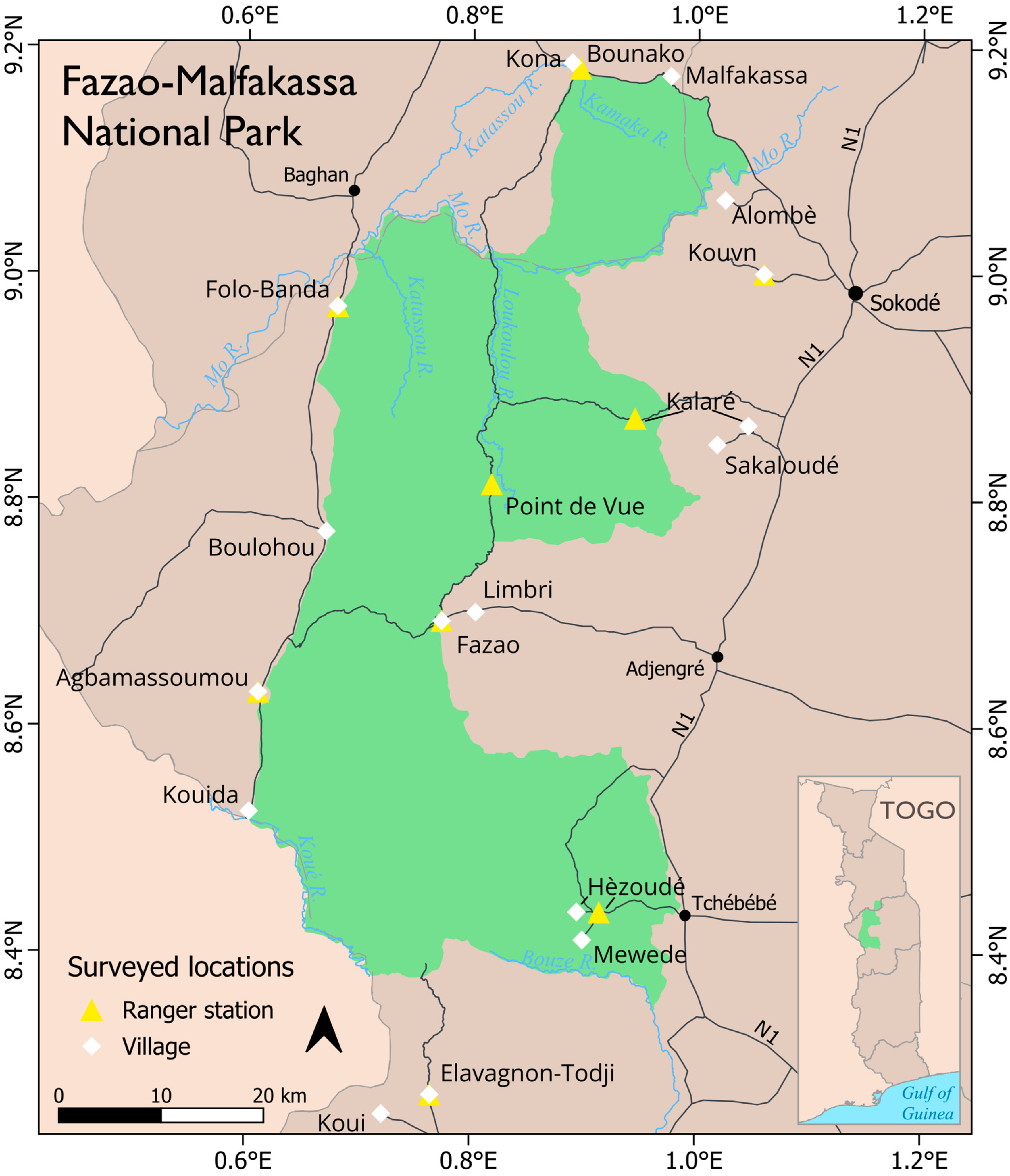
Our study area included ranger stations and households in and around FMNP (8.35–9.18° N, 0.61–1.02° E; Figure 1), located in the Kara and Centrale Regions in Togo, West Africa. The park is located within the Sudano-Guinean transition zone, and primarily comprises deciduous forest and woodland savanna [24], that represents a remnant of nature and wildlife within a region where most naturally-occurring plant and animal populations have been reduced or destroyed [8,9,22,24]. The park’s 221,008-ha area ranges in elevation from 156 to 855 m; an annual wet season extends from April to October and a dry season from November to March, with annual rainfall varying from 800 to 1500 mm. At the time of our research, ~45,000 people were living in 36 villages around FMNP, while ~8500 were in 23 villages located inside the park [35]. Within these 59 villages, residents were mainly members of the Agnanga, Bassar, Kabye, Kotokoli (i.e., Tem or Temba), and Losso ethnic groups [35].
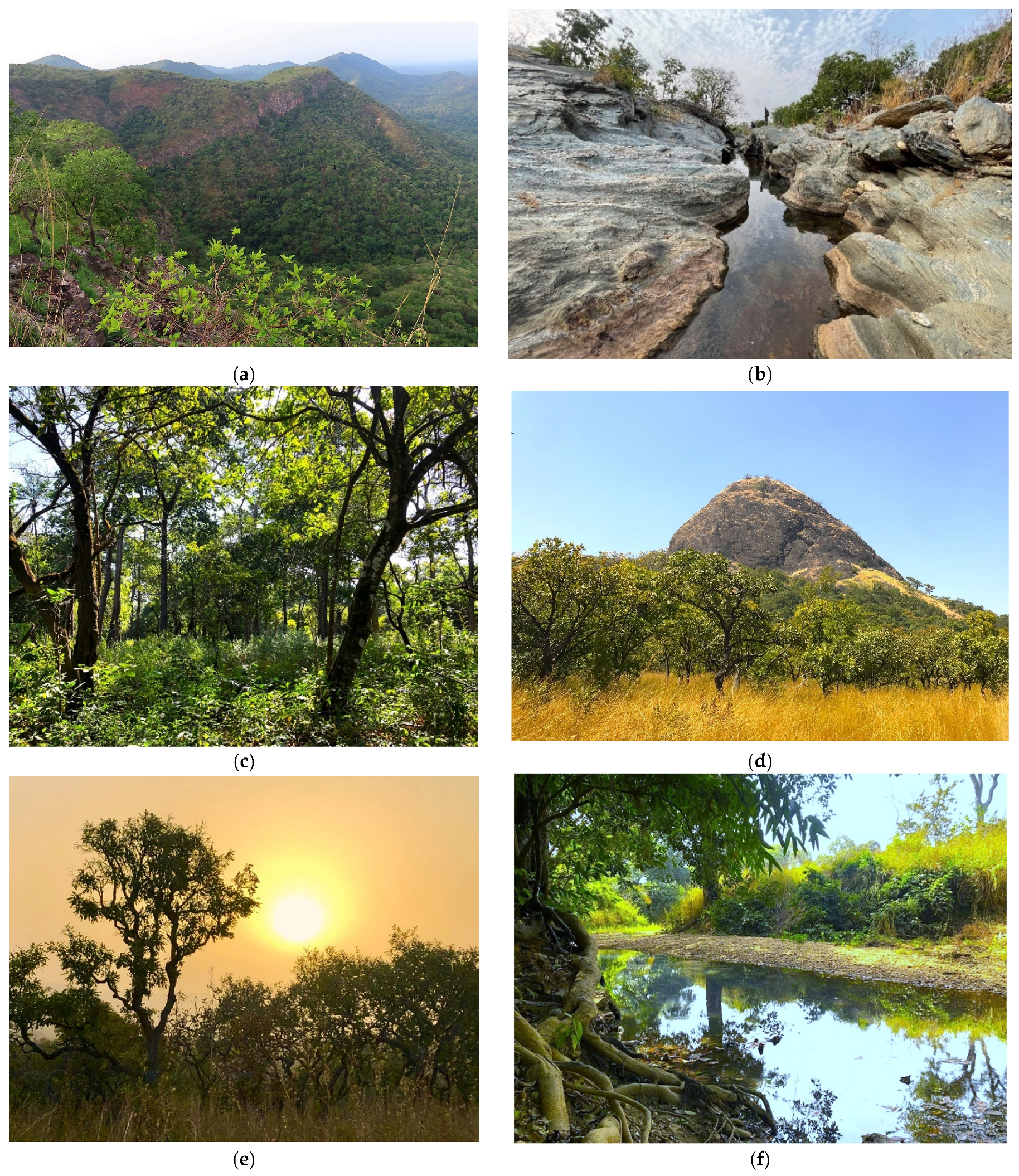
Most of the land surrounding the park has been converted for human use, espe-cially agriculture [37,38]. The park itself is threatened by illegal activities including poaching, logging to harvest wild honey and produce charcoal, cattle grazing, and farming [22,26,27,28]. FMNP’s rugged, hilly terrain includes tall woodland savanna, grasslands, and semi-evergreen rainforest in valleys and riparian areas (Figure 2).
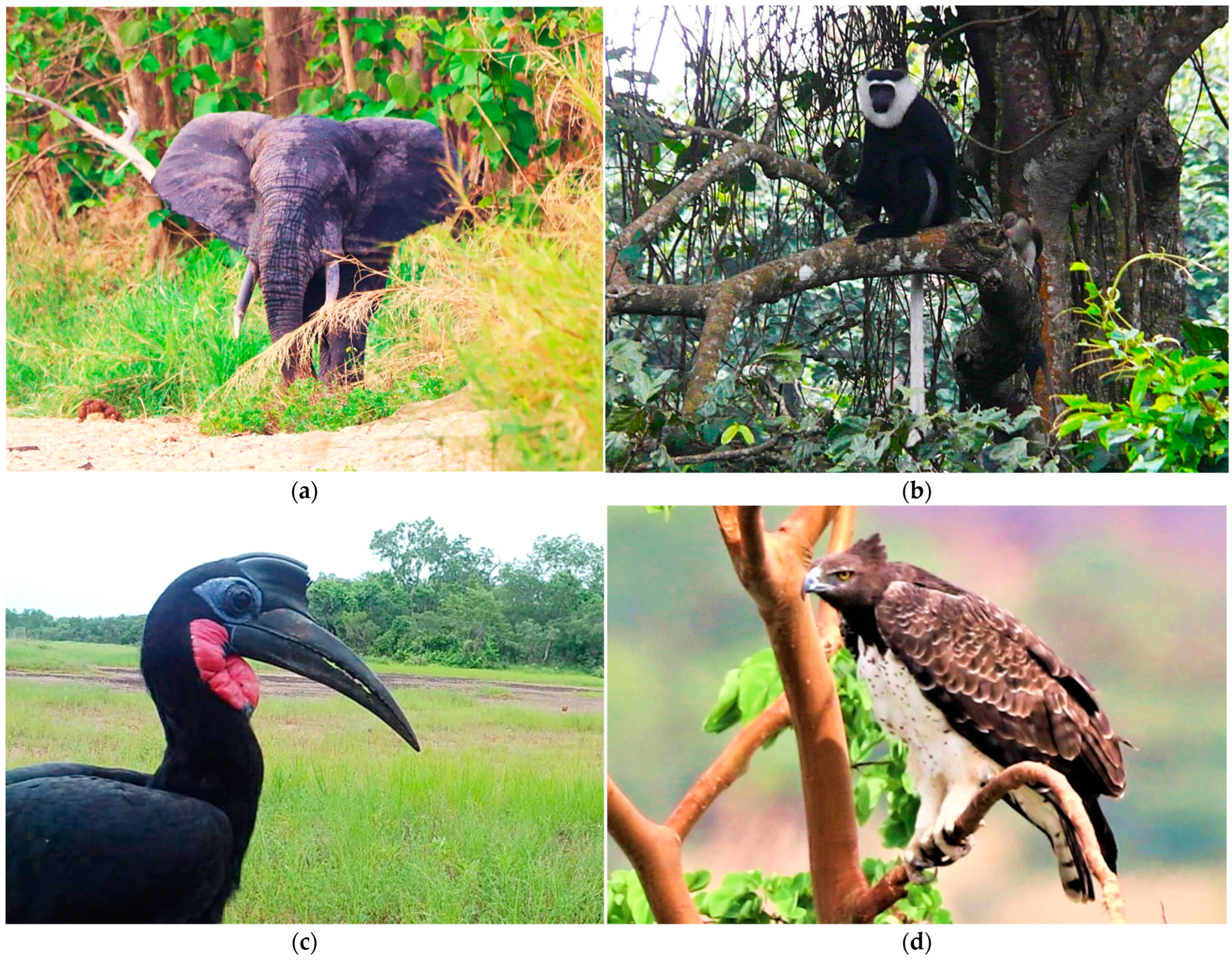
Woody species in the park include Parkia biglobosa, Vitellaria paradoxa, Tarmindus indica, Ceiba pentandra, Adansonia digita, and Acacia spp., among many others. Biodiversity in the park includes the Critically Endangered African forest elephant (Loxodonta cyclotis), Endangered African savanna elephant (Loxodonta fricana), Critically Endangered ursine colobus (Colobus vellerosus), Endangered Bateleur (Terathopius ecaudatus), Endangered Martial Eagle (Polemaetus bellicosus), and the Vulnerable Abyssinian Ground-Hornbill (Bucorvus abyssinicus) among many other rare, threatened, and Endangered species, most of which are otherwise extinct in Togo and much of the region (Refs. [22,24,39]; Figure 3).

2.2. Data Collection

Data collection in the park was conducted under permit 0209/MERF/SG/DRT. Prior to conducting surveys, we discussed and formulated research objectives and questions with colleagues at the University of Lomé. We then presented the proposed project to FMNP’s manager and community leaders to request permission to conduct our study [40], which was granted by all parties. Subsequently, FMNP’s manager informed the park rangers of the project’s objectives, while the community leaders shared the information within their respective communities. We conducted semi-structured questionnaire surveys at ranger stations as well as two villages within each ranger station’s work area, with the exception of Point de Vue, an interior ranger station located away from villages. In February 2025, we commenced interviews at nine ranger stations, including Agbamassoumou, Bounako, Elavagnon-Todji, Fazao, Folo-Banda, Hèzoudé, Kalaré, Kouvn, and Point de Vue. In May 2025, we commenced interviews in 16 villages, including Agbamassoumou, Alombè, Boulohou, Elavagnon-Todji, Fazao, Folo-Banda, Hèzoudé, Kalaré, Kona, Koui, Kouida, Kouvn, Limbri, Malfakassa, Mewede, and Sakaloudé. Most ranger stations and villages where interviews took place were located along the periphery of the park, with the exception of Point de Vue, Hèzoudé, Kalaré, and Mewede, which were located in the interior of the park (Figure 1).
Before conducting surveys, we explained our study objectives to prospective interviewees and emphasized that participation was voluntary. We explained that identifying information would not be associated with their responses to protect their privacy [40], and they could skip any question or stop the survey at any time. All participants were at least 18 years old. Because nearly three-quarters (71%) of respondents were not literate, we obtained verbal rather than written consent [40,41] prior to conducting interviews. We conducted surveys with rangers at their respective stations and with 25 randomly selected individuals in each village, while also recording village infrastructure. In each village, we visited households individually to ensure privacy, as some questions addressed potentially sensitive topics. Both surveys had four sections: demographics, the FWF’s and the state’s management of FMNP, illegal activities, and improvements. Surveys consisted of open- and closed-ended questions, with some open-ended questions offering hybrid answer options. The hybrid answers allowed participants to fully express themselves, providing qualitative data beyond the structured options. The ranger and resident surveys consisted of 35 and 29 questions, respectively (Appendix A and Appendix B). Interviews were conducted in French, Togo’s official language, or in the local language (e.g., Kotokoli, Kabye, Losso, Lamba) or, with the help of translators. Interviews lasted 30–60 min for rangers and 15–30 min with residents.

2.3. Data Analyses

We analyzed and visualized all data using R version 4.2.2 [42]. For each question, we calculated percentages based on the total number of respondents. However, some questions allowed for multiple answers, meaning the sum of all responses could surpass 100%. For surveys conducted with rangers, we recorded qualitative responses on illegal activity frequency, converted them into quantitative scores (Very frequently = 4, Frequently = 3, Occasionally = 2, Infrequently = 1, Rarely = 0), and averaged the scores by the number of rangers surveyed per station. Apart from percentages, we also calculated differences in each ranger station’s park coverage due to temporary relocations of the Kalaré and Kouvn stations in 2024 and 2025, respectively, using QGIS version 3.40.0 [36]. We created buffers every 5 km from each ranger station—before and after the relocations—and then subtracted the two layers, illustrating the difference in work area coverage.

3. Results

3.1. Ranger Responses

The survey had a 100% (n = 42) response rate. All respondents were male, as at the time of our study, there were no female FMNP rangers. Participants ranged from 25 to 55 years old ( x ¯ = 36 ± 6 SD). Thirty-three percent of respondents were members of the Kabye ethnic group, followed by Bassar (31%), Lamba (12%), Losso (10%), Kotokoli (7%), Adja (5%), and Konkomba (2%). Forty-five percent of the rangers had completed middle school (ages 11–15), 26% had completed primary school (ages 6–11), 19% had completed secondary school (ages 15–18), 7% either had not completed primary school or had no formal education, and 2% had completed university (ages 18 and older).
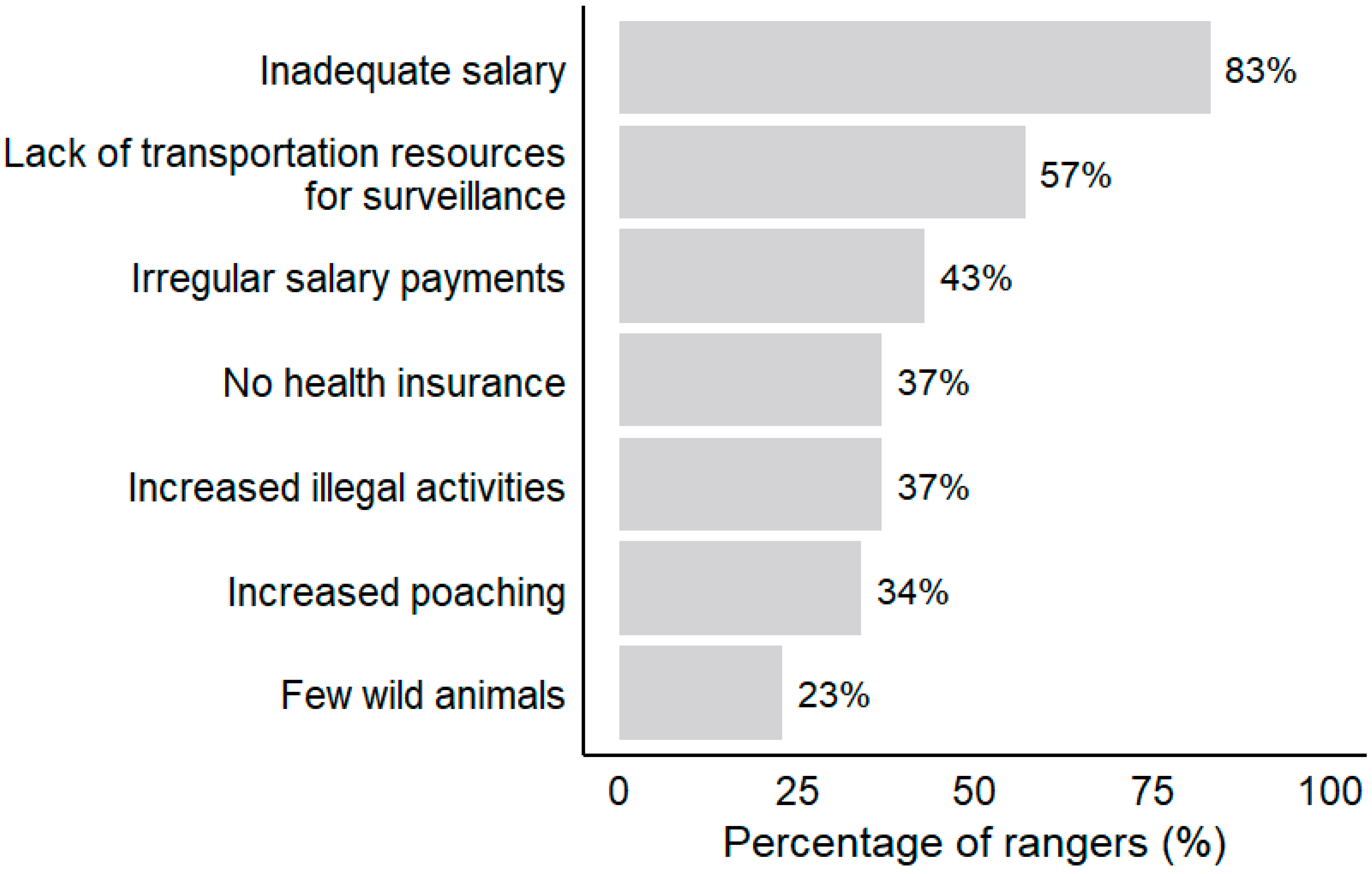
The duration of ranger employment at FMNP ranged from 2 to 25 years ( x ¯ = 10 ± 5 SD). The majority (60%) had only worked under the state’s management of FMNP, compared to 40% under both managements. Of those who were rangers under FWF, 65% viewed the management as “Very Good” and 35% as “Good.” In contrast, the majority (64%) of the respondents viewed the state’s management as “Bad,” followed by “Very Bad” (19%), “Good” (12%), and “In Between” (5%). Most rangers (83%) rated the state’s management as “Very Bad” or “Bad” due to an inadequate salary, followed by transportation resources (e.g., fuel, motorcycles, four-wheel drive vehicles; 57%), irregular salary payments (43%), lack of health insurance (37%), and increased illegal activities (37%), particularly poaching (34%; Figure 4).
Of the ~40% of rangers interviewed who had worked under both private and state management, all preferred the private to state management. When asked about their preferred park management, most respondents (79%) said they would favor an NGO, such as FWF, compared to the state and an NGO (10%) co-managing the park. Notably, no rangers supported continued state management unless specific changes were implemented. On the subject of tourism, the majority (59%) of rangers reported tourists visiting FMNP “Frequently,” followed by “Very Frequently” (23%), and “Occasionally” (18%) during FWF’s management. The government closed the park to tourism following FWF’s departure in 2015, and all respondents (100%) wanted tourism in FMNP to resume.
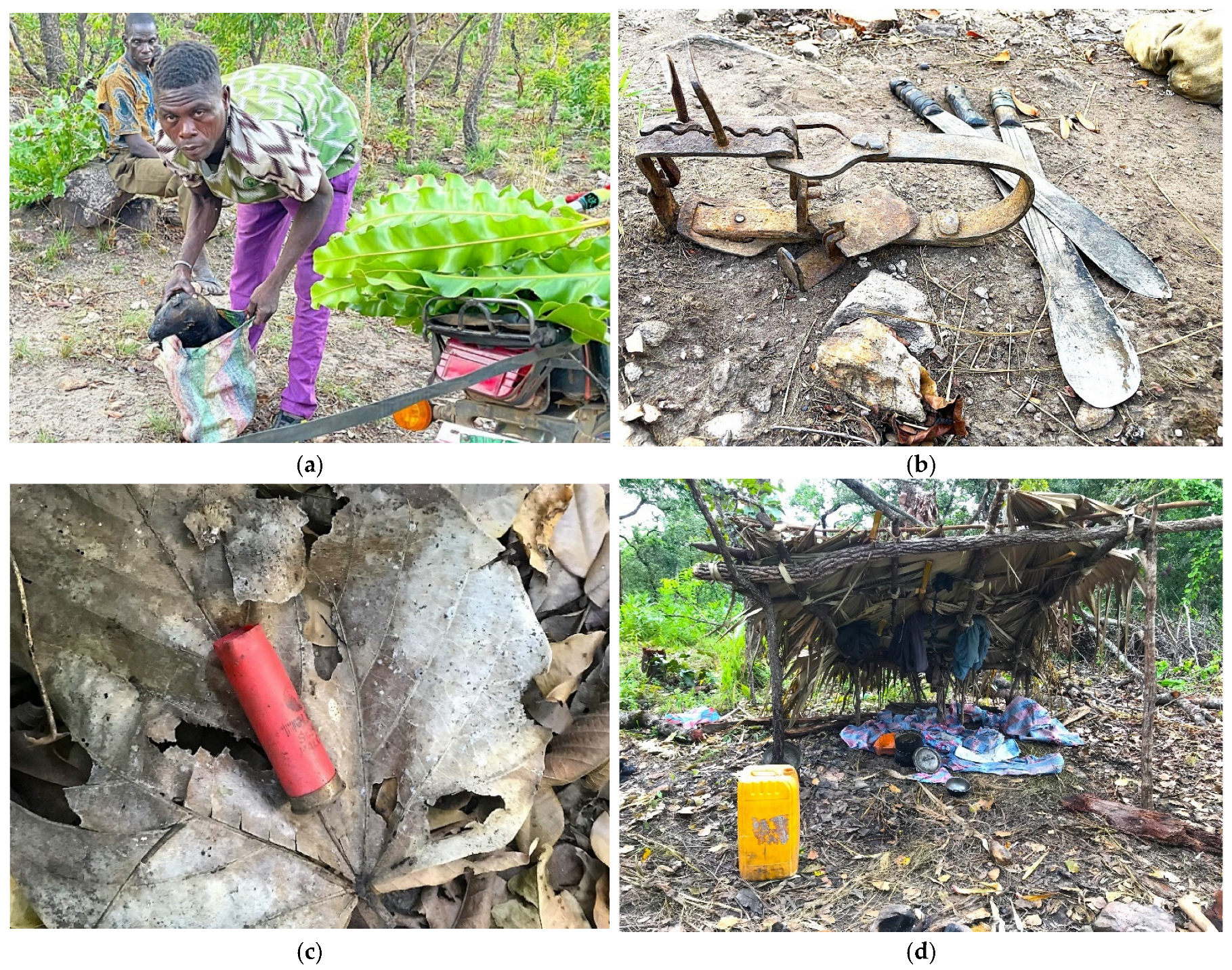
According to rangers, wildlife poaching was the most frequently occurring ( x ¯ = 2.0; Figure 5) illegal activity in FMNP, followed by tree cutting to harvest honey ( x ¯ = 1.6), illegal burning of vegetation ( x ¯ = 1.4), and cattle grazing ( x ¯ = 1.4; Table 1). Rangers reported that poaching (55%), tree cutting to harvest honey (38%), illegal burning of vegetation (31%), and cattle grazing (31%) occurred mainly in the park’s interior, while 17% reported that illegal burning of vegetation and cattle grazing occurred mainly along the park’s boundaries and near villages. More than two-thirds (69%) of rangers reported not fearing retaliation from apprehended park offenders, while 31% expressed fear. Most rangers (86%) were confident that arrested park offenders would be sanctioned by the legal system. Over half (57%) of the rangers reported that the residents living in their work area respected them, whereas 43% believed that respect was lacking or absent. Almost all rangers (88%) perceived that greater respect existed for FWF rangers compared to rangers employed by the state.
All rangers (100%) reported receiving their monthly pay irregularly. Each ranger station had one service motorcycle and no other vehicles, leaving them with no choice but to use their personal motorcycles for surveillance and cover the costs of fuel and repairs themselves. Most rangers (93%) identified higher salaries as the park’s most needed improvement, followed by motorcycles (70%), four-wheel drive vehicles (48%), uniforms and boots in good condition (48%), better firearms (45%), regular monthly salary payments (38%), health insurance (36%), and fuel for service vehicles (36%).

3.2. Resident Responses

The survey had a 100% (n = 400) response rate, consisting of 55% male and 45% female participants from 16 villages within and around FMNP. Villages ranged in population from 180 to 4800 residents ( x ¯ = 1244). Respondents ranged from 18 to 101 years old ( x ¯ = 46 ± 16 SD) and belonged to 22 ethnic groups. Over half were Kotokoli (33%) and Kabye (25%), followed by Lamba and Adele at 11% each. Almost three-quarters (71%) of the participants had not completed primary school or had no formal education, 20% had completed primary school (ages 6–11), 7% had completed middle school (ages 11–15), 1% had completed secondary school (ages 15–18), and fewer than 1% had completed university (ages 18 and older). Over half (58%) of the respondents were farmers, followed by primary caregivers (21%).
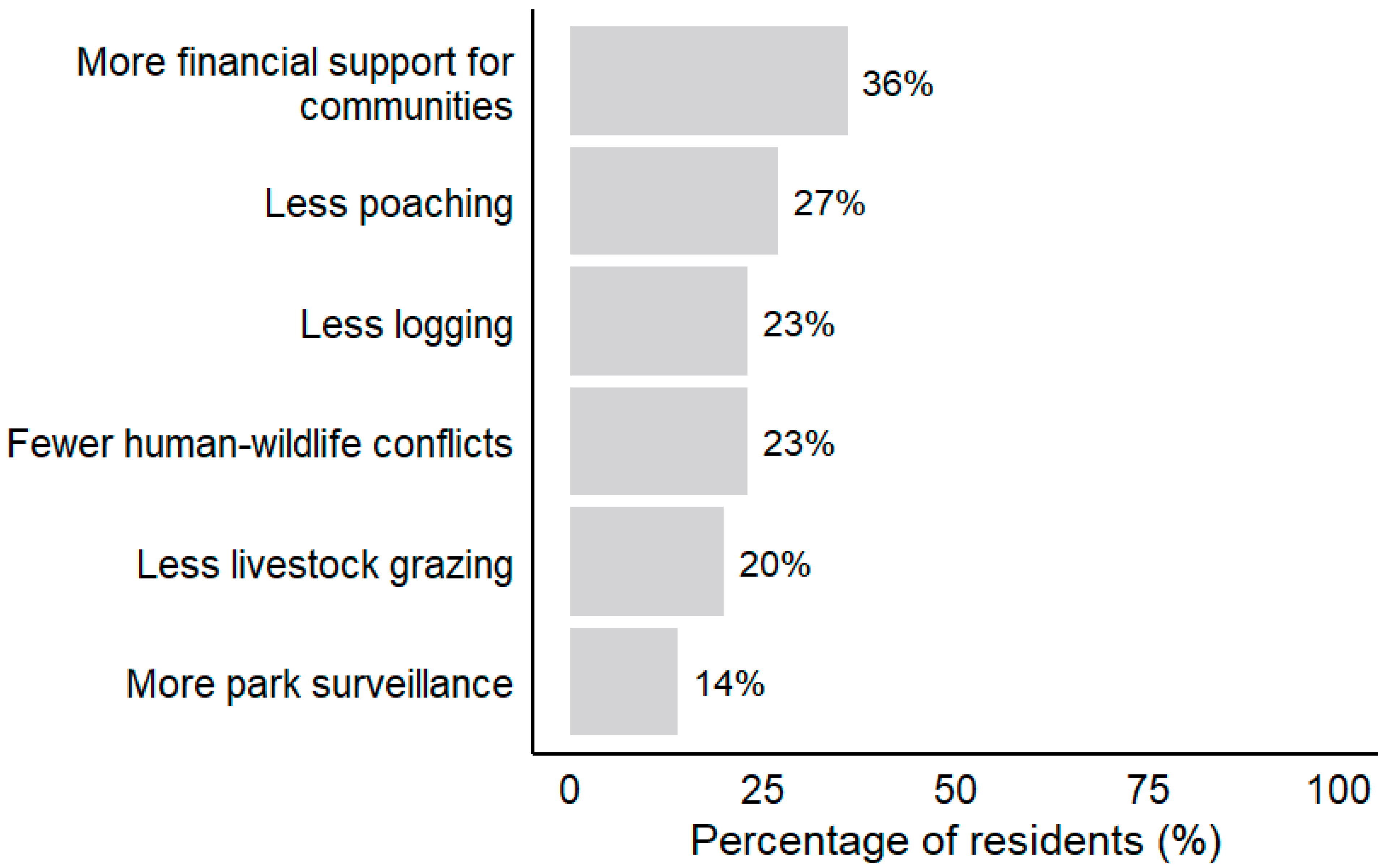
Most of the respondents (79%) had lived in the vicinity of the park while it was under FWF’s management; 21% had lived elsewhere during this time. Among the 79%, most respondents rated FWF’s management as “Good” (54%) or “Very Good” (34%), while fewer perceived it as “Bad” (10%), “Very Bad” (1%), or “In Between” (1%). Over half (58%) of all respondents perceived the state’s management as “Bad,” with fewer perceiving it as “Good” (27%), “Very Good” (6%), “Very Bad” (6%), or “In Between” (3%). The majority (79%) perceived that FWF had provided better management of the FMNP, compared to the state (16%); 4% said there was no difference between management styles. More financial support (36%), less poaching (27%), fewer human–wildlife conflicts (e.g., with elephants and monkeys; 23%), and less logging (23%) were the most common reasons why respondents favored FWF over the state’s management (Figure 6). When asked about preferred management, residents reported that they would prefer an NGO or other non-state entity manage the park (42%), followed by the state (16%), co-management between the state and local communities (16%), and management by local communities alone (13%). Almost all participants (98%) wanted tourism to increase in FMNP.
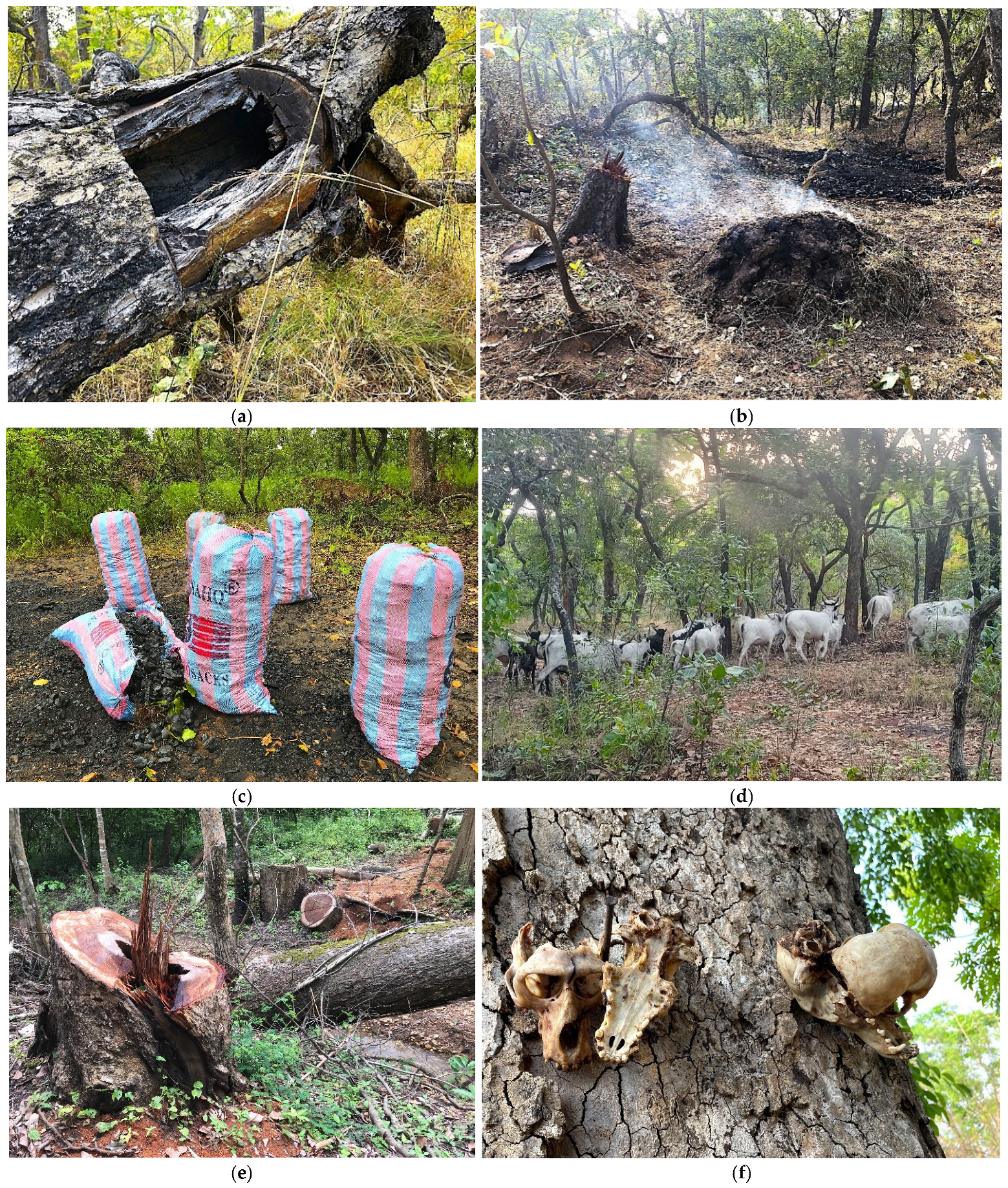
According to the residents, tree destruction to harvest honey (20%) and produce charcoal (16%) were the two most commonly observed illegal activities occurring in FMNP, observed by 20% and 16 % of respondents, respectively. After the tree destruction to harvest honey and produce charcoal, cattle grazing (11%), harvesting fruit and seeds (10%), logging for timber (9%), and poaching (6%; Figure 7) were the most commonly observed illegal activities by residents; 12% reported not observing illegal activities in FMNP. Most respondents (80%) said they would report someone from their own village to the rangers if that person committed an illegal activity in FMNP, while 16% said they would not. If the park offender was not from their village, the vast majority (93%) said they would report the person to the rangers. Almost all residents (98%) believed that their community members would be willing to work for the park, given the opportunity. Most respondents (86%) said they had a good relationship with the rangers, and nearly all reported that they (99%) and their communities (96%) respected the rangers. However, nearly half (43%) of residents felt there was greater respect for rangers under private management compared to state management; just fewer than a fifth (19%) of residents perceived greater respect for rangers under state management, while just fewer than a third (32%) said there was no difference. Forty-one percent believed improving village infrastructure was the most important step to enhance FMNP’s management, followed by decreasing illegal activities (30%) and employing more rangers (29%).

3.3. Coverage Change of Ranger Stations

Due to the relocations of two ranger stations, Kalaré’s coverage of FMNP decreased by 40,009 ha (75%) within a 20-km radius, while Kouvn’s decreased by 19,563 ha (88%). Together, 22,316 ha (10%) of the park is now farther away from the nearest ranger station under state management compared to FWF management, increasing the constraints faced by rangers in providing adequate surveillance. Moreover, although a new ranger station at Kalaré was completed in 2021, thanks to funding from the European Union, by 2023, the water pump had broken and was not repaired, and the station was subsequently abandoned by rangers who instead rented accommodations 16 km away from the park [22]. The fact that rangers are so far removed from the Kalaré ranger station and most do not have a vehicle or fuel effectively precludes them from surveilling the park, and this region has subsequently become the subject of increasing destruction by illegal, industrial-scale charcoal production, cattle grazing, and poaching among other threats [22].

4. Discussion

4.1. Private Versus State Management of FMNP

All rangers preferred private park management by FWF over state management. Most rangers were critical of the government’s handling of ranger salaries. Significantly, rangers’ salaries declined by 62–81% under state management compared to private management. The FWF paid rangers a minimum monthly salary of approximately USD 110, with those with more experience earning USD 135, and the most senior employees earning salaries as high as USD 220. Rangers could additionally earn bonuses for each poacher, cattle herder, or logger they arrested in the amount of USD 17, with supplemental bonuses for confiscated equipment such as guns or traps. After the state assumed management in 2015, monthly pay for all rangers significantly dropped to USD 42, which is below Togo’s minimum wage of approximately USD 93.
Although in 2018, ranger salaries increased to USD 62/month, rangers’ monthly pay remains 44% below the minimum during FWF’s management and 33% below Togo’s minimum wage. Since 2016, after the state assumed control of the park, ranger compensation has been delivered on an irregular basis, including being delayed for five months in 2024 and nine months in 2025. Inadequate pay, coupled with irregular payments, reflects a common occurrence among rangers in Africa [43]. One ranger expressed the view that “Low salaries encourage corruption. I encounter people in the park who offer me bribes, making it hard to refuse when I need the money.” Increasing salaries—for example, to at least Togo’s minimum wage—and ensuring timely payments promises to increase satisfaction and motivation among rangers [29,30], and in turn, would improve park surveillance and decrease potential corruption [44].
Ranger access to transportation to patrol the park significantly declined under state compared to private management. Most rangers reported that the lack of transportation resources has limited their ability to sufficiently patrol the park under state management. Under FWF, rangers had access to a total of four four-wheel drive vehicles, strategically stationed around the park for surveillance and reconnaissance, and each ranger station had two service motorcycles, with FWF covering all fuel, maintenance, and repair needs. Under state management, rangers have had access to fewer transportation resources to patrol the park, likely contributing to the increased illegal activities reported by rangers and residents since the departure of FWF.
Since 2023, ranger stations have had only one service motorcycle, provided by several NGOs. This means that at any given time, most rangers lack access to a work vehicle for surveillance. If rangers have and use a personal motorcycle, they bear the costs of repairs, fuel, and upkeep of both personal and service motorcycles, which would be particularly challenging given the low and often late pay available to them. To address this, park management would need to provide transportation resources for surveillance and equipment for rangers to mitigate illegal activity in the park, enabling more frequent patrols, and reducing illegal activity [45]. Illegal activities such as poaching and logging for commercial honey extraction and charcoal production may persist if demand remains high [46] and due to factors such as limited legal employment options and food insecurity [47,48]. Thus, we recommend addressing such underlying factors through education and sustainable development [49].
Similarly to the rangers, the vast majority of residents living near Fazao-Malfakassa National Park viewed private management under FWF highly, and favored it over state management. Residents reported FWF’s financial and material support to communities as the most common reason for their favorable views. During its tenure in Togo, FWF conducted many community development projects to provide financial and material benefits to local communities and reduce pressure on the park from illegal activities such as wildlife poaching and the destruction of trees to harvest wild honey or shea butter (Vitellaria paradoxa) used in food, medicines, soap, and other products. Examples of such FWF projects including building a mill in Malfakassa and maintaining a hotel in Fazao village that hosted tourists, provided local employment opportunities, and furnished Fazao village with electricity from their generator. Moreover, FWF funded and organized community beekeeping for honey production and community planting and maintenance of shea trees as part of efforts to partner with local communities by providing for their economic and material needs while also protecting natural resources in the park including its land, trees, and wildlife.
At the time of our study in 2025, all (100%) villages surveyed lacked electricity and most lacked middle and secondary schools (87%) and health centers (69%). In the minority of cases where residents favored management by the state over that by FWF, residents cited development projects, such as the construction of a water pump in Folo-Banda, animal husbandry projects in Agbamassomou, and beekeeping projects in Boulohou and Koui. Notably, residents may have incorrectly attributed funding for such community development projects to the state when in fact the funding came from other sources but happened to coincide with the period of the state’s management of FMNP. Nevertheless, such projects had improved residents’ perceptions of the state’s management of FMNP. Future projects aimed at preventing illegal activities and promoting the protection of FMNP should consider how benefits are distributed among residents [44], such as a water pump primarily benefiting those closest to it. For beneficiaries, the project could positively reinforce their perceptions of FMNP and its management [50], while having no effect on others who may continue to exploit the park. Development projects and more park-related jobs could offer some benefits and improve perceptions of FMNP [51,52,53], but such incentives alone are unlikely to eliminate exploitation of the park’s natural resources, as is likely the case for other protected areas facing similar threats.
Most residents who had experienced conflicts with wildlife on their farms, such as in Kona, Limbri, Hèzoudé, Mewede, and Elavagnon-Todji, preferred private management under FWF and associated increased crop damage with state management of the park. Nearly all residents attributed crop-raiding to elephants [40]. Residents reported that wildlife damage was commonly reimbursed by FWF but never by the state, likely contributing to negative perceptions of FMNP and its wildlife [54]. Some studies have recommended compensation for wildlife damage [55,56], while others have argued that it may be financially impractical for developing countries (e.g., [55,57]) and could act as an agricultural subsidy, potentially encouraging further wildlife habitat conversion to agriculture uses [58]. However, many studies suggest mitigation may be more sustainable [59]. Mitigation techniques and their efficacy have varied when used against crop-raiding elephants, but chili pepper deterrents and crop guarding combined with deterrents have been found to be the most effective [60], with early detection critical to minimizing damage [61]. However, the geographical efficacy of deterrents is limited, particularly in West Africa [60], compounded by uncertainty of residents’ willingness to adopt more cost-effective deterrents, such as chili pepper. Further research is needed to assess deterrent effectiveness and willingness to use such deterrents in Togo.
Both rangers and residents reported increased illegal cattle grazing by Fulani herders in FMNP since the departure of FWF; some cattle herders in the park originate in other countries and migrated to Togo in search of employment [22]. Residents from Kona and Alombè attributed the increased crop damage caused by elephants to the increased cattle grazing in FMNP. In Kenya’s Masai Mara, elephants and waterbuck (Kobus ellipsiprymnus)—which are also present in FMNP [27]—and other wildlife avoided areas grazed by cattle for at least 12 months [62]. In FMNP, increased cattle grazing may contribute to displacing elephants [63] to resident farms. Residents reported that cattle herders also cut tree limbs for fodder, which would further reduce food availability for elephants [64,65] and alter FMNP’s ecological structure, likely negatively impacting the ecosystem.
Enforcing the laws prohibiting cattle grazing in the park and removing all cattle from FMNP would be an important step toward decreasing human–wildlife conflicts, particularly assuming that food shortages for wildlife caused by cattle grazing in the park have been contributing to elephant displacement. Elephants in FMNP seeking phosphorus and sodium may also influence their selection of supplementary foods such as crops [66]. Thus, removing cattle is expected to reduce, but not eliminate, elephant crop-raiding. Additional information about elephant ecology and foraging needs in FMNP could help guide future management practices, not only at FMNP, but also at other protected areas facing human–wildlife conflicts.

4.2. Illegal Activities and FMNP Management

Both rangers and residents reported increased wildlife poaching since the departure of FWF and the state’s assumption of FMNP management in 2015. According to rangers, poaching was the most frequently reported illegal activity in FMNP and occurred in all work areas, corroborating previous observations [22], and reflecting its far-reaching impact on wildlife populations in FMNP. A 2019 camera trap study recorded 27 mammal species targeted by poachers and 76 occurrences of poachers in FMNP [27], compared to 52 mammal species in earlier studies [67,68], suggesting possible local extirpations [22] driven by poaching. A 2025 study in FMNP reported 240 bird species, including 34 previously unreported species [22], although 91 previously reported species were absent [69], raising concerns about possible local extirpations.
In 2020, market surveys and interviews with poachers revealed that at least 2605 animals of 33 species in FMNP were killed and sold as bushmeat, and reported that such hunting levels are likely having severe consequences on wildlife in the park [28]. FWF employed 80 rangers to patrol the 221,008-ha area, whereas the state employs 65, representing an at least 19% decrease in surveillance capacity; this decrease in personnel has likely contributed to the park’s increased vulnerability to wildlife crime and decreased wildlife populations [70]. Increasing patrol efforts would be critical in efforts to decrease poaching [45]. In the case of FMNP, profit from selling bushmeat appeared to be a primary motive for poachers [28]. As recommended by previous authors to decrease poaching, we propose enacting clear legal laws to protect the park’s biodiversity and increase penalties [71], as well as conducting demand reduction campaigns to decrease the consumption of bushmeat and increasing park surveillance. Additional interventions, such as reducing financial incentives and demand for poached wildlife, are also urgently needed [48,72]. Education campaigns, including media and community engagement [73], are a cost-effective way to complement surveillance, particularly when penalties are minor [74].
According to residents, cutting trees to harvest honey was frequent and widespread across FMNP. These patterns align with previous observations [22] and ranger reports, suggesting that residents can provide reliable information on illegal activities and play a critical role in park protection [75,76]. Although aimed at reducing the illegal harvest of honey in FMNP, beekeeping workshops and activities have had mixed results in local villages. Residents in Boulohou perceived them as successful, whereas in Hèzoudé, elephants destroyed the beehives, leading to frustration among residents. Due to the minimal, if any, conflicts with elephants in Agbamassomou, Boulohou, Fazao, Koui, and Limbri, coupled with the high local demand to harvest honey, we propose launching additional beekeeping workshops in these villages to reduce the harvest of honey in FMNP. Notably, rangers in Fazao reported that residents had familial ties with some state officials who had interfered with law enforcement efforts and directed that illegal honey harvesters who had been arrested be released without penalty. The widespread destruction of trees with beehives to harvest honey thus appears to persist due to the leniency within the state’s judiciary and legal systems—a common problem perceived by rangers in Africa [43]. Park offenders should be held accountable and penalties enforced to reduce illegal activities, such as tree cutting to harvest honey, in FMNP.
Since 2024, the electrically powered water pump at the Kalaré ranger station has been malfunctioning, preventing extended stays in the park’s interior and leading rangers to relocate to Lama-Tessi, a village 16 km east of FMNP. In 2025, the rented housing for Kouvn rangers required a new roof, forcing them to relocate to Sokodé, an additional 10 km farther away from the park. Due to these relocations, the surveillance of these eastern areas of FMNP significantly decreased, increasing FMNP’s vulnerability to illegal activities [22,77]. The abandonment of these ranger stations has led to a large, under-patrolled area in the park, in which extensive forest destruction has been advancing in the form of charcoal production, cattle grazing, and forest clearance for agriculture [22]. We recommend urgently repairing the Kouvn and Kalaré ranger stations, as well as installing additional stations in the park’s interior—in accordance with FMNP’s 2018–2027 management plan [35]—to significantly reduce illegal activity in the park, particularly at a time when current measures appear to be ineffective.

4.3. Ethnic and Cultural Diversity, Political Conflicts, and Protected Area Management

Local residents who participated in this study belonged to 22 different ethnic groups, of which the greatest number were Kotokoli (33%), followed by Kabye (25%), Lamba (11%), and Adele (11%), which collectively represent over half of Togo’s approximately 40 extant ethnic groups [78], each of which speaks a distinct language in the Atlantic-Congo language family [79]. West Africa is recognized as one of the two regions in the world that feature the highest diversity of languages [80]. Having a historically stable climate that has enabled food production and/or access to natural resources throughout the year is hypothesized to have given rise to West Africa’s exceptionally high number of languages, which belong to many small but distinct ethnic groups living in close proximity [80]. The high ethnic diversity of settlements in and around the FMNP is in part a reflection of Togo’s naturally high ethnic diversity, but is also a result of immigration into the southeastern part of the park by communities displaced by the domestic political and ethnic conflicts in northern Togo [24].
Recognizing ethnic, cultural, and linguistic diversity, particularly as they relate to natural resource use, can provide important information for decision-making and improving conservation strategies [81,82,83]. Previous research in the tropics has shown that natural resource use patterns, including illegal activities such as poaching, may vary by ethnic group and immigration status, with implications for conservation interventions [84,85]. For example, a study in Benin of woody plant use by 230 households found that while some species were used by all ethnic groups, others were used exclusively by particular ethnic groups [82]. In addition, a study of Kenyan and South African animal and plant “totems,” or species imbued with symbolic meanings and special spiritual and cultural associations, found that the protection of totem species contributes to ecosystem conservation [83].
Such examples demonstrate mechanisms by which some tribal and indigenous societies in the tropics may exploit and/or regulate local natural resources, with implications for conservation [84,85,86,87,88]. However, such traditional conservation mechanisms within tribal societies that prevent unsustainable resource use may break down in areas where new immigrants, population growth, and/or cultural change affect traditional taboos and restrictions on resource use [88,89,90]. For example, recent immigrants to protected areas may be significantly more likely to engage in illegal activities compared to longstanding residents, and more likely to move to the edges or inside protected areas in search of land and other resources, increasing human–wildlife conflict and pressure on nature conservation [84,85]. In our study, the vast majority (83%) of community participants reported that they had lived near the FMNP for most of their lives. By contrast, many individuals engaged in illegal activities in the park had traveled to the park from other areas [22].
A recent analysis of the relationship between ethnic identity, political power, and protected areas in Africa found that politically engaged ethnic groups tend to benefit from protected areas while politically marginalized ethnic groups may carry a disproportionate portion of their costs [91]. These findings appear consistent with views of residents in northern Togo, who viewed regional protected areas as benefiting the state’s political elites through income from tourism without sufficiently extending these benefits to local communities [92]. Such views fueled mob attacks on Togo’s Kéran-Oti protected area complex during a period of national political unrest in 1990, which included the wholesale destruction of forests and natural vegetation and mass slaughter of wildlife with assistance from professional poachers solicited from Ghana and Benin [92].
Thus, prior ethnic and political conflicts in Togo have driven extirpations of iconic wildlife including African savanna elephants and lions (Panthera leo) that had previously played a key role in Togo’s multimillion-dollar ecotourism industry in the Kéran-Oti protected area complex, which subsequently collapsed [22,93]. Widespread deforestation and defaunation accompanied and followed the destruction of Togo’s northern protected areas, including steep declines and regional or national extinctions of bird species including storks (Ciconiidae), raptors (Accipitridae), cranes (Gruidae), and bustards (Otinidae), and the decimation of populations of many waterbirds [e.g., White-faced Whistling Duck (Dendrocygne veuf)] [24,94]. Following the collapse of state-protected area management in northern Togo, however, much of the land in these areas has not been reclaimed or settled by ethnic groups or communities with ancestral ties to this region; instead, much of the natural resources have been stripped from the Kéran and Fosse aux Lions National Parks and Oti Wildlife Reserve through poaching, illegal charcoal production, and chemical-intense agriculture, and much of the land is now occupied not by the traditional or historical occupants of this region but by immigrants from the Sahel, including both Fulani herders with their cattle and farmers from Burkina Faso [95,96].
In recent years, herds of cattle led by Fulani herders have been increasing in size and expanding into new areas of Togo [24]. As most land in Togo is farmed, conflicts between herders and farmers have led to increased pressure on protected areas (where herders lead cattle to graze [24]) and increasing numbers of cattle accompanying Fulani herders has become a major threat to FMNP [22]. Members of one of the most widely distributed ethnic groups on the continent, the Fulani traditionally herd and breed cattle mainly in the Sahel [97], north of Togo. However, many Fulani lead nomadic lives, and their numbers have recently sharply increased in Togo and other West African countries, a pattern associated with increasing conflicts between farmers and cattle herders concerning access to and use of land, water, and other natural resources [24,98,99,100], unfortunately often with fatal consequences [100,101]. As such, many Fulani seek out national parks and other protected areas as land free for cattle grazing, settlement, and financial opportunities [22,24,97,101].

4.4. Conservation and Management Recommendations

Togo’s history of human-driven protected area destruction and wildlife declines demonstrates that enlisting the support of local people is critical for mitigating conservation conflicts and navigating conservation success [82]. Recent research across Africa suggests that protected areas in the territories of politically engaged ethnic groups may be at higher risk of legal degradation than those located elsewhere, except in cases where protected areas generate income from tourism [91]. Prior to the destruction of most of their wildlife and natural habitat in 1990, northern Togo’s protected areas hosted a lucrative wildlife tourism industry [22]. However, members of communities in the vicinity of these protected areas in northern Togo cited their lack of access to financial and material benefits from these activities as grounds for hostility that led them to destroy most of these protected areas and their wildlife [24,92], leading to ongoing biodiversity losses and contributing to the current conservation crisis in Togo.
Nearly all rangers and residents wanted tourism to return to FMNP, which could financially benefit communities by creating work opportunities [102]. Tourism in national parks elsewhere in Africa has been shown to positively influence the attitudes of local communities towards protected areas [103]. FMNP hosted ecotourism during the period of FWF’s management contract from 1990 to 2015 [104], while there has been no tourism in the park since the state took over its management. FMNP’s only tourist hotel was located at the entrance of Fazao village, providing employment opportunities to local residents as hotel staff, tour guides, and park rangers, and providing electricity to the village of Fazao via the hotel’s generator [104]. Reopening the park to tourism would likely generate revenue for the state [105], as well as local communities, and could help cover ranger salaries [106] and lead to higher job satisfaction [29,107]. Unfortunately, after the departure of FWF, after the management of the hotel as well as the park was transferred to the state, the hotel was looted, severely damaged, and partially destroyed, such that significant investment would be required to repair or replace it. Engaging with local communities (e.g., [108]) and involving local residents in the park’s protection would help encourage long-term park advocacy and wildlife conservation [51,54]. Almost all residents also reported a desire for additional employment, such as through involvement in the park’s protection.
In 2024 and 2025, Togo’s military collaborated with FMNP rangers to apprehend park offenders. Both groups benefited from the operation as it provided realistic training, fostered an exchange of strategies, and decreased, at least temporarily, illegal activities in FMNP. We recommend continued collaboration between the military and park staff to strengthen each group and reduce illegal activities (e.g., [109]). Almost all rangers reported a need for additional training, which is often lacking among rangers in Africa [43]. In particular, they favored combat and law enforcement training to increase their capacity to stop poaching. Because training levels vary among FMNP rangers, with some having received no formal instruction, we recommend providing regular training to ensure all are adequately prepared for their duties. Given available funding, the military could facilitate combat and security training workshops with FMNP rangers to better prepare them for park offenders, particularly poachers. However, whether the state would financially support training rangers appears unlikely when financial support for park staff and FMNP management has been chronically inadequate.
Illegal activities in FMNP [22] included people working in illegal charcoal production originating as close as 16 km from the park but as far away as Atakpamé (>150 km away), poachers originating from northern Togo (>200 km away), and herders from outside Togo, in Benin (>400 km away), highlights how many of the anthropogenic threats to the park originate from people coming from sometimes considerable distances to exploit its resources at the expense of the park and local communities. In FMNP, illegal charcoal producers and cattle herding are often associated with each other, in part because both tend to concentrate on the edges of protected areas, but also because herders appear to “follow” charcoal operations because they destroy and fragment trees and forest areas, facilitating herding and grazing, which in turn inhibits forest recovery [22].
Unfortunately, the lack of law enforcement concerning the prohibition of both poaching and cattle grazing in Togo’s protected areas, has in some cases had fatal consequences for poachers and herders in conflict [100,101], as well as rangers in FMNP [110]. Such incidents highlight the urgent need to enforce laws prohibiting such activities, both to protect human lives as well as the park’s irreplaceable wealth of biodiversity and nature in Togo’s otherwise highly human-dominated landscape. Collecting empirical data on wildlife and habitat e.g., [22,24,94] in the park and conducting ongoing monitoring of wildlife taxa and population trends over time offers an important means of measuring ecological responses to nature protection and law enforcement measures (or the lack thereof) to quantify conservation progress.

5. Conclusions

Protected area management not only affects biodiversity [12], but also people, especially rangers [30] and residents of local communities [32]. Our study demonstrates that a change in FMNP’s management, specifically its transfer from a private foundation to a state agency, has negatively affected the rangers and local residents, and the park’s biodiversity. Rangers and residents were frustrated by the significant decrease in financial support for the park and associated communities under state management, and associated increases in illegal activities. Rangers reported animal poaching, concentrated in the park’s interior, as the most prevalent illegal activity under state management, consistent with empirical data on wildlife in the park [22,24,27,28]. Residents most frequently witnessed illegal activities including logging to harvest honey and produce charcoal, particularly near villages and at the park’s periphery.
FMNP is Togo’s last remaining large protected area and only remaining intact national park, following the near complete destruction of Togo’s other two national parks in the north of the country [22,24,92]. Adequate resources, such as for surveillance, are urgently needed to effectively manage and significantly reduce illegal activities in FMNP. Of particular concern are reports of political interference with law enforcement due to corruption and nepotism that are consistent with similar reports in the case of poaching, charcoal production, and cattle herding in the park [22,24]. Such instances of corruption undermining law enforcement and park protection must be investigated and resolved in order to protect the park and its wildlife from ongoing defaunation and deforestation. With the increased threats to FMNP’s biodiversity and ecological structure, an urgent change to the park’s management is needed. The highly negative outcomes for the park and people associated with it since the 2015 transfer of authority provide important lessons for this and other protected areas.
The vast majority of the respondents, including all rangers and most residents of local communities, called for a change in the park’s management, specifically returning it to a private foundation or other NGO, with a clear preference for FWF over the government. Whether the state would allow another organization to manage FMNP is unclear, as is whether FWF or another private foundation or NGO would consider taking over the park’s management under current conditions. In either case, it is clear that there is an urgent need to improve law enforcement to prevent its imminent destruction. We recommend increasing surveillance resources that would allow rangers to increase patrol efforts and more effectively combat illegal activities [77], combined with campaigns to reduce the demand for bushmeat and other natural resources in the park. Future research should quantify wildlife population trends and evaluate efforts aimed at reducing illegal activity in FMNP, and also investigate conservation engagement with respect to cultural and ethnic diversity, migration status, and place of origin. Local communities and park rangers overwhelmingly back the park’s long-term protection, and ensuring their involvement in the management of FMNP offers a clear way forward to support the park’s conservation goals and safeguard its biodiversity for future generations.

Author Contributions

Conceptualization, B.F., K.M.A., K.A., and N.A.; methodology, B.F., L.-E.M.K., Y.K., and N.A.; software, B.F.; validation, B.F.; formal analysis, B.F.; investigation, B.F.; resources, B.F.; data curation, B.F.; writing—original draft preparation, B.F.; writing—review and editing, B.F., K.A., and N.A.; visualization, B.F.; supervision, K.M.A. and K.A.; project administration, B.F.; funding acquisition, B.F. All authors have read and agreed to the published version of the manuscript.

Funding

This study was made possible by the U.S. Fulbright Student Program (sponsored by the U.S. Department of State, Bureau of Educational and Cultural Affairs), which provided 2025 funding to BF. Additional financial support was provided by donors to the International Bird Conservation Partnership.

Institutional Review Board Statement

The study was conducted in accordance with the Declaration of Helsinki. Permits and permissions were provided by the authorities at Togo’s Ministry of Environment and Forest Resources (Permit No. 0209/MERF/SG/DRF, 0065/MERF/SG/DRF, 12 June 2024), and the University of Lomé (2025). Access to ranger stations and communities was granted by their respective authorities.

Informed Consent Statement

Informed consent was provided by all study participants.

Data Availability Statement

Data supporting the reported results may be made available by contacting the authors.

Acknowledgments

Our deep and sincere thanks go and to all the rangers and residents in and around Fazao-Malfakassa National Park, who generously shared their time and views with us and made this study possible. We are also extremely grateful to all the local leaders who allowed us to work in their communities. We greatly appreciate the University of Lomé and the Government of Togo for facilitating and permitting this research, and to Tchabanna Ouro-Agbandao, Conservator of Fazao-Malfakassa National Park, for his support, leadership, and guidance. We thank Sourakatou Ouro-Bangna for providing documentation, information, and insight into Fondation Franz Weber’s park management. We thank Sylvain Uriot and Abiola Sylvestre Chaffra for their contributions to our research and conservation work in Fazao-Malfakassa National Park, including their respective photographs in Figure 2a and Figure 7d. We are grateful to Ruthe J. Smith for editing the text, and the anonymous reviewers and editor who provided feedback that helped improve earlier versions of this manuscript. We dedicate this paper to all those who have worked and are working to save nature and wildlife in Togo and elsewhere in Africa for posterity, especially all the rangers on the front lines of conservation.

Conflicts of Interest

The authors declare no conflicts of interest. The funders had no role in the design of the study; in the collection, analyses, or interpretation of the data; in the writing of the manuscript; or in the decision to publish the results.

Abbreviations

The following abbreviations are used in this manuscript:
FMNPFazao-Malfakassa National Park
FWFFranz Weber Foundation
NGONon-governmental organization

Appendix A. Questionnaire Survey for Park Rangers Stationed in and Around Fazao-Malfakassa National Park, Togo (Translated from French)

Appendix A.1. Demographic Information

  • Respondent’s sex
  • Respondent’s age
  • Respondent’s ethnicity
  • Respondent’s marital status
  • Ranger station location
  • Respondent’s level of education
  • Does your work area include the village in which you grew up?

Appendix A.2. Past and Present Management of Fazao-Malfakassa National Park

  • How many years have you worked as a park ranger?
  • Did you work under the management of Fondation Franz Weber from 1990 to 2015?
  • If yes, how was the park management under Fondation Franz Weber?
    • Very good
    • Good
    • In between
    • Bad
    • Very bad
  • How is the current park management under the Togolese government?
    • Very good
    • Good
    • In between
    • Bad
    • Very bad
  • In your opinion, which management is better: the management under Fondation Franz Weber or the current management under the Togolese government? (*Only respondents who worked under the management of Fondation Franz Weber were asked this question)
  • Why? (*Only respondents who worked under the management of Fondation Franz Weber were asked this question)
  • In your opinion, who should manage the park?
    • The state
    • A non-governmental organization (NGO)
    • The local communities
    • A combination of different organizations or groups of people
    • Other
  • How frequently did tourists visit the park under the management of Fondation Franz Weber?
    • Very frequently
    • Frequently
    • Occasionally
    • Infrequently
    • Rarely
  • Do you want tourism to increase in the park?
  • In your opinion, what would tourists like to see in the park?

Appendix A.3. Illegal Activities in Fazao-Malfakassa National Park

  • How frequently (i.e., very frequently, frequently, occasionally, infrequently, rarely) do you encounter the following illegal activities in the park in your work area?
    • Poaching
    • Tree cutting to harvest honey
    • Charcoal production
    • Logging
    • Livestock grazing
    • Farming
    • Illegal bush fires
    • Harvesting fruit and seeds
    • Harvesting medicinal plants
  • Where do you frequently encounter (i.e., in the park’s interior, near rivers and water sources in the park, near trails in the park, near villages/the park’s boundaries, everywhere) the following illegal activities in your work area?
    • Poaching
    • Tree cutting to harvest honey
    • Charcoal production
    • Logging
    • Livestock grazing
    • Farming
    • Illegal bush fires
    • Harvesting fruit and seeds
    • Harvesting medicinal plants
  • If a person commits a crime in the park and you arrest them, are you fearful of potential repercussions against you from that person?
  • If you arrest someone, are you confident that the person will be sanctioned?
  • In general, do people in your work area respect the park rangers?
  • Is there a difference in respect from the people towards the park rangers under the management of Fondation Franz Weber and those under the management of the Togolese government? (*Only respondents who worked under the management of Fondation Franz Weber were asked this question)
  • If yes, which management’s park rangers were respected more?

Appendix A.4. Other Conditions and Any Recommended Changes

  • Does your immediate family live in your work area?
  • If no, would you prefer that they lived in your work area?
  • How many days per month do you spend with your family?
    • <5
    • 5–10
    • 10–15
    • 15–20
    • >20
  • Do you have a work uniform?
  • If yes, how many years ago has it been since you received/bought the uniform?
  • If yes, in what condition is your uniform?
    • Very good
    • Good
    • Acceptable
    • Bad
    • Very bad
  • In your opinion, are you sufficiently trained as a park ranger?
  • Do you have need of additional training?
  • Does your ranger station have a motorcycle used for work?
  • If yes, does your ranger station receive gas or money to purchase gas for the motorcycle?
  • What should be changed to better manage the park?

Appendix B. Questionnaire Survey for Community Members Residing in and Around Fazao-Malfakassa National Park, Togo (Translated from French)

Appendix B.1. Demographic Information

  • Respondent’s sex
  • Respondent’s age
  • Respondent’s ethnicity
  • Respondent’s marital status
  • Respondent’s level of education
  • Respondent’s village of residence
  • Respondent’s profession
  • Have you spent the majority of your life in this village?

Appendix B.2. Past and Present Management of Fazao-Malfakassa National Park

  • Did you live near the park under the management of Fondation Franz Weber from 1990 to 2015?
  • If yes, how was the park management under Fondation Franz Weber?
    • Very good
    • Good
    • In between
    • Bad
    • Very bad
  • How is the current park management under the Togolese government?
    • Very good
    • Good
    • In between
    • Bad
    • Very bad
  • In your opinion, which management is better: the management under Fondation Franz Weber or the current management under the Togolese government? (*Only respondents who lived near the park under the management of Fondation Franz Weber were asked this question)
  • Why? (*Only respondents who lived near the park under the management of Fondation Franz Weber were asked this question)
  • In your opinion, who should manage the park?
    • The state
    • A non-governmental organization (NGO)
    • The local communities
    • A combination of different organizations or groups of people
    • Other
  • Do you want tourism to increase in the park?
  • In your opinion, what would tourists like to see in the park near your village?

Appendix B.3. Illegal Activities in Fazao-Malfakassa National Park

  • Which illegal activity is the most common in the park near your village?
    • Poaching
    • Tree cutting to harvest honey
    • Charcoal production
    • Logging
    • Livestock grazing
    • Farming
    • Illegal bush fires
    • Harvesting fruit and seeds
    • Harvesting medicinal plants
    • Other
  • If a community member from this village commits an illegal activity in the park, would you inform the park rangers?
    • Yes
    • No
    • Uncertain
    • Other
  • If someone from outside of your community commits an illegal activity in the park, would you inform the park rangers?
    • Yes
    • No
    • Uncertain
    • Other
  • Do people in your village want to work for the protection of the park?
  • If no, why not?
  • Do you have a good relationship with the park rangers?
  • If no, why not?
  • Do you respect the park rangers?
  • In general, do people in your village respect the park rangers?
  • Is there a difference in respect from the people in your village towards the park rangers under the management of Fondation Franz Weber and those under the management of the Togolese government? (*Only respondents who lived near the park under the management of Fondation Franz Weber were asked this question)
  • If yes, which management’s park rangers were respected more?

Appendix B.4. Other Conditions and Any Recommended Changes

  • What should be changed to better manage the park?
    • Decrease illegal activities
    • Increase the number of park rangers
    • Increase infrastructure in the communities around the park
    • Increase tourism
  • Do you know where the park boundaries lie?

References

  1. Gray, C.L.; Hill, S.L.L.; Newbold, T.; Hudson, L.N.; Börger, L.; Contu, S.; Hoskins, A.J.; Ferrier, S.; Purvis, A.; Scharlemann, J.P.W. Local Biodiversity Is Higher inside than Outside Terrestrial Protected Areas Worldwide. Nat. Commun. 2016, 7, 12306. [Google Scholar] [CrossRef]
  2. Venter, O.; Fuller, R.A.; Segan, D.B.; Carwardine, J.; Brooks, T.; Butchart, S.H.M.; Di Marco, M.; Iwamura, T.; Joseph, L.; O’Grady, D.; et al. Targeting Global Protected Area Expansion for Imperiled Biodiversity. PLoS Biol. 2014, 12, e1001891. [Google Scholar] [CrossRef]
  3. Pacifici, M.; Di Marco, M.; Watson, J.E.M. Protected Areas Are Now the Last Strongholds for Many Imperiled Mammal Species. Conserv. Lett. 2020, 13, e12748. [Google Scholar] [CrossRef]
  4. DeFries, R.; Hansen, A.; Newton, A.C.; Hansen, M.C. Increasing Isolation of Protected Areas in Tropical Forests over the Past Twenty Years. Ecol. Appl. 2005, 15, 19–26. [Google Scholar] [CrossRef]
  5. Tilman, D.; Clark, M.; Williams, D.R.; Kimmel, K.; Polasky, S.; Packer, C. Future Threats to Biodiversity and Pathways to Their Prevention. Nature 2017, 546, 73–81. [Google Scholar] [CrossRef] [PubMed]
  6. Jaureguiberry, P.; Titeux, N.; Wiemers, M.; Bowler, D.E.; Coscieme, L.; Golden, A.S.; Guerra, C.A.; Jacob, U.; Takahashi, Y.; Settele, J.; et al. The Direct Drivers of Recent Global Anthropogenic Biodiversity Loss. Sci. Adv. 2022, 8, eabm9982. [Google Scholar] [CrossRef]
  7. United Nations, Department of Economic and Social Affairs, Population Division. World Population Prospects 2024: Summary of Results; United Nations: New York, NY, USA, 2024. [Google Scholar]
  8. Asenso Barnieh, B.; Jia, L.; Menenti, M.; Zhou, J.; Zeng, Y. Mapping Land Use Land Cover Transitions at Different Spatiotemporal Scales in West Africa. Sustainability 2020, 12, 8565. [Google Scholar] [CrossRef]
  9. Herrmann, S.M.; Brandt, M.; Rasmussen, K.; Fensholt, R. Accelerating Land Cover Change in West Africa over Four Decades as Population Pressure Increased. Commun. Earth Environ. 2020, 1, 53. [Google Scholar] [CrossRef]
  10. Joppa, L.N.; Loarie, S.R.; Pimm, S.L. On the Protection of “Protected Areas”. Proc. Natl. Acad. Sci. USA 2008, 105, 6673–6678. [Google Scholar] [CrossRef]
  11. Boyd, C.; Brooks, T.M.; Butchart, S.H.M.; Edgar, G.J.; Da Fonseca, G.A.B.; Hawkins, F.; Hoffmann, M.; Sechrest, W.; Stuart, S.N.; Van Dijk, P.P. Spatial Scale and the Conservation of Threatened Species. Conserv. Lett. 2008, 1, 37–43. [Google Scholar] [CrossRef]
  12. Laurance, W.F.; Carolina Useche, D.; Rendeiro, J.; Kalka, M.; Bradshaw, C.J.A.; Sloan, S.P.; Laurance, S.G.; Campbell, M.; Abernethy, K.; Alvarez, P.; et al. Averting Biodiversity Collapse in Tropical Forest Protected Areas. Nature 2012, 489, 290–294. [Google Scholar] [CrossRef]
  13. Schulze, K.; Knights, K.; Coad, L.; Geldmann, J.; Leverington, F.; Eassom, A.; Marr, M.; Butchart, S.H.M.; Hockings, M.; Burgess, N.D. An Assessment of Threats to Terrestrial Protected Areas. Conserv. Lett. 2018, 11, e12435. [Google Scholar] [CrossRef]
  14. Brashares, J.S.; Arcese, P.; Sam, M.K. Human Demography and Reserve Size Predict Wildlife Extinction in West Africa. Proc. R. Soc. Lond. B 2001, 268, 2473–2478. [Google Scholar] [CrossRef] [PubMed]
  15. Bowker, J.N.; De Vos, A.; Ament, J.M.; Cumming, G.S. Effectiveness of Africa’s Tropical Protected Areas for Maintaining Forest Cover. Conserv. Biol. 2017, 31, 559–569. [Google Scholar] [CrossRef]
  16. Craigie, I.D.; Baillie, J.E.M.; Balmford, A.; Carbone, C.; Collen, B.; Green, R.E.; Hutton, J.M. Large Mammal Population Declines in Africa’s Protected Areas. Biol. Conserv. 2010, 143, 2221–2228. [Google Scholar] [CrossRef]
  17. Leverington, F.; Costa, K.L.; Pavese, H.; Lisle, A.; Hockings, M. A Global Analysis of Protected Area Management Effectiveness. Environ. Manag. 2010, 46, 685–698. [Google Scholar] [CrossRef]
  18. Pringle, R.M. Upgrading Protected Areas to Conserve Wild Biodiversity. Nature 2017, 546, 91–99. [Google Scholar] [CrossRef]
  19. Le Saout, S.; Hoffmann, M.; Shi, Y.; Hughes, A.; Bernard, C.; Brooks, T.M.; Bertzky, B.; Butchart, S.H.M.; Stuart, S.N.; Badman, T.; et al. Protected Areas and Effective Biodiversity Conservation. Science 2013, 342, 803–805. [Google Scholar] [CrossRef] [PubMed]
  20. Hockings, M.; Stolton, S.; Dudley, N. Management Effectiveness: Assessing Management of Protected Areas? J. Environ. Policy Plann. 2004, 6, 157–174. [Google Scholar] [CrossRef]
  21. Fousseni, F.; Marra, D.; Wala, K.; Batawila, K.; Zhang, C.; Zhao, X.; Akpagana, K. Assessment and Impact of Anthropogenic Disturbances in Protected Areas of Northern Togo. For. Stud. China 2012, 14, 216–223. [Google Scholar] [CrossRef]
  22. Kaboumba, L.-E.M.; Di Lecce, I.; Afiademanyo, K.M.; Kourdjouak, Y.; Arcilla, N. Assessing Threats to Fazao-Malfakassa National Park, Togo, Using Birds as Indicators of Biodiversity Conservation. Land 2025, 14, 225. [Google Scholar] [CrossRef]
  23. Ministère du Plan, de l’Aménagement du Territoire, de l’Habitat et de l’Urbanisme. Mise En Œuvre d’un Programme de Réhabilitation Des Aires Protégées Au Togo, Etude d’une Stratégie Globale de Mise En Valeur; COM-STABEX: Lomé, Togo, 2001; pp. 91–94. [Google Scholar]
  24. Dowsett-Lemaire, F.; Dowsett, R.J. The Birds of Benin and Togo: An Atlas and Handbook, 1st ed.; Tauraco Press: Sumène, France, 2019. [Google Scholar]
  25. Akodéwou, A.; Oszwald, J.; Saïdi, S.; Gazull, L.; Akpavi, S.; Akpagana, K.; Gond, V. Land Use and Land Cover Dynamics Analysis of the Togodo Protected Area and Its Surroundings in Southeastern Togo, West Africa. Sustainability 2020, 12, 5439. [Google Scholar] [CrossRef]
  26. Atsri, H.K.; Konko, Y.; Cuni-Sanchez, A.; Abotsi, K.E.; Kokou, K. Changes in the West African Forest-Savanna Mosaic, Insights from Central Togo. PLoS ONE 2018, 13, e0203999. [Google Scholar] [CrossRef]
  27. Assou, D.; D’Cruze, N.; Kirkland, H.; Auliya, M.; Macdonald, D.W.; Segniagbeto, G.H. Camera Trap Survey of Mammals in the Fazao-Malfakassa National Park, Togo, West Africa. Afr. J. Ecol. 2021, 59, 583–596. [Google Scholar] [CrossRef]
  28. Sonhaye-Ouyé, A.; Hounmavo, A.; Assou, D.; Afi Konko, F.; Segniagbeto, G.H.; Ketoh, G.K.; Funk, S.M.; Dendi, D.; Luiselli, L.; Fa, J.E. Wild Meat Hunting Levels and Trade in a West African Protected Area in Togo. Afr. J. Ecol. 2022, 60, 153–164. [Google Scholar] [CrossRef]
  29. Spira, C.; Kirkby, A.E.; Plumptre, A.J. Understanding Ranger Motivation and Job Satisfaction to Improve Wildlife Protection in Kahuzi–Biega National Park, Eastern Democratic Republic of the Congo. Oryx 2019, 53, 460–468. [Google Scholar] [CrossRef]
  30. Singh, R.; Gan, M.; Barlow, C.; Long, B.; Mcvey, D.; De Kock, R.; Gajardo, O.B.; Avino, F.S.; Belecky, M. What Do Rangers Feel? Perceptions from Asia, Africa and Latin America. Parks 2020, 26, 63–76. [Google Scholar] [CrossRef]
  31. Saparapa, R. Local Communities’ Attitudes and Perceptions of the Fazao-Malfakassa National Park in Togo. Master’s Thesis, Nicholas School of the Environment, Duke University, Durham, NC, USA, 2018. [Google Scholar]
  32. Abukari, H.; Mwalyosi, R.B. Local Communities’ Perceptions about the Impact of Protected Areas on Livelihoods and Community Development. Glob. Ecol. Conserv. 2020, 22, e00909. [Google Scholar] [CrossRef]
  33. Bruyere, B.L.; Beh, A.W.; Lelengula, G. Differences in Perceptions of Communication, Tourism Benefits, and Management Issues in a Protected Area of Rural Kenya. Environ. Manag. 2009, 43, 49–59. [Google Scholar] [CrossRef] [PubMed]
  34. Mutanga, C.N.; Muboko, N.; Gandiwa, E. Protected Area Staff and Local Community Viewpoints: A Qualitative Assessment of Conservation Relationships in Zimbabwe. PLoS ONE 2017, 12, e0177153. [Google Scholar] [CrossRef]
  35. Direction des Ressources Forestière. Plan d’amenagement et de gestion du Parc National Fazao Malfakassa, Période: 2018–2027 (Provisional Version); Technical Report; Ministère de l’Environnement et de Ressources Forestières: Lomé, Togo, 2018. [Google Scholar]
  36. QGIS.org. QGIS Geographic Information System, version 3.40.0; Open Source Geospatial Foundation Project: Laax, Switzerland, 2024. [Google Scholar]
  37. Atsri, K.H.; Abotsi, K.E.; Kokou, K.; Dendi, D.; Segniagbeto, G.H.; Fa, J.E.; Luiselli, L. Ecological Challenges for the Buffer Zone Management of a West African National Park. J. Environ. Plann. Manag. 2020, 63, 689–709. [Google Scholar] [CrossRef]
  38. Kombate, A.; Folega, F.; Atakpama, W.; Dourma, M.; Wala, K.; Goïta, K. Characterization of Land-Cover Changes and Forest-Cover Dynamics in Togo between 1985 and 2020 from Landsat Images Using Google Earth Engine. Land 2022, 11, 1889. [Google Scholar] [CrossRef]
  39. IUCN. The IUCN Red List of Threatened Species, version 2025-1; IUCN: Gland, Switzerland, 2025. [Google Scholar]
  40. Appiah, R. Community-Based Participatory Research in Rural African Contexts: Ethico-Cultural Considerations and Lessons from Ghana. Public Health Rev. 2020, 41, 27. [Google Scholar] [CrossRef] [PubMed]
  41. Marrett, C.B.; Ilgen, D.R.; Citro, C.F. (Eds.) Protecting Participants and Facilitating Social and Behavioral Sciences Research; National Academies Press: Washington, DC, USA, 2003. [Google Scholar]
  42. R Core Team. R: A Language and Environment for Statistical Computing, version 4.4.2.; R Foundation for Statistical Computing: Vienna, Austria, 2024. [Google Scholar]
  43. Belecky, M.; Singh, R.; Moreto, W.D. Life on the Frontline 2019: A Global Survey of the Working Conditions of Rangers; World Wildlife Fund: Washington, DC, USA, 2019. [Google Scholar]
  44. Gibson, C.C.; Marks, S.A. Transforming Rural Hunters into Conservationists: An Assessment of Community-Based Wildlife Management Programs in Africa. World Dev. 1995, 23, 941–957. [Google Scholar] [CrossRef]
  45. Sarkar, D.; Bortolamiol, S.; Gogarten, J.F.; Hartter, J.; Hou, R.; Kagoro, W.; Omeja, P.; Tumwesigye, C.; Chapman, C.A. Exploring Multiple Dimensions of Conservation Success: Long-term Wildlife Trends, Anti-poaching Efforts and Revenue Sharing in Kibale National Park, Uganda. Anim. Conserv. 2022, 25, 532–549. [Google Scholar] [CrossRef]
  46. Gray, M.; Kalpers, J. Ranger Based Monitoring in the Virunga–Bwindi Region of East-Central Africa: A Simple Data Collection Tool for Park Management. Biodivers. Conserv. 2005, 14, 2723–2741. [Google Scholar] [CrossRef]
  47. Fa, J.E.; Currie, D.; Meeuwig, J. Bushmeat and Food Security in the Congo Basin: Linkages between Wildlife and People’s Future. Environ. Conserv. 2003, 30, 71–78. [Google Scholar] [CrossRef]
  48. Challender, D.W.S.; MacMillan, D.C. Poaching Is More than an Enforcement Problem. Conserv. Lett. 2014, 7, 484–494. [Google Scholar] [CrossRef]
  49. Velázquez Gomar, J.O.; Stringer, L.C. Moving Towards Sustainability? An Analysis of CITES’ Conservation Policies. Environ. Policy Gov. 2011, 21, 240–258. [Google Scholar] [CrossRef]
  50. Ormsby, A.; Kaplin, B.A. A Framework for Understanding Community Resident Perceptions of Masoala National Park, Madagascar. Environ. Conserv. 2005, 32, 156–164. [Google Scholar] [CrossRef]
  51. Walpole, M.J.; Goodwin, H.J. Local Attitudes towards Conservation and Tourism around Komodo National Park, Indonesia. Environ. Conserv. 2001, 28, 160–166. [Google Scholar] [CrossRef]
  52. Saayman, M.; Rossouw, R.; Saayman, A. Does Conservation Make Sense to Local Communities? Dev. S. Afr. 2012, 29, 588–609. [Google Scholar] [CrossRef]
  53. Vodouhê, F.G.; Coulibaly, O.; Adégbidi, A.; Sinsin, B. Community Perception of Biodiversity Conservation within Protected Areas in Benin. For. Policy Econ. 2010, 12, 505–512. [Google Scholar] [CrossRef]
  54. Digun-Aweto, O.; Van Der Merwe, P. Community Perceptions of the Human-Wildlife Conflict: A Case Study of Old Oyo National Park, Nigeria. Biodiversity 2019, 20, 118–131. [Google Scholar] [CrossRef]
  55. Tchamba, M.N. History and Present Status of the Human/Elephant Conflict in the Waza-Logone Region, Cameroon, West Africa. Biol. Conserv. 1996, 75, 35–41. [Google Scholar] [CrossRef]
  56. Ogra, M.; Badola, R. Compensating Human–Wildlife Conflict in Protected Area Communities: Ground-Level Perspectives from Uttarakhand, India. Hum. Ecol. 2008, 36, 717–729. [Google Scholar] [CrossRef]
  57. Digun-Aweto, O.; Fawole, O.P.; Saayman, M. Constraints to Conservation at Okomu National Park: A Ranger’s Perspective. Int. J. Comp. Appl. Crim. Justice 2019, 43, 173–187. [Google Scholar] [CrossRef]
  58. Bulte, E.H.; Rondeau, D. Research and Management Viewpoint: Why Compensating Wildlife Damages May Be Bad for Conservation. J. Wildl. Manag. 2005, 69, 14–19. [Google Scholar] [CrossRef]
  59. Ravenelle, J.; Nyhus, P.J. Global Patterns and Trends in Human–Wildlife Conflict Compensation. Conserv. Biol. 2017, 31, 1247–1256. [Google Scholar] [CrossRef]
  60. Montgomery, R.A.; Raupp, J.; Mukhwana, M.; Greenleaf, A.; Mudumba, T.; Muruthi, P. The Efficacy of Interventions to Protect Crops from Raiding Elephants. Ambio 2022, 51, 716–727. [Google Scholar] [CrossRef]
  61. Sitati, N.W.; Walpole, M.J.; Leader-Williams, N. Factors Affecting Susceptibility of Farms to Crop Raiding by African Elephants: Using a Predictive Model to Mitigate Conflict. J. Appl. Ecol. 2005, 42, 1175–1182. [Google Scholar] [CrossRef]
  62. Herrik, A.L.; Mogensen, N.; Svenning, J.; Buitenwerf, R. Rotational Grazing with Cattle-free Zones Supports the Coexistence of Cattle and Wild Herbivores in African Rangelands. J. Appl. Ecol. 2023, 60, 2154–2166. [Google Scholar] [CrossRef]
  63. Ogutu, J.O.; Reid, R.S.; Piepho, H.-P.; Hobbs, N.T.; Rainy, M.E.; Kruska, R.L.; Worden, J.S.; Nyabenge, M. Large Herbivore Responses to Surface Water and Land Use in an East African Savanna: Implications for Conservation and Human-Wildlife Conflicts. Biodivers. Conserv. 2014, 23, 573–596. [Google Scholar] [CrossRef]
  64. White, L.J.T.; Tutin, C.E.G.; Fernandez, M. Group Composition and Diet of Forest Elephants, Loxodonta africana cyclotis Matschie 1900, in the Lopé Reserve, Gabon. Afr. J. Ecol. 1993, 31, 181–199. [Google Scholar] [CrossRef]
  65. Owen-Smith, N.; Chafota, J. Selective Feeding by a Megaherbivore, the African Elephant (Loxodonta africana). J. Mammal. 2012, 93, 698–705. [Google Scholar] [CrossRef]
  66. Vogel, S.M.; Blumenthal, S.A.; De Boer, W.F.; Masake, M.; Newton, I.; Songhurst, A.C.; McCulloch, G.; Stronza, A.; Henley, M.D.; Coulson, T. Timing of Dietary Switching by Savannah Elephants in Relation to Crop Consumption. Biol. Conserv. 2020, 249, 108703. [Google Scholar] [CrossRef]
  67. Amori, G.; Segniagbeto, G.H.; Decher, J.; Assou, D.; Gippoliti, S.; Luiselli, L. Non-Marine Mammals of Togo (West Africa): An Annotated Checklist. Zoosystema 2016, 38, 201–244. [Google Scholar] [CrossRef]
  68. Segniagbeto, G.H.; Assou, D.; Koda, K.D.; Agbessi, E.K.G.; Atsri, K.H.; Dendi, D.; Luiselli, L.; Decher, J.; Mittermeier, R.A. Survey of the Status and Distribution of Primates in Togo (West Africa). Biodiversity 2017, 18, 137–150. [Google Scholar] [CrossRef]
  69. Dowsett-Lemaire, F. Liste Annotée des Oiseaux du Parc National de Fazao-Malfakassa, Togo. Dowsett-Lemaire Misc. Rep. 2021, 94, 14. [Google Scholar]
  70. Fischer, F.; Linsenmair, K.E. Decreases in Ungulate Population Densities. Examples from the Comoé National Park, Ivory Coast. Biol. Conserv. 2001, 101, 131–135. [Google Scholar] [CrossRef]
  71. Ripple, W.J.; Abernethy, K.; Betts, M.G.; Chapron, G.; Dirzo, R.; Galetti, M.; Levi, T.; Lindsey, P.A.; Macdonald, D.W.; Machovina, B.; et al. Bushmeat Hunting and Extinction Risk to the World’s Mammals. R. Soc. Open Sci. 2016, 3, 160498. [Google Scholar] [CrossRef] [PubMed]
  72. Knapp, E.J. Why Poaching Pays: A Summary of Risks and Benefits Illegal Hunters Face in Western Serengeti, Tanzania. Trop. Conserv. Sci. 2012, 5, 434–445. [Google Scholar] [CrossRef]
  73. Chaves, W.A.; Valle, D.R.; Monroe, M.C.; Wilkie, D.S.; Sieving, K.E.; Sadowsky, B. Changing Wild Meat Consumption: An Experiment in the Central Amazon, Brazil. Conserv. Lett. 2018, 11, e12391. [Google Scholar] [CrossRef]
  74. Holden, M.H.; Biggs, D.; Brink, H.; Bal, P.; Rhodes, J.; McDonald-Madden, E. Increase Anti-poaching Law-enforcement or Reduce Demand for Wildlife Products? A Framework to Guide Strategic Conservation Investments. Conserv. Lett. 2019, 12, e12618. [Google Scholar] [CrossRef]
  75. Moreto, W.D.; Brunson, R.K.; Braga, A.A. ‘Anything We Do, We Have to Include the Communities’: Law Enforcement Rangers’ Attitudes towards and Experiences of Community–Ranger Relations in Wildlife Protected Areas in Uganda. Br. J. Criminol. 2017, 57, 924–944. [Google Scholar] [CrossRef]
  76. Afriyie, J.O.; Asare, M.O.; Hejcmanová, P. Exploring the Knowledge and Perceptions of Local Communities on Illegal Hunting: Long-Term Trends in a West African Protected Area. Forests 2021, 12, 1454. [Google Scholar] [CrossRef]
  77. Moore, J.F.; Mulindahabi, F.; Masozera, M.K.; Nichols, J.D.; Hines, J.E.; Turikunkiko, E.; Oli, M.K. Are Ranger Patrols Effective in Reducing Poaching-related Threats within Protected Areas? J. Appl. Ecol. 2018, 55, 99–107. [Google Scholar] [CrossRef]
  78. Hounkpati, K.; Adjonou, K.; Kokou, K. Distribution and cultural identity of sacred groves in Togo. Int. For. Rev. 2022, 24, 163–174. [Google Scholar] [CrossRef]
  79. Güldemann, T. (Ed.) Historical linguistics and genealogical language classification in Africa. In African Languages and Linguistics; DeGruyter Mouton: Berlin, Germany, 2018; pp. 58–444, Family: Atlantic-Congo; Available online: https://glottolog.org/resource/languoid/id/atla1278 (accessed on 2 February 2026).
  80. Nettle, D. Explaining Global Patterns of Language Diversity. J. Anthropol. Archaeol. 1998, 17, 354–374. [Google Scholar] [CrossRef]
  81. Browne-Nuñez, C.; Jonker, S.A. Attitudes Toward Wildlife and Conservation Across Africa: A Review of Survey Research. Hum. Dimens. Wildl. 2008, 13, 47–70. [Google Scholar] [CrossRef]
  82. Heubach, K.; Wittig, R.; Nuppenau, E.-A.; Hahn, K. Local Values, Social Differentiation and Conservation Efforts: The Impact of Ethnic Affiliation on the Valuation of NTFP-Species in Northern Benin, West Africa. Hum. Ecol. 2013, 41, 513–533. [Google Scholar] [CrossRef]
  83. Mandillah, K.L.; Ekosse, G.-I. African Totems: Cultural Heritage for Sustainable Environmental Conservation. Conserv. Sci. Cult. Herit. 2018, 18, 201–218. [Google Scholar] [CrossRef]
  84. Oates, J.F. Myth and Reality in the Rain Forest: How Conservation Strategies Are Failing in West Africa; University of Berkeley Press: Berkeley, CA, USA, 1999. [Google Scholar]
  85. Shrivastava, R.J.; Heinen, J. A Microsite Analysis of Resource Use Around Kaziranga National Park, India: Implications for Conservation and Development Planning: Implications for Conservation and Development Planning. J. Environ. Dev. 2007, 16, 207–226. [Google Scholar] [CrossRef]
  86. Martin, C. The Rainforests of West Africa: Ecology, Threats, Conservation; Birkhäuser Verlag: Basel, Switzerland, 1991. [Google Scholar]
  87. Dauphiné, N.; Tsamajain-Yagkuag, S.; Cooper, R.J. Bird Conservation in Aguaruna-Jívaro Communities in the Cordillera De Colán, Peru. Ornitol. Neotrop. 2008, 19, 587–594. Available online: https://digitalcommons.usf.edu/ornitologia_neotropical/vol19/iss5/43 (accessed on 2 February 2026).
  88. Agyare, A.K.; Holbech, L.H.; Arcilla, N. Great expectations, not-so-great performance: Participant views of community-based natural resource management in Ghana, West Africa. Curr. Res. Environ. Sustain. 2024, 7, 100251. [Google Scholar] [CrossRef]
  89. Gadgil, M.; Berkes, F.; Folke, C. Indigenous knowledge for biodiversity conservation. Ambio 1993, 22, 151–156. [Google Scholar]
  90. Franta, B.; Kourdjouak, Y.; Kaboumba, L.-E.M.; Arcilla, N. Sacred Forest Degradation and Conservation: Resident Views of Nakpadjoak Forest in Togo, West Africa. Conservation 2025, 5, 21. [Google Scholar] [CrossRef]
  91. Dawson, S.; Haass, F.; Müller-Crepon, C.; Sundström, A. The Ethnic Politics of Nature Protection: Ethnic Favoritism and Protected Areas in Africa. 2024. Quality of Government Institute Working Paper Series. Available online: https://www.gu.se/sites/default/files/2024-07/2024_4_Dawson_Haass_Muller-Crepon_Sundstrom.pdf (accessed on 2 February 2026).
  92. Tchamiè, T.T.K. Learning from local hostility to protected areas in Togo. Unasylva 1994, 176, 22–27. Available online: https://dlc.dlib.indiana.edu/dlcrest/api/core/bitstreams/a9158e5f-4993-4b8c-9f93-17e9572b796d/content (accessed on 2 February 2026).
  93. United Nations Development Program. Strengthening the Conservation Role of Togo’s National System of Protected Areas. Global Environment Facility—GEF GEF’s Strategic Programme for West Africa—SPWA/Sub-Component Biodiversity UNDP GEF PIMS no. 4220. Available online: https://info.undp.org/docs/pdc/Documents/TGO/PRODOC_4220%20Togo%20Protected%20Areas_FINAL_APPROVED.pdf (accessed on 2 February 2026).
  94. Cheke, R.A.; Walsh, J.F. The Birds of Togo: An Annotated Check-List; British Ornithologists’ Union Check-List 14; The Natural History Museum: Hertfordshire, UK, 1996; ISBN 0-907446-18-3. [Google Scholar]
  95. Akpa, G. Togo- Dans le Parc Oti-Kéran, Déplacés et Réfugiés Tentent de Survivre. 2025. Available online: https://icilome.com/2025/03/togo-dans-le-parc-oti-keran-deplaces-et-refugies-tentent-de-survivre/ (accessed on 2 February 2026).
  96. Laabali.com. Transhumance et Extrémisme Violent: Les Éleveurs Pris Entre Deux Feux. 2025. Available online: https://www.27avril.com/blog/agriculture/transhumance-et-extremisme-violent-les-eleveurs-pris-entre-deux-feux (accessed on 2 February 2026).
  97. Bennett, D.; Ross, C. Fulani of the Highlands: Costs and Benefits of Living in National Park Enclaves. In Primates of Gashaka: Socioecology and Conservation in Nigeria’s Biodiversity Hotspot; Sommer, V., Ross, C., Eds.; Springer Science & Business Media: Berlin/Heidelberg, Germany, 2010; pp. 283–317. [Google Scholar]
  98. Bayala, E.R.C.; Ros-Tonen, M.; Sunderland, T.; Djoudi, H.; Reed, J. Farmer-Fulani pastoralist conflicts in Northern Ghana: Are integrated landscape approaches the way forward? For. Trees Livelihoods 2023, 32, 63–89. [Google Scholar] [CrossRef]
  99. Kehinde, E.A. Conflict management strategies to reduce consequences on livelihoods on Fulani cattle herders and farmers in Kabba-Bunu, Kogi State, Nigeria. Niger. J. Rural Sociol. 2014, 14, 15–21. [Google Scholar] [CrossRef]
  100. LeCorrecteur.tg. Togo. Transhumance sur Fond D’impunité: Pour Éviter Mort D’homme, de L’urgence Pour l’État de Légiférer. 2022. Available online: https://www.27avril.com/blog/agriculture/togo-transhumance-sur-fond-dimpunite-pour-eviter-mort-dhomme-de-lurgence-pour-letat-de-legiferer (accessed on 2 February 2026).
  101. Autre Presse. Togo, Double Meurtre à Tchamba: Un Bouvier, Tué à Coups de Houe à Gnankpaka. Une Revendeuse, Froidement Abattue à Namba. 2017. Available online: https://www.27avril.com/blog/culture-societe/societe/togo-double-meurtre-a-tchamba-bouvier-tue-a-coups-de-houe-a-gnankpaka-revendeuse-froidement-abattue-a-namba (accessed on 2 February 2026).
  102. Ite, D.U.E. Community Perceptions of the Cross River National Park, Nigeria. Environ. Conserv. 1996, 23, 351–357. [Google Scholar] [CrossRef]
  103. Abukari, H.; Mwalyosi, R.B. Comparing Conservation Attitudes of Park-Adjacent Communities: The Case of Mole National Park in Ghana and Tarangire National Park in Tanzania. Trop. Conserv. Sci. 2018, 11, 1940082918802757. [Google Scholar] [CrossRef]
  104. Moine, A. Quelques Expériences en Pays des Suds: Portage de Projets et Analyses de Territoires. 2022. Available online: https://123dok.net/document/zx5o2pe4-exp%C3%A9riences-pays-suds-portage-projets-analyses-territoires.html (accessed on 2 February 2026).
  105. Fayissa, B.; Nsiah, C.; Tadasse, B. Impact of Tourism on Economic Growth and Development in Africa. Tour. Econ. 2008, 14, 807–818. [Google Scholar] [CrossRef]
  106. Poppe, J. Conservation′s Ambiguities: Rangers on the Periphery of the W Park, Burkina Faso. Conserv. Soc. 2012, 10, 330. [Google Scholar] [CrossRef]
  107. Ogunjinmi, A.; Umunna, M.; Ogunjinmi, K. Factors Affecting Job Satisfaction of Rangers in Yankari Game Reserve, Bauchi, Nigeria. J. Agric. Soc. Res. 2009, 8. [Google Scholar] [CrossRef]
  108. Mackenzie, C.A. Accruing Benefit or Loss from a Protected Area: Location Matters. Ecol. Econ. 2012, 76, 119–129. [Google Scholar] [CrossRef]
  109. Lunstrum, E. Green Militarization: Anti-Poaching Efforts and the Spatial Contours of Kruger National Park. Ann. Assoc. Am. Geogr. 2014, 104, 816–832. [Google Scholar] [CrossRef]
  110. Akpa, G. Togo—Des Gardes-forestiers Massacrés par des Bouviers dans le Malfakassa (les Détails). 2023. Available online: https://icilome.com/2023/05/togo-des-gardes-forestiers-massacres-par-des-bouviers-dans-le-malfakassa-les-details/ (accessed on 2 February 2026).
Figure 1. Surveyed ranger stations and villages within and around Fazao-Malfakassa National Park (indicated in green), located in the Kara and Centrale regions of Togo, West Africa (inset map). Map developed by Brandon Franta using the free and open source QGIS version 3.40.0 [36].
Wild 03 00013 g001
Figure 2. Examples of the diversity of habitats in Fazao-Malfakassa National Park: (a) Fazao mountains near Boulohou; (b) Kamaka River in the dry season; (c) evergreen forest near Malfakassa; (d) Mount Kpéya near Point de Vue; (e) tall woodland near Tassi; (f) riparian forest and grassland along the Bounako River. Photos by Sylvain Uriot (a) and Nico Arcilla (bf).
Wild 03 00013 g002
Figure 3. Examples of globally threatened species protected by Fazao-Malfakassa National Park, all of which have been otherwise extirpated from Togo: (a) Endangered African savanna elephant (Loxodonta africana); (b) Critically Endangered ursine colobus (Colobus vellerosus); (c) Vulnerable Abyssinian Ground-Hornbill (Bucorvus abyssinicus); and (d) Endangered Martial Eagle (Polemaetus bellicosus). Photos by Nico Arcilla (a,d), Simon Tonge (b), and the International Bird Conservation Partnership (c).
Wild 03 00013 g003
Figure 4. Reasons why rangers rated the state’s management of Fazao-Malfakassa National Park as “Very bad” or “Bad,” based on semi-structured surveys conducted in Togo in 2025 (n = 35).
Wild 03 00013 g004
Figure 5. Examples of poaching activities observed by rangers in Fazao-Malfakassa National Park: (a) poacher with smoked quarry; (b) steel jaw trap; (c) spent shotgun cartridge; (d) poacher camp. Photos by Nico Arcilla.
Wild 03 00013 g005
Figure 6. Reported reasons why local residents perceived the Franz Weber Foundation as providing better management of Fazao-Malfakassa National Park compared to the state, based on semi-structured surveys conducted with local residents in 2025 (n = 249).
Wild 03 00013 g006
Figure 7. Examples of illegal activities threatening Fazao-Malfakassa National Park: (a) tree destruction for commercial honey extraction; (b) logging for charcoal production; (c) bags of charcoal prepared for sale; (d) cattle grazing; (e) logging for timber; (f) poaching. Photos by Nico Arcilla (ac,e,f) and Abiola Sylvestre Chaffra (d).
Wild 03 00013 g007
Table 1. Occurrence rates of illegal activities reported by rangers in Fazao-Malfakassa National Park, Togo, based on semi-structured surveys conducted in 2025 (n = 42). Qualitative responses were converted into quantitative scores (Very frequently = 4, Frequently = 3, Occasionally = 2, Infrequently = 1, Rarely = 0). Illegal activity occurrence rates are reported both for individual ranger stations and as an average for all ranger stations surveyed (bottom row).
Ranger Station
(n = Number of Rangers Surveyed)
Illegal Activity
PoachingTree Cutting to Harvest HoneyIllegal Burning of VegetationCattle GrazingCharcoal ProductionHarvesting Fruit and SeedsFarmingLogging
Agbamassomou (n = 5)1.61.41.60.20.40.20.80.0
Bounako (n = 6)1.71.21.01.20.70.30.50.7
Elavagnon-Todji (n = 3)2.01.71.01.00.02.00.01.3
Fazao (n = 3)3.02.71.71.72.02.73.00.0
Folo-Banda (n = 5)1.80.61.41.00.40.81.00.0
Hèzoudé (n = 7)1.91.41.32.11.60.90.60.9
Kalaré (n = 5)1.41.01.42.21.80.80.21.4
Kouvn (n = 4)2.32.31.81.52.30.80.31.0
Point de Vue (n = 4)2.51.81.01.30.80.30.30.5
Average2.01.61.41.41.11.00.70.6
Disclaimer/Publisher’s Note: The statements, opinions and data contained in all publications are solely those of the individual author(s) and contributor(s) and not of MDPI and/or the editor(s). MDPI and/or the editor(s) disclaim responsibility for any injury to people or property resulting from any ideas, methods, instructions or products referred to in the content.