Article

An Analysis of In-Migration Patterns for California: A Two-Way Fixed Effects Approach Utilizing a Pooled Sample

Public Policy Studies, Northwestern University, Chicago, IL 60611, USA
Populations 2026, 2(1), 2; https://doi.org/10.3390/populations2010002 (registering DOI)
Submission received: 5 September 2025 / Revised: 2 November 2025 / Accepted: 25 November 2025 / Published: 30 December 2025

Abstract

Recent policy reports and state briefs continue to highlight the trend of out-migration from California. This outflow has been pronounced over the last three years, revealing a substantial net loss (i.e., net migration) of approximately 740,000 residents. However, there has been comparatively less emphasis on new residents moving to California. Over the past decade, California has attracted substantial in-migration from both domestic and international sources with annual inflows often exceeding 300,000 individuals. As such, studying in-migration is noteworthy as it shapes economic, political, and social landscapes. In-migration can alter the demographic profiles of regions, thereby impacting community dynamics, cultural diversity, and the provision of social services. Using pooled data from the American Community Survey (ACS) from 2021 to 2023 and employing a two-way fixed effects regression framework, I study how temporal changes in racial and ethnic composition, age structure, educational attainment, and economic indicators influence in-migration rates per 1000 residents at the public use microdata level (PUMA). The analysis reveals that higher proportions of Asian and Hispanic populations, as well as an increased share of college-educated residents, are positively associated with in-migration. Notably, higher supplemental poverty rates are also associated with greater in-migration, a counterintuitive finding that may reflect mobility toward affordable housing markets. These findings emphasize the importance of recognizing demographic and intra-regional variability, which can aid policymakers and planners in assessing and delivering public services.

1. Introduction

In-migration serves as a central mechanism driving community evolution, labor market adjustments, and the reconfiguration of regional disparities throughout the United States (U.S.). While traditional studies of in-migration trends typically focus on flows at the interstate and county levels, these broader approaches often fail to capture the nuanced dynamics present at smaller geographic scales [1,2,3,4]. This research expands upon existing literature by examining domestic and international in-migration patterns at the Public Use Microdata Area (PUMA) level, which the U.S. Census Bureau defines as a sub-county area with a population of at least 100,000 residents [5]. This allows for a more localized identification of demographic and socioeconomic factors influencing residential mobility in California. For instance, a regional approach may limit its analysis to just ten regions whereas a county-level approach expands this to fifty-eight geographic units (see https://census.ca.gov/regions/, accessed on 30 June 2025). In contrast, a PUMA-level analysis offers a much more detailed perspective employing 281 distinct units. Additionally, this study contributes by isolating the effects of time-varying demographic indicators while controlling for unobserved, time-invariant characteristics unique to each PUMA through fixed-effects modeling. This methodological framework enables more robust inferences regarding the factors driving in-migration between 2021 and 2023. This investigation is particularly timely given the recent shifts in population dynamics related to the COVID-19 pandemic, the increase in remote work, and the relocation of several major companies from the area [6,7]. Specifically, I analyze how variations in racial and ethnic composition, the proportion of the adult population aged 30 or younger, educational attainment, supplemental poverty rates, and affordability metrics are associated with in-migration trends over time.

Background

Migration patterns in California have shifted considerably over the past few decades. Traditionally, the state attracted and retained migrants, drawn by abundant job opportunities in the agriculture, service, and technology sectors and the appeal of the entertainment and media industries [8,9]. Notable examples include Adobe Inc. (1982), Apple Inc. (1976), Cisco Systems, Inc. (1984), Dole Food Company (U.S. operations), Earthbound Farm (1984), and Intel (1968), which have contributed to California’s economic vitality for several decades [10,11,12]. While these corporations are distributed throughout California’s western regions, substantial long-term growth in high-paying jobs has been primarily concentrated in the Bay Area [13,14,15,16]. Concurrently, Southern California also experienced population growth due to its diverse economy that has enabled several communities to withstand economic downturns and maintain a resilient job market [17,18].
Despite the significant economic opportunities available across various industries, multicultural communities, and diverse landscapes, the narrative surrounding migration began to evolve in the 1990s, leading to a pronounced increase in out-migration. The term “California Exodus” emerged in both media and academic discussions amid rising concerns about issues such as housing affordability, traffic congestion, and economic disparity [19,20,21,22]. While the state continued to draw migrants from abroad, which offset the impact of population loss and sustained overall growth, the trend of out-migration persisted throughout the early 2000s [23]. By 2015, California consistently experienced a gap where the number of residents leaving the state surpassed those moving in by a substantial number [6,24,25]. The COVID-19 pandemic further accelerated these out-migration trends with California experiencing a net loss of nearly 1.2 million residents to other states between 2020 and 2023 with outbound migration peaking in 2021 [26]. Significant factors contributing to this trend included rising housing costs, the shift towards remote work, and the relocation of major companies such as Oracle, Tesla, and Vrbo [27]. A small percentage of residents across all income and education levels, including those with college degrees and high-income earners, opted to leave the state.
Although California experienced considerable net out-migration from 2010 to 2023, leading to a loss of 740,000 residents in the years that followed the pandemic, recent data suggest a modest recovery. According to statistics from the U.S. Census Bureau and the American Community Survey (ACS), approximately 6.7 million people moved to California from other places during the aforementioned period and the state has maintained a steady, although reduced, level of in-migration of nearly 300,000 individuals from both domestic and international sources each year [6,28]. Urban centers (e.g., Los Angeles, San Diego, and the Bay Area) remained focal points for newcomers. Their sustained appeal can be attributed to thriving cultural ecosystems, diverse employment sectors, and several research centers, which together have offset some of the population losses experienced statewide. By early 2024, emerging data signaled a moderation of outflows and a rise in incoming residents, particularly among recent college graduates and higher-income households [6]. Young adults of Generation Z, drawn by post-pandemic career prospects and lifestyle amenities, accounted for a significant share [29]. Although overall net migration remains slightly negative, the narrowing gap between those arriving and those leaving suggests a stabilizing trend. If sustained, it could signal a pivotal moment in California’s demographic trajectory with in-migration once again influencing the state’s economic and cultural landscape [30,31].

2. Materials and Methods

2.1. Study Approach

In-migration is a key indicator of neighborhood change and local appeal. Areas that attract new residents often experience enhanced economic vitality, increased social diversity, and stronger political representation. However, changes in migration patterns can also signal challenges such as displacement, rising housing costs, or alterations in community identity. Therefore, examining in-migration patterns reveals shifts in residential preferences influenced by factors such as education, employment, housing availability, and race. Additionally, understanding socio-spatial turnover—where the composition of local populations changes over time due to economic or demographic shifts—can be useful when assessing policy outcomes related to public services (e.g., affordable housing strategies). By quantifying the relationship between demographic and economic change with in-migration, this study offers insights into how location-specific factors contribute to population inflows.

2.2. Theoretical Approach: Extension of Spatial Migration Framework

To conceptually ground the empirical strategy, this study draws on spatial models of migration that emphasize how individuals respond to regional variation in wages, housing costs, and local factors [32,33]. These models, founded in spatial interaction theory and location choice frameworks, highlight how migration flows reflect differential access and affordability across geographic units. While these models are often applied at the individual-level, I extend the application to aggregate units such as Public Use Microdata Areas (PUMAs), where shifts in demographic and economic indicators reflect broader patterns of population redistribution. Migration is treated not as a movement toward equilibrium but as a dynamic response to evolving regional characteristics. Accordingly, this analysis focuses on how localized changes, such as shifts in racial composition, educational attainment, and affordability metrics, are associated with in-migration over time. By employing a two-way fixed effects regression at the PUMA-level, the study isolates intra-regional variation while controlling for time-invariant local attributes, offering a robust framework for examining the drivers of in-migration without assuming equilibrium outcomes [34,35].

2.3. Study Population

This study utilized data from the American Community Survey (ACS), an annual survey conducted by the U.S. Census Bureau since 2005 [36]. This extensive public dataset encompasses nearly three million households and collects a wide range of information, including demographic factors (e.g., age, gender, race), economic indicators (e.g., employment status, income), housing data (e.g., costs, utilities), and social characteristics (e.g., education, marital status). Notably, the ACS is one of the few publicly available datasets that offers in-depth migration information, detailing where respondents currently live as well as their locations from the prior year.
The initial analytic sample was derived from the ACS 2021 one-year public use microdata sample, which includes records for approximately one percent of the total U.S. population [5]. To analyze temporal changes, I also included the 2022 and 2023 ACS microdata samples, resulting in a pooled sample covering the period from 2021 to 2023. With a focus on a finer geographic scale, I analyzed the data at the PUMA-level for California, specifically identifying residents who had in-migrated into these areas within the past year from other states or countries (i.e., both domestic and international). To reiterate, a PUMA serves as the smallest geographic unit in public use samples and is defined as an area with a minimum population of 100,000 residents [5]. The final analytic sample included 200 PUMAs for 2021, 281 PUMAs for 2022, and 281 PUMAs for 2023, aggregating to 762 observations in a panel format. To ensure that the population estimates were representative, person-level weights were applied. Descriptive and inferential analyses were performed using Stata V17 while spatial analyses were conducted using R 4.5.1 [37,38]. Figure 1 illustrates the study area by PUMA, including several prominent cities for spatial context.

2.4. Measures: Dependent Variable

The dependent variable was derived from question #15b in Section F of the Housing questionnaire, which inquired about the respondent’s place of residence one year prior (see: https://www2.census.gov/programs-surveys/acs/methodology/questionnaires/2023/quest23.pdf, accessed on 30 June 2025). To assess in-migration, I identified individuals who currently reside in California but reported a different state (e.g., Arizona, Nevada, etc.) or country (e.g., Brazil, Colombia, etc.) as their previous residence. This approach captures place-of-residence changes and not nativity or immigration status. I compiled this information for all available PUMAs in California. The in-migration rate for each PUMA was calculated by summing the total number of individuals who moved into that area within the past year, dividing it by the total population of the PUMA, and then normalizing the result per 1000 residents.

2.5. Independent Variables

The independent variables encompass a range of demographic, economic, and housing characteristics and are expressed as proportions scaled from 0 to 1, unless stated otherwise. Demographic variables include the racial and ethnic composition (proportions of residents identifying as Asian, Black, and Hispanic), age distribution (the proportion of residents aged 30 or younger), and educational attainment (the proportion of the population with a college degree or higher). Age and educational attainment serve as key control variables given prior research documenting elevated migration propensities among these groups [39,40,41]. Economic variables consist of mean earned income (in dollar amounts and adjusted based on the 2023 price index for inflation), the poverty rate (measured using the supplemental poverty measure), the unemployment rate, and the percentage of residents enrolled in Medicaid or Medicare. To address the skew in the earned income, I transformed this variable by applying a natural logarithm. Housing variables focus on affordability indicators, such as the rent burden rate (the proportion of households spending 30% or more of their income on rent) and total utility costs (the sum of expenses for electricity, gas, and water, expressed in dollar amounts and adjusted based on the 2023 price index for fuels and utilities). These indicators are analytically significant, as evidence from the Current Population Survey and the Survey of Income and Program Participation suggests that renters comprise a disproportionate share of residential movers with rental burden and related costs emerging as potential contributing factors in migration [42,43,44]. In addition to current peer-reviewed literature, the selection of these demographic, economic, and housing variables was informed by earlier empirical studies, recent state-level reports, and contemporary policy briefs [1,6,45,46,47]. Finally, temporal controls were included as dummy variables for the years 2022 and 2023.

2.6. Estimation Strategy

A categorical map was created to show in-migration trends across PUMAs in California from 2021 to 2023. This map visually depicts areas with varying levels of in-migration using a color scheme based on Z-scores for each PUMA: red to indicate high rates, beige tone to represent average rates, and blue to signify low rates. Specifically, I calculated the Z-score using the formula z = x μ σ and classified scores greater than +1 as high, those below −1 as low, and those in between as average.
A fixed effects (FE) panel regression model was employed to estimate the association between within-PUMA changes in covariates and in-migration rates. This method was particularly suitable for examining how local changes in demographic, economic, and housing factors relate to in-migration over a multi-year period. Notably, the fixed effects approach can reduce bias by controlling for time-invariant characteristics unique to each PUMA that were not captured in the ACS, such as geographical features, historical land use, and unobservable cultural factors. By focusing on intra-unit variation across time, this modeling technique improves the identification of causal relationships. The model is represented by Equation (1):
yit = βxit + αi + λt + εit
where yit denotes the dependent or outcome variable (e.g., in-migration rate per 1000 residents) for PUMA i at time t. The term xit represents time-varying covariates (e.g., demographic, economic, and housing characteristics) with β as the coefficient vector estimating the effect of xit. The term αi captures the unit fixed effects for each PUMA, absorbing time-invariant characteristics, such as geography, historical land use, and culture. The term λt includes time fixed effects, controlling for shocks or trends that are common to all units in a given year (e.g., economic cycles, national trends) while εit is the error term.

2.7. Specification Tests

To ensure that the FE model was a suitable choice, I performed several specification tests. The F-Test yielded a value of 6.68 (Prob > F = 0.00), confirming that the predictors collectively explained the variation in the in-migration rate. The test for time fixed effects produced an estimate of 2.34 (p = 0.09), allowing me to reject the null hypothesis that the coefficients for 2022 and 2023 are both zero at the p < 0.10 level. For the Wooldridge test for autocorrelation in the panel data, I could not reject the null hypothesis of no first-order correlation (2.64, p = 0.11). The modified Wald test for heteroskedasticity was significant (p < 0.01), suggesting a need for robust standard errors in the estimates. Regarding cross-sectional dependence, I could not reject the null hypothesis (p = 0.66), which suggested no strong evidence of residual dependence across PUMAs. Lastly, I assessed multicollinearity and noted a mean variance inflation factor (VIF) of 3.17. This is below the commonly accepted threshold of 10, indicating a lack of multicollinearity among the predictors. Multicollinearity was also examined to evaluate the inclusion of additional variables for other model specifications (i.e., assessing the potential overlap among additional independent variables and their joint contribution to explaining the dependent variable). Overall, I aimed to construct a robust model that accurately reflects the relationships between variables while minimizing the risk of overfitting and maintaining the interpretability of the results.

3. Results

3.1. Descriptive Statistics and Maps

The descriptive statistics for PUMAs from the 2021 to 2023 period revealed notable shifts in in-migration rates and economic indicators while demographic composition remained stable (Table 1). The in-migration rate exhibited a marked increase, rising from a mean of 5.49 (standard deviation or SD = 10.39) in 2021 to 9.72 (SD = 13.35) in 2022, and then remaining relatively stable at 9.28 (SD = 12.45) in 2023. Demographic indicators remained consistent across years with a modest increase in the proportion of Asian individuals from 7% to 10%, the share of Black individuals remained stable at 9%, and Hispanic representation increased slightly from 26% to 28%. The proportion of individuals aged 30 or younger held steady at approximately 39–40% while the share of those with a college degree or higher rose incrementally from 23% in 2021 to 26% in 2023. Economic indicators revealed modest growth in earned income (adjusted for 2023 dollars) with mean values increasing from $30,612 (SD = $9016) in 2021 to $34,859 (SD = $12,947) in 2023. Supplemental poverty rates increased from 11% to 16% between 2021 and 2022 and remained unchanged in 2023. Unemployment rates, as well as Medicaid and Medicare coverage, remained stable. Housing indicators, such as rent burden and utility costs, showed minimal variation. Rent burden remained high at nearly 48% while mean utility costs (adjusted for 2023 dollars) decreased slightly.
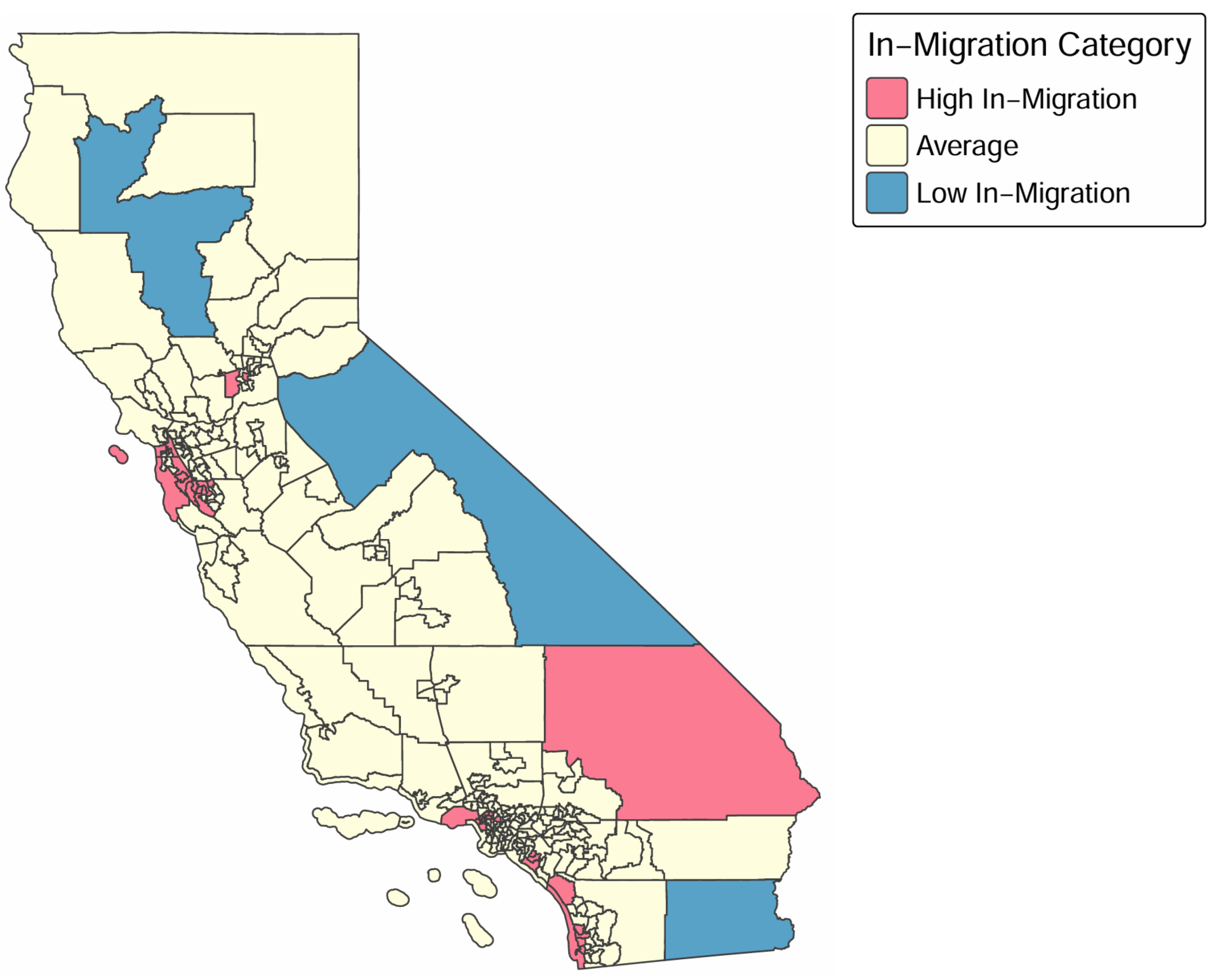
Figure 2 serves as a visual tool for examining the geographic distribution of in-migration across California, thereby offering a foundation for further inquiry into the demographic, economic, and infrastructural factors that may explain these spatial patterns. Each PUMA is color-coded according to its assigned category with red indicating high in-migration, beige representing average levels, and blue denoting low in-migration (refer to the legend in the upper right corner). This classification also facilitates a comparative spatial analysis of migration patterns within the state. The cartographic layout reveals that PUMAs with high in-migration are predominantly located in the southern and central coastal regions. In the southern region, high in-migration PUMAs form a semi-contiguous band. While several PUMAs are depicted as red to indicate elevated in-migration, they are interspersed among PUMAs with average levels, thereby creating a fragmented visual profile. This is a more scattered distribution of high in-migration areas rather than a tightly clustered pattern. This pattern also shows elevated in-migration rates near urban centers such as Los Angeles, Riverside, and San Diego. In the central coastal region, the pattern is more concentrated and distinct from the dispersed profiles seen elsewhere in the state. The arrangement is geographically concentrated, encompassing Santa Clara County and its immediate neighbors, and reflects a spatially bounded area where in-migration is not only elevated but also geographically coherent. In contrast, PUMAs categorized as average in-migration are distributed broadly across the state, forming a visual middle band that stretches through the central interior, parts of the coastal corridor, and into select southern and northern regions. Unlike the clusters of high in-migration, PUMAs with average in-migration appear more evenly dispersed across the state with a notable frequency in mountainous regions and rural expanses.
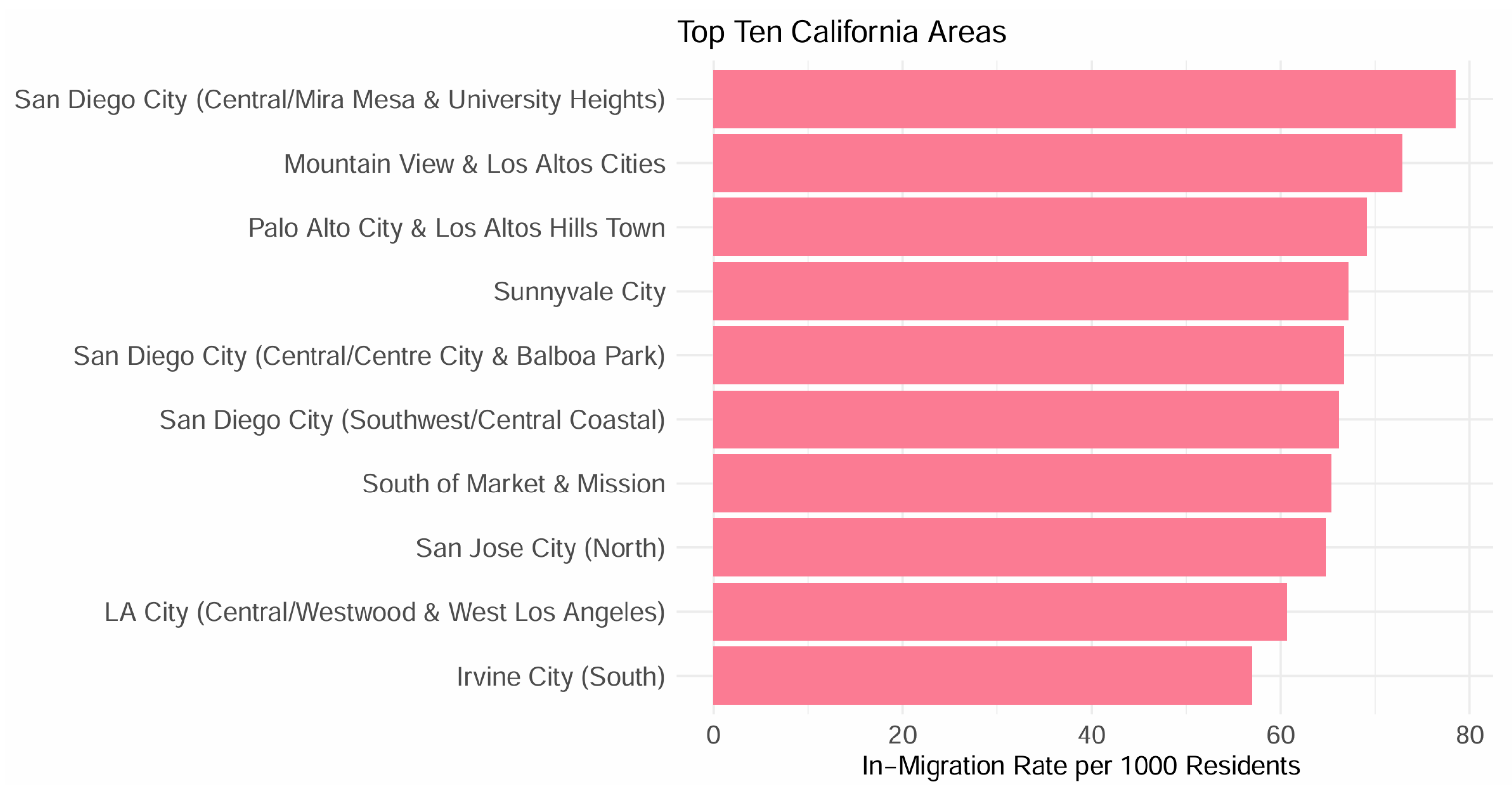
To complement the spatial overview provided by the PUMA-level map, the subsequent bar chart presents the ten PUMAs with the highest in-migration rates per 1000 residents (Figure 3). Each bar represents a distinct geographic area with values plotted along the x-axis to indicate relative in-migration intensity. The chart is ordered from highest to lowest rate with San Diego City (Central/Mira Mesa & University Heights) positioned at the top, followed by Mountain View & Los Altos Cities and Palo Alto City & Los Altos Hills Town. All ten PUMAs exceed the average in-migration rate observed across the state with several approaching or surpassing 60 to 80 in-migrants per 1000 residents. The chart reflects a mix of urban cores and high-density zones with multiple entries from San Diego, Silicon Valley, and Los Angeles, indicating that elevated in-migration is not confined to a single metropolitan region.
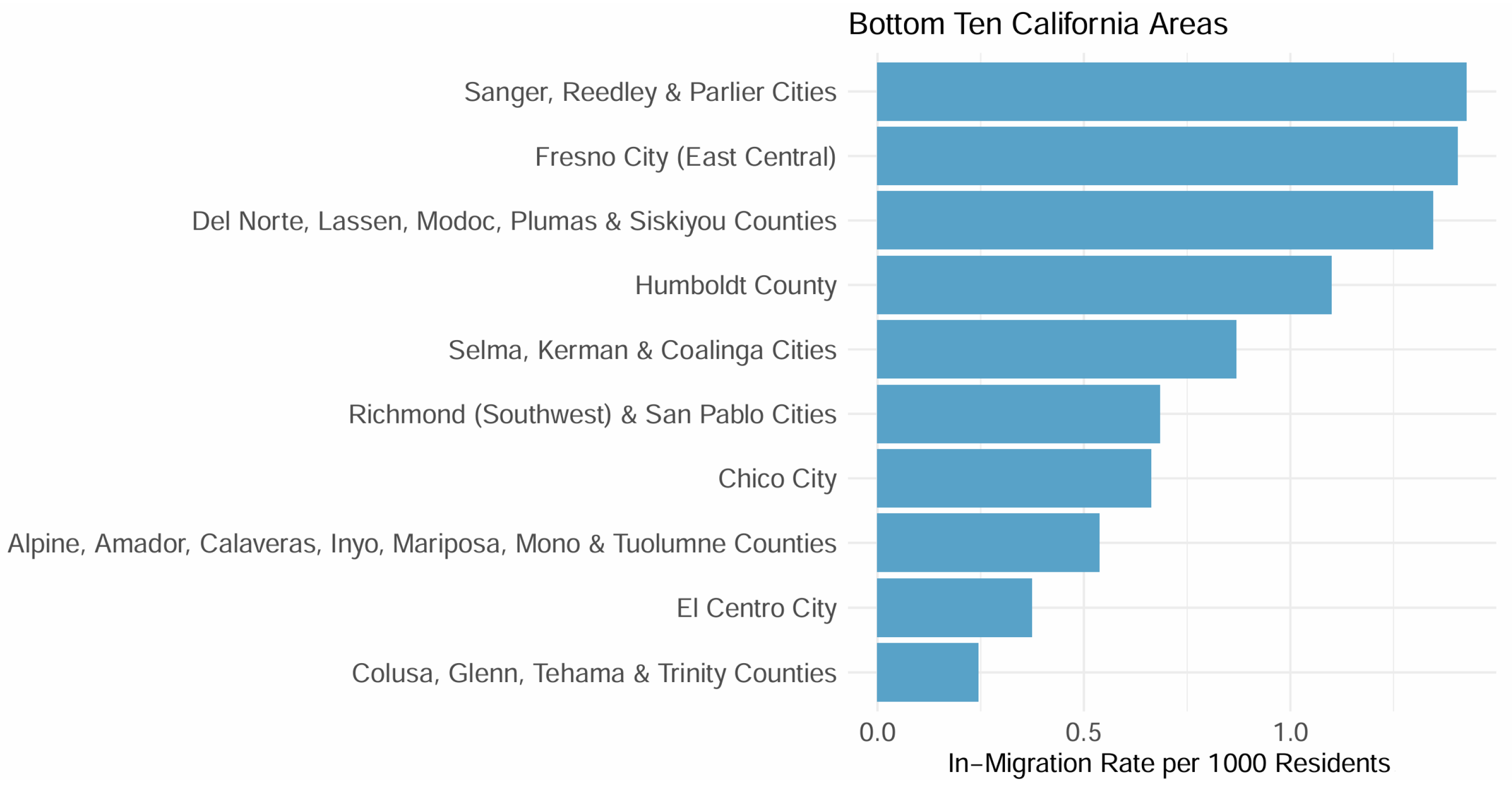
The following bar chart displays the ten PUMAs in California with the lowest in-migration rates per 1000 residents (Figure 4). Each bar represents a distinct PUMA, ordered from highest to lowest within the bottom decile of in-migration rates. The top entry in this group is Sanger, Reedley & Parlier Cities, followed by Fresno City (East Central) and a PUMA comprising Del Norte, Lassen, Modoc, Plumas & Siskiyou Counties. All ten PUMAs in the bottom-tier chart are below the statewide average in-migration rate with values substantially lower than those observed in the top decile. Several PUMAs register rates under 10 in-migrants per 1000 residents, indicating minimal inflow relative to other areas. The chart includes a mix of geographic contexts, such as small cities (e.g., Richmond Southwest and San Pablo Cities), peripheral urban zones (e.g., East Central Fresno), and multi-county rural aggregations (e.g., Alpine, Amador, Calaveras, Inyo, Mariposa, Mono & Tuolumne Counties). The presence of both single-city and multi-county PUMAs reflects the structural diversity of low in-migration areas across California. Entries span interior agricultural regions, northern border counties, and isolated mountain zones, suggesting that low migration rates are not confined to a single geographic or administrative type. The chart provides a standardized comparison of migration intensity across these sub-regions, complementing the broader spatial classifications presented in the preceding map.

3.2. FE Results

I estimate three FE regression models to identify within-PUMA associations between demographic, economic, and housing characteristics and in-migration rates per 1000 residents (Table 2). All models include PUMA-level fixed effects to account for time-invariant local characteristics. Independent variables are expressed as proportions, unless otherwise noted, while the log of earned income and total utility cost are continuous.

3.3. Demographic Composition

Across all specifications, the proportion of Asian residents showed a strong and significant positive relationship with in-migration rates (Model 1: 40.83, Model 2: 36.84, Model 3: 37.81; p < 0.01), suggesting that a higher share of the Asian population within a PUMA was associated with increased in-migration. Conversely, no significant relationship was found for the Black population share. Meanwhile, the proportion of Hispanic residents demonstrated a positive and statistically significant relationship with in-migration (Model 1: 22.83, Model 2: 16.95, Model 3: 17.27; p < 0.01), although this effect diminished with the introduction of additional controls. The percentage of residents aged 30 or younger showed a positive association that was not statistically significant while the proportion of residents with college degrees or greater consistently emerged as a strong predictor of in-migration (≈47.08; p < 0.01).

3.4. Economic Indicators

The log of earned income showed no measurable effect on in-migration. However, supplemental poverty rates were positively associated with in-migration with coefficients of 22.45 (p < 0.05) in Model 2 and 19.10 (p < 0.10) in Model 3. This suggests that PUMAs with rising poverty-adjusted population shares may experience higher in-migration. Unemployment and Medicaid coverage yielded large positive coefficients but lacked statistical significance.

3.5. Housing Characteristics and Temporal Effects

Rent burden was positively associated with in-migration with a coefficient of 45.86 but lacked significance. Total utility cost showed no discernible effects. Year indicators for 2022 and 2023 were statistically significant in Model 1 (2022: 2.10, 2023: 1.39; p < 0.01) with diminished effects in subsequent models, suggesting that temporal variation may be absorbed by other covariates or fixed effects.

4. Discussion

The descriptive statistics indicate a consistent upward trend in in-migration rates across California PUMAs between 2021 and 2023. The mean rate nearly doubled from 5.49 in 2021 to 9.72 in 2022, holding steady at 9.28 in 2023. This increase is accompanied by consistently high standard deviations, indicating substantial variation across PUMAs and suggesting that migration flows are not evenly distributed statewide. The map reinforces this interpretation, showing spatial clustering of high in-migration PUMAs in urban and coastal areas. Meanwhile, demographic indicators across PUMAs remained relatively stable over the three-year period with only modest shifts. The proportion of Asian residents increased incrementally from 7% to 10% while Hispanic representation rose slightly from 26% to 28%. The share of Black residents held constant across all years. Educational attainment, however, exhibited a gradual rise. These patterns suggest that while in-migration rates fluctuated, the demographic profile of PUMAs remained relatively consistent. While these small compositional shifts alongside steady overall profiles suggest that short-run fluctuations for in-migration did not meaningfully alter the PUMA-level demographic baseline, the incremental increases among Asian and Hispanic residents are consistent with slow, chain-linked migration and can have implications for long-term changes. Sustained growth of these groups can reshape cohort age structures, diversify labor markets, and shift local political representation over the span of a decade or longer. One example pertains to Asian migration into Santa Clara and San Mateo over the past twenty years [48]. Due to the increasing concentration of workers with advanced degrees from China, India, and other Asian countries, sustained Asian in-migration has meaningfully altered the city and county’s age structure and diversified the local labor market toward high-skill science, technology, engineering, and mathematics (STEM) and professional occupations [49,50,51,52]. Another illustrative example is the steady increase in Riverside’s Hispanic population, which accounted for nearly 35% of residents in 2000 and now comprises more than half of the city’s total population [53,54,55,56].
Economic indicators point to more pronounced shifts. Even after adjusting for 2023 dollars, mean earned income rose from $30,612 in 2021 to $34,859 in 2023, an increase of nearly 14%. This may be attributed to post-pandemic recovery efforts and the gradual re-opening of local businesses. Despite this growth, the large standard deviations across years indicate considerable variation. Supplemental poverty rates also increased from 11% to 16% between 2021 and 2022 and remained elevated in 2023. This may reflect uneven economic recovery or rising cost-of-living pressures. Recent analyses identify California’s elevated housing costs as the primary structural factor driving these increases in measured poverty [57,58]. Meanwhile, unemployment rates declined slightly during this period while Medicaid and Medicare coverage remained stable, suggesting continued reliance on public health insurance programs. While housing-related indicators such as rent burden and total utility costs changed minimally, these stable figures may mask underlying affordability challenges in high in-migration areas where demand pressures could be more pressing. For instance, a recent policy report concluded that stable rent burdens may coincide with longer commutes, reflecting spatial trade-offs rather than improved affordability [59].
The categorical map offers a generalized spatial typology. High in-migration PUMAs are clustered in metropolitan regions such as Los Angeles, San Diego, and the Bay Area, while low in-migration PUMAs are located in the northern interior and eastern Sierra regions. This classification facilitates an understanding of intra-category variation by identifying broad regional patterns which can be useful for regional policymaking. For example, some PUMAs in Southern California are ordered into the high category while adjacent PUMAs occupy low categories, suggesting localized differences in migration drivers such as housing availability, employment opportunities, or demographic composition. In contrast, the northern interior and eastern Sierra regions experience stagnant in-migration rates (i.e., close to zero), slight overall population decline, and an increase in the proportion of older adults over the past decade. These trends reflect a combination of limited economic opportunities, geographic isolation, and aging dynamics, where long-term residents grow older while few younger individuals or families relocate to the area. In this case, strategic investments to expand rural health clinics and strengthen community networks can support healthy aging and mitigate social isolation among these demographically shifting populations [60].
The regression analysis provides nuanced insights into the factors influencing in-migration rates across PUMAs. A key finding is the significant positive association between Asian population share and in-migration, which suggests strong migratory draw towards areas with higher Asian representation. More specifically, a 10-percentage point increase in the Asian population share corresponds to approximately four additional in-migrants per 1000 residents. This may be driven by cultural networks, economic opportunities, and existing communities that reduce relocation barriers [61]. Previous research has shown that in-migration often follows established networks that are influenced by personal connections and relationships [46]. The modest but significant effect of Hispanic population growth aligns with this narrative, although on a smaller scale [62]. For example, a 10-percentage point growth in the Hispanic population share yields a moderate positive effect of two additional in-migrants per 1000 residents.
Similarly, the positive coefficient for higher educational attainment and in-migration suggests that communities with greater concentrations of college-educated individuals are more attractive to movers. More specifically, a 10-percentage point increase in the college-educated population is associated with five more in-migrants per 1000 residents, reinforcing the role of human capital in shaping residential desirability. These attributes may signal economic opportunity, social inclusiveness, or institutional proximity [63]. For example, PUMAs anchored by universities and innovation hubs—Stanford–Palo Alto, La Jolla–UTC (UCSD), and Irvine–UCI—combine high-wage employment pipelines, research infrastructure, and robust newcomer services, consistently attracting disproportionate in-migration relative to peers. Unexpectedly, the supplemental poverty rate shows a positive effect on in-migration, which challenges traditional assumptions about economic deterrents. This could signal more complex local dynamics, such as affordable housing stock or transitional populations. In a recent study, researchers at Freddie Mac leveraged underwriting data from home-purchase loan applications to examine patterns of internal migration and residential mobility across U.S. metropolitan areas. The analysis reveals that prospective homebuyers are increasingly drawn to metros with more affordable housing stocks and, conversely, are willing to depart high-cost urban centers for smaller, lower-priced destinations, even when this necessitates longer-distance relocations [64]. This finding implies that affordability, rather than prosperity, may be a stronger determinant of residential inflow in some contexts [47,65]. Conversely, the share of young adults shows no statistically significant relationship with in-migration. This absence of effect within these PUMAs may highlight constraints in economic mobility that prevent relocation, such as high rent burden and stagnant entry-level wages. Future research should examine interactions between demographic traits and other regional variables, such as housing access, transportation infrastructure, and labor markets, to better capture the underlying mechanisms of in-migration for this group.

5. Conclusions

Overall, these findings highlight that in-migration is responsive to evolving community profiles but not always in line with traditional models. The fixed effects framework was essential in revealing these insights, ensuring that the results reflect temporal change within communities rather than differences across geographies. The analysis finds that increases in the share of Asian residents and college-educated within a PUMA are consistently associated with higher in-migration rates, underscoring the pull of culturally diverse and more educated communities. Hispanic population growth also emerges as a meaningful predictor with more modest impact. Counterintuitively, rising supplemental poverty rates are associated with increased in-migration, challenging conventional narratives and suggesting that affordability, housing dynamics, or transitional populations may play a role. In contrast, other variables such as Black population share and concentration of adults aged 30 or younger do not exert significant influence after controlling for time-invariant PUMA factors.
Before concluding, I offer some remarks about study limitations. For one, a longer panel (i.e., additional years) would allow for more robust identification of lagged effects and greater statistical power to evaluate relationships. This could be a future direction when the 2021–2025 five-year ACS becomes available in December 2026. Another limitation corresponds to heterogeneity in PUMA size. For instance, PUMA 0600300 encompasses a large expanse and includes several counties, some of which blend scattered agricultural areas with tourism hubs (e.g., Mono-Inyo County). A final limitation pertains to potential endogeneity between in-migration and rent burden. Without an exogenous instrument, the estimated relationship cannot be interpreted as causal. Some of this reverse causality can be addressed by employing a longer panel, which would enable the analysis to take advantage of temporal ordering using lagged rent burden. The legal status of international migrants was beyond the scope of this study. However, given that nearly 25% of California residents are foreign-born, future research should consider stratifying in-migration by legal classifications, including lawful permanent residents, temporary visa holders, asylum seekers, refugees, and undocumented migrants. Such distinctions would enhance analytical depth and highlight the importance of confidentiality and ethical responsibility when conducting population-based surveys involving vulnerable groups. Despite these limitations, this study benefits from employing fixed effects panel models at a sub-county scale and integrating time varying measures of racial composition, educational attainment, supplemental poverty rates, rent burden, and utility costs. Another valuable consideration is that the findings emphasize the need for policymakers and urban planners to examine not only economic indicators but also demographic and educational composition when designing public policies to manage population growth, housing demand, and regional equity and their implications for resource allocation [29]. Further research examining housing constraints and migration intentions will help clarify these relationships and inform more responsive public policy.

Funding

This research received no external funding.

Institutional Review Board Statement

Ethical review and approval were waived for this study because it used secondary analyses of pre-existing anonymous data.

Informed Consent Statement

Informed Consent Statement was not required because this study used secondary analyses of pre-existing anonymous data.

Data Availability Statement

The study employs microdata available from the U.S. Census Bureau and are openly available at https://www.census.gov/programs-surveys/acs/microdata/access.html. The specific analytic file used in the study was derived from these public data.

Acknowledgments

I thank the editorial team and two anonymous reviewers for their helpful comments. I also thank Place Mosaic LLC for providing the computing, technical, and other resources that supported this work. Portions of the descriptive analysis were initially developed for a 2022 demographic study of several regions in California. An earlier version of this analysis was presented at the annual policy symposium at Northwestern University during 2022 and I thank the attendees for offering suggestions.

Conflicts of Interest

The author declares no conflict of interest.

References

  1. Coulter, R.; Ham, M.V.; Findlay, A.M. Re-thinking residential mobility: Linking lives through time and space. Prog. Hum. Geogr. 2016, 40, 352–374. [Google Scholar] [CrossRef]
  2. Molloy, R.; Smith, C. U.S. Internal Migration: Recent Patterns and Outstanding Puzzles; Federal Reserve Board of Governors: Washington, DC, USA, 2019. [Google Scholar]
  3. Morefield, P.E.; Leslie, T.F. County-to-county migration modeling in the United States: The effects of data source and model selection. J. Geogr. Syst. 2025, 27, 455–472. [Google Scholar] [CrossRef]
  4. Tjaden, J. Measuring migration 2.0: A review of digital data sources. Comp. Migr. Stud. 2021, 9, 59. [Google Scholar] [CrossRef]
  5. U.S. Census Bureau. Understanding and Using the American Community Survey Public Use Microdata Sample Files: What Data Users Need to Know; U.S. Government Printing Office: Washington, DC, USA, 2021.
  6. Johnson, H.; McGhee, E. Who’s Leaving California—And Who’s Moving In? Public Policy Institute of California: San Francisco, CA, USA, 2025; Available online: https://www.ppic.org/blog/whos-leaving-california-and-whos-moving-in/ (accessed on 30 June 2025).
  7. Holmes, N.; White, E. Pandemic Patterns: California Is Seeing Fewer Entrances and More Exits, 2021. California Policy Lab. Available online: https://www.capolicylab.org/wp-content/uploads/2022/04/Pandemic-Patterns.-California-is-Seeing-Fewer-Entrances-and-More-Exits-April-2022-update.pdf (accessed on 30 June 2025).
  8. Gunderson, R.; Sorenson, D. An examination of domestic migration from California counties. J. Reg. Anal. Policy 2010, 40, 34–52. [Google Scholar]
  9. U.S. Census Bureau. State-to-State Migration Flows. 2025. Available online: https://www.census.gov/data/tables/time-series/demo/geographic-mobility/state-to-state-migration.html (accessed on 30 June 2025).
  10. Governor of California. California’s Population Increases Again. 2025. Available online: https://www.gov.ca.gov/2025/05/01/californias-population-increases-again/ (accessed on 30 June 2025).
  11. Sklair, L. Globalization and the Corporations: The Case of the California Fortune 500. Int. J. Urban Reg. Res. 1998, 22, 195–215. [Google Scholar] [CrossRef]
  12. Svart, L.M. Environmental preference migration: A review. Geogr. Rev. 1976, 66, 314–330. [Google Scholar] [CrossRef]
  13. Aoyama, Y.; Powell, W.W.; Saxenian, A.; Scott, A.J.; Storper, M.; Kemeny, T.; Makarem, N.; Osman, T. The rise and fall of urban economies: Lessons from San Francisco and Los Angeles. AAG Rev. Books 2017, 5, 146–157. [Google Scholar] [CrossRef]
  14. Goutsmedt, A. From stagflation to the Great Inflation: Explaining the US economy of the 1970s. Rev. D’économie Polit. 2021, 131, 557–582. [Google Scholar]
  15. Leslie, S.W.; Kargon, R.H. Electronics and the geography of innovation in post–war America. Hist. Technol. Int. J. 1994, 11, 217–231. [Google Scholar] [CrossRef]
  16. Storper, M.; Kemeny, T.; Makarem, N.; Osman, T. The Rise and Fall of Urban Economies: Lessons from San Francisco and Los Angeles; Series Innovation and Technology in The World Economy; Stanford University Press: Stanford, CA, USA, 2015. [Google Scholar]
  17. Raettig, T.L.; Elmer, D.M.; Christensen, H.H. Atlas of Social and Economic Conditions and Change in Southern California; Gen. Tech. Rep. PNW-GTR-516; US Department of Agriculture, Forest Service, Pacific Northwest Research Station: Portland, OR, USA, 2001.
  18. Southern California Association of Governments. SoCal to Experience Strong Economic Growth into 2024. Available online: https://scag.ca.gov/news/socal-experience-strong-economic-growth-2024 (accessed on 30 June 2025).
  19. Fernandez, E. California dreamers: A rude awakening. San Francisco Examiner. Newspapers.com, 30 July 1989; pp. 1, 14. Available online: https://www.newspapers.com/article/the-san-francisco-examiner/157122965/ (accessed on 30 June 2025).
  20. Gabriel, S.; Mattey, J.P.; Wascher, W.L. House Price Differentials and Dynamics: Evidence from the Los Angeles and San Francisco Metropolitan Areas. Econ. Rev. 1999, 3–22. [Google Scholar]
  21. Gabriel, S.A.; Mattey, J.P. The Slowing Exodus from California; Economic Letter No. 96-12; Federal Reserve Bank of San Francisco: San Francisco, CA, USA, 1996; Available online: https://www.frbsf.org/research-and-insights/publications/economic-letter/1996/12/the-slowing-exodus-from-california/ (accessed on 30 June 2025).
  22. Nussbaum, P. Lifestyle in Southern California spurs exodus. Newspapers.com, 13 August 1989; pp. A1, A4. Available online: https://www.newspapers.com/article/honolulu-star-advertiser/157123022/ (accessed on 30 June 2025).
  23. Frey, W.H. The Great American Migration Slowdown: Regional and Metropolitan Dimensions; Brookings Institution: Washington, DC, USA, 2009; Available online: https://www.brookings.edu/research/the-great-american-migration-slowdown/ (accessed on 30 June 2025).
  24. Gabriel, S.; Freyd, B.; Brand, J.; Fultz, N.; Tzen, M. Recent Trends in California Migration: Evidence from the American Community Survey, 2005–2019; UCLA Ziman Center for Real Estate: Los Angeles, CA, USA, 2021; Available online: https://www.universityofcalifornia.edu/sites/default/files/ucla-california-migration-report.pdf (accessed on 30 June 2025).
  25. Johnson, H.P.; Lovelady, R. Migration Between California and Other States: 1985–1994; California Research Bureau: Sacramento, CA, USA, 1995.
  26. Stanford Institute for Economic Policy Research. California’s Population Drain. 2023. Available online: https://siepr.stanford.edu/publications/policy-brief/californias-population-drain (accessed on 30 June 2025).
  27. Grimes, K. California Exodus: Golden State Tops US Moving Migration Report. California Globe, 10 December 2024. Available online: https://californiaglobe.com/articles/california-exodus-golden-state-tops-us-moving-migration-report/ (accessed on 30 June 2025).
  28. California’s Demographic Landscape: Who’s Coming and Going? GV Wire, 7 March 2025. Available online: https://gvwire.com/2025/03/07/californias-demographic-landscape-whos-coming-and-going/ (accessed on 30 June 2025).
  29. California Department of Finance, CDOF. 2025–26 Enactment Budget Summary: Demographic Information. State of California. 2025. Available online: https://ebudget.ca.gov/2025-26/pdf/BudgetSummary/DemographicInformation.pdf (accessed on 30 June 2025).
  30. Blake, S. Californians Who Left for Remote Work Have Shown ‘Signs of Returning’. Newsweek, 25 November 2024. Available online: https://www.newsweek.com/california-sees-surge-people-moving-state-1986685 (accessed on 30 June 2025).
  31. California Department of Finance, CDOF. Demographic Projections and Migration Trends. 2024. Available online: https://dof.ca.gov/Forecasting/Demographics (accessed on 30 June 2025).
  32. Glaeser, E.L.; Gottlieb, J.D. The wealth of cities: Agglomeration economies and spatial equilibrium in the United States. J. Econ. Lit. 2009, 47, 983–1028. [Google Scholar] [CrossRef]
  33. Roback, J. Wages, rents, and the quality of life. J. Political Econ. 1982, 90, 1257–1278. [Google Scholar] [CrossRef]
  34. Cavalieri, M.C.; Luu, N.; Causa, O. Migration, Housing and Regional Disparities: A Gravity Model of Interregional Migration with an Application to Selected OECD Countries; OECD Economic Department Working Papers No. 1691; OECD: Paris, France, 2021. [Google Scholar] [CrossRef]
  35. Diamond, R. The determinants and welfare implications of US workers’ diverging location choices by skill: 1980–2000. Am. Econ. Rev. 2016, 106, 479–524. [Google Scholar] [CrossRef]
  36. U.S. Census Bureau. American Community Survey and Puerto Rico Community Survey Design and Methodology; U.S. Government Printing Office: Washington, DC, USA, 2024.
  37. R Core Team. R: A Language and Environment for Statistical Computing; R Foundation for Statistical Computing: Vienna, Austria, 2025; Available online: https://www.R-project.org/ (accessed on 30 June 2025).
  38. StataCorp. Stata Statistical Software: Release 17, StataCorp LLC: College Station, TX, USA, 2021. Available online: https://www.stata.com/manuals17/i.pdf (accessed on 30 June 2025).
  39. Hernández-Murillo, R.; Ott, L.S.; Owyang, M.T.; Whalen, D. Patterns of Interstate Migration in the United States from the Survey of Income and Program Participation. Fed. Reserve Bank St. Louis Rev. 2011, 95, 169–185. [Google Scholar]
  40. Molloy, R.; Smith, C.L.; Wozniak, A. Internal migration in the United States. J. Econ. Perspect. 2011, 25, 173–196. [Google Scholar] [CrossRef]
  41. Wozniak, A. Are college graduates more responsive to distant labor market opportunities? J. Hum. Resour. 2010, 45, 944–970. [Google Scholar]
  42. Dietz, J.; Li, B.; Castañeda, E. Keeping in motion or staying put: Internal migration in the United States and China. Societies 2023, 13, 162. [Google Scholar] [CrossRef]
  43. Jia, N.; Molloy, R.; Smith, C.; Wozniak, A. The economics of internal migration: Advances and policy questions. J. Econ. Lit. 2023, 61, 144–180. [Google Scholar] [CrossRef]
  44. Oswald, F. The effect of homeownership on the option value of regional migration. Quant. Econ. 2019, 10, 1453–1493. [Google Scholar] [CrossRef]
  45. Clark, W.; Lisowksi, W. Prospect theory and the decision to move or stay. Proc. Natl. Acad. Sci. USA 2017, 114, E7432–E7440. [Google Scholar] [CrossRef]
  46. Frey, W.H.; Liaw, K.; Wright, R.; White, M. Migration Within the United States: Role of Race-Ethnicity; Brookings-Wharton Papers on Urban Affairs; Brookings Institution Press: Washington, DC, USA, 2005; pp. 207–262. [Google Scholar]
  47. Kane, K. How have American migration patterns changed in the COVID era? Growth Change 2024, 55, e12742. [Google Scholar] [CrossRef]
  48. Public Policy Institute of California. Immigrants in California. 2024. Available online: https://www.ppic.org/publication/immigrants-in-california/ (accessed on 30 June 2025).
  49. Castleman, T. California’s Big Shift: Asian Population Rising, Latinos Declining. Governing. 22 April 2025. Available online: https://www.governing.com/workforce/californias-big-shift-asian-population-rising-latinos-declining (accessed on 30 June 2025).
  50. Perez, C.A.; Johnson, H. How Has California’s Immigrant Population Changed over Time? Public Policy Institute of California: San Francisco, CA, USA, 2024; Available online: https://www.ppic.org/blog/how-has-californias-immigrant-population-changed-over-time/ (accessed on 30 June 2025).
  51. Saxenian, A. Silicon Valley’s New Immigrant Entrepreneurs; Working Paper No. 15; Center for Comparative Immigration Studies, University of California at San Diego: San Diego, CA, USA, 2000. [Google Scholar]
  52. Sharma, A. Exploratory and spatial analysis of disability among older Asian Indians. Appl. Geogr. 2019, 113, 102099. [Google Scholar] [CrossRef]
  53. California Department of Finance, Demographic Research Unit. County Population Projections by Age, Sex, Race/Ethnicity (P-2). 2024. Available online: https://dof.ca.gov/forecasting/demographics/projections/ (accessed on 30 June 2025).
  54. Center for Social Innovation, University of California, Riverside. State of Immigrants in the Inland Empire; University of California, Riverside: Riverside, CA, USA, 2018; Available online: https://socialinnovation.ucr.edu/state-immigrants-inland-empire (accessed on 30 June 2025).
  55. Li, W. Ethnoburb: The New Ethnic Community in Urban America; University of Hawaii Press: Honolulu, HI, USA, 2008. [Google Scholar]
  56. Logan, J.R.; Alba, R.D.; Zhang, W. Immigrant enclaves and ethnic communities in New York and Los Angeles. Am. Sociol. Rev. 2002, 67, 299–322. [Google Scholar] [CrossRef]
  57. Anderson, A.; Kitson, K.; Pryor, L.; Ramos-Yamamoto, A.; Saucedo, M. California’s Poverty Rate Soars to Alarmingly High Levels in 2023; California Budget & Policy Center: Sacramento, CA, USA, 2024; Available online: https://calbudgetcenter.org/resources/californias-poverty-rate-soars-to-alarmingly-high-levels-in-2023/ (accessed on 30 June 2025).
  58. Bohn, S.; Danielson, C.; Kimberlin, S.; Malagon, P.; Stevens, C.; Wimer, C. Poverty in California; Public Policy Institute of California: San Francisco, CA, USA, 2025; Available online: https://www.ppic.org/publication/poverty-in-california/ (accessed on 10 August 2025).
  59. Blumenberg, E.; Siddiq, F. Commute Distance and Jobs-Housing Fit in Los Angeles; Policy Brief; UCLA Lewis Center for Regional Policy Studies: Los Angeles, CA, USA, 2022. [Google Scholar]
  60. Public Policy Institute of California. Rural California. 2024. Available online: https://www.ppic.org/publication/rural-california/ (accessed on 30 June 2025).
  61. Soto Nishimura, A.; Czaika, M. Exploring migration determinants: A meta-analysis of migration drivers and estimates. J. Int. Migr. Integr. 2024, 25, 621–643. [Google Scholar] [CrossRef]
  62. Frey, W.H.; Liaw, K.L. Interstate migration of Hispanics, Asians and Blacks: Cultural constraints and middle class flight. Popul. Stud. Cent. Res. Rep. 2005, 5, 575. [Google Scholar]
  63. Katz, B. State of Metropolitan America: On the Front Lines of Demographic Transformation. Brookings Institution, 18 October 2010. Available online: https://www.brookings.edu/articles/the-state-of-metropolitan-america-metros-on-the-front-lines-of-demographic-transformation/ (accessed on 30 June 2025).
  64. Khater, S.; Yao, K. In Pursuit of Affordable Housing: The Migration of Homebuyers Within the US—Before and After the Pandemic; Research Note; Freddie Mac: McLean, VA, USA, 2022. [Google Scholar]
  65. Baldassare, M.; Bonner, D.; Mora, L.; Thomas, D. PPIC Statewide Survey: Californians and Their Government; Public Policy Institute of California: San Francisco, CA, USA, 2025. [Google Scholar]
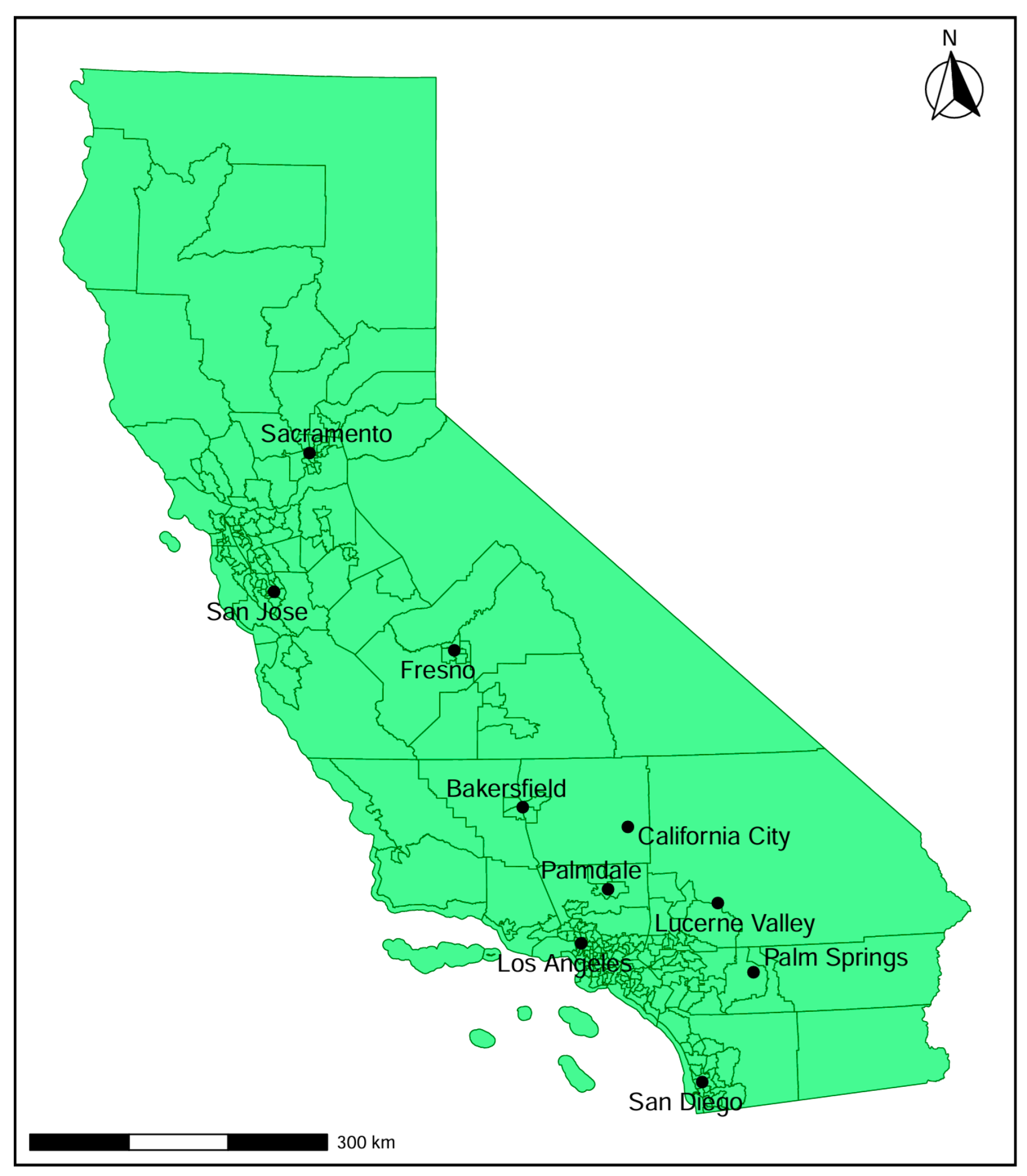
Figure 1. California Study Area with PUMAs and Major Cities.
Populations 02 00002 g001
Figure 2. Category Map of In-Migration by PUMA (2021–2023).
Populations 02 00002 g002
Figure 3. High In-Migration PUMAs. Note: although some regions may be referred to as cities or counties, the analysis is conducted at the PUMA-level.
Populations 02 00002 g003
Figure 4. Low In-Migration PUMAs. Note: although some regions may be referred to as cities or counties, the analysis is conducted at the PUMA-level.
Populations 02 00002 g004
Table 1. Descriptive Statistics for Demographic, Economic, and Housing Characteristics by Year.
Variables202120222023
MeanSDMeanSDMeanSD
In-migration rate5.4910.399.7213.359.2812.45
Demographic
Asian0.070.080.100.100.100.10
Black0.090.060.090.060.090.06
Hispanic0.260.190.280.190.280.18
Age 30 or younger0.400.040.390.040.390.04
College degree or greater0.230.080.250.100.260.10
Economic
Earned income$30,612$9016$33,761$12,830$34,859$12,947
Supplemental poverty0.110.040.160.060.160.05
Unemployment0.060.010.040.010.040.01
Medicaid0.240.070.230.080.240.08
Medicare0.180.040.180.040.180.04
Housing
Rent burden0.480.040.440.050.480.04
Total utility cost$11,739$1817$10,764$1988$10,607$1883
Observations200281281
Table 2. Fixed-Effects Regression Predicting In-Migration Rate (per 1000 Residents).
VariablesModel 1Model 2Model 3
Demographic
Asian40.83 ***36.84 ***37.91 ***
(9.64)(10.10)(9.83)
Black3.87−9.33−10.19
(7.71)(8.76)(8.98)
Hispanic22.83 ***16.95 ***17.27 ***
(6.41)(6.03)(5.87)
Age 30 or younger20.7812.7312.77
(16.27)(21.52)(21.65)
College degree or greater39.80 ***47.20 ***47.08 ***
(11.91)(12.83)(12.51)
Economic
Log earned income −0.03−0.03
(0.08)(0.08)
Supplemental poverty 22.45 **19.10 *
(10.19)(10.85)
Unemployment 46.0840.10
(40.63)(40.413)
Medicaid 14.3413.52
(13.65)(13.58)
Medicare −15.48−14.76
(22.38)(22.35)
Housing
Rent burden 45.86
(40.94)
Total utility cost 0.00
(0.00)
2022 year2.10 ***1.451.64 *
(0.37)(0.93)(0.97)
2023 year1.39 ***0.740.93
(0.34)(0.81)(0.85)
Constant−21.20 ***−21.20−21.65
(8.21)(13.52)(13.6)
Observations762762762
R-squared0.110.140.15
Note: Some of demographic, economic, and housing variables and are expressed as proportions scaled from 0 to 1. R2 value is for within and robust standard errors in parentheses (N = 762). *** p < 0.01, ** p < 0.05, * p < 0.10.
Disclaimer/Publisher’s Note: The statements, opinions and data contained in all publications are solely those of the individual author(s) and contributor(s) and not of MDPI and/or the editor(s). MDPI and/or the editor(s) disclaim responsibility for any injury to people or property resulting from any ideas, methods, instructions or products referred to in the content.