


Abstract
Violence against women remains prevalent, yet many survivors do not engage with services even where health infrastructure exists. This study investigated the role of institution-facing resources, Institutional Trust (ITR) and Procedural Justice (PJ), and the role of interpersonal resources, Social Support Provided (SSP), in women’s formal care-seeking intentions, as mediated by Psychological Distress (PSS) and General Self-Efficacy (GSE). An online survey was administered to women in Greece (n = 392) and the United Kingdom (n = 328), yielding a sample of 718. To compare the structural paths in the model across the two countries, measurement invariance was first explored, while the model was estimated through multi-group structural equation modeling. Across the pooled sample, PJ and GSE predicted HSB firmly, while ITR had no direct link to the construct. SSP did not directly predict HSB, but was linked to GSE in all models. The results of the interaction and group-difference models showed PJ and SSP had a slight indirect effect through GSE, while distress-based pathways were weaker and context-dependent. Multi-group models revealed significant cross-national differences: the direct effect of ITR and PSS on GSE was stronger in the United Kingdom than in Greece. The direct effect of PJ/GSE and SSP/GSE also had a stronger impact in Greece than in the United Kingdom. Overall, the results indicate that the willingness of women to seek help is less driven by their trust in institutions and more driven by their expectations of fairness in provider interaction and their perceived personal capability, where social support plays a role as the antecedent increasing women’s Perceived Self-Efficacy. The implications include prioritizing procedurally just practices, designing interventions that enhance self-efficacy for system navigation, and mobilizing informal networks as partners in the help-seeking process.
1. Introduction
Violence against women persists as a pressing issue in public health and human rights; however, the process of accessing services—those affiliated with law enforcement, medical and therapeutic resources, legal aid, and advocacy groups—remains uneven, delayed, and frequently foregone (Robinson et al., 2021; Silva et al., 2022; Sultana et al., 2025). Recent reviews highlight that aid-seeking is better framed as an ongoing multi-factor process that occurs over individual, interpersonal, organizational, and sociocultural dimensions (Ravi et al., 2022; Robinson et al., 2021). Women consider anticipated costs and benefits in aid-seeking; individual state-of-mind factors such as those concerned with psychological state and processes that aid-seeking might improve; factors such as characteristics and availability/intimacy within the immediate social surroundings that might be conducive to recovery processes; and immediate social and economic state factors such as fairness and efficacy within either personal spheres and/or organizational realms (Cho et al., 2021; Ravi et al., 2022). In this complex environment, providers’ awareness and sensitivity to aid-seeking needs and intentions and aid recipients’ familiarity with aid provision are seen to be consistently key enablers (Ravi et al., 2022; Robinson et al., 2021). By contrast, unfamiliarity with aid provision, unavailability and aid provision obstacles, fear of consequences, resource availability and use-inhibiting factors (including personal ones such as shame and self-blame), and provider shortcomings are seen to impede aid-seeking again and again (Ravi et al., 2022; Robinson et al., 2021). In qualitative research analyses synchronized with population research, there is evidence that thresholds to “take action” and aid preferences diverge with intimacy form (violence), culture, and aid provision settings. Take, as an example, intimate partner sexual violence that pushes women to seek medical and social aid, while inhibiting disclosure to women’s intimate social networks (Wright et al., 2022).
Evidence confirms that two salient antecedents that reliably impact the process are Psychological Distress and Perceived Control/Self-Efficacy (Akhtar et al., 2010; Fugate et al., 2005). Psychological Distress could need recognition but can substantively impede action if entwined with hopelessness or fear of the anticipated outcome—factors manifesting empirically within the realms of health as well as violence. Perceived Control/Self-Efficacy seems more squarely tied to an intention to act and subsequent implementation. However, most research essentially models these processes one after another and backgrounds them within empirical analysis as purely antecedent factors rather than incorporative mediators between resources that inherently interact with institutions and need-generation processes (Adams et al., 2022; Matar et al., 2024). At the same time, fairness in these processes is empirically conflated with macro-level trust rather than micro-encounter fairness. While provider contact with voice, neutrality, dignity, and explanation (Procedural Justice) might revise trust expectations even if starting from quite low baselines, if institutions neglectfully deny recognition or mishandle cases within those settings, fairness falls apart and provider use declines significantly, irrespective of familiarity with legal rights to those provisions (Robinson et al., 2021; Satyen et al., 2019). These are particularly salient considerations within European settings due to appreciable ecologies of services as well as normative climates around women’s first-level vs. specialty care use differing across national boundaries, role requirements, and financial considerations within those factors.
In such a context, the British and Greek cases represent an informative contrast from a theoretical perspective (Al-Krenawi et al., 2009; Cohen et al., 1998; Kovess-Masfety et al., 2014; Van de Velde et al., 2010). The United Kingdom provides an example with traditional GP gatekeeping and victim support structures in place, while Greek law combines EU-aligned legal reforms and has struggled with traditional gender roles and resource capacities within victim services. Ethnographic research on the United Kingdom’s minority groups illustrates the existence of culture-specific disincentives, stereotypes, and normative values mediated through religiosity, with concomitant opportunities to engage that have been discovered when tailored to culture (Sultana et al., 2025). In Greek legal scholarship, there is evidence of dynamic criminal justice sector measures (such as penalty mediation) with unproven efficacy (Ranjan, 2020). In either case, quantitative studies in each jurisdiction indicate that factors within the survivors’ circumstances and their consequences (type of violation, medical need, race and ethnic background) come to define which authoritative resources are sought (Cho et al., 2021), coinciding with qualitative research that is consonant with qualitative approaches that recognize that most women feel there to be an implicit ‘exit requirement’ to be ‘eligible’ to gain support (raising the stakes to take action) (Fugate et al., 2005).
This research contributes to the body of work in three integrated ways. Firstly, we distinguish and separately assess the hypotheses of the trio of exogenous resources—Institutional Trust (macro-levels of trust in services), Procedural Justice (micro-level expectations of fairness in provider interactions), and Social Support Provided (emotional, informational, and instrumental)—on women’s formal intention to seek aid. Based on the facilitators posited by (Robinson et al., 2021) and the barriers synthesized by the current literature, trust and Procedural Justice are differentiated as theoretically distinct constructs—general expectations about responsiveness and protection are driven by trust, while the calculus about disclosure to a provider, based on voice, neutrality, dignity, and inconsistency, is driven by Procedural Justice rather than conflated as service quality itself. Similarly, the variable of Social Support Provided—frequently subsumed as a control—is posited as an upstream interpersonal variable that might mitigate distress, increase feelings of control, and empower navigation (e.g., accompaniment and info-sharing).
Second, we propose and estimate a parallel mediation model wherein these resources wield their effect through two proximal psychological antecedents—Psychological Distress and Perceived Control/Self-Efficacy—to influence Help-Seeking Intention. The rationale behind this model draws on the ambiguous findings about distress and more robust findings about self-efficacy in the immediate study context. That is, distress can be mobilizing or demobilizing as a function of appraisal and settings; by contrast, self-efficacy is the action-enabling pathway most salient to attitude-intention and subsequent behavior (Kim & Zane, 2016; Velten & Margraf, 2023). The use of this model enables the examination of potentially offsetting indirect effects (e.g., the presentation of one resource decreases distress but enhances self-efficacy) and direct effects that model indirect pathways (e.g., trust in an institution boosts approach intentions due to anticipated efficacy). Significantly, our analysis rectifies the current limitation in research studies—failures to propose integrated models of mechanism hypotheses linking service-consumer perspectives and interpersonal resources to survivors’ willingness and capacity to act.
Third, to increase robustness and validity, we conducted a pre-registered multi-group analysis with Greece and the UK to establish configural, metric, and scalar invariance (and alignment as needed) before testing the difference in paths. Drawing on past research, we hypothesized that the anticipated fairness component (Procedural Justice) would correlate more strongly with feelings of control and distress in Greece—where concerns about secondary victimization and normative conservatism might raise the ‘fair process’ hurdle—while the direct effect of trust in institutions might be stronger for intentions to seek help in the UK, where GP gatekeeping and ‘third sector’ referral might remove the need to act on trust as such. In each case, and with a magnitude depending on network composition and cultural values, the beneficial effect of social support would come through boosting feelings of control and relief from distress.
For this purpose, we conducted our research on the basis of a cross-sectional online study on 718 women in both Greece and the United Kingdom, with 392 and 328 participants, respectively. By means of multi-group structural equation modeling, we test our multi-level model, which reveals that general anticipated Procedural Justice and General Self-Efficacy are the most stable direct antecedents for seeking formal help, whereas Institutional Trust fails to reveal a significant direct link. Social support does not have a direct impact on seeking formal help but has a stable positive effect on General Self-Efficacy, through which it exerts an indirect effect. Furthermore, mediation analyses reveal that general Procedural Justice and general social support chiefly affect seeking formal help via General Self-Efficacy but with weaker and context-dependent distress-based associations. Within our multi-group analysis, we find that ties to trust and distress are stronger in the United Kingdom, while associations between Procedural Justice and general social support and General Self-Efficacy are stronger in Greece.
The remainder of the paper is organized as follows. Section 2 reviews the literature and develops the hypotheses; Section 3 outlines the research design, measures, and multi-group SEM approach; Section 4 presents the results for direct, mediating, and cross-country effects; Section 5 discusses theoretical and practical implications; and Section 6 concludes with contributions, limitations, and directions for future research.
2. Materials and Methods
2.1. Institution-Facing and Interpersonal Resources: Trust, Procedural Justice, and Social Support
Research on institutionally oriented and interpersonal resources highlights that trust in institutions to serve survivors is more about people’s assessments of the fairness, efficiency, and availability of those responses, as well as the role of social support as a stress buffer rather than stress strain (Akhtar et al., 2010; Robinson et al., 2021; Sultana et al., 2025). Comparative focus group research in Chile and Colombia led (Hilbink et al., 2022) to propose that political distrust, rather than immediately translating into institutional disengagement, becomes situated within “politically constructed capacities for legal agency” if one perceives “actionable pathways” to the law. Interview research with rape victims in China by (Liu, 2024) illustrates that most victims distrust the law, yet still contact the police due to the lack of state alternatives; there is “recognition in seeking and seeking minimalist protection” in such poorly defined choice sets.
Evidence from affluent environments indicates that procedurally just contact can shape confidence to the desired end, even if underlying trust is modest. A (Bradford, 2011) study utilizing British Crime Survey data finds victim support contact to be related to more positive beliefs about criminal justice fairness and confidence in efficacy, suggesting that respectful and voice-affirming contact can increase legitimacy without increasing punitiveness. The primacy of fair process is anything but straightforward, however. In Indonesia’s high-power-distance setting, Adhikara and Putranto (2025) found in studies that perceived efficacy had precedence over Procedural Justice in the prediction of police legitimacy, consistent with hypotheses that Western Procedural Justice approaches are culture-specific and that efficacy has primacy in environments that normalize hierarchical authority. Further, a (Reeves, 2023) study of Australian protection-order courts demonstrates that systemic labeling of ‘victims’ as “prevalent aggressors,” without robust safeguards to check errors in labeling, undermines Procedural Justice, producing insecurity about legitimacy and undermining safety in access.
At the interpersonal level, the role of social support is mainly benign but heterogeneous across providers and over time. A longitudinal study on assault survivors by (Johansen et al., 2022) discovers that social support predicts lower PTSD symptomology, with little evidence that PTSD undermines later support after eight years, with no diminution due to PTSD—supporting the pathway from social support to enhanced mental health. A meta-analytic study emphasizing youths by (Xiong et al., 2022) confirms the existence of a healthy, though modest, correlation between global social support and post-traumatic stress, with stronger relationships in family- rather than peer-derived social support, with reminders about heterogeneity in conception and operational measures if social support is unspecified. Support processes can also be counterproductive; among Italian emergency personnel, (Sommovigo et al., 2022) find that social-support seeking amplified the effect of job–family conflict on burnout, indicating that poorly situated social transactions may de-intensify beneficial outcomes. Within VAW providers, the benefits of friendships are presumably mediated by social-support need fulfillment (emotional/informational vs. instrumental).
Three implications follow for theory and design. First, there are divergences between macro-level trust and anticipated justice processes, such that trust and expectations about fairness can trend differently and carry weighted influences. Second, trade-offs between efficacy and fairness depend on the salience of guaranteed outcomes versus normalized hierarchies; that is, efficacy in one context can be supreme, while fairness matters most in others with salient rights and error correction potential. Third, social support has downstream implications for survivor state processes and tends to dampen survivor stress while bolstering feelings of control.
In contrast to the existing body of work, the current study contributes to the area by decoupling trust in institutions from trust in procedures being implemented appropriately, and instead conceiving social support as an interpersonal resource rather than just a control, with hypothesis testing the implications of these interpersonal resources on Psychological Distress and one’s sense of Personal Control Efficacy to form intentions about seeking professional help. In doing so, by focusing on the United Kingdom and utilizing validated briefer measures with multi-group SEM analysis to allow for testing measurement invariance prior to testing equivalence between paths, to account for cultural contingency suggested by (Adhikara & Putranto, 2025) and system design flaws highlighted by (Reeves, 2023), the following hypotheses were derived:
H1.
Institutional Trust (ITR) has a direct relationship with Help-Seeking Intention (HSB).
H2.
Procedural Justice (PJ) has a direct relationship with Help-Seeking Intention (HSB).
H3.
Social Support (SSP) has a direct relationship with Help-Seeking Intention (HSB).
2.2. Formal Help-Seeking in Violence Against Women (VAW)
Research on formal help-seeking in instances of violence against women (VAW) has found that there is evidence that the intersection between women’s state and institutional factors affects the use of law enforcement, healthcare, and NGO resources, and that results are differentiated by the form and culture of violence. In U.S. national data, research by (Lacey et al., 2021) has found that in severe physical intimate partner violence among African American women, the use of mental health services is modest and again differentiated by demographic factors; qualitative findings indicate culture- and group-specific barriers that are distinct among African American and Caribbean Black groups. A systematic review on intimate partner sexual violence (IPSV) conducted by (Wright et al., 2022) finds that survivors of IPSV are more likely to use medical, legal, and social resources compared to those who experience non-sexual intimate partner violence but are less likely to draw upon social resources—likely due to stigma, fear of disclosure, and the struggle to identify IPSV experiences as “abuse” rather than other experiences that fall outside the medical practitioner’s expertise. This contrast illustrates that the factors that increase the need for professional care may be undermining the informal supports that are often crucial to accessing them.
Extensive meta-analyses on the barriers and facilitators identify that survivors’ psychology and service quality are paramount together. Six persistent factors identified in a “barriers” analysis by (Robinson et al., 2021) include a lack of awareness, difficulties with accessing the services, concerns about consequences after disclosure by survivors, lack of resources in services, personal factors such as feelings of shame in survivors, and service unavailability within the organizational settings. The accompanying analysis by (Ravi et al., 2022) involving “facilitators” includes practitioner competency and provider support services. Equally telling findings are found in the realms of young people and campuses. In a large, transnational group of students, (Ebert et al., 2019) demonstrate that attitudinal barriers, preference to solve problems alone, trust in peer-helping, and feelings of embarrassment exceeded structural barriers and are most pronounced among those who had depression, alcohol problems, and thoughts of suicide, explicitly linking Psychological Distress and feelings of control to the process of seeking professional help. In Australian higher-education students, (Zark et al., 2023) found that less than half of the ethnically diverse women who felt a need for service use sought professional help; cultural minority group membership predicted lower need and service use, and attitudinal barriers to need and use were mainly attitudinal and normative. What these studies indicate is that even with the existence of services, “the mediation engine” of Psychological Distress and feelings of control, operating within cultural and normative contexts, conditions action.
Systems-level evidence addresses the question of why institutional interfaces are useful. In synthesizing roll-outs in five LMICs, (Sikder et al., 2021) identify development through hospital-based one-stop centers and in-service training but with significant shortcomings in coverage outside of sexual violence, privacy considerations within settings, and a lack of data on training effectiveness. The implication that better first-line responses with greater fairness are essential to procedurally just care squares with research emphasizing the importance of trust and respectful experiences in seeking help. Although outside VAW per se, but relevant to organizational settings with heavy male participation, (Kissi et al., 2024) use the workplace to confirm that psychological processes are fully mediating between outcomes and experiences with sexual harassment; this downstream behavior receives clear transmittal logic.
The gaps are threefold. First, trust in institutions (macro-level confidence in the system) might be conflated with notions of Procedural Justice (micro-level fairness in interactions), or the lens might be narrowly focused on policing practices to the neglect of these different processes underlying engagement. Second, the mediating processes implicitly suggested by barriers to education and student mental health data, distress, and feelings of Control/Self-Efficacy are rarely represented explicitly in models as the immediate drivers of seeking formal help. Third, most cross-national studies neglect to establish whether there is measurement equivalence before testing hypotheses about the difference in pathways. The present study closes these gaps by teasing apart trust and justice processes to instead prioritize social support as the antecedent interpersonal variable within a parallel mediation analysis in Greece and the United Kingdom with proven brief outcome measures and multi-group SEM analysis. The theoretical implications include pointing to leverage points—fairness behaviors in frontline services, trust and communication approaches to improve trust deficits, and activation procedures to tap potential within social networks to increase female take-up rates of formal services. Thus, the following hypotheses were formed:
H4a.
Psychological Distress (PSS) has a direct relationship with Help-Seeking Intention (HSB).
H4b.
General Self-Efficacy (GSE) has a direct relationship with Help-Seeking Intention (HSB).
2.3. Psychological Distress and Perceived Control as Mediating Mechanisms
In the health and violence literature, Psychological Distress and feelings of Control/Self-Efficacy reliably predict and are seen as distal predictors to formal help-seeking, though with important qualifications that are rarely captured within one model (Adams et al., 2022; Murayama et al., 2022; Shea et al., 2017). The evidence with respect to the impact of distress is contradictory: while in population subgroups characterized by feelings of hopelessness and “resignation,” there seems to be a suppressive effect on action, in other contexts, higher levels of distress increase feelings of need and the intention to seek care. (Murayama et al., 2022) illustrate that within economically vulnerable populations, particularly among lone men, “resignation to the future” and lack of trust reduce intentions to seek help, suggesting that there might be a dampening effect biased against action. In women with distressing sexual problems, (Velten & Margraf, 2023) found that higher distress and pain are linked to greater intentions to seek either professional or online help, although there was also evidence that self-stigma and lower sexual assertiveness offset this impact. These results indicate that there might be at least two different pathways through which Psychological Distress affects intentions to seek help—problem recognition (likely to increase intentions) vs. efficacy erosion (likely to reduce intentions)—and that contextual beliefs and processes are decisive as to which one has precedence.
Perceived control correlates more strongly with action. The TPB study literature shows that attitude and Perceived Behavioral Control/Self-Efficacy are strong predictors of intentions to seek help, with some evidence that these factors are also predictive of behavior. In a scoping review study, Xiong et al. (2022) suggest that the most frequent predictors are, again, attitudes and Perceived Behavioral Control, pointing out that there are few investigations that assess TPB constructs with concomitant measures of overt behavior and that there are few attempts to develop TPB-targeted interventions. To bridge the intention–behavior gap directly, Tomczyk et al. (2020) found in a longitudinal community study that intentions to seek help are predicted by attitudes, norms, and self-efficacy; that these intentions then predict overt behavior over the subsequent six months; and that self-efficacy (but not Perceived Controllability) contributes to intentions to act, underscoring that felt capability rather than global control beliefs matters for translation to action.
Cultural and identity contingencies further shape these processes. Using the health belief model, results indicate that among troubled Asian American adolescents and young adults, lower Help-Seeking Intentions compared to European Americans are due to lower perceived benefits, with similar perceived severity and barriers to treatment being salient in both groups—that is, outcome expectancies are shown to differentially adjust the distress-to-intention transition among groups (Kim & Zane, 2016). Nelson et al. (2025) illustrate that among African American college women with the Superwoman Schema, the attitude-to-intention transition is moderated by stigma and emotion suppression norms—that is, identity-related scripts restrict willingness to act, irrespective of positive attitudes. Complementing these findings based on individual state processes, (Ko, 2018)’s comprehensive model of suicide help-seeking shows that available resources shape each transition within the process decision, suggesting that feelings of personal control are more than intrapsychic constructs; that is, they are shaped and constructed by degrees of social access and resources. As added evidence that social belonging is more tied to informal rather than formal services use, such that group membership is no guarantee without efficacy and positive expectancy, findings indicate that social belonging factors facilitate informal rather than formal suicide attempt treatment.
Two conclusions follow for theory and design. Firstly, Psychological Distress should be seen as a double-edged mediator that might facilitate intention by indicating need (Velten & Margraf, 2023) and impede intention by combining with hopelessness and distrust (Murayama et al., 2022). Secondly, Perceived Control/Self-Efficacy is seen as an essentially positive contributor that transmits attitude and social inputs to intention and partially to behavior (Tomczyk et al., 2020). Most empirical studies assess either distress or Perceived Control/Self-Efficacy without simulating joint influences with institution-facing antecedents.
The current study contributes to this body of research by testing a parallel mediation model, where trust in institutions, Procedural Justice, and social support impact intentions to seek formal help through Psychological Distress and Control/Self-Efficacy as mediators for women. In testing these models with comprehensive and proven briefer measures (Andrews & Slade, n.d.), we fill the three theoretical gaps outlined above: since distress has differential and potentially counteractive implications in these processes, these are accounted for; Perceived Control is placed prominently as the most decisive step from action to outcome intention; and these models are tested within a transnational research context in which opinions about benefit, stigma, and control are likely to diverge. Thus, the following hypotheses were formed:
H5a.
The relationship between Institutional Trust (ITR) and Help-Seeking Intention (HSB) is mediated by Psychological Distress (PSS).
H5b.
The relationship between Institutional Trust (ITR) and Help-Seeking Intention (HSB) is mediated by General Self-Efficacy (GSE).
H6a.
The relationship between Procedural Justice (PJ) and Help-Seeking Intention (HSB) is mediated by Psychological Distress (PSS).
H6b.
The relationship between Procedural Justice (PJ) and Help-Seeking Intention (HSB) is mediated by General Self-Efficacy (GSE).
H7a.
The relationship between Social Support Provision (SSP) and Help-Seeking Intention (HSB) is mediated by Psychological Distress (PSS).
H7b.
The relationship between Social Support Provision (SSP) and Help-Seeking Intention (HSB) is mediated by General Self-Efficacy (GSE).
2.4. Cross-Country Expectations (Greece vs. UK): Invariance and Path Differences
Cross-national research suggests that formal care-seeking is mediated by culture-specific gender norms and healthcare use patterns in Europe, suggesting that measurement and structural relationships should be anticipated to diverge between Greece and the United Kingdom (Cuesta-García et al., 2024; Matar et al., 2024; Stiller et al., 2025). Comparative evidence in mental health and service use indicates substantial heterogeneity in who seeks which type of help and under what conditions. Using the EU-WMH dataset in ten countries, Kovess-Masfety et al. (2014) confirm that more women use mental healthcare and more use general practitioner care rather than specialized care, though the size of these gaps diverges substantially by country and diagnosis, with the use of anxiety disorder care weakening gender gaps in use; importantly, country-level measures of health system characteristics are shown to account only partially for gaps in use. To further contextualize these findings, Buffel et al. (2014) find that gender differences in primary versus specialized care depend not only on necessity, but also on socioeconomic and family roles, though with patterns that indicate there are country-dependent variations. In the Greek case, family factors are shown to constrain women’s use more strongly than men’s use in specialized outpatient care (Chroni & Kavoura, 2022). In terms of longitudinal research that examines use over time rather than focusing on use disparities between groups, Roxo et al. (2021) again reveal that use non-use by men is systematically greater and that one-time ‘snapshots’ underestimate men’s disadvantage, again with divergences by education and financial strain—the latter suggesting that there are analogous baseline rates of seeking formal care that diverge between settings.
The cultural climate further influences the process of seeking aid. Lomazzi (2023) examines the fact that the Greek culture has low institutionalized gender discrimination and strongly lingering family–institutional conservatism, which functions to possibly impact the perception of fairness even within the framework of an EU-aligned law system. The Greek sports context illustrates that the climate of silence driven by patriarchy and collectivist values obstructs the reporting process and the movement to #MeToo mobilization, indicating that normative factors are significant enough to be considered in making disclosures beyond mere guaranteed rights (Chroni & Kavoura, 2022; Golinelli et al., 2025; Nicolosi et al., 2006). Comparative research also discovers that there are culture-specific variants in the factors of recognition, stigma, and preferences in obtaining aid (Al-Krenawi et al., 2009), and massive international surveys about sexual dysfunction indicate that there are lower rates of taking action in the UK, but inter-country variations in medical and non-medical aid (Nicolosi et al., 2006). Multi-level evidence from LMICs finds that perpetrators’ initial reaction to intimate violence is to seek help from informal networks, with considerable national variation and no clear direct effect of national laws on seeking care from more formal sources” (Goodson & Hayes, 2021), while within-country research contrasting immigrants in Spain finds a greater prevalence of IPV among immigrants and variable awareness and judicialization by country of origin (Cuesta-García et al., 2024). These two threads of research imply that “macro-trust” in institutions, “micro-” expectations about processes, and ecologies of social support are anything but equivalent across national boundaries; rather, routes and magnitudes are different.
Two implications concern methodology. First, without the establishment of at least metric and preferably scalar invariance in international comparisons, there is potential overlap in the detection of differential measurement artifacts vs. substantive structural parameters (like Institutional Trust beliefs, Procedural Justice experiences, K6 distress reactions, GSE SE beliefs, MSPSS), that are particularly sensitive to stigma connotations, control beliefs, and service terminology. In light of the shown heterogeneity in use behavior (Buffel et al., 2014; Kovess-Masfety et al., 2014) and corresponding normative climates (Chroni & Kavoura, 2022; Lomazzi, 2023), techniques of approximate alignment might be called upon even after rigorous translations. Second, structural parameter values are likely to be different in magnitude. In the Greek scenario, greater parameter weights are anticipated from Procedural Justice for either control beliefs and distress (where anticipated fairness might be the limiting factor in more normative-conservative settings), and from social support to either distress and control beliefs (reflecting greater familial welfare traditions). In the UK context, with the more extensive gatekeeping roles of GPs and victim support infrastructural backup, greater direct parameter weights are anticipated from Institutional Trust for Help-Requirement intentions (conditional on measurements similar to those above). Finally, gendered service-use asymmetries (Kovess-Masfety et al., 2014; Roxo et al., 2021) and role-strain contingencies (Buffel et al., 2014) warrant pre-registered MGA within each national study to unscramble national context and subgroup composition impacts on these (pre-registered to prevent empirical fallacy, post hoc assessments). Our study addresses this requirement by testing configural metric and scalar invariance (and applying alignment if need be) prior to group analyses utilizing multi-group SEM.
2.5. Integrative Theoretical Framework
The current study uses a combined social–ecological, stage-based, and resource-oriented view of women’s formal help-seeking in violent situations to give the proposed hypotheses a solid theoretical foundation. A social–ecological model looks at help-seeking as being shaped by a number of factors at different levels, including individual mental states, relationships with other people, service environments in communities and organizations, and larger institutional and sociocultural structures (Xiong et al., 2022). This multi-level lens corresponds directly with the model specification in the current study, wherein institution-facing resources (Institutional Trust; Procedural Justice) and interpersonal resources (social support) are regarded as upstream determinants that function in conjunction with individual psychological mechanisms (Psychological Distress; General Self-Efficacy) to influence Help-Seeking Intention. This study is further anchored in the (Robinson et al., 2021) help-seeking model, which delineates help-seeking as a dynamic process encompassing (1) problem assessment, (2) the decision to seek assistance, and (3) the choice of a help provider. In this framework, Psychological Distress (PSS) is situated within the appraisal process—indicating perceived severity and necessity—yet it may function in contradictory manners influenced by fear, stigma, or anticipated repercussions. General Self-Efficacy (GSE) is identified as a crucial facilitator that aids the progression from evaluation to the decision to seek assistance, and from that decision to engagement with a provider. This aligns with intention-focused behavioral theories that emphasize perceived capability as fundamental to the formulation of intentions and the commencement of action (Robinson et al., 2021).
The model utilizes the Conservation of Resources (COR) theory (Kim & Zane, 2016; Velten & Margraf, 2023) to elucidate the influence of institutional and interpersonal resources on these mechanisms. Moreover, we utilize a concise General Self-Efficacy (GSE) scale to operationalize perceived capability as a streamlined indicator of action capacity within the help-seeking context. We recognize that the most immediate construct for the current mechanism is probably help-seeking/self-navigation efficacy (for instance, confidence in disclosing, reaching out to services, handling procedural steps, and dealing with repercussions). We utilize GSE due to its cross-national validation and comparability; however, subsequent research should examine the same pathways employing domain-specific help-seeking efficacy measures to more accurately assess “system-navigation capability”. COR theory posits that individuals are driven to safeguard valued resources (such as emotional stability, safety, and social standing) and to obtain new resources, with stress escalating in response to actual or perceived resource loss. In this framework, supportive environments and trustworthy institutions can serve as resource caravans that restore depleted resources, while anticipated adverse treatment or onerous procedures may signify an additional resource threat. Consequently, social support (SSP) is defined as an interpersonal resource that can enhance coping ability and perceived control, thereby augmenting General Self-Efficacy (GSE) and indirectly boosting Help-Seeking Behavior (HSB). Likewise, institutional signals that diminish uncertainty and perceived threat (e.g., equitable procedures) ought to safeguard resources and enhance agency.
Procedural Justice theory and legitimacy models provide a more accurate framework for institution-facing mechanisms (Kim & Zane, 2016; Velten & Margraf, 2023). According to Procedural Justice theory, perceived legitimacy and willingness to collaborate with institutions are shaped by perceptions of fairness—voice, neutrality, respectful treatment, and transparent explanations—often independently of overall macro-level trust or instrumental assessments of results. The justification for treating Procedural Justice (PJ) as a micro-encounter construct separate from Institutional Trust (ITR) comes from this distinction. According to the current model, PJ should both directly (by boosting willingness to engage) and indirectly (by enhancing perceived ability to navigate service interactions) increase women’s intentions to seek formal assistance.
Finally, the framework acknowledges that these processes may vary systematically across groups and contexts through intersectionality (Buffel et al., 2014; Kovess-Masfety et al., 2014). Intersectionality underscores that women’s experiences of violence and service engagement are influenced by intersecting identities and structural inequalities (e.g., age, ethnicity, socioeconomic status), suggesting that Institutional Trust, Procedural Justice expectations, and the function of social support may vary across populations and contexts (Buffel et al., 2014; Kovess-Masfety et al., 2014). This viewpoint endorses the study’s cross-national framework (Greece vs. UK) and the application of measurement invariance testing and multi-group analysis to differentiate genuine contextual variations from measurement artifacts.
This integrated framework delineates a coherent pathway: multi-level resources (institution-facing and interpersonal) influence proximal mechanisms (distress and, most significantly, efficacy), which subsequently affect Help-Seeking Intention, while accommodating contextual moderation in alignment with social–ecological and intersectional reasoning (Robinson et al., 2021).
2.6. Research Methodology
2.6.1. Conceptual Model and Rationale
This paper proposes and evaluates a mechanism-first account that spells out how institution-facing and interpersonal resources shape women’s intentions to seek formal help in violence situations (Figure 1). The theoretical essence divides the process among three exogenous resources—Institutional Trust (macro-level trust that institutions such as the police, health care providers, and NGOs are responsive and protective), Procedural Justice (expected voices, neutrality, dignity, and consistency), and social support (emotional, informational, and instrumental)—and examines how these shape intentions to seek help through two proximal psychological intermediates: Psychological Distress and Perceived Control/Self-Efficacy. Institutional Trust (ITR) is recognized as a resource signal that helps institutions by decreasing the expected uncertainty and perceived “costs” of disclosure (like the fear of being dismissed, bureaucratic friction, and social/psychological burden). This, in turn, helps perceived action capacity. In COR terms, higher confidence indicates people expect to lose less of their resources while they are engaged, which can translate into higher perceived capability (i.e., efficacy) to initiate and sustain help-seeking steps. To acknowledge gaps in prior models, this account (i) separates macro-trust from micro-Procedural Justice instead of combining these as “service quality” features, (ii) promotes social support from background covariance to an upstream driver, and (iii) tests joint mediation by distress and control rather than focusing on one pathway instead of the other. A cross-national study with a pre-registered invariance hierarchy across countries (Greece and the United Kingdom) ensures that any national variations in pathway coefficients capture mechanisms rather than measurement artifacts.
Figure 1.
Conceptual Model.
The rationale has three components. First, there is evidence that respectful care, provider capacity, accessibility, and awareness are enablers and that stigma, fear, tangible barriers, and system unresponsiveness are inhibitors of care mobilization; most studies are descriptive or within one context and do not allow testing of the processes posited to connect enablers to mobilization (Akhtar et al., 2010; Robinson et al., 2021). Second, there is evidence that distress is potentially double-edged—increasing perceived need but also hopelessness/fear, inhibiting mobilization—while Control/Self-Efficacy is more reliably related to intention and implementation (Van de Velde et al., 2010). Third, there is heterogeneity in European service ecologies and normative environments; to compare across countries without testing measurement invariance might conflate language differences and service terminology with “true” differences (Adams et al., 2022; Murayama et al., 2022).
2.6.2. Data Collection and Sampling
The study employed a quantitative, cross-sectional method consisting of an online self-report survey to explore the role of trust in institutions, Procedural Justice, and social support in relation to women’s intentions to seek help with Psychological Distress and feelings of Control/Self-Efficacy in Greece and the United Kingdom (Kesmodel, 2018; Olsen & St George, 2004; Spector, 2019). The study was framed to fit the mediated multi-group SEM model and ethical considerations of research with women and violence (Kesmodel, 2018).
We employed a dual-frame design utilizing an online stratified-quota panel study and purposive service-adjacent recruitment (Brewer, 1999; Rahman, 2023). In the panel study component, soft quotas by age, region, urban versus rural location, and education level were administered by country-specific vendors to closely mirror each country’s adult female population. In the service-adjacent arm, an anonymous link was distributed through women’s NGOs, crisis centers, and post-secondary institutions to gain access to poorly represented or hard-to-reach groups (e.g., those with lower trust in institutions and higher coercive control experiences), without compromising anonymity. The current study’s design combines stratification with purposive recruitment to improve construct validity and simulate dynamics around help-seeking (Brewer, 1999; Lynn, 2019). The SEM models list one indicator denoting the sampling frame and standard demographic items as extraneous covariates; sensitivity analyses are presented within each sampling frame.
The data was gathered utilizing Google Forms to ensure standardization, secure data transmission, and risk-free study participation. The bilingual survey (Greek and UK English) includes the following sections: (i) screening questions (age, residency, language, safe device confirmation), (ii) scales, (iii) demographic questions (age, education, migrant status, urbanicity, relationship status), and (iv) parity items to establish study quality. To protect sensitive topics, the entry page encouraged use of a private device/network, with provisions offering country-specific resources; “Quick Exit” was present on every page with a redirect to a purpose-built neutral webpage. Listwise items such as names, email addresses, phone numbers, IP addresses, and free-text event descriptions were not requested; “Prefer Not to Answer” was an option on each sensitive question.
Inclusion criteria included that the survey-takers had to be self-identified women aged 18+, resident in Greece or the UK at the time of data collection, and be able to read Greek (GR) or UK English (UK), with safe, private-device access to the survey. Previous experience with IPV was not required and was instead accounted for as a variable. Exclusion criteria included those aged below 18 years present in the survey data (automated targeting), non-residents in either the UK or Greece (IP geolocation), failing fully electronic consent and attention-check questions, implausibly rapid completion (very conservative page-time thresholds derived from pilot testing), redundant entries (provider device fingerprinting), and erroneous straight-lining/long-string patterns. Eligibility was enforced at entry; automated logic and post hoc diagnostics ensured adherence.
The target was N ≈ 900–1000 overall (≈450–500 per country). This satisfies SEM practice for models with 3–6 indicators per latent and multi-group analysis requirements, and accords with “10-times rule” estimation (J. F. Hair et al., 2021; Wagner & Grimm, 2023), providing ≥ 0.80 power to detect standardized paths of β ≈ 0.15–0.20 and sufficient precision for indirect effects (bias-corrected bootstrap CIs), while supporting confirmatory factor reliability and country-level measurement invariance (Van Zyl & Ten Klooster, 2022; Wagner & Grimm, 2023).
Validated short forms with documented psychometrics were used. The English master underwent forward–back translation to Greek; UK English was localized for service terminology. Cognitive interviews (6–8 per country) assessed clarity, liability, and potential distress, followed by a pilot (≈30 per country) to verify timing, branching, and quality-control thresholds; pilot records were excluded from analyses unless pre-registered. CFAs evaluated internal consistency (ω, α), convergent validity (AVE ≥ 0.50), and discriminant validity (HTMT < 0.85). When strict scalar invariance was not attainable, alignment optimization was applied and reported.
2.6.3. Measurement Scales
All constructs were assessed with brief, validated, Likert-type scales adapted for the current context. Unless otherwise noted, items used a 5-point agreement anchor (1 = Strongly disagree to 5 = Strongly agree), were presented in randomized order within blocks, and were coded so that higher scores indicate more of the construct (Appendix A, Table A1).
Institutional Trust (ITR) in public services was measured with five items introduced by the stem, “Thinking about public services in my country (e.g., police, health services, NGOs)…” Items were as follows: ITR1 I trust these services to treat people fairly; ITR2 These services treat people with respect; ITR3 These institutions act in the public interest; ITR4 I have confidence they will protect people’s rights; ITR5 They take reports seriously and follow through (adapted from (Akter, 2022; Córdova & Kras, 2020; Ninković et al., 2024)).
Procedural Justice (PJ), i.e., anticipated fairness of service processes, was assessed with five items capturing voice, clarity, neutrality, respect, and consistency: PJ1 Staff listen and allow people to tell their side before deciding; PJ2 Decisions are explained clearly so people understand what will happen next; PJ3 Rules are applied consistently, without favoritism or bias; PJ4 People are treated with dignity and courtesy throughout the process; PJ5 Similar cases are handled in similar ways (adapted from (Akter, 2022; Córdova & Kras, 2020; Ninković et al., 2024)).
Social support (SSP) was measured with four items: SSP1 I have people I can count on when things go wrong; SSP2 I can talk about my problems with someone close to me; SSP3 There is someone who shows real interest in my well-being; SSP4 I get the emotional support I need from my network (adapted from (Akhtar et al., 2010; Katsiroumpa et al., 2023)).
Psychological Distress (PSS) over the previous 30 days was assessed with five frequency items using the standard K-style stem, “In the past 30 days, how often did you feel…”: PSS1 nervous; PSS2 hopeless; PSS3 restless or fidgety; PSS4 so depressed that nothing could cheer you up; PSS5 worthless. These items used a 5-point frequency anchor (1 = None of the time to 5 = All of the time; adapted from (Andrews & Slade, n.d.; Inoue et al., 2018)).
General Self-Efficacy (GSE) was measured with five items from a widely used General Self-Efficacy scale: GSE1 I can always manage to solve difficult problems if I try hard enough; GSE2 I am confident that I could deal efficiently with unexpected events; GSE3 It is easy for me to stick to my aims and accomplish my goals; GSE4 I can solve most problems if I invest the necessary effort; GSE5 If I am in trouble, I can usually think of a solution (adapted from (Chen et al., 2001; Luszczynska et al., 2005)).
Formal Help-Seeking Intention (HSI) over the next three months was measured with four items introduced by the stem, “If I needed help in the next 3 months…”: HSI1 I would contact a national or local hotline; HSI2 I would contact the police; HSI3 I would seek help from health or counseling services; HSI4 I would contact an NGO or specialist support service (adapted from (Goodman et al., 2023; Rickwood & Thomas, 2012)). All constructs and items adapted a 5-point Likert scale (1 = Very unlikely to 5 = Very likely).
2.6.4. Sample Profile
The final sample comprised 718 women, with 392 participants from Greece and 326 from the United Kingdom (Table 1). Across both countries, the majority were young adults: most respondents fell in the 18–26 age range, with smaller groups aged 27–29 and relatively few aged 30 or above. Prior informal engagement with formal services was mixed; around one quarter to one third in each country reported having supported a friend or peer to access services, although a large proportion chose not to disclose this. Awareness of online support services was generally high: in both Greece and the UK, most participants were at least aware of such services, and a substantial subgroup reported knowing how to access them, while actual prior use remained limited. Comfort with using online systems to request support clustered around medium to high levels in both contexts, with somewhat higher “very low” comfort in the UK. Email was the most frequently cited information channel about policies and support in both countries, complemented in Greece by learning management systems and social media, and in the UK by faculty/staff and “other” channels, suggesting modest cross-national differences in how institutional information reaches students.
Table 1.
Sample Profile.
3. Results
For structural equation modeling, SmartPLS 4 version 4.1.1.6 was used. As suggested by (Nitzl et al., 2016), variance-based structural equation modeling is preferably adopted for business and social sciences. PLS-SEM was adopted to focus on explanatory power for endogenous variables and prediction importance (J. Hair & Alamer, 2022). To analyze heterogeneity, multi-group analysis (MGA) was employed to compare path coefficients between subgroups to identify differences in contexts, going beyond regression analysis in general (Matthews, 2017; Sarstedt et al., 2011). Estimation procedures followed the recommendations in (Wong, 2013) for path coefficients, standard errors, and reliability estimation. For reflective models, reliability and construct validity for indicators were analyzed, accepting loadings above 0.70 in general.
3.1. Common Method Bias
Testing for common method variance (CMV) between variables was determined using the method described by (Podsakoff et al., 2012) to ensure validity and reliability for this research. Harman’s single-factor test was also used to evaluate whether it is likely that replies to most variables depend on one factor. The unrotated principal factor analysis demonstrated that only 25.674% of variance was explained by the first factor, which falls below the 50% level, suggesting that method variance is unlikely to pose a problem for this research. This provides construct validity for research by ensuring reliability in inter-construct associations that are not threatened by a feasible risk of systematic measurement error and common method variance threats to research validity (Podsakoff et al., 2003, 2012).
3.2. Measurement Model
The PLS-SEM method started with analyzing reflective measurement models. After (J. F. Hair et al., 2011; Sarstedt et al., 2021), for analyzing reflective measurements, the assessment and evaluation took into account reliability for the whole model and its indicators, convergent validity, and discriminant validity to ensure sufficient model validity prior to structural model analysis. Consistent with (Vinzi et al., 2010), the reliability for each PLS-SEM model indicator was measured based on the variance explained in every item by its respective formative construct, using outer loadings. Values above 0.70 were regarded as sufficient for an indicator to judge the quality for that item (Henseler et al., 2015; Nitzl et al., 2016). Nevertheless, as explained by (Vinzi et al., 2010), in most data for social sciences, indicators provide smaller numbers than 0.70, making justification for removing indicators problematic.
As suggested by (J. Hair & Alamer, 2022; Sarstedt et al., 2021), only those items that had loadings between 0.40 and 0.70 were considered for deletion, provided that this would improve the CR and/or AVE for that particular construct substantially. After considering these standards, in line with the guidelines described by (Gefen & Straub, 2005), it was observed that to improve the reliability and validity for forthcoming analyses, one indicator variable needed to be deleted for both overall and country-specific data, namely PJ5. This parsimonious refinement, summarized in Table 2, resulted in a more reliable and valid measurement model for subsequent analyses.
Table 2.
Factor loading reliability and convergent validity.
To evaluate reliability, Cronbach’s alpha, rho_A, and Composite Reliability (CR) scores were considered. As the CR scores for each pivotal construct (GSE, HSB, ITR, PJ, PSS, SSP) exceeded or approached 0.70, as suggested in previous research, the reliability indices can be considered satisfactory for each construct (Gefen & Straub, 2005; Henseler et al., 2015). Since the rho_A scores lie between the alpha and CR scores, above-0.70 scores further ensured reliability for most variables, consistent with (Henseler et al., 2015; Sarstedt et al., 2011) suggestions for reliability estimation procedures and their guidelines on consistency standards for research data. This applied to both global and country-specific data.
The adequacy of the convergent validity was determined by ensuring that the Average Variance Extracted (AVE) for most constructs exceeded a 0.50 correlation coefficient (J. Hair & Alamer, 2022; Sarstedt et al., 2021). For other cases where AVE was slightly below 0.50, the respective CRs exceeded 0.60, which was seen as acceptable according to the recommendations of (Fornell & Larcker, 1981). For discriminant validity, the Fornell–Larcker criterion was applied, where the square root of each construct’s respective Average Variance Extracted was larger than its correlation with other constructs. This requirement was met. They are also validated using the Heterotrait–Monotrait ratio (HTMT), where all indices are below the conservative 0.85 cut-off line suggested by (Henseler et al., 2015). It can therefore be observed that construct validity and internal consistency for the structural model are very strong. Table 3 and Table 4 above present full statistical data for the alphas, rho_A, CRs, Average Variance Extracted, inter-construct correlations, and finally, the indices for the Heterotrait–Monotrait ratio.
Table 3.
HTMT ratio.
Table 4.
Fornell and Larcker criterion.
3.3. Structural Model
For reliability assessment, Cronbach’s alpha, rho_A, and Composite Reliability (CR) were employed. Similar to the recommendations of (Wasko & Faraj, 2005), thresholds above 0.70 for GSE, HSB, ITR, PJ, PSS, and SSP were established, and for other variables, moderate to very high reliability exists, in accordance with previous studies reported in (J. Hair & Alamer, 2022; Sarstedt et al., 2021). As a measure qualitatively placed between the alpha and CR, rho_A for most variables exceeded 0.70, supporting previous reliability studies reported in (Sarstedt et al., 2011) and meeting the reliability standards outlined in (Kock, 2015; Kock & Hadaya, 2018).
The structural model was examined using the coefficient of determination (R2), predictive relevance (Q2), and significance of structural paths. For the overall sample, the model explained a moderate proportion of variance in the endogenous variables (R2: GSE = 0.175, HSB = 0.474, PSS = 0.166). In the Greek subsample, the explanatory power was also moderate (R2: GSE = 0.265, HSB = 0.506, PSS = 0.198), whereas in the UK subsample, the corresponding values were R2: GSE = 0.091, HSB = 0.449, PSS = 0.137. Predictive relevance was supported by cross-validated redundancy (Q2_predict) values indicating moderate to strong out-of-sample prediction for the overall sample (GSE = 0.166, PSS = 0.157, HSB = 0.324), for Greece (GSE = 0.251, PSS = 0.179, HSB = 0.396), and for the UK (GSE = 0.166, PSS = 0.157, HSB = 0.324).
The hypotheses were evaluated to determine the statistical significance of associations between constructs. The path coefficients and standard errors were determined using non-parametric bootstrapping as per (J. F. Hair et al., 2011). To provide more precise estimates for indirect associations, bootstrapping analysis using the bias-corrected one-tailed method with 10,000 resamples was applied, as per (Preacher & Hayes, 2008) and (Streukens & Leroi-Werelds, 2016). Collectively, these steps validate the structural fit and predictive validity of the model. The full output is presented in Table 5.
Table 5.
Hypothesis testing.
The direct paths were examined to test the hypothesized links between Institutional Trust (ITR), Procedural Justice (PJ), social support (SSP), Psychological Distress (PSS), General Self-Efficacy (GSE), and Help-Seeking Intention (HSB). The standardized beta coefficients, bootstrapped t-values, and p-values for the full sample and countries are shown in Table 5.
For the full sample, ITR did not relate to HSB, β = −.02, t = 0.49, p = 0.312 (H1). However, PJ was positively related to HSB, β = 0.32, t = 9.31, p < 0.001 (H2). SSP was positively related to GSE, β = 0.21, t = 4.72, p < 0.001 (H3). PSS was positively related to HSB, β = 0.10, t = 2.81, p = 0.002 (H4a). Last, GSE was strongly and positively related to HSB, β = 0.39, t = 11.40, p < 0.001 (H4b).
The pattern observed for country-specific estimates was also broadly similar. For Greece, the non-significant association between ITR and HSB persisted, β = 0.00, t = 0.10, p = 0.462, but PJ was again a significant positive predictor for HSB, β = 0.35, t = 7.51, p < 0.001. SSP was again positively related to GSE, β = 0.27, t = 4.67, p < 0.001. The non-significant association between PSS and HSB persisted, β = 0.04, t = 0.81, p = 0.210. GSE again positively predicted HSB, β = 0.29, t = 5.98, p < 0.001.
For the United Kingdom, once again, ITR failed to materially predict HSB, β = −0.04, t = 0.79, p = 0.216. The PJ variable was shown to positively relate to HSB, β = 0.27, t = 5.67, p < 0.001. The SSP variable demonstrated a positive correlation with GSE, β = 0.15, t = 2.12, p = 0.017. For this data set, PSS was shown to positively predict HSB, β = 0.19, t = 3.33, p < 0.001, while GSE was shown to positively relate to HSB, β = 0.18, t = 2.82, p = 0.002.
In general, based on these findings, partial support for the direct-effect hypotheses can be concluded to exist, wherein PJ and GSE always predicted HSI, SSP always predicted SE, while ITR did not directly relate to HSI, and PSS and HSB had a significant relationship only in the UK.
Therefore, on the basis of the above analysis, it can be concluded that H2 (PJ → HSB), H3 (SSP → GSE), and H4b (GSE → HSB) are confirmed. However, H1 (ITR → HSB) is rejected on the basis of the entire sample as well as on country-level data, and H4a (PSS → HSB) is rejected on the basis of country-level data since the parameter is not significant in the Greek subsample.
3.4. Mediation Analysis
The indirect effects were examined to investigate the mediation hypotheses with regard to Psychological Distress (PSS) and General Self-Efficacy (GSE) as parallel mediators for the links between Institutional Trust (ITR), Procedural Justice (PJ), social support (SSP), and Help-Seeking Intention (HSB). Standardized indirect estimates (β), bootstrapped t-values, and p-values for the entire group and each country are reported in Table 6.
Table 6.
Bias-corrected bootstrap indirect effects for mediation hypotheses in the overall sample and by country.
For the full sample, there were two significant indirect paths from ITR to HSB. The ITR → PSS → HSB path (H5a) was significant, β = 0.042, t = 2.79, p = 0.003, as well as the ITR → GSE → HSB path (H5b), β = −0.025, t = 1.90, p = 0.029. The PJ → HSB via PSS (H6a) was not significant, β = 0.003, t = 0.73, p = 0.233, but the PJ → HSB via GSE (H6b) was significant, β = 0.101, t = 5.82, p < 0.001. For none of the SSP → PSS → HSB paths (H7a) was the association significant in the full sample, β = −0.006, t = 1.09, p = 0.138, but for SSP → HSB via GSE (H7b) it was significant, β = 0.081, t = 4.28, p < 0.001.
Results from country-specific analyses revealed that some of these non-direct effects failed to replicate between Greece and the United Kingdom. For Greece, the ITR → PSS → HSB effect was not significant, β = 0.017, t = 0.80, p = 0.213, but the ITR → GSE → HSB was significant, β = −0.045, t = 2.44, p = 0.007. The PJ → PSS → HSB remained non-significant, β = 0.001, t = 0.26, p = 0.399, but the PJ → GSE → HSB was significant, β = 0.106, t = 4.64, p < 0.001. SSP → PSS → HSB was not significant (H7a), β = −0.001, t = 0.30, p = 0.381, but SSP → GSE → HSB was significant again (H7b), β = 0.097, t = 3.68, p < 0.001.
For the United Kingdom, the ITR → PSS → HSB path (H5a) was significant, β = 0.069, t = 3.25, p = 0.001, but not for the ITR → GSE → HSB path (H5b), β = 0.016, t = 0.83, p = 0.204. The PJ → PSS → HSB indirect effect was again non-significant (H6a), β = 0.013, t = 0.93, p = 0.177, but PJ → GSE → HSB was, β = 0.069, t = 2.70, p = 0.003 (H6b). As was the case for Greek participants, for the United Kingdom, H7a was again non-significant, β = −0.018, t = 1.29, p = 0.099, but H7b was significant, β = 0.056, t = 2.04, p = 0.021.
Applying our decision rule that for mediation to be regarded as supported, mediated indirect effects must also be statistically significant in the overall sample and within each country-specific sample, H6b (PJ → GSE → HSB) and H7b (SSP → GSE → HSB) are supported. As H5a (ITR → PSS → HSB), H5b (ITR → GSE → HSB), H6a (PJ → PSS → HSB), and H7a (SSP → PSS → HSB) are not all statistically significant within at least one country-specific sample, they are rejected.
3.5. Multi-Group Comparison: Greece Versus the United Kingdom
In order to investigate whether important structural differences existed between Greece and the United Kingdom, multi-group comparisons for the standardized path coefficients, after confirming measurement invariance, were implemented. Two-tailed tests for differences between coefficients (Δβ = β_GR − β_UK) are presented in Table 7.
Table 7.
Multi-group comparison of structurally significant paths between Greece and the United Kingdom.
To investigate whether important structural differences existed between Greece and the United Kingdom, we proceeded with multi-group comparisons for the standardized path coefficients once we ascertained that measurement invariance was established. Differences in coefficients were evaluated for significance using two-tailed tests, as shown in Table 7.
Exactly four relations remained statistically significant after controlling for country differences. First, the link between Institutional Trust and General Self-Efficacy (ITR → GSE) was stronger in the United Kingdom than in Greece, Δβ = −0.17, p = 0.006, suggesting that for individuals in the UK, Institutional Trust has a more prominent link to General Self-Efficacy. Second, for participants in the UK, the link between Psychological Distress and Help-Seeking Intention (PSS → HSB) was also stronger than that for Greek participants, Δβ = −0.15, p = 0.020, aligning with country-specific analyses showing that only for participants in the UK did PSS predict HSB.
On the other hand, two resource links for self-efficacy beliefs were stronger for Greek than for British participants. The link between Procedural Justice and General Self-Efficacy (PJ → GSE) was stronger in Greece than in the UK, βdiff = 0.11, p = 0.041. Similarly, the link between Social Support Provided and General Self-Efficacy (SSP → GSE) was also stronger in Greece, βdiff = 0.12, p = 0.045. The remaining links remained non-significant.
Overall, these results suggest that non-invariant structural associations exist for many, but not all, variables, in that distress and trust associations with self-efficacy and seeking support are relatively stronger in the UK, while associations between Procedural Justice and social support and self-efficacy are relatively stronger in Greece.
4. Discussion
4.1. Direct Relationships
The direct links within the structural model paint a complex scenario that indicates how both institution-oriented and interpersonal resources are intertwined with women’s intentions to seek formal support. Our results support current perspectives that help-seeking is a staged and frequently expensive process in which women anticipate the repercussions of disclosure, the possibility of being believed, and the practical difficulty of navigating services, rather than treating it as a single “decision point”. In line with broader literature on VAW, General Self-Efficacy emerged as the strongest and most persistent predictor for seeking formal support. Indeed, within the general sample and within country-specific studies in both Greece and the United Kingdom, General Self-Efficacy was confirmed to enhance women’s formal support-seeking intentions (H4b). This is consistent with studies on TBP that underline that perceived ability plays a pivotal part within women’s intentions to seek formal support for VAW, including to some extent formal support-seeking behavior (Tomczyk et al., 2020; Xiong et al., 2022). In our study, our data underline once again that women’s perceptions of self-efficacy are cognitive resources that can enable action within complex situations. Substantively, this suggests that women’s intentions are shaped not only by “knowing that services exist,” but by believing they can realistically manage what comes next—making contact, explaining their situation, tolerating uncertainty, and coping with potential repercussions. Indeed, women’s perceptions about themselves and their ability to cope with complex situations and potential support-seeking outcomes act as pivotal factors for women’s support-seeking decision-making.
Procedural Justice (PJ) also demonstrated a strong, positive link with Help-Seeking Intention in all models (H2). When they believed that contact with services would instead involve elements of voice, explanation, neutrality, and respect, women reported elevated levels of Help-Seeking Intentions. This finding verifies research stressing the importance of Procedural Justice perceptions for perceptions of legitimacy and cooperation in interpersonal contexts (Bradford, 2011; Reeves, 2023), and our decision to separately analyze Procedural Justice rather than aggregating perceptions with other notions of Institutional Trust. The existing literature has tended to treat fairness or trust either synonymously or has concentrated on law enforcement contexts, but the present findings suggest that interpersonal reception is important to whether victims are seeking or will seek out official providers. In practice, Procedural Justice can be seen as an “anticipated safety” signal because it helps women envision a manageable service pathway and lowers the perceived risk of secondary victimization through courteous treatment and clear explanations.
In contrast, the Institutional Trust variable (ITR) did not show a significant direct impact on Help-Seeking Intentions for either country or for the combined sample (H1). The null finding is significant, as political and legal doubts about institutions are widespread (Hilbink et al., 2022; Liu, 2024). It can perhaps be explained that for victims considering whether or not to seek assistance, generalized beliefs about “the system” are secondary to beliefs about fairness and their personal ability to act. Trust could indirectly affect either GSE or distress, consistent with our mediation models, but does not seem to transfer directly into seeking assistance. This distinction has significance for interpretation: help-seeking is influenced by the anticipated micro-level encounter (“Will I be heard?”, “Will I receive respectful treatment?”, “Will the procedure be clarified?”), as well as by one’s perceived ability to navigate it, while broad Institutional Trust is diffuse and macro-level. This is also consistent with the idea that concepts on both sides of the micro/macroeconomics divide are not equivalent to one another, and that victims can espouse institutional cynicism while seeking “minimalist protection’ nonetheless if they can sense at least some institutional safeguards are in place.
The role of Psychological Distress (PSS) as a direct predictor was more context-dependent. Being more distressed was positively related to intentions to seek help in the overall model and in the UK sample, but not in the Greek sample (H4a). This is consistent with earlier research pointing to the ‘double-edged’ nature of distress, where it can simultaneously indicate need but also, together with hopelessness or resignation, inhibit action (Murayama et al., 2022; Velten & Margraf, 2023). For the more organized context in the UK, with easier referral routes via GPs or victim support services, distress can more easily be assumed to relate to perceived need and usage. For Greece, with its focus on normative conservatism and secondary victimization (Chroni & Kavoura, 2022; Lomazzi, 2023), distress perhaps does not act as sufficiently to overcome barriers to action, which would explain the non-significant direct effect. When interpreted substantively, distress can indicate perceived need, but whether or not women believe that asking for assistance will be safe, practical, and socially acceptable in their situation seems to determine whether or not need is translated into intention.
Finally, social support (SSP) did not directly predict intentions to seek help in this model but always predicted higher General Self-Efficacy (GSE), in support of H3. This aligns with longitudinal studies that find that support networks enhance mental well-being and coping skills rather than directly raising usage rates for professional services (Johansen et al., 2022; Xiong et al., 2022). In our case SSP acts more as an upstream interpersonal factor to enhance self-efficacy beliefs, resulting in elevated demand for services, than as a direct alternative to services. In violent contexts, this pattern is consistent with the idea that supportive networks often function as “scaffolding”—helping women plan, gather information, and feel capable—rather than automatically pushing them toward formal disclosure.
Altogether, the direct results indicate that in VAW, formal help-seeking is more influenced by the perceived fairness of care-provider interactions than generalized Institutional Trust, and by perceived personal ability rather than distress, which plays a more context-dependent role. In practice, to improve VAW formal help-seeking, focus immediately on improving Procedural Justice behaviors in frontline care providers and interventions aiming to enhance personal efficacy beliefs for dealing with care institutions. Moreover, the non-significant direct role of generalized Institutional Trust and the country-specific nature of the distress-to-intent link both strongly suggest that these mechanisms need to be placed within particular frontline care settings and cultural contexts, as described in detail in the next sections. This change from “trust in the system” to “fair encounters and navigational capability” gives us a greater understanding of how service design can affect how willing women are to reach out for help.
4.2. Mediation Mechanisms Interpretation
Results from mediation analyses are informative on how institution-oriented resources and interpersonal resources function together to form intentions to seek formal support for women. In general, the pattern suggests that General Self-Efficacy (GSE), rather than Psychological Distress (PSS), is the major mechanism mediating between Procedural Justice (PJ) and social support (SSP) and Help-Seeking Intention (HSB) in both countries, and that this mediation remains quite stable for both countries. In other words, resources appear to translate into help-seeking primarily by strengthening women’s perceived capability to act, rather than by shifting symptoms alone.
Using our conservative approach to hypothesis evaluation (significance in the pooled model and in both country subsamples), only H6b (PJ → GSE → HSB) and H7b (SSP → GSE → HSB) received support. Higher anticipated Procedural Justice and perceived social support predicted higher levels of self-efficacy, which uniquely predicted stronger intentions to seek out formal services in both countries. This set of data supports work showing that perceptions of fairness and respect can improve perceptions of capabilities and legitimacy (Akhtar et al., 2010; Bradford, 2011; Katsiroumpa et al., 2023), and that support networks can improve coping capabilities and perceptions of mastery rather than directly impacting formal services (Johansen et al., 2022; Xiong et al., 2022). On a conceptual level, our data supports our theorizing of GSE as an action-enabling mechanism: our theory appears to be correct that resources directed at institutions (PJ) and interpersonal support resources (SSP) improve women’s perceptions that they can navigate complex institutions effectively, and that this perceived ability is what most strongly predicts treatment-seeking. This mechanism is particularly pertinent in situations involving violence, where the “capacity to proceed” can be equally as significant as need recognition due to procedural complexity, uncertainty about the consequences, and fear of not being believed.
In contrast, none of the PSS-based pathways (H5a, H6a, H7a) satisfied the criterion for inter-country support. Some significant indirect effects via distress—primarily, ITR → PSS → HSB in the UK and ITR → GSE → HSB in Greece—were observed but not replicable in both countries, and were therefore considered for exploratory analyses. This is consistent with conceptualizations of distress as a complex, double-edged mediator wherein symptoms can simultaneously indicate need and activate support-seeking or, together with resignation and distrust, hinder action (Murayama et al., 2022; Velten & Margraf, 2023). Distress in the UK, where support gateway facilities are well established via GPs and victim support organizations, is perhaps more likely to prompt perceived need intentions. Conversely, in Greece, where normative conservatism and secondary victimization are more prominent factors (Chroni & Kavoura, 2022; Lomazzi, 2023), distress per se appears to be insufficient to overcome perceived risks and barriers. Thus, distress appears to operate more as a context-sensitive “signal of need,” whereas self-efficacy operates as a more universal “enabler of action”.
The lack of a mediating role for distress also has implications for need recognition and capacity to act. Although barrier syntheses stress both mental state and service quality (Ravi et al., 2022; Robinson et al., 2021), our data reveal that fairness expectations and self-efficacy are the critical leverage points once need has been recognized, rather than symptom severity per se. Interventions directed solely at reducing symptoms, but failing to also enhance fairness practices and women’s efficacy, are likely to prove ineffectual for formal assistance-seeking.
4.3. Multi-Group Analysis: Greece Versus the United Kingdom
The multi-group analysis explains how the mechanisms function in different ways within both the Greek and UK environments for services and culture. On establishing a measurement invariance, it was discovered that four structural paths are significant in both countries, which means that not everything is universal but rather depends on context.
First, Institutional Trust was more strongly related to self-efficacy in the UK than in Greece (ITR on GSE). This indicates that, within the particular context of the UK, with well-established GP gatekeeping practices and relatively institutionalized infrastructure for victim support, perceived general Institutional Trustworthiness is more likely to promote personal self-efficacy beliefs about dealing with those institutions. This aligns well with research arguing that “when actionable pathways to law or care are visible, trust can become internalized as felt action capacity” (Hilbink et al., 2022; Liu, 2024). In the Greek context, where service access is more fragmented and normative conservatism around gender and disclosure remains salient (Chroni & Kavoura, 2022; Lomazzi, 2023), general institutional trust has limited efficiency on its own in terms of building personal efficacy beliefs directly.
Likewise, for distress → HSB, the link was stronger in the UK than in Greece (PSS → HSB, Δβ = −0.154, p = 0.020), consistent with the direct-effect model whereby PSS predicted HSB only in the UK. This would support the “double-edged” approach to distress described above, where, in more formalized versions of care-seeking infrastructure where the costs of revealing one’s distress are felt to be lower, distress has a straightforwardly motivational role, but distress can counterbalance threats to secondary victimization and convenience in more conservative or irregular care-seeking environments that are either inconducive to change or harder to second-guess (Murayama et al., 2022; Velten & Margraf, 2023).
On the other hand, Procedural Justice and social support showed stronger associations with perceived self-efficacy in Greece than in the UK for both variables (PJ → GSE, Δβ = 0.112, p = 0.041; SSP → GSE, Δβ = 0.122, p = 0.045). Indeed, these findings align with research observations that in countries with stronger traditions for providing familial rather than institutional support for citizens in need, issues related to interpersonal treatment and support are viewed as essential for instilling Perceived Self-Efficacy or one’s ability to act effectively within society (Al-Krenawi et al., 2009; Ravi et al., 2022). For Greek women, perceived expectations of being heard, respected, and supported by others are perhaps essential antecedents for perceiving one’s ability to gain formal support.
On the other hand, most structural paths did not show any significant differences between countries, which means that there is also some degree of cross-national robustness for the core processes, especially for the function of self-efficacy as a proximal mechanism for seeking help. This justifies our decision to specify GSE as the main psychological ‘engine’ driving the transition from resources to intentions, but with modulation by contextual factors.
However, caution is needed when interpreting these cross-country differences. First, this design has only two European countries, relies on cross-sectional self-report data, and controls only for unmeasured system-level variables but not for others, such as local VAW law implementation, geographic areas covered by NGOs, and familiarity with VAW campaigns. Future research needs to build on this project by examining other countries using multi-level research designs to control for country-level variables in other ecologies and with different gender norms related to services. In terms of practical applications, this research highlights that no single intervention lever will generalize wholesale: for example, in the UK, local ‘levers’ could aim at increasing institutional believability and ‘distress-to-safe services access’, while in Greece, local ‘levers’ could aim at ‘procedurally just interactions.’
5. Practical Implications for Policy and Practice
The findings of this study have several practical implications for stakeholders involved in responding to violence against women, including policymakers, service managers, practitioners, and educators. Overall, the results suggest that effective strategies should move beyond a narrow focus on service availability or awareness and instead target how women are treated by services, how capable they feel of engaging with them, and how informal networks can be mobilized to support that process, with sensitivity to national context (Silva et al., 2022; Sultana et al., 2025). Importantly, our quantitative results indicate that some levers are robust across both settings (e.g., Procedural Justice and General Self-Efficacy), whereas other mechanisms differ between Greece and the United Kingdom, implying the need for country-calibrated implementation.
First, the enduring importance of Procedural Justice as both a direct predictor of Help-Seeking Intentions and an indirectly influence via perceptions of self-efficacy makes clear that interpersonal quality in frontline interactions is pivotal. For law enforcement, medical personnel, counselors, legal aid organizations, and NGOs, this means that attention to matters of Procedural Justice—listening to women’s accounts, clearly explaining alternatives, avoiding prejudice, and treating rape victims with respect—must become a central focus for operations. What are perhaps viewed as “soft” ideals can certainly instead function as procedures that enhance intentions to pursue and remain within formal services. Women’s expectations of a fair and respectful process are a reliable predictor of formal help-seeking intention in both Greece and the UK, according to the strong and consistent PJ → HSB relationship across the pooled and country-specific models. Operationally, agencies can incorporate Procedural Justice principles into staff training, supervision, and regular quality monitoring by translating them into quantifiable service standards (such as “voice” opportunities, clear next-step explanations, and nonjudgmental communication scripts).
Second, General Self-Efficacy emerges as the strongest proximal predictor for seeking help, underscoring how interventions must not only focus on raising knowledge but also on fostering capabilities. Information-based efforts to improve the recognition of violence or support services are likely insufficient to promote change where beliefs about personal abilities to engage with complex procedures or cope with outcomes are implicated in current difficulties (Robinson et al., 2021; Silva et al., 2022). Stakeholders can utilize strategies for the development of directed-support resources, including problem-solving assistance, role-playing about accessing services, or other directed strategies for safety planning. Peer-support specialists or mentors can contribute by providing examples of successful help-seeking and enhancing understanding about concrete information rather than abstract data to improve beliefs about the ability to take action. Learning institutions, including but not limited to institutions for higher education, can provide brief strategies to improve perceptions about the personal ability to act rather than focus on beliefs or norms. Enhancing women’s perceived ability to navigate services is likely to result in direct gains in Help-Seeking Intention, as evidenced by the robust GSE → HSB path across the pooled model and both national subsamples. Therefore, rather than depending solely on information campaigns, policy and practice should prioritize “navigation efficacy” supports (clear step-by-step guidance, simplified service pathways, warm referrals, and accompaniment options).
Third, social support appears to act as an important upstream interpersonal factor helping to promote seeking assistance mainly through its beneficial impact on self-efficacy. This implies that informal support networks should be recognized as partners within the response framework (Ranjan, 2020; Ravi et al., 2022). Public campaigns and special skill-building sessions can endow friends, relatives, associates, and workmates with essential skills for responding supportively, validating decisions, conveying accurate information, and encouraging seeking assistance within procedures that will enhance women’s perceptions of control rather than coerce them. Links between specialist agencies and organizations within the community can then expand this support to environments where women already enjoy established trusts and contacts. Based on the supported mediation pathway SSP → GSE → HSB and the consistent SSP → GSE association in both countries, this recommendation suggests that enhancing supportive networks may increase Help-Seeking Intention primarily by increasing self-efficacy rather than directly changing intentions. In practical terms, this suggests “supporter-focused” interventions as a scalable supplement to survivor-facing interventions (brief trainings for peers/family on how to respond, what to say, and how to facilitate safe service contact).
Finally, cross-national differences in structural paths suggest that strategies need to be tailored to fit national ecologies and normative contexts. In regard to the United Kingdom, where institutional routes are more routinized, it appears that strategies attempting to improve institutional credibility, transparency, and care-flow communication could be particularly important in ensuring that distress translates to safe access rather than withdrawal. For Greece, where issues related to fairness and reliance on support provided by families appear more prominent, strategies attempting to improve the experience of Procedural Justice and intentional mobilization for psychological-efficacy support could be particularly important. In regard to both countries, it appears that structural guarantees combined with interactive excellence and psychological empowerment are most consistent with this research’s structural mechanisms. The multi-group results directly lead to these country-specific implications: in the UK, the stronger ITR → GSE and PSS → HSB pathways indicate that it may be especially crucial to improve institutional credibility and reduce the “friction” of access so that distress leads to timely, safe engagement with services; this includes clear entry points, rapid triage, and evident confidentiality safeguards that lower the perceived costs of disclosure. The stronger PJ → GSE and SSP → GSE pathways in Greece suggest that interventions may be most successful when they prioritize procedurally just encounters and purposefully use social networks (such as trusted intermediaries, family- and peer-informed referral routes, and community-based navigation supports) to increase women’s perceived capacity to act. When considered collectively, the evidence indicates that “one-size-fits-all” policy packages are unlikely to generalize completely. While Procedural Justice and self-efficacy are common core levers, the most fruitful entry points vary by context, with Institutional Trust and distress mechanisms being more salient in the UK and fairness/support-to-efficacy mechanisms being more salient in Greece.
6. Conclusions
This research aimed to investigate how the institution-oriented resources of Institutional Trust and Procedural Justice and the interpersonal resource of social support are related to intentions to seek formal assistance for violence against women, and how both are mediated by means of Psychological Distress and General Self-Efficacy in both Greece and the United Kingdom. The results suggest that Procedural Justice and General Self-Efficacy are recognized as the most reliably direct factors in matters pertaining to seeking formal assistance for violations, while social support plays a role primarily as a promoter for General Self-Efficacy, as opposed to directly impacting intentions to seek formal assistance for violations. Both mediations demonstrate that Institutional Trust and social support primarily exercise their role in enhancing General Self-Efficacy for both countries, though distress-based mediations are more likely to be conditioned on context. The multi-group comparisons demonstrate that non-equivalence exists between both countries for specific relationships, where Institutional Trust and distress are relatively more coupled to General Self-Efficacy and seeking assistance for violation in the United Kingdom than Institutional Trust and Social Support are, whereas in Greece, general Institutional Treatment exercises relatively more influence on General Self-Efficacy.
Building on these insights, many avenues for further research exist to expand and improve the current contribution. First, future studies could involve longitudinal or event-study designs where researchers follow their participants, especially when they are near points of actual violence or disclosure (Adams et al., 2022; Adhikara & Putranto, 2025). Given the cross-sectional nature of the present data, the temporal ordering and causal direction of the proposed relationships cannot be established; therefore, the estimated paths should be interpreted as theory-consistent associations rather than definitive causal effects. Furthermore, future studies could investigate how changes in distress, self-efficacy, trust, and perceptions of fairness occur prior to and after actual attempts to seek assistance, rather than relying on post-intervention data in regard to predicting actual usage instead of intended usage.
Second, future research could address the current overemphasis on intentions by also including behavior indicative of seeking assistance (Matar et al., 2024; Wright et al., 2022). This could involve follow-up questionnaires about whether individuals followed up on services or, where feasible, connection to anonymized data on whether they pursued services. This research can then seek to ascertain which elements are most likely to work together to create actual behavior and, therefore, reduce the intent vs. actual action gap highlighted within research into assistance-seeking.
Third, generalizability could be improved by extending research into other, broader, and more diverse settings. The current focus on two European countries with particular patterns of welfare provision and legislation encourages research by comparison within other countries, including those classed as low- or middle-income, or where gender relations and norms are divergent (Xiong et al., 2022). It would also be informative to investigate contexts where barriers are even higher than in countries studied here, for example, for undocumented immigrants, in rural areas, or for multiply marginalized women.
Fourth, future studies could include more subtle and domain-specific mediation variables. Although brief general scales for distress and self-efficacy are very helpful for facilitating comparisons, domain-specific symptoms of violence, help-seeking efficacy, felt stigma, perceived risks versus benefits of disclosure, or other variables could perhaps encapsulate more proximal psychological mediation (Xiong et al., 2022). Models examining various types and degrees of efficacy variables (such as help-seeking efficacy versus legal or medical efficacy) and various types and degrees of distress variables could perhaps encapsulate fuller representations of how resources affect action.
Ultimately, future research could integrate this existing model of resources and mediators into broader contexts that also take into account attitudes, norms, and technology-mediated coercive control and online support-seeking. This will enable research to explore how institutions, interpersonal resources, and psychological processes are intertwined with notions of norms and technology-mediated infrastructural realities to understand how women experience transitions from realization to seeking out support for harm. If institutions can provide more equitable procedures, better interpersonal support structures, and enhanced perceptions of control, perhaps “the difference between ‘having rights’ and ‘being able to exercise them’ may begin to narrow”. The current research only provides a brief glimpse into this landscape, but perhaps one day, support services will not only exist on paper but will also seem forthcoming, humane, and worth seeking out when ‘the silence becomes oppressive, and no other option is left.’
Author Contributions
Conceptualization, S.B. and I.Y.; methodology, S.B. and I.Y.; software, S.B.; validation, S.B.; formal analysis, S.B.; investigation, S.B.; data curation, S.B.; writing—original draft preparation, S.B.; writing—review and editing, S.B. and I.Y.; visualization, S.B.; supervision, S.B. and I.Y. All authors have read and agreed to the published version of the manuscript.
Funding
This research received no external funding.
Institutional Review Board Statement
This study was conducted in accordance with the Declaration of Helsinki and approved by the Research Ethics and Deontology Committee (E.H.D.E.) of Democritus University of Thrace on 22 October 2025 (Protocol/Ref. No.: 16216/175).
Informed Consent Statement
Informed consent was obtained from all subjects involved in the study.
Data Availability Statement
The data presented in this study are available on request from the corresponding author.
Conflicts of Interest
The authors declare no conflicts of interest.
Appendix A
Table A1.
Measurement Scales used in data collection.
References
- Adams, C., Gringart, E., & Strobel, N. (2022). Explaining adults’ mental health help-seeking through the lens of the theory of planned behavior: A scoping review. Systematic Reviews, 11(1), 160. [Google Scholar] [CrossRef] [Scilit] [PubMed]
- Adhikara, R., & Putranto, P. Y. (2025). Revisiting police legitimacy: Exploring determinants beyond performance, procedural justice, public satisfaction, and its practices. Policing and Society. [Google Scholar] [CrossRef] [Scilit]
- Akhtar, A., Rahman, A., Husain, M., Chaudhry, I. B., Duddu, V., & Husain, N. (2010). Multidimensional scale of perceived social support: Psychometric properties in a South Asian population. Journal of Obstetrics and Gynaecology Research, 36(4), 845–851. [Google Scholar] [CrossRef] [Scilit] [PubMed]
- Akter, S. (2022). The link between a husband’s trust in informal institutions and domestic violence against his wife: Evidence from Pakistan. Journal of Interpersonal Violence, 37(9–10), NP7654–NP7678. [Google Scholar] [CrossRef] [Scilit] [PubMed]
- Al-Krenawi, A., Graham, J. R., Al-Bedah, E. A., Kadri, H. M., & Sehwail, M. A. (2009). Cross-national comparison of middle eastern university students: Help-seeking behaviors, Attitudes toward Helping professionals, and cultural beliefs about mental health problems. Community Mental Health Journal, 45(1), 26–36. [Google Scholar] [CrossRef] [Scilit]
- Andrews, G., & Slade, T. (n.d.). Interpreting scores on the Kessler Psychological Distress Scale (K10). Available online: www.crufad.org (accessed on 24 November 2024).
- Bradford, B. (2011). Voice, neutrality and respect: Use of victim support services, procedural fairness and confidence in the criminal justice system. Criminology and Criminal Justice, 11(4), 345–366. [Google Scholar] [CrossRef] [Scilit]
- Brewer, K. R. W. (1999). Design-based or prediction-based inference? Stratified random vs stratified balanced sampling. International Statistical Review, 67(1), 35–47. [Google Scholar] [CrossRef] [Scilit]
- Buffel, V., Van de Velde, S., & Bracke, P. (2014). Professional care seeking for mental health problems among women and men in Europe: The role of socioeconomic, family-related and mental health status factors in explaining gender differences. Social Psychiatry and Psychiatric Epidemiology, 49(10), 1641–1653. [Google Scholar] [CrossRef] [Scilit]
- Chen, G., Gully, S. M., & Eden, D. (2001). Validation of a New General Self-Efficacy Scale. Organizational Research Methods, 4(1), 62–83. [Google Scholar] [CrossRef] [Scilit]
- Cho, H., Kwon, I., Shamrova, D., & Seon, J. (2021). Factors for formal help-seeking among female survivors of intimate partner violence. Journal of Family Violence, 36(2), 143–152. [Google Scholar] [CrossRef] [Scilit]
- Chroni, S. A., & Kavoura, A. (2022). From silence to speaking up about sexual violence in Greece: Olympic journeys in a culture that neglects safety. Frontiers in Psychology, 13, 862450. [Google Scholar] [CrossRef] [Scilit]
- Cohen, B.-Z., Guttmann, D., & Lazar, A. (1998). The willingness to seek help: A cross-national comparison. Cross-Cultural Research, 32(4), 342–357. [Google Scholar] [CrossRef] [Scilit]
- Córdova, A., & Kras, H. (2020). Addressing violence against women: The effect of women’s police stations on police legitimacy. Comparative Political Studies, 53(5), 775–808. [Google Scholar] [CrossRef] [Scilit]
- Cuesta-García, A., Fernández-Lansac, V., & Crespo, M. (2024). Intimate partner violence and formal help-seeking in Spain: Comparing experiences of Spanish and immigrant women. Journal of Social Service Research, 50(6), 974–990. [Google Scholar] [CrossRef] [Scilit]
- Ebert, D. D., Mortier, P., Kaehlke, F., Bruffaerts, R., Baumeister, H., Auerbach, R. P., Alonso, J., Vilagut, G., Martínez, K. U., Lochner, C., Cuijpers, P., Kuechler, A. M., Green, J., Hasking, P., Lapsley, C., Sampson, N. A., & Kessler, R. C. (2019). Barriers of mental health treatment utilization among first-year college students: First cross-national results from the WHO world mental health international college student initiative. International Journal of Methods in Psychiatric Research, 28(2), e1782. [Google Scholar] [CrossRef] [Scilit] [PubMed]
- Fornell, C., & Larcker, D. F. (1981). Evaluating structural equation models with unobservable variables and measurement error. Journal of Marketing Research, 18(1), 39–50. [Google Scholar]
- Fugate, M., Landis, L., Riordan, K., Naureckas, S., & Engel, B. (2005). Barriers to domestic violence help seeking: Implications for intervention. Violence Against Women, 11(3), 290–310. [Google Scholar] [CrossRef] [Scilit]
- Gefen, D., & Straub, D. (2005). A practical guide to factorial validity using PLS-Graph: Tutorial and annotated example. Communications of the Association for Information Systems, 16(1), 5. [Google Scholar] [CrossRef] [Scilit]
- Golinelli, D., Sanmarchi, F., Guarducci, G., Palombarini, J., Benetti, P., Rosa, S., & Lenzi, J. (2025). Gender differences in healthcare utilization across Europe: Evidence from the European health interview survey. Health Policy, 162, 105448. [Google Scholar] [CrossRef] [Scilit]
- Goodman, L. A., Epstein, D., Nnawulezi, N., Zhang, E., Hailes, H., & Slocum, A. (2023). Informal help-seeking in moments of acute danger: Intimate partner violence survivors’ emergency outreach efforts and the forces that shape them. Journal of Interpersonal Violence, 38(5–6), 4742–4767. [Google Scholar] [CrossRef] [Scilit]
- Goodson, A., & Hayes, B. E. (2021). Help-seeking behaviors of intimate partner violence victims: A cross-national analysis in developing nations. Journal of Interpersonal Violence, 36(9–10), NP4705–NP4727. [Google Scholar] [CrossRef] [Scilit]
- Hair, J., & Alamer, A. (2022). Partial least squares structural equation modeling (PLS-SEM) in second language and education research: Guidelines using an applied example. Research Methods in Applied Linguistics, 1(3), 100027. [Google Scholar] [CrossRef] [Scilit]
- Hair, J. F., Hult, G. T. M., Ringle, C. M., Sarstedt, M., Danks, N. P., & Ray, S. (2021). An introduction to structural equation modeling. In Partial least squares structural equation modeling (PLS-SEM) using R (pp. 1–29). Springer International Publishing. [Google Scholar] [CrossRef] [Scilit]
- Hair, J. F., Ringle, C. M., & Sarstedt, M. (2011). PLS-SEM: Indeed a silver bullet. Journal of Marketing Theory and Practice, 19(2), 139–152. [Google Scholar] [CrossRef] [Scilit]
- Henseler, J., Ringle, C. M., & Sarstedt, M. (2015). A new criterion for assessing discriminant validity in variance-based structural equation modeling. Journal of the Academy of Marketing Science, 43, 115–135. [Google Scholar]
- Hilbink, L., Salas, V., Gallagher, J. K., & Restrepo Sanín, J. (2022). Why people turn to institutions they detest: Institutional mistrust and justice system engagement in uneven democratic states. Comparative Political Studies, 55(1), 3–31. [Google Scholar] [CrossRef] [Scilit]
- Inoue, A., Kawakami, N., Eguchi, H., & Tsutsumi, A. (2018). Interaction effect of job insecurity and role ambiguity on psychological distress in Japanese employees: A cross-sectional study. International Archives of Occupational and Environmental Health, 91(4), 391–402. [Google Scholar] [CrossRef] [Scilit]
- Johansen, V. A., Milde, A. M., Nilsen, R. M., Breivik, K., Nordanger, D. Ø., Stormark, K. M., & Weisæth, L. (2022). The Relationship between perceived social support and PTSD symptoms after exposure to physical assault: An 8 years longitudinal study. Journal of Interpersonal Violence, 37(9–10), NP7679–NP7706. [Google Scholar] [CrossRef] [Scilit]
- Katsiroumpa, A., Moisoglou, I., Konstantakopoulou, O., Vraka, I., Gallos, P., Tsiachri, M., Tsakalaki, A., & Galanis, P. (2023). Translation and validation of the “Multidimensional Scale of Perceived Social Support” in the Greek general population. Research Square. [Google Scholar] [CrossRef] [Scilit]
- Kesmodel, U. S. (2018). Cross-sectional studies–what are they good for? Acta Obstetricia et Gynecologica Scandinavica, 97(4), 388–393. [Google Scholar]
- Kim, J. E., & Zane, N. (2016). Help-seeking intentions among Asian American and White American students in psychological distress: Application of the health belief model. Cultural Diversity and Ethnic Minority Psychology, 22(3), 311–321. [Google Scholar] [CrossRef] [Scilit]
- Kissi, E., Mireku, E. K., Labaran, M., & Simons, B. (2024). Sexual harassment and employee performance in the construction industry: The mediating role of psychological distress and employee engagement. Engineering, Construction and Architectural Management. [Google Scholar] [CrossRef] [Scilit]
- Ko, J. (2018). Help-seeking pathway among working-age adults with suicidal ideation: Testing the integrated model of suicide help-seeking. Social Work in Public Health, 33(7–8), 467–482. [Google Scholar] [CrossRef] [Scilit]
- Kock, N. (2015). Common method bias in PLS-SEM: A full collinearity assessment approach. International Journal of e-Collaboration (IJeC), 11(4), 1–10. [Google Scholar]
- Kock, N., & Hadaya, P. (2018). Minimum sample size estimation in PLS-SEM: The inverse square root and gamma-exponential methods. Information Systems Journal, 28(1), 227–261. [Google Scholar] [CrossRef] [Scilit]
- Kovess-Masfety, V., Boyd, A., Van De Velde, S., De Graaf, R., Vilagut, G., Haro, J. M., Florescu, S., O’neill, S., Weinberg, L., Alonso, J., & EU-WMH investigators. (2014). Are there gender differences in service use for mental disorders across countries in the European Union? Results from the EU-World mental health survey. Journal of Epidemiology and Community Health, 68(7), 649–656. [Google Scholar] [CrossRef] [Scilit] [PubMed]
- Lacey, K. K., Jiwatram-Negron, T., & Sears, K. P. (2021). Help-seeking behaviors and barriers among black women exposed to severe intimate partner violence: Findings from a nationally representative sample. Violence Against Women, 27(6–7), 952–972. [Google Scholar] [CrossRef] [Scilit] [PubMed]
- Liu, J. (2024). Temporary trust: Legal cynicism, protection, and the paradox of victim participation in justice. Women and Criminal Justice, 1–23. [Google Scholar] [CrossRef] [Scilit]
- Lomazzi, V. (2023). The cultural roots of violence against women: Individual and institutional gender norms in 12 countries. Social Sciences, 12(3), 117. [Google Scholar] [CrossRef] [Scilit]
- Luszczynska, A., Scholz, U., & Schwarzer, R. (2005). The general self-efficacy scale: Multicultural validation studies. Journal of Psychology: Interdisciplinary and Applied, 139(5), 439–457. [Google Scholar] [CrossRef] [Scilit]
- Lynn, P. (2019). The advantage and disadvantage of implicitly stratified sampling. Methods, Data, Analyses: A Journal for Quantitative Methods and Survey Methodology (Mda), 13(2), 253–266. [Google Scholar] [CrossRef]
- Matar, J. L., Laletas, S., & Lubman, D. I. (2024). Mental health concerns and help-seeking behaviors among adolescents in high socioeconomic status groups: A scoping review. Adolescent Research Review, 9(1), 93–134. [Google Scholar] [CrossRef] [Scilit]
- Matthews, L. (2017). Applying multigroup analysis in PLS-SEM: A step-by-step process. In Partial Least Squares Path Modeling: Basic Concepts, Methodological Issues and Applications (pp. 219–243). Springer International Publishing. [Google Scholar]
- Murayama, Y., Yamazaki, S., Hasebe, M., Takahashi, T., Yamaguchi, J., & Kobayashi, E. (2022). Psychological factors that suppress help-seeking among middle-aged and older adults living alone. International Journal of Environmental Research and Public Health, 19(17), 10620. [Google Scholar] [CrossRef] [Scilit]
- Nelson, T., Gebretensay, S. B., Sellers, A. M., & Moreno, O. (2025). Contextualizing help-seeking attitudes and help-seeking intention: The role of superwoman schema among black college women. Journal of Racial and Ethnic Health Disparities, 12(4), 2623–2632. [Google Scholar] [CrossRef] [Scilit]
- Nicolosi, A., Buvat, J., Glasser, D. B., Hartmann, U., Laumann, E. O., & Gingell, C. (2006). Sexual behaviour, sexual dysfunctions and related help seeking patterns in middle-aged and elderly Europeans: The global study of sexual attitudes and behaviors. World Journal of Urology, 24(4), 423–428. [Google Scholar] [CrossRef] [Scilit]
- Ninković, M., Ilić, S., & Damnjanović, K. (2024). Women’s trust in the healthcare system in Serbia: Validation of the women’s trust and confidence in healthcare system scale. Women’s Health, 20, 17455057241249864. [Google Scholar] [CrossRef] [Scilit] [PubMed]
- Nitzl, C., Roldan, J. L., & Cepeda, G. (2016). Mediation analysis in partial least squares path modeling: Helping researchers discuss more sophisticated models. Industrial Management & Data Systems, 116(9), 1849–1864. [Google Scholar]
- Olsen, C., & St George, D. M. M. (2004). Cross-sectional study design and data analysis. College Entrance Examination Board, 26(03), 2006. [Google Scholar]
- Podsakoff, P. M., MacKenzie, S. B., Lee, J.-Y., & Podsakoff, N. P. (2003). Common method biases in behavioral research: A critical review of the literature and recommended remedies. Journal of Applied Psychology, 88(5), 879–903. [Google Scholar] [CrossRef] [Scilit]
- Podsakoff, P. M., MacKenzie, S. B., & Podsakoff, N. P. (2012). Sources of method bias in social science research and recommendations on how to control it. Annual Review of Psychology, 63, 539–569. [Google Scholar] [CrossRef] [Scilit]
- Preacher, K. J., & Hayes, A. F. (2008). Assessing mediation in communication research. In The Sage sourcebook of advanced data analysis methods for communication research. Sage. [Google Scholar]
- Rahman, M. M. (2023). Sample size determination for survey research and non-probability sampling techniques: A review and set of recommendations. Journal of Entrepreneurship, Business and Economics, 11(1), 42–62. [Google Scholar]
- Ranjan, S. (2020). Domestic violence legislation in Greece: Analysis of penal mediation. Women and Criminal Justice, 30(1), 42–68. [Google Scholar] [CrossRef] [Scilit]
- Ravi, K. E., Robinson, S. R., & Schrag, R. V. (2022). Facilitators of formal help-seeking for adult survivors of IPV in the United States: A systematic review. Trauma, Violence, and Abuse, 23(5), 1420–1436. [Google Scholar] [CrossRef] [Scilit]
- Reeves, E. (2023). A culture of consent: Legal practitioners’ experiences of representing women who have been misidentified as predominant aggressors on family violence intervention orders in Victoria, Australia. Feminist Legal Studies, 31(3), 369–390. [Google Scholar] [CrossRef] [Scilit]
- Rickwood, D., & Thomas, K. (2012). Conceptual measurement framework for help-seeking for mental health problems. Psychology Research and Behavior Management, 5, 173–183. [Google Scholar] [CrossRef] [Scilit]
- Robinson, S. R., Ravi, K., & Voth Schrag, R. J. (2021). A systematic review of barriers to formal help seeking for adult survivors of IPV in the United States, 2005–2019. Trauma, Violence, and Abuse, 22(5), 1279–1295. [Google Scholar] [CrossRef] [Scilit] [PubMed]
- Roxo, L., Silva, M., & Perelman, J. (2021). Gender gap in health service utilisation and outcomes of depression: A cross-country longitudinal analysis of European middle-aged and older adults. Preventive Medicine, 153, 106847. [Google Scholar] [CrossRef] [Scilit] [PubMed]
- Sarstedt, M., Henseler, J., & Ringle, C. M. (2011). Multigroup analysis in partial least squares (PLS) path modeling: Alternative methods and empirical results. In Measurement and research methods in international marketing (pp. 195–218). Emerald Group Publishing Limited. [Google Scholar]
- Sarstedt, M., Ringle, C. M., & Hair, J. F. (2021). Partial least squares structural equation modeling. In Handbook of market research (pp. 587–632). Springer. [Google Scholar]
- Satyen, L., Rogic, A. C., & Supol, M. (2019). Intimate partner violence and help-seeking behaviour: A systematic review of cross-cultural differences. Journal of Immigrant and Minority Health, 21(4), 879–892. [Google Scholar] [CrossRef] [Scilit] [PubMed]
- Shea, M., Wong, Y. J., Nguyen, K. K., & Baghdasarian, S. (2017). College women’s subjective femininity stress, gender solidarity, and psychological help-seeking intentions. Counseling Psychologist, 45(3), 438–461. [Google Scholar] [CrossRef] [Scilit]
- Sikder, S. S., Ghoshal, R., Bhate-Deosthali, P., Jaishwal, C., & Roy, N. (2021). Mapping the health systems response to violence against women: Key learnings from five LMIC settings (2015–2020). BMC Women’s Health, 21(1), 360. [Google Scholar] [CrossRef] [Scilit]
- Silva, T., Agampodi, T., Evans, M., Knipe, D., Rathnayake, A., & Rajapakse, T. (2022). Barriers to help-seeking from healthcare professionals amongst women who experience domestic violence—A qualitative study in Sri Lanka. BMC Public Health, 22(1), 721. [Google Scholar] [CrossRef] [Scilit]
- Sommovigo, V., Bernuzzi, C., & Setti, I. (2022). Helping others not always helps ourselves: The relationship between victim incivility and emergency workers’ burnout through work-to-family conflict. International Journal of Workplace Health Management, 15(4), 467–492. [Google Scholar] [CrossRef] [Scilit]
- Spector, P. E. (2019). Do not cross me: Optimizing the use of cross-sectional designs. Journal of Business and Psychology, 34(2), 125–137. [Google Scholar] [CrossRef] [Scilit]
- Stiller, M., Wilson, M. L., Bärnighausen, T., Adedimeji, A., Lewis, E., & Abio, A. (2025). Help-seeking behaviors among survivors of intimate partner violence during pregnancy in 54 low- and middle-income countries: Evidence from Demographic and Health Survey data. BMC Public Health, 25(1), 413. [Google Scholar] [CrossRef] [Scilit]
- Streukens, S., & Leroi-Werelds, S. (2016). Bootstrapping and PLS-SEM: A step-by-step guide to get more out of your bootstrap results. European Management Journal, 34(6), 618–632. [Google Scholar]
- Sultana, R., Husain, N., Femi-Ajao, O., & Taylor, P. (2025). Hard to reach services or survivors? Perceptions of service providers on barriers and facilitators for help-seeking behaviours in addressing domestic violence among British South Asian women. BMC Public Health, 25(1), 3202. [Google Scholar] [CrossRef] [Scilit]
- Tomczyk, S., Schomerus, G., Stolzenburg, S., Muehlan, H., & Schmidt, S. (2020). Ready, willing and able? An investigation of the theory of planned behaviour in help-seeking for a community sample with current untreated depressive symptoms. Prevention Science, 21(6), 749–760. [Google Scholar] [CrossRef] [Scilit] [PubMed]
- Van de Velde, S., Bracke, P., & Levecque, K. (2010). Gender differences in depression in 23 European countries. Cross-national variation in the gender gap in depression. Social Science and Medicine, 71(2), 305–313. [Google Scholar] [CrossRef] [Scilit]
- Van Zyl, L. E., & Ten Klooster, P. M. (2022). Exploratory structural equation modeling: Practical guidelines and tutorial with a convenient online tool for Mplus. Frontiers in Psychiatry, 12, 795672. [Google Scholar] [CrossRef] [Scilit] [PubMed]
- Velten, J., & Margraf, J. (2023). Exploring barriers and facilitators to women’s intention and behavior to seek treatment for distressing sexual problems. PLoS ONE, 18(7), e0288205. [Google Scholar] [CrossRef] [Scilit] [PubMed]
- Vinzi, V. E., Chin, W. W., Henseler, J., & Wang, H. (2010). Handbook of partial least squares (Vol. 201). Springer. [Google Scholar]
- Wagner, R., & Grimm, M. S. (2023). Empirical validation of the 10-times rule for SEM. In L. Radomir, R. Ciornea, H. Wang, Y. Liu, C. M. Ringle, & M. Sarstedt (Eds.), State of the art in partial least squares structural equation modeling (PLS-SEM) (pp. 3–7). Springer International Publishing. [Google Scholar] [CrossRef] [Scilit]
- Wasko, M. M., & Faraj, S. (2005). Why should I share? Examining social capital and knowledge contribution in electronic networks of practice. MIS Quarterly, 29, 35–57. [Google Scholar] [CrossRef] [Scilit]
- Wong, K. K.-K. (2013). Partial least squares structural equation modeling (PLS-SEM) techniques using SmartPLS. Marketing Bulletin, 24(1), 1–32. [Google Scholar]
- Wright, E. N., Anderson, J., Phillips, K., & Miyamoto, S. (2022). Help-seeking and barriers to care in intimate partner sexual violence: A systematic review. In Trauma, violence, and abuse (Vol. 23, Issue 5, pp. 1510–1528). SAGE Publications Ltd. [Google Scholar] [CrossRef] [Scilit]
- Xiong, T., Milios, A., McGrath, P. J., & Kaltenbach, E. (2022). The influence of social support on posttraumatic stress symptoms among children and adolescents: A scoping review and meta-analysis. European Journal of Psychotraumatology, 13(1), 2011601. [Google Scholar] [CrossRef] [Scilit]
- Zark, L., Toumbourou, J. W., & Satyen, L. (2023). Help-seeking for intimate partner and family violence among tertiary students in Australia: Nature, extent, and cross-cultural differences. Journal of Family Violence, 38(3), 491–508. [Google Scholar] [CrossRef] [Scilit]
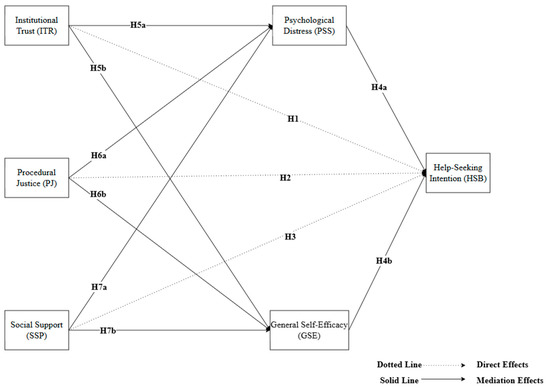

Disclaimer/Publisher’s Note: The statements, opinions and data contained in all publications are solely those of the individual author(s) and contributor(s) and not of MDPI and/or the editor(s). MDPI and/or the editor(s) disclaim responsibility for any injury to people or property resulting from any ideas, methods, instructions or products referred to in the content. |
© 2026 by the authors. Licensee MDPI, Basel, Switzerland. This article is an open access article distributed under the terms and conditions of the Creative Commons Attribution (CC BY) license.