

Article

Experimentation with Illicit Drugs Strongly Predicts Electronic Cigarette Use: A Cross-Sectional Study


by
Guilherme Welter Wendt
1,*,
Bianca Ribeiro Pinno
1,
Paula Andrea Rauber Suzaki
1,
Iara do Nascimento Teixeira
2,
Washington Allysson Dantas Silva
3,
Felipe Alckmin-Carvalho
4 and
Emerson Do Bú
4
1
Department of Medical Sciences, Postgraduate Program in Applied Health Sciences, Western Paraná State University, Francisco Beltrão 85601, Brazil
2
Department of Psychology, University of Minho, 4710-057 Braga, Portugal
3
Institute of Social Sciences, University of Lisbon, 1600-189 Lisbon, Portugal
4
Department of Psychology, University of Beira Interior, 6201-001 Covilhã, Portugal
*
Author to whom correspondence should be addressed.
Psychol. Int. 2025, 7(4), 98; https://doi.org/10.3390/psycholint7040098
Submission received: 9 October 2025 / Revised: 27 November 2025 / Accepted: 4 December 2025 / Published: 11 December 2025

Abstract

Background: The use of electronic cigarettes (ECs) has become a significant public health problem, especially among young people. EC use has been associated with increased nicotine exposure and other toxic substances, increasing the risk of early addiction and health problems. Recently, attention has focused on understanding the interplay between psychosocial stressors, exposure to violence, psychological distress, and an increased propensity to experiment with nicotine. Hence, the aim of this study was to estimate the prevalence of EC use in the previous month and its associated factors. Methods: This is a cross-sectional study based on secondary data analysis of a nationwide survey conducted to monitor risk and protective factors for the health of school-aged adolescents (52.89% males; 55.97% aged up to 15 years old). Specifically, we analyzed data from adolescents aged 13–17 years who answered questions on EC use (n = 36,659). Results: The results show that the prevalence of EC use in this sample was 11.23% (IC95%: 11.23, 11.87). Logistic regression revealed several factors that increased the likelihood of EC use, such as alcohol use by friends, alcohol use in the past month, gender (male), intentional binge drinking, higher mental health symptoms, living in urban areas, experience of abuse at home, report of other drug use, and smoking friends, with the latter exerting a higher influence. Conclusion: Findings show the interplay of peers, family and environmental influences on youth risk behavior. Prevention strategies should therefore include school- and family-based interventions, trauma-informed approaches and anti-marketing campaigns to dispel misconceptions regarding EC.

1. Introduction

Electronic cigarettes (ECs), often referred to as e-cigarettes, are the main source of nicotine products among young people (Meehan et al., 2024). According to the Global Youth Tobacco Survey, 2012–2019, the prevalence of EC usage in the previous month among 12- to 16-year-olds was 9.2%, with upper estimates of 33.2% (Sun et al., 2022). Researchers have found that, in parallel with the overall decline in tobacco products, youth are leading the way in the EC use (McWhirter et al., 2017).
Although several campaigns have been proposed, the ever-increasing popularity of EC can be explained by a need to ‘fit in’ or to be ‘cool’ (Camenga et al., 2018). The harmful effects seem underestimated by young EC users, yet a well-established route for initiation into other risky behaviors has been documented (Burt & Li, 2020; Jenssen et al., 2019; Kolokythas, 2022). For instance, the highly addictive nature of nicotine poses significant risks to youth development, as it impairs both brain development and psychosocial processes and can potentially lead to substance use disorders (Le, 2023).
However, the determinants of substance use by youth are complex and encompass the influences of relatives and friends, school experiences, policies and attitudes, along with behavioral and sociocultural factors. Moreover, psychological issues, adverse and traumatic experiences, as well as experiencing poverty and violence shape an at-risk pathway for healthy development (McWhirter et al., 2017). Factors such as parental and peer influence (Gaddy et al., 2022; Le, 2023; Patanavanich et al., 2021), ease of access to EC (Camenga et al., 2018; Kim et al., 2022), and gender (Groom et al., 2021; Salari et al., 2024) have been documented as important predictors of e-cigarette use and experimentation. This mirrors the findings on alcohol consumption, where parental use influences youth alcohol consumption (Vidourek et al., 2018). For example, a school-based survey in the United States found that male adolescents are 1.3 to 1.5 times more likely to use EC compared to female adolescents (Chen et al., 2020).
In addition, there is evidence that EC has a bidirectional relationship with anxiety, depression and externalizing tendencies (Tahniyath et al., 2024). Studies on a large sample (n = 28,135) of adolescents have shown that sexual violence can also trigger experimentation with EC and increases the likelihood of this by around 50% (Baiden et al., 2023). In addition, the role of age, ethnicity, social vulnerability and school-related variables has been equally important in understanding the determinants of EC use (Groom et al., 2021; Tahniyath et al., 2024; Yockey et al., 2023). For example, the 2016–2017 Canadian Student Tobacco, Alcohol and Drugs Survey found that bullying victimization was a significant predictor of EC experimentation among youth (Azagba et al., 2020). Online victimization or cyberbullying has been shown to be associated with EC (Baiden et al., 2023). Data from the US shows that almost one in five high school students have experimented with EC, demonstrating the widespread use of these devices (Kolokythas, 2022).
In Latin America, compared to high-income countries such as North America and Europe, where systematic school-based surveys have provided solid epidemiological data (e.g., ESPAD Group, 2025; Park-Lee et al., 2024), there is little evidence of EC use among young people. While studies in these contexts consistently show high prevalence and well-documented psychosocial correlates of experimentation with e-cigarettes, research in Latin America is fragmented, often limited to small samples, and rarely considers the broader social determinants of health (for an overview, see Izquierdo-Condoy et al., 2025). This lack of systematic evidence is particularly concerning given the region’s particular vulnerabilities, such as high rates of poverty, social inequality, community violence and early onset substance use, which may increase adolescents’ susceptibility to e-cigarette use (Toledo, 2025).
In Brazil, a country characterized by an early onset of alcohol, tobacco, and illicit drug use among young people and by persistent social inequalities that exacerbate health vulnerability (Portes Ribeiro et al., 2025), the marketing of EC has been banned by the National Health Surveillance Agency since 2009 (National Health Surveillance Agency (Brazil), 2009). This ban was unanimously reaffirmed and extended by Resolution n. 855/2024, which not only maintained the original ban but also strengthened it by explicitly referring to heated tobacco products, accessories and refill packs, banning travelers from importing such devices and introducing stricter enforcement mechanisms (National Health Surveillance Agency (Brazil), 2024). Despite the ban, Brazilian teenagers are actively engaged with EC. The fact of online purchasing is one of the most frequently cited factors facilitating EC access for young people (Izquierdo-Condoy et al., 2025).
Furthermore, studies have shown that the marketing of tobacco and nicotine persists on social media platforms, often avoiding legal bans and therefore targeting young people through influencers and engaging content (Adekeye et al., 2025a, 2025b). While access pathways are becoming better understood, the specific psychosocial predictors of EC use among Brazilian youth are still poorly explored. In this regard, the Pesquisa Nacional de Saúde do Escolar (PeNSE; National School Health Survey), the most comprehensive nationwide surveillance system to monitor risk and protective factors among adolescents, provides an important opportunity to examine how family, peer and contextual stressors contribute to EC use in the Brazilian context. In the 4th edition of this survey, released in the 2022 report, substantial items were added to the 2019 data set, including questions about EC lifetime and past-month use.

The Current Study

The aim of this study was to estimate the prevalence of EC use in the previous month in a sample of Brazilian youth using data from PeNSE, 4th edition. We also aimed to explore the factors associated with EC. Based on the previous findings, we formulated the following hypotheses:
H1. 
Adolescents who report having parents, guardians, or friends who use tobacco products are more likely to report using e-cigarettes (McWhirter et al., 2017; Gaddy et al., 2022).
H2. 
Male adolescents are more likely to report e-cigarette use compared to female adolescents (Chen et al., 2020; Groom et al., 2021; Salari et al., 2024).
H3. 
Adolescents reporting alcohol use and binge drinking are more likely to use EC, reflecting patterns of experimentation with multiple substances documented among youth (Baiden et al., 2023; Vidourek et al., 2018).
H4. 
Higher levels of psychological distress, including anxiety and depression symptoms, are positively associated with EC use (Tahniyath et al., 2024).
H5. 
Adolescents who report experiences of victimization such as bullying, cyberbullying, or abuse are more likely to report using EC (Azagba et al., 2020; Baiden et al., 2023).
H6. 
Given the Brazilian context of early onset of substance use and high social vulnerability (Portes Ribeiro et al., 2025), adolescents who report experimentation with illicit drugs will show a particularly strong likelihood of EC use.
The identification of such predictors is not only crucial for the development of effective prevention strategies but is also in line with Brazil’s commitments under the World Health Organization (WHO) Framework Convention on Tobacco Control (FCTC), which stresses the protection of children and adolescents from nicotine exposure (WHO, 2003). In addition, it responds to an urgent call to expand monitoring, research, and evaluation of EC use by increasing knowledge of the key predictors of experimentation in this population (National Center for Chronic Disease Prevention and Health Promotion, 2016).

2. Materials and Methods

2.1. Participants, Procedures, and Design

This is a cross-sectional study in which a secondary data analysis was conducted on the use of EC among youth. The data analyzed (PeNSE 4th edition) are publicly available and were provided by the Brazilian Institute of Geography and Statistics (Instituto Brasileiro de Geografia e Estatística, 2022). The PeNSE is a survey conducted in collaboration with the Brazilian Ministry of Health and includes a cohort of students aged 13 to 17. In this edition (PeNSE 2019), over 190,000 valid questionnaires were collected (Instituto Brasileiro de Geografia e Estatística, 2022). Participants were enrolled in 4242 schools from the public and private sectors, covering all Brazilian states. All ethical aspects were approved by the National Research Ethics of the Brazilian Ministry of Health (Opinion No. 3.249.268 of 8 April 2019).
Importantly, Brazilian legislation for research on human subjects stipulates that any person can refuse to answer a question in each survey, which explains different valid answers for each variable. Two codes for these circumstances were included in the data dictionary: skipped the question and abandoned the survey. Moreover, grouping individuals into age brackets was applied to protect youth’s anonymity (Instituto Brasileiro de Geografia e Estatística, 2022)
By using smartphones, participants completed, in 2019, the PeNSE questionnaires. Responses were collected individually. The questionnaire was only shown when informed consent was obtained. The instrument used by PeNSE is structured and covers several variables, such as family relationships, bullying, cyberbullying and other types of violence and abuse, substance use of the respondent and their acquaintances, economic vulnerability, nutrition, mental health and others. Further details about the survey can be found elsewhere (Instituto Brasileiro de Geografia e Estatística, 2022; Malta et al., 2022; Oliveira et al., 2017).

2.2. Dependent Variable

For this study, the dependent variable (DV) was defined as EC use in the past month (yes/no).

2.3. Independent Variables

Independent variables (IVs) included in this study were all single-item indicators: Age group (13–15/16–17), Gender (Male/Female), and Urban area (No/Yes); Ethnicity (Indigenous/Asian/Black/Caucasian/Pardo [mixed race]); Public school (Yes/No); and several substance-use and related variables: Days got drunk in a month (Never/1–5/6 or more), Problems Drinking (Yes/No), Parent/Guardians drinking habits (No one/Only one of them/Both/I do not know), Cigarette experimentation (Yes/No), Friends consumption of alcohol in last month (Yes/No), Use of other drugs (Yes/No), Consumed alcohol last month (Yes/No), Parents/guardians smoke (No/Only one of them/Both/I do not know), and Friends smoke (Yes/No). Finally, violence and victimization variables included: Physical abuse at home (Yes/No), Sexual abuse (Yes/No), Cyberbullying victimization (Yes/No), Bullying victimization (Yes/No), and Community violence (Yes/No).
For the mental health symptoms, the five questions (excessive worry, sadness, feeling that they have no significant others, irritability, and feeling that life is not worthwhile) were summed up to generate a composite score. Responses are given on an agreement scale, ranging from 1 (never in the past month) to 5 (always). An example item is: “In the last month, how often did you feel that no one cares about you?”. Reliability analyses revealed good indices (α = 0.76).

2.4. Data Analysis

First, we downloaded the latest dataset from the Instituto Brasileiro de Geografia e Estatística (2021). The Microsoft spreadsheets were imported into the Statistical Packaged for the Social Sciences, version 23 and Jasp, version 0.19.3. Preliminary procedures to confirm data validity included an examination of all variables. Minimum and maximum values were computed for the continuous variables, such as the mental health composite score, along with box plots inspection. Frequency distribution calculations were made for all categorical variables (example: Age group, Gender, Ethnicity, and Yes/No categories). This process indicated all values were within the anticipated limits (e.g., Gender = Male or Female; Age Group = 13–15 or 16–17), with no impossible values present in the data set. Missing responses were treated with pairwise deletion when available. Descriptive statistics included means, standard deviations (SDs), valid frequencies, and percentages. Group comparisons between DV and IVs were performed using Pearson’s chi-square test and Welch’s test, and binary logistic regression was used to identify the factors associated with EC use. For Pearson’s chi-square tests, adjusted standardized residuals were used to compare observed vs. expected frequency between cells.
Further, power analysis was then conducted in G*Power, version 3.1, to determine the statistical power achieved by the logistic regression model, given the sample size. Analysis was based on the Large Samples z-test method, assuming a two-tailed test, with an alpha level set at 0.05. With a target odds ratio (OR) of 1.30, a baseline probability of 0.20, and explained variance (R2 = 0.10), the yielded power was, approximately, 99.99%.

3. Results

Prevalence and Bivariate Analyses

A total of 36,659 valid questionnaires were obtained from the IBGE website, containing information on EC use in the last 30 days of data collection. A prevalence of 11.23% (IC95%: 11.23, 11.87) EC use in the past month was found.
Table 1 and Table 2 contain the results of the cross-tabulations as well as the corresponding statistics and p-values. As mentioned earlier, participants were allowed to skip or drop out of the questionnaire, so each variable is shown with its valid frequency and percentage (%). While Table 1 reports on demographic data, Table 2 focuses on substance-use, violence and victimization.
In addition, Welch tests showed that those who reported using EC in the past month had worse mental health symptoms (M = 16.03, SD = 4.63) than non-users (M = 15.66, SD = 4.58, p < 0.001, Cohen’s d = 0.08, see Figure 1).
The bivariate associations shown in Table 1 and Table 2 with significance levels below 0.20 were entered as predictors of EC use, along with the mental health score (p < 0.001, Figure 1). The stepwise entry method yielded the results and the corresponding crude odds ratios (ORc). After adjusting the model for all independent variables with p-values below 0.05, the adjusted odds ratios (ORa) were obtained. The results of the binary logistic regression analysis are shown in Table 3.
Results of bivariate analyzes revealed significant associations between the consumption of EC and several sociodemographic, behavioral, and psychosocial factors. However, only a subset of the predictors remained significant in the binary logistic regression model. Having friends who smoked was the strongest predictor, more than doubling the likelihood of EC use. Other risk factors included attending a private school, being male, having consumed alcohol in the past month, being frequently drunk, using other drugs, living in urban areas, reporting higher levels of psychological distress, experiencing physical abuse at home, and having friends who had consumed alcohol in the past month. In contrast, parental smoking and ethnicity, which showed associations in the bivariate analysis, did not remain significant in the adjusted model.

4. Discussion

In this study, we investigated the prevalence and factors associated with EC use among Brazilian youth using data from the PeNSE 4th Edition. Regarding the predictors of EC use, we hypothesized that parental, guardian, and peer tobacco use (H1), male gender (H2), alcohol use and binge drinking (H3), psychological distress (H4), victimization experiences, such as bullying, cyberbullying, or abuse (H5), along with experiences with illicit drugs (H6) would predict EC use among Brazilian adolescents.
Regarding the prevalence of EC use, the main results showed that 11.23% of respondents who completed the substance use section reported having experimented with EC in the 30 days prior to the survey. This pattern is comparable to other studies. For example, analysis of the Global Youth Tobacco Survey (GYTS) data from 75 countries found that in 30 countries, the prevalence of current EC use among young people was above 10% (e.g., Sreeramareddy et al., 2022). Nevertheless, the prevalence observed in the present study is lower than that reported in some European investigations, for instance. In recent years, several countries have documented strikingly higher rates, e.g., Bulgaria (23.3% among 13- to 15-year-olds), Monaco (41% among 15- to 16-year-olds), and Poland (22.3%).
However, it must be emphasized that ECs are banned in Brazil. The reason for the ban is concern about the lack of evidence for the suitability of EC as a smoking cessation aid, their addictive potential, the increasing prevalence among young people and the associated health risks, and the threat to national tobacco control measures (Scholz et al., 2024). However, despite these strict regulations, the country faces major enforcement issues, which contribute to these products circulating on the illicit market and being readily available online (Silva & Moreira, 2019). In addition, Camenga et al. (2018) stressed the role played by flavored tobacco products. Based on qualitative analyses, youth may interpret this fact as a facilitator for obtaining peer approval. Furthermore, insights from focus groups with teenagers indicated that access to EC is easy in comparison to the routes for obtaining traditional cigarettes (Camenga et al., 2018). This dynamic may help explain the findings of the present study, which suggests that bans alone are not sufficient to curb use among youth, especially in contexts characterized by parallel markets and weak regulatory oversight.
The hypotheses set in this study were only partially confirmed. Regarding H1, adolescents whose friends smoked were more than twice as likely to report EC use in the previous month, which attests a strong influence of peers (Groom et al., 2021; Le, 2023; Pettigrew et al., 2023). On the other hand, parental smoking did not remain significant in the adjusted model, suggesting that peer dynamics are stronger in adolescence than those of family members (Sun et al., 2022). This finding is in line with results from longitudinal data suggesting that peer use of e-cigarettes greatly increases the risk of individual experimentation (Cheng et al., 2023). However, family influences could not be overlooked, considering that in an Irish cohort study, smoking by a caregiver increased the likelihood of EC use among adolescents, emphasizing the interplay between peer and parental behavior in the substance use of youth (Sunday et al., 2023).
Consistent with hypothesis H2, male gender showed significantly higher likelihood to use EC. Data from the Global Youth Tobacco Survey across 75 countries found a higher prevalence among males compared to females (Sreeramareddy et al., 2022). Indeed, Izquierdo-Condoy et al. (2025) observed that even in contexts where e-cigarettes are banned, male students are more prone to report use. This pattern is confirmed by national surveillance data, indicating that boys are up to 1.5 times more likely to use EC than girls (Chen et al., 2020). Taken together, these findings suggest that gender differences in EC use are robust across different sociocultural contexts, highlighting male adolescents as a particularly vulnerable group.
Both alcohol use in the last month and self-reported episodes of drunkenness were associated with higher odds of EC use, which was set in H3. This finding is consistent with broader polysubstance use trends documented internationally, where alcohol use has been identified as a strong correlate of EC. For example, Baiden et al. (2023) demonstrated that adolescents exposed to alcohol are more likely to use EC, hence reinforcing the clustering of risky health behaviors during adolescence. Similarly, H4 was confirmed as higher levels of psychological distress were positively associated with e-cigarette use. Although the effect size was modest, this association reflects the findings from several large-scale studies. Park-Lee et al. (2024) found that adolescents with higher levels of stress were more likely to ever and currently use EC. More recent findings also confirm this association and show that psychological distress is a consistent risk factor for e-cigarette use across different populations (Erhabor et al., 2025).
Physical abuse at home was found to be a significant predictor of EC use, partially confirming H5. This is coherent with the literature showing that adverse childhood experiences, particularly physical abuse, could be associated with likelihood of experimenting with vaping, as well as persistent use and difficulties in quitting (Graham et al., 2025). While bullying and cyberbullying did not remain significant in the final, adjusted model, the persistence of domestic abuse underscores the importance of trauma in the family environment as a determinant of substance use behavior. These results highlight that, in addition to peer victimization, intrafamilial violence may be a critical pathway to susceptibility to experimentation with e-cigarettes among adolescents.
Finally, H6 was confirmed. In other words, those who reported having experimented other drugs were also more likely to use EC in the previous month. There is evidence that vaping among adolescents is positively associated with the use of other psychoactive substances, including alcohol, cannabis and non-prescription drugs (Lau et al., 2023). Both longitudinal and cross-sectional studies confirm this association, showing that youth who engage in other forms of substance use are more prone to experiment with and persistently use EC compared to peers without such a history (Portes Ribeiro et al., 2025; Sun et al., 2022; Tercyak et al., 2021).

Implications, Future Directions and Study Limitations

The present investigation carries important implications for both research and practice, as they show how multiple risk factors interact with youth behavior, particularly in relation to EC use. First, the influence of peers and family seems to play a crucial role because these influences might normalize and encourage risky behaviors (Dos Santos Maximino et al., 2023). Hence, peers can exert a modeling effect, giving opportunities to engage in risky behaviors, while parental practices may implicitly validate EC experimentation by failing to establish clear boundaries against it. This dynamic suggests that prevention efforts should target both peers and the family environment. School-based programs must explicitly address the social appeal of e-cigarettes and provide adolescents with coping strategies to resist peer pressure, while family-centered interventions should raise parents’ awareness of the indirect support for substance use that may occur through their own behavior.
Taken together, these approaches may provide a more comprehensive strategy to reduce adolescents’ vulnerability to e-cigarette use. Furthermore, such strategies are consistent with public health priorities in Brazil and with international commitments (e.g., WHO Framework Convention on Tobacco Control; WHO, 2003), that emphasize the protection of children and adolescents from nicotine exposure and related harms. The consequences, therefore, could include targeting direct influences, such as parents and/or guardians, as well as peers (Vidourek et al., 2018). In the case of EC, school-based approaches are strongly recommended to counteract the growing popularity of these devices among youth (Yockey et al., 2023). Furthermore, findings support a broader conceptualization of EC use as part of a cluster of multiple risk factors, which is consistent with propositions that substance use reflects intrinsic vulnerabilities and underlying neurobiological vulnerabilities, rather than individual behaviors (Koob & Volkow, 2016; Baiden et al., 2023).
The findings highlight the critical need for trauma-informed prevention and intervention strategies aiming at targeting youth EC use (Shin, 2021). There is evidence that youth with traumatic experiences are more prone to nicotine dependence and experimentation with e-cigarettes (Graham et al., 2025), which stresses the need for cessation programs based on trauma-informed principles, including safety, individual choice and non-judgmental support to improve outcomes (Goldstein et al., 2024).
Despite these strengths, some limitations need to be pointed out: first, due to the cross-sectional design of the study, no causal relationship can be inferred, and the associations reported here should be interpreted as correlational in nature. Second, as in most studies concerning youth substance use, self-reported measures may result in recall bias or deliberate underreporting, given the sensitive content of the questions. Third, even though PeNSE is one of the most comprehensive nationwide surveys about youth health in Brazil, the fact that only the adolescents who are regularly attending school have been sampled is an important limitation, since out-of-school adolescents may be even more vulnerable to substance use and related risk factors, thus leading to potential underestimation of prevalence rates. Furthermore, despite the high sample size, some subgroups were small, for example, Indigenous and Asian youth, which reduces the statistical power to detect associations and to generalize results among these populations.
Finally, even though a number of predictors have been controlled for, some unmeasured confounders (e.g., access to e-cigarettes via informal markets) might also represent an important role and should therefore be considered in future studies. In order to address these limitations, future studies could implement a longitudinal design so that the developmental and temporal trajectory of EC initiation and usage can be better captured. Researchers should also employ mixed-method approaches through the collection of survey data and the use of qualitative methodologies (i.e., in-depth interviews) in order to provide an understanding of what youth perceive vaping to be, the perceived value of vaping to society, and how flavored products affect how youth perceive risk associated with vapes. Finally, researchers need to continue to study youth outside of school environments, as evidence shows they are currently significantly under-represented in school-based studies and vulnerable for many other reasons: social exclusion, poverty, and lack of access to resources that act as protective factors (Dos Santos Maximino et al., 2023).

5. Conclusions

In a country where the commercialization of EC is banned, such as Brazil, the prevalence of EC uses among adolescents reached 11.23%, suggesting that legal restrictions alone are not sufficient to prevent access and experimentation. Also, various factors independently increased the likelihood of EC use, such as friends who smoked or drank, personal alcohol consumption in the past month, male gender, and episodes of intentional drunkenness. Elevated psychological distress, other drug use, living in urban areas and physical abuse at home were also found to be significant predictors in the final model. Overall, these findings show the interplay of peer, family and environmental influences on youth risk behavior, highlighting that prohibition alone is not enough to curb access to drugs and experimentation. Prevention strategies should therefore include school- and family-based interventions, trauma-informed approaches and anti-marketing campaigns to dispel misconceptions that ECs are not dangerous.

Author Contributions

Conceptualization, G.W.W., P.A.R.S., F.A.-C., E.D.B., and W.A.D.S., Data curation, B.R.P. and P.A.R.S.; Formal analysis, B.R.P. and E.D.B.; Investigation, G.W.W.; Methodology, G.W.W., B.R.P., P.A.R.S. and I.d.N.T.; Project administration, I.d.N.T.; Resources, F.A.-C.; Software, B.R.P.; Supervision, G.W.W., I.d.N.T., and F.A.-C.; Visualization, I.d.N.T.; Writing—original draft, G.W.W., E.D.B. and W.A.D.S.; Writing—review & editing, P.A.R.S., F.A.-C., E.D.B. and W.A.D.S. All authors have read and agreed to the published version of the manuscript.

Funding

This research received no external funding.

Institutional Review Board Statement

The study was conducted in accordance with the Declaration of Helsinki. All ethical aspects were approved by the National Research Ethics Commission, Brazilian Ministry of Health (opinion no. 3.249.268, 8 April 2019).

Informed Consent Statement

Informed consent was obtained from all subjects involved in the study.

Data Availability Statement

Data is available (including variable codes) at https://www.ibge.gov.br/estatisticas/downloads-estatisticas.html?caminho=pense/2019/microdados/, accessed on 11 June 2025.

Conflicts of Interest

The authors declare no conflicts of interest.

Abbreviations

The following abbreviations are used in this manuscript:
ECE-cigarette
PeNSEPesquisa Nacional de Saúde do Escolar
IBGEInstituto Brasileiro de Geografia e Estatística
OROdds ratios
SDStandard deviation
CIConfidence interval

References

  1. Adekeye, O. T., Boltz, M., Jao, Y. L., Branstetter, S., & Exten, C. (2025a). Vaping in the digital age: How social media influences adolescent attitudes and beliefs about e-cigarette use. Journal of Child & Adolescent Substance Use, 30(1), 13–26. [Google Scholar] [CrossRef]
  2. Adekeye, O. T., Marquez, F., Abuga, C., Oclaray, T. K., Gonyoe, G., & Mumba, M. N. (2025b). Exploring social media’s influence on adolescents’ curiosity about e-cigarette use: A secondary data analysis. Journal of Child & Adolescent Substance Use, 30(5), 245–256. [Google Scholar] [CrossRef]
  3. Azagba, S., Mensah, N. A., Shan, L., & Latham, K. (2020). Bullying victimization and e-cigarette use among middle and high school students. Journal of School Health, 90(7), 545–553. [Google Scholar] [CrossRef] [PubMed]
  4. Baiden, P., Cavazos-Rehg, P., Szlyk, H. S., Onyeaka, H. K., Peoples, J. E., Kasson, E., & Muoghalu, C. (2023). Association between sexual violence victimization and electronic vaping product use among adolescents: Findings from a population-based study. Substance Use & Misuse, 58(5), 637–648. [Google Scholar] [CrossRef]
  5. Burt, B., & Li, J. (2020). The electronic cigarette epidemic in youth and young adults: A practical review. JAAPA, 33(3), 17–23. [Google Scholar] [CrossRef]
  6. Camenga, D. R., Fiellin, L. E., Pendergrass, T., Miller, E., Pentz, M. A., & Hieftje, K. (2018). Adolescents’ perceptions of flavored tobacco products, including e-cigarettes: A qualitative study to inform FDA tobacco education efforts through videogames. Addictive Behaviors, 82, 189–194. [Google Scholar] [CrossRef] [PubMed]
  7. Chen, R., Pierce, J. P., Leas, E. C., White, M. M., Kealey, S., Strong, D. R., Trinidad, D. R., Benmarhnia, T., & Messer, K. (2020). Use of electronic cigarettes to aid long-term smoking cessation in the United States: Prospective evidence from the PATH cohort study. American Journal of Epidemiology, 189(12), 1529–1537. [Google Scholar] [CrossRef]
  8. Cheng, H. G., Lizhnyak, P. N., & Richter, N. (2023). Mutual pathways between peer and own e-cigarette use among youth in the United States: A cross-lagged model. BMC Public Health, 23, 1609. [Google Scholar] [CrossRef]
  9. Dos Santos Maximino, G., Andrade, A. L. M., de Andrade, A. G., & de Oliveira, L. G. (2023). Profile of Brazilian undergraduates who use electronic cigarettes: A cross-sectional study on forbidden use. International Journal of Mental Health and Addiction, 23(1), 193–206. [Google Scholar] [CrossRef]
  10. Erhabor, J., Yao, Z., Tasdighi, E., Shahawy, O. E., Benjamin, E. J., Bhatnagar, A., & Blaha, M. J. (2025). Association of e-cigarette use, psychological distress, and substance use: Insights from the all of us research program. Addictive Behaviors, 166, 108322. [Google Scholar] [CrossRef]
  11. ESPAD Group. (2025). Key findings from the 2024 European school survey project on alcohol and other drugs (ESPAD). European Union Drugs Agency. [Google Scholar]
  12. Gaddy, M. Y., Vasquez, D., & Brown, L. D. (2022). Predictors of e-cigarette initiation and use among middle school youth in a low-income predominantly Hispanic community. Frontiers in Public Health, 10, 883362. [Google Scholar] [CrossRef]
  13. Goldstein, E., Chokshi, B., Melendez-Torres, G. J., Rios, A., Jelley, M., & Lewis-O’Connor, A. (2024). Effectiveness of trauma-informed care implementation in health care settings: Systematic review of reviews and realist synthesis. The Permanente Journal, 28(1), 135–150. [Google Scholar] [CrossRef]
  14. Graham, A. L., Cha, S., Jacobs, M. A., Edwards, G., Funsten, A. L., & Papandonatos, G. D. (2025). Adverse childhood experiences are associated with e-cigarette abstinence in a vaping cessation randomized clinical trial among adolescents. The Journal of Adolescent Health, 77(2), 245–252. [Google Scholar] [CrossRef]
  15. Groom, A. L., Vu, T.-H. T., Landry, R. L., Kesh, A., Hart, J. L., Walker, K. L., Wood, L. A., Robertson, R. M., & Payne, T. J. (2021). The influence of friends on teen vaping: A mixed-methods approach. International Journal of Environmental Research and Public Health, 18(13), 6784. [Google Scholar] [CrossRef]
  16. Instituto Brasileiro de Geografia e Estatística. (2021). PeNSE microdados. Available online: https://www.ibge.gov.br/estatisticas/downloads-estatisticas.html?caminho=pense/2019/microdados/ (accessed on 11 June 2025).
  17. Instituto Brasileiro de Geografia e Estatística. (2022). Pesquisa nacional de saúde do escolar. IBGE. Available online: https://biblioteca.ibge.gov.br/visualizacao/livros/liv101955.pdf (accessed on 11 June 2025).
  18. Izquierdo-Condoy, J. S., Ruiz Sosa, K., Salazar-Santoliva, C., Restrepo, N., Olaya-Villareal, G., Castillo-Concha, J. S., Loaiza-Guevara, V., & Ortiz-Prado, E. (2025). E-cigarette use among adolescents in Latin America: A systematic review of prevalence and associated factors. Preventive Medicine Reports, 49, 102952. [Google Scholar] [CrossRef] [PubMed]
  19. Jenssen, B. P., Walley, S. C., Groner, J. A., Rahmandar, M., Boykan, R., Mih, B., Marbin, J. N., & Caldwell, A. L. (2019). E-cigarettes and similar devices. Pediatrics, 143(2), e20183652. [Google Scholar] [CrossRef] [PubMed]
  20. Kim, J., Lee, S., & Chun, J. (2022). An international systematic review of prevalence, risk, and protective factors associated with young people’s e-cigarette use. International Journal of Environmental Research and Public Health, 19(18), 11570. [Google Scholar] [CrossRef]
  21. Kolokythas, A. (2022). The dangers of e-cigarette use among our youth: A public health issue and our role as health care providers. Oral Surgery, Oral Medicine, Oral Pathology and Oral Radiology, 134(5), 503–504. [Google Scholar] [CrossRef]
  22. Koob, G. F., & Volkow, N. D. (2016). Neurobiology of addiction: A neurocircuitry analysis. The Lancet Psychiatry, 3(8), 760–773. [Google Scholar] [CrossRef] [PubMed]
  23. Lau, L., Conti, A. A., Hemmati, Z., & Baldacchino, A. M. (2023). The prospective association between the use of e-cigarettes and other psychoactive substances in young people: A systematic review and meta-analysis. Neuroscience and Biobehavioral Reviews, 153, 105392. [Google Scholar] [CrossRef]
  24. Le, T. T. T. (2023). Key risk factors associated with electronic nicotine delivery systems use among adolescents. JAMA Network Open, 6(10), e2337101. [Google Scholar] [CrossRef]
  25. Malta, D. C., Oliveira, W. A. D., Prates, E. J. S., Mello, F. C. M. D., Moutinho, C. D. S., & Silva, M. A. I. (2022). Bullying entre adolescentes brasileiros: Evidências das pesquisas nacionais de saúde do escolar, Brasil, 2015 e 2019. Revista Latino-Americana de Enfermagem, 30, e3679. [Google Scholar] [CrossRef]
  26. McWhirter, J. J., McWhirter, B. T., McWhirter, E. H., & McWhirter, A. C. (2017). At-risk youth: A comprehensive response for counselors, teachers, psychologists, and human service professionals (6th ed.). Cengage Learning. [Google Scholar]
  27. Meehan, J., Heffron, M., Avoy, H. M., Reynolds, C., Kyne, L., & Cox, D. W. (2024). The adverse effects of vaping in young people. Global Pediatrics, 9, 100190. [Google Scholar] [CrossRef]
  28. National Center for Chronic Disease Prevention and Health Promotion (US), Office on Smoking and Health. (2016). E-cigarette use among youth and young adults: A report of the Surgeon General. Centers for Disease Control and Prevention (US). Available online: https://www.ncbi.nlm.nih.gov/books/NBK538680/ (accessed on 7 June 2025).
  29. National Health Surveillance Agency (Brazil). (2009). Resolução da Diretoria Colegiada—RDC nº 46, de 28 de agosto de 2009 (Resolution of the Collegiate Board—RDC No. 46, of August 28, 2009). Diário Oficial da União. [Google Scholar]
  30. National Health Surveillance Agency (Brazil). (2024). Resolução da Diretoria Colegiada—RDC nº 855, de 19 de abril de 2024 (Resolution of the Collegiate Board—RDC No. 855, of April 19, 2024). Diário Oficial da União. [Google Scholar]
  31. Oliveira, M. M. D., Campos, M. O., Andreazzi, M. A. R. D., & Malta, D. C. (2017). Características da Pesquisa Nacional de Saúde do Escolar—PeNSE. Epidemiologia e Serviços de Saúde, 26(3), 605–616. [Google Scholar] [CrossRef] [PubMed]
  32. Park-Lee, E., Jamal, A., Cowan, H., Cullen, K. A., Neff, L. J., & King, B. A. (2024). Notes from the field: E-cigarette and nicotine pouch use among middle and high school students—United States, 2024. Morbidity and Mortality Weekly Report, 73(35), 774–778. [Google Scholar] [CrossRef] [PubMed]
  33. Patanavanich, R., Aekplakorn, W., Glantz, S., & Kalayasiri, R. (2021). Use of e-cigarettes and associated factors among youth in Thailand. Asian Pacific Journal of Cancer Prevention, 22(7), 2199–2207. [Google Scholar] [CrossRef]
  34. Pettigrew, S., Santos, J. A., Li, Y., Jun, M., Anderson, C., & Jones, A. (2023). Factors contributing to young people’s susceptibility to e-cigarettes in four countries. Drug and Alcohol Dependence, 250, 109944. [Google Scholar] [CrossRef] [PubMed]
  35. Portes Ribeiro, L. E., Sorio Flor, L., Lopes, C. A., & Mabotti Costa Leite, F. (2025). Illicit drug use and sociodemographic correlates among adolescents in a Brazilian metropolitan region: A school-based cross-sectional study. International Journal of Environmental Research and Public Health, 22(9), 1373. [Google Scholar] [CrossRef]
  36. Salari, N., Rahimi, S., Darvishi, N., Abdolmaleki, A., & Mohammadi, M. (2024). The global prevalence of e-cigarettes in youth: A comprehensive systematic review and meta-analysis. Public Health in Practice, 7, 100506. [Google Scholar] [CrossRef]
  37. Scholz, J. R., Malta, D. C., Fagundes, A. A. d. P., Pavanello, R., Bredt, G. L., & Rocha, M. d. S. (2024). Brazilian society of cardiology position statement on the use of electronic nicotine delivery systems—2024. Arquivos Brasileiros de Cardiologia, 121(2), e20240063. [Google Scholar] [CrossRef]
  38. Shin, S. H. (2021). Preventing e-cigarette use among high-risk adolescents: A trauma-informed prevention approach. Addictive Behaviors, 115, 106795. [Google Scholar] [CrossRef] [PubMed]
  39. Silva, A. L. O. D., & Moreira, J. C. (2019). The ban of electronic cigarettes in Brazil: Success or failure? A proibição dos cigarros eletrônicos no Brasil: Sucesso ou fracasso? Ciencia & Saúde Coletiva, 24(8), 3013–3024. [Google Scholar] [CrossRef]
  40. Sreeramareddy, C. T., Acharya, K., & Manoharan, A. (2022). Electronic cigarettes use and ‘dual use’ among the youth in 75 countries: Estimates from Global Youth Tobacco Surveys (2014–2019). Scientific Reports, 12, 20967. [Google Scholar] [CrossRef]
  41. Sun, J., Xi, B., Ma, C., Zhao, M., & Bovet, P. (2022). Prevalence of e-cigarette use and its associated factors among youths aged 12 to 16 years in 68 countries and territories: Global youth tobacco survey, 2012–2019. American Journal of Public Health, 112(4), 650–661. [Google Scholar] [CrossRef]
  42. Sunday, S., Clancy, L., & Hanafin, J. (2023). The associations of parental smoking, quitting and habitus with teenager e-cigarette, smoking, alcohol and other drug use in GUI cohort ’98. Scientific Reports, 13, 20105. [Google Scholar] [CrossRef]
  43. Tahniyath, U., Begum, S. S., & Unnisa, M. (2024). Vaping trends among adolescents: Understanding the rise of e cigarettes in youth culture. Journal of Advances in Medical and Pharmaceutical Sciences, 26(8), 48–63. [Google Scholar] [CrossRef]
  44. Tercyak, K. P., Phan, L., Gallegos-Carrillo, K., Mays, D., Audrain-McGovern, J., Rehberg, K., Li, Y., Cartujano-Barrera, F., & Cupertino, A. P. (2021). Prevalence and correlates of lifetime e-cigarette use among adolescents attending public schools in a low income community in the US. Addictive Behaviors, 114, 106738. [Google Scholar] [CrossRef]
  45. Toledo, J. P. C. (2025). Vaping illusions: The hidden risks of e-cigarette use among young Filipinos and adolescents in Latin America. International Journal of Cardiology Cardiovascular Risk and Prevention, 24, 200375. Available online: https://www.ncbi.nlm.nih.gov/pubmed/40007582 (accessed on 17 May 2025). [CrossRef]
  46. Vidourek, R. A., King, K. A., Burbage, M., & Okuley, B. (2018). Impact of parenting behaviors on recent alcohol use among African American students. Child and Adolescent Social Work Journal, 35(3), 271–282. [Google Scholar] [CrossRef]
  47. World Health Organization (WHO). (2003). WHO framework convention on tobacco control. World Health Organization. [Google Scholar]
  48. Yockey, R. A., Chaliawala, K., Vidourek, R. A., & King, K. (2023). School factors associated with past 30-day e-cigarette use among Hispanic youth. The Journal of School Nursing, 41(4), 426–430. [Google Scholar] [CrossRef] [PubMed]
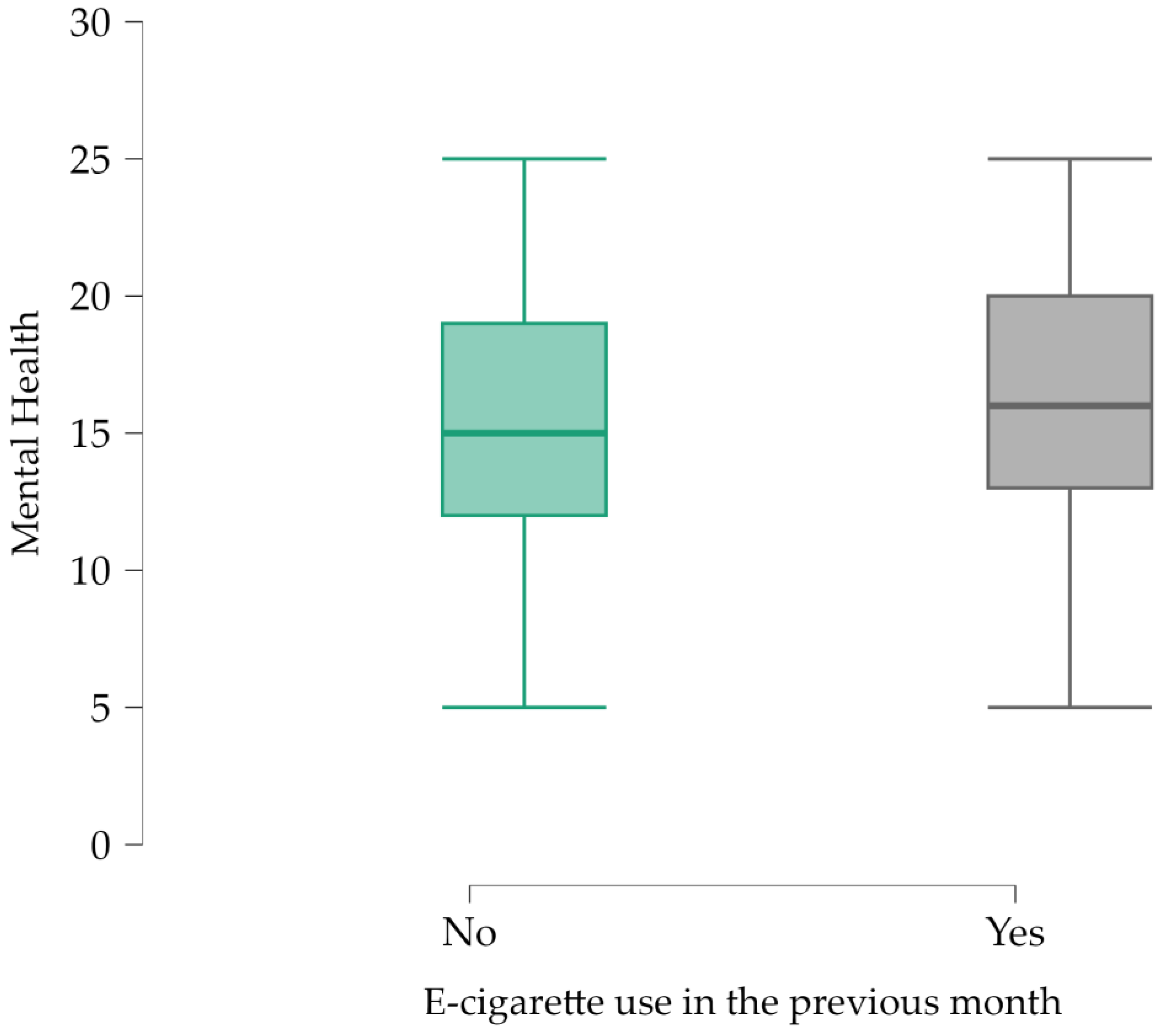
Figure 1. Box plot displaying mental health scores according to e-cigarette use in the previous month.
Psycholint 07 00098 g001
Table 1. E-cigarette Experimentation Among Brazilian Youth by Demographic Independent Variables (Valid n/%).
E-Cigarette Experimentation
YesNoX2p
Age group 0.5570.455
       13–152337 (55.43%)18,036 (56.04%)
       16–171879 (44.57%)14,149 (43.96%)
Gender 107.010<0.001
       Male2549 (60.36%) *16,787 (51.91%)
       Female1674 (39.64%)15,551 (48.09%)
Urban area 30.831<0.001
       No76 (1.79%)1100 (3.39%)
       Yes4160 (98.21%) *31,323 (96.61%)
Ethnicity 100.376<0.001
       Indigenous93 (2.26%)855 (2.69%)
       Asian151 (3.66%)1163 (3.66%)
       Black434 (10.53%)3948 (12.42%)
       Caucasian1903 (46.17%) *12,135 (38.18%)
       Pardo (mixed race)1541 (37.38%)13,680 (43.04%)
Public school 530.546<0.001
       Yes1687 (39.83%)18,964 (58.49%)
       No2549 (60.17%) *13,459 (41.51%)
Notes. X2 = chi-squared statistics. * Indicates that the observed frequency is significantly different from the expected frequency (adjusted standardized residual).
Table 2. E-cigarette Experimentation Among Brazilian Youth by Independent Variables related to Substance-use, Violence and Victimization (Valid n/%).
E-Cigarette Experimentation
YesNoX2p
Days got drunk in a month 539.426<0.001
       6 or more1265 (31.17%) *5265 (17.82%)
       1–51915 (47.18%)13,668 (46.27%)
       Never879 (21.66%)10,606 (35.91%)
Problems Drinking 205.865<0.001
       Yes1318 (32.47%) *6583 (22.29%)
       No2741 (67.53%)22,957 (77.71%)
Parent/Guardians drink 96.374<0.001
       I do not know82 (1.94%)769 (2.38%)
       Only one of them1309 (30.97%)10,373 (32.05%)
       Both1917 (45.35%) *12,380 (38.25%)
       No one919 (21.74%)8844 (27.32%)
Cigarette experimentation 177.226<0.001
       Yes2549 (60.19%) *15,977 (49.31%)
       No1686 (39.81%)16,422 (50.69%)
Friends consumed alcohol last month 552.404<0.001
       Yes3507 (82.99%) *21,010 (64.91%)
       No719 (17.01%)11,358 (35.09%)
Use of other drugs 463.591<0.001
       Yes2083 (49.33%) *10,535 (32.58%)
       No2140 (50.67%)21,804 (67.42%)
Consumed alcohol last month 776.222<0.001
       Yes3181 (78.43%) *16,363 (55.42%)
       No875 (21.57%)13,165 (44.58%)
Parents/guardian smoke 4.5680.206
       I do not know85 (2.01%)573 (1.77%)
       Both201 (4.75%)1521 (4.70%)
       Only one of them950 (22.43%)6894 (21.28%)
       No3000 (70.82%)23,408 (72.26%)
Friends smoke 970.998<0.001
       Yes3017 (71.31%) *14,845 (45.84%)
       No1214 (28.69%)17,536 (54.16%)
Physical abuse at home 47.563<0.001
       Yes1396 (33.22%) *9009 (28.10%)
       No2806 (66.78%)23,047 (71.90%)
Sexual abuse 11.443<0.001
       Yes494 (11.77%) *3231 (10.08%)
       No3703 (88.23%)28,810 (89.92%)
Cyberbullying victim 14.875<0.001
       Yes846 (20.02%) *5682 (17.61%)
       No3379 (79.98%)26,592 (82.39%)
Bullying victim 7.6570.006
       Yes1877 (44.43%) *13,629 (42.19%)
       No2348 (55.57%)18,676 (57.81%)
Community violence 1740.895
       Yes546 (12.99%)4193 (13.06%)
       No3657 (87.01%)27,904 (86.94%)
Notes. X2 = chi-squared statistics. * Indicates that the observed frequency is significantly different from the expected frequency (adjusted standardized residual).
Table 3. Predictors of e-cigarette experimentation in the past month.
βORcp95%CIβORap95%CI
L U L U
Friends Smoke (Yes)0.0952.262<0.0012.0782.4640.1002.297<0.0012.1122.499
Public school (Yes)−0.8160.470<0.0010.4370.507−0.8320.454<0.0010.4220.487
Alcohol Last Month (Yes)0.7541.839<0.0011.6742.0210.7911.851<0.0011.6872.031
Gender (Male)0.6091.676<0.0011.5501.8130.6161.649<0.0011.5261.781
Days Got Drunk (6 or more)0.5171.1570.0011.0611.2630.5001.208<0.0011.1101.315
Days Got Drunk (Never)−0.1460.8570.0010.7800.942−0.1890.852<0.0010.7770.934
Mental Health score0.1541.021<0.0011.0121.0300.1601.022<0.0011.0131.031
Other Drugs (Yes)0.1871.206<0.0011.1161.3030.1941.215<0.0011.1261.311
Urban (Yes)0.5331.703<0.0011.3122.2110.5361.709<0.0011.3282.201
Physical Abuse at Home (Yes)0.1571.170<0.0011.0841.2620.1561.168<0.0011.0841.259
Problems Drinking (Yes)0.1341.143<0.0011.0561.238-----
Friends Drank Last Month (Yes)0.1731.1880.0021.0671.3240.1781.1950.0011.0751.328
Ethnicity (Black)−0.1300.8780.2280.7101.085-----
Ethnicity (Caucasian)0.0531.0550.5820.8731.275-----
Ethnicity (Indigenous)−0.1100.8960.4660.6681.203-----
Ethnicity (Pardo or mixed race)−0.0830.9200.3920.7611.113-----
Notes. Β = standardized coefficient, CI: confidence interval, L = lower limit, ORa = adjusted odds ratios, ORc = crude odds ratios, U = upper limit. Multicollinearity diagnosis = all variance inflation factors were below 1.30. Model fit = χ2 = 1751.04, p < 0.001, R2 = 0.10.
Disclaimer/Publisher’s Note: The statements, opinions and data contained in all publications are solely those of the individual author(s) and contributor(s) and not of MDPI and/or the editor(s). MDPI and/or the editor(s) disclaim responsibility for any injury to people or property resulting from any ideas, methods, instructions or products referred to in the content.



