1. Introduction
Viral vectors have been widely established as essential tools in gene therapy due to their intrinsic ability to efficiently deliver genetic material into host cells. Their use has enabled significant advances in oncology, genetic medicine, infectious diseases, and regenerative medicine [
1]. Among the most utilized platforms, adenovirus type 5 (Ad) and lentiviral vectors (LVs) have been extensively characterized and deployed in both preclinical and clinical settings [
2,
3,
4,
5]. Ads are valued for their high transduction efficiency, episomal gene expression, and cargo capacity, whereas LVs enable stable genomic integration and sustained transgene expression in dividing and non-dividing cells [
6,
7,
8]. Despite these advantages, the clinical translation and repeated administration of viral vectors remain constrained by immunogenicity, rapid clearance, and reduced bioavailability [
9].
Immune recognition represents a major limitation for viral gene delivery, particularly for the non-enveloped Ad. Pre-existing neutralizing antibodies against Ad are highly prevalent in the human population and significantly reduce vector efficacy by blocking cellular entry and accelerating systemic clearance [
9]. This immune barrier not only limits therapeutic potency but also restricts vector re-dosing and long-term treatment strategies. Although enveloped LVs are and comparatively less susceptible to immediate antibody neutralization, they remain vulnerable to opsonization, immune surveillance, and off-target clearance, which can adversely impact transduction efficiency and biodistribution [
10].
To address these challenges, biomimetic approaches have been increasingly investigated to enhance viral vector stability, immune evasion, and functional delivery [
11,
12]. Cell membrane-based encapsulation strategies have emerged as a promising solution by leveraging naturally occurring biological interfaces to mask foreign payloads from immune detection. Among these, erythrocyte-derived membranes (EDMs) offer distinct advantages due to their abundance, biocompatibility, long circulation lifespan, and minimal immunogenicity [
13,
14,
15]. Erythrocyte membranes possess native surface proteins associated with immune tolerance and self-recognition, making them particularly attractive as protective coatings for therapeutic agents [
13,
14,
15].
In this study, Ads and LVs are encapsulated within erythrocyte-derived membranes using an extrusion-based assembly approach. This encapsulation strategy is designed to create an EDM shield around viral vectors, enhancing viral immune resilience and improving blood viral concentration. EDM encapsulation provides physical and immunological protection for Ad vectors against neutralizing antibodies, enabling preserved infectivity and improved functional delivery. It also enhances transduction performance of LVs without compromising biological activity. Collectively, this work presents a versatile and scalable EDM-based encapsulation platform that improves viral gene delivery and offers a broadly applicable strategy for enhancing the efficacy of viral gene therapy systems.
2. Materials and Methods
2.1. Reagents and Cell Lines
Green Fluorescent Protein (GFP) expressing replication-deficient Ad (Ad-GFP) was purchased from Baylor College of Medicine, Houston, TX, USA (Vector: Ad5-CMV-eGFP). LV expressing mCherry (LV-mCherry) was purchased from GenScript, Piscataway, NJ, USA (Vector: GLV3-CMV-EGFP-Puro-EF1a-mCherry). 4T1 (mouse breast cancer cells), MDA-MB-231 (human breast cancer cells), HEK293 (human embryonic kidney cells) and CT26 (mouse colon cancer cells) cell lines were purchased from American Type Culture Collection (ATCC). Dulbecco’s Modified Eagle Medium (DMEM) with high glucose (Cytiva, Marlborough, MA, USA Catalog #SH30081.01) was supplemented with 10% of Fetal Bovine Serum (FBS, Corning, Glendale, AZ, USA, Catalog #35-011-CV) and 1% of Pen Strep Glutamine (PSG, Thermo Fisher Scientific, Waltham, MA, USA, Catalog #10378016) to prepare the complete media for HEK293 cell culturing. Roswell Park Memorial Institute (RPMI) 1640 (Thermo Fisher Scientific, Waltham, MA, USA, Catalog #11875093) and RPMI 1640 medium no folic acid (Thermo Fisher Scientific, Waltham, MA, USA, Catalog #27016021) were supplemented with 10% FBS and 1% PSG to prepare the complete RPMI (RP-10) for 4T1 and CT26 cell culturing. A 50:50 mixture of complete RP-10 and complete DMEM was used for culturing MDA-MB-231-GFP and MDA-MB-231 cells. All cells were cultured at 37 °C and 5% CO2 in the complete media.
2.2. Derivation of EDM from Human Whole Blood and Encapsulation Procedure
All in vitro experiments were performed using EDM prepared from human donor red blood cells. EDM was produced using an established protocol for enrichment of cellular membranes, as previously described [
16]. Briefly, Type O Rh-negative whole blood from a single donor was obtained from BioIVT (Westbury, NY, USA). Red blood cells were isolated and subjected to osmotic lysis to release intracellular contents, after which the membrane fraction was collected and purified using tangential flow filtration. The resulting EDM preparation was stored at −20 °C until further use. Reproducibility of the EDM preparation and encapsulation procedures has been previously established through process development, optimization, and quality control measures.
Virus encapsulation was performed using fine membrane extrusion as previously described [
11,
17]. Briefly, an Avanti mini extruder (Avanti Polar Lipids, Inc., Alabaster, AL, USA, Catalog #610000-1EA) was used, and a 1.0 µm pore-size polytetrafluoroethylene (PTFE) membrane (Sterlitech, Auburn, WA, USA, Catalog #PTFE1025100) was cut to size and sanitized by soaking all components in 70% isopropanol, followed by rinsing with sterile deionized water. The pre-extrusion mixture contained either Ad-GFP or LV-mCherry combined with EDM to yield working concentrations of 10
11 Transducing Units (TU)/mL EDM and 10
8 TU/mL EDM, respectively, based on a 1 mg/mL concentration of EDM as measured through total protein content. The EDM–virus suspension was processed by repeated back-and-forth extrusion through the PTFE membrane using syringe pumps.
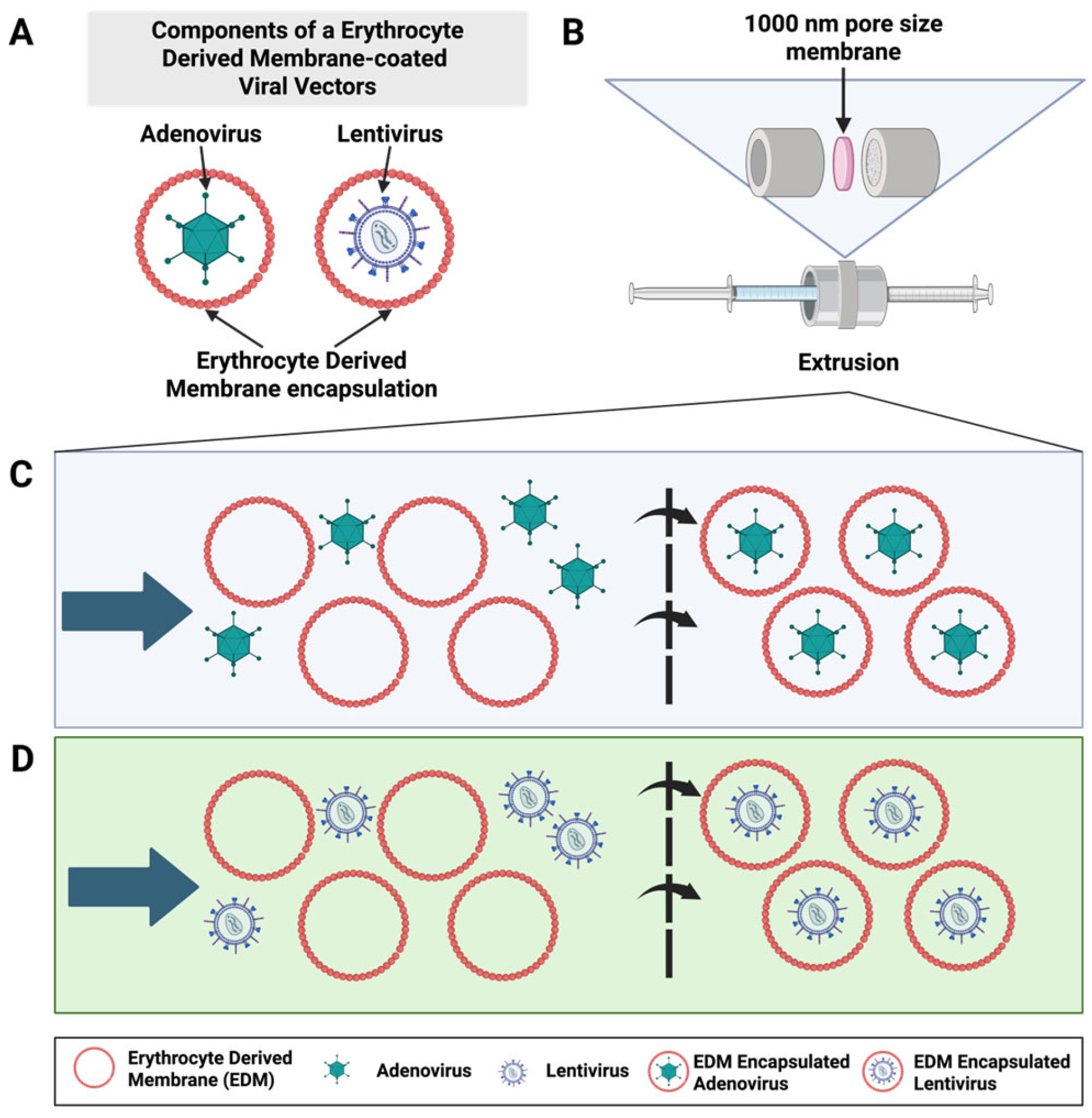
Figure 1A illustrates EDM-encapsulated Ad and EDM-encapsulated LV. The encapsulation process is schematically illustrated in
Figure 1B–D. The resulting EDM-encapsulated viruses (EDM-Ad-GFP or EDM-LV-mCherry) were collected in sterile 1.5 mL microcentrifuge tubes and used immediately for subsequent experiments.
For the Ad-GFP and LV-mCherry comparison groups, the viral vectors were used as received from the vendors and were not subjected to any additional processing or extrusion steps.
2.3. Dynamic Light Scattering (DLS) and Zeta Potential Measurements
Particle size measurements were performed using a Malvern Zetasizer Nano ZS instrument (Malvern Panalytical, Malvern, UK). Prior to analysis, samples were diluted 1:10 in phosphate-buffered saline (PBS). Dynamic light scattering (DLS) measurements were conducted using the instrument’s automatic measurement mode, with five runs of 10 s each recorded per sample. The average hydrodynamic diameter and polydispersity index (PDI) were calculated using Zetasizer software (version 8.02, Malvern Panalytical, Malvern, UK).
For zeta potential analysis, measurements were also performed in automatic mode. A minimum of five and up to fifteen measurements were acquired for each sample, with a 45 s interval between acquisitions. The average zeta potential values were calculated using the same Zetasizer software. All measurements were performed in triplicate (n = 3).
2.4. In Vitro Transduction
Cells were plated in 96-well plates at a density of 3 × 10⁴ cells per well and incubated overnight in complete culture medium at 37 °C in a humidified incubator with 5% CO2 to allow attachment. The next day (day 1), cells were exposed to either Ad-GFP or EDM-encapsulated Ad-GFP at a multiplicity of infection (MOI) of 50 plaque-forming units (PFU) per cell and maintained under standard culture conditions (37 °C, 5% CO2). In parallel experiments, LV-mCherry or EDM-LV-mCherry was added to the cells at an MOI of 1 PFU per cell on day 1 and incubated under the same conditions. All treatment formulations were administered in complete culture medium. No transduction enhancers were used, the culture medium was not replaced during the experiment, and cells were not washed during or after the transduction period.
2.5. Fluorescence Microscopy
Forty-eight hours after transduction, cells treated with Ad-GFP or EDM–Ad-GFP were imaged using a Keyence BZ-X710 fluorescence microscope (Keyence Corporation of America, Itasca, IL, USA) equipped with a GFP filter set (excitation 470/40 nm, emission 525/50 nm, dichroic mirror 495 nm). Cells exposed to LV-mCherry or EDM-LV-mCherry were visualized using a TexasRed filter set (excitation 560/40 nm, emission 630/75 nm, dichroic mirror 585 nm). Representative fluorescence images were captured with a 4× objective lens to enable comparative evaluation of transduction across experimental groups.
2.6. In Vitro Neutralizing Antibody Protection Assay
HEK293 cells were seeded into 96-well plates at a density of 1 × 10
4 cells per well and maintained in complete culture medium at 37 °C with 5% CO
2. After allowing the cells to adhere for 24 h, a neutralization assay was conducted. The culture medium was carefully removed without disturbing the cell monolayer. EDM-Ad-GFP or Ad-GFP was then combined with human serum diluted to 1:10 and applied to the cells at an MOI of 100 in a volume sufficient to cover the cells (day 1). The cells were incubated under standard culture conditions (37 °C, 5% CO
2) for 1 h. Following this incubation, the treatment mixture was removed and replaced with fresh complete medium while minimizing disturbance to the cells. The cells were further incubated for an additional 24 h [
9]. On day 2, fluorescence microscopy was performed, and GFP signal intensity was quantified using a Tecan F PLEX Infinite 200 Pro microplate reader (Tecan Group Ltd., Männedorf, Switzerland) [
9].
2.7. Statistical Analysis
Data analysis was performed using Prism version 10.4.1 (GraphPad Software LLC, Boston, MA, USA). Differences between two groups were evaluated using a two-tailed unpaired t-test, and p values less than 0.05 were considered statistically significant.
3. Results
3.1. Characterization of EDM-Ad-GFP and EDM-LV-mCherry
Hydrodynamic size (z-average) and zeta potentials were measured for empty EDM, Ad-GFP, EDM-Ad-GFP, LV-mCherry, and EDM-LV-mCherry (
Table 1). The size distribution by intensity was recorded (
Figures S1 and S2). As shown in
Table 1, encapsulation of Ad-GFP and LV-mCherry within EDM results in a marked increase in hydrodynamic diameter—from native viral sizes of approximately 96–135 nm to ~730–740 nm for the EDM-encapsulated formulations—along with a shift in zeta potential toward values characteristic of the EDM, consistent with successful incorporation of the viruses within the EDM.
3.2. Comparative In Vitro Transduction of Ad-GFP and EDM-Ad-GFP
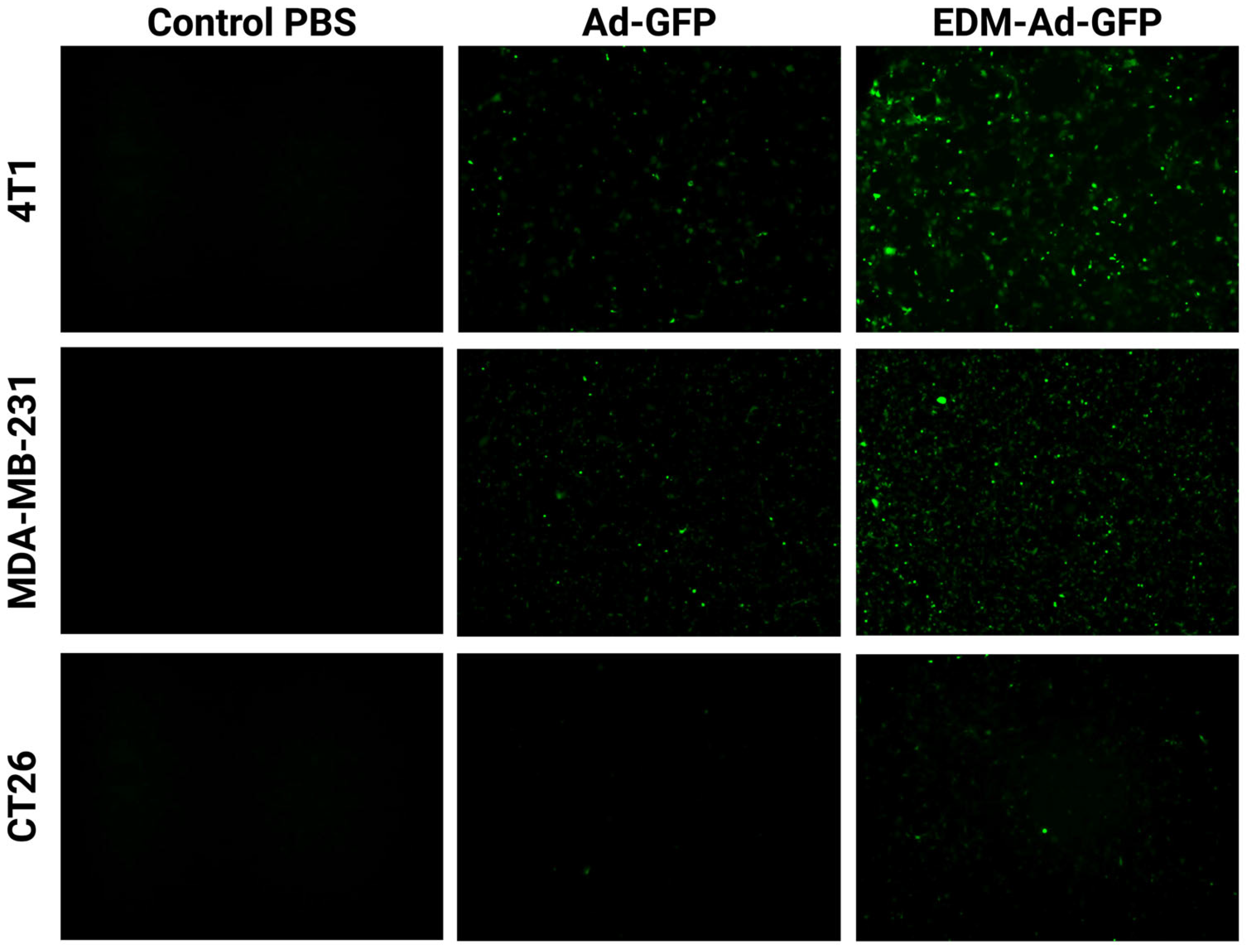
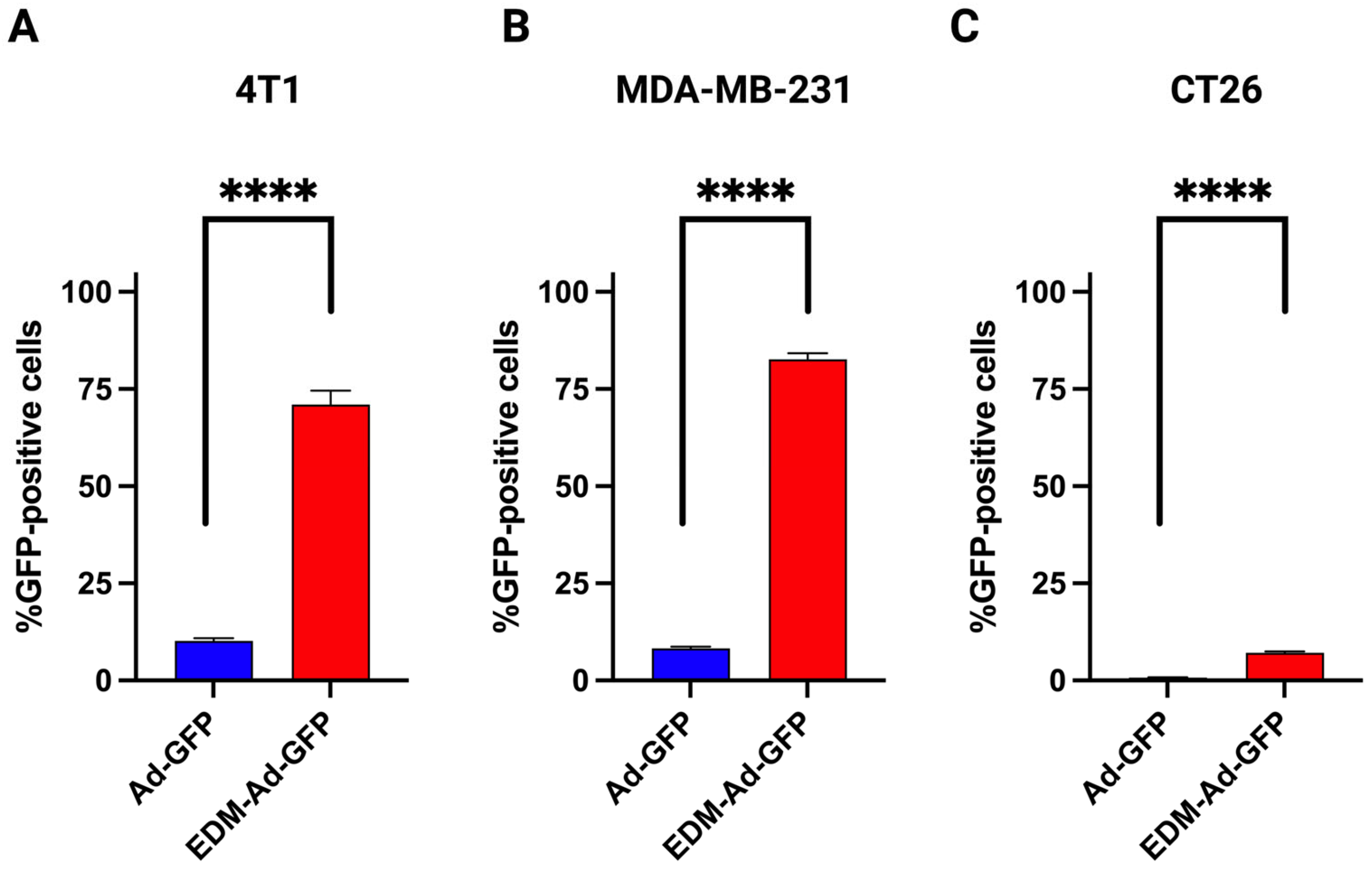
Comparative in vitro transduction of Ad-GFP and EDM-Ad-GFP was studied on 4T1 mouse breast cancer cells, MDA-MB-231 human breast cancer cells, and CT26 mouse colon cancer cells at MOI 50 (
Figure 2 and
Figure 3). The results demonstrate that in vitro transduction performance of EDM-Ad-GFP is significantly higher than that of Ad-GFP in all cell lines.
3.3. Comparative In Vitro Transduction of LV-mCherry and EDM- LV-mCherry
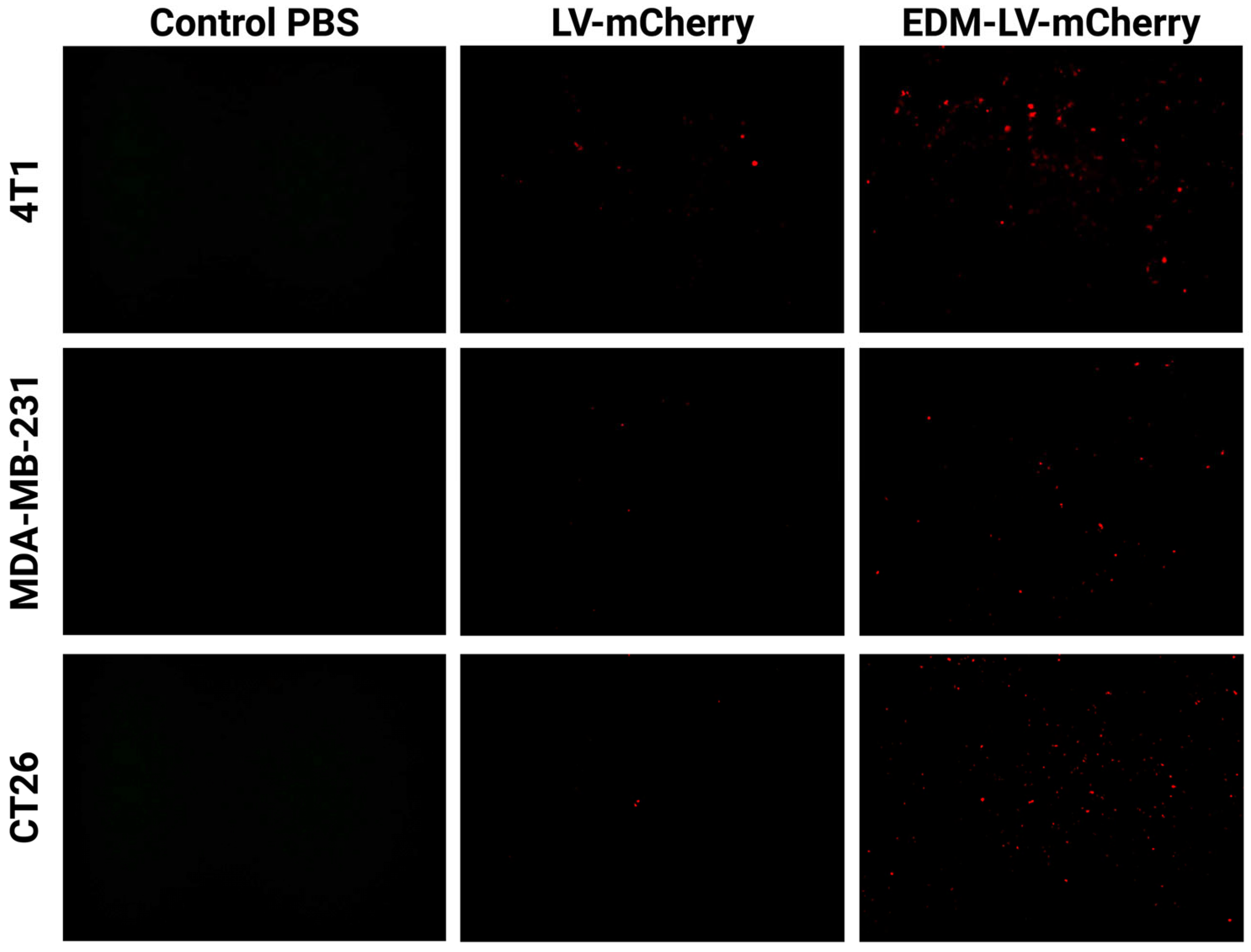
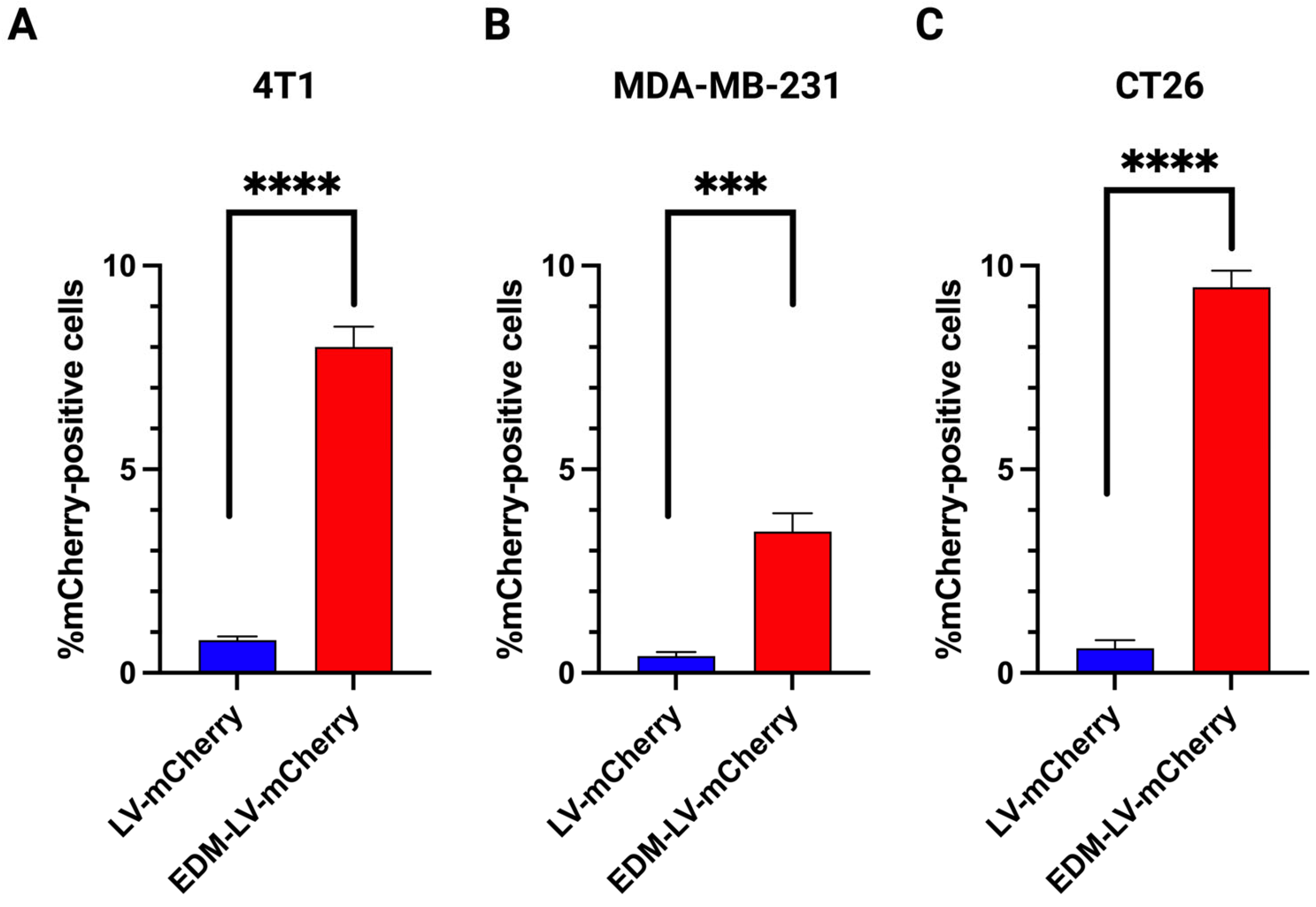
Comparative in vitro transduction of LV-mCherry and EDM-LV-mCherry was studied on 4T1 mouse breast cancer cells, MDA-MB-231 human breast cancer cells, and CT26 mouse colon cancer cells at MOI 1 (
Figure 4 and
Figure 5). The results demonstrate that in vitro transduction performance of EDM-Ad-GFP is significantly higher than that of Ad-GFP in all cell lines.
3.4. Comparative In Vitro Protection Against Neutralizing Antibodies Ad-GFP and EDM-Ad-GFP
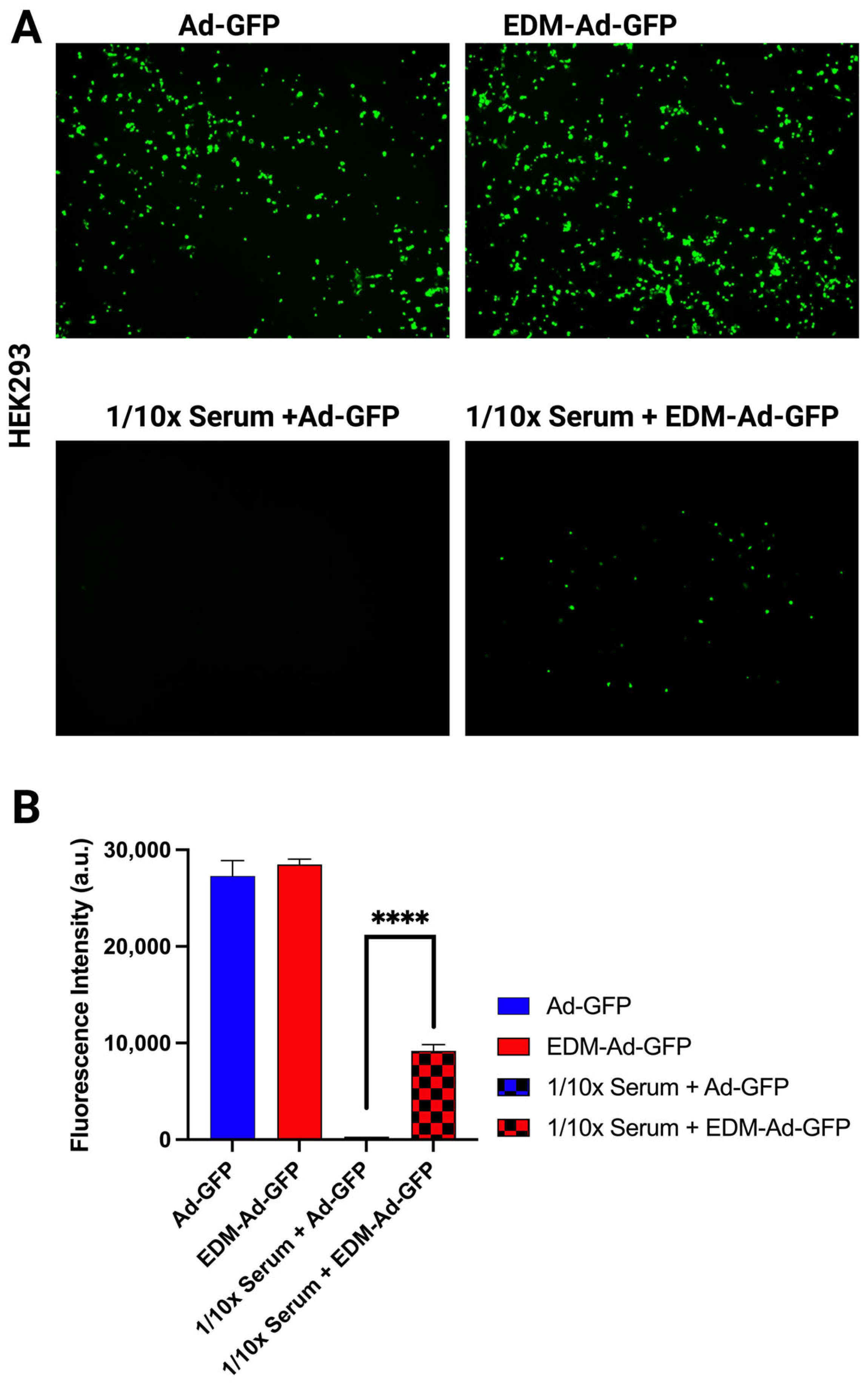
Enveloped viruses such as LV are generally less susceptible to direct neutralization by antibodies targeting capsid proteins, as their lipid envelope can shield viral structural components. In contrast, non-enveloped viruses like Ad are more readily neutralized by pre-existing antibodies that directly recognize and bind exposed capsid proteins. Comparative in vitro transduction studies were performed to evaluate the impact of neutralizing antibodies on the non-enveloped Ad-GFP and to assess the protective effect of EDM encapsulation. The results demonstrated that EDM-Ad-GFP achieved significantly higher transduction of HEK293 cells (
p ≤ 0.0001) in the presence of 1:10 diluted neutralizing antibody serum (
Figure 6).
4. Discussion
The physicochemical characterization confirmed successful encapsulation of both Ad-GFP and LV-mCherry within EDM, as evidenced by the substantial increase in hydrodynamic diameter from native virus particles (~96–135 nm) to ~730–740 nm for EDM-encapsulated formulations, with concomitant shifts in zeta potential toward values characteristic of the EDM vesicles. These findings indicate effective encapsulation of viral particles. Importantly, EDM encapsulation did not compromise viral functionality; instead, it significantly enhanced in vitro transduction across multiple cancer cell lines. EDM-Ad-GFP consistently outperformed unencapsulated Ad-GFP in 4T1, MDA-MB-231, and CT26 cells at equivalent MOI, suggesting that EDM encapsulation may improve cellular interaction, uptake, or intracellular trafficking, potentially through altered surface charge, receptor engagement, or endocytic pathways.
A similar enhancement was observed for EDM-LV-mCherry, despite lentiviruses already being enveloped, indicating that EDM encapsulation provides additional benefits beyond native viral envelopes, possibly by stabilizing particles or promoting more efficient cell–virus interactions. Recent advances in cell membrane-based nanocarriers have demonstrated that biomimetic membranes derived from erythrocytes, platelets, or cancer cells can enhance nanoparticle stability, prolong circulation time, and facilitate biological interactions through the presence of native membrane proteins and lipids. Such biomimetic platforms have increasingly been explored as delivery vehicles for drugs, nanoparticles, and biologics due to their ability to mimic natural cellular interfaces and improve biological compatibility.
EDM encapsulation also conferred significant protection against neutralizing antibodies for the non-enveloped adenovirus, as demonstrated by robust transduction of HEK293 cells in the presence of diluted neutralizing serum. This result supports the hypothesis that EDM encapsulation can shield exposed viral capsid epitopes from antibody recognition, partially mimicking immune-evasive features of enveloped viruses. Immune masking strategies are increasingly recognized as an important approach in viral vector engineering, where surface shielding—through polymers, lipid coatings, or membrane cloaking—can reduce antibody recognition and complement activation while preserving infectivity. Incorporating EDM encapsulation may provide a biologically derived stealth layer that reduces immune detection while maintaining viral functionality.
In addition to immune shielding, several strategies have been explored to enhance viral transduction efficiency in gene therapy platforms, including chemical or lipid-based coating of viral particles and nanoparticle-assisted delivery systems that promote cellular uptake or protect vectors from extracellular degradation. The enhanced transduction observed with EDM-encapsulated viruses in this study suggests that membrane-based encapsulation may represent a complementary strategy for improving viral delivery efficiency.
From a translational perspective, while the current study demonstrates improved viral transduction in vitro, further investigation will be required to evaluate immunogenicity, biodistribution, pharmacokinetics, and bioavailability of EDM-coated viral particles following systemic or local administration.
Supplementary Materials
The following supporting information can be downloaded at:
https://www.mdpi.com/article/10.3390/jpbi3020007/s1, Figure S1: Representative comparative particle size distribution by intensity for Ad-GFP (blue), EDM (red), and EDM–Ad-GFP (green); Figure S2: Representative comparative particle size distribution by intensity for LV-mCherry (red), EDM (green), and EDM–LV-mCherry (blue).
Author Contributions
Conceptualization, J.R.S. and H.L.L.; methodology, J.R.S., A.T.P., A.L.K. and T.D.; software, J.R.S., A.T.P. and A.L.K.; validation, J.R.S., A.T.P. and A.L.K.; formal analysis, J.R.S. and A.T.P.; investigation, J.R.S. and T.D.; resources, A.C.K.; data curation, J.R.S. and A.T.P.; writing—original draft preparation, J.R.S.; writing—review and editing, J.R.S., A.T.P., A.L.K., T.D., W.C.T., H.L.L., E.Y.C. and A.C.K.; visualization, J.R.S.; supervision, W.C.T., H.L.L., E.Y.C. and A.C.K.; project administration, J.R.S.; funding acquisition, J.R.S. and A.C.K. All authors have read and agreed to the published version of the manuscript.
Funding
This research was funded by the University of California, San Diego Academic Senate Research Grant, Award No. 13991.
Institutional Review Board Statement
Not applicable.
Informed Consent Statement
Not applicable.
Data Availability Statement
Acknowledgments
We would like to acknowledge the UCSD Cancer Center Microscopy Shared Facility Specialized Support Grant (P30 CA23100).
Conflicts of Interest
E.Y.C. is the Chief Executive Officer, H.L.L. is the Chief Scientific Officer, and A.L.K. is a Research and Development Engineer at Coastar Therapeutics, Inc.
Abbreviations
The following abbreviations are used in this manuscript:
| Ad | Adenovirus |
| Ad-GFP | Green fluorescent protein-expressing adenovirus |
| ATCC | American Type Culture Collection |
| CO2 | Carbon dioxide |
| DLS | Dynamic light scattering |
| DMEM | Dulbecco’s Modified Eagle Medium |
| EDM | Erythrocyte-derived membrane |
| EDM-Ad-GFP | Erythrocyte membrane-encapsulated adenovirus expressing GFP |
| EDM-LV-mCherry | Erythrocyte membrane-encapsulated lentivirus expressing mCherry |
| FBS | Fetal bovine serum |
| GFP | Green fluorescent protein |
| HEK293 | Human embryonic kidney 293 cells |
| LV | Lentivirus |
| LV-mCherry | Lentivirus expressing mCherry |
| MOI | Multiplicity of infection |
| PBS | Phosphate-buffered saline |
| PDI | Polydispersity index |
| PFU | Plaque-forming units |
| PTFE | Polytetrafluoroethylene |
| RPMI | Roswell Park Memorial Institute medium |
| TU | Transducing units |
References
- Geng, G.; Xu, Y.; Hu, Z.; Wang, H.; Chen, X.; Yuan, W.; Shu, Y. Viral and non-viral vectors in gene therapy: Current state and clinical perspectives. EBioMedicine 2025, 118, 105834. [Google Scholar] [CrossRef] [PubMed]
- Shah, J.R.; Dong, T.; Phung, A.T.; Reid, T.; Larson, C.; Sanchez, A.B.; Oronsky, B.; Blair, S.L.; Aisagbonhi, O.; Trogler, W.C. Development of adenovirus containing liposomes produced by extrusion vs. homogenization: A comparison for scale-up purposes. Bioengineering 2022, 9, 620. [Google Scholar] [CrossRef] [PubMed]
- Hu, P.; Hao, Y.; Tang, W.; Diering, G.H.; Zou, F.; Kafri, T. Analysis of Hepatic Lentiviral Vector Transduction: Implications for Preclinical Studies and Clinical Gene Therapy Protocols. Viruses 2025, 17, 276. [Google Scholar] [CrossRef] [PubMed]
- Alonso-Padilla, J.; Papp, T.; Kaján, G.L.; Benkő, M.; Havenga, M.; Lemckert, A.; Harrach, B.; Baker, A.H. Development of novel adenoviral vectors to overcome challenges observed with HAdV-5–based constructs. Mol. Ther. 2016, 24, 6–16. [Google Scholar] [CrossRef] [PubMed]
- Dong, T.; Shah, J.R.; Phung, A.T.; Larson, C.; Sanchez, A.B.; Aisagbonhi, O.; Blair, S.L.; Oronsky, B.; Trogler, W.C.; Reid, T. A local and abscopal effect observed with liposomal encapsulation of intratumorally injected oncolytic adenoviral therapy. Cancers 2023, 15, 3157. [Google Scholar] [CrossRef] [PubMed]
- Williams-Fegredo, T.E. Developing Strategies to Enhance Transfection Efficiency and Mitigate Auto-Transduction in Transient Lentiviral Vector Bioprocessing. Ph.D. Thesis, UCL (University College London), London, UK, 2024. [Google Scholar]
- Park, A.; Lee, J.Y. Adenoviral vector system: A comprehensive overview of constructions, therapeutic applications and host responses. J. Microbiol. 2024, 62, 491–509. [Google Scholar] [CrossRef] [PubMed]
- Fong, J.H.; Ceroni, F. Transgene integration in mammalian cells: The tools, the challenges, and the future. Cell Syst. 2025, 16, 101426. [Google Scholar] [CrossRef] [PubMed]
- Phung, A.T.; Shah, J.R.; Dong, T.; Aisagbonhi, O.; Trogler, W.C.; Kummel, A.C.; Blair, S.L. Adenoviruses Encapsulated in PEGylated DOTAP-Folate Liposomes Are Protected from the Pre-Existing Humoral Immune Response. Pharmaceutics 2025, 17, 769. [Google Scholar] [CrossRef] [PubMed]
- Arduini, A.; Katiyar, H.; Liang, C. Progress in Pseudotyping Lentiviral Vectors Towards Cell-Specific Gene Delivery In Vivo. Viruses 2025, 17, 802. [Google Scholar] [CrossRef] [PubMed]
- Lv, P.; Liu, X.; Chen, X.; Liu, C.; Zhang, Y.; Chu, C.; Wang, J.; Wang, X.; Chen, X.; Liu, G. Genetically engineered cell membrane nanovesicles for oncolytic adenovirus delivery: A versatile platform for cancer virotherapy. Nano Lett. 2019, 19, 2993–3001. [Google Scholar] [CrossRef] [PubMed]
- Pan, T.; Yang, C.-H.; Zhao, K.; Sun, Y.-L.; Rao, Z.-Y.; Qu, W.-Q.; Zhang, S.-M.; Jin, X.-K.; Yan, Y.; Zhang, X.-Z. Biomimetic artificial enveloped viral vectors: Overcoming immune barriers for re-administration and long-term gene therapy. Cell Biomater. 2025, 1, 100143. [Google Scholar] [CrossRef]
- Van Bruggen, R. CD47 functions as a removal marker on aged erythrocytes. ISBT Sci. Ser. 2013, 8, 153–156. [Google Scholar] [CrossRef]
- Samoranos, K.T.; Krisiewicz, A.L.; Karpinecz, B.C.; Glover, P.A.; Gale, T.V.; Chehadeh, C.; Ashshan, S.; Koya, R.; Chung, E.Y.; Lim, H.L. pH Sensitive Erythrocyte-Derived Membrane for Acute Systemic Retention and Increased Infectivity of Coated Oncolytic Vaccinia Virus. Pharmaceutics 2022, 14, 1810. [Google Scholar] [CrossRef] [PubMed]
- Burger, P.; de Korte, D.; van den Berg, T.K.; van Bruggen, R. CD47 in erythrocyte ageing and clearance—The Dutch point of view. Transfus. Med. Hemotherapy 2012, 39, 348–352. [Google Scholar] [CrossRef] [PubMed]
- Escajadillo, T.; Olson, J.; Luk, B.T.; Zhang, L.; Nizet, V. A red blood cell membrane-camouflaged nanoparticle counteracts streptolysin O-mediated virulence phenotypes of invasive group A Streptococcus. Front. Pharmacol. 2017, 8, 477. [Google Scholar] [CrossRef] [PubMed]
- Fusciello, M.; Fontana, F.; Tähtinen, S.; Capasso, C.; Feola, S.; Martins, B.; Chiaro, J.; Peltonen, K.; Ylösmäki, L.; Ylösmäki, E. Artificially cloaked viral nanovaccine for cancer immunotherapy. Nat. Commun. 2019, 10, 5747. [Google Scholar] [CrossRef] [PubMed]
Figure 1.
Schematic representation of erythrocyte-derived membrane (EDM)-encapsulated viral vectors and the extrusion process. (A) Illustration of EDM-encapsulated adenovirus and EDM-encapsulated lentivirus. (B) Schematic of the assembled membrane extrusion system, consisting of an inlet syringe, a membrane holder, and an outlet syringe. (C) Schematic of the extrusion process for adenovirus (Ad), in which Ad and EDM are loaded into the inlet syringe (left) and, following extrusion, emerge as EDM-encapsulated Ad (right). (D) Schematic of the extrusion process for lentivirus (LV), in which LV and EDM are loaded into the inlet syringe (left) and, following extrusion, emerge as EDM-encapsulated LV (right).
Figure 1.
Schematic representation of erythrocyte-derived membrane (EDM)-encapsulated viral vectors and the extrusion process. (A) Illustration of EDM-encapsulated adenovirus and EDM-encapsulated lentivirus. (B) Schematic of the assembled membrane extrusion system, consisting of an inlet syringe, a membrane holder, and an outlet syringe. (C) Schematic of the extrusion process for adenovirus (Ad), in which Ad and EDM are loaded into the inlet syringe (left) and, following extrusion, emerge as EDM-encapsulated Ad (right). (D) Schematic of the extrusion process for lentivirus (LV), in which LV and EDM are loaded into the inlet syringe (left) and, following extrusion, emerge as EDM-encapsulated LV (right).
Figure 2.
Comparative in vitro transduction of Ad-GFP and EDM-Ad-GFP at MOI 50 (n = 3). Representative fluorescence microscopy images acquired at 40× magnification. EDM encapsulation enhances transduction efficiency across all three cell lines.
Figure 2.
Comparative in vitro transduction of Ad-GFP and EDM-Ad-GFP at MOI 50 (n = 3). Representative fluorescence microscopy images acquired at 40× magnification. EDM encapsulation enhances transduction efficiency across all three cell lines.
Figure 3.
Comparative Quantitative Analysis of Cells Transduced with Ad-GFP and EDM-Ad-GFP at MOI 50 (n = 3). Across all cell lines ((A) 4T1, (B) MDA-MB-231, and (C) CT26), EDM-Ad-GFP demonstrated significantly higher in vitro transduction compared to Ad-GFP (****, p ≤ 0.0001).
Figure 3.
Comparative Quantitative Analysis of Cells Transduced with Ad-GFP and EDM-Ad-GFP at MOI 50 (n = 3). Across all cell lines ((A) 4T1, (B) MDA-MB-231, and (C) CT26), EDM-Ad-GFP demonstrated significantly higher in vitro transduction compared to Ad-GFP (****, p ≤ 0.0001).
Figure 4.
Comparative in vitro transduction of LV-mCherry and EDM-LV-mCherry at MOI 1 (n = 3). Representative fluorescence microscopy images acquired at 40× magnification. EDM encapsulation enhances transduction efficiency across all three cell lines.
Figure 4.
Comparative in vitro transduction of LV-mCherry and EDM-LV-mCherry at MOI 1 (n = 3). Representative fluorescence microscopy images acquired at 40× magnification. EDM encapsulation enhances transduction efficiency across all three cell lines.
Figure 5.
Comparative Quantitative Analysis of Cells Transduced with LV-mCherry and EDM-LV-mCherry at MOI 1 (n = 3). In (A) 4T1 and (C) CT26 cell lines, EDM-LV-mCherry showed significantly higher in vitro transduction compared to LV-mCherry (****, p ≤ 0.0001). In (B) MDA-MB-231 cells, transduction was also significantly enhanced (***, p ≤ 0.001).
Figure 5.
Comparative Quantitative Analysis of Cells Transduced with LV-mCherry and EDM-LV-mCherry at MOI 1 (n = 3). In (A) 4T1 and (C) CT26 cell lines, EDM-LV-mCherry showed significantly higher in vitro transduction compared to LV-mCherry (****, p ≤ 0.0001). In (B) MDA-MB-231 cells, transduction was also significantly enhanced (***, p ≤ 0.001).
Figure 6.
Effect of EDM encapsulation on in vitro protection from neutralizing antibodies. (A) Representative fluorescence microscopy images acquired at 40× magnification. (B) Comparative fluorescence intensity analysis shows that EDM-Ad-GFP achieved significantly higher transduction of HEK293 cells (****, p ≤ 0.0001) in the presence of 1:10 diluted neutralizing antibody serum.
Figure 6.
Effect of EDM encapsulation on in vitro protection from neutralizing antibodies. (A) Representative fluorescence microscopy images acquired at 40× magnification. (B) Comparative fluorescence intensity analysis shows that EDM-Ad-GFP achieved significantly higher transduction of HEK293 cells (****, p ≤ 0.0001) in the presence of 1:10 diluted neutralizing antibody serum.
Table 1.
Particle size (z-average) using DLS, and zeta potential of EDM-Ad-GFP and EDM-LV-mCherry (n = 3).
Table 1.
Particle size (z-average) using DLS, and zeta potential of EDM-Ad-GFP and EDM-LV-mCherry (n = 3).
| Formulation | z-Average (nm) | Polydispersity
Index (PDI) | Zeta Potential (mV) |
|---|
| EDM | 686 ± 42 | 0.30 ± 0.07 | −12.7 ± 0.3 |
| Ad-GFP | 96 ± 2 | 0.27 ± 0.06 | −5.1 ± 0.1 |
| EDM-Ad-GFP | 743 ± 37 | 0.50 ± 0.03 | −11.1 ± 0.7 |
| LV-mCherry | 135 ± 7 | 0.26 ± 0.04 | −4.8 ± 0.8 |
| EDM-LV-mCherry | 732 ± 14 | 0.46 ± 0.01 | −13.1 ± 0.4 |
| Disclaimer/Publisher’s Note: The statements, opinions and data contained in all publications are solely those of the individual author(s) and contributor(s) and not of MDPI and/or the editor(s). MDPI and/or the editor(s) disclaim responsibility for any injury to people or property resulting from any ideas, methods, instructions or products referred to in the content. |




 ,
,