
Paradigm Shifts in Diabetes Management: Key Highlights from the 2026 American Diabetes Association Standards of Care in Diabetes



Abstract
1. Introduction
2. Technology Democratization: Expanding CGM Access and Removing AID Barriers
2.1. Expanded Continuous-Glucose-Monitoring (CGM) Eligibility
2.2. Defining Success with CGM
2.3. Automated-Insulin-Delivery (AID) Access
3. New Specialized Contexts: Glycemic Management in Cancer
3.1. Cancer Drug-Induced Hyperglycemia
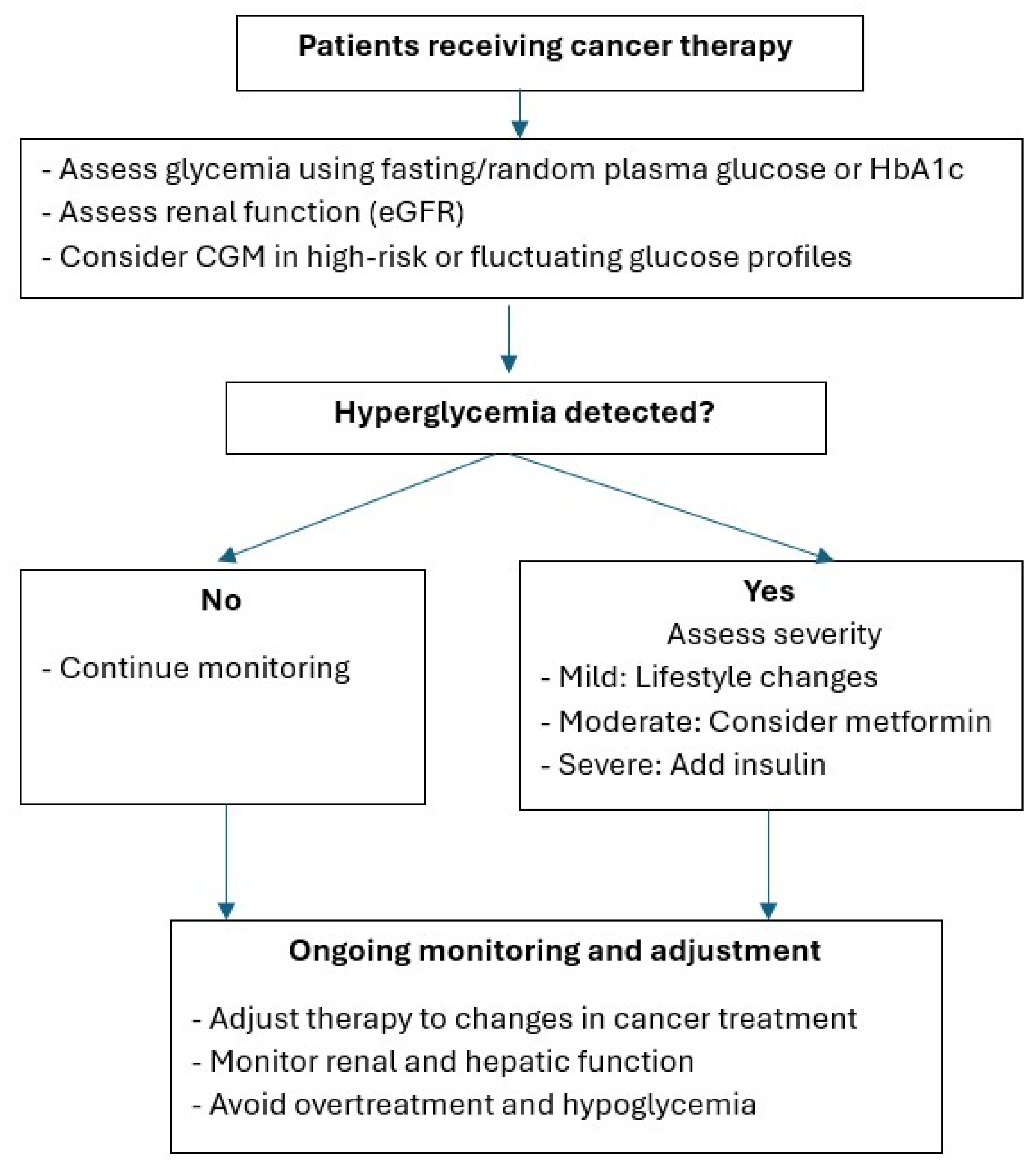
3.2. Treatment Recommendations
4. Refinements in Diagnosis and Prevention: Antibody Testing and T1D Staging
4.1. Autoantibody Monitoring
4.2. Impact on Laboratory Medicine
5. Pharmacologic Management and Cardiometabolic Protection
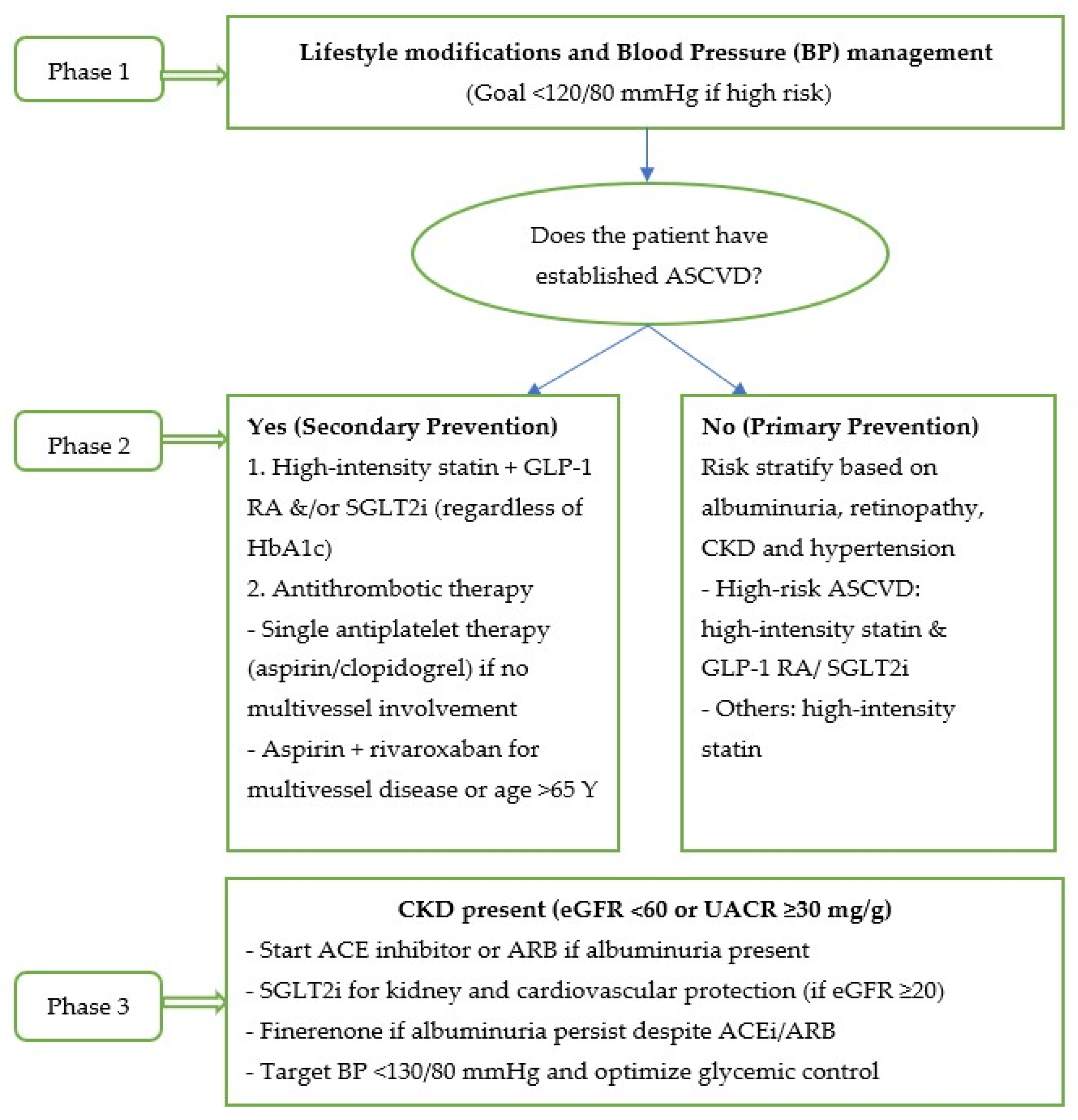
5.1. Cardiometabolic First
5.2. Obesity and Weight Management in Diabetes
6. Conclusions
Author Contributions
Funding
Institutional Review Board Statement
Informed Consent Statement
Data Availability Statement
Conflicts of Interest
Abbreviations
| ADA | American Diabetes Association |
| AID | Automated Insulin Delivery |
| CGM | Continuous Glucose Monitoring |
| CKD | Chronic Kidney Disease |
| CSII | Continuous Subcutaneous Insulin Infusion |
| DM | Diabetes Mellitus |
| FDA | US Food and Drug Administration |
| GADA | Glutamic Acid Decarboxylase Antibodies |
| GLP-1 | Glucagon-Like Peptide-1 |
| IA-2A | Insulinoma-Associated Antigen 2 |
| IAA | Insulin-Associated Antibodies |
| ICI | Immune Checkpoint Inhibitor |
| MASLD | Metabolic Dysfunction-Associated Steatotic Liver Disease |
| mTOR | Mammalian/Mechanistic Target of Rapamycin |
| PI3Kα | Phospho-Inositide 3-Kinase Alpha |
| SGLT-2 | Sodium-Glucose Cotransporter-2 |
| TBR | Time Below Range |
| TIR | Time In Range |
| T1D | Type 1 Diabetes |
| T2D | Type 2 Diabetes |
| ZnT8A | Zinc Transporter-8 Antibodies |
References
- IDF Diabetes Atlas 11th Edition 2025. International Diabetes Federation 2025. Available online: https://diabetesatlas.org/resources/idf-diabetes-atlas-2025/ (accessed on 20 December 2025).
- American Diabetes Association. Standards of medical care for patients with diabetes mellitus. Diabetes Care 1989, 12, 365–368. [Google Scholar] [CrossRef] [PubMed]
- American Diabetes Association Professional Practice Committee for Diabetes. Standards of Care in Diabetes-2026. Diabetes Care 2026, 49, S1–S363. [Google Scholar] [CrossRef] [PubMed]
- American Diabetes Association Professional Practice Committee for Diabetes. Introduction and Methodology: Standards of Care in Diabetes-2026. Diabetes Care 2026, 49, S1–S5. [Google Scholar] [CrossRef]
- American Diabetes Association Professional Practice Committee for Diabetes. Summary of revisions: Standards of Care in Diabetes-2026. Diabetes Care 2026, 49, S6–S12. [Google Scholar] [CrossRef]
- American Diabetes Association Professional Practice Committee for Diabetes. 7. Diabetes Technology: Standards of Care in Diabetes-2026. Diabetes Care 2026, 49, S150–S165. [Google Scholar] [CrossRef] [PubMed]
- Martens, T.; Beck, R.W.; Bailey, R.; Ruedy, K.J.; Calhoun, P.; Peters, A.L.; Pop-Busui, R.; Philis-Tsimikas, A.; Bao, S.; Umpierrez, G.; et al. Effect of Continuous Glucose Monitoring on Glycemic Control in Patients with Type 2 Diabetes Treated with Basal Insulin: A Randomized Clinical Trial. JAMA 2021, 325, 2262–2272. [Google Scholar] [CrossRef] [PubMed]
- Grace, T.; Salyer, J. Use of Real-Time Continuous Glucose Monitoring Improves Glycemic Control and Other Clinical Outcomes in Type 2 Diabetes Patients Treated with Less Intensive Therapy. Diabetes Technol. Ther. 2022, 24, 26–31. [Google Scholar] [CrossRef] [PubMed]
- Price, D.A.; Deng, Q.; Kipnes, M.; Beck, S.E. Episodic Real-Time CGM Use in Adults with Type 2 Diabetes: Results of a Pilot Randomized Controlled Trial. Diabetes Ther. 2021, 12, 2089–2099. [Google Scholar] [CrossRef] [PubMed]
- Bebu, I.; Braffett, B.H.; de Boer, I.H.; Aiello, L.P.; Bantle, J.P.; Lorenzi, G.M.; Herman, W.H.; Gubitosi-Klug, R.A.; Perkins, B.A.; Lachin, J.M.; et al. Relationships Between the Cumulative Incidences of Long-term Complications in Type 1 Diabetes: The DCCT/EDIC Study. Diabetes Care 2023, 46, 361–368. [Google Scholar] [CrossRef]
- Nishimura, R.; Okada, Y.; Kuroda, A.; Suzuki, J.; Hirota, Y.; Matsuhisa, M.; Ishiguro, M.; Ohno, T.; Suganuma, Y.; Tanaka, K.; et al. Consensus statement on novel glucose-related metrics obtained through advanced medical devices: English version. Diabetol Int. 2025, 16, 595–613. [Google Scholar] [CrossRef] [PubMed]
- American Diabetes Association Professional Practice Committee for Diabetes. 6. Glycemic Goals, Hypoglycemia, and Hyperglycemic Crises: Standards of Care in Diabetes-2026. Diabetes Care 2026, 49, S132–S149. [Google Scholar] [CrossRef] [PubMed]
- Goodman, L.S.; Wintrobe, M.M.; Dameshek, W.; Goodman, M.J.; Gilman, A.; McLennan, M.T. Nitrogen mustard therapy: Use of methyl-bis (betachloroethyl) amine hydrochloride and tris (beta-chloroethyl) amine hydrochloride for Hodgkin’s disease, lymphosarcoma, leukemia and certain allied and miscellaneous disorders. JAMA 1984, 251, 2255–2261. [Google Scholar] [CrossRef] [PubMed]
- Ostios-Garcia, L.; Perez, D.M.; Castelo, B.; Herradon, N.H.; Zamora, P.; Feliu, J.; Espinosa, E. Classification of anticancer drugs: An update with FDA- and EMA-approved drugs. Cancer Metastasis Rev. 2024, 43, 1561–1571. [Google Scholar] [CrossRef] [PubMed]
- Gebauer, J.; Higham, C.; Langer, T.; Denzer, C.; Brabant, G. Long-term and metabolic consequences of cancer treatment: A systematic review. Endocr. Rev. 2019, 40, 711–767. [Google Scholar] [CrossRef]
- Hwangbo, Y.; Lee, E.K. Acute hyperglycemia associated with anti-cancer medication. Endocrinol. Metab. 2017, 32, 23–29. [Google Scholar] [CrossRef] [PubMed]
- Yim, C.; Mansell, K.; Hussein, N.; Arnason, T. Current cancer therapies and their influence on glucose control. World J. Diabetes 2021, 12, 1010–1025. [Google Scholar] [CrossRef] [PubMed]
- American Diabetes Association Professional Practice Committee for Diabetes. 2. Diagnosis and Classification of Diabetes: Standards of Care in Diabetes-2026. Diabetes Care 2026, 49, S27–S49. [Google Scholar] [CrossRef] [PubMed]
- Jhaveri, K.L.; Im, S.A.; Saura, C.; Loibl, S.; Kalinsky, K.; Schmid, P.; Loi, S.; Turner, N.C.; Thanopoulou, E.; Shankar, N.; et al. Overall Survival with Inavolisib in PIK3CA-Mutated Advanced Breast Cancer. N. Engl. J. Med. 2025, 393, 151–161. [Google Scholar] [CrossRef]
- Rugo, H.S.; André, F.; Yamashita, T.; Cerda, H.; Toledano, I.; Stemmer, S.M.; Jurado, J.C.; Juric, D.; Mayer, I.; Ciruelos, E.M.; et al. Time course and management of key adverse events during the randomized phase III SOLAR-1 study of PI3K inhibitor alpelisib plus fulvestrant in patients with HR-positive advanced breast cancer. Ann. Oncol. 2020, 31, 1001–1010. [Google Scholar] [CrossRef]
- Xu, K.Y.; Shameem, R.; Wu, S. Risk of hyperglycemia attributable to everolimus in cancer patients: A meta-analysis. Acta Oncol. 2016, 55, 1196–1203. [Google Scholar] [CrossRef]
- Perdigoto, A.L.; Quandt, Z.; Anderson, M.; Herold, K.C. Checkpoint inhibitor-induced insulin-dependent diabetes: An emerging syndrome. Lancet Diabetes Endocrinol. 2019, 7, 421–423. [Google Scholar] [CrossRef]
- Goncalves, M.D.; Farooki, A. Management of Phosphatidylinositol-3-Kinase Inhibitor-Associated Hyperglycemia. Integr. Cancer Ther. 2022, 21, 15347354211073163. [Google Scholar] [CrossRef] [PubMed]
- American Diabetes Association Professional Practice Committee for Diabetes. 9. Pharmacologic Approaches to Glycemic Treatment: Standards of Care in Diabetes-2026. Diabetes Care 2026, 49, S183–S215. [Google Scholar] [CrossRef] [PubMed]
- Jamjoom, H.; Verma, A.; Chakera, A. Utility of autoantibodies in type 1 diabetes. Pract. Diabetes 2024, 41, 9–11. [Google Scholar] [CrossRef]
- Felton, J.L.; Redondo, M.J.; Oram, R.A.; Speake, C.; Long, S.A.; Onengut-Gumuscu, S.; Rich, S.S.; Monaco, G.S.F.; Harris-Kawano, A.; Perez, D.; et al. Islet autoantibodies as precision diagnostic tools to characterize heterogeneity in type 1 diabetes: A systematic review. Commun. Med. 2024, 4, 66. [Google Scholar] [CrossRef]
- Ziegler, A.G.; Rewers, M.; Simell, O.; Simell, T.; Lempainen, J.; Steck, A.; Winkler, C.; Ilonen, J.; Veijola, R.; Knip, M.; et al. Seroconversion to multiple islet autoantibodies and risk of progression to diabetes in children. JAMA 2013, 309, 2473–2479. [Google Scholar] [CrossRef] [PubMed]
- Parikka, V.; Näntö-Salonen, K.; Saarinen, M.; Simell, T.; Ilonen, J.; Hyöty, H.; Veijola, R.; Knip, M.; Simell, O. Early seroconversion and rapidly increasing autoantibody concentrations predict prepubertal manifestation of type 1 diabetes in children at genetic risk. Diabetologia 2012, 55, 1926–1936. [Google Scholar] [CrossRef] [PubMed]
- Marzinotto, I.; Pittman, D.L.; Williams, A.J.K.; Long, A.E.; Achenbach, P.; Schlosser, M.; Akolkar, B.; Winter, W.E.; Lampasona, V.; Participating Laboratories. Islet Autoantibody Standardization Program: Interlaboratory comparison of insulin autoantibody assay performance in 2018 and 2020 workshops. Diabetologia 2023, 66, 897–912. [Google Scholar] [CrossRef] [PubMed]
- Ndumele, C.E.; Neeland, I.J.; Tuttle, K.R.; Chow, S.L.; Mathew, R.O.; Khan, S.S.; Coresh, J.; Baker-Smith, C.M.; Carnethon, M.R.; Després, J.-P.; et al. A synopsis of the evidence for the science and clinical management of cardiovascular-kidney-metabolic (CKM) syndrome: A scientific statement from the American Heart Association. Circulation 2023, 148, 1636–1664. [Google Scholar] [CrossRef]
- Ferdinand, K.C. An overview of cardiovascular-kidney-metabolic syndrome. Am. J. Manag. Care 2024, 30, S181–S188. [Google Scholar] [CrossRef]
- Aggarwal, R.; Ostrominski, J.W.; Vaduganathan, M. Prevalence of Cardiovascular-Kidney-Metabolic Syndrome Stages in US Adults, 2011–2020. JAMA 2024, 331, 1858–1860. [Google Scholar] [CrossRef]
- American Diabetes Association Professional Practice Committee for Diabetes. 4. Comprehensive Medical Evaluation and Assessment of Co-morbidities: Standards of Care in Diabetes-2026. Diabetes Care 2026, 49, S61–S88. [Google Scholar] [CrossRef] [PubMed]
- American Diabetes Association Professional Practice Committee for Diabetes. 10. Cardiovascular Disease and Risk Management: Standards of Care in Diabetes-2026. Diabetes Care 2026, 49, S216–S245. [Google Scholar] [CrossRef] [PubMed]
- Morales, J.; Handlesman, Y. Cardiovascular outcomes in patients with diabetes and kidney disease. J. Am. Coll. Cardiol. 2023, 82, 161–170. [Google Scholar] [CrossRef] [PubMed]
- American Diabetes Association Professional Practice Committee for Diabetes. 11. Chronic Kidney Disease and Risk Management: Standards of Care in Diabetes-2026. Diabetes Care. 2026, 49, S246–S260. [Google Scholar] [CrossRef] [PubMed]
- American Diabetes Association Professional Practice Committee for Diabetes. 8. Obesity and Weight Management for the Prevention and Treatment of Diabetes: Standards of Care in Diabetes-2026. Diabetes Care 2026, 49, S166–S182. [Google Scholar] [CrossRef] [PubMed]
- American Diabetes Association Professional Practice Committee for Diabetes. 5. Facilitating Positive Health Behaviors and Well-being to Improve Health Outcomes: Standards of Care in Diabetes-2026. Diabetes Care 2026, 49, S89–S131. [Google Scholar] [CrossRef]
- Tiwari, D.; Loh, W.J.; Aw, T.C. Updates from the 2025 American Diabetes Association guidelines on standards of medical care in diabetes. Explor. Endocr. Metab. Dis. 2025, 2, 101428. [Google Scholar] [CrossRef]
- Chen, S.; Cao, Z.; Chen, W.; Zhao, J.; Jiao, L.; Prettner, K.; Kuhn, M.; Pan, A.; Bärnighausen, T.W.; Bloom, D.E. The global macroeconomic burden of diabetes mellitus. Nat. Med. 2026, 32, 126–138. [Google Scholar] [CrossRef] [PubMed]


| Population/ Clinical Context | HbA1c Goal % (mmol/mol) | Time-in-Range (TIR) Goal (70–180 mg/dL) | Time-Below-Range (TBR) Goal (<70 mg/dL) | Rationale/ Key Difference |
|---|---|---|---|---|
| Most Nonpregnant Adults (General target) | <7% (<53) | >70% | <4% | The standard target for maximizing benefit and minimizing risk. |
| Healthy Adults (Low risk, no significant comorbidities) | <6.5% (<48) | Individualized (often >80%) | <1% | Lower goal is appropriate when achieved safely (low hypoglycemia risk). |
| Older/Frail Adults * (High risk of hypo/severe comorbidities) | <7.5–<8% (<58–64) | >50% (or individualized) | <1% | Key Update: Prioritizes safety and avoidance of hypoglycemia over strict control. |
| High-Risk (TBR) Goals (All adults with CGM) | - | - | <1% | TBR is a critical lab/CGM safety metric emphasized in 2026. |
Disclaimer/Publisher’s Note: The statements, opinions and data contained in all publications are solely those of the individual author(s) and contributor(s) and not of MDPI and/or the editor(s). MDPI and/or the editor(s) disclaim responsibility for any injury to people or property resulting from any ideas, methods, instructions or products referred to in the content. |
© 2026 by the authors. Licensee MDPI, Basel, Switzerland. This article is an open access article distributed under the terms and conditions of the Creative Commons Attribution (CC BY) license.
Share and Cite
Tiwari, D.; Loh, W.J.; Aw, T.C. Paradigm Shifts in Diabetes Management: Key Highlights from the 2026 American Diabetes Association Standards of Care in Diabetes. LabMed 2026, 3, 10. https://doi.org/10.3390/labmed3020010
Tiwari D, Loh WJ, Aw TC. Paradigm Shifts in Diabetes Management: Key Highlights from the 2026 American Diabetes Association Standards of Care in Diabetes. LabMed. 2026; 3(2):10. https://doi.org/10.3390/labmed3020010
Chicago/Turabian StyleTiwari, Dipti, Wann Jia Loh, and Tar Choon Aw. 2026. "Paradigm Shifts in Diabetes Management: Key Highlights from the 2026 American Diabetes Association Standards of Care in Diabetes" LabMed 3, no. 2: 10. https://doi.org/10.3390/labmed3020010
APA StyleTiwari, D., Loh, W. J., & Aw, T. C. (2026). Paradigm Shifts in Diabetes Management: Key Highlights from the 2026 American Diabetes Association Standards of Care in Diabetes. LabMed, 3(2), 10. https://doi.org/10.3390/labmed3020010