Article

Culinary Uses of Cretan PDO Products: Nutritional Analysis of Cheese-Based Recipes

Department of Nutrition and Dietetics Sciences, School of Health Sciences, Hellenic Mediterranean University, 72300 Siteia, Crete, Greece
*
Author to whom correspondence should be addressed.
Gastronomy 2026, 4(2), 8; https://doi.org/10.3390/gastronomy4020008

Submission received: 13 January 2026 / Revised: 15 February 2026 / Accepted: 1 April 2026 / Published: 10 April 2026

Abstract

Xynomyzithra Kritis, Pichtogalo Chanion, and Xygalo Siteias are protected designation of origin (PDO) soft cheeses from Crete, widely used in local recipes for appetizers, main courses, and desserts. This study analyzed 71 recipes containing these cheeses to evaluate their nutritional composition and compliance with criteria for balanced meals. Only seven recipes (five appetizers with Xynomyzithra Kritis and two main courses with Xygalo Siteias) met all balanced meal criteria. Most recipes exceeded recommended levels of fat and saturated fat, while carbohydrate and sugar content varied by meal type. Plant-based recipes generally showed better compliance than meat-based ones, with meat-based main courses containing significantly higher protein (12.1 g/100 g) than plant-based equivalents (6.4 g/100 g). The findings indicate that recipes containing PDO soft cheeses—particularly those with Pichtogalo Chanion—require reformulation, to improve adherence to nutritional recommendations. These findings offer practical guidance for chefs, consumers, and policymakers aiming to preserve culinary heritage while promoting healthier dietary patterns.

1. Introduction

Home cooking is consistently associated with improved diet quality, lower food expenditure, and reduced risk of chronic non-communicable diseases such as type 2 diabetes and cardiovascular disease. Frequent consumption of home-prepared meals is linked with lower risk of type 2 diabetes, while associations between home meal preparation and improved dietary quality and weight-management behaviors have been demonstrated [1,2,3].
In contemporary food environments, recipes disseminated through cookbooks, magazines, television programs, and digital platforms play a central role in shaping home cooking practices and food choices. However, a growing body of international evidence indicates that publicly available recipes often fail to meet nutritional recommendations. Previous work showed that recipes promoted by television chefs frequently exceed recommended levels of fat and saturated fat [4]. Similarly, according to previously published work, internet-sourced recipes often lack nutritional balance, while supermarket-promoted recipes do not consistently comply with dietary guidelines [5,6]. Recent analysis of vegan recipes circulating on social media revealed substantial variability in nutritional adequacy, while concerns were raised for recipes disseminated in legacy media during the Coronavirus disease (COVID-19) pandemic [7,8]. Even recipes marketed under “clean eating” claims have been shown to contradict established nutritional guidelines [9].
Collectively, these studies reveal a persistent discrepancy between culinary promotion and nutritional quality. Nevertheless, existing research has predominantly focused on generic recipe collections, social media content, or supermarket-ready meals [10]. Little attention has been given to recipes structured around regionally certified heritage ingredients, particularly products protected under European quality schemes such as protected designation of origin (PDO).
PDO certification, awarded by the European Commission, formally links a product’s characteristics to a defined geographical origin and specific production practices. Beyond legal protection, PDO labels signal authenticity and cultural heritage, influencing consumer perception and purchasing behavior [11,12]. In Mediterranean countries, PDO foods are deeply embedded in gastronomic identity and tourism development [13]. Greece maintains a long-standing cheesemaking tradition, currently registering 22 PDO cheeses [14]. Although compositional analyses of Greek cheeses have been reported, and consumer attitudes toward certified products have been examined, there is a notable absence of research evaluating how PDO-certified cheeses contribute to the nutritional profile of the recipes in which they are incorporated [14,15].
This gap is particularly relevant in Crete, a region internationally associated with the Mediterranean diet, a dietary pattern frequently linked to favorable health outcomes. Recent work within the MEDIET4ALL project demonstrated that traditional Mediterranean recipes vary substantially in macronutrient composition and do not uniformly comply with contemporary dietary recommendations [16]. This finding challenges the implicit assumption that traditional or regionally authentic dishes are inherently nutritionally optimal. Indeed, the cultural valorization of PDO-certified products may generate a “health halo” effect, whereby authenticity and locality are equated with superior nutritional value, despite limited empirical verification.
Crete hosts three PDO soft cheeses—Xynomyzithra Kritis, Pichtogalo Chanion, and Xygalo Sitias—whose technological and microbiological characteristics have been described in the literature [17,18,19]. However, no study to date has systematically examined the nutritional implications of their culinary application in real-world recipes across different meal categories. Despite evidence that Mediterranean recipes and home-cooked meals vary in nutritional quality, no study has specifically examined how the inclusion of culturally important Cretan PDO soft cheeses affects the nutritional profile of real-world recipes, leaving a critical gap that this study aims to address. Given that these cheeses are widely incorporated into appetizers, main courses, and traditional preparations within Cretan cuisine, their cumulative contribution to habitual dietary intake may be substantial, thereby warranting systematic nutritional evaluation.
To the best of our knowledge, this is the first study to analyze the nutritional composition of recipes formulated with PDO-certified soft cheeses of Cretan origin and to evaluate their compliance with established criteria for nutritionally balanced meals [20]. By integrating recipe-level nutrient profiling with a heritage food and certification framework, this study addresses an underexplored intersection between gastronomic tradition, food quality schemes, and public health nutrition. Furthermore, by comparing meat- and plant-based formulations, it extends recent research on meal-type nutritional differences into the context of certified regional dairy products [7,10].
Therefore, the aim of the present study was to (i) collect and classify recipes containing the Cretan PDO soft cheeses Xynomyzithra Kritis, Pichtogalo Chanion, and Xygalo Sitias; (ii) evaluate their nutritional composition; (iii) assess compliance with defined criteria for nutritionally balanced meals; and (iv) compare meat- and plant-based applications. In doing so, this research contributes novel evidence at the intersection of gastronomy, cultural heritage certification, and nutritional epidemiology, offering practical implications for chefs, consumers, and policymakers. This study is significant because it provides the first systematic evaluation of how Cretan PDO soft cheeses impact the nutritional quality of everyday recipes, addressing a gap in evidence that links traditional culinary practices with public health nutrition.

1.1. Literature Review—Protected Designation of Origin (PDO) Soft Cheeses in Crete

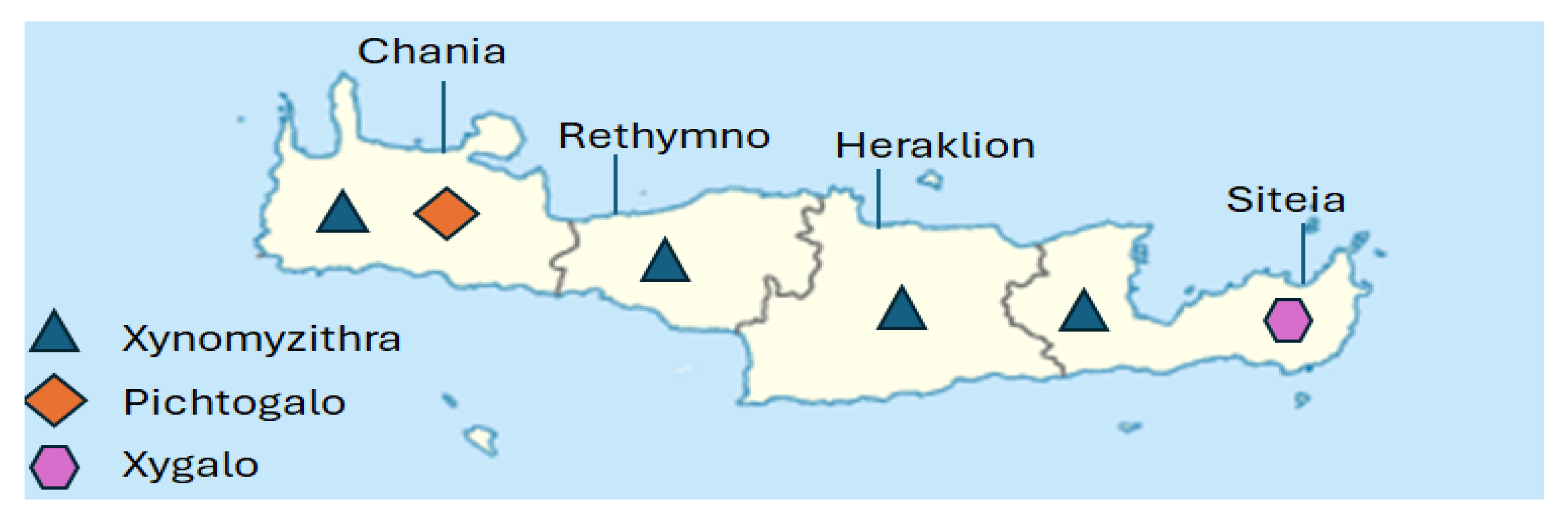
PDOs constitute an official European Union quality scheme granted to agricultural products and foodstuffs whose quality or characteristics are essentially or exclusively attributable to their geographical origin, including both natural and human factors [21]. Within this regulatory framework, all stages of production, processing, and preparation must take place within the defined geographical area, in accordance with an approved product specification and subject to official controls [21]. Beyond their legal function, geographical indications such as PDOs are increasingly understood as tools that link products to territorial identity, collective know-how, and rural development processes [22]. The geographical environment may encompass climatic conditions, soil characteristics, topography, traditional practices, local expertise, and the animal breed used, all of which contribute to a product’s distinctive identity. The PDO label therefore ensures both legal protection of the product name across the European Union and the safeguarding of the intrinsic relationship between place, production methods, and quality attributes. In Crete, three soft cheeses currently hold PDO status—Xynomyzithra Kritis, Pichtogalo Chanion, and Xygalo Sitias—each recognized for its specific characteristics associated with the Cretan agro-ecological environment and longstanding cheesemaking traditions (Figure 1).
Although PDO soft cheeses represent important elements of Cretan gastronomic heritage and rural identity, their compositional characteristics—particularly fat and salt content—may substantially influence the overall nutritional quality of traditional recipes in which they are incorporated. Previous research has demonstrated that traditional and cookbook-based recipes frequently exceed recommendations for energy, saturated fat, and sodium, even within Mediterranean dietary contexts. However, limited evidence exists regarding the systematic nutritional evaluation of recipes specifically featuring PDO cheeses. Given the dual importance of preserving culinary heritage and promoting public health, assessing how these culturally significant dairy products contribute to overall meal composition is essential. This study therefore addresses an important gap by examining the nutritional profile of recipes containing Cretan PDO soft cheeses within the framework of balanced meal recommendations.

1.1.1. Xynomyzithra Kritis

Xynomyzithra received a PDO status in 1996. It is derived from whey milk; hence it is a type of myzithra. It is a white cheese with a paste-like texture in grains, without shape or rind and has a strongly sour taste. It is made from sheep, goat, or a mixture of both whey with the addition of milk produced from local animals [23]. The following conditions must be met:
(a)
The milk should originate from goat and sheep breeds raised in the cheese production area, with their diet based on the local flora [24,25].
(b)
The milk should be obtained from milkings carried out at least ten (10) days after parturition [25].
(c)
The milk should be of good quality and used as whole milk, either fresh or pasteurized [24,26].
The cheese has a maximum moisture of 55%, fat 23%, protein 15.5%, and salt 2% [27]. Initially, the whey is subjected to filtration or centrifugation to remove any residual curd particles and is then heated to approximately 92 °C for about 30 min [24]. When the temperature of the whey decreases to 68–70 °C, a small amount (up to 15% by weight) of full-fat milk is added, which meets the same requirements. The process is followed by cutting and draining the mass to remove as much water as possible (3 to 5 h). It is then salted manually to ensure even distribution and placed in sacks where it is pressed firmly for a week. During this period, acidity increases [27]. The cheese is subsequently placed in containers or barrels, pressed to remove all air, and transferred to chambers at temperatures below 10 °C, where it matures for at least 2 months [26]. The barrels are positioned upside down in the maturation area with loosely fitted lids to allow moisture removal.
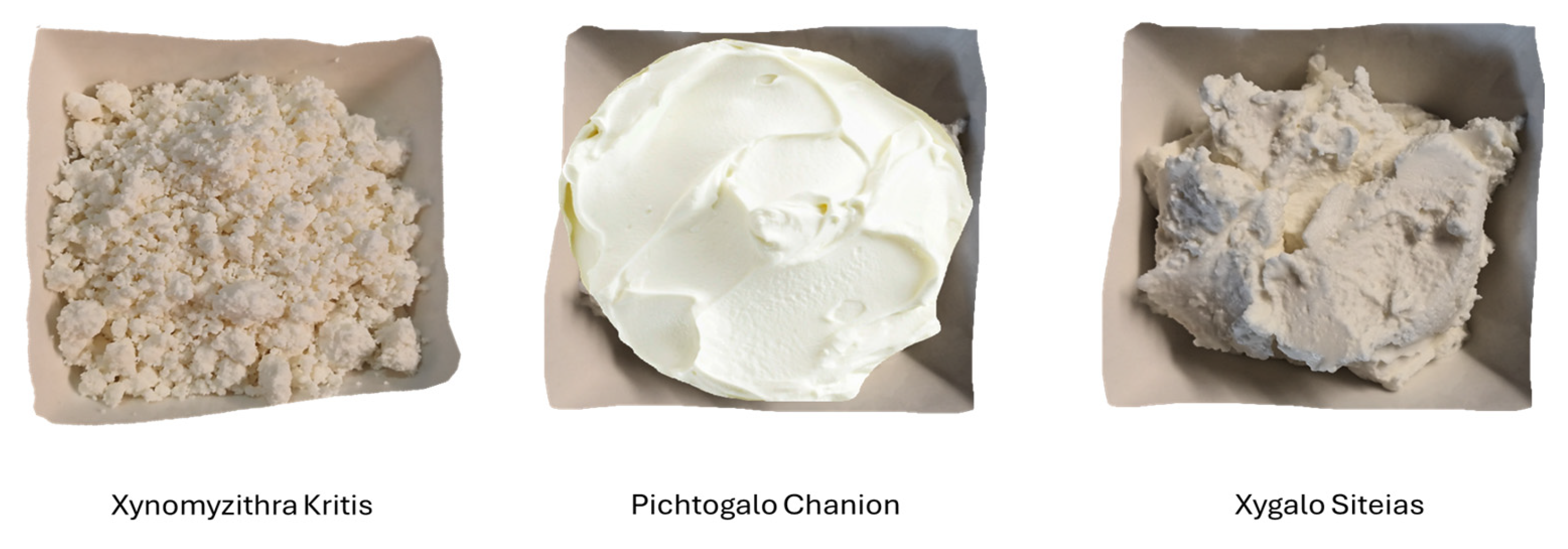
The final product exhibits a dry, particularly sour taste, crumbly texture, and is traditionally served with spicy and sour dishes [25]. Its aroma is acidic and intense [24] (Figure 2).

1.1.2. Pichtogalo Chanion

Pichtogalo Chanion received a PDO status in 1996 [18]. Its color is pure white, it has a smooth texture, no holes, and naturally no shape or rind (Figure 2). It comes exclusively from unpasteurized milk, either sheep’s milk or a mixture of sheep and goat’s milk. It has a moisture content of approximately 65%, fat content of 50% on a dry basis, roughly 16–20% proteins, and about 1% salt [17]. The area where it is allowed to be produced is solely the Chania region of Crete, which is rich in endemic vegetation and has sheep whose milk is high in proteins and fat. The following conditions must be met:
(a)
The milk should originate from goat and sheep breeds reared in the cheese production area, with their diet based on the local flora of the same region.
(b)
It should derive from milkings carried out at least ten (10) days after parturition.
(c)
It should be of good quality, either fresh or pasteurized.
(d)
Milk coagulation should take place within 48 h after milking, during which time the milk should be kept under controlled temperature conditions until coagulation.
The milk coagulates at 18–25 °C within approximately two hours using natural rennet, and the curd remains in the cauldron for 24 h to sour, in accordance with traditional PDO specifications. Without cutting, the curd is then transferred to large tables lined with fabrics for draining, and 1% salt is added. After pressing to remove air, the cheese is stored under refrigeration. The final product is sour, slightly salty, and exhibits a characteristic yogurt-like aroma due to the milk’s casein profile [24,28,29].

1.1.3. Xygalo Siteias

Xygalo Siteias received a PDO status in 2011 [30]. It is a product of milk acidification and is made from goat or sheep milk or a mixture of both, derived from animals raised in the Sitia region and belonging exclusively to native Greek goat breeds and sheep breeds such as those of Sitia, Psiloritis, and Sfakia. The cheese has a maximum moisture content of 75%, maximum salt content of 1.5%, fat in dry matter ranging from 33% to 46%, and a minimum protein content of 31.5% [19].
Fresh daily milk is collected from healthy animals that have given birth at least 10 days prior and is filtered to remove any foreign particles. It is then stored in cooling tanks at low temperatures (3–6 °C), with sheep’s and goat’s milk usually kept separate. Depending on the season and availability, the milk destined for acidification may consist of different ratios: exclusively goat’s milk, a mixture of goat’s milk with whole or partially skimmed sheep’s milk, or strictly partially skimmed sheep’s milk. The milk mixture is heated to 25 °C, and salt (NaCl) is added at a maximum ratio of 2% by weight [23]. If necessary—primarily in the case of pasteurized milk—lactic acid cultures (such as yogurt cultures) or small amounts of natural rennet are added to the mixture. The mixture is then transferred to acidification vessels—made of plastic, stainless steel, or ceramic—where it remains for 7 to 10 days at a temperature of 15–20 °C. This allows for natural fermentation, driven by the milk’s own microflora in conjunction with the ambient microflora. Following the initial acidification, any fat or butter rising to the surface is skimmed off, and the product is left to mature in the same container for approximately one month at temperatures of 10–15 °C. Finally, the whey is removed, and the cheese is ready for consumption. It has a white color, a soft or even granular texture, no skin, a fresh, slightly sour, mildly salty taste, and a pleasant aroma (Figure 2).

2. Materials and Methods

2.1. Data Extraction

Recipes were collected and analyzed into a comprehensive database (Microsoft Excel 365) from cookbooks, the websites of food magazines and one TV cooking show between March and August 2025. The cookbooks included “Edesmatologio Kritis” [31] and “Kritiki Paradosiaki Kouzina” [32]. The online food magazines included “Gastronomos” (gastronomos.gr) (accessed on 10 January 2026), “Gastronomikos periplous” (cretangastronomy.gr) (accessed on 10 January 2026) and “Cookpad” (cookpad.com/gr) (accessed on 10 January 2026). The online TV program was “Pop Mageiriki”. Recipes with a calculated number of portions based on the given amounts of ingredients were included in the study. Recipes were classified as appetizers, main course and desserts during the data extraction process. These were based on the predominant descriptive wording in the title and surrounding text for each recipe. Plant-based recipes contained vegetable, legume, starchy, egg and dairy products. Recipes were classified as meat-based if, in addition to vegetable, legume, starchy, egg and dairy products, they also included meat- and/or fish-derived products. Ingredient nutritional information was sourced from the United States Department of Agriculture (USDA) Data Commons website [33] and the McCance and Widdowson’s composition of foods integrated dataset [34]. Data for specifically branded ingredients were derived from their food labeling. The nutritional value of recipes was assessed against the criteria set by Giazitzi and Boskou [20]. Nutritional information of the PDO soft cheeses was recorded from the websites of supermarkets and retailers in Greece. Data was recorded for commercially available products from different brands. Only products with PDO certification on the food label were selected for data extraction. For each product, the following data (per 100 g) was recorded: total energy (kcal/kj), protein (g), carbohydrate (g), sugars (g), fat (g), saturated fat (g), and salt (g) content.

2.2. Statistical Analysis

Data variables are presented as median (interquartile range [IQR]) and mean ± SE. The non parametric Mann–Whitney U test was used to detect differences between meat- and plant-based recipes. A result was considered statistically significant (*) if the p-value was less than 0.05. Meat- and plant-based recipes were compared per 100 g to compensate for differences in serving size between main courses and appetizers/desserts. One-sample t-test was performed to detect significant differences between variables of meat- and plant-based recipes and cut-off points. The Tukey post hoc test was used to compare nutritional composition of Xynomyzithra Kritis, Pichtogalo Chanion and Xygalo Siteias. Statistical analysis was conducted in version 23 of IBM SPSS.

3. Results

3.1. Recipes Containing PDO Soft Cheeses

A total of 71 recipes were included in the study of which 34 (48%), 23 (32%) and 14 (20%) contained Xynomyzithra Kritis, Xygalo Siteias and Pichtogalo Chanion respectively (Table 1). The detailed list of recipes, including comprehensive ingredient lists and procedures, is available in Supplementary Materials (S1). With respect to meal type, recipes are distributed as follows: 34 (48%) are appetizers, 25 (35%) are main courses and 12 (17%) are desserts. Most recipes were classified as plant-based 56 (79%) whereas meat-based accounted for 15 recipes (21%). Plant-based recipes include recipes with egg- and dairy-derived ingredients, whereas meat-based ones contain meat- and fish-derived ingredients.

3.1.1. Nutrient Content of PDO Soft Cheeses

The nutrient content of PDO soft cheeses is presented in Table 2. The number of commercial products from different brands identified were seven for Xynomyzithra Kritis, two for Pichtogalo Chanion, and two for Xygalo Siteias. Xygalo Siteias is less energy dense compared to Xynomyzithra Kritis and Pichtogalo Chanion and contains lower amounts of fat, saturated fat, sugars, protein and salt. Carbohydrate content was highest in Xygalo Siteias. Pichtogalo Chanion contained the highest fat content. Food label data indicated that all other macronutrients (saturated fat, sugars, protein, salt) and energy density levels were higher in Xynomyzithra Kritis. Post hoc analysis revealed no significant differences between soft cheeses for any of the variables.

3.1.2. Nutrient Analysis of Recipes

Table 3 summarizes the nutrient content of meat- and plant-based recipes. Data are reported per 100 g. Regarding appetizers, meat-based recipes contained higher mean fat, saturated fat, carbohydrates, and sugars than plant-based recipes. Energy density (p = 0.04) and protein (p = 0.00) were significantly higher for meat-based recipes. Mean fiber did not differ between plant- and meat-based recipes (1 g/100 g) and salt content was slightly higher for plant-based recipes. For main courses, mean protein content was significantly higher for meat-based recipes (p = 0.01) and contained on average 5.6 g more protein than plant-based recipes per 100 g of meal. Mean fat, saturated fat, and sugar content was also higher for meat-based recipes, whereas carbohydrates and fiber were higher for plant-based recipes. Mean salt content was the same for plant- and meat-based recipes (0.4 g/100 g) and energy density was marginally higher (9.5 Kcal/100 gr) for meat-based recipes. The nutrient content of desserts indicated that plant-based recipes were more energy dense and contained higher amounts of fat, carbohydrate and fibers. Mean saturated fat was equal between plant- and meat-based recipes (6 g/100 g), whereas protein and salt levels were similar. Meat-based desserts contained higher levels of sugar (14.9 g/100 g) than the plant-based ones (12 g/100 g). Overall, plant-based recipes contained lower sugar content than meat-based recipes, regardless of the type of meal. Similarly, plant-based recipes had higher or equal levels of fiber and lower or equal levels of saturated fat than meat-based recipes. However, differences were not significant at the statistical level for most variables.

3.1.3. Compliance with Recommendations for Nutritionally Balanced Meals

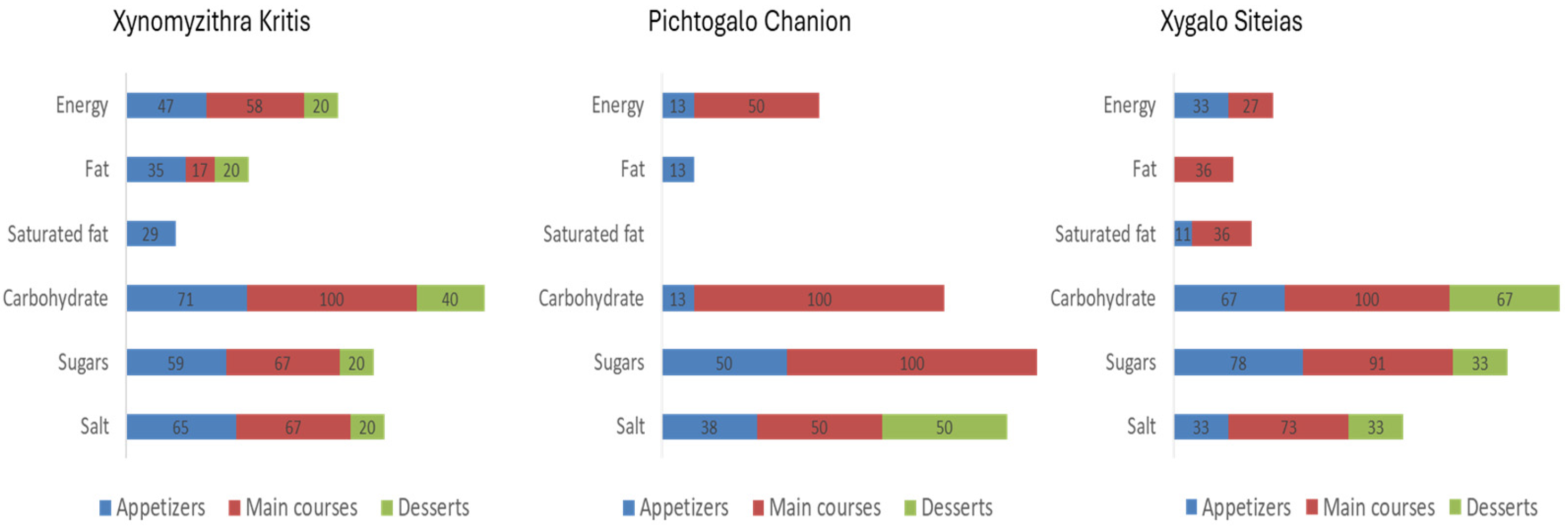
Compliance with recommendations for balanced meals was low across all recipes (7/71 meals, 9.9%). Overall, only five appetizers containing Xynomyzithra Kritis and two main courses containing Xygalo Siteias met all six criteria (energy, fat, saturated fat, carbohydrates, sugar and salt) for a balanced meal. Figure 3 presents the % compliance of meals formulated with the PDO soft cheeses for each of the nutritional criteria. Results indicate that fat and saturated fat show low % compliance with recommendations regardless of the cheese type. None of the recipes meet the criteria for saturated fat (<2.8 g per serving) for any of the dessert recipes. Furthermore, only 13% of the appetizers and 36% of the main courses formulated with Pichtogalo Chanion and Xygalo Siteias respectively meet recommendations for total fat. Energy density is higher than recommended for >50% of recipes containing Xygalo Siteias regardless of the meal type, and the same applies for appetizers and desserts containing Xynomyzithra Kritis and Pichtogalo Chanion. Compliance for carbohydrates is high for recipes containing Xygalo Siteias for all types of meals. Sugar content is higher than recommended (<6.2 g per serving) for more than 50% of recipes for desserts, regardless of the cheese type. More than 50% of desserts formulated with Xygalo Siteias and Xynomyzithra Kritis do not meet current recommendations for salt (<0.75 g per serving). The same applies for appetizers that contain Xygalo Siteias and Pichtogalo Chanion.
Table 4 presents nutritional data of meat- and plant-based recipes per serving size. Regarding main courses and appetizers, mean serving size was higher for meat-based recipes but not at a significant level. Mean serving size was also higher by 27.3 g for plant-based recipes. One-sample t-test analysis was conducted to detect significant differences (p = 0.05) with cut-off points for nutritionally balanced meals. Results indicated that meat-based appetizers contained significantly higher levels of energy (p = 0.01) and fat (p = 0.02) compared to cut-off points. Carbohydrate content was significantly lower (p = 0.04) than recommended levels. No significant differences were detected for any variables for plant-based appetizers in comparison to recommended levels. Carbohydrate content was also significantly lower for main courses for both meat- (p = 0.02) and plant-based (p = 0.00) recipes. Sugar levels in main courses were significantly lower (p = 0.02) only for plant-based recipes. Finally, fat (p = 0.02) and saturated fat (p = 0.00) content of desserts was significantly higher for meat-based recipes, whereas no statistically significant differences were detected for plant-based recipes for desserts.

4. Discussion

The purpose of this study was to evaluate the nutritional quality of recipes containing PDO soft cheeses from Crete—Xynomyzithra Kritis, Pichtogalo Chanion, and Xygalo Sitias—sourced from Greek cookbooks, online magazines, and TV programs. To our knowledge, this is the first systematic assessment of such recipes, providing detailed nutrient composition per 100 g and per serving.
A large proportion of the recipes analyzed were plant-based, reflecting a growing trend toward meat-free diets, which are associated with positive health outcomes and reduced environmental impact [1,2,35]. Despite this, overall compliance with recommendations for balanced meals was low, particularly among meat-based recipes, which exhibited higher energy density and fat content. These findings align with previous research showing that meat-containing meals generally have higher energy and fat than plant-based alternatives, highlighting the persistent nutritional challenge of integrating traditional high-fat cheeses into daily diets [4,5].
Specifically, meat-based appetizers exceeded recommended cut-offs for energy and total fat, with carbohydrates also surpassing guidelines—likely due to the inclusion of starchy ingredients such as flour. Current dietary guidance recommends fat should not exceed 35% of total energy intake, with carbohydrates comprising 45–65% of daily calories [3]. Main courses containing meat were more energy-dense, with higher protein, fat, and saturated fat content than plant-based dishes, whereas plant-based main courses had higher carbohydrate and fiber content. It is important to distinguish between total fat and saturated fat: while total fat content is moderately high even in plant-based main courses (10.5 g/100 g), much of this is likely derived from olive oil, a source of monounsaturated fatty acids (MUFA) aligned with the Mediterranean diet. In contrast, saturated fat, primarily of animal origin, is higher in meat-based dishes (5.1 g/100 g), which supports the need to consider lipid profile rather than total fat alone when evaluating nutritional quality. These macronutrient differences mirror international observations of omnivorous versus vegetarian/vegan recipes, where plant-centered meals generally reduce saturated fat but show variable micronutrient content [6,7,36].
Desserts, regardless of protein source, were high in fat, saturated fat, and sugar, with meat-based desserts showing the most pronounced elevations. This aligns with prior studies indicating that traditional and commercially promoted desserts often exceed recommended sugar and fat limits [8,9], including Mediterranean sweets, which contribute disproportionate energy relative to other meal components [16]. Notably, plant-based desserts had larger serving sizes, potentially offsetting the lower energy density. These results underscore the importance of portion control and ingredient reformulation, such as reducing added fats and sugar, to improve nutritional outcomes without compromising culinary traditions.
The findings suggest targeted strategies for improving nutritional quality in PDO cheese recipes. For meat-based dishes, lowering fat content through ingredient substitution (e.g., using low-fat cheese or plant-based protein alternatives) and controlling portion sizes could improve compliance with balanced meal recommendations. For desserts, reducing added sugars and fats, while maintaining traditional flavor profiles, may enhance both healthfulness and cultural acceptability. Recipe developers, dietitians, and public health authorities could use these insights to guide the creation of nutritionally improved recipes that preserve the gastronomic value of Cretan PDO cheeses.
Several factors should be considered when interpreting these findings. First, nutrient composition was calculated from ingredient data rather than measured chemically, which may underestimate or overestimate actual values, a limitation consistent with similar studies [4,5]. Furthermore, the retrieval of nutritional information from USDA and McCance and Widdowson datasets may have compromised data accuracy, particularly in the case of locally sourced ingredients. It is worth noting that the nutritional composition of Greek recipes has attracted limited attention and has focused mainly on traditional recipes [37]. Second, micronutrient content was not assessed, limiting insights into vitamin and mineral intake, which is particularly relevant for nutrient-rich PDO cheeses known for calcium [17,23]. Third, cooking methods and ingredient substitutions were not standardized, which may affect nutrient outcomes. Fourth, recipe popularity and consumption frequency were not available, limiting the ability to translate findings into population-level public health implications. Finally, the relatively small sample size of PDO cheese recipes may reduce statistical power and generalizability.
These results reflect not only the inclusion of PDO soft cheeses but also traditional Cretan cooking practices, where olive oil elevates total fat while saturated fat remains higher in meat-based dishes. Interpreting macronutrients in this cultural context, alongside unassessed micronutrient contributions like calcium, provides a more nuanced understanding of nutritional quality in these recipes.
Our results are consistent with international evidence showing that recipes from cookbooks and online platforms often fail to meet nutrient recommendations, irrespective of culinary tradition [4,5,36]. High energy density, elevated fat, and insufficient fiber are common challenges globally [7], reinforcing the need for nutrition-informed recipe design. This study extends prior research by highlighting the specific challenges posed by integrating traditional PDO cheeses into everyday meals and by providing actionable guidance for recipe reformulation to support healthier dietary patterns.

5. Conclusions

This study demonstrates that recipes containing PDO soft cheeses from Crete generally exhibit high fat and saturated fat content and often fail to meet established nutritional criteria for balanced meals. Plant-based recipes showed better compliance with dietary recommendations compared to meat-based ones, highlighting the nutritional advantage of vegetable- and legume-rich preparations. Among the cheeses analyzed, Xygalo Sitias presented the lowest energy and fat content, suggesting its potential as a healthier ingredient in recipe formulation.
The findings support several recommendations for culinary practice and public health:
  • Recipe Reformulation: Recipes containing PDO cheeses should be reformulated to reduce total fat, saturated fat, sugar, and salt, while preserving protein content and sensory qualities.
  • Promotion of Plant-Based Recipes: Encouraging plant-based preparations can improve adherence to dietary guidelines and align with sustainable dietary patterns.
  • Consumer Education: Providing guidance on portion control and balanced meal composition may help consumers incorporate traditional PDO cheeses into a healthy diet.
For future research, chemical analyses of recipes should be conducted to verify nutrient calculations and assess micronutrient content. Studies evaluating the impact of cooking methods on nutrient retention, as well as consumer acceptance and consumption patterns, would provide a more comprehensive understanding of the public health implications of traditional Cretan PDO cheeses. Furthermore, comparative studies across Mediterranean regions could elucidate best practices for integrating PDO cheeses into healthful culinary traditions.

Supplementary Materials

The following supporting information can be downloaded at: https://www.mdpi.com/article/10.3390/gastronomy4020008/s1, File S1: Detailed list of recipes included in the study.

Author Contributions

Conceptualization, V.R.; methodology, V.R.; validation, V.R. and E.V.; formal analysis, V.R. and E.V.; investigation, E.V.; data curation, E.V.; writing—original draft preparation, V.R.; writing—review and editing, V.R., E.V., A.M. and I.S.; supervision, V.R. All authors have read and agreed to the published version of the manuscript.

Funding

This research received no external funding.

Institutional Review Board Statement

Not applicable.

Informed Consent Statement

Not applicable.

Data Availability Statement

The original contributions presented in this study are included in the article/Supplementary Materials. Further inquiries can be directed to the corresponding author.

Conflicts of Interest

The authors declare no conflicts of interest.

Abbreviations

The following abbreviations are used in this manuscript:
PDOProtected Designation of Origin
PGIProtected Geographical Indication
USDAUnited States Department of Agriculture
IQRInter Quartile Range
SFASaturated Fatty Acids

References

  1. Zong, G.; Eisenberg, D.M.; Hu, F.B.; Sun, Q. Consumption of meals prepared at home and risk of type 2 diabetes: An analysis of two prospective cohort studies. PLoS Med. 2016, 13, e1002052. [Google Scholar] [CrossRef]
  2. Wolfson, J.A.; Bleich, S.N. Is cooking at home associated with better diet quality or weight-loss intention? Public Health Nutr. 2015, 18, 1397–1406. [Google Scholar] [CrossRef]
  3. Klein, L.; Parks, K. Home Meal Preparation: A Powerful Medical Intervention. Am. J. Lifestyle Med. 2020, 14, 282–285. [Google Scholar] [CrossRef]
  4. Howard, S.; Adams, J.; White, M. Nutritional content of supermarket ready meals and recipes by television chefs in the United Kingdom: Cross sectional study. BMJ 2012, 345, e7607. [Google Scholar] [CrossRef]
  5. Trattner, C.; Elsweiler, D.; Howard, S. Estimating the Healthiness of Internet Recipes: A Cross-sectional Study. Front. Public Health 2017, 5, 483. [Google Scholar] [CrossRef] [PubMed]
  6. Wademan, J.; Myers, G.; Finch, A.; Dhaliwal, S.S.; Scott, J.; Begley, A. A Recipe for Success? A Nutrient Analysis of Recipes Promoted by Supermarkets. Int. J. Environ. Res. Public Health 2020, 17, 4084. [Google Scholar] [CrossRef] [PubMed]
  7. Yoldaş, T.; Kaya, G.S.; Parmaksız, A.; Işıklar, H.; Günalan, E. Nutritional analysis of vegan recipes: From social media to plate. Food Sci. Nutr. 2024, 12, 7657–7670. [Google Scholar] [CrossRef] [PubMed]
  8. Gaba, A.; Bennett, R.; Florez, K.; Soliman, G. Pandemic Recipes—Nutritional Values of Recipes in Legacy Media. Nutrients 2025, 17, 1830. [Google Scholar] [CrossRef]
  9. Dickinson, K.; Watson, M.; Prichard, I. Are Clean Eating Blogs a Source of Healthy Recipes? A Comparative Study of the Nutrient Composition of Foods with and without Clean Eating Claims. Nutrients 2018, 10, 1440. [Google Scholar] [CrossRef]
  10. Raikos, V.; Gkolfinou, D.; Messari, I.; Thalassinos, N.; Mouratidou, T. Exploring nutritional content and cost of ready meals in Greek supermarkets: A cross-sectional comparative study of vegetarian and meat/fish-based meals. Br. Food J. 2025, 127, 3555–3569. [Google Scholar] [CrossRef]
  11. Fotopoulos, C.; Krystallis, A. Quality labels as a marketing advantage: The case of the “PDO Zagora” apples in the Greek market. Eur. J. Mark. 2003, 37, 1350–1374. [Google Scholar] [CrossRef]
  12. Aschemann-Witzel, J.; Niebuhr Aagaard, E.M. Elaborating on the attitude–behaviour gap regarding organic products: Young Danish consumers and in-store food choice. Int. J. Consum. Stud. 2014, 38, 550–558. [Google Scholar] [CrossRef]
  13. Pavlidis, G.; Markantonatou, S. Gastronomic tourism in Greece and beyond: A thorough review. Int. J. Gastron. Food Sci. 2020, 21, 100229. [Google Scholar] [CrossRef] [PubMed]
  14. Pappa, E.C.; Kondyli, E.; Pappas, A.C.; Giamouri, E.; Sarri, A.; Mavrommatis, A.; Zoidis, E.; Papalamprou, L.; Simitzis, P.; Goliomytis, M.; et al. Compositional Differences of Greek Cheeses of Limited Production. Foods 2023, 12, 2426. [Google Scholar] [CrossRef] [PubMed]
  15. Papoutsi, G.; Noulas, P.; Tsatoura, K. Animals or Humans: What Do Greek Consumers Care More about When Buying Feta Cheese? Sustainability 2023, 15, 316. [Google Scholar] [CrossRef]
  16. Cuenca-Ortolá, M.; Gandía, M.; Filice, S.; Gamero, A.; Alegría, A.; Cilla, A. Nutritional composition and antioxidant properties of mediterranean diet traditional recipes: MEDIET4ALL project. Int. J. Gastron. Food Sci. 2025, 42, 101375. [Google Scholar] [CrossRef]
  17. Papageorgiou, D.K.; Abrahim, A.; Bori, M.; Doundounakis, S. Chemical and bacteriological characteristics of pichtogalo chanion cheese and mesophilic starter cultures for its production. J. Food Prot. 1998, 61, 668–692. [Google Scholar] [CrossRef]
  18. Tzanetakis, N.; Litopoulou-Tzanetaki, E. The Microfloras of Traditional Greek Cheeses. Microbiol. Spectr. 2014, 2, 177–218. [Google Scholar] [CrossRef]
  19. Lapidakis, N.; Fragkiadakis, G.A. Dairy Processing: The Soft Spreadable Cheese Xygalo Siteias. Processes 2022, 10, 80. [Google Scholar] [CrossRef]
  20. Giazitzi, K.; Boskou, G. Developing a methodology to create nutritionally balanced meals. Br. Food J. 2021, 123, 2170–2182. [Google Scholar] [CrossRef]
  21. European Union. Regulation (EU) No 1151/2012 of the European Parliament and of the Council of 21 November 2012 on quality schemes for agricultural products and foodstuffs. Off. J. Eur. Union 2012, L343, 1–29. Available online: https://eur-lex.europa.eu/eli/reg/2012/1151/oj (accessed on 10 January 2026).
  22. Belletti, G.; Marescotti, A.; Touzard, J.M. Geographical indications, public goods, and sustainable development: The Roles of Actors’ Strategies and Public Policies. World Dev. 2017, 98, 45–57. [Google Scholar] [CrossRef]
  23. Kehler, M. The Oxford Companion to Cheese; Donnelly, C., Ed.; Oxford University Press: Oxford, UK, 2017. [Google Scholar]
  24. Fox, P.F.; Guinee, T.P.; Cogan, T.M.; McSweeney, P.L.H. Fundamentals of Cheese Science, 2nd ed.; Springer: Boston, MA, USA, 2017. [Google Scholar]
  25. Anifantakis, E.M. Greek cheeses: A tradition of centuries. Small Rumin. Res. 1991, 4, 113–120. [Google Scholar]
  26. Litopoulou-Tzanetaki, E.; Tzanetakis, N. Microbiological characteristics of Greek traditional cheeses. Small Rumin. Res. 2011, 101, 17–32. [Google Scholar] [CrossRef]
  27. Kalogridou-Vassiliadou, D. Biochemical changes during ripening of traditional Greek cheeses. J. Dairy Res. 1992, 59, 247–256. [Google Scholar]
  28. Walstra, P.; Wouters, J.T.M.; Geurts, T.J. Dairy Science and Technology, 2nd ed.; CRC Press: Boca Raton, FL, USA, 2006. [Google Scholar]
  29. Pappa, E.C.; Kondyli, E. Characteristics of some traditional Greek cheeses. Food Chem. 2007, 101, 806–812. [Google Scholar]
  30. European Commission. Commission Implementing Regulation (EU) No. 766/2011 of 29 July 2011 entering the name (Xygalo Siteias) in the register of protected designations of origin and protected geographical indications (Cheeses). Off. J. Eur. Union 2011, L200, 12–13. Available online: http://data.europa.eu/eli/reg_impl/2011/766/ (accessed on 10 January 2026).
  31. Sarantopoulos, G.; Sarantopoulou, N. Edesmatologio Kritis; Savvalas: Athens, Greece, 2011. [Google Scholar]
  32. Psilaki, M.; Psilakis, N. Kritiki Paradosiaki Kouzina; Karmanor: Athens, Greece, 2009. [Google Scholar]
  33. McKillop, K.; Harnly, J.; Pehrsson, P.; Fukagawa, N.; Finley, J. FoodData Central, USDA’s Updated Approach to Food Composition Data Systems. Curr. Dev. Nutr. 2021, 5, 596. [Google Scholar] [CrossRef]
  34. Finglas, P.M.; Roe, M.; Pinchen, H.; Berry, R.; Church, S.; Dodhia, S.; Farron-Wilson, M.; Swan, G. McCance and Widdowson’s the Composition of Foods, Seventh Summary Edition, 7th ed.; Royal Society of Chemistry: Cambridge, UK, 2015. [Google Scholar]
  35. Pilař, L.; Kvasničková Stanislavská, L.; Kvasnička, R. Healthy food on the twitter social network: Vegan, homemade, and or ganic food. Int. J. Environ. Res. Public Health 2021, 18, 3815. [Google Scholar] [CrossRef]
  36. Muharemovic, K.; Taboul, N.; Håkansson, A. Home cooking trends and dietary illness: Nutritional compliance of recipes in a Swedish food magazine 1970–2010. Scand. J. Public Health 2015, 44, 195–201. [Google Scholar]
  37. Vasilopoulou, E.; Georga, K.; Grilli, E.; Linardou, A.; Vithoulka, M.; Trichopoulou, A. Compatibility of computed and chemically determined macronutrients and energy content of traditional Greek recipes. J. Food Compos. Anal. 2003, 16, 707–719. [Google Scholar] [CrossRef]
Figure 1. Geographical areas of production for PDO soft cheeses in the island of Crete.
Gastronomy 04 00008 g001
Figure 2. Representative samples of the PDO soft cheeses.
Gastronomy 04 00008 g002
Figure 3. % Compliance of recipes containing PDO Cretan soft cheeses with recommendations for nutritionally balanced ready meals.
Gastronomy 04 00008 g003
Table 1. Recipes containing PDO Cretan soft cheeses per type of dish.
Xynomyzithra KritisPichtogalo ChanionXygalo Siteias
Appetizers1789
Meat-based031
Plant-based1758
Main courses12211
Meat-based314
Plant-based917
Desserts543
Meat-based012
Plant-based531
Total341423
Meat-based357
Plant-based31916
Table 2. Nutritional composition (mean ± SE) of PDO soft cheeses per 100 g.
Xynomyzithra Kritis
(n = 7)
Pichtogalo Chanion
(n = 2)
Xygalo Siteias
(n = 2)
Energy (kcal)259.7 ± 13.7245.0 ± 47.0180.5 ± 17.5
Fat (g)20.6 ± 1.121.3 ± 5.313.0 ± 1.1
Saturated fat (g)13.6 ± 0.811.6 ± 6.38.5 ± 0.0
Carbohydrate (g)3.5 ± 0.71.7 ± 0.75.1 ± 0.8
Sugars (g)2.3 ± 0.51.4 ± 1.01.2 ± 0.8
Protein (g)15.8 ± 1.111.7 ± 0.710.7 ± 1.3
Salt (g)1.5 ± 0.41.1 ± 0.30.8 ± 0.4
Table 3. Nutritional comparison of meat- and plant-based recipes containing PDO Cretan soft cheeses. A p value < 0.05 indicates significant differences (*) between meat- and plant-based recipes.
AppetizersEnergy (kcal/100 g)Protein (g/100 g)Fat
(g/100 g)
SFA
(g/100 g)
Carbohydrates
(g/100 g)
Sugars (g/100 g)Fibers (g/100 g)Salt (g/100 g)
Meat-based
(n = 4)
Median
(Q1:Q3)
301.7
(274.0:412.3)
16.8
(16.0:25.3)
19.1
(15.2:25.2)
9.3
(5.3:14.0)
17.4
(13.8:27.7)
0.9
(0.7:4.1)
0.8
(0.5:1.4)
0.4
(0.2:0.5)
Mean ± SE384.6 ± 119.3 *24.5 ± 8.5 *21.3 ± 6.010.0 ± 3.824.0 ± 9.03.9 ± 3.11.0 ± 0.50.4 ± 0.1
p-value0.040.000.120.290.660.180.900.49
Plant-based
(n = 30)
Median
(Q1:Q3)
205.8
(155.5:269.0)
6.3
(3.5:8.3)
11.9
(9.6:13.5)
3.7
(3.0:6.7)
18.5
(6.8:27.5)
2.2
(1.8:4.2)
0.9
(0.5:1.5)
0.4
(0.3:0.6)
Mean ± SE213.1 ± 13.06.3 ± 0.612.6 ± 0.95.7 ± 0.918.7 ± 2.53.8 ± 0.81.0 ± 0.10.5 ± 0.1
Main courseEnergy (kcal/100 g)Protein (g/100 g)Fat
(g/100 g)
SFA
(g/100 g)
Carbohydrates
(g/100 g)
Sugars (g/100 g)Fibers (g/100 g)Salt (g/100 g)
Meat-based
(n = 8)
Median
(Q1:Q3)
206.0
(173.2:223.6)
12.1
(10.0–12.2)
12.2
(6.6:17.0)
3.8
(3.1:7.7)
9.5
(7.4:13.5)
1.3
(0.9:3.5)
0.6
(0.3:0.9)
0.4
(0.2:0.5)
Mean ± SE194.3 ± 27.812.1 ± 1.9 *12.3 ± 2.25.1 ± 1.110.4 ± 2.13.4 ± 1.40.6 ± 0.10.4 ± 0.1
p-value0.670.010.510.510.240.220.220.67
Plant-based
(n = 17)
Median
(Q1:Q3)
171.0
(125.7:227.8)
6.4
(5.2:7.3)
9.8
(4.4:15.2)
4.1
(1.8:7.4)
13.8
(7.5:23.8)
2.4
(1.8:3.2)
0.7
(0.6:1.2)
0.3
(0.2:0.5)
Mean ± SE184.8 ± 19.16.5 ± 0.710.5 ± 1.44.8 ± 0.916.3 ± 2.53.0 ± 0.51.0 ± 0.20.4 ± 0.1
DessertsEnergy (kcal/100 g)Protein (g/100 g)Fat
(g/100 g)
SFA
(g/100 g)
Carbohydrates
(g/100 g)
Sugars (g/100 g)Fibers (g/100 g)Salt (g/100 g)
Meat-based
(n = 3)
Median
(Q1:Q3)
156.0
(146.0:233.3)
5.2
(4.5:7.5)
11.1
(8.3:15.3)
6.5
(5.0:7.3)
19.1
(11.8:24.8)
19.0
(11.3:20.6)
0.4
(0.2:0.5)
0.4
(0.3:0.7)
Mean ± SE200.9 ± 45.06.2 ± 1.512.0 ± 3.36.0 ± 1.118.0 ± 6.214.9 ± 4.70.3 ± 0.10.5 ± 0.2
p-value0.861.000.731.000.730.730.100.73
Plant-based
(n = 9)
Median
(Q1:Q3)
238.5
(152.2:308.2)
6.1
(5.4:7.5)
11.2
(9.5:17.9)
5.8
(3.7:8.6)
14.8
(12.2:36.0)
10.9
(5.9:19.8)
0.7
(0.5:0.9)
0.6
(0.3:0.6)
Mean ± SE241.3 ± 32.16.1 ± 0.614.0 ± 2.56.0 ± 0.824.0 ± 4.812.0 ± 2.90.7 ± 0.10.6 ± 0.1
SFA: Saturated Fatty Acids.
Table 4. Per serving nutritional analysis of meat- and plant-based recipes containing PDO Cretan soft cheeses. A p value < 0.05 indicates significant differences (*) between recipes and criteria for nutritionally balanced meals.
AppetizersServing Size
(g)
Energy
(kcal)
Fat
(g)
SFA
(g)
Carbohydrates
(g)
Sugars
(g)
Salt
(g)
Meat-based
(n = 4)
Median
(Q1:Q3)
786.9
(612.3:891.9)
2237.6
(1792.7:2702.0)
137.6
(90.5:177.2)
58.4
(41.2:75.5)
118.9
(103.7:149.9)
6.0
(4.6:29.3)
1.8
(1.4:2.6)
Mean ± SE717.3 ± 165.32257.1 ± 361.1 *130.1 ± 27.9 *58.2 ± 18.6134.7 ± 25.7 *28.0 ± 23.12.2 ± 0.7
p-value-0.010.020.060.040.990.24
Plant-based
(n = 30)
Median
(Q1:Q3)
191.5
(96.0:314.2)
337.1
(172.6:521.8)
22.3
(11.3:40.2)
7.4
(3.7:12.1)
23.6
(10.9:38.0)
4.0
(2.0:10.6)
0.6
(0.4:1.3)
Mean ± SE250.5 ± 44.3522.0 ± 123.535.0 ± 8.515.5 ± 5.136.1 ± 8.29.5 ± 2.61.4 ± 0.5
p-value-0.490.130.380.290.400.80
Main courseServing size
(g)
Energy
(kcal)
Fat
(g)
SFA
(g)
Carbohydrates
(g)
Sugars
(g)
Salt
(g)
Meat-based
(n = 8)
Median
(Q1:Q3)
581.4
(323.6:788.4)
900.6
(564.4:1278.6)
46.6
(31.6:81.2)
18.2
(11.5:26.4)
51.4
(37.9:65.1)
8.1
(5.7:11.2)
1.7
(0.8:1.9)
Mean ± SE554.2 ± 95.1968.2 ± 189.362.6 ± 15.227.8 ± 9.947.4 ± 8.4 *11.7 ± 3.91.5 ± 0.2
p-value-0.160.140.260.020.120.70
Plant-based
(n = 17)
Median
(Q1:Q3)
351.3
(309.0:474.4)
588.9
(510.5:862.2)
31.2
(19.0:45.7)
11.8
(6.0:19.7)
50.5
(38.4:63.8)
7.7
(5.9:12.6)
1.0
(0.8:1.8)
Mean ± SE410.3 ± 50.3669.4 ± 76.438.7 ± 6.816.2 ± 3.356.1 ± 8.4 *11.0 ± 2.1 *1.7 ± 0.4
p-value-0.890.150.090.000.000.06
DessertsServing size
(g)
Energy
(kcal)
Fat
(g)
SFA
(g)
Carbohydrates
(g)
Sugars
(g)
Salt
(g)
Meat-based
(n = 3)
Median
(Q1:Q3)
207.5
(185.8:323.0)
509.4
(416.5:552.9)
23.7
(23.4:27.8)
13.5
(13.4:14.4)
50.0
(29.6:66.9)
36.4
(21.9:59.9)
0.9
(0.8:0.8)
Mean ± SE270.0 ± 69.5476.5 ± 65.726.2 ± 2.4 *14.0 ± 0.5 *47.6 ± 17.642.4 ± 18.01.2 ± 0.4
p-value-0.060.020.000.420.240.76
Plant-based
(n = 9)
Median
(Q1:Q3)
247.5
(171.3:308.1)
566.2
(351.6:730.6)
29.2
(17.6:32.4)
14.3
(9.3:16.6)
33.6
(6.7:48.8)
33.6
(6.7:48.8)
1.1
(0.9:1.7)
Mean ± SE297.3 ± 70.5850.8 ± 326.953.1 ± 22.820.2 ± 6.842.2 ± 16.642.2 ± 16.61.8 ± 0.6
p-value-0.360.400.130.950.140.53
SFA: saturated fatty acids; serving size is not included in the criteria defined for balanced meals.
Disclaimer/Publisher’s Note: The statements, opinions and data contained in all publications are solely those of the individual author(s) and contributor(s) and not of MDPI and/or the editor(s). MDPI and/or the editor(s) disclaim responsibility for any injury to people or property resulting from any ideas, methods, instructions or products referred to in the content.