Article

Agrochemicals and Biological Inputs in Soybean Farms in Brazil: Cases of Substitutive, Incremental, and Alternative Uses


by
Gabriel da Silva Medina
1,
Fernando Augusto da Silveira
2,3,*,
Elis Marina de Freitas
4,
Vitor Hugo Souza Resende
1 and
Éder de Souza Martins
3,4
1
Faculty of Agronomy and Veterinary Medicine (FAV), University of Brasília (UnB), Brasília 70910-900, Brazil
2
Ekoa Life Sciences, Brasília 70830-300, Brazil
3
Graduate Program in Environmental Sciences, Faculty of Planaltina (FUP), University of Brasília (UnB), Brasília 73345-010, Brazil
4
Brazilian Agricultural Research Corporation—Embrapa Cerrados, Brasília 70770-901, Brazil
*
Author to whom correspondence should be addressed.
Agrochemicals 2026, 5(1), 13; https://doi.org/10.3390/agrochemicals5010013
Submission received: 5 December 2025 / Revised: 9 January 2026 / Accepted: 27 January 2026 / Published: 5 March 2026
(This article belongs to the Topic Natural Products in Crop Pest Management)

Abstract

Farmers worldwide use agrochemicals and biological inputs to fertilize fields, manage pests and diseases, and promote plant growth. However, there is still limited field-based evidence on the extent to which biological inputs function as substitutes, incremental complements, or alternatives to agrochemicals in key farming practices. This study presents preliminary results on the use of synthetic and biological inputs for the most common practices employed by large soybean farmers in central Brazil. We combined literature review, regulatory data on registered biological products, and in-person interviews with farmers and market experts. Our results show that, in most practices, biological products are adopted alongside the continued use of synthetic inputs, in some cases reducing the frequency or dosage of chemical applications. Inoculants based on nitrogen-fixing bacteria already substitute mineral nitrogen fertilization in soybean, while biosolubilizers and plant activators are used incrementally to enhance the efficiency of chemical fertilizers. Bioinsecticides and biofungicides are predominantly employed as alternatives within spray programs, especially in preventive or early interventions, thereby reducing the number of conventional pesticide sprays. Bionematicides emerge as the main biological tools used as substitutes for synthetic nematicides in preventive treatments, whereas biological herbicides are not yet available on the market. Field evidence presented in this study showed that farmers adopt biological products in diverse ways, including as substitutes, incremental, or alternatives to chemical products, depending on the technologies available. These findings provide a more nuanced understanding than the common views that, on one hand, biological inputs simply complement rather than substitute chemical products, and on the other, that biological solutions can fully substitute synthetic products. As environmental and economic implications, we conclude that biological inputs can underpin trajectories towards more regenerative management in large-scale soybean systems, even when synthetic inputs remain part of the production matrix.

1. Introduction

Farmers worldwide use agrochemicals and biological inputs to fertilize fields, manage pests and diseases, and promote plant growth in major cropping systems. Over recent decades, synthetic fertilizers and pesticides have enabled substantial yield gains, but their intensive use has also raised concerns regarding environmental contamination, biodiversity loss, human and animal health, and the selection of resistant pest and pathogen populations [1,2,3,4,5]. In parallel, a growing portfolio of biological inputs has been developed and commercialized, including inoculants, biofertilizers, microbial nutrient solubilizers, bioinsecticides, biofungicides, and bionematicides, which can perform some of the same agronomic functions as conventional agrochemicals [6,7,8].
Bio-inputs based on beneficial microorganisms and biologically derived compounds can promote nutrient cycling, suppress pests and diseases, and increase plant tolerance to biotic and abiotic stresses [9]. Biological nitrogen fixation by elite strains of rhizobia in soybean is one of the most consolidated examples, allowing the crop to meet its nitrogen demand without mineral N fertilization in many production contexts [10,11,12]. Similarly, microbial nutrient solubilizers, bioinsecticides, biofungicides and bionematicides have been proposed as key tools for reducing reliance on synthetic fertilizers and pesticides in integrated management programs [6,7,13].
These technologies are central to the emerging paradigm of regenerative agriculture, which seeks to restore and enhance soil health, biodiversity and ecosystem functions while maintaining or increasing productivity. Regenerative agriculture is generally defined by practices that reduce dependence on synthetic inputs, minimize soil disturbance, maintain permanent soil cover and increase biological diversity at field and landscape levels, thereby reinforcing ecological processes such as biological nitrogen fixation, nutrient cycling and natural pest regulation [14].
Innovations in agricultural bio-inputs range from relatively simple technologies used to isolate and reintroduce specific microorganisms that promote beneficial interactions with plants to cutting-edge approaches such as phytomicrobiome engineering based on gene transfer between organisms [15]. Commercial agricultural bio-inputs undergo continuous technological development [16] driven largely by private companies that often collaborate with public innovation centers [17]. Improvements in strain selection, formulation, stabilization, application technologies and quality control have expanded the portfolio of microbial-based products available for biological control, plant nutrition and the mitigation of biotic and abiotic stresses. At the same time, regulatory frameworks have been adapted in several countries to accommodate biological products, contributing to the rapid expansion of this market segment.
Brazil plays a particularly prominent role in this context. The country is one of the world’s largest soybean producers and has experienced rapid growth in the registration and commercialization of agricultural bio-inputs in recent years, becoming a global leader in their use [18]. Large-scale farmers have access to a diversified set of biological products registered as inoculants, biofertilizers, biosolubilizers, bioinsecticides, biofungicides and bionematicides for different stages of the crop cycle. This expanding market creates opportunities for biological inputs to function as effective substitutes or alternatives to agrochemicals in key management practices. However, it also poses challenges related to product selection, integration with existing agrochemical programs and evaluation of environmental and economic trade-offs at the farm level [7,8,19,20].
Despite the technological and regulatory advances, there is still limited empirical evidence on how biological inputs are actually adopted by farmers at the field level and how they function in relation to conventional agrochemicals in concrete management decisions. Most of the available literature focuses either on experimental evaluations of the efficacy of specific products under controlled conditions or on aggregate statistics regarding the number of registered products and sales volumes [7,8]. Less attention has been given to documenting how farmers combine or substitute biological and synthetic inputs across different management practices, such as fertilization, pest and disease control, weed management and nematode control, and to assessing the environmental and economic implications of these adoption patterns.
In particular, there is a lack of field-based studies that classify the roles of biological inputs as substitutive, incremental or alternative options relative to agrochemicals, and that relate these roles to broader trajectories towards regenerative agriculture and to the structure of the biological inputs market.
In the absence of detailed knowledge about the adoption of commercial biological inputs by farmers, this segment may be mistakenly overlooked as a niche, complementary technology for conventional practices based on synthetic products, rather than as a potential driver of systemic change in crop management. Understanding how farmers integrate biological inputs into their production systems is therefore essential for assessing whether these products primarily add another layer of technology to existing agrochemical regimes or whether they contribute to the reconfiguration of input portfolios in ways that reduce environmental impacts, enhance ecosystem services and improve the economic performance of farming operations. Such understanding is also crucial for identifying technological and market gaps that limit the capacity of biological inputs to function as effective substitutes for agrochemicals in all major components of crop management.
This study aims to assess the use of agrochemicals and biological inputs by soybean farmers, the main agricultural commodity planted in Brazil, and to identify the cases in which biological inputs are used as substitutive, incremental or alternative options to agrochemicals. Specifically, we aim to: (i) describe the biological and synthetic inputs registered for major agricultural practices used in soybean cultivation and the existing results on possible substitutions reported in the academic literature; (ii) identify the chemical and biological alternatives most commonly used by farmers in Brazil in the different soybean growth stages; and (iii) discuss the environmental and economic implications of farmers’ adoption patterns, highlighting how they can support trajectories towards regenerative agriculture.

2. Materials and Methods

This study presents preliminary results for the ten most common practices employed by soybean farmers in Brazil. We defined ten key agricultural practices for soybean production (Table 1), considering both the economic relevance of soybean exports for Brazil and the long-standing tradition of using bio-inputs in this crop, particularly inoculants. For each practice, we identified the biological products registered with the Brazilian Ministry of Agriculture and Livestock, Brasília, Brazil (MAPA).
Data on inoculants and biofertilizers were obtained from the Integrated System of Agricultural Products and Establishments (Sipeagro) of MAPA (https://mapa-indicadores.agricultura.gov.br/publico/extensions/Fertilizantes/Fertilizantes.html, accessed on 15 October 2026). In the “Reports” → “Products” menu, we selected the category “inoculants and biofertilizers” (including biofertilizer, soil conditioner, mineral fertilizer, and organic fertilizer), generating a list of registered products.
Information on products for biological control was obtained from MAPA’s AgroFit website (https://agrofit.agricultura.gov.br/agrofit_cons/principal_agrofit_cons, accessed on 15 October 2026). In the “Formulated Products” option, we selected all classes listed as biological, generating a list with the names of the registered products. The lists of inoculants/fertilizers and biological control products were combined for analysis, and all products registered up to December 2024 were included.
To assess the use of agricultural bio-inputs and agrochemicals in the field, we conducted face-to-face semi-structured interviews with soybean farmers from the Federal District and surrounding areas and from the municipality of Cristalina, Goiás, regions close to Brasília, the capital of Brazil. These regions were selected because they comprise predominantly large-scale farms (generally >500 ha) that adopt modern farming systems, including soil fertilization, chemical and biological pest and disease management, mechanized operations, and frequent use of center-pivot irrigation. Considering a 90% confidence level, we sampled 72 farmers from a population of 1579 growers of annual crops, according to the 2017 Agricultural Census. These results are presented in Section 3.1.
Interviews followed a standardized guide combining closed-ended questions (e.g., whether a given input class was used, application timing and frequency across soybean developmental stages) and open-ended prompts (e.g., decision criteria, perceived outcomes and constraints) to capture both adoption patterns and farmers’ rationales. Before the classification step, interviewers provided a standardized explanation of the conceptual categories and presented definition cards describing the three modes of use, substitute, incremental, and alternative, to ensure consistent interpretation across respondents. Farmers were then asked to select the category that best represented their current practice for each assessed agricultural practice and to briefly justify their choice.
When necessary, clarification questions were used to resolve ambiguities and support consistent classification. The uses of bio-inputs by farmers were defined at the level of the agronomic function/practice (e.g., plant nutrition, disease, insect, and nematode management), rather than at the level of product brand.
The uses of bio-inputs by farmers were defined as follows: (i) Substitute, when farmers report the complete discontinuation of a synthetic input class or chemical intervention for a given agronomic function and adopt a biological input to deliver the same function; (ii) Incremental, when the biological input is used in addition to the synthetic program for the same function; and (iii) Alternative, when farmers alternate biological and synthetic products across applications for the same function, typically resulting in a reduction in the frequency and/or intensity of chemical applications (e.g., replacing some chemical sprays with biological ones).
To access adoption levels on a nationwide scale, we interviewed marketing experts selling biological inputs in seven Brazilian states. The adoption data were assessed using the following methodology:
  • IBGE Agricultural Census data to determine the number of farmers with more than 200 hectares of annual crops (focusing on soybeans);
  • Consultation with sales representatives from different states to determine the adoption of each segment of bio-inputs analyzed and the leading companies in each segment. The results were tabulated considering each company/product with zero to five points for each category, with zero when it was not mentioned and five when it was mentioned as a leader in the segment in the region consulted.
This assessment provides an initial understanding of the adoption levels in Brazil, but it is still limited to only seven of the 27 Brazilian states. Since this data was collected from sales representatives and not from farmers, it was not possible to define the respective shares of substitution, incremental and alternative uses on this expanded scale of the survey. These results are presented in Section 3.3.
Interview responses were coded into a structured database. Closed-ended responses were recorded as binary/ordinal variables (e.g., adoption of biological inputs by practice; timing and frequency of use across management stages). Open-ended responses were organized through content analysis using a codebook aligned with the conceptual framework. The substitute/incremental/alternative classification was treated as a low-inference, deductive category, assigned practice-by-practice based on standardized definition cards presented prior to classification. Primary coding was conducted using the predefined codebook, and a second researcher independently reviewed coded entries for consistency; any discrepancies were resolved through consensus and, when necessary, refinement of coding rules. Given the constrained response structure and the low-inference nature of the core classification categories, no formal intercoder statistic (e.g., Cohen’s kappa) was calculated, and this procedure is now explicitly reported for methodological transparency.

3. Results

3.1. Biological and Synthetic Solutions Registered in Brazil

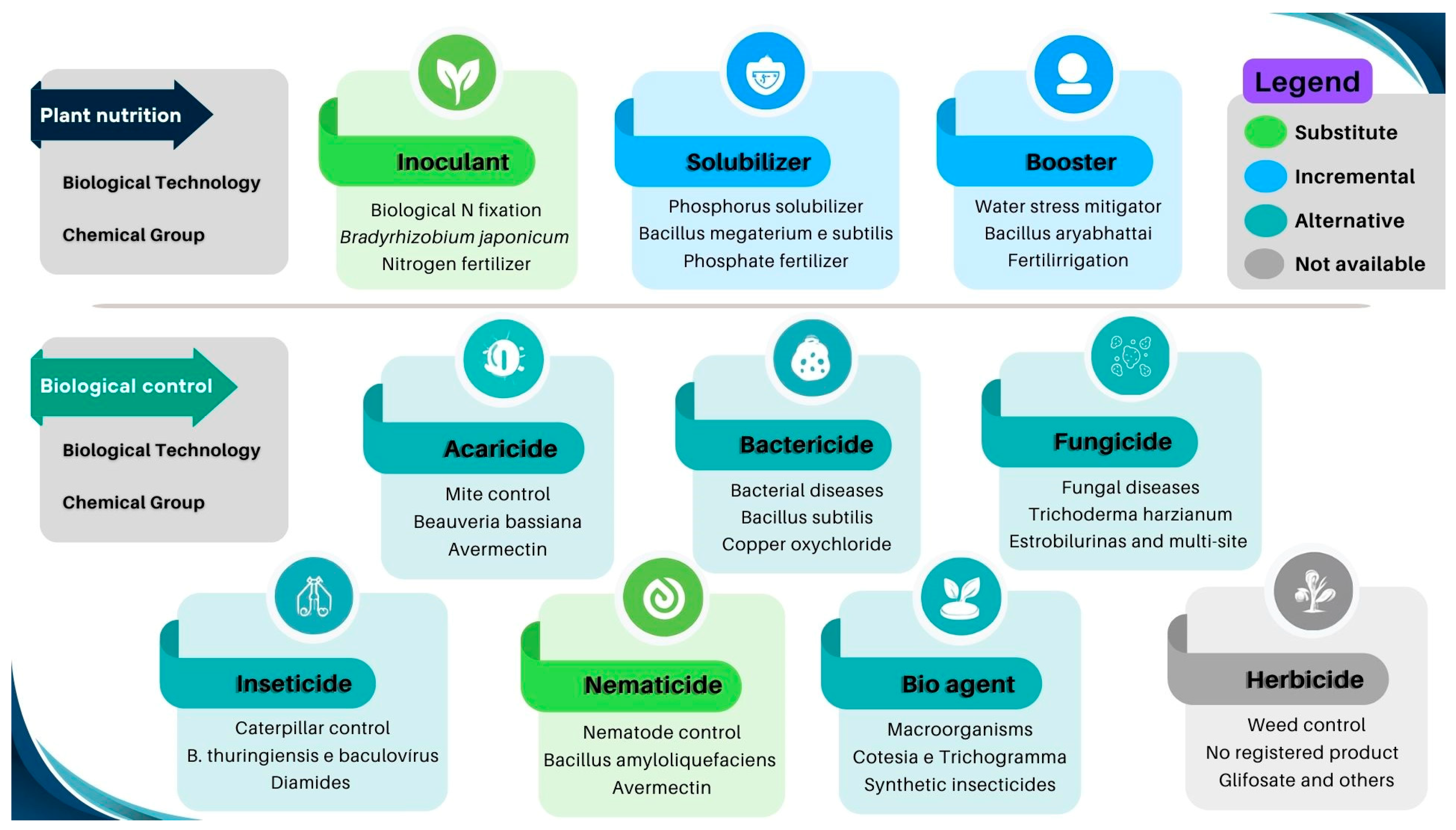
Figure 1 summarizes the biological technologies used in the main soybean farming practices adopted in the studied areas, ranging from plant nutrition to weed control with herbicides. Some biological products are substitutes for chemical inputs, for example, inoculants based on nitrogen-fixing bacteria, which substitute nitrogen fertilization in soybeans, and bionematicides, which are used to prevent nematode attacks in substitution to synthetic nematicides.
Other biological products, such as plant activators and nutrient biosolubilizers are used incrementally to conventional inputs, with the biological input used additionally to the chemical ones. These bio-inputs are applied with the recommendation of maintaining chemical fertilization. Some biological products, such as biofungicides and bioinsecticides, allow the alternation between synthetic and biological applications and thereby reducing the use of chemical pesticides. On the other hand, there are currently no registered bio-herbicides for weed control in Brazil. The details and exceptions are presented in the following sections.

3.1.1. Regulatory Framework and Availability of Biological Inputs by Practice

Inoculants are the most consolidated example of bio-inputs used in the substitution of chemical inputs based on nitrogen-fixing bacteria in soybean. In Brazil, the efficiency of biological nitrogen fixation (BNF) mediated by elite strains of Bradyrhizobium has made seed inoculation an agronomic practice considered indispensable for soybean cultivation, allowing the crop to meet essentially all of its nitrogen demand without mineral N fertilization. Several long-term studies indicate that, when properly managed, BNF in soybean eliminates the need for urea or other soluble N sources, while sustaining high yields and significantly reducing production costs and environmental impacts associated with nitrogen fertilizers [11,12]. In addition, the residual nitrogen incorporated into the soil–plant system via soybean straw and root nodules benefits subsequent crops in rotation, including maize and cotton, which can be grown with lower N fertilizer requirements in well-structured conservation systems. Inoculants based on nitrogen-fixing or growth-promoting bacteria already function as full substitutes for soluble N in soybean and as effective partial substitutes in maize and common bean, while also enhancing the nitrogen supply for subsequent crops in the rotation.
Biological nutrient solubilizers are used to make soil nutrients available to plants. Commercially available biosolubilizers primarily solubilize P, but also K. A recent important commercial development in this segment has come with the use of bacteria such as Pseudomonas fluorescens. Research has also resulted in consortia of microorganisms such as Bacillus megaterium and Bacillus subtilis. Public innovation centers and companies continue to test different microorganisms to solubilize nutrients.
While inoculants based on nitrogen-fixing bacteria substitute nitrogen fertilization in soybeans, biosolubilizers are used incrementally to conventional inputs. In these cases, biological products are applied in addition to chemical fertilization, similarly to plant activators and other nutrient-solubilizing bio-inputs. These bio-inputs are applied with the recommendation of maintaining chemical fertilization [21].

3.1.2. Biological Control: Mites, Bacteria, Fungi, and Insects

The 117 biofungicides registered in Brazil are formulated with fungi of the genus Trichoderma or bacteria of the genus Bacillus, either as isolated microorganisms or as consortia of different organisms. In the management of foliar diseases, biofungicides based on Bacillus spp. and Trichoderma spp. have emerged as viable alternatives to conventional fungicide programs in soybean and other broad-acre crops. Field trials with Bacillus-based products in soybean have demonstrated that these biofungicides can reduce defoliation, suppress important fungal pathogens and maintain grain yields at levels comparable to standard chemical fungicide regimes, particularly when applied preventively or early in the epidemic [1,22]. More recently, dual-purpose bio-inputs developed by public research institutions, combining plant growth promotion and disease control in a single formulation, have shown the capacity to substitute part or all of the chemical fungicide applications in soybean, contributing to reductions in pesticide loads and residue levels without compromising productivity. Similar strategies are being tested and adopted in other crops, including beans, maize and cotton, where biofungicides have been integrated as substitutes for certain spray windows, particularly in integrated disease management programs focused on resistance management and environmental compliance. Chemical treatment often combines fungicides with multi-site and site-specific modes of action.
Bioinsecticides are the most extensively registered class of biological control products in Brazil and are predominantly applied in soybean production to control insect pests, including caterpillars and stink bugs. Of the 305 bioinsecticides registered in the country, the majority are composed of B. bassiana and Metarhizium anisopliae, Bacillus thuringiensis, and baculoviruses. For insect pest control, bioinsecticides based on Bacillus thuringiensis (Bt) and entomopathogenic fungi such as Beauveria bassiana and Metarhizium anisopliae are key examples of biological products that can substitute broad-spectrum chemical insecticides in specific target–crop combinations. Extensive reviews on Bt biopesticides show that, when properly positioned in the spray program, these products achieve control levels comparable to many conventional insecticides against lepidopteran pests in maize, soybean and cotton, while offering higher target specificity and lower risks to natural enemies and the environment [23,24]. In Brazil, new Bt-based formulations have been developed specifically for the control of fall armyworm in maize, enabling farmers to reduce reliance on organophosphate and pyrethroid insecticides in susceptible cultivars.
Although the present study focuses on formulated biological inputs rather than transgenic crops, both strategies illustrate how microbial-based technologies can structurally substitute chemical insecticides in major production systems. Soybean seeds with Intacta 5+ technology are expected to influence this scenario since soybean seeds will be resistant to nine species of caterpillars.

3.1.3. Nematode Control Agents

Biological inputs have also shown strong potential to substitute conventional nematicides in the management of phytopathogenic nematodes. The most commonly used technology in the 88 bionematicides registered in Brazil is the bacteria B. amyloliquefaciens, but there are products formulated with other Bacillus species, in addition to the bacteria Paecilomyces lilacinus. Reviews and greenhouse or field trials comparing biological and chemical nematicides indicate that microbial biocontrol agents, such as bacteria and fungi producing nematicidal metabolites or parasitizing eggs and juveniles, can achieve comparable or higher levels of phytopathogenic nematode suppression and yield protection than several synthetic nematicides, with markedly lower toxicity to non-target organisms [25,26,27]. In diversified systems including soybean, maize and cotton, biological nematicides have been successfully used preventively, targeting both eggs and second-stage juveniles, thereby reducing population build-up throughout the cycle and limiting the need for repeated applications of fumigant or non-fumigant chemical nematicides.
Recent studies that directly contrast biological products with fluensulfone and other chemical active ingredients show that biological control agents can provide similar yield responses and long-term suppression of nematode populations, especially when integrated with crop rotation and soil health management [28,29]. These findings support the interpretation that, in many production environments, bionematicides are not merely complementary tools but can act as genuine substitutes for conventional nematicides in soybean-based rotations, with potential gains in productivity and environmental performance.

3.1.4. Weed Control

Chemical herbicides are largely used in soybean plantations given the practicality, efficiency, and speed of application offered by the chemical method. The application of glyphosate post-emergence in genetically modified soybean crops has made it possible to control weeds while preserving the plants. In addition to glyphosate, other synthetic herbicides are used in soybean farming. In Brazil, there is still no bioherbicide registered with MAPA, although research is underway to develop commercial products.

3.2. Chemical and Biological Alternatives

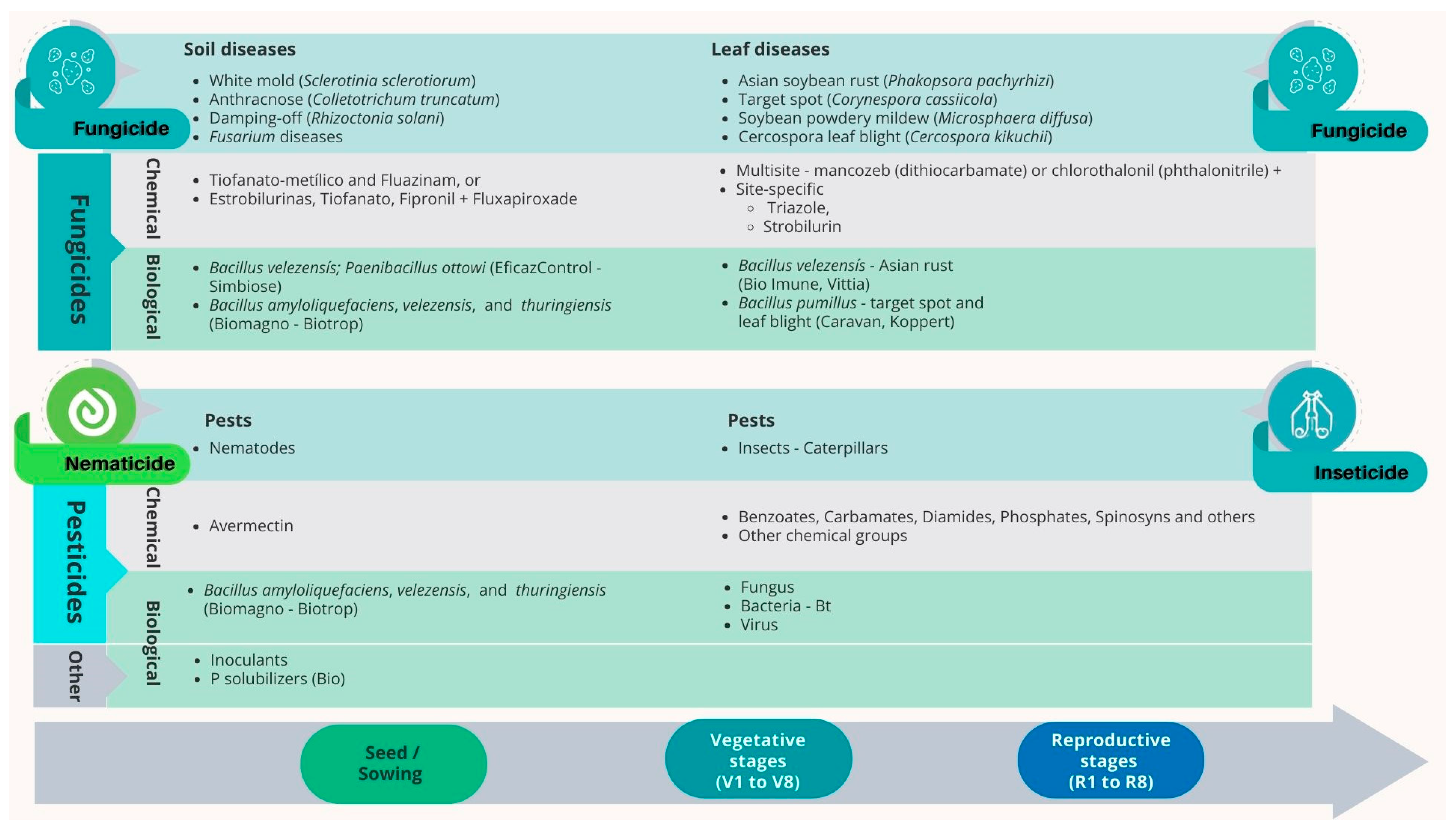
Figure 2 summarizes the chemical and biological alternatives most commonly used across different soybean developmental stages, from seed treatment to the control of pests and diseases. Seeds are treated with chemical and biological products mainly to prevent fungal soil diseases and also with inoculants for plant nutrition.
In the vegetative and reproductive stages, the main focus is to control diseases and pests, mainly with fungicides and insecticides, respectively. For all the cases, we identified biological products positioned as alternatives to chemical ones, although farmers use biological products as substitutes, incremental additions, and alternatives to chemical products depending on the pest pressure and the technologies available, as detailed in the following sections.

3.2.1. Diseases

Soil Diseases
Soil diseases with greater economic impact for soybean farmers in Brazil include White mold (Sclerotinia), Anthracnose (Colletotrichum), Damping-off (Rhizoctonia), Charcoal rot (Macrophomina phaseolina) and Fusarium. Farmers deal with these diseases with chemical or biological products used either in seed treatment or during sowing.
Standak Top + Sistiva from BASF, Maxim from Syngenta, and Certeza N from Ihara are examples of leading fungicides for seed treatment in the Brazilian market. Chemical treatment often includes multisite and site-specific active principles. For example, Certeza N has two active ingredients with different modes of action: Thiophanate-Methyl has a site-specific mode of action, and Fluazinam has a multi-site mode of action.
For soilborne diseases, biologicals have been recommended in association with chemicals in seed treatment or during sowing to support the control of diseases. Biofungicides based on Trichoderma sp. are particularly used in soybeans to control diseases such as the fungus that causes White mold (Sclerotinia sclerotiorum) through soil application. Bacillus-based products are also registered for the prevention of other fungal diseases, such as, for example, Eficaz Control (Simbiose), for Colletotrichum and Fusarium and Biomagno (Biotrop) registered for Damping-off (Rhizoctonia) and nematodes.
Some biological companies have positioned their biofungicides as potential substitutes for chemical fungicides. For example, Eficaz Control is presented as the first 100% biological fungicide for seed treatment with superior results to chemical products such as Certeza N.
While chemical products provide short-term protection for seeds, biologicals accompany root development and parasitize pathogenic fungi, helping to reduce inoculum. In the case of white mold, the focus of chemical treatment is on flowering, while that of biological products is in the seed treatment or during sowing, seeking to reduce the sclerotia of white mold.
The mechanisms of action of biological products that allow the control of pathogenic fungi in both soil and foliar applications include the following:
  • Competition and colonization—Higher growth rate than pathogens. For example, Bacillus species help in competition by forming a protective biofilm on the plant surface that limits pathogen attack.
  • Preventive antibiosis—Production of molecules with a deleterious effect on the pathogen’s physiology. For example, Bacillus species such as subtilis and velezensis have an antibiosis effect by producing antifungal molecules (long-chain lipopeptides) such as iturin, surfactin, and fusaricidin that promote the rupture of the fungal cell [30].
  • Induction of systemic resistance—Activation of plant defense mechanisms against pathogens. For example, B. pumilus stimulates the plant’s defense system through elicitors such as jasmonic and salicylic acid.
  • Parasitism—For example, Trichoderma fungi have the ability to parasitize structures of pathogenic fungi through penetration, colonization of hyphae, and production of enzymes.
Leaf Diseases
Foliar diseases with the greatest economic impact on soybeans planted in Brazil include Asian soybean rust (caused by Phakopsora pachyrhizi fungi), target spot (Corynespora cassiicola), powdery mildew (Microsphaera diffusa), and end-of-cycle diseases such as brown spot (Septoria glycines) and leaf blight (Cercospora kikuchii).
Chemical treatment is done by combining multi-site fungicides with site-specific fungicides, seeking to alternate active ingredients as a way to reduce resistance. Multisite products generally inhibit spore germination by forming a kind of chemical barrier between the plant and the spore, and are applied before infection occurs. Site-specific fungicides have only one site of action on the fungus. Because site-specific fungicides attack a single point, fungi are more likely to develop long-term resistance, which requires rotation of active ingredients.
The most commonly used multi-site products for foliar treatment of soybeans in Brazil are mancozeb (dithiocarbamate class) or chlorothalonil (phthalonitrile class), applied from the vegetative stage V8 onwards, with a maximum of three applications in the case of mancozeb and a maximum of two applications in the case of chlorothalonil.
Site-specific fungicides include triazoles (such as difenoconazole) that interfere with the production of sterols essential for the fungus and strobilurins that disrupt fungal respiration. Application recommendations involve alternating products with different active ingredients, as in the case of BASF’s recommendation to use three different products (Belyan, Blavity, and Keyra, the commercial names in Brazil), as a way to reduce the development of resistance by fungi, with a maximum of two applications of each product throughout the plant’s growth cycle.
Treatment with biological products is done preventively, and there are registered products for the main foliar diseases of soybeans, with the following market leaders standing out:
  • Asian soybean rust plus 21 other targets: Bio Imune (Vittia)—Bacillus velezensis BV02;
  • Target spot, leaf blight plus 16 other targets: Caravan (Koppert)—Bacillus pumilus, strain CNPSo 3203;
  • Powdery mildew plus 30 other targets: Bombardeiro (Biotrop)—Bacillus subtilis strain CCTB04, Bacillus velezensis strain CCTB09 and Bacillus pumilus strain CCTB05;
  • Brown spot and white spot: Frontier Control—Simbiose—Bacillus velezensis (strain Labim 40).
Biological products based on bacteria of the genus Bacillus stand out for their use in controlling foliar fungal diseases. Bacillus velezensis is used to control Asian soybean rust through foliar application, mainly due to multiple and cross-resistance to site-specific fungicides. Biological products based on Bacillus pumillus are used to control target spot and leaf blight through foliar application.
In soybean farming, depending on the region, up to eight fungicide spray applications may be made, and the main challenge has been identifying the application window for deploying biologicals, which, according to surveyed growers, sometimes substitute site-specific fungicides at the V0 and V3 growth stages. Specifically, for Asian soybean rust, due to the disease’s high severity, which can cause losses of up to 100% of production, the farmers mainly use chemical products for the prevention and control of the causative fungus.
Replacing Chemical Fungicides with Biofungicides
There is consensus in the scientific community and among farmers on the use of inoculants to substitute nitrogen fertilization in soybeans. There is also a growing understanding of the effectiveness of bionematicides when compared to chemical nematicides available on the market. However, for all other agricultural practices, bio-inputs are seen either as an incremental addition or as an alternative to chemicals, in this case allowing for alternating applications, mainly for the control of fungi that can have a significant economic impact on crops.
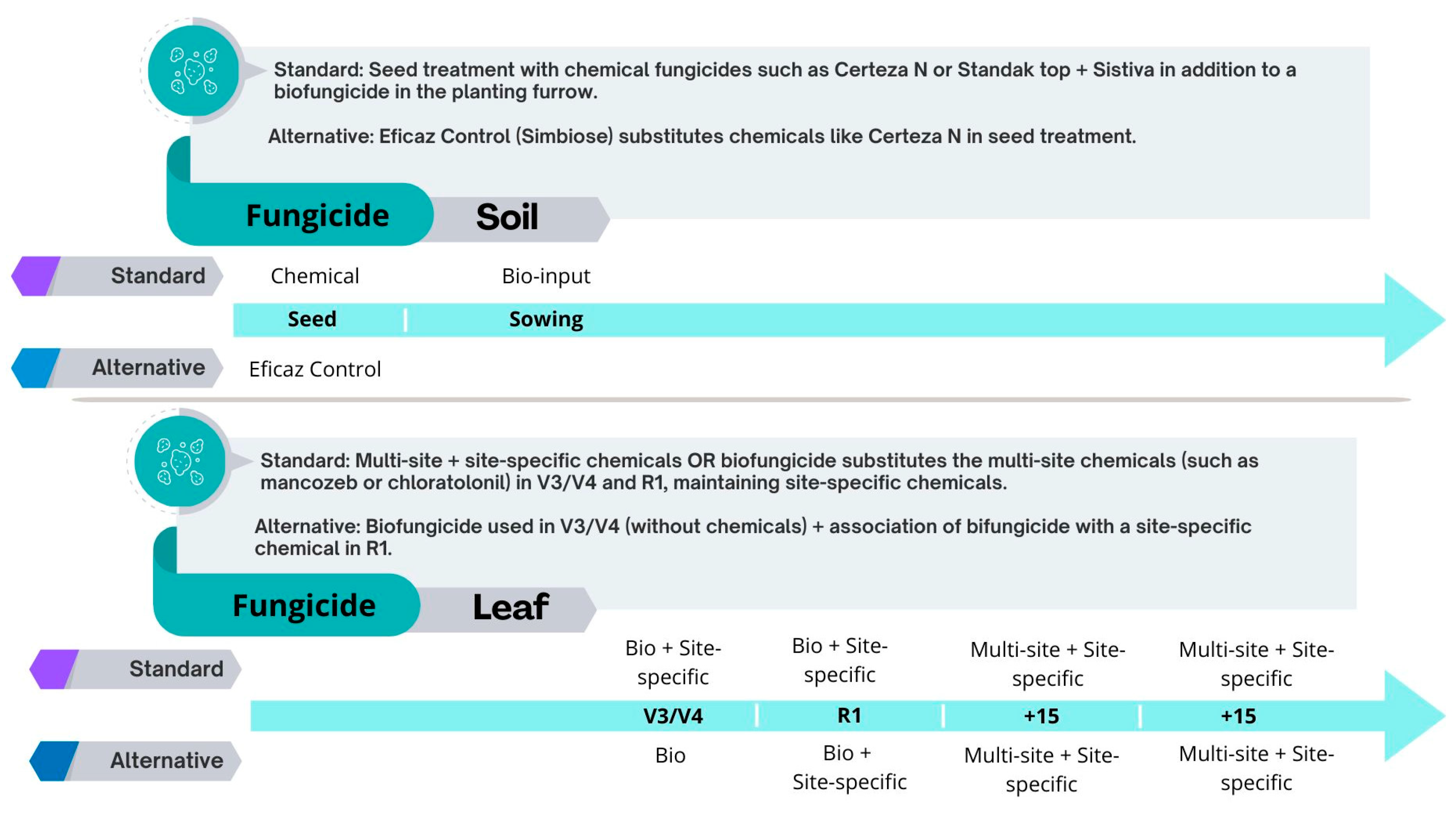
This scenario began to change in 2025 in Brazil, with two biofungicides positioned as potential substitutes for chemicals in specific applications. The first is Eficaz Control, developed by the Brazilian companies Simbiose and Embrapa, and composed of the bacteria Bacillus velezensis (isolate IM14) and Paenibacillus ottowoii (isolate LIS04). The product is used to control soil diseases and applied in seed treatment, positioned as “The first biological fungicide that substitutes 100% of chemicals, with greater productivity and profitability” [31]. The product would have the potential to substitute chemicals such as Certeza N, widely used in soybean seed treatment, although the other production stages would rely on chemical treatments in conventional systems (Figure 3).
For foliar diseases, a multinational biological company is launching a biofungicide composed of a strain of Bacillus velezensis, which has potent antifungal properties [32]. This product has the potential to replace the first application of multi-site and site-specific chemical fungicides in soybeans (generally done between V3 and V4). For the second application (generally done at R1), there would be the possibility of using a foliar biofungicide to replace the multi-site fungicide, while maintaining the use of a site-specific chemical. In subsequent applications during the reproductive stage, the application of chemicals would be maintained in conventional crops.
Although these are substitutions in specific applications, these new products represent progress in the development of increasingly effective bio-inputs with a wider spectrum of uses. Even though chemical inputs remain the main players in conventional production systems, these new bio-inputs reveal future potential for replacing chemicals with biologicals in specific applications for fungal control in crops.

3.2.2. Pests

The two main agricultural pests with a significant economic impact on soybean cultivation are nematodes and insects. While nematode prevention is primarily done through seed treatment, insect control is carried out during the vegetative and reproductive stages of the crop development.
Nematodes
Nematode management is carried out using different integrated techniques that include the use of nematode-resistant varieties, crop rotation, and the use of chemical and biological inputs. Based on their chemical groups, synthetic nematicides are classified into three primary mechanisms of action: (i) avermectins, carbamates, and organophosphates target the nervous system, resulting in nematode paralysis and death; (ii) pyridinyl-ethyl benzamides and phenylpyridinamides impair cellular respiration by interfering with the nematode respiratory chain; and (iii) tetronic and tetramic acid derivatives disrupt nematode development by interfering with ecdysis.
The main chemical nematicides reported by the interviewed farmers were Syngenta’s Avicta® 500 FS (based on Abamectin from the avermectin group) and Bayer’s Verango Prime® (based on Fluopyram from the benzamide group). In 2025, Syngenta launched TYMIRIUM™ technology as a nematicide and fungicide, featuring the active ingredient cyclobutrifluram, which promises advances in the chemical control of nematodes and early soilborne and foliar diseases.
Bionematicides are the only segment, besides inoculants, for which farmers reported using biological products instead of chemical ones, particularly in preventative applications, given the ability of biological products to control the population of juveniles and eggs. In cases of already identified infestation, farmers reported that nematode control is often achieved by combining biological and chemical products.
Bionematicides exert three primary functions in nematode management: (i) the formation of a protective biofilm on plant roots; (ii) chemotactic effects that limit the ability of nematodes to locate host plants; and (iii) chitinase-mediated degradation of chitin in nematodes and their eggs, leading to reductions in juvenile populations in the soil and in egg numbers [5]. The commercial bionematicides primarily target root-knot nematodes (Meloidogyne spp.) and root-lesion nematodes (Pratylenchus spp.), which are responsible for significant losses in soybean crops.
The main commercial bionematicides used by soybean farmers in Brazil are:
  • Onix OG from Lallemand (CA) based on the bacteria B. methylotrophicus UFPEDA20 to prevent Meloidogyne javanica/Pratylenchus brachyurus;
  • Veraneio from Koppert (NL) based on the bacteria B. amyloliquefaciens UMAF6614 to prevent M. incognita/M. javanica/P. brachyurus
  • NemaControl from Simbiose (BR), based on the bacteria B. amyloliquefaciens CCT 7600 to prevent M. incognita, exigua/P. brachyurus/H. glycines/S. sclerotiorum;
  • Nemat da Ballagro (BR), based on the fungus P. lilacinus Uel Pae 10 to prevent M. incognita/M. javanica/P. Brachyurus;
Insects
The development of varieties resistant to agricultural pests, along with the use of chemical and biological products, has been the main strategy for controlling insects, especially caterpillars, in soybean fields in Brazil. The main chemical groups of synthetic insecticides marketed in Brazil are: (1) Benzoates, Carbamates, Diamides, Phosphates, Spinosyns and others act on the nervous system, compromising nerves and muscles, and (2) other chemical groups that act on growth, development, cellular respiration and the digestive system. There are biological insecticides based on fungi, viruses, and the bacteria B. thuringiensis. Manufacturers recommend that biological insecticides based on Bacillus thuringiensis (Bt) should not be used in Bt soybean crops or in refuge areas, as it accelerates the development of resistance, although farmers do not always follow this recommendation.
In the regions studied, farmers tend to maintain applications of chemical insecticides such as Methomyl, which has demonstrated efficacy against the soybean caterpillar and soybean looper in soybean, and against fall armyworm and the corn leafhopper in maize. The efficacy of chemical control of caterpillars, estimated at approximately 70% by the farmers interviewed, limits the adoption of biological solutions in soybean.

3.3. Adoption Levels

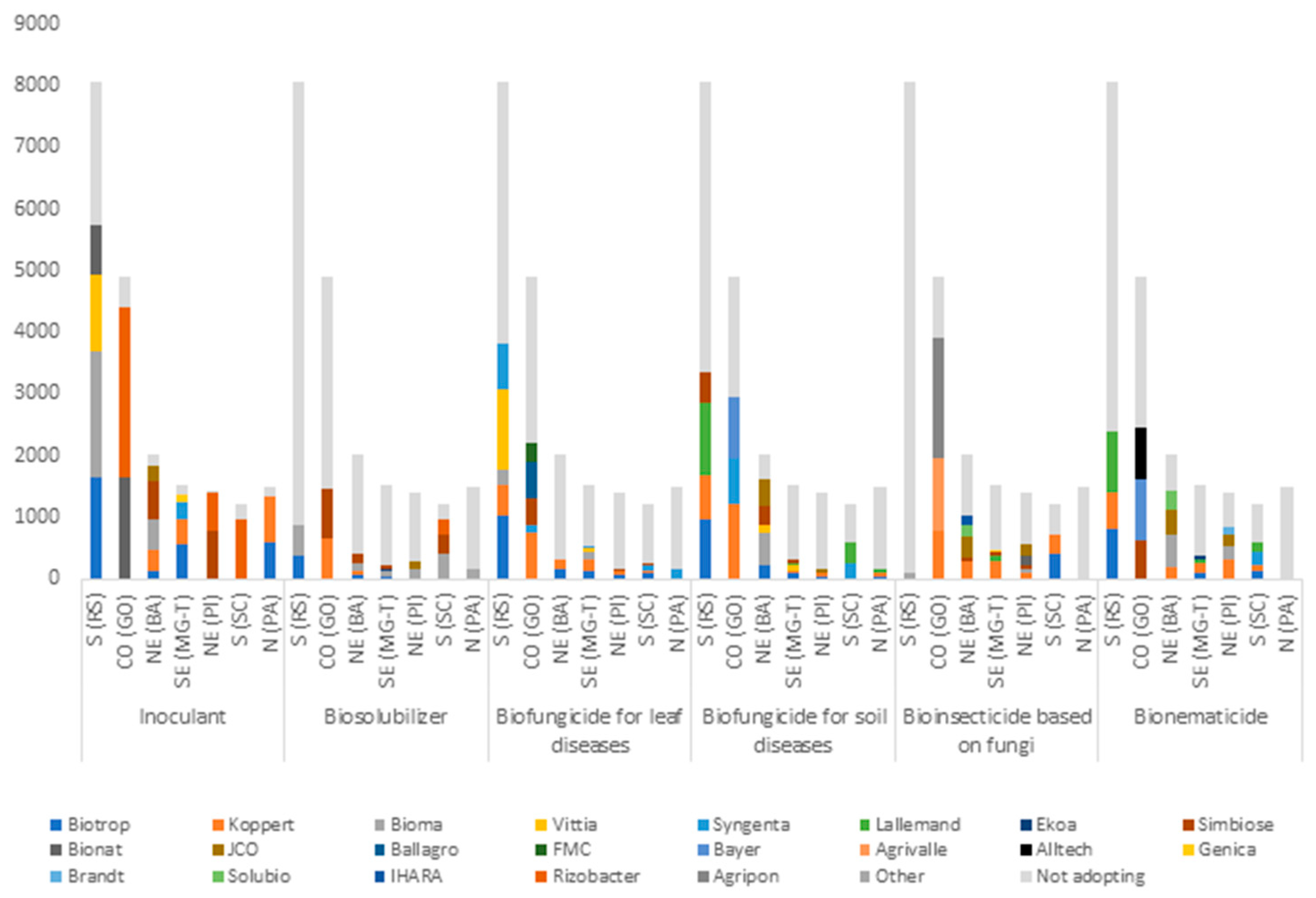
The adoption of bio-inputs by soybean farmers in Brazil was estimated for six product categories across seven Brazilian states (Figure 4). The results reveal high adoption of inoculants and significant adoption of all other categories, with large variations between states. The figure also shows the leading companies in each product category. The average adoption was estimated in 82.6% for inoculants; 21.1% for biosolubilizer; 33.7% for biofungicide for leaf diseases; 44.3% for biofungicide for soil diseases; 32.9% for bioinsecticides made of fungi; and 39.3% for bionematicides.

3.4. Implications of Biological Substitutes

Although in many production systems biological inputs are initially adopted as incremental or alternative tools, a growing body of international evidence demonstrates that, under appropriate technical recommendations, these products can effectively substitute several classes of synthetic agrochemicals in the management of soil fertility, pests and diseases in major crops such as soybean, maize, common bean and cotton [7,13,22,31].
Overall, the international literature indicates that the biological products discussed in this work, inoculants, biofertilizers, biofungicides, bioinsecticides and bionematicides, already operate, in multiple contexts, as functional substitutes for synthetic agrochemicals in soybean, maize, common bean and cotton cultivation [12,23,25,26]. Their substitutive role is particularly clear in the case of nitrogen-fixing inoculants in legumes and bionematicides in integrated nematode management, and is increasingly documented for biofungicides and bioinsecticides used in well-designed integrated pest and disease management programs. The extent to which substitution is realized in practice depends on the availability of robust products, the quality of production and distribution chains, and the level of technical assistance to ensure correct positioning, but the technological adherence and agronomic performance reported in the literature demonstrate that biological inputs are capable of sustaining high productivity while substantially reducing the dependence on synthetic fertilizers and pesticides in large-scale agricultural systems.
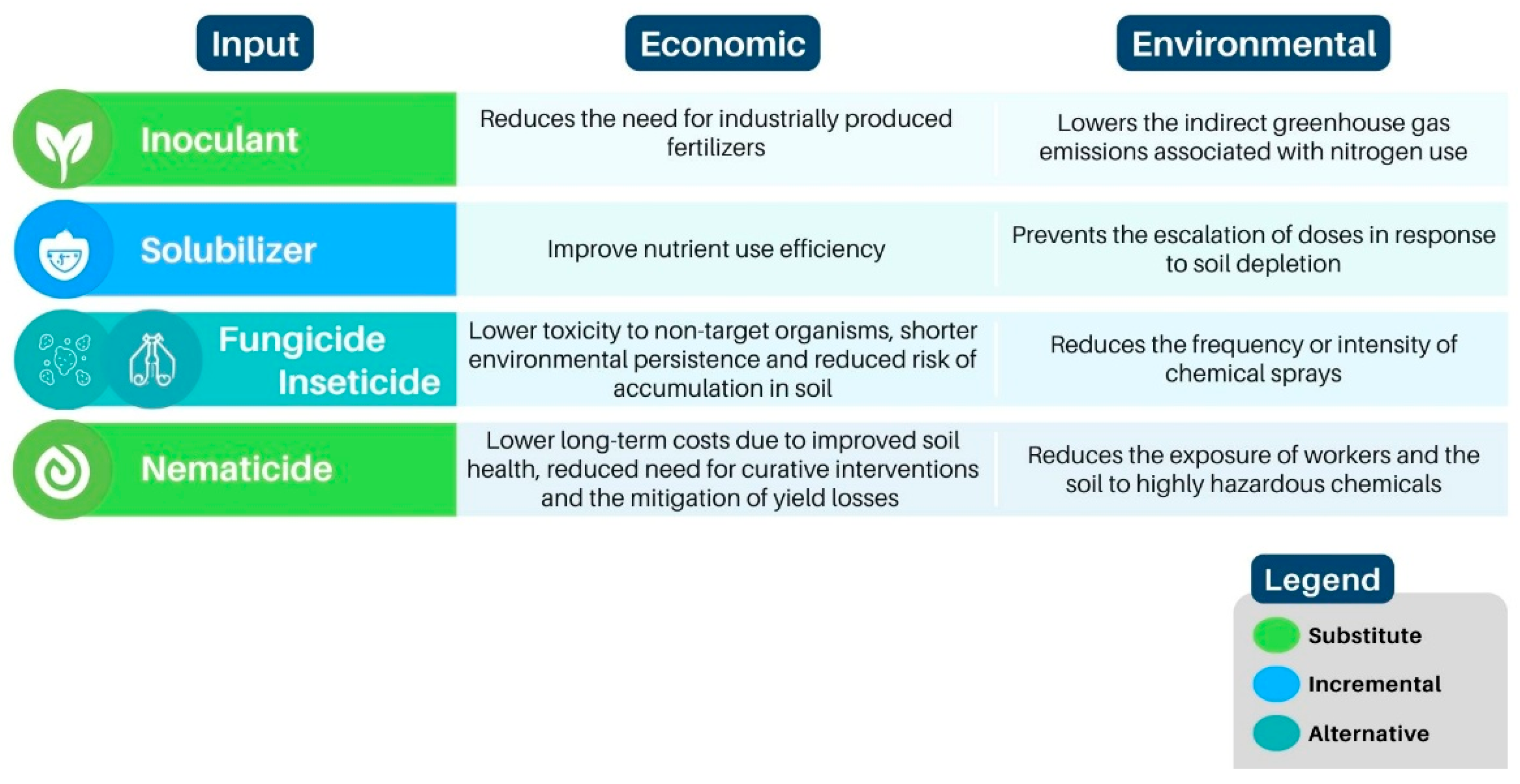
The adoption patterns reported by the soybean farmers interviewed reveal not only agronomic adjustments, but also potential environmental and economic implications associated with the partial or complete substitution of synthetic agrochemicals by biological inputs (Figure 5). In plant nutrition, the consolidated use of inoculants based on nitrogen-fixing bacteria already represents a functional substitution of mineral nitrogen fertilizers in soybean, while biosolubilizers and plant activators are adopted incrementally to conventional fertilization. In plant health management, bioinsecticides, biofungicides and bionematicides are incorporated either as alternatives or as partial substitutes for synthetic pesticides, particularly in preventive or early interventions. These configurations suggest that biological products can be positioned as core tools in the management of soil fertility, pests and diseases, with direct consequences for production costs and for the environmental footprint of large-scale soybean systems.
In fertility management, the substitution of mineral nitrogen fertilization by microbial inoculants allows soybean farmers to meet the crop nitrogen demand predominantly through biological nitrogen fixation. This substitution reduces the need for industrially produced fertilizers, whose manufacture is energy-intensive and highly dependent on fossil fuels, and consequently lowers the indirect greenhouse gas emissions associated with nitrogen use. In practical terms, the elimination of mineral N fertilization in soybean decreases the volume of inputs purchased, transported, stored and applied at farm level, thereby reducing both input costs and operational expenses per hectare. The incremental adoption of biosolubilizers and plant activators alongside phosphorus and potassium fertilizers may also improve nutrient use efficiency, potentially enabling reductions in recommended fertilizer rates over time or preventing the escalation of doses in response to soil depletion. These dynamics indicate that biological inputs can contribute to a more efficient and less resource-intensive management of soil fertility in high-input production systems.
For the management of diseases and insect pests, the use of biofungicides and bioinsecticides in preventive or early-stage applications reduces the frequency or intensity of chemical sprays required to keep pest and disease pressure below economic thresholds. Because these biological products are typically based on living microorganisms or biologically derived metabolites with more specific modes of action, they tend to present lower toxicity to non-target organisms, shorter environmental persistence and reduced risk of accumulation in soil and water bodies when compared to many broad-spectrum synthetic pesticides. In operational terms, replacing some chemical sprays with biological applications, or inserting biological products in critical windows of the spray program, reduces the total volume of synthetic active ingredients used per hectare and may lower the cost of certain pesticide regimes, especially when the prices of conventional products are high or volatile. Additionally, the compatibility of many biological products with natural enemies and other components of integrated pest management programs can help preserve ecosystem services such as biological control, further contributing to the long-term stability of pest management.
In nematode management, the preventive use of bionematicides reported by farmers suggests a gradual shift away from reactive, chemically intensive strategies towards approaches that rely more on microbial interactions in the rhizosphere. Biological nematicides typically target juvenile stages or eggs and are applied at sowing or early in the crop cycle, aiming to suppress nematode populations before they reach damaging levels. This preventive profile contrasts with that of many synthetic nematicides, which are often applied in response to established infestations and may present higher ecotoxicological risks. The substitution of chemical nematicides by bionematicides in part of the area or in specific fields reduces the exposure of workers and the environment to highly hazardous active ingredients, while maintaining nematode control at levels compatible with high-yield production. From an economic standpoint, although biological nematicides can be relatively expensive on a per-unit basis, farmers may benefit from lower long-term costs due to improved soil health, reduced need for curative interventions and the mitigation of yield losses associated with chronic nematode problems.
These empirical configurations resonate with the principles of regenerative agriculture, a paradigm that aims to restore and enhance soil health, biodiversity and ecosystem functions while maintaining or increasing productivity. Regenerative agriculture is typically defined by practices that reduce the dependence on synthetic inputs, minimize soil disturbance, maintain permanent soil cover and increase biological diversity at field and landscape levels. In the context of the farms analyzed in this study, the incremental and substitutive adoption of biological inputs in fertility management (inoculants, biosolubilizers), disease and pest control (biofungicides, bioinsecticides) and nematode management (bionematicides) can be interpreted as initial steps towards more regenerative management strategies. By redistributing functions that were traditionally performed almost exclusively by synthetic fertilizers and pesticides to microbial-based products and ecological processes, farmers begin to reconfigure their input portfolios in ways that are compatible with regenerative principles, even if conventional products remain present in the production matrix.
The expansion and diversification of the biological input market plays a crucial role in enabling this transition from conventional to regenerative management. In the regions studied, the availability of registered inoculants, biosolubilizers, bioinsecticides, biofungicides and bionematicides, combined with technical assistance provided by private companies and public research institutions, offers farmers a set of reliable options for replacing or complementing synthetic inputs in key crop practices. As formulations become more stable, easy to handle and compatible with existing application equipment, and as pricing becomes more competitive, biological products tend to be perceived not only as environmentally preferable, but also as economically viable tools that can reduce production costs or protect margins in contexts of high agrochemical prices. The observed adoption patterns therefore reflect not only individual farmer choices, but also the broader development of a biological products market that provides the technological, commercial and informational support necessary for biological inputs to function as effective substitutes or alternatives to agrochemicals in large-scale soybean farming.

4. Discussion

This section discusses the chemical and biological alternatives most commonly used by farmers at different growth stages of soybeans and the environmental and economic implications of farmers’ practices for regenerative agriculture, as well as the study’s limitations. To enhance transparency, this discussion section explicitly distinguishes between empirical observations derived from the farmer interviews (reported practices and rationales) and contextual information derived from the regulatory mapping and the literature (e.g., product availability and broader market dynamics).

4.1. Use of Biological and Synthetic Products

To enhance transparency, this discussion explicitly distinguishes between (i) empirical observations derived from the farmer interviews (reported practices and rationales) and (ii) contextual information derived from the regulatory mapping and the literature (e.g., product availability and broader market dynamics). In general, biological products were adopted alongside the continued use of synthetic inputs by the soybean farmers interviewed, which corroborates the view that bio-inputs are often introduced incrementally into existing management programs rather than through abrupt substitution. In our sample, inoculants based on nitrogen-fixing bacteria already function as full substitutes for mineral N fertilization in soybean, while bionematicides are used preventively in substitution for synthetic nematicides.
Bionematicides were the only segment, besides inoculants, for which farmers reported using biological products instead of chemical ones, mainly in preventive applications, given the ability of biological products to control the population of juvenile nematodes and their eggs and the limited performance of available synthetic nematicide options, as perceived and reported by interviewees.
Biosolubilizers were adopted incrementally to the use of chemical fertilizers, maximizing the effects of conventional inputs as recommended in the specialized literature [6]. Bioinsecticides and biofungicides, in turn, occupy specific windows of the spray program, particularly in preventive or early interventions, reducing the intensity or frequency of chemical applications. Importantly, interviewees also reported a boundary condition for substitution in disease management: under high disease-pressure scenarios, especially during severe Asian soybean rust outbreaks, farmers tend to rely primarily on synthetic fungicides to manage yield risk, and biological options, when used, are more often positioned as alternatives in early/low-pressure windows. For weed control, the farmers interviewed reported relying exclusively on synthetic herbicides; this pattern is consistent with our regulatory mapping (Section 3.1), which did not identify registered bioherbicides in Brazil at the time of analysis.
Together, these configurations illustrate three main modes of use, substitutive, incremental, and alternative, that are not mutually exclusive, but can coexist within the same production system as farmers experiment with and learn about biological technologies. This pattern supports a gradual reconfiguration of on-farm input portfolios rather than a chemical/biological dichotomy, in which biological tools are progressively positioned according to practice-specific constraints and performance expectations. These empirical patterns are consistent with the international literature reviewed, which documents that inoculants, bionematicides, biofungicides, and bioinsecticides can match, and in some contexts substitute, the performance of mineral fertilizers and conventional pesticides in soybean, maize, common bean, and cotton [1,11,12,22,23,25,26].

4.2. Implications for Regenerative Agriculture

From a broader systems perspective, these findings indicate that biological inputs can play a central role in redesigning crop management towards more regenerative systems, rather than functioning merely as marginal complements to synthetic agrochemicals. The consolidated adoption of inoculants in soybean and the preventive use of bionematicides reported by farmers exemplify functional substitution, in which biological technologies effectively substitute key chemical inputs while maintaining high yield levels. In the case of bioinsecticides and biofungicides, their positioning in preventive or early interventions, coupled with monitoring and threshold-based decisions, illustrates an alternative pattern in which biological inputs occupy critical stages of the production cycle that were previously dominated by synthetic molecules.
These empirical configurations align with the principles of regenerative agriculture, which emphasize reducing dependence on synthetic inputs and enhancing ecological processes such as biological nitrogen fixation, nutrient cycling, and the regulation of pests and diseases by beneficial organisms [14,33,34,35,36]. In this sense, the adoption trajectories described in this study suggest concrete pathways through which bio-inputs can underpin more regenerative management strategies in large-scale soybean systems, even when synthetic inputs are still present in the production matrix.
The environmental and economic implications associated with the adoption patterns observed in this study suggest that biological inputs can act as key enablers of a gradual transition from conventional to regenerative management in large-scale soybean systems. By replacing mineral nitrogen fertilization with inoculants, incorporating biosolubilizers into fertility programs, and repositioning bioinsecticides, biofungicides and bionematicides as partial or full substitutes for chemical pesticides in specific practices, farmers redistribute core functions of crop management from synthetic molecules to microbial processes and biologically derived products. This redistribution is consistent with the principles of regenerative agriculture, which emphasize reducing dependence on synthetic inputs, enhancing soil biological activity, protecting biodiversity, and strengthening ecosystem services such as biological nitrogen fixation, nutrient cycling, and natural pest regulation. The patterns documented here indicate that regenerative trajectories do not require a binary choice between “chemical” and “biological” farming, but can emerge through incremental reconfiguration of input portfolios, in which biological products progressively assume central roles while synthetic inputs are confined to more restricted or strategically defined uses.
At the same time, these trajectories are strongly mediated by the structure and dynamics of the biological input market. The fact that farmers in our sample report consolidated substitution of mineral nitrogen by inoculants and preventive use of bionematicides, but no adoption of biological herbicides, reflects both the maturity of certain product segments and the absence or incipience of others. Where robust, cost-effective biological technologies are available, supported by regulatory approval, quality control, technical assistance and competitive prices, farmers can integrate them into their management strategies in ways that reduce production costs and environmental impacts without compromising yield. Conversely, in segments where biological options are not yet commercially consolidated, as in the case of herbicide substitutes, management remains heavily dependent on synthetic agrochemicals. These asymmetries highlight that scaling the transition towards regenerative agriculture depends not only on farmer decisions and agronomic recommendations observed in interviews, but also on contextual factors evidenced by the regulatory mapping and literature, including innovation pipelines, registration status, distribution, and quality-control infrastructure that shape the availability and reliability of biological products across practices.
One of the main challenges for expanding the use of bio-inputs is ensuring product quality throughout the production, transport, and storage chain. Because these products are based on living microorganisms, inadequate handling can compromise their efficacy and create risks for farmers, the environment, and public health. Our findings underscore the need to (i) strengthen stakeholder engagement to shift the prevailing culture centered on agrochemical use; (ii) expand basic and applied research on bioagents, including their potential environmental impacts; and (iii) increase the availability of biologically based products by introducing new active agents to the market and consolidating robust quality-control systems.
Bio-inputs should be understood as safe and effective technological tools when manufactured under robust quality-control systems, properly registered, and applied according to technical recommendations; however, they are not inherently intended to fully “substitute” conventional management based on chemical molecules. In practice, most of the evidence and commercially adopted strategies support a complementary model, in which biological products and agrochemicals are integrated into fertility programs and the management of arthropod pests and plant diseases. Accordingly, regenerative trajectories should be interpreted as a gradual reconstruction of input portfolios, where substitution, incrementality, and alternation may co-exist, rather than an either/or choice between chemical and biological technologies. Within this framework, bio-inputs strengthen key biological processes, such as nutrient cycling, soil suppressiveness, antagonism against phytopathogens, and the biological regulation of pests, whereas agrochemicals remain important tools for critical windows, outbreak situations, and high-pressure scenarios, resulting in a more robust and predictable management strategy.
By positioning bioinsecticides, biofungicides, and bionematicides in preventive and early applications and in specific windows of the crop cycle, it is possible to reduce the frequency and/or intensity of chemical sprays, decrease the selection pressure for resistance, and extend the effective lifespan of active ingredients, particularly where chemical programs rely heavily on specific modes of action. Likewise, biofertilizers and nutrient-solubilizing microorganisms can improve nutrient use efficiency and stabilize productivity, reducing the need for dose escalation while contributing to sustainability goals and regenerative agriculture. Thus, bio-inputs and agrochemicals should be treated as complementary technologies, integrated through monitoring, threshold-based decision-making, and compatibility planning (tank mixes, application sequencing, environmental conditions, and product quality), with a focus on agronomic performance, operational safety, sustainability, and overall production-system efficiency.

4.3. Implications and Limitations

The empirical patterns documented here have practical implications for agronomic advisory and for the design of innovation pathways in regenerative agriculture. First, the coexistence of substitutive, incremental, and alternative uses indicates that adoption is best interpreted as a gradual reconstruction of input portfolios, in which biological tools are positioned by practice and by risk window rather than as a wholesale replacement of chemical programs. This supports extension strategies that emphasize practice-specific decision rules (e.g., preventive windows, threshold-based interventions, and compatibility planning) and that evaluate progress using portfolio metrics (shares of substitution/incrementality/alternation by practice), rather than dichotomous “chemical vs. biological” indicators. Second, these trajectories highlight the relevance of contextual enablers beyond the farm gate—particularly registration status, quality assurance, and distribution/technical support structures—because the reliability of biological products is central to expanding their role from marginal windows to broader integration across practices.
This study also has limitations. The interview evidence reflects a cross-sectional snapshot from large-scale soybean farms in central Brazil and relies on self-reported practices; therefore, the results should be interpreted as descriptive of portfolio configurations and farmer rationales rather than as causal estimates of agronomic effects. In addition, adoption shares and positioning modes may vary with seasonal conditions and pest/disease pressure, and substitution is plausibly constrained under high-pressure scenarios requiring rapid curative responses (as discussed for severe Asian soybean rust). Future research would benefit from longitudinal panel designs and mixed-method approaches that combine interview/survey data with independent field indicators (e.g., spray records, disease-pressure stratification, and performance outcomes), enabling more robust estimation of how portfolio reconstruction evolves over time and under contrasting risk environments.

5. Conclusions and Perspectives

This study provides a more nuanced view of the common assumptions that biological inputs either simply complement chemical products or can entirely substitute them. By combining a regulatory mapping and literature synthesis with interview evidence, we quantify how farmers operationalize biological inputs across practices. Interview results indicate that adoption is practice-dependent: inoculants for plant nutrition were adopted by 82.6%, predominantly as substitution; nutrient-solubilizing microorganisms (biosolubilizers) were adopted by 21.1%, most commonly as incremental use alongside conventional programs; biofungicides for leaf diseases and soil diseases were reported by 33.7% and 44.3%, respectively, and were primarily positioned as alternatives in preventive or early interventions; bioinsecticides based on fungi were reported by 32.9% and were also largely framed as alternatives for preventive or early interventions; and bionematicides were reported by 39.3%, with a comparatively higher share of substitution relative to other pest-management inputs. For weed control, farmers continued to rely on synthetic herbicides, consistent with the current lack of commercially available bioherbicides in Brazil.
Overall, biological products already cover a substantial portion of the chemical portfolio used in soybean farming. Bionematicides stand out as the only segment, besides inoculants, in which farmers reported using biological products instead of synthetic nematicides for preventive purposes, given their ability to control juvenile nematodes and eggs as compared with the more limited performance of chemical products.
The consolidated adoption of inoculants based on nitrogen-fixing bacteria in soybean is a clear example of functional substitution, in which biological technology effectively substitutes mineral nitrogen fertilization while maintaining high yield levels. In the case of bioinsecticides and biofungicides, their use in preventive or early interventions, reducing the number or intensity of chemical sprays, illustrates an alternative pattern in which biological inputs occupy critical windows of the production cycle that were previously dominated by synthetic molecules.
The patterns observed in this study indicate that biological inputs can play a central role in redesigning crop management towards more regenerative systems, rather than functioning merely as marginal complements to synthetic agrochemicals. These empirical configurations are consistent with the principles of regenerative agriculture, which emphasize reducing dependence on synthetic inputs and enhancing ecological processes such as biological nitrogen fixation, nutrient cycling, and the regulation of pests and diseases by beneficial organisms. By repositioning biological products as core tools in the management of soil fertility and plant health, rather than as optional add-ons, it becomes possible to design production systems in which synthetic inputs are strategically restricted to specific situations, lower doses, or transition periods.
When produced under robust quality control, properly registered, and correctly positioned in the crop cycle, bio-inputs can strengthen ecological functions (e.g., nutrient cycling, soil suppressiveness, and biological regulation of pests and diseases) while agrochemicals remain strategically important in conventional non-organic farming for critical windows and high-pressure scenarios. Importantly, integrating bioinsecticides, biofungicides, and bionematicides into preventive and early interventions can reduce the frequency and intensity of chemical applications, lower selection pressure for resistance, and extend the useful life of active ingredients, supporting more resilient and regenerative trajectories without compromising agronomic performance at scale.
Because these are preliminary results based on a regional sample, future research should extend the analysis to a larger and more diverse group of farmers and cropping systems, in order to validate and refine the patterns of substitutive, incremental, and alternative uses of bio-inputs identified in this study. We also anticipate that advancements in seed genetics, chemical molecules, and bio-input formulations may transform the current agricultural practices in the coming years.

Author Contributions

G.d.S.M.: Project administration, funding acquisition, formal analysis, investigation, methodology, writing—original draft, review, and editing. F.A.d.S.: Formal analysis, investigation, methodology, writing—original draft, review, and editing. E.M.d.F.: Conceptualization, writing—original draft, review, and editing. V.H.S.R.: Writing—original draft, review, and editing. É.d.S.M.: Writing—original draft, review, and editing. All authors have read and agreed to the published version of the manuscript.

Funding

The field survey for this research was funded by the Brazilian National Council for Scientific and Technological Development (CNPq), funding numbers 402281/2023-3 and 03769/2023-8.

Institutional Review Board Statement

Ethical review and approval were waived for this study due to the Brazilian CNS Resolution No. 510.

Informed Consent Statement

Informed consent was obtained from all subjects involved in the study.

Data Availability Statement

The original contributions presented in this study are included in the article. Further inquiries can be directed to the corresponding author(s).

Acknowledgments

The authors’ special thanks are extended to the Graduate Program in Environmental Sciences and the Faculty of Agronomy and Veterinary Medicine, both at the University of Brasília, the Embrapa Cerrados and, Ekoa Life Sciences.

Conflicts of Interest

The author Fernando Augusto Silveira is an employee of the company Ekoa Life Sciences, a bio-input company based in Brazil. The authors declare that they have no known competing financial interests or personal relationships that could have appeared to influence the work reported in this paper.

References

  1. Santos, F.M.; Oliveira, A.A.; Souza, L.L.; Mendes, R.; Franco, M. Integrating a Bacillus-Based Product with Fungicides. Pest Manag. Sci. 2022, 78, 4832–4840. [Google Scholar] [CrossRef]
  2. Beaumelle, L.; Anderson, K.; Ribeiro, P.; Silva, F. Pesticide Effects on Soil Fauna Communities—A Meta-Analysis. J. Appl. Ecol. 2023, 60, 1239–1253. [Google Scholar] [CrossRef]
  3. Wan, N.F.; Zhang, P.; Li, H.; Zhou, S.; Wang, Y. Pesticides Have Negative Effects on Non-Target Organisms. Nat. Commun. 2025, 16, 1360. [Google Scholar] [CrossRef]
  4. Damalas, C.A.; Koutroubas, S.D. Farmers’ Exposure to Pesticides: Toxicity Types and Ways of Prevention. Toxics 2016, 4, 1. [Google Scholar] [CrossRef] [PubMed]
  5. Sparks, T.C.; Nauen, R. IRAC: Mode of Action Classification. Pestic. Biochem. Physiol. 2015, 121, 122–128. [Google Scholar] [CrossRef]
  6. Elnahal, A.S.M.; Abdallah, A.A.; Youssef, R.R.; El-Sheikh, M.M. The Use of Microbial Inoculants for Biological Control and Plant Growth Promotion. Eur. J. Plant Pathol. 2022, 162, 759–792. [Google Scholar] [CrossRef]
  7. O’Callaghan, M.; Ballard, R.A.; Wright, D. Soil Microbial Inoculants for Sustainable Agriculture. Soil Use Manag. 2022, 38, 1340–1369. [Google Scholar] [CrossRef]
  8. Dos Reis, G.A.; Martins, L.L.; Ferreira, P.C.; Almeida, R.R.; Costa, J.J. Comprehensive Review of Microbial Inoculants: Agricultural Applications and Strategies for Sustainable Farming. Sustainability 2024, 16, 8720. [Google Scholar] [CrossRef]
  9. Kaushik, B.D.; Kumar, D.; Shamim, M. (Eds.) Biofertilizers and Biopesticides in Sustainable Agriculture; CRC Press: Boca Raton, FL, USA, 2019. [Google Scholar] [CrossRef]
  10. Campo, R.J.; Araujo, R.S.P.; Hungria, M. Nitrogen Fixation with the Soybean Crop in Brazil: Compatibility Between Seed Treatment with Fungicides and Bradyrhizobium Inoculants. Symbiosis 2009, 48, 154–163. [Google Scholar] [CrossRef]
  11. Hungria, M.; Vargas, M.A.; Chueire, L.M.O.; Campo, R.J.; Mendes, I.C. Nitrogen Nutrition of Soybean in Brazil. Can. J. Plant Sci. 2006, 86, 927–939. [Google Scholar] [CrossRef]
  12. Telles, T.S.; Nogueira, M.A.; Hungria, M. Economic Value of BNF in Soybean. Environ. Technol. Innov. 2023, 31, 103158. [Google Scholar] [CrossRef]
  13. Ayilara, M.S.; Aremu, B.R.; Adeleke, B.S.; Egene, C.E.; Nwachukwu, E.O. Biopesticides as a Promising Alternative to Synthetic Pesticides: A Case for Microbial Pesticides, Phytopesticides, and Nanobiopesticides. Front. Microbiol. 2023, 14, 1040901. [Google Scholar] [CrossRef] [PubMed]
  14. Khangura, R.; Ferris, D.; Wagg, C.; Bowyer, J. Regenerative Agriculture—A Review. Sustainability 2023, 15, 2338. [Google Scholar] [CrossRef]
  15. Ke, J.; Wang, B.; Yoshikuni, Y. Microbiome Engineering: Synthetic Biology of Plant-Associated Microbiomes. Trends Biotechnol. 2021, 39, 244–261. [Google Scholar] [CrossRef]
  16. Garcia, M.V.C.; Nogueira, M.A.; Hungria, M. Combining Microorganisms in Inoculants: A Case Study. AMB Express 2021, 11, 71. [Google Scholar] [CrossRef] [PubMed]
  17. Toruño, P.J.; Rodríguez, M.; López, R.; Gutiérrez, A. Identificación de los Senderos Productivos. Rev. Iberoam. Bioecon. Cambio Clim. 2022, 8, 16. [Google Scholar] [CrossRef]
  18. da Silva Medina, G.; Rotondo, R.; Rodríguez, G.R. Innovations in Agricultural Bio-Inputs: Commercial Products Developed in Argentina and Brazil. Sustainability 2024, 16, 2763. [Google Scholar] [CrossRef]
  19. Andreata, M.F.L.; Silva, A.A.; Costa, B.B.; Pereira, C.C.; Rodrigues, D.D. The Current Increase and Future Perspectives of the Microbial Pesticides Market in Agriculture: The Brazilian Example. Front. Microbiol. 2025, 16, 1574269. [Google Scholar] [CrossRef] [PubMed]
  20. Vermelho, A.B.; Souza, F.F.; Ribeiro, R.; Martins, G.G. Microbial Bioinputs in Brazilian Agriculture. J. Integr. Agric. 2025, 25, 402–423. [Google Scholar] [CrossRef]
  21. Bini, D.; Mattos, B.B.; Figueiredo, J.E.F.; dos Santos, F.C.; Marriel, I.E.; dos Santos, C.A.; de Oliveira-Paiva, C.A. Parameter Evaluation for Developing Phosphate-Solubilizing Bacillus Inoculants. Braz. J. Microbiol. 2024, 55, 737–748. [Google Scholar] [CrossRef]
  22. Santos, M.S.; Nogueira, M.A.; Hungria, M. Microbial Inoculants: Past, Present, and Future. AMB Express 2019, 9, 205. [Google Scholar] [CrossRef]
  23. Bravo, A.; Likitvivatanavong, S.; Gill, S.S.; Soberón, M. Bacillus thuringiensis: A Story of a Successful Bioinsecticide. Insect Biochem. Mol. Biol. 2011, 41, 423–431. [Google Scholar] [CrossRef] [PubMed]
  24. Ragasruthi, R.; Prabhu, S.; Annamalai, G.; Kumar, P. Bacillus thuringiensis Biopesticide: Success and Future Horizons. Sci. Total Environ. 2024, 926, 176594. [Google Scholar] [CrossRef]
  25. Pires, D.; Souza, R.; Almeida, P.; Castro, F.; Lopes, J. The Fight Against Plant-Parasitic Nematodes. Pathogens 2022, 11, 1178. [Google Scholar] [CrossRef] [PubMed]
  26. Ayaz, M.; Khan, A.A.; Rehman, R.R.; Ahmad, S.S.; Malik, T.T. Biocontrol of Plant Parasitic Nematodes by Bacteria and Fungi: A Multi-Omics Approach. Front. Microbiol. 2024, 15, 1433716. [Google Scholar] [CrossRef]
  27. Tranier, M.-S.; Dupont, P.; Silva, R.; Pereira, L.; Gomes, F. Commercial Biological Control Agents Against Root-Knot Nematodes. Braz. Arch. Biol. Technol. 2014, 57, 831–841. [Google Scholar] [CrossRef]
  28. Desaegher, J.A.; Watson, T.T. Evaluation of New Chemical and Biological Nematicides for Managing Meloidogyne javanica in Tomato Production. Pest Manag. Sci. 2019, 75, 3363–3370. [Google Scholar] [CrossRef]
  29. Alves, C.S.; Oliveira, A.A.; Silva, B.B.; Souza, C.C.; Santos, D.D. Greenhouse and Field Assessment of Biological and Chemical Agents Against Guava Decline. Summa Phytopathol. 2021, 47, 96–102. [Google Scholar] [CrossRef]
  30. Vela-Corcia, D. Characterization of BvlzGluc, a Novel Antifungal β-Glucanase from Bacillus velezensis, with Potential Agricultural and Industrial Applications. bioRxiv 2025. [Google Scholar] [CrossRef]
  31. Daraban, G.M.; Hlihor, R.-M.; Suteu, D. Pesticides vs. Biopesticides: From Pest Management to Toxicity and Impacts on the Environment and Human Health. Toxics 2023, 11, 983. [Google Scholar] [CrossRef]
  32. Eficaz Control. Available online: https://simbiose-agro.com.br/eficazcontrol/ (accessed on 3 December 2025).
  33. Newton, P.; Civita, N.; Frankel-Goldwater, L.; Bartel, K.; Johns, C. What Is Regenerative Agriculture? Front. Sustain. Food Syst. 2020, 4, 577723. [Google Scholar] [CrossRef]
  34. Schreefel, L.; Schulte, R.P.O.; De Boer, I.J.M.; Pas Schrijver, A.; Van Zanten, H.H.E. Regenerative Agriculture—The Soil Is the Base. Glob. Food Secur. 2020, 26, 100404. [Google Scholar] [CrossRef]
  35. Lal, R. Regenerative Agriculture for Food and Climate. J. Soil Water Conserv. 2020, 75, 123A–124A. [Google Scholar] [CrossRef]
  36. Giller, K.E.; Hijbeek, R.; Andersson, J.A.; Sumberg, J. Regenerative Agriculture: An Agronomic Perspective. Outlook Agric. 2021, 50, 13–25. [Google Scholar] [CrossRef] [PubMed]
Figure 1. Overview of the key agricultural practices in soybean production and the biological and chemical technologies adopted by farmers in the areas studied.
Agrochemicals 05 00013 g001
Figure 2. Examples of chemical and biological alternatives most commonly used in the different development stages of soybean development.
Agrochemicals 05 00013 g002
Figure 3. Examples of potential substitution of chemical fungicides for biofungicides in specific applications of the soybean agricultural system.
Agrochemicals 05 00013 g003
Figure 4. Estimated number of farmers with more than 200 ha of annual crops and adoption of biological products from different market-leading companies. Data collected for the Brazilian states of Rio Grande do Sul (RS), Goiás (GO), Bahia (BA), Minas Gerais (MG), Piauí (PI), Santa Catarina (SC) and Pará (PA) for the year of 2025. Sources: IBGE Agricultural Census for the number of farmers with more than 200 hectares of annual crops (focusing on soybeans) and consultation with sales representatives from seven states for the adoption levels.
Agrochemicals 05 00013 g004
Figure 5. Environmental and economic implications of adoption of bio-inputs towards regenerative agriculture.
Agrochemicals 05 00013 g005
Table 1. Main production practices analyzed for soybean farming in Brazil. Source: Authors’ own data.
Productive AxisNumberPractice
Plant nutrition1Seed inoculation
2Fertilization
3Plant activators
Biological control of pests and diseases4
6
7
8
9
Mite Control
Bacteria Control
Fungus Control
Insect Control
Nematode Control
Biological control agents (macroorganisms)
Weed control10Herbicides
Disclaimer/Publisher’s Note: The statements, opinions and data contained in all publications are solely those of the individual author(s) and contributor(s) and not of MDPI and/or the editor(s). MDPI and/or the editor(s) disclaim responsibility for any injury to people or property resulting from any ideas, methods, instructions or products referred to in the content.