1. Introduction
The growth of the global population and the continuous expansion of industrial activities worldwide are identified as major causes of fossil fuel overexploitation, increased greenhouse gas emissions, and the intensified generation of waste [
1]. As alternatives to mitigate these challenges, the conversion of biomass has emerged as a promising and significant renewable energy source [
2,
3].
Agricultural biomass refers to organic residues derived from farming activities, including straw, bagasse, husks, leaves, crop residues, and other plant-based by-products that can be utilized as energy and agrochemical sources [
4,
5]. These materials are increasingly recognized for their potential to be transformed into value-added products, such as biofuels, biofertilizers, and biochar [
6,
7]. From an environmental standpoint, the transformation of agricultural biomass offers a sustainable solution for waste management by replacing open-field burning and improper disposal, thereby reducing greenhouse gas emissions [
8].
Additionally, products derived from biomass conversion present several additional benefits. For instance, biochar not only acts as a carbon sequestrant but also enhances soil quality and reduces dependency on industrial inputs [
9]. Economically, biomass reuse presents business opportunities by enabling the generation of alternative energy and the production of high-value bioproducts [
10]. The conversion of agricultural biomass into bioenergy contributes to energy security, diversification of the energy matrix, and reduced dependence on imported energy [
11].
The valorization of agricultural biomass is closely aligned with the principles of the circular economy and bioeconomy, which advocate for the reintegration of waste into the production cycle, maximizing resource use, and minimizing waste. A notable example is the conversion of agricultural residues into energy and inputs for other production chains, thereby fostering more sustainable agricultural systems [
12,
13]. However, the large-scale adoption of agricultural biomass for energy and industrial applications still faces several challenges. These include the seasonal and dispersed nature of biomass feedstocks, high transportation costs, the need for appropriate technologies for efficient pretreatment and conversion, and the absence of public policies that promote collection and utilization [
14].
Despite these obstacles, there are clear global opportunities for biomass utilization. The development of integrated biorefineries, as reported by Raj et al. [
10], enables the simultaneous production of sustainable energy and bioproducts, thereby improving the economic viability of the process. Additionally, the application of biotechnology and advanced catalysis, such as the use of enzymes and metallic catalysts, can significantly enhance conversion efficiency [
15].
Currently, agricultural biomass is well-established as a strategic source of energy and sustainable products. About bio-based products, there is a gap in showing, in an integrated manner, promising applications of biomaterials, biofertilizers, and bioproducts. Therefore, this study aims to provide a systematic literature review on promising products derived from agricultural biomass, especially biomaterials, biofertilizers, and bioproducts, highlighting the technologies used in their conversion paths, their applications, patents, and commercial examples.
2. Review Methodology
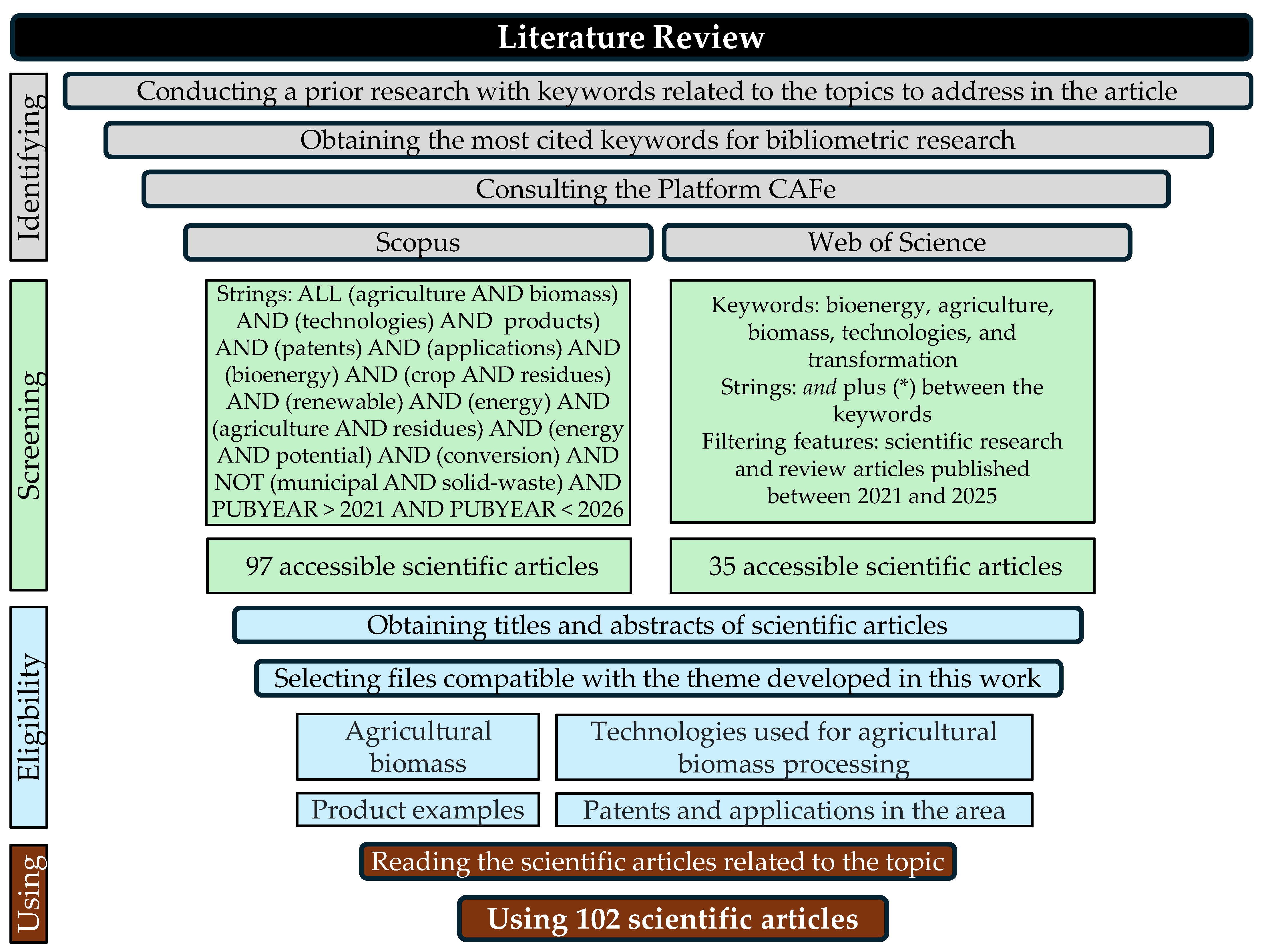
The research methodology was conducted in an integrative approach, combining a review characterized by scientific rigor with a systematic and narrative review, which allowed for the selection and interpretation of studies by the authors to address specific gaps in the literature and the authors’ insights. For the review, open-access scientific articles were obtained through the CAPES Journal Portal (CAFe), a Brazilian governmental platform that supports scientific research. Within CAFe’s repository, the Scopus and Web of Science databases were selected.
In alignment with the analytical goals of this review, a preliminary search was conducted to identify the most relevant keywords associated with the target themes, thereby optimizing the search process. The main topics covered included (a) agricultural biomass; (b) technologies applied to agricultural biomass processing; (c) examples of derived products; and (d) patents and applications in the field. Non-agricultural biomass, non-original research, and works outside the defined timeframe were excluded. In June 2025, the search was conducted, as outlined in the research flowchart (
Figure 1), which illustrates the stages followed for identifying and selecting the articles included in this review.
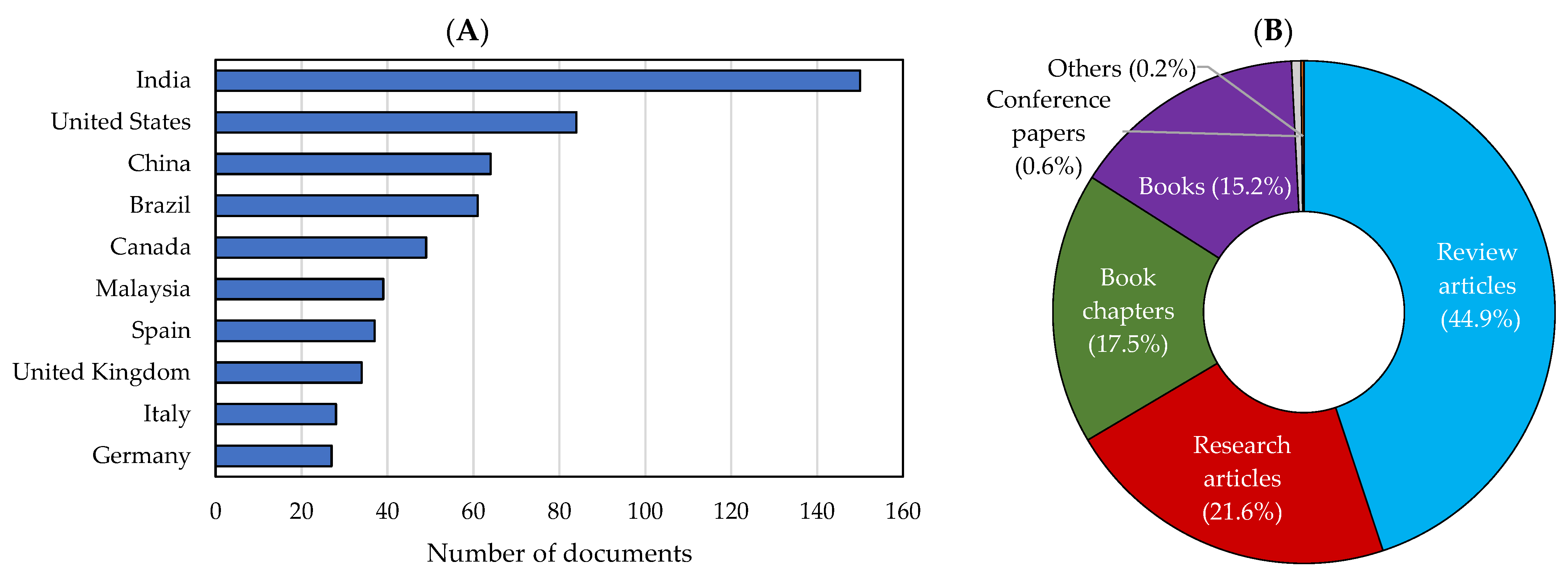
The Scopus database provided illustrative figures related to the search results, with Brazil ranking fourth globally in the number of publications within this thematic area (
Figure 2A). The Web of Science database revealed that the authors with the highest number of publications in the field were affiliated with institutions in China, India, and Germany. After identifying materials consistent with the scope of this review, full-text reading was performed to assess their contribution to the development of this article.
The choice of the time for publication aimed to highlight the current relevance of the topic. Notably, when applying the same search strategy in Scopus without time filters, a significant increase in publications was observed starting in 2021. In addition to the time filter, the search was also refined to include only research articles and review papers, due to the large volume of documents indexed (
Figure 2B).
To further address gaps related to the focus of this study, a narrative review approach was employed for the sections “Patents and Applications” and “Agricultural Biomass”, using additional online platforms like Espacenet and Google Scholar. Some websites of agencies like USDA, FAO, IRRI, ABARES, UNICA, and CONAB were also consulted to obtain data on production. This method aimed to provide an overview of the agricultural and innovation landscape, including opportunities, challenges, and technological potential for biomass conversion into biomaterials, biofertilizers, and bioproducts, as well as the number of patents in the field.
2.1. Risk of Bias Assessment
To increase the reliability of this integrative review, we performed a risk of bias assessment for each included study using an adapted version of the Joanna Briggs Institute (JBI) Critical Appraisal Checklist for systematic reviews and experimental studies. This tool was chosen for its suitability for non-clinical research on biomass conversion. The assessment criteria included: (1) research objectives; (2) adequacy of search and inclusion methods; (3) critical appraisal of the included evidence; (4) potential for publication bias; (5) consistency of analytical methods; and (6) relevance to the scope of the review.
Studies were scored and classified as low risk (0–2 criteria not met), moderate risk (3–4 criteria not met), or high risk (5–6 criteria not met). A number of 80 primary research and review articles, published between 2021 and 2025 (identified through searches in Scopus and Web of Science), were classified as low risk, moderate risk, and high risk. High-risk studies were classified primarily due to limited methodological details or potential conflicts of interest (e.g., industry funding). No studies were excluded based on this assessment, but the results of high-risk studies were interpreted with caution. A summary table of the main included studies is presented in
Table 1.
2.2. Assessment of the Risk of Bias Due to Missing Results (Reporting Biases)
In addition to assessing the risk of bias at the individual study level, we assessed the risk of bias due to missing results arising from reporting biases for each main thematic synthesis in this review. This was conducted using an adapted version of the selective reporting domain of the RoB 2 tool, focusing on non-clinical reviews. The criteria included: (1) whether the studies reported all pre-specified outcomes (e.g., comparing methods and results sections); (2) evidence of outcome change or omission; (3) inclusion of gray literature or unpublished data to mitigate publication bias; and (4) potential for selective reporting of positive results in the area of biomass conversion.
Considering that our search was restricted to published articles in the Scopus and Web of Science databases (gray literature, clinical trial registries, or conference proceedings were not included), there is a moderate inherent risk of not detecting negative or inconclusive results among the syntheses. The main syntheses were classified as moderate risk, mainly due to their reliance on published literature.
2.3. Evaluating the Certainty of the Evidence
To further strengthen the reliability of our syntheses, we assessed the certainty (or confidence) in the body of evidence for each primary outcome using an adapted GRADE approach. This framework assesses the quality of evidence as High, Moderate, Low, or Very Low, based on: (1) risk of bias (from
Section 2.1); (2) inconsistency (heterogeneity in results); (3) indirectness (applicability to real-world biomass conversion); (4) imprecision (sample sizes and confidence intervals, where applicable); and (5) publication bias (from
Section 2.2, including missing results).
The review is predominantly qualitative, based on approximately 100 recent studies (2021–2025). Therefore, the assessments are narrative-driven. In most cases, there was no downgrade due to imprecision because of the non-quantitative nature of the studies, but downgrades occurred when the risk of bias or inconsistency was high. Overall, certainty was considered moderate for all outcomes, reflecting strong fundamental evidence, gaps in scalability, and long-term field data. Interpretations in the discussion sections were adjusted accordingly. A summary for each outcome assessed is presented in
Table 2.
3. Agricultural Biomass
Agricultural biomass is one of the most abundant and promising sources of renewable raw material for the production of biomaterials, biofertilizers, and bioproducts. Primarily derived from crop residues and agro-industrial by-products, this biomass is characterized by its high availability, low cost, and reduced environmental impact, especially when compared to fossil sources or dedicated energy crops. However, crops are also considered biomass, such as soybeans, corn, sweet sorghum, and cotton, among others.
3.1. Examples of Agricultural Biomass
Harvest residues such as rice husks and straw, corn stover, and wheat straw represent a significant fraction of the agricultural biomass available worldwide. Rice straw, for instance, is generated on a large scale. It is estimated that for every ton of harvested rice, up to 1.5 tons of straw are produced, which contains high levels of silica in addition to lignocellulosic compounds. China, India, Indonesia, Bangladesh, and Vietnam are the top five rice straw producers [
24].
Corn stover, composed of leaves, stalks, and cobs, also represents a substantial biomass source, particularly relevant in the Americas. Similarly, wheat straw, abundant in Europe and North America, is rich in cellulose and hemicellulose, making it attractive for biochemical conversion processes [
25]. In addition to primary crop residues, agro-industrial by-products such as sugarcane bagasse, grain and fruit husks, oilseed cakes, and coffee husks are also noteworthy. Sugarcane bagasse is one of the most studied and utilized agro-industrial residues, especially in Brazil, which is the world’s leading producer. This by-product, generated after juice extraction for sugar and ethanol production, has a significant energy potential [
26]. Rice husks, soybean straw, peanuts, and other grains, straws, stalks, and bagasses are often discarded or underutilized, despite their composition being rich in lignocellulose, starch, and phenolic compounds [
3,
27,
28], making them valuable for biotechnological applications.
Agricultural biomass is predominantly composed of three structural macromolecules, which form the lignocellulosic matrix: cellulose, hemicellulose, and lignin. Cellulose is a linear β-1,4-glucose polysaccharide, highly crystalline and resistant, responsible for the structural rigidity of plants. Hemicellulose is an amorphous heteropolymeric fraction containing sugars such as xylose, arabinose, mannose, and galactose, and is more susceptible to hydrolysis. Lignin is a hydrophobic and recalcitrant three-dimensional phenolic polymer that provides resistance to chemical and biological degradation [
6,
15,
29]. The proportion of these components varies widely among different types of biomass, depending on the plant species, the part of the plant used, and edaphoclimatic conditions. For example, wheat straw typically contains 35–40% cellulose, 30–35% hemicellulose, and 10–15% lignin [
30], while sugarcane bagasse contains approximately 32–45% cellulose, 20–32% hemicellulose, and 17–32% lignin, 1–9% ash, and some extractives [
31]. Other fractions, such as proteins, extractives, and minerals (ash), are found in certain amounts, influencing the choice of conversion routes and the efficiency of the processes. Some examples of biomasses and their averages or ranges of the major constituents are presented in
Table 3.
The information presented in
Table 3 was designed to be representative rather than exhaustive. The selection criteria included the global abundance and relevance to major agricultural systems, a high residue-to-product ratio (RPR), geographical relevance to the regions discussed in the review, representation of the diversity of agricultural biomass categories, and scientific relevance and frequency of study in the literature (2021–2025).
The group of agricultural biomasses was selected to address the lack of information concerning dry weight production, seasonality, and geographical occurrence, illustrating the compositional variability relevant to biomass valorization processes. Biomasses such as rice husk/straw, wheat straw, corn stover, and sugarcane bagasse were included because they represent the largest global volumes of agricultural residues and are widely produced across multiple regions. Also, several of the listed biomasses (e.g., rice straw, corn stover, wheat straw) have high RPR values, meaning they generate significant residue volumes relative to the harvested product. RPR was indirectly considered when selecting biomass that meaningfully contributes to residue availability worldwide. The biomass are representative, containing cereal crop residues, agro-industrial by-products, fruit/vegetable residues, oilseed residues, and other lignocellulosic wastes of high industrial interest. The biomasses also appear consistently in research on pretreatment, conversion technologies, and bioproduct development.
3.2. Geographical Availability, Seasonality, and Logistical Challenges
The production of agricultural biomass occurs predominantly in regions with strong agricultural potential and is highly dependent on both the geography and seasonality of crops. Asia leads in rice residue production, particularly in countries such as China, India, and Vietnam. South America, especially Brazil and Argentina, produces large volumes of corn, soybean, and sugarcane residues, while Europe and North America are prominent in the generation of wheat, barley, and oilseed residues [
24,
36].
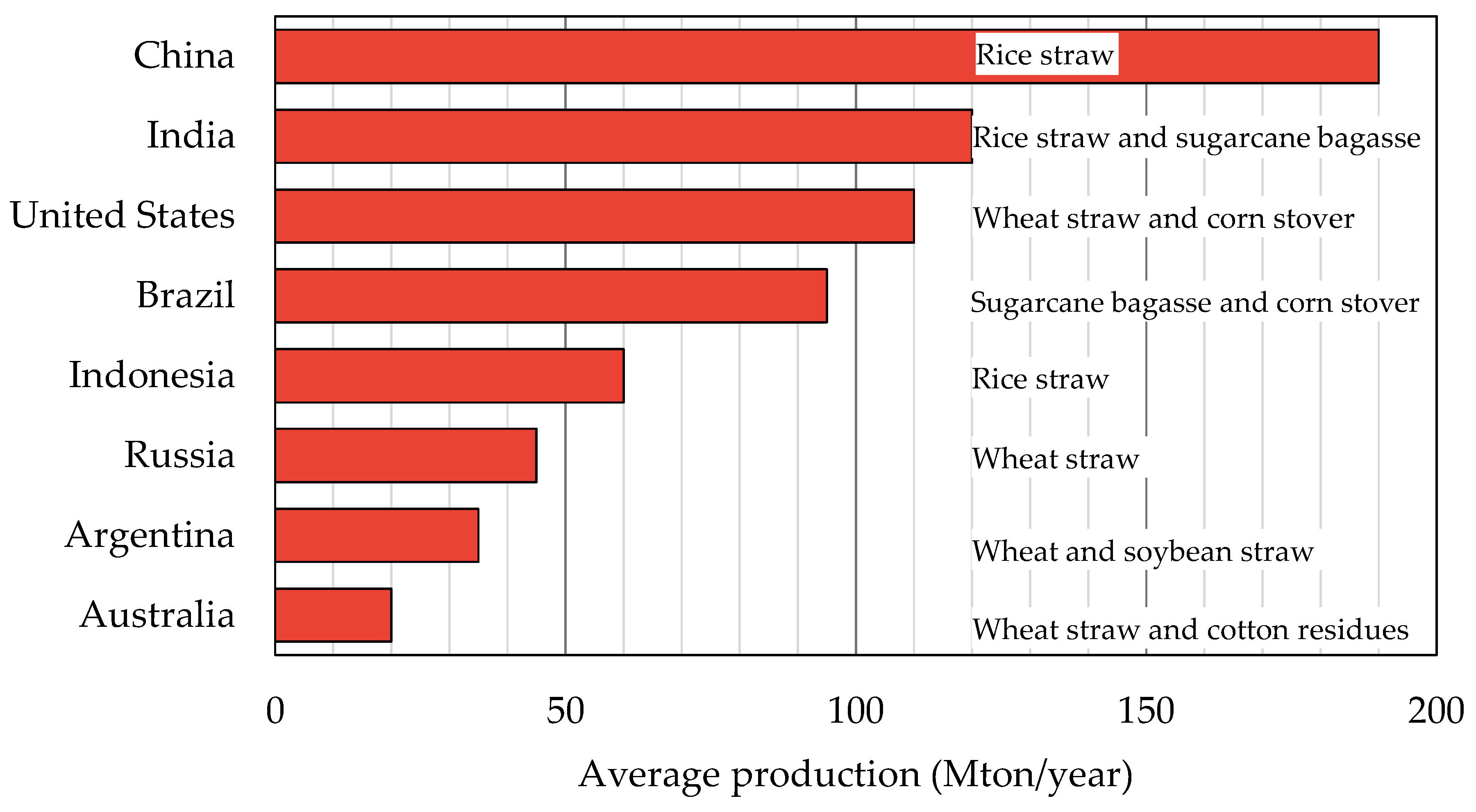
Considering this geographical availability, seasonality is a critical factor in the worldwide availability of some biomasses, as most biomass is generated during specific periods of the year, following harvest. This characteristic presents logistical challenges related to storage and transportation, as well as the preservation of biomass quality over time. Additionally, annual variations in agricultural productivity caused by climatic conditions, pests, and agricultural policies directly affect both the quantity and quality of the biomass produced. A graphical representation of the average yearly agricultural biomass production in selected countries is shown in
Figure 3, compiled from multiple references [
37,
38,
39,
40,
41,
42,
43,
44].
The logistics of agricultural biomass represent one of the main barriers to its large-scale valorization. These materials typically have low bulk density (50–200 kg m
−3), which hinders cost-effective transportation over long distances and increases operational costs. Additionally, agricultural biomass is susceptible to microbiological degradation and loss of quality when stored improperly, especially in humid environments [
45].
Another challenge lies in the physical and chemical heterogeneity of biomass, which requires the implementation of standardization, pretreatment, and conditioning strategies before industrial processing. Solutions such as baling, pelletization, briquetting, and torrefaction have been explored to improve energy density and material stability, thereby facilitating transportation and storage [
5,
46]. Regulatory and environmental factors also influence the logistical management of agricultural biomass, particularly concerning the prohibition or restriction of practices such as in-field burning of residues, commonly used to prepare the soil but associated with significant greenhouse gas emissions.
4. Technologies for Agricultural Biomass Processing
The conversion of biomass into biomaterials, biofertilizers, and bioproducts depends on the application of different processing technologies. Therefore, a summary of the main technologies used in the conversion, with emphasis on physicochemical, biochemical, and thermochemical methods, is presented in
Table 4.
Physicochemical pretreatments are methods used to modify the structure of biomass, facilitating access to its components. The use of high-pressure steam, for example, subjects the material to elevated temperatures through direct injection of saturated steam, followed by rapid depressurization. This process generates shear forces that promote fiber separation [
16]. Acid pretreatment uses diluted acid solutions to disrupt biomass structure, favoring cellulose hydrolysis and hemicellulose extraction [
17]. Alkaline pretreatment employs sodium hydroxide or ammonia at temperatures below 100 °C to remove lignin and increase cellulose porosity. This technique is noted for its low economic and environmental cost, although it requires longer reaction times [
18]. Supercritical carbon dioxide pretreatment uses CO
2 under high-pressure and high-temperature conditions to penetrate the biomass structure, break bonds within the lignocellulosic matrix, and enhance porosity. It presents the advantage of not generating toxic residues, making it an environmentally sustainable alternative [
19].
Biochemical conversion is particularly suitable for carbohydrate-rich biomass and is predominantly carried out through two main routes. This process uses enzymes and microorganisms as catalytic agents to transform biomass into biofuels [
20]. In microbial fermentation, microorganisms such as bacteria and fungi convert organic compounds in the biomass into value-added products, including organic acids and other chemical compounds. This takes advantage of the microorganisms’ ability to metabolize organic substrates, typically sugars present in biomass. The second route is anaerobic digestion, a process in which microorganisms decompose organic matter in the absence of oxygen, resulting in the production of biogas and digestate [
21].
Thermochemical conversion involves applying heat to convert biomass. The two main routes are pyrolysis and gasification. Pyrolysis disrupts biomass structure in the absence of oxygen, producing gaseous species such as bio-oil and charcoal. Gasification transforms solid materials into a fuel gas (syngas) mainly composed of CO, H
2, CO
2, and CH
4. This process occurs in oxygen-controlled environments at high temperatures [
22].
With advances in biotechnology and process engineering, new approaches have been explored to overcome the challenges of conventional biomass processing routes. Enzymatic hydrolysis is a key process in converting cellulose from pretreated biomass, in which cellulase enzymes convert cellulose into glucose under mild conditions, typically at 40–50 °C and pH 4.5–5.0 [
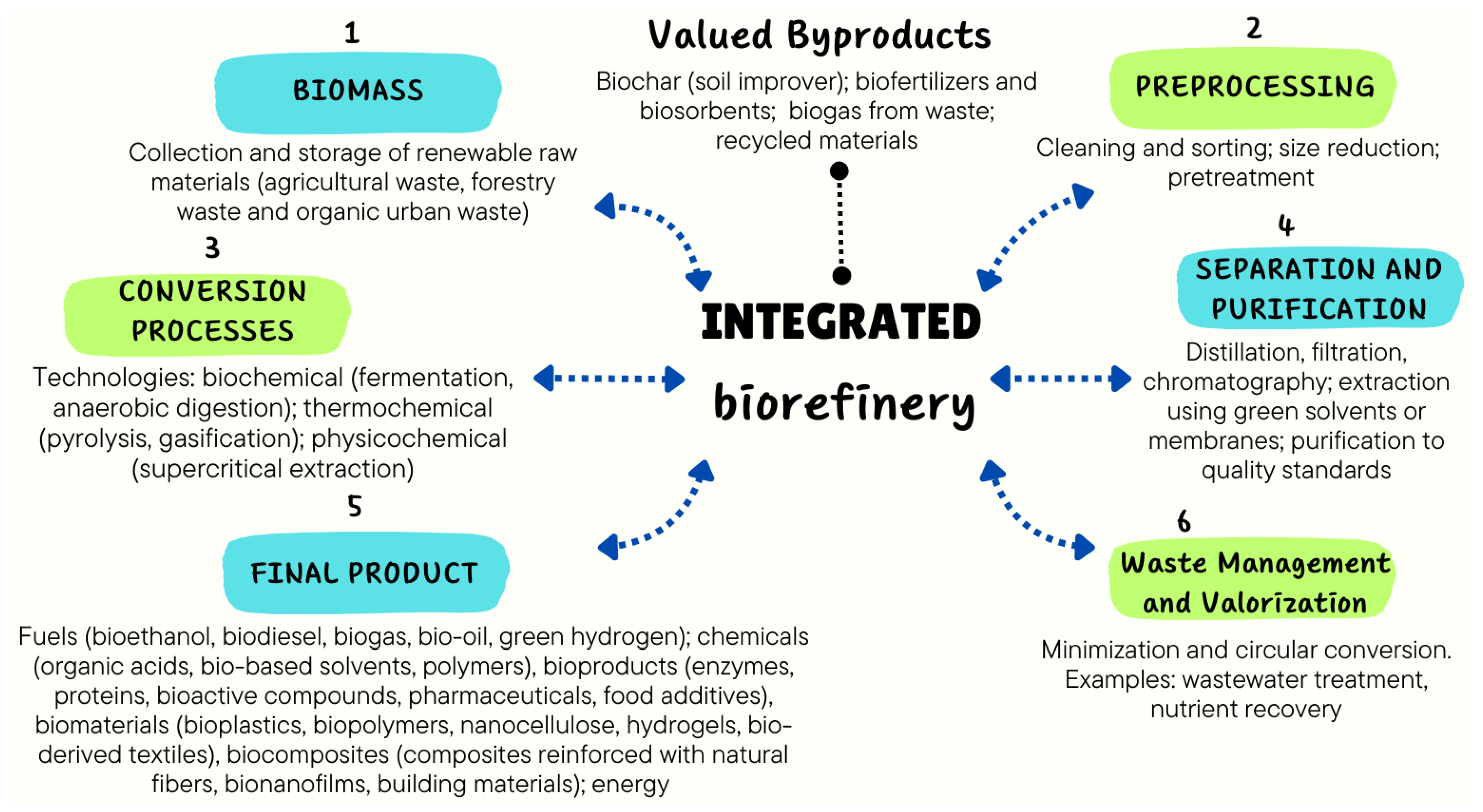
23]. Integrated biorefineries are sustainable systems that convert biomass and biogenic waste into a range of products [
47], including chemicals and energy. inspired by conventional petroleum refineries, they utilize renewable raw materials to produce high-value products while minimizing environmental impacts and waste generation (
Figure 4).
The objective of integrated biorefineries is to optimize resource use through the integration of multiple processes, fully utilizing the potential of raw materials. These systems strengthen the circular economy and promote closed-loop models that minimize emissions, maximize value recovery, and encourage the development of sustainable alternatives to fossil-based products [
48].
The wide range of available technologies for processing agricultural biomass enables adaptation to various production contexts. In comparison, established processes such as fermentation and anaerobic digestion offer immediate feasibility, and emerging technologies like enzymatic hydrolysis and biorefineries present high potential, although they still require advances to reduce costs and scale up production. The choice of the most appropriate technological route should consider the composition of the biomass, intended objectives, and local socioeconomic and environmental conditions.
5. Products from Agricultural Biomass Conversion: Biomaterials, Biofertilizers, and Bioproducts
Considering the diversity of biomass with potential for utilization and the technologies developed for appropriate processing, various products with different applications can be produced from agricultural biomass, especially biomaterials, biofertilizers, and bioproducts (
Table 5).
5.1. Bioplastics
The use of agricultural biomass has been predominantly directed toward reinforcement in polymer matrices. Rice husks were incorporated as a component in the production of plastic composites. As a result, improvements were seen in the thermal stability and mechanical strength of the resulting products [
49]. Cocoa husks were used as raw material for the development of biodegradable packaging, emphasizing not only the good quality of the material produced but also the feasibility of sustainably utilizing this biomass for industrial applications [
50].
Bioplastics are produced from agricultural biomass such as cassava, coconut, corn, potato, sugarcane, and wheat. These bioplastics can be obtained through the extraction of polysaccharides such as starch, cellulose, chitosan, and chitin, or from proteins such as gluten. Various potential applications for these materials are seen, with an emphasis on the agricultural sector, where they are used in the manufacture of nets, cultivation bags, and soil-covering films. In the medical field, bioplastics from agriculture have been investigated for applications in implants, tissues, and neural engineering [
51].
Strategies for the valorization of agri-food waste and losses into functional bioplastics and advanced materials are presented in the scientific literature, within the water-food-energy nexus and the framework of the circular economy. The findings identified low-value or solubilized biomass, biocolloids, water-soluble biopolymers, polymerizable monomers, and nutrients as important sources for biotechnological conversion into new materials. The resulting bioplastics have applications in smart packaging, biomedical devices, actuators, energy conversion and storage technologies, and sensors [
52].
5.2. Biofoams
Biofoams are primarily used as insulating and structural components. Foam composites based on tannin, vanillin, and furfural, reinforced with wood fibers, were produced. The resulting materials were lightweight and exhibited good strength and applicability in packaging and construction [
53]. Overall, the studies highlight the importance of phenolic products derived from biomass, especially in the field of renewable materials engineering.
Rigid polyurethane foam (RPUF) composites were produced using banana and bergamot peel residues as fillers. The peels were dried, ground, and incorporated into the biofoam formulations at proportions of 5, 10, and 15%. The influence of the type and content of filler on the morphological, thermal, mechanical, hygroscopic, and calorimetric properties of the RPUF was evaluated. Both biomass sources presented good compatibility, and compared to pure RPUF, the incorporation of up to 15% filler resulted in similar water absorption, apparent density, compressive strength, and color properties, while increasing thermal stability by up to 115% and cell size by 80% [
54].
Bio-based polyurethanes (bio-PU), polylactic acid (PLA), starch, polyhydroxyalkanoates (PHAs), and cellulose are highlighted as raw materials for biofoams. A growing interest in biofoams is seen for applications in biodegradable packaging, thermal and acoustic insulation, cushioning materials, and biomedical uses. However, challenges are reported, such as low processability, limited compatibility, inferior thermal properties, and mechanical fragility compared to synthetic foams [
55].
5.3. Composite Materials
Composite materials are made by adding agricultural biomass-derived materials into composite matrices. Rubber waste and biomass were included in tire formulations, reducing environmental impact and enhancing elasticity and abrasion resistance of the final product [
58]. Aromatic monomers derived from lignin can be utilized to produce biocomposites, increasing the value of the final product [
15]. Porous nanocomposites with adsorptive and filtration abilities were developed, providing an alternative for manufacturing membranes for wastewater treatment [
59].
Attention should be given to the use of certain lignocellulosic fractions, such as lignosulfonates, in the production of biodegradable films. In this regard, defatted residues from the olive oil industry were used as sources for producing hemicellulosic films, employing instant controlled pressure drop technologies. The results demonstrated the feasibility of this methodology for industrial-scale application, as well as its environmental significance [
56]. Sorghum has been identified as a promising biomass source for producing cellulose nanofibers, reinforcing the applicability of agricultural residues from this crop in composites, films, and textile fibers [
57].
5.4. Hydrogels
Hydrogels made from agricultural biomass have gained increasing attention for use in various fields, including agriculture, medicine, and environmental cleanup. Recent progress has been reported in producing superabsorbent hydrogels from agro-industrial residues, focusing on sustainable agricultural uses. As raw materials, natural biomass sources like wheat straw, sugarcane bagasse, and rice husks are highlighted, along with natural polymers extracted from these residues, such as cellulose, hemicellulose, and lignin. In terms of applications, hydrogels can serve as soil additives, acting as conditioners that improve water retention and enable controlled fertilizer release [
60].
The synthesis of hydrogels was studied using cellulose microfibers derived from plant biomass, aiming to create both single and double network structures suitable for soilless plant growth. For the production of single-network hydrogels, cellulose microfibers were combined with a small amount of chitosan, which connected the individual cellulose fibers through Schiff base linkages. The double-network hydrogel was synthesized by adding a second covalently cross-linked network of polyacrylamide in a one-pot process that combined Schiff base reaction and free radical polymerization. The resulting materials demonstrated excellent swelling capacity by absorbing large amounts of water. The double-network hydrogel exhibited improved stability during water immersion and had greater salt tolerance [
61]. Nanocellulose-based hydrogels produced from agricultural biomass are highly biodegradable, biocompatible, and possess exceptional mechanical properties. Because of these features, such hydrogels can be used in various fields, including agriculture, biomedicine, environmental filtration, and the development of smart packaging [
89].
5.5. Bioceramics
Bioceramics produced from agricultural biomass have gained prominence, particularly in the fields of biomedicine and materials engineering. 45S5 bioglass-ceramics were produced using rice husk and eggshell ash. The resulting products exhibited a porous structure, high bioactivity, good mechanical strength, and antibacterial activity, demonstrating their strong potential for applications in bone regeneration and orthopedic implants [
62].
High-purity mesoporous biosilica was obtained from agro-industrial residues such as rice husk, corn stalk, and sugarcane bagasse through a thermochemical process involving calcination and acid treatment. The silica yields obtained were 17.91% for rice husk, 9.39% for corn stalk, and 3.25% for sugarcane bagasse. The structural characteristics observed in the silica materials suggest their potential for applications in engineering, agriculture, and environmental fields. Rice husk-derived silica, with its high surface area and amorphous structure, is suitable for use as an adsorbent and catalyst in degrading aqueous pollutants. Silica from sugarcane bagasse exhibits high purity and large pore size, emphasizing its potential as a precursor for nanomaterials and biosensors for detecting macropollutants. Meanwhile, silica obtained from corn stalk has a partially crystalline structure and a pore size suitable for applications in delivering bioactive compounds and in water nanofiltration processes [
63].
5.6. Functional Biopolymers
Functional biopolymers produced from agricultural biomass have been primarily applied in the fields of medicine and tissue engineering, agriculture, pharmaceuticals, smart materials, and sensors. A study emphasized the use of fruit peels, stalks, and bagasse as rich sources of cellulose, chitin, and starch, which are materials known for their biocompatibility, biodegradability, and low toxicity, making them suitable for biomedical applications. Future application trends include drug delivery systems, wound healing, tissue engineering, biodegradable packaging, excipients, dental applications, diagnostic tools, and medical implants [
64].
The production of sustainable biopolymers and biocomposites is progressing. Scientific literature [
65,
90,
91] presents and discusses raw material choices, such as polysaccharides and proteins, along with their functional properties that are essential for industrial use. Adding additives and reinforcements like nanocellulose and natural fibers improves important properties such as mechanical strength, thermal stability, and UV-blocking ability. Key uses of biopolymers and biocomposites include biodegradable packaging, medical devices, tissue engineering, structural components for transportation, construction, and electronics [
65].
5.7. Resins
Resins produced from agricultural biomass have been primarily used for the production of reinforced composites intended as structural components. One study aimed to reduce the use of formaldehyde-based resins, which have the drawbacks of environmentally hazardous emissions and low water resistance. To achieve this, bio-resins were synthesized from sugarcane bagasse, birch wood, silver cypress wood, and medium-density fiberboard residues. Among the tested raw materials, the resin derived from sugarcane bagasse demonstrated superior performance, yielding higher furfural content, better water resistance, and good thermal stability [
66].
In another study, researchers explored the use of resins obtained from renewable raw materials as an alternative to oil-based resins for the production of fiber-reinforced polymer composites. The study focused on increasing the renewable content in the produced resin, evaluating whether the addition of lignin could enhance the mechanical and thermomechanical properties of the resin, and comparing resins with and without lignin. The results showed that incorporating lignin into the base resin produced a copolymer with greater heterogeneity and higher molecular weight, incorporating rigid and complex aromatic structures into the polymer chain [
67].
5.8. Adhesives
Adhesives produced from agricultural biomass are primarily used to replace petrochemical resins in the wood industry, for the production of sustainable packaging, and as natural fiber composites. One study investigated the use of lignin extracted from sugar-cane bagasse as a raw material to produce a bio-adhesive as an alternative to petroleum-derived phenol-formaldehyde adhesives, which are commonly used in plywood manufacturing. The results showed that the adhesive performance met commercial standards for wood and panel adhesives. Additionally, the adhesive exhibited good water resistance and moisture resistance when dry. Despite these advantages, the bio-adhesive did not pass wet tensile strength tests, indicating its potential for use in interior wood products [
68].
A second study explored the production of bio-epoxies based on natural polyphenolic lignin, epoxy lignin, and tannic acids for application as wood adhesives, as a replacement for commercial toxic amine-based hardeners. Shear tensile strength tests showed that the evaluated bio-epoxy adhesive samples exhibited significant tensile shear strength in the range of 5.84–10.87 MPa, demonstrating that lignin and tannic acid can effectively replace amine hardeners in epoxy resins [
69].
5.9. Liquefied Biomass
Liquefied biomass produced from agricultural biomass has been primarily used for the production of liquid biofuels and as feedstock for chemicals. One study analyzed the storage stability and miscibility of a biocrude derived from the hydrothermal liquefaction of wheat straw, both before and after upgrading through catalytic hydrotreatment. Storage stability was assessed for the raw and hydrotreated biocrude over six months under various conditions. The results showed that the biocrude exhibited low degradation, as measured by acidity, water content, and density, even after six months of exposure to ambient conditions [
70].
However, the study found that only a small portion of the biocrude was miscible with all tested petroleum fractions (light gas oil, light vacuum gas oil, and light cycle oil), indicating incompatibility. In contrast, the hydrotreated biocrude maintained stable properties over time, demonstrating long-term stability. Furthermore, the hydrotreated biocrude was fully soluble in all petroleum fractions without phase separation or turbidity. Based on these results, the authors concluded that biocrude produced by hydrothermal liquefaction of agricultural residues could serve as a sustainable intermediate for refinery integration, provided it undergoes upgrading [
70].
5.10. Biofertilizers and Bioestimulants
The production of biofertilizers and biostimulants is predominantly carried out through thermal, biological, or chemical routes. One of the most prominent products in this category is biochar, a soil conditioner produced by slow or continuous pyrolysis of biomass, characterized by high stability and nutrient retention. In this context, Zhu et al. [
8] combined biochar with pyroligneous acid and observed synergistic effects, including reduced ammonia emissions and improved nitrogen use efficiency, which is a key factor for resource optimization and enhancing agricultural sustainability.
Biochar was used as a substrate for pepper seedlings and acted as a carrier for beneficial bacteria, promoting improved early seedling performance [
9]. Moving beyond biochar, ref. [
73] transformed biomass ash into compound mineral fertilizers enriched with additives that increased phosphorus solubility. Key benefits include the reutilization of residues that would otherwise be discarded and the reduced dependence on conventional phosphate rocks in agriculture.
Digestates, consisting of liquid streams from anaerobic digestion, are also frequently used in agriculture, primarily as fertilizers. A distillation process was used to separate the digestate into a nitrogen-rich liquid phase (in the form of ammonia) and an organic matter-rich solid fraction [
71]. Complementing this, Abelenda and Dolny [
72] recovered ammonia from digestate in the form of ammonium bicarbonate, a compound characterized by slow nutrient release.
A study used lignocellulosic plant fibers to produce a porous substance capable of retaining liquid compounds to form a slow-release solid fertilizer. A key result was the material’s effective nutrient retention and gradual release capacity, which is critical to reducing nutrient losses through leaching and volatilization, which are common issues with conventional fertilizers [
74]. The rich mineral and fibrous composition of cocoa husk biomass was highlighted, identifying it as a promising source for soil fertilization and plant nutrition [
75].
Protein hydrolysate biostimulants, typically produced from agricultural waste and agro-industrial by-products, were evaluated. These compounds contribute to resistance against abiotic stresses caused by salinity and water deficit in horticultural crops. Positive effects of biostimulants were seen on crop tolerance to abiotic stress by enhancing plants’ morphological, physiological, and biochemical responses [
76].
A review was reported, which deepened the understanding of fertilizer production within biorefineries. The innovative nature of this perspective was highlighted, considering that biorefineries typically prioritize energy generation and chemical synthesis, while fertilizer production remains underexplored, especially regarding its agronomic potential. As feedstocks, the use of agro-industrial residues such as lignocellulosic biomass, biogas digestate, and refinery by-products was identified. The organic, organo-mineral, or mineral fertilizers produced may complement or replace conventional products, provided they undergo appropriate treatments, as direct application of untreated waste does not fully exploit their agronomic value [
77].
Biotransformation processes for converting food waste into nutrient-rich biofertilizers were presented, employing aerobic composting and anaerobic digestion methods. The recent development of alternative decomposition techniques involving the cultivation of specific beneficial microbes to accelerate decomposition was evidenced. The microorganisms can act as both biostimulants and biodecomposers, enhancing nutrient fixation and providing protection against biotic and abiotic stresses, ultimately promoting plant health [
78].
Anaerobic digestate from the organic wet fraction, garden compost, and mixed aerobic compost was reported with biostimulant effects on ornamental plants and vegetables. Key outcomes from these applications include enhanced performance indicators such as growth, leaf chlorophyll content, photosynthetic activity, maturation, fruit yield, improved flower and fruit quality, and increased water-use efficiency [
79].
5.11. Organic Acids, Enzymes, and Green Solvents
Succinic acid was produced from vine pruning waste and grape must, demonstrating that these residues can be efficiently utilized as substrates in microbial fermentation. The study highlighted the potential of these waste materials to serve as alternatives to petrochemical-based production routes [
80]. Levulinic acid is produced from coconut residues through acid hydrolysis. The yield optimization was achieved by adjusting the catalysts and reaction conditions employed. The organic acids produced can be used in the formulation of biodegradable plastics and solvents, as well as intermediates in chemical synthesis [
81].
Aiming to produce cellulase enzymes from coffee husk, a process was simulated to demonstrate the feasibility of enzyme production from this biomass source and highlight its role as a component in hydrolysis during the release of fermentable sugars [
82]. The combined use of laccase and cellulase was evaluated to modify residual lignin in biomass. The main findings indicated that this treatment enhances the antioxidant activity of the processed material while enabling its incorporation into bioactive formulations [
83].
Challenges associated with recovering cellulases and other industrial enzymes from microalgae for subsequent use were identified. Regarding the production of bioethanol using microalgae-derived enzymes, the current methods are insufficient to make the process economically viable, emphasizing the need for further research. Overall, studies on this topic support the use of enzymes as catalysts in industrial processes. At the commercial level, enzymes play a central role in the biotechnological conversion of lignocellulosic biomass [
84].
The synthesis of the chemical compound γ-valerolactone (GVL) from levulinic acid, furfural, and hydroxymethylfurfural through catalytic transformations was reported. By combining GVL with acid and water in appropriate proportions, solvent-like properties can be achieved that enable biomass deconstruction and the solubilization of lignin and xylose, highlighting its potential as a sustainable alternative to conventional industrial solvents [
10]. Lignocellulosic residue of
Butia capitata endocarp (BCE) showed the potential to produce bioproducts such as fermentable sugars, platform chemicals, bio-oil, and biochar. In the study, the highest fermentable sugar yields (5.26 ± 0.31 g/100 g BCE) and platform chemical yields (2.44 ± 0.10 g/100 g BCE) were produced by subcritical water hydrolysis at 260 °C [
92].
5.12. Bioactive Compounds
Bioactive compounds have gained prominence for use in fields such as functional foods and nutraceuticals, personal care products, and pharmaceutical and therapeutic applications. One study aimed to evaluate the correlation between the chemical composition and biological properties of phenolic-rich extracts from Brazil nut shells, grape seeds, onion skins, and passion fruit peels. The antioxidant and antibacterial properties, sun protection factor, and α-amylase inhibitory capacity were analyzed. The results indicated that the Brazil nut shell extract stood out for its antioxidant properties, while the onion skin extract showed the best antibacterial activity and the highest sun protection factor. All extracts were found to inhibit over 70% of the α-amylase enzyme [
85].
In another study, the authors explored the use of raspberry branches and aerial parts as sources of bioactive compounds. Extracts from the residual parts of the crop were prepared using aqueous decoction, aqueous infusion, hydroethanolic maceration, and ultrasound-assisted extraction. The extracts were subjected to a battery of tests to evaluate antioxidant, antibacterial, and anti-inflammatory activity and cytotoxicity against tumor cells. The results showed that, regarding antioxidant potential, the decoction extract was the most potent, while the infusion demonstrated superior potential to inhibit lipid peroxidation. Ultrasound-assisted extraction proved highly effective as an antibacterial agent. Both the infusion and ultrasound-assisted extraction exhibited the highest anti-inflammatory potential. Based on these findings, the authors concluded that raspberry residues represent a promising raw material as a source of bioactive compounds and that the extraction technique significantly influences the profiles and activities obtained [
86].
5.13. Additives
Additives have been used primarily in the production of sustainable composite materials, biodegradable packaging, and biomaterials for pharmaceutical or medical applications. In a study involving the use of agricultural residues for the production of biodegradable packaging, the authors employed orange peels to develop biodegradable packaging films, as well as wheat straw and rice husks in different proportions as reinforcing materials. The results showed a significant increase in thickness, tensile strength, and opacity in the reinforced films, and the authors concluded that it is possible to produce biodegradable and active films from agricultural residues, including desirable properties for food packaging, such as enhanced mechanical performance and antioxidant and antimicrobial functions [
87].
In another study, the authors explored the potential of residues such as sawdust, wood scraps, seeds, and fruit peels to improve the mechanical, thermal, and environmental properties of polymer composites. This integration led to significant improvements in the performance of the resulting composites, including increased tensile strength, thermal stability, and biodegradability. Beyond these benefits, the study also highlighted the environmental and economic advantages of using these residues [
88].
6. Patents and Technological Applications
Technological advancement aimed at biomass utilization has emerged as one of the pillars of the modern bioeconomy, driving the development of sustainable solutions across various sectors. The analysis of the patent landscape over recent years provides a strategic overview of innovation trends, reflecting industrial and scientific priorities in the valorization of this renewable resource. In this context, a worldwide database of patents provides valuable insights into the evolution of technological interest in various biomass applications, spanning from biofuel production to the development of bioproducts, biomaterials, biofertilizers, and biostimulants.
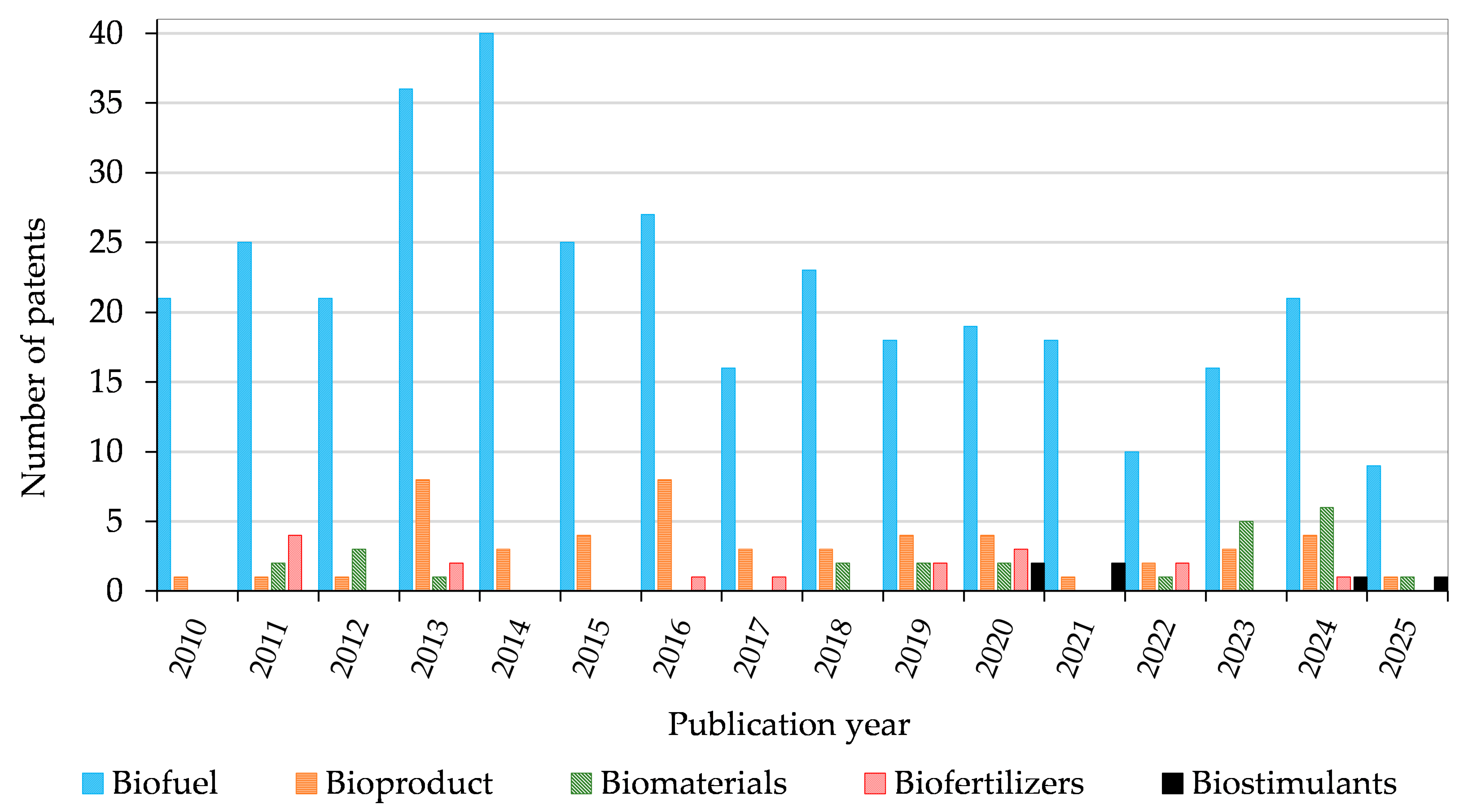
The temporal evolution of patents related to biomass use, based on data retrieved from the ESPACENET database, is presented in
Figure 5. A total of 443 documents filed between 2010 and 2025 were identified. Of these, 345 patents relate to the combination of the terms “biomass” and “biofuel”, followed by 51 patents involving “biomass” and “bioproducts”, 25 for “biomass” and “biomaterials”, 16 for “biomass” and “biofertilizers”, and 6 for “biomass” and “biostimulants”. The data reveal that the earliest patents within the analyzed timeframe were predominantly focused on the biofuel sector, highlighting its initial dominance in the bioeconomy context. Patents related to biofuels dominated in the last decade, particularly between 2012 and 2015, boosted by global momentum toward replacing fossil fuels with renewable alternatives.
Despite the expansion of infrastructure, such as new facilities and emerging technologies, bioenergy production has not kept pace with this growth. This discrepancy is attributed to factors such as insufficient demand, uncompetitive pricing, lack of incentives, or preference for lower-cost renewable sources. The peak observed in 2014, with 40 patents in this area, may be associated with advancements in second-generation technologies aimed at overcoming the limitations of food-based feedstocks through the use of lignocellulosic residues [
93].
Patents are concentrated around pathways such as HEFA (Hydroprocessed Esters and Fatty Acids), ATJ (Alcohol-to-Jet), and syngas, with a strong presence in the United States and Europe. The analyzed technological networks reveal the formation of innovation hubs within aerospace companies and oil corporations undergoing energy transition. From 2016 onward, a decline in the number of biofuel-related patents is observed, reflecting various economic and technological challenges. Key factors include high production and logistics costs that hinder competitiveness compared to fossil sources [
94], as well as competition from low-cost petroleum and increasingly accessible renewable sources such as solar and wind energy [
95]. This trend is dominated by a strategic shift within the industry toward the development of higher-value-added bioproducts with multiple industrial applications [
96].
Bioproducts and biomaterials exhibit an intermittent but generally upward trend throughout the historical series, reflecting the concept of cascading biomass valorization, in which higher-value products are prioritized before energy conversion [
97]. Most bioproducts are natural, biodegradable, and biocompatible compounds [
98]. These characteristics make them appealing to various industrial sectors due to their renewable origin and sustainable applications [
99]. Produced from biomass via thermochemical or biochemical processes, these compounds are used in energy generation, water treatment, and agriculture, as well as serving as alternatives to fossil-derived products such as plastics and fertilizers [
100].
The number of patents on biomaterials increased, especially in 2023 and 2024, boosted by increasing demand for sustainable solutions for packaging and single-use plastics [
101]. This behavior aligns with circular economy and green chemistry strategies aimed at reducing waste and maximizing the use of renewable resources [
102]. The growing demand for environmentally sustainable solutions has stimulated research and development of technologies based on renewable resources. Within the context of the bioeconomy and circular economy, biomaterials are emerging as renewable carbon-based alternatives with applications in sectors such as energy, agriculture, construction, and the textile industry. Patent analysis provides a strategic overview of the development stage and technological trends, reflecting innovative activity and investments in intellectual property.
The main trends in technological innovations focused on sustainable biomaterials, based on patent reviews from recent decades, include biochar technologies [
103], mycelium-based materials [
104], pyroligneous extracts [
105], and hydrothermal biomass processing [
106], highlighting advances, challenges, and potential applications of each. Patents related to biochar are notable for their focus on pyrolysis operating conditions, surface functionalization, and applications in adsorption, catalysis, and electrochemistry. Patent activity has increased, reflecting interest in sustainable solutions for environmental remediation and carbon sequestration. Multi-criteria decision analysis has been applied to optimize applications according to biochar properties [
103].
The use of fungal mycelium as a biomaterial has shown a growing number of patents since 2015, with applications in vegan leather, thermal insulation materials, and biodegradable packaging [
104]. Production involves cultivation on lignocellulosic substrates, followed by pressing or treatment with plasticizers and chemical crosslinking agents. Notable patent holders include Ecovative, Mycoworks, and Mogu.
Moura et al. [
105] highlight therapeutic innovations involving pyroligneous extracts with antimicrobial, antioxidant, and anticancer properties. Despite the low number of registered patents, potential applications of these bioproducts include natural agrochemicals. Identified gaps point to the need for production standardization and clinical evaluations to validate the use of these compounds. According to Acaru et al. [
106], patents related to hydrothermal biomass processing can be classified into four categories: intense, emerging, dormant, and exploratory. Among the emerging techniques are hydrothermal liquefaction for synthetic natural gas production and C5 sugar extraction. Policymakers play a critical role in transitioning these technologies from the exploratory phase to market consolidation and dominance.
Although biofertilizers and biostimulants represent a smaller share of total patents, they have shown growth since 2020. This trend aligns with increasing demand for sustainable agricultural practices that aim to reduce the use of synthetic agrochemicals and promote soil and plant health [
107]. The advancement of technologies associated with bioproducts is directly linked to the strengthening of public policies focused on the circular economy and decarbonization, as well as the implementation of more specific regulatory frameworks for bio-based products. Additionally, there has been a significant increase in the number of startups and patent filings in emerging economies such as Brazil, India, and China, indicating a favorable environment for innovation and the consolidation of sustainable markets in these regions [
108].
Overall, the patent analysis reveals significant evolution in sustainable bioproducts technologies, with increasing emphasis on commercial and industrial applications. Technological mapping contributes to identifying gaps and strategic opportunities in research, development, and innovation. To consolidate these innovations in the market, political incentives, promotion of public–private partnerships, and regulatory standardization are essential elements that drive the transition toward a bio-based and circular economy.
7. Remarks and Perspectives
Scientific studies showcase the various methods used to convert agricultural biomass into biomaterials, biofertilizers, and bioproducts. This research area has become more important, especially due to extreme weather events worsened by global warming, which is mainly caused by greenhouse gas emissions from burning fossil fuels. Additionally, microbial breakdown of organic carbon from crop residues in fields releases carbon dioxide, another greenhouse gas. Excessive buildup of plant material in agricultural residues can also cause issues by blocking field operations.
In this context, converting agricultural biomass aligns with the principles of the circular economy, which emphasizes waste reduction, symbiosis, and minimizing losses across agricultural and industrial systems. As an emerging economic opportunity, plant biomass can be transformed into energy sources to supply various sectors and into environmentally focused bioproducts. In Brazil, for example, the primary types of agricultural biomass come from wheat, corn, sugarcane, and rice cultivation. However, challenges remain due to the seasonal availability of agricultural materials and logistical limitations in transporting them to processing facilities.
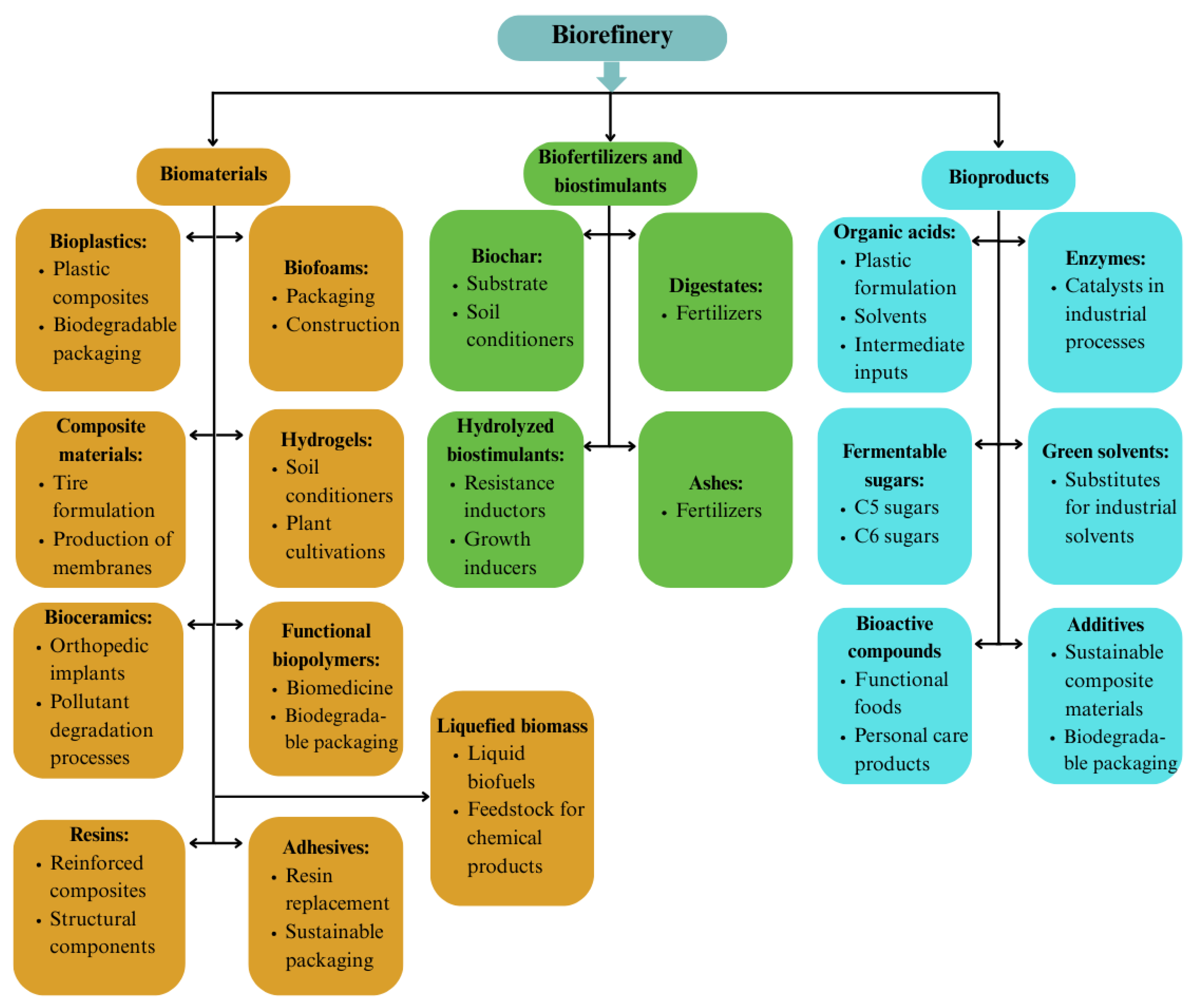
Notable applications of biomaterials, biofertilizers, and bioproducts are in the chemical and materials industries, medicine, and agriculture, thereby reinforcing the versatility of agricultural biomass in the contemporary context. A synthesis of the main value-added products derived from agricultural biomass is presented in
Figure 6. Overall, the utilization of agricultural residues underscores the relevance of biomass transformation within the bioeconomy.
Organic acids can be used as precursors for the formulation of biodegradable plastics and solvents, offering an alternative to petrochemical compounds. Enzymes can function as catalysts in industrial processes, replacing toxic metallic catalysts and synthetic reagents. Green solvents can be used in the formulation of paints and cosmetics, for example, substituting petroleum-derived solvents such as acetone, hexane, and chloroform. Biomaterials can replace various synthetic materials, such as fossil-based plastics, foams, and ceramics. In industrial applications, biomaterials may be employed in the production of biodegradable packaging, construction materials, and coatings and in the development of additives for agricultural soils. Biofertilizers and biostimulants replace or complement the use of chemical fertilizers and biostimulants. In agriculture, organic, organo-mineral, and mineral fertilizers supply essential nutrients to plants while also improving certain structural characteristics of the soil. Biostimulants contribute to enhancing plant resistance to environmental stressors.
Therefore, scientific understanding of biomass composition is essential for designing appropriate conversion strategies, ultimately improving the return on investment in biomass processing facilities. The findings of this study indicate that biorefineries, which integrate multiple processes, are capable of enhancing raw material efficiency, reinforcing the circular economy, and promoting emission-reducing systems. Additionally, to maximize biomass utilization, pretreatment processes are indispensable, as is the selection of the most appropriate conversion route, which varies depending on the biomass type. Among these, enzymatic hydrolysis is highlighted, as it can be carried out at moderate temperatures (40–50 °C) without significant energy input for heating, and the enzymes may be produced on-site.
Methodologies for the production of bioplastics, composite materials and biofoams (biomaterials), biofertilizers and biostimulants, and organic acids, industrial enzymes and green solvents (bioproducts) have shown promising results. From 2023 onward, an increase in patent activity was marked by renewed interest in biomaterials, biofertilizers, and biostimulants. The trend in innovation points toward low-energy conversion methods, such as enzymatic hydrolysis, which offer high efficiency and are well-suited for implementation near regions with readily available agricultural biomass, helping to meet local energy demand. Additionally, bioproducts and biomaterials have gained attention due to increasing urban demand, signaling a favorable landscape for scientific and economic investment.
In the face of climate, environmental, and resource optimization challenges related to agricultural production, both academic research and patent activity in biomass transformation technologies are advancing in parallel. Economic factors can be sustained by verifying highly efficient agricultural biomass conversion methodologies and strengthening circular economy principles. However, incentive policies remain superficial and largely ineffective, falling behind the urgency of climate crises and natural resource depletion. In summary, research and advanced technological development support and justify the economic investment potential in this sector, highlighting that agricultural biomass, rather than degrading in fields and contributing to greenhouse gas emissions while obstructing management practices, can be leveraged as an investment opportunity with short-term economic and environmental returns.
Author Contributions
Conceptualization, G.L.Z.; methodology, B.P.A., L.F.S.P., N.M.N., M.M.L. and V.L.d.S.; writing—original draft preparation, B.P.A., L.F.S.P., M.S.d.F., N.M.N., M.T.P., M.M.L., P.C.C., V.L.d.S., M.V.T. and G.L.Z.; writing—review and editing, B.P.A., L.F.S.P., M.S.d.F., N.M.N., M.T.P., M.M.L., P.C.C., V.L.d.S., M.d.S.Q., G.d.F.F., M.V.T. and G.L.Z.; visualization, G.L.Z.; supervision, G.L.Z.; project administration, G.L.Z. All authors have read and agreed to the published version of the manuscript.
Funding
This research was funded by the Coordination for the Improvement of Higher Education Personnel (CAPES; number 001), National Council of Technological and Scientific Development (CNPq; 404308/2023-6 and 308067/2021-5), Research Support Foundation of the State of Rio Grande do Sul (FAPERGS; 24/2551-0001977-4) and the São Paulo Research Foundation (FAPESP) (process 2024/09837-5).
Institutional Review Board Statement
Not applicable.
Informed Consent Statement
Not applicable.
Data Availability Statement
Data will be available on request.
Acknowledgments
The authors thank UFSM for the support of the study.
Conflicts of Interest
The authors declare no conflicts of interest.
References
- Sabeen, A.H.; Noor, Z.Z.; Ngadi, N. Quantification of environmental impacts of domestic wastewater treatment using life cycle assessment: A review. J. Clean. Prod. 2018, 190, 221–233. [Google Scholar] [CrossRef]
- Parascanu, M.M.; Sánchez, P.; Soreanu, G.; Valverde, J.L.; Sanchez-Silva, L. Environmental assessment of olive pomace valorization through two different thermochemical processes for energy production. J. Clean. Prod. 2018, 186, 771–781. [Google Scholar] [CrossRef]
- Vedovatto, F.; Bonatto, C.; Bazoti, S.F.; Venturin, B.; Alves, S.L., Jr.; Kunz, A.; Steinmetz, R.L.R.; Treichel, H.; Mazutti, M.A.; Zabot, G.L.; et al. Production of biofuels from soybean straw and hull hydrolysates obtained by subcritical water hydrolysis. Bioresour. Technol. 2021, 328, 124837. [Google Scholar] [CrossRef]
- Hussain, A.; Deepanraj, B.; Sundar, L.S.; Ghaffar, I. A review on the sustainable procurement of microalgal biomass from wastewaters for the production of biofuels. Energies 2022, 15, 6756. [Google Scholar]
- Enríquez, M.A.P.; Hidalgo, D.R.Z.; Pantoja-Suárez, F. Characterization of Briquettes from Potato Stalk Residues for Sustainable Solid Biofuel Production. Processes 2025, 13, 1851. [Google Scholar] [CrossRef]
- Lachos-Perez, D.; Torres-Mayanga, P.C.; Abaide, E.R.; Zabot, G.L.; Castilhos, F.D. Hydrothermal carbonization and Liquefaction: Differences, progress, challenges, and opportunities. Bioresour. Technol. 2022, 343, 126084. [Google Scholar] [CrossRef]
- Bairwa, P.; Kumar, N.; Devra, V.; Abd-Elsalam, K.A. Nano-Biofertilizers Synthesis and Applications in Agroecosystems. Agrochemicals 2023, 2, 118–134. [Google Scholar] [CrossRef]
- Zhu, R.; Wang, B.; Zhong, X.; Wang, L.; Zhang, Q.; Xie, H.; Shen, Y.; Feng, Y. Biochar and pyroligneous acid contributed to the sustainable reduction of ammonia emissions: From compost process to soil application. J. Hazard. Mat. 2025, 489, 137677. [Google Scholar] [CrossRef] [PubMed]
- Plaza-Rojas, C.A.; Amaya-Orozco, N.A.; Rivera-Hoyos, C.M.; Montaña-Lara, J.S.; Páez-Morales, A.; Salcedo-Reyes, J.C.; Castillo-Carvajal, L.C.; Martínez-Urrútia, W.; Díaz-Ariza, L.A.; Pedroza-Rodríguez, A.M. Use of biochar and a post-coagulation effluent as an adsorbent of malachite green, beneficial bacteria carrier, and seedling substrate for plants belonging to the poaceae family. 3 Biotech 2023, 13, 386. [Google Scholar] [CrossRef] [PubMed]
- Raj, T.; Chandrasekhar, K.; Banu, R.; Yoon, J.-J.; Kumar, G.; Kim, S.-H. Synthesis of γ-valerolactone (GVL) and their applications for lignocellulosic deconstruction for sustainable green biorefineries. Fuel 2021, 303, 121333. [Google Scholar] [CrossRef]
- Hamadou, B.; Djomdi, D.; Falama, R.Z.; Gardarin, C.; Blavignac, C.; Audonnet, F.; Delattre, C.; Pierre, G.; Dubessay, P.; Darnan, R.D.; et al. Hydrogen and fatty acid production by dark fermentation of sweet sorghum stalks as an efficient pre-treatment for energy recovery before their bioconversion into methane. BioEnergy Res. 2024, 17, 1755–1769. [Google Scholar] [CrossRef]
- Wancura, J.H.; Albarello, M.; Hollas, S.R.; Schulz, A.; Draszewski, C.P.; Abaide, E.R.; Tres, M.V.; Zabot, G.L.; Castilhos, F.; Mayer, F.D. Combined production of biofuel precursors, platform chemicals, and catalyst material from the integral processing of rice bran. Energy Convers. Manag. 2024, 317, 118860. [Google Scholar] [CrossRef]
- Camas-Reyes, A.; Estrada-Luna, A.A.; Ponce-Ramírez, J.d.J.; Manzo-Valencia, M.K.; Galván-Pantoja, F.; Moreno-Valencia, M.E.; Hernández-Orihuela, A.L.; Santiago-Díaz, J.A.; Valdés-Rodríguez, S.; Martínez-Antonio, A. Mucuna and Avocado-Seed Residues as Sustainable Fertilizers and Biostimulants for Cherry Tomatoes. Agrochemicals 2023, 2, 517–537. [Google Scholar] [CrossRef]
- Talwar, S.; Dhir, A.; Luqman, A.; Gupta, J.; Gugnani, R. Charting the path toward a greener world: A review of facilitating and inhibiting factors for carbon neutrality. J. Clean. Prod. 2023, 423, 138423. [Google Scholar] [CrossRef]
- Nishanth, S.; Chikunov, A.S.; Thankappan, S.; Taran, O.P.; Parmon, V.N.; Uthandi, S. Lignin derived aromatic monomers from birch wood by laccase (LccH) pretreatment and Ru/C catalyst: A two-pot approach for sustainable biorefineries. Biomass Convers. Biorefinery 2023, 13, 14697–14712. [Google Scholar] [CrossRef]
- Álvaro, A.G.; Palomar, C.R.; Villalobos, I.D.; Hermosilla, D.; Muñoz, R.; De Godos, I. Energy Integration of Thermal Pretreatment in Anaerobic Digestion of Wheat Straw. Energies 2024, 17, 2030. [Google Scholar] [CrossRef]
- Prempeh, C.O.; Formann, S.; Schliermann, T.; Dizaji, H.B.; Nelles, M. Extraction and characterization of biogenic silica obtained from selected agro-waste in Africa. Appl. Sci. 2021, 11, 10363. [Google Scholar] [CrossRef]
- Hossain, M.A.; Mushill, L.; Rahaman, M.S.; Mains, S.M.; Vickers, T.; Tulaphol, S.; Dong, J.; Sathitsuksanoh, N. Upcycling agricultural waste to biodegradable polyhydroxyalkanoates by combined ambient alkaline pretreatment and bacterial fermentation. Ind. Crops Prod. 2022, 185, 114867. [Google Scholar] [CrossRef]
- Noppawan, P.; Lanctôt, A.G.; Magro, M.; Navarro, P.G.; Supanchaiyamat, N.; Attard, T.M.; Hunt, A.J. High pressure systems as sustainable extraction and pre-treatment technologies for a holistic corn stover biorefinery. BMC Chem. 2021, 15, 37. [Google Scholar] [CrossRef]
- Saravanan, A.; Yaashikaa, P.R.; Kumar, P.S.; Vickram, A.S.; Karishma, S.; Kamalesh, R.; Rangasamy, G. Techno-economic and environmental sustainability prospects on biochemical conversion of agricultural and algal biomass to biofuels. J. Clean. Prod. 2023, 414, 137749. [Google Scholar] [CrossRef]
- Hasan, M.M.; Mofijur, M.; Uddin, M.N.; Kabir, Z.; Badruddin, I.A.; Khan, T.M.Y. Insights into anaerobic digestion of microalgal biomass for enhanced energy recovery. Front. Energy Res. 2024, 12, 1355686. [Google Scholar] [CrossRef]
- Fatehi, H.; Weng, W.; Li, Z.; Bai, X.S.; Alden, M. Recent development in numerical simulations and experimental studies of biomass thermochemical conversion. Energy Fuels 2021, 35, 6940–6963. [Google Scholar] [CrossRef]
- Vasić, K.; Knez, Ž.; Leitgeb, M. Bioethanol production by enzymatic hydrolysis from different lignocellulosic sources. Molecules 2021, 26, 753. [Google Scholar] [CrossRef]
- Singh, R.; Patel, M. Effective utilization of rice straw in value-added by-products: A systematic review of state of art and future perspectives. Biomass Bioenergy 2022, 159, 106411. [Google Scholar] [CrossRef]
- Sulzenbacher, D.; Atzmüller, D.; Hawe, F.; Richter, M.; Cristobal-Sarramian, A.; Zwirzitz, A. Optimization of steam explosion parameters for improved biotechnological use of wheat straw. Biomass Convers. Biorefinery 2023, 13, 1035–1046. [Google Scholar] [CrossRef]
- Sganzerla, W.G.; Lachos-Perez, D.; Buller, L.S.; Zabot, G.L.; Forster-Carneiro, T. Cost analysis of subcritical water pretreatment of sugarcane straw and bagasse for second-generation bioethanol production: A case study in a sugarcane mill. Biofuels Bioprod. Biorefining 2022, 16, 435–450. [Google Scholar] [CrossRef]
- Azevedo, A.R.; Santos, M.S.N.; Wancura, J.H.; Oro, C.E.D.; Pfeifenberg, R.; Zabot, G.L.; Tres, M.V. Semi-continuous subcritical hydrolysis of orange waste biomasses for integrated production of fermentable sugars and platform chemicals. Chem. Eng. Process.-Process Intensif. 2024, 197, 109719. [Google Scholar] [CrossRef]
- Müller, É.N.; dos Santos, M.S.N.; Ugalde, G.A.; Guedes, J.V.C.; Zabot, G.L.; Tres, M.V. Fractionation of orange lignocellulosic biomass and optimization of distinct methods for oil extraction. Int. J. Food Eng. 2024, 20, 641–653. [Google Scholar] [CrossRef]
- Bugarin, A.; Iquise, A.; Dolianitis, B.M.; Tres, M.V.; Zabot, G.L.; Olivera-Montenegro, L. Integration of Emerging and Conventional Technologies for Obtaining By-Products from Cocoa Pod Husk and Their Application. Processes 2025, 13, 1264. [Google Scholar] [CrossRef]
- Tufail, T.; Saeed, F.; Afzaal, M.; Ain, H.B.U.; Gilani, S.A.; Hussain, M.; Anjum, F.M. Wheat straw: A natural remedy against different maladies. Food Sci. Nutr. 2021, 27, 2335–2344. [Google Scholar] [CrossRef]
- Alokika; Anu; Kumar, A.; Kumar, V.; Singh, B. Cellulosic and hemicellulosic fractions of sugarcane bagasse: Potential, challenges and future perspective. Int. J. Biol. Macromol. 2021, 169, 564–582. [Google Scholar] [CrossRef]
- Gill, M.K.; Kocher, G.S.; Panesar, A.S.; Taggar, M.S. Deep eutectic solvent-mediated delignification of corn stover for improved fermentable sugar yield and bioethanol production. Fuel 2025, 397, 135457. [Google Scholar] [CrossRef]
- Sezgin, I.V.; Merdun, H. Estimation of fast pyrolysis product yields of different biomasses by artificial neural networks. Chem. Eng. Res. Design 2025, 215, 32–42. [Google Scholar] [CrossRef]
- Rocha, J.D.G.d.; Junior, M.B.S.; Lusitaneo, D.; Macuvele, P.; Riella, H.G.; Ienczak, J.L.; Padoin, N.; Soares, C. Uncovering engineering and mechanistic insights in green synthesis of carbon dots from rice husks. Chem. Eng. J. 2025, 505, 159364. [Google Scholar] [CrossRef]
- Kaur, D.; Kaur, P.; Singh, A.; Mor, N.; Dalal, S.; Sharma, J. Two stage enzymatic pretreatment of rice straw for its valorisation using Silicase and Laccase. 3 Biotech 2025, 15, 114. [Google Scholar] [CrossRef]
- Weldesemayat Sileshi, G.; Barrios, E.; Lehmann, J.; Tubiello, F.N. An organic matter database (OMD): Consolidating global residue data from agriculture, fisheries, forestry and related industries. Earth Syst. Sci. Data 2025, 17, 369–391. [Google Scholar] [CrossRef]
- Saini, J.K.; Panesar, P.S.; Singh, S.N. Agricultural biomass: Current and future perspectives for India. Renew. Sustain. Energy Rev. 2015, 41, 865–889. [Google Scholar]
- Xinxin, L.; Zuliang, S.; Jiuchen, W.; Rongfeng, J. Review on the Crop Straw Utilization Technology of China. Am. J. Environ. Sci. Eng. 2020, 4, 61–64. [Google Scholar] [CrossRef]
- IRRI. The Value of Sustainable Rice Straw Management. Available online: https://www.irri.org/rice-straw-management (accessed on 21 July 2025).
- FAOSTAT. FAO Statistics Resource Repository. Available online: https://www.fao.org/statistics/resources/9/en#:~:text=statistics%202000%E2%80%932021-,2022,up%20to%20the%20year%202020 (accessed on 21 July 2025).
- UNICA. Crop Balance—2024/2025. Available online: https://unicadata.com.br/listagem.php?idMn=169 (accessed on 21 July 2025). (In Portuguese).
- USDA. United States Corn Area, Yield and Production. Available online: https://ipad.fas.usda.gov/countrysummary/Default.aspx?id=US&crop=Corn (accessed on 18 July 2025).
- ABARES. Australian Crop Report. Available online: https://daff.ent.sirsidynix.net.au/client/en_AU/search/asset/1036901/0/AustCropRrt20250603_v1.0.0.pdf (accessed on 17 July 2025).
- CONAB. Agricultural Information Portal. Available online: https://portaldeinformacoes.conab.gov.br/safra-serie-historica-graos.html (accessed on 16 July 2025). (In Portuguese)
- Towey, R.; Webster, K.; Darr, M. Influence of Storage Moisture and Temperature on Lignocellulosic Degradation. AgriEngineering 2019, 1, 332–342. [Google Scholar] [CrossRef]
- Eling, J.; Menya, E.; Atim, M.R.; Okot, D.K. Effect of torrefaction on combustion kinetic parameters of groundnut shell and maize stalk. Biomass Convers. Biorefinery 2025, 15, 18311–18329. [Google Scholar] [CrossRef]
- Heck, R.; Rudi, A.; Lauth, D.; Schultmann, F. An Estimation of Biomass Potential and Location Optimization for Integrated Biorefineries in Germany: A Combined Approach of GIS and Mathematical Modeling. Sustainability 2024, 16, 6781. [Google Scholar] [CrossRef]
- Marzban, N.; Psarianos, M.; Herrmann, C.; Schulz-Nielsen, L.; Olszewska-Widdrat, A.; Arefi, A.; Pecenka, R.; Grundmann, P.; Schlüter, O.K.; Hoffmann, T.; et al. Smart integrated biorefineries in bioeconomy: A concept toward zero-waste, emission reduction, and self-sufficient energy production. Biofuel Res. J. 2025, 12, 2319–2349. [Google Scholar] [CrossRef]
- Suhot, M.A.; Hassan, M.Z.; Aziz, S.A.; Md Daud, M.Y. Recent progress of rice husk reinforced polymer composites: A review. Polymers 2021, 13, 2391. [Google Scholar] [CrossRef] [PubMed]
- Kapun, T.; Karlovits, I.; Dimitrov, K. Cocoa husk biomass conversion for application in fibre packaging. Biomass Convers. Biorefinery 2024, 14, 11165–11173. [Google Scholar] [CrossRef]
- Coppola, G.; Gaudio, M.T.; Lopresto, C.G.; Calabro, V.; Curcio, S.; Chakraborty, S. Bioplastic from renewable biomass: A facile solution for a greener environment. Earth Syst. Environ. 2021, 5, 231–251. [Google Scholar] [CrossRef]
- Otoni, C.G.; Azeredo, H.M.C.; Mattos, B.D.; Beaumont, M.; Correa, D.S.; Rojas, O.J. The Food–Materials Nexus: Next Generation Bioplastics and Advanced Materials from Agri-Food Residues. Adv. Mat. 2021, 33, 2102520. [Google Scholar] [CrossRef]
- Li, J.; Li, S.; Zor, M.; Rodrigue, D.; Wang, X.A. Biobased foam composites of tannic acid-furfuryl alcohol-furfural or vanillin reinforced with wood fibers. Ind. Crops Prod. 2025, 226, 120726. [Google Scholar] [CrossRef]
- Acosta, C.F.B.; Koch, K.; Spinelli, L.S.; De Oliveira, T.V.; Mazutti, M.A.; Wagner, R.; Zatti, T.S. Rigid polyurethane biofoams filled with chemically compatible fruit peels. Polymers 2022, 14, 4526. [Google Scholar] [CrossRef]
- Wang, X.; Jang, J.; Su, Y.; Liu, J.; Zhang, H.; He, Z.; Ni, Y. Starting materials, processes and characteristics of bio based foams: A review. J. Bioresour. Bioprod. 2024, 9, 160–173. [Google Scholar] [CrossRef]
- Sutay, D.; Yağci, S.; Yurtdaş, E.; Toptaş, M. Multiproduct biorefinery from defatted olive mill waste: Preparation of hemicellulose-based biodegradable films and instant controlled pressure drop (DIC)-assisted isolation of value-added products. Biomass Convers. Biorefinery 2024, 14, 14627–14639. [Google Scholar] [CrossRef]
- Pennells, J.; Cruickshank, A.; Chaléat, C.; Godwin, I.D.; Martin, D.J. Sorghum as a novel biomass for the sustainable production of cellulose nanofibers. Ind. Crops Prod. 2021, 171, 113917. [Google Scholar] [CrossRef]
- Bardha, A.; Prasher, S.; Dumont, M.-J. Waste biomass-derived rubber composite additives: Review of current research and future investigations into biowaste tire formulation. Biomass Bioenergy 2024, 183, 107149. [Google Scholar] [CrossRef]
- Ahmad, S.; Siddiqi, W.A.; Ahmad, S. Sustainable nanocomposite porous absorbent and membrane sieves: Definition, classification, history, properties, synthesis, applications, and future prospects. J. Environ. Chem. Eng. 2023, 11, 109367. [Google Scholar] [CrossRef]
- Zhu, J.; Zhang, Z.; Wen, Y.; Song, X.; Tan, W.K.; Ong, C.N.; Li, J. Recent advances in superabsorbent hydrogels derived from agro waste materials for sustainable agriculture: A review. J. Agric. Food Chem. 2024, 72, 22399–22419. [Google Scholar] [CrossRef] [PubMed]
- Zhang, Z.; Zhu, J.; Song, X.; Wen, Y.; Zhu, C.; Li, J. Biomass based single and double network hydrogels derived from cellulose microfiber and chitosan for potential application as plant growing substrate. Carbohydr. Polym. 2023, 319, 121170. [Google Scholar] [CrossRef]
- Owoeye, S.S.; Folorunso, D.O.; Aramida, F.; Okotie, A. Microwave energy assisted fabrication and characterization of 45S5 bioglass ceramics using bio wastes as alternative resources for biomedical applications. Ceram. Int. 2024, 50, 12746–12762. [Google Scholar] [CrossRef]
- Morales-Paredes, C.A.; Rodríguez-Linz, I.; Saquete, M.D.; Luque, R.; Osman, S.M.; Boluda-Botella, N.; Rodríguez-Díaz, J.M. Silica-derived materials from agro-industrial waste biomass: Characterization and comparative studies. Environ. Res. 2023, 231, 116002. [Google Scholar] [CrossRef] [PubMed]
- Nath, P.C.; Sharma, R.; Debnath, S.; Nayak, P.K.; Roy, R.; Sharma, M.; Inbaraj, B.S.; Sridhar, K. Recent advances in production of sustainable and biodegradable polymers from agro food waste: Applications in tissue engineering and regenerative medicines. Int. J. Biol. Macromol. 2024, 259, 129129. [Google Scholar] [CrossRef] [PubMed]
- Castro-Dominguez, B.; Gröls, J.R.; Alkandari, S.; Perge, L.; Sierra Avila, C.; Ramirez, H.Z.; De Lima Fontes, M.; Yamada, C.; Lazarini, S.C.; Silva, J.M.; et al. Biopolymers and biocomposites: A comprehensive review of feedstocks, functionalities, and advanced manufacturing techniques for sustainable applications. Biotechnol. Sustain. Mater. 2025, 2, 8. [Google Scholar] [CrossRef]
- Askari, F.; Abdulkhani, A.; Azadfallah, M.; Hamzeh, Y.; Ashori, A. Development and characterization of furfural-based bio-resins from lignocellulosic waste for eco-friendly wood resins. Int. J. Adhes. Adhes. 2025, 140, 104014. [Google Scholar] [CrossRef]
- Machado, M.; Hofmann, M.; Garrido, M.; Correia, J.R.; Bordado, J.C.; Rosa, I.C. Incorporation of Lignin in Bio-Based Resins for Potential Application in Fiber–Polymer Composites. Appl. Sci. 2023, 13, 8342. [Google Scholar] [CrossRef]
- Arrusli, Q.; Sitorus, B.; Syahbanu, I. Lignin-Glyoxal Bio-Adhesive Based on Lignin from Sugarcane Bagasse: Characterization and Application. Trends Sci. 2025, 22, 3. [Google Scholar] [CrossRef]
- Gavrilović-Grmuša, I.; Rančić, M.; Tešić, T.; Stupar, S.; Milošević, M.; Gržetić, J. Bio-Epoxy Resins Based on Lignin and Tannic Acids as Wood Adhesives—Characterization and Bonding Properties. Polymers 2024, 16, 2602. [Google Scholar] [CrossRef]
- Liakos, D.; Kosma, I.; Dimitriadis, A.; Bezergianni, S.; Chrysikou, L.P. Hydrothermal liquefaction biocrude from agricultural wastes: Stability assessment and refinery integration. Fuel 2025, 394, 135146. [Google Scholar] [CrossRef]
- Abelenda, A.M.; Baltrusaitis, J. Classical batch distillation of anaerobic digestate to isolate ammonium bicarbonate: Membrane not necessary. Bioengineering 2024, 11, 1152. [Google Scholar] [CrossRef]
- Abelenda, A.M.; Dolny, P. Production of ammonium bicarbonate from the condensate of the upgrading biogas-pipelines. J. Clean. Prod. 2024, 449, 141787. [Google Scholar] [CrossRef]
- Kótai, L.; Windisch, M.; Béres, K.A. Transformation of biomass power plant ash into composite fertilizers: A perspective to prepare a rain-controlled ammonium ion–releasing composite fertilizer. J. Compos. Sci. 2024, 8, 336. [Google Scholar] [CrossRef]
- Griffiths, G.; Czachor, M.M.; Dimond, J.; Laycock, C.J.; Guwy, A.J. Enhanced retention and clean dewatering of nutrients in a slow-release organic silicon fertilizer. Cell Rep. Phys. Sci. 2024, 5, 101823. [Google Scholar] [CrossRef]
- Ouattara, L.Y.; Appiahkouassi, E.K.; Soro, D.; Soro, Y.; Yao, K.B.; Adouby, K.; Drogui, A.P.; Tyagi, D.R.; Aina, P.M. Cocoa pod husks as potential sources of renewable high-value-added products: A review of current valorizations and future prospects. BioResources 2021, 16, 1988–2020. [Google Scholar] [CrossRef]
- Zuzunaga-Rosas, J.; Boscaiu, M.; Vicente, O. Agroindustrial by-products as a source of biostimulants enhancing responses to abiotic stress of horticultural crops. Int. J. Mol. Sci. 2024, 25, 3525. [Google Scholar] [CrossRef] [PubMed]
- Chojnacka, K. Valorization of biorefinery residues for sustainable fertilizer production: A comprehensive review. Biomass Convers. Biorefin. 2023, 13, 14359–14388. [Google Scholar] [CrossRef]
- Zaini, N.S.M.; Khudair, A.J.D.; Mohsin, A.Z.; Lim, E.J.; Minato, W.; Idris, H.; Yaacob, J.S.; Abd Rahim, M.H. Biotransformation of food waste into biofertilisers through composting and anaerobic digestion: A review. Plant Soil Environ. 2023, 69, 409–420. [Google Scholar] [CrossRef]
- Montoneri, E.; Baglieri, A.; Fascella, G. Biostimulant effects of waste derived biobased products in the cultivation of ornamental and food plants. Agriculture 2022, 12, 994. [Google Scholar] [CrossRef]
- Hijosa-Valsero, M.; Paniagua-García, A.I.; Díez-Antolínez, R. Assessment of vine shoots and surplus grape must for succinic acid bioproduction. Appl. Microbiol. Biotechnol. 2022, 106, 4977–4994. [Google Scholar] [CrossRef]
- Santana Junior, C.C.; Rambo, M.C.D.; Teófilo, R.F.; Cardoso, W.J.; Bertuol, D.A.; Rambo, M.K.D. Production of levulinic acid from coconut residues (Cocos nucifera) using different approaches. Waste Biomass Valorizat. 2021, 12, 6875–6886. [Google Scholar] [CrossRef]
- Coral-Velasco, D.A.; Correa, L.F.; Sánchez, Ó.J.; Gómez, J.A. Process design and techno-economic assessment of cellulolytic enzymes production from coffee husk through process simulation. Biomass Convers. Biorefinery 2024, 14, 8353–8373. [Google Scholar] [CrossRef]
- Mar, W.W.; Puspaningsih, N.N.T.; Sanjaya, R.E.; Yanto, J.P.; Baktir, A.; Nuriana, A.F.; Putri, M.A.; Badruzaman, M.A.; Fithri, L.; Putri, K.D.A.; et al. Laccase and cellulase treatments boost the antioxidant activity of modified lignin. Rasayan J. Chem. 2023, 16, 1655–1676. [Google Scholar] [CrossRef]
- Singh, A.K.; Srivastava, R.K.; Pal, P.; Mandal, S.; Sahoo, U.K.; Prakash, A.; Sridhar, K.; Sharma, M.; Sarangi, P.K.; Inbaraj, B.S. Microalgal biorefinery as a sustainable and cost-effective platform for co-production of high-value-added products/metabolites: An insight into emerging trends, challenges, and opportunities. Biocatal. Agric. Biotechnol. 2024, 58, 103192. [Google Scholar] [CrossRef]
- Ferreira, S.M.; Gomes, S.M.; Santos, L. The Chemistry Behind Biological Properties of Agro-industrial Portuguese By-Products. Waste Biomass Valorizat. 2024, 15, 2721. [Google Scholar] [CrossRef]
- Plasencia, P.; Finimundy, T.C.; Carocho, M.; Calhelha, R.C.; Añibarro-Ortega, M.; Pires, T.C.S.P.; Barreiro, F.; Garcia, P.A.; Barros, L.; Heleno, S.A. Extraction of Bioactive Compounds from Rubus Idaeus Bioresidues: A Full Screening on Phenolic Composition and Bioactive Potential. Waste Biomass Valorizat. 2025, 16, 737–747. [Google Scholar] [CrossRef]
- Butt, M.S.; Maan, A.A.; Khan, M.; Iqbal, K.; Riaz, S. Valorization of agricultural residues in the development of biodegradable active packaging films. Ind. Crops Prod. 2024, 215, 118587. [Google Scholar]
- Leite-Barbosa, O.; Pinto, C.C.d.O.; Leite-da-Silva, J.M.; de Aguiar, E.M.M.M.; Veiga-Junior, V.F. Polymer Composites Reinforced with Residues from Amazonian Agro-Extractivism and Timber Industries: A Sustaina-ble Approach to Enhancing Material Properties and Promoting Bioeconomy. Polymers 2024, 16, 3282. [Google Scholar] [CrossRef]
- Altynov, Y.; Orazaly, M.; Shokan, M.; Satybaldina, A.; Makhatova, A.; Satti, A.; Nurakyn, B.; Shomanbayeva, A.; Kenessov, B.; Yessengali, A. Nanocellulose hydrogels from agricultural wastes: Methods, properties, and application prospects. Nanoscale 2025, 17, 12580–12619. [Google Scholar] [CrossRef]
- Hossen, M.Z.; Nayeem, S.M.M.R.; Quadir, Q.F.; Sharmin, S.; Das, P.; Moury, T.J.; Sathi, L.A.; Das, R.C.; Rashid, M.H.O. Effect of Pre- and Postharvest Chitosan and Calcium Applications on the Yield and Major Biochemical Qualities of Tomato (Lycopersicon esculentum Mill.). Agrochemicals 2025, 4, 13. [Google Scholar] [CrossRef]
- Nam, H.-B.; Lee, K.H.; Yoo, H.Y.; Park, C.; Lim, J.-M.; Lee, J.H. Rapid and High-Yield Recovery of Sodium Alginate from Undaria pinnatifida via Microwave-Assisted Extraction. Processes 2024, 12, 208. [Google Scholar] [CrossRef]
- Costa, B.S.Y.; Cunha, H.N.D.; Draszewski, C.P.; Martins-Vieira, J.C.; Brondani, M.; Zabot, G.L.; Tres, M.V.; Castilhos, F.D.; Abaide, E.R.; Mayer, F.D. Sequential Process of Subcritical Water Hydrolysis and Hydrothermal Liquefaction of Butia capitata Endocarp to Obtain Fermentable Sugars, Platform Chemicals, Bio-oil, and Biochar. Appl. Biochem. Biotechnol. 2024, 196, 4317–4336. [Google Scholar] [CrossRef]
- Balan, V. Current challenges in commercially producing biofuels from lignocellulosic biomass. Int. Sch. Res. Not. 2014, 2014, 463074. [Google Scholar] [CrossRef] [PubMed]
- Cherubini, F.; Strømman, A.H. Life cycle assessment of bioenergy systems: State of the art and future challenges. Bioresour. Technol. 2011, 102, 437–451. [Google Scholar] [CrossRef] [PubMed]
- Demirbas, A. Competitive liquid biofuels from biomass. Appl. Energy 2011, 88, 17–28. [Google Scholar] [CrossRef]
- Poveda-Giraldo, J.A.; Solarte-Toro, J.C.; Alzate, C.A.C. The potential use of lignin as a platform product in biorefineries: A review. Renew. Sustain. Energy Rev. 2021, 138, 110688. [Google Scholar] [CrossRef]
- Sherwood, J. The significance of biomass in a circular economy. Bioresour. Technol. 2020, 300, 122755. [Google Scholar] [CrossRef]
- Cintas, O.; Berndes, G.; Englund, O.; Johnsson, F. Geospatial supply-demand modeling of lignocellulosic biomass for electricity and biofuels in the European Union. Biomass Bioenergy 2021, 144, 105870. [Google Scholar] [CrossRef]
- Usman, I.M.T.; Ho, Y.C.; Baloo, L.; Lam, M.K.; Sujarwo, W. A comprehensive review on the advances of bioproducts from biomass towards meeting net zero carbon emissions (NZCE). Bioresour. Technol. 2022, 366, 128167. [Google Scholar] [CrossRef]
- Awasthi, M.K.; Sarsaiya, S.; Patel, A.; Juneja, A.; Singh, R.P.; Yan, B.; Taherzadeh, M.J. Refining biomass residues for sustainable energy and bio-products: An assessment of technology, its importance, and strategic applications in circular bio-economy. Renew. Sustain. Energy Rev. 2020, 127, 109876. [Google Scholar] [CrossRef]
- Abraham, A.; Park, H.; Choi, O.; Sang, B.I. Anaerobic co-digestion of bioplastics as a sustainable mode of waste management with improved energy production—A review. Bioresour. Technol. 2021, 322, 124537. [Google Scholar] [CrossRef]
- Sharma, P.; Gaur, V.K.; Sirohi, R.; Varjani, S.; Kim, S.H.; Wong, J.W. Sustainable processing of food waste for production of bio-based products for circular bioeconomy. Bioresour. Technol. 2021, 325, 124684. [Google Scholar] [CrossRef]
- Santos, D.C.; Evaristo, R.B.; Dutra, R.C.; Suarez, P.A.; Silveira, E.A.; Ghesti, G.F. Advancing biochar applications: A review of production processes, analytical methods, decision criteria, and pathways for scalability and certification. Sustainability 2025, 17, 2685. [Google Scholar] [CrossRef]
- Elsacker, E.; Vandelook, S.; Peeters, E. Recent technological innovations in mycelium materials as leather substitutes: A patent review. Front. Bioeng. Biotechnol. 2023, 11, 1204861. [Google Scholar] [CrossRef] [PubMed]
- Moura, F.S.; Santos, É.D.S.R.; Varjão, M.T.D.S.; Santos, H.C.D.N.; Silva, A.L.L.D.; Soletti, J.I.; Queiroz, A.C.D. Pyroligneous extracts with therapeutic action: A technological prospect. Braz. J. Pharm. Sci. 2023, 59, e23351. [Google Scholar] [CrossRef]
- Acaru, S.F.; Abdullah, R.; Lai, D.T.C.; Lim, R.C. Hydrothermal biomass processing for green energy transition: Insights derived from principal component analysis of international patents. Heliyon 2022, 8, e10738. [Google Scholar] [CrossRef]
- Dos Reis, G.A.; Martínez-Burgos, W.J.; Pozzan, R.; Pastrana Puche, Y.; Ocán-Torres, D.; De Queiroz, F.M.P.; Soccol, C.R. Comprehensive Review of Microbial Inoculants: Agricultural Applications, Technology Trends in Patents, and Regulatory Frameworks. Sustainability 2024, 16, 8720. [Google Scholar] [CrossRef]
- Kumar, N.; Kumar, S.; Thakur, D. Potential of biofertilizers in sustaining the productivity of forage crops: A review. Agric. Sci. Digest 2024, 44, 797–805. [Google Scholar] [CrossRef]
| Disclaimer/Publisher’s Note: The statements, opinions and data contained in all publications are solely those of the individual author(s) and contributor(s) and not of MDPI and/or the editor(s). MDPI and/or the editor(s) disclaim responsibility for any injury to people or property resulting from any ideas, methods, instructions or products referred to in the content. |
© 2025 by the authors. Licensee MDPI, Basel, Switzerland. This article is an open access article distributed under the terms and conditions of the Creative Commons Attribution (CC BY) license (https://creativecommons.org/licenses/by/4.0/).




 ,
,