

Integration of In Vitro Glucose Utilization, Metabolomics and Network Pharmacology Strategy to Explore Antidiabetic Mechanisms of Gunnera perpensa and Erythrina zeyheri Extracts

Abstract
1. Introduction
2. Results
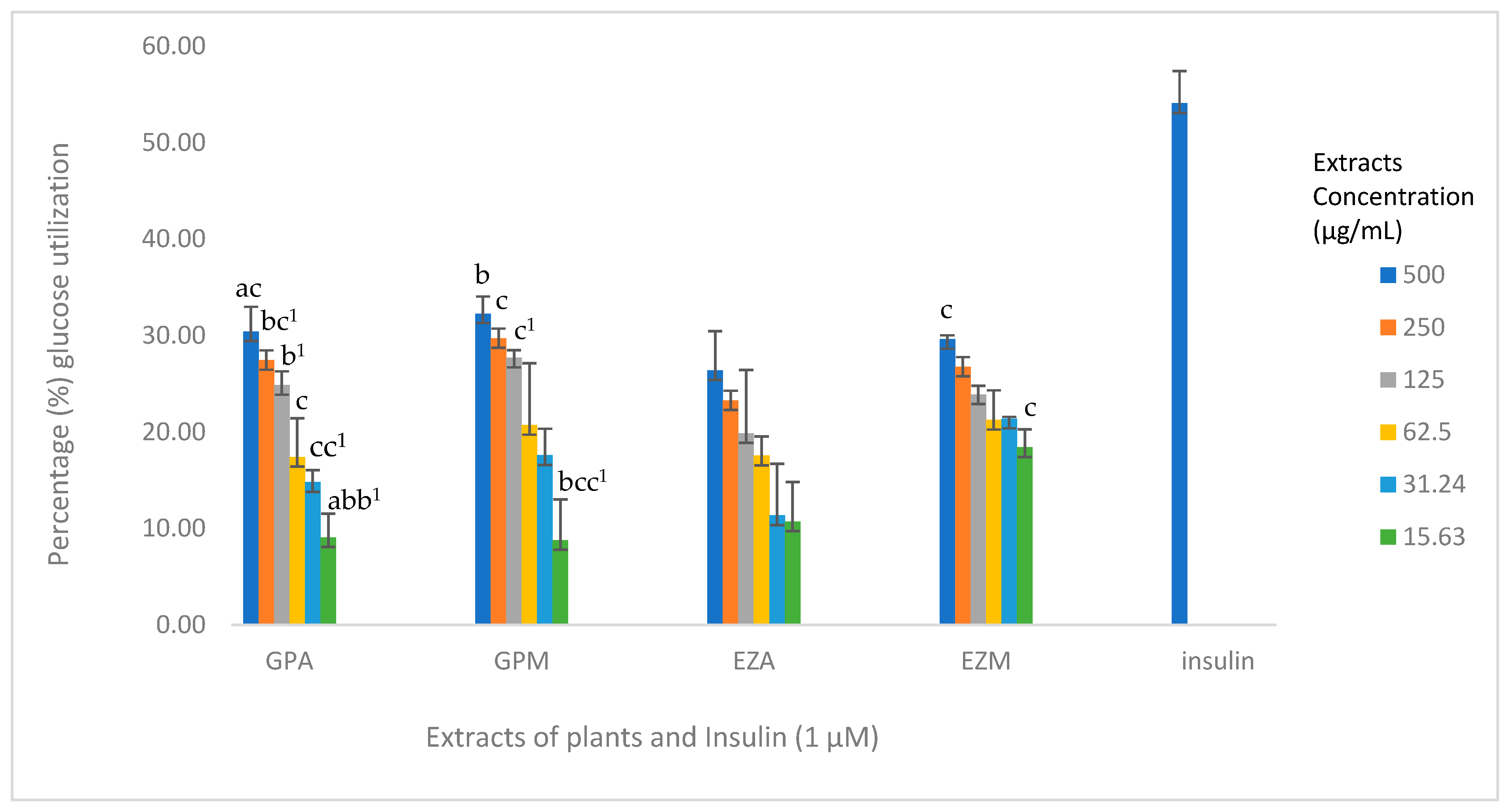
2.1. Glucose Utilization Assay
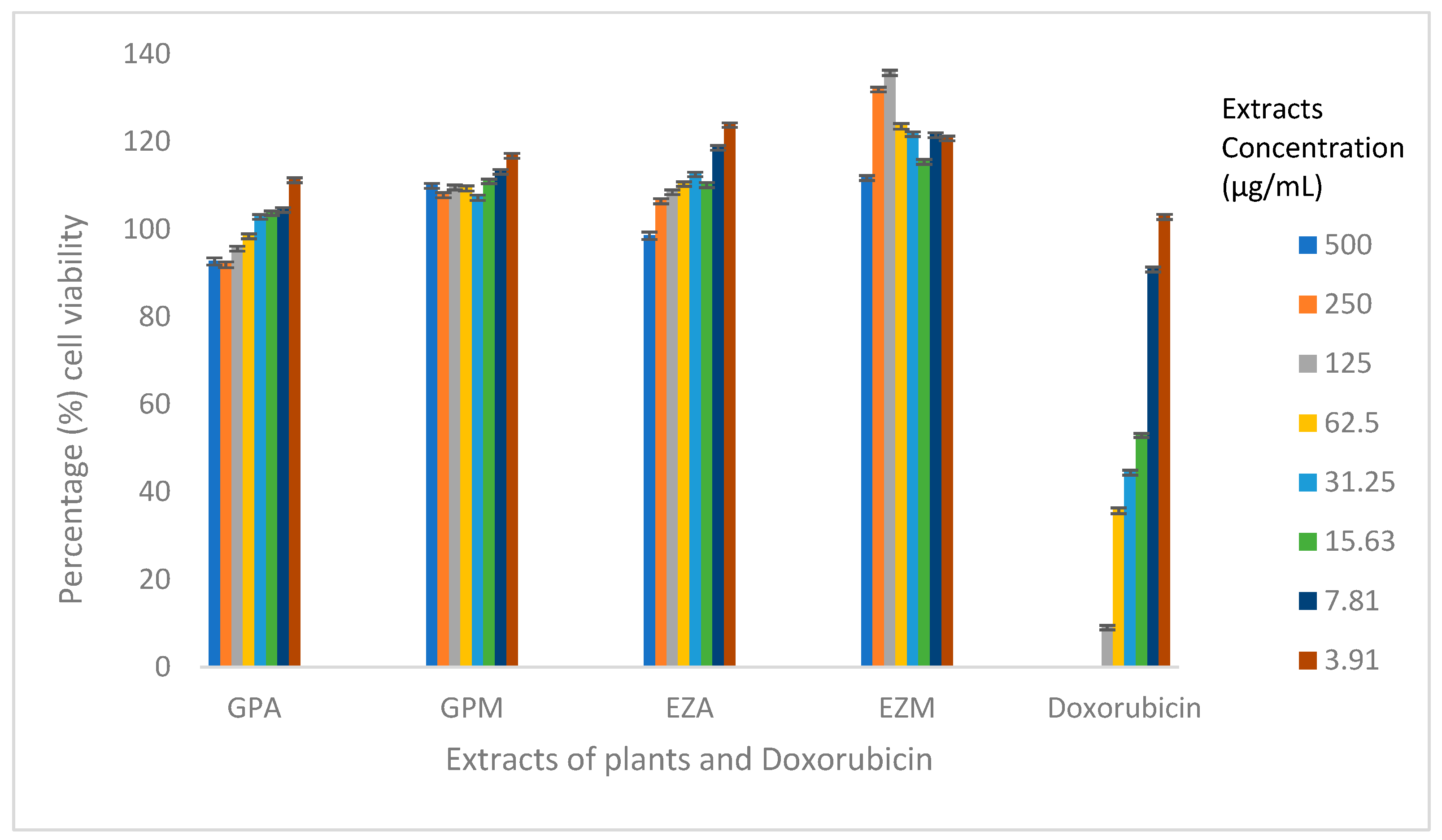
2.2. Cytotoxicity Assay
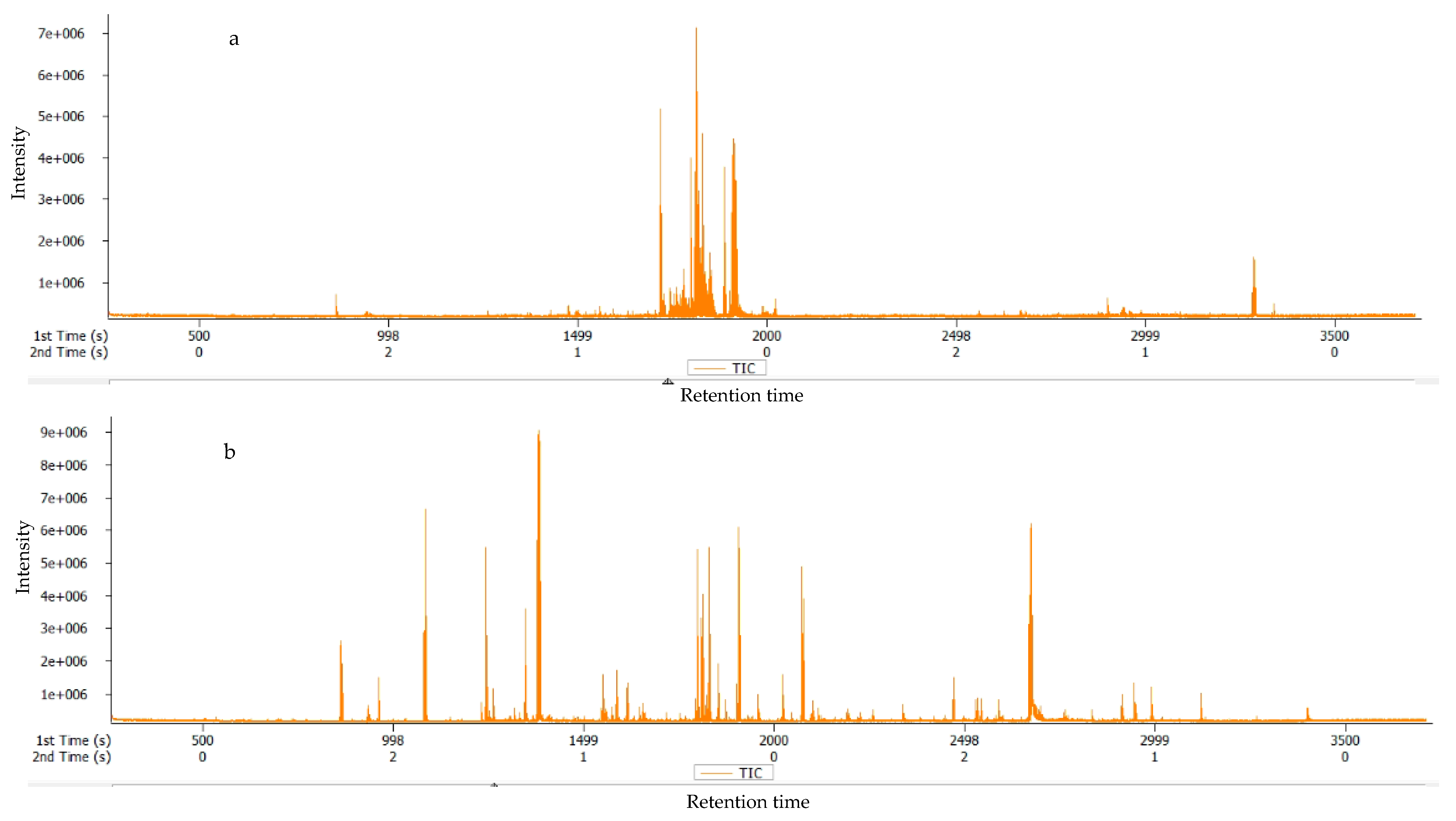
2.3. Identification of Compounds of Extracts Using the GC×GC-TOF-MS
2.4. Prediction of T2DM-Related Targets of G. perpensa and E. zeyheri Compounds
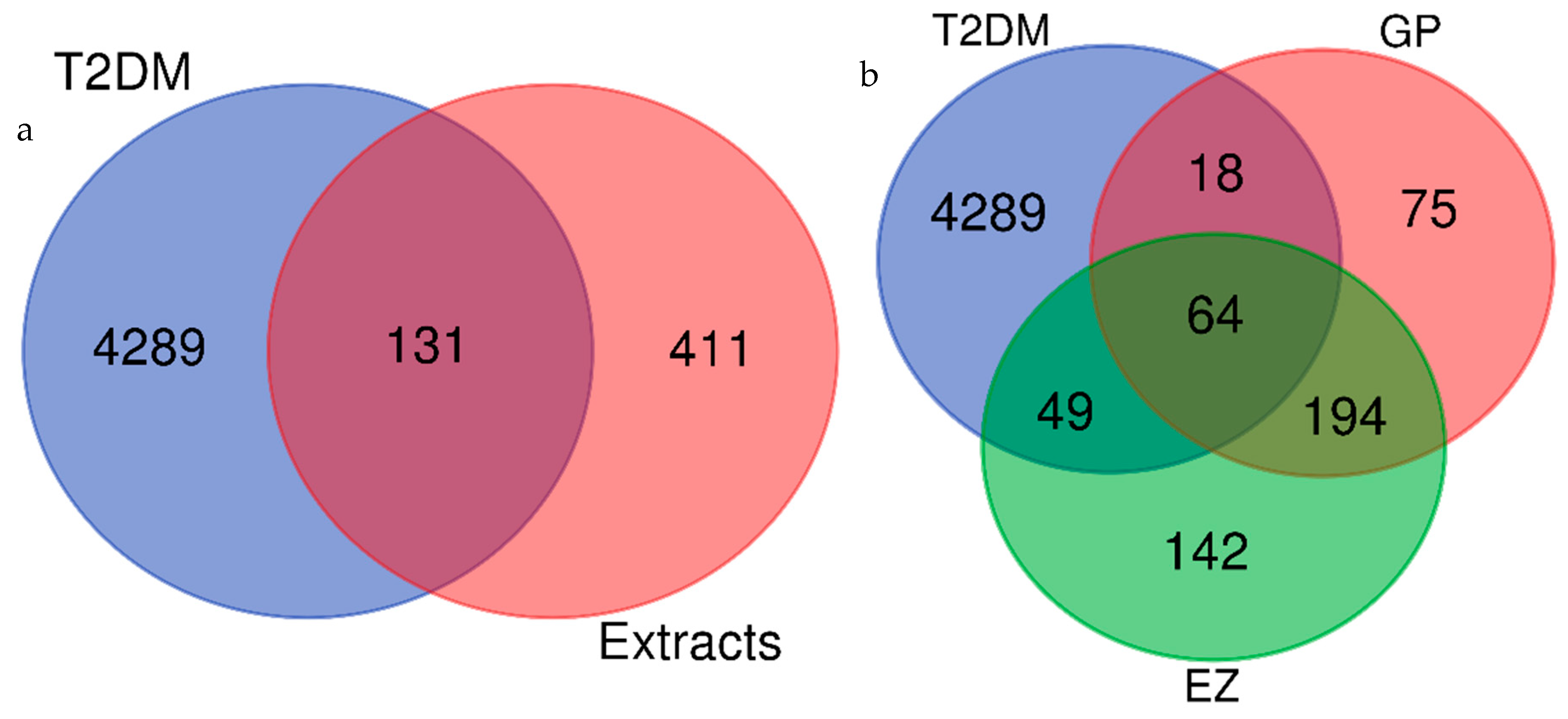
2.5. Interception Analysis Between G. perpensa and E. zeyheri and T2DM-Related Targets
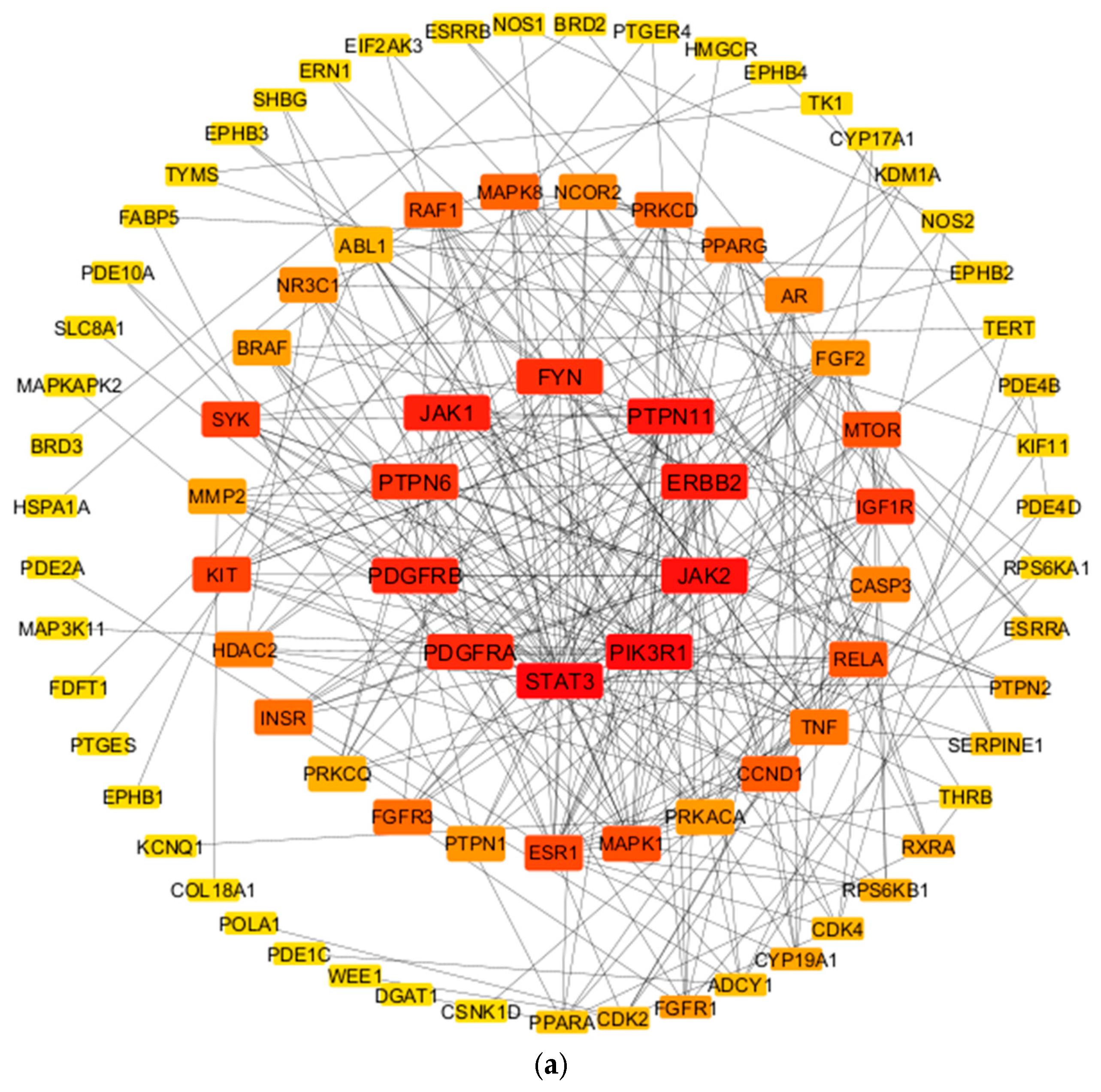
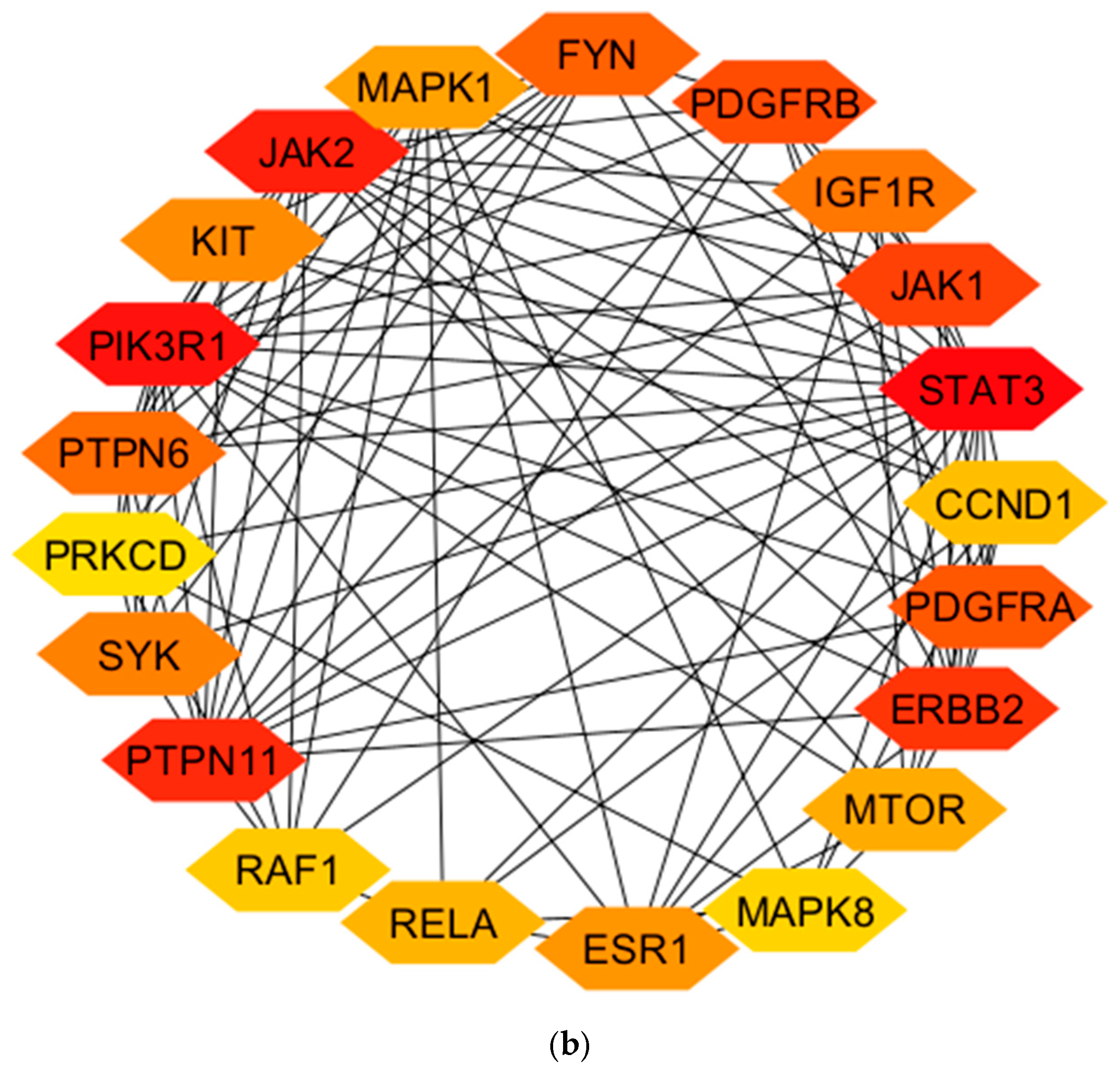
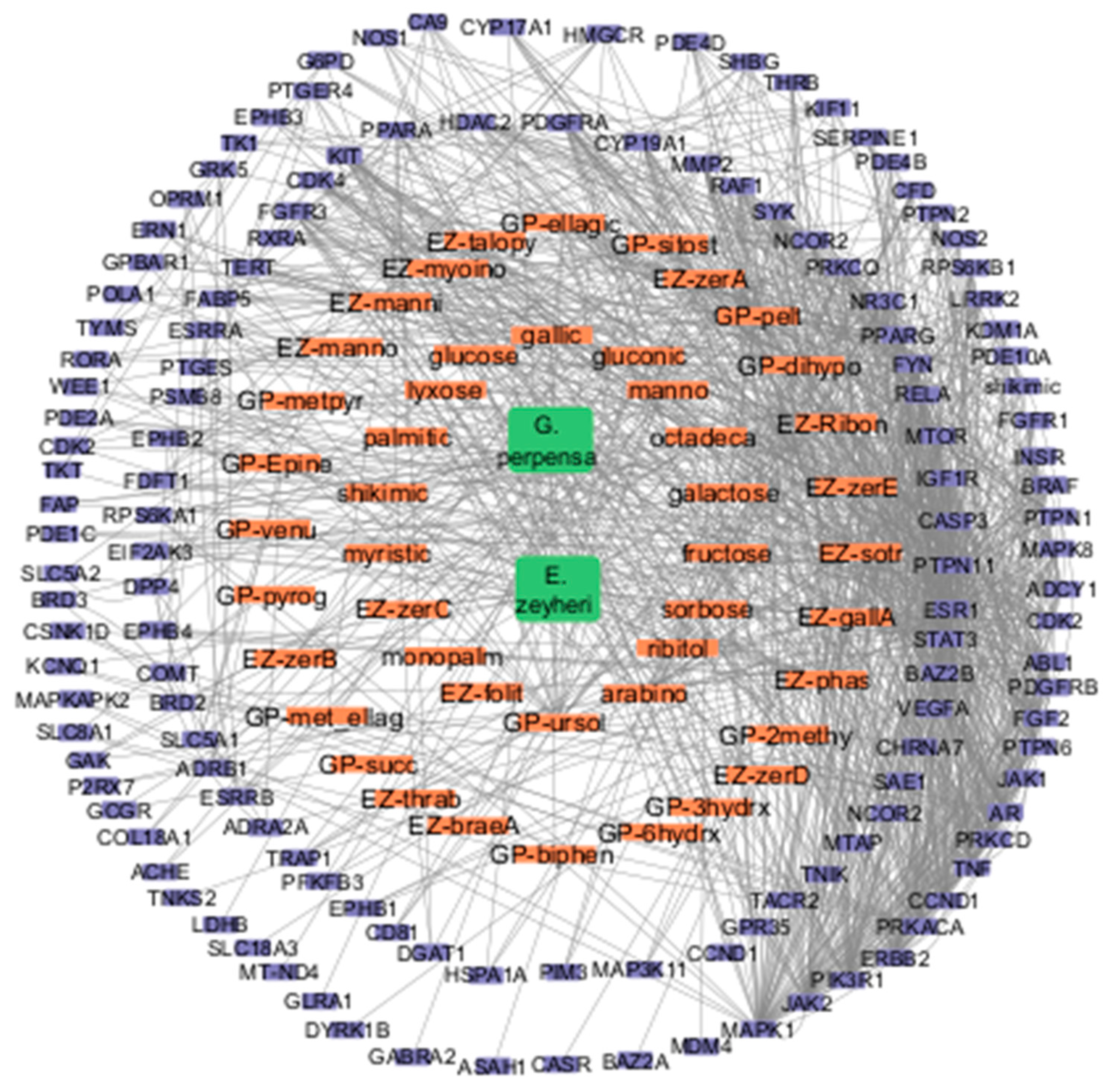
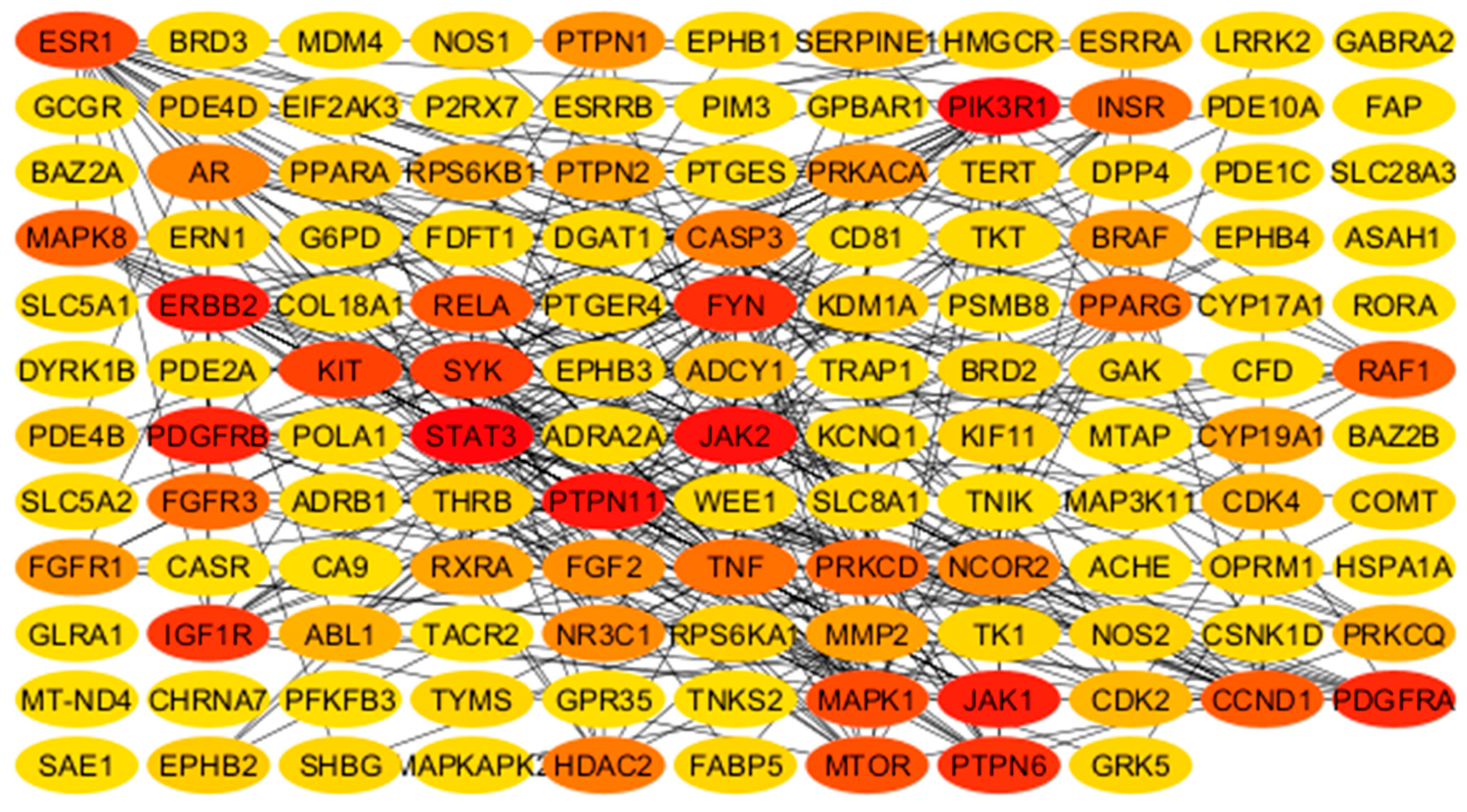
2.6. Construction and Topological Analysis of the Extract–Compound–Target Network
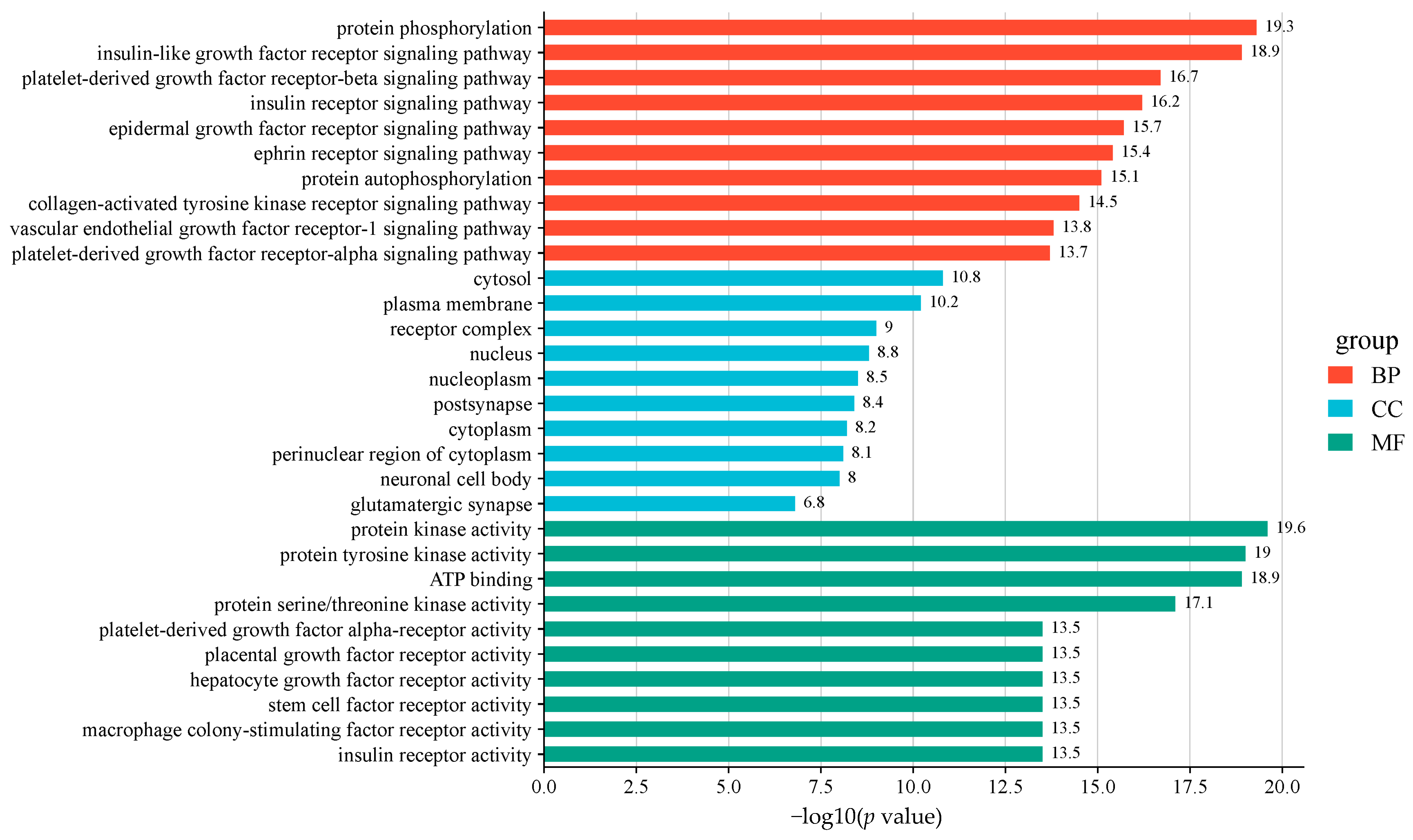
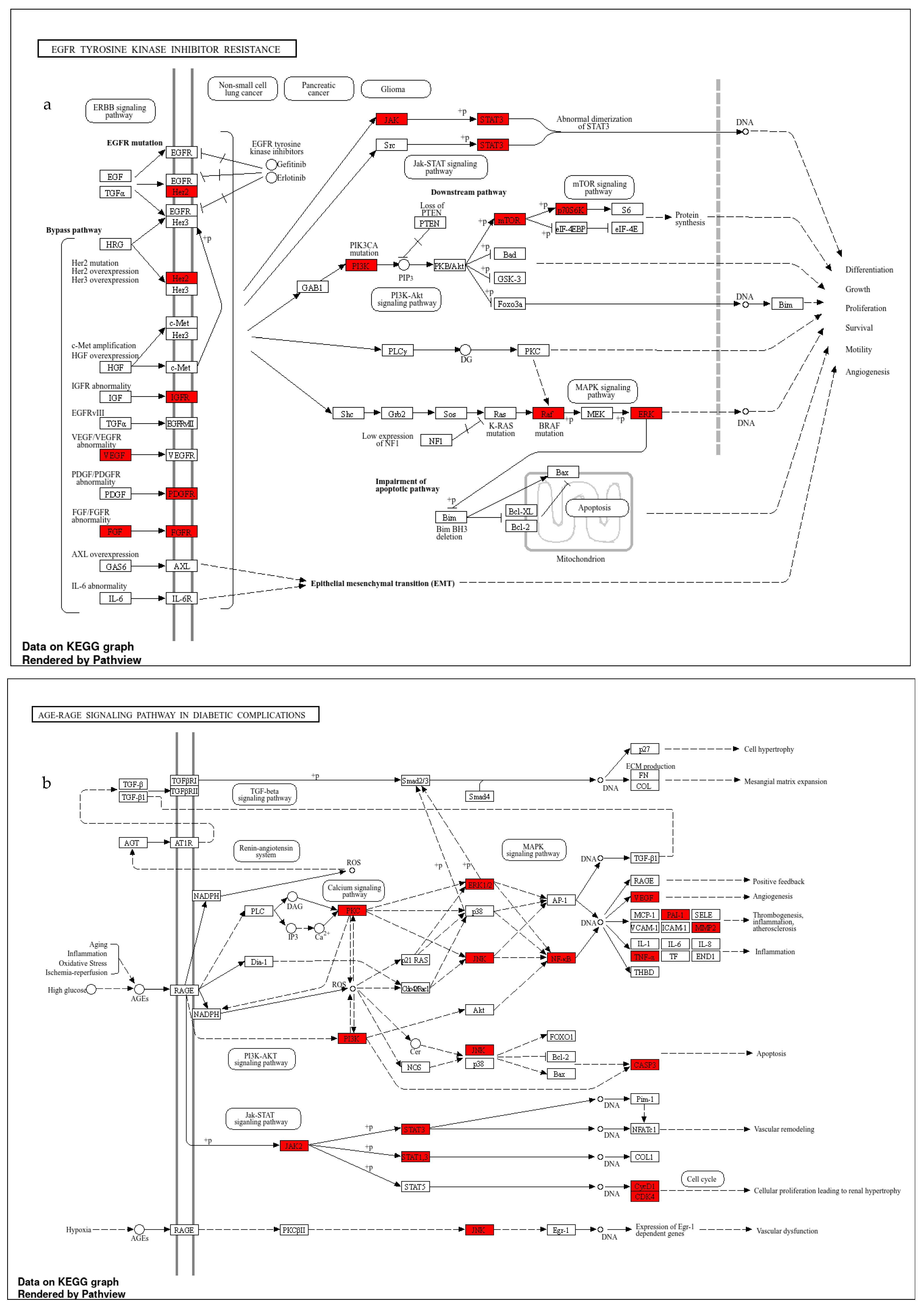
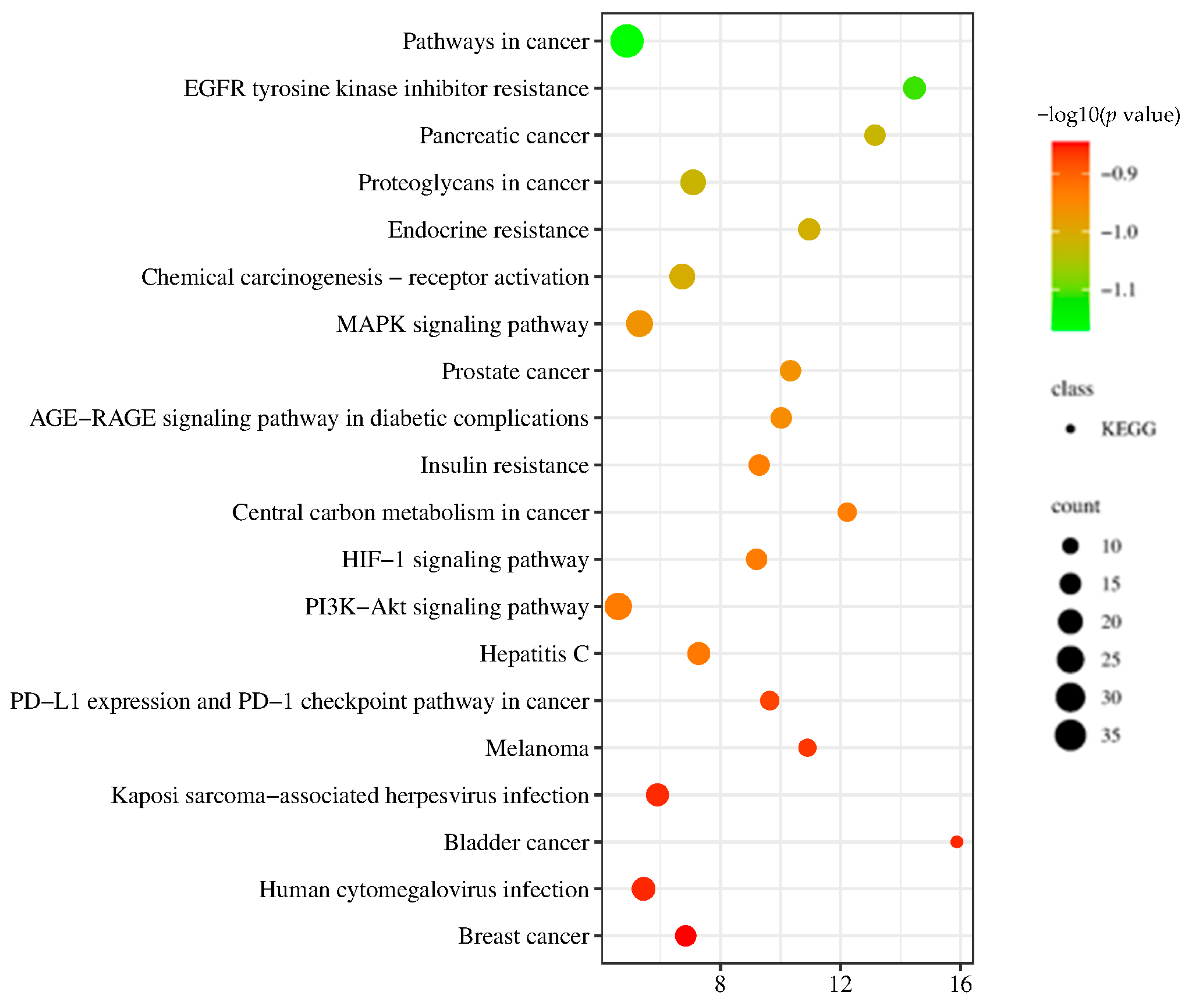
2.7. Gene Ontology (GO) and KEGG Pathway Enrichment Analyses of T2DM-Associated Targets
3. Discussion
4. Materials and Methods
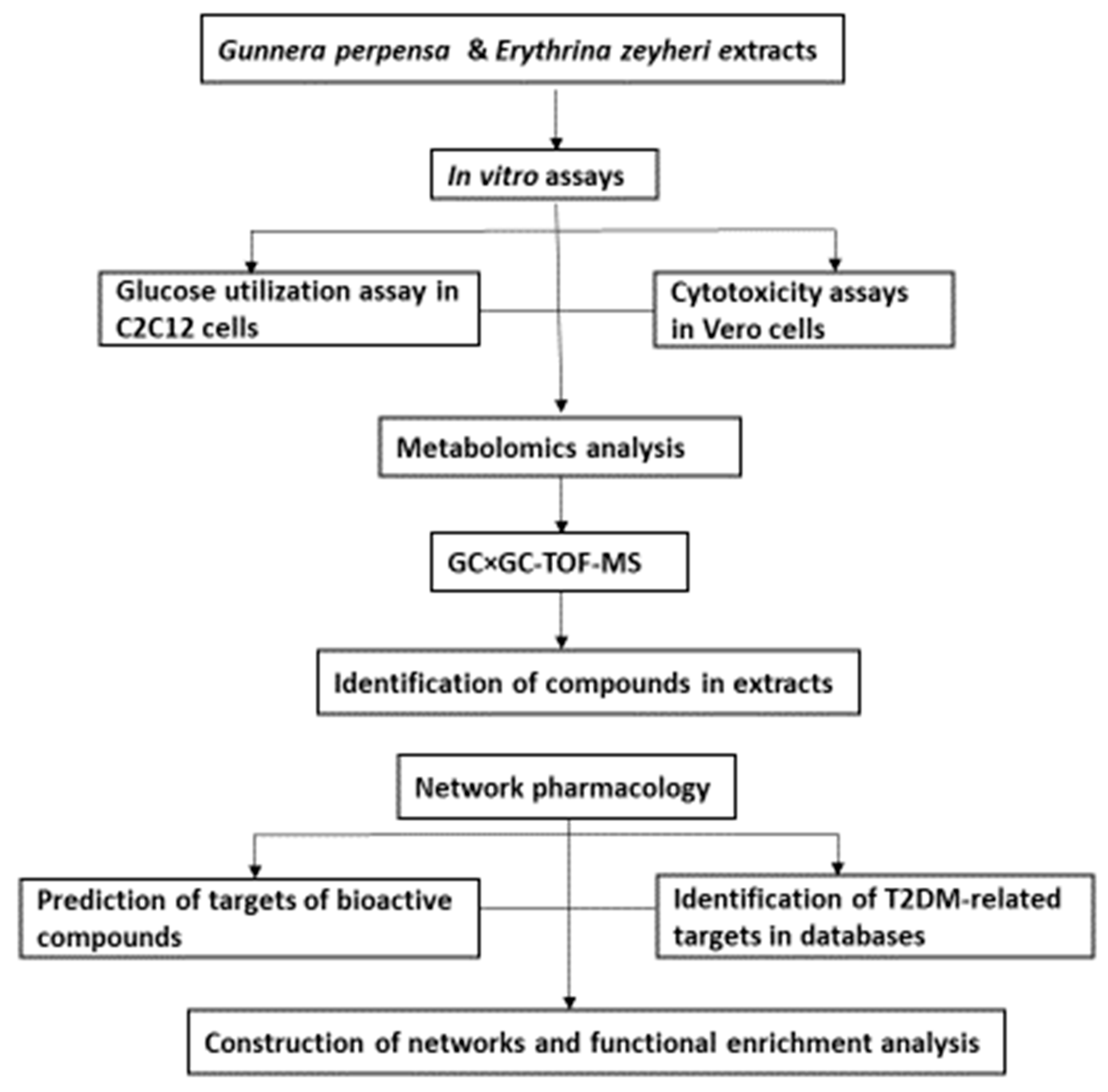
4.1. In Vitro Assays
4.1.1. Preparation of Plant Extracts
4.1.2. Glucose Utilization Assay in C2C12 Muscle Cells
4.1.3. Cytotoxicity Assessment Using MTT Assay
4.2. GC×GC-TOFMS-Based Metabolomics Analysis
4.2.1. Reagents & Chemicals
4.2.2. Extraction and Analysis
4.3. Network Pharmacology
4.3.1. Collation and In Silico Screening of Phytocompounds
4.3.2. Target Gene Mining and Integration
4.3.3. Construction of an Active Compound–Target Network
4.3.4. Construction of the Protein–Protein Interaction (PPI) Network
4.3.5. Gene Ontology (GO) Functional Annotation and KEGG Pathway Enrichment Analysis
4.4. Statistical Analysis
5. Conclusions
Supplementary Materials
Funding
Data Availability Statement
Conflicts of Interest
Abbreviations
| AGE-RAGE | Advanced Glycation End products–Receptor for Advanced Glycation End products |
| Akt | Protein Kinase B |
| EGFR | Epidermal Growth Factor Receptor |
| ERBB | Erb-b2 Receptor Tyrosine Kinase |
| FGF | Fibroblast Growth Factor |
| FGFR | Fibroblast Growth Factor Receptor |
| IGFR | Insulin-like Growth Factor Receptor |
| JAK | Janus Kinase |
| MAPK | Mitogen-Activated Protein Kinase |
| mTOR | Mechanistic Target of Rapamycin |
| NIST | National Institute of Standards and Technology |
| OMIM | Online Mendelian Inheritance in Man |
| PDGFRA/B | Platelet-Derived Growth Factor Receptor Alpha/Beta |
| PI3K | Phosphoinositide 3-Kinase |
| PIK3R1 | Phosphoinositide-3-Kinase Regulatory Subunit 1 |
| STAT3 | Signal Transducer and Activator of Transcription 3 |
| UM | Unique Mass (used as compound identifier) |
| VEGFR | Vascular Endothelial Growth Factor Receptor |
References
- Berbudi, A.; Rahmadika, N.; Tjahjadi, A.I.; Ruslami, R. Type 2 diabetes and its impact on the immune system. Curr. Diabetes Rev. 2020, 16, 442–449. [Google Scholar]
- International Diabetes Federation, 6th ed.; IDF Diabetes Atlas: Brussels, Belgium, 2013.
- Guariguata, L. By the numbers: New estimates from the IDF diabetes atlas update for 2012. Diabetes Res. Clin. Pract. 2012, 98, 524–525. [Google Scholar] [CrossRef]
- Whiting, D.R.; Guariguata, L.; Weil, C.; Shaw, J. IDF diabetes atlas: Global estimates of the prevalence of diabetes for 2011 and 2030. Diabetes Res. Clin. Pract. 2011, 94, 311–321. [Google Scholar] [CrossRef] [PubMed]
- Alberti, K.G.; Zimmet, P.Z. Definition, diagnosis and classification of diabetes mellitus and its complications. Part 1: Diagnosis and classification of diabetes mellitus provisional report of a WHO consultation. Diabet. Med. 1998, 15, 539–553. [Google Scholar] [CrossRef]
- Donath, M.Y.; Shoelson, S.E. Type 2 diabetes as an inflammatory disease. Nat. Rev. Immunol. 2011, 11, 98–107. [Google Scholar] [CrossRef] [PubMed]
- Lim, E.L.; Hollingsworth, K.G.; Aribisala, B.S.; Chen, M.J.; Mathers, J.C.; Taylor, R. Reversal of type 2 diabetes: Normalisation of beta cell function in association with decreased pancreas and liver triacylglycerol. Diabetologia 2011, 54, 2506–2514. [Google Scholar] [CrossRef]
- Demir, S.; Nawroth, P.P.; Herzig, S.; Ekim Üstünel, B. Emerging targets in type 2 diabetes and diabetic complications. Adv. Sci. 2021, 8, 2100275. [Google Scholar] [CrossRef]
- Deng, W.; Zhao, Z.; Zou, T.; Kuang, T.; Wang, J. Research advances in fusion protein-based drugs for diabetes treatment. Diabetes Metab. Syndr. Obes. 2024, 17, 343–362. [Google Scholar] [CrossRef]
- IDF International Diabetes Federation (IDF) Diabetes Atlas, 8th ed.; IDF: Brussels, Belgium, 2017.
- NCD Risk Factor Collaboration. Worldwide trends in diabetes since 1980: A pooled analysis of 751 population-based studies with 4.4 million participants. Lancet 2016, 387, 1513–1530. [Google Scholar] [CrossRef]
- Ajiboye, B.O.; Iwaloye, O.; Owolabi, O.V.; Ejeje, J.N.; Okerewa, A.; Johnson, O.O.; Udebor, A.E.; Oyinloye, B.E. Screening of potential antidiabetic phytochemicals from Gongronema latifolium leaf against therapeutic targets of type 2 diabetes mellitus: Multi-targets drug design. SN Appl. Sci. 2022, 4, 14. [Google Scholar] [CrossRef]
- Ge, Q.; Chen, L.; Yuan, Y.; Liu, L.; Feng, F.; Lv, P. Network pharmacology-based dissection of the anti-diabetic mechanism of Lobelia chinensis. Front. Pharmacol. 2020, 11, 347. [Google Scholar] [CrossRef]
- Eawsakul, K.; Ongtanasup, T.; Ngamdokmai, N.; Bunluepuech, K. Alpha-glucosidase inhibitory activities of astilbin contained in Bauhinia strychnifolia Craib. stems: An investigation by in silico and in vitro studies. BMC Complement. Med. Ther. 2023, 23, 25. [Google Scholar] [CrossRef]
- Moyo, B.; Madala, N.E. Appraisal of the anti-diabetic potential of polyphenolic compounds from Viscum combreticola Engl.: In Vitro α-glucosidase inhibition, LC-ESI-QTOF-MS coupled to pre-column DPPH antioxidative assay, network pharmacology and molecular docking analysis. S. Afr. J. Bot. 2024, 165, 1–3. [Google Scholar] [CrossRef]
- Kannan, K.; George, J.A.; Sahadevan, R.; Kothari, M.; Sadhukhan, S. Insights into one drug, multi-target aspects of polyphenols for diabetes management: In Vitro, in vivo, and clinical evidence. Phytochem. Rev. 2024, 23, 1–49. [Google Scholar] [CrossRef]
- Guo, X.X.; An, S.; Bao, F.; Xu, T.R. Challenges and perspectives in target identification and mechanism illustration for Chinese medicine. Chin. J. Integr. Med. 2023, 29, 644–654. [Google Scholar] [CrossRef] [PubMed]
- Zhang, Y.; Lu, Z.; Guo, J.; Wang, Q.; Zhang, X.; Yang, H.; Li, X. Advanced Carriers for Precise Delivery and Therapeutic Mechanisms of Traditional Chinese Medicines: Integrating Spatial Multi-Omics and Delivery Visualization. Adv. Healthc. Mater. 2025, 14, 2403698. [Google Scholar] [CrossRef]
- Li, S.; Zhang, B. Traditional Chinese medicine network pharmacology: Theory methodology application. Chin. J. Nat. Med. 2013, 11, 110–120. [Google Scholar] [CrossRef]
- Kar, A.; Mukherjee, P.K.; Saha, S.; Banerjee, S.; Goswami, D.; Matsabisa, M.G.; Charoensub, R.; Duangyod, T. Metabolite profiling and evaluation of CYP450 interaction potential of ‘Trimada’—An Ayurvedic formulation. J. Ethnopharmacol. 2021, 266, 113457. [Google Scholar] [CrossRef]
- Hopkins, A.L. Network pharmacology: The next paradigm in drug discovery. Nat. Chem. Biol. 2008, 4, 682–690. [Google Scholar] [CrossRef]
- Chandran, U.; Mehendale, N.; Patil, S.; Chaguturu, R.; Patwardhan, B. Network pharmacology. In Innovative Approaches in Drug Discovery; Elsevier: Amsterdam, The Netherlands, 2016; p. 127. [Google Scholar]
- Mukherjee, P.K.; Singha, S.; Kar, A.; Chanda, J.; Banerjee, S.; Dasgupta, B.; Haldar, P.K.; Sharma, N. Therapeutic importance of Cucurbitaceae: A medicinally important family. J. Ethnopharmacol. 2022, 282, 114599. [Google Scholar] [CrossRef]
- Das Gupta, B.; Kar, A.; Singha, S.; Gayen, S.; Jana, S.; Sharma, N.; Haldar, P.K.; Mukherjee, P.K. Metabolite Profiling and Integrated Network Pharmacology Based Mechanism of Benincasa hispida (Thunb.) Cogn. Fruit Against Non-insulin-Dependent Diabetes Mellitus. Phytochem. Anal. 2025, 36, 884–895. [Google Scholar] [CrossRef] [PubMed]
- Balogun, F.O.; Tshabalala, N.T.; Ashafa, A.O. Antidiabetic medicinal plants used by the Basotho tribe of Eastern Free State: A review. J. Diabetes Res. 2016, 2016, 4602820. [Google Scholar] [CrossRef] [PubMed]
- Rosenzweig, T.; Sampson, S.R. Activation of insulin signaling by botanical products. Int. J. Mol. Sci. 2021, 22, 4193. [Google Scholar] [CrossRef] [PubMed]
- Shehadeh, M.B.; Suaifan, G.A.; Abu-Odeh, A.M. Plants secondary metabolites as blood glucose-lowering molecules. Molecules 2021, 26, 4333. [Google Scholar] [CrossRef]
- Alkhalidy, H.; Wang, Y.; Liu, D. Dietary flavonoids in the prevention of T2D: An overview. Nutrients 2018, 10, 438. [Google Scholar] [CrossRef]
- Eid, H.M.; Haddad, P.S. Mechanisms of action of indigenous antidiabetic plants from the boreal Forest of northeastern Canada. Adv. Endocrinol. 2014, 2014, 272968. [Google Scholar] [CrossRef]
- Ighodaro, O.M. Molecular pathways associated with oxidative stress in diabetes mellitus. Biomed. Pharmacother. 2018, 108, 656–662. [Google Scholar] [CrossRef]
- Kaikini, A.A.; Kanchan, D.M.; Nerurkar, U.N.; Sathaye, S. Targeting mitochondrial dysfunction for the treatment of diabetic complications: Pharmacological interventions through natural products. Pharmacogn. Rev. 2017, 11, 128–139. [Google Scholar] [CrossRef]
- DeFronzo, R.A. From the triumvirate to the ominous octet: A new paradigm for the treatment of type 2 diabetes mellitus. Diabetes 2009, 58, 773–795. [Google Scholar] [CrossRef]
- Honka, M.J.; Latva-Rasku, A.; Bucci, M.; Virtanen, K.A.; Hannukainen, J.C.; Kalliokoski, K.K.; Nuutila, P. Insulin-stimulated glucose uptake in skeletal muscle, adipose tissue and liver: A positron emission tomography study. Eur. J. Endocrinol. 2018, 178, 523–531. [Google Scholar] [CrossRef]
- Aryaeian, N.; Sedehi, S.K.; Arablou, T. Polyphenols and their effects on diabetes management: A review. Med. J. Islam. Repub. Iran. 2017, 31, 134. [Google Scholar] [CrossRef]
- Vetterli, L.; Brun, T.; Giovannoni, L.; Bosco, D.; Maechler, P. Resveratrol potentiates glucose-stimulated insulin secretion in INS-1E beta-cells and human islets through a SIRT1-dependent mechanism. J. Biol. Chem. 2011, 286, 6049–6060. [Google Scholar] [CrossRef]
- Scazzocchio, B.; Vari, R.; Filesi, C.; D’Archivio, M.; Santangelo, C.; Giovannini, C.; Iacovelli, A.; Silecchia, G.; Volti, G.L.; Galvano, F.; et al. Cyanidin-3-O-β-glucoside and protocatechuic acid exert insulin-like effects by upregulating PPARγ activity in human omental adipocytes. Diabetes 2011, 60, 2234–2244. [Google Scholar] [CrossRef] [PubMed]
- Lin, C.-L.; Lin, J.-K. Epigallocatechin gallate (EGCG) attenuates high glucose-induced insulin signaling blockade in human hepG2 hepatoma cells. Mol. Nutr. Food Res. 2008, 52, 930–939. [Google Scholar] [CrossRef] [PubMed]
- Xu, Y.; Tang, G.; Zhang, C.; Wang, N.; Feng, Y. Gallic acid and diabetes mellitus: Its association with oxidative stress. Molecules 2021, 26, 7115. [Google Scholar] [CrossRef] [PubMed]
- Takato, T.; Iwata, K.; Murakami, C.; Wada, Y.; Sakane, F. Chronic administration of myristic acid improves hyperglycaemia in the Nagoya–Shibata–Yasuda mouse model of congenital type 2 diabetes. Diabetologia 2017, 60, 2076–2083. [Google Scholar] [CrossRef]
- Gou, L.; Zhan, Y.; Lee, J.; Li, X.; Lü, Z.R.; Zhou, H.M.; Lu, H.; Wang, X.Y.; Park, Y.D.; Yang, J.M. Effects of L-malic acid on alpha-glucosidase: Inhibition kinetics and computational molecular dynamics simulations. Appl. Biochem. Biotechnol. 2015, 175, 2232–2245. [Google Scholar] [CrossRef]
- Taniguchi, C.M.; Emanuelli, B.; Kahn, C.R. Critical nodes in signalling pathways: Insights into insulin action. Nat. Rev. Mol. Cell Biol. 2006, 7, 85–96. [Google Scholar] [CrossRef]
- Wang, T.Z.; Zuo, G.W.; Yao, L.; Yuan, C.L.; Li, H.F.; Lai, Y.; Chen, Z.W.; Zhang, J.; Jin, Y.Q.; Yamahara, J.; et al. Ursolic acid ameliorates adipose tissue insulin resistance in aged rats via activating the Akt-glucose transporter 4 signaling pathway and inhibiting inflammation. Exp. Ther. Med. 2021, 22, 1466. [Google Scholar] [CrossRef]
- Saxton, R.A.; Sabatini, D.M. mTOR signaling in growth, metabolism, and disease. Cell 2017, 168, 960–976. [Google Scholar] [CrossRef]
- Olaokun, O.O.; McGaw, L.J.; Janse van Rensburg, I.; Eloff, J.N.; Naidoo, V. Antidiabetic activity of the ethyl acetate fraction of Ficus lutea (Moraceae) leaf extract: Comparison of an in vitro assay with an in vivo obese mouse model. BMC Complement. Altern. Med. 2016, 16, 110. [Google Scholar] [CrossRef] [PubMed]
- Mosmann, T. Rapid colorimetric assay for cellular growth and survival: Application to proliferation and cytotoxicity assays. J. Immunol. Methods. 1983, 65, 55–63. [Google Scholar] [CrossRef] [PubMed]
- McGaw, L.J.; Steenkamp, V.; Eloff, J.N. Evaluation of Athrixia bush tea for cytotoxicity, antioxidant activity, caffeine content and presence of pyrrolizidine alkaloids. J. Ethnopharmacol. 2007, 110, 16–22. [Google Scholar] [CrossRef] [PubMed]
- Beukes, D.; Du Preez, I.; Loots, D.T. Total metabolome extraction from mycobacterial cells for GC-MS metabolomics analysis. In Microbial Metabolomics; Humana Press: New York, NY, USA, 2019; pp. 121–131. [Google Scholar]
- Schymanski, E.L.; Jeon, J.; Gulde, R.; Fenner, K.; Ruff, M.; Singer, H.P.; Hollender, J. Identifying small molecules via high resolution mass spectrometry: Communicating confidence. Env. Environ. Sci. Technol. 2014, 48, 2097–2098. [Google Scholar] [CrossRef]
- Maroyi, A. From Traditional Usage to Pharmacological Evidence: Systematic Review of Gunnera perpensa L. Evid. Based Complement. Altern. Med. 2016, 2016, 1720123. [Google Scholar] [CrossRef]
- Mammo, F.K. Isolation, Characterization and Biological Activities of Terpenoids from Gunnera perpensa. Doctoral Dissertation, Durban University of Technology, Durban, South Africa, 2018. [Google Scholar]
- Invernizzi, L.; Moyo, P.; Cassel, J.; Isaacs, F.J.; Salvino, J.M.; Montaner, L.J.; Tietjen, I.; Maharaj, V. Use of hyphenated analytical techniques to identify the bioactive constituents of Gunnera perpensa L., A South African medicinal plant, which potently inhibit SARS-CoV-2 spike glycoprotein–host ACE2 binding. Anal. Bioanal. Chem. 2022, 414, 3971–3985. [Google Scholar] [CrossRef]
- Sato, M.; Tanaka, H.; Oh-Uchi, T.; Fukai, T.; Etoh, H.; Yamaguchi, R. Antibacterial activity of phytochemicals isolated from Erythrina zeyheri against vancomycin-resistant enterococci and their combinations with vancomycin. Phytother. Res. 2004, 18, 906–910. [Google Scholar] [CrossRef]
- Tanaka, H.; Oh-Uchi, T.; Etoh, H.; Sako, M.; Asai, F.; Fukai, T.; Sato, M.; Murata, J.; Tateishi, Y. Isoflavonoids from roots of Erythrina zeyheri. Phytochem 2003, 64, 753–758. [Google Scholar] [CrossRef]
- Daina, A.; Michielin, O.; Zoete, V. SwissADME: A free web tool to evaluate pharmacokinetics, drug-likeness and medicinal chemistry friendliness of small molecules. Sci. Rep. 2017, 7, 42717. [Google Scholar] [CrossRef]
- Lipinski, C.A.; Lombardo, F.; Dominy, B.W.; Feeney, P.J. Experimental and computational approaches to estimate solubility and permeability in drug discovery and development settings. Adv. Drug Deliv. Rev. 1997, 23, 3–25. [Google Scholar] [CrossRef]
- Yuan, G.; Shi, S.; Jia, Q.; Shi, J.; Shi, S.; Zhang, X.; Shou, X.; Zhu, X.; Hu, Y. Use of network pharmacology to explore the mechanism of Gegen (Puerariae lobatae Radix) in the treatment of type 2 diabetes mellitus associated with hyperlipidemia. Evid. Based Complement. Altern. Med. 2021, 2021, 6633402. [Google Scholar] [CrossRef] [PubMed]
- Stelzer, G.; Rosen, N.; Plaschkes, I.; Zimmerman, S.; Twik, M.; Fishilevich, S.; Stein, T.I.; Nudel, R.; Lieder, I.; Mazor, Y.; et al. The GeneCards suite: From gene data mining to disease genome sequence analyses. Curr. Protoc. Bioinform. 2016, 54, 1–30. [Google Scholar] [CrossRef] [PubMed]
- Piñero, J.; Ramírez-Anguita, J.M.; Saüch-Pitarch, J.; Ronzano, F.; Centeno, E.; Sanz, F.; Furlong, L.I. The DisGeNET knowledge platform for disease genomics: 2019 update. Nucleic Acids Res. 2020, 48, D845–D855. [Google Scholar] [CrossRef] [PubMed]
- Amberger, J.S.; Bocchini, C.A.; Schiettecatte, F.; Scott, A.F. Online Mendelian Inheritance in Man (OMIM®), an online catalog of human genes and genetic disorders. Nucleic Acids Res. 2015, 43, D789–D798. [Google Scholar] [CrossRef]
- Szklarczyk, D.; Kirsch, R.; Koutrouli, M.; Nastou, K.; Mehryary, F.; Hachilif, R.; Gable, A.L.; Fang, T.; Doncheva, N.T.; Pyysalo, S.; et al. The STRING database in 2023: Protein–protein association networks and functional enrichment analyses for any sequenced genome of interest. Nucleic Acids Res. 2023, 51, D638–D646. [Google Scholar] [CrossRef]
- Shannon, P.; Markiel, A.; Ozier, O.; Baliga, N.S.; Wang, J.T.; Ramage, D.; Amin, N.; Schwikowski, B.; Ideker, T. Cytoscape: A software environment for integrated models of biomolecular interaction networks. Genome Res. 2003, 13, 2498–2504. [Google Scholar] [CrossRef]
- Huang, D.W.; Sherman, B.T.; Tan, Q.; Kir, J.; Liu, D.; Bryant, D.; Guo, Y.; Stephens, R.; Baseler, M.W.; Lane, H.C.; et al. DAVID Bioinformatics Resources: Expanded annotation database and novel algorithms to better extract biology from large gene lists. Nucleic Acids Res. 2007, 35 (Suppl. S2), W169–W175. [Google Scholar] [CrossRef]
- Sherman, B.T.; Hao, M.; Qiu, J.; Jiao, X.; Baseler, M.W.; Lane, H.C.; Imamichi, T.; Chang, W. DAVID: A web server for functional enrichment analysis and functional annotation of gene lists (2021 update). Nucleic Acids Res. 2022, 50, W216–W221. [Google Scholar] [CrossRef]






| Extracts | Glucose Utilization (µg/mL) | Cytotoxicity (µg/mL) |
|---|---|---|
| G. perpensa acetone extract | 78.52 ± 21.6 | 662 ± 42.6 |
| G. perpensa methanol extract | 94.78 ± 15.7 | >1000 |
| E. zeyheri acetone extract | 130.69 ± 23.3 | >1000 |
| E. zeyheri methanol extract | 144.76 ± 9.7 | >1000 |
| S/N | Name of Compounds | Compound Concentration (ng/mg Sample) | |
|---|---|---|---|
| G. perpensa | E. zeyheri | ||
| 1 | 1,3-Dioxolane-2-methanol (UM73) a | 1606.05 | - |
| 2 | Gallic acid, 4TMS derivative (UM281) a | 12,821.30 | 432.78 |
| 3 | Benzene, 1,3,5-trichloro-(UM180) b | 222.48 | 64.20 |
| 4 | Palmitic acid, TMS derivative (UM117) a | 1200.23 | 722.10 |
| 5 | 2-Deoxypentofuranose, 3TMS derivative (UM73) b | 728.21 | 57.26 |
| 6 | 1,8-cis-Undecadien-5-yne 3,7-bis-trimethylsilyl ether (UM129) b | 394.81 | 163.42 |
| 7 | Levoglucosan, 3TMS derivative (UM204) a | 198.47 | 131.53 |
| 8 | Myristic acid, TMS derivative (UM117) b | 73.47 | 158.58 |
| 9 | Arabinofuranose, 1,2,3,5-tetrakis-O-(trimethylsilyl)-(UM217) b | 528.65 | 469.59 |
| 10 | Propane, 2-methyl-1,2-bis(trimethylsiloxy)-(UM131) | - | 147.88 |
| 11 | Glycerol, 3TMS derivative (UM73) | 6413.49 | 6281.66 |
| 12 | Glycerol, 3TMS derivative (UM117) | 666.84 | 1151.36 |
| 13 | Diglycolic acid, 2TMS derivative (UM73) | 135.62 | 46.42 |
| 14 | Malic acid, 3TMS derivative (UM55) | - | 115.84 |
| 15 | Ribitol, 5TMS derivative (UM73) | 3203.65 | 2951.96 |
| 16 | meso-Erythritol, 4TMS derivative (UM73) | 635.42 | 1239.36 |
| 17 | α-Ketoisovaleric acid, TMS derivative (UM73) | 3793.99 | 103.73 |
| 18 | 1,3-Dioxolane (UM73) | 2131.09 | 173.95 |
| 19 | Arabinonic acid, 2,3,5-tris-O-(trimethylsilyl)-, γ-lactone, d-(UM73) | 245.10 | 137.49 |
| 20 | Ribitol, 5TMS derivative (UM103) | 1244.33 | 678.84 |
| 21 | D-Arabinose, tetrakis(trimethylsilyl) ether, ethyloxime (isomer 1) (UM103) | 393.98 | 92.94 |
| 22 | 2,3-Butanediol, O-(trimethylsilyl)-, monoacetate (UM117) | - | 46.46 |
| 23 | L-(-)-Arabitol, 5TMS derivative (UM103) | 101.01 | 536.18 |
| 24 | D-(-)-Rhamnose, tetrakis(trimethylsilyl) ether, methyloxime (syn) (UM117) | - | 66.19 |
| 25 | D-(+)-Ribono-1,4-lactone (R,S,R)-, 3TMS derivative (UM73) | 783.92 | 128.06 |
| 26 | 2-Desoxy-pentos-3-ulose, bis(methoxime),O,O’-bis(trimethylsilyl)-(UM73) | 1216.77 | 61.16 |
| 27 | Ribonic acid, 2,3,4,5-tetrakis-O-(trimethylsilyl)-, trimethylsilyl ester (UM103) | - | 117.28 |
| 28 | Epinephrine, (α)-, 3TMS derivative (UM73) | 1952.57 | - |
| 29 | Shikimic acid, 4TMS derivative (UM204) | 17,949.68 | 80.46 |
| 30 | Methyl galactoside, 4TMS derivative (UM73) | 6535.33 | 221.94 |
| 31 | Hexanoic acid, 2-[(trimethylsilyl)oxy]-, trimethylsilyl ester (UM73) | 155.46 | 45.58 |
| 32 | D-Fructose, 1,3,4,5,6-pentakis-O-(trimethylsilyl)-, O-methyloxime (UM103) | 12,389.75 | 3980.70 |
| 33 | L-(-)-Sorbose, pentakis(trimethylsilyl) ether, methyloxime (syn) (UM103) | 42,762.83 | 3273.19 |
| 34 | Ribitol, 5TMS derivative (UM217) | - | 142.51 |
| 35 | D-Galactose, 2,3,4,5,6-pentakis-O-(trimethylsilyl)-, o-methyloxyme, (1E)-(UM205) | 55.14 | 40.44 |
| 36 | D-Galactose, 2,3,4,5,6-pentakis-O-(trimethylsilyl)-, o-methyloxyme, (1E)-(UM201) | - | 47.09 |
| 37 | D-Glucose, 2,3,4,5,6-pentakis-O-(trimethylsilyl)-, o-methyloxyme, (1E)-(UM205) | 5394.49 | 1338.29 |
| 38 | D-Mannose, 2,3,4,5,6-pentakis-O-(trimethylsilyl)-, o-methyloxyme, (1Z)-(UM103) | 1054.78 | 478.84 |
| 39 | D-Mannitol, 6TMS derivative (UM103) | - | 164.23 |
| 40 | D-Lyxose, 4TMS derivative (UM204) | 49.46 | 74.01 |
| 41 | D-Gluconic acid, 6TMS derivative (UM147) | 12.59 | 439.48 |
| 42 | Myo-Inositol, 6TMS derivative (UM217) | - | 2564.45 |
| 43 | 9,12-Octadecadienoic acid (Z,Z)-, TMS derivative (UM67) | 140.64 | 43.57 |
| 44 | Ethyl α-D-glucopyranoside, 4TMS derivative (UM204) | 114.78 | 627.19 |
| 45 | D-Xylopyranose, 4TMS derivative (UM73) | - | 427.36 |
| 46 | Aucubin, hexakis(trimethylsilyl) ether (UM73) | 2115.35 | 1282.54 |
| 47 | 1-Monopalmitin, 2TMS derivative (UM57) | 41.50 | 10.34 |
| 48 | Aucubin, hexakis(trimethylsilyl) ether (UM361) | 144.82 | 8168.63 |
| 49 | 5-Methyluridine, 3TMS derivative (UM73) | 2399.24 | 3964.83 |
| 50 | Mannonic acid, γ-lactone, 4TMS derivative (UM217) | - | 30.87 |
| 51 | Epigallocatechin (6TMS) (UM456) | 196.40 | 3.91 |
| 52 | 2-Oxopentanoic acid, TMS derivative (UM73) | 1996.79 | 73.09 |
| 53 | α-D-(+)-Talopyranose, 5TMS derivative (UM204) | - | 820.27 |
| 54 | 2-O-Glycerol-α-d-galactopyranoside, hexa-TMS (UM204) | 30.64 | 876.82 |
| 55 | 2-(2-Methoxyethoxy)acetic acid, TMS derivative (UM73) | 582.75 | 287.07 |
| 56 | (2-Ethoxyethoxy)acetic acid, TMS derivative (UM73) | 235.89 | 121.90 |
| G. perpensa | E. zeyheri |
|---|---|
| Pyrogallol | Eryzerin A/(+/−)-7,2′,4′-Trihydroxy-8,3′-diprenylisoflavanone |
| Succinic acid | Eryzerin B/(3R)-7,4′-Dihydroxy-2′-methoxy,6,8-diprenylisoflavanone |
| 3,3′,4′-tri-O-methyl ellagic acid | Phaseollidin |
| p-hydroxy-benzaldehyde | Eryzerin D/2′,4′-Dihydroxy-8-prenyl-6″,6″-dimethylpyrano [2,3″:7,6]isoflavan |
| Ellagic acid | Folitenol |
| 2-methyl-6-(-3-methyl-2-butenyl) benzo-1,4-quinone | Erysotrine |
| 3-hydroxy-2-methyl-5-(3-methyl-2-butenyl) benzo-1,4-quinone | Erybraedin A/4-Prenylphaseollidin/(6aR,11aR)-3,9-Dihydroxy-4,10-diprenylpterocarpan |
| 6-hydroxy-8-methyl-2,2-dimethyl-2H-benzopyran | Erystagallin A |
| 1,1′-biphenyl-4,4′-diacetic acid | Eryzerin E/(6aS,11aS)-3,6a-Dihydroxy-9-methoxy-4,10-diprenylpterocarpan |
| Z-venusol, 7,8-dihydroxy-6-(hydroxymethyl)-3-[(Z)-(4-hydroxyphenyl)methylidene]tetrahydro-4aH-pyrano [2,3-b][1,4]dioxin-2-one | Erythrabyssin II/3,9-Dihydroxy-2,10-diprenylpterocarpan |
| β-sitosterol | Eryzerin C/(3R)-7,2′,4′-Trihydroxy-6,8-diprenylisoflavan |
| 3,3′,4′-tri-O-methyl ellagic acid 4-O-β-D-glucopyranoside | |
| punicalagin | |
| phytol | |
| ursolic acid | |
| β-peltoboykinolic acid, 3-β-hydroxyolean-12-en-27-oic acid | |
| 3α-3, 19-dihydroxyurs-12-en-28-oic acid, pomolic acid | |
| punicalin | |
| Z-methyl lespedezate | |
| Rans-phyt-2-enol |
| S/N | Compound | Canonical SMILES | Formula | MW ≤ 500 | HBA ≤ 10 | HBD ≤ 5 | MLOG ≤ 4.15 | L.V. ≤ 1 | B.S. > 0.1 |
|---|---|---|---|---|---|---|---|---|---|
| 1 | 1,3-Dioxolane-2-methanol | OCC1OCCO1 | C4H8O3 | 104.1 | 3 | 1 | −1.05 | 0 | 0.55 |
| 2 | Gallic acid, | OC(=O)c1cc(O)c(c(c1)O)O | C7H6O5 | 170.12 | 5 | 4 | −0.16 | 0 | 0.56 |
| 3 | Benzene, 1,3,5-trichloro- | Clc1cc(Cl)cc(c1)Cl | C6H3Cl3 | 181.45 | 0 | 0 | 4.06 | 0 | 0.55 |
| 4 | Palmitic Acid, | CCCCCCCCCCCCCCCC(=O)O | C16H32O2 | 256.42 | 2 | 1 | 4.19 | 1 | 0.85 |
| 5 | 1,8-cis-Undecadien-5-yne 3,7-bis-trimethylsilyl ether | CC/C=C\C(O[Si](C)(C)C)/C=C\CC(O[Si](C)(C)C)C=C | C17H34O2Si2 | 326.62 | 2 | 0 | 4.19 | 1 | 0.85 |
| 6 | Levoglucosan, | O[C@H]1[C@H](O)[C@H]2CO[C@@H]([C@@H]1O)O2 | C6H10O5 | 162.14 | 5 | 3 | −1.94 | 0 | 0.55 |
| 7 | Myristic acid, | CCCCCCCCCCCCCC(=O)O | C14H28O2 | 228.37 | 2 | 1 | 3.69 | 0 | 0.85 |
| 8 | Arabinofuranose, 1,2,3,5-tetrakis-O-(trimethylsilyl)- | O=CC(C(C(O[Si](C)(C)C)CO[Si](C)(C)C)O[Si](C)(C)C)O[Si](C)(C)C | C17H42O5Si4 | 438.85 | 5 | 0 | 1.06 | 0 | 0.55 |
| 9 | Propane, 2-methyl-1,2-bis(trimethylsiloxy) | C[Si](OCC(O[Si](C)(C)C)(C)C)(C)C | C10H26O2Si2 | 234.48 | 2 | 0 | 1.91 | 0 | 0.55 |
| 10 | Glycerol, | OCC(CO)O | C3H8O3 | 92.09 | 3 | 3 | −1.51 | 0 | 0.55 |
| 11 | Diglycolic acid, | OC(=O)COCC(=O)O | C4H6O5 | 134.09 | 5 | 2 | −1.37 | 0 | 0.56 |
| 12 | Malic acid, 3TMS derivative | OC(=O)CC(C(=O)O)O | C4H6O5 | 134.09 | 5 | 3 | −1.37 | 0 | 0.56 |
| 13 | Meso-Erythritol, 4TMS derivative | OC[C@H]([C@H](CO)O)O | C4H10O4 | 122.12 | 4 | 4 | −1.91 | 0 | 0.55 |
| 14 | α-Ketoisovaleric acid, TMS derivative | CC(C(=O)C(=O)O)C | C5H8O3 | 116.12 | 3 | 1 | −0.09 | 0 | 0.85 |
| 15 | 1,3-Dioxolane | C1OCCO1 | C3H6O2 | 74.08 | 2 | 0 | −0.62 | 0 | 0.55 |
| 16 | Arabinonic acid, 2,3,5-tris-O-(trimethylsilyl)-, γ-lactone, d- | O=C1O[C@@H]([C@H]([C@@H]1O[Si](C)(C)C)O[Si](C)(C)C)CO[Si](C)(C)C | C14H32O5Si3 | 364.66 | 5 | 0 | 0.74 | 0 | 0.55 |
| 17 | D-Arabinose, tetrakis(trimethylsilyl) ether, ethyloxime (isomer 1) | CO/N=C/C(C(C(O[Si](C)(C)C)CO[Si](C)(C)C)O[Si](C)(C)C)O[Si](C)(C)C | C18H45NO5Si4 | 467.9 | 6 | 0 | 1.3 | 0 | 0.55 |
| 18 | 2,3-Butanediol, O-(trimethylsilyl)-, monoacetate | CC(=O)OC(C(O[Si](C)(C)C)C)C | C9H20O3Si | 204.34 | 3 | 0 | 1.4 | 0 | 0.55 |
| 19 | L-(-)-Arabitol, 5TMS derivative | OC[C@@H](C([C@H](CO)O)O)O | C5H12O5 | 152.15 | 5 | 5 | −2.33 | 0 | 0.55 |
| 20 | D-(-)-Rhamnose, tetrakis(trimethylsilyl) ether, methyloxime (syn) | CON=CC(C(C(C(O[Si](C)(C)C)C)O[Si](C)(C)C)O[Si](C)(C)C)O[Si](C)(C)C | C19H47NO5Si4 | 481.92 | 6 | 0 | 1.53 | 0 | 0.55 |
| 21 | D-(+)-Ribono-1,4-lactone (R,S,R)-, 3TMS derivative | OC[C@H]1OC(=O)[C@@H]([C@@H]1O)O | C5H8O5 | 148.11 | 5 | 3 | −2.06 | 0 | 0.55 |
| 22 | 2-Desoxy-pentos-3-ulose, bis(methoxime),O,O’-bis(trimethylsilyl)- | CO/N=C(\C(O[Si](C)(C)C)CO[Si](C)(C)C)/C/C=N\OC | C13H30N2O4Si2 | 334.56 | 6 | 0 | −2.06 | 0 | 0.55 |
| 23 | Ribonic acid, 2,3,4,5-tetrakis-O-(trimethylsilyl)-, trimethylsilyl ester | O=C(C(C(C(O[Si](C)(C)C)CO[Si](C)(C)C)O[Si](C)(C)C)O[Si](C)(C)C)O[Si](C)(C)C | C20H50O6Si5 | 527.03 | 6 | 0 | 1.76 | 1 | 0.55 |
| 24 | Epinephrine, (α)-, 3TMS derivative | CNC[C@@H](c1ccc(c(c1)O)O)O | C9H13NO3 | 183.2 | 4 | 4 | 0.07 | 0 | 0.55 |
| 25 | Shikimic acid, 4TMS derivative | O=C(C1=CC(C(C(C1)O[Si](C)(C)C)O[Si](C)(C)C)O[Si](C)(C)C)O[Si](C)(C)C | C19H42O5Si4 | 462.88 | 5 | 0 | 1.85 | 0 | 0.55 |
| 26 | Methyl galactoside, 4TMS derivative | COC1OC(CO[Si](C)(C)C)C(C(C1O[Si](C)(C)C)O[Si](C)(C)C)O[Si](C)(C)C | C19H46O6Si4 | 482.91 | 6 | 0 | 0.88 | 0 | 0.55 |
| 27 | Hexanoic acid, 2-[(trimethylsilyl)oxy]-, trimethylsilyl ester | CCCCC(C(=O)O[Si](C)(C)C)O[Si](C)(C)C | C12H28O3Si2 | 276.52 | 3 | 0 | 2.27 | 0 | 0.55 |
| 28 | D-Fructose, 1,3,4,5,6-pentakis-O-(trimethylsilyl)-, O-methyloxime | CON=C(C(C(C(O[Si](C)(C)C)CO[Si](C)(C)C)O[Si](C)(C)C)O[Si](C)(C)C)CO[Si](C)(C)C | C22H55NO6Si5 | 570.1 | 7 | 0 | 1.4 | 1 | 0.55 |
| 29 | D-Mannose, 2,3,4,5,6-pentakis-O-(trimethylsilyl)-, o-methyloxyme, (1Z)- | CO/N=C\C(C(C(C(O[Si](C)(C)C)CO[Si](C)(C)C)O[Si](C)(C)C)O[Si](C)(C)C)O[Si](C)(C)C | C22H55NO6Si5 | 570.1 | 7 | 0 | 1.4 | 1 | 0.55 |
| 30 | D-Gluconic acid, 6TMS derivative | O=C(C(C(C(C(O[Si](C)(C)C)CO[Si](C)(C)C)O[Si](C)(C)C)O[Si](C)(C)C)O[Si](C)(C)C)O[Si](C)(C)C | C24H60O7Si6 | 629.24 | 7 | 0 | 1.83 | 1 | 0.55 |
| 31 | 9,12-Octadecadienoic acid (Z,Z)-, TMS derivative | CCCCC/C=C\C/C=C\CCCCCCCC(=O)O[Si](C)(C)C | C21H40O2Si | 352.63 | 2 | 0 | 1.83 | 1 | 0.55 |
| 32 | Ethyl α-D-glucopyranoside, 4TMS derivative | CCO[C@H]1O[C@@H](CO)[C@H]([C@@H]([C@@H]1O)O)O | C8H16O6 | 208.21 | 6 | 4 | −2.07 | 0 | 0.55 |
| 33 | 1-Monopalmitin, 2TMS derivative | CCCCCCCCCCCCCCCC(=O)OCC(O[Si](C)(C)C)CO[Si](C)(C)C | C25H54O4Si2 | 474.86 | 4 | 0 | 4.48 | 1 | 0.55 |
| 34 | Aucubin, hexakis(trimethylsilyl) ether | C[Si](OC1C(OC(C(C1O[Si](C)(C)C)O[Si](C)(C)C)CO[Si](C)(C)C)OC1OC=CC2C1C(=CC2O[Si](C)(C)C)CO[Si](C)(C)C)(C)C | C33H70O9Si6 | 779.42 | 9 | 0 | 1.53 | 1 | 0.55 |
| 35 | Mannonic acid, γ-lactone, 4TMS derivative | OC[C@H](C1OC(=O)[C@H]([C@H]1O)O)O | C6H10O6 | 178.14 | 6 | 4 | −2.49 | 0 | 0.55 |
| 36 | Epigallocatechin (6TMS) | Oc1cc2O[C@H](c3cc(O)c(c(c3)O)O)[C@@H](Cc2c(c1)O)O | C15H14O7 | 306.27 | 7 | 6 | −0.29 | 1 | 0.55 |
| 37 | Ribitol, 5TMS derivative | C[Si](OC([C@H](O[Si](C)(C)C)CO[Si](C)(C)C)[C@@H](O[Si](C)(C)C)CO[Si](C)(C)C)(C)C | C20H52O5Si5 | 513.05 | 5 | 0 | 1.91 | 1 | 0.55 |
| 38 | L-(-)-Sorbose, pentakis(trimethylsilyl) ether, methyloxime (syn) | CO/N=C(\C(C(C(O[Si](C)(C)C)CO[Si](C)(C)C)O[Si](C)(C)C)O[Si](C)(C)C)/CO[Si](C)(C)C | C22H55NO6Si5 | 570.1 | 7 | 0 | 1.4 | 1 | 0.55 |
| 39 | D-Galactose, 2,3,4,5,6-pentakis-O-(trimethylsilyl)-, o-methyloxyme, (1E)- | O=CC(C(C(C(O[Si](C)(C)C)CO[Si](C)(C)C)O[Si](C)(C)C)O[Si](C)(C)C)O[Si](C)(C)C | C21H52O6Si5 | 541.06 | 6 | 0 | 1.17 | 1 | 0.55 |
| 40 | D-Glucose, 2,3,4,5,6-pentakis-O-(trimethylsilyl)-, o-methyloxyme, (1E)- | C[Si](OC(C(C(O[Si](C)(C)C)CO[Si](C)(C)C)O[Si](C)(C)C)C(O[Si](C)(C)C)C=NO[Si](C)(C)C)(C)C | C24H61NO6Si6 | 628.26 | 7 | 0 | 1.83 | 1 | 0.55 |
| 41 | D-Mannitol, 6TMS derivative | OC[C@H]([C@H]([C@@H]([C@@H](CO)O)O)O)O | C6H14O6 | 182.17 | 6 | 6 | −2.77 | 1 | 0.55 |
| 42 | D-Lyxose, 4TMS derivative | O[C@@H]1COC([C@H]([C@H]1O)O)O | C5H10O5 | 150.13 | 5 | 4 | −2.32 | 0 | 0.55 |
| 43 | Myo-Inositol, 6TMS derivative | OC1C(O)C(O)C(C(C1O)O)O | C6H12O6 | 180.16 | 6 | 6 | −3.16 | 1 | 0.55 |
| 44 | D-Xylopyranose, 4TMS derivative | C[Si](O[C@H]1C(OC[C@H]([C@@H]1O[Si](C)(C)C)O[Si](C)(C)C)O[Si](C)(C)C)(C)C | C17H42O5Si4 | 438.85 | 5 | 0 | 1.22 | 0 | 0.55 |
| 45 | 5-Methyluridine, 3TMS derivative | OC[C@H]1O[C@H]([C@@H]([C@@H]1O)O)n1cc(C)c(=O)[nH]c1=O | C10H14N2O6 | 258.23 | 6 | 4 | −1.94 | 0 | 0.55 |
| 46 | 2-Oxopentanoic acid, TMS derivative | CCCC(=O)C(=O)O | C5H8O3 | 116.12 | 3 | 1 | −0.09 | 0 | 0.85 |
| 47 | α-D-(+)-Talopyranose, 5TMS derivative | C[Si](OC1OC(CO[Si](C)(C)C)C(C(C1O[Si](C)(C)C)O[Si](C)(C)C)O[Si](C)(C)C)(C)C | C21H52O6Si5 | 541.06 | 6 | 0 | 1.33 | 1 | 0.55 |
| 48 | 2-O-Glycerol-α-d-galactopyranoside, hexa-TMS | C[Si](O[C@@H]1[C@H](OC(CO[Si](C)(C)C)CO[Si](C)(C)C)O[C@H]([C@H]([C@H]1O[Si](C)(C)C)O[Si](C)(C)C)CO[Si](C)(C)C)(C)C | C27H66O8Si6 | 687.32 | 8 | 0 | 1 | 1 | 0.55 |
| 49 | 2-(2-Methoxyethoxy)acetic acid, TMS derivative | COCCOCC(=O)O[SiH2]C | C6H14O4Si | 178.26 | 4 | 0 | −0.46 | 0 | 0.55 |
| 50 | (2-Ethoxyethoxy)acetic acid, TMS derivative | CCOCCOCC(=O)O[Si](C)(C)C | C9H20O4Si | 220.34 | 4 | 0 | 0.55 | 0 | 0.55 |
| 51 | Pyrogallol | Oc1c(O)cccc1O | C6H6O3 | 126.11 | 3 | 3 | 0.18 | 0 | 0.55 |
| 52 | Succinic acid | OC(=O)CCC(=O)O | C4H6O4 | 118.09 | 4 | 2 | −0.54 | 0 | 0.85 |
| 53 | 3,3’,4’-tri-O-methyl ellagic acid | COc1cc2c(=O)oc3c4c2c(c1OC)oc(=O)c4cc(c3O)OC | C17H12O8 | 344.27 | 8 | 1 | 0.89 | 0 | 0.55 |
| 54 | p-hydroxy-benzaldehyde | O=Cc1ccc(cc1)O | C7H6O2 | 122.12 | 2 | 1 | 0.79 | 0 | 0.55 |
| 55 | Ellagic acid | Oc1cc2c(=O)oc3c4c2c(c1O)oc(=O)c4cc(c3O)O | C14H6O8 | 302.19 | 8 | 4 | 0.14 | 0 | 0.55 |
| 56 | 2-methyl-6-(-3-methyl-2-butenyl) benzo-1,4-quinone | CC(=CCC1=CC(=O)C=C(C1=O)C)C | C12H14O2 | 190.24 | 2 | 0 | 1.57 | 0 | 0.55 |
| 57 | 3-hydroxy-2-methyl-5-(3-methyl-2-butenyl) benzo-1,4-quinone | CC(=CCC1=CC(=O)C(=C(C1=O)O)C)C | C12H14O3 | 206.24 | 3 | 1 | 0.69 | 0 | 0.85 |
| 58 | 6-hydroxy-8-methyl-2,2-dimethyl-2H-benzopyran | Oc1cc(C)c2c(c1)C=CC(O2)(C)C | C12H14O2 | 190.24 | 2 | 1 | 2.19 | 0 | 0.55 |
| 59 | 1,1’ -biphenyl-4,4’ -diacetic acid | OC(=O)Cc1ccc(cc1)c1ccc(cc1)CC(=O)O | C16H14O4 | 270.28 | 4 | 2 | 2.65 | 0 | 0.85 |
| 60 | Z-venusol, 7,8-dihydroxy-6-(hydroxymethyl)-3-[(Z)-(4-hydroxyphenyl)methylidene]tetrahydro-4aH-pyrano [2,3-b][1,4]dioxin-2-one | OC[C@H]1O[C@H]2O/C(=C\c3ccc(cc3)O)/C(=O)O[C@@H]2[C@H]([C@@H]1O)O | C15H16O8 | 324.28 | 8 | 4 | −1.12 | 0 | 0.55 |
| 61 | β-sitosterol | CC[C@@H](C(C)C)CC[C@H]([C@H]1CC[C@@H]2[C@]1(C)CC[C@H]1[C@H]2CC=C2[C@]1(C)CC[C@@H](C2)O)C | C29H50O | 414.71 | 1 | 1 | 6.73 | 1 | 0.55 |
| 62 | 3,3’,4’-Tri-O-methyl ellagic acid 4-O-α-D-glucopyranoside | OC[C@H]1O[C@@H](O)[C@@H]([C@H]([C@@H]1O)Oc1cc2c(=O)oc3c4c2c(c1OC)oc(=O)c4cc(c3OC)OC)O | C23H22O13 | 506.41 | 13 | 4 | −0.89 | 2 | 0.17 |
| 63 | Punicalagin | O=CC1OC(=O)c2cc(O)c(c(c2c2c(C(=O)OC1C1OC(=O)c3cc(O)c(c(c3c3c(O)c(O)c4c5c3c(=O)oc3c5c(c(c5c(C(=O)OCC1O)cc(O)c(c5O)O)c(O)c3O)c(=O)o4)O)O)cc(c(c2O)O)O)O)O | C48H28O30 | 1084.72 | 30 | 17 | −3.76 | 3 | 0.17 |
| 64 | Phytol | OC/C=C(/CCC[C@@H](CCC[C@@H](CCCC(C)C)C)C)\C | C20H40O | 296.53 | 1 | 1 | 5.25 | 1 | 0.55 |
| 65 | Ursolic acid | C[C@@H]1CC[C@]2([C@@H]([C@H]1C)C1=CC[C@H]3[C@@]([C@@]1(CC2)C)(C)CC[C@@H]1[C@]3(C)CC[C@@H](C1(C)C)O)C(=O)O | C30H48O3 | 456.7 | 3 | 2 | 5.82 | 1 | 0.85 |
| 66 | β-Peltoboykinolic acid, 3-β-hydroxyolean-12-en-27-oic acid | O[C@H]1CC[C@]2([C@H](C1(C)C)CC[C@@]1([C@@H]2CC=C2[C@]1(CC[C@@]1([C@H]2CC(C)(C)CC1)C)C(=O)O)C)C | C30H48O3 | 456.7 | 3 | 2 | 5.82 | 1 | 0.85 |
| 67 | 3α-3, 19-dihydroxyurs-12-en-28-oic acid, pomolic acid | O[C@H]1CC[C@]2([C@H](C1(C)C)CC[C@@]1([C@@H]2CC=C2[C@@]1(C)CC[C@@]1([C@H]2[C@](C)(O)[C@H](C)CC1)C(=O)O)C)C | C30H48O4 | 472.7 | 4 | 3 | 4.97 | 1 | 0.56 |
| 68 | Punicalin | OC1O[C@@H]2COC(=O)c3cc(O)c(c(c3c3c(O)c(O)c4c5c3c(=O)oc3c(c(c(c6c(C(=O)O[C@H]2[C@@H]([C@H]1O)O)cc(O)c(c6O)O)c(c(=O)o4)c53)O)O)O)O | C34H22O22 | 782.53 | 22 | 13 | −2.83 | 3 | 0.17 |
| 69 | Eryzerin A, (+/−)-7,2′,4′-Trihydroxy-8,3′-diprenylisoflavanone | CC(=CCc1c(O)ccc(c1O)[C@H]1COc2c(C1=O)ccc(c2CC=C(C)C)O)C | C25H28O5 | 408.49 | 5 | 3 | 2.82 | 0 | 0.55 |
| 70 | Eryzerin B, (3R)-7,4′-Dihydroxy-2′-methoxy,6,8-diprenylisoflavanone | COc1cc(O)ccc1[C@@H]1COc2c(C1=O)cc(c(c2CC=C(C)C)O)CC=C(C)C | C26H30O5 | 422.51 | 5 | 2 | 3.03 | 0 | 0.55 |
| 71 | Phaseollidin | CC(=CCc1c(O)ccc2c1O[C@@H]1[C@H]2COc2c1ccc(c2)O)C | C20H20O4 | 324.37 | 4 | 2 | 2.73 | 0 | 0.55 |
| 72 | Eryzerin D, 2′,4′-Dihydroxy-8-prenyl-6″,6″-dimethylpyrano [2″,3″:7,6]isoflavan | CC(=CCc1c2OCC(Cc2cc2c1OC(C)(C)C=C2)c1ccc(cc1O)O)C | C25H28O4 | 392.49 | 4 | 2 | 3.73 | 0 | 0.55 |
| 73 | Folitenol | CC(=CCc1cc2c(cc1O)OC[C@@H]1[C@H]2Oc2c1ccc1c2C=CC(O1)(C)C)C | C25H26O4 | 390.47 | 4 | 1 | 3.73 | 0 | 0.55 |
| 74 | Erysotrine | CO[C@H]1C=CC2=CCN3[C@]2(C1)c1cc(OC)c(cc1CC3)OC | C19H23NO3 | 313.39 | 4 | 0 | 2.13 | 0 | 0.55 |
| 75 | Erybraedin A, 4-Prenylphaseollidin/(6aR,11aR)-3,9-Dihydroxy-4,10-diprenylpterocarpan | CC(=CCc1c(O)ccc2c1OC[C@@H]1[C@H]2Oc2c1ccc(c2CC=C(C)C)O)C | C25H28O4 | 392.49 | 4 | 2 | 3.73 | 0 | 0.55 |
| 76 | Erystagallin A | COc1ccc2c(c1CC=C(C)C)O[C@@H]1[C@@]2(O)COc2c1cc(CC=C(C)C)c(c2)O | C26H30O5 | 422.51 | 5 | 2 | 3.1 | 0 | 0.55 |
| 77 | Eryzerin E, (6aS,11aS)-3,6a-Dihydroxy-9-methoxy-4,10-diprenylpterocarpan | COc1ccc2c(c1CC=C(C)C)O[C@@H]1[C@@]2(O)COc2c1ccc(c2CC=C(C)C)O | C26H30O5 | 422.51 | 5 | 2 | 3.1 | 0 | 0.55 |
| 78 | Erythrabyssin II, 3,9-Dihydroxy-2,10-diprenylpterocarpan | CC(=CCc1cc2c(cc1O)OCC1C2Oc2c1ccc(c2CC=C(C)C)O)C | C25H28O4 | 392.49 | 4 | 2 | 3.73 | 0 | 0.55 |
| 79 | Eryzerin C, (3R)-7,2′,4′-Trihydroxy-6,8-diprenylisoflavan | CC(=CCc1cc2C[C@@H](COc2c(c1O)CC=C(C)C)c1ccc(cc1O)O)C | C25H30O4 | 394.5 | 4 | 3 | 3.73 | 0 | 0.55 |
| S/N | Compounds | Code |
|---|---|---|
| 1 | Gallic acid, 4TMS derivative | gallic |
| 2 | Palmitic Acid, TMS derivative | palmitic |
| 3 | Myristic acid, TMS derivative | myristic |
| 4 | D-Arabinose, tetrakis(trimethylsilyl) ether, ethyloxime (isomer 1) | arabinose |
| 5 | Shikimic acid, 4TMS derivative | shikimic |
| 6 | D-Fructose, 1,3,4,5,6-pentakis-O-(trimethylsilyl)-, O-methyloxime | fructose |
| 7 | Ribitol, 5TMS derivative (UM217) | ribitol |
| 8 | D-Mannose, 2,3,4,5,6-pentakis-O-(trimethylsilyl)-, o-methyloxyme, (1Z)- | mannose |
| 9 | D-Gluconic acid, 6TMS derivative (UM147) | gluconic |
| 10 | 9,12-Octadecadienoic acid (Z,Z)-, TMS derivative | octadeca |
| 11 | 1-Monopalmitin, 2TMS derivative | monopalm |
| 12 | L-(-)-Sorbose, pentakis(trimethylsilyl) ether, methyloxime (syn) | sorbose |
| 13 | D-Galactose, 2,3,4,5,6-pentakis-O-(trimethylsilyl)-, o-methyloxyme, (1E)- | galactose |
| 14 | D-Glucose, 2,3,4,5,6-pentakis-O-(trimethylsilyl)-, o-methyloxyme, (1E)- | glucose |
| 15 | D-Lyxose, 4TMS derivative | lyxose |
| 16 | Pyrogallol | GP-pyrog |
| 17 | Succinic acid | GP-succ |
| 18 | 3,3′,4′-tri-O-methyl ellagic acid | GP-met_ellag |
| 19 | Ellagic acid | GP-ellagic |
| 20 | 2-methyl-6-(-3-methyl-2-butenyl) benzo-1,4-quinone | GP-2methy |
| 21 | 3-hydroxy-2-methyl-5-(3-methyl-2-butenyl) benzo-1,4-quinone | GP-3hydrx |
| 22 | Epinephrine, (á)-, 3TMS derivative | GP-epine |
| 23 | 6-hydroxy-8-methyl-2,2-dimethyl-2H-benzopyran | GP-6hydrx |
| 24 | 1,1′ -biphenyl-4,4′ -diacetic acid | GP-biphen |
| 25 | Z-venusol, 7,8-dihydroxy-6-(hydroxymethyl)-3-[(Z)-(4-hydroxyphenyl)methylidene]tetrahydro-4aH-pyrano [2,3-b][1,4]dioxin-2-one | GP-venu |
| 26 | β-sitosterol | GP-sitost |
| 27 | 3,3′,4′-tri-O-methyl ellagic acid 4-O-β-D-glucopyranoside | GP-metpyra |
| 28 | ursolic acid | GP-ursol |
| 29 | β-peltoboykinolic acid, 3-β-hydroxyolean-12-en-27-oic acid | GP-pelt |
| 30 | 3α-3, 19-dihydroxyurs-12-en-28-oic acid, pomolic acid | GP-dihypo |
| 31 | Eryzerin A, (+/−)-7,2′,4′-Trihydroxy-8,3′-diprenylisoflavanone | EZ-zerinA |
| 32 | D-Mannitol, 6TMS derivative | EZ-manni |
| 33 | Eryzerin B, (3R)-7,4′-Dihydroxy-2′-methoxy,6,8-diprenylisoflavanone | EZ-zerinB |
| 34 | Phaseollidin | EZ-phaseo |
| 35 | Eryzerin D, 2′,4′-Dihydroxy-8-prenyl-6″,6″-dimethylpyrano [2″,3″:7,6]isoflavan | EZ-zerinD |
| 36 | Folitenol | EZ-folit |
| 37 | Myo-Inositol, 6TMS derivative | EZ-myoino |
| 38 | Erysotrine | EZ-sotrin |
| 39 | Mannonic acid, ç-lactone, 4TMS derivative | EZ-manno |
| 40 | Erybraedin A, 4-Prenylphaseollidin/(6aR,11aR)-3,9-Dihydroxy-4,10-diprenylpterocarpan | EZ-braeA |
| 41 | Erystagallin A | EZ-galinA |
| 42 | Eryzerin E, (6aS,11aS)-3,6a-Dihydroxy-9-methoxy-4,10-diprenylpterocarpan | EZ-zerinE |
| 43 | Erythrabyssin II, 3,9-Dihydroxy-2,10-diprenylpterocarpan | EZ-thrab |
| 44 | Ribonic acid, 2,3,4,5-tetrakis-O-(trimethylsilyl)-, trimethylsilyl ester | EZ-riboni |
| 45 | α-D-(+)-Talopyranose, 5TMS derivative | EZ-talopy |
| 46 | Eryzerin C, (3R)-7,2′,4′-Trihydroxy-6,8-diprenylisoflavan | EZ-zerinC |
| Compound | Betweenness Centrality | Degree | Target | Betweenness Centrality | Degree |
|---|---|---|---|---|---|
| EZ-sotrin | 0.1960 | 113 | STAT3 | 0.0088 | 73 |
| EZ-riboni | 0.1061 | 111 | MAPK1 | 0.0133 | 54 |
| EZ-zerinE | 0.1045 | 111 | ESR1 | 0.0175 | 53 |
| EZ-galinA | 0.1013 | 109 | JAK2 | 0.0055 | 45 |
| EZ-phaseo | 0.1615 | 103 | PIK3R1 | 0.0024 | 44 |
| Ez-zerinA | 0.1129 | 83 | PTPN11 | 0.0042 | 43 |
| GP-ursol | 0.0679 | 78 | ERBB2 | 0.0061 | 42 |
| Arabinose | 0.0515 | 75 | PRKACA | 0.0063 | 37 |
| GP-pelt | 0.0582 | 74 | CASP3 | 0.0039 | 37 |
| GP-dihypo | 0.0539 | 69 | CCND1 | 0.0030 | 36 |
Disclaimer/Publisher’s Note: The statements, opinions and data contained in all publications are solely those of the individual author(s) and contributor(s) and not of MDPI and/or the editor(s). MDPI and/or the editor(s) disclaim responsibility for any injury to people or property resulting from any ideas, methods, instructions or products referred to in the content. |
© 2025 by the author. Licensee MDPI, Basel, Switzerland. This article is an open access article distributed under the terms and conditions of the Creative Commons Attribution (CC BY) license (https://creativecommons.org/licenses/by/4.0/).
Share and Cite
Olaokun, O.O. Integration of In Vitro Glucose Utilization, Metabolomics and Network Pharmacology Strategy to Explore Antidiabetic Mechanisms of Gunnera perpensa and Erythrina zeyheri Extracts. Drugs Drug Candidates 2025, 4, 51. https://doi.org/10.3390/ddc4040051
Olaokun OO. Integration of In Vitro Glucose Utilization, Metabolomics and Network Pharmacology Strategy to Explore Antidiabetic Mechanisms of Gunnera perpensa and Erythrina zeyheri Extracts. Drugs and Drug Candidates. 2025; 4(4):51. https://doi.org/10.3390/ddc4040051
Chicago/Turabian StyleOlaokun, Oyinlola Oluwunmi. 2025. "Integration of In Vitro Glucose Utilization, Metabolomics and Network Pharmacology Strategy to Explore Antidiabetic Mechanisms of Gunnera perpensa and Erythrina zeyheri Extracts" Drugs and Drug Candidates 4, no. 4: 51. https://doi.org/10.3390/ddc4040051
APA StyleOlaokun, O. O. (2025). Integration of In Vitro Glucose Utilization, Metabolomics and Network Pharmacology Strategy to Explore Antidiabetic Mechanisms of Gunnera perpensa and Erythrina zeyheri Extracts. Drugs and Drug Candidates, 4(4), 51. https://doi.org/10.3390/ddc4040051