
The GLI3–Androgen Receptor Axis: A Feedback Circuit Sustaining Shh Signaling in Prostate Cancer

 ,
,  , , ,
, , ,  and
and 
Abstract
1. Introduction
2. The Shh Pathway and Its Expression in Prostate Cancer
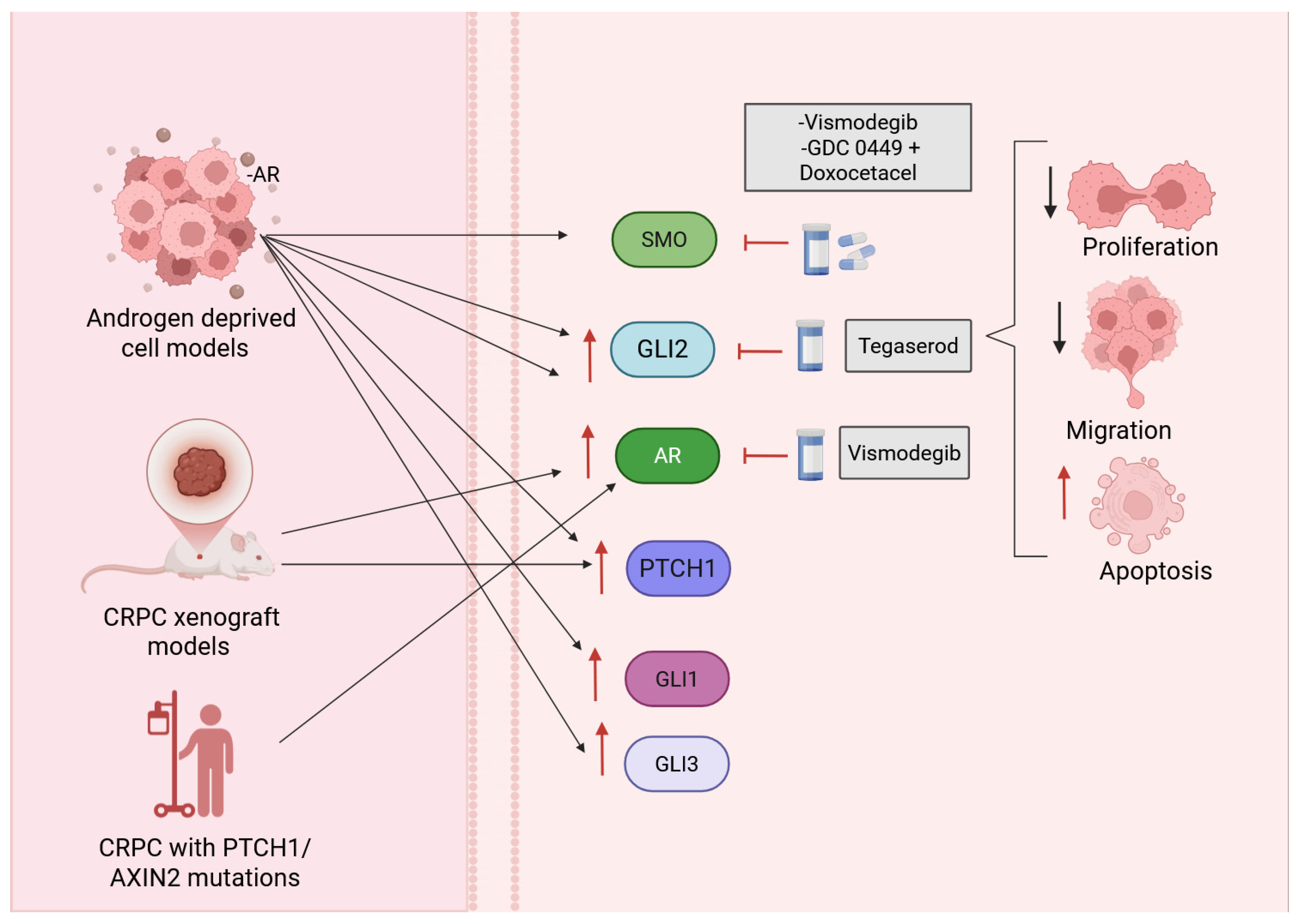
3. Androgen Receptor-Mediated Activation of Sonic Hedgehog Signaling in Prostate Cancer
4. GLI3 Expression and Oncogenic Functions
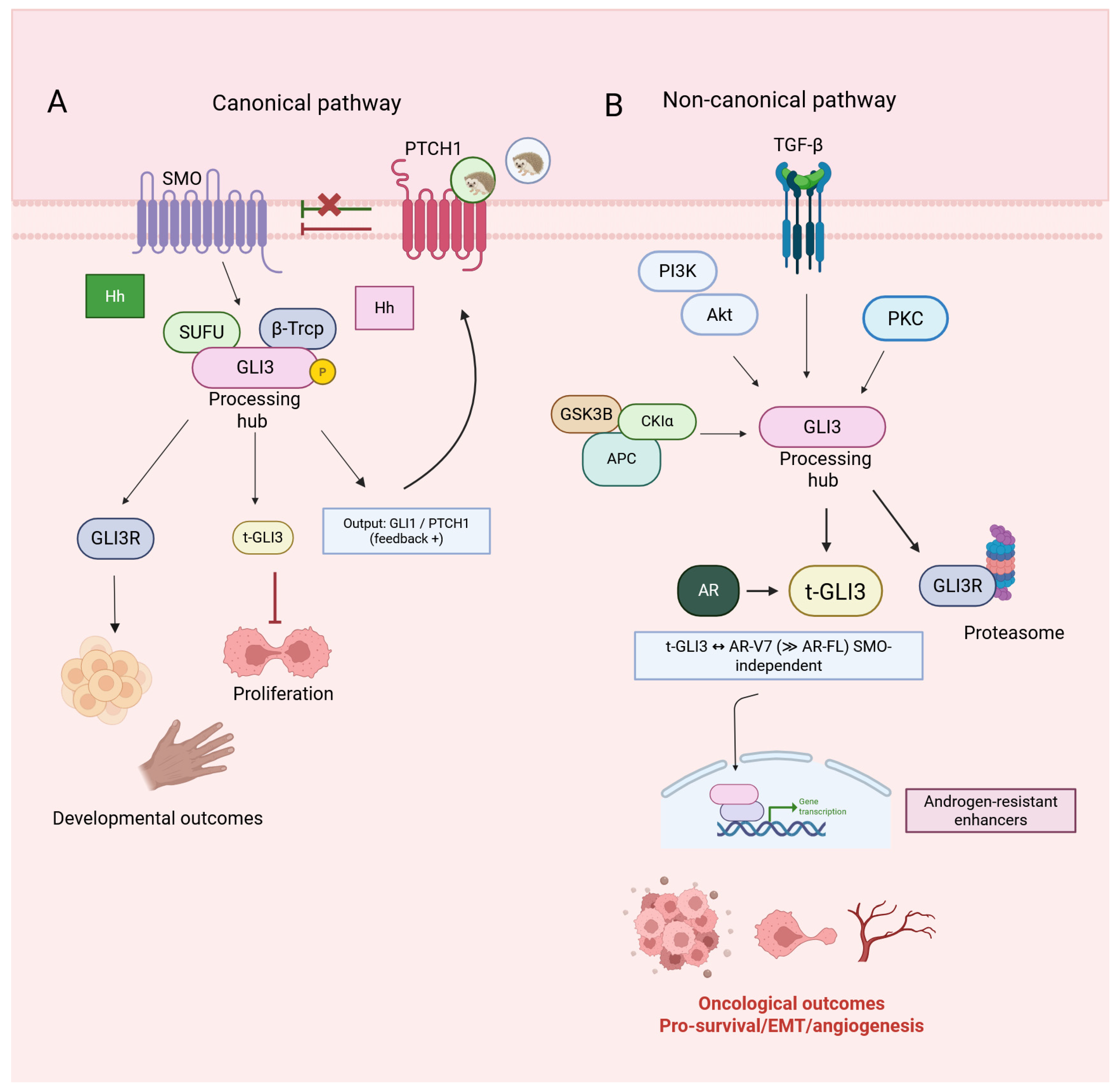
5. Integrated Causal Architecture: Canonical and Noncanonical GLI3 Pathways
6. GLI3 Is a Regulator of Canonical and Noncanonical Shh Signaling

| Cancer Type | GLI3 Role/Association | Functional Readout | Potential Biomarkers | Techniques Used | References |
|---|---|---|---|---|---|
| Medulloblastoma | GLI3-R interaction with HIRA complex alters Gli3 activity. | Tumor growth suppression via differentiation induction. | GLI3-R, HIRA | Co-IP, Chromatin Immunoprecipitation (ChIP) | [59] |
| High-grade Glioma | GLI3 acts as an activator rather than a repressor. | Inhibition of glioma cell proliferation and migration. | GLI3-FL (full-length) | Immunohistochemistry (IHC), Western blot (WB) | [60] |
| Gastric Cancer | Mutated GLI3 is associated with an invasive/metastatic phenotype. Positive correlation with ACOT1 expression | GLI3 overexpression is associated with invasive/metastatic phenotype, poor prognosis | Mutated GLI3, ACOT1 | TCGA and patient cohort, microarray, IHC | [61,62] |
| Colorectal Cancer | GLI3 drives epithelial–mesenchymal transition (EMT). | Increased cell migration, metastasis, and resistance to chemotherapy. | GLI3-FL, ERK pathway | RT–PCR, WB, migration assays | [55,63,64] |
| Breast Cancer (Triple-negative breast cancer, HER2-positive (HER2+) subtypes) | GLI3 is implicated in aggressive subtypes. | Poor prognosis, resistance to conventional therapies. | GLI3-FL, ERα, FOXA1 | RT–PCR, ChIP-seq, IHC | [65,66] |
| Lung Cancer | GLI3 expression is associated with lower 5-year survival rates. | Poor prognosis and resistance to treatment. | GLI3-FL, p53 | IHC, ChIP, RNA-seq | [58,67] |
| Prostate Cancer (CRPC) | GLI3 is involved in the progression to castration resistance. | Increased proliferation and migration under ADT. | GLI3-FL, AR-V7, SPOP mutations | IHC, PCR, WB, Xenografts | [9,35] |
| Hematologic Malignancies | GLI3 downregulation mediates chemotherapy resistance. | Resistance to chemotherapy and immune evasion. | GLI3R, PDCD4 | qPCR, WB, Flow cytometry | [68] |
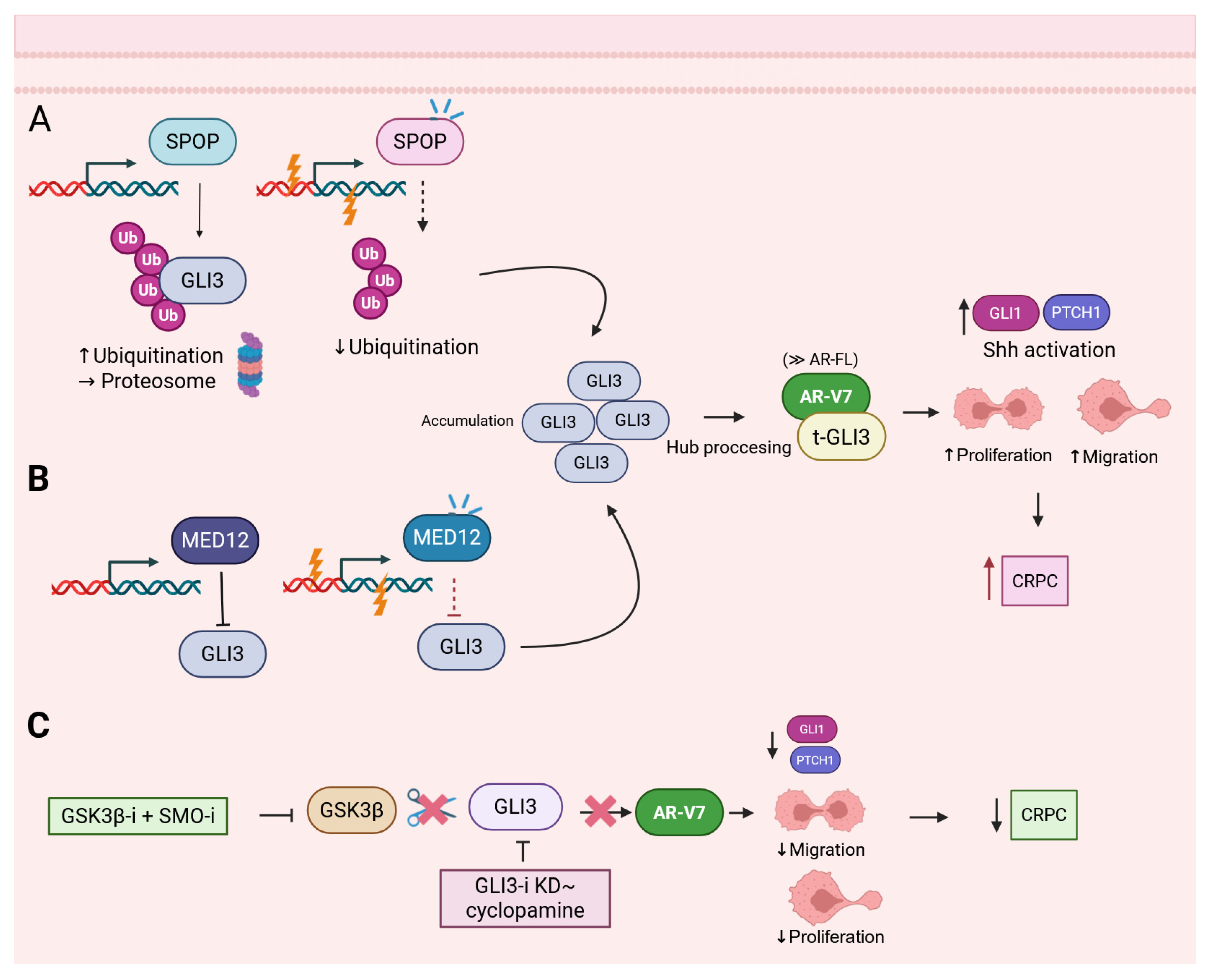
7. Androgen Receptor–GLI3 Feedback Loop Sustaining Shh Pathway Activation
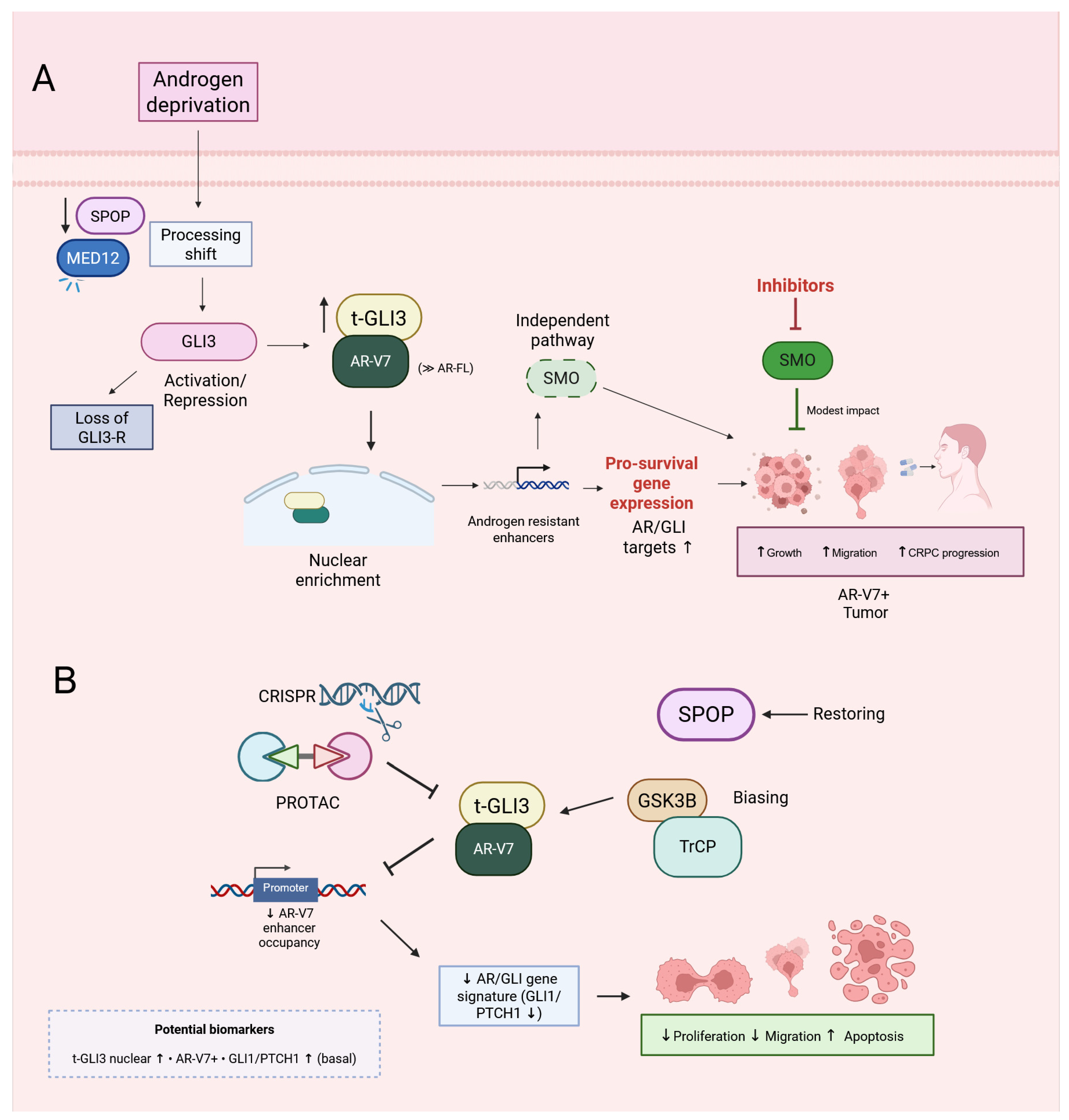
8. Discussion and Physiopathological Hypothesis
9. Conclusions
Author Contributions
Funding
Institutional Review Board Statement
Informed Consent Statement
Data Availability Statement
Acknowledgments
Conflicts of Interest
Abbreviations
| AR | Androgen Receptor |
| AR-V7 | Androgen Receptor Variant 7 |
| ADT | Androgen Deprivation Therapy |
| CRPC | Castration-Resistant Prostate Cancer |
| SMO | Smoothened |
| SPOP | Speckle-Type POZ Protein |
| MED12 | Mediator Complex Subunit 12 |
| GLI3 | GLI Family Zinc Finger 3 |
| GLI1 | GLI Family Zinc Finger 1 |
| GLI2 | GLI Family Zinc Finger 2 |
| Hh | Hedgehog |
| Shh | Sonic Hedgehog |
| PTCH1 | Patched 1 |
| GSK3β | Glycogen Synthase Kinase 3 Beta |
| GDC-0449 | A Hedgehog Pathway Inhibitor (Vismodegib) |
| SMO-i | SMO Inhibitor |
| IHC | Immunohistochemistry |
| ISH | In Situ Hybridization |
| PCa | Prostate Cancer |
| LNCaP | Androgen-dependent Human PCa Cell Line |
| C4-2B | Androgen-Independent Prostate Cancer Cell Line |
| TME | Tumor Microenvironment |
| EMT | Epithelial–Mesenchymal Transition |
References
- Bray, F.; Laversanne, M.; Sung, H.; Ferlay, J.; Siegel, R.L.; Soerjomataram, I.; Jemal, A. Global cancer statistics 2022: GLOBOCAN estimates of incidence and mortality worldwide for 36 cancers in 185 countries. CA Cancer J. Clin. 2024, 74, 229–263. [Google Scholar] [CrossRef]
- Aragon-Ching, J.B.; Dahut, W.L. Novel Androgen Deprivation Therapy (ADT) in the Treatment of Advanced Prostate Cancer. Drug Discov. Today Ther. Strateg. 2010, 7, 31–35. [Google Scholar] [CrossRef]
- Morote, J.; Aguilar, A.; Planas, J.; Trilla, E. Definition of Castrate Resistant Prostate Cancer: New Insights. Biomedicines 2022, 10, 689. [Google Scholar] [CrossRef]
- Watson, P.A.; Arora, V.K.; Sawyers, C.L. Emerging mechanisms of resistance to androgen receptor inhibitors in prostate cancer. Nat. Rev. Cancer 2015, 15, 701–711. [Google Scholar] [CrossRef] [PubMed]
- Chen, M.; Tanner, M.; Levine, A.C.; Levina, E.; Ohouo, P.; Buttyan, R. Androgenic regulation of hedgehog signaling pathway components in prostate cancer cells. Cell Cycle 2009, 8, 149–157. [Google Scholar] [CrossRef] [PubMed]
- Shigemura, K.; Huang, W.C.; Li, X.; Zhau, H.E.; Zhu, G.; Gotoh, A.; Fujisawa, M.; Xie, J.; Marshall, F.F.; Chung, L.W. Active sonic hedgehog signaling between androgen independent human prostate cancer cells and normal/benign but not cancer-associated prostate stromal cells. Prostate 2011, 71, 1711–1722. [Google Scholar] [CrossRef] [PubMed]
- Gonnissen, A.; Isebaert, S.; Haustermans, K. Hedgehog signaling in prostate cancer and its therapeutic implication. Int. J. Mol. Sci. 2013, 14, 13979–14007. [Google Scholar] [CrossRef]
- Fu, L.; Wu, H.; Cheng, S.Y.; Gao, D.; Zhang, L.; Zhao, Y. Set7 mediated Gli3 methylation plays a positive role in the activation of Sonic Hedgehog pathway in mammals. Elife 2016, 5, e15690. [Google Scholar] [CrossRef]
- Kaushal, J.B.; Raut, P.; Halder, S.; Alsafwani, Z.W.; Parte, S.; Sharma, G.; Abdullah, K.M.; Seshacharyulu, P.; Lele, S.M.; Batra, S.K.; et al. Oncogenic potential of truncated-Gli3 via the Gsk3β/Gli3/AR-V7 axis in castration-resistant prostate cancer. Oncogene 2025, 44, 1007–1023. [Google Scholar] [CrossRef]
- Li, N.; Truong, S.; Nouri, M.; Moore, J.; Al Nakouzi, N.; Lubik, A.A.; Buttyan, R. Non-canonical activation of hedgehog in prostate cancer cells mediated by the interaction of transcriptionally active androgen receptor proteins with Gli3. Oncogene 2018, 37, 2313–2325. [Google Scholar] [CrossRef]
- Suchors, C.; Kim, J. Canonical Hedgehog Pathway and Noncanonical GLI Transcription Factor Activation in Cancer. Cells 2022, 11, 2523. [Google Scholar] [CrossRef] [PubMed]
- Shen, D.; Xia, Y.; Fu, Y.; Cao, Q.; Chen, W.; Zhu, Y.; Guo, K.; Sun, L. Hedgehog pathway and cancer: A new area (Review). Oncol. Rep. 2024, 52, 116. [Google Scholar] [CrossRef]
- Marigo, V.; Roberts, D.J.; Lee, S.M.; Tsukurov, O.; Levi, T.; Gastier, J.M.; Epstein, D.J.; Gilbert, D.J.; Copeland, N.G.; Seidman, C.E. Cloning, expression, and chromosomal location of SHH and IHH: Two human homologues of the Drosophila segment polarity gene hedgehog. Genomics 1995, 28, 44–51. [Google Scholar] [CrossRef]
- Cong, G.; Zhu, X.; Chen, X.R.; Chen, H.; Chong, W. Mechanisms and therapeutic potential of the hedgehog signaling pathway in cancer. Cell Death Discov. 2025, 11, 40. [Google Scholar] [CrossRef]
- Niyaz, M.; Khan, M.S.; Mudassar, S. Hedgehog Signaling: An Achilles’ Heel in Cancer. Transl. Oncol. 2019, 12, 1334–1344. [Google Scholar] [CrossRef]
- Stecca, B.; Ruiz i Altaba, A. Context-dependent regulation of the GLI code in cancer by HEDGEHOG and non-HEDGEHOG signals. J. Mol. Cell Biol. 2010, 2, 84–95. [Google Scholar] [CrossRef]
- Sheng, T.; Li, C.; Zhang, X.; Chi, S.; He, N.; Chen, K.; McCormick, F.; Gatalica, Z.; Xie, J. Activation of the hedgehog pathway in advanced prostate cancer. Mol. Cancer 2004, 3, 29. [Google Scholar] [CrossRef] [PubMed]
- Sanchez, P.; Hernández, A.M.; Stecca, B.; Kahler, A.J.; DeGueme, A.M.; Barrett, A.; Beyna, M.; Datta, M.W.; Datta, S.; Ruiz i Altaba, A. Inhibition of prostate cancer proliferation by interference with SONIC HEDGEHOG-GLI1 signaling. Proc. Natl. Acad. Sci. USA 2004, 101, 12561–12566. [Google Scholar] [CrossRef] [PubMed]
- Lubik, A.A.; Nouri, M.; Truong, S.; Ghaffari, M.; Adomat, H.H.; Corey, E.; Cox, M.E.; Li, N.; Guns, E.S.; Yenki, P.; et al. Paracrine sonic hedgehog signaling contributes significantly to acquired steroidogenesis in the prostate tumor microenvironment. Int. J. Cancer 2017, 140, 358–369. [Google Scholar] [CrossRef]
- Shaw, G.; Price, A.M.; Ktori, E.; Bisson, I.; Purkis, P.E.; McFaul, S.; Oliver, R.T.; Prowse, D.M. Hedgehog signalling in androgen independent prostate cancer. Eur. Urol. 2008, 54, 1333–1343. [Google Scholar] [CrossRef]
- Gowda, P.S.; Deng, J.D.; Mishra, S.; Bandyopadhyay, A.; Liang, S.; Lin, S.; Mahalingam, D.; Sun, L.Z. Inhibition of hedgehog and androgen receptor signaling pathways produced synergistic suppression of castration-resistant prostate cancer progression. Mol. Cancer Res. 2013, 11, 1448–1461. [Google Scholar] [CrossRef] [PubMed]
- Chen, M.; Feuerstein, M.A.; Levina, E.; Baghel, P.S.; Carkner, R.D.; Tanner, M.J.; Shtutman, M.; Vacherot, F.; Terry, S.; de la Taille, A.; et al. Hedgehog/Gli supports androgen signaling in androgen deprived and androgen independent prostate cancer cells. Mol. Cancer 2010, 9, 89. [Google Scholar] [CrossRef]
- Yan, R.T.; Latourelle, J.; Khalid, O.; Parikh, R.B.; Church, B.W. PTCH1 and AXIN2 modulation of AR copy number effects on AR gene overexpression in metastatic castration resistant prostate cancer (mCRPC). J. Clin. Oncol. 2022, 40, e17026. [Google Scholar] [CrossRef]
- Ishii, A.; Shigemura, K.; Kitagawa, K.; Sung, S.Y.; Chen, K.C.; Yi-Te, C.; Liu, M.C.; Fujisawa, M. Anti-tumor Effect of Hedgehog Signaling Inhibitor, Vismodegib, on Castration-resistant Prostate Cancer. Anticancer Res. 2020, 40, 5107–5114. [Google Scholar] [CrossRef]
- Mimeault, M.; Rachagani, S.; Muniyan, S.; Seshacharyulu, P.; Johansson, S.L.; Datta, K.; Lin, M.F.; Batra, S.K. Inhibition of hedgehog signaling improves the anti-carcinogenic effects of docetaxel in prostate cancer. Oncotarget 2015, 6, 3887–3903. [Google Scholar] [CrossRef]
- Cai, M.; Ge, S.; Hong, Y.; Chen, Y.; Ren, Y.Z.; Zhong, D.; Chen, M.; Liu, Y.; Chen, Z.S.; Feng, N.; et al. Tegaserod maleate exerts anti-tumor effects on prostate cancer via repressing sonic hedgehog signaling pathway. Mol. Med. 2025, 31, 30. [Google Scholar] [CrossRef] [PubMed]
- Zhang, Q.; Peng, J.; Zhang, Y.; Liu, J.; He, D.; Zhao, Y.; Wang, X.; Li, C.; Kong, Y.; Wang, R.; et al. The kinase PLK1 promotes Hedgehog signaling-dependent resistance to the antiandrogen enzalutamide in metastatic prostate cancer. Sci. Signal. 2025, 18, eadi5174. [Google Scholar] [CrossRef] [PubMed]
- Maughan, B.L.; Suzman, D.L.; Luber, B.; Wang, H.; Glavaris, S.; Hughes, R.; Sullivan, R.; Harb, R.; Boudadi, K.; Paller, C.; et al. Pharmacodynamic study of the oral hedgehog pathway inhibitor, vismodegib, in patients with metastatic castration-resistant prostate cancer. Cancer Chemother. Pharmacol. 2016, 78, 1297–1304. [Google Scholar] [CrossRef]
- Ross, A.E.; Hughes, R.M.; Glavaris, S.; Ghabili, K.; He, P.; Anders, N.M.; Harb, R.; Tosoian, J.J.; Marchionni, L.; Schaeffer, E.M.; et al. Pharmacodynamic and pharmacokinetic neoadjuvant study of hedgehog pathway inhibitor Sonidegib (LDE-225) in men with high-risk localized prostate cancer undergoing prostatectomy. Oncotarget 2017, 8, 104182–104192. [Google Scholar] [CrossRef]
- Nguyen, A.; Xie, P.; Litvinov, I.V.; Lefrançois, P. Efficacy and Safety of Sonic Hedgehog Inhibitors in Basal Cell Carcinomas: An Updated Systematic Review and Meta-analysis (2009–2022). Am. J. Clin. Dermatol. 2023, 24, 359–374. [Google Scholar] [CrossRef]
- Rodon, J.; Tawbi, H.A.; Thomas, A.L.; Stoller, R.G.; Turtschi, C.P.; Baselga, J.; Sarantopoulos, J.; Mahalingam, D.; Shou, Y.; Moles, M.A.; et al. A phase I, multicenter, open-label, first-in-human, dose-escalation study of the oral smoothened inhibitor Sonidegib (LDE225) in patients with advanced solid tumors. Clin. Cancer Res. 2014, 20, 1900–1909. [Google Scholar] [CrossRef]
- Sun, W.; Li, L.; Du, Z.; Quan, Z.; Yuan, M.; Cheng, H.; Gao, Y.; Luo, C.; Wu, X. Combination of phospholipase Cε knockdown with GANT61 sensitizes castration-resistant prostate cancer cells to enzalutamide by suppressing the androgen receptor signaling pathway. Oncol. Rep. 2019, 41, 2689–2702. [Google Scholar] [CrossRef] [PubMed]
- Ruiz i Altaba, A. Gli proteins encode context-dependent positive and negative functions: Implications for development and disease. Development 1999, 126, 3205–3216. [Google Scholar] [CrossRef]
- Matissek, S.J.; Elsawa, S.F. GLI3: A mediator of genetic diseases, development and cancer. Cell Commun. Signal. 2020, 18, 54. [Google Scholar] [CrossRef]
- Burleson, M.; Deng, J.J.; Qin, T.; Duong, T.M.; Yan, Y.; Gu, X.; Das, D.; Easley, A.; Liss, M.A.; Yew, P.R.; et al. GLI3 Is Stabilized by SPOP Mutations and Promotes Castration Resistance via Functional Cooperation with Androgen Receptor in Prostate Cancer. Mol. Cancer Res. 2022, 20, 62–76. [Google Scholar] [CrossRef]
- Duong, T.M.; Araujo Rincon, M.; Myneni, N.; Burleson, M. Genetic alterations in MED12 promote castration-resistant prostate cancer through modulation of GLI3 signaling. Mol. Biol. Res. Commun. 2023, 12, 63–70. [Google Scholar] [CrossRef] [PubMed]
- Abe, Y.; Tanaka, N. Fine-Tuning of GLI Activity through Arginine Methylation: Its Mechanisms and Function. Cells 2020, 9, 1973. [Google Scholar] [CrossRef]
- Infante, P.; Lospinoso Severini, L.; Bernardi, F.; Bufalieri, F.; Di Marcotullio, L. Targeting Hedgehog Signalling through the Ubiquitylation Process: The Multiple Roles of the HECT-E3 Ligase Itch. Cells 2019, 8, 98. [Google Scholar] [CrossRef]
- Xue, C.; Chu, Q.; Shi, Q.; Zeng, Y.; Lu, J.; Li, L. Wnt signaling pathways in biology and disease: Mechanisms and therapeutic advances. Signal Transduct. Target. Ther. 2025, 10, 106. [Google Scholar] [CrossRef] [PubMed]
- Boutilier, A.J.; Raad, M.; Paar, K.E.; Matissek, S.J.; Banks, C.E.; Carl, A.L.; Murray, J.M.; Metzler, A.D.; Koeppen, K.U.; Gupta, M.; et al. GLI3 Is Required for M2 Macrophage Polarization and M2-Mediated Waldenström Macroglobulinemia Growth and Survival. Int. J. Mol. Sci. 2024, 25, 13120. [Google Scholar] [CrossRef]
- Hanna, J.; Beke, F.; O’Brien, L.M.; Kapeni, C.; Chen, H.C.; Carbonaro, V.; Kim, A.B.; Kishore, K.; Adolph, T.E.; Skjoedt, M.O.; et al. Cell-autonomous Hedgehog signaling controls Th17 polarization and pathogenicity. Nat. Commun. 2022, 13, 4075. [Google Scholar] [CrossRef]
- Riobo-Del Galdo, N.A.; Lara Montero, Á.; Wertheimer, E.V. Role of Hedgehog Signaling in Breast Cancer: Pathogenesis and Therapeutics. Cells 2019, 8, 375. [Google Scholar] [CrossRef]
- Zakari, S.; Rotimi, S.O.; Bholah, C.T.; Ogunlana, O.O. Updates on SPOP Gene Mutations in Prostate Cancer and Computational Insights from TCGA cBioPortal Database. Scientifica 2025, 2025, 4084224. [Google Scholar] [CrossRef]
- Scales, M.K.; Velez-Delgado, A.; Steele, N.G.; Schrader, H.E.; Stabnick, A.M.; Yan, W.; Mercado Soto, N.M.; Nwosu, Z.C.; Johnson, C.; Zhang, Y.; et al. Combinatorial Gli activity directs immune infiltration and tumor growth in pancreatic cancer. PLoS Genet. 2022, 18, e1010315. [Google Scholar] [CrossRef]
- Yi, X.; Chen, X.; Li, Z. miR-200c targeting GLI3 inhibits cell proliferation and promotes apoptosis in non-small cell lung cancer cells. Medicine 2024, 103, e39658. [Google Scholar] [CrossRef]
- Tempé, D.; Casas, M.; Karaz, S.; Blanchet-Tournier, M.F.; Concordet, J.P. Multisite protein kinase A and glycogen synthase kinase 3beta phosphorylation leads to Gli3 ubiquitination by SCFbetaTrCP. Mol. Cell Biol. 2006, 26, 4316–4326. [Google Scholar] [CrossRef] [PubMed]
- Yang, F.; Wynn, D.T.; Shen, C.; Ayad, N.G.; Robbins, D.J. Multiprotein GLI Transcriptional Complexes as Therapeutic Targets in Cancer. Life 2022, 12, 1967. [Google Scholar] [CrossRef] [PubMed]
- Nguyen, T.N.; Tran, G.S.; Hoang, H.D.; Nguyen, L.G. A novel missense variant located within the zinc finger domain of the GLI3 gene was identified in a Vietnamese pedigree with index finger polydactyly. Mol. Genet. Genom. Med. 2024, 12, e2468. [Google Scholar] [CrossRef] [PubMed]
- Umair, M.; Wasif, N.; Albalawi, A.M.; Ramzan, K.; Alfadhel, M.; Ahmad, W.; Basit, S. Exome sequencing revealed a novel loss-of-function variant in the GLI3 transcriptional activator 2 domain underlies nonsyndromic postaxial polydactyly. Mol. Genet. Genom. Med. 2019, 7, e00627. [Google Scholar] [CrossRef]
- Dai, P.; Akimaru, H.; Tanaka, Y.; Maekawa, T.; Nakafuku, M.; Ishii, S. Sonic Hedgehog-induced activation of the Gli1 promoter is mediated by GLI3. J. Biol. Chem. 1999, 274, 8143–8152. [Google Scholar] [CrossRef]
- Chaudhry, P.; Singh, M.; Triche, T.J.; Guzman, M.; Merchant, A.A. GLI3 repressor determines Hedgehog pathway activation and is required for response to SMO antagonist glasdegib in AML. Blood 2017, 129, 3465–3475. [Google Scholar] [CrossRef]
- Xiang, Y.; Li, X.; Zhan, Z.; Feng, J.; Cai, H.; Li, Y.; Fu, Q.; Xu, Y.; Jiang, H.; Zhang, X. A Novel Nonsense. Front. Genet. 2020, 11, 542004. [Google Scholar] [CrossRef] [PubMed]
- Shen, X.; Zhang, S.; Zhang, X.; Zhou, T.; Rui, Y. Two nonsense GLI3 variants are associated with polydactyly and syndactyly in two families by affecting the sonic hedgehog signaling pathway. Mol. Genet. Genom. Med. 2022, 10, e1895. [Google Scholar] [CrossRef] [PubMed]
- Lo Ré, A.E.; Fernández-Barrena, M.G.; Almada, L.L.; Mills, L.D.; Elsawa, S.F.; Lund, G.; Ropolo, A.; Molejon, M.I.; Vaccaro, M.I.; Fernandez-Zapico, M.E. Novel AKT1-GLI3-VMP1 pathway mediates KRAS oncogene-induced autophagy in cancer cells. J. Biol. Chem. 2012, 287, 25325–25334. [Google Scholar] [CrossRef]
- Shen, M.; Zhang, Z.; Wang, P. GLI3 Promotes Invasion and Predicts Poor Prognosis in Colorectal Cancer. Biomed Res. Int. 2021, 2021, 8889986. [Google Scholar] [CrossRef] [PubMed]
- Tao, B.; Wang, Z.; Wang, X.; Song, A.; Liu, J.; Wang, J.; Zhang, Q.; Chen, Z.; Xu, W.; Sun, M.; et al. An inherited predisposition allele promotes gastric cancer via enhancing deubiquitination-mediated activation of epithelial-to-mesenchymal transition signaling. J. Clin. Investig. 2025, 135, e179617. [Google Scholar] [CrossRef]
- Lou, H.; Li, H.; Huehn, A.R.; Tarasova, N.I.; Saleh, B.; Anderson, S.K.; Dean, M. Genetic and Epigenetic Regulation of the Smoothened Gene (SMO) in Cancer Cells. Cancers 2020, 12, 2219. [Google Scholar] [CrossRef]
- Ishikawa, M.; Sonobe, M.; Imamura, N.; Sowa, T.; Shikuma, K.; Date, H. Expression of the GLI family genes is associated with tumor progression in advanced lung adenocarcinoma. World J. Surg. Oncol. 2014, 12, 253. [Google Scholar] [CrossRef]
- Skarżyńska, W.; Baran, B.; Niewiadomski, P. The Hira complex regulates Gli3R-dependent transcription in Hedgehog signaling and medulloblastoma cell growth and migration. Sci. Rep. 2025, 15, 324. [Google Scholar] [CrossRef]
- Volnitskiy, A.; Shtam, T.; Burdakov, V.; Kovalev, R.; Konev, A.; Filatov, M. Abnormal activity of transcription factors gli in high-grade gliomas. PLoS ONE 2019, 14, e0211980. [Google Scholar] [CrossRef]
- Zhang, W.; Jin, W.; Wan, H.; Niu, C.; Yan, C.; Wang, C.; Liu, J.; Li, X.; Zong, Q.; Gao, N.; et al. Abstract 4650: The impact of GLI3 mutations and expression on prognosis in gastric cancer. Cancer Res. 2025, 85. [Google Scholar] [CrossRef]
- Wang, F.; Wu, J.; Qiu, Z.; Ge, X.; Liu, X.; Zhang, C.; Xu, W.; Hua, D.; Qi, X.; Mao, Y. ACOT1 expression is associated with poor prognosis in gastric adenocarcinoma. Hum. Pathol. 2018, 77, 35–44. [Google Scholar] [CrossRef]
- Iwasaki, H.; Nakano, K.; Shinkai, K.; Kunisawa, Y.; Hirahashi, M.; Oda, Y.; Onishi, H.; Katano, M. Hedgehog Gli3 activator signal augments tumorigenicity of colorectal cancer via upregulation of adherence-related genes. Cancer Sci. 2013, 104, 328–336. [Google Scholar] [CrossRef]
- Trnski, D.; Sabol, M.; Gojević, A.; Martinić, M.; Ozretić, P.; Musani, V.; Ramić, S.; Levanat, S. GSK3β and Gli3 play a role in activation of Hedgehog-Gli pathway in human colon cancer-Targeting GSK3β downregulates the signaling pathway and reduces cell proliferation. Biochim. Biophys. Acta 2015, 1852, 2574–2584. [Google Scholar] [CrossRef]
- Lin, M.; Zhu, H.; Shen, Q.; Sun, L.Z.; Zhu, X. GLI3 and androgen receptor are mutually dependent for their malignancy-promoting activity in ovarian and breast cancer cells. Cell Signal. 2022, 92, 110278. [Google Scholar] [CrossRef]
- Peng, J.; Zhang, D. Coexpression of EphA10 and Gli3 promotes breast cancer cell proliferation, invasion and migration. J. Investig. Med. 2021, 69, 1215–1221. [Google Scholar] [CrossRef] [PubMed]
- Wu, Y.; Guo, W.; Wang, T.; Liu, Y.; Mullor, M.D.M.R.; Rodrìguez, R.A.; Zhao, S.; Wei, R. The comprehensive landscape of prognosis, immunity, and function of the GLI family by pan-cancer and single-cell analysis. Aging 2024, 16, 5123–5148. [Google Scholar] [CrossRef]
- Freisleben, F.; Behrmann, L.; Thaden, V.; Muschhammer, J.; Bokemeyer, C.; Fiedler, W.; Wellbrock, J. Downregulation of GLI3 Expression Mediates Chemotherapy Resistance in Acute Myeloid Leukemia. Int. J. Mol. Sci. 2020, 21, 5084. [Google Scholar] [CrossRef] [PubMed]
- An, J.; Wang, C.; Deng, Y.; Yu, L.; Huang, H. Destruction of full-length androgen receptor by wild-type SPOP, but not prostate-cancer-associated mutants. Cell Rep. 2014, 6, 657–669. [Google Scholar] [CrossRef]
- Blattner, M.; Liu, D.; Robinson, B.D.; Huang, D.; Poliakov, A.; Gao, D.; Nataraj, S.; Deonarine, L.D.; Augello, M.A.; Sailer, V.; et al. SPOP Mutation Drives Prostate Tumorigenesis In Vivo through Coordinate Regulation of PI3K/mTOR and AR Signaling. Cancer Cell 2017, 31, 436–451. [Google Scholar] [CrossRef] [PubMed]
- Domenech, M.; Bjerregaard, R.; Bushman, W.; Beebe, D.J. Hedgehog signaling in myofibroblasts directly promotes prostate tumor cell growth. Integr. Biol. 2012, 4, 142–152. [Google Scholar] [CrossRef] [PubMed]
- Bennett, N.C.; Hooper, J.D.; Lambie, D.; Lee, C.S.; Yang, T.; Vesey, D.A.; Samaratunga, H.; Johnson, D.W.; Gobe, G.C. Evidence for steroidogenic potential in human prostate cell lines and tissues. Am. J. Pathol. 2012, 181, 1078–1087. [Google Scholar] [CrossRef] [PubMed]


Disclaimer/Publisher’s Note: The statements, opinions and data contained in all publications are solely those of the individual author(s) and contributor(s) and not of MDPI and/or the editor(s). MDPI and/or the editor(s) disclaim responsibility for any injury to people or property resulting from any ideas, methods, instructions or products referred to in the content. |
© 2026 by the authors. Licensee MDPI, Basel, Switzerland. This article is an open access article distributed under the terms and conditions of the Creative Commons Attribution (CC BY) license.
Share and Cite
Nuñez-Olvera, S.I.; Cortés-Malagón, E.M.; Montúfar-Robles, I.; Flores-Estrada, J.J.; Alvarez-Sánchez, M.E.; Puente-Rivera, J. The GLI3–Androgen Receptor Axis: A Feedback Circuit Sustaining Shh Signaling in Prostate Cancer. Receptors 2026, 5, 4. https://doi.org/10.3390/receptors5010004
Nuñez-Olvera SI, Cortés-Malagón EM, Montúfar-Robles I, Flores-Estrada JJ, Alvarez-Sánchez ME, Puente-Rivera J. The GLI3–Androgen Receptor Axis: A Feedback Circuit Sustaining Shh Signaling in Prostate Cancer. Receptors. 2026; 5(1):4. https://doi.org/10.3390/receptors5010004
Chicago/Turabian StyleNuñez-Olvera, Stephanie I., Enoc Mariano Cortés-Malagón, Isela Montúfar-Robles, José Javier Flores-Estrada, María Elizbeth Alvarez-Sánchez, and Jonathan Puente-Rivera. 2026. "The GLI3–Androgen Receptor Axis: A Feedback Circuit Sustaining Shh Signaling in Prostate Cancer" Receptors 5, no. 1: 4. https://doi.org/10.3390/receptors5010004
APA StyleNuñez-Olvera, S. I., Cortés-Malagón, E. M., Montúfar-Robles, I., Flores-Estrada, J. J., Alvarez-Sánchez, M. E., & Puente-Rivera, J. (2026). The GLI3–Androgen Receptor Axis: A Feedback Circuit Sustaining Shh Signaling in Prostate Cancer. Receptors, 5(1), 4. https://doi.org/10.3390/receptors5010004