Perspective

Complication and Endpoint Heterogeneity in Vascular Intervention Research: Lessons from Neurovascular Practice


1
Neuroradiologische Klinik, Kopf- und Neurozentrum, Klinikum Stuttgart, 70174 Stuttgart, Germany
2
Medizinische Fakultät, Universität Duisburg-Essen, 47057 Essen, Germany
*
Author to whom correspondence should be addressed.
J. Vasc. Dis. 2026, 5(2), 18; https://doi.org/10.3390/jvd5020018
Submission received: 17 March 2026 / Revised: 2 April 2026 / Accepted: 10 April 2026 / Published: 13 April 2026
(This article belongs to the Section Neurovascular Diseases)

Abstract

Vascular intervention has advanced technically faster than it has matured methodologically. Across neurovascular, carotid, peripheral, and aortic practice, complications and outcomes are often reported using different definitions, thresholds, surveillance strategies, adjudication methods, follow-up schedules, and units of analysis. As a result, studies that appear to assess the same treatment may in fact be measuring different outcome constructs. This problem is particularly visible in neurovascular intervention, where technical, radiographic, and clinical outcomes are often combined within the same evaluative framework. In acute ischemic stroke thrombectomy, changes in reperfusion thresholds can alter the meaning of procedural success. In intracranial aneurysm treatment, angiographic occlusion, retreatment, delayed stenosis, and neurological morbidity are often reported together despite representing different dimensions of efficacy and safety, while the interpretation of surrogate angiographic outcomes may vary across device classes. Similar issues arise in carotid intervention, peripheral endovascular therapy, and endovascular aneurysm repair, where composite outcomes, imaging-detected complications, and inconsistent surveillance protocols further complicate interpretation. These variations limit cross-study comparability, weaken meta-analytic synthesis, and may distort judgments about treatment effectiveness and safety. Endpoint heterogeneity persists partly through disciplinary silos, device-driven evaluation frameworks, and regulatory pathways that favor surrogate over clinical endpoints; addressing it will require not only better reporting but standardized outcome constructs, coordinated international registries, and broader adoption of core outcome set methodology. Greater discipline in endpoint definition and reporting, together with broader adoption of standardized outcome frameworks and core outcome set methodology, is needed if evidence in vascular intervention is to accumulate coherently.

1. Introduction

Vascular intervention has matured technically faster than it has matured methodologically. Across carotid, peripheral, aortic, and neurovascular practice, clinicians now work with increasingly sophisticated devices, refined imaging, and more ambitious treatment strategies. Yet the language used to report procedural outcomes remains inconsistent. This is more than a stylistic issue. When complications and endpoints are defined differently across studies, the literature may grow while remaining difficult to compare, synthesize, and translate into practice. Studies may appear to evaluate the same treatment effect while actually measuring different outcome constructs. Standardization of outcome reporting should therefore be regarded as core scientific infrastructure rather than an administrative exercise [1].
At a conceptual level, endpoint heterogeneity is a problem of measurement, not only of reporting. In late-phase clinical research, endpoints should be meaningful to patients and clinicians, and should reflect how patients feel, function, or survive [2]. Yet interventional studies often rely on technical, imaging, or other non-clinical endpoints because they are earlier, more feasible, or more sensitive to biological or device-related effects [3]. Problems arise when similarly labeled outcomes do not represent the same construct, or when surrogate endpoints are interpreted as though they were equivalent to patient-important outcomes [4,5]. This is one reason why outcome standardization matters: core outcome sets aim to define a minimum set of outcomes that should be measured and reported in all trials for a given clinical area, while still allowing additional study-specific outcomes when justified [6]. In vascular intervention, where technical performance, imaging-defined response, and clinical status are often reported side by side, the central methodological question is not only whether an outcome is clearly reported, but whether different studies are actually measuring the same outcome construct and at the same level of clinical relevance [7,8,9].
This problem is not unique to vascular medicine. Even widely used composite outcomes such as major adverse cardiovascular events have been defined differently across cardiovascular studies, with varying combinations of myocardial infarction, stroke, revascularization, and mortality [10,11]. Standardized bleeding definitions were likewise developed only after it became clear that inconsistent thresholds and classifications could distort the apparent safety profile of therapies [12]. These examples illustrate a broader methodological principle: if a field does not agree on what constitutes an event, it will struggle to generate cumulative evidence about that event. Heterogeneity may arise at several levels, including the definition of the endpoint itself, the components included within a composite endpoint, the methods used to ascertain whether an event has occurred, and the rules used to adjudicate and report it.

2. Sources and Consequences of Endpoint Heterogeneity

Endpoint heterogeneity can arise at several levels. Studies may differ in the outcomes they prioritize, in how events are detected, and in the definitions and time windows used for reporting. Neurovascular intervention illustrates these problems particularly well, but they are not unique to that field.

2.1. Non-Equivalent Outcome Domains in Neurovascular Intervention

Neurovascular intervention makes this problem especially visible because studies often combine technical endpoints, such as angiographic reperfusion grading in thrombectomy, with imaging endpoints and with clinical outcomes such as 90-day disability or mortality [13,14]. A similar mixing of procedural, radiographic, and clinical outcomes has long been recognized in reporting standards for intracranial aneurysm treatment [8]. These domains may be related, but they are not interchangeable. From a measurement standpoint, an endpoint is informative only insofar as it validly captures the construct the study claims to evaluate, and surrogate outcomes may fail to reflect patient-important benefit or harm even when they are technically responsive or biologically sensitive [2,3,4,5]. In acute ischemic stroke thrombectomy, for example, procedural success is commonly measured with angiographic reperfusion scales such as the modified Thrombolysis in Cerebral Infarction classification, whereas patient-centered success is usually defined by functional outcome at 90 days, most often using the modified Rankin Scale [14,15]. Both outcomes matter, but they do not measure the same thing. One reflects procedural performance; the other reflects patient recovery.
The fact that consensus recommendations were required even for angiographic reperfusion grading illustrates how difficult cross-study comparison becomes when technical endpoints are not standardized [14]. At the same time, pooled trial data establishing the benefit of thrombectomy depended on broadly comparable procedural and clinical outcome frameworks across trials, even though those frameworks have continued to evolve [13]. Even within thrombectomy research, however, the procedural endpoint is not entirely stable. Successful reperfusion has historically been defined as mTICI grades 2b–3, yet subsequent work has suggested that near-complete or complete reperfusion may be more strongly associated with favorable clinical outcomes than broader 2b-based thresholds. In particular, Dargazanli and colleagues reported that combining mTICI 2c and 3 identified a subgroup with better functional outcomes than patients with mTICI 2b reperfusion and argued that mTICI 2c/3, rather than mTICI 2b/3, should be the procedural aim of mechanical thrombectomy. If one study defines procedural success as 2b–3 and another emphasizes 2c–3, both may report “successful reperfusion,” yet the apparent efficacy of the procedure may differ in clinically meaningful ways. Small definitional shifts in technical endpoints can therefore alter reported effectiveness and complicate comparison between otherwise similar studies [13,16]. Subsequent refinements such as the expanded TICI framework further show that reperfusion grading remains methodologically dynamic rather than fixed [17].
Similar issues arise in the treatment of intracranial aneurysms. Endovascular aneurysm studies often report angiographic occlusion, retreatment, thromboembolic events, intraprocedural rupture, delayed stenosis, and permanent neurological morbidity within the same outcome framework. Yet these do not represent a single dimension of success or failure. Early work by Raymond and colleagues characterized long-term angiographic recurrence after coil embolization and helped establish the basis for standardized occlusion assessment [18]. Subsequent refinements, including the modified Raymond-Roy classification, further differentiated residual aneurysm subtypes with distinct prognostic implications [19]. Even when common grading systems are used, heterogeneity persists in the thresholds applied, the imaging modalities chosen for follow-up, and the timepoints at which occlusion is assessed. In flow-diverter studies, the problem becomes more pronounced. Delayed aneurysm occlusion, in-stent stenosis, branch-related ischemia, hemorrhagic events, and retreatment occur at different times and are captured differently depending on surveillance intensity and study design. As a result, apparently similar flow-diverter cohorts may not be reporting the same set of outcomes at all [8,20,21,22].
The aneurysm literature also illustrates a deeper methodological problem: not only are angiographic outcomes heterogeneous, but the meaning of a “good” angiographic result may itself shift across technologies. Darsaut, Chapot, and Raymond argue that surrogate angiographic outcomes are often used because hard clinical endpoints such as rupture prevention or disabling morbidity are difficult to study in feasible randomized trials, particularly for unruptured aneurysms [4]. They also warn that surrogate endpoints can be manipulated by changing the threshold for what counts as success. In their account, aneurysm neck remnants became acceptable after coiling, then less acceptable when flow diversion needed to demonstrate superior complete occlusion, and then acceptable again in the context of intrasaccular devices. They further note that comparisons become more difficult when each device class uses its own angiographic scale, making ostensibly similar efficacy outcomes less comparable. Endpoint heterogeneity, in other words, may arise not only from inconsistent definitions across studies but also from shifts in the evaluative rules themselves.
Recent consensus work in flow-diverter research reinforces this point from the opposite direction. Fiehler and colleagues, in a multinational society-endorsed standards paper, argue that variations in evaluation methodology complicate comparisons among flow diverter (FD) studies, hinder understanding of device behavior, and obstruct assessment of further technical advances [21]. Their recommendations extend beyond aneurysm occlusion to standardized reporting of aneurysm location and morphology, measurement methods, wall apposition, neck coverage, neointimal lining, stenosis, and defined braid deformation patterns. They also note that some previously reported flow-diverter imaging findings lacked operational definitions and emphasize that core laboratory reading, detailed image charters, reader training, and predefined imaging follow-up windows are needed to reduce random noise and systematic error.

2.2. Composite Endpoints, Surveillance Intensity, and Adjudication

Carotid intervention provides a useful bridge between neurovascular and systemic vascular practice. Trials comparing carotid artery stenting with carotid endarterectomy frequently use composite peri-procedural endpoints that include stroke, myocardial infarction, and death. Such composites are statistically appealing, especially when individual event rates are modest, but they combine events that differ in mechanism, severity, detectability, and long-term clinical consequence. A composite endpoint may therefore improve efficiency while reducing interpretive clarity. More generally, composite endpoints in cardiovascular trials can mislead when their components differ substantially in clinical importance and in the magnitude of treatment effect across components [23]. Meta-analytic comparisons of carotid artery stenting and endarterectomy have shown that conclusions can differ depending on whether one considers the composite endpoint or its individual components separately [24]. The problem worsens when component events also differ in their consistency of detection [9].
Another major source of heterogeneity lies in surveillance intensity. Studies do not only define events differently; they also look for them differently. Neurovascular practice again provides a clear example. Diffusion-weighted imaging (DWI) frequently reveals new ischemic lesions after carotid revascularization that are clinically silent. These lesions occur more often than overt peri-procedural stroke, and their reported frequency depends heavily on whether routine high-sensitivity imaging is performed. Whether such findings should be considered procedural complications, surrogate markers of embolic burden, or distinct imaging outcomes remains open to debate [25]. Whatever one’s interpretation, a study that systematically performs post-procedural DWI is measuring a different event universe from one that records only clinically manifest stroke. Surveillance intensity is therefore a determinant of endpoint ascertainment and, by extension, of the observed event rate [26].
Closely related to surveillance intensity is the method of endpoint adjudication. Whether outcomes are classified by treating investigators, independent local reviewers, or blinded central core laboratories can materially affect reported event rates and between-study comparability. Investigator-reported outcomes may be influenced by local practice patterns or expectations, whereas centralized adjudication may improve reproducibility by applying uniform criteria [8,9]. The recent flow-diverter standards paper makes this issue concrete: Fiehler and colleagues emphasize that uploaded images in multicenter studies vary in acquisition technique and quality, that expert readers are needed to translate such data into standardized variables, and that central core laboratory instructions can reduce both random noise and systematic error [21]. They also cite prior studies in which complete aneurysm occlusion rates were lower after central core laboratory adjudication than after local assessment, and note similar discrepancies in thrombectomy reperfusion assessment. Adjudication method is, in other words, itself a study variable. Across vascular and neurovascular interventions, these outcomes can be grouped into technical, radiographic, and clinical domains, as illustrated in Table 1.
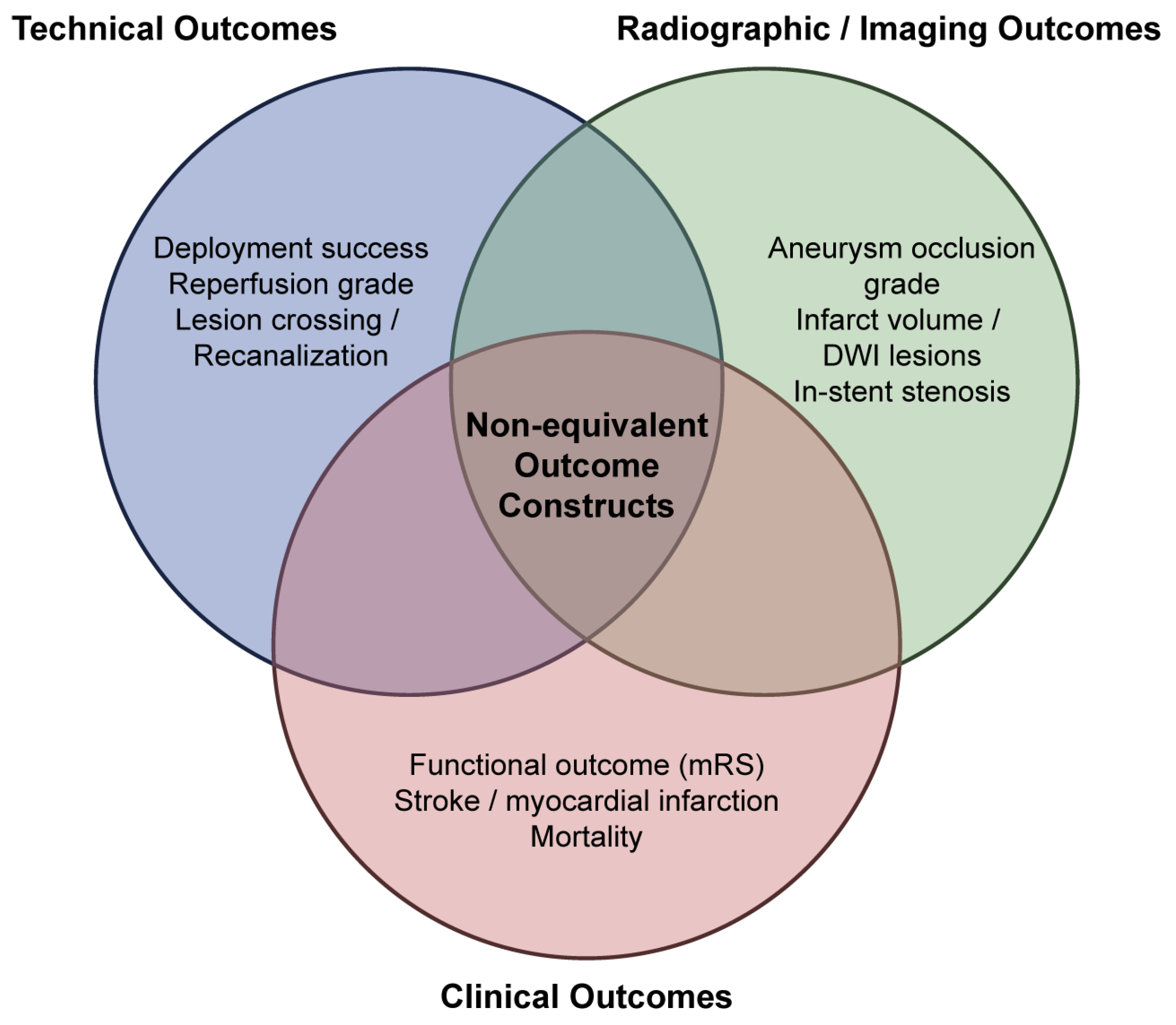
The distinction between technical, radiographic, and clinical outcome domains is one of the central conceptual challenges in vascular intervention research (Figure 1). Technical outcomes describe procedural performance, radiographic outcomes capture structural or imaging-defined changes after treatment, and clinical outcomes reflect patient-centered benefit or harm. These domains may be related, but they are not interchangeable. Technical success may facilitate a favorable clinical outcome without guaranteeing it, while imaging abnormalities may indicate biological effects of treatment without necessarily translating into disability or death. The problem is amplified when studies move implicitly between procedure-level, lesion-level, and patient-level outcomes without stating which unit of analysis governs the reported result. Under these circumstances, pooled evidence can become numerically precise while remaining difficult to interpret conceptually. For example, a flow-diverter study reporting aneurysm occlusion on a per-lesion basis may include patients with multiple treated aneurysms, leading to non-independent observations. If efficacy is reported per lesion while safety is reported per patient, the relationship between efficacy and safety becomes structurally unclear.

2.3. Why Endpoint Heterogeneity Persists

Endpoint heterogeneity persists not simply because authors use different terminology, but because vascular intervention has developed through partly separate specialty traditions with different procedural goals, imaging cultures, and reporting standards. Neurovascular, carotid, peripheral, and aortic intervention have each generated their own frameworks for outcome assessment, often in response to territory-specific technical problems and outcome priorities rather than through a unified cross-vascular methodology [7,8,9,27]. Heterogeneity is further reinforced in areas of rapid device innovation, where early evaluation commonly relies on technically feasible or imaging-based surrogate outcomes that are sensitive to device performance but not always directly comparable across technologies or trials [4,21,28]. At the same time, not all variation is inappropriate. Differences in disease biology, treatment aims, and follow-up architecture mean that some outcomes must remain context-specific. The methodological challenge, therefore, is not to eliminate all variation, but to distinguish justified contextual adaptation from avoidable inconsistency. In this respect, recent core outcome set initiatives in vascular surgery suggest a more balanced model: a minimum common outcome framework for cross-study comparability, supplemented by disease-specific measures when clinically necessary [6,29,30].
Regulatory approval pathways and device-specific evaluation frameworks represent a further structural driver of this heterogeneity. In the European Union, the regulatory standards applied to medical devices differ substantially from those applied to drugs, resulting in fewer manufacturer-sponsored clinical studies with hard clinical endpoints and less consistent use of health technology assessment–supported outcome frameworks for devices than for pharmaceuticals [31]. In interventional cardiology, surrogate endpoints such as angiographic lumen loss or fractional flow reserve have been retained partly because they allow statistically feasible trials with smaller sample sizes, and partly because they align with reimbursement appraisal frameworks that accept intermediate endpoints as proxies for clinical benefit [32]. More broadly, current frameworks for defining, interpreting, and reporting surrogate endpoints in interventional trials remain inconsistent and unclear, with clinicians, regulators, and health technology assessment experts often disagreeing on whether a given intermediate outcome should be treated as a target outcome or as a surrogate [33]. In device-intensive specialties such as neurointerventional and vascular surgery, where clinical benefit may be difficult to demonstrate in adequately powered randomized trials, these pressures make device-specific and imaging-based endpoints particularly attractive—reinforcing fragmentation rather than resolving it.

2.4. Consequences for Evidence Synthesis

The implications for evidence synthesis are substantial. Systematic reviews and meta-analyses depend not only on statistical aggregation but also on conceptual comparability. When endpoint definitions vary widely, reviewers are forced either to combine non-equivalent outcomes or to exclude large portions of the available literature. Neither solution is satisfactory. A pooled estimate may gain statistical precision while becoming harder to interpret. This is especially problematic in fast-moving interventional fields, where devices and techniques evolve rapidly and early studies often establish reporting habits that later become difficult to harmonize.
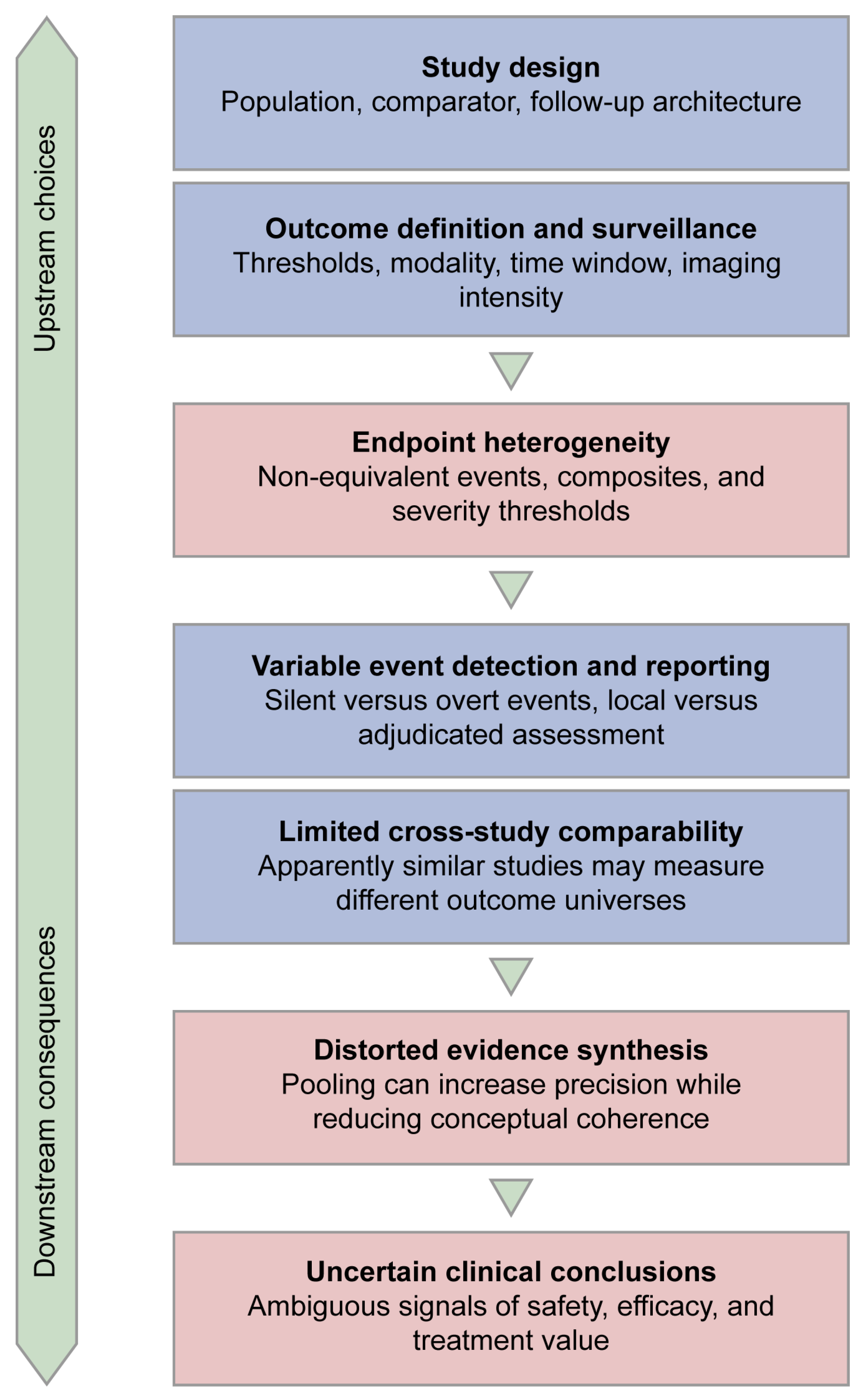
Endpoint heterogeneity also interacts with another recognized methodological problem: outcome reporting bias. When studies measure multiple outcomes, define them flexibly, or selectively report only a subset of measured results, systematic reviewers may face not only heterogeneous endpoints but incomplete outcome reporting. Methodological work on outcome reporting bias has shown that selective non-reporting of measured outcomes can distort the conclusions of systematic reviews, particularly when no consensus exists regarding which outcomes should be measured and reported consistently. In fields where outcome definitions are already heterogeneous, selective reporting can further obscure the balance between benefit and harm (Figure 2) [34,35]. Within neurovascular practice, similar concerns extend beyond stroke and aneurysm treatment to brain arteriovenous malformations, where reporting standards have existed for years [36,37], yet recent studies suggest that study comparability and reproducibility remain limited [38,39].

2.5. Parallel Problems in Peripheral and Aortic Intervention

Recent literature in peripheral and aortic intervention has reached similar conclusions regarding outcome heterogeneity and reporting inconsistency. A systematic review of randomized controlled trials in lower-limb endovascular intervention found important deficiencies in reporting quality and inadequate description of interventions, indicating that methodological incompleteness extends beyond endpoint definitions alone [40]. This is a related, though distinct, problem: even if outcomes were standardized, the evidentiary value of trials would remain limited if interventions are not described clearly enough for replication. A systematic review of outcome reporting in acute lower limb ischemia likewise identified marked inconsistency across studies and explicitly framed that heterogeneity as a barrier to synthesis and future consensus development [41].
Peripheral intervention research also increasingly shows tension between surrogate or technical endpoints and patient-centered outcomes. Mustapha and colleagues argued that in chronic limb-threatening ischemia (CLTI), traditional trial measures such as hemodynamic indices, lesion patency, and conventional clinically driven target lesion revascularization may inadequately reflect CLTI complexity or patient-relevant benefit [28]. They proposed greater emphasis on limb salvage, wound healing, function, and quality of life. This provides a non-neurovascular analogue to the aneurysm critique advanced by Darsaut and colleagues: procedural and anatomical surrogates may be attractive because they are measurable, yet still fail to represent the outcomes that matter most to patients and clinicians.
Aortic intervention illustrates a further dimension of endpoint heterogeneity. In endovascular aneurysm repair, key outcomes include endoleak detection, aneurysm sac diameter change, reintervention, rupture, and mortality, yet these are not reported uniformly. Reporting standards for endovascular aneurysm repair (EVAR) were published more than two decades ago [27], but a more recent systematic review by Alexander and colleagues showed that among contemporary EVAR studies, technical success was reported in only 58.3%, defined in only 47.6%, and represented by 22 distinct definitions [42]. The same review found limited adherence to established reporting guidelines and explicitly recommended both updated standards and a core outcome set for EVAR. Complementing this, Machin and colleagues showed in a systematic review of abdominal aortic aneurysm (AAA) repair outcomes that the range of reported outcomes was wide, long-term data were relatively sparse, and vascular complications received disproportionate attention compared with patient functioning outcomes, a skew accentuated by EVAR device registry reporting [43]. These findings are relevant because they show that endpoint heterogeneity is not only a matter of inconsistent definitions but also of what outcome domains a field chooses to emphasize.

3. Future Directions

3.1. Reporting Standards Are Necessary but Not Sufficient

The field does not lack templates for improvement. Consensus definitions for cardiovascular trial endpoints, standardized bleeding classifications, and specialty-specific reporting standards for carotid intervention and aneurysm treatment all point in the same direction [1,8,9,12]. More recently, the editors of the European Journal of Vascular and Endovascular Surgery proposed common publication standards applicable across carotid disease, abdominal aortic aneurysm, peripheral arterial occlusive disease, and chronic venous disease, including both general minimum requirements and disease-specific reporting expectations [7]. Together, these efforts suggest that vascular intervention is moving gradually from general calls for better reporting toward a more explicit reporting architecture.
Design-specific reporting frameworks such as the Consolidated Standards of Reporting Trials (CONSORT) for randomized trials, the Preferred Reporting Items for Systematic Reviews and Meta-Analyses (PRISMA) for systematic reviews, and the Strengthening the Reporting of Observational Studies in Epidemiology (STROBE) statement for observational studies have substantially improved transparency and completeness of reporting across study designs [44,45,46]. CONSORT-Outcomes further strengthens this effort by specifying how outcomes should be described and reported in trial publications [47]. Their strength, however, is primarily in improving how studies are reported, not in determining which outcomes a field should define and measure consistently. Better reporting is therefore necessary, but it cannot by itself resolve endpoint heterogeneity when the underlying outcome constructs remain inconsistently defined across studies. In areas where outcome reporting remains fragmented, core outcome set methodology may offer a more durable solution. Rather than relying on repeated calls for better reporting, core outcome sets define a minimum set of outcomes that should be measured and reported in all studies addressing a given condition. This approach is particularly attractive in vascular and neurovascular intervention, where the field must balance procedural nuance against the need for cumulative evidence. Core outcome set development typically involves systematic reviews of existing reported outcomes, stakeholder engagement including patients and clinicians, and Delphi-based consensus processes. The Core Outcome Measures in Effectiveness Trials (COMET) Initiative has provided a methodological framework for this approach, defining key principles for scope, consensus methods, and stakeholder inclusion [48]. Standardization should therefore not be understood as rigid uniformity across all vascular conditions, but as the development of a shared core outcome architecture within which clinically justified, context-specific extensions can still be accommodated [6,29,30].

3.2. Emerging Core Outcome Sets, Registries, and Practical Implications

Vascular surgery is no longer at a stage where core outcome sets can be discussed only as a distant aspiration. An international core outcome set has now been developed for intact abdominal aortic aneurysm repair, with six core outcomes recommended as a minimum framework for future studies and registries of intact open and endovascular AAA repair [49]. A separate core outcome set has also been developed for chronic symptomatic peripheral arterial disease; the final set includes 11 outcomes and is presented as the first core outcome set for this population [30]. In acute lower limb ischemia, a pan-European mixed-methods study is underway to develop a dedicated core outcome set because inconsistent outcome reporting limits evidence synthesis and guideline development [29]. The more accurate conclusion, therefore, is not that vascular core outcome set work is absent, but that it remains early, unevenly distributed, and still incomplete across the field.
International vascular registries could provide a complementary mechanism for implementing such standards in routine practice. Recent International Consortium of Vascular Registries (ICVR) Delphi efforts have shown that consensus on minimum core datasets, common definitions, and a structured definition of key variables is feasible across countries and registry infrastructures [50,51]. Such harmonized registries would facilitate international comparisons, quality improvement, and the generation of more comparable real-world evidence, while also reducing one practical source of endpoint heterogeneity in multicenter observational research, provided that data elements are not only aligned but also validated through robust registry-quality procedures [52].
The newly emerging flow-diverter imaging standards also provide a practical example of what more disciplined outcome work can look like in a subspecialty undergoing rapid technological change. Fiehler and colleagues do not merely call for better reporting in general terms; they specify what should be measured, how it should be categorized, which imaging modalities should be prioritized, how image comparability should be judged, and how disagreements between readers should be resolved [21]. More broadly, diagnostic and imaging algorithms should define not only the modality used, but also the timing of assessment, the thresholds considered actionable, and how imaging findings are linked to clinical decisions and outcomes. This is especially clear in acute ischemic stroke, where imaging-selection paradigms help determine which patients are considered eligible for thrombectomy and influence how treatment effects are interpreted across different time windows [53]. More importantly, imaging does not simply confirm the diagnosis; it helps define the treated population and the framework within which efficacy is judged. Similar issues arise outside neurovascular practice. After EVAR, differences in surveillance modality and interval can alter endoleak detection [54], and in carotid stenting, restenosis requires validated modality-specific duplex criteria rather than simple transfer of thresholds from native-vessel disease [55]. That level of granularity is unlikely to be necessary for every vascular condition, but it illustrates a broader principle: methodological standardization becomes most valuable when innovation creates several plausible but non-equivalent ways of defining success. At the same time, the aneurysm literature offers a cautionary lesson against equating standardization with uncritical acceptance of surrogate outcomes. As Darsaut and colleagues argue, surrogate angiographic results remain useful and often unavoidable, but they should not displace clinically meaningful outcomes or justify shifting evaluative thresholds in ways that systematically favor one device class over another [4]. Standardization is therefore necessary, but it is not sufficient. The endpoints being standardized must also remain clinically defensible [56]. The main sources of endpoint heterogeneity discussed are summarized in Table 2.
From a practical standpoint, progress will require greater methodological discipline at both the study-design and reporting stages. The most basic discipline is definitional: investigators should prespecify endpoints before data collection, specify the unit of analysis (patient, lesion, or procedure), and distinguish clearly between technical, imaging, and clinical outcomes, reporting composite endpoint components individually. Equally important is transparency about event detection and adjudication: whether outcome assessment was local, investigator-reported, or core-laboratory based, how surveillance was conducted, and how missing follow-up data were handled. Symptom status and major comorbidities should also be reported explicitly at baseline, since the clinical meaning of an outcome can differ substantially between symptomatic and asymptomatic populations and across different case-mix profiles [7,9,28]. Reviewers and editors should increasingly treat vague endpoint language as a methodological weakness rather than a stylistic imperfection.

4. Conclusions

Vascular intervention has entered an era in which technological innovation is rapid and clinical data are abundant. But abundance is not the same as coherence. Neurovascular practice shows especially clearly that endpoint heterogeneity can distort the apparent safety and effectiveness of an intervention even when the technical work itself is excellent. Recent non-neurovascular literature suggests that the same problem is now widely recognized across peripheral and aortic intervention and that concrete responses are beginning to emerge, including publication standards and formal core outcome sets [7,30,57]. If vascular medicine is to generate evidence that truly accumulates, the next major advance may not be another device or another procedural refinement, but greater agreement on what, precisely, counts as an outcome.

Author Contributions

Conceptualization, P.A.-P. and H.H.; methodology, P.A.-P.; investigation, P.A.-P. and A.K.; resources, H.H.; writing—original draft preparation, P.A.-P.; writing—review and editing, A.K. and H.H.; visualization, P.A.-P.; supervision, H.H.; project administration, P.A.-P. and H.H. All authors have read and agreed to the published version of the manuscript.

Funding

This research received no external funding.

Institutional Review Board Statement

Not applicable.

Informed Consent Statement

Not applicable.

Data Availability Statement

No new data were created or analyzed in this study. Data sharing is not applicable to this article.

Acknowledgments

During the preparation of this manuscript/study, the authors used ChatGPT (version 5.4, OpenAI) for the purposes of language editing. The authors have reviewed and edited the output and take full responsibility for the content of this publication.

Conflicts of Interest

H. Henkes is amongst several other devices the co-inventor of the Solitaire stent, the pRESET stent retriever, pCONUS bifurcation stent, p48/p64 flow diverter, pRELAX and pEGASUS stents, and was co-founder of phenox GmbH and femtos GmbH, which were medical device companies developing and/or selling products for the treatment of neurovascular disorders. A. Khanafer reports consulting and proctoring activities for Wallaby-Phenox GmbH. P. Albiña-Palmarola declares no personal, financial, or institutional interest in any of the drugs, materials, or devices described in this article.

Abbreviations

The following abbreviations are used in this manuscript:
AAAAbdominal aortic aneurysm
CLTIChronic limb-threatening ischaemia
COMETCore Outcome Measures in Effectiveness Trials
CONSORTConsolidated Standards of Reporting Trials
CTAComputed tomography angiography
DSADigital subtraction angiography
DWIDiffusion-weighted imaging
EVAREndovascular aneurysm repair
FDFlow diverter
ICVRInternational Consortium of Vascular Registries
mRSModified Rankin Scale
MRAmagnetic resonance angiography
mTICIModified Thrombolysis in Cerebral Infarction
PRISMAPreferred Reporting Items for Systematic Reviews and Meta-Analyses
STROBEStrengthening the Reporting of Observational Studies in Epidemiology

References

  1. Hicks, K.A.; Mahaffey, K.W.; Mehran, R.; Nissen, S.E.; Wiviott, S.D.; Dunn, B.; Solomon, S.D.; Marler, J.R.; Teerlink, J.R.; Farb, A.; et al. 2017 Cardiovascular and Stroke Endpoint Definitions for Clinical Trials. Circulation 2018, 137, 961–972. [Google Scholar] [CrossRef]
  2. McLeod, C.; Norman, R.; Litton, E.; Saville, B.R.; Webb, S.; Snelling, T.L. Choosing primary endpoints for clinical trials of health care interventions. Contemp. Clin. Trials Commun. 2019, 16, 100486. [Google Scholar] [CrossRef]
  3. Christensen, R.; Ciani, O.; Manyara, A.M.; Taylor, R.S. Surrogate endpoints: A key concept in clinical epidemiology. J. Clin. Epidemiol. 2024, 167, 111242. [Google Scholar] [CrossRef]
  4. Darsaut, T.E.; Chapot, R.; Raymond, J. Changing the Rules of the Game: The Problem of Surrogate Angiographic Outcomes in the Evaluation of Aneurysm Treatments. Am. J. Neuroradiol. 2020, 41, 2174–2175. [Google Scholar] [CrossRef]
  5. Møller, M.H. Patient-important outcomes and core outcome sets: Increased attention needed! Br. J. Anaesth. 2019, 122, 408–410. [Google Scholar] [CrossRef]
  6. Williamson, P.R.; Altman, D.G.; Blazeby, J.M.; Clarke, M.; Devane, D.; Gargon, E.; Tugwell, P. Developing core outcome sets for clinical trials: Issues to consider. Trials 2012, 13, 132. [Google Scholar] [CrossRef]
  7. de Borst, G.J.; Boyle, J.R.; Dick, F.; Kakkos, S.K.; Mani, K.; Mills, J.L.; Björck, M. Editor’s Choice—European Journal of Vascular and Endovascular Surgery Publication Standards for Reporting Vascular Surgical Research. Eur. J. Vasc. Endovasc. Surg. 2025, 69, 9–22. [Google Scholar] [CrossRef] [PubMed]
  8. Meyers, P.M.; Schumacher, H.C.; Higashida, R.T.; Derdeyn, C.P.; Nesbit, G.M.; Sacks, D.; Wechsler, L.R.; Bederson, J.B.; Lavine, S.D.; Rasmussen, P. Reporting standards for endovascular repair of saccular intracranial cerebral aneurysms. Stroke 2009, 40, e366–e379. [Google Scholar] [CrossRef] [PubMed]
  9. Timaran, C.H.; McKinsey, J.F.; Schneider, P.A.; Littooy, F. Reporting standards for carotid interventions from the Society for Vascular Surgery. J. Vasc. Surg. 2011, 53, 1679–1695. [Google Scholar] [CrossRef] [PubMed]
  10. Bosco, E.; Hsueh, L.; McConeghy, K.W.; Gravenstein, S.; Saade, E. Major adverse cardiovascular event definitions used in observational analysis of administrative databases: A systematic review. BMC Med. Res. Methodol. 2021, 21, 241. [Google Scholar] [CrossRef]
  11. Kip, K.E.; Hollabaugh, K.; Marroquin, O.C.; Williams, D.O. The problem with composite end points in cardiovascular studies: The story of major adverse cardiac events and percutaneous coronary intervention. J. Am. Coll. Cardiol. 2008, 51, 701–707. [Google Scholar] [CrossRef]
  12. Mehran, R.; Rao, S.V.; Bhatt, D.L.; Gibson, C.M.; Caixeta, A.; Eikelboom, J.; Kaul, S.; Wiviott, S.D.; Menon, V.; Nikolsky, E.; et al. Standardized bleeding definitions for cardiovascular clinical trials: A consensus report from the Bleeding Academic Research Consortium. Circulation 2011, 123, 2736–2747. [Google Scholar] [CrossRef]
  13. Goyal, M.; Menon, B.K.; van Zwam, W.H.; Dippel, D.W.; Mitchell, P.J.; Demchuk, A.M.; Dávalos, A.; Majoie, C.B.L.M.; Van Der Lugt, A.; De Miquel, M.A.; et al. Endovascular thrombectomy after large-vessel ischaemic stroke: A meta-analysis of individual patient data from five randomised trials. Lancet 2016, 387, 1723–1731. [Google Scholar] [CrossRef]
  14. Zaidat, O.O.; Yoo, A.J.; Khatri, P.; Tomsick, T.A.; von Kummer, R.; Saver, J.L.; Marks, M.P.; Prabhakaran, S.; Kallmes, D.F.; Fitzsimmons, B.-F.M.; et al. Recommendations on angiographic revascularization grading standards for acute ischemic stroke: A consensus statement. Stroke 2013, 44, 2650–2663. [Google Scholar] [CrossRef]
  15. van Swieten, J.C.; Koudstaal, P.J.; Visser, M.C.; Schouten, H.J.; van Gijn, J. Interobserver agreement for the assessment of handicap in stroke patients. Stroke 1988, 19, 604–607. [Google Scholar] [CrossRef]
  16. Dargazanli, C.; Fahed, R.; Blanc, R.; Gory, B.; Labreuche, J.; Duhamel, A.; Marnat, G.; Costalat, V.; Bracard, S.; Desal, H.; et al. Modified Thrombolysis in Cerebral Infarction 2C/Thrombolysis in Cerebral Infarction 3 Reperfusion Should Be the Aim of Mechanical Thrombectomy: Insights From the ASTER Trial (Contact Aspiration Versus Stent Retriever for Successful Revascularization). Stroke 2018, 49, 1189–1196. [Google Scholar] [CrossRef]
  17. Liebeskind, D.S.; Bracard, S.; Guillemin, F.; Jahan, R.; Jovin, T.G.; Majoie, C.B.; Mitchell, P.J.; van der Lugt, A.; Menon, B.K.; Román, L.S.; et al. eTICI reperfusion: Defining success in endovascular stroke therapy. J. Neurointerventional Surg. 2019, 11, 433–438. [Google Scholar] [CrossRef] [PubMed]
  18. Raymond, J.; Guilbert, F.; Weill, A.; Georganos, S.A.; Juravsky, L.; Lambert, A.; Lamoureux, J.; Chagnon, M.; Roy, D. Long-term angiographic recurrences after selective endovascular treatment of aneurysms with detachable coils. Stroke 2003, 34, 1398–1403. [Google Scholar] [CrossRef] [PubMed]
  19. Mascitelli, J.R.; Moyle, H.; Oermann, E.K.; Polykarpou, M.F.; Patel, A.A.; Doshi, A.H.; Gologorsky, Y.; Bederson, J.B.; Patel, A.B. An update to the Raymond-Roy Occlusion Classification of intracranial aneurysms treated with coil embolization. J. Neurointerventional Surg. 2015, 7, 496–502. [Google Scholar] [CrossRef] [PubMed]
  20. Brinjikji, W.; Murad, M.H.; Lanzino, G.; Cloft, H.J.; Kallmes, D.F. Endovascular treatment of intracranial aneurysms with flow diverters: A meta-analysis. Stroke 2013, 44, 442–447. [Google Scholar] [CrossRef] [PubMed]
  21. Fiehler, J.; Ortega-Gutierrez, S.; Anagnostakou, V.; Cortese, J.; Cekirge, H.S.; Fiorella, D.; Hanel, R.; Kulcsar, Z.; Lamin, S.; Liu, J.; et al. Evaluation of flow diverters for cerebral aneurysm therapy: Recommendations for imaging analyses in clinical studies, endorsed by ESMINT, ESNR, OCIN, SILAN, SNIS, and WFITN. J. Neurointerventional Surg. 2025, 17, 632–639. [Google Scholar] [CrossRef]
  22. Khanafer, A.; Albiña-Palmarola, P.; von Gottberg, P.; Hajiyev, K.; Müller, S.J.; Cohen, J.E.; Henkes, H. Clinically Silent Microinfarct Incidence and Risk Factors After Treatment of Unruptured Intracranial Aneurysms with Hydrophilic Polymer-Coated Flow Diverters. Clin. Neuroradiol. 2025, 35, 459–472. [Google Scholar] [CrossRef]
  23. Ferreira-González, I.; Permanyer-Miralda, G.; Domingo-Salvany, A.; Busse, J.W.; Heels-Ansdell, D.; Montori, V.M.; Akl, E.A.; Bryant, D.M.; Alonso-Coello, P.; Alonso, J.; et al. Problems with use of composite end points in cardiovascular trials: Systematic review of randomised controlled trials. BMJ 2007, 334, 786. [Google Scholar] [CrossRef]
  24. Sardar, P.; Chatterjee, S.; Aronow, H.D.; Kundu, A.; Ramchand, P.; Mukherjee, D.; Nairooz, R.; Gray, W.A.; White, C.J.; Jaff, M.R.; et al. Carotid Artery Stenting Versus Endarterectomy for Stroke Prevention: A Meta-Analysis of Clinical Trials. J. Am. Coll. Cardiol. 2017, 69, 2266–2275. [Google Scholar] [CrossRef] [PubMed]
  25. Azeem, F.; Durrani, R.; Zerna, C.; Smith, E.E. Silent brain infarctions and cognition decline: Systematic review and meta-analysis. J. Neurol. 2020, 267, 502–512. [Google Scholar] [CrossRef]
  26. Traenka, C.; Engelter, S.T.; Brown, M.M.; Dobson, J.; Frost, C.; Bonati, L.H. Silent brain infarcts on diffusion-weighted imaging after carotid revascularisation: A surrogate outcome measure for procedural stroke? A systematic review and meta-analysis. Eur. Stroke J. 2019, 4, 127–143. [Google Scholar] [CrossRef] [PubMed]
  27. Chaikof, E.L.; Blankensteijn, J.D.; Harris, P.L.; White, G.H.; Zarins, C.K.; Bernhard, V.M.; Matsumura, J.S.; May, J.; Veith, F.J.; Fillinger, M.F.; et al. Reporting standards for endovascular aortic aneurysm repair. J. Vasc. Surg. 2002, 35, 1048–1060. [Google Scholar] [CrossRef] [PubMed]
  28. Mustapha, J.A.; Jacob, R.; Miller, L.E.; Pena, C.S.; AlMahameed, A.; Dippel, E.J.; Beasley, R.E.; Wiechmann, B.N. The CLTI Paradigm Shift: Implications for Clinical Trial Design and Endpoints in Endovascular Management of Infrapopliteal Disease. J. Endovasc. Ther. 2025, 15266028251363541. [Google Scholar] [CrossRef]
  29. Darwish, M.; Meecham, L.; Kukulski, L.; Zwetsloot, S.L.M.; D’Oria, M.; Schönherr, L.; Zlatanovic, P.; Jongkind, V.; Hinchliffe, R.; Enzmann, F.K.; et al. CORE-ALI: Protocol for a pan-European mixed-methods study to develop a core outcome set for acute lower limb ischaemia. BMJ Open 2025, 15, e107868. [Google Scholar] [CrossRef]
  30. Zwetsloot, S.L.M.; Rijken, L.; Koncar, I.; Tomic, I.; Dias-Neto, M.; Lee, R.; Tulamo, R.; Behrendt, C.-A.; Lareyre, F.; Smit, N.N.; et al. Editor’s Choice—A Core Outcome Set for Patients with Chronic Symptomatic Peripheral Arterial Disease. Eur. J. Vasc. Endovasc. Surg. 2026, 71, 438–446. [Google Scholar] [CrossRef]
  31. Albuquerque de Almeida, F.; Ricardo, M. Different regulatory framework for medical devices and drugs in the European Union: Impact on clinical research and health technology assessments. Int. J. Health Plan. Manag. 2023, 38, 1420–1434. [Google Scholar] [CrossRef]
  32. Waliszewski, M.; Rittger, H. Surrogate and clinical endpoints in interventional cardiology: Are statistics the brakes? Ther. Adv. Cardiovasc. Dis. 2016, 10, 314–326. [Google Scholar] [CrossRef] [PubMed]
  33. Ciani, O.; Manyara, A.M.; Davies, P.; Stewart, D.; Weir, C.J.; Young, A.E.; Blazeby, J.; Butcher, N.J.; Bujkiewicz, S.; Chan, A.-W.; et al. A framework for the definition and interpretation of the use of surrogate endpoints in interventional trials. eClinicalMedicine 2023, 65, 102283. [Google Scholar] [CrossRef]
  34. Kirkham, J.J.; Altman, D.G.; Chan, A.W.; Gamble, C.; Dwan, K.M.; Williamson, P.R. Outcome reporting bias in trials: A methodological approach for assessment and adjustment in systematic reviews. BMJ 2018, 362, k3802. [Google Scholar] [CrossRef]
  35. Dwan, K.; Gamble, C.; Williamson, P.R.; Kirkham, J.J.; Reporting Bias Group. Systematic review of the empirical evidence of study publication bias and outcome reporting bias—An updated review. PLoS ONE 2013, 8, e66844. [Google Scholar] [CrossRef] [PubMed]
  36. Joint Writing Group of the Technology Assessment Committee American Society of Interventional and Therapeutic Neuroradiology; Joint Section on Cerebrovascular Neurosurgery a Section of the American Association of Neurological Surgeons and Congress of Neurological Surgeons; Section of Stroke and the Section of Interventional Neurology of the American Academy of Neurology; Atkinson, R.P.; Awad, I.A.; Batjer, H.H.; Dowd, C.F.; Furlan, A.; Giannotta, S.L.; Gomez, C.R.; et al. Reporting terminology for brain arteriovenous malformation clinical and radiographic features for use in clinical trials. Stroke 2001, 32, 1430–1442. [Google Scholar] [CrossRef]
  37. Jayaraman, M.V.; Meyers, P.M.; Derdeyn, C.P.; Fraser, J.F.; Hirsch, J.A.; Hussain, M.S.; A Blackham, K.; Eskey, C.J.; E Jensen, M.; Moran, C.J.; et al. Reporting standards for angiographic evaluation and endovascular treatment of cerebral arteriovenous malformations. J. NeuroInterventional Surg. 2012, 4, 325–330. [Google Scholar] [CrossRef] [PubMed]
  38. Ferreira, M.Y.; Mitre, L.P.; Bishay, A.E.; Batista, S.; Palavani, L.B.; Oliveira, L.B.; Semione, G.; Andreão, F.F.; Junior, S.P.; Sousa, M.P.; et al. Enhancing the quality of evidence, comparability, and reproducibility in brain arteriovenous malformations treated with open surgery research: A systematic review and proposal of a reporting guideline for surgical and clinical outcomes. Neurosurg. Rev. 2024, 47, 174. [Google Scholar] [CrossRef]
  39. Alfter, M.; Albina-Palmarola, P.; Cimpoca, A.; Diaz-Peregrino, R.; Jans, P.; Ganslandt, O.; Kühne, D.; Henkes, H. Multi-Stage Treatment for Spetzler-Martin Grades III, IV, and V Arteriovenous Malformations: Preoperative Embolization and Microsurgical Resection in a Consecutive Series of 250 Patients. J. Clin. Med. 2023, 12, 5990. [Google Scholar] [CrossRef] [PubMed]
  40. Zywicka, E.M.; McNally, E.; Elliott, L.; Twine, C.P.; Mouton, R.; Hinchliffe, R.J. Exploring the Reporting Standards of Randomised Controlled Trials Involving Endovascular Interventions for Peripheral Arterial Disease: A Systematic Review. Eur. J. Vasc. Endovasc. Surg. 2024, 67, 155–164. [Google Scholar] [CrossRef]
  41. Doelare, S.A.N.; Oukrich, S.; Yeung, K.K.; Hinchliffe, R.J.; Jongkind, V.; Tran, B.L.; Knaapen, M.; Catarinella, F.; de Vries, R. Systematic Review of Outcome Reporting for Interventions to Treat Patients with Acute Lower Limb Ischaemia. Eur. J. Vasc. Endovasc. Surg. 2024, 68, 600–604. [Google Scholar] [CrossRef] [PubMed]
  42. Alexander, H.C.; Nguyen, C.H.; Bartlett, A.S.; Thomas, R.H.; Merry, A.F. Reporting of Clinical Outcomes After Endovascular Aortic Aneurysm Repair: A Systematic Review. Ann. Vasc. Surg. 2021, 77, 306–314. [Google Scholar] [CrossRef]
  43. Machin, M.; Ulug, P.; Pandirajan, K.; Bown, M.J.; Powell, J.T. Towards a Core Outcome Set for Abdominal Aortic Aneurysm: Systematic Review of Outcomes Reported Following Intact and Ruptured Abdominal Aortic Aneurysm Repair. Eur. J. Vasc. Endovasc. Surg. 2021, 61, 909–918. [Google Scholar] [CrossRef] [PubMed]
  44. Page, M.J.; McKenzie, J.E.; Bossuyt, P.M.; Boutron, I.; Hoffmann, T.C.; Mulrow, C.D.; Shamseer, L.; Tetzlaff, J.M.; Akl, E.A.; Brennan, S.E.; et al. The PRISMA 2020 statement: An updated guideline for reporting systematic reviews. BMJ 2021, 372, n71. [Google Scholar] [CrossRef] [PubMed]
  45. Schulz, K.F.; Altman, D.G.; Moher, D. CONSORT 2010 Statement: Updated guidelines for reporting parallel group randomised trials. BMC Med. 2010, 8, 18. [Google Scholar] [CrossRef]
  46. von Elm, E.; Altman, D.G.; Egger, M.; Pocock, S.J.; Gøtzsche, P.C.; Vandenbroucke, J.P. The Strengthening the Reporting of Observational Studies in Epidemiology (STROBE) statement: Guidelines for reporting observational studies. J. Clin. Epidemiol. 2008, 61, 344–349. [Google Scholar] [CrossRef] [PubMed]
  47. Butcher, N.J.; Monsour, A.; Mew, E.J.; Chan, A.W.; Moher, D.; Mayo-Wilson, E.; Terwee, C.B.; Chee-A-Tow, A.; Baba, A.; Gavin, F.; et al. Guidelines for Reporting Outcomes in Trial Reports: The CONSORT-Outcomes 2022 Extension. JAMA 2022, 328, 2252–2264. [Google Scholar] [CrossRef]
  48. Williamson, P.R.; Altman, D.G.; Bagley, H.; Barnes, K.L.; Blazeby, J.M.; Brookes, S.T.; Clarke, M.; Gargon, E.; Gorst, S.; Harman, N.; et al. The COMET Handbook: Version 1.0. Trials 2017, 18, 280. [Google Scholar] [CrossRef]
  49. Machin, M.; Wanhainen, A.; D’Oria, M.; Koelemaij, M.; Kakkos, S.; Grima, M.J.; Powell, J.T.; Loftus, I.; Azhar, B.; Bown, M.; et al. Editor’s Choice—A Core Outcome Set for Intact Abdominal Aortic Aneurysm Repair. Eur. J. Vasc. Endovasc. Surg. 2024, 68, 294–302. [Google Scholar] [CrossRef]
  50. Behrendt, C.A.; Bertges, D.; Eldrup, N.; Beck, A.W.; Mani, K.; Venermo, M.; Szeberin, Z.; Menyhei, G.; Thomson, I.; Heller, G.; et al. International Consortium of Vascular Registries Consensus Recommendations for Peripheral Revascularisation Registry Data Collection. Eur. J. Vasc. Endovasc. Surg. 2018, 56, 217–237. [Google Scholar] [CrossRef]
  51. Behrendt, C.A.; Björck, M.; Schwaneberg, T.; Debus, E.S.; Cronenwett, J.; Sigvant, B.; Earnshaw, J.; Mani, K.; Acosta, S.; Cochennec, F.; et al. Editor’s Choice—Recommendations for Registry Data Collection for Revascularisations of Acute Limb Ischaemia: A Delphi Consensus from the International Consortium of Vascular Registries. Eur. J. Vasc. Endovasc. Surg. 2019, 57, 816–821. [Google Scholar] [CrossRef]
  52. Altreuther, M.; Grima, M.J.; Lattmann, T. International Validation Of Vascular Registries—The VASCUNET Validation Template. Eur. J. Vasc. Endovasc. Surg. 2023, 66, 438–439. [Google Scholar] [CrossRef]
  53. Campbell, B.C.V.; Lansberg, M.G.; Broderick, J.P.; Derdeyn, C.P.; Khatri, P.; Sarraj, A.; Saver, J.L.; Vagal, A.; Albers, G.W. Acute Stroke Imaging Research Roadmap IV: Imaging Selection and Outcomes in Acute Stroke Clinical Trials and Practice. Stroke 2021, 52, 2723–2733. [Google Scholar] [CrossRef]
  54. Zaiem, F.; Almasri, J.; Tello, M.; Prokop, L.J.; Chaikof, E.L.; Murad, M.H. A systematic review of surveillance after endovascular aortic repair. J. Vasc. Surg. 2018, 67, 320–331.e37. [Google Scholar] [CrossRef] [PubMed]
  55. Lal, B.K.; Hobson, R.W., II; Tofighi, B.; Kapadia, I.; Cuadra, S.; Jamil, Z. Duplex ultrasound velocity criteria for the stented carotid artery. J. Vasc. Surg. 2008, 47, 63–73. [Google Scholar] [CrossRef] [PubMed]
  56. Albiña-Palmarola, P.; Henkes, H. Hydrophilic Polymer Embolism and Silent Brain Injury: An Underexplored Connection. Cardiovasc. Interv. Radiol. 2025, 48, 1686–1687. [Google Scholar] [CrossRef] [PubMed]
  57. Machin, M.; Powell, J.T. Developing Core Outcome Sets for Vascular Conditions Across Europe, Not as Easy as It Sounds. EJVES Vasc. Forum 2023, 58, 1–4. [Google Scholar] [CrossRef]
Figure 1. Outcomes reported in vascular and neurovascular intervention studies typically fall into three domains: technical outcomes, describing procedural performance (e.g., device deployment success, reperfusion grade); radiographic outcomes, reflecting imaging-defined structural changes (e.g., aneurysm occlusion, infarct volume, in-stent restenosis); and clinical outcomes, representing patient-centered measures such as functional recovery, stroke, or mortality. Variations in how these domains are defined, measured, and combined across studies can generate non-equivalent outcome constructs, contributing to endpoint heterogeneity and limiting cross-study comparability.
Jvd 05 00018 g001
Figure 2. Variation in outcome definitions and surveillance methods across studies leads to heterogeneous endpoint reporting. This affects event detection and classification, limiting comparability and complicating evidence synthesis. Ultimately, inconsistent endpoint definitions may influence the interpretation of treatment effectiveness and safety in vascular and neurovascular interventions.
Jvd 05 00018 g002
Table 1. Examples of outcome domains reported across vascular and neurovascular interventions.
Clinical FieldTechnical EndpointImaging EndpointClinical Endpoint
Mechanical thrombectomy for acute ischemic strokeReperfusion grade (mTICI 2b, 2c, or 3 thresholds); successful recanalization; successful device deploymentInfarct volume; DWI lesionsFunctional independence (mRS at 90 days); mortality
Intracranial aneurysm endovascular treatmentSuccessful device deployment; immediate procedural occlusionAngiographic occlusion grade; aneurysm recurrence; in-stent stenosisPermanent neurological morbidity; retreatment; hemorrhagic or ischemic complications
Carotid artery stentingSuccessful stent placement; procedural successDWI ischemic lesions; restenosis on duplex ultrasound or angiographyStroke; myocardial infarction; death
Peripheral arterial endovascular interventionLesion crossing; procedural revascularization successRestenosis on duplex ultrasound or angiographyLimb salvage; target lesion revascularization
Endovascular aneurysm repairSuccessful endograft deploymentEndoleak detection; aneurysm sac diameter changeAneurysm rupture; reintervention; mortality
Intracranial stenting for atherosclerotic diseaseStent deployment success; restoration of vessel patencyIn-stent restenosis on angiography or CTA/MRAStroke or transient ischemic attack in the target territory; periprocedural neurological complications
Clinical studies evaluating vascular and neurovascular procedures commonly report outcomes across several domains, including technical endpoints describing procedural performance, imaging endpoints reflecting radiographic findings, and clinical endpoints representing patient-centered outcomes. These domains capture different aspects of treatment effectiveness and safety, but they are often combined in the literature, which can complicate comparison between studies and contribute to endpoint heterogeneity. Abbreviations: CTA: computed tomography angiography; DWI: Diffusion-weighted imaging; MRA: magnetic resonance angiography; mRS: modified Rankin Scale; mTICI: modified Thrombolysis in Cerebral Infarction.
Table 2. Common sources of endpoint heterogeneity in vascular and neurovascular intervention research.
Source of HeterogeneityWhat Varies Across StudiesExample in Vascular or Neurovascular InterventionPotential Consequence for Interpretation
Outcome definitionThe exact clinical or radiographic criteria used to define an event“Stroke” defined by symptom duration, disability threshold, imaging confirmation, or adjudication methodReported event rates may not be directly comparable
Composite endpoint structureThe components included in a composite outcomeStroke, myocardial infarction, and death combined in carotid intervention studies; reintervention added in some studies but not othersSimilar composite rates may conceal different underlying event patterns
Technical success criteriaThe procedural benchmark considered successfulmTICI ≥2b versus ≥2c/3 in thrombectomy; successful device deployment versus full lesion treatmentDifferent studies may report different success rates for the same technique
Imaging modalityThe imaging tool used to detect or confirm an outcomeDSA, CTA, MRA, duplex ultrasound, or DWIDetection sensitivity differs, influencing the frequency of reported events
Surveillance intensityHow actively post-procedural events are soughtRoutine DWI after carotid stenting versus symptom-triggered imaging onlyHigher detection of silent or subclinical events in more intensively monitored cohorts
Timing of assessmentThe time window used to record complications or outcomesIn-hospital, 24-hour, 30-day, 6-month, or 90-day outcomesEvent rates may differ substantially depending on follow-up duration
Endpoint adjudicationWhether outcomes are investigator-reported or independently adjudicatedLocal assessment of stroke or restenosis versus blinded central core lab reviewPotential inconsistency or bias in event classification
Radiographic versus clinical weightingWhether imaging-only findings are treated similarly to clinical eventsSilent DWI lesions reported alongside symptomatic stroke after carotid interventionComposite outcomes may blur the distinction between biological signal and patient-centered harm
Functional outcome definitionThe clinical scale and cut point used to define favorable outcomemRS 0–1 versus mRS 0–2 at 90 days in stroke studiesSmall definitional changes can materially alter efficacy estimates
Heterogeneity in vascular studies arises not only from differences in which endpoints are reported, but also from how those endpoints are defined, detected, timed, and adjudicated. These methodological variations can substantially affect reported complication and efficacy rates, thereby limiting cross-study comparability and complicating evidence synthesis. Abbreviations: CTA: computed tomography angiography; DWI: Diffusion-weighted imaging; DSA: digital subtraction angiography; MRA: magnetic resonance angiography; mRS: modified Rankin Scale; mTICI: modified Thrombolysis in Cerebral Infarction.
Disclaimer/Publisher’s Note: The statements, opinions and data contained in all publications are solely those of the individual author(s) and contributor(s) and not of MDPI and/or the editor(s). MDPI and/or the editor(s) disclaim responsibility for any injury to people or property resulting from any ideas, methods, instructions or products referred to in the content.