


Abstract
In the past, health records were primarily on paper and were essential for recording the results of patient information and treatments. The deployment of “electronic health records” (EHRs) is a new development in healthcare that enables authenticated data storage, reliability when accessing data, and the establishment of easy communication centralized across healthcare service providers. This change enhances the quality of operations for medical environment decision-making using clinical data and patient involvement. Nevertheless, ensuring the authenticity of “EHRs” is a challenging task as a result of the weaknesses of centralized systems. We, therefore, suggest the implementation of (ABE), particularly (CP-ABE) using the blockchain technique, to overcome this problem. CP-ABE maintains data confidentiality and accuracy by encrypting access policies and smart contracts, thus allowing authorized users to decrypt information based on predetermined attributes. In this way, EHRs are ensured to be unaltered as patients’ privacy is preserved, and healthcare providers are not allowed to evaluate people records without consent. The machine learning techniques (“SVM, RF and Naïve Bayes”) used with datasets like “Cleveland Heart Disease” explain the cause risk factors for speed diagnosis and for cardiac disorders. Such a system not only fortifies the security of EHRs but also provides healthcare professionals with the necessary tools to improve patient care. The use of state-of-the-art encryption methods together with predictive analytics allows healthcare providers to protect patient privacy and at the same time make healthcare delivery more efficient through the use of a clinically informed final judgment of patient and personalized wellness plans.
1. Introduction
One of the major changes that have come about with the use of EHRs is the transformation within healthcare delivery of consolidating people’s information into a computational format. EHRs act as comprehensive repositories that keep and organize patients’ medical records in electronic formats, thus allowing for easy access, retrieval, and sharing of health data among healthcare providers [1].
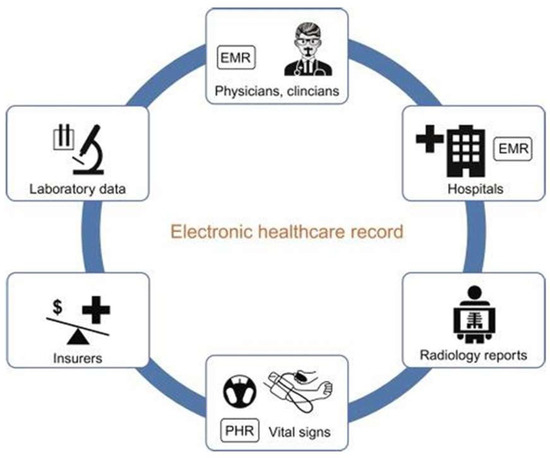
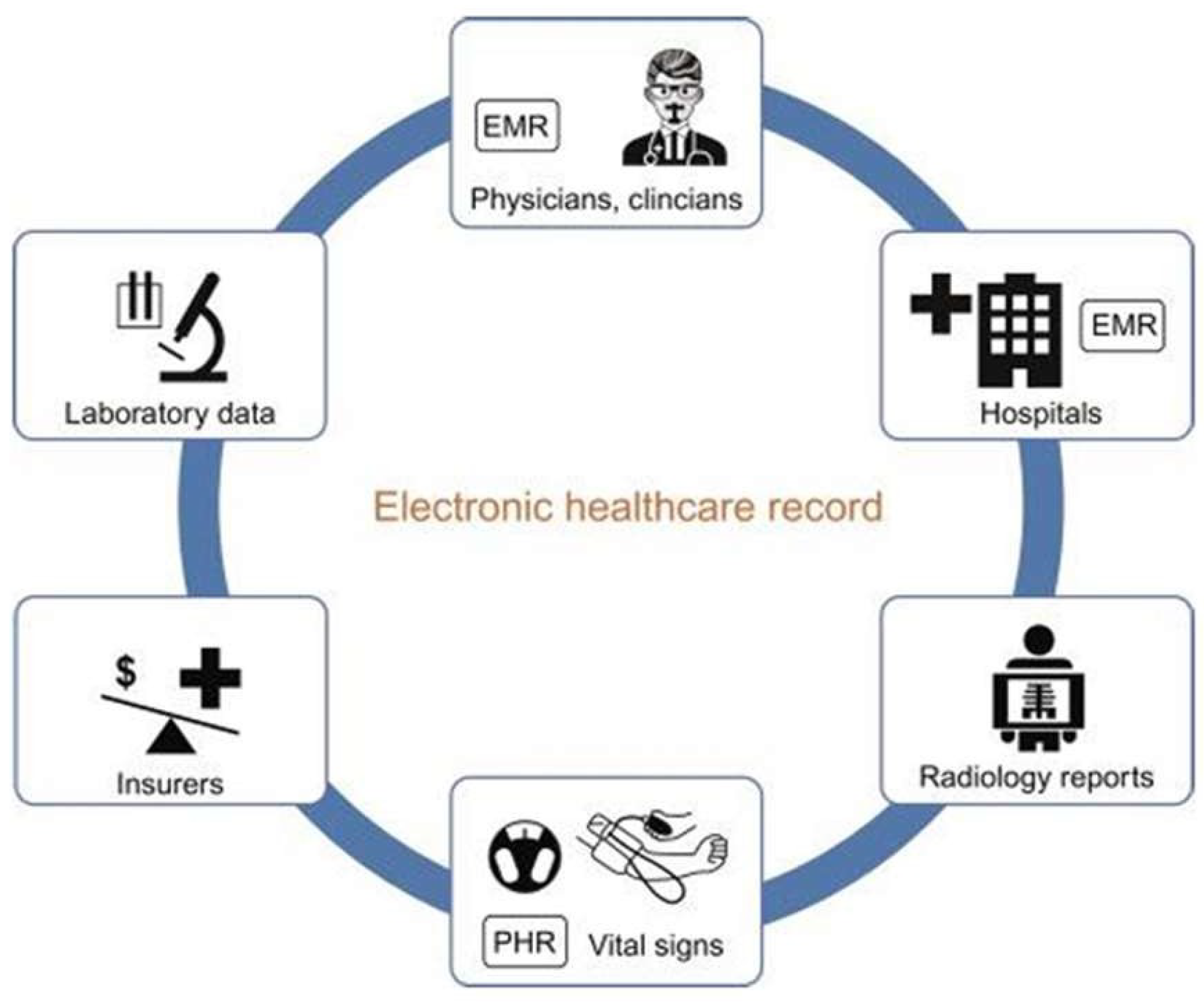
The process of transitioning to digital records in this way makes the work of staff flow smoothly and minimizes the number of errors made in the medical field. In addition, it guarantees the continuance of care to patients in different healthcare settings without any disruption. EHRs improve communication between health system services and reduce the need to identify patients, increasing the correctness of the patient database. EHRs lead to better and enhanced utilization of digital usage and continuous patient monitoring, thus providing a complete picture of patients’ health issues and ensuring that medical decisions are made correctly and efficiently [2]. The proposed process of EHRs is outlined in Figure 1.
Figure 1.
Electronic health records.
The protection and privacy of electronic health records (EHRs) should be the first priority in today’s digital era, where encryption and access control are typical means of protection for sensitive health information. Blockchain technology is adding to these records’ safety and patient trust. With the use of decentralized and immutable ledgers, blockchain guarantees both the integrity and confidentiality of the data, thus making it very difficult for any single entity to change or delete the information without the consensus of the network. Because of its transparency and tamper-proof features, blockchain is less vulnerable to data breaches and unauthorized access, thereby increasing trust in the system.
There are various types of blockchains, such as public, private, consortium, and hybrid blockchains. Each of them is designed with a different purpose. Public blockchains, such as Bitcoin, are accessible to everyone and are thus highly transparent. There is a limitation to the number of people who can have access to private blockchains, so their privacy is more enhanced [3]. Consortium blockchains are semi-decentralized, operated by a group of organizations, and thus they have a perfect combination of both privacy and transparency. Hybrid blockchains are those in which parts of their system are public while others are private; thus, the blockchain can serve both types of users. Ethereum, as a major blockchain platform, is not limited only to cryptocurrencies but also supports decentralized applications and smart contracts, which are progressively more vital in the healthcare sector for the secure automation of processes such as billing and patient consent management. It is this versatility along with the strong security system of Ethereum that makes healthcare operations benefit and accelerate further developments.
Machine learning (ML) works wonders in the healthcare industry through the use of several algorithms, which, in turn, are capable of processing large amounts of data, after which the algorithms come up with the appropriate interpretations. ML techniques provide healthcare professionals with the ability to make predictions, recognize occurrences, and, ultimately, delineate suitable treatment plans based on the patient’s data. There are multiple types of ML, such as supervised learning, unsupervised learning, and reinforcement learning [4]. In supervised learning, the computer is given labeled examples to learn from in order to make future predictions. On the other hand, unsupervised learning recognizes relationships among unlabeled data. Reinforcement learning consists of a reward–punishment mechanism through which the computer gradually masters a task. The ML techniques operating on EHRs securely stored on blockchains can arrive at the recognition of various patterns as well as the risk factors that, in turn, can revolutionize the decision-making of medical staff, resulting in the personalized prescription of treatments improving patient care and outcomes.
The combination of blockchain and ML is a gamechanger for the healthcare industry. The immutable and transparent record of transactions provided by a decentralized ledger is ideal for healthcare as it ensures data integrity and transparency. On the other hand, ML, through its predictive analytics and personalization feature, enhances decision-making and provides new insights. The fusion of these two technologies, therefore, creates a powerhouse of tools in healthcare to deliver efficient, accurate, and patient-centered care. Once data are safely stored and made available for analyses through blockchain and ML, the healthcare industry can achieve numerous benefits, such as streamlining clinical workflows, improving patient monitoring, and facilitating the development of precision medicine. This integration, therefore, goes beyond just transforming healthcare delivery to produce better health outcomes and the more efficient use of medical resources.
2. Literature Review
Liu et al. [5] proposed a blockchain-based scheme to enhance EHR systems within hospitals. This scheme addresses critical issues such as data sharing and privacy preservation using a private blockchain maintained by hospitals. It ensures decentralization and tamper resistance, providing doctors with a reliable mechanism for storing and accessing patient medical data while maintaining privacy. The scheme also includes a symptom matching mechanism for secure communication between patients with similar symptoms.
Meng et al. [6] introduced a CP-ABE scheme with hidden sensitive policies to enhance data security and privacy in smart cities. This approach allows for fine-grained access control based on user attributes while concealing sensitive access policies. It integrates keyword search techniques to enable secure searching of encrypted data without exposing confidential information. The method offers improved access control, efficient encryption and decryption processes, and scalability.
Wang et al. [7] developed a fast CP-ABE system for mobile healthcare networks to enhance data security and privacy. This system offers fine-grained access control while ensuring robust security measures. It is designed for mobile terminal devices with low computational and storage power, offloading expensive tasks to semi-trusted third parties. The scheme ensures data privacy and secure sharing in an open environment, verified through a Boneh–Lynn–Shacham short signature scheme.
Niu et al. [8] created a novel EHR sharing scheme leveraging permissioned blockchains to address inefficiencies in traditional methods. The scheme employs ciphertext-based attribute encryption for data confidentiality and access control, prioritizing patient identity privacy. A polynomial equation establishes flexible connections between keywords, integrating blockchain technology. The analysis shows high retrieval efficiency, advancing medical data management in digital healthcare systems.
De Oliveira et al. [9] presented SmartAccess, a system utilizing blockchain and smart contracts to tackle cross organization data sharing challenges in healthcare. This system ensures joint agreement on access policies and dynamic access control while providing transparency and auditability. Implemented on a private, permissioned blockchain, SmartAccess transforms access control into distributed smart contract execution, enhancing security and interoperability.
Da Costa et al. [10] proposed Sec-Health, a blockchain-based protocol designed to address security risks in storing and sharing electronic health records. Sec-Health fulfills regulatory requirements for confidentiality, access control, integrity, revocation, anonymity, emergency access, and interoperability. Analysis under various attack scenarios demonstrates the protocol’s robustness. A proof-of-concept evaluation highlights significant reductions in access time and client-side memory overhead.
Tao and Ling [11] introduced a practical solution for secure and private medical file sharing using blockchain and decentralized Attribute-Based Encryption. Traditional centralized certificate authority models are prone to single-point failures. In contrast, this scheme leverages blockchain to record authorizations and uses smart contracts for interactive user engagement. It enables fine-grained access control to medical files, ensuring privacy and security without single-point failure risks.
3. Proposed System
The proposed system primarily integrates machine learning (ML) algorithms to identify risk factors for heart conditions and support treatment decisions, aiming to enhance healthcare outcomes through data-driven insights. It builds upon an existing foundation that includes Attribute-Based Encryption (ABE) and blockchain technology for securing electronic health records (EHRs) [12]. Ciphertext-Policy Attribute-Based Encryption (CP-ABE) is a type of ABE that ensures secure EHRs by restricting access based on defined attributes, preventing unauthorized tampering [13]. These technologies ensure authorized access and protect against unauthorized modifications, while core functionalities such as user registration, doctor and patient login, and EHR management are designed to maintain data integrity, privacy, and accountability in healthcare practices. This approach underscores the system’s commitment to leveraging advanced ML analytics to optimize clinical workflows and improve patient care.
3.1. Combination of Blockchain and Machine Learning for Privacy Prediction
The proposed technique was to run the machine learning models for encryption and deidentification processes of patient data. Electronic healthcare records were deployed on the blockchain for the encryption process using Blockchain and Machine Learning Combined for Prediction that Preserves Privacy [14]. In this proposed concept, only use smart contracts to generate and distribute the encrypted key, which provides authorization for the patient data.
It provides two ways to enable the machine learning method to access sensitive data: 1. one is before uploading; 2. the second solution employs a two-tier procedure to enable machine learning without directly exposing sensitive data. These anonymized datasets, which are kept in the blockchain’s off-chain storage and accessed through secure APIs managed by smart contracts, are used to train or run the machine learning model [15].
3.1.1. Machine Learning Algorithms
The proposed system utilizes several ML algorithms to predict the risk factors associated with heart conditions. These include the following:
- Random Forest: A versatile and robust ensemble learning method that constructs multiple decision trees during training and outputs the mode of the classes (classification) or mean prediction (regression) of the individual trees. Random Forest is known for its high accuracy, ability to handle large datasets with higher dimensionality, and robustness against overfitting.
- Support Vector Machine (SVM): A powerful supervised learning model used for classification and regression tasks. SVM works by finding the hyperplane that best divides a dataset into classes. It is effective in high-dimensional spaces and is particularly useful for cases where the number of dimensions exceeds the number of samples.
- Naive Bayes (Gaussian): A probabilistic classifier based on applying Bayes’ theorem with strong (naive) independence assumptions. The Gaussian Naive Bayes variant assumes that the continuous values associated with each feature are distributed according to a Gaussian (normal) distribution. It is particularly suited for high-dimensional datasets and provides a baseline performance in many applications.
3.1.2. Implementation and Impact
The integration of these ML algorithms enables the system to analyze historical health data, identify potential risk factors for heart conditions, and assist medical professionals in making data-driven treatment decisions. By utilizing a dataset of patient health records, the system can predict the likelihood of heart conditions, thus allowing doctors to understand the underlying issues and prescribe appropriate medications and diagnoses accordingly.
3.1.3. System Architecture
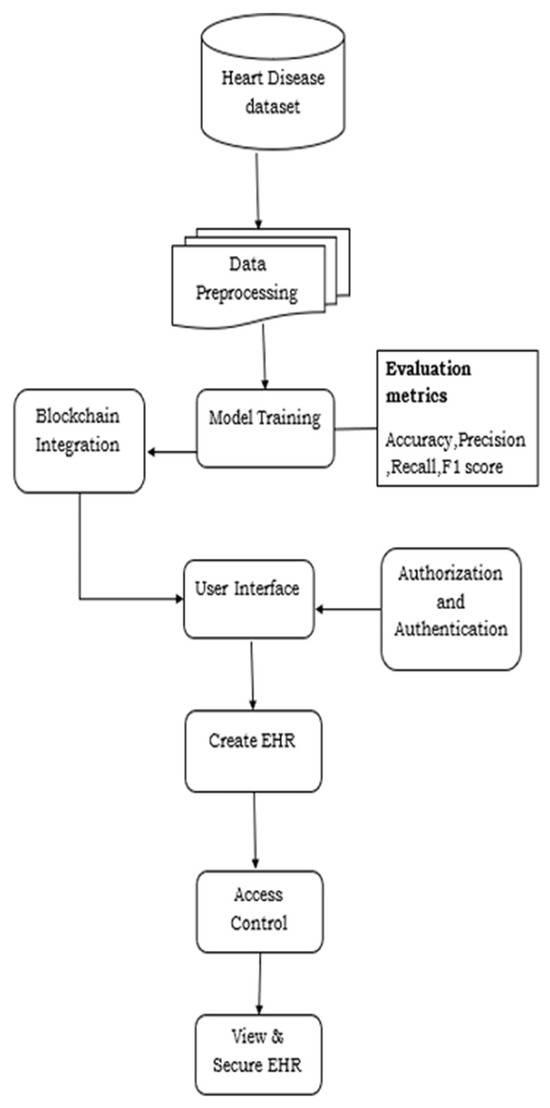
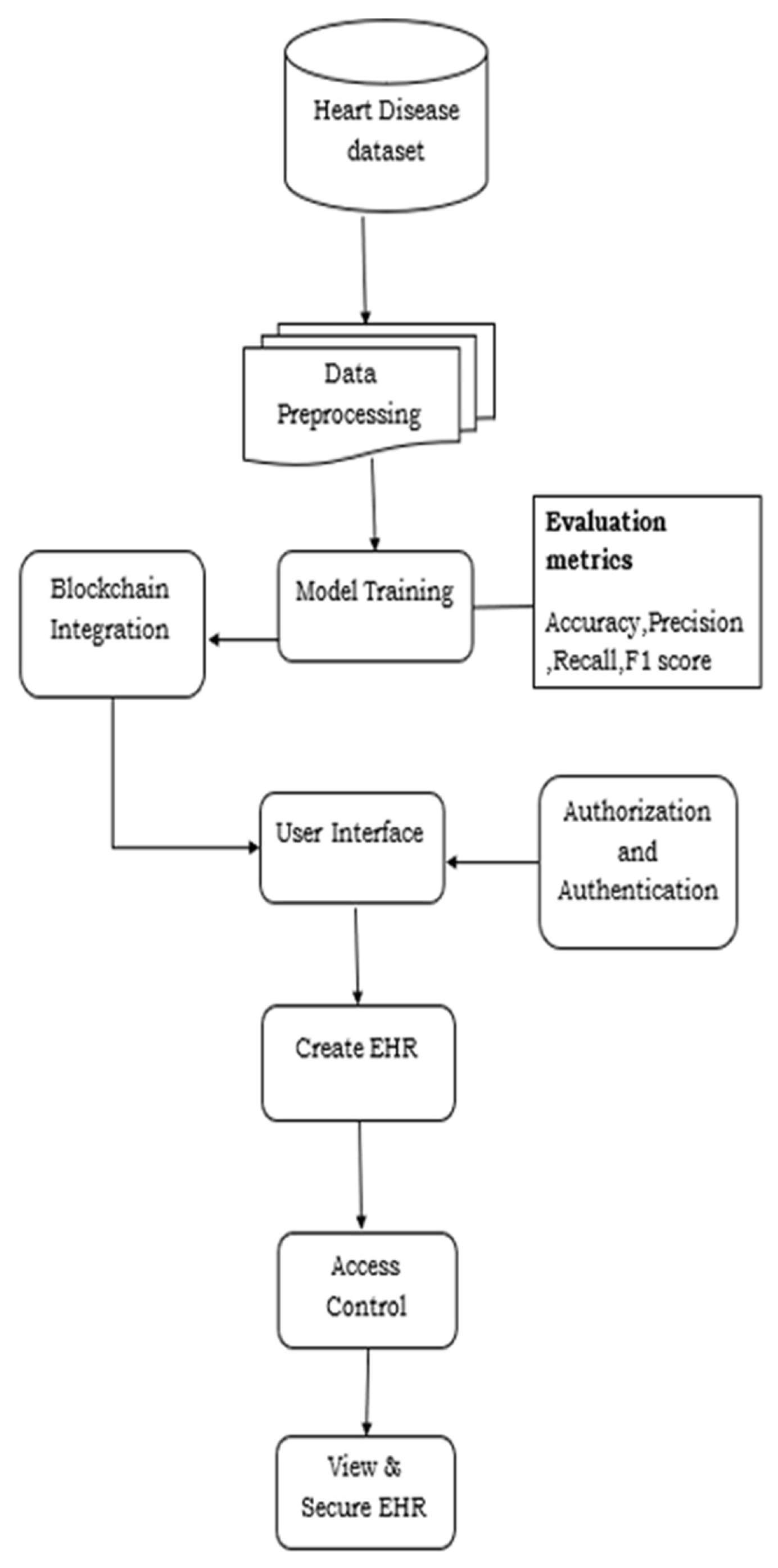
The diagram in Figure 2 depicts a system utilizing blockchain for secure EHR storage and machine learning algorithms to analyze patient data and predict the risk of heart conditions.
Figure 2.
System architecture.
3.1.4. Security Analysis
The integrated electronic health records (EHRs) and blockchain system ensures confidentiality, integrity, and availability of sensitive health data. Key to the approach is Attribute-Based Encryption (ABE), specifically Ciphertext-Policy ABE (CP-ABE). Confidentiality: CP-ABE provides fine-grained access control over EHR data, allowing for access based on attributes such as user roles and patient demographics. This ensures that only authorized users can decrypt and access specific EHR information. Integrity: Blockchain technology ensures data integrity by maintaining an immutable ledger of all EHR transactions. This guarantees that EHR data cannot be altered without detection, preserving its authenticity and reliability. Availability: The system leverages blockchain’s decentralized architecture and redundant data storage to ensure continuous access to EHRs, even during network disruptions or node failures.
3.1.5. Experimental Results
The methodology encompasses data preprocessing, machine learning model training, blockchain integration, user authentication, and EHR management.
Data Preprocessing: The Cleveland, Switzerland, and Long Beach datasets are preprocessed to standardize features such as age, blood pressure, cholesterol levels, maximum heart rate, and serum blood sugar. This enhances data consistency and comparability for accurate model training. Data cleaning is performed to handle missing values and outliers, ensuring the quality of the dataset. Feature scaling techniques, such as normalization and standardization, are applied to bring all features onto a common scale, which is crucial for the performance of machine learning algorithms.
Model Training: Machine learning algorithms (Random Forest, Support Vector Machine, Naïve Bayes) predict heart disease risk factors based on standardized datasets. Performance metrics such as accuracy, precision, recall, and F1 score validate model efficacy in risk assessment.
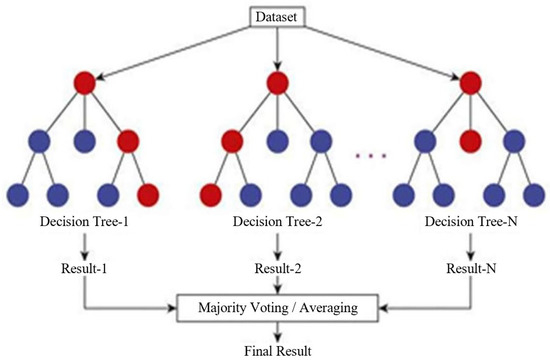
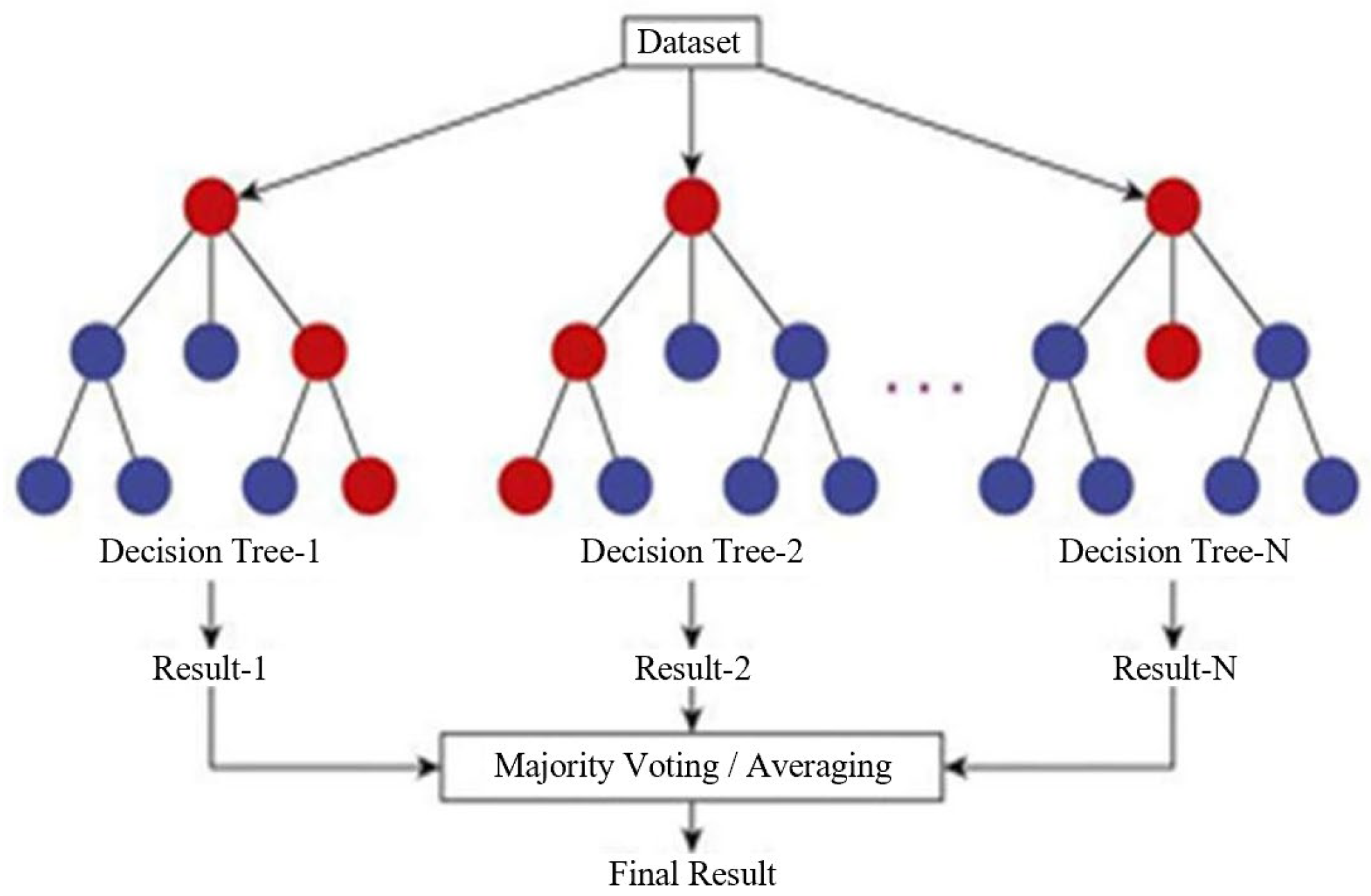
Random Forest: Random Forest is an ensemble learning method that constructs multiple decision trees during training. It aggregates the predictions of individual trees to improve accuracy and reduce overfitting. This model is robust for both classification and regression tasks. It is shown in Figure 3.
Figure 3.
RF-Algorithm process.
The RF-Algorithmic process is trained with the preprocessed “heart issues or disease data”. In this case, we will illustrate the patterns and input features “(e.g., age, gender, clinical indicators)” with the goal variable. By using the digital data of people with illnesses, we will be able to predict the cause of heart disease risk. For classification and regression purposes, we can use SVM.
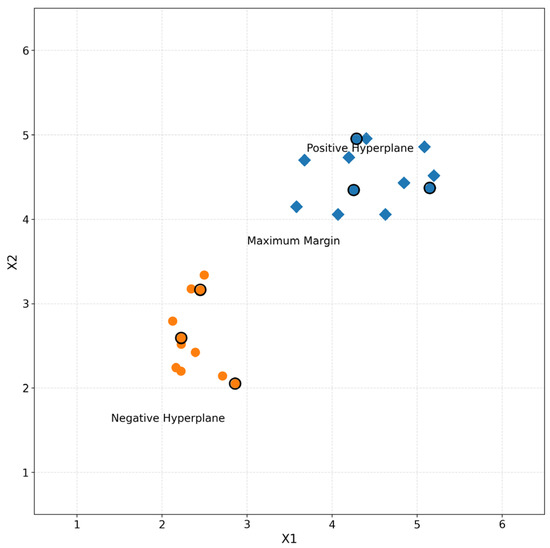
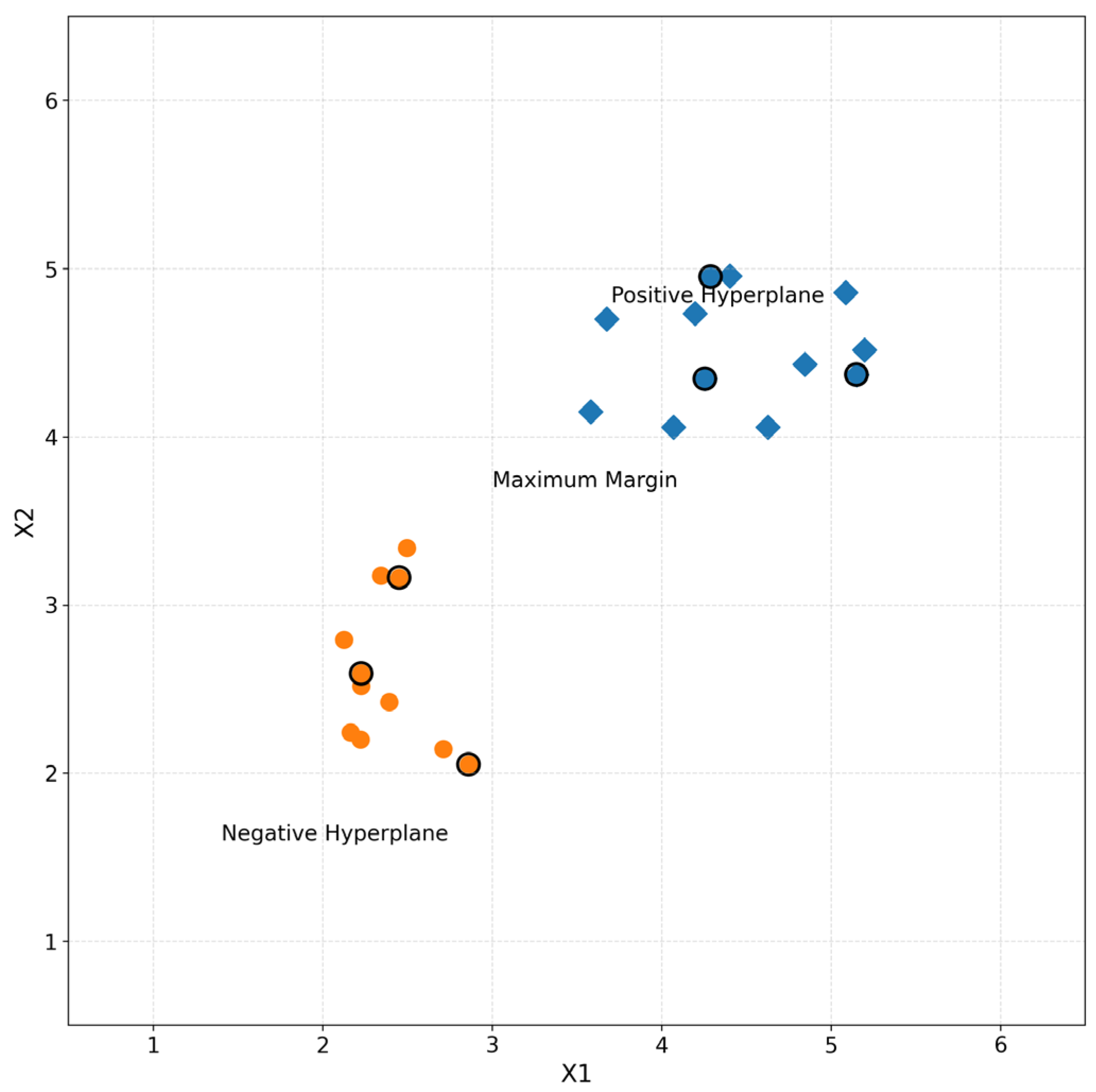
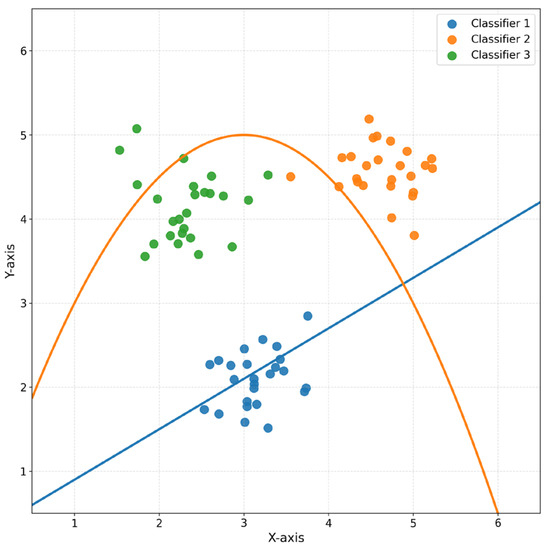
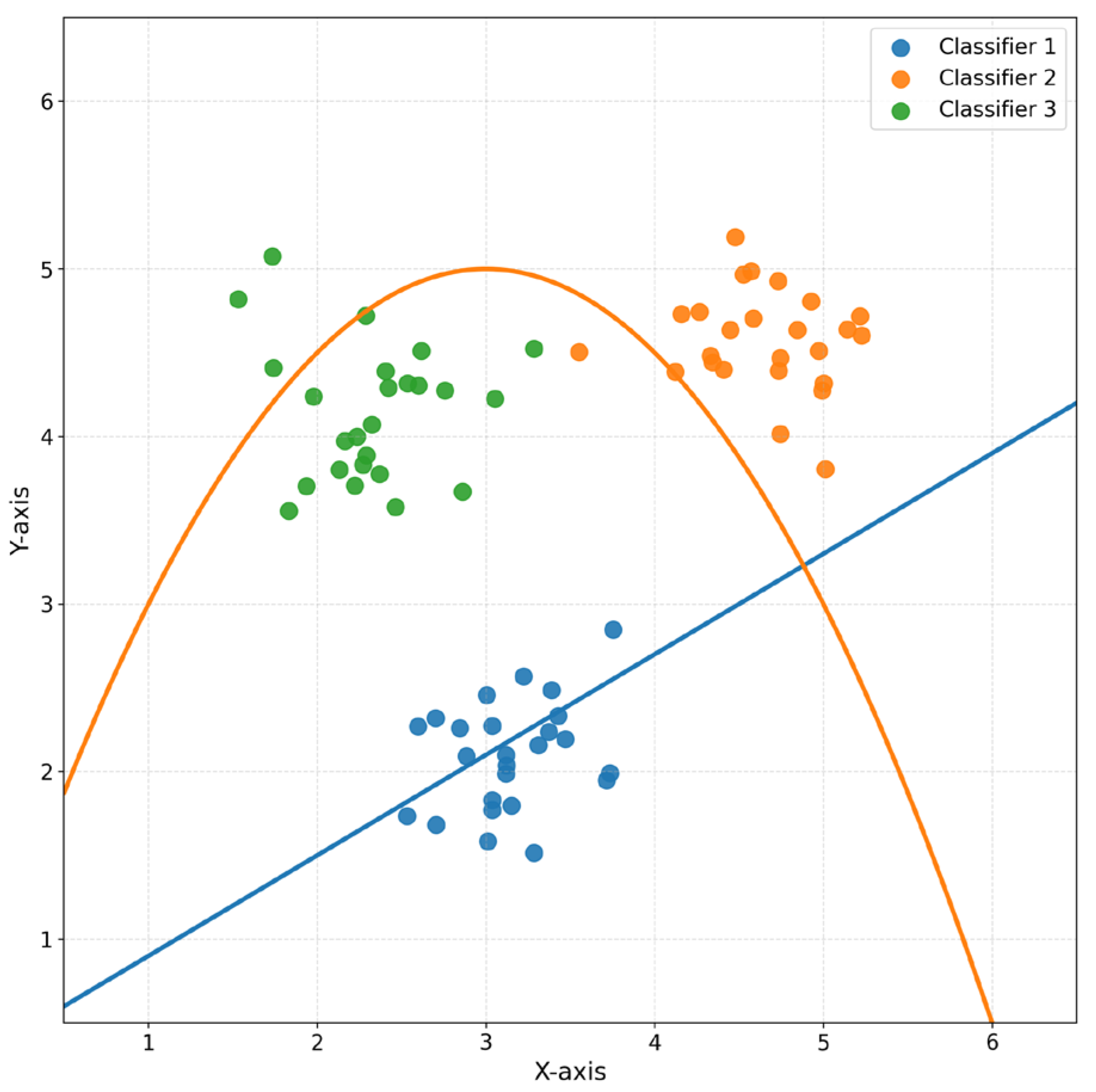
SVM is an efficient machine learning algorithmic process when we work on high-dimensional computational processes and nonlinear classification for kernel functions. Figure 4 reflects this. In this case, the SVM classifier is trained using the preprocessed heart disease dataset. It learns to identify an optimal hyperplane that separates different classes of heart disease severity based on features like age, gender, and clinical indicators, aiding in the prediction of heart disease risk. Naïve Bayes (Gaussian NB): Naïve Bayes is a probabilistic classifier based on Bayes’ theorem, assuming independence among features. Gaussian Naïve Bayes specifically models the distribution of features as Gaussian. It is simple, computationally efficient, and effective for various classification tasks. This is shown in Figure 5.
Figure 4.
Support vector machine.
Figure 5.
Naïve Bayes.
In this case, Gaussian Naïve Bayes is trained using the preprocessed heart disease dataset. It estimates the mean and variance of each feature for each class of heart disease severity, allowing it to predict the likelihood of new data points belonging to different classes, thereby assisting in heart disease risk assessment.
Blockchain Integration: Via blockchain tech, the whole process of EHR transactional communication becomes more transparent and fair for each party involved. Every time a new record is added to an EHR, the transaction is hashed using a one-way function and a block built on the previous one is created to store the record, making up an indelible ledger. Different schemes such as CP-ABE are implemented for EHR security on the blockchain. ABE achieves a high level of security by providing access control in EHRs by which each piece of data is encrypted together with policies specific. Where users are able to perform the decryption process to access the computerized information. The “Ethereum” blockchain is a gateway to secure user registration, make new EHRs, implement access control, and provide a trace of the performed activities. Along with data security, transparency of EHR transactions is guaranteed by the fact that blockchain transactions can neither be reversed nor altered, which is a significant plus for the system. Moreover, the system allows for decentralized storage and management of EHRs with the result that data can always be accessed and remain incorruptible. Every action is documented on the blockchain, thus creating an audit trail that cannot be changed.
User Authentication: Strong authentication methods are in place to verify users before allowing them access and thus keep patient information confidential. Security handling of user authentication and sessions is carried out by the Django framework, which is a secure way of performing system interaction. The use of role-based access control (RBAC) restricts the amount of data to which a user can access only to those relevant to his or her role. CP-ABE can be used to implement very specific access control policies which in turn guarantee that only entities that have been authorized can decrypt and gain access to sensitive health data.
EHR Management: The objective of this section was to highlight the aspects of the EHR system that are being managed locally. It describes how doctors may perform operations like creating new patient records, updating old ones, and reviewing the data of the existing ones all in an environment secured by blockchain and encryption. All medical records are kept in a blockchain, and doctors cannot access them unless given permission to do so by the patient. Every part of medical information in the given blockchain is encrypted via CP-ABE to ensure that only those who are allowed and have the right qualifications can obtain the key and read the medical data. This is to say, the doctor’s medical records are encrypted and stored on the blockchain in the form of a new block; thus, the doctor’s files remain unaltered. Patients are given the green light to access their EHR in a secure manner, while any authorized healthcare professional can access at the data stored in the EHR for treatment purposes, decrypt it if necessary, and then proceed with the first aid care giving.
3.1.6. Dataset Description and Preprocessing Details
We utilized three important benchmark heart disease datasets—”Cleveland, Switzerland, and Long Beach”—received from the UCI machine learning data repository. Integration of these datasets evaluates the 920 patient records; each record contains 14 clinical attributes, “including age, gender, resting blood pressure, cholesterol level, fasting blood sugar, resting ECG results, maximum heart rate, exercise-induced angina, and ST depression”. The target variable was the combination of the presence or absence of heart disease, identified as the binary class (1 = disease, 0 = no disease). The datasets provide a slight class imbalance, with 54% positive cases and 46% negative cases. Data cleaning needed to be performed to remove the incomplete or inconsistent entries. The mean of the numerical data and median for categorical features are used to impute missing values (less than 3% of all records). Outliers are identified using the interquartile range (IQR) method, with threshold values to prevent skewed distributions.
3.1.7. Blockchain System Performance
Regarding the use of the Ethereum test network, while we measured performances such as transaction latency, throughput, scalability, and operational cost will be evaluated to refine the progress of the blockchain component’s effectiveness. The encrypted electronic health record (EHR) can be retrieved with the minimum average transaction delay of 2.3 s, guaranteeing near-real-time updates without sacrificing security. The settings for medium throughput is 25 transactions per second, which is enough in private, and the average gas cost/transaction was ETH 0.00042, which was a little expensive. The total framework was tested using 10,000 simulated patient records, and the results showed stable performance with little loss in transaction speed. The approach illustrates blockchain layer’s effectiveness, affordability, and scalability.
3.1.8. System Evaluation
To evaluate the most common causes of health issues using patient digital data, this study integrates machine learning models like RF, SVM, and Naive Bayes. Demonstrating the decentralized framework for private digital health data, blockchain was used to preserve the computerized data’s confidentiality and integrity process.
By using machine learning techniques, efficient predictions were gauged through the main evaluation metrics, such as 1. accuracy, 2. precision, 3. recall, and 4. F1, score; these are important for pointing out the models’ trustworthiness and ability to generalize to new data.
Moreover, <strong>confusion matrix</strong> was used to offer an in-depth understanding of the performance of the models. It outlines the prediction results by showing the following numbers:
- true positives_TP: provides the accurate and efficient prediction positive class.
- true negatives_TN: provides the accurate and efficient prediction negative class.
- false positives_FP: provides the accurate and efficient prediction positive class.
- false negatives_FN: provides the accurate and efficient prediction negative class.
Step 1: Accuracy: “TP + TN TP + TN + FP + FN”; Step 2: Precision = “TPTP + FP [2]”; Step 3: Recall = “TP TP + FN [3]”; Step 4: F1 Score = 2. “Precision. Recall Precision + Recall”.
The EHR management portal for hospital operations is a product of the Django framework. The portal thus created allows doctors and patients to manage electronic health records (EHRs) conveniently. Along with this, it also integrates user-friendly authentication and access control mechanisms. To ensure security, user accounts are created through blockchain technology in a secure manner, and EHRs are stored via smart contracts on Ethereum to guarantee that they are tamper-proof and transparent.
This research compares the machine learning computational process for the accurate detection of heart attacks. “RF” was able to outperform other algorithms, evaluated using the following components: “1. accuracy, 2. precision, 3. recall, and 4. F1 score”. In fact, it scored 1 in all metrics, which means that it was able to correctly identify true positives while at the same time producing a minimal number of false positives and negatives. SVM was able to display a strong performance like that of Random Forest but with slightly lower values for precision and recall. The performance of Naive Bayes was the worst of the three, leading to the lowest scores for predicting heart disease risk factors accurately.
Numerical features are standardized with “z-score” to ensure equal contribution for the training model, and categorical variables are encoded with one-hot encoding. The dataset was divided into “80%” training and “20%” testing subsets.
4. Conclusions
This project considers the fusion of Attribute-Based Encryption with blockchain as a means to solve the security problems due to centralized healthcare systems. The CP-ABE algorithm is responsible for granting access to the data through the blockchain that is inherently immutable, and hence the integrity of the data is maintained. Consequently, authorized users will have real-time access to EHRs, which will pave the way for new forms of medical care. Medical data analysis is further advanced with ML models, making possible the accurate identification of heart attacks; consequently, healthcare professionals can make the right decision on giving the right treatment to the patient.
The test outcomes demonstrate the accomplished data security and integrity goals of the project. Security evaluations ensure that the model was composed of the required tools to protect sensitive health information without compromising the data protection standards and user accessibility. Random Forest is commonly better than other ML computational techniques in terms of “1. Accuracy, 2. Precision, 3. Recall, 4. F1score”. RF was near perfection in terms of accuracy, at about 100%, while SVM (80%) and Naïve Bayes (75%) were far behind.
The Random Forest model illustrates perfect “accuracy, precision, recall, and F1 score”; these results provide potential overfitting for the training data. To ensure model generalizability, further work could include performing external validation using the independent datasets and Long Beach datasets.
“k-fold cross-validation” and “regularization techniques” were applied to prevent model bias and to ensure robustness. Heterogeneous datasets will be evaluated with different demographic and clinical sources to provide credibility and illustrate the model’s reliability in real-world healthcare.
5. Future Scope
Next-generation EHRs will be powered by AI and IoT integration, which will significantly improve the predictive capabilities of analytics, thereby making medical treatments more personalized. The security of blockchains will become more sophisticated with the implementation of features such as dynamic attribute management and decentralized key distribution, thus making the data even more secure. The mentioned technological advances in healthcare management are poised to bring about a radical change in the way healthcare is managed securely and efficiently in present days.
Author Contributions
M.L.K. led the research and carried out the core system design, machine learning implementation, blockchain integration, experimentation, and manuscript drafting. P.S.G.A.S. provided major support in software development, data preprocessing, model validation, experimental analysis, and manuscript preparation. R.K.N. supervised the research, designed the blockchain security architecture, validated methodologies, and led manuscript review. S.S. contributed to blockchain security analysis and result interpretation. S.B. supported machine learning validation, system architecture, and performance evaluation. P.G. assisted in investigation, literature consolidation, healthcare domain analysis, and manuscript review. All authors have read and agreed to the published version of the manuscript.
Funding
This research received no external funding.
Institutional Review Board Statement
Not applicable.
Informed Consent Statement
Not applicable.
Data Availability Statement
Data is unavailable due to privacy.
Conflicts of Interest
The authors declare no conflict of interest.
References
- Kaelber, D.C.; Bates, D.W. Health information exchange and patient safety. J. Biomed. Inform. 2007, 40, S40–S45. [Google Scholar] [CrossRef] [Scilit]
- Menachemi, N.; Collum, T.H. Benefits and drawbacks of electronic health record systems. Risk Manag. Healthc. Policy 2011, 4, 47–55. [Google Scholar] [CrossRef] [Scilit] [PubMed]
- Don, D.H. Magnetic Resonance Imaging Biomarkers for Parkinson’s Disease: A Machine Learning Approach. Ph.D. Thesis, The University of Western Ontario (Canada), London, ON, Canada, 2024. [Google Scholar]
- da Costa, L.; Pinheiro, B.; Araujo, R.; Abelém, A. A Decentralized Protocol for Securely Storing and Sharing Health Records. In Proceedings of the 2019 IEEE International Conference on E-health Networking, Application & Services (HealthCom), Bogota, Colombia, 14–16 October 2019. [Google Scholar]
- Liu, X.; Wang, Z.; Jin, C.; Li, F.; Li, G. A Blockchain-Based Medical Data Sharing and Protection Scheme. IEEE Access 2019, 7, 118943–118953. [Google Scholar] [CrossRef] [Scilit]
- Meng, F.; Cheng, L.; Wang, M. Ciphertext-Policy Attribute-Based Encryption with Hidden Sensitive Policy from Keyword Search Techniques in Smart City. EURASIP J. Wirel. Commun. Netw. 2021, 2021, 20. [Google Scholar] [CrossRef] [Scilit]
- Wang, S.; Wang, H.; Li, J.; Wang, H.; Chaudhry, J.; Alazab, M. A Fast CP-ABE System for Cyber-Physical Security and Privacy in Mobile Healthcare Network. IEEE Trans. Ind. Appl. 2020, 56, 4467–4477. [Google Scholar] [CrossRef] [Scilit]
- Niu, S.; Chen, L.; Wang, J.; Yu, F. Electronic Health Record Sharing Scheme With Searchable Attribute-Based Encryption on Blockchain. IEEE Access 2020, 8, 7195–7204. [Google Scholar] [CrossRef] [Scilit]
- Tuler De Oliveira, M.; Reis, L.H.A.; Verginadis, Y.; Mattos, D.M.F.; Olabarriaga, S.D. SmartAccess: Attribute-Based Access Control System for Medical Records Based on Smart Contracts. IEEE Access 2022, 10, 117836–117854. [Google Scholar] [CrossRef] [Scilit]
- da Costa, L.; Pinheiro, B.; Cordeiro, W.; Araújo, R.; Abelém, A. Sec-Health: A Blockchain-Based Protocol for Securing Health Records. IEEE Access 2023, 11, 16605–16620. [Google Scholar] [CrossRef] [Scilit]
- Tao, J.; Ling, L. Practical medical files sharing scheme based on blockchain and decentralized attribute-based encryption. IEEE Access 2021, 9, 118771–118781. [Google Scholar] [CrossRef] [Scilit]
- Zheng, Z.; Xie, S.; Dai, H.; Chen, X.; Wang, H. An overview of blockchain technology: Architecture, consensus, and future trends. In Proceedings of the 2017 IEEE International Congress on Big Data (BigData Congress), Honolulu, HI, USA, 25–30 June 2017; pp. 557–564. [Google Scholar] [CrossRef] [Scilit]
- Fitriyani, N.L.; Syafrudin, M.; Alfian, G.; Rhee, J. HDPM: An Effective Heart Disease Prediction Model for a Clinical Decision Support System. IEEE Access 2020, 8, 133034–133050. [Google Scholar] [CrossRef] [Scilit]
- Mohan, S.; Thirumalai, C.; Srivastava, G. Effective heart disease prediction using hybrid machine learning techniques. IEEE Access 2019, 7, 81542–81554. [Google Scholar] [CrossRef] [Scilit]
- Sharma, V.; Yadav, S.; Gupta, M. Heart Disease Prediction Using Machine Learning Techniques. In Proceedings of the 2020 2nd International Conference on Advances in Computing, Communication Control and Networking (ICACCCN), Greater Noida, India, 18–19 December 2020. [Google Scholar] [CrossRef] [Scilit]
Disclaimer/Publisher’s Note: The statements, opinions and data contained in all publications are solely those of the individual author(s) and contributor(s) and not of MDPI and/or the editor(s). MDPI and/or the editor(s) disclaim responsibility for any injury to people or property resulting from any ideas, methods, instructions or products referred to in the content. |
© 2025 by the authors. Licensee MDPI, Basel, Switzerland. This article is an open access article distributed under the terms and conditions of the Creative Commons Attribution (CC BY) license (https://creativecommons.org/licenses/by/4.0/).