Article

Protective Efficacy of the Recombinant HVT+IBD+H5 Alone or Boostered by Subunit Inactivated Vaccine Against Experimental Challenge with HPAI-H5N1 Clade 2.3.4.4b Virus in Broiler Chickens


1
CLEVB—The Central Laboratory for Evaluation of Veterinary Biologics, Agriculture Research Center, Abbasia, Cairo 11381, Egypt
2
Department of Pathology, Faculty of Veterinary Medicine, Cairo University, Giza 12211, Egypt
3
Boehringer Ingelheim Animal Health, New Cairo 11835, Egypt
4
Boehringer Ingelheim Animal Health, 69007 Lyon, France
5
Department of Bird and Rabbit Diseases, Faculty of Veterinary Medicine, Menoufia University, Shebeen Elkom 32511, Egypt
*
Author to whom correspondence should be addressed.
Poultry 2026, 5(3), 44; https://doi.org/10.3390/poultry5030044 (registering DOI)
Submission received: 22 April 2026 / Revised: 8 June 2026 / Accepted: 11 June 2026 / Published: 19 June 2026

Abstract

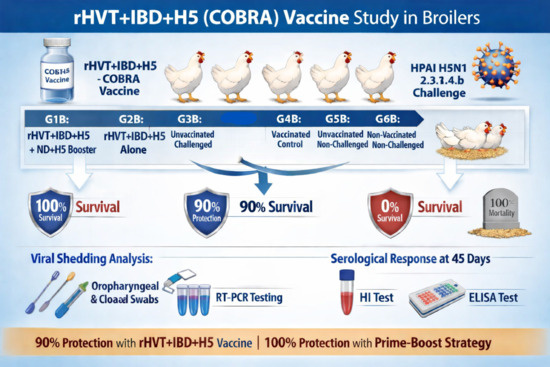
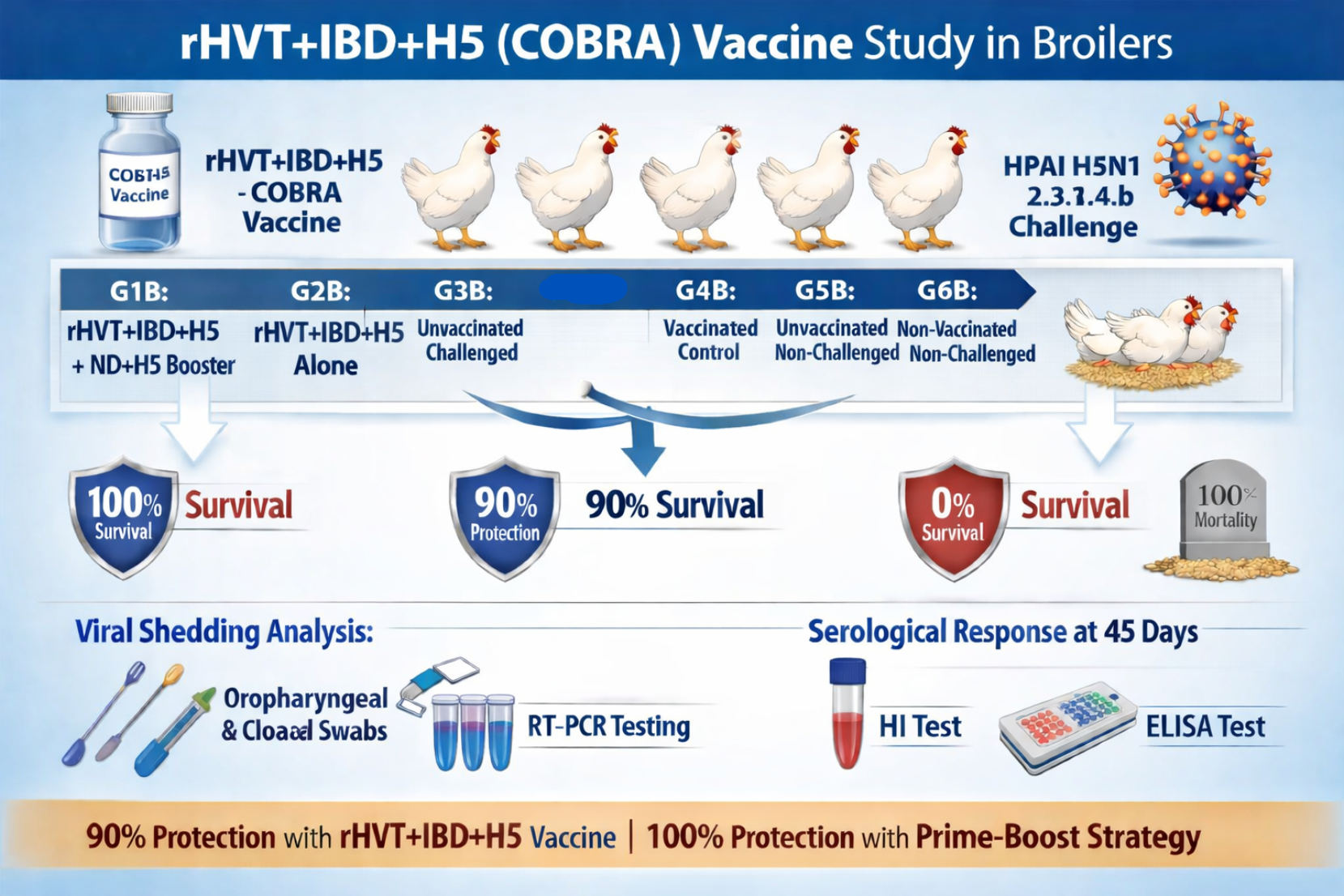
The genetic and antigenic diversity of H5Nx HPAI Gs/GD lineage continues to be a great challenge facing conventional inactivated vaccines. To overcome this challenge, a recombinant herpes virus of turkey (rHVT) vaccine expressing the viral protein 2 (VP2) of infectious bursal disease (IBD) and H5, rHVT+IBD+H5, was developed using computationally optimized broadly reactive antigen (COBRA) technology. In the current study, the protective efficacy of a commercially available vector trivalent vaccine rHVT+IBD+H5 using COBRA technology was assessed. A total of 120 commercial broilers were divided equally into six groups (G1B–G6B). The chickens in G1B–G3B were challenged with the most recent circulating HPAI-H5N1 clade 2.3.4.4.b Egyptian isolate (GenBank accession No. OQ933425) at 28 days old (DO), while the chickens in G4B and G5B were kept as vaccinated (as G1B and G2B, respectively) and non-challenged, and G6B was the non-vaccinated non-challenged group. In G1B, the chickens were vaccinated with Vaxxitek® rHVT+IBD+H5 at 1 DO and boostered with a commercially available subunit Baculovirus bivalent inactivated H5+ND (Volvac® B.E.S.T AI+ND) at 10 DO and had a 100% survival rate. The standalone vaccinated chicken G2B, using rHVT+IBD+H5 at 1 DO, had a highly significant survival rate (90%) vs. 0% (100% mortality) in the non-vaccinated challenged control, G3B. All the vaccinated groups had higher seroconversion at 45 DO especially using H5-coated antigen plates for the enzyme-linked immunosorbent assay (ELISA) test. The viral shedding titers and time were evaluated using a quantitative real-time polymerase chain reaction (RT-qPCR) in the collected oropharyngeal and cloacal swabs at 3, 5, 7, and 10 days post-challenge (DPC). In conclusion, vaccination with rHVT+IBD+H5 either as a standalone or when boostered with subunit Baculovirus bivalent inactivated ND+H5 resulted in 90 and 100% protection, respectively, without significant difference in the quantity and duration of viral shedding between both groups against HPAI-H5N1 clade 2.3.4.4.b experimental challenge in broilers.

Graphical Abstract

1. Introduction

Highly pathogenic avian influenza (HPAI) is a global problem affecting poultry, wild birds, mammals and sometimes humans. It is an extremely contagious systemic viral disease of poultry that produces high mortality rates reaching 100% in susceptible birds and economic losses due to disruption of the poultry supply chain especially if wide culling around infected premises is used [1]. The HPAI pathotype is caused by the H5 and H7 subtypes of the influenza A virus of the Orthomyxoviridae family; it occurs naturally in wild waterfowls as a low pathogenic avian influenza (LPAI) virus and can mutate into HPAI upon transmission to poultry [2]. Eurasian H5s are the immediate descendants of the A/goose/Guangdong/a/1996 (Gs/Gd)-like H5N1, HPAI, which after becoming endemic in domestic poultry in Asia has found a way back to its natural reservoirs (migratory aquatic birds), resulting in the significant wide spread of HPAI worldwide to Asia, Africa, Europe, and America, causing significant losses to poultry industries. Since its first emergence, the HA gene of H5 Gs/Gd HPAIV has genetically diversified into many clades and subclades. Clade 2.3.4.4b has undergone explosive expansion in wild birds and domestic poultry and almost entirely replaced other circulating clades in just a short period of time [3,4,5].
Egypt was the second African country, after Nigeria, to declare the infection of poultry with HPAI-H5N1 of clade 2.2.1 in 2006, causing severe economic losses to the Egyptian poultry industry. Migratory birds still have the key role in multiple introductions of HPAI into Egypt. Later mutations occurred during 2007 and 2008 that led to the emergence of clades 2.2.1.1 and 2.2.1.1a, respectively. Then, from 2009 to 2016, the evolved clade 2.2.1.2 continued to circulate and adapt in poultry (chickens and ducks), with increased detection rates in live bird markets [6,7,8,9]. At the end of 2016, the HPAI H5N8 virus of clade 2.3.4.4b of the Gs/GD lineage was detected in migratory birds in Egypt and spread quickly. It soon became the most frequently detected endemic H5 subtype among poultry species [10,11]. Due to the co-circulation of H5N8 and H9N2 among Egyptian poultry, the emergence of HPAI-H5N2 [A/duck/Egypt/VG1099/2018, (EG-VG1099)] has occurred, indicating the high reassortment compatibility between the Egyptian H5N8 and H9N2, with a closely related HA gene to the HPAI-H5N8 viruses’ clade 2.3.4.4b [11,12]. Later, in April 2021, HPAIV subtype H5N1 clade 2.3.4.4b was first detected in wild birds and domestic ducks from live bird markets in Egypt [13]. This HPAI H5N1 clade 2.3.4.4b strain has become prevalent in Egypt, replacing the HPAI H5N8 clade 2.3.4.4b strain. It has similar genomic characteristics to Eurasian strains, which suggests that the virus is continuously evolving and adapting in the region. Recently, a reassortant HPAI-H5N2 clade 2.3.4.4b virus reported in Egypt in June 2024 originated from waterfowl, according to environmental swab samples from waterers. Phylogenetic analysis revealed a novel reassortment genotype of both HPAI-H5N1 clade 2.3.4.4b with LPAI-H9N2 G5.6 viruses circulating in Egypt [14].
Vaccination provides an additional layer of disease prevention hand-in-hand with biosecurity measures and stamping-out. There are various types of licensed vaccines against HPAI in Egypt including inactivated whole AI virus adjuvanted vaccine containing either LPAI-H5 field strain or reverse genetic generated AI strain, subunit inactivated vaccines including Baculovirus expressing HPAI-H5 and live recombinant vaccines with HPAI-H5 inserts including Fowl-pox virus, HVT and Newcastle disease (ND) virus as a vector [1,15,16]. The COBRA technology generated a collective hemagglutinins (HA) antigen of different H5 clades (1, 2 and 3) using multiple rounds of consensus with HA sequences, creating a broad cross-clade H5 that is used in vaccine production with high potential to elicit cross-clade protection against HPAI-H5Nx, cross-reactive cellular immune responses and broad antibody responses [17,18]. The live recombinant vaccines, especially with HVT vector, provide many advantages including easy administration at the hatchery either by subcutaneous injection or in Ovo. Hatchery vaccination is more controlled than field vaccination, providing excellent safety; inducing long-lived protection due to persistence in the vaccinated host; and inducing cellular, local or mucosal, and humoral immunity; and maternal-derived antibodies have no or neglected impact on immune response after vaccination [15,16,19,20,21].
The current study aimed to evaluate and compare the protective efficacy of a commercially available vaccine, Vaxxitek® rHVT+IBD+H5, alone or boostered by a bivalent subunit inactivated vaccine for HPAI-H5 and ND (Volvac® B.E.S.T AI+ND) against experimental challenge with HPAI-H5N1 clade 2.3.4.4.b Egyptian isolate (GenBank accession No. OQ933425) in broiler chickens.

2. Materials and Methods

2.1. Ethical Approval

All the experimental procedures were approved by and followed the guidelines of the Scientific Research Ethics and Animal Care Committee (SREACC), Faculty of Veterinary Medicine, Menoufia University. The ethical approval code was MU/VetMed-2025/005. All efforts were made to minimize chicken suffering.

2.2. Vaccines

A commercially available, recombinant trivalent rHVT+IBD+H5 vaccine (Vaxxitek® rHVT+IBD+H5, Boehringer Ingelheim, Ingelheim am Rhein, Germany) was used. This vaccine was designed by inserting the viral protein 2 (VP2) of infectious bursal disease virus strain Faragher 52/70 and a collective H5 Hemagglutinin (HA) antigen using multiple rounds of consensus with HA sequences from H5 clades 1, 2 and 3 through COBRA technology, offering a cross-clade protection into the conserved DNA regions of Marek’s disease virus (Meleagrid herpes virus 1, MeHV-1, HVT, strain FC 126). Also, a commercially available, bivalent, subunit-inactivated vaccine containing the HA antigen of HPAI-H5 expressed in Baculovirus expression system technology (B.E.S.T.) and ND virus (genotype II LaSota) (Volvac B.E.S.T., Boehringer Ingelheim, Ingelheim am Rhein, Germany) was used.

2.3. Experimental Design

Chickens, isolators, vaccination, challenge virus and clinical observation
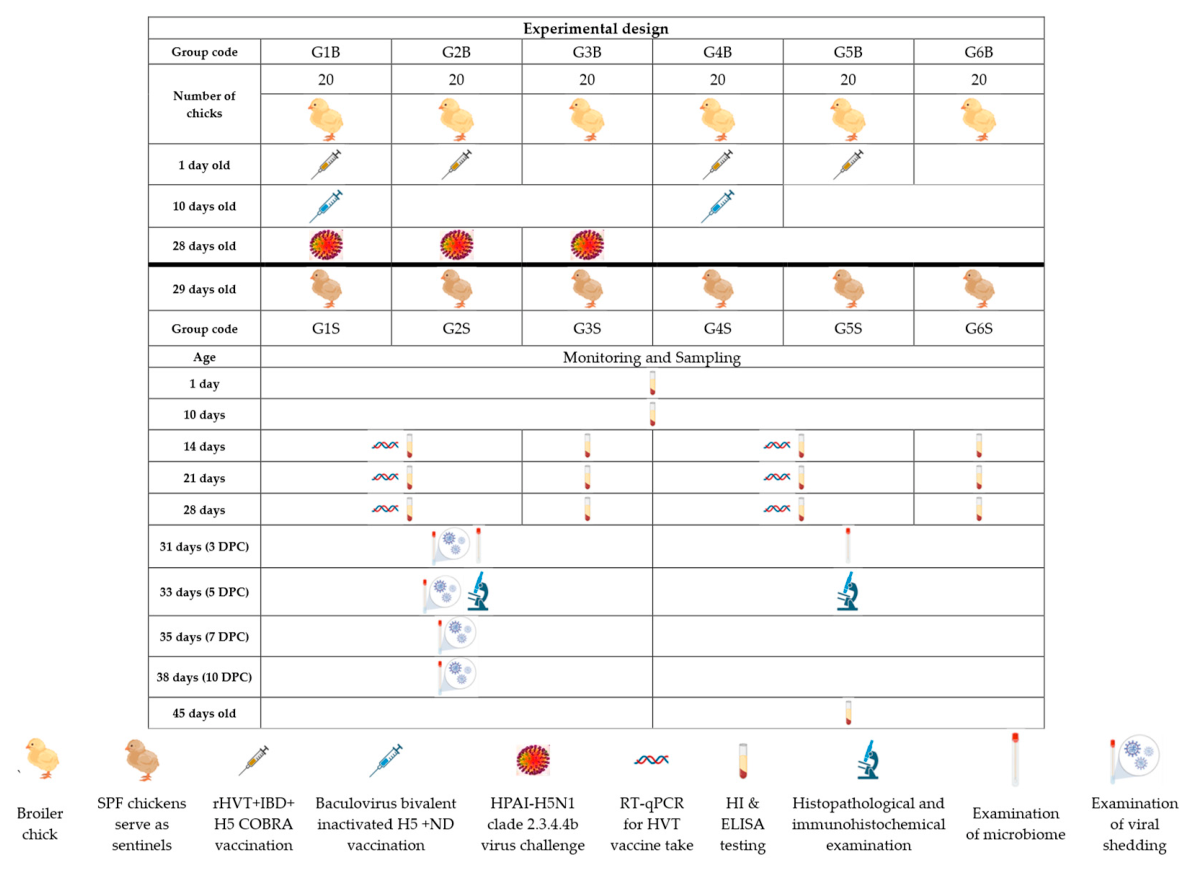
The commercial broilers were kindly supplied from the hatchery of Cairo Poultry Company, CPC, (Cairo, Egypt) while SPF chicks were bought from Nile SPF farm in Kom Oshim, Fayoum governorate, Egypt. A total of 120 one DO commercial broiler chicks (Arbor Acres, CPC, Cairo, Egypt) and 30 one DO specific pathogen free (SPF) chicks were housed in isolators at BSL-3 conditions. The broiler chicks were divided into 6 equal groups (G1B–G6B). The chicks of G1B were vaccinated with rHVT+IBD+H5 COBRA (Vaxxitek® rHVT+IBD+H5, Boehringer Ingelheim, Ingelheim am Rhein, Germany) at 1 DO in the hatchery and boostered by commercially available subunit Baculovirus bivalent inactivated H5+ND vaccine at 10 DO (Volvac B.E.S.T., Boehringer Ingelheim, Ingelheim am Rhein, Germany). The chicks in G2B received a standalone vaccination with rHVT+IBD+H5 at 1 DO in the hatchery. Furthermore, the chicks in G3B served as a positive, non-vaccinated and challenged control. At 28 DO, 20 chickens from G1B, G2B and G3B were challenged with the most recent circulating HPAI-H5N1 clade 2.3.4.4b virus, A/turkey/Egypt/fao-s110/2022, (GenBank accession no. OQ933425) kindly obtained from NLQP, Egypt, via intranasal route using a viral dose of 100 µL of 7 Log10 ELD50/mL in each chicken. In addition, the chickens in G4B and G5B were kept as vaccinated (as G1B and G2B, respectively) and non-challenged, and G6B was the non-vaccinated non-challenged (negative control) group. Five SPF chickens served as sentinels and were added at 29 DO until the end of the experiment to all groups (G1S–G5S). All the challenged chickens (G1–G3) were monitored for compatible clinical signs and mortality of HPAI-H5 for 10 days post-challenge (DPC) while the chickens in G4–G6 were humanely slaughtered at 45 DO for the final serological examinations. Vaccination in all vaccinated groups was applied via subcutaneous injection following the recommended dose. Figure 1 illustrates all the details of the experimental work.

2.4. Evaluation of Vaccine Take

At 14, 21 and 28 DO, feather follicles (n = 5/group) were collected individually to test for rHVT to confirm vaccine take by quantitative real-time polymerase chain reaction (RT-qPCR). For DNA extraction, feather tips were cut with sterile scalpel blades at approximately 5 mm thickness. These fragments were subsequently placed in sterile 2 mL microcentrifuge tubes and 180 μL of ATL buffer plus 20 μL of proteinase K were added. The mixture was macerated and incubated for 1 h at 56 °C with vigorous vortexing every 15 min. DNA extraction was performed using the Gene JET viral DNA and RNA purification kit (ThermoFisher ScientificTM, Waltham, MA, USA), based on the manufacturer’s instructions as described by López-Osorio et al. [22]. For the detection of rHVT, a pair of primers and a probe were used as described by Baigent et al. [23].

2.5. Viral Shedding for HPAI-H5 Challenge Virus

Five oropharyngeal and cloacal swabs were collected individually from each challenged group (G1B–G3B) as well as their sentinel birds (G1S–G3S) at 3, 5, 7 and 10 DPC for examination of viral shedding. The extraction was done using the Gene JET viral DNA and RNA purification kit (ThermoFisher ScientificTM, Waltham, MA, USA) with a total sample extraction volume of 50 ul. A PCR kit (Promega Corporation, Madison, WI, USA) was used during RT-qPCR and H5 viral shedding; Log10 titers were calculated with a standard curve using a specific primer set for the H5 gene modified from Spackman et al. [24], see at Table S1.

2.6. Histopathological and Immunohistochemical Examination

Five birds in each group were sacrificed at 5 DPC, and samples from the lungs, duodenum, liver, spleen, pancreas, kidney and brain were collected for compatible and non-compatible histopathological and immunohistochemical examinations. For histopathological examination, tissue samples were fixed in 10% neutral buffered formalin and processed by paraffin embedding technique. A rotary microtome (Leica 2135, Deer Park, IL, USA) was used to section the tissue into 4 µm thick sections. The tissue sections were then stained by Hematoxylin and Eosin stain and examined using a light microscope equipped with a digital camera (BX50F4, Olympus, Hachioji, Tokyo, Japan) for photographing tissue [25]. Necrotic lesions observed in different organs were scored semi-quantitatively on a scale from 0 to 3, in which 0 indicates no lesions, 1 indicates mild lesions (25% of the organ affected), 2 indicates moderate lesions (25–50% of the organ affected), and 3 indicates severe lesions (>50% of the organ affected). Lesion scores were analyzed using the Kruskal–Wallis test followed by the Mann–Whitney test to detect significance between the groups.
For immunohistochemical examination, deparaffinized and rehydrated tissue sections on positively charged slides of all the examined organs were placed in citrate buffer Ph 6 for antigen retrieval for 15 min in microwave. Washing of the slides using tris buffer saline was performed twice between each step. The primary antibody prepared in-house for H5, diluted 1:100, was applied to the tissues, and the tissue slides were incubated in a humid chamber at 4 °C overnight. Hydrogen peroxide was applied to the slides to get rid of endogenous peroxidase for 10 min. Horseradish peroxidase-labeled anti-chicken antibodies, diluted 1:100, were placed on the slides for an hour. DAB substrate was incubated with the slides for 10 min for color development. Hematoxylin was used as a counterstain [26]. The degree of brown staining for the H5 antigen was graded as negative (not detected), mild (0–25% of the organ affected), moderate (25–50%), and strong positive (>50%).

2.7. Serological Monitoring

A total of 10 individual serum samples from all broiler groups were collected at 1, 10, 14, 21, and 28 DO before challenge and at the end of the experiment after challenge (45 DO) in all non-challenged broiler groups (G4B, G5B and G6B). The samples were preserved at −20 °C to be analyzed by hemagglutination inhibition (HI) and indirect enzyme-linked immunosorbent assay (ELISA) tests to detect antibody titers. A hemagglutination inhibition test was conducted using 4 HAU of standard homologous antigen (H5N1 clades 2.3.4.4b) according to WOAH (2021) [27]. The samples that tested ≥4 log2 HI titers were considered positive seroconverted. For the indirect ELISA test, H5 and nucleoprotein (NP)-coated plates were used according to the manufacturer’s instructions (ID screen® Influenza H5 indirect FLUH5S and ID screen® Influenza a nucleoprotein indirect FLNPS, Innovative Diagnostics, IDvet, France) as it is the only serological ELISA test used for DIVA (differentiating infected from vaccinated animals) strategy, according to the information provided by the manufacturer on their website.

2.8. Statistical Analysis

The data obtained in this study were analyzed using statistical packages for social science (SPSS) software (version 26.0 for windows 10) (IBM Corp 2019, Armonk, NY, USA). The comparison of means using the ANOVA test was carried out to determine if there was a significant difference in the results obtained from the different vaccinated and control groups.

3. Results

3.1. Monitoring of Chicken Groups for rHVT Vaccine Take on 14, 21 and 28 DO

Feather follicle samples collected from all rHVT-IBD-H5 vaccinated broilers had 100% vaccine take upon examination at 14, 21 and 28 DO (Table 1).

3.2. Monitoring Chicken Groups for Compatible Clinical Signs, Mortality and Postmortem Lesions of HPAI-H5 Post-Challenge

The chickens of G1B appeared clinically healthy and recorded 100% protection against mortality with no remarkable gross lesions, except for mild pulmonary congestion, while the SPF sentinels in G1S had only 1/5 birds die on the 5th DPC. In G2B, 90% protection against mortality was achieved (2/20 broilers died at 6 DPC) with minimal clinical signs and mild gross lesions including mild pulmonary, splenic, and hepatic congestion, and 2/5 SPF chicks died on the 5th and 6th DPC in G2S. All the broilers in G3B died (13/20 on the 2nd DPC and the remaining seven broilers died on the 3rd DPC) with compatible severe signs and lesions of HPAI such as severe respiratory signs, head swelling, cyanosis, hemorrhages on swollen shank bones and the foot pad, greenish whitish diarrhea as well as marked lung consolidation, inflamed and enlarged spleen, swollen kidney, congestion, and multifocal hemorrhagic areas in liver, pancreas and proventriculus. Additionally, petechial to ecchymotic hemorrhages were observed on coronary and abdominal fats, and all the SPF sentinels in G3S died (2/5 on the 4th DPC, 2/3 on the 5th DPC and 1/1 on the 6th DPC).

3.3. Oropharyngeal and Cloacal Shedding

Significant reduction in HPAI-H5N1 viral shedding in oropharyngeal and cloacal swabs were obtained in both vaccinated challenged groups, G1B and G2B, compared to the positive control (non-vaccinated challenged group, G3B) at 3 DPC. Nearly the complete reduction in shedding in both samples was observed at 7 DPC in G1B and G2B. The overall reduction in oropharyngeal shedding was 3.5 and 3.3 log10 viral copies in oropharyngeal and 3.7 and 3.4 log10 viral copies in cloacal swabs collected from G1B and G2B, respectively, in comparison to G3B as indicated in Table 2 and Table 3.

3.4. Results of Histopathological Examination

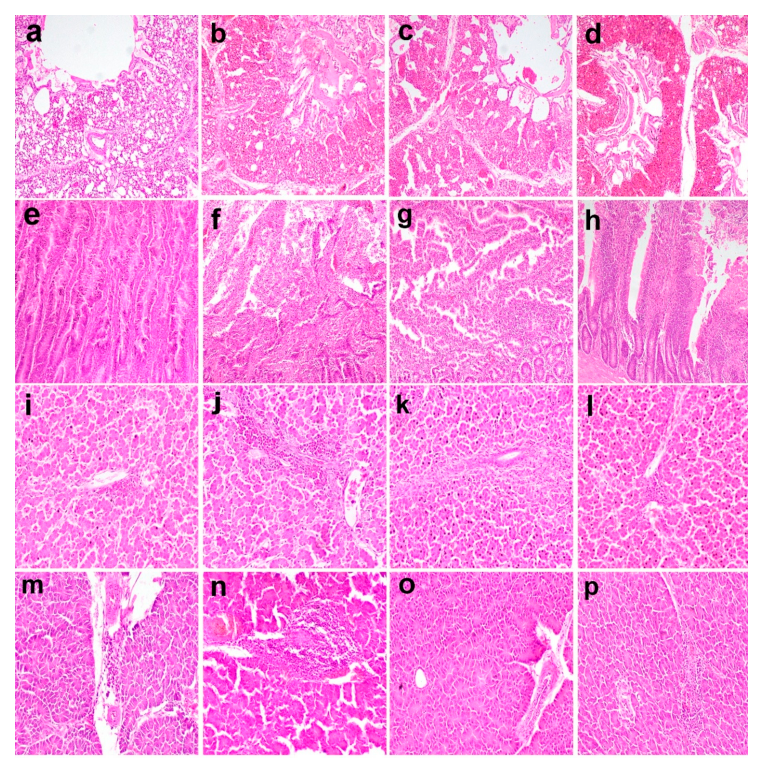
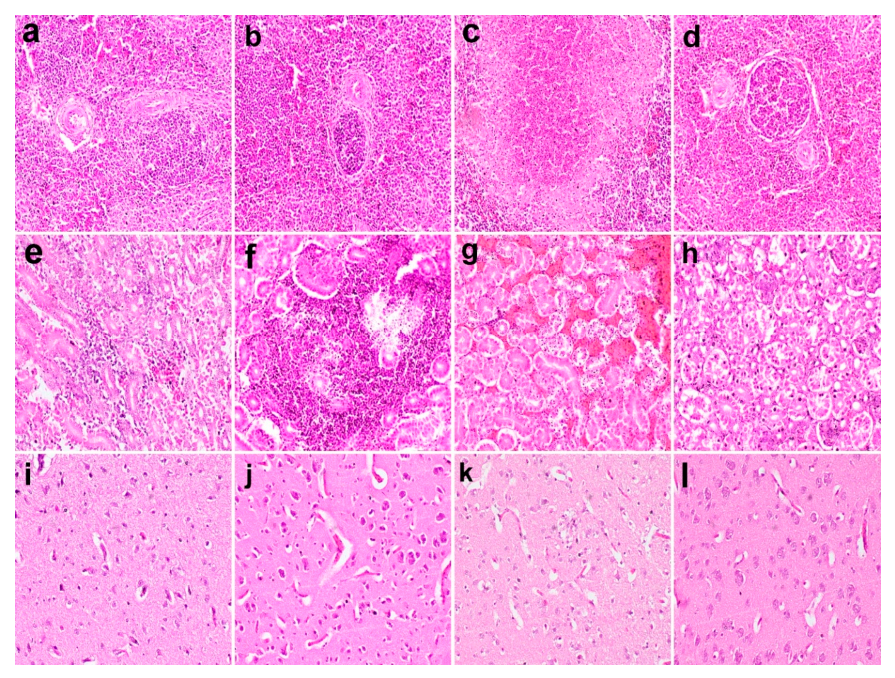
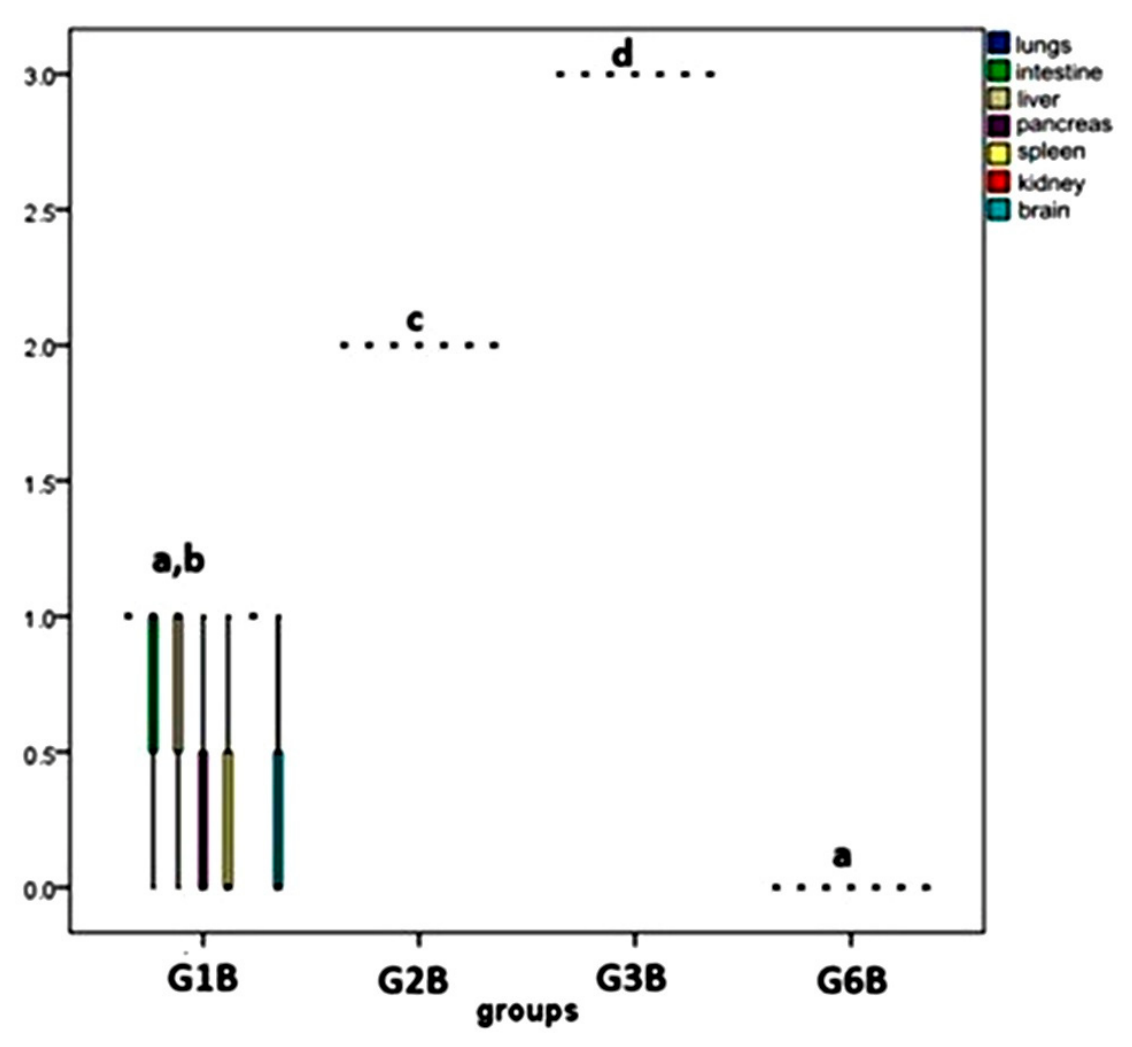
The broilers in G1B had mild leukocytic cell infiltration in different organs. On the other hand, the compatible histopathological lesions with HPAI-H5 in the broilers of G2B were more observed compared to those of G1B. There was a thickening of interstitial septa with exudates and perivascular leukocytic cell infiltration in the lungs, desquamated lining epithelium and adhesion of duodenal villi, periportal heterophilic infiltration in the liver, mild depletion of periarteriolar lymphoid aggregation in the spleen, and mild neuronal degeneration and neurophagia in the brain. The non-vaccinated and challenged broilers, G3B, had the worst lesions compared to other groups. There were smooth muscle hyperplasia and hyperplasia of the epithelium lining tertiary bronchi, leukocytic cell infiltration in interstitial tissue and the wall of air capillaries in the lungs. The liver microscopy revealed focal areas with karyopyknosis and karyorrhexis of necrosed hepatocytes. The examined spleen sections revealed multiple necrotic areas and heterophilic infiltration. The observed brain sections showed neuronal degeneration and neurophagia. There was congestion, hemorrhage and karyopyknosis and karyorrhexis of necrosed tubular epithelium in the kidney. The lesions observed in various organs exhibited positive brown staining for the H5 antigen. In the negative control group (G6B), no histopathological alteration appeared in different organs (Figure 2 and Figure 3). The lesion scores of the organs of different groups are represented in a boxplot chart (Figure 4). The lesion scores were significantly elevated in G3B compared to G6B.

3.5. Results of Immunohistochemical Findings

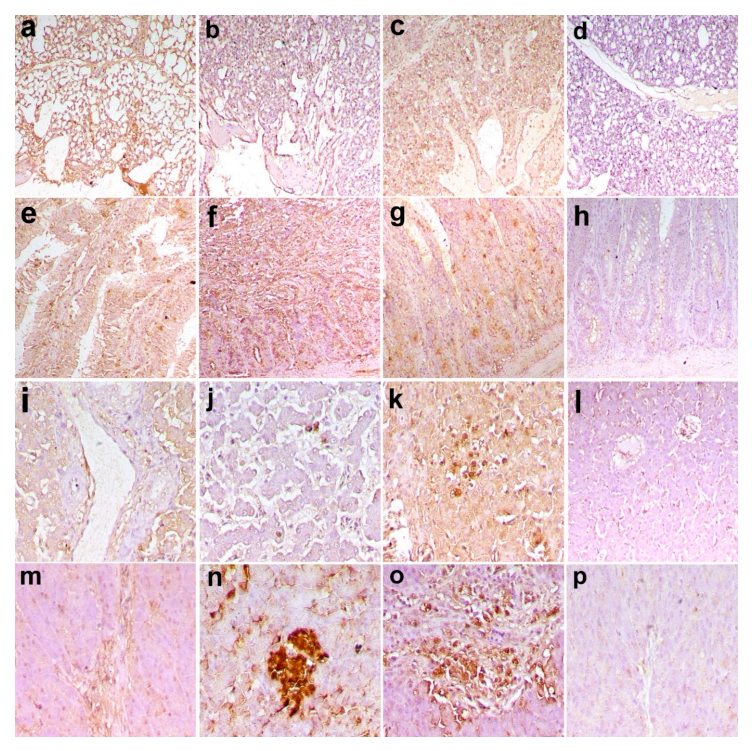
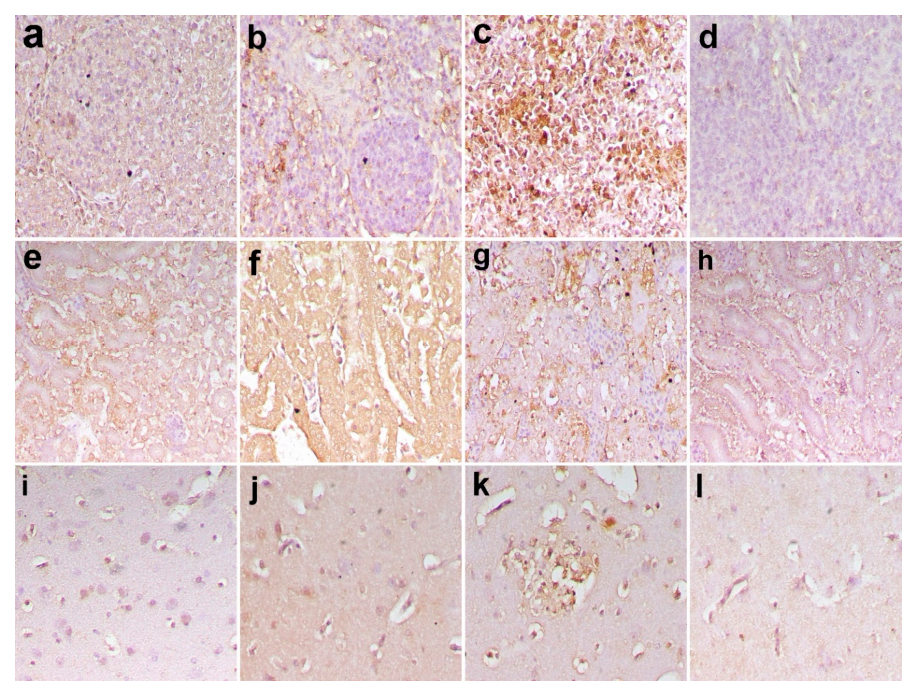
The broilers in G1B had weak positive H5 antigen in the lungs, duodenum, liver, spleen, pancreas, brain and kidneys. In the broilers of G2B, the virus was moderately positive in the cells of different organs. The HPAI-H5N1 virus appeared to be strongly positive in different examined tissues of the non-vaccinated and challenged broilers (G3B). The HPAI-H5N1 virus was not demonstrated in the tissues of non-vaccinated, non-challenged broilers (G6B) (Figure 5 and Figure 6).

3.6. Humoral Immune Response

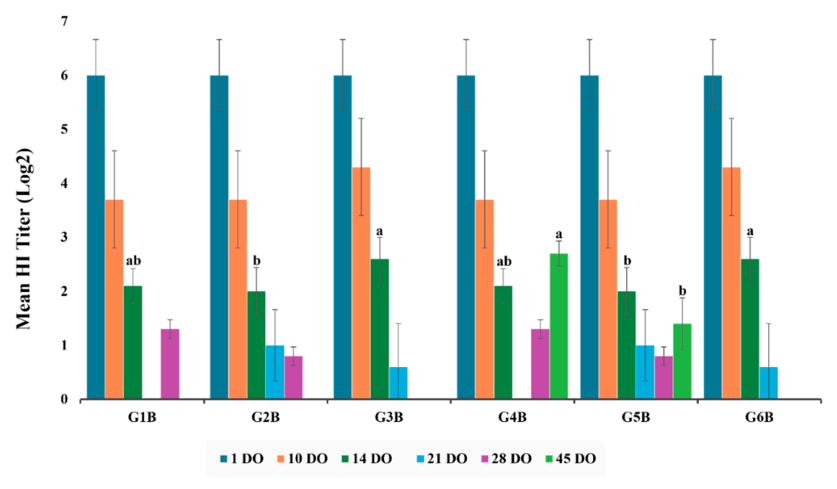
The specific humoral antibody titers against H5N1 clade 2.3.4.4b antigen in the vaccinated groups (G1B–G2B) were low (1.3 and 0.8 log2, respectively) at 28 DO before challenge. These titers increased to 2.7 and 1.4 log2 at 45 DO in G4B and G5B, respectively (Figure 7).
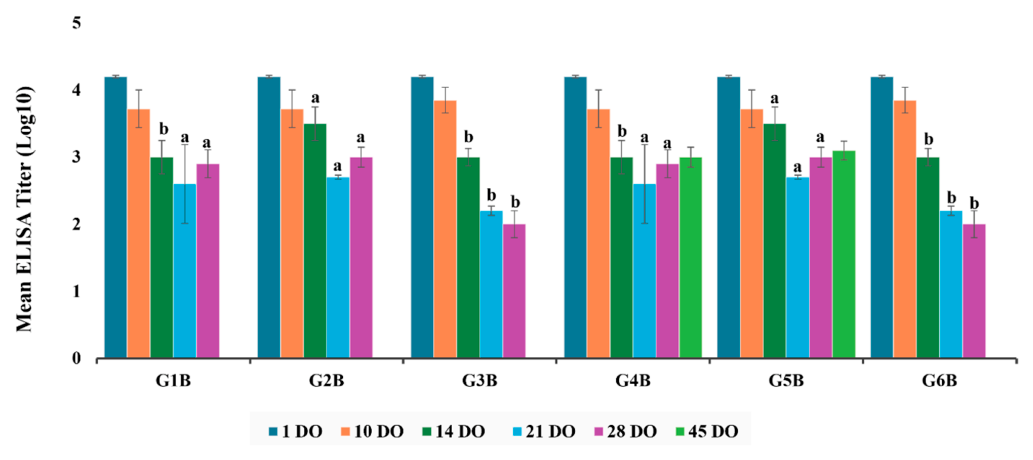
Higher anti-H5 antibody titers were obtained using H5-coated antigen ELISA plates at the same ages, recording 2.9 and 3 Log10 in G1B and G2B, respectively, which did not significantly differ from the older age (45 DO) which recorded 3 and 3.1 Log10 in G4B and G5B, respectively (Figure 8).
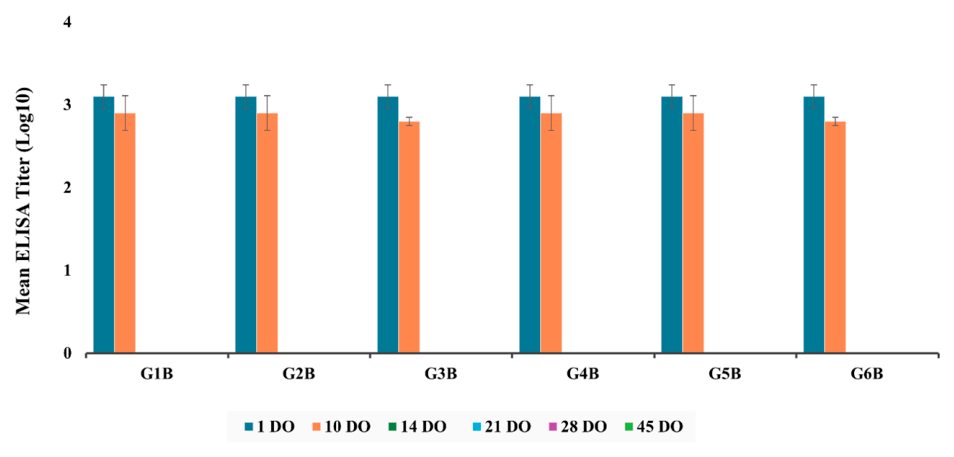
The maternally derived antibodies against HPAI-H5N1 in broiler groups recorded positive titers at 1 and 10 DO only using NP-coated antigen ELISA plates (Figure 9). However, no anti-NP antibody titers were recorded in any broiler groups at 14, 21, 28 DO before challenge or at 45 DO in the non-challenged broiler groups examined (G4B, G5B and G6B) (DIVA strategy was confirmed).

4. Discussion

The dissemination of the Avian Influenza H5N1 A/goose/Guangdong/1/1996 (Gs/GD) lineage and the virus’s constant mutation and evolution into different phylogenetic and antigenic clades and subclades require the inclusion of effective vaccination (especially those prepared using innovative technology), together with biosecurity, and surveillance programs as key tools to control the virus’s spread. Egypt has declared the infection of poultry with different clades and subclades of HPAI-H5Nx from 2006 until now. HPAI-H5N1 clade 2.3.4.4b is the most predominant clade nowadays [6,7,8,9,11,28]. To overcome this challenge, rHVT+IBD+H5 with COBRA technology was able either alone or boostered by a subunit inactivated H5+ND vaccine to protect chickens significantly against clinical disease, mortality and viral shedding (respiratory or enteric) against challenge with HPAI-H5N1 clade 2.3.4.4.b Egyptian isolate (GenBank accession No. OQ933425). Despite low serological responses using the HI test, which was lower than the ELISA titers at the same ages (especially at the time of challenge, 28 DO), the vaccinated chickens demonstrated remarkable protection, with 100% survival in the prime-boost group (G1B) and 90% survival in the standalone group (G2B), compared to 100% mortality in the non-vaccinated challenged group (G3B). Both vaccinated groups exhibited significant reductions in viral shedding, with near-complete cessation by day 7 post-challenge. These findings emphasize the vaccine’s ability to control viral replication and transmission, which is critical for mitigating the spread of HPAI in poultry flocks. Additionally, histopathological and immunohistochemical analyses revealed milder lesions and reduced viral presence in vaccinated groups, further confirming the vaccine’s protective efficacy.
This situation suggests that serological monitoring of the rHVT+IBD+H5 vaccine using indirect ELISA testing with H5-coated plates is much more reliable than the HI test. Using ELISA plates with NP-coated antigen, the DIVA strategy was confirmed as the maternally derived antibodies against HPAI-H5 in broiler groups recorded positive titers at 1 and 10 DO only. However, no anti-NP antibody titers were recorded in any broiler groups 14, 21, 28 DO before challenge or at 45 DO in any non-challenged broiler groups (G4B, G5B and G6B) examined, confirming that the anti-H5 titers were only detected at these ages. So, standalone rHVT+IBD+H5 vaccination at hatcheries can provide an additional important and guaranteed aspect in addition to biosecurity measures to control the disease and rapid transmission of HPAI-H5Nx virus, especially in the short life cycle broiler sector. In fact, the Egyptian government considers vaccination as the first line in the prevention and control of avian influenza [29,30]. Previously, Giles and Ross (2011) [18] recorded that the COBRA HA H5N1 VLP technology vaccine elicited broadly reactive antibodies and was an effective influenza vaccine that was able to provide complete protection from lethal challenge against HPAI-H5N1 clade 2.2 virus [A/Whooper Swan/Mongolia/244/2005]. The COBRA HA clade 2 sequence consensus expressed protein elicited specific cellular and local immunity that retained the ability of HPAI-H5N1 to bind or attach to the receptors and mediate particle fusion. Mice and ferrets vaccinated with COBRA HA H5N1 VLPs had protective HI antibody levels to representative isolates from each subclade of clade 2 [31].
Similar results were indicated previously by Bertran et al. (2021) [17] who reported that the COBRA-derived H5 inserts elicited antibody responses against antigenically diverse strains, 2.3.4.4A and 2.3.4.4D, and concluded that rHVT with H5 insert is a widely used replicating vaccine platform in poultry, providing clinical protection and significant reduction in viral shedding against homologous and heterologous challenge. In addition, the COBRA-derived inserts have the potential to be used against antigenically distinct co-circulating viruses and future drift variants. Also, Criado et al. (2023) [32] demonstrated that multivalent HVT vector vaccines were efficacious for simultaneous control of HPAIV and other viral infections. This was obtained through the generation of rHVT vaccines expressing COBRA AI-H5 alone (rHVT-AI) or in combination with virus protein 2 (VP2) of infectious bursal disease virus (IBDV) (rHVT-IBD-AI) or fusion (F) protein of NDV (rHVT-ND-AI). All three rHVT vaccines provided 90–100% clinical protection in chickens against three divergent clades of HPAIVs and significantly minimized the number and titers of shedding birds at 2 DPC compared to controls. They also reported that most vaccinated birds had serological HI antibody titers for H5, increasing significantly in the weeks post-vaccination. Furthermore, in humans, Uno and Ross (2024) [33] considered the multivalent COBRA vaccinations that elicited multiclade antibodies, recognizing a broad panel of H5 strains, and were able to protect mice, considering COBRA technology as a promising candidate for a universal influenza vaccine that elicits protective immune responses against seasonal and pre-pandemic strains over multiple seasons. In a review by Sautto and Ross (2019) [34], the authors mentioned that broadly reactive AI-HA antigens, COBRA, will represent a powerful vaccine platform as these novel antigens can be used for the generation and screening of cross-effective molecules able to recognize and neutralize divergent influenza isolates. The COBRA H5 rHA vaccine induced protective immune responses in mice against challenge with A/Sichuan/26621/2014 and A/Vietnam/1203/2004. This vaccine was able to elicit HI antibodies against viruses from clades 2.2, 2.3.2.1, 2.3.4.2, 2.2.1 and 2.2.2. Also, it decreased the viral titers and the levels of cellular infiltration in mice’s lungs. The authors concluded that these next-generation COBRA H5 vaccines can induce protective antibodies against all historical HPAI-H5Nx viruses including H5N1, H5N6, and H5N8 [35].
A comparison of two commercially available rHVT vaccines tested against a recent North American clade 2.3.4.4b H5 HPAI virus isolate, A/turkey/Indiana/22-003707-003/2022, in SPF and commercial broiler chickens was conducted during 2024. The rHVT-H5 COBRA vaccine induced 100% survival of both chicken types while the other 2.2-HVT vaccinated groups had 94.8% and 90% survival rate in SPF and broilers, respectively. Compared to the 2.2-HVT-vaccinated groups, the SPF in the COBRA-HVT-vaccinated group shed significantly lower mean viral titers by the cloacal route and the broilers shed significantly lower titers by the oropharyngeal route [36]. To some extent in a similar previous study, an rHVT-based H5 clade 2.2 vaccine provided a lower degree of cross-protection against antigenically drifted HPAI H5Nx viruses. Clinical protection levels were 90%, 90% and 80% against H5N1, H5N2 and H5N8 field isolate challenge, respectively, with different degrees of minimizing virus shedding [37]. Recently in the Netherlands, Germeraad et al. (2023) [38] described in a report the effectiveness of four poultry vaccines against the current HPAI-H5N1 clade 2.3.4.4b virus, with special regard to the most important parameter of significant reduction in viral shedding to prevent virus transmission (virus spread) between the birds in a vaccinated flock. They concluded that rHVT+IBD+H5 vaccines achieved the targeted aim through significant reduction in virus transmission relative to the unvaccinated control group and the R value was significantly lower than 1 (R < 1). Chickens were completely protected from disease after challenge and the rHVT vaccines comply with the DIVA principle.
The antibody titers in the collected sera pre-challenge were not predictive of protection. Although vaccinated birds had higher antibody titers using the HI test against the homologous vaccine antigen, most of them also had lower antibody titers against the heterologous one. It is very important to note that higher serological response using HI and/or ELISA tests is not an indicative factor for protection against HPAI-H5 challenge, as the main factors after challenge are protection from clinical disease, mortality, PM lesions, histopathological changes in internal organs and oropharyngeal, and cloacal viral shedding. Although serology is important for monitoring and detecting the humoral immune response, relying only on ELISA testing using H5-coated antigen plates could be better for accurate serological monitoring of rHVT-IBD-H5 vaccinated chicken flocks; otherwise, the development of a specific homologous antigen for COBRA H5 during the HI test is highly recommended to avoid the lower antigen reactivity of the H5N1 clade 2.3.4.4b used in this study [39]. Also, searching for other tools to detect mucosal (local) and/or cellular immunity post-vaccination with rHVT-IBD-H5 COBRA will expand the horizons of knowledge of several responses after using this vaccine. Finally, another minor limitation of this study is the absence of a control group receiving the subunit inactivated vaccine alone to clarify and support the advantage of the booster strategy despite the insignificant difference between rHVT-IBD-H5 COBRA standalone vaccinated and boostered groups (90 vs. 100% experimentally); this will be considered in all future studies.

5. Conclusions

This study indicates that vaccination with rHVT+IBD+H5 either as a standalone or when boostered with subunit Baculovirus bivalent inactivated resulted in 90 and 100% protection, respectively, without significant difference in the quantity and duration of viral shedding between both broiler groups after challenge with HPAI-H5N1 clade 2.3.4.4.b. Thus, rHVT+IBD+H5 vaccination can considerably reduce the financial losses of HPAI-H5N1 in the broiler sector.

Supplementary Materials

The following supporting information can be downloaded at: https://www.mdpi.com/article/10.3390/poultry5030044/s1, Table S1: Primers-probe sequence and cycling condition (modified from Spackman et al., 2002 [24]).

Author Contributions

Conceptualization, S.A.N., A.M., E.F. and A.R.E.; Methodology, S.A.N., A.M., E.F., R.A.A.Z., M.S.K. and A.R.E.; Validation, S.A.N., A.M., E.F., R.A.A.Z., and A.R.E.; Formal analysis, S.A.N., M.A. and A.R.E.; Investigation, S.A.N., A.M., E.F., R.A.A.Z., M.S.K., M.A., M.M.R., A.E.K., J.L.L.T., T.R. and A.R.E.; Resources, S.A.N., M.A., M.M.R., A.E.K., J.L.L.T., T.R. and A.R.E.; Data curation, S.A.N. and A.R.E.; Writing—original draft, S.A.N., E.F., M.S.K., M.A. and A.R.E.; Writing—review & editing, S.A.N., M.S.K., A.E.K. and A.R.E.; Visualization, S.A.N., M.A., M.M.R., A.E.K., J.L.L.T., T.R. and A.R.E.; Supervision, S.A.N. and A.R.E. All authors have read and agreed to the published version of the manuscript.

Funding

This research received no external funding.

Institutional Review Board Statement

All experimental procedures were approved by and followed the guidelines of the Scientific Research Ethics and Animal Care Committee (SREACC), Faculty of Veterinary Medicine, Menoufia University. The ethical approval code was MU/VetMed-2025/005, approved on 4 May 2025.

Informed Consent Statement

Not applicable.

Data Availability Statement

The original contributions presented in this study are included in the article and Supplementary Materials. Further inquiries can be directed to the corresponding author.

Conflicts of Interest

Author Mohamed Ashry, Mohamed M. Radwan, Ali E. Khalifa, Jose Luis Losada Torres and Taoufik Rawi were employed by the company Boehringer Ingelheim Animal Health. The remaining authors declare that the research was conducted in the absence of any commercial or financial relationships that could be construed as a potential conflict of interest.

References

  1. Swayne, D.E.; Suarez, D.L.; Sims, L.D. Influenza. In Diseases of Poultry; Swayne, D.E., Boulianne, M., Logue, C.M., McDougald, L.R., Nair, V., Suarez, D.L., de Wit, S., Grimes, T., Johnson, D., Kromm, M., et al., Eds.; Wiley-Balckwell: New Jersey, NJ, USA, 2020; pp. 210–256. [Google Scholar] [CrossRef]
  2. de Bruin, A.C.M.; Funk, M.; Spronken, M.I.; Gultyaev, A.P.; Fouchier, R.A.M.; Richard, M. Hemagglutinin Subtype Specificity and Mechanisms of Highly Pathogenic Avian Influenza Virus Genesis. Viruses 2022, 14, 1566. [Google Scholar] [CrossRef] [PubMed]
  3. Graziosi, G.; Lupini, C.; Catelli, E.; Carnaccini, S. Highly Pathogenic Avian Influenza (HPAI) H5 Clade 2.3.4.4b Virus Infection in Birds and Mammals. Animals 2024, 14, 1372. [Google Scholar] [CrossRef] [PubMed]
  4. Kandeil, A.; Patton, C.; Jones, J.C.; Jeevan, T.; Harrington, W.N.; Trifkovic, S.; Seiler, J.P.; Fabrizio, T.; Woodard, K.; Turner, J.C.; et al. Rapid Evolution of A(H5N1) Influenza Viruses after Intercontinental Spread to North America. Nat. Commun. 2023, 14, 3082. [Google Scholar] [CrossRef] [PubMed]
  5. Lee, D.H.; Bertran, K.; Kwon, J.H.; Swayne, D.E. Evolution, Global Spread, and Pathogenicity of Highly Pathogenic Avian Influenza H5Nx Clade 2.3.4.4. J. Vet. Sci. 2017, 18, 269–280. [Google Scholar] [CrossRef] [PubMed]
  6. Kayali, G.; Kandeil, A.; El-Shesheny, R.; Kayed, A.S.; Gomaa, M.M.; Maatouq, A.M.; Shehata, M.M.; Moatasim, Y.; Bagato, O.; Cai, Z.; et al. Active Surveillance for Avian Influenza Virus, Egypt, 2010–2012. Emerg. Infect. Dis. 2014, 20, 542–551. [Google Scholar] [CrossRef] [PubMed]
  7. Abdelwhab, E.M.; Hassan, M.K.; Abdel-Moneim, A.S.; Naguib, M.M.; Mostafa, A.; Hussein, I.T.M.; Arafa, A.; Erfan, A.M.; Kilany, W.H.; Agour, M.G.; et al. Introduction and Enzootic of A/H5N1 in Egypt: Virus Evolution, Pathogenicity and Vaccine Efficacy Ten Years On. Infect. Genet. Evol. 2016, 40, 80–90. [Google Scholar] [CrossRef] [PubMed]
  8. Arafa, A.; El-Masry, I.; Kholosy, S.; Hassan, M.K.; Dauphin, G.; Lubroth, J.; Makonnen, Y.J. Phylodynamics of Avian Influenza Clade 2.2.1 H5N1 Viruses in Egypt. Virol. J. 2016, 13, 49. [Google Scholar] [CrossRef] [PubMed]
  9. El-Shesheny, R.; Kandeil, A.; Mostafa, A.; Ali, M.A.; Webby, R.J. H5 Influenza Viruses in Egypt. Cold Spring Harb. Perspect. Med. 2021, 11, a038745. [Google Scholar] [PubMed]
  10. Salaheldin, A.H.; El-Hamid, H.S.; Elbestawy, A.R.; Veits, J.; Hafez, H.M.; Mettenleiter, T.C.; Abdelwhab, E.M. Multiple Introductions of Influenza A(H5N8) Virus into Poultry, Egypt, 2017. Emerg. Infect. Dis. 2018, 24, 943–946. [Google Scholar] [CrossRef] [PubMed]
  11. Hassan, K.E.; King, J.; El-Kady, M.; Afifi, M.; Abozeid, H.H.; Pohlmann, A.; Beer, M.; Harder, T. Novel Reassortant Highly Pathogenic Avian Influenza A(H5N2) Virus in Broiler Chickens, Egypt. Emerg. Infect. Dis. 2020, 26, 129–133. [Google Scholar] [CrossRef] [PubMed]
  12. Hagag, N.M.; Erfan, A.M.; El-Husseiny, M.; Shalaby, A.G.; Saif, M.A.; Tawakol, M.M.; Nour, A.A.; Selim, A.A.; Arafa, A.S.; Hassan, M.K.; et al. Isolation of a Novel Reassortant Highly Pathogenic Avian Influenza (H5n2) Virus in Egypt. Viruses 2019, 11, 565. [Google Scholar] [CrossRef] [PubMed]
  13. El-Shesheny, R.; Moatasim, Y.; Mahmoud, S.H.; Song, Y.; El Taweel, A.; Gomaa, M.; Kamel, M.N.; Sayes, M.E.; Kandeil, A.; Lam, T.T.Y.; et al. Highly Pathogenic Avian Influenza A(H5N1) Virus Clade 2.3.4.4b in Wild Birds and Live Bird Markets, Egypt. Pathogens 2023, 12, 36. [Google Scholar] [CrossRef]
  14. El-Shesheny, R.; Gomaa, M.; Sayes, M.E.; Kamel, M.N.; Taweel, A.E.; Kutkat, O.; GabAllah, M.; Elkhrsawy, A.; Emam, H.; Moatasim, Y.; et al. Emergence of a Novel Reassortant Highly Pathogenic Avian Influenza Clade 2.3.4.4b A (H5N2) Virus, 2024. Emerg. Microb. Infect. 2025, 14, 2455601. [Google Scholar] [CrossRef] [PubMed]
  15. Hein, R.; Koopman, R.; García, M.; Armour, N.; Dunn, J.R.; Barbosa, T.; Martinez, A. Review of Poultry Recombinant Vector Vaccines. Avian Dis. 2021, 65, 438–452. [Google Scholar] [CrossRef] [PubMed]
  16. Bublot, M. Poultry Vaccine Technology Platforms. Avian Dis. 2023, 67, 380–401. [Google Scholar] [CrossRef] [PubMed]
  17. Bertran, K.; Kassa, A.; Criado, M.F.; Nuñez, I.A.; Lee, D.H.; Killmaster, L.; Sá E Silva, M.; Ross, T.M.; Mebatsion, T.; Pritchard, N.; et al. Efficacy of Recombinant Marek’s Disease Virus Vectored Vaccines with Computationally Optimized Broadly Reactive Antigen (COBRA) Hemagglutinin Insert against Genetically Diverse H5 High Pathogenicity Avian Influenza Viruses. Vaccine 2021, 39, 1933–1942. [Google Scholar] [CrossRef] [PubMed]
  18. Giles, B.M.; Ross, T.M. A computationally optimized broadly reactive antigen (COBRA) based H5N1 VLP vaccine elicits broadly reactive antibodies in mice and ferrets. Vaccine 2011, 29, 3043–3054. [Google Scholar] [CrossRef] [PubMed]
  19. Crevar, C.J.; Carter, D.M.; Lee, K.Y.J.; Ross, T.M. Cocktail of H5N1 COBRA HA vaccines elicit protective antibodies against H5N1 viruses from multiple clades. Hum. Vaccines Immunother. 2015, 11, 572–583. [Google Scholar] [CrossRef] [PubMed]
  20. Balzli, C.L.; Bertran, K.; Lee, D.H.; Killmaster, L.; Pritchard, N.; Linz, P.; Mebatsion, T.; Swayne, D.E. The Efficacy of Recombinant Turkey Herpesvirus Vaccines Targeting the H5 of Highly Pathogenic Avian Influenza Virus from the 2014–2015 North American Outbreak. Vaccine 2018, 36, 84–90. [Google Scholar] [CrossRef] [PubMed]
  21. Palya, V.; Tatár-Kis, T.; Walkóné Kovács, E.; Kiss, I.; Homonnay, Z.; Gardin, Y.; Kertész, K.; Dán, Á. Efficacy of a Recombinant Turkey Herpesvirus AI (H5) Vaccine in Preventing Transmission of Heterologous Highly Pathogenic H5N8 Clade 2.3.4.4b Challenge Virus in Commercial Broilers and Layer Pullets. J. Immunol. Res. 2018, 2018, 3143189. [Google Scholar] [CrossRef] [PubMed]
  22. López-Osorio, S.; Villar, D.; Piedrahita, D.; Ramírez-Nieto, G.; Nair, V.; Baigent, S.; Chaparro-Gutiérrez, J. Molecular detection of Marek’s disease virus in feather and blood samples from young laying hens in Colombia. Acta Virol. 2019, 63, 380–391. [Google Scholar] [CrossRef] [PubMed]
  23. Baigent, S.J.; Petherbridge, L.J.; Howes, K.; Smith, L.P.; Currie, R.J.W.; Nair, V.K. Absolute quantitation of Marek’s disease virus genome copy number in chicken feather and lymphocyte samples using real-time PCR. J. Virol. Methods 2005, 123, 53–64. [Google Scholar] [CrossRef] [PubMed]
  24. Spackman, E.; Senne, D.A.; Myers, T.J.; Bulaga, L.L.; Garber, L.P.; Perdue, M.L.; Lohman, K.; Daum, L.T.; Suarez, D.L. Development of a Real-Time Reverse Transcriptase PCR Assay for Type A Influenza Virus and the Avian H5 and H7 Hemagglutinin Subtypes. J. Clin. Microbiol. 2002, 40, 3256–3260. [Google Scholar] [CrossRef] [PubMed]
  25. Mahmoud, S.H.; Khattab, M.S.; Yehia, N.; Zanaty, A.; Arafa, A.E.S.; Khalil, A.A. Pathogenicity of Highly Pathogenic Avian Influenza A/H5Nx Viruses in Avian and Murine Models. Pathogens 2025, 14, 149. [Google Scholar] [CrossRef] [PubMed]
  26. Bakeer, A.M.; Khattab, M.S.; Aly, M.M.; Arafa, A.S.; Amer, F.; Hafez, H.M.; Afify, M.M.H. Estimation of pathological and molecular findings in vaccinated and non-vaccinated chickens challenged with highly pathogenic avian influenza H5N1 virus. Pak. Vet. J. 2019, 39, 31–36. [Google Scholar] [CrossRef]
  27. World Organization for Animal Health. Avian Influenza (Including Infection with High Pathogenicity Avian Influenza Viruses). In Manual of Diagnostic Tests and Vaccines for Terrestrial Animals; Chapter 3.3.4; OIE: Paris, France, 2021. [Google Scholar]
  28. Tarek, M.; Naguib, M.M.; Arafa, A.S.; Tantawy, L.A.; Selim, K.M.; Talaat, S.; Sultan, H.A. Epidemiology, Genetic Characterization, and Pathogenesis of Avian Influenza H5n8 Viruses Circulating in Northern and Southern Parts of Egypt, 2017–2019. Animals 2021, 11, 2017–2019. [Google Scholar] [CrossRef] [PubMed]
  29. Spackman, E.; Pantin-Jackwood, M.J. Practical aspects of vaccination of poultry against avian influenza virus. Vet. J. 2014, 202, 408–415. [Google Scholar] [CrossRef] [PubMed]
  30. Harder, T.; de Wit, S.; Gonzales, J.L.; Ho, J.H.P.; Mulatti, P.; Prajitno, T.Y.; Stegeman, A. Epidemiology-driven approaches to surveillance in HPAI-vaccinated poultry flocks aiming to demonstrate freedom from circulating HPAIV. Biologicals 2023, 83, 101694. [Google Scholar] [CrossRef] [PubMed]
  31. Kirchenbaum, G.A.; Ross, T.M. Eliciting broadly protective antibody responses against influenza. Curr. Opin. Immunol. 2014, 28, 71–76. [Google Scholar] [CrossRef] [PubMed]
  32. Criado, M.F.; Kassa, A.; Bertran, K.; Kwon, J.-H.; Silva, M.S.; Killmaster, L.; Ross, T.M.; Mebatsion, T.; Swayne, D.E. Efficacy of multivalent recombinant herpesvirus of turkey vaccines against high pathogenicity avian influenza, infectious bursal disease, and Newcastle disease viruses. Vaccine 2023, 41, 2893–2904. [Google Scholar] [CrossRef] [PubMed]
  33. Uno, N.; Ross, T.M. Multivalent next generation influenza virus vaccines protect against seasonal and pre-pandemic viruses. Sci. Rep. 2024, 14, 1440. [Google Scholar] [CrossRef] [PubMed]
  34. Sautto, G.A.; Ross, T.M. Hemagglutinin consensus-based prophylactic approaches to overcome influenza virus diversity. Vet. Ital. 2019, 55, 195–201. [Google Scholar] [CrossRef] [PubMed]
  35. Nuñez, I.A.; Huang, Y.; Ross, T.M. Next-Generation Computationally Designed Influenza Hemagglutinin Vaccines Protect against H5Nx Virus Infections. Pathogens 2021, 10, 1352. [Google Scholar] [CrossRef] [PubMed]
  36. Lee, J.; Lee, C.-W.; Suarez, D.L.; Lee, S.A.; Kim, T.; Spackman, E. Efficacy of commercial recombinant HVT vaccines against a North American clade 2.3.4.4b H5N1 highly pathogenic avian influenza virus in chickens. PLoS ONE 2024, 19, e0307100. [Google Scholar] [CrossRef] [PubMed]
  37. Nassif, S.; Zaki, F.; Mourad, A.; Fouad, E.; Saad, A.; Setta, A.; Felföldi, B.; Mató, T.; Kiss, I.; Palya, V. Herpesvirus of turkey-vectored avian influenza vaccine offers cross-protection against antigenically drifted H5Nx highly pathogenic avian influenza virus strains. Avian Pathol. 2020, 49, 547–556. [Google Scholar] [CrossRef] [PubMed]
  38. Germeraad, E.A.; Velkers, F.C.; de Jong, M.C.M.; Gonzales, J.L.; de Wit, J.J.; Stegeman, J.A.; Beerens, N. Transmission Study with Four Vaccines Against H5N1 Highly Pathogenic Avian Influenza Virus (Clade 2.3.4.4b); Rapport 2300528; Utrecht University, Wageningen University and Research and Royal GD Project; Wageningen Bioveterinary Research: Lelystad, The Netherlands, 2023. [Google Scholar] [CrossRef]
  39. Criado, M.F.; Silva, M.S.; Lee, D.-H.; Salge, C.A.L.; Spackman, E.; Donis, R.; Wan, X.-F.; Swayne, D.E. Cross-protection by inactivated 1 H5 pre-pandemic vaccine seed strains against diverse Goose/Guangdong lineage H5N1 highly pathogenic avian influenza viruses. J. Virol. 2020, 94, 10–1128. [Google Scholar] [CrossRef] [PubMed]
Figure 1. The details of the experimental work.
Poultry 05 00044 g001
Figure 2. Histopathology of lungs, duodenum, liver, pancreas in chickens of various groups. (a) A few leukocytic cells infiltrated the lungs in G1B, (b) thickening of interstitial septa with exudates and perivascular leukocytic cell infiltration in the lungs in G2B, (c) severe diffuse interstitial pneumonia in G3B, (d) minimal histopathological alteration of the lungs in G6B. (×100) (e) A few leukocytic cells infiltrated the duodenum in G1B, (f) desquamated lining epithelium and adhesion of duodenal villi in G2B, (g) leukocytic infiltration in lamina propria and submucosa in G3B, (h) epithelial hyperplasia lining duodenal villi in G6B, (×100) (i) no recognizable lesions of liver in G1B, (j) periportal heterophils infiltration in liver in G2B, (k) focal areas with karyopyknosis and karyorrhexis of necrosed hepatocytes, (l) mild histopathological alteration of liver in G6B. (×200) (m) A few leukocytic cells infiltrated the pancreas of G1B, (n) moderate leukocytic infiltration in the pancreas of G2B, (o) vasculitis in the pancreas of G3B, (p) minimal histopathological alteration in the chickens of G6B. (×200) (Hematoxylin and eosin stain).
Poultry 05 00044 g002
Figure 3. The histopathology of the spleen, kidneys, and brain in the chickens of various groups. (a) No recognizable lesions in the spleen of G1B, (b) mild depletion of periarteriolar lymphoid aggregation and small sized lymphoid follicle in spleen of the examined chickens in G2B, (c) necrotic areas and heterophils infiltration in spleen of G3B, (d) no recognizable lesions in the spleen of G6B, (×100) (e) mild intertubular leukocytic cells infiltration in kidney of G1B, (f) moderate intertubular leukocytic cells infiltration in kidney of G2B, (g) congestion, hemorrhage and karyopyknosis and karyorrhexis of necrosed tubular epithelium in kidneys of G3B, (h) minimal histopathological alteration in kidneys of G6B, (×200) (i) no recognizable lesions in the brain of G1B, (j) mild neuronal degeneration and neurophagia in the brain of G2B, (k) neuronal degeneration and neurophagia with minute foci of malacia in G3B, (l) minimal histopathological alteration in the brain of G6B. (×200) Hematoxylin and eosin stain.
Poultry 05 00044 g003
Figure 4. A boxplot of the lesion scores in the organs of different groups. The boxes represent the score values, the middle thick lines represent the median, and the thin upper and lower lines represent the minimum and maximum values. Different lowercase letters indicate significance.
Poultry 05 00044 g004
Figure 5. Immunohistochemistry detection of H5 virus antigen in lungs, duodenum, liver, pancreas of chickens in various groups as indicated from no to dense brown color. (a) Weak positive in pneumocytes of the lungs of G1B, (b) moderate positive in pneumocytes of the lungs of G2B, (c) strong positive in pneumocytes and leukocytes infiltrating the lungs of G3B, (d) negative in lungs of G6B. (e) Weak positive in enterocytes of the duodenum of G1B, (f) moderate positive in duodenum of G2B, (g) strong positive in duodenum of G3B, (h) absence of positive in duodenum of G6B, (i) weak positive in liver of G1B, (j) moderate positive in liver of G2B, (k) strong positive in necrosed hepatocytes in liver of G3B, (l) negative in liver of G6B. (m) Weak positive in pancreas of G1B, (n) moderate positive in pancreas of G2B, (o) strong positive in necrosed acinar epithelium in pancreas of G3B, (p) negative in pancreas of G6B. (×200) (Immunoperoxidae and hematoxylin counterstain.)
Poultry 05 00044 g005
Figure 6. Immunohistochemistry detection of H5 virus antigen in spleen, kidneys, and brain of chickens in various groups as indicated from no to dense brown color. (a) Weak positive in spleen of G1B, (b) moderate positive in spleen of G2B, (c) strong positive in lymphocytes in the spleen of G3B, (d) negative in spleen of G6B, (×100) (e) weak positive in kidney of G1B, (f) moderate positive in kidney of G2B, (g) strong positive in necrosed tubular epithelium in the kidneys of G3B, (h) negative in kidneys of G6B, (×200) (i) weak positive in the brain of G1B, (j) moderate positive in the brain of G2B, (k) strong positive in degenerated neurons of the brain of G3B, (l) negative in the brain of G6B. (×200) (Immunoperoxidase and hematoxylin counterstain.)
Poultry 05 00044 g006
Figure 7. Mean HI antibody titers (Log2) against the heterologous HPAI-H5N1 clade 2.3.4.4b virus in all groups. G1B: group 1 in which broilers received rHVT+IBD+H5 COBRA and subunit Baculovirus bivalent inactivated H5+ND vaccines and challenged at 28 days old (DO). G2B: group 2 in which broilers received rHVT+IBD+H5 COBRA vaccine only and challenged at 28 days old (DO). G3B: group 3 in which broilers were non-vaccinated and challenged, positive, control. G4B: group 4 in which broilers received rHVT+IBD+H5 COBRA and subunit Baculovirus bivalent inactivated H5+ND vaccines and non-challenged. G5B: group 4 in which broiler received rHVT+IBD+H5 COBRA vaccine only and non-challenged. G6B: non-vaccinated non-challenged, negative, control.
Poultry 05 00044 g007
Figure 8. Mean indirect ELISA antibody titers (Log10) using H5-coated antigen plates. G1B: group 1 in which broilers received rHVT+IBD+H5 COBRA and subunit Baculovirus bivalent inactivated H5+ND vaccines and challenged at 28 days old (DO). G2B: group 2 in which broilers received rHVT+IBD+H5 COBRA vaccine only and challenged at 28 days old (DO). G3B: group 3 in which broilers were non-vaccinated and challenged, positive, control. G4B: group 4 in which broilers received rHVT+IBD+H5 COBRA and subunit Baculovirus bivalent inactivated H5+ND vaccines and non-challenged. G5B: group 4 in which broiler received rHVT+IBD+H5 COBRA vaccine only and non-challenged. G6B: non-vaccinated non-challenged, negative, control.
Poultry 05 00044 g008
Figure 9. Mean indirect ELISA antibody titers (Log10) using NP-coated antigen plates. G1B: group 1 in which broilers received rHVT+IBD+H5 COBRA and subunit Baculovirus bivalent inactivated H5+ND vaccines and challenged at 28 days old (DO). G2B: group 2 in which broilers received rHVT+IBD+H5 COBRA vaccine only and challenged at 28 days old (DO). G3B: group 3 in which broilers were non-vaccinated and challenged, positive, control. G4B: group 4 in which broilers received rHVT+IBD+H5 COBRA and subunit Baculovirus bivalent inactivated H5+ND vaccines and non-challenged. G5B: group 4 in which broiler received rHVT+IBD+H5 COBRA vaccine only and non-challenged. G6B: non-vaccinated non-challenged, negative, control.
Poultry 05 00044 g009
Table 1. Detection of rHVT vaccine take in feather follicles in all chicken groups.
GroupsNo. of Positive Feather Follicles (Vaccine Takes)/DO
142128
G1B5/55/55/5
G2B5/55/55/5
G3Bndndnd
G4B5/55/55/5
G5B5/55/55/5
G6Bndndnd
nd: Not detected.
Table 2. Oropharyngeal shedding of HPAI-H5N1 virus (Log10 viral copy) in challenged broilers and sentinel SPF chickens on 3, 5, 7 and 10 DPC.
GroupsMean Oropharyngeal Shedding (log10)/DPCShedding ReductionProtection
35710Cumulative Mean
G1B2.8 ± 0.16 a2.4 ± 0.07 b0.5 ± 0.16nd1.93.5100%
G1S2.6 ± 0.07 b2.3 ± 0.16 bndnd2.45NANA
G2B3 ± 0.19 c2.8 ± 0.17 a0.6 ± 0.16nd2.13.390%
G2S1.3 ± 0.16 d0.5 ± 0.25 cndnd0.9NANA
G3B5.4 ± 0.16 endndnd5.400%
G3S2.3 ± 0.08 f0.3 ± 0.16 cndnd1.3NANA
Means with different superscript letters within the same column are significantly different (p ≤ 0.05). nd: Not detected. NA: Not applied.
Table 3. Cloacal shedding of HPAI-H5N1 virus (Log10 viral copy) in challenged broilers and sentinel SPF chickens on 3, 5, 7 and 10 DPC.
GroupsMean Cloacal Shedding (log10)/DPCShedding ReductionProtection
35710Cumulative Mean
G1B2.3 ± 0.19 e2 ± 0.11 e0.3 ± 0.08nd1.533.7100%
G1S2.1 ± 0.07 c,d,e1.9 ± 0.08 d,endnd2NANA
G2B2.7 ± 0.27 f2.4 ± 0.24 a0.4 ± 0.08nd1.83.490%
G2S1 ± 0.24 b0.3 ± 0.07 bndnd0.65NANA
G3B5.2 ± 0.16 andndnd5.200%
G3S2 ± 0.21 c1.9 ± 0.2 c,endnd1.3NANA
Means with different superscript letters within the same column are significantly different (p ≤ 0.05). nd: Not detected. NA: Not applied.
Disclaimer/Publisher’s Note: The statements, opinions and data contained in all publications are solely those of the individual author(s) and contributor(s) and not of MDPI and/or the editor(s). MDPI and/or the editor(s) disclaim responsibility for any injury to people or property resulting from any ideas, methods, instructions or products referred to in the content.