
Review

Sternal Region in Poultry: Linking Skeletal and Muscular Disorders Associated with Keel Bone Damage in Laying Hens and Breast Muscle Myopathies in Broilers

1
Faculty of Agriculture, University of Belgrade, Nemanjina 6, Zemun, 11080 Belgrade, Serbia
2
Institute for Science Application in Agriculture, Bulevar despota Stefana 68b, 11000 Belgrade, Serbia
3
Faculty of Veterinary Medicine, University of Belgrade, Bulevar Oslobođenja 18, 11000 Belgrade, Serbia
4
Institute for Animal Husbandry, Autoput Beograd—Zagreb 16, 11000 Belgrade, Serbia
*
Author to whom correspondence should be addressed.
Poultry 2026, 5(3), 41; https://doi.org/10.3390/poultry5030041
Submission received: 16 April 2026 / Revised: 14 May 2026 / Accepted: 27 May 2026 / Published: 29 May 2026

Abstract

Poultry production is one of the most intensive sectors of animal production providing a significant source of animal protein through meat and eggs. However, increasing production intensity has brought challenges related to animal health, welfare, and product quality. In chickens (Gallus gallus domesticus), the sterno-pectoral region represents a key anatomical and functional unit that supports the birds’ body and is essential for locomotion and respiration. This region is particularly susceptible to the adverse effects of intensive selection and production in both broilers, i.e., meat production, and laying hens, i.e., egg production. Skeletal disorders of the sternum, predominantly observed in laying hens, and breast muscle myopathies, primarily affecting broilers, are typically investigated as separate conditions. However, their anatomical co-localization, shared developmental background, and common risk factors suggest they should be considered within a unified framework. The aim of this review is to integrate the current knowledge on skeletal and muscular disorders of the sterno-pectoral region, with emphasis on their interrelationships, underlying mechanisms, and implications for production efficiency and animal welfare. By identifying this region as a critical hotspot for production-related pathology, this review offers a more comprehensive perspective on the biological limits of intensive poultry production and highlights the importance of an integrated approach as the foundation for developing future breeding and production strategies.

1. Introduction

In recent decades, poultry production has become one of the fastest-growing branches of animal production, providing affordable and nutritionally valuable sources of animal protein through both meat and egg production [1], with poultry meat estimated to account for up to 40% of total protein in the human diet originating from poultry meat production in the near future [1]. This is understandable, given the short production cycle, high feed efficiency, and relatively low production costs of poultry products.
Intensive genetic selection and highly efficient production systems have led to substantial improvements in the growth performance and productivity of modern poultry strains. Broiler chickens have been selectively bred for rapid body weight gain and high meat yield, particularly breast meat, while laying hens have been selected for sustained egg production through extended laying cycles. However, production-oriented selection strategies place considerable physiological and biomechanical burdens on birds, frequently compromising musculoskeletal integrity, health, and welfare. The biological consequences of intensive production are particularly evident in the sterno-pectoral region, where production pressures result in distinct pathological manifestations in different poultry types. In laying hens, prolonged egg production and the metabolic demands associated with calcium mobilization contribute to structural bone weakness and increased susceptibility to skeletal disorders [2,3]. On the other hand, rapid growth and selection for high breast muscle yield in broilers are strongly correlated with degenerative muscle conditions that impair tissue structure and meat quality [4].
Although these disorders differ in their clinical symptoms and production context, they occur within the same anatomical region and reflect tissue-specific responses to intensive selection. Their emergence highlights the sterno-pectoral region as a critical site where production pressures seem to manifest through structural and functional skeletal and muscular pathologies more frequently or more severely than in other parts of the bird’s body. Understanding health disturbances affecting this region is therefore essential for improving animal welfare, minimizing economic losses, and guiding future breeding strategies.
In this review, we propose an integrated theoretical framework in which skeletal disorders of the keel bone in laying hens and breast muscle myopathies in broilers are considered as tissue-specific manifestations of functional overload within the same sterno-pectoral anatomical unit. Rather than interpreting these conditions as isolated production-related pathologies, this framework emphasizes their developmental background, biomechanical interdependence, metabolic constraints, and common association with intensive genetic selection. Within this concept, the sterno-pectoral region is shown as a biologically vulnerable hotspot in modern poultry production, where excessive production pressure manifests through either skeletal fragility or muscular degeneration, depending on the production type and physiological demands imposed on the bird. Approaching the sterno-pectoral region as an anatomical unit with structurally and metabolically interconnected tissues, this paper aims to interpret skeletal fragility in laying hens and muscular degeneration in broilers not as separated disorders but as parallel consequences of intensive production pressure.

2. Sternum Anatomy and Physiological Importance

The avian sternum is a large, flat bone that closes the thorax ventrally, forming the central structural component of the skeleton. It provides mechanical support for the flight muscles and ventral protection for the internal organs. Morphologically, the sternum consists of a broad sternal body (Corpus sterni) and a prominent, ventrally and medially positioned triangular ridge (Carina sterni) known as the keel [5]. The length and width of the Corpus and the length and height of the Carina are particularly important as they form the space for major flight—breast muscle attachment and placement. Cranially, the sternum articulates with the shoulder girdle through the coracoid bones, contributing to the stabilization of the shoulder apparatus. The lateral edges of the breastbone bear articular facets for rib attachment, facilitating respiratory movements. Caudally and laterally, the sternum bears paired xiphoid processes that contribute to thoracoabdominal structural integrity [5]. In chickens, the sternum can also be considered the primary ventilation bone in the respiratory system [6] as it is extensively pneumatized and has openings for the entry of air sacs. It is composed predominantly of trabecular bone enclosed by a thin cortical layer, a structural adaptation that reduces skeletal weight while preserving mechanical strength. The pronounced appearance of the keel distinguishes birds from other vertebrates and reflects the evolutionary specialization of the avian musculoskeletal system for powered flight, even in modern commercial strains of chicken with limited flight capacity [7].
Given its central biomechanical and metabolic role, the sternum represents a critical structural component within a region consistently exposed to high functional demands in modern poultry production systems.

3. Development of the Sternum During Embryonic and Postnatal Life

In birds, the sternum starts to develop early during embryogenesis. It originates from bilateral mesenchymal aggregates derived from the lateral plate mesoderm, which then migrate medially and fuse along the ventral midline. During this stage, precursor cells differentiate into chondroblasts that form a cartilaginous template providing the structural basis for subsequent bone formation. This cartilaginous model determines the general shape and dimensions of the sternum prior to mineralization [8].
As embryonic development progresses, the sternum undergoes endochondral ossification, a process in which the cartilaginous template is gradually replaced by mineralized bone tissue. Primary ossification centers emerge within the cartilage matrix, followed by progressive vascular invasion and deposition of osteoid tissue [9]. This transformation is regulated by molecular signalling pathways that control chondrocyte proliferation, hypertrophy, apoptosis, and osteoblast differentiation. However, compared to long bones, ossification of the sternum in birds proceeds relatively slowly and remains incomplete at hatching, leaving substantial portions of the structure cartilaginous or only partially mineralized [9,10].
In young chickens, the breastbone is cartilaginous after hatching. In the first weeks after hatching, intensive cartilage growth takes place through the proliferation of chondroblasts and chondrocytes accompanied by the formation of an extracellular matrix. In broilers, more pronounced ossification appears in the cranial part of the keel bone only after six weeks of age, while the caudal end remains cartilaginous [11,12], as ossification of the sternum progresses from the cranial to the caudal centers of ossification in the bone [10]. In 14-week-old broilers, a large part of the keel bone is still cartilaginous. During early growth, rapid increases in body weight and muscle development impose substantial mechanical pressures on the immature sternum, stimulating bone remodeling and structural reinforcement. The rate and pattern of postnatal mineralization are influenced by genetics, growth rate, hormonal regulation, and mineral availability, particularly calcium and phosphorus. In modern commercial poultry strains, accelerated growth may exceed the capacity for normal skeletal maturation, potentially resulting in incomplete ossification, reduced mineral density, and increased susceptibility to bone weakness [13,14].
Ossification gradually extends across the sternal body and keel as birds approach skeletal maturity, accompanied by increased cortical thickness and trabecular organization. The timing of complete mineralization varies among breeds and production types. Fast-growing broilers often reach market weight before full skeletal maturation is achieved [14], whereas laying hens continue skeletal remodeling throughout the egg-laying cycle due to persistent calcium mobilization for eggshell formation. These developmental differences influence the mechanical properties of the sternum and may predispose birds to skeletal disorders later in life [15,16].
In modern commercial poultry strains, the sternum develops under considerable biological pressure, particularly during accelerated postnatal growth, both in egg and in meat production, where birds are exposed to intensive metabolic and biomechanical demands before full maturation of the sternum has been achieved. The discrepancy between rapid body mass accretion and incomplete skeletal maturation may represent an important predisposing factor for later structural instability of the sternal region, confirming its biological vulnerability.

4. Keel Bone Damage in Laying Hens: Morphological Characteristics and Production Consequences

Recognition of skeletal problems affecting the keel bone in laying hens intensified in the late 20th century, paralleling the rapid industrialization of egg production systems. Early investigations primarily focused on general osteoporosis and bone fragility associated with high egg output, while visible deformities and fractures of the sternum were often considered incidental findings during necropsy of processing inspections [15]. However, with the transition from conventional cages to alternative housing systems in the early 2000s, researchers began systematically documenting an unexpectedly high prevalence of sternal injuries, drawing attention to the keel bone as a major site of skeletal compromise [16]. Over the past two decades, advances in palpation scoring, radiographic imaging, and post-mortem assessment have established keel bone damage (KBD) as one of the most prevalent welfare concerns in commercial laying hens worldwide [17,18]. As reviewed by these authors, keel bone damage is an umbrella term for a range of structural abnormalities affecting the keel bone. It encompasses acute and healed fractures, ventral or lateral deviations, callus formation, and irregular bone remodeling that alter the normal morphology and mechanical integrity of the keel, as shown in Figure 1.
Fractures may result from a single traumatic event or repeated mechanical loading and nearly 90% of keel fractures are observed in the caudal part of the keel bone [20]. Keel bone deviations often develop gradually due to sustained pressure or altered bone strength. These pathological changes are frequently associated with inflammatory responses, fibrosis, and chronic pain, indicating that KBD represents both an orthopedic and welfare problem. An overview of KBD abnormalities, their manifestations and incidence is summarized in Table 1.
The high incidence of KBD in laying hens is attributed to the interaction of metabolic, biomechanical, and management-related factors. Sustained egg production requires continuous mobilization of calcium reserves for eggshell formation, leading to progressive reductions in bone mineral density and structural strength. This metabolic burden predisposes hens to osteoporosis and increases skeletal fragility [15]. Alternative housing systems such as aviaries and floor housing, although beneficial for behavioral expression, are associated with a higher incidence of keel bone injuries due to increased movement, collisions, and mechanical loading [18]. In contrast, cage systems may reduce traumatic events but do not eliminate the problem, as limited mobility leads to progressive osteoporosis and ultimately to bone weakness and fragility [23].
Besides welfare implications, keel bone damage has clear effects on production efficiency. Pain and reduced mobility from fractures and deformities can impair feeding behaviour, decrease perching activity, and reduce overall locomotion [21]. Affected hens often show lower egg production rates and reduced persistency of lay, likely due to stress-related physiological disruption and diminished resource allocation [21]. Finally, severe skeletal damage increases the risk of mortality, contributing to economic losses for producers.
Despite the large number of studies investigating keel bone damage in laying hens, its precise pathogenesis and relative contribution of different risk factors is still not fully determined. Scientific evidence suggests that KBD is not the consequence of a single cause but rather the result of complex interactions between skeletal fragility, housing-related mechanical trauma, genetic background, and prolonged metabolic stress associated with egg production. Moreover, considerable variation in reported prevalence among studies may partly reflect differences in detection methods, housing systems, hen strains, and criteria used for lesion classification. Nevertheless, the consistently high prevalence of KBD across commercial production systems highlights the sternum as one of the most biologically vulnerable skeletal structures in modern laying hens and reinforces the importance of integrated welfare-oriented prevention strategies.

5. Breast Muscle Anatomy and Physiological Importance

Breast muscles are the most economically important and largest muscle group in domestic poultry, particularly in modern broilers. The pectoral muscles account for approximately 20% of the total final body weight of broilers, or about 35% of the carcass weight [24].
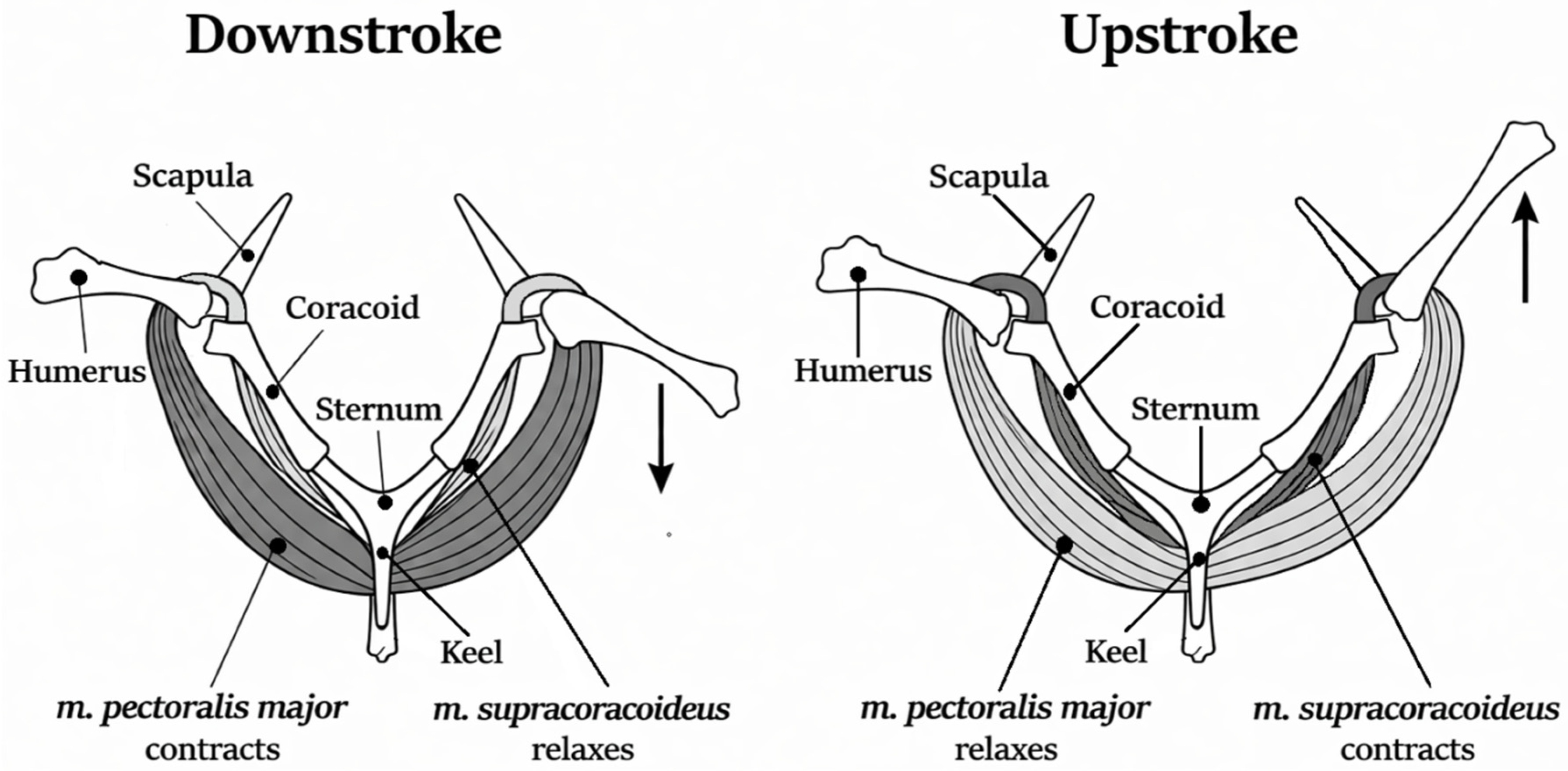
The avian breast musculature is dominated by two major muscles, the m. pectoralis major and the m. supracoracoideus (formerly m. pectoralis minor), whose anatomical attachments reflect their essential locomotor function. The origo of pectoralis major are the lateral and ventral surfaces of the sternum, particularly along the sternal keel, and the muscle extends cranially to attach partly to the furcula and the sternocoracoid membrane. Its insertion is on the lateral surface of the humerus [5]. The supracoracoideus lies deeper and originates from the cranial and ventral portion of the sternum, the deep surface of the keel, the sternocoracoid membrane, and parts of the coracoid bone. Its tendon passes dorsally through the triosseal canal formed by the junction of the scapula, coracoid, and furcula, and inserts on the dorsal surface of the humerus [5].
Functionally, the breast muscles play a central role in wing movement and stabilization of the thoracic limb apparatus. The pectoralis major is primarily responsible for the powerful downstroke of the wing, generating the propulsive force required for flight, while the supracoracoideus enables elevation of the wing during the upstroke and maintains wing stability, as shown on the Figure 2. Although domestic chickens have limited flight capability compared with wild birds, these muscles remain essential for maintaining balance and posture, enabling short bursts of wing activity, and facilitating behaviours such as perching and rapid escape movements [25].
Moreover, the breast muscles represent a major reservoir of protein and metabolic substrates, playing an important role in energy balance. In modern broilers, intensive selection for rapid growth and increased breast yield has significantly increased the size and growth rate of the pectoral muscles, bringing these muscles to their genetic and physiological limits [4,26] and highlighting the vulnerability of the pectoral region under production pressures.

6. Development of Breast Muscles During Embryonic and Postnatal Life

Breast muscles develop through a highly coordinated process that begins during embryogenesis and continues intensively in the first days after hatching. The muscle cells of the breast muscle originate from somites derived from the paraxial mesoderm, with myogenic precursor cells proliferating from the sixth day of incubation, migrating, and fusing to form multinucleated primary myofibers [27]. In the second wave of proliferation, which occurs between days 12 and 16, secondary fibers are formed on the surface of the primary fibers. The final, third wave of myofiber formation occurs in the last days of incubation and the first days after hatching, originating from fetal myoblasts and satellite cells [27].
Histologically, chicken pectoral muscles are composed of densely packed, elongated muscle cells with polygonal cross-sections, organized into fascicles surrounded by connective tissue (endomysium, perimysium, and epimysium). After hatching, muscle weight increases through enlargement of muscle fiber diameter—hypertrophy—rather than an increase in fiber number—hyperplasia [28]. Commercial broilers have significantly larger fiber diameters and reduced fiber density compared with slow-growing, traditional, or egg-laying genotypes, reflecting intense genetic selection for rapid muscle accretion [29].
Regarding muscle fiber type composition, the pectoralis major of domestic chicken consists almost exclusively of fast, glycolytic, type IIB fibers [4,28], specialized for rapid and powerful contractions [30,31]. These fibers have low oxidative capacity and limited fatigue resistance. This metabolic profile supports explosive wing movement but also makes the muscle tissue more susceptible to hypoxia, oxidative imbalance, and degenerative processes under conditions of accelerated growth. The deeply positioned m. supracoracoideus in flying birds, in accordance with its function, is composed of a higher share of oxidative fibers, types I and IIA, exceeding 90% in quail and pigeon [32,33]. However, in poultry, due to the absence of sustained activity, the m. supracoracoideus has shifted to a predominantly glycolytic fiber composition [34].
After hatching, modern broiler genotypes show extremely rapid breast muscle enlargement during the first 4–6 weeks, during which breast muscle weight may increase several fold [26]. However, the disproportionate rate of muscle fiber enlargement compared to vascular development and connective tissue adaptation contributes to impaired oxygen delivery to the cells, metabolic disturbances, and structural instability of glycolytic, IIB muscle fibers. These biological constraints are strongly associated with the occurrence of myopathies and impaired animal welfare.
From a production perspective, the biological characteristics of breast muscle development and postnatal growth are critically important, as the pectoral muscles represent the most economically valuable part of the broiler carcass. Selection for high breast meat yield has significantly improved production efficiency, but has also increased the risk of muscle fiber degeneration and reduced overall meat quality.

7. Breast Muscle Myopathies in Poultry: Morphological Characteristics and Production Consequences

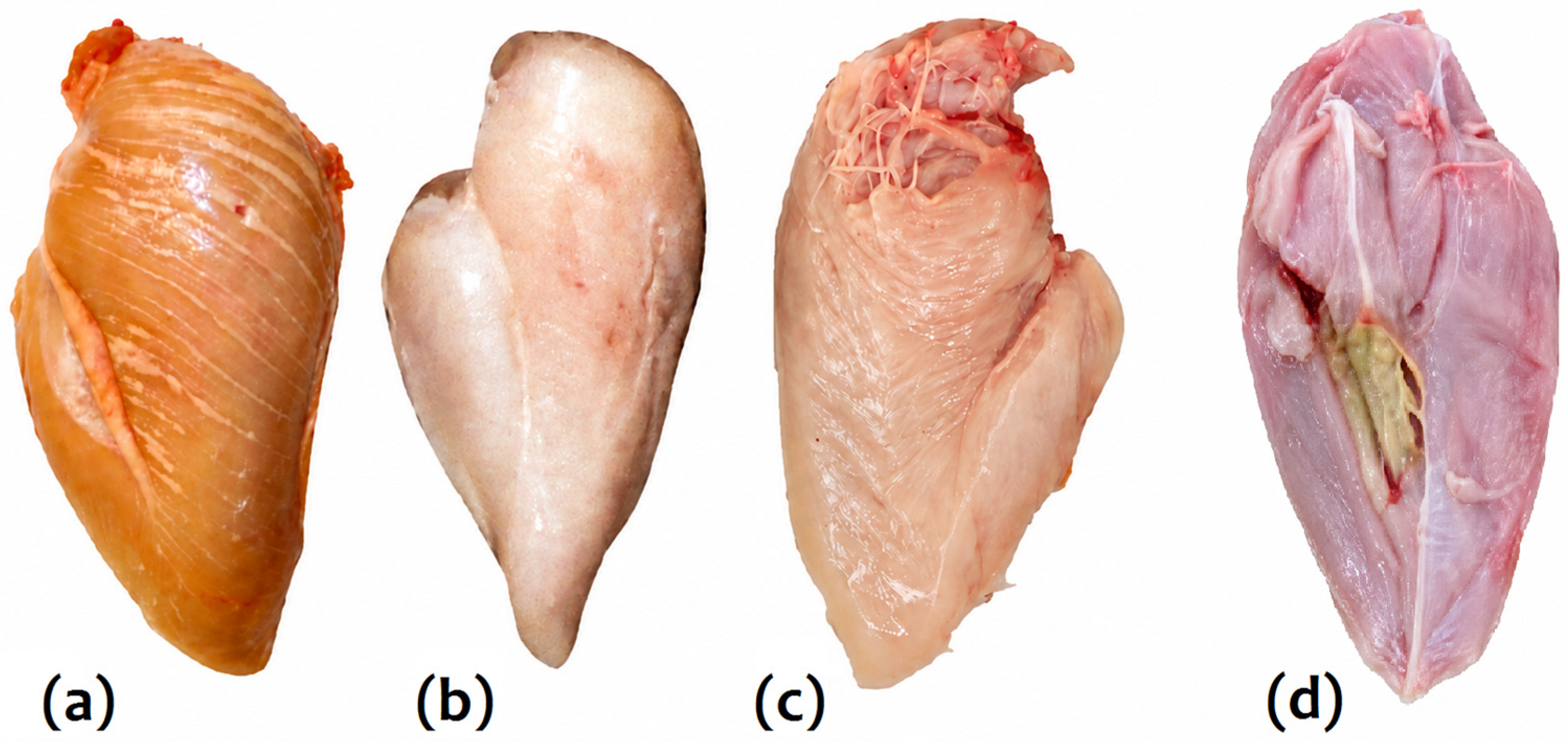
Along with the intensification of poultry meat production, breast muscle myopathies have emerged as a group of growth-related disorders, reflecting the biological limits of intensive selection for rapid muscle growth. The most frequently reported conditions include white striping, wooden breast, and spaghetti meat [28]. Although they differ in macroscopic and microscopic symptoms, they share common mechanisms associated with impaired muscle integrity and metabolic imbalance [4,28], and most often appear together [35]. Muscle myopathies are more frequently observed in birds with higher body weight (processed at day 62 of age, fast-growing vs. moderate and slow-growing birds reaching 3.4, 3.2 and 2.8 kg, respectively), with rapid growth rates (fast-growing 2.4 kg vs. moderate 2.3 kg and slow-growing 2.0 kg at day 48), and fed high-intensity diets [35]. These abnormalities are rarely observed in muscle groups other than the pectoral musculature [36], emphasizing the specific vulnerability of this anatomical region.
Morphologically, breast myopathies are characterized by a range of degenerative and regenerative changes within the muscle tissue. Histological examination of affected muscles reveals myofiber degeneration, loss of normal polygonal cross-section, fragmentation, and necrosis, often accompanied by infiltration of inflammatory cells. In many cases, degenerating fibers are replaced by adipose and fibrous tissue, leading to visible alterations in muscle structure. White striping is associated with lipidosis and fibrosis aligned parallel to muscle fibers, whereas wooden breast is characterized by extensive fibrosis, increased connective tissue deposition, and muscle hardening [35,36,37]. Spaghetti meat, on the other hand, involves pronounced disruption of connective tissue integrity, resulting in separation of muscle fiber bundles and reduced cohesion [36]; however, it is believed that this separation does not occur in the live bird [4].
Other muscle conditions, also observed in pectoral muscles, differ in etiology but contribute to overall variability in meat quality and have been described in poultry. PSE-like (pale, soft, exudative) meat in poultry is associated with rapid post mortem glycolysis and a decline in muscle pH, while the carcass temperature remains elevated, leading to protein degradation and reduced water-holding capacity. Although less frequent than in pigs, the PSE-like condition in poultry has been linked to pre-slaughter stress and the metabolic characteristics of glycolytic muscle fibers dominant in pectoral muscles [38]. Another documented condition is deep pectoral myopathy, also known as green muscle disease, which primarily affects the m. supracoracoideus [39]. This condition is caused by ischemic necrosis of the m. supracoracoideus resulting from increased intramuscular pressure due to activity of the adjacent m. pectoralis major, leading to m. coracoideus degeneration, discoloration and eventual necrosis, often detected during processing [39]. However, in recent years, these conditions have been significantly reduced due to management and genetic strategies, and their prevalence has decreased [35]. Over the past decade, a new myopathy of the m. supracoracoideus has been observed, characterized by the mild separation of bundles of muscle fibers or the appearance of splits in the muscle. This degenerative phenomenon is defined as gaping or feathering [35,40] and most probably appears post mortem. A short summary of the different myopathies, their characteristics, mechanisms of occurrence, and incidence is given in Table 2.
All these structural alterations are linked to profound changes in muscle function and metabolism. Hypertrophy of muscle fibers, reduced capillary density, and compromised oxygen supply lead to oxidative stress and metabolic dysregulation in the muscle. As a consequence, affected muscles show impaired protein turnover, altered water distribution, and reduced structural stability [28,29].
From a production perspective, the presence of breast muscle myopathies has significant implications for both growth performance and meat quality. Although broilers affected by milder forms of myopathies may not show a substantial reduction in live weight, more severe cases are associated with decreased growth efficiency. More importantly, these conditions negatively affect meat quality parameters such as water-holding capacity, texture, color and yield, as well as visual characteristics of the meat and consumers acceptance (Figure 3). Wooden breast is associated with increased toughness and reduced consumer acceptability, while white striping affects visual appearance and nutritional composition due to elevated lipid content [4,37]. Consequently, breast muscle myopathies represent a biological and welfare concern, as well as a considerable economic challenge for the poultry industry, reinforcing the concept of the sternal region as a site of functional overload in modern poultry production.
Although individual myopathies differ in their morphological appearance and severity, they share common underlying mechanisms associated with excessive muscle hypertrophy, insufficient vascular support, oxidative stress, and impaired connective tissue organization. These abnormalities are predominantly localized within the pectoral region, emphasizing the biological burden placed on this anatomical area in fast-growing broilers. However, breast muscle myopathies should not be viewed solely as meat quality defects, but rather as manifestations of broader physiological limitations associated with intensive genetic selection for production traits.
Breast muscle myopathies are primarily recognized as meat quality defects detected post mortem [4]. However, a recent research [44] has suggested that the underlying degenerative, ischemic, and inflammatory processes may also have negative implications for animal welfare in fast-growing broilers linked with lower gait scores, longer lying time, locomotion difficulties and walking abnormalities. However, the literature findings on this topic are still limited and further research in this direction would be needed in order to more precisely define or quantify the impact of muscle myopathies on broiler welfare.

8. Possibilities for Prevention and Mitigation of Sternal Bone Damage and Breast Muscle Myopathies in Poultry

The increasing incidence of keel bone damage in laying hens and breast muscle myopathies in broilers in recent years has prompted extensive research into potential mitigation strategies. As both conditions result from complex interactions between genetics, nutrition and management, effective solutions require a multifunctional and integrative approach. Although mitigation strategies are usually investigated separately for skeletal and muscular disorders, both groups of conditions appear to share common biological determinants associated with excessive production pressure, tissue overload, and insufficient adaptive capacity of this anatomical region. Therefore, future preventive approaches should focus on improving the overall structural and metabolic robustness of the entire sterno-pectoral region as a morphological unit.

8.1. Nutrition

Feed composition and the availability of respective nutrients play a central role in improving skeletal integrity in laying hens and modulation of muscle development in broilers. In the context of KBD, particular attention has been given to optimizing calcium (Ca) and phosphorus (P) supply, as well as vitamin D. Adequate dietary Ca levels, combined with appropriate particle size, and inclusion of coarse limestone [15,16,45], have been shown to improve bone mineralization and reduce fracture risk. Supplementation with vitamin D3 or its hydroxycholecalciferol form has been associated with improved bone strength and reduced incidence of skeletal disorders in laying hens [46]. Recent research [14,47] has shown promising effects of dietary melatonin addition on bone strength and growth in chicken.
As myopathies in broilers are a relatively new phenomenon, with some described only in the last few years, research into possibilities for preventing the occurrence of myopathies in broilers has not yet produced confirmed strategies. As reviewed in [35,48], the main nutritional and feeding procedures applied in various studies on the effects of diet on myopathy incidence are: reduction in dietary amino acids; nutrient allocation; supplementation of minerals (Se, Mg, Zn etc), antioxidants, vitamin E or fatty acids to control oxidation; supplementation of inositol and phytase to improve oxygen homeostasis, use of antibiotics, probiotics and organic acids; and supplementation with guanidine acetic acid. Controlling oxygen homeostasis and supplementation with guanidine acetic acid appear to be the most successful approaches; however, further confirmation of these strategies or research on implementation of additives not yet studied is needed.

8.2. Selection and Breeding

Genetic selection has been identified as a primary cause of the occurrence of KBD and myopathies and as key tool for their mitigation. In laying hens, selection for improved bone strength has been proposed as an efficient strategy to reduce KBD prevalence. Studies have demonstrated that bone quality traits, including bone mineral density and breaking strength, exhibit moderate (0.30) to strong (0.45) heritability [49], indicating that improvement through selection is feasible. It was reported in [18,50] that a higher incidence of keel bone fractures is found in brown-feathered strains of hens compared to white strains up to 50 weeks of age, but this difference largely disappears by the end of lay.
In meat production broilers, the challenge is to balance rapid growth with muscle integrity. Research has shown that non-genetic factors contribute to about 65% of white striping occurrence and more than 90% of wooden breast and deep pectoral myopathy cases in chicken [51]. However, even with a low genetic contribution to myopathy occurrence, traits related to muscle quality should be incorporated into selection programs to achieve cumulative improvements.

8.3. Management and Housing

In laying hens, cage systems restrict animal mobility, resulting in osteoporosis, bone weakness and fragility [23]. On the other hand, aviary and free-range systems, although beneficial for bird behaviour, increase the risk of collisions and KBD. Therefore, improving perch design, optimizing spatial layout, and reducing structural hazards are critical for minimizing mechanical trauma [18]. For example, rounded or softer perch materials have been suggested to reduce pressure induced injuries and improve movement control in hens [52,53]. Additionally, early-life training in more complex environments appears to improve locomotion abilities and navigation [50,54] while also enhancing bone strength and reducing KBD severity in the long term [50].
In broiler production, profit-driven strategies focused primarily on high stocking density, growth dynamics, and muscle size or weight induced the occurrence of breast muscle myopathies. To prevent these deformities, new strategies would have to be developed that balance quantities demanded by end users, reasonable production costs, and biological characteristics and limitations of muscle tissue. Environmental enrichment, such as the inclusion of platforms and pecking objects has been shown to increase animals activity, which may contribute to improved muscle strength or quality [55,56]. Special care should also be given to temperature [57] and oxygen supply through air or drinking water [58]. Furthermore, pre-slaughter handling practices, including transport and lairage conditions, slaughter procedures and meat processing influence muscle metabolism and can induce meat quality defects through stress-induced acceleration of postmortem glycolysis [59].
Currently, mitigation strategies remain largely focused on individual aspects of the KBD or meat quality problems, such as nutrition, housing design, or genetic selection. However, the multifactorial nature of both keel bone damage and breast muscle myopathies indicates that isolated interventions might not provide fully satisfactory long-term solutions. Future progress will most likely depend on integrated approaches combining management, nutrition, welfare-oriented housing systems, and balanced breeding objectives aimed at improving tissue robustness rather than maximizing production traits alone. Such an approach may contribute to reducing the biological overload imposed on the sterno-pectoral region in modern poultry strains.

9. Conclusions: Integrated Perspective and Future Directions

Despite the apparent morphological differences between keel bone damage (KBD) in laying hens and breast muscle myopathies in broilers, and their traditionally separate research, both conditions result from biological constraints affecting the sternal region as an anatomical and functional unit of the bird’s body, simultaneously exposed to the pressures of intensive production. Central to this concept is the imbalance between rapid tissue growth or turnover and the capacity for adequate structural, vascular, and metabolic support. In laying hens, continuous calcium mobilization for eggshell formation compromises bone integrity, while in broilers, accelerated hypertrophy of predominantly glycolytic muscle fibers outpaces the development of vascular and connective tissue support, leading to hypoxia and degeneration.
At present, the available scientific literature provides limited systematic knowledge regarding skeletal disorders of the sternum in broilers and breast muscle myopathies in laying hens. As a consequence, these conditions have traditionally been investigated as largely separate research areas associated with different poultry production types despite affecting the same anatomical region. These observations suggest that future strategies should move beyond compartmentalized, isolated approaches targeting either bone or muscle, and instead adopt an integrated framework that considers their functional interdependence, helping to bridge the gap between research fields that have traditionally evolved separately within poultry science. A promising direction involves the simultaneous evaluation of skeletal and muscular traits within breeding programs. While genetic selection has traditionally focused on production traits such as egg number or breast yield, there is an increasing need to incorporate indicators of bone strength, muscle integrity, and tissue resilience to improve overall robustness without compromising productivity. The integration of omics technologies, including genomics, transcriptomics, and metabolomics, offers new opportunities to better understand the complex pathways underlying these disorders. Such approaches may facilitate the identification of early biomarkers of susceptibility, enabling preventive strategies to be implemented before clinical manifestations occur.
Another research direction could be the investigation of vascularization and oxygen supply within the sternal region. Both bone fragility and muscle degeneration have been linked to insufficient blood or oxygen supply, suggesting that improvements in angiogenesis and microcirculation may represent an intervention strategy.
From a management perspective, future research should focus on optimizing the interaction between housing design, physical activity, and mechanical loading of the sternal region. While increased activity may improve both bone strength and muscle function, excessive or poorly controlled movement can increase the risk of trauma, particularly in laying hens. Therefore, refining housing systems to balance mobility and safety remains a critical challenge.
In conclusion, addressing disorders of the sterno-pectoral region as an anatomical unit requires a shift from compartmentalized to system-level thinking. By integrating skeletal and muscular biology with nutrition, genetics, and management, future research should contribute to development of more sustainable poultry production systems that better balance performance, product quality, and animal welfare. Within the framework proposed in this paper, keel bone damage and breast muscle myopathies are interpreted as parallel manifestations, reflecting the inability of skeletal and muscular tissues to adequately adapt to the extreme physiological demands imposed by modern production systems. This perspective reinforces the need to reconsider the biological limits of intensive poultry production and supports the development of research strategies focused on long-term animal robustness, welfare, and sustainable productivity.

Author Contributions

I.B.: Conceptualization, writing—original draft, methodology, writing—review & editing, visualization, supervision. P.S.: writing—review & editing, visualization, Data curation. G.J. writing—review & editing, visualization, funding acquisition. I.N.: writing—review & editing, visualization. M.B.: writing—review & editing, visualization. N.T.: Writing—review & editing, visualization. V.Đ.: writing—review & editing, visualization, resources. All authors have read and agreed to the published version of the manuscript.

Funding

This manuscript was created as a result of research within the framework of the “Agreement on the implementation and financing of scientific research work in 2026 between the Institute for Science Application in Agriculture and the Ministry of Education, Science and Technological Development of the Republic of Serbia, contract registration number: 451-03-33/2026-03/200045”.

Institutional Review Board Statement

Not applicable.

Informed Consent Statement

Not applicable.

Data Availability Statement

No new data were created or analyzed in this study.

Conflicts of Interest

The authors declare no conflict of interest.

References

  1. OECD. OECD-FAO Agricultural Outlook 2023–2032; OECD Publishing: Paris, France; FAO: Rome, Italy, 2023. [Google Scholar] [CrossRef]
  2. Gretarsson, P.; Søvik, Å.; Thøfner, I.; Moe, R.O.; Toftaker, I.; Kittelsen, K. Fracture morphology and ossification process of the keel bone in modern laying hens based on radiographic imaging. PLoS ONE 2024, 19, e0312878. [Google Scholar] [CrossRef]
  3. Li, X.; Cai, X.; Wang, X.; Zhu, L.; Yan, H.; Yao, J.; Yang, C. Understanding the Causes of Keel Bone Damage and Its Effects on the Welfare of Laying Hens. Animals 2024, 14, 3655. [Google Scholar] [CrossRef]
  4. Petracci, M.; Soglia, F.; Madruga, M.; Carvalho, L.; Ida, E.; Estevez, M. Wooden breast, white striping, and spaghetti meat: Causes, consequences and consumer perception of emerging broiler meat abnormalities. Compr. Rev. Food Sci. Food Saf. 2019, 18, 565–583. [Google Scholar] [CrossRef] [PubMed]
  5. Dyce, K.M.; Sack, W.O.; Wensing, C.J.G. Textbook of Veterinary Anatomy, 4th ed.; Saunders Elsevier: Philadelphia, PA, USA, 2010. [Google Scholar]
  6. Zhang, H.; Liao, H.; Zeng, Q.; Wang, J.; Ding, X.; Bai, S.; Zhang, K. A study on the sternum growth and mineralization kinetic of meat duck from 35 to 63 days of age. Poult. Sci. 2017, 96, 4103–4115. [Google Scholar] [CrossRef]
  7. Lowi-Merri, T.M.; Benson, R.B.J.; Claramunt, S.; Evans, D.C. The relationship between sternum variation and mode of locomotion in birds. BMC Biol. 2021, 19, 165. [Google Scholar] [CrossRef] [PubMed]
  8. Bellairs, R.; Osmond, M. The Atlas of Chick Development, 3rd ed.; Academic Press: Cambridge, MA, USA, 2014. [Google Scholar] [CrossRef]
  9. Davis, B.G.; Insko, W.M., Jr.; Henry, A.H.; Wachs, E.F. Rate of Growth and Calcification of the Sternum of Male and Female New Hampshire Chickens Having Crooked Keels1. Poult. Sci. 1949, 28, 289–292. [Google Scholar] [CrossRef]
  10. Buckner, D.; Insko, W.M., Jr.; Henry, A.; Wachs, E. Rate of Growth and Calcification of the Sternum of male and female New Hampshire chickens. Poult. Sci. 1948, 27, 430–433. [Google Scholar] [CrossRef]
  11. Breugelmans, S.; Muylle, S.; Cornillie, P.; Saunders, J.; Simoens, P. Age determination of poultry: A challenge for customs. Vlaams Diergeneeskd. Tijdschr. 2007, 76, 423–430. [Google Scholar] [CrossRef]
  12. Tickle, P.; Paxton, H.; Rankin, J.; Hutchinson, J.; Codd, J. Anatomical and biomechanical traits of broiler chickens across ontogeny. Part I. Anatomy of the musculoskeletal respiratory apparatus and changes in organ size. PeerJ. 2014, 2, e432. [Google Scholar] [CrossRef]
  13. Rath, N.C.; Huff, G.R.; Huff, W.E.; Balog, J.M. Factors Regulating Bone Maturity and Strength in Poultry1. Poult. Sci. 2000, 79, 1024–1032. [Google Scholar] [CrossRef]
  14. Vitorović, D.; Božičković, I.; Lukić, M.; Relić, R.; Škrbić, Z.; Petričević, V.; Lazarević Macanović, M.; Krstić, N. Tibia growth and development in broiler chicks reared under continuous light and melatonin dietary supplementation during the first two weeks of life. Acta Vet. 2023, 73, 262–270. [Google Scholar] [CrossRef]
  15. Whitehead, C.C. Overview of bone biology in the egg-laying hen. Poult. Sci. 2004, 83, 193–199. [Google Scholar] [CrossRef] [PubMed]
  16. Fleming, R.H.; McCormack, H.A.; McTeir, L.; Whitehead, C.C. Relationships between genetic, environmental and nutritional factors influencing osteoporosis in laying hens. Br. Poult. Sci. 2006, 47, 742–755. [Google Scholar] [CrossRef]
  17. Harlander-Matauschek, A.; Rodenburg, T.B.; Sandilands, V.; Tobalske, B.W.; Toscano, M.J. Causes of keel bone damage and their solutions in laying hens. World’s Poult. Sci. J. 2015, 71, 461–472. [Google Scholar] [CrossRef]
  18. Rufener, C.; Makagon, M.M. Keel bone fractures in laying hens: A systematic review of prevalence across age, housing systems, and strains. J. Anim. Sci. 2020, 98, S36–S51. [Google Scholar] [CrossRef]
  19. Donaldson, C.J.; Ball, M.E.E.; O’Connell, N.E. Aerial perches and free-range laying hens: The effect of access to aerial perches and of individual bird parameters on keel bone injuries in commercial free-range laying hens. Poult. Sci. 2012, 91, 304–315. [Google Scholar] [CrossRef]
  20. Habig, C.; Henning, M.; Baulain, U.; Jansen, S.; Scholz, A.M.; Weigend, S. Keel Bone Damage in Laying Hens-Its Relation to Bone Mineral Density, Body Growth Rate and Laying Performance. Animals 2021, 11, 1546. [Google Scholar] [CrossRef]
  21. Nasr, M.A.F.; Nicol, C.J.; Murrell, J.C. Do laying hens with keel bone fractures experience pain? PLoS ONE 2012, 7, e42420. [Google Scholar] [CrossRef] [PubMed]
  22. Bergamasco, T.; Ambrosi, A.; Tregnaghi, V.; Urbani, R.; Nalesso, G.; Menegon, F.; Trocino, A.; Pravato, M.; Bordignon, F.; Sparesato, S.; et al. Precision Livestock Farming: YOLOv12-Based Automated Detection of Keel Bone Lesions in Laying Hens. Poultry 2025, 4, 43. [Google Scholar] [CrossRef]
  23. Relić, R.; Sossidou, E.; Dedousi, A.; Perić, L.; Božičković, I.; Đukić-Stojčić, M. Behavioral and health problems of poultry related to rearing systems. Ank. Univ. Vet. Fak. Derg. 2019, 66, 423–428. [Google Scholar] [CrossRef]
  24. Glamočlija, N.; Dokmanović Starčević, M.; Đorđević, J.; Marković, R.; Baltić, Ž.M.; Glišić, M.; Bošković, M. Ispitivanje mesnatosti trupova brojlera. Vet. J. Repub. Srp. Banja Luka 2016, XVI, 39–48. [Google Scholar] [CrossRef]
  25. Dial, K.P. Activity patterns of the wing muscles of the pigeon (Columba livia) during different modes of flight. J. Exp. Zool. 1992, 262, 357–373. [Google Scholar] [CrossRef]
  26. Siegel, P.B. Evolution of the Modern Broiler and Feed Efficiency. Annu. Rev. Anim. Biosci. 2014, 2, 375–385. [Google Scholar] [CrossRef] [PubMed]
  27. Stockdale, F.E. Myogenic cell lineages. Dev. Biol. 1992, 154, 284–298. [Google Scholar] [CrossRef]
  28. Velleman, S.G. Relationship of Skeletal Muscle Development and Growth to Breast Muscle Myopathies: A Review. Avian Dis. 2015, 59, 525–531. [Google Scholar] [CrossRef]
  29. Petracci, M.; Mudalal, S.; Soglia, F.; Cavani, C. Meat quality in fast-growing broiler chickens. World’s Poult. Sci. J. 2015, 71, 363–374. [Google Scholar] [CrossRef]
  30. Weng, K.; Huo, W.; Li, Y.; Zhang, Y.; Zhang, Y.; Chen, G.; Xu, Q. Fiber characteristics and meat quality of different muscular tissues from slow- and fast-growing broilers. Poult. Sci. 2022, 101, 101537. [Google Scholar] [CrossRef]
  31. Cheng, H.; Song, S.; Park, T.S.; Kim, G.D. Proteolysis and changes in meat quality of chicken pectoralis major and iliotibialis muscles in relation to muscle fiber type distribution. Poult. Sci. 2022, 12, 102185. [Google Scholar] [CrossRef]
  32. Rosser, W.C.B.; George, J.C. The avian pectoralis: Histochemical characterization and distribution of muscle fiber types. Can. J. Zool. 1986, 64, 1174–1185. [Google Scholar] [CrossRef]
  33. Kim, D.H.; Lee, B.; Lee, J.; Bohrer, B.M.; Choi, Y.M.; Lee, K. Effects of a myostatin mutation in Japanese quail (Coturnix japonica) on the physicochemical and histochemical characteristics of the pectoralis major muscle. Front. Physiol. 2023, 14, 1172884. [Google Scholar] [CrossRef]
  34. Smith, D.P.; Fletcher, D.L. Chicken Breast Muscle Fiber Type and Diameter as Influenced by Age and Intramuscular Location. Poult. Sci. 1988, 67, 908–913. [Google Scholar] [CrossRef] [PubMed]
  35. Barbut, S.; Mitchell, R.; Hall, P.; Bacon, C.; Bailey, R.; Owens, C.M.; Petracci, M. Review: Myopathies in broilers: Supply chain approach to provide solutions to challenges related to raising fast growing birds. Poult. Sci. 2024, 103, 103801. [Google Scholar] [CrossRef] [PubMed]
  36. Sihvo, H.K.; Immonen, K.; Puolanne, E. Myodegeneration with fibrosis and regeneration in the pectoralis major muscle of broiler chickens. Vet. Pathol. 2014, 51, 619–623. [Google Scholar] [CrossRef] [PubMed]
  37. Knuttappan, V.A.; Hargis, B.M.; Owens, C.M. White striping and woody breast myopathies in the modern poultry industry: A review. Poult. Sci. 2016, 95, 2724–2733. [Google Scholar] [CrossRef]
  38. Barbut, S. Pale, soft, and exudative poultry meat—Reviewing ways to manage at the processing plant. Poult. Sci. 2009, 88, 1506–1512. [Google Scholar] [CrossRef]
  39. Lien, R.J.; Bilgili, S.; Hess, J.B.; Joiner, K.S. Induction of deep pectoral myopathy in broiler chickens via encouraged wing flapping. J. Appl. Poult. Res. 2012, 21, 556–562. [Google Scholar] [CrossRef]
  40. Soglia, F.; Silva, A.K.; Tappi, S.; Lião, L.M.; Rocculi, P.; Laghi, L.; Petracci, M. Gaping of pectoralis minor muscles: Magnitude and characterization of an emerging quality issue in broilers. Poult. Sci. 2019, 98, 6194–6204. [Google Scholar] [CrossRef]
  41. Reghiany, P.M.; Martins de Souza, R.; Louvandini, H.; Louvandini, P.; Barreiro de Souza, R.; de Morais Leite, N.; Augusto Garcia Coró, F. White Striping and Wooden Breast Myopathies in the Poultry Industry: An Overview of Changes in the Skin, Bone Tissue and Intestinal Microbiota and Their Economic Impact. In Advances in Poultry Nutrition Research; IntechOpen: London, UK, 2021. [Google Scholar] [CrossRef]
  42. Bailey, R.A.; Souza, E.; Avendano, S. Characterising the Influence of Genetics on Breast Muscle Myopathies in Broiler Chickens. Front. Physiol. 2020, 11, 1041. [Google Scholar] [CrossRef]
  43. Bilgili, S.F.; Hess, J. Miopatia peitoral profunda. Inf. Traduzido Orig. Ross Tech 2008, 8, 1–4. [Google Scholar]
  44. Norring, M.; Valros, A.; Valaja, J.; Sihvo, H.-K.; Immonen, K.; Puolanne, E. Wooden breast myopathy links with poorer gait in broiler chickens. Animal 2019, 13, 1690–1695. [Google Scholar] [CrossRef]
  45. Vitorović, D.; Pavlovski, Z.; Spasojević, I.; Lukić, M.; Škrbić, Z. Effects of limestone prticle size on eggshell quality in laying hens. In Proceedings of the European Poultry Conference, Bremen, Germany, 6–10 September 2002; pp. 138–139. [Google Scholar]
  46. Świątkiewicz, S.; Arczewska-Włosek, A.; Bederska-Lojewska, D.; Józefiak, D. Efficacy of dietary vitamin D and its metabolites in poultry—Review and implications of the recent studies. World’s Poult. Sci. J. 2017, 73, 57–68. [Google Scholar] [CrossRef]
  47. Božičković, I.; Vitorović, D. Effects of melatonin addition to the feed of broiler chickens reared under constant light conditions during the first two weeks of life on sternum geometry at the end of fattening. In Proceedings of the 33rd International Scientific Conference on Farm Animal Nutrition “Zadravec-Erjavec Days 2025”, Radenci, Slovenia, 13–14 November 2025. [Google Scholar]
  48. Trocino, A.; Xiccato, G.; Petracci, M.; Bošković Cabrol, M. Nutritional and feeding strategies for controlling breast muscle myopathy occurence in broiler chickens: A survey of the published literature. Meat Technol. 2023, 64, 30–35. [Google Scholar] [CrossRef]
  49. Bishop, S.C.; Fleming, R.H.; McCormack, H.A.; Flock, D.K.; Whitehead, C.C. Inheritance of bone characteristics affecting osteoporosis in laying hens. Br. Poult. Sci. 2000, 41, 33–40. [Google Scholar] [CrossRef] [PubMed]
  50. Rentsch, A.K.; Aingkaran, V.; Ross, E.; Widowski, T.M. Rearing laying hens: Early environmental complexity and genetic strain have life-long effects on keel bone size and fractures. Poult. Sci. 2024, 103, 104481. [Google Scholar] [CrossRef] [PubMed]
  51. Bailey, R.A.; Watson, K.A.; Bilgili, S.F.; Avendano, S. The genetic basis of pectoralis major myopathies in modern broiler chicken lines. Poult. Sci. 2015, 94, 2870–2879. [Google Scholar] [CrossRef] [PubMed]
  52. Pickel, T.; Scholz, B.; Schrader, L. Perch material and diameter affects particular perching behaviours in laying hens. Appl. Anim. Behav. Sci. 2010, 127, 37–42. [Google Scholar] [CrossRef]
  53. Stratmann, A.; Fröhlich, E.K.F.; Harlander-Matauschek, A.; Schrader, L.; Toscano, M.J.; Würbel, H.; Gebhardt-Henrich, S.G. Soft Perches in an Aviary System Reduce Incidence of Keel Bone Damage in Laying Hens. PLoS ONE 2015, 10, e0122568. [Google Scholar] [CrossRef]
  54. Brantsæter, M.; Nordgreen, J.; Rodenburg, T.B.; Tahamtani, F.M.; Popova, A.; Janczak, A.M. Exposure to Increased Environmental Complexity during Rearing Reduces Fearfulness and Increases Use of Three-Dimensional Space in Laying Hens (Gallus gallus domesticus). Front Vet. Sci. 2016, 3, 14. [Google Scholar] [CrossRef]
  55. Božičković, I.; Davidović, V.; Savić, R.; Živković, V.; Stepić, S.; Đermanović, V. Uticaj fizičke aktivnosti na histološke karakteristike mišića domaćih životinja. In Zbornik Radova XXVI Savetovanje o Biotehnologiji; Univerzitet u Kragujevcu Agronomski Fakultet: Čačak, Serbia, 2021. [Google Scholar] [CrossRef]
  56. Riber, A.B.; van de Weerd, H.A.; de Jong, I.C.; Steenfeldt, S. Review of environmental enrichment for broiler chickens. Poult. Sci. 2018, 97, 378–396. [Google Scholar] [CrossRef]
  57. Nawaz, A.H.; Zhang, L. Oxidative stress in broiler chicken and its consequences on meat quality. Int. J. Life Sci. Res. Arch. 2021, 1, 45–54. [Google Scholar] [CrossRef]
  58. Khattak, F.; Galgano, S.; Pearson, R.; Houdijk, J.G.M.; Short, F.; Leigh, A. Enhancing key broiler welfare indicators, meat quality, and gut microbiome composition using oxygen-enriched drinking water under commercially relevant housing conditions. Poult. Sci. 2025, 104, 105550. [Google Scholar] [CrossRef]
  59. Petracci, M.; Bianchi, M.; Cavani, C. Pre-slaughter handling and slaughtering factors influencing poultry product quality. World’s Poult. Sci. J. 2010, 66, 17–26. [Google Scholar] [CrossRef]
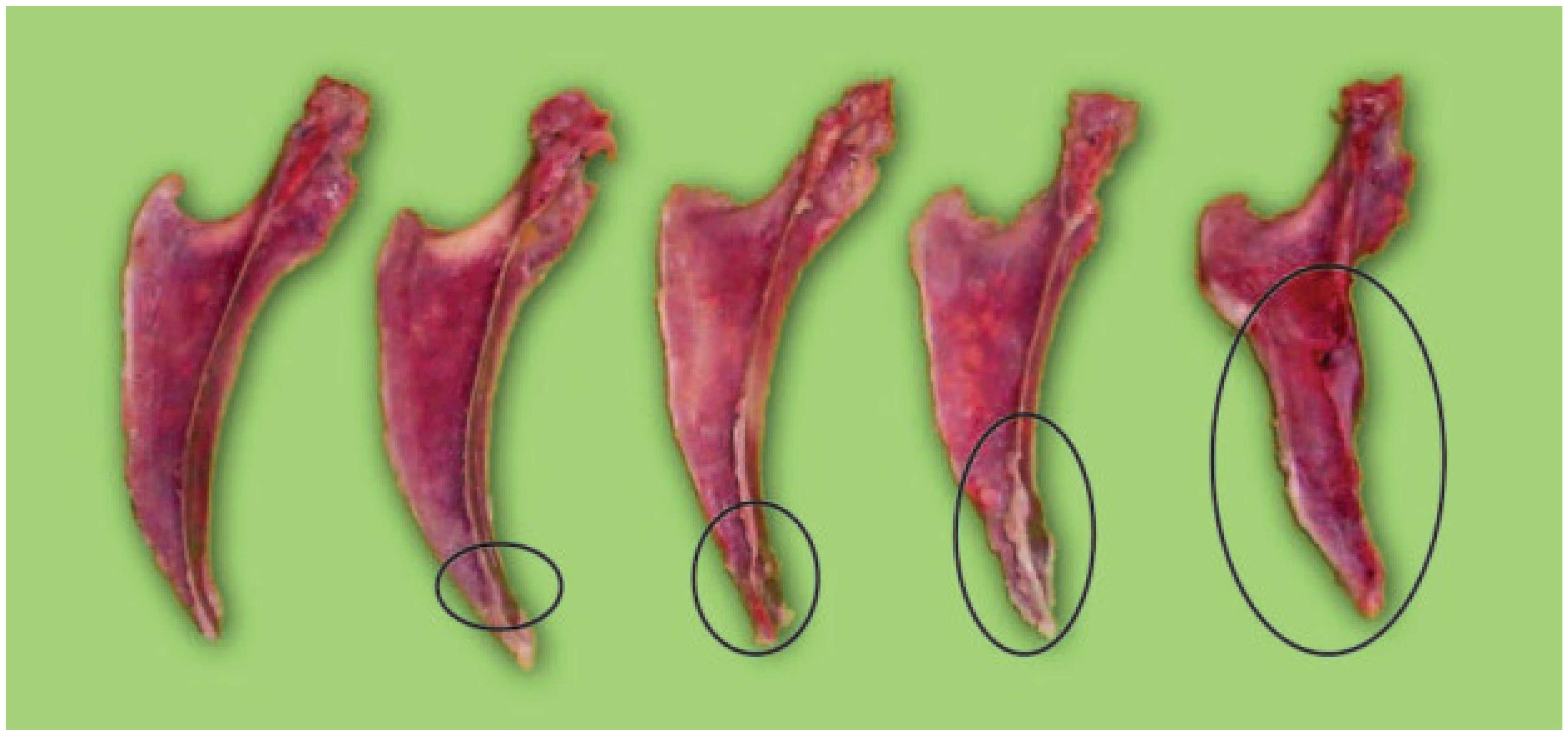
Figure 1. Schematic representation of the scoring system used to classify different levels of keel bone damage, ranging from 0—normal keel bone without lesions—to 4—severe damage with multiple fractures (Reprinted from Ref. [19]).
Poultry 05 00041 g001
Figure 2. Schematic illustration of the pectoral muscles attached to the sternum and their involvement in wing movement (Adapted with permission from A Step BioMed/Shutterstock; published by Shutterstock, 2022).
Poultry 05 00041 g002
Figure 3. Breast muscle myopathies in chicken: (a) white striping (adapted from [41]); (b) wooden breast (adapted from [42]); (c) spaghetti meat (adapted from [42]) and (d) deep pectoral myopathy (adapted with permission from [43]. Copyright 2008 Aviagen).
Poultry 05 00041 g003
Table 1. Overview of keel bone damage (KBD) appearance in laying hens.
Type of DamageMorphological DescriptionDetection MethodHousing System InfluenceIncidenceImpact to Welfare and ProductionReference
FracturesComplete or incomplete breaks; callus formationPalpation, Radiography, Ultrasound, CT scanning, Dissection, Automated detectionHigher in aviary/free-rangeup to 90% at the end of layPain, impaired mobility, reduced egg production, mortality[18,21,22]
DeviationsAbnormal bending, keel deformation, microdamagesPalpation, Radiography Ultrasound, CT scanning, Dissection, Automated detectionMore common in cagesup to 97% at the end of layAltered posture, reduced mobility[16,20,22]
Osteoporosis Reduced bone densityDEXA, HistologyAll systemsVery commonIncreased fracture risk[15]
Table 2. Comparative overview of breast muscle myopathies in poultry.
Affected
Muscle
ConditionMorphological FeaturesMechanismIncidenceReference
m. pectoralis majorWhite stripingwhite striations parallel to muscle fibers, lipidosis, mild fibrosishypoxia, oxidative stress, higher levels of Ca, reduced vascularization, consequence of muscle fiber switching to glycolytic typeconsidered a norm in breast meat present at the market today[35,37]
Wooden breasthard, tough areas, fibrosis, necrosis, hemorrhageslow incidence of severe cases, very high incidence of mild forms[4,35]
Spaghetti meatextensive fiber bundle separation, soft textureconnective tissue degradation, poor inter-fiber cohesionup to 20%[35]
PSE-like meatpale color, soft consistency, poor water holding capacity, fast pH declineshrinking and depolymerization of myofilaments, glycolysis, protein degradation5–40%[35,37]
m. supracoracoideusDeep pectoral myopathymuscle necrosis, green discolorationacute edema, necrotic fibers, ischemia1–2%[35,37,39]
Gaping–featheringmild fiber bundles separation, tears, holes in muscle surface weak but not collapsed extracellular matrix≈17%[35,40]
PSE-like meat and white stripping have been observed at a lower incidence[37]
Disclaimer/Publisher’s Note: The statements, opinions and data contained in all publications are solely those of the individual author(s) and contributor(s) and not of MDPI and/or the editor(s). MDPI and/or the editor(s) disclaim responsibility for any injury to people or property resulting from any ideas, methods, instructions or products referred to in the content.