Article

Seasonal Dynamics of Feeding Practices and Gender Roles in Tanzanian Village Chicken Production Systems


by
Ngassa Julius Mussa
1,
Liberatus Venant Katabazi
1,
Salum Omari Kuwi
1,
Vibuntita Chankitisakul
2,3,
Wuttigrai Boonkum
2,3,* and
Wende Maulaga
4
1
Tanzania Livestock Research Institute (TALIRI), Kongwa, Dodoma 41501, Tanzania
2
Department of Animal Science, Faculty of Agriculture, Khon Kean University, Khon Kean 40002, Thailand
3
Network Center for Animal Breeding and Omics Research, Khon Kaen University, Khon Kaen 40002, Thailand
4
Tanzania Veterinary Laboratory Agency, 131 Nelson Mandela Road, Dar es Salaam 11000, Tanzania
*
Author to whom correspondence should be addressed.
Poultry 2026, 5(3), 40; https://doi.org/10.3390/poultry5030040
Submission received: 21 April 2026 / Revised: 25 May 2026 / Accepted: 28 May 2026 / Published: 29 May 2026

Abstract

Village chickens are essential for rural livelihoods and food security in Sub-Saharan Africa; however, their productivity is constrained by seasonal feed scarcity and suboptimal feeding management. This study evaluated household-level feeding practices and their seasonal variation across three wards in Central Tanzania (Sanza, Majiri, and Iwondo). Data were collected from 852 randomly selected households using structured questionnaires covering flock ownership, feeding frequency, feed types, seasonal feed availability, and gender roles. Feeding practices exhibited marked seasonal variation, with supplementary feeding peaking during the rainy and post-harvest periods because of the increased availability of crop residues and natural feed resources. In contrast, supplementary feeding declined during the dry season, accompanied by increased reliance on scavenging. Feed types varied according to local cropping systems, with millet and sorghum predominating in different wards. Women were primarily responsible for daily poultry management activities, including feeding, but had limited involvement in decision-making related to resource allocation. Flock sizes were small and relatively uniform across the study areas. These findings highlight the importance of seasonally adaptive feeding strategies, improved feed resource management, and gender-responsive extension services for enhancing the productivity and sustainability of village chicken production systems.

1. Introduction

Village chickens (indigenous or traditional chickens) play a critical role in the livelihoods of rural households across low- and middle-income countries, particularly within smallholder production systems [1,2]. Beyond their contribution to animal-source food supply, these birds provide important economic, social, and ecological benefits, including income generation, risk buffering, and nutrient cycling through manure application in crop production systems [3,4,5,6,7]. These birds provide households with access to high-quality animal protein, serve as a readily available source of income through the sale of live birds and eggs, and supply manure that enhances soil fertility for crop production [8,9,10]. Moreover, their adaptability to low-input conditions, coupled with minimal capital requirements, makes village chickens a key component of resilient mixed crop–livestock systems [11].
Globally, more than 475 million smallholder farmers raise village chickens, often on land holdings smaller than two hectares [12], and village chicken production supports 80% of the total poultry population in Sub-Saharan Africa [13,14]. In Tanzania, indigenous chickens are especially important for resource-constrained households and play a central role in improving household nutrition and income, particularly among women and marginalized groups [15,16,17]. The diversity of local ecotypes further reflects their adaptation to varying agro-ecological conditions and production environments [18,19].
Despite their importance, productivity in village chicken systems remains low, largely due to multiple interacting constraints, including disease burden, predation, limited housing, and suboptimal nutrition [20]. Among these, feed scarcity and poor nutritional management are widely recognized as major limiting factors [17,21]. In semi-arid regions such as Central Tanzania, these constraints are exacerbated by pronounced seasonal variation in feed availability driven by rainfall patterns and cropping cycles. During feed-scarce periods, particularly in the dry season, chickens rely heavily on scavenging, resulting in inconsistent nutrient intake and reduced performance [22,23]. Such variability in feed supply can negatively affect growth, reproduction, and immune function, thereby limiting the overall productivity of village chicken systems.
Although the importance of nutrition in poultry production is well established, current knowledge regarding seasonal feeding dynamics in smallholder systems remains limited. Most existing studies have focused on generalized feeding interventions or breed performance under controlled conditions, with relatively little attention given to how households adapt their feeding practices in response to seasonal and environmental variability [24,25]. Moreover, the strong interdependence between cropping systems and poultry feeding practices, in which feed resources are often derived from crop residues and agricultural by-products, has not been sufficiently characterized in the context of seasonal fluctuations. This represents a critical knowledge gap, particularly in the development of sustainable and context-specific feeding strategies for semi-arid environments.
In addition, gender plays a central but often underexplored role in village chicken production systems. Women are typically responsible for daily poultry management, including feeding and health care, yet they frequently have limited control over financial resources and decision-making processes [16,17]. The interaction between seasonal resource availability and gendered management practices may therefore influence both feeding strategies and productivity outcomes. However, few studies have explicitly integrated gender dimensions into analyses of seasonal feeding practices. Given the increasing vulnerability of smallholder farming systems to climate variability and the growing recognition of village chickens as a pathway for improving food security and livelihoods, there is a need for a more comprehensive understanding of how feeding practices vary across seasons and socio-economic contexts. Such knowledge is essential for developing seasonally adaptive, nutritionally adequate, and socially inclusive interventions.
Despite the importance of village chickens for rural livelihoods and food security in Sub-Saharan Africa, studies on seasonal feeding dynamics, crop–livestock interactions, and gender integration in poultry management are limited. This scarcity of research constraints our understanding of how these factors influence flock productivity and sustainability. Addressing these knowledge gaps is essential to inform effective, seasonally adaptive, and gender-responsive interactions in village chicken production system.
Therefore, the objectives of this study were to investigate seasonal variation in household feeding practices for village chickens in Central Tanzania by (1) characterizing feeding practices across seasons, (2) evaluating the influence of local cropping systems on feed resource availability and utilization, and (3) assessing the role of gender in poultry feeding management and decision-making. By addressing these objectives, this study provides evidence to support the development of practical, low-cost, and context-specific strategies to improve productivity and resilience in village chicken production systems.

2. Materials and Methods

2.1. Study Area and Ethical Approval

This study was conducted in three wards in Central Tanzania: Sanza and Majiri (Manyoni District, Singida Region) and Iwondo (Mpwapwa District, Dodoma Region) (Figure 1). The study protocol was reviewed and approved by the Tanzanian National Institute for Medical Research Ethics Committee (NIMR/HQ/R.8a/Vol.IX/1690), and by Animal Ethics Committee (AEC) of the University of Sydney (Approval No. 6065) under the project entitled “Strengthening Food and Nutrition Security through Family Poultry and Crop Integration in Tanzania.” The study area is characterized by a semi-arid climate with a unimodal rainfall pattern, with annual precipitation ranging from 400 to 700 mm. Crop production systems are dominated by maize, sorghum, sesame, groundnuts, and sunflower, which represent the primary sources of feed resources for village poultry. Livestock systems are mixed, with cattle, goats, and indigenous village chickens forming key components of household production systems. The poultry used in this study were privately owned by local farmers in the three study wards of Sanza, Majiri (Manyoni District, Singida Region), and Iwondo (Mpwapwa District, Dodoma Region). These poultry were raised within the local farming systems, managed according to traditional practices in the region. Informed consent for the use of these animals was obtained from the farm owners, ensuring compliance with ethical research standards. The poultry were raised in smallholder farms with traditional housing and care practices, receiving feed resources primarily from locally grown crops such as maize, groundnuts, and sesame.

2.2. Data Collection and Sampling Design

Data were collected using a structured household questionnaire within the framework of the Nkuku4U project. A total of 852 households were randomly selected from 19 villages across the three study wards. A stratified sampling approach was employed to ensure balanced representation of respondents by gender, with approximately equal proportions of male and female participants included in the survey. The structured questionnaire was carefully designed to ensure cultural and linguistic appropriateness. It was initially drafted in English, reviewed by poultry experts and social scientists, pilot-tested in a nearby ward to improve clarity and response options, translated into Swahili, and subsequently back-translated to ensure accuracy. The questionnaire was administered by trained enumerators following standardized procedures to minimize bias and ensure consistency. The questionnaire was designed to collect detailed household-level information and consisted of four main sections:
  • Household demographics and cropping systems: including land size, crop types, and production schedules.
  • Chicken ownership and management: including gender-disaggregated information on caretakers, flock size, housing, and routine husbandry practices.
  • Feeding practices: including types of supplementary feed used, feeding frequency, and seasonal variation in feed provision.
  • Feed resource availability and accessibility: including feed sources, reliance on crop residues, and challenges encountered during the dry and rainy seasons.
The distribution of sampled households was as follows: Sanza (n = 234), Majiri (n = 281), and Iwondo (n = 337). Data collection was conducted between May 2023 and May 2024, covering a complete annual production cycle to capture seasonal variation in feeding practices. Prior to participation, all respondents provided informed consent.

2.3. Data Analysis

Quantitative data were analyzed using SPSS (version 16.0; IBM Corp., Chicago, IL, USA). Descriptive statistics, including mean, standard deviation, median, and interquartile range, were used to summarize key variables such as types of supplementary feed (e.g., kitchen leftovers, maize bran, millet, sorghum, sunflower cake, vegetable scraps, cassava, and sweet potato), feeding frequency, and monthly feeding patterns across wards.
Associations among categorical variables were evaluated using chi-square (χ2) tests. Specifically, relationships were assessed between (i) feed types and ward location, (ii) gender of household head and feeding practices, (iii) seasonal variation and feeding frequency, and (iv) cropping patterns and types of supplementary feed used. Statistical significance was declared at p < 0.05.
Temporal patterns in feeding practices were visualized using Microsoft Excel (Microsoft Corp., Redmond, WA, USA), including monthly distributions of supplementary feeding, seasonal comparisons between rainy and dry periods, and spatial differences across wards. Results are presented as mean ± standard deviation (SD) or percentages, supported by tables and figures to facilitate interpretation of seasonal feeding dynamics and identification of critical feed gaps.

3. Results

3.1. Influence of Seasonal Climate on Feeding Practices

Seasonal climatic patterns and agricultural cycles influenced household-level supplementary feeding practices for village chickens in the semi-arid regions of Central Tanzania. The proportion of households providing supplementary feed increased during and immediately after the rainy season (January to May). In Iwondo Ward, more than 95% of households reported providing supplementary feed between February and May, indicating the highest feeding frequency during this period (Table 1). Similar seasonal trends were observed in Majiri and Sanza, although the overall percentages were lower than those reported for Iwondo. In contrast, the proportion of households providing supplementary feed declined during the dry season (June to August). Statistical analysis revealed significant monthly variation in supplementary feeding practices across the three wards (p < 0.001 for most months), with Iwondo consistently showing higher feeding rates than Sanza and Majiri. Although the total sample included 852 households across the three wards (Sanza = 234, Majiri = 281, and Iwondo = 337), the analyses presented in Table 1 included only households that reported providing supplementary feed and for which complete feeding data were available (n = 548–549). Therefore, all percentages and statistical analyses presented in these tables were based on this subset of households.

3.2. Relationship Between Crop Production and Chicken Feeding

The distribution of major crops cultivated varied across the three wards (Sanza, Majiri, and Iwondo) in Central Tanzania (Table 2). Sorghum was widely cultivated in all wards, with the highest prevalence observed in Majiri (77.8%), followed by Iwondo (71.5%) and Sanza (65.1%), and the distribution differed significantly among the wards (p = 0.018). Millet cultivation showed marked variation across locations, with the highest proportion recorded in Iwondo (37.6%), compared with Sanza (18.0%) and Majiri (2.8%) (p < 0.001). Sesame cultivation was highest in Majiri (63.1%), followed by Sanza (31.7%) and Iwondo (13.1%) (p < 0.001). Groundnuts were commonly cultivated across all wards, with the highest prevalence in Sanza (74.6%), followed by Majiri (68.7%) and Iwondo (46.5%) (p < 0.001). Sunflower cultivation also differed significantly among the wards, with the highest proportion observed in Iwondo (46.2%), compared with Sanza (39.7%) and Majiri (34.1%) (p = 0.027). Rice cultivation was observed mainly in Majiri (16.6%) and Sanza (10.6%), whereas no rice cultivation was reported in Iwondo (p < 0.001). Similarly, green gram cultivation was highest in Sanza (38.1%), followed by Majiri (14.7%), and was rarely reported in Iwondo (0.4%) (p < 0.001). No significant differences among the wards were observed for maize (p = 0.069), white sweet potato (p = 0.244), orange sweet potato (p = 0.392), or amaranthus cultivation (p = 0.673). Other crop types were reported more frequently in Sanza (11.6%) than in Majiri (2.3%) and were absent in Iwondo (p < 0.001).

3.3. Supplementary Feed Use Across Seasons

The use of supplementary feed types for village chickens varied significantly across the three wards (Table 3). Significant differences among wards were observed for the use of leftovers (p < 0.001), maize or maize bran (p < 0.001), vegetable scraps (p = 0.043), millet (p < 0.001), and sorghum (p < 0.001). The strongest associations were observed for sorghum (Cramér’s V = 0.419), millet (Cramér’s V = 0.390), and leftovers (Cramér’s V = 0.386). The use of leftovers was highest in Sanza (79.6%), followed by Iwondo (47.4%) and Majiri (28.2%). Maize or maize bran supplementation was most common in Iwondo (41.0%), compared with Sanza (30.9%) and Majiri (17.5%). Vegetable scraps were used by nearly all households across the wards, ranging from 97.1% in Sanza to 100.0% in Iwondo. Millet use was highest in Majiri (97.7%), whereas lower proportions were recorded in Sanza (62.8%) and Iwondo (59.4%). In contrast, sorghum supplementation was most common in Iwondo (39.7%), compared with Sanza (10.2%) and Majiri (2.8%). Several supplementary feed types showed consistently high usage across all wards without significant differences, including taking chickens to the field (99.3–100.0%; p = 0.556), cassava (99.4–100.0%; p = 0.350), sweet potato (98.9–100.0%; p = 0.122), papaya or papaya leaves (99.4–100.0%; p = 0.350), insects (99.3–100.0%; p = 0.223), sunflower cake (98.3–100.0%; p = 0.190), and other feed types (99.3–100.0%; p = 0.223).

3.4. Feeding Frequency and Nutritional Implications

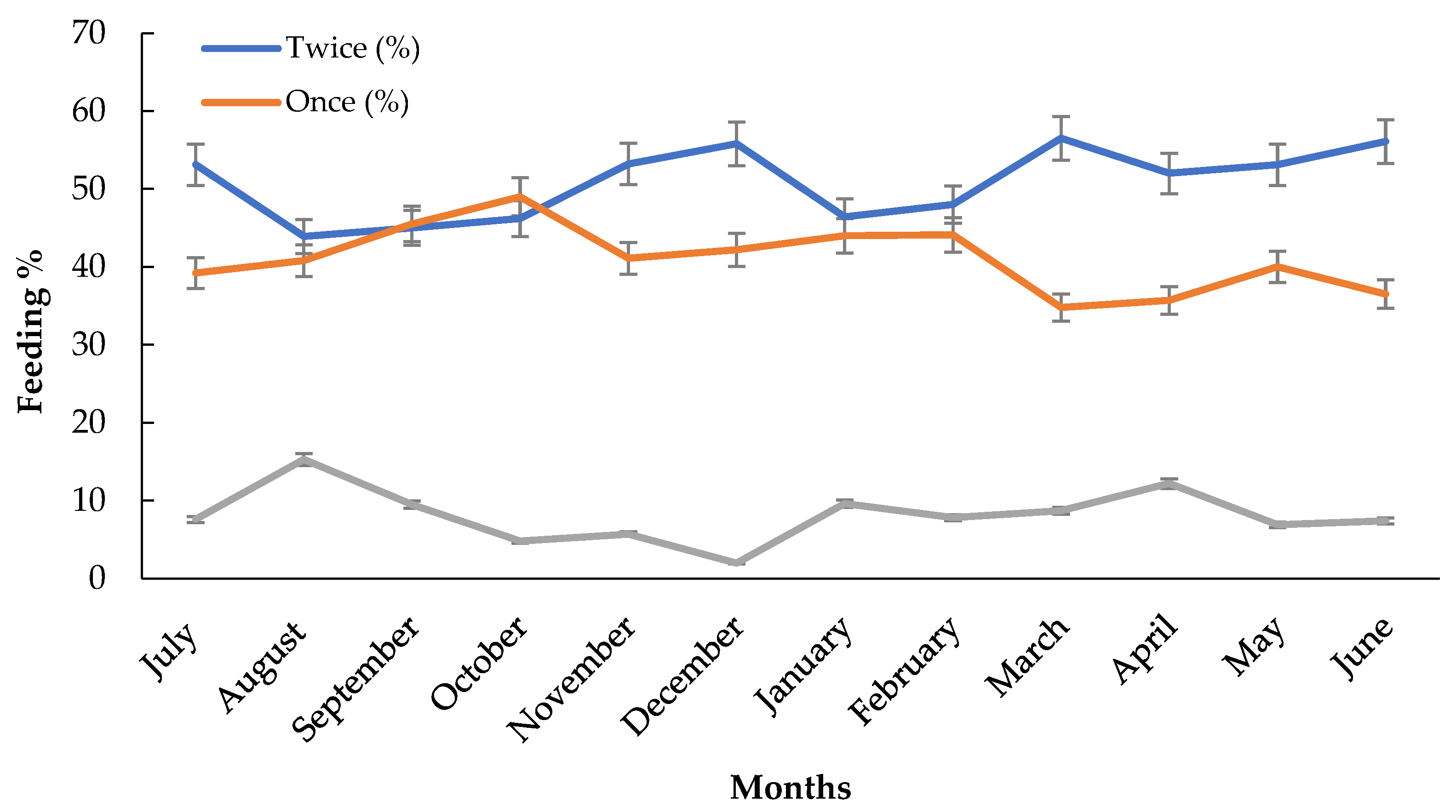
The feeding frequency among village chicken-keeping households in Central Tanzania exhibited marked seasonal variation. During the planting and post-harvest periods, households typically fed their chickens once or twice daily because of the increased availability of feed resources, such as crop residues and household food waste (Figure 2). Among households that practiced supplementary feeding, feeding frequency varied seasonally. More regular feeding schedules were observed during the rainy and post-harvest periods, whereas feeding became less consistent during the dry or “lean” season (June–August), when feed resources were limited.

3.5. Gender Roles in Chicken Ownership and Feeding Decisions

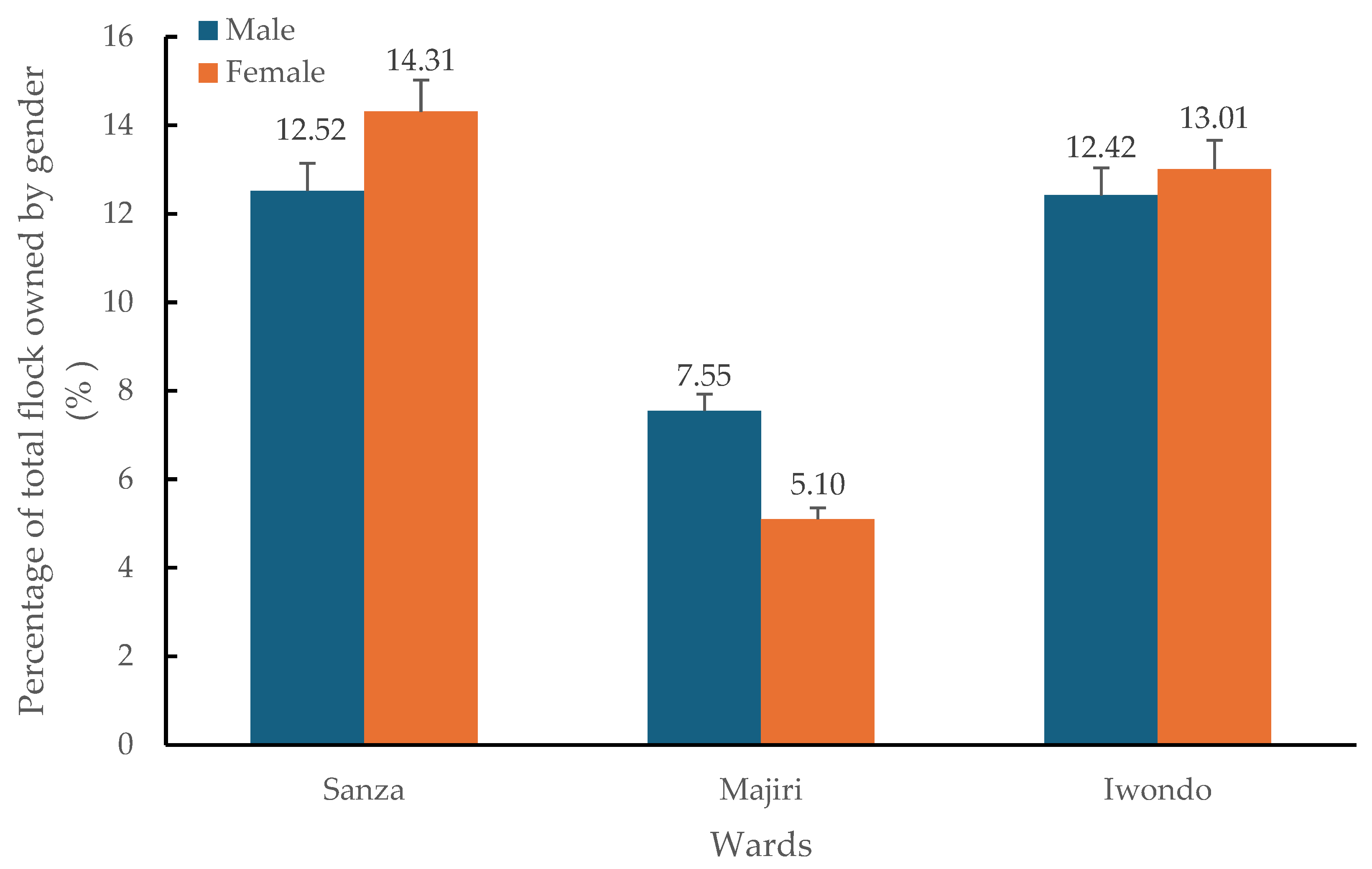
In our study, gender-disaggregated data revealed differences in chicken ownership across the three wards. Women owned slightly more chickens than men in Sanza and Iwondo, whereas ownership was more balanced between men and women in Majiri (Figure 3). In Sanza, women owned 14.31% of the reported flocks compared with 12.52% for men. In Majiri, women owned 5.10% of the flocks, while men owned 7.55%, although the overall ownership gap was relatively small. In Iwondo, women owned 13.01% of the flocks, slightly exceeding the 12.42% owned by men. These data indicate that, although ownership patterns varied among wards, women generally maintained a substantial share of household poultry ownership, and no strong male dominance was observed across the study sites.

3.6. Gender Roles in Village Chicken Management

Gender-disaggregated participation in poultry management activities varied across household roles and responsibilities (Table 4). Women were predominantly responsible for routine poultry management activities, including daily feeding (62%), watering (60%), and cleaning or household hygiene (58%). In comparison, men accounted for 15%, 18%, and 20% of participation in these activities, respectively, whereas shared responsibility ranged from 22% to 23%. Significant differences among gender categories were observed for daily feeding, watering, and cleaning or household hygiene activities (p < 0.05). Men showed higher participation in household decision-making activities related to poultry production, including decisions regarding feed purchase (45%) and veterinary interventions (50%), compared with women (35% and 30%, respectively). Shared decision-making accounted for 20% of households for both activities. No significant differences were observed for decisions regarding feed purchase (p = 0.12) or veterinary interventions (p = 0.08). Access to supplementary feed was reported more frequently among men (50%) than women (40%), whereas 10% of households reported shared access. The distribution of access to supplementary feed differed significantly among gender categories (p = 0.01).

3.7. Flock Distribution Across Wards

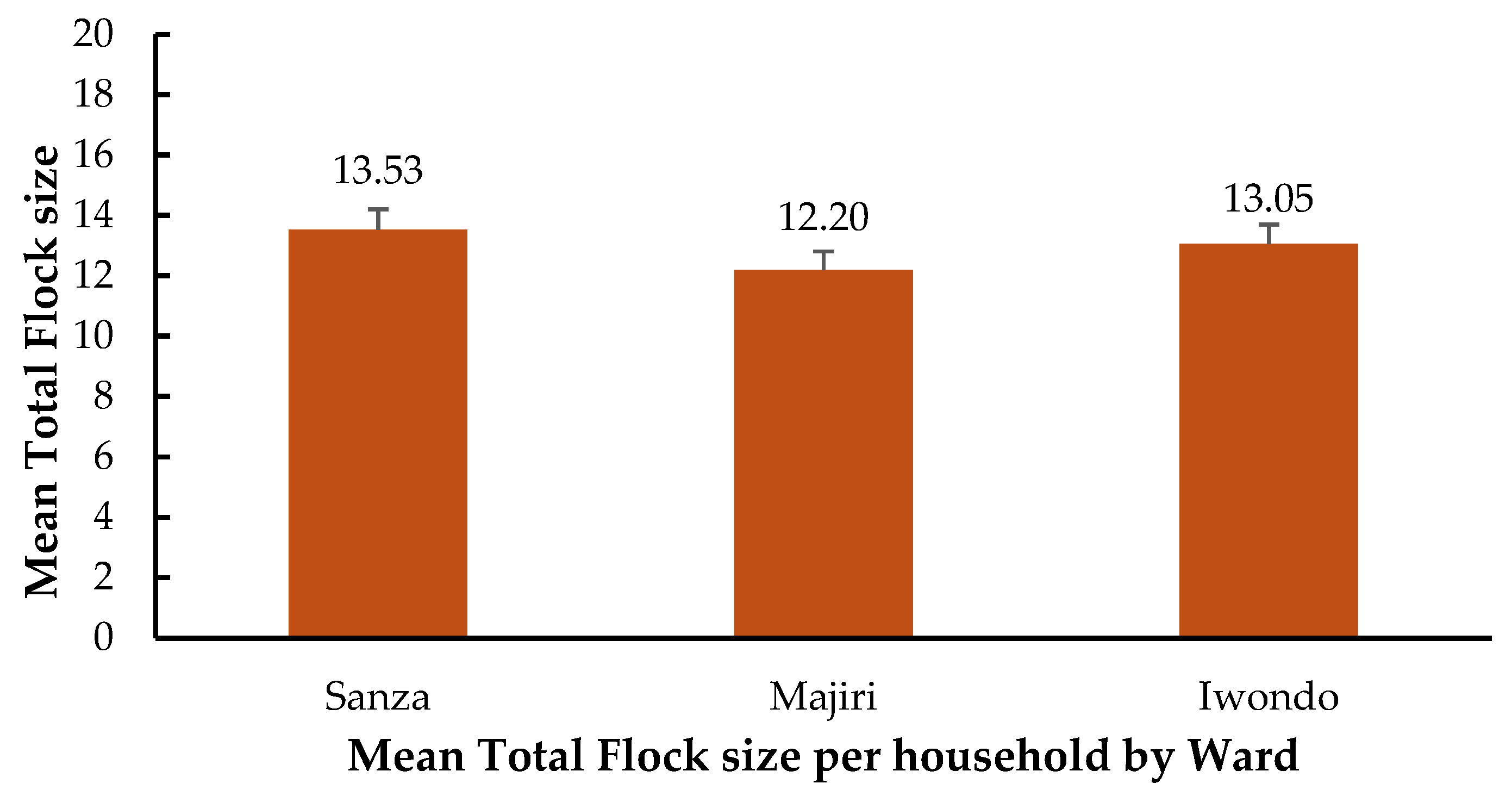
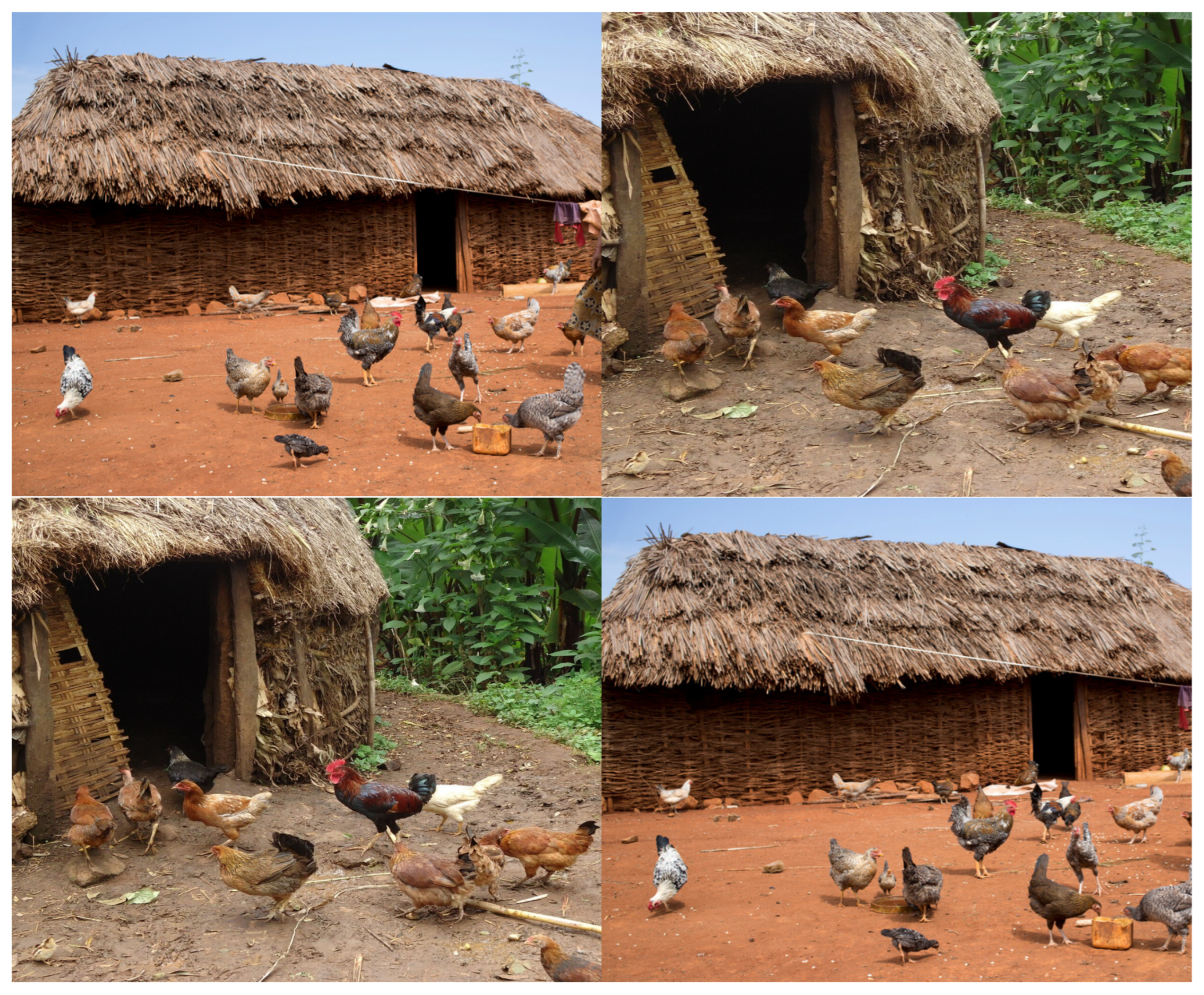
The mean total flock size per household showed relatively consistent values across the three study wards (Figure 4 and Figure 5). In Sanza, the mean flock size was 13.53 birds, which was slightly higher than that observed in Iwondo (13.05 birds) and Majiri (12.20 birds). Although the differences in mean flock size were modest, flock sizes were generally similar across the three wards.

4. Discussion

The present study demonstrates that feeding practices in village chicken production systems are strongly structured by seasonal climatic variation and associated cropping cycles. Supplementary feeding was markedly increased during the rainy and immediate post-harvest periods (January–May), coinciding with improved availability of crop residues and household food waste. This pattern reflects the close coupling between crop production and poultry feeding in smallholder systems and is consistent with previous reports indicating that feed resource availability is highly seasonal and driven by agricultural production dynamics [23,26]. In contrast, the decline in supplementary feeding during the dry season (June–August) resulted in increased reliance on scavenging, which likely exposes birds to nutritional deficiencies and inconsistent nutrient intake. However, it is important to note that this study did not directly measure body weight, egg production, mortality, or hatchability. Therefore, statements regarding the effects on growth performance, egg production, or immune competence should be interpreted as potential implications rather than directly measured productivity outcomes. Such conditions are known to impair growth performance, egg production, and immune competence in poultry [27]. These findings highlight a critical seasonal bottleneck in nutrient supply, emphasizing the need for targeted nutritional interventions during feed-scarce periods, including feed conservation strategies and the use of alternative or non-conventional feed resources [28,29].
The strong association observed between household cropping patterns and supplementary feed types further underscores the integration of crop and poultry subsystems in smallholder production [30]. The predominance of millet in Majiri and sorghum in Iwondo reflects region-specific crop availability, reinforcing the concept that feed resource utilization is largely opportunistic and constrained by local agricultural outputs [31]. However, reliance on cereal-based residues as primary feed sources may impose nutritional limitations, particularly regarding protein content, essential amino acids, and micronutrients. From a nutritional physiology perspective, such imbalances could potentially impair growth and reproductive performance due to insufficient substrate availability for protein synthesis and metabolic processes. However, these interpretations are based on observed feeding patterns rather than direct measurements of productivity outcomes in the present study. Therefore, integrating protein-rich feed resources, such as legumes, or promoting dual-purpose cropping systems may substantially improve dietary quality and enhance productivity. In addition, targeted extension efforts aimed at improving farmer awareness of nutrient requirements and feed formulation could mitigate the limitations associated with cereal-dominated feeding systems [32].
Spatial and seasonal variation in supplementary feed types further reflects adaptive household strategies to optimize locally available resources. The reliance on kitchen leftovers and maize bran in Sanza, compared to millet- and sorghum-based feeding in Majiri and Iwondo, illustrates the diversity of feeding practices shaped by both agro-ecological conditions and household resource access. Millet and sorghum may differ in nutrient composition and energy availability, potentially influencing their suitability as supplementary feed resources for village chickens. In addition, the use of household leftovers as poultry feed may introduce variability in nutrient quality and potential hygiene-related risks associated with spoilage or microbial contamination. However, the present study did not include laboratory-based nutritional or microbiological analyses of feed materials, and therefore these aspects warrant further investigation. While such strategies enhance system resilience under resource constraints, they also introduce variability in nutrient supply and potential risks related to feed hygiene [33]. Kitchen waste, although cost-effective, is inherently inconsistent in nutrient composition, may lack critical nutrients required for optimal poultry performance, and is at risk of contamination [34,35]. Furthermore, inadequate handling practices may increase the risk of microbial contamination, potentially affecting bird health [34,36]. These findings highlight the importance of promoting standardized and hygienic feed utilization practices, alongside efforts to improve the nutritional consistency of supplementary feeds. The near-universal use of certain supplementary feeds (cassava, sweet potato, papaya leaves, and insects; 99–100% of households; Table 3) may partially result from questionnaire limitations, such as leading questions or respondent misinterpretation (e.g., reporting “ever used” rather than “currently used”). Therefore, these data reflect general trends and should be interpreted with caution. Future surveys should refine the questionnaire design and incorporate observational validation to improve data accuracy.
Feeding frequency was also strongly influenced by seasonal resource availability, with more consistent feeding observed during periods of feed abundance and irregular feeding during the dry season. Irregular feeding patterns are likely to exacerbate nutritional stress by disrupting energy balance and reducing nutrient intake, which can impair metabolic homeostasis, compromise immune function, and ultimately reduce overall productivity in poultry [37,38]. From a physiological standpoint, consistent nutrient supply is essential for maintaining homeostasis and supporting productive functions such as egg formation and growth [39]. Therefore, interventions aimed at improving feeding regularity, including the development of feeding calendars aligned with agricultural cycles and the adoption of simple feed preservation techniques (e.g., drying or storage of crop residues), may play a critical role in stabilizing nutrient supply throughout the year.
Gender dynamics emerged as a key factor influencing poultry management and feeding practices. Women were predominantly responsible for daily husbandry activities, including feeding and general care, whereas men were more involved in financial decision-making and resource allocation. These findings are consistent with previous studies highlighting the gendered nature of smallholder poultry systems [16,17]. The disproportionate involvement of women in poultry management, coupled with limited access to and control over productive resources, may constrain the adoption of improved feeding strategies and technologies. Enhancing women’s decision-making power and access to inputs is therefore critical for improving poultry productivity and household nutritional outcomes, while gender-responsive extension approaches that promote equitable access to resources and joint decision-making are likely to yield more sustainable and inclusive improvements in village chicken systems [40,41,42].
The relatively uniform and small flock sizes observed across the study areas are characteristic of traditional, low-input poultry systems and reflect underlying socio-economic constraints, including limited feed resources, labor availability, housing infrastructure, and access to veterinary services. These constraints suggest that productivity gains are more likely to be achieved through efficiency improvements rather than flock expansion. Interventions focusing on improving feed quality, health management, and housing conditions may therefore provide greater returns under existing resource limitations. Notably, the consistency in flock sizes across different agro-ecological zones indicates that socio-economic factors, rather than environmental conditions alone, are the primary determinants of production scale. This highlights the importance of context-specific interventions that address both biological and socio-economic constraints.
The findings of this study have important implications for policy and extension services aimed at improving village chicken production systems. Nutritional interventions should be designed to be seasonally adaptive, taking into account fluctuations in feed availability and aligning with local cropping systems. Moreover, extension strategies should adopt a more tailored approach, recognizing the heterogeneity of household resources and management practices. Promoting low-cost innovations, such as the use of locally available feed resources, forage cultivation, and simple preservation techniques, may enhance system resilience and sustainability. Integrating poultry nutrition into broader agricultural development and climate adaptation programs could further amplify the impact of such interventions.
Despite its contributions, this study has several limitations. The reliance on self-reported data introduces the potential for recall bias, particularly regarding feeding frequency and seasonal variation. In addition, the study did not directly measure productivity indicators such as body weight, egg production, mortality, hatchability, or physiological responses; therefore, conclusions regarding productivity and health implications should be interpreted as potential associations rather than direct outcomes. The absence of direct nutritional analysis of feed resources also limited the quantitative assessment of dietary adequacy. Future research should incorporate laboratory-based feed evaluation, longitudinal monitoring of flock performance, and direct productivity measurements to validate the relationships between feeding practices and poultry performance. Furthermore, exploring integrated crop–livestock planning strategies, including synchronization of feed production and poultry production cycles, may provide additional opportunities to enhance system efficiency and resilience. Strengthening the role of women in decision-making processes and evaluating the impact of gender-targeted interventions also represent important areas for future investigation.

5. Conclusions

This study demonstrated that seasonal feed scarcity, particularly during the dry season, significantly constrained village chicken production systems in Central Tanzania. Supplementary feeding peaked during the post-harvest period because of increased crop residue availability, while women were primarily responsible for poultry care but were often excluded from income-related decision-making. Flock sizes remained consistently small across the study areas. Strengthening productivity in village chicken systems requires seasonally adaptive and low-cost feeding strategies, improved integration of poultry with local cropping systems, and effective feed preservation methods. In addition, gender-responsive extension services that empower women in household decision-making may contribute to improved sustainability, enhanced household nutrition, and more resilient village chicken production systems in resource-limited settings.

Author Contributions

Conceptualization, N.J.M., L.V.K., S.O.K., W.M. and W.B.; methodology, N.J.M., L.V.K., S.O.K. and W.M.; validation, N.J.M., W.B. and V.C.; formal analysis, N.J.M., L.V.K., S.O.K. and W.M.; writing—original draft preparation, N.J.M., V.C. and W.B.; writing—review and editing, N.J.M., V.C. and W.B.; visualization, W.B. and V.C.; supervision, W.B. All authors have read and agreed to the published version of the manuscript.

Funding

This study was funded by the Research Program of Khon Kaen University (Grant Number: RP68-1-NCAB-001).

Institutional Review Board Statement

Ethical approval for this research project was granted by the Tanzanian National Institute for Medical Research Ethics Committee (NIMR/HQ/R.8a/Vol.IX/1690), and by Animal Ethics Committee (AEC) of the University of Sydney, Australia, under approval number AEC6065. The study was approved on 3 October 2014.

Informed Consent Statement

Verbal informed consent was obtained from all subjects involved in the study. The rationale for utilizing verbal consent is that we did not use written consent due to the nature of the fieldwork and the local context, where oral consent was more feasible and accepted. Poultry local farmers participating in this project agree to provide information and are prepared to follow the advice of a team of experts in raising and managing Poultry. This advice is sourced from Tanzania Livestock Research Institute (TALIRI), Kongwa, Dodoma, Tanzania.

Data Availability Statement

The original contributions presented in the study are included in the article; further inquiries can be directed to the corresponding author.

Acknowledgments

The authors express their sincere gratitude to the Kongwa District Council for Administrative support and to the participating farmers and traders for their valuable time and insights. Their contributions were essential to the successful completion of this research.

Conflicts of Interest

The authors declare that they have no competing financial or personal interests that may have influenced the work reported in this study.

References

  1. Tenza, T.; Mhlongo, L.C.; Ncobela, C.N.; Rani, Z. Village chickens for achieving sustainable development goals 1 and 2 in resource-poor communities: A literature review. Agriculture 2024, 14, 1264. [Google Scholar] [CrossRef]
  2. Kanyama, C.M.; Ngosa, M.; Moss, A.F.; Crowley, T.M. The Status of Indigenous Chicken Genetic Resources: An Analysis of Farmers’ Perspectives and Implications for Breed Conservation Priorities in Zambia. Poultry 2024, 3, 161–176. [Google Scholar] [CrossRef]
  3. Padhi, M.K. Importance of indigenous breeds of chicken for rural economy and their improvements for higher production performance. Scientifica 2016, 2016, 2604685. [Google Scholar] [CrossRef]
  4. Ngongolo, K.; Omary, K.; Andrewy, C. Social-economic impact of chicken production on resource-constrained communities in Dodoma, Tanzania. Poult. Sci. 2021, 100, 100921. [Google Scholar] [CrossRef]
  5. Idamokoro, E.M.; Hosu, Y.S. Village chicken production and food security: A two-decade bibliometric analysis of global research trends. Agric. Food Secur. 2022, 11, 40. [Google Scholar] [CrossRef]
  6. Kpomasse, C.C.; Kouame, Y.A.E.; N’nanle, O.; Houndonougbo, F.M.; Tona, K.; Oke, O.E. The productivity and resilience of the indigenous chickens in the tropical environments: Improvement and future perspectives. J. Appl. Anim. Res. 2023, 51, 456–469. [Google Scholar] [CrossRef]
  7. Desta, T.T.; Wakeyo, O. Breeding practice of indigenous village chickens and trait and breed preferences of smallholder farmers. Vet. Med. Sci. 2024, 10, e1517. [Google Scholar] [CrossRef] [PubMed]
  8. Mwacharo, J.M.; Nomura, K.; Hanada, H.; Jianlin, H.; Hanotte, O.; Amano, T. Genetic relationships among Kenyan and other East African indigenous chickens. Anim. Genet. 2007, 38, 485–490. [Google Scholar] [CrossRef]
  9. Mwambene, P.L.; Kyallo, M.; Machuka, E.; Githae, D.; Pelle, R. Genetic diversity of 10 indigenous chicken ecotypes from Southern Highlands of Tanzania based on Major Histocompatibility Complex-linked microsatellite LEI0258 marker typing. Poult. Sci. 2019, 98, 2734–2746. [Google Scholar] [CrossRef] [PubMed]
  10. Soares, P.R.; Pato, R.L.; Dias, S.; Santos, D. Effects of grazing indigenous laying hens on soil properties: Benefits and challenges to achieving soil fertility. Sustainability 2022, 14, 3407. [Google Scholar] [CrossRef]
  11. Mseleku, C.; Chimonyo, M.; Slotow, R.; Mhlongo, L.C.; Ngidi, M.S.C. Contribution of village chickens in sustainable and healthy food systems for children along a rural–urban gradient: A systematic review. Foods 2023, 12, 3553. [Google Scholar] [CrossRef]
  12. FAO; IFAD. Farmer Field Schools for Family Poultry Producers—A Practical Manual for Facilitators; FAO: Rome, Italy; IFAD: Rome, Italy, 2022; Available online: https://openknowledge.fao.org/server/api/core/bitstreams/f0d77416-8a74-44e0-8455-891a0b1ead8f/content (accessed on 19 March 2023).
  13. Wongnaa, C.A.; Mbroh, J.; Mabe, F.N.; Abokyi, E.; Debrah, R.; Dzaka, E.; Cobbinah, S.; Poku, F.A. Profitability and choice of commercially prepared feed and farmers’ own prepared feed among poultry producers in Ghana. J. Agric. Food. Res. 2023, 12, 100611. [Google Scholar] [CrossRef]
  14. Mussa, N.J.; Kibonde, S.F.; Boonkum, W.; Chankitisakul, V. The comparison between Tanzanian indigenous (Ufipa Breed) and commercial broiler (Ross Chicken) meat on the physicochemical characteristics, collagen and nucleic acid contents. Food. Sci. Anim. Res. 2022, 42, 833–848. [Google Scholar] [CrossRef]
  15. Galiè, A.; Teufel, N.; Korir, L.; Baltenweck, I.; Girard, A.W.; Dominguez-Salas, P.; Yount, K.M. The women’s empowerment in livestock index. Soc. Indic. Res. 2019, 142, 799–825. [Google Scholar] [CrossRef]
  16. Wilson, W.C.; Slingerland, M.; Oosting, S.; Baijukya, F.P.; Smits, A.-J.; Giller, K.E. The diversity of smallholder chicken farming in the Southern Highlands of Tanzania reveals a range of underlying production constraints. Poult. Sci. 2022, 101, 102062. [Google Scholar] [CrossRef]
  17. Ouma, E.A.; Kankya, C.; Dione, M.; Kelly, T.; Enahoro, D.; Chiwanga, G.; Abukari, Y.; Msoffe, P.; Kayang, B.B.; Zhou, H. Poultry health constraints in smallholder village poultry systems in Northern Ghana and Central Tanzania. Front. Vet. Sci. 2023, 10, 1159331. [Google Scholar] [CrossRef] [PubMed]
  18. Lyimo, C.M.; Weigend, A.; Janßen-Tapken, U.; Msoffe, P.L.; Simianer, H.; Weigend, S. Assessing the genetic diversity of five Tanzanian chicken ecotypesusing molecular tools. S. Afr. J. Anim. Sci. 2013, 43, 4. Available online: https://hdl.handle.net/10520/EJC147059 (accessed on 19 March 2023).
  19. Khondowe, P.; Mutayoba, B.; Muhairwa, A.; Phiri, E. Comparative effects of low energy diets on blood parameters and liver HSP70 and iNOS gene expressions among Tanzanian local chicken ecotypes. Anim. Res. Int. 2018, 15, 3070–3081. [Google Scholar]
  20. Matloa, T.; Erasmus, R.; Ledwaba, M.B.; Malatji, D.P. Avian haemosporidian parasites affecting non-descript village chickens in Africa. Trop. Anim. Health Prod. 2025, 57, 28. [Google Scholar] [CrossRef] [PubMed]
  21. Goromela, E.H.; Kwakkel, R.P.; Verstegen, M.W.A.; Katule, A.M. Identification, characterisation and composition of scavengeable feed resources for rural poultry production in Central Tanzania. Afr. J. Agric. Res. 2007, 2, 380–393. [Google Scholar]
  22. Yirgu, T.; Tesfaye, E.; Assefa, G. Poultry feed resources and coping mechanisms of challenges in Sidama zone, southern Ethiopia. Food. Sci. Qual. Manag. 2017, 60, 77–86. [Google Scholar]
  23. Ngongolo, K.; Chota, A. Chicken production, flock size, management systems, and challenges in the Dodoma region in Tanzania. Poult. Sci. 2021, 100, 101136. [Google Scholar] [CrossRef] [PubMed]
  24. Aliyu, S.; Bashar, Y.A.; Abubakar, A.; Abdullahi, A.U.; Ribah, M.I.; Garba, S.; Abbas, A.Y.; Mani, A.I. Performance of some broiler strains fed varying energy levels in wet season of semi-arid Sokoto, Nigeria. Res. Agric. Livest. Fish. 2018, 5, 33–42. [Google Scholar] [CrossRef]
  25. Mutimura, M.; Ebong, C.; Rao, I.M.; Nsahlai, I.V. Seasonal variation of livestock feed resources in semi-arid and humid environments of Rwanda. East Afr. Agric. For. J. 2019, 83, 137–148. [Google Scholar]
  26. Marwa, L.J.; Mbaga, S.H.; Mutayoba, S.K.; Lukuyu, B. The productivity and management systems of free range local chickens in rural areas of Babati District, Tanzania. Livest. Res. Rural. Dev. 2018, 30, 134. [Google Scholar]
  27. Mutayoba, S.K.; Mtambo, M.M.; Olsen, J.E.; Katule, A.K.; Minga, U. Seasonal variation in nutritive value of scavenged feed and effect of supplementation on performance of rural birds. Agric. Biol. J. N. Am. 2011, 2, 1310–1316. [Google Scholar] [CrossRef]
  28. Alders, R.G.; Dumas, S.E.; Rukambile, E.; Magoke, G.; Maulaga, W.; Jong, J.; Costa, R. Family poultry: Multiple roles, systems, challenges, and options for sustainable contributions to household nutrition security through a planetary health lens. Matern. Child. Nutr. 2018, 14, e12668. [Google Scholar] [CrossRef]
  29. Mutayoba, S.K.; Katule, A.K.; Minga, U.; Mtambo, M.M.; Olsen, J.E. The effect of supplementation on the performance of free range local chickens in Tanzania. Livest. Res. Rural. Dev. 2012, 24, 93. Available online: http://www.lrrd.org/lrrd24/5/muta24093.htm (accessed on 19 March 2023).
  30. Wang, M.; Wan, D.; Xie, X.; Bai, Z.; Wang, R.; Zhang, X.; Gao, Y.-Z.; Tan, Z.; Yin, Y. Crop–livestock integration: Implications for food security, resource efficiency and greenhouse gas mitigation. Innov. Life 2024, 2, 100103. [Google Scholar] [CrossRef]
  31. Olwande, P.O.; Ogara, W.O.; Okuthe, S.O.; Muchemi, G.; Okoth, E.; Odindo, M.O.; Adhiambo, R.F. Assessing the productivity of indigenous chickens in an extensive management system in southern Nyanza, Kenya. Trop. Anim. Health Prod. 2010, 42, 283–288. [Google Scholar] [CrossRef]
  32. Barszcz, M.; Tuśnio, A.; Taciak, M. Poultry nutrition. Phys. Sci. Rev. 2024, 9, 611–650. [Google Scholar] [CrossRef]
  33. Dame-Korevaar, A.; Boumans, I.J.M.M.; Antonis, A.F.G.; van Klink, E.; de Olde, E.M. Microbial health hazards of recycling food waste as animal feed. Future Foods 2021, 4, 100062. [Google Scholar] [CrossRef]
  34. Abad-López, A.P.; Solano-Trillos, O.; Grande-Tovar, C.D. Micro-nanoplastics in livestock and poultry: Emerging components of food matrices. J. Food Compos. Anal. 2026, 151, 108956. [Google Scholar] [CrossRef]
  35. Simmons, C.W.; Duan, F.; Pitesky, M.E.; Liu, Y.; Tobar, Z. Incorporation of recovered food and food scraps into poultry feed: A systematic review. CABI Rev. 2023, 18, 1–15. [Google Scholar] [CrossRef]
  36. Olson, E.G.; Dittoe, D.K.; Jendza, J.A.; Stock, D.A.; Ricke, S.C. Application of microbial analyses to feeds and potential implications for poultry nutrition. Poult. Sci. 2022, 101, 101789. [Google Scholar] [CrossRef]
  37. Niu, X.; Ding, Y.; Chen, S.; Gooneratne, R.; Ju, X. Effect of Immune Stress on Growth Performance and Immune Functions of Livestock: Mechanisms and Prevention. Animals 2022, 12, 909. [Google Scholar] [CrossRef] [PubMed]
  38. Hu, W.; Du, L.; Shao, J.; Qu, Y.; Zhang, L.; Zhang, D.; Cao, L.; Chen, H.; Bi, S. Molecular and metabolic responses to immune stress in the jejunum of broiler chickens: Transcriptomic and metabolomic analysis. Poult. Sci. 2024, 103, 103621. [Google Scholar] [CrossRef]
  39. Jha, R.; Singh, A.K.; Yadav, S.; Berrocoso, J.F.D.; Mishra, B. Early nutrition programming (in ovo and post-hatch feeding) as a strategy to modulate gut health of poultry. Front. Vet. Sci. 2019, 6, 82. [Google Scholar] [CrossRef]
  40. Bukachi, S.A.; Ngutu, M.; Omia, D.; Musyoka, M.M.; Chemuliti, J.; Nyamongo, I.K. Gender-linked dynamics and sustainable small holder poultry value chains in Makueni county, Kenya. Sustainability 2023, 15, 10907. [Google Scholar] [CrossRef]
  41. Ahmed, S.; Begum, M.; Khatun, A.; Gofur, M.R.; Azad, M.T.A.; Kabir, A.; Haque, T.S.H. Family poultry as a tool for improving gender equity and women’s empowerment in developing countries: Evidence from Bangladesh. Eur. J. Agric. Food Sci. 2021, 3, 37–44. [Google Scholar] [CrossRef]
  42. Heckert, J.; Martinez, E.M.; Sanou, A.; Pedehombga, A.; Ganaba, R.; Gelli, A. Can a gender-sensitive integrated poultry value chain and nutrition intervention increase women’s empowerment among the rural poor in Burkina Faso? J. Rural Stud. 2023, 100, 103026. [Google Scholar] [CrossRef]
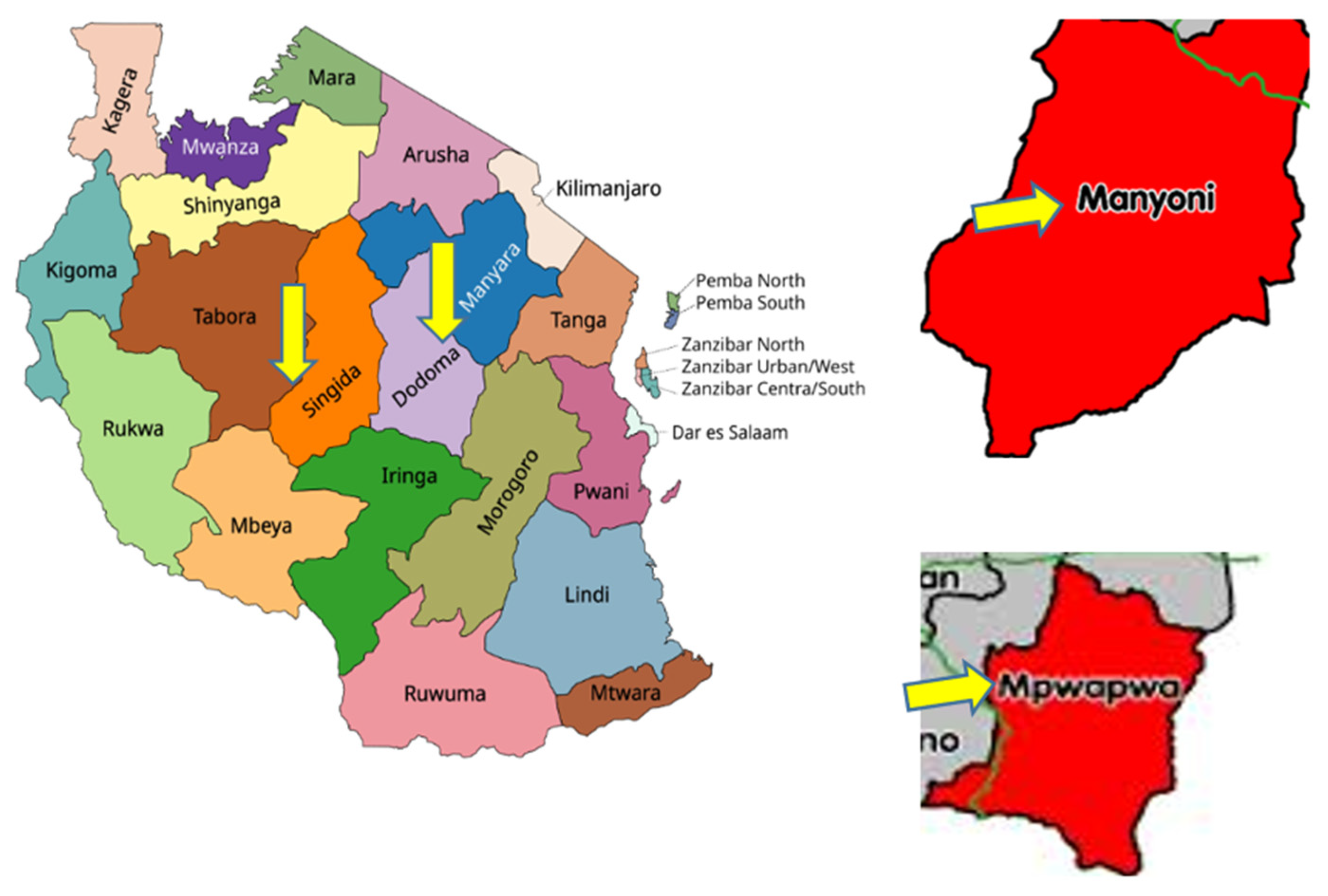
Figure 1. Map of Tanzania highlighting the Dodoma and Singida regions, including the study districts of Manyoni (Singida Region) and Mpwapwa (Dodoma Region), where household-level data on village chicken feeding practices were collected. The map was adapted from GIS data, accessed from OpenStreetMap (https://www.openstreetmap.org/, accessed on 27 May 2026), in 2026. Map source: © OpenStreetMap contributors.
Poultry 05 00040 g001
Figure 2. Monthly variation in village chicken feeding frequency, illustrating seasonal trends associated with feed availability across different periods of the agricultural calendar.
Poultry 05 00040 g002
Figure 3. Percentage of total flock owned by gender across wards.
Poultry 05 00040 g003
Figure 4. Mean village chicken flock size per household across the three wards (Sanza, Majiri, and Iwondo) in Central Tanzania.
Poultry 05 00040 g004
Figure 5. Typical flock size maintained by smallholder farmers in Central Tanzania. Flock sizes are generally kept at manageable levels due to constraints such as feed availability, labor, housing, and limited access to veterinary services. Photos taken by Dr. Ngassa Julius Mussa and co-authors during the study period (2014–2019) as part of the Nkuku4U project in Central Tanzania (Sanza, Majiri, and Iwondo Wards, Manyoni District, Singida Region, and Mpwapwa District, Dodoma Region). Figure provided from Dr. Ngassa Julius Mussa’s private photo archive with permission for publication.
Poultry 05 00040 g005
Table 1. Monthly distribution of households providing supplementary feed to village chickens across three wards (Sanza, Majiri, and Iwondo) in Central Tanzania.
MonthSanza
(n = 137)
Majiri
(n = 177)
Iwondo
(n = 234)
Chi-Square (df = 2)Cramér’s Vp-Value
January (%)52.670.696.6101.530.304p < 0.001
February (%)59.974.698.793.030.291p < 0.001
March (%)65.775.799.179.760.270p < 0.001
April (%)70.175.194.443.610.199p < 0.001
May (%)59.963.895.382.340.274p < 0.001
June (%)54.042.437.69.560.093p = 0.008
July (%)58.435.650.017.170.125p < 0.001
August (%)54.749.752.60.810.027p = 0.669
September (%)54.747.576.138.350.187p < 0.001
October (%)51.140.783.887.790.283p < 0.001
November (%)52.964.486.853.600.221p < 0.001
December (%)48.994.990.2128.720.343p < 0.001
Note: Table includes only households that provided complete data”. Monthly variation in the proportion of households providing supplementary feeding to village chickens, by ward. Supplementary feeding provision peaked during the post-harvest period (February–May) and declined during the dry months (June–August).
Table 2. Distribution of major crops cultivated (%) across the three wards (Sanza, Majiri, and Iwondo) in Central Tanzania.
Crop TypeSanza (n = 188)Majiri
(n = 216)
Iwondo
(n = 260)
Chi-Square
(df = 2)
Cramér’s Vp-Value
Maize (%)47.941.135.88.690.114p = 0.069
Sorghum (White) (%)65.177.871.58.020.110p = 0.018
Millet (%)18.02.837.689.980.368p < 0.001
Sesame (%)31.763.113.1131.830.446p < 0.001
Sunflower (%)39.734.146.27.190.104p = 0.027
Groundnuts (%)74.668.746.543.070.255p < 0.001
Sweet potato (white) (%)6.94.63.52.820.065p = 0.244
Sweet potato (orange) (%)1.61.40.41.870.053p = 0.392
Rice (%)10.616.60.043.890.257p < 0.001
Amaranthus (%)1.10.90.40.790.035p = 0.673
Green gram (%)38.114.70.4117.450.421p < 0.001
Other crops (%)11.62.30.038.960.242p < 0.001
Note: Table includes only households that provided complete data”. Distribution of crop types (%) grown across the three wards. Crop diversity influences the type and availability of supplementary feed for chickens, with clear regional differences based on agro-ecological conditions.
Table 3. Household use of specific supplementary feed types (%) for village chickens across the three wards (Sanza, Majiri, and Iwondo) in Central Tanzania.
Type FeedSanza
(n =138)
Majiri
(n = 177)
Iwondo
(n = 234)
Chi-Square ValueCramér’s Vp-Value
Leftovers (%)79.628.247.481.900.386p < 0.001
Take chicken to the field (%)99.3100.099.61.180.046p = 0.556
Maize or Maize bran (%)30.917.541.026.090.218p < 0.001
Vegetable Scraps (%)97.197.7100.06.280.107p = 0.043
Cakes—sunflower (%)99.3100.098.33.320.078p = 0.190
Millet (%)62.897.759.483.430.390p < 0.001
Sorghum (%)10.22.839.796.200.419p < 0.001
Cassava (%)100.099.4100.02.100.062p = 0.350
Sweet Potato (%)100.098.9100.04.210.088p = 0.122
Papaya or leaves (%)100.099.4100.02.100.062p = 0.350
Insects (e.g., termites (%)99.3100.0100.03.000.074p = 0.223
Other (%)99.3100.0100.03.000.074p = 0.223
Note: Table includes only households that provided complete data”. Household use of various supplementary feeds (%) across wards. Cropping systems, local food availability, and household practices strongly influence feed choice. The use of millet and sorghum reflects regional production trends.
Table 4. Gender-disaggregated participation in poultry management activities across wards.
Activity/Role%Households—Women%Households—Men%Sharedp-Value (Chi-Square)
Daily feeding621523<0.05
Watering601822<0.05
Cleaning/House hygiene582022<0.05
Decision on feed purchase3545200.12
Decision on veterinary interventions3050200.08
Access to supplementary feed4050100.01
Disclaimer/Publisher’s Note: The statements, opinions and data contained in all publications are solely those of the individual author(s) and contributor(s) and not of MDPI and/or the editor(s). MDPI and/or the editor(s) disclaim responsibility for any injury to people or property resulting from any ideas, methods, instructions or products referred to in the content.