Article

Photosensitization of TiO2 with Copper for the Photodegradation of Organic Contaminants in Water


by
Dafne Rubi Porras-Herrera
1,
Debany Yulissa Rincón-Salazar
1,
María Teresa Maldonado-Sada
2,
Carlos Adrián Calles-Arriaga
1,
José Adalberto Castillo-Robles
1 and
Enrique Rocha-Rangel
1,*
1
Departamento de Investigación y Posgrado, Universidad Politécnica de Victoria, Ciudad Victoria 87138, Mexico
2
Facultad de Ingeniería y Ciencias, Universidad Autónoma de Tamaulipas, Ciudad Victoria 87149, Tamaulipas, Mexico
*
Author to whom correspondence should be addressed.
Submission received: 7 July 2025 / Revised: 19 January 2026 / Accepted: 26 January 2026 / Published: 4 February 2026

Abstract

Photocatalysis is a process in which a material utilizes light energy to degrade contaminants through oxidation reactions that decompose impurities upon contact with its surface. Titanium dioxide is one of the most widely used semiconductor materials due to its abundance, chemical stability, and non-toxicity. However, its relatively wide bandgap restricts its photocatalytic activity to the ultraviolet region of the solar spectrum, limiting its overall efficiency under natural sunlight. The incorporation of copper nanoparticles into the TiO2 matrix enhances light absorption by extending its activity into the visible range, thereby improving its energy conversion efficiency. In this study, undoped and Cu-doped TiO2 powders were synthesized using the mechanochemical method. The characteristics of the prepared photocatalyst material were determined by XRD, SEM, absorbance, and chemical analysis. XRD analysis showed the formation of TiO2 in its anatase and rutile phases. Sphere-like shapes with a size of 100 nm were inferred from SEM images. The photocatalytic tests revealed that the Cu-doped TiO2 nanoparticles exhibited high photocatalytic activity in degrading contaminated water. This enhancement can be attributed to the formation of oxygen vacancies, which promote the photodegradation of organic compounds.

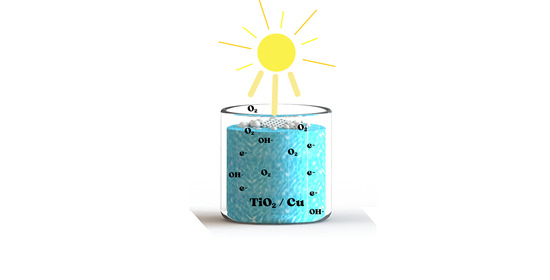
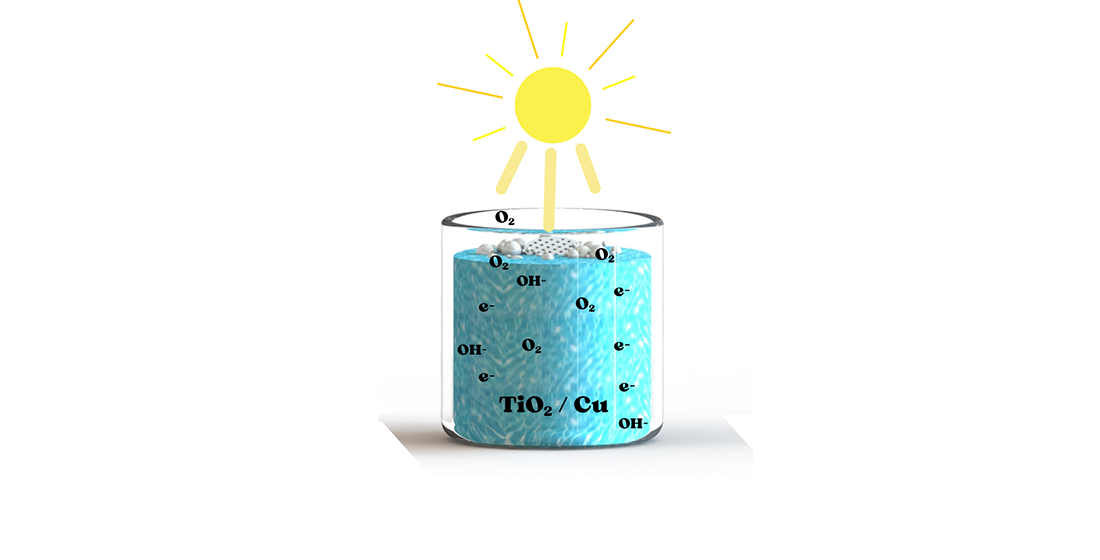
Graphical Abstract

1. Introduction

Water pollution has become one of the most significant environmental challenges of the 21st century. Far from being an isolated problem, this crisis affects all regions of the world, compromising quality of life, biodiversity, and the water resources essential for human survival. It is a major issue driven by various activities, particularly industrial processes, and represents a serious challenge with negative impacts on the environment, public health, and the economy.
In 2010, the United Nations recognized access to safe drinking water and sanitation as an essential human right for well-being and health, guaranteeing contaminant-free water for personal and domestic use. In Mexico, this right was incorporated into Article 4 of the Constitution in 2012, establishing that everyone has access to sufficient, safe, and affordable water for personal and domestic use. Water (H2O) is an essential substance for life, as well as for industrial processes and the production of goods [1]. However, millions of cubic meters of inadequately treated wastewater are discharged each year, resulting in pollution, serious health problems, and ecological damage due to the presence of harmful substances, including microorganisms and chemical compounds in the water [2]. Over the last decade, environmental remediation has emerged as a national and international priority due to contamination resulting from the improper disposal of toxic waste in lagoons, underground storage tanks, and landfills. These practices have resulted in the infiltration of persistent contaminants into soils and groundwater aquifers, including heavy metals and industrial organic compounds, such as pesticides and coatings. Thus, many efforts have been made in the search for materials and devices to help remediate contaminated water. For example, various polymer-based membranes have been developed [3,4], yielding satisfactory results in water decontamination. Other developments have focused on fabricating nanostructured titanium oxide through various production methodologies [5,6] to utilize this material in water decontamination due to its excellent optical and electrical properties. On the other hand, a wide range of metal ions such as iron [7], nickel [8], cobalt [9], and manganese [10] have been used as acceptor dopants in TiO2; in this way, the TiO2 photocatalytic activity was enhanced to varying extents. Likewise, metallic titanium doped with chemical elements of group 13 of the periodic table (B, Al, Ga, In, and Tl) [11,12] has also been employed, yielding equally satisfactory results in water cleaning. The problem with most of these proposed developments is that the production methods for the purifying materials are complex to execute, due to the facilities required to manufacture the materials and the cost of the raw materials required to do so.
Photocatalysis is a natural phenomenon in which a substance uses the energy of natural light to remove pollutants. In the presence of air and light, the oxidation process is activated, decomposing the polluting organic substances that come into contact with the photocatalytic surface [13,14]. Thus, TiO2 has been widely recognized for its excellent photocatalytic properties [15,16,17,18,19]. However, due to the large bandgap of TiO2 of the order of 3.2 eV, the formation rate of reaction products per incident photon is very low. This feature severely limits TiO2 applications since the UV percentage comprises only 5–8% of the solar energy. Several authors have reported that the addition of copper particles to TiO2 can increase absorption by several orders of magnitude and extend it from the high-energy range, the UV spectrum, into the visible, where the sun has its maximum energy output [20,21,22,23].
In the TiO2/Cu mixture, copper acts as an electron scavenger, preventing the rapid recombination of electron-hole pairs and increasing the efficiency of the photocatalytic process. According to recent studies, adding 1% copper to TiO2 has been shown to significantly improve its ability to break down organic compounds and remove heavy metals from wastewater. In addition, copper doping facilitates the production of reactive oxygen species, which are responsible for the oxidation of pollutants. Research on TiO2/Cu composites has demonstrated that the incorporation of copper extends semiconductor absorption into the visible spectrum and enhances photocatalytic efficiency by reducing electron-hole pair recombination [24]. Also, a relevant study highlights the applications of TiO2/Cu material in the removal of emerging pollutants and heavy metals, with a focus on efficiency and sustainability [25]. With the resulting TiO2/Cu material, it is possible to direct this energy towards the triggering of chemical reactions of interest, such as reducing the presence of microorganisms, including bacteria, fungi, and others, in water. In this work, TiO2/Cu materials were synthesized by employing the mechanochemical method. Their impact on improving visible light absorption and pollutant decomposition efficiency was evaluated, highlighting their potential for sustainable wastewater treatment.

2. Materials and Methods

The powders used to prepare the photocatalytic material were TiO2 (5 μm, 99.9%, Sigma-Aldrich, St. Louis, MO, USA) and copper nanoparticles (<100 nm, 99.9%, SkySpring Nanomaterials, Inc. Houston, TX, USA). Copper was added in amounts of 0 wt.% and 1 wt.%. The TiO2 + copper powders were ground in dry and mixed using a high-energy planetary ball mill (Retsch, PM 100, Haan, Germany). The grinding parameters used in the mixture were as follows: dry grinding for 6 h at 300 rpm, using isopropyl alcohol as a control agent, and maintaining a ball weight to powder weight ratio of 10:1. Next, the grinding stage, the particle size distribution was determined by laser diffraction using a Mastersizer 2000 equipment (Malvern Panalytical, Almelo, The Netherlands). The morphological characteristics of the powders were analyzed by SEM (Jeol 6300, Akishima, Tokyo, Japan). The crystalline structure was characterized by X-ray diffraction (XRD) with a Bruker [Billerica, MA, USA] D8 ADVANCE diffractometer, scanning from 20 to 80° with a step size of 0.016° and a 10 s exposure time. The XRD patterns of the alloys were analyzed using X’Pert HighScore Plus (v2.2b) software. In order to measure the absorbance, a deuterium lamp with UV-Vis emission was used as light source. All optical measurements were performed using a compact CCD spectrometer (Thorlabs, CCS200, Newton, NJ, USA) with a wavelength operational range from 200 to 1000 nm. Optical absorbance was measured as follows: firstly, the transmission spectrum from distilled water in a standard quartz cuvette (path length = 10 mm) was measured and recorded as the reference; secondly, the transmission spectrum from a suspension of TiO2 and TiO2/Cu in distilled water in a quartz cuvette was measured and recorded; finally, based on the two previous measurements, optical absorbance was determined using the spectrometer software (Optical Spectrum Analyzer Software, serie CCS). The photocatalytic activity of pure and copper-doped TiO2 nanopowders was studied by testing the photocatalytic degradation of pond water contaminants under solar light for 150 min.
The test is performed using a glass beaker to which 200 mL of distilled water, 0.05 g of TiO2/Cu mixture, 1 drop of methylene blue as tracers are added and stirred at 500 rpm for 150 min. A water sample was taken at each 30-min time interval to determine the rate of decontamination of the water. The same test is performed with contaminated water stagnating on the banks of a river. It is worth mentioning that all tests were consistently carried out during the same hours of the day, at the same location (23°44′06″ north latitude and 99°07′51″ west longitude) and time of the year. Additionally, solar irradiance was monitored to ensure consistency, which was done with the help of a SM206 solar meter. Finally, microbiological analyses, conducted according to Mexican standards [26], were performed at 0 and 150 min to determine the effect of the photocatalytic material on water decontamination. Water samples for microbiological analysis (before and after treatment) are stored at temperatures below 0 °C and protected from sunlight. Analyses are performed within 1 h after the sample has been taken.

3. Results

3.1. Powder Size

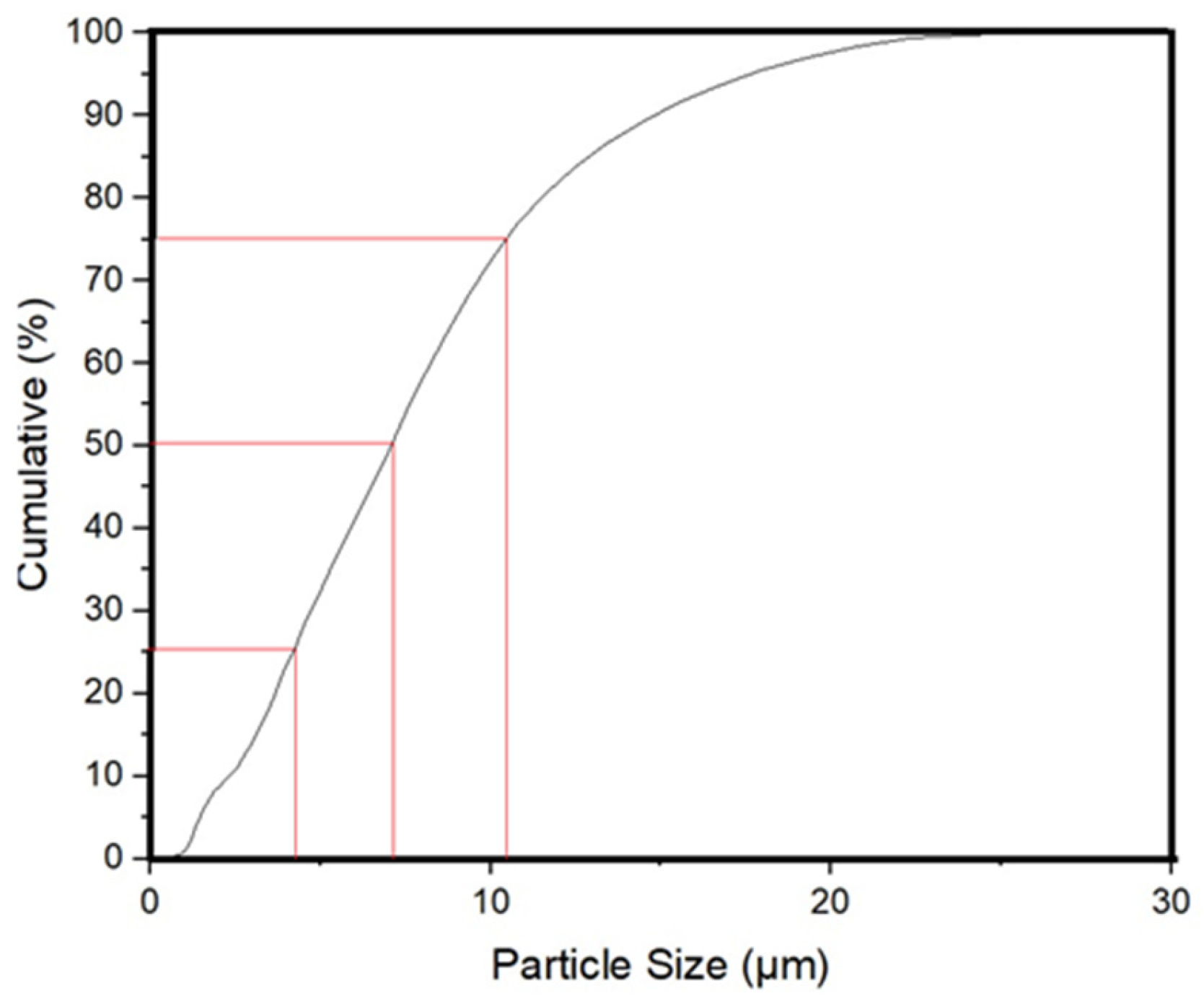
Figure 1 presents the particle size distribution of the powder. The red lines indicate the quartiles of the distribution. The results show that the particle size spans a range of approximately 1 to 11 µm. About 50% of the particles exhibit sizes between 1 and 7 µm, while the remaining 50% fall within the range of 7 to 11 µm. The modal particle size is close to 7 µm. In addition, 25% of the particles are smaller than 4 µm, whereas another 25% have sizes exceeding 10 µm.

3.2. Powder Morphology

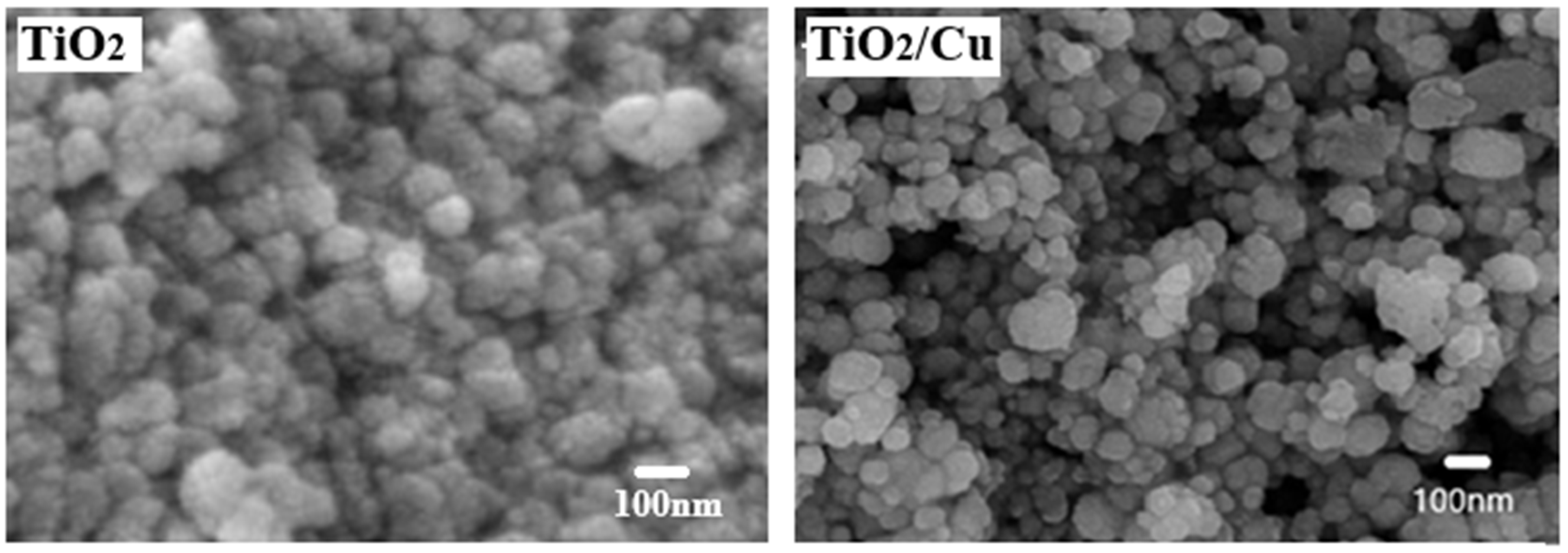
Figure 2 shows an SEM image of the milled powders with and without the presence of copper, revealing that the particles exhibit a predominantly spherical-like morphology, with individual sizes slightly above 100 nanometers. However, a significant degree of agglomeration is observed, attributed to the high surface energy and interparticle forces typical of nanoparticles. Granulometric analysis confirms a broader particle size distribution ranging from 1 to 11 microns, indicating the formation of soft agglomerates. The particle surfaces appear relatively smooth, suggesting limited plastic deformation during mechanical milling. Additionally, some degree of morphological polydispersity is evident, with a few particles displaying irregular or slightly elongated shapes, likely resulting from mechanical impact events. Despite this, the fine particle size is expected to further enhance photocatalytic activity by increasing the interaction between TiO2/Cu semiconductor and the solar radiation.

3.3. Structure

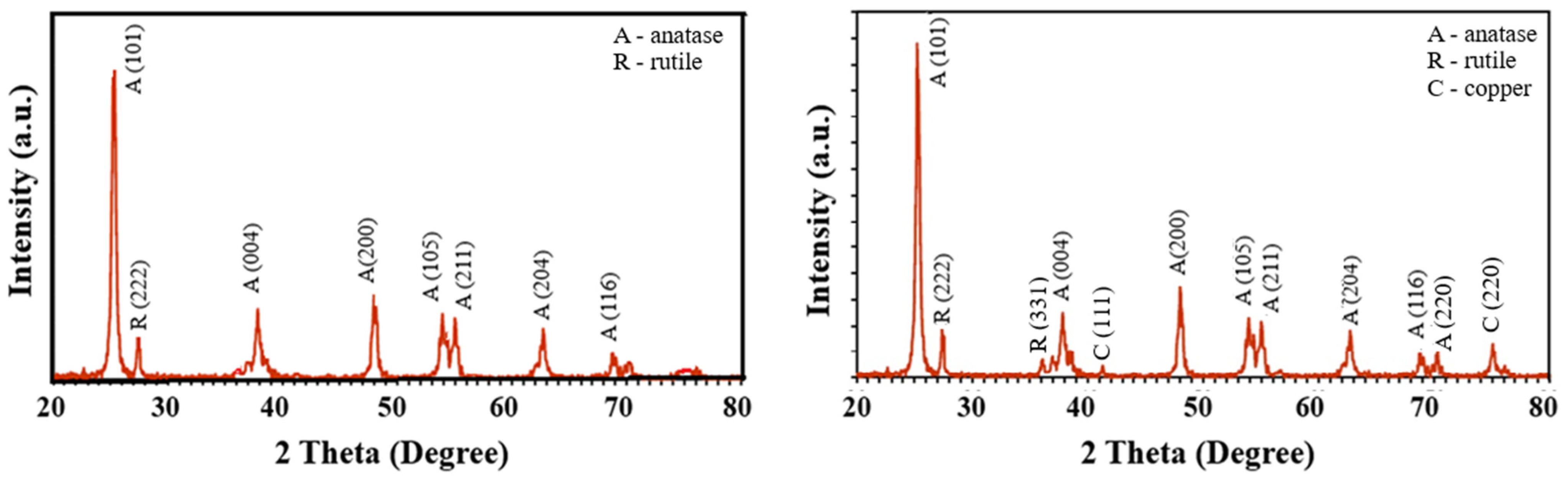
Figure 3 shows the diffraction patterns of TiO2 powders with copper and doped with copper. In both patterns the diffraction peaks correspond principally to the tetragonal crystalline structure of the anatase phase of TiO2, which is the main component of the sample. The two peaks located at angles of 25.5° and 48.5° correspond to the most intense peaks of the aforementioned crystalline phase. Using the (101) plane peak of anatase and the Scherrer formula, the crystallite size was estimated to be 5.62 nm. The lattice parameters of anatase were calculated as a = b = 0.377 nm and c = 0.950 nm. Some authors have documented that the photocatalytic activity of titanium oxide is better when it is in its anatase phase [27]. On the other hand, in the XRD pattern of the pure TiO2 sample, a characteristic peak at 2θ = 27.3° is observed. In contrast, for the copper-doped sample, two additional small peaks appear at 2θ = 27.3° and 35.5°, which are associated with the rutile phase of TiO2. Moreover, in the doped sample the peaks at 2θ ≈ 43° and 74° are attributed to the (111) and (220) planes of metallic Cu, confirming the presence of the dopant. According to the literature, the atomic radius of Cu is 0.128 nm [28]. Due to their size, Cu atoms can readily incorporate into the tetragonal crystal structure of TiO2, particularly along the c-axis, which is longer than the a and b axes. This structural feature facilitates effective doping of TiO2.

3.4. Absorbance by Photocatalytic Activity

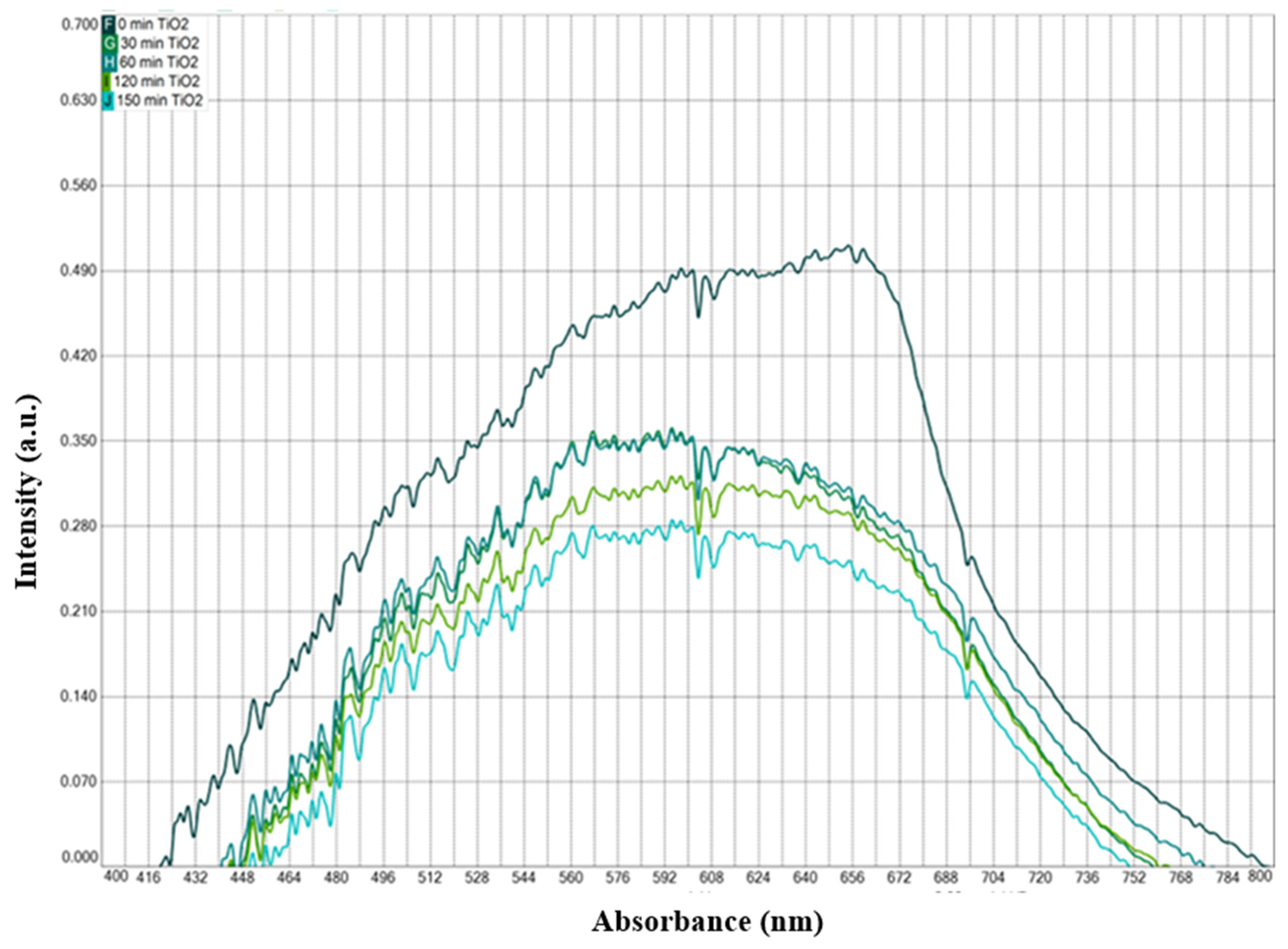
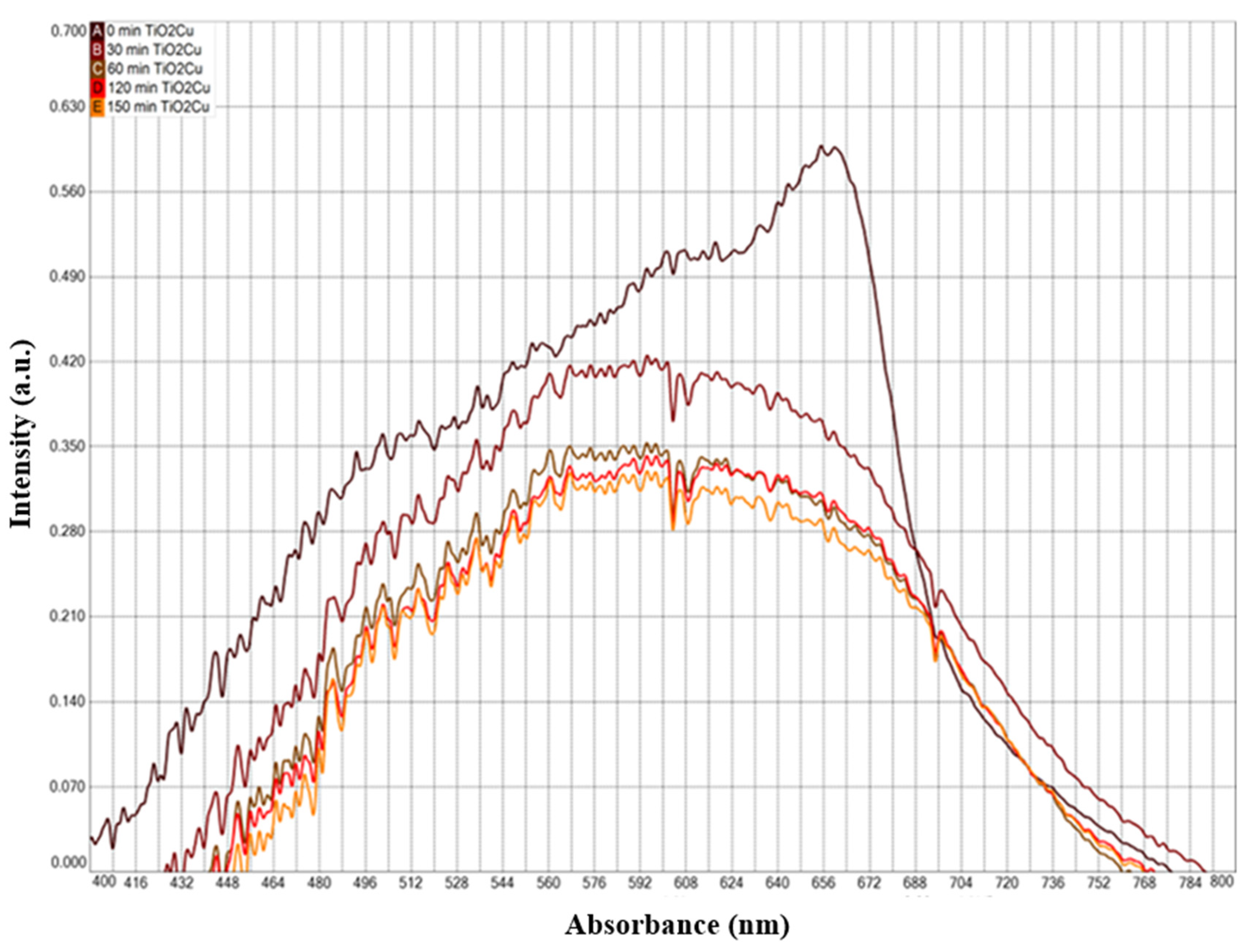
To evaluate the photocatalytic activity of copper-doped TiO2, a degradation experiment using methylene blue (MB) was conducted under sunlight irradiation. Aliquots of the treated solution were taken every 30 min throughout the reaction, up to 150 min; Figure 4, Figure 5 and Figure 6 show how the absorbance intensity decreases with reaction time. It is important to note that the photoluminescent signal is directly related to the speed of recombination of the photogenerated charges, the electron-hole pairs; consequently, a lower photocatalytic response is expected from the pure TiO2 sample and a higher response for the copper-doped TiO2 sample. Thus, Figure 4 and Figure 5 show the photocatalytic activity of as-prepared pure and copper-doped TiO2 samples toward the MB solution at various time intervals for sun irradiation, respectively. The absorption intensity decreases gradually with time, indicating that the MB suffered degradation during the photocatalytic reaction under sunlight irradiation. From the absorbance results in Figure 4 and Figure 5, it is observed that pure TiO2 nanoparticles exhibit a lower decomposition rate when compared to the decomposition rate with copper-doped TiO2 nanoparticles. Cu-ions play a significant role in the catalytic process.
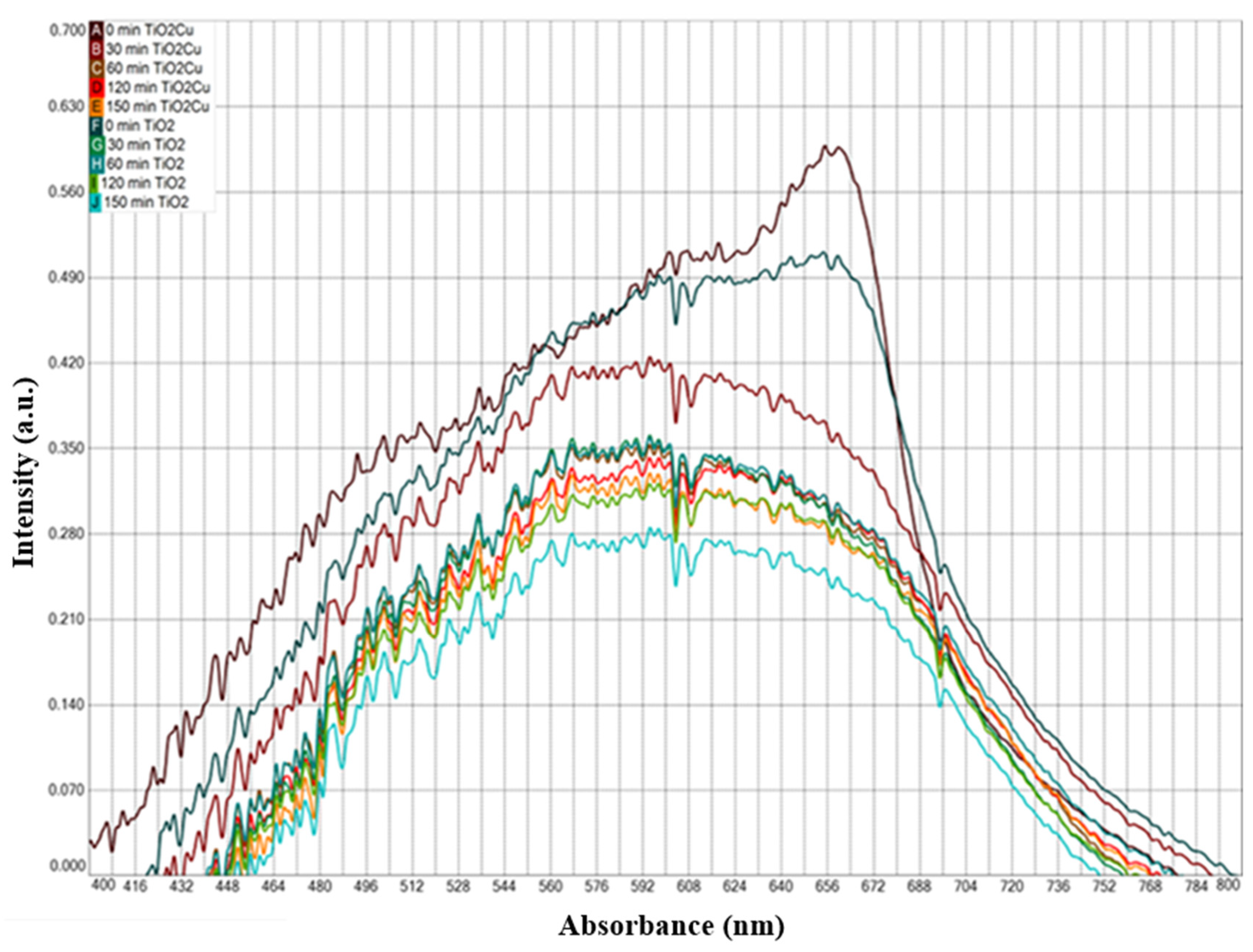
To better illustrate the effect of Cu on TiO2 in clean water, Figure 6 is constructed. This figure shows the optical absorbance of water samples containing TiO2 and TiO2/Cu to study their photodegradation performance over varying periods. As can be seen, at 0 min, the samples exhibited an absorption peak at 655 nm. Notably, the sample with TiO2/Cu exhibited higher optical absorbance, which enhances photocatalytic activity. A blue shift was observed in both samples, attributed to the reduction in particle sizes at the nanoscale [29] and linked to the decomposition of the pollutant. Here, upon doping with Cu, the band edge of this adsorption shifts toward longer wavelengths, which indicates the band gap is narrowed by doping with Cu.

3.5. Reaction Rate

The reaction of photocatalytic degradation of dye with respect to reaction time follows first-order rate kinetics, which was confirmed by the linear transforms of Equation (1):
ln (At/A0) = kappx t
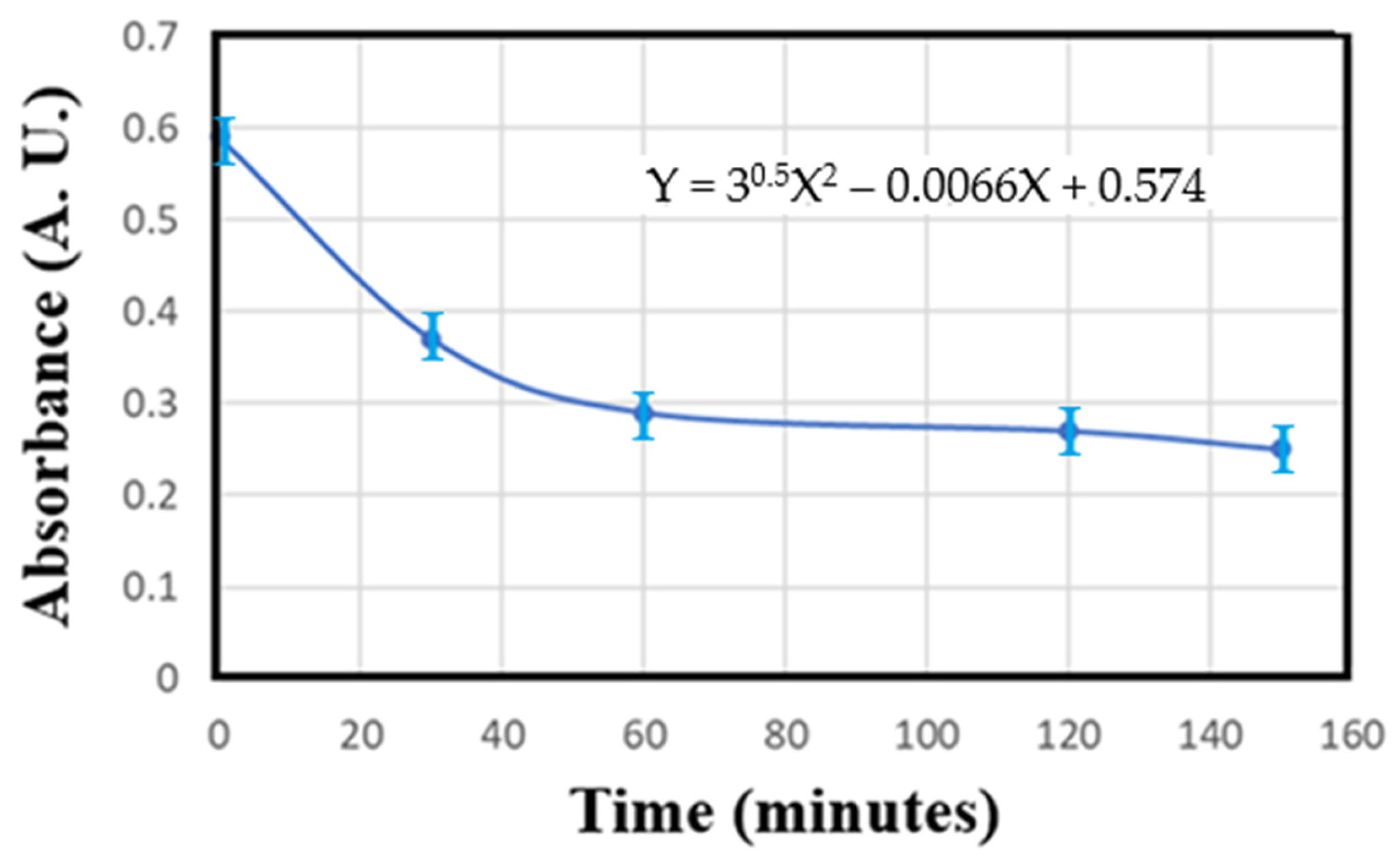
where A0 is the absorbance value of MB at t = 0 and At is the absorbance of MB at different irradiation times. Figure 7 shows the plot of the decomposition rate of MB using copper-doped TiO2 nanoparticles as a function of irradiation time. The absorbance equation is a fundamental formula used to quantify the amount of light absorbed by a sample, i.e., it measures a substance’s ability to absorb light at a specific wavelength. Thus, the decrease in the optical absorbance shown in Figure 7 demonstrates the efficiency of the degradation process.
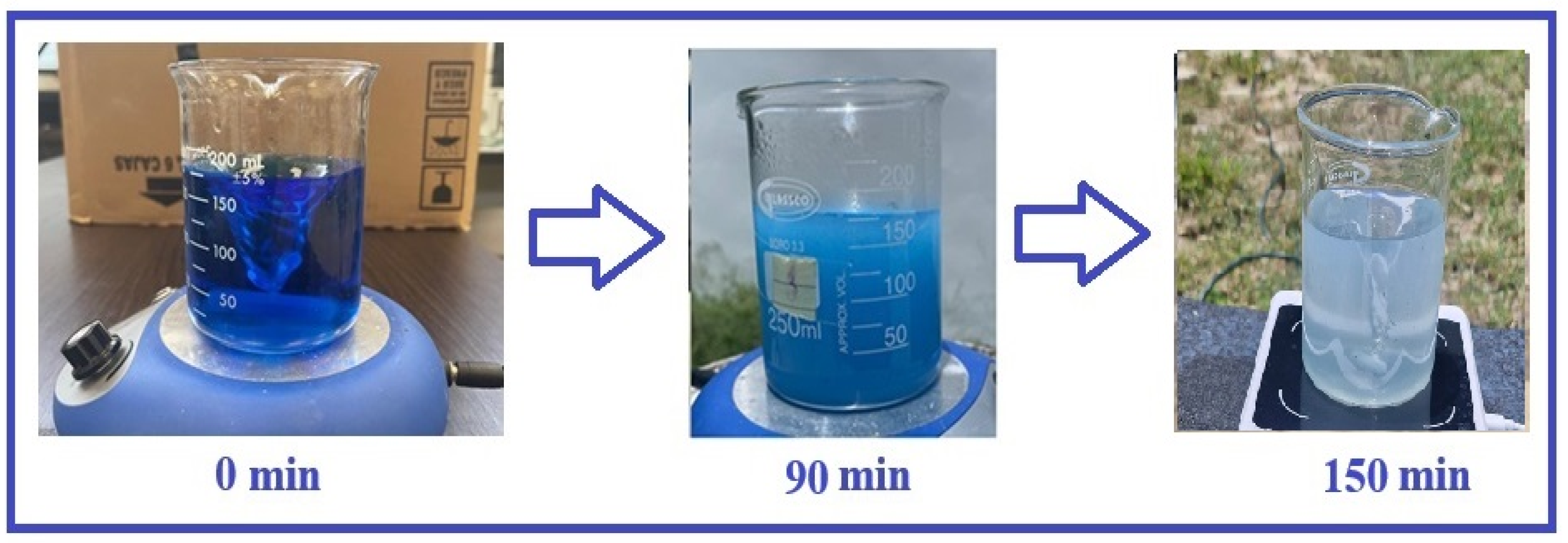
Figure 8 shows images taken at different treatment times of water exposed to sunlight in the presence of TiO2/Cu powder. This figure shows that as exposure time increases, the blue color of the water tends to degrade, which is indicative of the water’s purification as observed in the absorbance results.

3.6. Photocatalytic Antibacterial Activity

Table 1 shows the results of microbiological analyses performed on contaminated water 150 min after exposure to solar radiation, with the addition of 1% TiO2/Cu. The results demonstrate the high effectiveness of the treatment, reducing the total coliforms by 87% and fecal coliforms by more than 93%. These data demonstrate the high effectiveness of the photocatalytic material in improving water quality.

4. Results Discussion

The particle distribution provides a favorable range of particle sizes, which enhances photocatalytic activity under sunlight due to the increased surface associated with size variation.
The photocatalytic activity of copper-doped TiO2 has been enhanced due to the improvement in the formation of oxygen vacancies. These oxygen vacancies are directly involved in the photocatalysis processes. Sun irradiation provides enough energy to excite the electrons of copper-doped TiO2 nanoparticles, generating more electron–hole pairs, which improve photocatalytic activity. It can capture the photo-generated holes (h+) and trans-form them into OH radicals, the main reactive species for the decomposition of organic molecules. Therefore, the enhanced property of copper-doped TiO2 nanoparticles to generate OH radicals lead to improved photocatalytic degradation performance. Hence, the copper-doped TiO2 nanoparticles show increased photocatalytic activity under sun irradiation. The increased photocatalytic activity of copper-doped TiO2 nanoparticles may be attributed to their larger crystalline size and more ordered crystalline phase.
The presence of the dopant brought about a shift of the absorption edge to the visible light region, and intense absorption was observed. This intense absorption of visible light can be attributed to the following aspects: (a) the Cu doping introduced impurity states below the conduction band minimum, leading to the band gap reduction, and (b) the excitations between O 2p states and Ti 3d states through Cu 3d states. Additionally, charge transfer bands can provide insight into the environment and nature of Cu2+ ions. Thus, according to the literature [30,31,32,33], bands describing the Cu2+ species can be located in several regions. The absorption bands at 600 nm are attributed to the 2Eg2T2g transition of Cu2+ located in the distorted or perfect octahedral symmetry.
Based on the data from the samples exposed to sunlight, an average absorption was calculated by comparing the initial measurement (0 min) with the fifth measurement (150 min). The results showed that the TiO2 tests absorbed 39.18% of impurities, while the TiO2/Cu tests reached 60.52%. This confirms the hypothesis that copper doping significantly improves water decontamination efficiency. Absorbance refers to the capacity of these materials to absorb light, especially in the wavelength range corresponding to ultraviolet (UV) or visible radiation.
While the addition of copper reduces the overall band gap, the resulting trap sites may also act as recombination centers. Copper cations are the key species responsible for altering the sample’s optical properties, as evidenced by the absorption spectrum shown in Figure 6. It is suggested that the existence of Cu improves photocatalytic efficiency. The copper cation acts as a trapping sink for the excited electrons. Thus, on visible light irradiation, the electron-hole pair generated on the TiO2 surface reacts with the oxygen and water adsorbed on the catalyst surface to produce superoxide radicals and holes, respectively. These reactive oxygen species interact with the bacterial cell wall, resulting in membrane disruption and the release of intracellular materials, resulting in cell lysis (Table 1). Additionally, the reactive oxygen species produced can interact with the sugar phosphate groups present in the bacterial DNA to cause gene alteration. Further altering the protein expression responsible for cellular functioning leads to cell damage [34,35].

5. Conclusions

In the present work, a visible-light-active semiconductor material, i.e., TiO2 doped with 1 wt.% Cu was successfully synthesized using the powder method. The introduction of a small percentage of Cu into the TiO2 lattice has led to an improved cation-doped TiO2 sample. XRD result confirmed that the TiO2 is mainly present in its anatase crystalline structure. The presence of copper contributed to the enhanced stability of the anatase phase and also exhibited improved visible light antimicrobial efficiency. The size and morphological characteristics of the processed powders indicate that the powder is agglomerated due to its very small size and present round shapes. The photocatalytic activity values indicate that Surface Cu2+ may act as the photoactive species, leading to improved photoactivity with respect to undoped TiO2 samples. The enhanced photocatalytic degradation performance for Cu-doped TiO2 can be attributed to the crystallinity and low recombination rate of photogenerated electron-hole pairs. Copper-doped TiO2 nanoparticles were effective in decomposing pollutants in wastewater. Through this research, it was established that modifying TiO2 with Cu is a promising strategy for industrial water treatment, providing an innovative and economical solution in the field of water decontamination.

Author Contributions

Conceptualization, D.R.P.-H., D.Y.R.-S. and E.R.-R.; methodology, D.R.P.-H., D.Y.R.-S., M.T.M.-S. and J.A.C.-R.; software, M.T.M.-S. and J.A.C.-R.; validation, M.T.M.-S., C.A.C.-A. and E.R.-R.; formal analysis, D.R.P.-H., D.Y.R.-S., M.T.M.-S. and J.A.C.-R.; investigation, D.R.P.-H., D.Y.R.-S., M.T.M.-S. and J.A.C.-R.; re-sources, C.A.C.-A. and E.R.-R.; data curation, D.R.P.-H., D.Y.R.-S., M.T.M.-S. and J.A.C.-R.; writing—original draft preparation, D.R.P.-H., D.Y.R.-S. and M.T.M.-S.; writing—review and editing, D.R.P.-H., D.Y.R.-S., C.A.C.-A. and E.R.-R.; visualization, M.T.M.-S., C.A.C.-A. and E.R.-R.; supervision, M.T.M.-S. and C.A.C.-A. All authors have read and agreed to the published version of the manuscript.

Funding

This research received no external funding.

Data Availability Statement

The original contributions presented in this study are included in the article. Further inquiries can be directed to the corresponding author.

Conflicts of Interest

The authors declare that they have no interests or personal relationships that could influence the work reported in this paper.

Abbreviations

The following abbreviations are used in this manuscript:
CuCopper
TiO2Titanium
XRDX-ray diffraction
SEMScanning electron microscopy
nmNanometers
UVUltraviolet
MBMethyl blue
DNADeoxyribonucleic acid

References

  1. Maceira, A. ¿Qué es el agua? (What Is Water). 2020. Available online: https://www.iagua.es/respuestas/que-es-agua (accessed on 29 April 2025).
  2. Nunez, C. La contaminación del agua constituye una crisis mundial creciente. Esto es lo que hay que saber (Water Pollution Is a Growing Global Crisis. Here’s What You Need to Know), National Geographic. 2024. Available online: https://www.nationalgeographic.es/medio-ambiente/contaminacion-del-agua (accessed on 29 April 2025).
  3. Hogen-Esch, T.; Pirbazari, M.; Ravindran, V.; Yurdacan, H.M.; Kim, W. High Performance Membranes for Water Reclamation Using Polymeric and Nanomaterials. US20160038885A1, 2 November 2016. [Google Scholar]
  4. Tamai, T.; Tanimura, S.; Oyabu, N.; Matsuo, R.; Osugi, T.; Goto, Y.; Okamoto, T. Polymer Membrane for Water Treatment. US20120097605A1, 4 January 2012. [Google Scholar]
  5. Meng, X.; Dadachov, M.; Korfiatis, G.P.; Christodoulatos, C. Methods of Preparing a Surface-Activated Titanium Oxide Product and of Using Same in Water Treatment Processes. US6919029B2, 21 August 2003. [Google Scholar]
  6. Antonio, J.A.T.; Chavez, C.A.; Jacome, M.A.C.; Ramírez, F.A.; Morales, Y.R.; Torres, G.F.; Ortiz, L.F.F.; Salinas, E.L.; Cassou, M.L.Y. Material de Óxido de Titanio Nanoestructurado y Procedimiento para su obtención. WO2005105674A1, 10 November 2005. [Google Scholar]
  7. Su, R.; Bechstein, R.; Kibsgaard, J.; Vang, R.T.; Besenbacher, F. High-quality Fe-doped TiO2 films with superior visible-light performance. J. Mater. Chem. 2012, 22, 23755–23758. [Google Scholar] [CrossRef]
  8. Kim, D.H.; Lee, K.S.; Kim, Y.S.; Chung, Y.C.; Kim, S.J. Photocatalytic Activity of Ni 8 wt%-Doped TiO2 Photocatalyst Synthesized by Mechanical Alloying Under Visible Light. J. Am. Ceram. Soc. 2006, 89, 515–518. [Google Scholar] [CrossRef]
  9. Varadharajan, K.; Singaram, B.; Mani, R.; Jeyaram, J. Enhanced Visible Light Photocatalytic Activity of Ag and Zn Doped and Codoped TiO2 Nanoparticles. J. Clust. Sci. 2016, 27, 1815–1826. [Google Scholar] [CrossRef]
  10. Deng, G.R.; Xia, X.H.; Guo, M.L.; Gao, Y.; Shao, G. Mn-doped TiO2 nanopowders with remarkable visible light photocatalytic activity. Mater. Lett. 2011, 65, 2051–2054. [Google Scholar] [CrossRef]
  11. Xie, R.-C.; Shang, J.-K.; Wu, P. Titanium Oxide Base Photocatalysts. WO2007117332A2, 18 October 2007. [Google Scholar]
  12. Li, Q.; Wu, P.; Xie, R.; Shang, J.K. Enhanced photocatalytic disinfection of microorganisms by transition-metal-ion-modification of nitrogen-doped titanium oxide. J. Mater. Res. 2010, 25, 167–176. [Google Scholar] [CrossRef]
  13. Sangari, X.M. Photocatalytic Activity of Cu Doped TiO2 Synthesized by Sonochemical Method, International Journal of Engineering Science Invention. In Proceedings of the International Conference on Advances in Functional Materials (ICAFM-2017), Los Angeles, CA, USA, 4–6 August 2017; pp. 64–66. Available online: https://ijesi.org/papers/ICAFM-2017/Volume-1/10.%2064-66.pdf (accessed on 10 January 2026).
  14. Fujishima, Y.A.; Rao, T.N.; Tryk, D.A. Titanium dioxide photocatalysis. J. Photochem. Photobiol. C Photochem. Rev. 2000, 1, 1–21. [Google Scholar] [CrossRef]
  15. Reda, S.; Khairy, M.; Mousa, M. Photocatalytic activity of nitrogen and copper doped TiO2 nanoparticles prepared by microwaveassisted sol-gel process. Arab. J. Chem. 2020, 13, 86–95. [Google Scholar] [CrossRef]
  16. Thambiliyagodage, C.; Mirihana, S. Photocatalytic activity of Fe and Cu co-doped TiO2 nanoparticles under visible light. J. Sol-Gel Sci. Technol. 2021, 99, 109–121. [Google Scholar] [CrossRef]
  17. Thambiliyagodage, C.; Usgodaarachchi, L. Photocatalytic activity of N, Fe and Cu co-doped TiO2 nanoparticles under sunlight. Curr. Res. Green Sustain. Chem. 2021, 4, 100186. [Google Scholar] [CrossRef]
  18. Cheng, C.; Fang, W.H.; Long, R.; Prezhdo, O.V. Water splitting with a single-atom Cu/TiO2 photocatalyst: Atomistic origin of high efficiency and proposed enhancement by spin selection. J. Am. Chem. Sos. 2021, 1, 550–559. [Google Scholar] [CrossRef]
  19. Čižmar, T.; Panžić, I.; Capan, I.; Gajović, A. Nanostructured TiO2 photocatalyst modified with Cu for improved imidacloprid degradation. Appl. Surf. Sci. 2021, 569, 151026. [Google Scholar] [CrossRef]
  20. Abbas, M.M.; Rasheed, M. Solid State Reaction Synthesis and Characterization of Cu doped TiO2 Nanomaterials. J. Phys. Conf. Ser. 2021, 1795, 012059–012068. [Google Scholar] [CrossRef]
  21. Ahmadias, R.; Moussavi, G.; Shekoohiyan, S.; Razavian, F. Synthesis of Cu-Doped TiO2 Nanocatalyst for the Enhanced Photocatalytic Degradation and Mineralization of Gabapentin under UVA/LED Irradiation: Characterization and Photocatalytic Activity. Catalysts 2022, 12, 1310. [Google Scholar] [CrossRef]
  22. Behnajady, M.A.; Taba, H.; Modirshahla, N.; Shokri, M. Photocatalytic activity of Cu doped TiO2 nanoparticles and comparison of two main doping procedures. Nanomicro Lett. 2013, 8, 345–348. [Google Scholar] [CrossRef]
  23. Mingmongkol, Y.; Trinh, D.T.T.; Phuinthiang, P.; Channei, D.; Ratananikom, K.; Nakaruk, A.; Khanitchaidecha, W. Enhanced Photocatalytic and Photokilling Activities of Cu-Doped TiO2 Nanoparticles. Nanomaterials 2022, 12, 1198. [Google Scholar] [CrossRef]
  24. Li, X.; Zhang, D.; Chen, S.; Zhang, H.; Sun, Z.; Huang, S.; Yin, X. Dye-sensitized Solar Cells with Higher Jsc by Using Polyvinylidene Fluoride Membrane Counter Electrodes. Nano Micro. Lett. 2011, 3, 195–199. [Google Scholar] [CrossRef]
  25. Di Paola, A.; Bellardita, M.; Palmisano, L. Brookite, the least known TiO2 photocatalyst. Catalysts 2013, 3, 36–73. [Google Scholar] [CrossRef]
  26. NOM-210-SSA1; Microbiological Test Methods. Official Gazette of the Federation (DOF): Mexico City, Mexico, 2015. Available online: https://platiica.economia.gob.mx/normalizacion/nom-210-ssa1-2014/ (accessed on 10 January 2026).
  27. Stepanova, A.; Tite, T.; Ivanenko, I.; Enculescu, M.; Radu, C.; Culita, D.C.; Rostas, A.M.; Galca, A.C. TiO2 Phase Ratio’s Contribution to the Photocatalytic Activity. ACS Omega 2023, 8, 41664–41673. [Google Scholar] [CrossRef]
  28. Wired Chemist. Available online: https://www.wiredchemist.com/chemistry/data/metallic-radii (accessed on 8 January 2026).
  29. Trandafilović, L.V.; Jovanović, D.J.; Zhang, X.; Ptasińska, S.; Dramićanin, M.D. Enhanced photocatalytic degradation of methylene blue and methyl orange by ZnO:Eu nanoparticles. Appl. Catal. B Environ. 2017, 203, 740–752. [Google Scholar] [CrossRef]
  30. Jeon, G.; Chaung, J. Preparationand characterization of silica-supported cop-per catalysts for the dehydrogenation of cyclo-hexanol to cyclohexanone. Appl. Catal. 1994, 115, 29–44. [Google Scholar] [CrossRef]
  31. Praliaud, H.; Mikhailenko, S.; Chajar, Z.; Primet, M. Surface and bulk properties of Cu–ZSM-5 and Cu/Al2O3 solids during redox treatments. Correlation with the selective reduction of nitric oxide by hydrocarbons. Appl. Catal. B Environ. 1998, 6, 359–374. [Google Scholar] [CrossRef]
  32. Chen, L.; Horiuchi, T.; Osaki, T.; Mori, T. Catalytic selective reduction of NO with propylene over Cu-Al2O3 catalysts: Influence of catalyst preparation method. Appl. Catal. B Environ. 1999, 23, 259–269. [Google Scholar] [CrossRef]
  33. Velu, S.; Suzuki, K.; Okazaki, M.; Kapoor, M.P.; Osaki, T.; Ohashi, F.J. Oxidative Steam Reforming of Methanol over CuZnAl(Zr)-Oxide Catalysts for the Selective Production of Hydrogen for Fuel Cells: Catalyst Characterization and Performance Evaluation. J. Catal. 2000, 194, 373384. [Google Scholar] [CrossRef]
  34. Verdier, T.; Coutand, M.; Bertron, A.; Roques, C. Antibacterial activity of TiO2 photocatalyst alone or in coatings on E. coli: The influence of methodological aspects. Coatings 2014, 4, 670–686. [Google Scholar] [CrossRef]
  35. Ganguly, P.; Byrne, C.; Breen, A.; Pillai, S.C. Antimicrobial activity of photocatalysts: Fundamentals, mechanisms, kinetics and recent advances. Appl. Catal. B Environ. 2018, 225, 51–75. [Google Scholar] [CrossRef]
Figure 1. Particle size distribution.
Powders 05 00006 g001
Figure 2. SEM image of TiO2 and TiO2/Cu milled powders.
Powders 05 00006 g002
Figure 3. XRD pattern of TiO2 and Cu-doped TiO2.
Powders 05 00006 g003
Figure 4. Absorbance behavior of TiO2 under visible light irradiation over a 150-min period.
Powders 05 00006 g004
Figure 5. Absorbance of TiO2/Cu under visible light for 150 min.
Powders 05 00006 g005
Figure 6. Absorbance behavior of TiO2 and TiO2/Cu under visible light irradiation for 150 min.
Powders 05 00006 g006
Figure 7. Absorbance equation of TiO2/Cu at 655 nm under visible light during 150 min.
Powders 05 00006 g007
Figure 8. Images showing color degradation of water exposed to sunlight, and with the addition of TiO2/Cu.
Powders 05 00006 g008
Table 1. Microbiological analysis.
ColiformsBefore
Treatment
After
Treatment
Totals54070
Fecal27<1.8
Disclaimer/Publisher’s Note: The statements, opinions and data contained in all publications are solely those of the individual author(s) and contributor(s) and not of MDPI and/or the editor(s). MDPI and/or the editor(s) disclaim responsibility for any injury to people or property resulting from any ideas, methods, instructions or products referred to in the content.