


Abstract
Background: Calcium (Ca) and magnesium (Mg) are essential micronutrients integral to metabolic processes and cardiovascular health. Emerging evidence suggests that the dietary Ca:Mg ratio may influence chronic disease risk, yet variability in this ratio across diverse demographic groups and its relationship to body composition and vitamin D status remain unclear. Methods: Dietary intakes of Ca and Mg were assessed using validated Food Frequency Questionnaires (FFQs) and body composition was quantified via Dual-energy X-ray Absorptiometry (DXA) scans. Relationships between dietary Ca:Mg ratios and demographics, body composition parameters (lean and fat mass), and vitamin D and parathyroid hormone (PTH) levels were examined statistically using SPSS ver. 29.0 and R ver. 4.5.1 (2025) employing Kruskal–Wallis, regression, and moderated mediation analyses. Results: We examined 155 healthy adults with a mean age of 36.6 ± 12.5 years. Only 16.8% had adequate intakes of Mg compared with 45.8% who had adequate dietary Ca intakes. Significant differences in the Ca:Mg ratio were observed across racial groups (p = 0.023) and age groups (p = 0.017). South Asian Indians exhibited the highest median Ca:Mg ratio (4.83), whereas African Americans exhibited the lowest (2.67). Interestingly, our moderated mediation analysis indicated that African Americans were the most sensitive to the impact of PTH changes on the balance of Ca:Mg (indirect effect = −0.762, 95% CI [−1.298, −0.234]), indicating that even slight shifts in their Ca:Mg balances cause significant elevation in the PTH, which, in turn, leads to lowering of their vitamin D levels. Young adults (ages 18–29) had the highest median Ca:Mg ratio (4.73). No statistically significant differences were detected based on Gender (p = 0.425 and BMI (p = 0.744) on Ca:Mg ratios. Additionally, dietary Ca:Mg ratios were positively associated with sPTH in males (r = 0.203, p < 0.05), but not with body composition. Conclusion: Important variations in dietary Ca:Mg ratios exist across racial and age demographics, notably among young adults, and specific ethnic groups exhibited elevated ratios. Tailored nutritional interventions may be necessary for these populations to optimize Ca:Mg balance and support metabolic and cardiovascular health outcomes in these populations.
1. Introduction
Calcium and magnesium are essential micronutrients that significantly contribute to various physiological processes, particularly concerning cardiometabolic health. Calcium, primarily recognized for its function in skeletal health, is essential for providing the mineral density necessary to prevent fractures and osteoporosis. Calcium is also essential for cellular signaling, muscle contraction, and neurotransmission [1,2,3]. In addition, cardiovascular health relies on calcium’s regulatory roles in cardiac rhythm and vascular contraction, influencing blood pressure and vascular resistance [4,5]. Similarly important, magnesium supports metabolic pathways and is involved in more than 600 enzyme reactions that regulate processes such as energy production, protein synthesis, and bone mineralization [3,6,7]. The relationship between calcium and magnesium, particularly through an optimal dietary intake ratio, carries notable implications, as imbalances have been associated with higher risks of developing noncommunicable diseases such as hypertension, diabetes, and inflammatory diseases [8]. Therefore, it is crucial to evaluate the ratio of calcium (Ca) to magnesium (Mg) dietary intakes to understand its fundamental role in metabolic regulation and the prevention of chronic disease.
The dietary Ca:Mg ratio indicates the balance of these two minerals in the diet, which has important health implications due to their common absorptive pathways in the intestine. An excessive calcium intake compared to magnesium could interfere with absorption, potentially resulting in magnesium deficiency and impacting various physiological systems [2,6,8]. A dietary calcium-to-magnesium ratio of around 2:1 is thought to optimize the body’s demands for these two essential minerals’ roles in several physiological processes, including bone mineralization, cardiovascular function, and neuromuscular stability [9]. However, research has linked a disproportionate dietary calcium intake (due to excessive or low calcium intake and low magnesium intake) in relation to magnesium, to adverse health outcomes, potentially counteracting magnesium’s beneficial effects on cardiovascular function and glucose metabolism [2,6,10]. An accurate nutritional assessment of the dietary calcium-to-magnesium (Ca:Mg) ratio enables the identification of disruptions and assists in the customization of dietary recommendations to support cardiovascular and metabolic health.
Previous studies have linked a high dietary Ca:Mg ratio, often resulting from excessive calcium intake relative to magnesium, to several adverse health outcomes. This high dietary Ca:Mg ratio may increase the risk of metabolic syndrome, a group of conditions that include obesity, hypertension, insulin resistance, and dyslipidemia, all of which collectively increase the risk of cardiovascular disease [1,2,6,10]. Furthermore, an imbalance in the ratio of dietary Ca:Mg may lead to a decrease in bone mineral density and increase the risk of osteoporosis, particularly among populations with inadequate magnesium intake who are unable to effectively optimize calcium utilization [1,11]. A high dietary Ca:Mg ratio exacerbates magnesium deficiency, which could negatively impact endothelial function and cause inflammation, potentially accelerating the progression of both atherosclerosis and hypertension. Magnesium is essential for blood pressure regulation because it promotes muscular relaxation and regulates vascular tone. However, excessive dietary intake of calcium in comparison to magnesium could counteract these benefits, possibly increasing the risk of hypertension and other cardiovascular diseases [6]. Furthermore, a high dietary Ca:Mg ratio may lead to vascular calcification; this condition plays a crucial role in the progression of atherosclerosis and significantly increases the risk of heart attacks and strokes.
Although previous studies have gained valuable insights, they have limitations, particularly when it comes to nutritionally assessing the dietary Ca:Mg ratio. Several studies have used 24 h dietary recalls in order to estimate magnesium and calcium intake, which might not be representative of individual dietary patterns over the long-term [12]. The limitations of this method, including variability in daily intake and recall bias, may affect the accuracy of the dietary Ca:Mg intake assessments and constrain the reliability of conclusions regarding long-term health effects. Moreover, limited research has studied the impact of demographic factors, such as BMI, age, and race, on the calcium ratio in dietary intake, despite the potential significant influence of these factors on mineral metabolism. BMI, for example, may influence nutrient absorption, while age-related changes may impact mineral requirements. Additionally, racial or ethnic differences could also affect mineral absorption due to genetic and dietary variations [2,6,12]. To better understand the health consequences of this ratio and to provide individualized recommendations, it is then important to fill these gaps.
These methodological drawbacks are coupled with the fact that the dietary adequacy of calcium and magnesium on a population scale would add much needed background to the interpretation of the dietary Ca:Mg ratio.
Dietary adequacy of calcium and magnesium has been shown to affect the regulatory processes of calciotrophic hormones and body composition. Lack of magnesium is common in the adult population, and a growing body of evidence has shown that Mg deficiency could reduce the metabolism of vitamin D and increase the concentration of parathyroid hormone (PTH), thus interfering with calcium homeostasis [7,13]. Conversely, calcium inadequacy is related to raised PTH and altered bone turnover. Studies on nutrient adequacy among demographic groups (sex, age, BMI, and race) show that the younger and leaner population is found to have better calcium adequacy, while magnesium inadequacy is common among women and the overweight population [14,15,16]. Considering these physiological and demographic variations, the current study assessed participants to determine their adherence to the Recommended Dietary Allowances (RDA) of calcium and magnesium, providing an essential context in interpreting relationships between dietary ratios of Ca:Mg, PTH, and 25(OH)D levels.
The primary aim of this study is to assess the differences in the dietary Ca:Mg ratio of adult men and women and understand the effects of demographic and physiological factors on the dietary Ca:Mg ratio. This study aims to address shortcomings in previous studies through the use of validated Mineral FFQs developed particularly to estimate calcium and magnesium intake [17].
Therefore, we hypothesized that the dietary Ca:Mg ratio differs among participants’ demographics, including age groups, BMI categories, racial groups, and genders. Additionally, we hypothesized that there would be an association between the dietary Ca:Mg ratio and body compositions (body fat and lean mass). Finally, we hypothesized that there is a relationship between the dietary Ca:Mg ratio and vitamin D, and this relationship is mediated by the parathyroid hormone levels, considering age and race as covariates that might influence the relationships among these variables.
2. Materials and Methods
Using data from previously completed studies (NCT03134417 and NCT03600675) [11,18], we assessed the relationships between the dietary Ca:Mg ratio, body composition and bone-regulating hormones.
2.1. Anthropometrics and Demographics
Participants were adults who participated in two previous studies that took place at the Bone Lab at Drexel University (Philadelphia, PA, USA): a cross-sectional study of Caucasian and South Asian Indian (SAI) men (NCT03600675) [18] and a randomized, blind, placebo-controlled trial among overweight/obese adults (NCT03134417) [11]. Both studies obtained approval from the Drexel University Institutional Review Board, and all participants provided written informed consent prior to the study’s execution. In the case of the cross-sectional study, the inclusion criteria were that the participants had to be Caucasian or SAI men between the ages of 20 and 60 years with a BMI less than 40 kg/m2; SAIs were immigrants in the United States who had lived in the country for more than 2 years up to 5 years at the time of inclusion. In the randomized trial, the included participants were women and men with BMI > 25 kg/m2 and aged 30–70 years who were otherwise healthy. Exclusion criteria were a diagnosis or condition that could affect vitamin D, magnesium, glucose, or calcium metabolism (e.g., type 2 diabetes mellitus, cardiovascular disease, kidney or liver disease, immune or autoimmune disorder, untreated thyroid disease, hypercalcemia, or bone disease), pregnancy or breastfeeding, acute illness, tobacco consumption, and alcohol consumption exceeding 30 g/day. There was no self-supplementation of vitamin D or magnesium; calcium or vitamin K supplements were only used in the randomized trial and noted. The medical history questionnaire was a standardized version that used demographics (self-reported race/ethnicity and date of birth), weight history, medication use, and vitamin/mineral and herbal supplement use.
Anthropometric measurements included weight using a calibrated scale and height using a stadiometer (Seca 700, Seca, Chino, CA, USA). Waist circumference was measured using a non-stretchable tape at the midpoint between the iliac crest and the lowest rib to assess central adiposity.
2.2. Dietary Assessment
Dietary Magnesium and calcium intake data were collected using the validated Magnesium-Food Frequency (Mg-FFQ) [19] and Calcium-Food Frequency (Ca-FFQ) [20] questionnaires. The 33-item semi-quantitative Mg-FFQ was designed to assess magnesium intake based on commonly consumed magnesium-rich foods such as leafy greens, nuts, seeds, whole grains, and dairy products. The International Osteoporosis Foundation endorsed the validated Ca-FFQ, which assesses calcium intake from various dietary sources and supplements [20]. Dietary calcium and magnesium nutrient values were assessed using FoodWorks software version 17 (Long Valley, NJ, USA) for nutritional analysis and compared across the USDA nutrient database [19,20].
Trained research personnel administered Mg-FFQ and Ca-FFQ, collecting data on portion sizes and frequency of consumption for each food item. Nutritional values were calculated to determine the daily average dietary intakes of calcium and magnesium. The validation of both tools against 14-day food diaries demonstrated strong agreement and accuracy in capturing dietary intake over extended periods [19,20].
In the current analysis, dietary calcium and magnesium are assessed as the intakes of the foods recorded by Ca-FFQ. Calcium and magnesium supplements were not included in the dietary intake totals or in the calculation of the dietary calcium-to-magnesium (Ca:Mg) ratio. Using or not using supplements was determined through the medical history questionnaire in both studies; self-supplementation was not allowed to use vitamin D or magnesium in either study, but supplementation with calcium and vitamin K was allowed in the randomized only and noted. Drinking water intake and the mineral content of the drinking water (tap water and bottled water) were not calculated and thus not factored into the intake estimates.
Determination of Dietary Adequacy: Dietary Adequacy Classification for Calcium and Magnesium
The Institute of Medicine (IOM) was our measure of adequacy of dietary calcium and magnesium according to the Estimated Average Requirement (EAR) thresholds as our main criteria [14,15]. For the dietary magnesium, we have used the updated body weight-adjusted EAR values that represent the updated recommendations ([14,16], and a sensitivity analysis used the 1997 IOM values as a point of comparison. While age and sex EARs of dietary calcium were used to define dietary adequacy [15]. Mean daily intakes of validated FFQs were compared with EARs of each participant, and they were classified as either adequate or inadequate. Only food intakes were recorded; however, supplementary sources and water sources of calcium and magnesium were documented separately from the participant medical forms. The differences between groups (in terms of adequacy (sex, age, race, and BMI)) were calculated by Pearson chi-square tests, and the p-value under 0.05 was taken as statistically significant. The sensitivity analyses on RDA were performed to validate subgroup patterns. Separate models were run for magnesium (EAR and RDA) and calcium (EAR and RDA) adequacy definitions [14,15]. Interaction terms were included to test moderation, and indirect effects were estimated using bootstrapping for magnesium models. Due to small group sizes, calcium models used normal-theory standard errors to calculate confidence intervals.
2.3. Body Composition Analysis
The Dual-energy X-ray absorptiometry (DXA)—(DXA; Lunar iDXA, enCORE Software Version 17, GE Healthcare, Amersham, UK) was used to analyze body composition, which provides comprehensive measurements of visceral adipose tissue (VAT), fat mass, lean body mass, and bone mineral density (BMD).
2.4. Blood Chemistries
Using standard phlebotomy methods as described previously [19,20], blood samples were taken while the subjects were fasting and examined for biochemical markers related to bone health and metabolism. Using commercially available assay kits as described previously in the original studies, the serum concentrations of 25-hydroxyvitamin D (25OHD) and parathyroid hormone (PTH), critical regulators of bone health and mineral metabolism, were measured using test kits that are commercially available assay kits as described previously [18]. Participants’ 25OHD levels were used to assess their vitamin D status, which is important for calcium absorption and bone metabolism, and PTH levels [21].
2.5. Statistical Analysis Plan
Statistical analyses were conducted using IBM SPSS Statistics software version 29.9.2.9 (IBM Corp., Armonk, NY, USA: IBM Corp., https://www.ibm.com/products/spss-statistics (accessed on 18 January 2025)) [22] and R Core R version 4.5.1 (13 June 2025 ucrt)—“Great Square Root” [23]. The primary dependent variable was the dietary calcium-to-magnesium ratio (Ca:Mg). Secondary measures included nutritional and health variables, specifically total fat mass and lean mass assessed via dual-energy X-ray absorptiometry (DXA). Serum vitamin D concentrations (25OHD) were classified into three categories according to the American Clinical Association: deficient (<20 ng/mL), insufficient (20–29.9 ng/mL), and sufficient (≥30 ng/mL) [24].
Independent demographic variables comprised age (18–29, 30–39, 40–49, ≥50 years), body mass index (BMI: underweight < 18.5, normal weight 18.5–24.9, overweight 25–29.9, obese ≥ 30), self-reported race, and gender.
Descriptive statistics for dietary Ca:Mg ratios, including medians, interquartile ranges (IQR), and 95% confidence intervals, were computed for each demographic subgroup. Normality of the data was assessed using the Shapiro–Wilk test, histograms, and Q-Q plots. Homogeneity of variances across groups was evaluated with Levene’s test.
Due to the non-normal distribution of the dietary Ca:Mg ratios, Kruskal–Wallis tests were utilized for comparisons across demographic groups, with post hoc pairwise analyses conducted using Mann–Whitney U tests, corrected for multiple comparisons with the Sidak adjustment, selected for its lower risk of type I error inflation compared to traditional methods.
Variables related to secondary aims (body composition, vitamin D levels) that violated normality assumptions underwent logarithmic transformation. Spearman’s rank correlation was employed to assess the association between the dietary Ca:Mg ratio and both total body fat and lean mass. Linear regression analyses were conducted on transformed variables to confirm robustness and identify potential predictors.
Exploratory moderated mediation analyses were performed to assess the direct and indirect effects of dietary Ca:Mg intake ratios, parathyroid hormone (PTH) concentrations, calcium and magnesium intakes, and vitamin D levels, while incorporating age and race as covariates. To investigate whether the relationship between the dietary calcium-to-magnesium (Ca:Mg) ratio and serum vitamin D levels is mediated by parathyroid hormone (PTH), and whether this mediation is conditional on demographic factors (age and race), we applied Hayes’ PROCESS Model 7 framework for moderated mediation [25]. All analyses were conducted in R [23] using the processR package [26], which leverages the lavaan structural equation modeling package [27] to implement conditional process models. Data were imported using readxl [28] and preprocessed using dplyr [29], a core component of the tidyverse suite [30]. Data visualization and diagnostic plots were created using ggplot2 [31].
In the moderated mediation model, the dietary Ca:Mg ratio, age, and race were specified as the independent variable (X), continuous moderator (W), and categorical moderator (Z), respectively; PTH was specified as the mediator (M), and vitamin D level was the outcome variable (Y). Continuous variables were mean-centered to enhance the interpretability of interaction terms. Model 7 tested whether the indirect effect of dietary Ca:Mg on vitamin D via PTH (a × b) was moderated by age and race. Conditional indirect effects were estimated using 5000 bootstrap samples to compute bias-corrected confidence intervals. Interaction terms (the dietary Ca:Mg × Age and the dietary Ca:Mg × Race) were included to test the moderation of both mediated and direct effects. This approach allowed for testing whether, and under what conditions, the mediation pathway was operative. Data visualizations for the moderated mediation were created with assistance from Claude AI (Anthropic) for figure design and layout optimization.
In the secondary analyses, we tested the hypothesis that the nutritional adequacy of magnesium and calcium affected the indirect impact of age and race on serum vitamin D through PTH. In the case of age, we employed the PROCESS Model 7 of Hayes, whereby age is used to predict PTH (a-path), vitamin D is used to predict PTH (b-path), and the a-path is moderated by magnesium or calcium adequacy (EAR and RDA definition) [14,15]. In the case of race, comparable moderated mediation analyses were estimated using nutrient adequacy (magnesium EAR/RDA and calcium EAR/RDA) [14,15] as covariates that are categorical. The estimation of indirect effects (a × b) consisted of 1000 bootstrap resamples of magnesium models; since the size of the subgroups was small, calcium models were built using normal-theory standard errors to build confidence intervals.
3. Results
Our primary hypothesis was that dietary calcium-to-magnesium (Ca:Mg) ratios differ across key demographic strata (race, age, BMI category, and gender). A total of 155 healthy participants were included in all analyses. Table 1 describes the stratification of participants based on demographic categories such as race, gender, age, and Body Mass Index (BMI).
Table 1.
Calcium to Magnesium Ratios by Demographic Categories.
There were no differences in the dietary Ca:Mg ratio based on gender (U = 2.578, p = 0.425) or BMI (H(2) = 0.591, p = 0.744). However, there were significant differences in the dietary calcium-to-magnesium (Ca:Mg) ratios by race (H(4) = 11.30, p = 0.023) and by age group (H(3) = 10.16, p = 0.017). Specifically, for race differences, the dietary Ca:Mg ratio was significantly higher for SAI and Caucasians compared to Asians (Mdn = 3.08, IQR = 3.01) and African Americans, who exhibited the lowest dietary Ca:Mg ratio (Mdn = 2.67, IQR = 2.55). Interestingly, the highest dietary Ca:Mg ratio (Mdn = 4.73, IQR = 3.94) was observed in the youngest cohort (18–29 years) compared to the 40-to-49-year age group (Mdn = 2.80, IQR = 2.56), p = 0.017. The finding indicates that race and age influenced the dietary Ca:Mg ratios, whereas gender and BMI did not influence these values within this cohort.
3.1. Correlation Analysis
The correlation analysis (see Table 2) showed some significant correlations in the overall sample. There was a substantial correlation of age to BMI (r = 0.364, p < 0.001) and PTH (r = 0.224, p < 0.01). In addition, as expected, a significant negative correlation was found between vitamin D and PTH (r = −0.169, p < 0.05), showing that the higher PTH levels were associated with lower vitamin D levels.
Table 2.
Pearson Correlation Coefficients for Study Variables in the Total Sample (N = 155).
Dietary Ca:Mg ratio did not have any significant correlation with fat mass or lean mass among females. In contrast, females (n = 57) had a number of other significant relationships: age had a positive relationship with BMI (r = 0.265, p < 0.05); BMI had a positive relationship with fat mass (r = 0.620, p < 0.001) and a negative relationship with lean mass (r = −0.274, p < 0.05); and PTH had a negative relationship with vitamin D (r = −0.312, p < 0.05) (Table 3).
Table 3.
Gender-Stratified Pearson Correlation Coefficients.
3.2. Race Categories
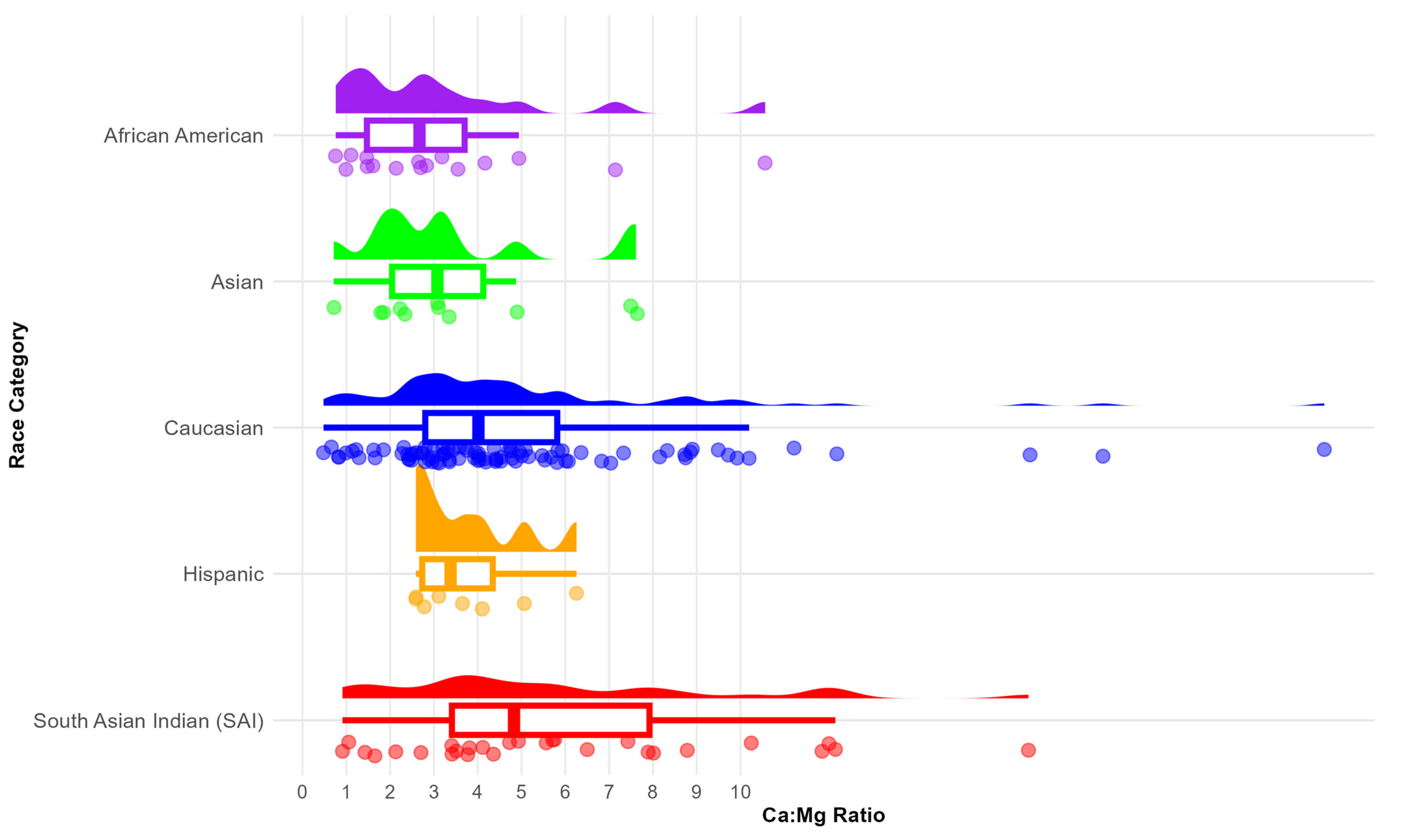
This section on the results of ethnic variations in dietary Ca:Mg ratios extends on preliminary work presented in a conference paper [32]. The Kruskal–Wallis H test revealed a significant difference in the dietary calcium-to-magnesium (Ca:Mg) ratios among racial groups (H(4) = 11.301, p = 0.023). The findings indicated that South Asian Indians (SAI), who had the highest median dietary Ca:Mg ratio (Mdn = 4.83), displayed a greater mineral imbalance compared to other racial groups. Specifically, Caucasians (Mdn = 4.02) and African Americans (Mdn = 2.67) showed the lowest median ratios among the studied groups. Depicted in Figure 1 are raincloud plots illustrating the distribution of the dietary calcium-to-magnesium (Ca:Mg) ratios across different racial categories (African American, Asian, Caucasian, Hispanic, and Other). Each plot combines a half-violin plot, a box plot, and individual data points, providing a comprehensive visualization of central tendency, spread, and density within each group.
Figure 1.
Rain cloud plots of the dietary calcium-to-magnesium (Ca:Mg) ratio by race category (African American, Asian, Caucasian, Hispanic, Other).
The distribution of the dietary Ca:Mg ratios was found to differ significantly when comparing the race groups with the Kruskal–Wallis test (H(4) = 11.301, p = 0.023). In Figure 1, the Asian group exhibits the lowest median dietary Ca:Mg ratio and the most tightly clustered distribution, suggesting low variability. In contrast, the Other and African American groups show higher medians and broader spreads, with visible right-skewness and extreme values (potential outliers), indicating greater heterogeneity in the dietary Ca:Mg ratios. The Caucasian group displays a relatively symmetric distribution centered around a moderate dietary Ca:Mg ratio, while the Hispanic group has a narrower interquartile range but also shows moderate right-skewness.
These differences in distributional shape and central tendency across racial groups may reflect underlying variations in dietary intake, supplementation practices, or metabolic processing of calcium and magnesium. These distributional characteristics, such as skewness and outliers, lead to the use of non-parametric tests.
3.3. Age Categories
Kruskal–Wallis showed a significant association between the dietary Ca:Mg ratio and age groups, H(3) = 10.164, p = 0.017. The 18 to 29 group had the highest median dietary Ca:Mg ration, while the 40 to 49 group had the lowest median dietary Ca:Mg ratio: Mdn = 4.73, IQR = 3.94, and Mdn = 2.80, IQR = 2.56, respectively. Interestingly, pairwise comparisons, including post hoc Mann–Whitney tests, highlighted significant differences between the youngest (18–29 years) with the highest mean rank of 91.25 and the middled-age (40–49) age groups with a mean rank of 56.70. Raw data, untransformed, was used in the analysis.
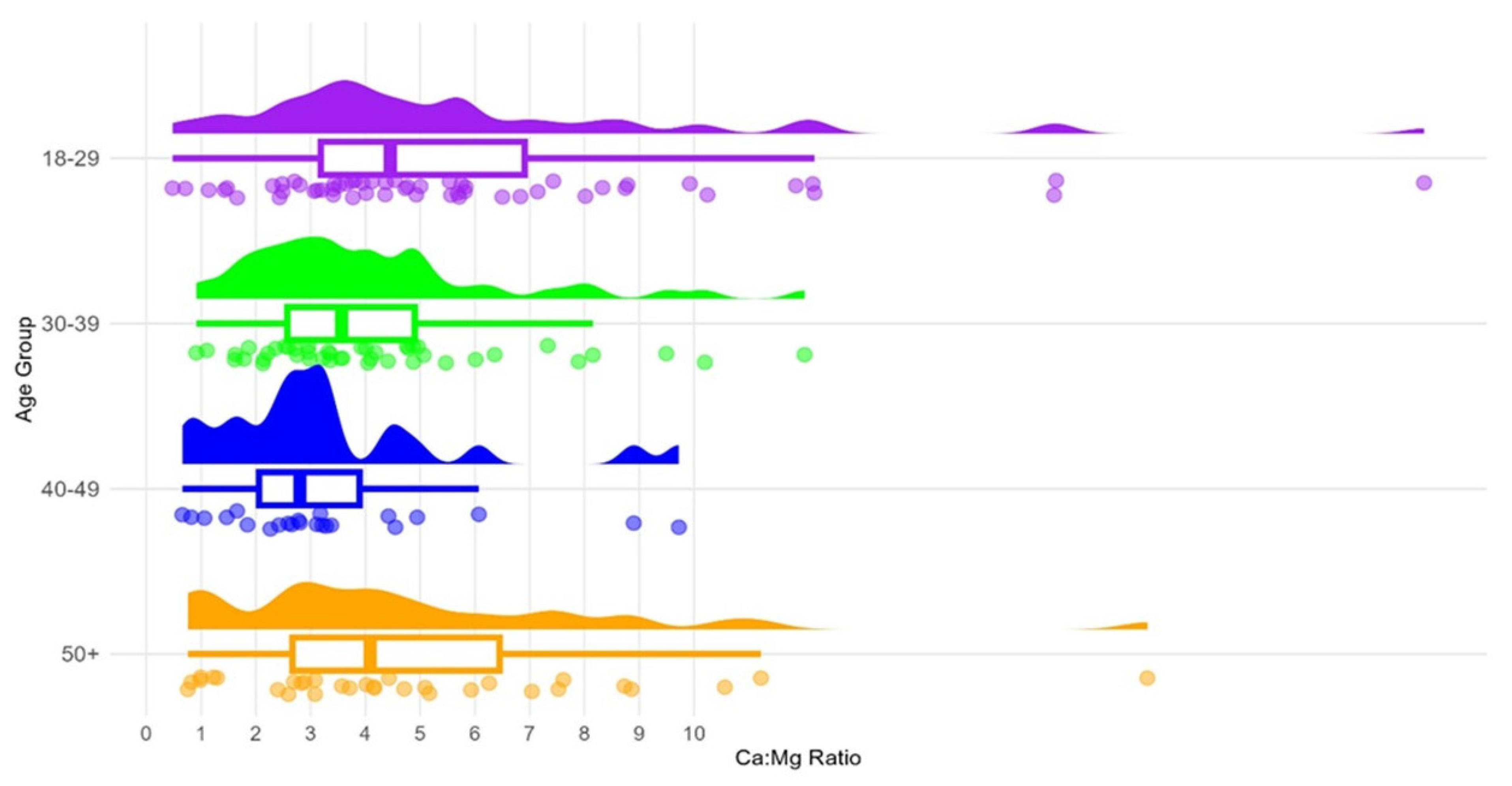
Figure 2 shows horizontal raincloud plots of the dietary calcium-to-magnesium (Ca:Mg) ratio stratified by age group (18–29, 30–39, 40–49, 50+). Each group’s distribution is visualized using a density plot (top), a boxplot (middle), and raw data points (bottom), providing insight into both distributional shape and individual variation.
Figure 2.
Horizontal rain cloud plots of the dietary calcium-to-magnesium (Ca:Mg) ratio by age group (18–29, 30–39, 40–49, 50+).
The 18–29 and 50+ age groups exhibit the broadest distributions, indicating greater variability in dietary Ca:Mg ratios than the middle-aged groups. Notably, the median dietary Ca:Mg ratio appears lowest in the 40–49 group and highest in the 50+ group. The presence of right-skewness in most age groups—particularly in the 18–29 and 50+ categories—suggests a subset of individuals with disproportionately elevated dietary Ca:Mg ratios. This pattern may reflect age-related physiological or dietary differences affecting mineral balance.
Dietary Ca:Mg ratios differed significantly by age (H(3) = 10.164, p = 0.017), with higher median ratios observed in the youngest (18–29 years; Mdn = 4.73, IQR = 3.94) and oldest (≥50 years; Mdn = 4.09, IQR = 4.23) groups compared with the middle-aged groups (30–49 years).
These distributional characteristics, such as skewness and outliers, also justify the use of non-parametric tests.
3.4. BMI and Gender
The Kruskal–Wallis test revealed no significant differences in the dietary Ca:Mg ratios among the different BMI groups, H(2) = 0.51, p = 0.744. Participants with a BMI ≥30 kg/m2 had a median dietary Ca:Mg ratio of 4.47 (IQR = 3.69), which was higher compared to those with a normal BMI (<24.9 kg/m2; Mdn = 3.76, IQR = 4.34) and those classified as overweight (Mdn = 3.62, IQR = 2.65). These findings indicate that BMI does not significantly impact the dietary Ca:Mg ratios across the studied groups. Similarly, the Mann–Whitney U test showed no significant differences in the dietary Ca:Mg ratios between genders, U (2578, p = 0.425). Males had a higher median dietary Ca:Mg ratio of 3.94 (IQR = 3.72), while females had a lower median of 3.65 (IQR = 2.45). The pattern was similar in the sex comparison of correlation with other variables; thus, in males, Ca:Mg was positively correlated with PTH (r = +0.203, p < 0.05) and negatively with vitamin D (r = −0.282, p < 0.01), but not with BMI, fat mass, and lean mass.
Food-only intake via FFQs; supplements and water minerals excluded.
Sensitivity analyses using RDA thresholds yielded lower adequacy percentages overall with similar subgroup patterns.
Table 4 depicts dietary magnesium adequacy versus body weight-adjusted thresholds of EAR [14,15]. Participants only achieved the magnesium adequacy criterion (food intake only) at 16.8%. There was also a significant difference in adequacy by sex (p = 0.043) and race (p = 0.028), with males and African American participants having a higher percentage of adequate Mg intakes. There were no significant associations between age and BMI. RDA-based sensitivity analysis showed reduced overall adequacy but maintained subgroup trends.
Table 4.
Dietary magnesium and calcium adequacy vs. EAR (primary), overall and by subgroup.
According to Table 4, 45.8% of the participants were within the EAR of dietary calcium [14,15]. Adequacy was found to vary according to sex (p = 0.041) and age (p < 0.001), with the highest adequacy levels (74.5%) being among the younger (18–29) adults. It also had race-related differences (p = 0.038), which were led mainly by increased adequacy by the South Asian Indian participants. The same trends existed with RDA thresholds, but the number of participants who met the adequacy criteria was lower.
3.5. Moderated Mediation Analysis
3.5.1. Race-Moderated Mediation Model
Race-Moderated Mediation Model
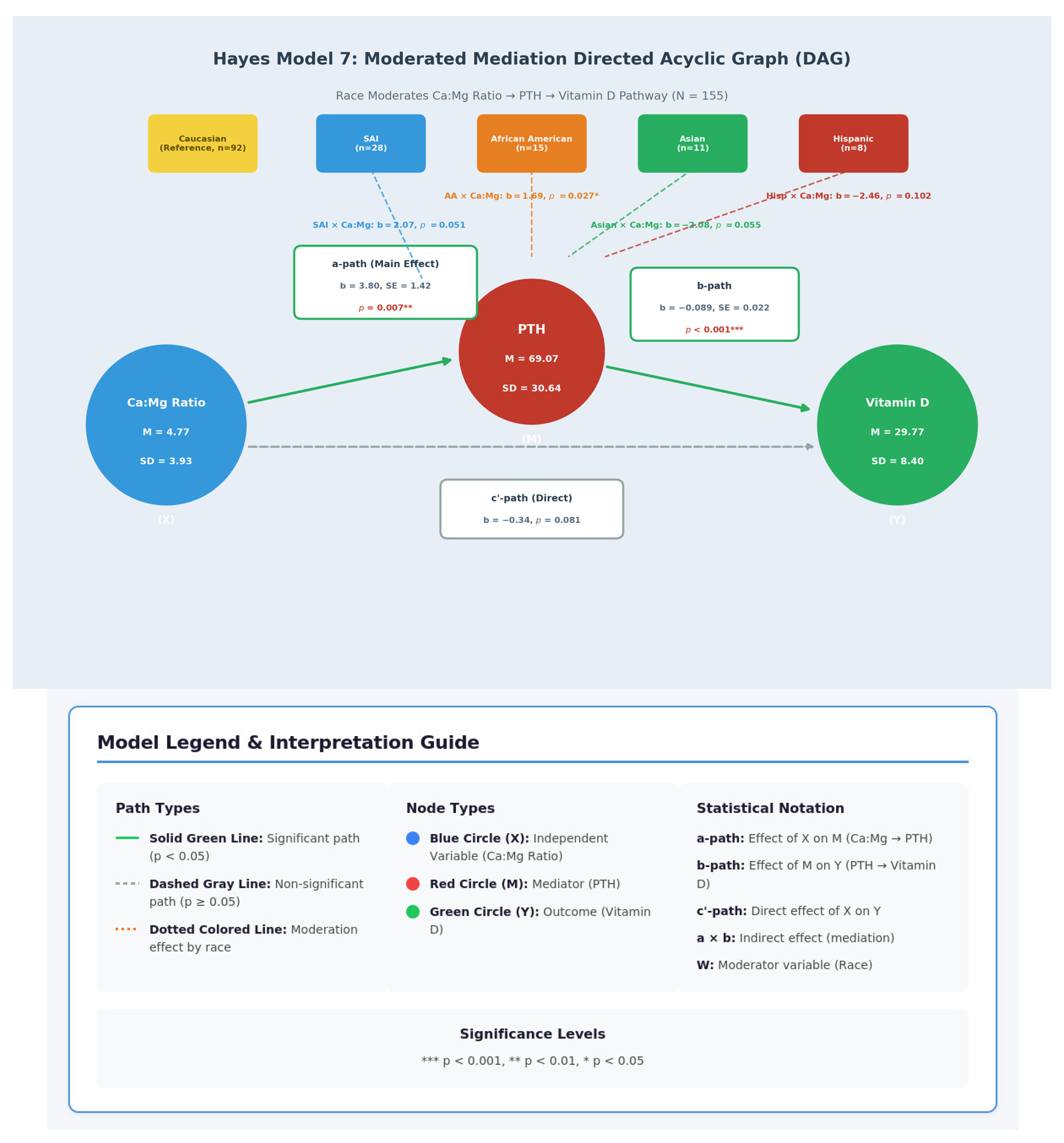
We examined the moderation effect of race on the indirect mediation of the dietary Ca:Mg ratio on vitamin D levels via PTH, using Hayes and Hayes’ PROCESS model 7. was that the dietary Ca:Mg ratio has an indirect effect on vitamin D levels through PTH. Still, this effect is race-specific because genetic polymorphisms in vitamin D/PTH metabolism differ among ethnicities. The moderated mediation model examined the (X) dietary Ca:Mg, the mediator (M) PTH, the outcome variable (Y) vitamin D, and the categorical moderator (W) race. The model tested whether the indirect effect of the dietary Ca:Mg on vitamin D through PTH was moderated by race and used both the a-path (dietary Ca:Mg x race -> PTH) and b-path (PTH x race -> Vitamin D) interaction terms.
Model Results and Path Analysis
The overall race-moderated mediation model was a good fit (PTH mediator model: R2 = 0.184, F(8146) = 4.13, p < 0.001; vitamin D outcome model: R2 = 0.245, F(6148) = 8.01, p < 0.001). The correlation between the dietary Ca:Mg ratio and PTH was noted to be significant (a-path: b = 3.80, SE = 1.42, p = 0.007), implying that these higher ratios of dietary Ca:Mg are associated with higher levels of PTH. Vitamin D was substantially predicted by PTH (b-path = −0.089, SE = 0.022, p < 0.001), with higher PTH levels associated with lower vitamin D concentrations. A non-significant impact (c′:b = −0.34, p = 0.061) of the direct dietary Ca:Mg ratio relationship on vitamin D was indicative of complete mediation by PTH.
Conditional Indirect Effects by Race
The conditional indirect effects of Ca:Mg ratio on vitamin D status via PTH differed across racial eth/ethnic groups. The highest and most negative effect was observed among African American participants (b = −0.762, 95% CI [−1.298, −0.234]), suggesting that this group may be particularly susceptible to the dietary Ca:Mg related variations in vitamin D status. Caucasian participants also showed a significant negative indirect effect (b = −0.347, 95% CI [−0.672, −0.089]), consistent with the interpretation that elevated dietary Ca:Mg ratios may contribute to reduced vitamin D through increases in PTH. In contrast, the indirect effects were not significant in Indian South Asian participants (b = −0.152, [95% CI [−0.401, 0.043]]) and Asian participants (b= −0.237, [95% CI [−0.623, 0.089]]). Notably, Hispanic respondents demonstrated a positive but non-significant indirect effect (b = +0.267, 95% CI [−0.156, 0.789]), suggesting possible heterogeneity in the relationship that warrants further study.
Index of Moderated Mediation
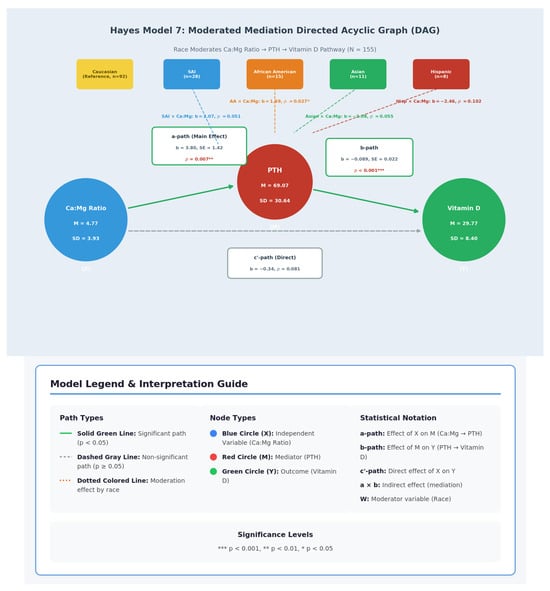
The moderated mediation index was computed to evaluate whether the indirect effect of the dietary Ca:Mg ratio on Vitamin D through PTH differed by racial group. This index reflects the difference in the strength of the mediated effect between each group and the reference group (Caucasian), with statistical significance evaluated using 95% bootstrap confidence intervals (CIs). The difference in indirect effects between SAI and Caucasians was not statistically significant (Index = 0.195; 95% CI [−0.089; 0.534]). Similarly, no significant difference was observed between Asians and Caucasians (Index = 0.110; 95% CI [−0.278; 0.467]). However, the indirect effect was significantly weaker for African Americans compared to Caucasians (Index = −0.415; 95% CI [−0.858; −0.067]), and markedly stronger for Hispanics (Index = 0.614; 95% CI [0.089; 1.234]). Taken together, the moderated mediation indices indicate that the dietary Ca:Mg–PTH–Vitamin D pathway operates similarly in South Asian Indian and Asian participants relative to Caucasians, but is significantly weaker in African Americans and significantly stronger in Hispanics, though these subgroup effects should be interpreted cautiously given the small sample sizes in some racial/ethnic groups (see Figure 3).
Figure 3.
Moderated Mediation Hayes Process Model 7 Directed Acyclic Graph (DAG) where Race moderates the dietary Ca:Mg ratio ® PTH ® Vitamin D Pathway (N = 155).
3.5.2. Age-Moderated Mediation Model
Model Specification and Hypothesis
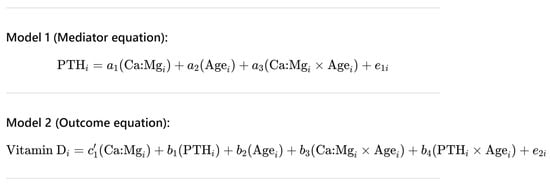
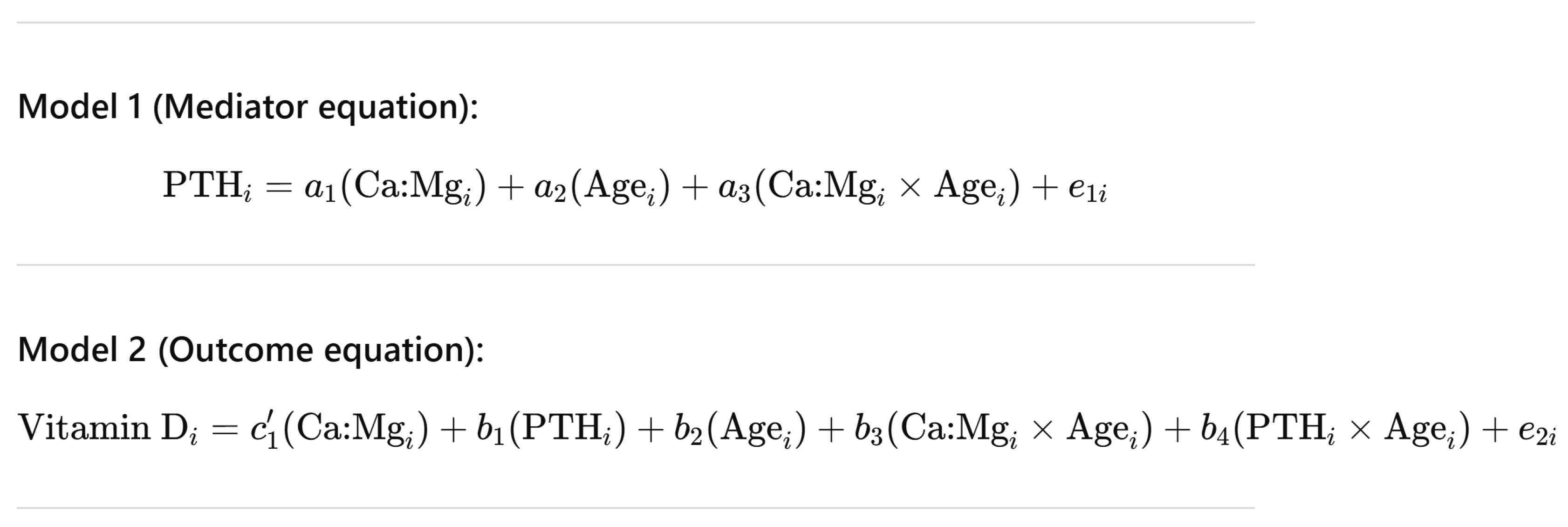
We hypothesized that the indirect impact of the dietary Ca:Mg ratio on vitamin D through PTH would be age-dependent, and the metabolism patterns across the age groups are different because of the age-dependent variations in the regulation and sensitivity to minerals and hormones. Two models (see Figure 4) were estimated to test a moderated mediation framework in which the dietary calcium-to-magnesium intake ratio (Ca:Mg) was hypothesized to influence serum Vitamin D levels through parathyroid hormone (PTH) concentrations, and where Age was examined as a moderator of both the a-path (dietary Ca:Mg → PTH) and b-path (PTH → Vitamin D).
Figure 4.
Mediation and Outcome equations for PTH and Vitamin D via Age.
In Model 1, PTH was regressed on the dietary Ca:Mg, Age, and their interaction term (Ca:Mg × Age), testing for the moderation of the indirect effect’s first stage.
In Model 2, serum Vitamin D was regressed on the dietary Ca:Mg, PTH, Age, dietary Ca:Mg × Age, and PTH × Age, allowing for conditional direct and indirect effects depending on Age.
This model allows for both the direct effect of the dietary Ca:Mg on Vitamin D and the indirect effect via PTH to vary as a function of Age, constituting a second-stage moderated mediation model.
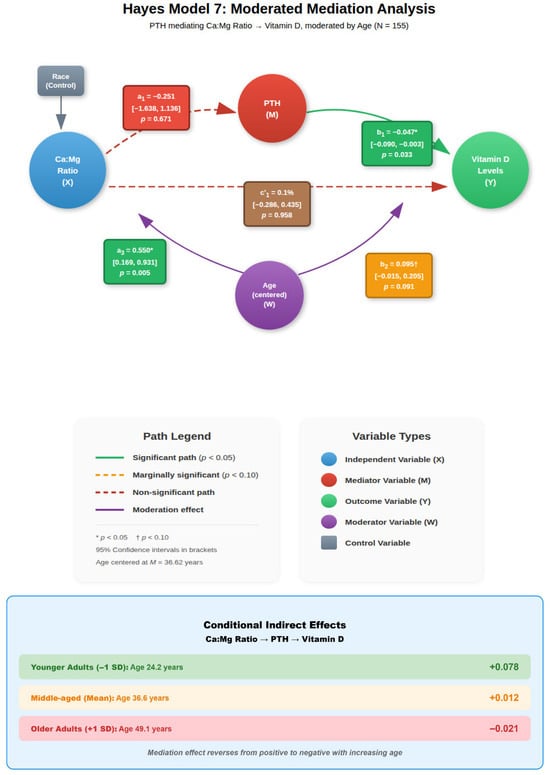
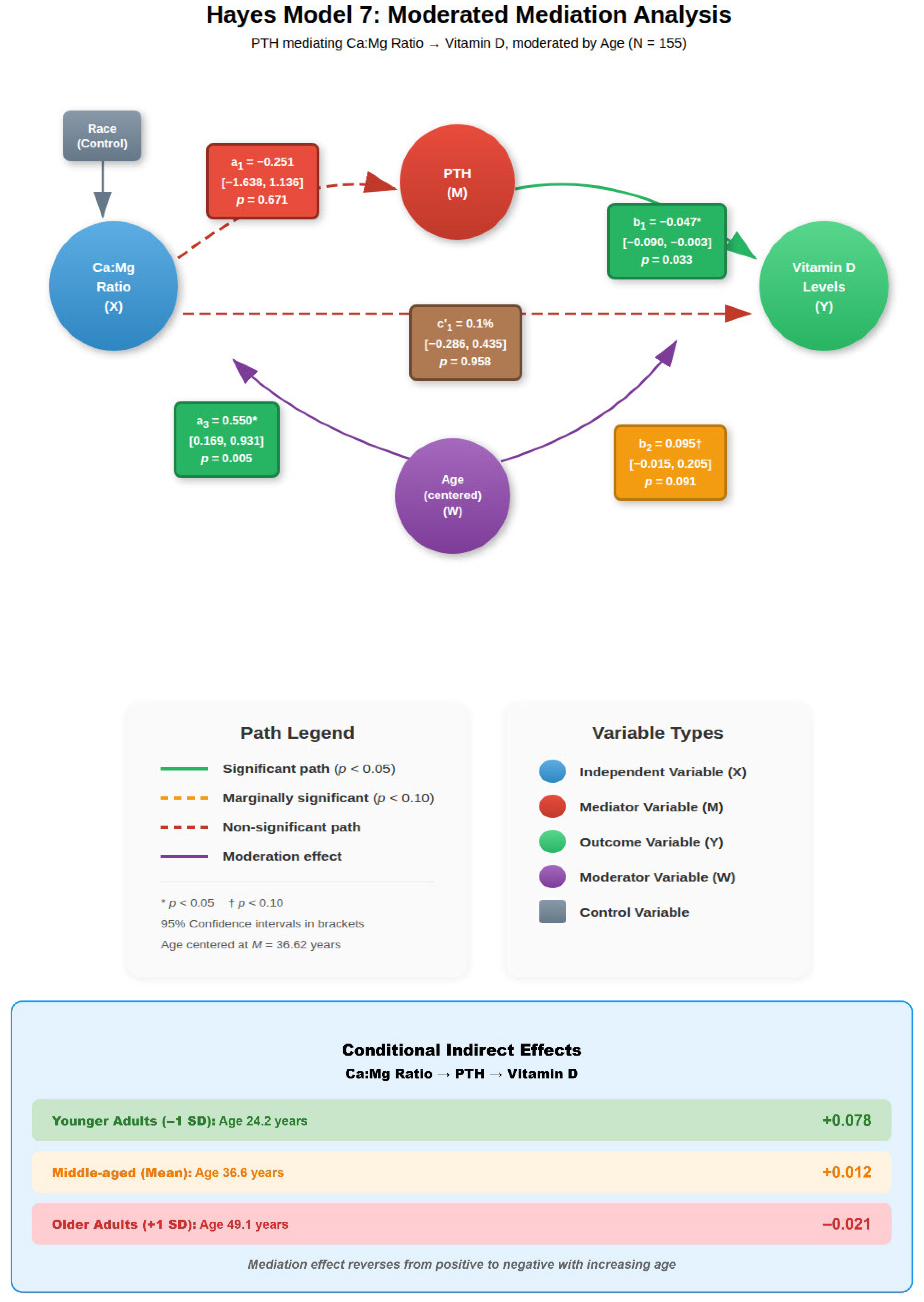
We tested whether Age moderated the indirect pathway linking the dietary Ca:Mg ratio to Vitamin D via PTH (Hayes Model 7; see Figure 5). The dietary Ca:Mg ratio did not directly predict PTH (a1 = −0.251, 95% CI [−1.638, 1.136], p = 0.671), whereas Age was positively associated with PTH (a2 = 0.550, 95% CI [0.169, 0.931], p = 0.005). PTH negatively predicted Vitamin D (b1 = −0.047, 95% CI [−0.090, −0.003], p = 0.033), with marginal evidence that this effect weakened with age (b3 = 0.095, 95% CI [−0.015, 0.205], p = 0.091). The direct effect of Ca:Mg on Vitamin D was non-significant (c′ ≈ 0.01, 95% CI [−0.286, 0.435], p = 0.958).
Figure 5.
Moderated Mediation Analysis using Hayes Process Model 7 Directed Acyclic Graph (DAG) where PTH is mediating dietary Ca:Mg ratio ® Vitamin D, moderated by Age (N = 155).
Conditional indirect effects indicated an age-dependent reversal: Younger adults showed a positive indirect effect (+0.078), middle-aged adults a near-zero effect (+0.012), and older adults a negative effect (−0.021). Thus, the dietary Ca:Mg ®PTH®Vitamin D pathway appears beneficial in early adulthood but attenuates and reverses with aging, consistent with age-related alterations in mineral hormone regulation. This a cautionary note, given the modest sample size and wide confidence intervals, these conditional effects should be interpreted as preliminary and warrant replication in larger cohorts.
3.6. Dietary Adequacy Classification for Calcium and Magnesium
3.6.1. Race-Related Moderated Mediation Including Nutrient Adequacy
This section summarizes a series of moderated mediation analyses testing the indirect effect of race on serum vitamin D levels through parathyroid hormone (PTH), with nutrient adequacy (magnesium and calcium) serving as categorical covariates. Analyses examined both EAR and RDA adequacy definitions, and statistical inference was based on 1000 bootstrapped replications. Separate models were run for magnesium and calcium adequacy to compare their effects. Table 5 summarizes regression coefficients, standard errors, p-values, indirect effects, and bootstrapped confidence intervals for each model.
Table 5.
Indirect Effects (a × b) for Race-based Moderated Mediation Models.
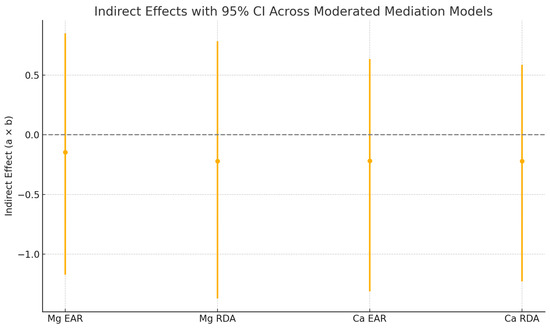
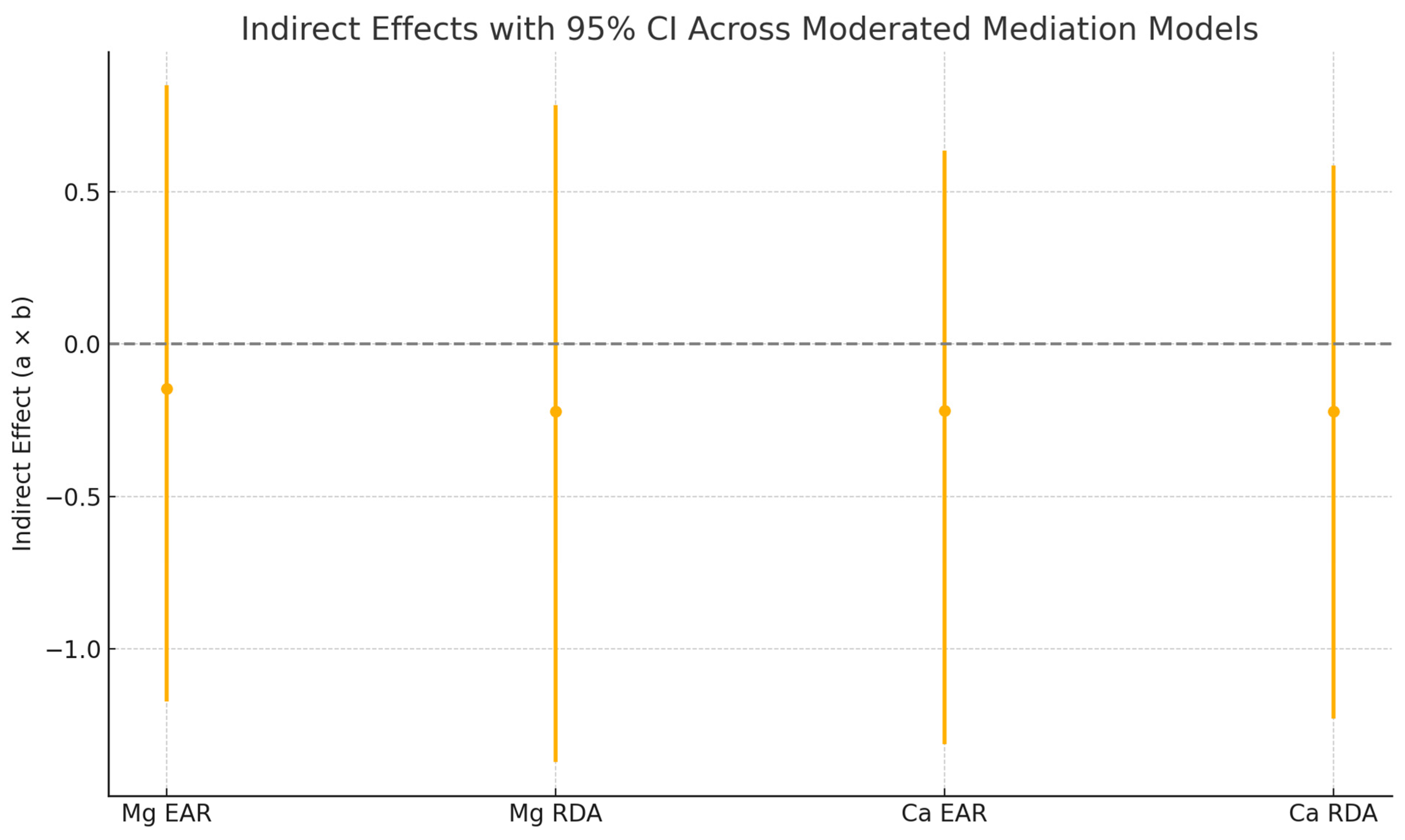
Figure 6 below illustrates the estimated indirect effects (a × b) across all models with 95% bootstrapped confidence intervals.
Figure 6.
Estimated indirect effects (a × b) across moderated mediation models with 95% bootstrapped confidence intervals for magnesium (Mg) and calcium (Ca) EAR and RDA thresholds.
Across all four models (Magnesium EAR, Magnesium RDA, Calcium EAR, Calcium RDA), the estimated indirect effects of race on vitamin D through PTH were negative, suggesting a consistent pattern in the data. However, none of the effects reached statistical significance, as all bootstrapped confidence intervals included zero. Additionally, the effects of race on PTH and of PTH on vitamin D approached but did not reach significance in several models.
These findings indicate that although there may be a directional association consistent with theoretical expectations, magnesium and calcium adequacy do not significantly moderate the indirect pathway between race and vitamin D via PTH in this sample.
The consistency of the indirect effect estimates across both nutrients and adequacy thresholds enhances the robustness of the findings, but the lack of statistical significance suggests that further studies with larger and more diverse samples are needed to validate these pathways.
3.6.2. Moderated Mediation Report: Age, PTH, Vitamin D with Magnesium and Calcium Adequacy
Table 6 summarizes the indirect effects (a × b) for all age-based models:
Table 6.
Indirect Effects (a × b) for Age-based Moderated Mediation Models with Magnesium and Calcium Adequacy.
In models that included magnesium and calcium adequacy, the age effect on PTH was still positive, whereas the effect of vitamin D was negative. Table 6 is the summary of the indirect effects of age-based models. In the case of magnesium, the indirect effect of age on vitamin D via PTH was small but significantly different with both EAR and RDA definitions of adequacy (EAR model indirect effect = −0.032, 95% CI −0.066, −0.005; RDA model indirect effect = −0.033, 95% CI −0.066, −0.007), suggesting that older age was indirectly related to less vitamin D. In contrast, the calcium adequacy models were not able to provide consistent estimates of the indirect effects due to low data values in various adequacy categories; indirect effects and confidence are not interpretable and are not emphasized further.
4. Discussion
Balance of nutrient intake ratios has recently gained a lot of attention, especially micronutrients [33]. The dietary Ca:Mg ratio is associated with several important health outcomes. However, all previous studies have estimated this ratio using data from a single 24 h food recall. The 24 h recall has its inherent limitations, especially in estimating micronutrient intakes [33,34]. Using validated mineral-specific food-frequency questionnaires, our study examined differences in dietary Ca:Mg ratios and the influence of demographic factors on these ratios in adults. The study specifically looked at whether the dietary Ca:Mg ratios were significantly different for individuals of different races, genders, ages and BMI. It also examined how these ratios were linked to body composition and vitamin D levels, and the possible role of parathyroid hormone (PTH) in mediating these relationships. Our most significant finding was that dietary Ca:Mg ratios varied by race and age, influencing vitamin D status through PTH-mediated pathways; dietary Ca:Mg ratios were significantly different across racial groups, with Asians and African Americans having lower ratios than Caucasians. Age also emerged as a significant factor, with younger adults (18–29 years) demonstrating the highest median dietary Ca:Mg ratio.
4.1. High Dietary Ca:Mg Is a Problem Based on Previous Studies
Several negative health outcomes have been associated with a high dietary Ca:Mg ratio in previous studies. A dietary pattern that is characterized by a higher consumption of dietary calcium compared to magnesium could lead to MetS, including obesity, high blood pressure, insulin resistance, and dyslipidemia [4,35], reduce bone density mineralization, which may lead to osteoporosis [36]. Furthermore, high calcium may promote atherosclerosis by impairing endothelial function [35]. Whereas optimal magnesium levels are important for regulating blood pressure, preventing hypertension [37]. Thus, maintaining the dietary Ca:Mg intake ratio closer to 2:1 is considered crucial for MetS and CM [1,9,38].
4.2. Race Influence on the Dietary Ca:Mg Ratio
Our findings showed significant differences in median dietary Ca:Mg intake ratios across ethnic groups. The most intriguing finding was that African Americans had the lowest dietary Ca:Mg ratio compared to SAI, Caucasian, Hispanic, and Asians. This aligns with the findings of Omofuma et al. (2024), who reported that non-Hispanic Blacks in the National Health and Nutrition Examination Survey, 2003–2018, had lower calcium intakes than non-Hispanic Whites [39]. Our moderated mediation analysis, however, indicates that these racial differences in dietary Ca:Mg ratios can have deep implications well beyond a simple pattern of dietary intake. African Americans were the most sensitive to the impact of PTH changes on the balance of dietary Ca:Mg (indirect effect = −0.762, 95% CI [−1.298, −0.234]), indicating that even slight shifts in their dietary Ca:Mg balances cause significant elevation in the PTH, which, in turn, forces their vitamin D levels down. This increased sensitivity could be explained by genetic gene variations in the calcium-sensing receptor (CaSR) and vitamin D receptor (VDR), which are more abundant in the African American population, which contributes to hypersensitivity in the response of the PTH to calcium–magnesium imbalance [40,41]. In Hispanic participants, however, there was a protective effect (positive indirect effect = +0.267), such that higher dietary Ca:Mg ratios paradoxically increased PTH levels. This is an inverse trend indicating ethnicity-specific genetic adaptations in mineral metabolism where perhaps there are CYP2R1 polymorphisms, which differently affect vitamin D production and metabolism among different ethnicities [42,43,44].
4.3. Influence of Race on Dietary Ca:Mg Ratio and Chronic Diseases
Inadequate magnesium consumption coupled with high consumption of calcium and a high dietary calcium-to-magnesium (Ca:Mg) ratio has been associated with chronic diseases such as hypertension, atherosclerotic vascular disease, type 2 diabetes, asthma, colon cancer, and osteoporosis [12]. Given these differences in dietary Ca:Mg ratios and their associations with long-term health outcomes, it is plausible to hypothesize that these dietary variations might shed light on the reasons behind the poorer overall health outcomes observed in certain racial groups. The finding that African Americans exhibit the greatest PTH-mediated response to dietary Ca:Mg imbalances would present a mechanistic understanding of why this group may be especially susceptible to vitamin D deficiency and other health outcomes, such as cardiovascular disease and metabolic disorders [45].
A high dietary Ca:Mg ratio may aggravate the already elevated prevalence of metabolic syndrome and cardiac disease in particular ethnicities, particularly South Asian Indians, due to several factors such as nutritional and lifestyle, genetic and environmental factors [45]. Although our findings showed that African Americans had the lowest median dietary Ca:Mg ratio of 2.67:1, which is still above the optimal 2:1 [2], they might be more vulnerable to cardiovascular diseases such as hypertension due to their typically lower dietary magnesium levels coupled with high calcium levels [46]. Even at relatively low dietary Ca:Mg ratios, our data show disproportionate PTH elevation in African Americans, suggesting that this group may require a more controlled Ca:Mg ratio than previously recognized.
We have observed the variations in dietary Ca:Mg ratios across racial groups. These racial variations are implication for health outcomes such as MetS and CVDs. Our findings show that SAI had the highest median dietary Ca:Mg ratios 4.83 followed by Caucasians 4.02. SAI population is generally known to be at high risk of MetS and CM [47]. Interestingly, South Asian Indians and Asians showed non-significant PTH-mediated pathways (indirect effects were not statistically significant), suggesting that vitamin D metabolism among these groups may be mediated by other (PTH-independent) pathways. The clinical implication of this finding is important because it indicates that the optimization of mineral balance may not be the best intervention, but rather the choice of direct vitamin D interventions that are more effective in these ethnicities.
4.4. Age Influence on Dietary Ca:Mg Ratio
Our findings also show that younger adults aged 18 to 29 years had the highest dietary Ca:Mg ratios compared with other age groups. The increasing prevalence of chronic diseases in young adults, which is probably exacerbated by early adulthood nutritional deficiencies, is a cause for concern about this demographic trend [48]. This high ratio, especially among young adults, is concerning due to the early dietary patterns that are fundamental to establishing long-term health outcomes [12]. In addition to these population variations, our moderate mediated analysis showed an interesting reversal by age in the use of the dietary Ca:Mg ratios in regulating vitamin D state via the use of PTH. The models showed a positive indirect effect of vitamin D mediated by PTH when higher ratios of dietary Ca:Mg were used in younger adults (24.2 years) +0.078, but when higher ratios were used in older adults (49.1 years), it produced a negative indirect effect −0.021. Such age-related inversion implies alterations in the lifespan of calcium-phosphate metabolism, with older adults’ PTH systems becoming more responsive to dietary Ca:Mg imbalances, ultimately compromising vitamin D status.
The interaction between dietary Ca:Mg and age (β = 0.078, p = 0.011) shows that with aging, the relationship between dietary mineral balance and PTH regulation improves. This observation is consistent with the age-related assessment of mineral metabolism, such as the attenuation of the capability to absorb calcium within the intestines, a decrease in renal functions, and a modification of the PTH sensitivity. Elderly individuals, therefore, might need to optimize the dietary Ca:Mg ratio to sustain their vitamin D, whereas the young adult appears to possess a much larger metabolic ability to manage mineral imbalances [37].
Moreover, high calcium intake with low magnesium intake has been shown to impact bone health, such as developing osteoporosis later in life [49]. Given this, the long-term consequences of high dietary Ca:Mg ratios may impair peak bone mass during this critical life stage of bone development. The physiological ability for regulating metabolism of minerals such as calcium and magnesium decreases with age, making them more vulnerable to the adverse effects of improper nutrient ratios [50]. Therefore, maintaining the appropriate dietary Ca:Mg ratio is crucial for younger adults to prevent these conditions later in life as well as for older adults aiming to control and mitigate the progression of their existing conditions. Further research is needed to monitor individuals longitudinally and evaluate the long-term effects of calcium-to-magnesium intake on health outcomes, especially with increasing age.
4.5. Dietary Ca:Mg Ratio and BMI
Interestingly, our study showed that dietary Ca:Mg ratios did not differ significantly between BMI categories. These findings are similar to previous studies that also report no differences in dietary Ca:Mg ratios across BMI tertiles in adults [1] or in children [49]. On the contrary, previous studies have reported differences in serum levels of calcium and/or Mg levels in those with higher body weights. In a population of 500 adults in Nigeria, serum calcium levels of moderately and severely obese individuals were significantly higher than those of individuals with normal BMI. Additionally, the serum magnesium levels of moderately and severely obese patients were significantly lower than those of patients with normal BMI. Other studies have also reported a negative association between serum Magnesium levels and BMI/ fat mass [51,52,53]. Low serum Mg levels and high serum Ca:Mg ratios have also been associated with other MetS risk factors and alterations in body composition [54]. This study reported that the mean serum Ca and Ca:Mg ratio were higher in the MetS group compared to the non-MetS group [54]. Chinese adults with MetS also showed significantly higher Mg and lower Ca and Ca/Mg as compared with the control group [55]. These findings suggest that although dietary Ca:Mg intake was not associated with differences in BMI and MetS outcomes, serum Ca:Mg levels and/or low serum Mg are associated with BMI and MetS outcomes.
4.6. Dietary Ca:Mg Ratio, Magnesium Status, and Chronic Disease Risk
Our findings are consistent with emerging evidence indicating that magnesium status, as well as the calcium-to-magnesium intake ratio, might play a role in cardiometabolic and cancer-related outcomes. U.S. supplement formulations were reviewed; however, with results showing that many products containing calcium–magnesium now contain Ca:Mg ratios outside of a proposed “optimal” range of about 1.7–2.6, which may further increase the already elevated ratios in the population diet [56]. Similar results were obtained by Rosanoff, who indicated that the average food Ca:Mg ratios in adults in the U.S. have increased during the past decades to ≥3.0, which is concerning because this imbalance may lead to metabolic and inflammatory diseases [16]. In etiologic studies, Dai and colleagues have demonstrated that increased magnesium intake, especially when accompanied by lower Ca:Mg ratios, is related to lower risks of reflux esophagitis and Barrett’s esophagus [57], and that the Ca:Mg ratio seems to alter the calcium and magnesium association with total and cause-specific mortality in large Chinese cohorts, with risks varying across the ratio levels and sex [58]. The interactive effect of the genes and nutrients also indicates that the dietary Ca:Mg ratio could be more significant than that of magnesium intake: Gene-nutrient interaction studies also indicate that Ca:Mg interaction may be of more importance than magnesium intake: Zhu et al. have found that a higher Ca:Mg ratio interacted with PTH genetic variation to affect colorectal adenoma risk, but that magnesium intake alone did not show consistent effects [59]. Collectively, these studies indicate that both an absolute intake and a ratio have a biological possibility of affecting the results that relate to both PTH and vitamin D, and put our Ca:Mg-PTH-vitamin D links in the context of a bigger literature that Ca:Mg imbalance is associated with gastrointestinal, neoplastic, and mortality outcomes.
4.7. Strengths and Limitations
Our study has several strengths. One important strength of this study is the methodology of estimating calcium and magnesium intakes. To our knowledge, this is the first study that used a validated Calcium intake questionnaire and a validated Magnesium intake questionnaire to estimate dietary Ca:Mg intake ratios [19,20]. Previous studies have largely used data from a single 24 h recall or a 3-day food diary to estimate these mineral intakes. Most importantly, this study provides robust statistical evidence for population-specific through moderated-mediation pathways linking dietary Ca:Mg ratios to vitamin D status via PTH regulation, using Hayes Model 7 analysis with bootstrap confidence intervals. Additionally, our cohort consists of adults across a wide range of demographics, including age, BMI, and race. Limitations of the study include its cross-sectional study design which limits the ability to establish causation. The generalizability of the findings is limited due to the small sample size of Hispanics (n = 8). Associations could be affected by unmeasured covariates, such as genetic polymorphisms, vitamin D supplementation, and seasonal exposure to sunlight.
5. Conclusions
In conclusion, our study shows a high dietary Ca:Mg ratio in SAI and Caucasians compared to other ethnicities and in young adults compared to older adults. However, our most significant contribution is the discovery that these demographic differences in dietary Ca:Mg ratios operate through distinct PTH-mediated mechanisms that vary by race and age. African Americans demonstrate the strongest PTH sensitivity to dietary Ca:Mg imbalances. At the same time, Hispanic populations show protective mechanisms, and age-related changes reveal metabolic transitions from resilience in youth to vulnerability in older adults. A high dietary Ca:Mg intake ratio in young adults is a concern, together with the increasing prevalence of chronic diseases in young adults. These findings warrant immediate intervention because of the positive association between high dietary Ca:Mg ratios and adverse health outcomes. Previous studies have reported significant improvements in health outcomes such as cognitive function [60], cancer outcomes [61,62,63], and overall mortality [58] by reducing the dietary Ca:Mg intake ratio. Prospective intervention studies should be specifically designed to understand the impact of lowering dietary Ca:Mg ratios in the diets of young individuals and their effects on health outcomes.
Author Contributions
Conceptualization—D.S., E.A.A., P.A.S. and J.N.; Methodology—D.S. and P.A.S.; Formal analysis—P.A.S.; Writing—D.S., E.A.A., P.A.S. and J.N.; Supervision—D.S., P.A.S. and J.N. All authors have read and agreed to the published version of the manuscript.
Funding
College of Nursing and Health Professions (CNHP) Seed Grant to D. Sukumar, Drexel University.
Institutional Review Board Statement
This study consisted of secondary data from analysis from previously completed clinical trials at Drexel University—clinical trial registry #NCT03134417 and #NCT03600675. These studies were completed between the years 2015 to 2020. Studies were approved Drexel University Institutional Review Board (Protocol # 1407002973 and Protocol # 1604004460) and all participants read and signed an informed consent form prior to enrollment in these larger studies. Investigations were conducted in accordance with the principles outlined in the Declaration of Helsinki (1975, revised in 2013).
Informed Consent Statement
All participants read and signed an informed consent form prior to participation.
Data Availability Statement
Data may be available upon request.
Acknowledgments
We thank all volunteers for their participation in our parent studies.
Conflicts of Interest
The authors declare no conflicts of interest.
Abbreviations
| Ca:Mg ratio | Calcium to Magnesium ratio |
| FFQ | Food Frequency Questionnaire |
| PTH | Parathyroid Hormone |
| SAI | South Asian Indians |
References
- Fouhy, L.E.; Mangano, K.M.; Zhang, X.; Hughes, B.D.; Tucker, K.L.; Noel, S.E. Association between a calcium-to-magnesium ratio and osteoporosis among Puerto Rican adults. J. Nutr. 2023, 153, 2642–2650. [Google Scholar] [CrossRef] [Scilit]
- DeLuccia, R.; Cheung, M.; Ng, T.; Ramadoss, R.; Altasan, A.; Sukumar, D. Calcium to magnesium ratio higher than optimal across age groups (p10-100-19). Curr. Dev. Nutr. 2019, 3, nzz034. [Google Scholar] [CrossRef] [Scilit]
- DeLuccia, R.; Cheung, M.; Ng, T.; Ramadoss, R.; Altasan, A.; Sukumar, D. Effect of magnesium supplementation on women’s health and well-being. NFS J. 2021, 23, 30–36. [Google Scholar]
- DiNicolantonio, J.J.; O’Keefe, J.H.; Wilson, W. Subclinical magnesium deficiency: A principal driver of cardiovascular disease and a public health crisis. Open Heart 2018, 5. [Google Scholar] [CrossRef] [Scilit] [PubMed]
- Groenendijk, I.; van Delft, M.; Versloot, P.; van Loon, L.J.; de Groot, L.C. Impact of magnesium on bone health in older adults: A systematic review and meta-analysis. Bone 2022, 154, 116233. [Google Scholar] [CrossRef] [Scilit]
- Dibaba, D.T.; Xun, P.; Fly, A.D.; Yokota, K.; He, K. Dietary magnesium intake and risk of metabolic syndrome: A meta-analysis. Diabet. Med. 2014, 31, 1301–1309. [Google Scholar] [CrossRef] [Scilit]
- De Baaij, J.H.; Hoenderop, J.G.; Bindels, R.J. Magnesium in man: Implications for health and disease. Physiol. Rev. 2015, 95. [Google Scholar] [CrossRef] [Scilit]
- Cormick, G.; Betran, A.P.; Romero, I.B.; Cormick, M.S.; Belizán, J.M.; Bardach, A.; Ciapponi, A. Effect of calcium fortified foods on health outcomes: A systematic review and meta-analysis. Nutrients 2021, 13, 316. [Google Scholar] [CrossRef] [Scilit]
- Durlach, J. Recommended dietary amounts of magnesium: Mg RDA. Magnes. Res. 1989, 2, 195–203. [Google Scholar]
- Rude, R.K.; Gruber, H.E. Magnesium deficiency and osteoporosis: Animal and human observations. J. Nutr. Biochem. 2004, 15, 710–716. [Google Scholar] [CrossRef] [Scilit]
- Cheung, M.M.; Dall, R.D.; Shewokis, P.A.; Altasan, A.; Volpe, S.L.; Amori, R.; Singh, H.; Sukumar, D. The effect of combined magnesium and vitamin D supplementation on vitamin D status, systemic inflammation, and blood pressure: A randomized double-blinded controlled trial. Nutrition 2022, 99, 111674. [Google Scholar] [CrossRef] [Scilit]
- Rosanoff, A.; Weaver, C.M.; Rude, R.K. Suboptimal magnesium status in the United States: Are the health consequences underestimated? Nutr. Rev. 2012, 70, 153–164. [Google Scholar] [CrossRef] [Scilit] [PubMed]
- Rosanoff, A. Perspective: US adult magnesium requirements need updating: Impacts of rising body weights and data-derived variance. Adv. Nutr. 2021, 12, 298–304. [Google Scholar] [CrossRef] [Scilit] [PubMed]
- Tucker, K.L.; Duggan, C.P.; Jensen, G.L.; Peterson, K.E. Modern Nutrition in Health and Disease; Jones & Bartlett Learning: Burlington, MA, USA, 2024. [Google Scholar]
- Standing Committee on the Scientific Evaluation of Dietary Reference Intakes. Dietary Reference Intakes for Calcium, Phosphorus, Magnesium, Vitamin D, and Fluoride; The National Academies Press: Washington, DC, USA, 1999. [Google Scholar]
- Rosanoff, A. Rising Ca: Mg intake ratio from food in USA Adults: A concern? Magnes. Res. 2010, 23, 181–193. [Google Scholar]
- Cade, J.; Thompson, R.; Burley, V.; Warm, D. Development, validation and utilisation of food-frequency questionnaires–A review. Public Health Nutr. 2002, 5, 567–587. [Google Scholar] [CrossRef] [Scilit]
- Altasan, A.; Aljahdali, A.; Ramadoss, R.; Cheung, M.M.; Dall, R.D.; Bruneau, M., Jr.; Nasser, J.A.; Kindler, J.; Ramakrishnan, A.; Sukumar, D. Ethnic differences in vitamin D status, bone and body composition in South Asian indian and caucasian men. Metab. Open 2024, 23, 100302. [Google Scholar] [CrossRef] [Scilit]
- Sukumar, D.; DeLuccia, R.; Cheung, M.; Ramadoss, R.; Ng, T.; Lamoureux, A. Validation of a newly developed food frequency questionnaire to assess dietary intakes of magnesium. Nutrients 2019, 11, 2789. [Google Scholar] [CrossRef] [Scilit]
- International Osteoporosis Foundation. 2025. Available online: https://www.osteoporosis.foundation/educational-hub/topic/calcium-calculator (accessed on 12 October 2025).
- Steingrimsdottir, L.; Gunnarsson, O.; Indridason, O.S.; Franzson, L.; Sigurdsson, G. Relationship between serum parathyroid hormone levels, vitamin D sufficiency, and calcium intake. Jama 2005, 294, 2336–2341. [Google Scholar] [CrossRef] [Scilit]
- IBM Corp, N. IBM SPSS Statistics for Windows; IBM Corp: Armonk, NY, USA, 2025. [Google Scholar]
- R Core Team. R: A Language and Environment for Statistical Computing; R Foundation for Statistical Computing: Vienna, Austria, 2025. [Google Scholar]
- Camacho, P.M.; Petak, S.M.; Binkley, N.; Diab, D.L.; Eldeiry, L.S.; Farooki, A.; Harris, S.T.; Hurley, D.L.; Kelly, J.; Lewiecki, E.M.; et al. American Association of Clinical Endocrinologists/American College of Endocrinology clinical practice guidelines for the diagnosis and treatment of postmenopausal osteoporosis—2020 update. Endocr. Pract. 2020, 26, 1–46. [Google Scholar] [CrossRef] [Scilit]
- Hayes, A.F. Introduction to Mediation, Moderation and Conditional Process Analysis: A Regression-Based Approach, 2nd ed.; Guilford Press: New York, NY, USA, 2018; p. 10. [Google Scholar]
- Moon, K.-W.; Moon, K. ProcessR: Implementation of the ‘PROCESS’ Macro, R Package Version 0.2.7; R Foundation for Statistical Computing: Vienna, Austria, 2022. [Google Scholar]
- Rosseel, Y. lavaan: An R package for structural equation modeling. J. Stat. Softw. 2012, 48, 1–36. [Google Scholar] [CrossRef] [Scilit]
- Wickham, H.; Bryan, J. Readxl: Read Excel Files, R Package Version 1.4.2; R Foundation for Statistical Computing: Vienna, Austria, 2023. [Google Scholar]
- Wickham, H.; François, R.; Henry, L.; Müller, K.; Vaughan, D. dplyr: A Grammar of Data Manipulation, version 1.1.4; Comprehensive R Archive Network (CRAN): Vienna, Austria, 2023. [Google Scholar] [CrossRef] [Scilit]
- Wickham, H.; Averick, M.; Bryan, J.; Chang, W.; McGowan, L.D.A.; François, R.; Grolemund, G.; Hayes, A.; Henry, L.; Hester, J.; et al. Welcome to the Tidyverse. J. Open Source Softw. 2019, 4, 1686. [Google Scholar] [CrossRef] [Scilit]
- Wickham, H. Data Analysis, in Ggplot2: Elegant Graphics for Data Analysis; Springer: Berlin/Heidelberg, Germany, 2016. [Google Scholar]
- Alsayed, E.A.; Shewokis, P.; Nasser, J.; Sukumar, D. Ethnic Variations in Dietary Calcium-to-Magnesium Ratios: Assessment Using Validated Mineral Food Frequency Questionnaires. Curr. Dev. Nutr. 2025, 9, 106168. [Google Scholar] [CrossRef] [Scilit]
- Gibson, R.S. Principles of Nutritional Assessment; Oxford University Press: Oxford, UK, 2005. [Google Scholar]
- Thompson, F.E.; Kirkpatrick, S.I.; Subar, A.F.; Reedy, J.; Schap, T.E.; Wilson, M.M.; Krebs-Smith, S.M. The National Cancer Institute’s dietary assessment primer: A resource for diet research. J. Acad. Nutr. Diet. 2015, 115, 1986–1995. [Google Scholar] [CrossRef] [Scilit]
- Pelczyńska, M.; Moszak, M.; Bogdański, P. The role of magnesium in the pathogenesis of metabolic disorders. Nutrients 2022, 14, 1714. [Google Scholar] [CrossRef] [Scilit]
- Castiglioni, S.; Cazzaniga, A.; Albisetti, W.; Maier, J.A. Magnesium and osteoporosis: Current state of knowledge and future research directions. Nutrients 2013, 5, 3022–3033. [Google Scholar] [CrossRef] [Scilit] [PubMed]
- Rios, F.J.; Montezano, A.C.; Antunes, T.T.; Touyz, R.M. Magnesium, Vascular Function, and Hypertension, in Molecular, Genetic and Nutritional Aspects of Major and Trace Minerals; Elsevier: Amsterdam, The Netherlands, 2017; pp. 353–364. [Google Scholar]
- Nielsen, F.H. Magnesium, inflammation, and obesity in chronic disease. Nutr. Rev. 2010, 68, 333–340. [Google Scholar] [CrossRef] [Scilit] [PubMed]
- Omofuma, O.O.; Fang, D.; Yell, N.; Falomo, O.; Liu, J.; Steck, S.E. Trends in reported calcium and magnesium intake from diet and supplements by demographic factors: National Health and Nutrition Examination Survey, 2003–2018. J. Acad. Nutr. Diet. 2024, 124, 1288–1301.e5. [Google Scholar] [CrossRef] [Scilit]
- Yao, S.; Haddad, S.A.; Hu, Q.; Liu, S.; Lunetta, K.L.; Ruiz-Narvaez, E.A.; Hong, C.-C.; Zhu, Q.; Sucheston-Campbell, L.; Cheng, T.-Y.D.; et al. Genetic variations in vitamin D-related pathways and breast cancer risk in African American women in the AMBER consortium. Int. J. Cancer 2016, 138, 2118–2126. [Google Scholar] [CrossRef] [Scilit]
- Actkins, K.E.V.; Beasley, H.K.; Faucon, A.B.; Davis, L.K.; Sakwe, A.M. Calcium-sensing receptor polymorphisms at rs1801725 are associated with increased risk of secondary malignancies. J. Pers. Med. 2021, 11, 642. [Google Scholar] [CrossRef] [Scilit]
- Dong, A.N.; Tan, B.H.; Pan, Y.; Ong, C.E. The CYP2R1 enzyme: Structure, function, enzymatic properties and genetic polymorphism. J. Pharm. Pharm. Sci. 2021, 24, 94–112. [Google Scholar] [CrossRef] [Scilit]
- Alathari, B. A Nutrigenetic Approach to Investigate the Relationship Between Vitamin D Status and Metabolic Traits in Multiethnic Populations; University of Reading: Whiteknights, UK, 2022. [Google Scholar]
- Bikle, D.D. Vitamin D: Production, Metabolism and Mechanisms of Action; Endotext: South Dartmouth, MA, USA, 2015. [Google Scholar]
- Balasubramanyam, A.; Rao, S.; Misra, R.; Sekhar, R.V.; Ballantyne, C.M. Prevalence of metabolic syndrome and associated risk factors in Asian Indians. J. Immigr. Minor. Health 2008, 10, 313–323. [Google Scholar] [CrossRef] [Scilit] [PubMed]
- Zhang, X.; Li, Y.; Del Gobbo, L.C.; Rosanoff, A.; Wang, J.; Zhang, W.; Song, Y. Effects of magnesium supplementation on blood pressure: A meta-analysis of randomized double-blind placebo-controlled trials. Hypertension 2016, 68, 324–333. [Google Scholar] [CrossRef] [Scilit]
- Bhalwar, R. Metabolic syndrome: The Indian public health perspective. Med. J. Armed Forces India 2020, 76, 8–16. [Google Scholar] [CrossRef] [Scilit] [PubMed]
- Escobedo-Monge, M.F.; Barrado, E.; Parodi-Román, J.; Escobedo-Monge, M.A.; Torres-Hinojal, M.C.; Marugán-Miguelsanz, J.M. Magnesium status and Ca/Mg ratios in a series of children and adolescents with chronic diseases. Nutrients 2022, 14, 2941. [Google Scholar] [CrossRef] [Scilit] [PubMed]
- Tucker, K.L.; Hannan, M.T.; Chen, H.; Cupples, L.A.; Wilson, P.W.; Kiel, D.P. Potassium, magnesium, and fruit and vegetable intakes are associated with greater bone mineral density in elderly men and women. Am. J. Clin. Nutr. 1999, 69, 727–736. [Google Scholar] [CrossRef] [Scilit]
- Barbagallo, M.; Veronese, N.; Dominguez, L.J. Magnesium in aging, health and diseases. Nutrients 2021, 13, 463. [Google Scholar] [CrossRef] [Scilit]
- Al Shammaa, A.; Al-Thani, A.; Al-Kaabi, M.; Al-Saeed, K.; Alanazi, M.; Shi, Z. Serum magnesium is inversely associated with body composition and metabolic syndrome. Diabetes Metab. Syndr. Obes. 2023, 2023, 95–104. [Google Scholar] [CrossRef] [Scilit]
- Andretta, A.; Schieferdecker, M.E.M.; Petterle, R.R.; Paiva, E.D.S.; Boguszewski, C.L. Relations between serum magnesium and calcium levels and body composition and metabolic parameters in women with fibromyalgia. Adv. Rheumatol. 2020, 60, 18. [Google Scholar] [CrossRef] [Scilit]
- Xu, M.R.; Wang, A.P.; Wang, Y.J.; Lu, J.X.; Shen, L.; Li, L.X. Serum magnesium levels are negatively associated with obesity and abdominal obesity in type 2 diabetes mellitus: A real-world study. Diabetes Metab. J. 2024, 48, 1147–1159. [Google Scholar] [CrossRef] [Scilit]
- Alsheikh, R.; Aldulaimi, H.; Hinawi, R.; Al-Sadi, F.; Al-Baker, A.; Alkuwari, A.; Sameer, M.; Al-Abdulla, G.; Shi, Z.; Babu, G.R. Association of serum magnesium and calcium with metabolic syndrome: A cross-sectional study from the Qatar-biobank. Nutr. Metab. 2025, 22, 8. [Google Scholar] [CrossRef] [Scilit]
- Yuan, Z.; Liu, C.; Tian, Y.; Zhang, X.; Ye, H.; Jin, L.; Ruan, L.; Sun, Z.; Zhu, Y. Higher levels of magnesium and lower levels of calcium in whole blood are positively correlated with the metabolic syndrome in a Chinese population: A case-control study. Ann. Nutr. Metab. 2016, 69, 125–134. [Google Scholar] [CrossRef] [Scilit] [PubMed]
- Costello, R.B.; Rosanoff, A.; Dai, Q.; Saldanha, L.G.; Potischman, N.A. Perspective: Characterization of dietary supplements containing calcium and magnesium and their respective ratio—Is a rising ratio a cause for concern? Adv. Nutr. 2021, 12, 291–297. [Google Scholar] [CrossRef] [Scilit] [PubMed]
- Dai, Q.; Cantwell, M.M.; Murray, L.J.; Zheng, W.; Anderson, L.A.; Coleman, H.G. Dietary magnesium, calcium: Magnesium ratio and risk of reflux oesophagitis, Barrett’s oesophagus and oesophageal adenocarcinoma: A population-based case–control study. Br. J. Nutr. 2016, 115, 342–350. [Google Scholar] [CrossRef] [Scilit] [PubMed]
- Dai, Q.; Shu, X.O.; Deng, X.; Xiang, Y.B.; Li, H.; Yang, G.; Shrubsole, M.J.; Ji, B.; Cai, H.; Chow, W.-H.; et al. Modifying effect of calcium/magnesium intake ratio and mortality: A population-based cohort study. BMJ Open 2013, 3, e002111. [Google Scholar] [CrossRef] [Scilit]
- Zhu, X.; Shrubsole, M.J.; Ness, R.M.; Hibler, E.A.; Cai, Q.; Long, J.; Chen, Z.; Li, G.; Jiang, M.; Hou, L.; et al. Calcium/magnesium intake ratio, but not magnesium intake, interacts with genetic polymorphism in relation to colorectal neoplasia in a two-phase study. Mol. Carcinog. 2016, 55, 1449–1457. [Google Scholar] [CrossRef] [Scilit]
- Zhu, X.; Borenstein, A.R.; Zheng, Y.; Zhang, W.; Seidner, D.L.; Ness, R.; Murff, H.J.; Li, B.; Shrubsole, M.J.; Yu, C.; et al. Ca: Mg ratio, APOE cytosine modifications, and cognitive function: Results from a randomized trial. J. Alzheimer’s Dis. 2020, 75, 85–98. [Google Scholar] [CrossRef] [Scilit]
- Dai, Q.; Sandler, R.; Barry, E.; Summers, R.; Grau, M.; Baron, J. Calcium, magnesium, and colorectal cancer. Epidemiology 2012, 23, 504–505. [Google Scholar] [CrossRef] [Scilit]
- Zhao, J.; Giri, A.; Zhu, X.; Shrubsole, M.J.; Jiang, Y.; Guo, X.; Ness, R.; Seidner, D.L.; Giovannucci, E.; Edwards, T.L.; et al. Calcium: Magnesium intake ratio and colorectal carcinogenesis, results from the prostate, lung, colorectal, and ovarian cancer screening trial. Br. J. Cancer 2019, 121, 796–804. [Google Scholar] [CrossRef] [Scilit]
- Fowke, J.H.; Koyama, T.; Dai, Q.; Zheng, S.L.; Xu, J.; Howard, L.E.; Freedland, S.J. Blood and dietary magnesium levels are not linked with lower prostate cancer risk in black or white men. Cancer Lett. 2019, 449, 99–105. [Google Scholar] [CrossRef] [Scilit]

Disclaimer/Publisher’s Note: The statements, opinions and data contained in all publications are solely those of the individual author(s) and contributor(s) and not of MDPI and/or the editor(s). MDPI and/or the editor(s) disclaim responsibility for any injury to people or property resulting from any ideas, methods, instructions or products referred to in the content. |
© 2026 by the authors. Licensee MDPI, Basel, Switzerland. This article is an open access article distributed under the terms and conditions of the Creative Commons Attribution (CC BY) license.