


Exploring Quantized Entropy Production Strength in Mesoscopic Irreversible Thermodynamics †

Abstract
1. Introduction
The Space of the Thermodynamic Forces
2. Quantization of the Entropy Production Strength
2.1. A Heuristic Approach
2.2. The Formalism of Second Quantization and the Thermodynamic Commutation Rules
3. Discretization of the Total Entropy Production Strength in Onsager’s Regime
4. The Correspondence Principle with the Einstein-Prigogine Theory of Fluctuations
5. A Heuristic Model for Determining for a Quasi-Ideal Gas
- (1)
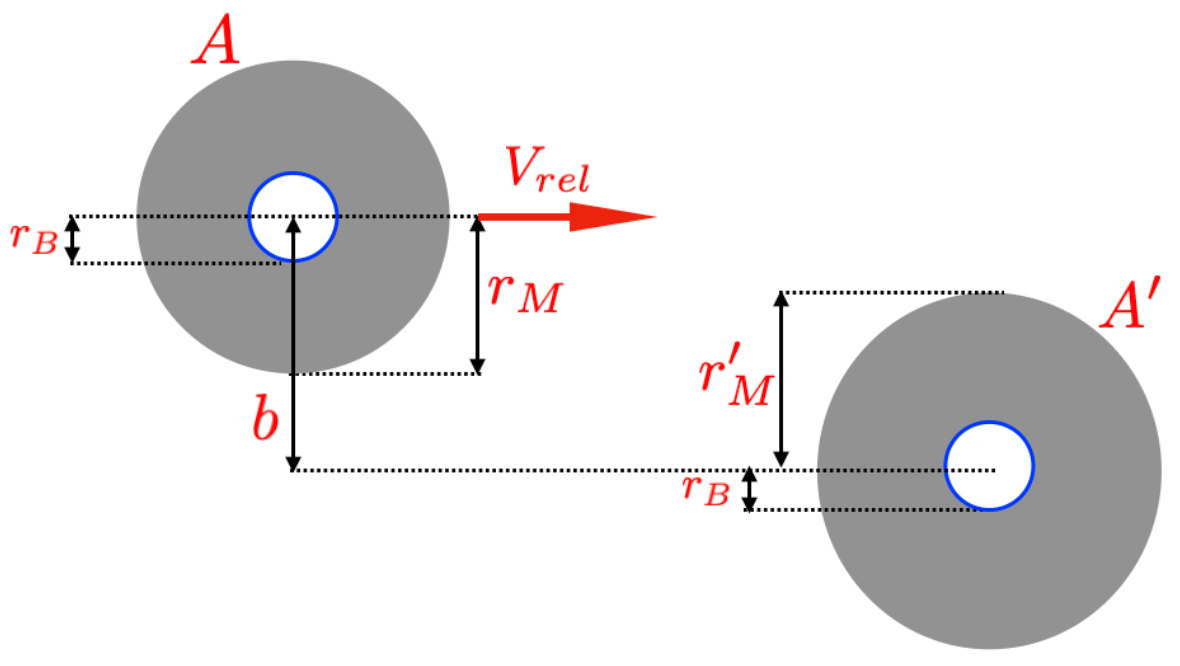
- The limit case is reached when the distance between the molecules of the nano-gas is (approximately) twice the Bohr radius ().
- (2)
- The spherical-molecule model is adopted. Beyond the Heisenberg principle, classical statistical physics applies.
Discussion
- (i)
- is proportional to the cube of the Bohr radius. At larger length scales, such as the mesoscopic level, the volume of interest () is significantly larger than the Bohr volume ().
- (ii)
- If the ratio is much smaller than unity, it suggests that the mass of the electron is negligible compared to the mass of the molecules. At the mesoscopic level, where we deal with large numbers of atoms and molecules, the mass of the molecules dominates, making the ratio very small.
- (iii)
- The BMR compares the scale of fundamental atomic properties (Bohr radius and electron mass) to the scale of molecular properties (molecular volume and mass). The smallness of indicates the disparity in scales between the atomic level and the molecular level. So, the result that the discretization constant is proportional to the ratio makes sense. This formulation effectively captures the disparity between atomic and molecular scales, providing a meaningful quantization of entropy production at the mesoscopic level. The use of fundamental constants and molecular properties supports the robustness of this result within the framework of mesoscopic thermodynamics.
6. Conclusions
Funding
Institutional Review Board Statement
Informed Consent Statement
Data Availability Statement
Conflicts of Interest
References
- Goldhaber-Gordon, D.; Göres, J.; Shtrikman, H.; Mahalu, D.; Meirav, U.; Kastner, M.A. The Kondo Effect in Single-Electron Transistors. Phys. Rev. Lett. 2004, 3, 156801. [Google Scholar]
- Beenakker, C.W.J.; van Houten, H. Quantum transport in semiconductor nanostructures. Solid State Phys. 1991, 44, 1–228. [Google Scholar]
- Baldo, M. Introduction to Nanoelectronics; MITOPENCOURSEWARE (MIT OCW), Lecture 5; MIT Education: Cambridge, MA, USA, 2010; Available online: https://ocw.mit.edu/courses/6-701-introduction-to-nanoelectronics-spring-2010/6a95133986a8698a55448d60c7834d15_MIT6_701S10_textbook.pdf (accessed on 15 May 2011).
- Novoselov, K.S.; Geim, A.K.; Morozov, S.V.; Jiang, D.; Katsnelson, M.I.; Grigorieva, I.V.; Dubonos, S.V.; Firsov, A.A. Two-dimensional gas of massless Dirac fermions in graphene. Nature 2005, 438, 197–200. [Google Scholar] [CrossRef] [PubMed]
- Balandin, A.A.; Ghosh, S.; Bao, W.; Calizo, I.; Teweldebrhan, D.; Miao, F.; Lau, C.N. Superior thermal conductivity of single-layer graphene. Nano Lett. 2008, 8, 902–907. [Google Scholar] [CrossRef] [PubMed]
- Collomb, D.; Li, P.; Bending, S.J. Nanoscale graphene Hall sensors for high-resolution ambient magnetic imaging. Sci. Rep. 2019, 9, 14424. [Google Scholar] [CrossRef] [PubMed]
- De Donder, T. Leçons de Thermodynamique et de Chimie-Physique; Gauthier-Villars: Paris, Italy, 1921. [Google Scholar]
- De Donder, T. L’ Affinité; Gauthier-Villars: Paris, Italy, 1928. [Google Scholar]
- De Donder, T. L’ Affinité (Volume 2); Gauthier-Villars: Paris, Italy, 1931. [Google Scholar]
- De Donder, T. L’ Affinité (Volume 3); Gauthier-Villars: Paris, Italy, 1934. [Google Scholar]
- De Donder, T.; Van Rysselberghe, P. Affinity; Stanford University Press: Menlo Park, CA, USA, 1936. [Google Scholar]
- Prigogine, I. Thermodynamics of Irreversible Processes; John Wiley & Sons: Hoboken, NJ, USA, 1954. [Google Scholar]
- Prigogine, I. Etude Thermodynamique des Phènomènes Irréversibles; Desoer: Liège, Belgium, 1947. [Google Scholar]
- Glansdorff, P.; Prigogine, I. Sur les propriètès diffèrentielles de la production d’entropie. Physica 1954, 20, 773. [Google Scholar] [CrossRef]
- Prigogine, I.; Hansen, R. Généralités sur l’introduction de grandeurs thermodynamiques dans l’expression des vitesses réactionnelles [Generalities on the introduction of thermodynamic quantities in the expression of reaction rates]. Bull. Cl. Sci. Acad. R. Belg. 1942, 28, 301. [Google Scholar]
- Prigogine, I. Remarque sur le principe de réciprocité d’Onsager et le couplage des réactions chimiques. Bull. Cl. Sci. Acad. R. Belg. 1976, 32, 30. [Google Scholar]
- Fitts, D. NonEquilibrium Thermodynamics. A Phenomenological Theory of Irreversible Processes in Fluid Systems; McGraw-Hill Book Company, Inc.: New York, NY, USA, 1962. [Google Scholar]
- Gyarmati, I. Non-Equilibrium Thermodynamics; Springer: Berlin/Heidelberg, Germany, 1970. [Google Scholar] [CrossRef]
- De Groot, S.R.; Mazur, P. Non-Equilibrium Thermodynamics; Dover Publications, Inc.: New York, NY, USA, 1984. [Google Scholar]
- Glansdorff, P.; Prigogine, I. Thermodynamic Theory of Structure, Stability and Fluctuations; John Wiley & Sons: London, UK; New York, NY, USA, 1971. [Google Scholar]
- Sonnino, G. Thermodynamic Field Theory (An Approach to Thermodynamics of Irreversible Processes). In Instabilities and Nonequilibrium Structures IX. Nonlinear Phenomena and Complex Systems; Springer-Kluwer Academic Publishers: Dordrecht, The Netherlands, 2001; Volume 9, pp. 291–340. [Google Scholar] [CrossRef]
- Sonnino, G. A Field Theory Approach to Thermodynamics of Irreversible Processes. HDR Habilitation Thesis, Institut Non Linèaire de Nice (I.N.L.N.), Nice, France, 2002. [Google Scholar]
- Sonnino, G. Nonlinear closure relations theory for transport processes in nonequilibrium systems. Phys. Rev. E 2009, 79, 051126. [Google Scholar] [CrossRef] [PubMed]
- Sonnino, G. Geometry and symmetry in non-equilibrium thermodynamic systems. Am. Inst. Phys. (AIP) Conf. Proc. 2019, 1853, 030002. [Google Scholar]
- Sonnino, G.; Evslin, J.; Sonnino, A.; Steinbrecher, G.; Tirapegui, E. Symmetry group and group representations associated with the thermodynamic covariance principle. Phys. Rev. E 2016, 94, 042103. [Google Scholar] [CrossRef] [PubMed]
- Sonnino, G. Thermodynamic Flux-Force Closure Relations for Systems out of the Onsager Region. In Nonequilibrium Thermodynamics and Fluctuation Kinetics. Modern Trends and Open Questions; Part of the book series: Fundamental Theories of Physics (FTPH); Springer Nature: Berlin/Heidelberg, Germany, 2022; Volume 208, p. 71. [Google Scholar]
- Roldán, E.; Barral, J.; Martin, P.; Parrondo, J.M.R.; Jülicher, F. Quantifying entropy production in active fluctuations of the hair-cell bundle from time irreversibility and uncertainty relations. New J. Phys. 2021, 23, 083013. [Google Scholar] [CrossRef]
- Sonnino, G. Uncertainty relations in thermodynamics of irreversible processes on a mesoscopic scale. Phys. E Low-Dimens. Syst. Nanostructures 2024, 164, 116058. [Google Scholar] [CrossRef]
- Becchi, C.M. Second quantization. Scholarpedia 2010, 5, 7902. [Google Scholar] [CrossRef]
- Maiani, L.; Benhar, O. Relativistic Quantum Mechanics: An Introduction to Relativistic Quantum Fields; CRC Press: Boca Raton, FL, USA, 2015; ISBN 978-1498722308. [Google Scholar]
- Onsager, L. Reciprocal Relations in Irreversible Processes. I. Phys. Rev. 1931, 37, 405. [Google Scholar] [CrossRef]
- Onsager, L. Reciprocal Relations in Irreversible Processes. II. Phys. Rev. 1931, 38, 2265. [Google Scholar] [CrossRef]
- Griffiths, D.J. Introduction to Quantum Mechanics, 2nd ed.; Prentice Hall: Upper Saddle River, NJ, USA, 2004; ISBN 0-13-805326-X. [Google Scholar]
- Weinberg, S. Volume 1: Foundations. In The Quantum Theory of Fields, 1st ed.; Cambridge University Press: Cambridge, UK, 1995. [Google Scholar]
- Einstein, A. Über die von der molekularkinetischen Theorie der Wärme geforderte Bewegung von in ruhenden Flüssigkeiten suspendierten Teilchen. Ann. Phys. 1905, 17, 549. [Google Scholar] [CrossRef]
- Goldstein, H.; Poole, C.P., Jr.; Safko, J.L. Classical Mechanics; Dorling Kindersley (India) Pvt. Ltd., Licensees of Pearson Education in South Asia: Noida, India, 2011. [Google Scholar]
- Sakurai, J.J.; Napolitano, J. Modern Quantum Mechanics; Cambridge University Press: Cambridge, UK, 2021. [Google Scholar]
- Hameka, H.F. Quantum Mechanics: A Conceptual Approach; Published Simultaneously in Canada; John Wiley & Son Inc.: Hoboken, NJ, USA, 2004. [Google Scholar]
- Cohen-Tannoudji, C.; Diu, B.; Laloë, F. Vol. 2: Angular Momentum, Spin, and Approximation Methods. In Quantum Mechanics, 2nd ed.; Wiley-VCH Verlag GmbH & Co. KGaA: Weinheim, Germany, 2020. [Google Scholar]
- Sonnino, G. Exploring the Thermodynamic Uncertainty Constant: Insights from a Quasi-Ideal Nano-Gas Model. Entropy 2024, 26, 1011. [Google Scholar] [CrossRef] [PubMed]
- Sonnino, G. An Attempt to Derive the Expression of the Constant in the Thermodynamic Uncertainty Relations by a Statistical Model for a Quasi-Ideal Nano-Gas. arXiv 2024, arXiv:2406.13435. [Google Scholar] [CrossRef]
- Reif, F. Fundamentals of Statistical and Thermal Physics; Waveland Press, Inc.: Long Grove, IL, USA, 1964; reissue 2009. [Google Scholar]
- Kittel, C. Introduction to Solid State Physics, 8th ed.; John Wiley & Son, Inc.: Hoboken, NJ, USA, 2005. [Google Scholar]
- Bevington, P.R.; Robinson, D.K. Data Reduction and Error Analysis for the Physical Sciences; McGraw-Hill Education: New York, NY, USA, 2003. [Google Scholar]
- Motulsky, H.J. Intuitive Biostatistics: A Nonmathematical Guide to Statistical Thinking; Oxford University Press: Oxford, UK, 2018. [Google Scholar]
- Cowan, G. Statistical Data Analysis; Oxford University Press: Oxford, UK, 1998. [Google Scholar]
- Ruxton, G.D.; Neuhäuser, M. When should we use one-tailed and two-tailed tests? Methods Ecol. Evol. 2010, 1, 114. [Google Scholar] [CrossRef]
- Lyons, L. Statistics for Nuclear and Particle Physicists; Cambridge University Press: Cambridge, UK, 1986. [Google Scholar]
Disclaimer/Publisher’s Note: The statements, opinions and data contained in all publications are solely those of the individual author(s) and contributor(s) and not of MDPI and/or the editor(s). MDPI and/or the editor(s) disclaim responsibility for any injury to people or property resulting from any ideas, methods, instructions or products referred to in the content. |
© 2025 by the author. Licensee MDPI, Basel, Switzerland. This article is an open access article distributed under the terms and conditions of the Creative Commons Attribution (CC BY) license (https://creativecommons.org/licenses/by/4.0/).
Share and Cite
Sonnino, G. Exploring Quantized Entropy Production Strength in Mesoscopic Irreversible Thermodynamics. Phys. Sci. Forum 2025, 12, 7. https://doi.org/10.3390/psf2025012007
Sonnino G. Exploring Quantized Entropy Production Strength in Mesoscopic Irreversible Thermodynamics. Physical Sciences Forum. 2025; 12(1):7. https://doi.org/10.3390/psf2025012007
Chicago/Turabian StyleSonnino, Giorgio. 2025. "Exploring Quantized Entropy Production Strength in Mesoscopic Irreversible Thermodynamics" Physical Sciences Forum 12, no. 1: 7. https://doi.org/10.3390/psf2025012007
APA StyleSonnino, G. (2025). Exploring Quantized Entropy Production Strength in Mesoscopic Irreversible Thermodynamics. Physical Sciences Forum, 12(1), 7. https://doi.org/10.3390/psf2025012007

