Proceeding Paper

Case Report on Canine Parvoviral Enteritis of Mixed-Breed Dog †

College of Veterinary Science and Animal Husbandry, Nana Ji Deshmukh Veterinary Science University, Jabalpur 482001, Madhya Pradesh, India
Presented at the 1st International Online Conference on Veterinary Sciences (IOCVS 2025), 3–5 December 2025; Available online: https://sciforum.net/event/IOCVS2025.
Biol. Life Sci. Forum 2026, 58(1), 3; https://doi.org/10.3390/blsf2026058003
Published: 8 April 2026
(This article belongs to the Proceedings of The 1st International Online Conference on Veterinary Sciences)

Abstract

This manuscript shows a clinical case of interest that was brought to the Teaching Veterinary Clinical Complex, College of Veterinary Science and Animal Husbandry, Jabalpur, Madhya Pradesh. Based on the clinical findings, infection with canine parvovirus type 2 (CPV-2) was a first-line diagnosis and later confirmed by a rapid antigen detection kit. Disease prognosis is influenced by viral virulence and host response, with early therapeutic intervention being critical for survival. The dog was given intensive supportive management including fluid therapy, antibiotics, antiemetics, antidiarrheals, antacids, and vitamin supplementation for six days. The dog became progressively better clinically, the gastrointestinal signs resolved completely, and the dog recovered fully.

1. Introduction

Canine parvovirus type-2 (CPV-2) infection was first recognized in 1978, and subsequently, the virus spread worldwide [1]. CPV-2 causes acute gastroenteritis in dogs (commonly known as canine parvovirosis), with higher incidence in young dogs, and with high fatality rate without treatment and hospitalization [1]. Puppies are predisposed to parvovirus infection because of a lack of maternal immunity, gastrointestinal parasites, unsanitary environments, and stress [2]. Canine parvovirus type-2 (CPV-2) infection is characterized by two clinical forms: (i) enteritis, commonly affecting dogs younger than 6 months, the most common clinical form to date; and (ii) myocarditis in pups of less than 3 months of age, commonly lacking maternal induced immunity. The infection causes damage in intestinal mucosa, leading to hemorrhage and loss of blood and protein, causing decreases in Packed Cell volume (PCV), severe anemia, and hypoproteinaemia [3]. Clinical signs associated with CPV-2 enteritis include acute vomiting, anorexia, hemorrhagic diarrhea, dehydration, and depression. CPV-2 preferentially infects and causes the destruction of the intestinal crypt epithelium, which results in epithelial necrosis, villous atrophy, impaired absorptive capacity, and disrupted gut barrier function, with the potential for bacterial translocation and bacteremia [4]. Another site the virus targets is the bone marrow, which can weaken the immune system and lower the dog’s ability to fight infection through leukopenia and lead to higher risk of intussusception in young puppies [5]. Infection is acquired through direct oral or nasal contact with virus-containing feces or indirectly through contact with virus-contaminated fomites (e.g., environment, personnel, equipment) [6]. Canine parvovirus is clinically diagnosed through anamnesis, the evaluation of clinical signs, blood reports, and, for confirmatory diagnosis, through the detection of the viral antigen or the polymerase chain reaction (PCR)-based amplification of the viral DNA in the feces. Molecular diagnosis shows more specificity [7] and is more sensitive compared to the antigenic test. This is a preventable disease through vaccination and rigorous biosecurity measures [5,8].

2. Materials and Methods

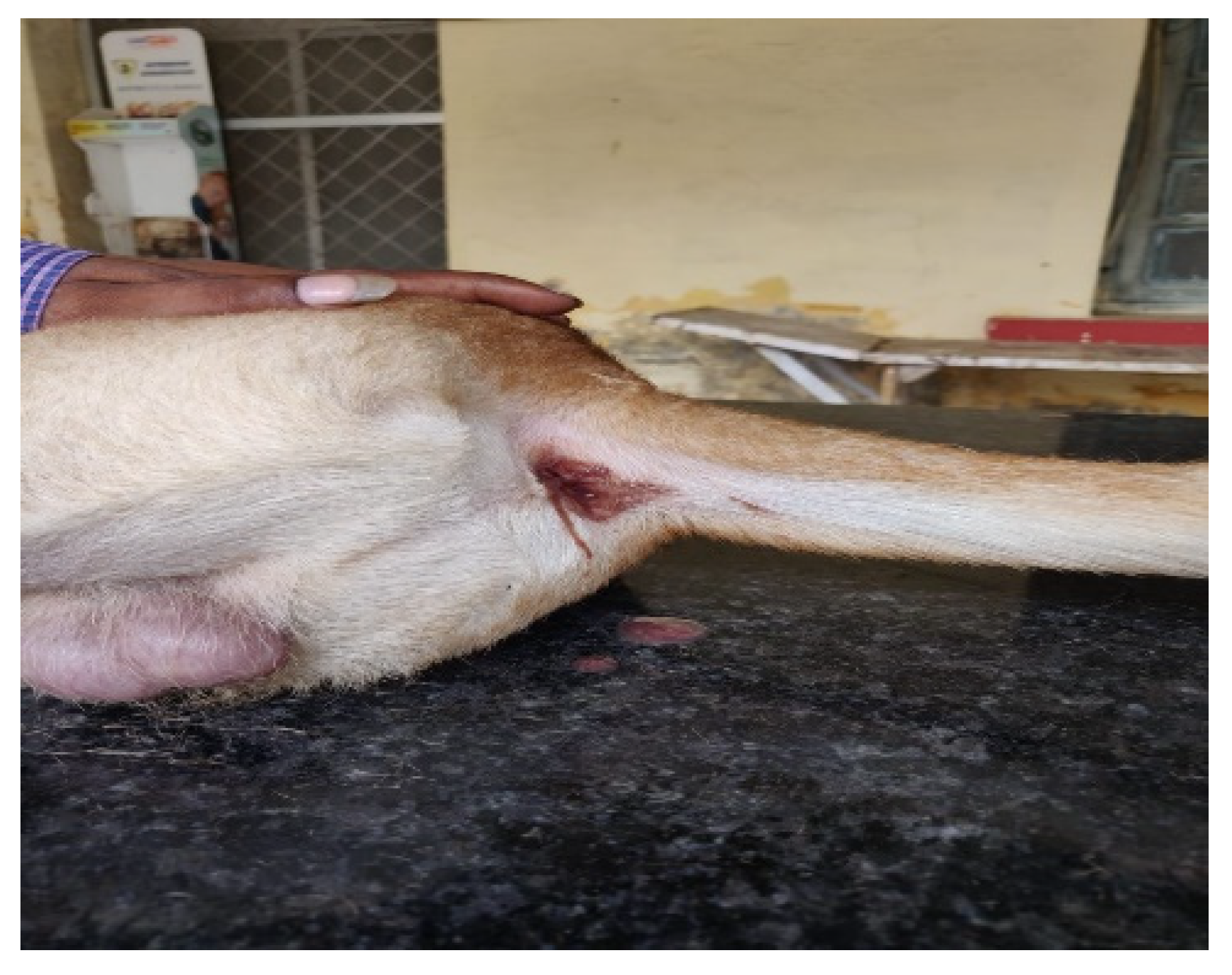
A 2-year-old mixed-breed dog, weighing 18 kg, was presented at Veterinary Clinical complex (VCC) Hospital, Jabalpur, Madhya Pradesh, India, for inappetence, lethargy, repeated vomiting, and hemorrhagic diarrhea, per the owner’s description. There was no information on previous vaccinations. On clinical examination, the animal showed pale conjunctival and oral mucous membranes (Figure 1), pyrexia of 103.8 °F (39.9 °C), a respiratory rate of 14 breaths/minute, and moderate dehydration. On palpation of the abdomen, the systems were normal. A key observation during the examination was that the dog passed a large volume of watery stool that was bright red, indicating the presence of fresh blood, along with foul odor (Figure 2).

Diagnostic Protocol with CPV Antigen Testing Kit

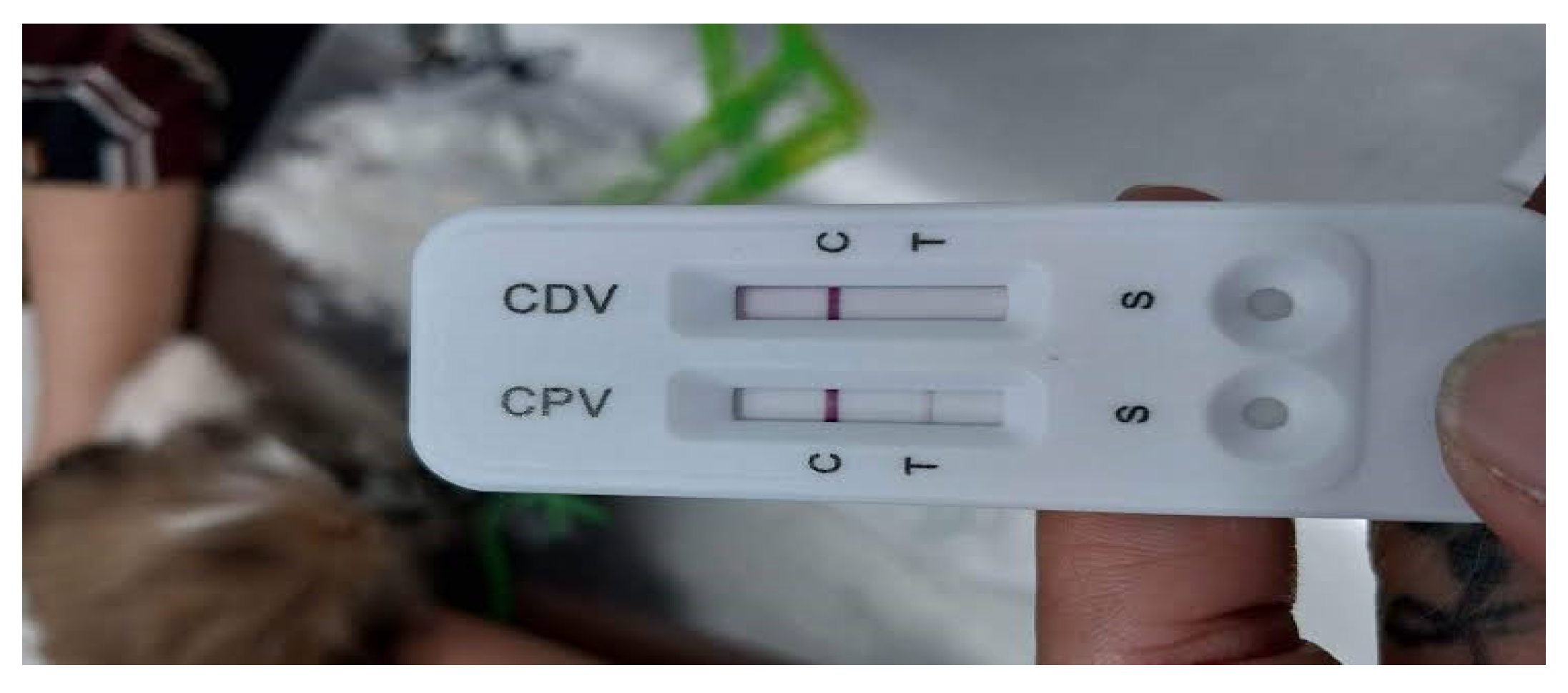
Rectal swab was used to collect fecal samples for rapid antigen detection. Fecal samples were tested using an immunochromatographic assay kit (Ubio QuickVet CPV Antigen Detection Kit, Ubio Biotechnology Systems Pvt. Ltd., Kochi (Kerela), India). The assay was performed to detect the antigen of the CPV-2 using the manufacturer’s protocol. The analyzed sample tested positive (Figure 3); however, the test line was moderate in intensity. CDV antigen testing yielded a negative result. We chose this rapid diagnostic protocol to facilitate immediate clinical decision-making with blood test results.

3. Treatment (Days 1–6)

Fluid therapy: Based on hydration status, Dextrose Normal Saline (DNS) was administered intravenously at a rate of 15 mL/kg body weight as well as Ringer’s Lactate at a rate of 7.5 mL/kg body weight to restore fluid and electrolyte balance.
Antibiotic: Inj. Inimox Forte (Amoxicillin and Sulbactam), a broad-spectrum antibiotic, was administered intravenously at a dosage of 180 mg (12.5 mg/kg) to control secondary bacterial infections (Every 12 h).
Antidiarrheal: Pantoprazole (1 mg/kg/24 h) was administered intravenously to inhibit the gastric acid production to manage anaerobic infections and diarrhea (every 8 h).
Antiemetic: Inj. Emeset (Ondensetron) 1.5 mL was administered intravenously (every 12 h).
Proton pump inhibitors: Inj Pentocid (Pantoprazole) was registered at a rate of 1 mg/kg intravenously to inhibit the gastric acid production (once a day).
Anti-hemorrhagic: Inj. Ethaklot (Etamsylate) 1 mL was administered intravenously (once a day).
Vitamin B&C: Eldervit 12, a combination of four components (Folic Acid, Methylcobalamin, Niacinamide, and Vitamin C), was given as a nutritional supplement at a dose of 1.5 mL intravenously (once daily).
The owner was advised to keep the animal off feed until the 4th day of treatment, wherein a small quantity of (easily digestible and gut healthy) feed was given, following which diarrhea did not occur and no apparent signs or hindrances in recovery were observed.

4. Results and Discussion

Case Relevance: Canine parvovirosis (CPE) is still one of the main infectious diseases in dogs that is often associated with high mortality in young unvaccinated puppies. Leukocytosis can be a part of canine parvovirus (CPV) infection, especially during the initial and late stages of infection; while leukopenia is the typical hematologic presentation for CPV-2 infection, this case emphasizes that dogs infected with CPV-2 at an older age (i.e., 2 years), who have presented with leukocytosis should still be considered to be possibly infected by CPV.
A clinical, hematological, and antigen test diagnoses the patient with CPV-2 virus infection. The clinical signs observed in the patient (lethargy, vomiting, anorexia, and foul-smelling hemorrhagic diarrhea) are consistent with those described in the literature [2,3]. Table 1 shows clear indication of anemia, possibly due to hemorrhagic enteritis. Characteristic leukopenia is not seen, indicating CPV-2 is not always associated with a decreased leucocyte count.
Clinical finding: The pale mucous membranes and dehydration further confirmed systemic involvement and fluid imbalance. The rectal temperature (103.8 °F) indicated a febrile response often associated with viral infections. Hematological analysis revealed anemia (Hb: 10.6 g/dL; PCV: 30.4%), microcytic hypochromic indices (MCV: 54 fL; MCH: 17.9 pg), thrombocytopenia (platelets: 1.6 × 10⁵/µL), and “marked leukocytosis” (TLC: 28.5 × 10³/µL). These findings align with earlier reports of parvoviral enteritis characterized by anemia and altered platelet counts [9]. The presence of leukocytosis, rather than classic leukopenia, suggests a robust immune response or secondary bacterial inflammation in this adult patient. Although leukopenia is a classic feature of CPV-2, it is not universally present, as also noted in this case. Biochemically, a high ALP level (289.3 U/L) may indicate hepatic stress or inflammation due to systemic effects of the virus or associated dehydration.
Diagnostic approach: The dog was brought to the hospital due to the sudden start of vomiting and diarrhea. Some dogs have been suspected of having the disease. The negative rapid antigen test ruled out CDV. Considering the severity of clinical signs and CPV-2 antigen result, CCoV and parasitic enteritis were unlikely.
Treatment rationale: Treatment was initiated promptly, focusing on supportive care widely considered the cornerstone of CPV-2 management [3,10]. A combination of DNS and Ringer’s Lactate was administered intravenously to address severe dehydration and electrolyte imbalance, aligning with standard practices described in [2]. The antibiotic therapy using Amoxicillin/Sulbactam was appropriate to counter secondary bacterial translocation from the gut, which is a common complication due to the virus-induced mucosal damage [4]. Ondansetron, a selective 5-HT3 receptor antagonist, effectively managed vomiting and improved comfort levels. Pantoprazole, a proton pump inhibitor, was used to protect against gastric ulceration often associated with systemic stress and gastrointestinal inflammation.
Outcome and prevention: The inclusion of Etamsylate helped control hemorrhage by improving capillary stability, and vitamin supplementation (B-complex and Vitamin C) was administered to restore nutritional balance, support RBC production, and enhance immune defense, particularly due to the role of Vitamin C in immune modulation [2].
The early and aggressive treatment protocol is consistent with the literature indicating high survival rates (64–92%) when CPV-2 is managed intensively and promptly [10]. This case responded well to six days of therapy, with noticeable improvement in hydration status, mucous membrane color, respiration rate, and normalization of feces by the fifth day. As highlighted in [8,11], prevention remains the most effective strategy primarily through timely vaccination and maintaining hygienic environments. Although the patient in this case was a 2-year-old adult, the risk of exposure in immunocompromised or previously unvaccinated dogs remains high, especially in endemic areas.
Conclusion: The findings in this case align with the pathology of CPV-2, which targets rapidly dividing cells of the intestinal crypts and bone marrow [12]. This case highlights the need to consider CPV-2 in the differential diagnosis of acute hemorrhagic gastroenteritis in adult dogs, particularly if vaccination history is unknown. Moreover, parvoviral infection does not rule out leukocytosis. Although molecular diagnostics like PCR offer high accuracy [13], the rapid antigen test used here proved effective for timely diagnosis and intervention.

Funding

This research received no external funding.

Institutional Review Board Statement

The study was approved by the Department of veterinary medicine, College of veterinary Sciences, NDVSU, Jabalpur, M.P. India dated 15 January 2026).

Informed Consent Statement

Informed consent has been taken from the institution.

Data Availability Statement

Data is available on request.

Conflicts of Interest

The author declares no conflict of interest.

References

  1. Carmichael, L.E.; Binn, L.N. New enteric viruses in the dog. Adv. Vet. Sci. Comp. Med. 1981, 25, 1–37. [Google Scholar] [PubMed]
  2. Mylonakis, M.E.; Kalli, I.; Rallis, T.S. Canine parvoviral enteritis: An update on the clinical diagnosis, treatment, and prevention. Vet. Med. Res. Rep. 2016, 7, 91–100. [Google Scholar] [CrossRef] [PubMed]
  3. Prittie, J. Canine parvoviral enteritis: A review of diagnosis, management, and prevention. J. Vet. Emerg. Crit. Care 2004, 14, 167–176. [Google Scholar] [CrossRef]
  4. Gallagher, A. Canine parvovirus. In MSD Veterinary Manual; Merck & Co., Inc.: Rahway, NJ, USA, 2020; Available online: https://www.msdvetmanual.com/digestive-system/infectious-diseases-of-the-gastrointestinal-tract-in-small-animals/canine-parvovirus-infection-parvoviral-enteritis-in-dogs (accessed on 1 March 2026).
  5. Cohen, A. Parvovirus: Transmission to Treatment. Available online: https://www.vet.cornell.edu/departments-centers-and-institutes/riney-canine-health-center/canine-health-topics/parvovirus-transmission-treatment (accessed on 1 March 2026).
  6. Black, J.W. Parvoviral enteritis and panleukopenia in dogs. J. Med. Small Anim. Clin. 1979, 74, 47–50. [Google Scholar]
  7. Morovvati, A.; Keyvanfar, H.; Zahraei Salehi, T.; Mousavi Nasab, S.D.; Zargar, M. Detection of canine parvovirus type 2 by designing multiple methods and genetic characterization in Iran. Arch. Razi Inst. 2022, 77, 2207–2214. [Google Scholar] [CrossRef]
  8. Oh, J.S.; Ha, G.W.; Cho, Y.S.; Kim, M.J.; An, D.J.; Hwang, K.K.; Lim, Y.-K.; Park, B.-K.; Kang, B.; Song, D.S. One-step immunochromatography assay kit for detecting antibodies to canine parvovirus. Clin. Vaccine Immunol. 2006, 13, 520–524. [Google Scholar] [CrossRef] [PubMed][Green Version]
  9. Muley, V.D.; Dighe, D.G.; Velhankar, R.D.; Keskar, D.V. Treatment of Canine Parvo Viral (CPV) infection in a Pup-A Therapeutic and Nutraceutical Approach. Intas Polivet 2009, 10, 371–372. [Google Scholar]
  10. Humm, K.R.; Hughes, D. Canine parvovirus type-2 (CPV-2) infection. In Small Animal Critical Care Medicine; Silverstein, D.C., Hopper, K., Eds.; Saunders: St. Louis, MO, USA, 2009; pp. 482–485. [Google Scholar]
  11. Ettinger, S.J.; Feildman, C.; Edward, C. CPV Susceptibility in Dogs. In Textbook of Veterinary Internal Medicine; WB Saunder Company: Philadelphia, PA, USA, 1995; pp. 64–70. [Google Scholar]
  12. Alex, C.E.; Kvapil, P.; Busch, M.D.; Jensen, T.; Conley, K.; Jackson, K.; Stubbs, E.L.; Gjeltema, J.; Garner, M.M.; Kubiski, S.V.; et al. Amdoparvovirus-associated disease in red pandas (Ailurus fulgens). Vet. Pathol. 2024, 61, 269–278. [Google Scholar] [CrossRef] [PubMed]
  13. Carmichael, L.E. An annotated historical account of canine parvovirus. J. Vet. Med. B Infect. Dis. Vet. Public Health 2005, 52, 303–311. [Google Scholar] [CrossRef] [PubMed]
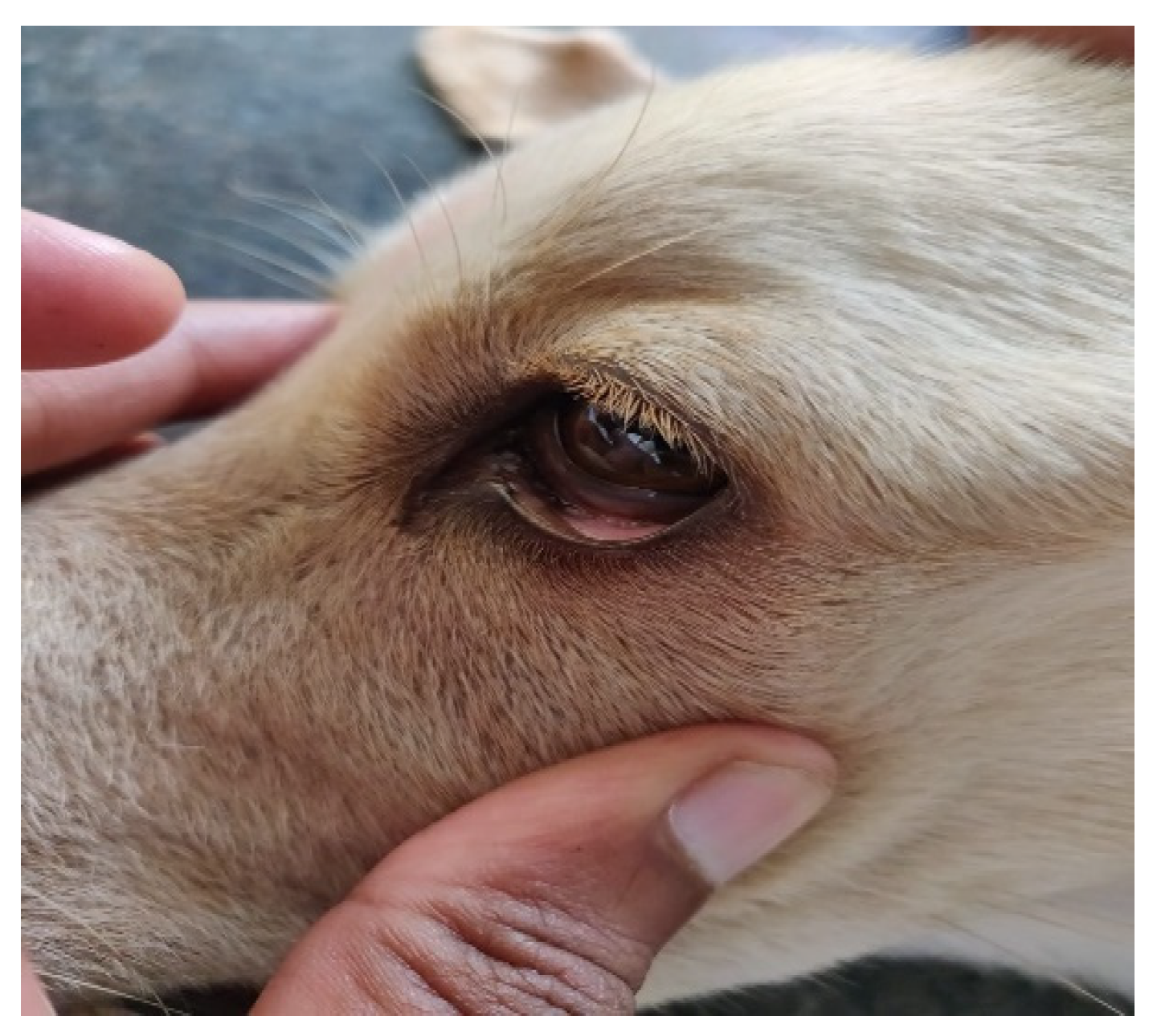
Figure 1. Pale ocular mucous membrane.
Blsf 58 00003 g001
Figure 2. Bloody diarrhea.
Blsf 58 00003 g002
Figure 3. Result of swab analysis with antigen testing kit.
Blsf 58 00003 g003
Table 1. Complete blood count (CBC) report.
ParametersNormal ValuesSample Values
Hb12–18 g/dL10.6 g/dL
PCV37–55%30.4%
MCV60–77 fL54 fL
MCH19.5–24.5 pg17.9 pg
TLC6–17 × 103/µL28.5 × 103/µL
Platelets2–5 × 10⁵/µL1.6 × 105/µL
Lymphocytes12–30%12%
ALP20–160 U/L289.3 U/L
Disclaimer/Publisher’s Note: The statements, opinions and data contained in all publications are solely those of the individual author(s) and contributor(s) and not of MDPI and/or the editor(s). MDPI and/or the editor(s) disclaim responsibility for any injury to people or property resulting from any ideas, methods, instructions or products referred to in the content.