


Abstract
Postharvest technologies and supply chain management are critical to improving food security, reducing losses, and advancing sustainability in global agri-food systems. Nearly one-third of global food is lost after harvest, particularly in developing regions, underscoring the urgent need for efficient postharvest handling, cold chain integration, and sustainable logistics systems. This paper explores key components of effective postharvest systems, including harvesting, treatments, storage, and value-added processing. It highlights digital innovations IoT sensors, blockchain, AI, and digital twins that enhance traceability, forecasting, and operational efficiency. Case studies from South Asia, Africa, Europe, and North America emphasize region-specific solutions, highlighting low-cost technologies for smallholders and advanced systems for export chains. Sustainable practices such as renewable-powered cold chains, circular economy models, and eco-friendly packaging align with Sustainable Development Goals (SDGs) on zero hunger, responsible consumption, and climate action. This paper concludes that while technology is vital, systemic transformation requires inclusive policies and collaboration among governments, private sectors, researchers, and farming communities to build resilient, equitable food systems.
1. Introduction
The global food system is under increasing strain to meet the nutritional needs of a population expected to reach 9.7 billion by 2050, while reducing its environmental impact [1]. A major contributor to this challenge is postharvest loss, which accounts for approximately 14% of food produced globally before it reaches consumers, resulting in significant economic, nutritional, and ecological consequences [2]. These losses are particularly acute in fresh fruits and vegetables, where rates can reach 20–40% in developing countries due to inadequate handling, poor infrastructure, and fragmented supply chains [3,4]. Postharvest technologies and supply chain management are essential for enhancing food availability, preserving quality, and reducing losses across agri-food systems [3]. Technologies such as refrigeration, protective coatings, irradiation, and advanced packaging extend shelf life, while integrated supply chains with cold logistics and digital traceability minimize deterioration [5]. Despite increased yields, nearly one-third of global food production is lost postharvest, especially in low-resource settings. Efficient systems from harvesting and storage to processing and transport are vital for improving nutrition, increasing farmer incomes, and enhancing sustainability. Postharvest losses vary regionally. In developing countries, they stem from poor infrastructure, lack of cold chains, and inadequate handling [3]. In contrast, developed regions face losses at the retail and consumer levels due to over-purchasing and waste. Addressing these challenges requires region-specific technological, logistical, and policy interventions. Reducing postharvest losses is critical to achieving SDG 2: zero hunger, ensuring equitable access to safe, nutritious food worldwide [6].
2. Postharvest Technology: Principles and Practices
Postharvest technologies applies scientific and engineering principles to preserve quality, extend shelf life, and enhance marketability of fresh produce. As crops remain physiologically active after harvest, timely interventions are essential to prevent deterioration [7]. Harvesting techniques play a critical role in optimal maturity, and gentle handling reduces mechanical damage and microbial decay. Precision tools, cushioned containers, and in-field sorting help maintain product integrity [8]. Postharvest treatments such as rapid cooling (forced-air, hydro-cooling, vacuum), curing for root crops, and chemical dips (e.g., calcium chloride, 1-MCP) delay senescence and spoilage. Edible coatings from biopolymers like chitosan and starch offer sustainable moisture barriers. Storage and preservation technologies, including controlled atmosphere (CA) storage, modified atmosphere packaging (MAP), irradiation, and ozone treatment, extend shelf life and ensure safety [9]. Cold chain systems, from pre-cooling to temperature-controlled retail, are vital for maintaining freshness. Value addition through minimal processing, drying, freezing, canning, and fermentation reduces losses and boosts economic returns [10]. These methods preserve nutritional quality and enable year-round availability. Together, these integrated approaches form the foundation of resilient postharvest systems, supporting food security, reducing waste, and promoting sustainable agricultural development.
3. Supply Chain Management in Horticulture
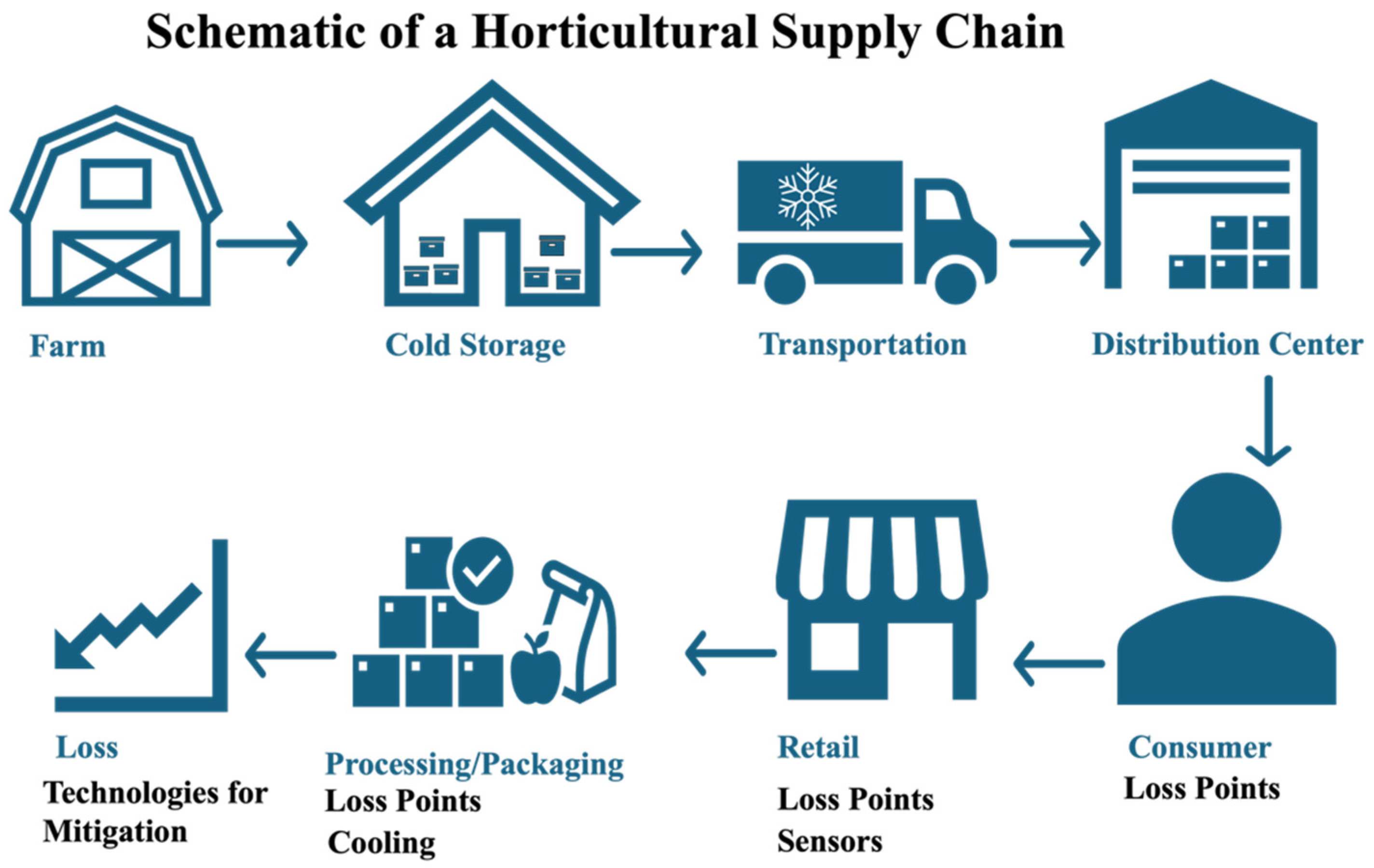
Effective supply chain management is essential for reducing postharvest losses and ensuring food security. Horticultural supply chains are complex due to crop perishability and seasonality, requiring advanced logistics, infrastructure, and digital tools to maintain quality and efficiency across cultivation, aggregation, distribution, and retail [11,12]. Temperature control is critical. Facilities like refrigerated storage, pre-cooling units, and reefer vehicles slow spoilage, yet cold chain coverage remains limited in low-resource areas. Renewable-powered systems offer scalable solutions for rural deployment. Digital innovations IoT sensors, blockchain, and AI enable real-time monitoring, traceability, and predictive analytics, improving logistics and empowering smallholders through digital marketplaces [13]. Risk management and quality assurance frameworks such as HACCP (Hazard Analysis and Critical Control Points), GAP (Good Agricultural Practices), and certifications like Global G.A.P. enhance food safety and market access. Climate insurance and contingency planning further strengthen resilience. A robust, Inclusive horticultural supply chain integrates production, technology and regulation crucial for sustainable, equitable agri-food systems [13]. The agri-food supply chain spans from farm-level production to final consumption, encompassing key stages: Crop production starts with the use of advanced inputs and improved farming practices to boost both yield and quality. Once harvested, the produce is brought to cooperatives or collection centers, where it is aggregated, handled, and sorted efficiently. It then enters the distribution chain, managed by wholesalers, processors, or exporters who oversee its transport and further processing. The next stage is retail, where products become available to consumers through supermarkets, wet markets, and online marketplaces. Ultimately, the consumer stage determines the final use of the product, influenced by dietary preferences, purchasing behavior, and patterns of food waste. Figure 1 illustrates the supply chain of food commodities from the farm to the final consumer, highlighting all potential points where losses may occur at each stage of the process [14].
Figure 1.
Schematic of a Horticultural Supply Chain.
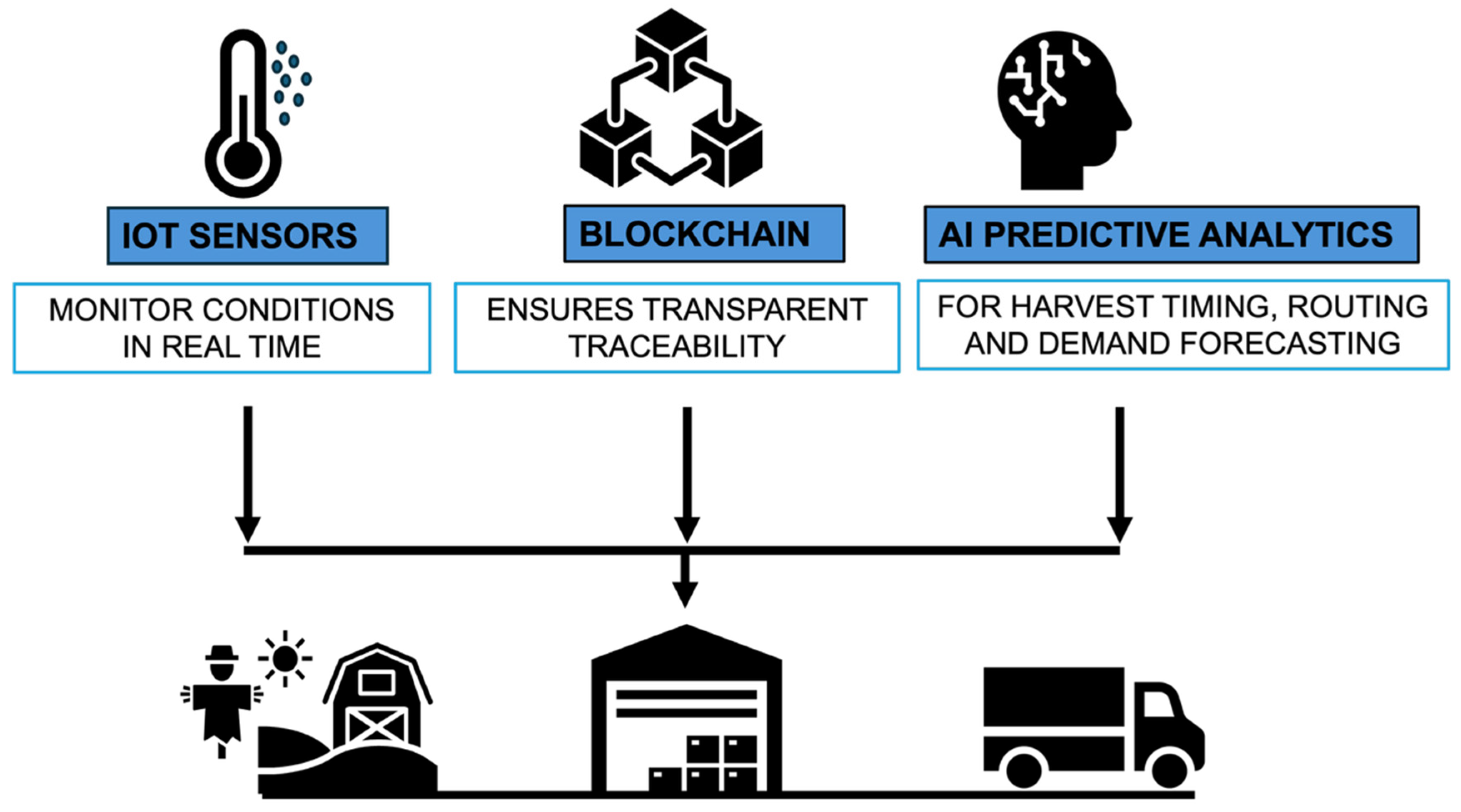
Figure 2 illustrates various Information and Communication Technology (ICT) systems that can be integrated into the supply chain to effectively monitor and reduce losses. Weak links, such as poor handling or transport delays, can cause cascading losses, highlighting the need for coordinated management. Cold chain infrastructure is vital for preserving perishable. Facilities like pre-cooling units, cold storage, and ripening chambers slow spoilage. Reliable transport via refers and multimodal systems ensure quality during trade [15]. In developing regions, limited cold chain coverage leads to significant losses. Investments in renewable-powered storage, decentralized pack houses, and efficient logistics are crucial [16].
Figure 2.
ICT and Smart Technologies in Supply Chain.
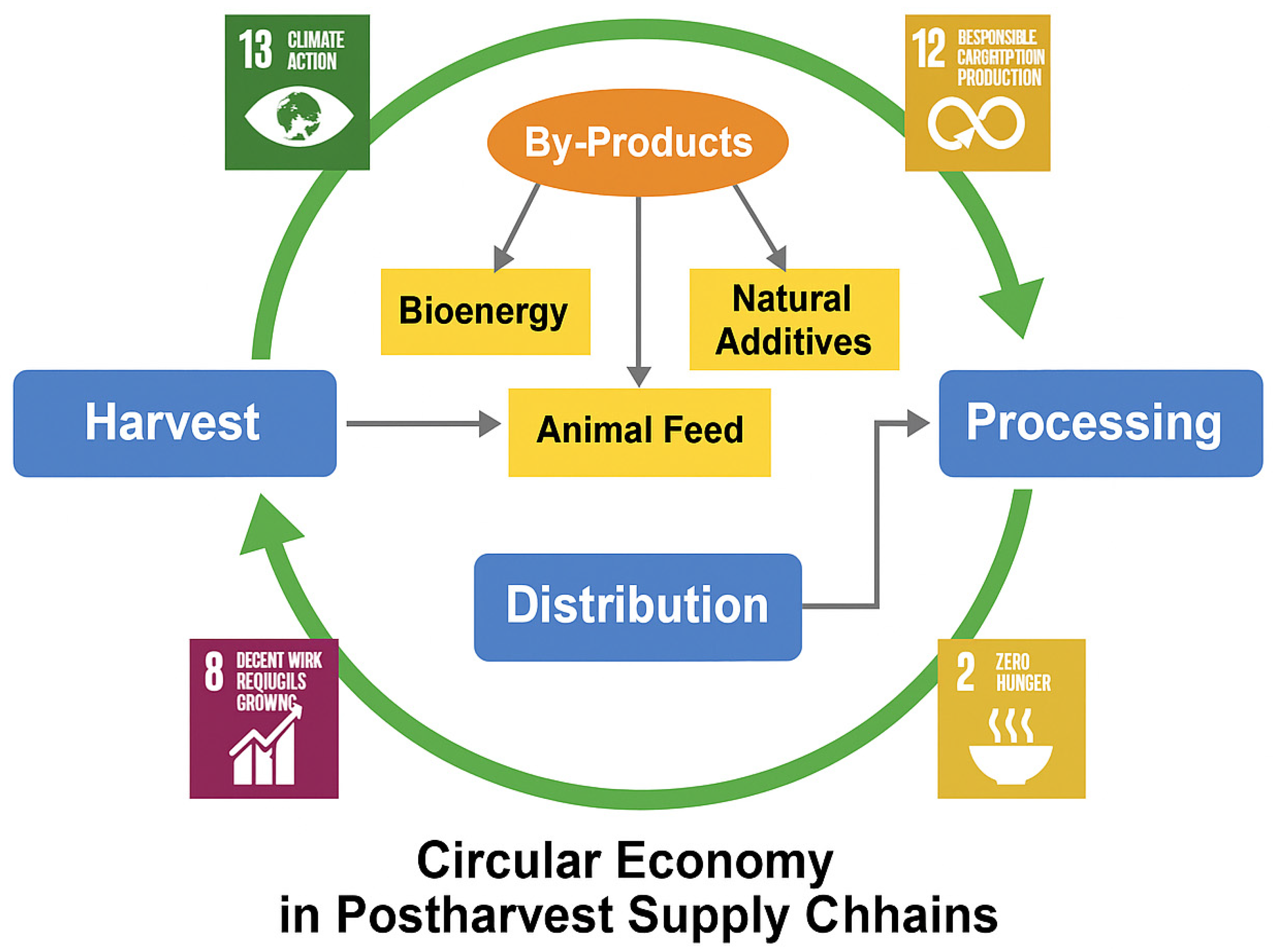
Figure 3 Illustrates a circular economic approach in postharvest supply chains, highlights how by-products from harvesting, processing and distribution can be converted into useful resources such as bioenergy, animal feed and natural additives. By reintegrating waste into the value chain, the system promotes sustainability and contributes to key SDGs, including Zero hunger (SDG 2), Responsible consumption and production (SDG 12), climate action (SDG 13) and Decent work and economic growth (SDG 8).
Figure 3.
Circular Economy Approach in Post harvest Supply Chain.
4. Challenges and Gaps
Despite technological progress, several structural and operational barriers continue to undermine the efficiency and sustainability of horticultural supply chains, particularly in developing regions. Infrastructure deficits such as limited cold storage, inadequate grading facilities, and poor transport networks lead to significant physical and quality losses, especially among smallholder producers [3].
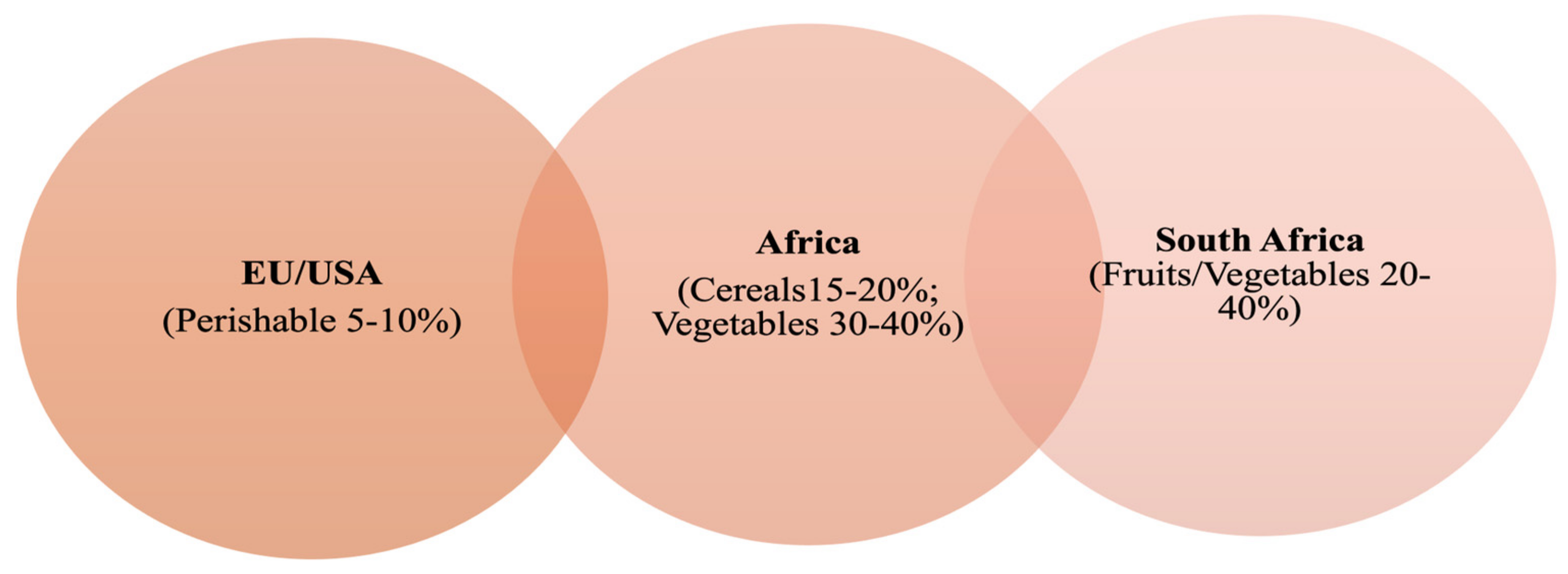
Figure 4 illustrates the postharvest losses happening in few countries in different food commodities. Energy-intensive refrigeration and logistics systems further compound the issue, with high operational costs and reliance on fossil fuels impeding scalability and sustainability. Policy fragmentation and weak institutional support hinder the adoption of improved postharvest practices. Smallholders often lack access to training, financial services, and extension support, limiting their ability to invest in infrastructure or meet market standards [17]. Additionally, poor market integration and limited awareness of grading and consumer preferences result in supply-demand mismatches and reduced competitiveness. The absence of strong farmer organizations further restricts access to technology and bargaining power. Addressing these challenges requires a multi-pronged strategy: targeted infrastructure investment, deployment of decentralized renewable energy solutions, coherent policy frameworks, and farmer empowerment through education and market linkages. Bridging these gaps is essential for building resilient, inclusive, and sustainable horticultural supply chains that contribute meaningfully to global food security [18].
Figure 4.
Comparative Postharvest Losses Across Regions.
5. Sustainable Approaches
Sustainable postharvest management is vital for addressing food security, climate resilience, and resource efficiency. Conventional systems, fossil-fueled cold chains, plastic packaging, and linear consumption drive environmental harm and inefficiencies [19]. Emerging models integrate renewable energy, circular resource flows, and eco-innovative packaging, aligning with UNSDGs. Solar-powered cold rooms, biogas refrigeration, and hybrid systems reduce emissions and improve energy access (SDGs 7 and 13) [20]. Waste valorization transforms horticultural by-products into high-value goods, natural additives, biofertilizers, and biofuels, enhancing resource use and farmer incomes (SDG 12). Sustainable packaging innovations, such as biodegradable films, edible coatings, and smart sensors, extend shelf life and reduce waste [21]. These practices support food availability (SDG 2), responsible consumption (SDG 12), and employment through value-added processing (SDG 8). By embedding these strategies into policies and business models, the horticultural sector can drive inclusive, climate-smart development. Collectively, these innovations offer a regenerative framework for a resilient and equitable agri-food system [22].
6. Case Studies and Global Perspectives
Regional experiences in postharvest management reveal diverse challenges and innovations shaped by local contexts. Case studies from South Asia, Africa, and developed economies such as the EU and the United States (US) demonstrate how infrastructure, advanced technologies, and policy frameworks influence supply chain performance and resilience. In South Asia, grapes and mangoes, key export commodities, face significant postharvest losses due to fragmented logistics and inadequate cold chain integration. Delays in pre-cooling and packaging reduce export quality up to 30%. Interventions like vapor heat treatment, controlled atmosphere packaging, and solar-powered cold rooms are being promoted to improve quality and accessibility for smallholders.
Researchers worldwide are working collectively to reduce the 28–55% postharvest losses in fruits and vegetables by combining eco-friendly preservation methods with advanced technologies. In citrus systems, scientists are replacing synthetic fungicides with natural antimicrobials, edible coatings, biocontrol agents, smart packaging, and innovative sensing tools such as hyperspectral imaging, Raman spectroscopy, and nanosensors to detect early decay and maintain quality [23]. Digital technologies such as AI, ML, deep learning, IoT, and RFID are increasingly integrated to predict deterioration; automate sorting through models like CNNs, U-Net, ResNet, YOLO, and Mask R-CNN; and enable real-time monitoring using NIR, polarization, and hyperspectral imaging along with electronic noses [24]. Parallel efforts combine traditional practices with IoT sensors, blockchain traceability, bioactive and nanotechnology-based packaging, modified atmosphere storage, and low-cost cooling systems like ZECC and solar-powered cold rooms to enhance sustainability and shelf-life extension [10]. Eco-friendly innovations such as essential oils, plant-based antimicrobials, chitosan coatings, ozone, ultrasound, and UV-C treatments, supported by controlled atmosphere packaging and digital decision-support systems, offer residue-free alternatives to reduce losses across supply chains [25]. Integrated AI-driven logistics, robotics, predictive analytics, and smart storage environments further optimize grading, storage, and transport, helping curb the 30–50% global losses and strengthen food security [26]. Together, these multidisciplinary efforts from precision harvesting and controlled drying to climate-controlled storage and improved transport form scalable, cost-effective strategies to build resilient and sustainable postharvest systems.
Sub-Saharan Africa contends with high losses in cereals and vegetables due to poor storage, pest infestation, and limited cold chain infrastructure. Innovations such as hermetic storage bags and community aggregation centers show promise, but scaling remains constrained by insufficient investment in refrigerated transport and logistics. In contrast, developed regions benefit from advanced, integrated supply chains. The U.S. grape and berry industries utilize pre-cooling, refrigerated transport, and centralized distribution to maintain quality. The EU has implemented blockchain-based traceability systems, enhancing transparency and consumer trust. Sustainability goals have further driven the adoption of energy-efficient refrigeration, biodegradable packaging, and AI-powered logistics. Key lessons include the need for context-specific innovations, low-cost technologies for smallholders, digital tools for export chains, and the importance of enabling policy environments and targeted investment. Bridging regional gaps through knowledge exchange and collaboration is essential for building equitable, efficient, and climate-resilient global food systems.
7. Future Directions and Research Priorities
As global food systems face growing pressures from climate change, population growth, and resource scarcity, the future of postharvest and horticultural supply chains must prioritize innovation, inclusivity, and sustainability. Digital technologies AI, machine learning, IoT sensors, and digital twins are transforming logistics, enabling real-time monitoring, predictive analytics, and adaptive planning. For smallholder farmers, affordable solutions like solar-powered coolers, mobile packhouses, and smartphone-based platforms offer practical tools to reduce losses and improve decision-making. Scaling these innovations requires robust policy support, infrastructure investment, and inclusive governance that empowers marginalized groups [23,24,25,26,27,28,29].
Climate resilience is equally critical. Renewable-powered cold chains, adaptive packaging, and stress-tolerant crops help mitigate environmental risks [30,31,32]. Life cycle assessment tools guide sustainable design and minimize impact. The path forward lies in integrating advanced technologies with low-cost innovations, policy alignment, and climate-smart strategies to build resilient postharvest systems that enhance food security and support equitable agricultural development [33].
8. Conclusions
Postharvest technology and supply chain management are vital to enhancing global food security and minimizing food loss. While developed nations benefit from advanced cold chains and digital innovations, developing regions often struggle with poor infrastructure and fragmented policies. Sustainable solutions such as renewable energy, waste valorization, and eco-friendly packaging can help build resilient, inclusive food systems. Context-specific innovation is essential. Smallholder farming regions require affordable, scalable technologies, while export-driven supply chains benefit from digital tools that improve traceability and compliance. Effective postharvest practices from optimized harvesting to cold chain logistics and value-added processing reduce losses and improve quality. Integrated supply chains supported by digital traceability and market access enhance farmer livelihoods and consumer trust. Emerging technologies like AI, IoT, blockchain, and digital twins, combined with sustainable practices, offer transformative potential aligned with the UN SDGs. However, systemic change demands cross-sector collaboration, inclusive policies, and capacity-building to ensure equitable access and long-term impact.
Author Contributions
Conceptualization, A.K.H. and S.H.; methodology, A.K.H., S.H. and M.K.H.; software, S.H.; validation, A.K.H. and S.H.; formal analysis, M.K.H. and R.M.A.; investigation, M.K.H. and R.M.A.; resources, A.K.H. and S.H.; data curation, S.H. and R.M.A.; writing—original draft preparation, A.K.H. and S.H.; writing—review and editing, M.K.H. and M.J.; visualization, M.K.H., M.J. and R.M.A.; project administration, A.K.H. and S.H.; funding acquisition, A.K.H. and S.H. All authors have read and agreed to the published version of the manuscript.
Funding
There is no funding involve in this article.
Institutional Review Board Statement
Not applicable.
Informed Consent Statement
Not applicable.
Data Availability Statement
The raw data supporting the conclusions of this article will be made available by the authors on request.
Conflicts of Interest
The authors declare no conflicts of interest.
References
- Tian, J.; Bryksa, B.C.; Yada, R.Y. Feeding the World into the Future—Food and Nutrition Security: The Role of Food Science and Technology. Front. Life Sci. 2016, 9, 155–166. [Google Scholar] [CrossRef] [Scilit]
- Realpe, N.G.; Scalco, A.R.; Brancoli, P. Exploring Risk Factors of Food Loss and Waste: A Comprehensive Framework Using Root Cause Analysis Tools. Clean. Circ. Bioecon. 2024, 9, 100108. [Google Scholar] [CrossRef] [Scilit]
- Kaur, R.; Watson, J.A. A Scoping Review of Postharvest Losses, Supply Chain Management, and Technology: Implications for Produce Quality in Developing Countries. J. ASABE 2024, 67, 1103–1131. [Google Scholar] [CrossRef] [Scilit]
- Wani, N.R.; Rather, R.A.; Farooq, A.; Padder, S.A.; Baba, T.R.; Sharma, S.; Mubarak, N.M.; Khan, A.H.; Singh, P.; Ara, S. New Insights in Food Security and Environmental Sustainability through Waste Food Management. Environ. Sci. Pollut. Res. 2024, 31, 17835–17857. [Google Scholar] [CrossRef] [Scilit]
- Bai, L.; Liu, M.; Sun, Y. Overview of Food Preservation and Traceability Technology in the Smart Cold Chain System. Foods 2023, 12, 2881. [Google Scholar] [CrossRef] [Scilit]
- Baykoca, B.; Yılmaz, S. Understanding Food Loss Patterns across Developed and Developing Countries Using a GDP, Growth Rate, and Health Expenditure-Based Typology. Sci. Rep. 2025, 15, 27597. [Google Scholar] [CrossRef] [Scilit]
- Santosh, D.T.; Ali, S.M. Post-Harvest Technologies: Enhancing Shelf Life and Quality. In Modern Agronomy; International Books & Periodical Supply Service: Seoul, Republic of Korea, 2024; pp. 111–129. [Google Scholar]
- Mitcham, E.J.; Crisosto, C.H.; Thompso, J.F.; Cantwell, M.I.; Zagor, D.; Gorny, J.R. Postharvest Technology of Horticultural Crops: Preharvest, Harvest, and Packing Operations; UCANR Publications: Davis, CA, USA, 2024; Volume 1. [Google Scholar]
- Bano, A.; Ali, M.; Rai, S.; Sharma, S.; Pathak, N. Post-Harvest Management; Nova Science Publishers, Inc.: Hauppauge, NY, USA, 2021. [Google Scholar]
- Mounika, K.; Reddy, P.P.; Singh, R.P.; Pandey, A.; Bharty, S.K.; Kumar, A.; Tiwari, K.; Jain, S. Post-Harvest TECHNOLOGIES and Cold Chain Management: A Review. Plant Arch. 2025, 25, 3275–3283. [Google Scholar]
- Patil, S.; Aklade, N.; Uikey, A. Revolutionizing Vegetable Value Chains: A Comprehensive Review of Digital Technologies and Their Impact on Agricultural Transformation. Curr. J. Appl. Sci. Technol. 2023, 42, 54–65. [Google Scholar] [CrossRef] [Scilit]
- Roy, T.N. Supply Chain Management of Horticultural Crops. In Value Addition of Horticultural Crops: Recent Trends and Future Directions; Sharangi, A.B., Datta, S., Eds.; Springer: New Delhi, India, 2015; pp. 293–314. ISBN 978-81-322-2261-3. [Google Scholar]
- Voss, A. The Future We’re Building: How Today’s Innovations Will Shape Tomorrow’s World; eBookIt.com: Sudbury, MA, USA, 2024. [Google Scholar]
- Saitone, T.L.; Sexton, R.J. Agri-Food Supply Chain: Evolution and Performance with Conflicting Consumer and Societal Demands. Eur. Rev. Agric. Econ. 2017, 44, 634–657. [Google Scholar] [CrossRef] [Scilit]
- Aung, M.M.; Chang, Y.S. Cold Chain Management; Springer Series in Advanced Manufacturing; Springer International Publishing: Cham, Switzerland, 2023; ISBN 978-3-031-09565-8. [Google Scholar]
- Aworh, O.C. Food Safety Issues in Fresh Produce Supply Chain with Particular Reference to Sub-Saharan Africa. Food Control 2021, 123, 107737. [Google Scholar] [CrossRef] [Scilit]
- Nakoma-Ngoma, T.; Leslie, J.F.; Monjerezi, M.; Mvumi, B.; Chamboko, T.; Kamundi, E.; Thadzi, A.; Kachala, B.; Gama, A.P.; Maonga, B. Increasing Adoption of Grain Postharvest Technology by Smallholder Farmers: A Five-Pronged Strategy. Front. Sustain. Food Syst. 2025, 9, 1640274. [Google Scholar] [CrossRef] [Scilit]
- Heydari, M. Cultivating Sustainable Global Food Supply Chains: A Multifaceted Approach to Mitigating Food Loss and Waste for Climate Resilience. J. Clean. Prod. 2024, 442, 141037. [Google Scholar] [CrossRef] [Scilit]
- Chowdhury, P.; Sikandar, M.U.; Rahman, M.M.; Roy, S.; Khrystoslavenko, O. A Comparative Review of Conventional Practices and Green Supply Chain Innovations. IJMDPI 2025, 1, 1–20. [Google Scholar]
- Olabi, A.G.; Shehata, N.; Maghrabie, H.M.; Heikal, L.A.; Abdelkareem, M.A.; Rahman, S.M.A.; Shah, S.K.; Sayed, E.T. Progress in Solar Thermal Systems and Their Role in Achieving the Sustainable Development Goals. Energies 2022, 15, 9501. [Google Scholar] [CrossRef] [Scilit]
- Hussain, S.; Akhter, R.; Maktedar, S.S. Advancements in Sustainable Food Packaging: From Eco-Friendly Materials to Innovative Technologies. Sustain. Food Technol. 2024, 2, 1297–1364. [Google Scholar] [CrossRef] [Scilit]
- Zhang, Q.F. From Sustainable Agriculture to Sustainable Agrifood Systems: A Comparative Review of Alternative Models. Sustainability 2024, 16, 9675. [Google Scholar] [CrossRef] [Scilit]
- Owusu-Berko, L. Advanced Supply Chain Analytics: Leveraging Digital Twins, IoT and Blockchain for Resilient, Data-Driven Business Operations. World J. Adv. Res. Rev. 2025, 25, 1777–1799. [Google Scholar]
- Vashishth, T.K.; Sharma, V.; Sharma, K.K.; Kumar, B.; Chaudhary, S.; Panwar, R. Digital Twins Solutions for Smart Logistics and Transportation. In Digital Twins for Smart Cities and Villages; Elsevier: Amsterdam, The Netherlands, 2025; pp. 353–376. [Google Scholar]
- Hussain, S.; Cheema, M.J.M.; Saleem, S.R.; Elbeltagi, A.; Aqib, M. Implementation of Artificial Intelligence in Agriculture: An Editorial Note. AgriEngineering 2025, 7, 401. [Google Scholar] [CrossRef] [Scilit]
- Hussain, S.; Arshad, M.; Cheema, M.J.M.; Qamar, M.U.; Wajid, S.A.; Daccache, A. Advancing soil moisture prediction using satellite and uav-based imagery using moisture indices with machine learning models. Earth Syst. Environ. 2025, 1–22. [Google Scholar] [CrossRef] [Scilit]
- Hussain, S.; Teshome, F.T.; Tulu, B.B.; Awoke, G.W.; Hailegnaw, N.S.; Bayabil, H.K. Leaf area index (LAI) prediction using machine learning and UAV based vegetation indices. Eur. J. Agron. 2025, 168, 127557. [Google Scholar] [CrossRef] [Scilit]
- Naqvi, S.M.Z.A.; Hussain, S.; Awais, M.; Tahir, M.N.; Saleem, S.R.; Al-Yarimi, F.A.; Ashurov, M.; Saidani, O.; Khan, M.I.; Wu, J.; et al. Climate-resilient water management: Leveraging IoT and AI for sustainable agriculture. Egypt. Inform. J. 2025, 30, 100691. [Google Scholar] [CrossRef] [Scilit]
- Khan, H.A.; Farooq, U.; Saleem, S.R.; Rehman, U.U.; Tahir, M.N.; Iqbal, T.; Cheema, M.J.M.; Aslam, M.A.; Hussain, S. Design and development of machine vision robotic arm for vegetable crops in hydroponics. Smart Agric. Technol. 2024, 9, 100628. [Google Scholar] [CrossRef] [Scilit]
- Zafar, U.; Anjum, M.N.; Hussain, S.; Sultan, M.; Rasool, G.; Riaz, M.Z.B.; Shoaib, M.; Asif, M. Analyzing the spatiotemporal changes in climatic extremes in cold and mountainous environment: Insights from the Himalayan mountains of Pakistan. Atmosphere 2024, 15, 1221. [Google Scholar] [CrossRef] [Scilit]
- Ahmad, B.; Nadeem, M.U.; Hussain, S.; Hussain, A.; Virk, Z.T.; Jamil, K.; Raza, N.; Kamran, A.; Dogar, S.S. People’s perception of climate change impacts on subtropical climatic region: A case study of upper Indus, Pakistan. Climate 2024, 12, 73. [Google Scholar] [CrossRef] [Scilit]
- Casey, J.; Bisaro, A.; Valverde, A.; Martinez, M.; Rokitzki, M. Private Finance Investment Opportunities in Climate-Smart Agriculture Technologies; Foreign, Commonwealth and Development Office (FCDO): London, UK, 2021. [Google Scholar]
- Mahmud, R.; Moni, S.M.; High, K.; Carbajales-Dale, M. Integration of Techno-Economic Analysis and Life Cycle Assessment for Sustainable Process Design—A Review. J. Clean. Prod. 2021, 317, 128247. [Google Scholar] [CrossRef] [Scilit]
Disclaimer/Publisher’s Note: The statements, opinions and data contained in all publications are solely those of the individual author(s) and contributor(s) and not of MDPI and/or the editor(s). MDPI and/or the editor(s) disclaim responsibility for any injury to people or property resulting from any ideas, methods, instructions or products referred to in the content. |
© 2025 by the authors. Licensee MDPI, Basel, Switzerland. This article is an open access article distributed under the terms and conditions of the Creative Commons Attribution (CC BY) license (https://creativecommons.org/licenses/by/4.0/).