
Proceeding Paper

Protected Cultivation of Medicinal Hemp: A Climate-Resilient Strategy for Sustainable Production †
1
Department of Horticulture, Faculty of Agriculture, PMAS-Arid Agriculture University Rawalpindi, Rawalpindi 46000, Pakistan
2
Institute of Soil and Environmental Sciences, PMAS-Arid Agriculture University Rawalpindi, Rawalpindi 46000, Pakistan
3
Faculty of Pharmacy, Hamdard University, Islamabad 45550, Pakistan
*
Author to whom correspondence should be addressed.
Presented at the 9th International Conference on Horticulture & Expo 2025, Rawalpindi, Pakistan, 15–16 April 2025.
Biol. Life Sci. Forum 2025, 51(1), 13; https://doi.org/10.3390/blsf2025051013
Published: 13 March 2026
(This article belongs to the Proceedings of The 9th International Horticulture Conference & Expo)

Abstract

Medicinal hemp (Cannabis sativa L.) has gained global attention due to its high-value phytocannabinoids, particularly cannabidiol (CBD) and tetrahydrocannabinol (THC), which exhibit significant therapeutic potential. Protected cultivation offers a climate-resilient and sustainable strategy to optimize hemp production by controlling environmental factors, ensuring year-round supply, and improving quality attributes. This paper outlines the key principles and technologies for protected hemp cultivation, including light spectrum management, temperature and humidity control, CO2 enrichment, nutrient and water management, pest and disease suppression, and post-harvest handling techniques. Advanced greenhouse and indoor production systems enable precise regulation of microclimate, reduce crop losses, and enhance cannabinoid and terpene profiles compared to open-field production. The integration of smart technologies and autonomous control systems can further enhance operational efficiency and consistency. The paper concludes that protected cultivation systems represent an effective approach to overcome climatic uncertainties and meeting the increasing demand for medicinal hemp production on sustainable grounds.

1. Introduction

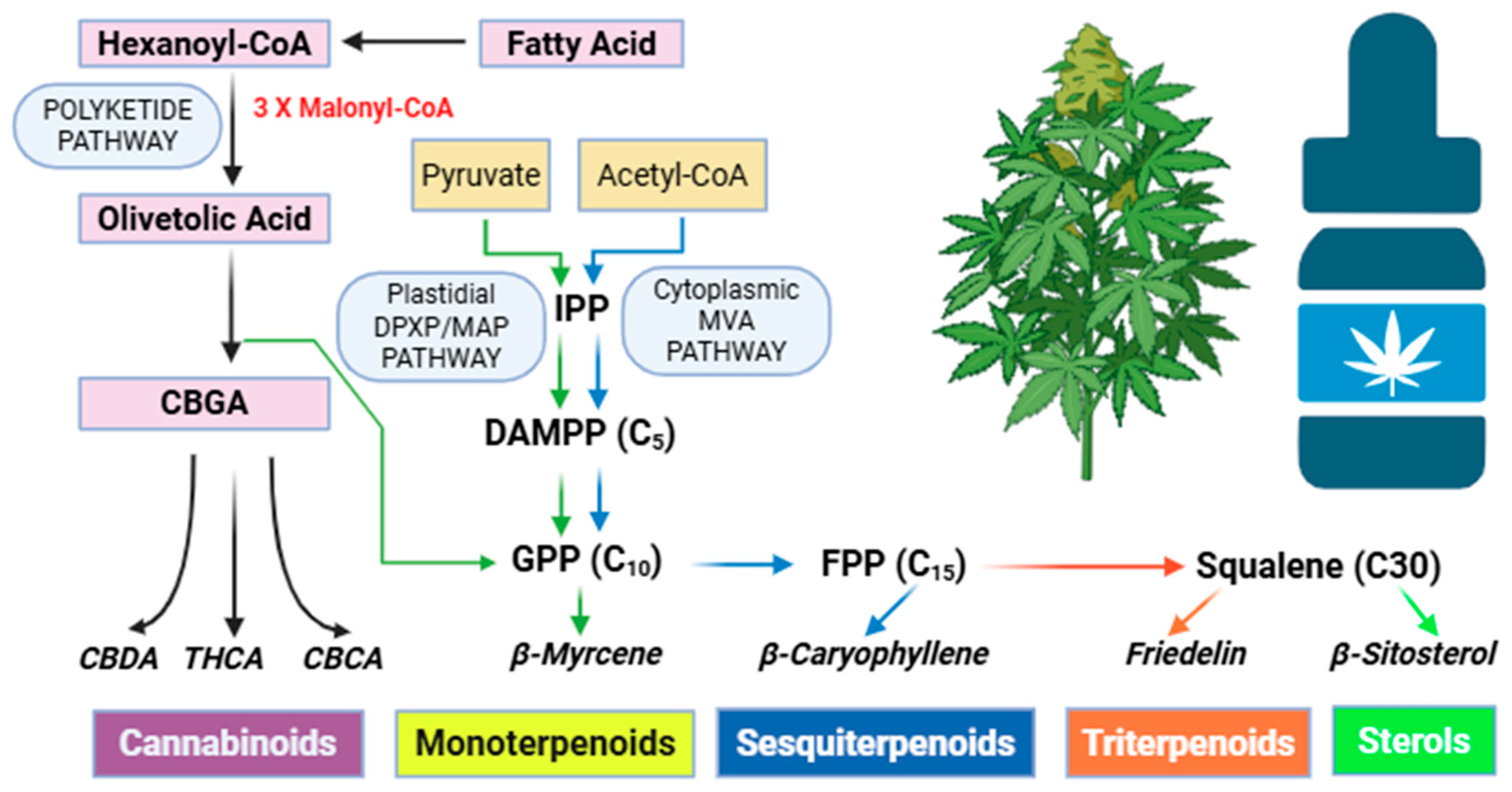
Medicinal hemp (Cannabis sativa L.) has attained significant attention owing to the therapeutic properties of its phytocannabinoids. These special metabolites are profusely produced in the glandular trichomes on female hemp flowers [1]. The hemp floral structure that has high trichome density at the time of maturity makes it a metabolic powerhouse [2]. Currently, more than 100 terpeno-phenolic cannabinoids have been identified and the most important of these are tetrahydrocannabinolic acid (THCA), ∆8-tetrahydrocannabinol (∆8-THC), ∆9-tetrahydrocannabinol (∆9-THC), cannabigerolic acid (CBGA), cannabidiolic acid (CBDA), cannabigerol (CBG), cannabidiol (CBD), cannabinolic acid (CBNA), cannabichromene (CBC), cannabinol (CBN), cannabicyclolic acid (CBLA), cannabicyclol (CBL) and cannabichromenic acid (CBCA) [1]. Understanding the relationship between cannabinoids is crucial. Improper operations and long-term storage with unfavorable conditions can result in degradation (like decarboxylation, oxidation, isomerization and irradiation) and can alter their chemical compositions. Biosynthetic pathways for the cannabinoids’ production—along with the degradation products—are shown in Figure 1.
Among all cannabinoids, THC (tetrahydrocannabinol) and CBD (Cannabidiol) are medicinally significant. THC has psychoactive and therapeutic properties; however, CBD has diverse pharmacological properties such as antiemetic, anxiolytic, anti-inflammatory and antipsychotic effects [4]. CBD is used as an effective remedy for epilepsy, post-traumatic stress and neuropsychiatric disorder. CBD oil extracted from glandular trichomes’ resins also contains vitamins, flavonoids, omega-3 fatty acids and terpenes. In medicinal hemp, CBD concentration ranges from 1790 µgg−1 in leaves to 8590 µgg−1 in flowers on dry weight basis [5].
Terpenes, another vital group of biologically active substances, give a distinctive scent to the Cannabis flower. They possess antibacterial, anti-cancer, antiviral, anti-inflammatory, antihyperglycemic, anti-heartburn, and gastroesophageal reflux effects. They occur in volatile forms such as monoterpenes, diterpenes and sesquiterpenes [6]. Terpene content is determined by hemp plant age, environmental factors and the extraction method [7]. Their synergistic actions evoke CBD’s medicinal effects. Many therapeutic strategies on the combined use of terpenes and cannabinoids have been created. Positive results have been reported regarding the addition of caryophyllene, linalool, and myrcene to CBD/THC extracts for treating social anxiety and sleeping trouble.

2. Protected Cultivation and Medicinal Hemp

Protected cultivation provides a controlled microclimate which protect plants from adverse climatic conditions, as well as optimization of the environmental factors. In order to combat the challenges faced in crop production—like extreme temperatures, water scarcity, nutrient deficiencies, carbon dioxide fluctuations, and pathogen attacks—protected structures are a viable solution. In medicinal hemp, protected cultivation creates optimum conditions for growth with maximum production of high-quality cannabinoids and minimal crop losses. Various protected structures are available from simple net houses to more sophisticated greenhouses. Different techniques employed in protected cultivation are naturally ventilated polyhouses, mulching, drip irrigation, and fertigation. Indoor cultivation with automated systems—i.e., hydroponics—is also gaining popularity because of its high-quality production [8].
Commercial production of medicinal hemp is typically preferred in indoor or greenhouse conditions. There is minimum risk of natural disasters, theft, and wildlife and farmers have greater influence over hemp plants in controlled environments, which effects properties like yield and CBD potency [9]. Due to season-independent cultivation, efficiency increases by 15–30 times compared to field cultivation, with up to six hemp crops/year [10]. Medicinal hemp profoundly relies on skilled laborers; environmental thresholds and expectations are established by experts for conventional logic-based systems to maintain environmental parameters. The dependency on human intervention means the system falls short of handling and compensating for unforeseen events or overlooked plant expressions, potentially leading to catastrophic outcomes such as total crop loss or inconsistent yield. Artificial intelligence (AI)-generated management practices and autonomous control offer potential relief from growing pressures [9].

3. Setting up the Environment for Medicinal Hemp Cultivation

Many environmental factors affect medicinal hemp cultivation and complete control of the below-mentioned environmental variables is required for optimum production.

3.1. Light

Artificial light influences the success of medicinal hemp cultivation as its flowering is dependent on photoperiod (daylight length), which affects its cannabinoid and terpene production. It is a short-day plant that requires 18 h light/day in its vegetative phase and 12 h light/day in its reproductive phase. Therefore, light cycle should be set accordingly via light circuit timers, i.e., 18/4 to 24/0 (on/off) during propagation and vegetative stages and a 12/12 (on/off) cycle to stimulate flowering. Previous studies suggest that yield and cannabinoid content can be increased on the basis of vegetative light durations—for maximum THC optimization at 42 days and for CBD at 40 to 50 days [11]. The light intensity requirement of each growth phase of hemp is different, e.g., the vegetative phase needs 400–650 µmolm−2s−1 and the reproductive phase needs 800–1200 µmolm−2s−1. Natural sunlight is substituted by using light fixtures in protected cultivation, e.g., light-emitting diodes (LEDs), high-pressure sodium (HPS), and fluorescent lights. Red light is more important in the reproductive growth room than it is in the vegetative growth room for the floral growth of medicinal hemp. Hence, LED lamps with more red wavelengths are needed [12].

3.2. Temperature

Optimum temperature range for medicinal hemp cultivation is 20–25 °C during the vegetative phase and 18–30 °C during flowering. When temperature surpasses this threshold, transpiration rate increases and overall plant growth slows down. For optimum growth, temperatures should be maintained within the range of 24–26 °C during day time and 18–20 °C at nighttime. Temperature control can be achieved via a comprehensive air conditioning system, fogging, fan pad systems, heaters, and ventilation. In greenhouse conditions, ambient air temperature is measured by using thermistors, resistance temperature detectors (RTDs), thermocouples, and integrated circuits (ICs). Digital ICs offer compact, low-cost solutions and precision within 0.1 °C [9].

3.3. Carbon Dioxide (CO2)

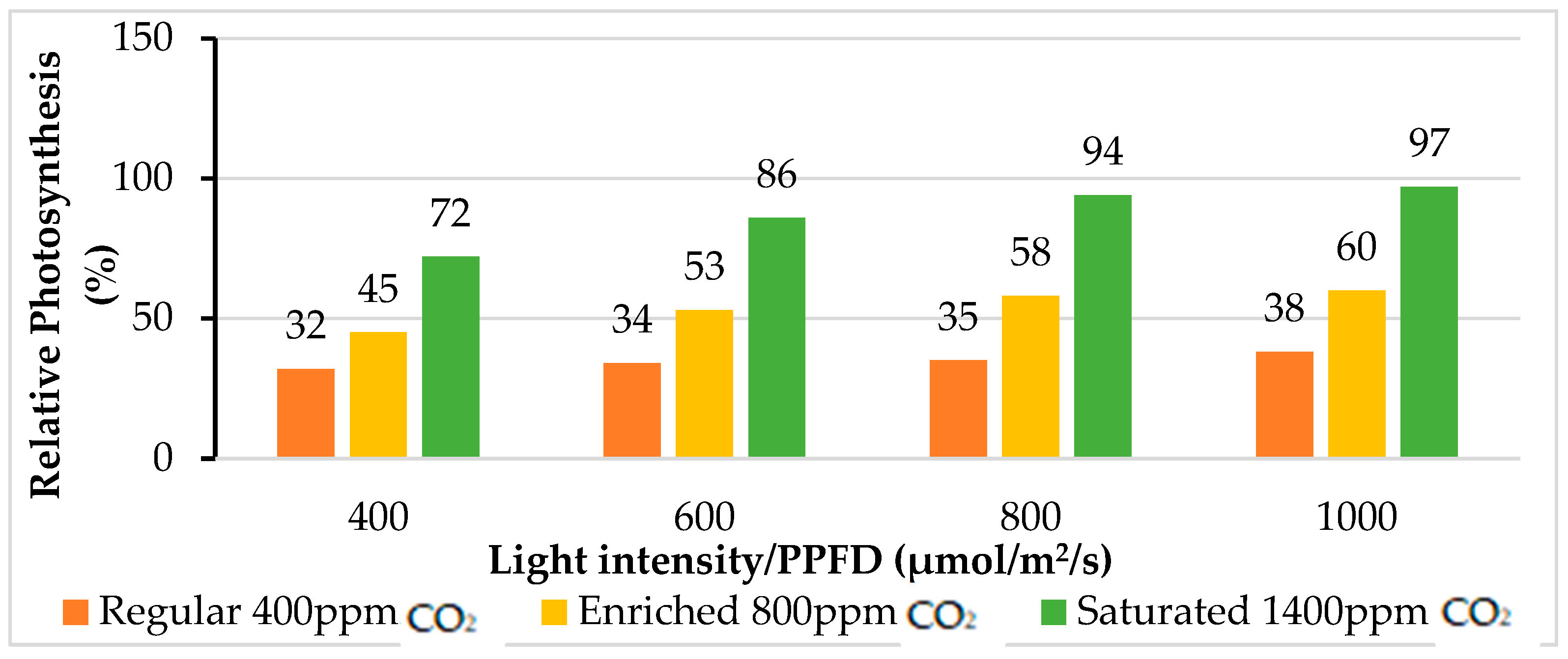
Like other plants, hemp also needs CO2 for ‘photosynthesis’—the food making process. Unlike in an open field, CO2 enrichment is possible in indoor cultivation systems. Indoor CO2 levels from 400 to 600 ppm can cause a 29% reduction in transpiration and 42% leaf stomatal conductance but a quick reduction in photosynthetic activity by 50% and levels below 250 ppm will impact all these processes negatively. CO2 supplementation up to 800 ppm can significantly enhance photosynthetic activity and allow for higher photosynthetically active radiation (PAR) and photosynthetic photon flux density (PPFD) (Figure 2). Indoor CO2 levels are monitored via electrochemical sensors and on-dispersive infrared (NDIR) sensors. Different methods are used to add CO2 in Cannabis growing rooms, ranging from cheap and easy to expensive and complex. Yeast fermenter is an easy and safe method for CO2 supplementation on a small scale which consists of yeast, sugar, and water and produces CO2 via the fermentation process.

3.4. Relative Humidity (%)

Relative humidity (RH) in protected structures reflects the air’s water vapor content which affects the transpiration rate. Being closely linked to temperature, water holding capacity is higher in warm air compared to cool air and RH increases 7% per 1 °C increase in temperature. Vapor pressure deficit (VPD) is the difference in amount of water in the air to the maximum amount of moisture air can hold at a given temperature. A high VPD level causes wilting and tip necrosis of leaves, and low VPD hinders transpiration, encourages condensation and increases pathogens attack [14]. Optimum RH level for hemp is 75% at 25–30 °C during propagation and 55–60% during the vegetative and flowering phases. Optimum VPD is 0.8–1.1 kPa during the initial flowering phase and 1.0–1.5 kPa during the late flowering phase. RH and temperature can be accurately measured by Digital ICs, such as SHT3x (within 1%) or SHT4x (within 0.1 °C).

4. Soil Management

Soil is an important factor which directly impacts growth and yield of medicinal hemp. Cannabis thrives best in well-drained, nutrient-rich, sandy loam soil with adequate water holding capacity and neutral pH. It cannot tolerate highly acidic and alkaline soils. Recent trends showed that hydroponic (soil-free) cultivation of hemp is favored by indoor and greenhouse hemp growers than soil; however, data regarding optimum growing media is still lacking [14]. The maintenance of appropriate rootzone pH is vital as it affects nutrient availability, water and nutrient uptake, root development, and microorganism activity. A pH range of 6.5–7.2 for soil, 5.5–6.0 for hydroponic and 5.5–6.5 for soilless production is recommended. Low pH level can result in toxicity due to excessive manganese (Mn) and high pH can limit the availability of phosphorus (P), Mn and iron (Fe) for plant uptake. Regular monitoring of growing substrates’ pH and Electrical Conductivity (EC) can avoid issues of nutrient lockout and toxicity due to elevated levels of sodium and chlorine [15]. This can be done through EC and pH meters which are available in a range of digital probes.

5. Nutrient Management

Nutrient availability has a significant effect on the quantity and quality of cannabinoids and terpenes in medicinal hemp. Growers supplement macro- and micronutrients throughout its growth cycle. Nutrients such as N (nitrogen), P (phosphorus), K (potassium), and Fe (iron) have key roles in hemp growth and secondary metabolism. For instance, P influences its root growth, stem strength, flower and seed production, and terpene profiles. K influences phenolic compounds, flavonoids, organic acids, and carotenoids, and its optimum range for hemp is 60 to 175 mgL−1 [16]. According to a study, liquid fertilizer with nitrogen at 389 mgL−1 during the vegetative phase and 261 mgL−1 during the flowering phase increases yield by 80% and 110% respectively [17].

6. Water Management

Water management is vital in protected cultivation systems. Medicinal hemp gives optimum performance with frequent irrigation of moderate amounts near the root zone. However, prolonged drought will result in stunted growth, small plants, and less biomass and cannabinoid production. Likewise, high moisture conditions will result in fungal and root diseases [18]. Adopting drip irrigation systems allows efficient water use directly to the roots, saves water, and ensures optimal moisture levels. Measuring soil moisture through sensors can enhance irrigation practices. In cases of soil-less production, different methods with continuous and periodical water frequency can be used, e.g., hydroponics (nutrient film technique, deep water culture), aeroponics, ebb and flow, Dutch bucket, etc. Furthermore, irrigation water tests should be done to evaluate pH, EC and alkalinity expressed as calcium carbonate (CaCO3) concentration. The recommended parameters vary greatly among different strains. Generally, 30–100 mg/L CaCO3 concentrations, less than 1.5 mS/cm EC, and 100–150 mg/L hardness (Ca2+ and Mg2+) are recommended for irrigation water [19].

7. Pest and Disease Management

Biotic stresses, i.e., pests and diseases, possess a momentous financial risk in medicinal hemp especially if not controlled at the right time. Common pests and diseases of hemp are thrips, aphids, spider mites, whiteflies, fungus gnats, powdery mildew, bud rot and HLVd (hop latent viroid) [14]. The use of pesticides and fungicides is avoided in medicinal hemp production due to environmental control and regulation. Pests and diseases are controlled through biological methods, regular monitoring, and strict quarantine for goods and persons coming to the growing area. A balance between temperature and humidity controls fungal, viral and bacterial diseases by preventing excess condensation; arid conditions should also be avoided to control spider mites’ infestations. This is known as IPM (Integrated Pest Management). The main reason for IPM is that products may be unsuitable for medicinal purposes after chemical application. Resistant strains and organic pesticides can also be employed in this context. With the rise in hemp cultivation, there is a need to use technology for quick and early diagnosis, treatment and control of disease and pests, which will eventually prevent crop losses, reduce pesticide application and increase profitability for the medicinal hemp industry [9].

8. Harvesting Techniques

Harvesting at the right time is crucial for getting maximum cannabinoid and terpene content. Generally, organoleptic evaluation and chemical analysis are used for determining optimal harvest time. However, since visual examination is non-destructive it is adopted by growers for setting harvest time without troubling hemp plants. Four physical evaluations are suggested by AHP (American Herbal Pharmacopoeia) as given in Table 1. These methods can be combined to determine optimal harvest timing. Harvesting should be done carefully through sharp shears and specific harvesting equipment to prevent plant damage.
Table 1. Methods to determine optimal harvest time of medicinal hemp [19].
#Evaluation CriteriaRecommendations
1.Brown senesced stigmas (%)Brown senesced stigmas should be 75% at harvest time.
2.Firmness of inflorescenceRelatively firm inflorescence upon pressing for maturity.
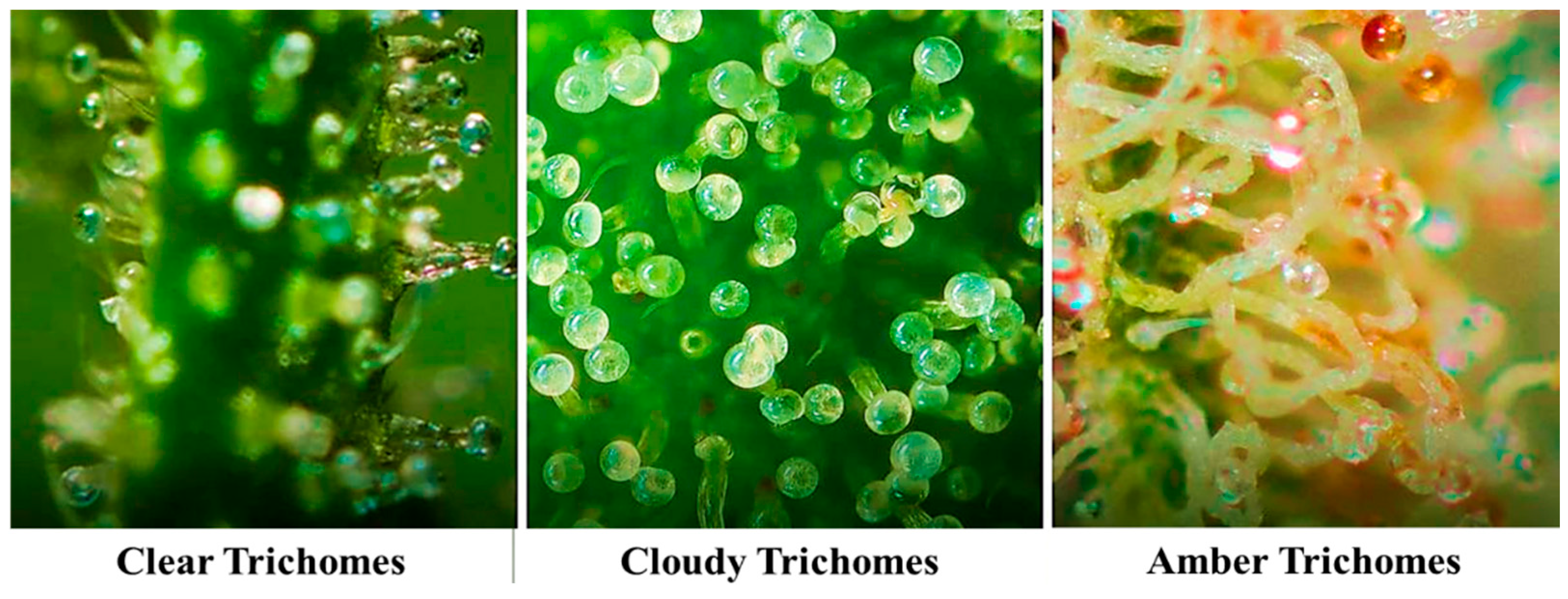
3.Glandular trichomes colorColor change in first resin head from clear to amber or milky (Figure 3).
4.Odor of the inflorescenceStrain-specific odor reaches at peak.
Figure 3. Cannabis trichomes development changes during maturity [20].
Blsf 51 00013 g003

9. Post-Harvest Techniques

Post-harvest processes of Cannabis include manicuring, curing, drying and storage. Fresh Cannabis material has about 78–80% moisture and the recommended moisture content is 5–10% after packing. Plant layers of approximately 15 cm depth can dry to 15% ± 2% moisture within 24 h at 40 °C; however, drying directly on the ground or under sunlight should be avoided [19]. Hanged plants will dry up in direct relation to aerial temperature. Curing of the dried floral material is done at 18 °C and 60% RH for 14 days. In order to preserve cannabinoid and terpene, freezing can be done by sublimation in 10 to 20 days. To avoid the oxidation of major cannabinoids, it should be stored in a cool and dark place after drying. For long-term storage, temperature should be between 1 and 5 °C for fresh products and −18 and −20 °C for frozen products. The annual decomposition rate of THC content is 3.83% at −18 °C, 5.38% at 4 °C, and 6.92% at 22 °C ± 1 °C. The impact of freeze drying on terpene content has not been well-studied yet.

10. Choosing the Right Strain

High-CBD hemp strains have resulted in the development of the medicinal hemp industry at a fast pace. Selection of the appropriate strain is crucial because CBD and THC ratio vary among different strains. The THC to CBD ratio is a vital tool for predicting the medicinal properties. According to the literature, THC and CBD content is affected by growing conditions, genetic makeup, methods of drying, storage, processing, and extraction [19]. Some high CBD hemp strains are given in Table 2.

11. Future Trends in Medicinal Hemp Cultivation

The future of medicinal hemp cultivation is expected to be shaped by advancements in automation, smart technologies, and precision agriculture. The integration of artificial intelligence (AI) and machine learning for environmental control, crop monitoring, and decision support is emerging as a transformative trend [9]. Automated climate control systems, sensor-based fertigation, and real-time nutrient management are enabling growers to optimize cannabinoid and terpene production while reducing labor costs and minimizing resource inputs. Furthermore, hydroponic and aeroponic systems—combined with vertical farming—are gaining popularity due to their ability to produce high-quality biomass with minimal land and water use, offering a sustainable solution for urban and resource-limited regions [8].
Biotechnological innovations, including tissue culture, genetic engineering, and marker-assisted breeding, are anticipated to deliver high-CBD and disease-resistant hemp varieties tailored for medicinal applications [21]. Additionally, the development of certified organic and environmentally sustainable cultivation practices is expected to align with consumer preferences for clean, ethically produced medicinal products. Block-chain enabled traceability systems for quality assurance and the harmonization of global regulatory frameworks will further support international trade and market stability. Together, these trends suggest a shift toward technologically advanced, environmentally sustainable, and globally integrated medicinal hemp production systems.

12. Conclusions

Protected cultivation of medicinal hemp offers a climate-resilient and sustainable approach to producing high-quality CBD produce while minimizing environmental risks and regulatory challenges associated with open-field cultivation. By optimizing environmental factors, adopting advanced cultivation systems, and integrating smart technologies, growers can enhance yield, quality, and consistency of medicinal hemp products. Integration of emerging trends in automation and biotechnology provide significant opportunities for innovation and economic growth. The future of medicinal hemp lies in harmonizing cultivation practices with evolving regulations and market demands to ensure safe, reliable, and sustainable supply chains for therapeutic applications.

Author Contributions

Conceptualization, R.T. and U.H.; Software, M.A.K.; Validation, M.I. and Z.Z.; Writing—Original Draft Preparation, R.T.; Writing—Review and Editing, U.H.; Visualization, Z.Z.; Review, M.A.K. All authors have read and agreed to the published version of the manuscript.

Funding

This research received no external funding.

Institutional Review Board Statement

Not applicable.

Data Availability Statement

No new data were created or analyzed in this study. Data sharing is not applicable to this article.

Conflicts of Interest

The authors declare no conflicts of interest.

References

  1. Bagheri, M.; Mansouri, H. Effect of induced polyploidy on some biochemical parameters in Cannabis sativa L. Appl. Biochem. Biotechnol. 2015, 175, 2366–2375. [Google Scholar] [CrossRef] [PubMed]
  2. Hesami, M.; Pepe, M.; Jones, A.M.P. Morphological characterization of Cannabis sativa L. throughout its complete life cycle. Plants 2023, 12, 3646. [Google Scholar] [CrossRef] [PubMed]
  3. Jin, D.; Dai, K.; Xie, Z.; Chen, J. Secondary metabolites profiled in cannabis inflorescences, leaves, stem barks, and roots for medicinal purposes. Sci. Rep. 2020, 10, 3309. [Google Scholar] [CrossRef] [PubMed]
  4. Strzelczyk, M.; Lochynska, M.; Chudy, M. Systematics and botanical characteristics of industrial hemp Cannabis sativa L. J. Nat. Fibers 2022, 19, 5804–5826. [Google Scholar] [CrossRef]
  5. Andre, C.M.; Hausman, J.F.; Guerriero, G. Cannabis sativa: The plant of the thousand and one molecules. Front. Plant Sci. 2016, 7, 19. [Google Scholar] [CrossRef] [PubMed]
  6. Zager, J.J.; Lange, I.; Srividya, N.; Smith, A.; Lange, B.M. Gene networks underlying cannabinoid and terpenoid accumulation in cannabis. Plant Physiol. 2019, 180, 1877–1897. [Google Scholar] [CrossRef] [PubMed]
  7. Chen, C.; Pan, Z. Cannabidiol and terpenes from hemp–ingredients for future foods and processing technologies. J. Future Foods 2021, 1, 113–127. [Google Scholar] [CrossRef]
  8. Malik, M.; Praus, L.; Tlustos, P. Comparison of recirculation and drain-to-waste hydroponic systems in relation to medical cannabis (Cannabis sativa L.) plants. Ind. Crops Prod. 2023, 202, 117059. [Google Scholar] [CrossRef]
  9. Vernon, M.; Kouzani, A.Z.; Webb, L.D.; Adams, S.D. A survey of modern greenhouse technologies and practices for commercial cannabis cultivation. IEEE Access 2023, 11, 62077–62090. [Google Scholar] [CrossRef]
  10. Magagnini, G.; Grassi, G.; Kotiranta, S. The effect of light spectrum on the morphology and cannabinoid content of Cannabis sativa L. Med. Cannabis Cannabinoids 2018, 1, 19–27. [Google Scholar] [CrossRef] [PubMed]
  11. Dang, M.; Arachchige, N.M.; Campbell, L.G. Optimizing photoperiod switch to maximize floral biomass and cannabinoid yield in Cannabis sativa L.: A meta-analytic quantile regression approach. Front. Plant Sci. 2022, 12, 797425. [Google Scholar] [CrossRef] [PubMed]
  12. Danziger, N.; Bernstein, N. Light matters: Effect of light spectra on cannabinoid profile and plant development of medical cannabis (Cannabis sativa L.). Ind. Crops Prod. 2021, 164, 113351. [Google Scholar] [CrossRef]
  13. Photone. Increasing Cannabis Growth with CO2; Grow Light Meter: Logan, UT, USA; Available online: https://growlightmeter.com/increasing-cannabis-growth-with-co2/ (accessed on 3 September 2024).
  14. Punja, Z.K. Emerging diseases of Cannabis sativa and sustainable management. Pest Manag. Sci. 2021, 77, 3857–3870. [Google Scholar] [CrossRef] [PubMed]
  15. Gentili, R.; Ambrosini, R.; Montagnani, C.; Caronni, S.; Citterio, S. Effect of soil pH on the growth, reproductive investment and pollen allergenicity of Ambrosia artemisiifolia L. Front. Plant Sci. 2018, 9, 1335. [Google Scholar] [CrossRef]
  16. Velechovsky, J.; Malik, M.; Senkyrik, J.B.; Tlustos, P. Effect of augmented nutrient composition and fertigation system on biomass yield and cannabinoid content of medicinal cannabis (Cannabis sativa L.) cultivation. Front. Plant Sci. 2024, 15, 1322824. [Google Scholar] [CrossRef] [PubMed]
  17. Caplan, D.; Dixon, M.; Zheng, Y. Optimal rate of organic fertilizer during the flowering stage for cannabis grown in two coir-based substrates. HortScience 2017, 52, 1796–1803. [Google Scholar] [CrossRef]
  18. Hammami, N.; Prive, J.P.; Moreau, G. Spatiotemporal variability and sensitivity of industrial hemp cultivars under variable field conditions. Eur. J. Agron. 2022, 138, 126549. [Google Scholar] [CrossRef]
  19. Jin, D.; Jin, S.; Chen, J. Cannabis indoor growing conditions, management practices, and post-harvest treatment: A review. Am. J. Plant Sci. 2019, 10, 925. [Google Scholar] [CrossRef]
  20. Maddie, G. Mastering Trichome Ripeness: A Grower’s Guide to Harvesting Cannabis. Available online: https://www.sphomegrower.com/post/mastering-trichome-ripeness-a-grower-s-guide-to-harvesting-cannabis (accessed on 12 September 2023).
  21. Shiels, D.; Prestwich, B.D.; Koo, O.; Kanchiswamy, C.N.; O’Halloran, R.; Badmi, R. Hemp genome editing—Challenges and opportunities. Front. Genome Ed. 2022, 4, 823486. [Google Scholar] [CrossRef] [PubMed]
Figure 1. Biosynthetic pathways and production of different cannabinoids [3].
Blsf 51 00013 g001
Figure 2. Relation between CO2 level, light intensity and photosynthetic rate [13].
Blsf 51 00013 g002
Table 2. Hemp strains suitable for CBD production.
StrainCBD:THCTherapeutic Use
Harlequin5:2Mild euphoric and relaxing effect.
ACDC20:1Relief from stress, discomfort, and tension.
Stephen Hawking Kush1:1Soothing, relaxing, reduces pain and nausea.
Cannatonic2:1Remedial benefits without causing paranoia.
Remedy13:1Relaxation.
Ringo’s Gift24:1Relief from discomfort and stress symptoms.
Pennywise1:1Relief from discomfort and stress, and uplifts mood.
Charlotte’s Web30:1Calmness, stress relief, and healthy sleep cycles.
Disclaimer/Publisher’s Note: The statements, opinions and data contained in all publications are solely those of the individual author(s) and contributor(s) and not of MDPI and/or the editor(s). MDPI and/or the editor(s) disclaim responsibility for any injury to people or property resulting from any ideas, methods, instructions or products referred to in the content.