
Proceeding Paper

Heat Stress in Chillies: Integrating Physiological Responses and Heterosis Breeding Approaches for Enhanced Resilience †
by
Inaba Hawraa
1,
Muhammad Azam Khan
1,*,
Muhammad Tahir Akram
1,
Rashid Mehmood Rana
2,
Feroz Ahmed Tipu
1,
Israr Ali
1,
Hina Nawaz
1 and
Muhammad Hashir Khan
1
1
Department of Horticulture, PMAS-Arid Agriculture University, Rawalpindi 46300, Pakistan
2
Department of Plant Breeding and Genetics, PMAS-Arid Agriculture University, Rawalpindi 46300, Pakistan
*
Author to whom correspondence should be addressed.
Presented at the 9th International Conference on Horticulture & Expo 2025, Rawalpindi, Pakistan, 15–16 April 2025.
Biol. Life Sci. Forum 2025, 51(1), 12; https://doi.org/10.3390/blsf2025051012
Published: 6 January 2026

Abstract

Chilli (Capsicum annuum) is a popular spice and vegetable crop of significant economic importance that is cultivated worldwide in warm and humid climatic zones. Although chilli is a thermophilic crop, its quality and yield potential are significantly affected due to various abiotic factors, including extremely fluctuating temperatures beyond the optimum temperatures (18–30 °C). Global warming and anthropogenic activities lead to adverse climatic changes, imposing severe stress on growth, development, and productivity. High temperatures above 43–45 °C adversely affect chilli crops, especially during the reproductive stages, by causing immature fruit dropping, poor seed vigour, reduced number of flowers, flower abscission, aborted reproductive organs, reduced fruit set, and significant yield loss by 50%. Therefore, to reduce quantitative and qualitative losses, heat management is necessary from April to June in Pakistan, when the temperature rises beyond 40 °C. For heat management, the hybridisation of heat-resilient and high-yielding genotypes to develop heat-tolerant high-yielding hybrids appears to be a rational approach. These genetically improved hybrids inherit such characteristics that assist in maintaining vigorous growth, fruit quality, and stable yield without significant yield losses even under heat-stressed conditions. Hence, the thermotolerant chilli hybrids developed through hybridisation help to satisfy the escalating demand for chilli and guarantee the financial stability of farmers.

1. Introduction

Chilli pepper is a popular vegetable and spice crop, belonging to the family “Solanaceae” and genus “Capsicum”. Among its cultivated species, Capsicum annum L. and Capsicum frutescens are the common species that are globally cultivated for their non-pungent (sweet pepper) and pungent (hot pepper) fruits. It is globally cultivated on an area of 756,096 square kilometres, and its global production reached 5.1 million tons during 2018; 65% of its annual production takes place in Asia [1]. It is a high-ranking vegetable due to its higher cost and demand, and it has significant economic importance as it provides a wide range of uses: as an edible vegetable with a spicy pungent taste; as a condiment in countless food recipes; as processed foods like pickles and sauces; as a natural colouring agent in both foods as well as cosmetics and pharmaceuticals, providing anti-inflammatory and analgesic effects. Chilli contains various beneficial metabolites, antioxidants, and nutrients, particularly capsaicin, carotenoids, oleoresins, capsanthin, flavonoids, phenols, and vitamins like A, E, C, etc., that contribute to the fruit’s distinctive traits like smell, taste, and flavour.
During the last few decades, anthropogenic activities have significantly altered the climatic patterns and accelerated global warming. Globally, the annual temperature is increasing by 0.2 °C per decade and is expected to reach from 1.5 to 4 °C by the end of the 21st century. Consequently, escalating high temperatures above 40 °C is a threat to chilli production. In chilli crops, the yield is reported to be significantly reduced by 50% as temperature rises beyond the optimum temperature range (18 to 30 °C) because of global warming and climate change. Chilli, being a thermophilic crop, is sensitive to heat stress, especially during reproductive (flowering and seed formation) phases. In response to high temperatures, plants are observed to show impaired growth, poor seed vigour, reduced number of flowers, aborted reproductive organs due to flower abscission at 38 °C and reduced pollen viability at 48 °C, (shortened life cycle) hastening flowering and maturity, reduced fruit set and yield, immature fruit dropping, and production of poor-quality fruits with shorter fruit size, length, and diameter. Therefore, to obtain optimal chilli production in the summer months of April to July, when temperatures rise beyond 40 °C, heat stress management is necessary. However, unlike other environmental stresses, heat stress management in the farm setting is difficult. Hence, the most efficient strategy to mitigate losses involves the genetic improvement of varieties by developing resilience/tolerance to high temperatures through efficient breeding programmes.
Heterosis is an effective breeding method employed for vegetable improvement that involves the production of superior F1 hybrids. Heterosis involves the transfer of desirable genes that regulate both quantitative and qualitative traits in the offspring. In chilli, Heterosis was first noted by Despande in 1933. Chilli is mainly a self-pollinated crop, but outcrossing also occurs to some degree, ranging from 3 to 63 percent. Yield, vigour, and stress resilience could be successfully manipulated with heterosis breeding.
Currently, the focus is on the genetic improvement of chilli peppers through heterosis breeding for developing such varieties that maintain their vigorous growth and good quality fruit production during high temperatures ranging from 45 to 48 °C without significant yield losses. These varieties are expected to tolerate heat stress, especially during the critical stages of flowering and seed formation. Development of the heat-tolerant chilli pepper varieties not only ensures stable and higher yields but also guarantees the financial stability of farmers and satisfies the escalating demand for this crop. Such advanced work will contribute to food security, sustainable agriculture production, and boost the ability of essential crops to tolerate escalating temperatures.
To face the challenge of maintaining food production compatible with the growth in demand, genetic breeding for heat stress conditions is one of the most rational strategies. With the development of heat-stress-tolerant cultivars, regions considered economically unsuitable will be incorporated into the productive system.

2. Major Problems in Chilli Production

The quality and yield potential of chilli is low due to numerous biotic and abiotic challenges in the cultivation period, as described in Figure 1. Major problems faced by chilli growers include limited irrigation facilities, irregular rainfall patterns, high fluctuating temperatures (43 to 48 °C), low relative humidity, drought, flooding, pest attacks (aphids, whiteflies, thrips), disease infestation (Phytophthora blight, Bacterial wilt, Fusarium wilt, Anthracnose, Collar rot, Chilli leaf curl virus), etc., as well as unavailability of high-yielding and stress-tolerant varieties/hybrids. Consequently, the development of novel superior varieties/hybrids having enhanced resistance to stress, agronomic adaptability, improved quality, and higher yields appears to be the crucial need of the future for sustainable production.

3. Heat Stress in Chilli Pepper

Although heat stress is commonly faced by most crops at some stage during their life cycle, the severity of the problem is escalating nowadays due to the intensifying greenhouse effect, primarily caused by excessive industrial CO2 emissions into the atmosphere. Elevated temperatures significantly reduce yield and quality in crops like wheat.
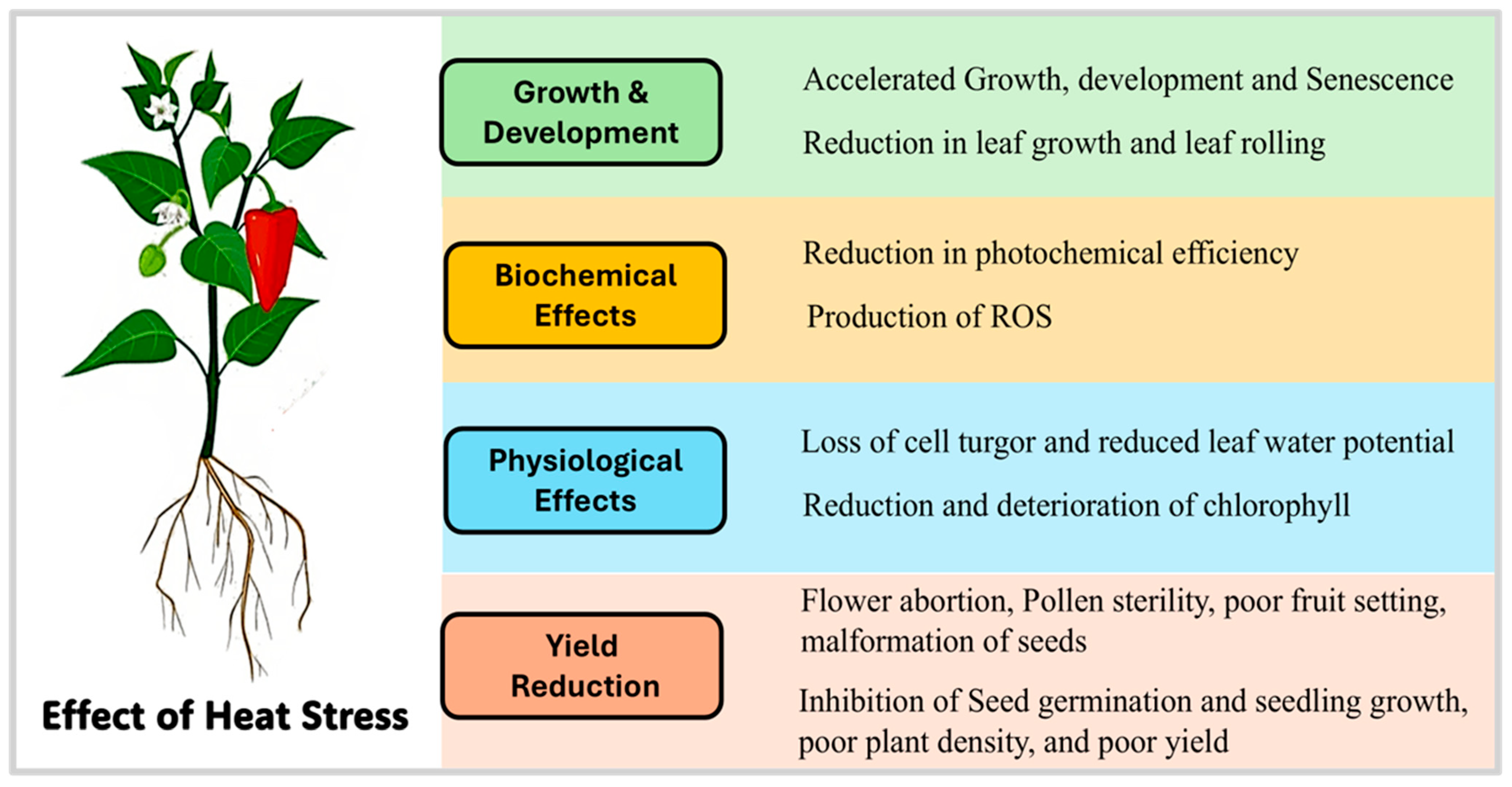
Heat stress refers to a temperature increase above the optimal level for a sufficient duration, leading to irreversible plant damage. Generally, a rise of 10 to 15 °C can cause heat stress or heat shock in plants. Chilli is an important vegetable crop that exhibits optimal growth and development within a temperature range of 18 to 30 °C; however, temperatures exceeding this optimal range negatively affect it physiologically and cause morphological injuries (Figure 2), resulting in a drastic reduction in yield and quality, which can ultimately lead to crop failure.

4. Reproductive Response of Chilli to Heat Stress

Chilli is highly susceptible to heat stress, particularly during the critical stages of flowering and fruiting. Prolonged exposure of plants to heat stress reduces the duration of plants development phase resulting in smaller and fewer organs, limited light perception throughout the shortened life cycle along with disruptions in carbon assimilation processes. Thus, under heat-stressed conditions, both the number of flowers and the days to 50% flowering decrease due to early flowering, shortened flowering duration, and flower abscission. Furthermore, temperatures above 38 °C during the flowering stage reduce pollen viability, leading to flower sterility, flower drop, and a significant decrease in fruit set percentage [2]. The ill-filled, distorted fruit produced by heat-stressed plants show a significant reduction in both the number and weight of fruit. The stress-induced reductions in relative water content result in lower net CO2 assimilation rates, which ultimately hinder growth. Consequently, pollen abortion, floral malformation, limited fertilisation, and abnormal seed set are the outcomes of elevated temperatures during the reproductive stages in chilli, significantly contributing to a drop in yield and productivity. Similar effects of heat stress were observed in other crops including maize, brassica, tomato, bell pepper, flax, canola, and soybean.

5. Vegetative Response of Chilli to Heat Stress

Elevated temperatures during the vegetative stages increase the leaf temperature and reduce the stomatal conductance, which negatively impacts the leaf water potential and consequently limits its photosynthetic activity. The growth and development of plants are hampered under stressed conditions, such that a significant decline in plant height, leaf number, and leaf area occurs. Furthermore, the stressed chilli plants show several other morphological injuries such as reduced root growth, inhibited root system, fruit and leaf scorching, decrease in fresh biomass, along with reduction in leaf length, width, area, and perimeter, but the number of primary and secondary branches are not severely affected by heat stress [3]. However, in chilli crop, heat stress shows detrimental effects during reproductive stages, but the vegetative stages are not significantly affected by heat stress [4]. All reproductive traits in stressed chilli were significantly reduced except for seed number, which showed no difference. However, the malformed seeds were abundant in susceptible chilli genotypes as compared to tolerant genotypes [3].

6. Biochemical Response of Chilli to Heat Stress

In stressed plants, heat shock causes changes in the level of enzymes, lipids, and protein metabolism, which result in alterations in membranes of most cellular organelles, such as mitochondria, endoplasmic reticulum, chloroplasts, and the nucleus. The physiological processes, including photosynthesis, respiration, transpiration, enzymatic activity, and gaseous exchange, are severely affected. The damage caused by high temperature to cell membranes results in leakage of solutes, leading to limited photosynthetic activity. The susceptible genotypes show a decline in transpiration rate, stomatal conductance, and photosynthetic activity, but the canopy temperature, stomatal density, and electrolyte leakage were higher [3]. The relative chlorophyll content and water-use efficiency remained unaffected by heat stress [3]. During stress, increased sensitivity of plants leads to higher MDA content as the malondialdehyde (MDA) is generated excessively as a result of peroxidation of membrane polyunsaturated fatty acids due to stress.

7. Mechanism of Heat Stress Tolerance in Chillies

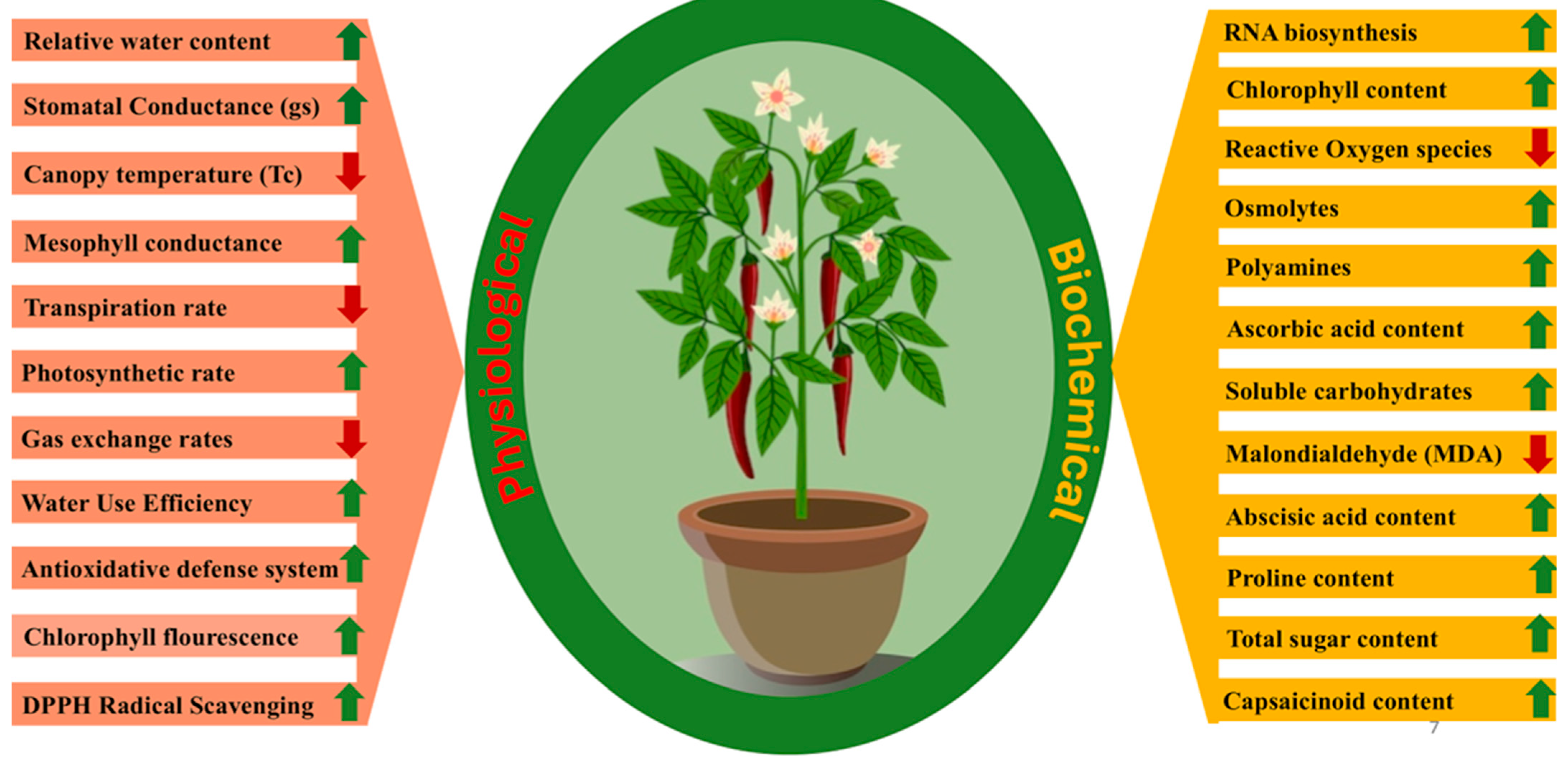
Plants follow different physico-chemical mechanisms as an adaptation strategy in response to heat stress conditions to acclimate to the abiotic stresses. Heat tolerance mechanism involves the accumulation of various osmoprotectants, antioxidants, and heat-shock proteins (Hsps). In response to the heat stress-induced changes in the osmotic potential of cells, the plants increase the accumulation level of osmolytes. This osmotic adjustment in plant cells helps maintain the turgor of guard cells and leaf tissues to keep stomata open under elevated temperatures, which consequently improves stomatal conductance and transpiration ratio. This aids in lowering leaf temperature and sustaining their photosynthetic activity (Figure 3).
The heat-tolerant chilli exhibits lower leaf temperature, which helps in maintaining dynamic stomatal activity, thus promoting transpirational cooling, efficient evaporation, water-use efficiency, and gas exchange properties under stress conditions, thereby imparting heat tolerance in chilli [5]. Heat-tolerant plants have characteristic small stomata and lower relative cell injury percentage; however, the stomatal density in tolerant plants is significantly reduced to minimise water loss under heat stress conditions.
Other morphological traits of heat-tolerant plants that distinguish them from heat-susceptible plants include plant height, leaf size, stem length, stem thickness, number of flowers and fruits, fruit weight, fruit size, plant canopy width, pericarp thickness, and leaf chlorophyll content [3]. Heat-tolerant plants have a dwarf stature with a narrow canopy of smaller and fewer leaves to reduce heat absorption and water loss through transpiration. They possess thicker stems with deeper roots to absorb more water, store it in stems, and provide structural support. To compensate for flower abortion during stress conditions, the tolerant plants produce a higher number of flowers and, in turn, more fruit of thicker pericarp than susceptible genotypes [4]. However, fruit weight and fruit size is lower due to water conservation [6]. Tolerant plants have higher chlorophyll content than susceptible plants to maintain photosynthesis rate even under stress.
Furthermore, the heat tolerance mechanism involves the accumulation of various antioxidants and heat-shock proteins (Hsps). In heat-tolerant chilli genotypes, the active ROS scavenging biochemical mechanism against heat stress involves an increased content of antioxidants such as catalase (CAT), peroxidase (POD), and superoxide dismutase (SOD) [3]. In addition to increased antioxidant enzyme activity, the plants produce higher protein content, especially heat-shock proteins (HSPs), to improve thermotolerance. These HSPs help prevent protein aggregation, preserve their functionality, eliminate harmful polypeptides, and refold denatured proteins to restore cellular balance.

8. Strategies to Improve Heat Stress Tolerance in Chillies

Nowadays, high temperature stress has proven to be a major plant stress for which different mitigation strategies are being used to reduce stress effects and produce heat stress-resilient plants that possess the capability to tolerate heat shock and tackle its detrimental effects. Seed priming, grafting, and foliar application of osmoprotectants, phytohormones, and polyamines are being used to mitigate the harmful impact of heat stress. Other adaptations in cultivation methods also aid in heat stress management, including changing plantation dates, shifting cultivation areas geographically, improving water management, adjusting irrigation timing, and switching from rain-fed to irrigated farming systems [7].
Conventional breeding programmes have been rewarding in developing new heat-tolerant crop genotypes. In hot pepper stress improvement programmes, heterosis and pedigree breeding methods with recurrent selection help in the exploitation of favourable genetic components [8]. Development of heat-tolerant hybrids requires the screening of such genotypes that possess the capability to provide a sustainable yield even under stress conditions.

9. Breeding in Chilli Pepper

Chilli pepper is an often-cross-pollinated crop. Self-pollination occurs due to hermaphrodite flowers. However, the degree of cross-pollination ranges from 7 to 36%, primarily due to the chasmogamous nature and protogynous behaviour of its flowers [9]. Anthesis occurs during the early morning hours, between 6 and 9 am, and flowers remain open for 2 to 3 days. Its stigma becomes receptive about half or 5 h before the release of pollen grains and their receptivity is highest on the day of anthesis. Anther dehiscence usually occurs at 9 to 11 am. Although crossing can be performed at any time during the day, early morning is preferable [10].

10. Objectives and Techniques of Breeding in Chilli

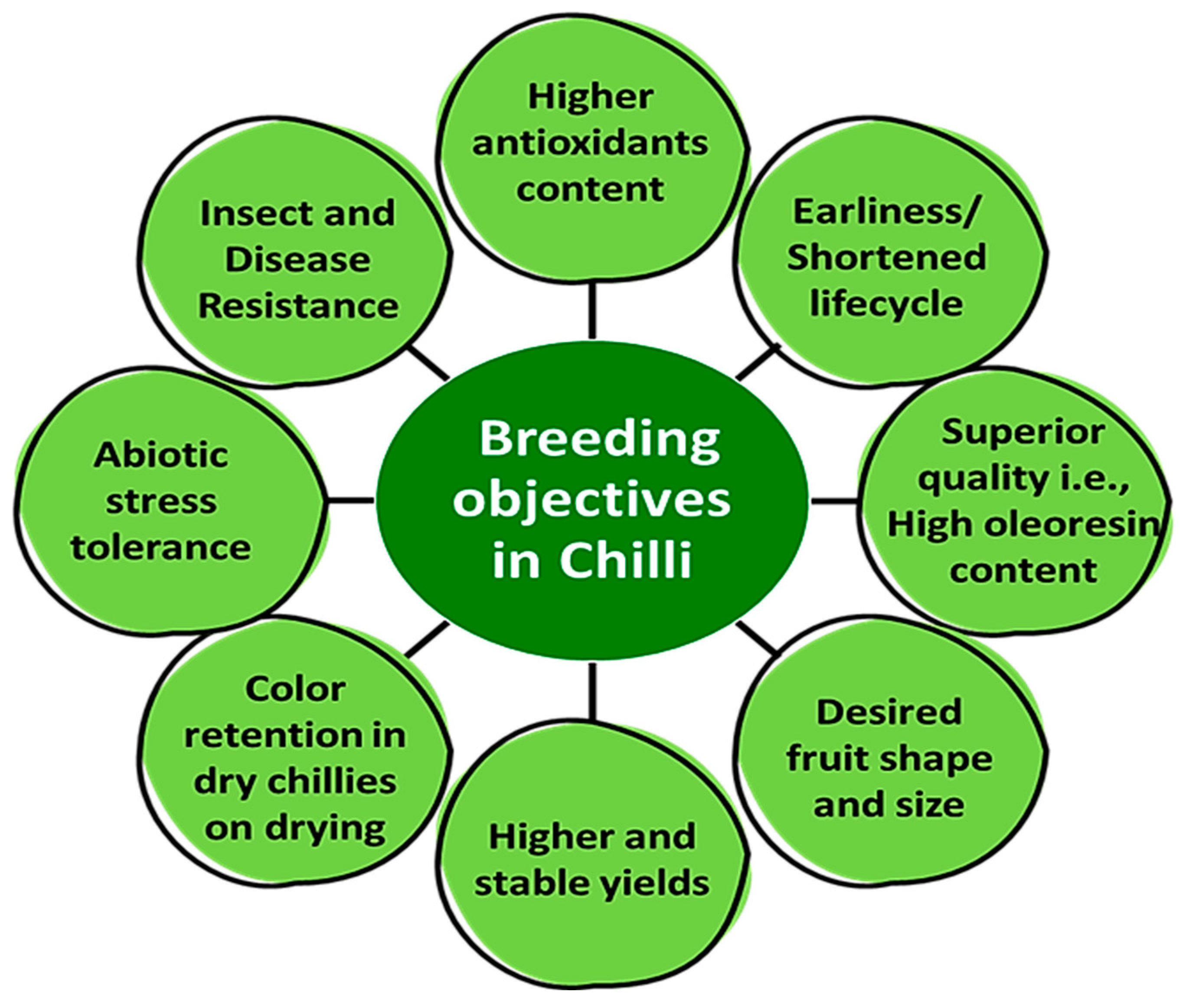
Breeding in chilli pepper is performed for numerous objectives (Figure 4), such as to obtain higher yields [8], desirable fruit shape, size [11], colour [12], pungency [13], and seed content [14]. Biochemical traits that can be improved include high sugar/acid ratio, vitamin C, high pigment content, high capsaicin [15], high oleoresin, ascorbic acid content, etc.
In addition to these quality improvements, several other objectives are also considered, such as tolerance/resistance to diseases, pests, and abiotic stresses [16]. Adverse environmental conditions, including heat, drought, and salinity, have become limiting production factors.
Breeding methods practised in chilli pepper include mass selection [17], pedigree method [18], back-cross method [19], recurrent selection [8], heterosis breeding [20], and mutation breeding.

11. Heterosis Breeding and Its Application

Heterosis or hybridisation is a conventional breeding technique that involves the transfer of genes from one species to another through crossing, to create genetic variation and develop superior inbred lines. Heterosis was first explained as a breeding method by East and Hays [21]; however, Doshi and Shukla [22] first reported heterosis in chilli peppers. It improves both qualitative and quantitative traits controlled by both types of gene action—both non-additive and additive. This significant genetic tool indicates the superiority of the F1 offspring to their parents by yielding 30–400% enhancement and enrichment in crop yield and quality [23].
Chilli pepper has hermaphrodite flowers [9]. Therefore, hybridisation is performed by manual emasculation followed by pollination [17]. It involves the removal of anthers containing pollen as an initial step to avoid self-pollination. Then, pollen grains collected from the female structure of the desirable plant are brushed onto the stigma to ensure cross-pollination. Heterosis breeding method is employed successfully in chilli for improvement of various traits as described in Table 1.

12. Conclusions

Chilli pepper is an important spice crop, globally valued for its medicinal, nutritional, and economic benefits. Its productivity is significantly constrained, especially due to the current trends of global warming. Heat stress drastically affects the vegetative, physiological, biochemical, and reproductive processes in chilli crops, resulting in significant productivity and quality loss. Thus, there is an essential need to understand how the chilli crop responds physiologically and biochemically to heat-stressed conditions to develop the desired thermotolerant cultivars. Strategic breeding approaches are crucial as heat tolerance is an inherently complex trait regulated by several physiological and genetic processes. Among these approaches, heterosis breeding has emerged as an effective approach to exploiting genetic diversity and non-additive gene actions to enhance stress resilience, vigour, adaptability, and yield potential. The integration of heterosis breeding with physiological screening, biochemical characterisation, and molecular insights can significantly accelerate and improve the efficiency of the development of heat-tolerant chilli hybrids. With the escalating challenges of climate change, the adoption of such innovations is necessary to ensure sustainable production, safeguarding farmers’ livelihoods and strengthening global food security.

Author Contributions

Conceptualization and methodology; I.H. and M.A.K.; writing and reviewing M.T.A. and R.M.R.; review and editing, F.A.T. and I.A.; review, H.N. and M.H.K. All authors have read and agreed to the published version of the manuscript.

Funding

The research received no external funding.

Institutional Review Board Statement

Not applicable.

Informed Consent Statement

Not applicable.

Data Availability Statement

No new data were created in this study.

Acknowledgments

The authors thank the Department of Horticulture, PMAS-Arid Agriculture University, Rawalpindi, for facilitating and supporting the study.

Conflicts of Interest

The authors declare no conflicts of interest.

References

  1. Ministry of National Food Security and Research (MNFSR). Fruits, Vegetables, and Condiments Statistics of Pakistan 2022–23. Available online: https://mnfsr.gov.pk/PublicationDetail/ZDFlMzNiZDUtMDMzNC00N2RhLWI5YjUtNGMwMzM3NTEyYWZi (accessed on 26 August 2025).
  2. Reddy, M.; Kumar, R.; Ponnam, N.; Prasad, I.; Barik, S.P.; Pydi, R.; Pasupula, K. Chili: Breeding and genomics. Veg. Sci. 2023, 1, 177–188. [Google Scholar] [CrossRef]
  3. Aruna, T.S.; Srivastava, A.; Tomar, B.S.; Khar, A.; Yadav, H.; Jain, P.K.; Mangal, M. Insights from morpho-physio-biochemical and molecular traits of hot pepper genotypes contrasting for heat-tolerance. Indian J. Hortic. 2024, 81, 13–18. [Google Scholar]
  4. Srivastava, A.; Singh, K.; Khar, A.; Parihar, B.R.; Tomar, B.S.; Mangal, M. Morphological, biochemical, and molecular insights on responses to heat stress in chilli. Indian J. Hortic. 2022, 79, 15–22. [Google Scholar] [CrossRef]
  5. Deva, C.R.; Urban, M.O.; Challinor, A.J.; Falloon, P.; Svitákova, L. Enhanced leaf cooling is a pathway to heat tolerance in common bean. Front. Plant Sci. 2020, 11, 19. [Google Scholar] [CrossRef]
  6. Usman, M.G.; Rafii, M.Y.; Ismail, M.R.; Malek, M.A.; Abdul Latif, M. Heritability and genetic advance among chili pepper genotypes for heat tolerance and morphophysiological characteristics. Sci. World J. 2014, 1, 308042. [Google Scholar]
  7. Chapman, S.C.; Chakraborty, S.; Dreccer, M.F.; Howden, S.M. Plant adaptation to climate change—Opportunities and priorities in breeding. Crop Pasture Sci. 2012, 63, 251–268. [Google Scholar] [CrossRef]
  8. Singh, P.; Cheema, D.S.; Dhaliwal, M.S.; Garg, N. Heterosis and combining ability for earliness, plant growth, yield and fruit attributes in hot pepper (Capsicum annuum L.) involving genetic and cytoplasmic-genetic male sterile lines. Sci. Hortic. 2014, 168, 175–188. [Google Scholar] [CrossRef]
  9. Sarfaraz, M.; Veersain, M.; Yadav, S.; Srivastav, P. Seed production of chilli (Capsicum frutescens). In Organic Horticulture; Bright Sky Publications: Delhi, India, 2022; p. 155. [Google Scholar]
  10. Soyam, S.R.; Apturkar, A.M. A review: Breeding in chilli. Int. J. Chem. Stud. 2020, 9, 171–173. [Google Scholar] [CrossRef]
  11. Bhargava, Y.R.; Umalkar, G.V. Productive mutations induced in Capsicum annuum by physical and chemical mutagens. IV Int. Symp. Seed Res. Hortic. 1988, 253, 233–238. [Google Scholar]
  12. Selvakumar, R.; Manjunathagowda, D.C.; Singh, P.K. Capsicum: Breeding Prospects and Perspectives for Higher Productivity. In Capsicum—Current Trends and Perspectives; IntechOpen: London, UK, 2022. [Google Scholar]
  13. Arimboor, R.; Natarajan, R.B.; Menon, K.R.; Chandrasekhar, L.P.; Moorkoth, V. Red pepper (Capsicum annuum) carotenoids as a source of natural food colors: Analysis and stability—A review. J. Food Sci. Technol. 2014, 52, 1258–1271. [Google Scholar] [CrossRef] [PubMed]
  14. Chiou, K.L.; Hastorf, C.A.; Bonavia, D.; Dillehay, T.D. Documenting cultural selection pressure changes on chile pepper (Capsicum baccatum L.) seed size through time in Coastal Peru. Econ. Bot. 2014, 68, 190–202. [Google Scholar] [CrossRef]
  15. Naves, E.R.; Scossa, F.; Araújo, W.L.; Nunes-Nesi, A.; Fernie, A.R.; Zsögön, A. Heterosis for capsaicinoid accumulation in chili pepper hybrids is dependent on the parent-of-origin effect. Sci. Rep. 2022, 12, 14450. [Google Scholar] [CrossRef]
  16. Uppuluri, L.S.; Krishna, M.S.R. Screening of chilli genotypes for drought tolerance. In New Horizons in Biotechnology; Springer Science+Business Media: Heidelberg, Germany, 2015; pp. 257–260. [Google Scholar]
  17. Nsabiyera, V.; Ochwo-Ssemakula, M.; Sseruwagi, P.; Ojiewo, C.O.; Gibson, P. Combining ability for field resistance to disease, fruit yield and yield factors among hot pepper (Capsicum annuum L.) genotypes in Uganda. Int. J. Plant Breed. 2013, 7, 12–21. [Google Scholar]
  18. Oliveira, F.D.A.D.; Duarte, S.N.; Medeiros, J.F.D.; Aroucha, E.M.M.; Dias, N.D.S. Quality in the pepper under different fertigation managements and levels of nitrogen and potassium. Rev. Ciênc. Agron. 2015, 46, 764–773. [Google Scholar] [CrossRef]
  19. Anandhi, K.; Khader, K.A. Gene effects of fruit yield and leaf curl virus resistance in interspecific crosses of chilli (Capsicum annuum L. and C. frutescens L.). J. Trop. Agric. 2011, 49, 107–109. [Google Scholar]
  20. Meena, O.P.; Dhaliwal, M.S.; Jindal, S.K. Heterosis breeding in chilli pepper by using cytoplasmic male sterile lines for high-yield production with special reference to seed and bioactive compound content under temperature stress regimes. Sci. Hortic. 2020, 262, 109036. [Google Scholar] [CrossRef]
  21. East, E.M.; Hayes, H.K. Heterozygosis in evolution of life and in plant breeding. Mol. Genet. Genom. 1914, 11, 133. [Google Scholar] [CrossRef]
  22. Deshpande, R.B. Studies in Indian chillies. The inheritance of some characters in Capsicum annuum (L.). Indian J. Agric. Sci. 1933, 3, 219–300. [Google Scholar]
  23. Awachar, A.V.; Pandey, M.K. Review on heterosis and combining ability of chilli. Int. J. All Res. Educ. Sci. Methods 2021, 9, 1018–1022. [Google Scholar]
  24. Chaudhary, A.; Kumar, R.; Solankey, S.S. Estimation of heterosis for yield and quality components in chilli (Capsicum annuum L.). Afr. J. Biotechnol. 2013, 12, 6605–6610. [Google Scholar] [CrossRef]
  25. Kaur, D.; Jindal, S.K.; Dhaliwal, M.S.; Meena, O.P. Improving fruit traits in chilli pepper through heterosis breeding. J. Breed. Genet. 2017, 49, 26–43. [Google Scholar]
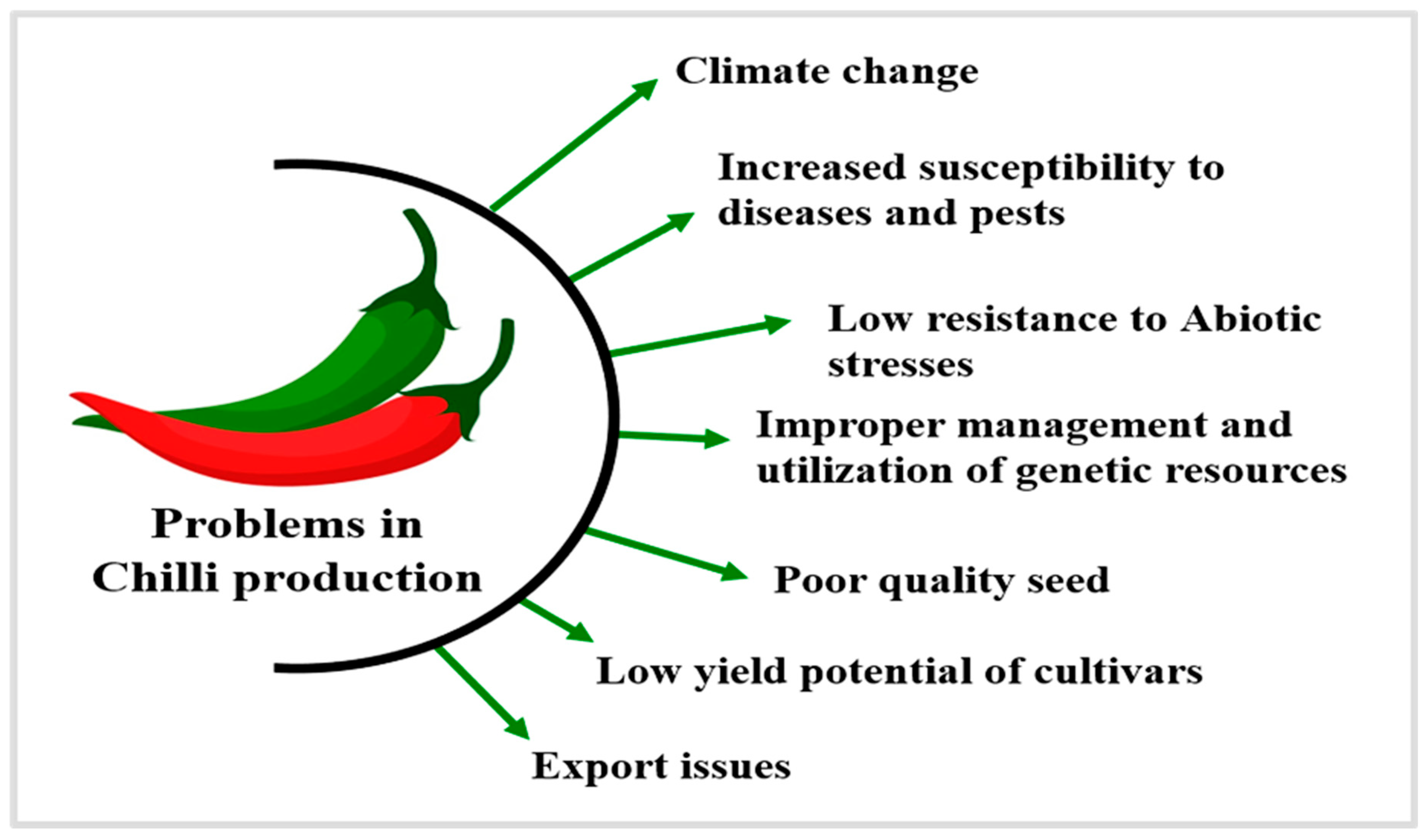
Figure 1. Global biotic and abiotic challenges in chilli production.
Blsf 51 00012 g001
Figure 2. Effect of heat stress on growth, development, physiology, yield, and biochemical composition of chilli.
Blsf 51 00012 g002
Figure 3. The physiological and biochemical mechanisms of heat tolerance in chilli.
Blsf 51 00012 g003
Figure 4. Objectives of breeding in chilli pepper.
Blsf 51 00012 g004
Table 1. Some of the successful applications of the Heterosis breeding method in chilli.
Crop Breeding MethodTraits Improved Reference
ChilliHybridisation of cytoplasmic male sterile lines with potential hybridsYield, number of seeds, capsaicin content, quality traits, and bioactive compounds.[20]
Hybridisation of chilli lines with selected testersOleoresin content, capsaicin content[24]
Inter- and intra-specific hybrids developed from the diallel crossing of species of Capsicum, C. chinense, and C. annuumCapsaicinoid content[15]
Hybridisation of the genetic male sterile and the cytoplasmic male sterile linesTotal yield, early yield, plant height, fruit length, and a greater fruit number per plant. [8]
Half-diallel crossing of parental linesPericarp thickness, days to 50% flowering, length and width of fruit, seed number per fruit, plant height, total yield, early fruit yield, and weight of 100 seeds.[25]
Disclaimer/Publisher’s Note: The statements, opinions and data contained in all publications are solely those of the individual author(s) and contributor(s) and not of MDPI and/or the editor(s). MDPI and/or the editor(s) disclaim responsibility for any injury to people or property resulting from any ideas, methods, instructions or products referred to in the content.