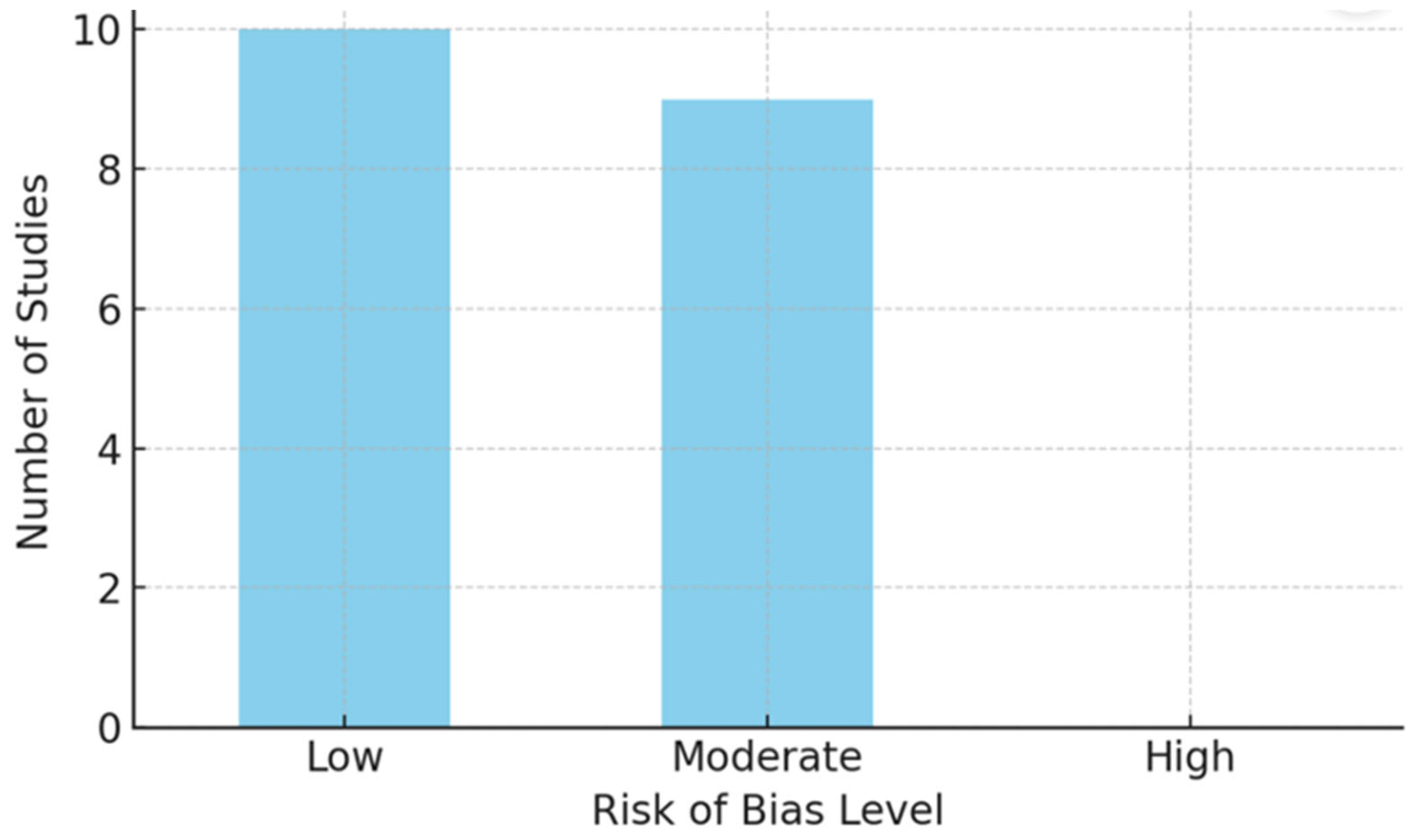
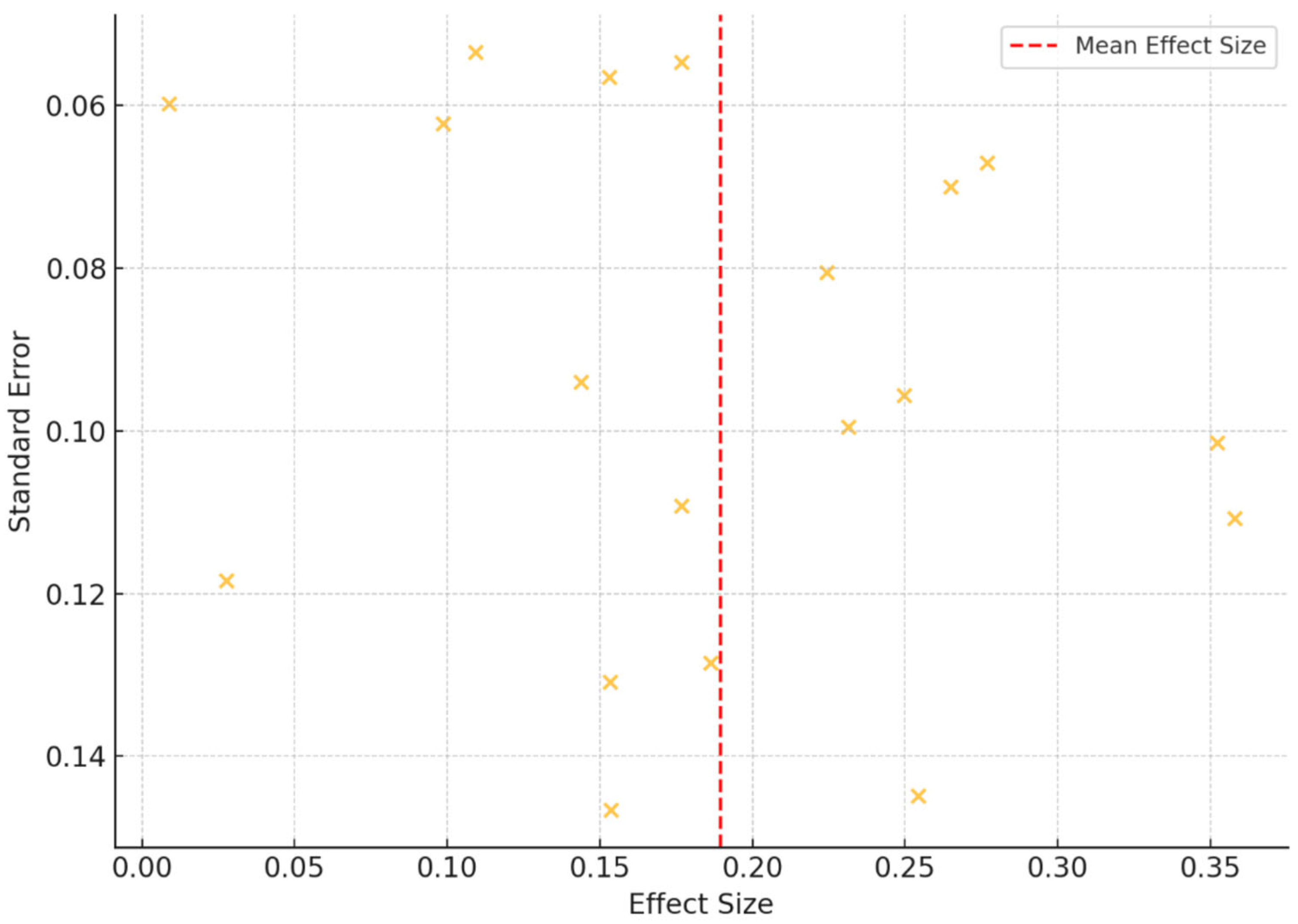
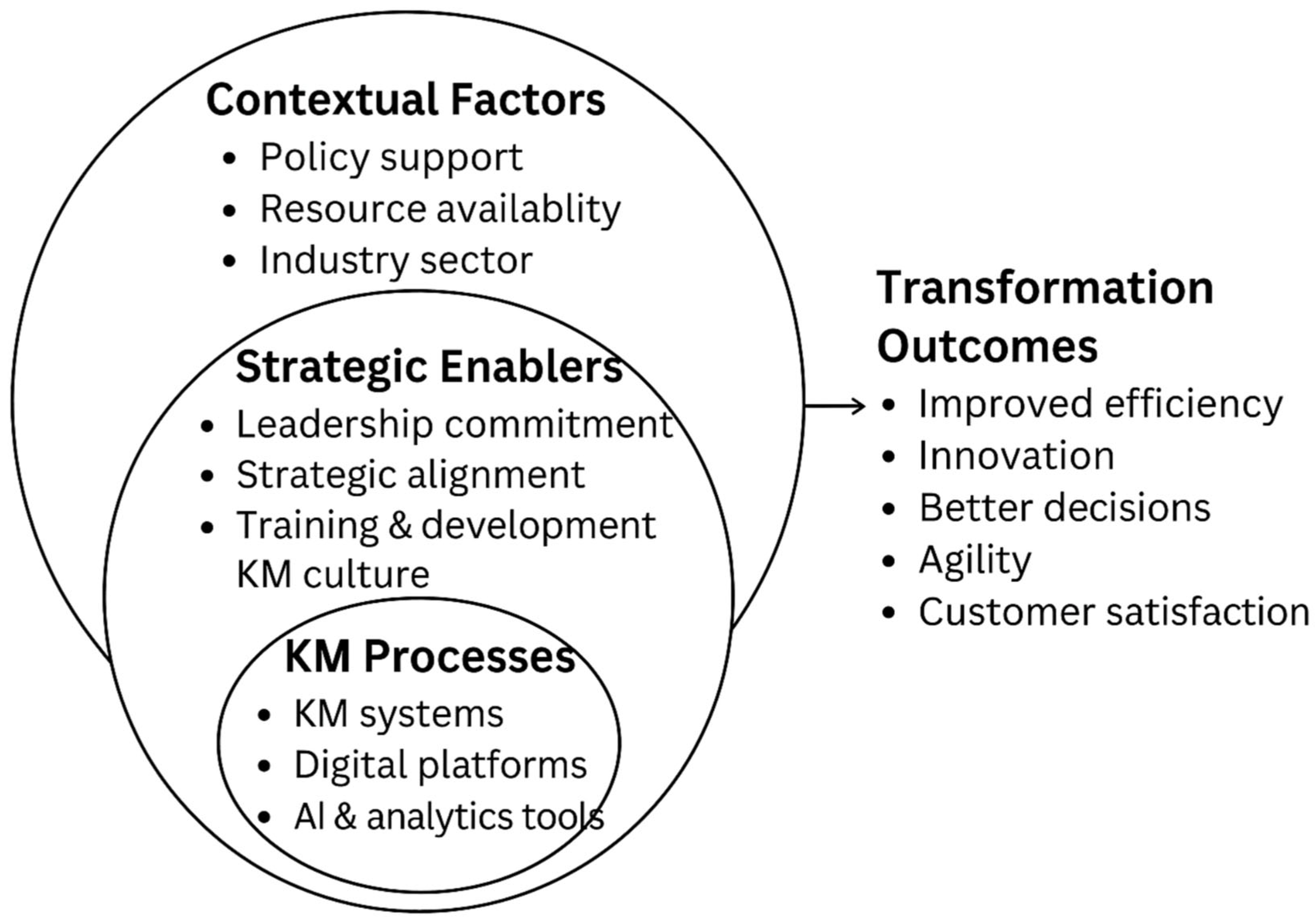
This section presents the methodological framework adopted to conduct a systematic literature review on the role of KM in enabling DT within SMEs. The review focuses on peer-reviewed literature published between 2020 and 2025, a period marked by accelerated digitalization efforts among SMEs. A structured protocol was followed, aligned with PRISMA guidelines, to ensure transparency and reproducibility. The review process encompassed clear eligibility criteria, the use of comprehensive data sources—Google Scholar, Scopus, and Web of Science—and a targeted search strategy using a Boolean keyword combination tailored to the KM–DT–SME intersection. Subsequent steps included the selection of relevant studies, systematic data extraction, and synthesis, alongside assessments for bias and certainty of evidence. Data synthesis included tabulation and visual display of findings to highlight emerging themes, contextual influences, and empirical outcomes. This methodologically rigorous approach ensures that the results reflect a balanced and comprehensive view of KM-driven DT in SMEs across diverse geographic and sectoral contexts.
3.1. Study Selection
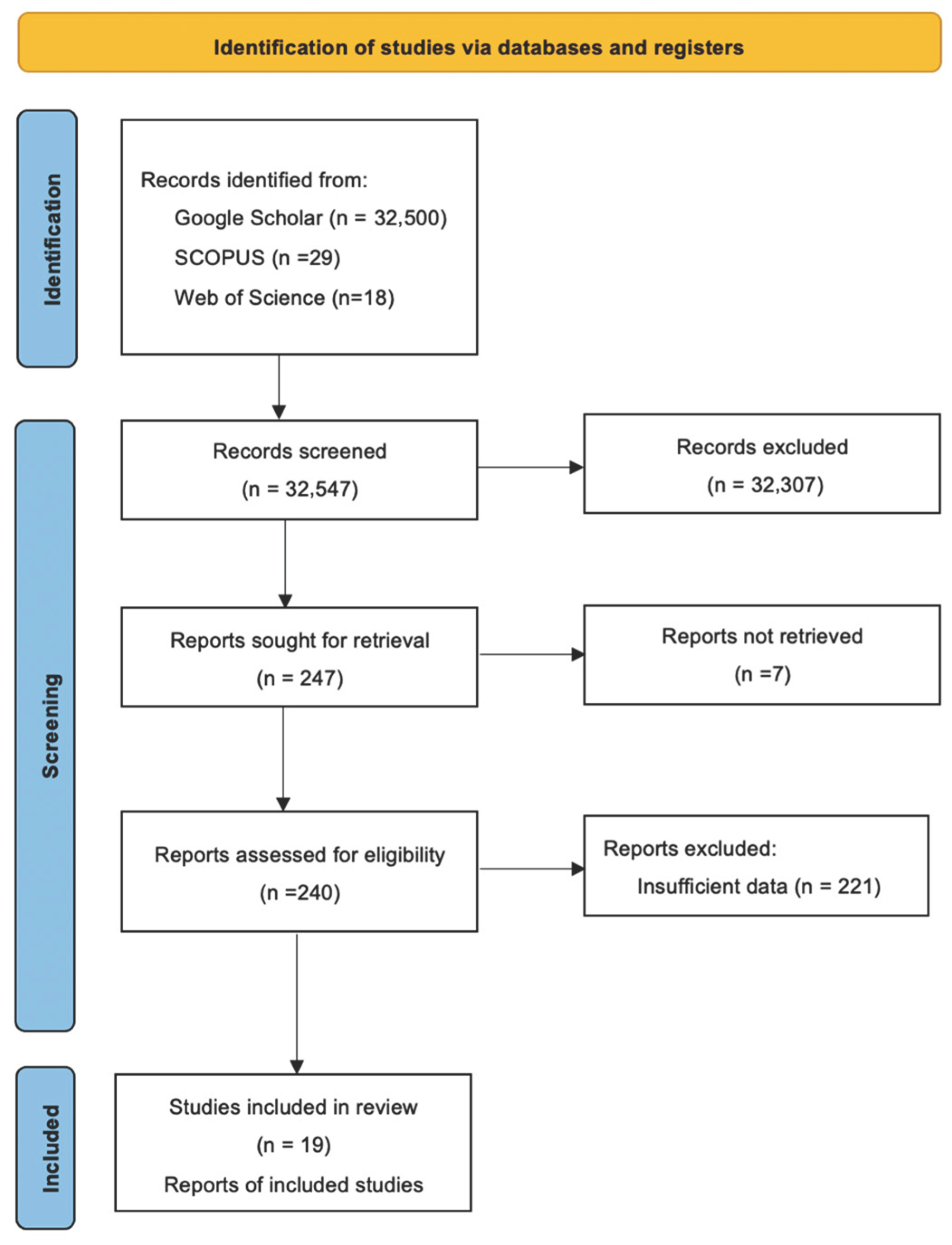
Although initial search results varied significantly across databases (Google Scholar: 32,500; Scopus: 29; Web of Science: 18), these figures reflect the differing scope, indexing coverage, and search algorithms of each database. Google Scholar retrieves a broader range of results, including gray literature, theses, and non-indexed works, whereas Scopus and Web of Science focus on peer-reviewed and indexed publications. After applying the inclusion and exclusion criteria, removing duplicates, and screening for relevance, a total of 19 studies were retained for analysis. These studies formed the basis for the synthesis of findings across key themes, including knowledge management processes, technological tools, strategic enablers, and contextual influences on digital transformation within SMEs. The complete study selection process is visually summarized in
Figure 4 through a PRISMA flowchart.
Figure 4.
PRISMA Flow Chart.
Figure 4.
PRISMA Flow Chart.
While initial searches yielded a large number of records, the majority were excluded through the aforementioned multi-stage screening process. Duplicates were removed first, followed by title and abstract screening to exclude studies unrelated to SMEs, KM, or DT. Further full-text screening applied strict inclusion criteria: publications had to be in English, published between January 2020 and July 2025, and provide empirical or conceptual insights on the intersection of KM and DT in SMEs. Studies that were opinion pieces, lacked methodological rigor, or did not explicitly address KM–DT linkages were excluded. This rigorous filtering explains the large reduction from initial search hits to the final 19 studies, ensuring only high-relevance, high-quality sources were analyzed.
Table 3 summarizes the 19 studies included in the review, indicating the source database, research type, country, industry sector, and KM–DT relationship.
Table 3.
Summary of included studies, database of origin, and key characteristics.
Table 3.
Summary of included studies, database of origin, and key characteristics.
| ID | Ref. | Database | Research Type | Country | Industry Sector | DT Context | KM Processes | KM–DT Relationship |
| 1 | [6] | Google Scholar | Quantitative | Indonesia | Multi-sector | Tech Adoption, Business Model Innovation, HR Digital Transformation | Creation, Sharing, Application | Enables innovation, improves DT success, enhances agility |
| 2 | [14] | Google Scholar | Mixed-Methods | India | Retail | Customer Experience, Tech Adoption, Business Model Innovation | Acquisition, Storage, Sharing, Application | Supports change mgmt, improves DT success, enables innovation |
| 3 | [15] | Google Scholar | Qualitative | Egypt | Services | Customer Experience, BPR, Tech Adoption | Creation, Sharing, Application | Enables innovation, supports change mgmt, improves DT success |
| 4 | [16] | Google Scholar | Quantitative | Indonesia | Multi-sector | BPR, Tech Adoption, Business Model Innovation | Creation, Sharing, Application | Enables innovation, supports change mgmt, improves DT success |
| 5 | [17] | Google Scholar | Mixed-Methods | Germany | Manufacturing | Tech Adoption, BPR, Business Model Innovation | Creation, Sharing, Storage, Application | Enables innovation, improves DT success, enhances agility |
| 6 | [18] | Google Scholar | Conceptual Paper | Indonesia | Multi-sector | Tech Adoption, Business Model Innovation | Creation, Sharing, Storage, Application | Enables innovation, improves DT success |
| 7 | [19] | Google Scholar | Mixed-Methods | China | Multi-sector | Technology Adoption, Business Model Innovation | Knowledge Sharing, Knowledge Application | Improves DT success, enhances agility |
| 8 | [20] | Google Scholar | Qualitative | Italy | Manufacturing | Tech Adoption, Business Model Innovation | Creation, Sharing, Application | Enables innovation, supports change management |
| 9 | [21] | Web of Science | Conceptual/Mixed Review | Italy | Manufacturing, IT | Tech Adoption, Business Model Innovation | Sharing, Application | Improves DT success, enhances agility |
| 10 | [22] | Web of Science | Quantitative | Vietnam | Not specified | DT, Innovation, Policy | Not specified | Policies facilitate DT, enhance innovation |
| 11 | [23] | Web of Science | Quantitative | India | Not specified | Digital resilience, DT pathways | Management competencies, KM, monitoring | Enhances resilience, competitive advantage |
| 12 | [24] | Web of Science | Mixed-Methods | Germany | Not specified | Digital maturity, DT | Stakeholder interaction, strategic capabilities | Provides pathway to DT |
| 13 | [25] | Web of Science | Quantitative | Italy | Innovative SMEs | Digital collaboration, social innovation | Resource sharing, collaboration | Enhances innovation capital, competitiveness |
| 14 | [26] | Scopus | Conceptual Paper | Romania | Multi-sector | Tech Adoption, Business Ecosystem Development | Sharing, Transfer | Enables innovation, supports change mgmt |
| 15 | [27] | Scopus | Qualitative | South Africa | Multi-sector | Tech Adoption | Sharing, Application | Improves DT success, supports change mgmt |
| 16 | [28] | Scopus | Conceptual | Germany | Manufacturing | Tech Adoption, Human–Machine Collaboration | Capture, Transfer | Supports change mgmt, enables automation |
| 17 | [29] | Scopus | Mixed-Methods | Italy | Multi-sector | BPR, Strategy Formation, Tech Adoption, Business Model Innovation | Creation, Sharing, Application, Codification | Enables innovation, improves DT success, supports change mgmt, enhances agility |
| 18 | [30] | Scopus | Quantitative | Italy | Creative Industry | Customer Experience, Tech Adoption | Acquisition, Storage, Transfer | Enhances customer engagement, improves decision-making, supports innovation |
| 19 | [31] | Scopus | Qualitative | UK | IT Services | Cultural Change, Strategy Formation, Tech Adoption | Sharing, Creation | Supports change management, enables cultural transformation |
Exclusion Rationale
During the qualitative assessment, two independent reviewers applied the predefined inclusion and exclusion criteria. To improve transparency, we note that studies were excluded for specific reasons such as the following: (1) Design suitability—e.g., articles that did not follow empirical or systematic approaches relevant to the research questions; (2) Sampling adequacy—e.g., studies with extremely small or non-representative SME samples; (3) Analytical rigor—e.g., insufficient data analysis or lack of methodological detail; (4) Reporting clarity—e.g., incomplete descriptions of variables, unclear results presentation, or missing context on KM–DT linkages. These examples illustrate the consistent application of quality screening to ensure only robust and relevant studies were included.
3.2. Study Selection Results
3.2.1. Distribution of Research
The evolution of scholarly interest in the intersection of KM and DT within SMEs reveals a clear upward trajectory in recent years. As illustrated in
Figure 5, most studies were published between 2022 and 2024, indicating intensified academic engagement with this topic during and after the COVID-19 pandemic—a period that catalyzed digital transformation across business sectors globally. This temporal concentration suggests that KM is increasingly viewed as a strategic enabler in the digitalization processes of SMEs. Notably, 2024 yielded the highest volume of publications, reflecting both heightened awareness and practical urgency surrounding digital capability building among smaller firms. In contrast, earlier years such as 2020 and 2021 exhibit fewer contributions, underscoring how the research landscape has matured over a relatively short period.
Figure 5.
Research distribution by number of studies published.
Figure 5.
Research distribution by number of studies published.
3.2.2. Distribution of Research by Online Databases
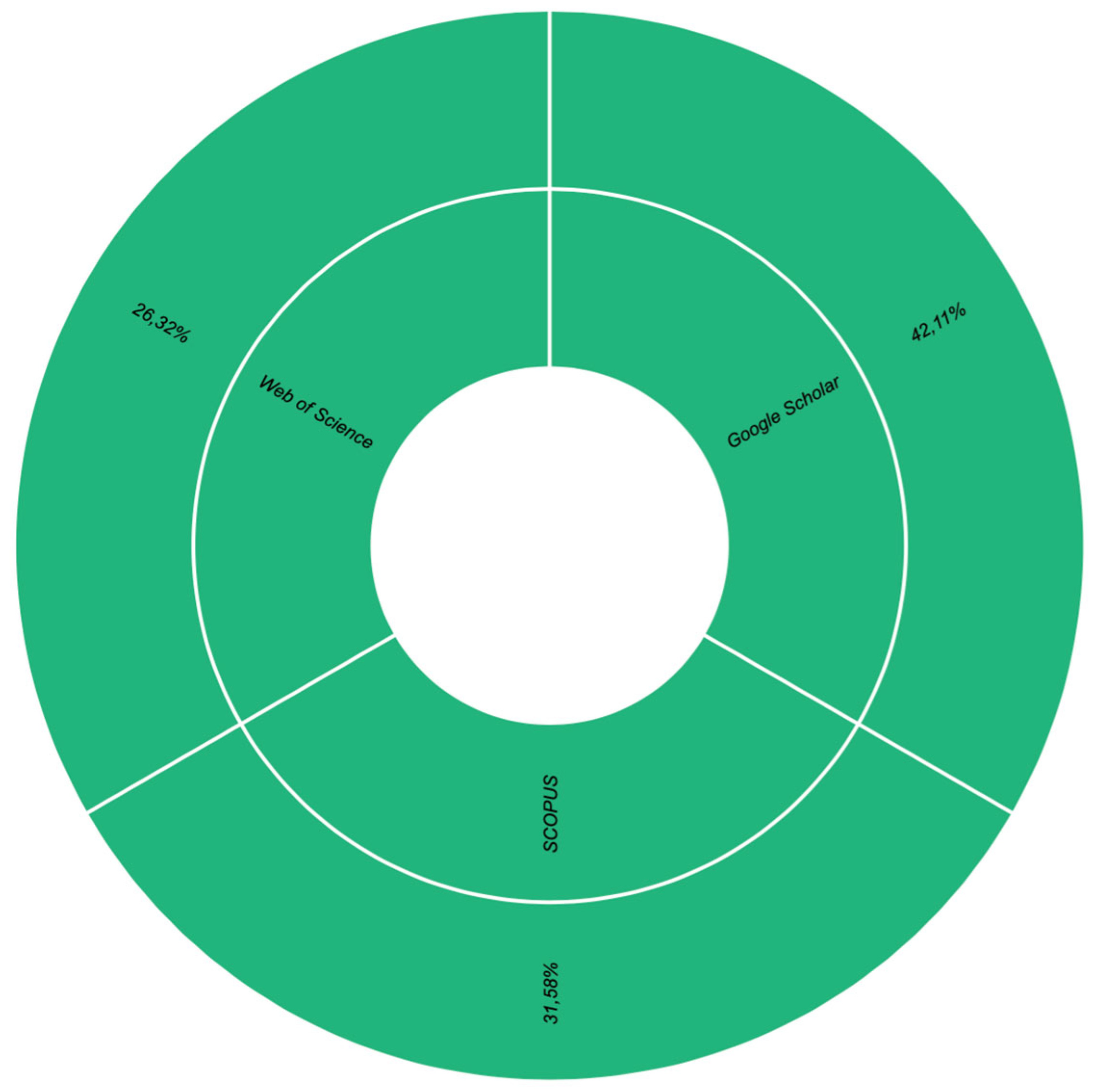
As shown in
Figure 6, the highest proportion of studies were sourced from Google Scholar (42.11%), which highlights the platform’s extensive indexing across open-access, gray, and peer-reviewed literature. This suggests that researchers in the domain of digital transformation and knowledge management within SMEs are increasingly drawing from diverse and accessible sources.
Scopus contributed 31.58% of the total studies, indicating strong representation from rigorously peer-reviewed and high-impact journals, particularly in management, information systems, and innovation studies. The remaining 26.32% were drawn from the Web of Science, reflecting a more traditional and academically curated source base. Though slightly smaller in volume, its inclusion ensures methodological robustness and citation traceability in the review.
Figure 6.
Research distribution by Online Databases.
Figure 6.
Research distribution by Online Databases.
3.2.3. Geographic Distribution of Research
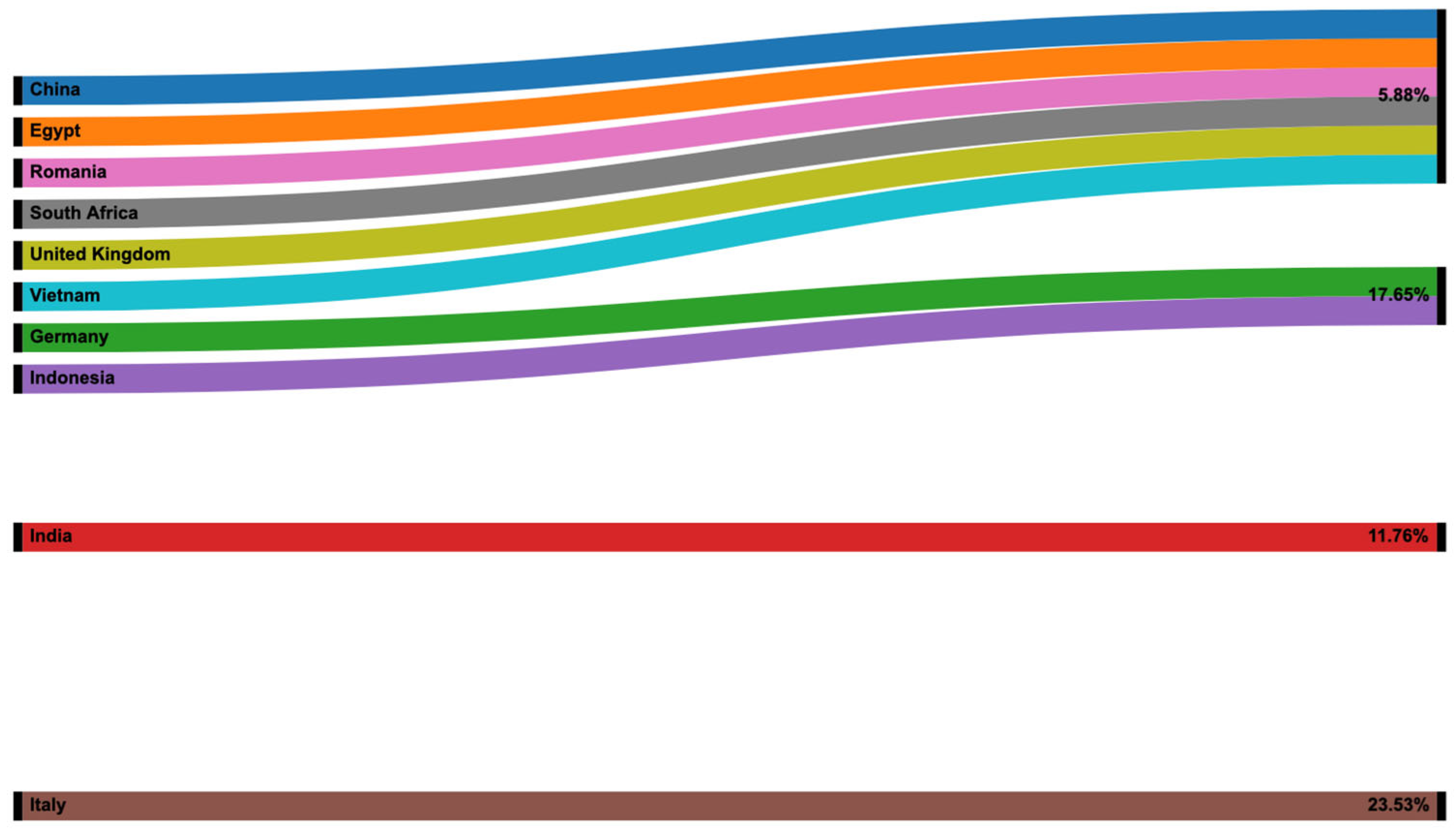
Figure 7 presents the geographic distribution of the studies included in the review. The analysis reveals that India accounts for the highest proportion, contributing 19.74% of the total studies. This dominant representation may reflect India’s growing SME sector and national emphasis on digital transformation through government-led initiatives such as Digital India. Italy follows with 21.05%, indicating a strong focus on digital innovation among European SMEs, especially within the Italian policy and industrial context.
Other notable contributors include Vietnam with 10.53%, suggesting an emerging body of research from Southeast Asia, and countries like China, Egypt, Germany, and Romania, each contributing 5.26%. These distributions reflect a reasonably global interest in the intersection of knowledge management and digital transformation in SMEs, though with greater emphasis on select regions. Countries such as South Africa and the United Kingdom are also represented, further broadening the regional scope of the review.
3.2.4. Research Data Sources and Methodological Approaches
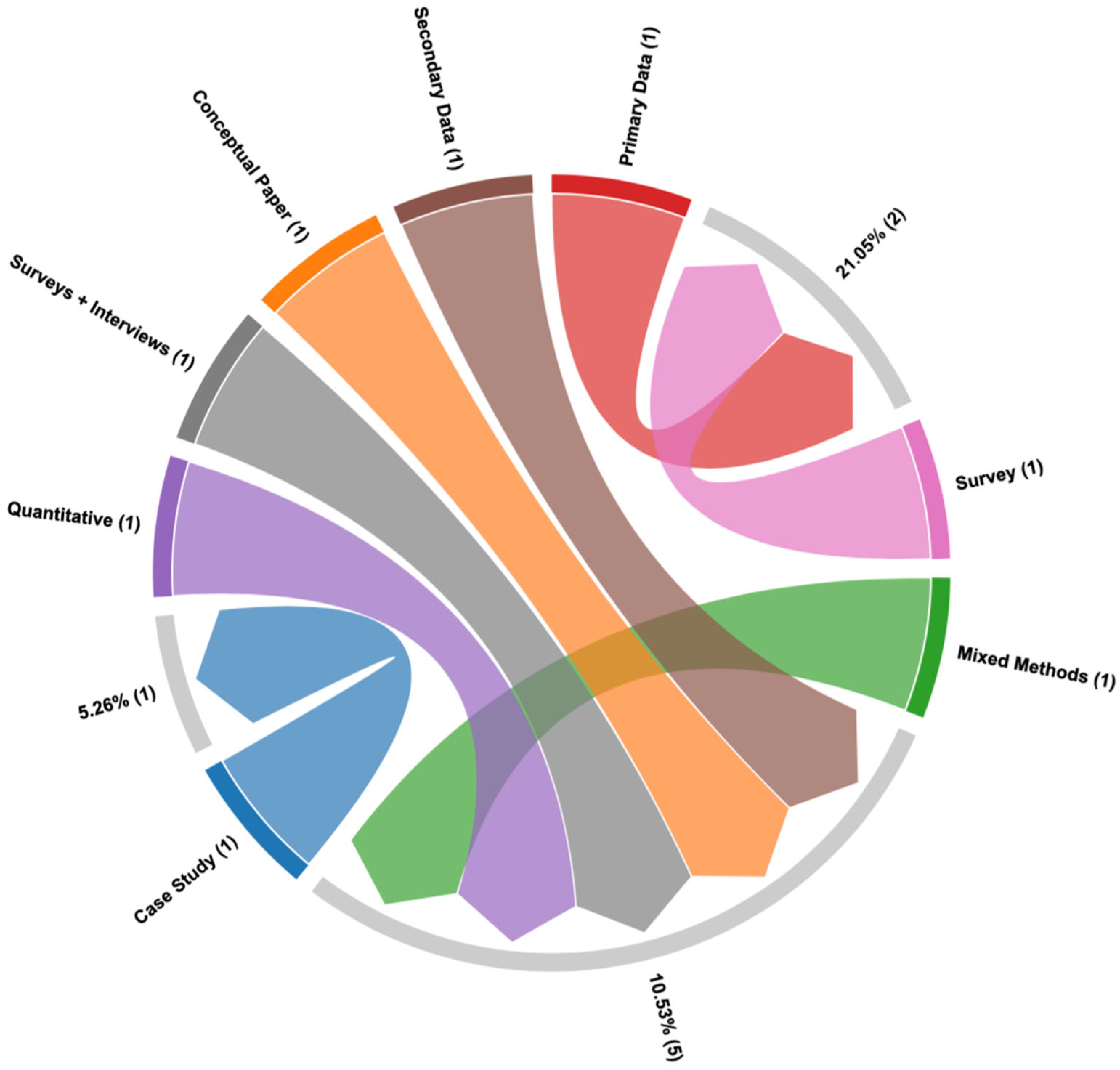
Figure 8 illustrates the distribution of research data sources and corresponding methodologies used in the studies reviewed. Primary data emerges as the most commonly used source, representing 31.58% of the studies. This highlights the emphasis on empirical investigation in the context of knowledge management (KM) and digital transformation (DT) within SMEs, often involving direct engagement with SME stakeholders through interviews, surveys, and focus groups. Secondary data and mixed methods each account for 15.79%, suggesting a balanced reliance on bibliometric, archival, or document-based sources, as well as triangulated approaches combining qualitative and quantitative techniques. The integration of mixed methods is particularly valuable in exploring the multifaceted nature of KM and DT, providing both depth and breadth.
Figure 8.
Research Data Source.
Figure 8.
Research Data Source.
Quantitative approaches, including surveys and statistical analysis, represent 10.53% of the studies, while case studies, conceptual papers, and survey-interview hybrids each account for 5.26%. This reflects the methodological diversity in the field, though the relatively low occurrence of conceptual work implies a greater maturity in empirical investigation rather than theoretical exploration.
3.2.5. SME Categorization in the Literature
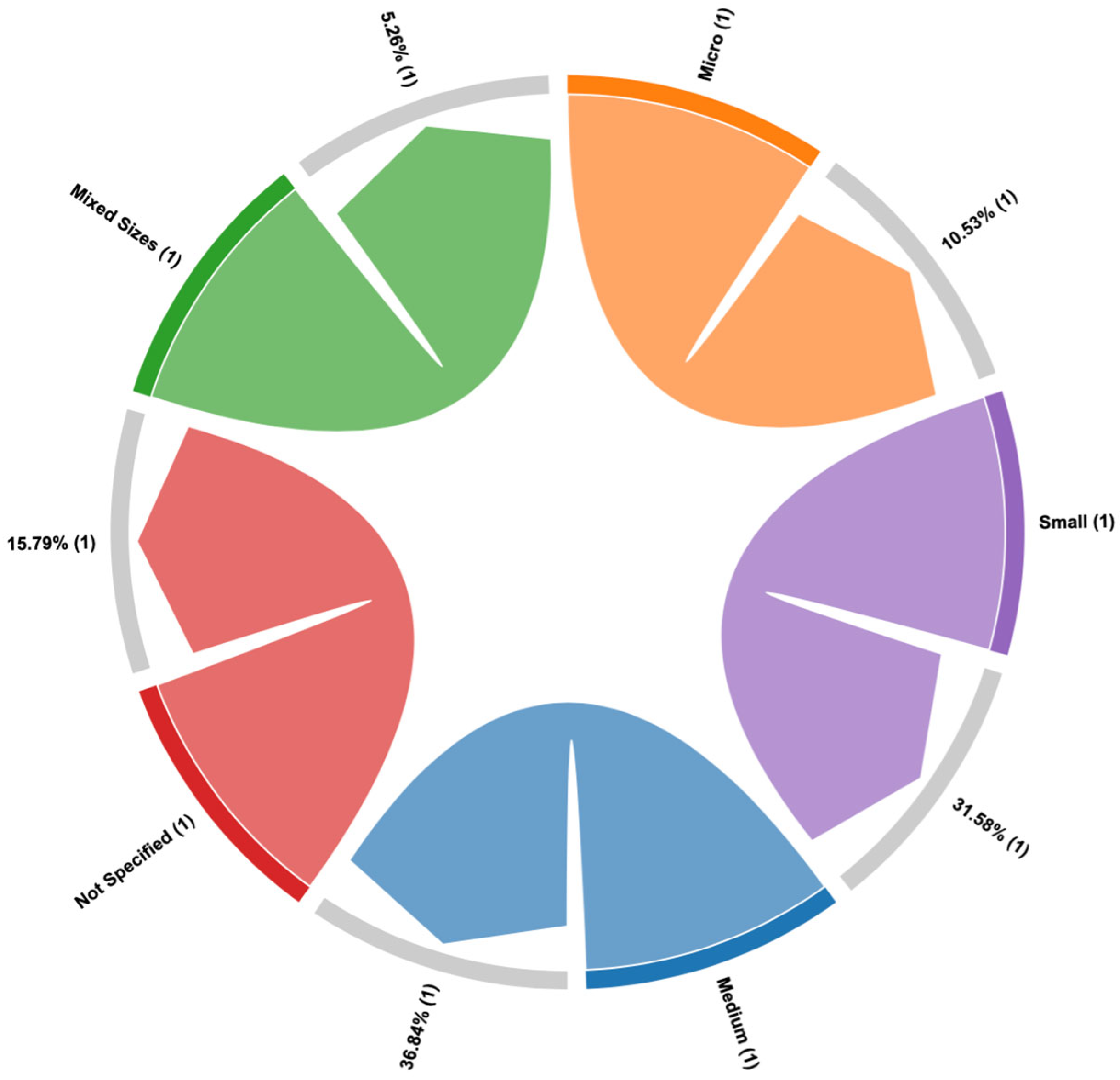
Figure 9 presents the distribution of reviewed studies based on SME classification, reflecting how researchers have defined or engaged with different enterprise sizes in their investigations. The category “Not clearly defined” represents the largest proportion, with 15.79%, indicating a notable ambiguity or generalization in many studies where the specific SME classification—whether micro, small, or medium—was not explicitly stated. This lack of clarity potentially limits the generalizability and applicability of findings, as KM and DT strategies can differ significantly across SME scales. Both “Small” and “Medium” categories account for 10.53% each, suggesting a relatively balanced interest in enterprises of these sizes. Meanwhile, “Micro SMEs” and “Small and Medium” combined appear less frequently (each at 5.26%), highlighting a research gap in understanding KM-DT dynamics specifically in micro enterprises or studies that simultaneously consider both small and medium businesses together.
Figure 9.
Research distribution by SME category.
Figure 9.
Research distribution by SME category.
The remaining portion labeled “Various SMEs” (10.53%) indicates studies that explored a range of SME sizes without isolating by classification, reflecting an integrative but non-segmented approach. These trends suggest that future research should strive for more precision in SME classification to better tailor KM and digital transformation strategies according to organizational scale.
3.2.6. Industry Sector Focus of KM and Digital Transformation in SMEs
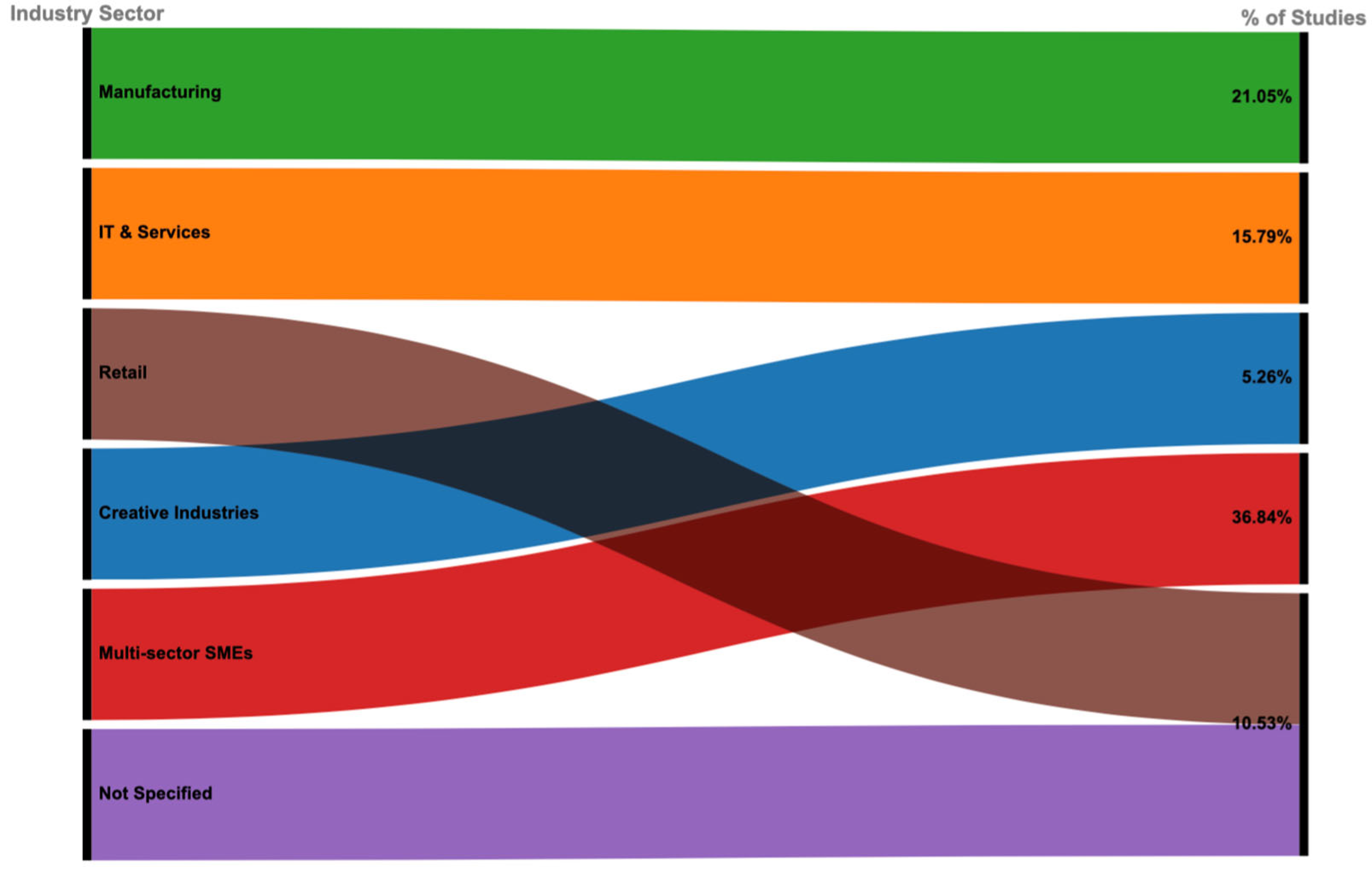
Figure 10 illustrates the sectoral distribution of studies examining KM in relation to DT) in SMEs. The manufacturing sector dominates the research landscape, accounting for 21.05% of the studies. This prevalence reflects manufacturing’s strong alignment with process optimization and technology integration, making it a primary focus for digital transformation initiatives supported by KM systems. The IT & Services sector follows with 15.79%, highlighting the relevance of KM in digitally intensive environments where service innovation, data analytics, and agile workflows are prominent. Meanwhile, Creative Industries account for 10.53%, reflecting growing interest in how KM supports innovation, flexibility, and digital content strategies in less conventional business sectors.
Figure 10.
Research distribution by SME Industry Sector.
Figure 10.
Research distribution by SME Industry Sector.
Interestingly, Multi-sector SME studies comprise 36.84%, the largest single category suggesting that many investigations adopt a cross-sectoral perspective without focusing on one specific industry. While this approach broadens applicability, it may obscure sector-specific KM challenges and opportunities. Retail accounts for a modest 5.26%, possibly due to its fragmented structure or lower uptake of formal KM strategies. Lastly, Not Specified industries represent 10.53%, highlighting a lack of contextual grounding in some studies. This distribution underlines the need for more balanced sectoral representation and deeper industry-specific analyses to enhance the practical utility of KM–DT research in SMEs.
3.2.7. Strategic Focus in KM and Digital Transformation Research
Figure 11 presents the distribution of research studies based on their strategic focus within the intersection of knowledge management (KM) and digital transformation (DT) in SMEs. The most prominent theme is Technology Adoption and Business Model Innovation, comprising 36.84% of the reviewed studies. This reflects a strong scholarly emphasis on how KM supports technological integration and facilitates new digital business models, especially in response to the accelerating pace of innovation in digital markets. Business Process Reengineering (BPR) accounts for 15.79%, highlighting the critical role of KM in restructuring internal workflows, improving operational efficiency, and enabling continuous improvement—key components of successful digital transformation.
Digital Collaboration and Innovation appears in 10.53% of the studies, underscoring the value of KM in fostering collaborative ecosystems and knowledge-sharing platforms that drive innovation and agility. Similarly, Digital Maturity and Resilience also features prominently at 10.53%, with studies recognizing KM as instrumental in building long-term digital capability and adaptive capacity, especially in volatile environments.
Figure 11.
Research distribution by Strategic Focus Categories.
Figure 11.
Research distribution by Strategic Focus Categories.
Categories such as Customer Experience and Strategy Formation & Cultural Change are less represented, at 5.26% each. This suggests potential research gaps, particularly in exploring KM’s influence on organizational culture and customer-centric transformation—a critical aspect of SME competitiveness in the digital economy. Finally, Other strategic foci account for 15.79%, indicating the diversity of emerging themes not yet formally classified within dominant categories. These include exploratory studies with hybrid or context-specific strategies. This thematic distribution reveals that while core transformation mechanisms (e.g., tech adoption, process redesign) receive significant attention, areas like organizational culture and customer value remain underexplored in the KM–DT nexus.
3.2.8. Focus on Knowledge Management Processes in DT Context
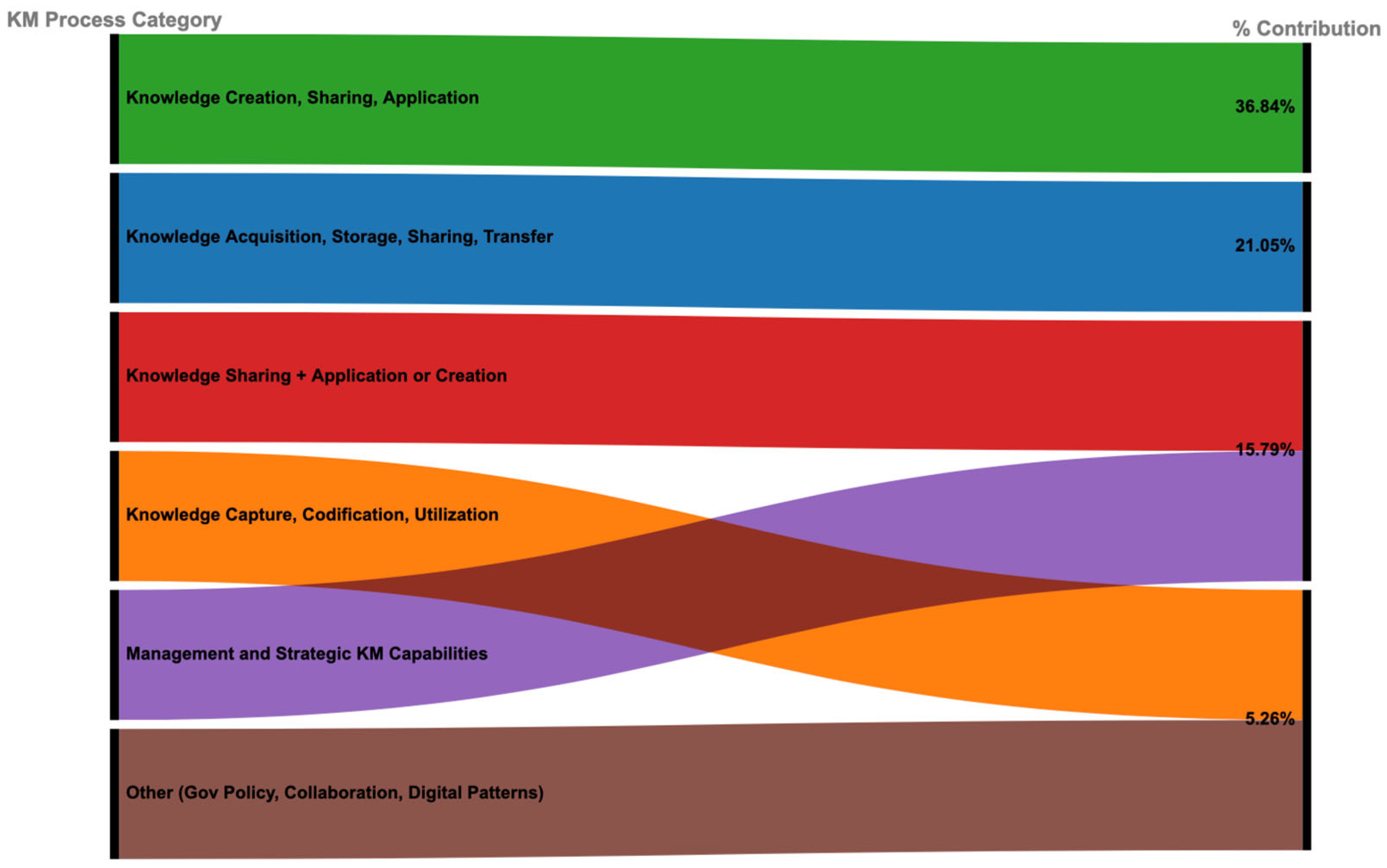
Figure 12 categorizes the reviewed studies based on the specific KM processes they address in the context of SME digital transformation. The dominant process identified is Knowledge Creation, Sharing, and Application, which constitutes 36.84% of the literature. This focus underlines the centrality of KM as a dynamic, continuous process that fuels digital innovation and decision-making in SMEs, enabling them to adapt and thrive in changing environments. The second most frequent category, Knowledge Acquisition, Storage, Sharing, and Transfer (21.05%), reflects a more structured and infrastructural view of KM. These studies emphasize mechanisms for capturing and organizing knowledge for reuse and dissemination across digital platforms an essential step for enabling agility and scalability in SME operations. Studies classified under Knowledge Sharing > Application or Creation account for 15.79%, highlighting iterative feedback loops in which shared knowledge becomes a precursor to innovation or further knowledge generation—crucial in fast-evolving digital contexts.
Meanwhile, Knowledge Capture, Codification, and Utilization (13.16%) points to more formal KM activities, often tied to systems and frameworks that support knowledge retention and structured use. This is particularly relevant to SMEs with resource constraints, where effective use of existing knowledge becomes a competitive differentiator. Management and Strategic KM Capabilities appear in only 5.26% of studies, suggesting an under-exploration of strategic KM competencies, such as leadership in knowledge strategy, KM metrics, or change management aligned with DT objectives. Similarly, Other contributions (e.g., policy, digital collaboration, pattern usage) also represent 5.26%, hinting at niche or emerging discussions.
3.2.9. Technological Dimensions of Knowledge Management in SMEs
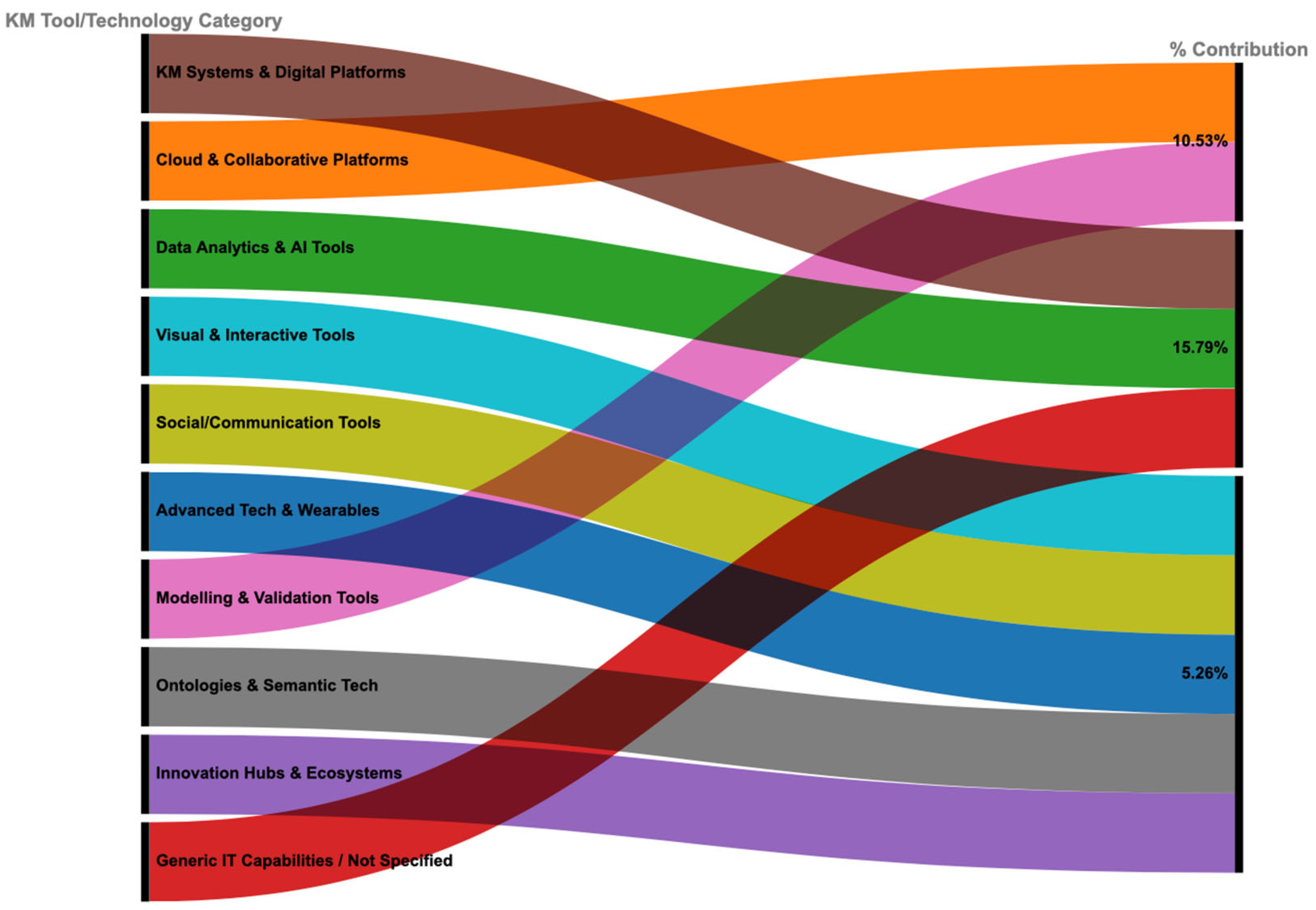
Figure 13 illustrates the diversity of KM tools and technologies adopted in SME digital transformation literature. The analysis shows that KM Systems & Digital Platforms are the most frequently cited technological enablers, constituting 21.05% of the studies. This dominance reflects the foundational role of KM systems in structuring, storing, and retrieving knowledge within digital infrastructures—key to enabling scalable transformation processes in SMEs. Visual & Interactive Tools and Data Analytics & AI Tools follow with 15.79% each, underscoring the increasing relevance of intelligent systems and visualization technologies in enhancing decision-making and engagement. These tools enable SMEs to transform tacit and explicit knowledge into actionable insights through pattern recognition, dashboards, and simulation models. Cloud & Collaborative Platforms contribute 10.53%, reinforcing trends towards decentralized knowledge work and the growing reliance on platforms that support remote, cross-functional collaboration. These tools play a critical role in SMEs by lowering infrastructure costs and enhancing real-time knowledge flow.
A smaller portion of the literature (5.26%) focuses on Modeling & Validation Tools and Ontologies & Semantic Technologies, which are more structured and logic-driven systems aimed at validating KM processes or automating reasoning. Their limited representation suggests an opportunity for deeper investigation, especially in SMEs aspiring for AI-readiness or advanced interoperability. Technologies such as Advanced Tech & Wearables, Social/Communication Tools, and Innovation Hubs & Ecosystems also appear, indicating a broader technological landscape supporting KM. Notably, Generic IT Capabilities/Not Specified still account for a visible portion, highlighting some conceptual vagueness or under-definition in certain studies.
3.2.10. Knowledge Management’s Functional Contribution to Digital Transformation
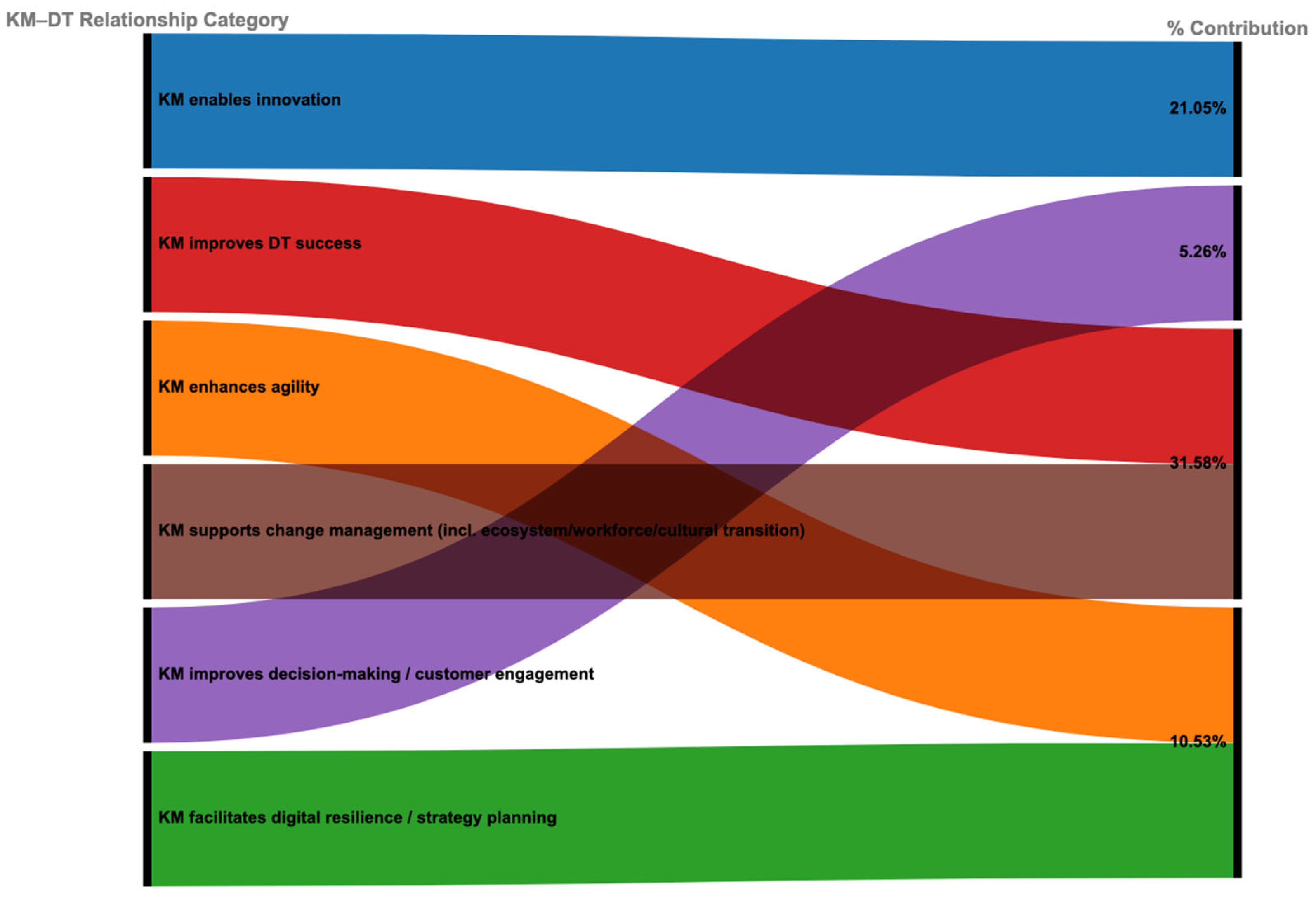
Figure 14 showcases how KM contributes to DT within SMEs. The most dominant theme is KM’s role in supporting change management highlighted in 31.58% of the studies. This emphasizes that SMEs often leverage KM to navigate and implement structural, procedural, and cultural shifts required for successful digital initiatives. KM tools and processes provide structured pathways for disseminating new knowledge, aligning employees, and reducing resistance to change during transformation. Next, KM enables innovation in 21.05% of the literature, affirming its strategic role in driving novel products, services, and processes. By capturing, sharing, and reapplying knowledge, KM fosters an environment conducive to experimentation, creativity, and continuous improvement—key pillars in digital competitiveness.
KM improves decision-making and customer engagement accounts for 15.79%, revealing how KM supports operational intelligence and external stakeholder responsiveness. With SMEs increasingly relying on real-time data and tacit knowledge, KM becomes a foundation for agile, informed decision-making and enhancing customer experience.
Figure 14.
Research distribution by how KM supports DT in SMEs.
Figure 14.
Research distribution by how KM supports DT in SMEs.
Interestingly, KM enhances agility is reflected in 15.79% of the studies as well, aligning with the concept of dynamic capabilities. KM enables SMEs to respond quickly to market changes, digitization pressures, or technology shifts by maintaining organizational learning and flexibility. A smaller segment (10.53%) links KM to facilitating digital resilience and strategic planning, particularly in volatile environments. Here, KM supports long-term adaptation strategies and risk mitigation by institutionalizing best practices and scenario-based learning. Lastly, KM improves DT success directly in 5.26% of studies—an underrepresented but crucial insight. This suggests that while KM is widely recognized as a supportive mechanism, explicit acknowledgment of its impact on the success rate of digital initiatives remains limited in empirical work.
3.2.11. Tangible Benefits of Knowledge Management in SME Digital Transformation
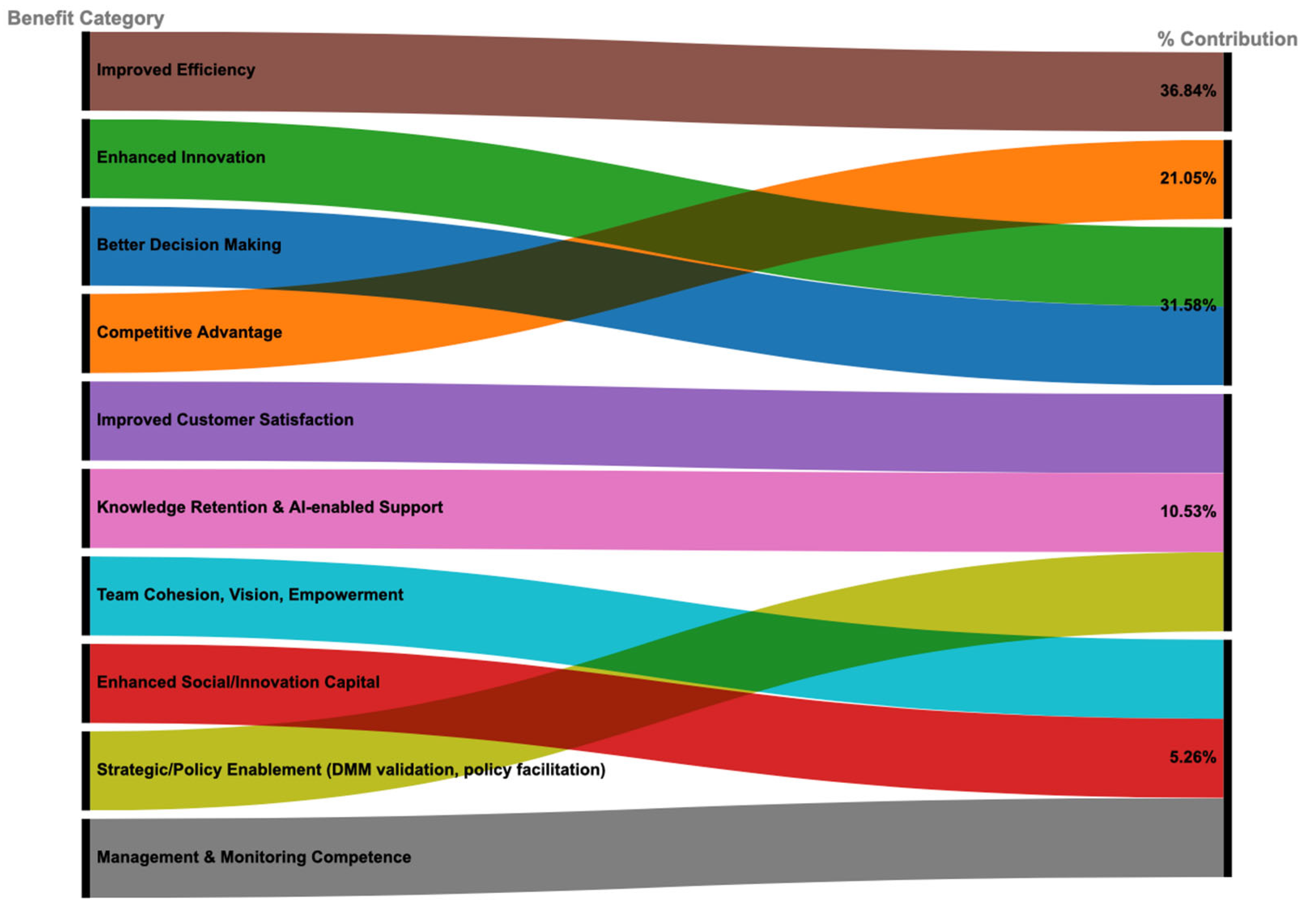
As illustrated in
Figure 15, the literature highlights a diverse array of tangible benefits that SMEs derive from applying KM in the context of DT. The most frequently reported benefit is improved efficiency, present in 36.84% of the reviewed studies. This underscores KM’s operational impact—streamlining processes, reducing redundancies, and accelerating decision cycles. Closely following behind is better decision-making (31.58%), which reflects KM’s role in structuring organizational knowledge for insight generation. Through effective codification, dissemination, and contextual application of knowledge, SMEs can make more timely and informed decisions—crucial in fast-paced digital environments.
Enhanced innovation is cited in 21.05% of studies, indicating KM’s influence on fostering creativity and experimentation. This aligns with broader findings (see
Figure 10) where KM supports both innovation and organizational agility, confirming its strategic value beyond routine operations. Approximately 18.95% of contributions recognize knowledge retention and AI-enabled support as key benefits, suggesting that KM, when paired with AI tools, ensures long-term organizational learning and decision augmentation—vital in an era of workforce fluidity and rapid tech adoption.
Figure 15.
Research distribution by Benefits Identified from KM in DT.
Figure 15.
Research distribution by Benefits Identified from KM in DT.
Other notable benefits include competitive advantage (15.79%) and improved customer satisfaction (10.53%), positioning KM as both a market differentiator and a driver of customer-centric practices. Additionally, team cohesion and empowerment were acknowledged (10.53%), highlighting KM’s social dimension in enhancing internal collaboration and leadership. Less cited but still significant are policy and strategic enablement (5.26%) and management/monitoring competence, which point to KM’s governance role in aligning transformation efforts with institutional objectives and national frameworks such as Digital Maturity Models (DMMs).
3.2.12. Barriers Hindering KM-Driven Digital Transformation in SMEs
Despite the strategic potential of KM in facilitating DT, several persistent barriers hinder its effective implementation within SMEs.
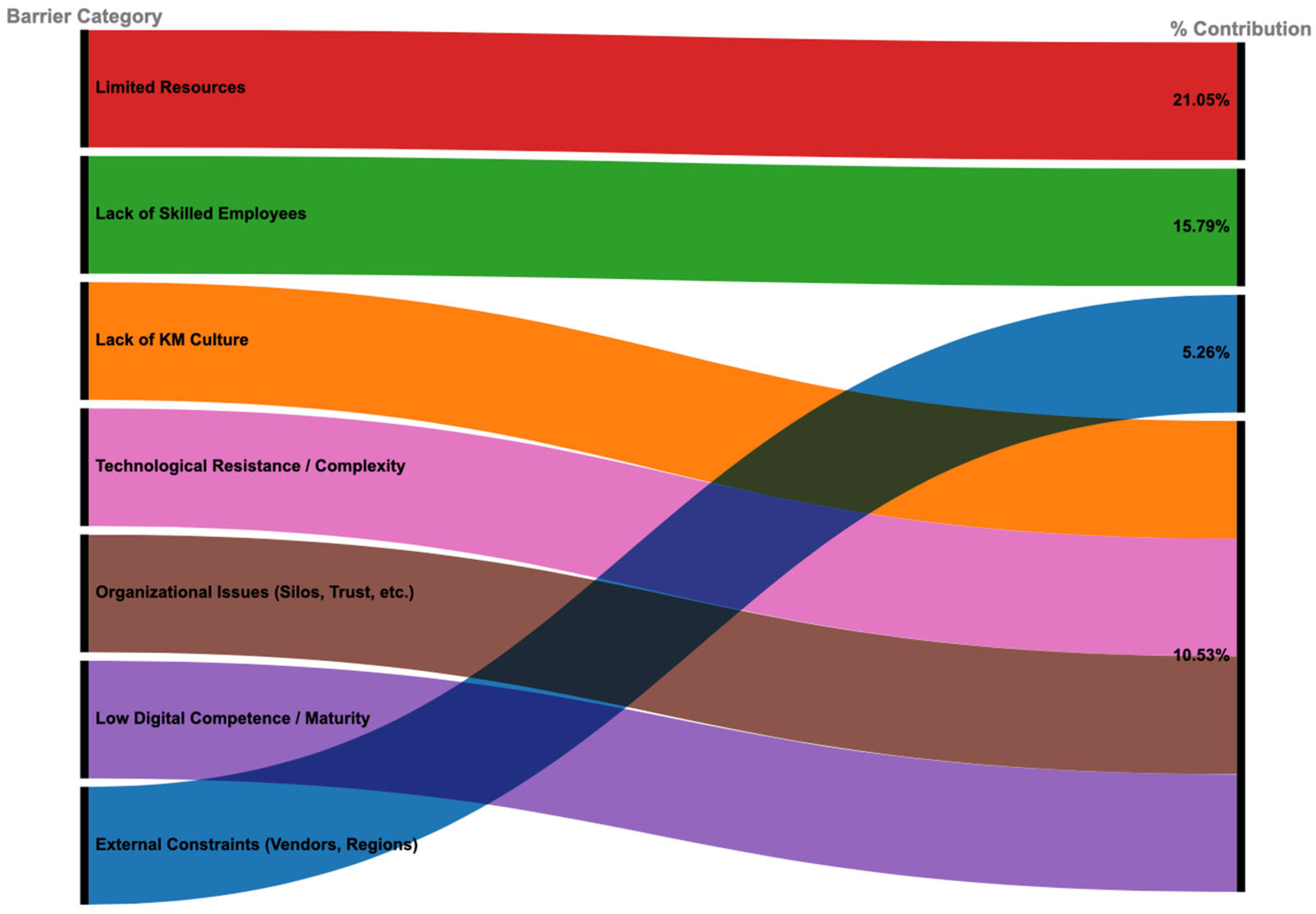
Figure 16 synthesizes the key impediments identified across the reviewed literature. The most prominent barrier is limited resources, accounting for 21.05% of the studies. This reflects the typical financial and infrastructural constraints that SMEs face, limiting their ability to invest in KM systems, training, or technology upgrades. In contrast to larger firms, SMEs often operate with narrow margins, making resource-intensive KM initiatives difficult to sustain.
Lack of skilled employees is cited in 15.79% of the literature, revealing a human capital challenge. KM and DT demand technical fluency, strategic thinking, and collaborative skills—competencies that are often underdeveloped in smaller firms or difficult to retain due to talent competition. Interestingly, organizational issues—such as silos, trust deficits, and poor communication—account for 10.53% of the observed barriers. These internal dynamics hinder knowledge sharing, impede cultural alignment, and exacerbate fragmentation, all of which obstruct both KM and transformation initiatives.
Figure 16.
Research distribution by Barriers to KM-Driven Digital Transformation in SMEs.
Figure 16.
Research distribution by Barriers to KM-Driven Digital Transformation in SMEs.
Similarly, technological resistance or complexity (10.53%) emerges as a notable hurdle. This includes resistance to change from leadership or staff, as well as the technical intricacies of integrating KM platforms into existing systems. This resistance is often amplified in firms lacking foundational digital maturity. Lack of KM culture (5.26%) appears as a deeper, structural constraint. Without a shared understanding of KM’s value or institutionalized processes for knowledge creation, sharing, and application, even the best tools or strategies may fail to gain traction. Barriers such as low digital competence/maturity (10.53%) and external constraints (e.g., vendor lock-in, regional infrastructure limitations) further compound the implementation challenge. These findings affirm that DT in SMEs is not solely a technological shift but also a socio-organizational transformation requiring a deliberate strategy for overcoming systemic resistance.
3.2.13. Critical Success Factors for KM-Driven Digital Transformation in SMEs
A crucial element of DT in SMEs is the presence of enabling conditions that support the successful implementation of KM practices.
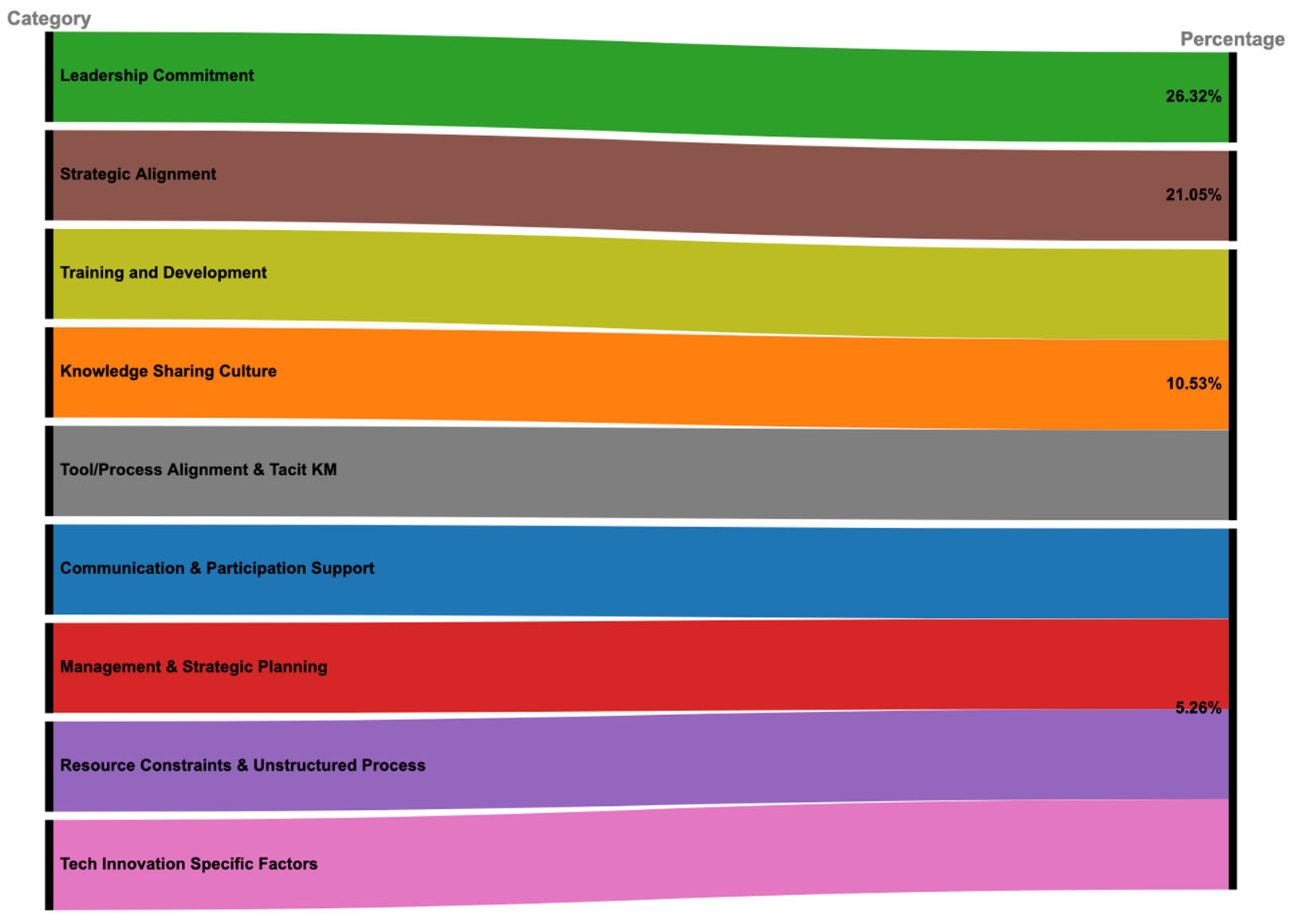
Figure 17 presents the distribution of critical success factors (CSFs) identified across the reviewed literature. The most cited CSF is leadership commitment (26.32%), underscoring the pivotal role that top management plays in championing KM initiatives. Effective leadership not only allocates resources but also drives the organizational culture shift required to sustain knowledge practices during digital change. Without clear direction and active involvement from senior leadership, KM efforts often falter.
Closely following is strategic alignment (21.05%), which reflects the importance of integrating KM efforts with overarching business objectives and digital transformation goals. This alignment ensures that KM is not siloed but embedded into operational and strategic frameworks, maximizing its organizational impact.
Figure 17.
Research distribution by Critical Success Factors.
Figure 17.
Research distribution by Critical Success Factors.
Training and development appear in 15.79% of studies, indicating that human capital is a critical pillar for transformation. Given the complexity of KM tools and DT processes, equipping employees with relevant skills and continuous learning opportunities is essential for adoption and sustainability. A strong knowledge sharing culture is highlighted in 10.53% of studies. This cultural dimension encourages openness, collaboration, and the institutionalization of knowledge flows—behaviors that are foundational to both KM and innovation ecosystems. Further factors include tool/process alignment and tacit KM support and communication and participation structures, each cited in a notable share of studies. These enable smoother implementation by ensuring that the KM infrastructure resonates with existing workflows and that employees are meaningfully engaged in the transformation journey. Interestingly, resource constraints and unstructured processes are identified even within CSF analyses (5.26%), signaling that those mitigating internal inefficiencies is itself a success factor. Additionally, technology innovation-specific enablers (e.g., platform interoperability or AI-readiness) are recognized, particularly in studies focused on advanced digital environments.
3.2.14. Theoretical and Conceptual Foundations of KM in SME Digital Transformation
Understanding the theoretical underpinnings of research on KM within the context of DT in SMEs is essential for tracing how academic inquiry is shaped and validated.
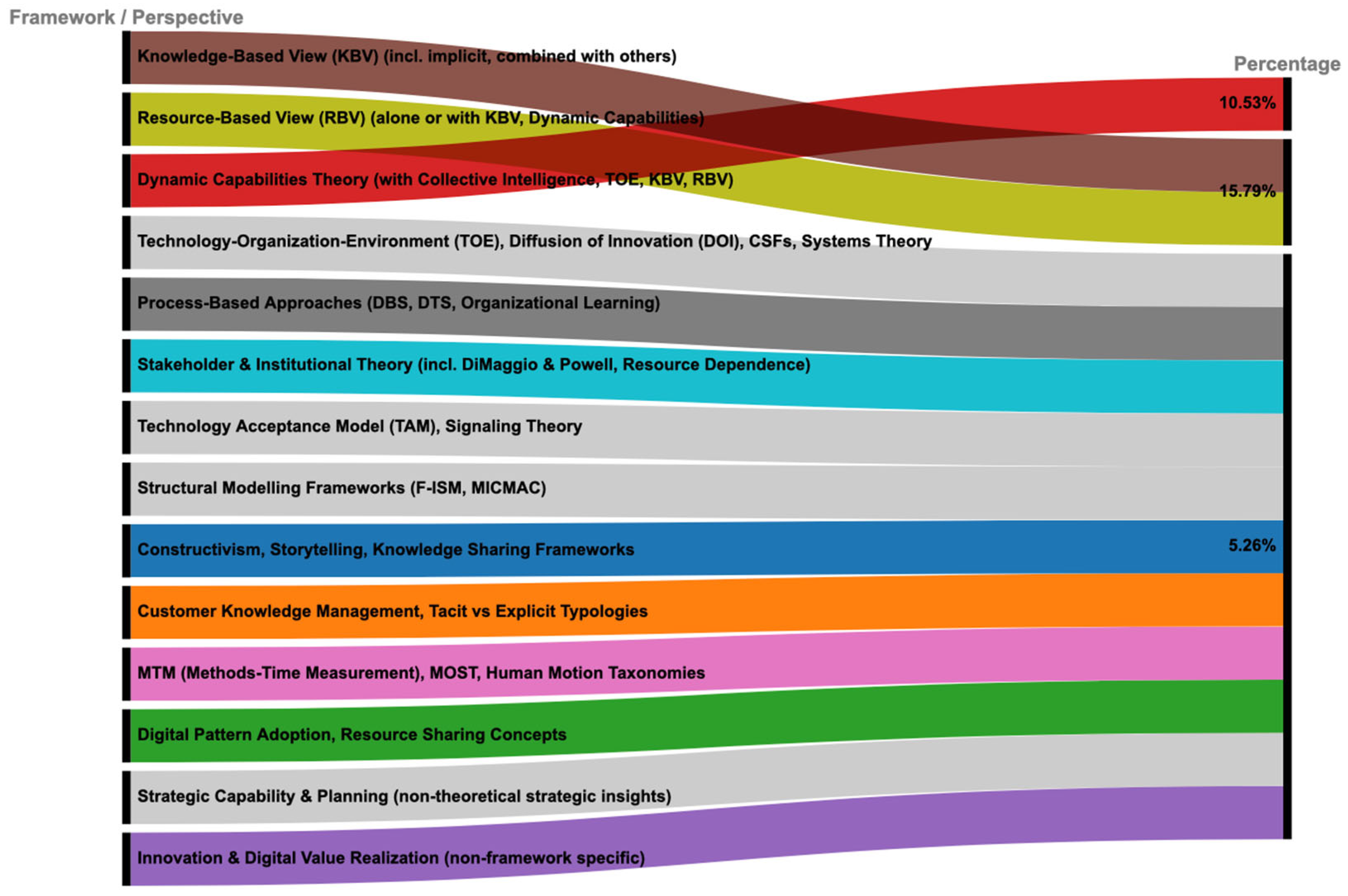
Figure 18 provides an overview of the frameworks and perspectives adopted in the reviewed literature. The Resource-Based View (RBV) appears as the most dominant theoretical lens, used either alone or in combination with others in 15.79% of studies. This prevalence suggests that KM is largely framed as a strategic asset, reinforcing the idea that SMEs can achieve competitive advantage by leveraging their internal knowledge resources (
Figure 14). When coupled with dynamic capabilities theory or knowledge-based views, RBV allows for an enriched understanding of how firms adapt and reconfigure knowledge in response to digital change.
The Dynamic Capabilities Theory, often combined with Collective Intelligence or RBV, is used in 10.53% of cases. This theory emphasizes a firm’s ability to integrate, build, and reconfigure internal competencies—such as knowledge—amid shifting digital environments, aligning well with the agile demands of DT. Technology–Organization–Environment (TOE) frameworks, together with Diffusion of Innovation (DOI) and related systems theories, account for 11.84%, showing that external and institutional contexts also play a meaningful role in shaping KM adoption. These frameworks highlight the environmental and technological pressures SMEs face and the organizational readiness required for transformation.
Figure 18.
Research distribution by Theoretical & Conceptual Frameworks.
Figure 18.
Research distribution by Theoretical & Conceptual Frameworks.
Process-based models (e.g., Digital Business Strategy, Digital Transformation Strategy, and Organizational Learning) are evident, reflecting the operational integration of KM into business models and transformation workflows. Meanwhile, Stakeholder and Institutional Theories, particularly referencing DiMaggio & Powell’s isomorphism and resource dependence perspectives, underscore how external actors and legitimacy pressures influence KM behavior. Emergent or less frequently used frameworks include the Technology Acceptance Model (TAM), Signaling Theory, Storytelling and Constructivist approaches, and Structural Modeling techniques (F-ISM, MICMAC), each contributing unique methodological or behavioral insights. Interestingly, a portion of the literature (5.26%) draws on customer knowledge management, tacit knowledge typologies, or practitioner-driven perspectives like MTM and MOST, emphasizing practical applications. Others adopt non-framework-specific strategies such as strategic planning or innovation-value realization approaches.
3.2.15. Policy and Regulatory Context in KM-Driven Digital Transformation
Policy and regulatory frameworks play a critical role in shaping the DT landscape for SMEs, particularly when KM strategies are involved.
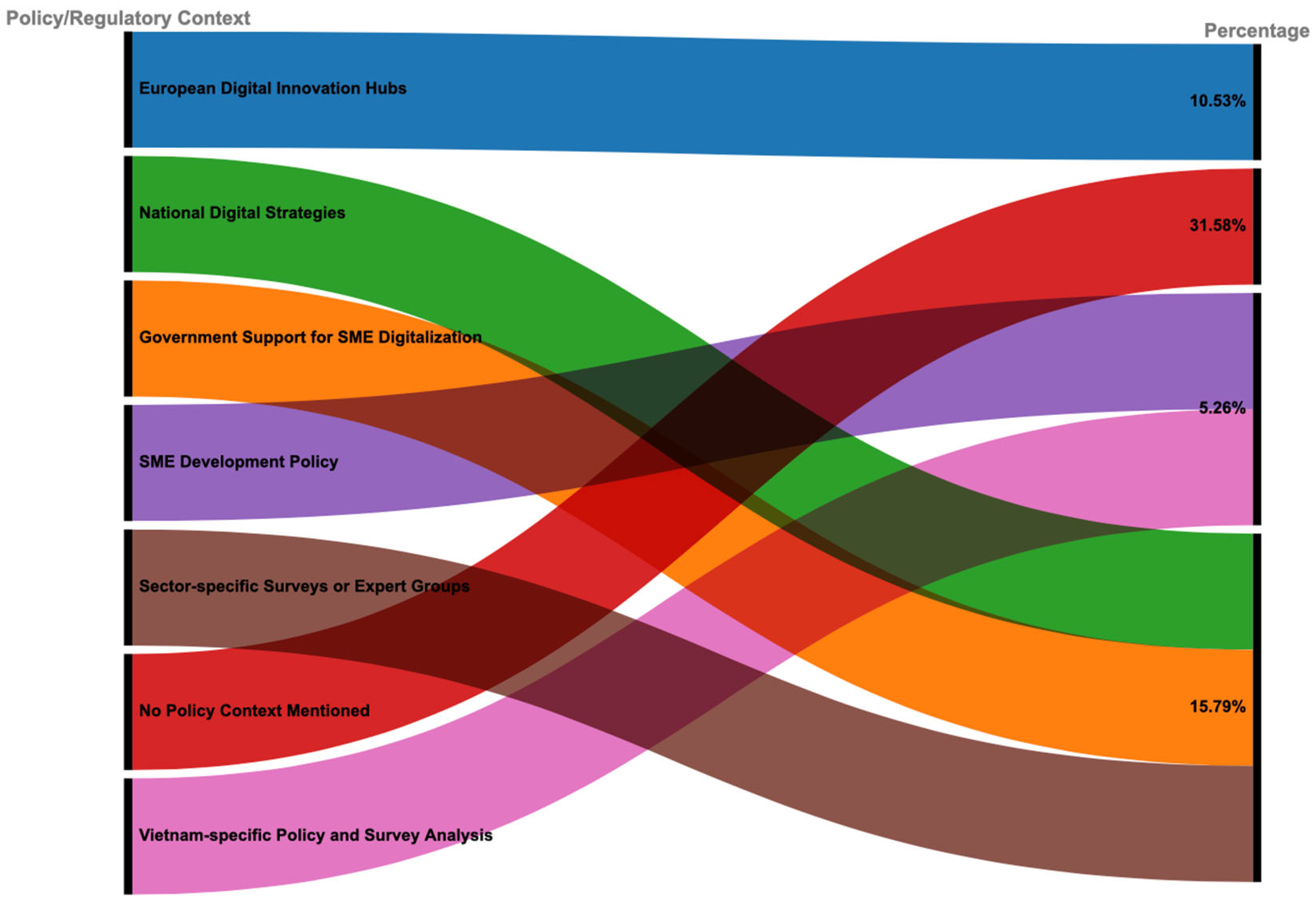
Figure 19 illustrates the policy contexts referenced across the reviewed literature. The most frequently referenced context is National Digital Strategies, found in 31.58% of the studies. These national-level initiatives often serve as guiding structures for SMEs to adopt digital technologies and knowledge-based practices, highlighting the alignment between government digitalization agendas and KM implementation in practice.
Following this, European Digital Innovation Hubs (EDIHs) appear in 10.53% of studies. The EDIH initiative acts as a significant regional enabler, supporting SMEs with access to testing facilities, training, and knowledge-sharing ecosystems. Its presence in the literature signals a European policy focus on regional support for knowledge-led transformation. Government support for SME digitalization, such as subsidies, grants, and infrastructure investment programs, is cited in 15.79% of studies. These supports are crucial in resource-constrained SME environments and serve to bridge the gap between digital ambition and operational capacity.
Figure 19.
Research distribution by Policy & Regulatory Context in Studies.
Figure 19.
Research distribution by Policy & Regulatory Context in Studies.
Meanwhile, SME-specific development policies and sector-focused surveys or expert group data each represent 5.26% of the reviewed works. These show attempts to localize or tailor KM and DT insights to specific industries or economic environments. Of concern is the finding that 12.79% of studies made no reference to any policy context, with another 5.26% referring to country-specific data (e.g., Vietnam) without integrating broader regulatory analysis. The absence of policy framing in these works reflects a missed opportunity to situate KM-driven transformation in its institutional environment—a factor that is often critical for SMEs navigating regulatory complexity and innovation ecosystems.