Article

Application of Spirulina platensis and Chlorella vulgaris for Improved Growth and Bioactive Compound Accumulation in Achillea fragrantissima In Vitro


Department of Biological Sciences, College of Science, King Faisal University, Al Ahsa 31982, Saudi Arabia
*
Author to whom correspondence should be addressed.
Phycology 2026, 6(1), 7; https://doi.org/10.3390/phycology6010007
Submission received: 14 November 2025 / Revised: 29 November 2025 / Accepted: 1 December 2025 / Published: 1 January 2026

Abstract

Achillea fragrantissima is a medicinal herb valued for its essential oils and bioactive compounds. Microalgae, such as Spirulina platensis and Chlorella vulgaris, show considerable promise as natural biostimulants due to their high levels of protein, minerals, vitamins, and fatty acids. The individual or compound effects of S. platensis and C. vulgaris on the growth, photosynthetic pigments, and essential oil composition of A. fragrantissima in vitro were measured in this study. According to chemical analysis, S. platensis contains large amounts of protein and several minerals, including phosphorus, manganese, and iron. Conversely, C. vulgaris showed a higher percentage of carbohydrates, lipids, phytol, aldehydes, and fatty acid esters. The combination of 1.0 g·L−1 S. platensis and 0.5 g·L−1 C. vulgaris tended to stimulate callus formation. Meanwhile, the 0.5 g·L−1 C. vulgaris treatment enhanced shoot and leaf development and increased total photosynthetic pigment content. Analysis of essential oils from A. fragrantissima produced under different treatments demonstrated that combined treatments with S. platensis and C. vulgaris had greatly improved the valuable bioactive substances, such as phytol, oleic acid, 2H-pyran, and thymine. These results show the effectiveness of using S. platensis and C. vulgaris extracts as eco-friendly biostimulants.

1. Introduction

Achillea fragrantissima (Forssk.), or fragrant yarrow, is a member of the family Asteraceae, one of the largest and most diverse plant families in the world. It is an aromatic perennial herb, native to arid and semi-arid regions of the Middle East and North Africa [1,2]. A. fragrantissima has been widely used in folk medicine for its various therapeutic benefits. The aerial parts of the plant have been used as decoctions, infusions, or poultices to relieve gastrointestinal disorders, inflammation, respiratory infections, and skin wounds [3,4]. A. fragrantissima is rich in phytochemical bioactive compounds, including essential oils, flavonoids, sesquiterpene lactones, phenolic acids, and terpenoids [5,6,7], responsible for its antioxidant, anti-inflammatory, antimicrobial, and antispasmodic properties [8]. In recent years, scientific studies have highlighted its potential in pharmaceutical and biomedical research, suggesting that it may serve as a promising source of natural therapeutic agents for the development of safe and effective modern medicines [5,7,9].
Using algal extracts as biofertilizers represents an emerging approach for enhancing plant growth while reducing reliance on chemical fertilizers [10]. Microalgae are emerging as promising solutions for sustainable food production strategies that leverage environmentally friendly inputs due to their ecological resilience, rapid biomass production, and rich biochemical profiles. Chlorella vulgaris and Spirulina platensis are microalgae with valuable natural biofertilizer potential as they are rich in bioactive content and growth-enhancing properties. C. vulgaris, a unicellular green alga, is found in freshwater and marine environments [11]. It contains proteins, unsaturated fatty acids, vitamins, minerals, dietary fibers, and particularly carbohydrates, such as simple sugars and complex polysaccharides [12,13]. Spirulina platensis, a blue-green filamentous alga (cyanobacterium), is similarly rich in proteins, vitamins, minerals, essential fatty acids, and polysaccharides [14]. Both algae have applications not only in food, pharmaceuticals, and cosmetics but also as natural biofertilizers that enhance plant growth, improve stress tolerance, and offer an environmentally friendly alternative to chemical fertilizers [15,16,17]. Using algae as biofertilizers through plant tissue culture increased the production of high-quality plant materials for agricultural and pharmaceutical purposes [16]. By growing plants under sterile, controlled conditions, such as those used in tissue culture, this approach eliminates environmental pollutants, pathogens, and competing microorganisms, ensuring that any biological or chemical responses observed are solely due to the applied treatments [18]. Sterile cultivation is also essential for improving both the yield and consistency of secondary metabolites, as contamination can disrupt or alter key metabolic pathways. In addition, maintaining aseptic conditions enables the reliable, large-scale production of high-quality plant material with stable phytochemical profiles, which is necessary to meet the safety, purity, and regulatory standards required in pharmaceutical, cosmetic, and nutraceutical industries. Therefore, studying plant growth under sterile conditions is important not only for scientific accuracy but also for its significant industrial and commercial potential [19,20]. Algal biofertilizers have been shown to enhance the production of specific bioactive compounds in medicinal and aromatic plants. For example, treatment of Ocimum basilicum with microalgal extracts increased the concentrations of camphor, linalool, pinene, and myrcene [21]. In addition, C. vulgaris extracts were shown to increase essential oil yield and modify its chemical composition in Mentha spicata plant, resulting in higher proportions of monoterpenes, such as carvone and limonene, while improving antioxidant and antibacterial activities compared to untreated controls [22]. Similarly, S. platensis treatments promoted plant growth, maintained metabolic activity, and supported secondary metabolite accumulation, including essential oils and antioxidant compounds, even under stress conditions on Rosmarinus officinalis [23]. Notably, foliar application of an S. aqueous extract increased both growth and yield in Curcuma longa rhizomes while significantly enhancing curcuminoid content (curcumin and related compounds) [24]. Overall, the use of microalgal biofertilizers reduces dependence on synthetic chemicals, minimizing the risk of toxic residues in propagated plants and contributing to safer food and herbal products [25,26]. Moreover, the plant tissue culture technique offers a sustainable source of valuable bioactive compounds, especially from medicinal or rare plants, without extra pressure on wild populations or ecosystems [27,28].
This study aims to investigate the individual and combined effects of S. platensis and C. vulgaris on the in vitro multiplication of A. fragrantissima. Although these microalgae have been reported to enhance growth, photosynthetic pigments, and secondary metabolite production in various medicinal and aromatic plants, their specific impact on A. fragrantissima has not been thoroughly explored. This research evaluates how these microalgae extracts influence plant growth, photosynthetic pigment composition, and the accumulation of valuable bioactive compounds. The findings will provide novel insights and serve as a prototype for developing a sustainable and environmentally friendly tissue culture system for the propagation of medicinal plants.

2. Materials and Methods

2.1. Preparation of S. platensis and C. vulgaris Aqueous Extracts

S. platensis and C. vulgaris powders were purchased from Earth Circle Organics (USA). The aqueous extracts of S. platensis and C. vulgaris used for in vitro plant culture were prepared following the method of Amin et al. [29]. For each extract, 5 g of dried microalgae powder was weighed and mixed with 50 mL of sterile distilled water. Room-temperature water was used to avoid heat-induced degradation of bioactive components. The mixture was then homogenized for 1 min to break the algal cells. Afterward, it was centrifuged at 8000× g for 10 min under refrigerated conditions to separate the debris. The clear supernatant was collected and used as the S. platensis and/or C. vulgaris aqueous extract.

2.2. Analysis of S. platensis and C. vulgaris Powder Compositions

The macro- and micronutrient contents of S. platensis and C. vulgaris were analyzed following established protocols. Dried samples were digested according to the method described by Cottenie [30]. Phosphorus was quantified colorimetrically following Murphy and Riley [31], while the concentrations of manganese, iron, calcium, and zinc were determined using an Atomic Absorption Flame Photometer (Shimadzu AA-7000, Shimadzu Corporation, Kyoto, Japan) following the procedure of Mazumdar and Majumder [32]. Vitamins were extracted and identified using high-performance liquid chromatography (HPLC) (Waters, Milford, MA, USA) following the procedures described by Qian and Sheng [33,34]. Amino acids were quantified using the photometric ninhydrin method according to the procedures of Moore and Stein [35,36]. The values obtained from the aforementioned analysis are presented in Table 1 and Table 2.

2.3. Establishment of In Vitro A. fragrantissima

A. fragrantissima seeds were collected from Wadi Harqan, Al-Quraynah, Riyadh Region, Saudi Arabia, and taxonomically identified by Prof. Dr. Mona Alwheeby, Department of Botany and Microbiology, College of Science, King Saud University, Riyadh, Saudi Arabia. Seed handling followed standard propagation protocols, including cleaning, surface sterilization, and viability assessment, to ensure species authenticity and seed quality. The seeds were surface-sterilized by immersion in 70% ethanol for 30 s, followed by 5% (v/v) sodium hypochlorite for 5 min, and finally washed three times with sterile tap water under laminar airflow. Sterilized seeds were cultured in 60 mL culture tubes with 15 mL of half-strength Murashige and Skoog (MS) basal salts and vitamins (Sigma-Aldrich, St. Louis, MO, USA), supplemented with 30 g·L−1 sucrose and 7 g·L−1 agar (Sigma-Aldrich). Cultures were maintained in a growth room with conditions of 23 ± 2 °C and a 16 h photoperiod of 4000 lux light intensity. The seed germination rate was recorded after four weeks of seed culture.

2.4. In Vitro Multiplication (Shoot Tip Explants) and Elicitor Treatments

One-month-old shoot tip explants (0.5–1.0 cm in length) w:Dere excised from the in vitro germinated seedlings mentioned above. The shoot tips were cultured in 200 mL vessels containing 30 mL of Murashige and Skoog (MS) basal medium, supplemented with 3% (w/v) sucrose and solidified with 6 g·L−1 agar and 0.2 mg·L−1 benzylaminopurine (BAP). Filter-sterilized aquatic extracts of S. platensis and C. vulgaris were incorporated into the autoclaved medium and cooled to 47 °C, either individually or in combination. The experimental design was a complete randomized block design with nine treatments (control, 0.5, and 1.0 g·L−1 S. platensis, 0.25 and 0.5 g·L−1 C. vulgaris, and four combinations of both microalgae treatments as follows: 0.5 + 0.25, 0.5 + 0.5, 1.0 + 0.25, and 1.0 + 0.5 g·L−1 of S. platensis + C. vulgaris, respectively). Each treatment consisted of ten culture vessels, each containing two shoot tips. Cultures were maintained at 24 ± 2 °C under a 16 h photoperiod with a light intensity of approximately 4000 lux. After one month, growth parameters were recorded, including fresh weight per explant (g), maximum shoot length (cm), number of shoots, number of leaves per explant, and callus formation percentage. Ten representative plantlets from each treatment were air-dried and extracted with methanol for GC–MS analysis. A. fragrantissima plant material (3 g) was air-dried in an oven at 29 °C, powdered, and extracted with 30 mL of 99% methanol for 72 h with intermittent shaking. The mixture was filtered through Whatman No. 1 filter paper, and the filtrate was concentrated under reduced pressure using a rotary evaporator (Rotavapor R-215, (Büchi, Flawil, Switzerland)) to obtain a methanolic extract paste [5].

2.5. Photosynthetic Pigment Analysis

The contents of chlorophyll a, chlorophyll b, and carotenoids were measured in leaf samples from three randomly selected explants per treatment after one month of culture, using 80% acetone as the solvent. Absorbance was recorded with an Agilent 8453 UV–visible spectrophotometer(Agilent Technologies, Lexington, MA, USA), and pigment concentrations were calculated according to the method of [37], and expressed as mg·100 g−1 fresh weight.

2.6. Identification of Phytochemical Compounds by GC–MS

Following [5]’s method, GC–MS analysis was performed at King Faisal University’s Department of Chemistry on methanolic extracts of S. platensis, C. vulgaris, and A. fragrantissima plantlets. A Shimadzu GC-MS QP2010 Plus with an RTX®-5Sil MS column (5% diphenyl–95% dimethylpolysiloxane) and an AOC-20i auto-sampler was used for the analysis. Compounds were identified using retention indices and mass spectra, and GC peak areas were used to compute relative percentages [38].

2.7. Statistical Analysis

Data were tested for normality using the Shapiro–Wilk test [39] and for homogeneity of variance using Levene’s test [40]. One-way ANOVA was performed, followed by Tukey’s post hoc test [41] to assess significant differences among treatments at p < 0.05. Data analysis was performed using GraphPad Prism software version 8 (GraphPad Software, San Diego, CA, USA).

3. Results

3.1. Chemical and Phytochemical Composition of S. platensis and C. vulgaris

The analysis of S. platensis and C. vulgaris powders (Table S1) revealed differences in their nutrient contents. S. platensis had high contents of protein (58%) and essential minerals such as iron, manganese, and phosphorus. S. platensis also contained B-complex vitamins and vitamin E. In contrast, C. vulgaris exhibited slightly higher protein (60%) and carbohydrate content (40%), with minerals including calcium (220 mg/100 g), iron (130 mg/100 g), phosphorus (900 mg/100 g), and zinc (71 mg/100 g), and vitamins A (15.39 µg/100 g), B12 (15 mg/100 g), and C (10 mg/100 g). The GC–MS analysis of methanolic extracts from S. platensis and C. vulgaris (Table 1 and Table 2) revealed a diverse array of bioactive compounds, with fatty acid methyl esters as the dominant constituents in both species (Table 1 and Table 2). In S. platensis, the major compounds were 5-oxotetrahydrofuran-2-carboxylic acid (24.10%), methyl oleate (23.67%), methyl palmitate (12.31%), and bis(tert-butyl)diazene (11.19%). Minor nitrogenous and heterocyclic compounds were also detected, including aminoguanidine (1.33%) and methyl 5-oxo-2-pyrrolidinecarboxylate (2.66%). Other fatty acid derivatives present in smaller amounts included methyl dodecanoate (1.71%), methyl tetradecanoate (1.72%), palmitic acid (2.48%), and methyl stearate (2.34%). In contrast, C. vulgaris extract was characterized by a broader profile of long-chain alcohols, aldehydes, and fatty acid derivatives. The major compounds were methyl oleate (19.75%), methyl palmitate (12.08%), phytol (9.82%), palmitic acid (8.82%), and aldehydes such as Z-9-hexadecenal (7.92%) and Z-9-tetradecenal (3.88%). Other significant constituents included hexahydrofarnesyl acetone (3.13%), 1-pentadecanol (1.45%), methyl linoleate (3.06%), and methyl stearate (3.58%). Minor compounds such as cytosine, cannabigerol-like resorcinol derivatives, and arachidic acid were also detected.

3.2. Effects of Spirulina platensis, Chlorella vulgaris, and Their Combination on Shoot Induction of A. fragrantissima

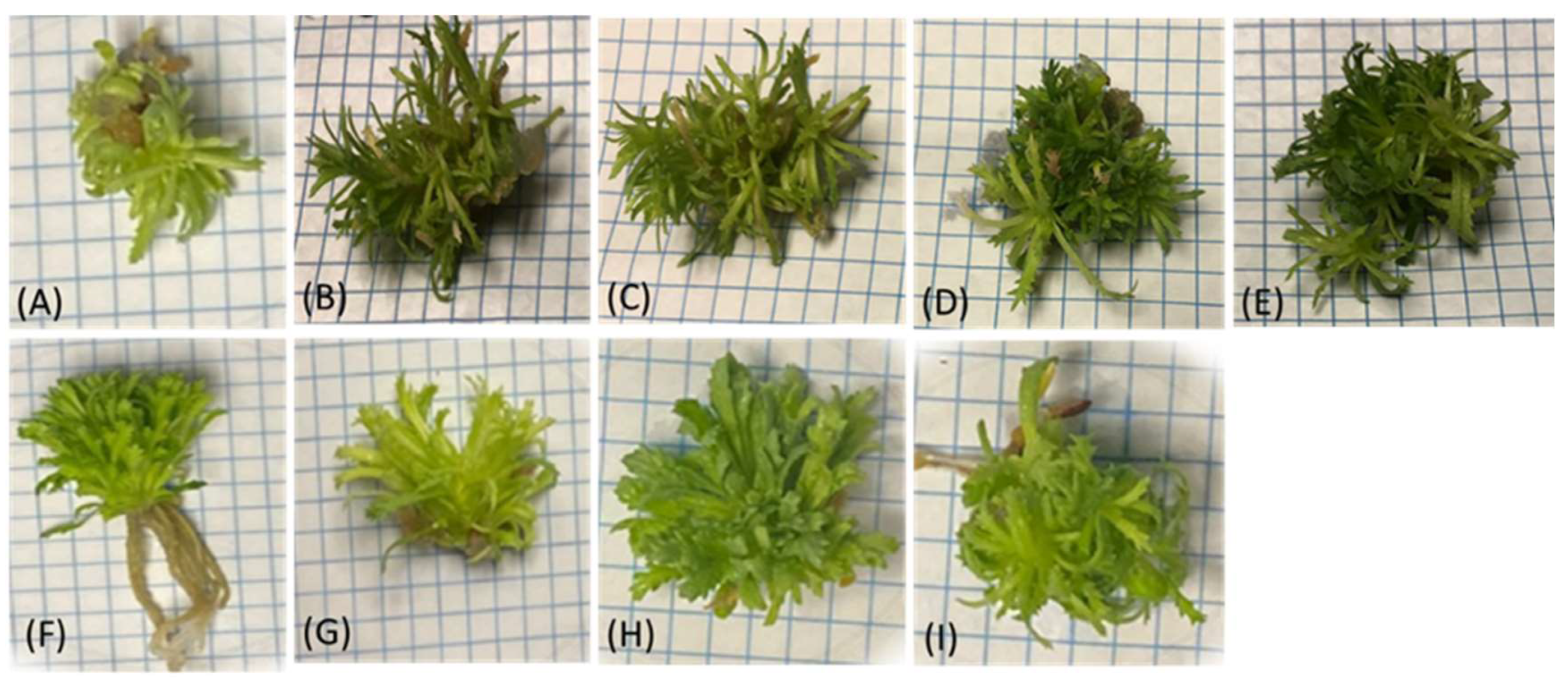
The application of S. platensis and C. vulgaris aquatic extracts had a significant influence on shoot proliferation, leaf formation, and explant growth in A. fragrantissima (Table 3 and Figure 1). S. platensis at 0.5 g·L−1 significantly increased shoot length to 2.67 cm, fresh weight to 1.214 g, number of shoots to 17.33 per explant, and leaves to 61.2 per explant compared to the control treatment, while callus formation reached 25% (Table 3, Figure 1A,B). S. platensis at a higher concentration (1.0 g·L−1) significantly improved shoot number (18.67) and leaves (67.2), with a shoot length of 2.07 cm and callus formation of 16.67%. This increase was significant in the case of callus formation (Table 3, Figure 1C). C. vulgaris at 0.25 g·L−1 produced a shoot length of 2.5 cm, 25.67 shoots per explant, 60.8 leaves, and 25% callus formation. This increase was significant compared to control treatments (Figure 1D). At 0.5 g·L−1, it exhibited the strongest effects on morphogenesis, achieving the highest shoot number (34.33) and leaves per explant (134.93), with a shoot length of 2.6 cm and callus formation of 16.67% (Figure 1E). The treatments of both microalgae demonstrated varied effects depending on concentration. The combination of 0.5 g·L−1S. platensis and 0.25 g·L−1 C. vulgaris produced the longest shoots (2.83 cm) and increased leaves to 71.5 per explant, with 19.17 shoots per explant, and 41.67% callus formation (Figure 1F). However, combined concentrations of 1.0 g·L−1 S. platensis and 0.5 g·L−1 C. vulgaris resulted in reduced shoot length and fresh weight, with a moderate number of shoots and leaves, but a notable increase in callus formation (50%) (Figure 1I). The moderate concentrations of S. platensis and C. vulgaris, applied separately or in combination, promoted shoot and leaf development, whereas higher doses increased callus formation and slightly reduced shoot elongation.

3.3. The Effects of S. platensis and C. vulgaris Extracts and Their Combination on Photosynthetic Pigments of A. fragrantissima In Vitro Plantlets

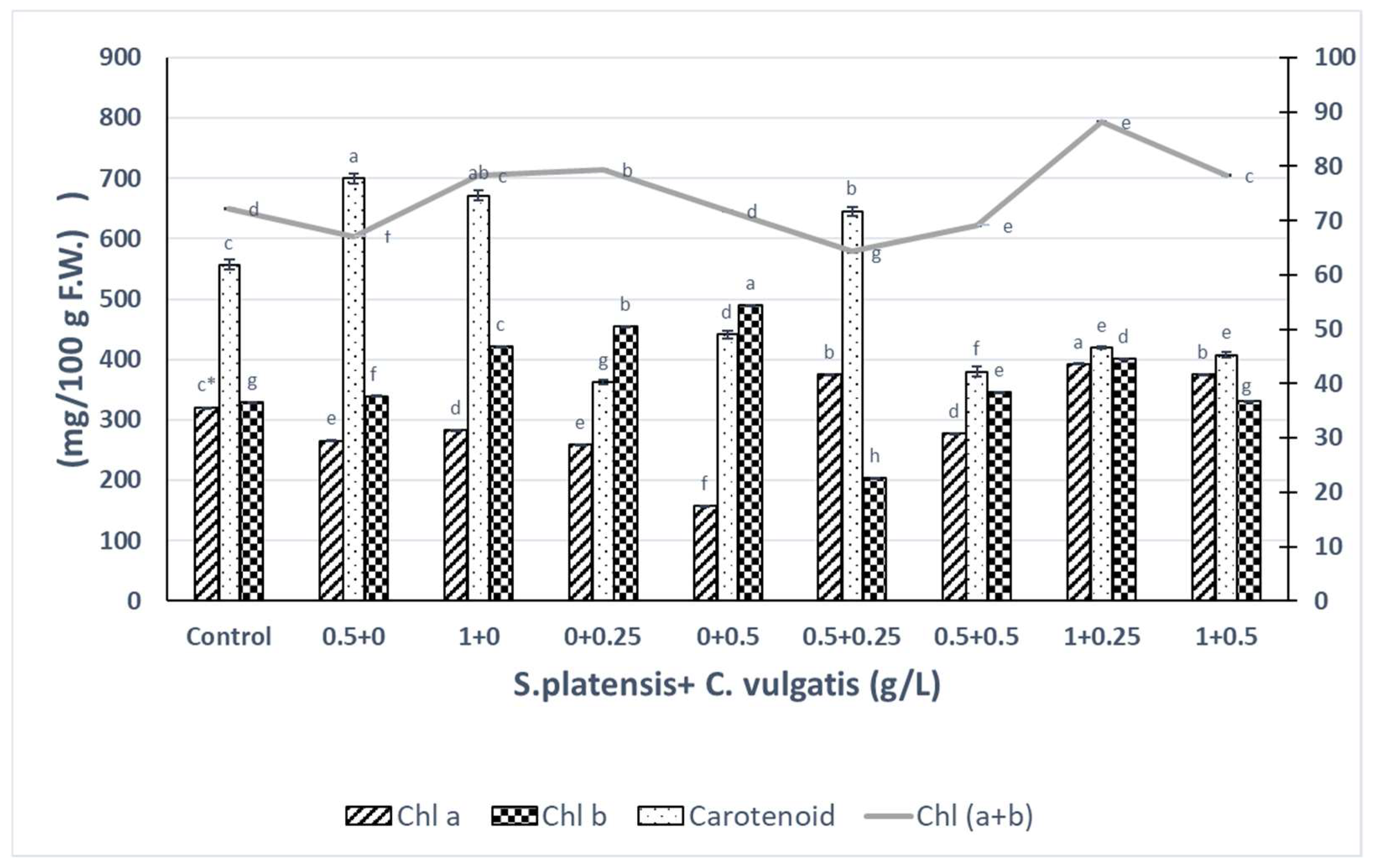
The data presented in Figure 2 illustrates the effects of S. platensis and C. vulgaris and their combination on the photosynthetic pigments of A. fragrantissima in the in vitro multiplication stage. As shown in Figure 2, the combination of S. platensis and C. vulgaris at concentrations of 1.0 + 0.25 g·L−1 and 0.5 + 0.25 g·L−1, respectively, significantly increased chlorophyll a compared to the control treatment, while the lowest was recorded in the treatment with 0.5 g·L−1  C. vulgaris. Chlorophyll b displayed a different pattern, with the highest value observed at 0.5 g·L−1  C. vulgaris, and the lowest at the 0.5 g·L−1 S. platensis + 0.25 g·L−1 C. vulgaris treatment. Carotenoid content reached its maximum (77.79 mg/100 g F.W.) in the 0.5 g·L−1 S. platensis treatment, whereas the minimum (40.29 mg/100 g F.W.) was observed in 0.25 g·L−1 C. vulgaris. Total chlorophyll (Chl a + b) was highest with the 1.0 g·L−1 S. platensis + 0.25 g·L−1 C. vulgaris treatment and lowest with 0.5 g·L−1 S. platensis + 0.25 g·L−1  C. vulgaris g·L−1. These results suggest that the combination of S. platensis and C. vulgaris at appropriate concentrations can enhance the photosynthetic pigment content of A. fragrantissima, with some treatments more effective for chlorophyll a, b, or carotenoids specifically.

3.4. The Effects of S. platensis and C. vulgaris Extracts on the Essential Oil Composition of A. fragrantissima

The GC–MS results (Table 4) revealed qualitative and quantitative differences in the metabolite profiles of A. fragrantissima grown under S. platensis, C. vulgaris, and their combination treatments compared with those of field-grown (wild) and control treatments (untreated in vitro plants). Different compounds showed strong responses to S. platensis, C. vulgaris, and their combinations (Table 4). Thymine significantly accumulated in higher amounts in the combined treatment of 0.5 g·L−1 S. platensis + 0.25 g·L−1 C. vulgaris, followed by the combination of 1.0 g·L−1 S. platensis + 0.25 g·L−1C. vulgaris (Table 4). In contrast, the lowest thymine contents were observed in plants treated with 0.25 g·L−1 C. vulgaris or 1.0 g·L−1 S. platensis, respectively. Fatty acid-related compounds responded prominently to microalgae supplementation. Dodecanoic acid and its methyl ester significantly increased in combination treatments, with the highest levels recorded in the 1.0 g·L−1S. platensis + 0.25 g·L−1C. vulgaris and 0.5 g·L−1 S. platensis + 0.25 g·L−1 C. vulgaris treatments compared with the control, wild plant, and other treatments. Similar significant increases were observed for oleic acid, 2H-Pyran, 3,4-dihydro, phytol, 1-Nonadecene, 9-octadecenoic acid methyl ester, and desulphosinigrin compounds, which reached their maximum concentrations under combined treatments of S. platensis and C. vulgaris compared to control, wild plant, and single-microalga treatments (Table 4 and Table S2). Oxirane-hexadecyl compound was only detected in wild plants and at a low level of 0.5 g·L−1 C. vulgaris, whereas caryophyllene oxide was exclusive to wild plants, the control, and the 0.25 g·L−1 C. vulgaris treatment. Myristic acid levels rose noticeably in the treatment combini g·L−1ng S. platensis and C. vulgaris. In contrast, this compound was completely absent in the treatment that included 0.25 g·L−1 C. vulgaris and 0.5 g·L−1 S. platensis. Several carbohydrate-derived metabolites exhibited variable patterns. α-D-Glucopyranoside methyl was highest in 1.0 g·L−1 S. platensis and in the combined 1.0 g·L−1 S. platensis + 0.5 g·L−1 C. vulgaris treatment, whereas melezitose increased substantially under the 0.5 g·L−1 S. platensis + 0.5 g·L−1C. vulgaris treatment. In conclusion, A. fragrantissima treated with combined microalgal extracts resulted in the highest accumulation of several bioactive compounds compared with the control and wild plant.

4. Discussion

The present study demonstrates that aqueous extracts of S. platensis and C. vulgaris can significantly enhance the in vitro growth, photosynthesis performance, and secondary metabolite synthesis of A. fragrantissima. However, the magnitude and direction of these effects were strongly influenced by extract concentration and whether the microalgae were applied individually or in combination. The phytochemical and nutritional composition of the two microalgae largely explains their distinct physiological impacts. S. platensis contains high levels of proteins, essential minerals (such as Fe, Mn, and P), and vitamins, including thiamine, riboflavin, and vitamin E. It also contains higher levels of nitrogenous and heterocyclic compounds, which may act as metabolic precursors for plant growth and defense compounds [42,43]. In contrast, C. vulgaris exhibited higher carbohydrate and protein content, along with significant levels of calcium, zinc, and phosphorus, and a diverse profile of fatty acid derivatives, long-chain alcohols, and phytol, all of which are associated with enhanced membrane stability and chlorophyll biosynthesis [44]. These compositional variations likely contributed to the observed differences in growth response and metabolite accumulation. In terms of morphogenesis, both algal extracts effectively stimulated shoot initiation, proliferation, and leaf formation. The most pronounced effects were observed with moderate concentrations (0.5 g·L−1), whereas higher doses, particularly in combined treatments, tended to induce callus formation and reduce shoot elongation. This dose-dependent pattern suggests that, at optimal levels, algal extracts provide beneficial nutrients, phytohormones, and signaling compounds that promote organogenesis. However, excessive concentrations may trigger osmotic or oxidative stress or disrupt the balance of endogenous hormones such as auxins and cytokinins, leading to unorganized callus development rather than organized shoot growth [45,46,47]. Similar findings have been reported in other species where algal extracts enhanced morphogenesis up to an optimal threshold, beyond which growth inhibition occurred [48]. The limited effect of lower microalgal concentrations on chlorophyll accumulation may be due to sub-threshold levels of bioactive compounds (e.g., phytohormones, vitamins, antioxidants), which are insufficient to trigger physiological responses. Microalgae and cyanobacteria supply such compounds, which stimulate photosynthesis, pigment synthesis, and nutrient uptake when present at adequate doses [49]. At low concentrations, these compounds may not reach the threshold required to activate chlorophyll biosynthesis or associated pathways [50]. Studies have reported a dose-dependent effect of microalgal biostimulants: only higher concentrations or sufficiently concentrated extracts produce measurable increases in photosynthetic pigments, while low doses may have negligible effects [51]. Furthermore, insufficient micronutrients (e.g., Mg2+, Fe2+) at low algal doses can limit chlorophyll synthesis [52]. Therefore, only optimal concentrations effectively enhance chlorophyll and carotenoid content, whereas low concentrations may be too weak to stimulate pigment production. The enhancement of photosynthetic pigments in A. fragrantissima further supports the growth-promoting role of microalgal treatments. Combined applications of S. platensis and C. vulgaris (1.0 + 0.25 g·L−1) produced the highest chlorophyll a and total chlorophyll contents, indicating improved photosynthetic efficiency. C. vulgaris alone was more effective at boosting carotenoid accumulation, likely due to its high β-carotene and antioxidant content, while S. platensis is known for its rich contents of phycocyanin and vitamin E, two key bioactive constituents that likely underpin its biostimulant properties. Phycocyanin acts both as a natural antioxidant and as a light-harvesting pigment. It helps stabilize chloroplast (or more broadly, photosynthetic membrane) structures, mitigates oxidative stress by scavenging free radicals, and can thereby support photosynthetic efficiency [53]. Meanwhile, vitamin E, a lipid-soluble antioxidant, protects membrane lipids from peroxidation, helping to maintain the integrity of thylakoid (or membrane) lipids, which is essential for chlorophyll synthesis and efficient photosystem II activity [51]. These results align with those of previous studies, which have shown that microalgal extracts can enhance chlorophyll biosynthesis and protect photosynthetic pigments by supplying essential trace elements, amino acids, and antioxidant compounds [54,55]. The essential oil composition of A. fragrantissima was markedly influenced by the type and concentration of microalgal extracts used in this study. Treatments with C. vulgaris alone produced only moderate effects, with lower concentrations sometimes yielding reduced levels of major oil constituents compared to the control. These findings are consistent with reports that microalgal extracts often exhibit dose-dependent effects, where suboptimal concentrations fail to provide sufficient bioactive stimulation or nutrient enrichment [56]. In contrast, S. platensis treatments had a stronger impact, particularly on fatty acids and other bioactive metabolites. Similar results were observed by Fael Gharib et al. [23], who reported that S. platensis extracts enhanced oil yield and antioxidant activity in treated plants, likely due to their rich content of amino acids, vitamins, and unsaturated fatty acids. The stronger influence of S. platensis may therefore reflect its biochemical composition, which provides precursors for lipid and terpenoid biosynthesis pathways [45]. Vitamins and micronutrients present in S. platensis may act as cofactors for enzymes in biosynthetic pathways, further facilitating the production of bioactive metabolites, lipids, and terpenoids [57]. Interestingly, when S. platensis and C. vulgaris were applied together, a synergistic effect was observed, resulting in a marked increase in several key compounds, such as thymine, oleic acid, 2H-Pyran, phytol, dodecanoic acid methyl ester, and methyl α-D-glucopyranoside. This enhancement suggests that the combination of both algae supplies a broader range of bioactive molecules, including minerals, vitamins, polysaccharides, and phytohormone-like substances, which together stimulate secondary-metabolite pathways more effectively than either species alone. Comparable synergistic effects of mixed algal biostimulants on plant metabolic activity have been documented in Diplotaxis tenuifolia and Lactuca sativa, where combined microalgal treatments improved photosynthetic performance and metabolite accumulation [45,51]. The influence of algal extracts on essential oil profiles has also been confirmed in other aromatic plants. For instance, C. vulgaris foliar applications altered both the yield and composition of essential oils in Mentha spicata, increasing the relative abundance of oxygenated monoterpenes and phenolic compounds [22]. The combined use of S. platensis and C. vulgaris appeared to modify the metabolic profile of A. fragrantissima, leading to greater diversity and abundance of volatile and non-volatile compounds. This synergy likely arises from the integration of S. platensis’s lipid-rich metabolites and C. vulgaris’s mineral and vitamin content, both of which contribute to enhanced metabolic activity and oil accumulation. This study provides new evidence that combining microalgal extracts can modify the essential-oil composition of A. fragrantissima, a relationship not previously reported for this species. The findings of this study demonstrate that microalgal treatments, particularly the combination of S. platensis and C. vulgaris, can enhance photosynthetic pigments, fatty acids, and other bioactive metabolites in A. fragrantissima. These results have several potential applications. In agriculture, such microalgal biostimulants could improve plant growth, stress tolerance, and nutrient use efficiency, offering an eco-friendly alternative to synthetic fertilizers. In phytopharmaceutical production, the enhanced accumulation of bioactive metabolites suggests that microalgal treatments could be used to increase the yield and quality of medicinal compounds. Furthermore, the use of microalgal biomass or extracts as biofertilizers may provide a sustainable strategy to boost crop productivity while reducing environmental impact. These practical applications highlight the potential of microalgae not only as biostimulants but also as a tool for sustainable agriculture and plant-based bioactive compound production.

5. Conclusions

The results demonstrate that aqueous extracts of S. platensis and C. vulgaris, applied individually or in combination, significantly enhanced the growth and morphogenesis of A. fragrantissima in vitro compared to control treatments. S. platensis at 0.5 g·L−1 improved shoot length, fresh weight, leaf number, and callus formation, while C. vulgaris at 0.5 g·L−1 promoted the highest shoot proliferation and leaf development. The combination of 0.5 g·L−1 S. platensis with 0.25 g·L−1 C. vulgaris resulted in the longest shoots, increased leaf number, and elevated callus formation. These treatments also positively influenced photosynthetic pigments, enhancing chlorophyll a, chlorophyll b, total chlorophyll, and carotenoid contents. GC–MS analysis revealed that microalgal treatments modulated the essential oil composition of A. fragrantissima. Key bioactive compounds, including thymine, dodecanoic acid and its methyl ester, oleic acid, phytol, 2H-pyran derivatives, myristic acid, and desulphosinigrin, accumulated most under the combination of 0.5 g·L−1 S. platensis + 0.25 g·L−1 C. vulgaris, as well as under 0.5 g·L−1 S. platensis + 0.5 g·L−1 C. vulgaris when applied individually. These findings highlight that the appropriate application of microalgal extracts, alone or in combination, effectively enhances both growth and secondary metabolite production, confirming their potential as natural biostimulants for A. fragrantissima tissue culture.

Supplementary Materials

The following supporting information can be downloaded at https://www.mdpi.com/article/10.3390/phycology6010007/s1. Table S1: Chemical composition of S. platensis and C. vulgaris powder; Table S2: Effects of S. platensis and C. vulgaris aquatic extract concentrations (g/L) and their combination on the compositions of essential oil of A. fragrantissima during the in vitro plantlet multiplication stage.

Author Contributions

F.E.S. and S.K. designed the study. The methodology was developed by S.K., H.S.A. and F.E.S. Data analysis was performed by H.S.A., F.E.S. and S.K., and data curation was handled by F.E.S. and S.K. prepared the initial draft, and all authors contributed to reviewing and editing the manuscript. All authors have read and agreed to the published version of the manuscript.

Funding

This work was supported by the Deanship of Scientific Research at King Faisal University under grant number KFU254098.

Data Availability Statement

The original contributions presented in this study are included in the article/Supplementary Material. Further inquiries can be directed to the corresponding author.

Acknowledgments

The authors extend their gratitude to Yun-Kiam Yap and tissue culture lab members at the Department of Biological Sciences, College of Science, King Faisal University, for their valuable support.

Conflicts of Interest

The authors declare no conflicts of interest.

References

  1. Alasmari, A. Achillea fragrantissima (Forssk.) Sch.Bip instigates the ROS/FADD/c-PARP expression that triggers apoptosis in breast cancer cell (MCF-7). PLoS ONE 2024, 19, e0304072. [Google Scholar] [CrossRef]
  2. Rolnik, A.; Olas, B. The plants of the asteraceae family as agents in the protection of human health. Int. J. Mol. Sci. 2021, 22, 3009. [Google Scholar] [CrossRef]
  3. Tawfik, N.F.; El-Sayed, N.; Mahgoub, S.; Khazaal, M.T.; Moharram, F.A. Chemical analysis, antibacterial and anti-inflammatory effect of Achillea fragrantissima essential oil growing wild in Egypt. BMC Complement. Med Ther. 2024, 24, 385. [Google Scholar] [CrossRef]
  4. Patocka, J.; Navratilova, Z. Achillea fragrantissima: Pharmacology Review. Clin. Oncol. 2019, 4, 1601. [Google Scholar]
  5. El-Ashmawy, I.M.; Al-Wabel, N.A.; Bayad, A.E. Achillea fragrantissima, rich in flavonoids and tannins, potentiates the activity of diminazine aceturate against Trypanosoma evansi in rats. Asian Pac. J. Trop. Med. 2016, 9, 228–234. [Google Scholar] [CrossRef] [PubMed]
  6. Goda, M.S.; Ahmed, S.A.; Sherif FEl Khattab, S.; Hassanean, H.A.; Alnefaie, R.; Althumairy, D.; Abo-elmatty, D.M.; Ibrahim, A.K. In Vitro Micropropagation of Endangered Achillea fragrantissima Forssk. Combined with Enhancement of Its Antihyperglycemic Activity. Agronomy 2023, 13, 278. [Google Scholar] [CrossRef]
  7. Abdel-Rahman, R.F.; Alqasoumi, S.I.; El-Desoky, A.H.; Soliman, G.A.; Paré, P.W.; Hegazy, M.E.F. Evaluation of the anti-inflammatory, analgesic and anti-ulcerogenic potentials of Achillea fragrantissima (Forssk.). S. Afr. J. Bot. 2015, 98, 122–127. [Google Scholar] [CrossRef]
  8. Diab, M.K.; Abu-Elsaoud, A.M.; Salama, M.G.; Ghareeb, E.M. Phytochemical treasure troves—Insights into bioactivities, phytochemistry, and uses of Artemisia species. In Phytochemistry Reviews; Springer Science and Business Media B.V.: Berlin/Heidelberg, Germany, 2025. [Google Scholar]
  9. Abu-Irmaileh, B.; Al-Hroub, H.M.; Rasras, M.H.; Hudaib, M.; Semreen, M.H.; Bustanji, Y. Phytochemical composition and antiviral properties of A. fragrantissima methanolic extract on H1N1 virus. Pharmacia 2025, 72, 1–9. [Google Scholar] [CrossRef]
  10. Kumari, S.; Dalania, K.; Magotra, S.; Singh, A.K.; Negi, N.P. Sustainable energy solutions: The role of biotechnology and algal biofuels in environmental preservation. Discov. Biotechnol. 2025, 2, 16. [Google Scholar] [CrossRef]
  11. Heo, Y.; Kim, M.Y.; Cho, J.Y. Chlorella vulgaris, a representative edible algae as integrative and alternative medicine. Integr. Med. Res. 2025, 15, 101228. [Google Scholar] [CrossRef]
  12. Babich, O.; Ivanova, S.; Michaud, P.; Budenkova, E.; Kashirskikh, E.; Anokhova, V.; Sukhikh, S. Synthesis of polysaccharides by microalgae Chlorella sp. Bioresour. Technol. 2024, 406, 131043. [Google Scholar]
  13. Del Prete, F.; Esposito, T.; Pane, C.; Manganiello, G.; Pepe, G.; Salviati, E.; Campiglia, P.; Mencherini, T.; Sansone, F.; Aquino, R.P. Extract from Chlorella vulgaris: Production, characterization, and effects on the germination, growth and metabolite profile of Eruca sativa microgreens. Ind. Crops. Prod. 2025, 233, 121490. [Google Scholar] [CrossRef]
  14. Uzlaşır, T.; Selli, S.; Kelebek, H. Spirulina platensis and Phaeodactylum tricornutum as sustainable sources of bioactive compounds: Health implications and applications in the food industry. Future Postharvest Food 2024, 1, 34–46. [Google Scholar] [CrossRef]
  15. Dineshkumar, R.; Kumaravel, R.; Gopalsamy, J.; Sikder, M.N.A.; Sampathkumar, P. Microalgae as Bio-fertilizers for Rice Growth and Seed Yield Productivity. Waste Biomass Valorization 2018, 9, 793–800. [Google Scholar] [CrossRef]
  16. Gonçalves, J.; Freitas, J.; Fernandes, I.; Silva, P. Microalgae as Biofertilizers: A Sustainable Way to Improve Soil Fertility and Plant Growth. Sustainability 2023, 15, 12413. [Google Scholar] [CrossRef]
  17. Abreu, A.P.; Martins, R.; Nunes, J. Emerging Applications of Chlorella sp. and Spirulina (Arthrospira) sp. Bioengineering 2023, 10, 955. [Google Scholar] [CrossRef] [PubMed]
  18. Balo, Y. Elimination of Contamination in Plant Tissue Culture Laboratory. Acta Bot. Plantae 2023, 2, 22–29. [Google Scholar] [CrossRef]
  19. Wijerathna-Yapa, A.; Hiti-Bandaralage, J.; Pathirana, R. Harnessing metabolites from plant cell tissue and organ culture for sustainable biotechnology. Plant Cell Tissue Organ Cult. 2025, 162, 55. [Google Scholar] [CrossRef]
  20. Aldaif, M.; Albastawisi, E.M. Plant Tissue Culture-Derived Secondary Metabolites: A Promising and Sustainable Alternative to Synthetic Pesticides. Available online: https://www.researchgate.net/publication/393011781 (accessed on 30 November 2025).
  21. Hammoud Abdulameer, S.; AL-Nasrawi, W.S.; ALjarah, M.H.; AL-Ibrahemi, N. The effect of Chlorella vulgaris and Spirulina platensis on enhancing the active compounds in basil (Ocimum basilicum L.) seeds and their role in supporting human health. J. Health Med. Sci. 2025, 3, 56–65. [Google Scholar]
  22. Jamshidi-Kia, F.; Saeidi, K.; Lorigooini, Z.; Samani, B.H. Efficacy of foliar application of Chlorella vulgaris extract on chemical composition and biological activities of the essential oil of spearmint (Mentha spicata L.). Heliyon 2024, 10, e40531. [Google Scholar] [CrossRef]
  23. Gharib, F.A.E.L.; Ahmed, E.Z. Spirulina platensis improves growth, oil content, and antioxidant activitiy of rosemary plant under cadmium and lead stress. Sci. Rep. 2023, 13, 8008. [Google Scholar] [CrossRef] [PubMed]
  24. Al Dayel, M.F.; El Sherif, F. Spirulina platensis Foliar Spraying Curcuma longa Has Improved Growth, Yield, and Curcuminoid Biosynthesis Gene Expression, as Well as Curcuminoid Accumulation. Horticulturae 2022, 8, 469. [Google Scholar] [CrossRef]
  25. Kumar Jangid, A. Potential of Algal Based Biofertilizer and their use in Sustainable Agriculture. In Emerging Trends in Sustainable Agriculture; Vital Biotech Publication: Kota, India, 2024; Available online: https://www.researchgate.net/publication/385438200 (accessed on 30 November 2025).
  26. Rupawalla, Z.; Robinson, N.; Schmidt, S.; Li, S.; Carruthers, S.; Buisset, E.; Roles, J.; Hankamer, B.; Wolf, J. Algae biofertilisers promote sustainable food production and a circular nutrient economy—An integrated empirical-modelling study. Sci. Total Environ. 2021, 796, 148913. [Google Scholar] [CrossRef]
  27. Hasnain, A.; Naqvi, S.A.H.; Ayesha, S.I.; Khalid, F.; Ellahi, M.; Iqbal, S.; Hassan, M.Z.; Abbas, A.; Adamski, R.; Markowska, D.; et al. Plants in vitro propagation with its applications in food, pharmaceuticals and cosmetic industries; current scenario and future approaches. Front. Plant Sci. 2022, 13, 1009395. [Google Scholar] [CrossRef]
  28. Chandran, H.; Meena, M.; Barupal, T.; Sharma, K. Plant tissue culture as a perpetual source for production of industrially important bioactive compounds. Biotechnol. Rep. 2020, 26, e00450. [Google Scholar] [CrossRef]
  29. Amin, G.H.; Al-Gendy, A.A.; Yassin, M.E.A.; Abdel-Motteleb, A. Effect of Spirulina Platensis extract on growth, phenolic compounds and antioxidant activities of Sisymbrium Irio callus and cell suspension cultures. Aust. J. Basic Appl. Sci. 2009, 3, 2097–2110. [Google Scholar]
  30. Cottenie, A.; Camerlynck, R.; Verloo, M.; Dhaese, A. Fractionation and Determination of Trace Elements in Plants, Soils and Sediments. In Proceedings of the 27th International Congress of Pure and Applied Chemistry, Helsinki, Finland, 27–31 August 1979; Volume 52, pp. 45–53. [Google Scholar]
  31. Murphy, J.; Riley, J.P. A Modified single-solution method for the determination of phosphorus in natural water. Anal Chim. Acta. 1962, 27, 31–36. [Google Scholar] [CrossRef]
  32. Mazumdar, B.; Majumder, K. Methods of Physiochemical Analysis of Fruits; Daya Publishing House: Delhi, India, 2003. [Google Scholar]
  33. Shindy, W.W.; Smith, O.E. Identification of Plant Hormones from Cotton Ovules. Plant Physiol. 1975, 55, 550–554. [Google Scholar] [CrossRef] [PubMed]
  34. Qian, H.; Sheng, M. Simultaneous determination of fat-soluble vitamins A, D and E and pro-vitamin D2 in animal feeds by one-step extraction and high-performance liquid chromatography analysis. J. Chromatogr. A 1998, 825, 127–133. [Google Scholar] [CrossRef]
  35. Moore, S.; Stein, W.H. A modified ninhydrin reagent for the photometric determination of amino acids and related compounds. J. Biol. Chem. 1954, 211, 907–913. [Google Scholar] [CrossRef]
  36. DuBois Michel Gilles, K.A.; Hamilton, J.K.; Rebers, P.A.; Smith, F. Colorimetric Method for Determination of Sugars and Related Substances. Anal. Chem. 1956, 28, 350–356. [Google Scholar] [CrossRef]
  37. A.O.A.C. Official Methods of Analysis of the AOAC, 14th ed.; Helrich, K.C., Ed.; Association of Official Analytical Chemists: Washington, DC, USA, 1984. [Google Scholar]
  38. Lee, K.B.; Choi, J.; Ahn, S.K.; Na, J.K.; Shrestha, K.K.; Nguon, S.; Park, S.U.; Choi, S.; Kim, J.K. Quantification of Arbutin in Plant Extracts by Stable Isotope Dilution Gas Chromatography–Mass Spectrometry. Chromatographia 2018, 81, 533–538. [Google Scholar] [CrossRef]
  39. Shapiro, S.S.; Wilk, M.B. An Analysis of Variance Test for Normality (Complete Samples). Biometrika 1965, 52, 591–611. [Google Scholar] [CrossRef]
  40. Levene, H. Robust tests for equality of variances. In Contributions to Probability and Statistics: Essays in Honor of Harold Hotelling; Olkin, I., Ed.; Stanford University Press: Stanford, CA, USA, 1960; Volume 2, pp. 278–292. [Google Scholar]
  41. Chmiel, D.; Wallan, S.; Haberland, M. tukey_hsd: An Accurate Implementation of the Tukey Honestly Significant Difference Test in Python. J. Open Source Softw. 2022, 7, 4383. [Google Scholar] [CrossRef]
  42. Podgórska-Kryszczuk, I. Spirulina—An Invaluable Source of Macro- and Micronutrients with Broad Biological Activity and Application Potential. Molecules 2024, 29, 5387. [Google Scholar] [CrossRef]
  43. Spínola, M.P.; Mendes, A.R.; Prates, J.A.M. Chemical Composition, Bioactivities, and Applications of Spirulina (Limnospira platensis) in Food, Feed, and Medicine. Foods 2024, 13, 3656. [Google Scholar] [CrossRef]
  44. Ali, R.F.M.; El-Anany, A.M.; Almujaydil, M.S.; Alhomaid, R.M.; Alharbi, H.F.; Algheshairy, R.M.; Alzunaidy, N.A.; Alqaraawi, S.S. Impact of Chlorella vulgaris powder on the nutritional content and preference of Khalas date spread. Front. Nutr. 2025, 12, 1617754. [Google Scholar] [CrossRef]
  45. Fiorentino, S.; Bellani, L.; Santin, M.; Castagna, A.; Echeverria, M.C.; Giorgetti, L. Effects of Microalgae as Biostimulants on Plant Growth, Content of Antioxidant Molecules and Total Antioxidant Capacity in Chenopodium quinoa Exposed to Salt Stress. Plants 2025, 14, 781. [Google Scholar] [CrossRef]
  46. Narendra, K.; Lakshmi, K.S.; Khan, Z.; Latha, G.S.; Latha, M.M.; Ragalatha, R.; Xavier, J.; Kumar, N.V.; Mallikarjuna, K. Algal Extracts and Their Importance in Promoting Plant Growth. Afr. J. Bio. Sc. 2024, 6, 1146–1163. [Google Scholar]
  47. Packiaraj Gurusaravanan, P.G.; Sadasivam Vinoth, S.V.; Kumar, G.P.; Pandiselvi, P. Seaweed Extract Promotes High-Frequency in vitro Regeneration of Solanum surattense Burm.f:A Valuable Medicinal Plant. Res. J. Med. Plants 2017, 11, 134–141. [Google Scholar] [CrossRef]
  48. Vinoth, S.; Gurusaravanan, P.; Sivakumar, S.; Jayabalan, N. Influence of seaweed extracts and plant growth regulators on in vitro regeneration of Lycopersicon esculentum from leaf explant. J. Appl. Phycol. 2019, 31, 2039–2052. [Google Scholar] [CrossRef]
  49. Jamili, K.M.; Catubis, K.M.L.; Pascual, P.R.L.; Cabillo, R.A. Enhanced growth and yield of eggplant (Solanum melongena L.) applied with seaweed extract. Thai J. Agric. Sci. 2022, 55, 175–184. [Google Scholar]
  50. Ferreira, A.; Bastos, C.R.V.; Marques-dos-Santos, C.; Acién-Fernandez, F.G.; Gouveia, L. Algaeculture for agriculture: From past to future. Front. Agron. 2023, 5, 1064041. [Google Scholar] [CrossRef]
  51. Chovanček, E.; Salazar, J.; Şirin, S.; Allahverdiyeva, Y. Microalgae from Nordic collections demonstrate biostimulant effect by enhancing plant growth and photosynthetic performance. Physiol. Plant. 2023, 175, e13911. [Google Scholar] [CrossRef] [PubMed]
  52. Piero Estrada, J.E.; Bermejo Bescós, P.; Villar del Fresno, A.M. Antioxidant activity of different fractions of Spirulina platensis protean extract. Il Farm. 2001, 56, 497–500. [Google Scholar] [CrossRef] [PubMed]
  53. Far, Z.G.; Babajafari, S.; Kojuri, J.; Nouri, M.; Ashrafi-Dehkordi, E.; Mazloomi, S.M. The Effect of Spirulina on Anxiety in Patients with Hypertension: A Randomized Triple-Blind Placebo-Controlled Clinical Trial. J. Nutr. Food Secur. 2022, 7, 181–188. [Google Scholar]
  54. Parmar, P.; Kumar, R.; Neha, Y.; Srivatsan, V. Microalgae as next generation plant growth additives: Functions, applications, challenges and circular bioeconomy based solutions. Front. Plant Sci. 2023, 14, 1073546. [Google Scholar] [CrossRef]
  55. Mollo, L.; Petrini, A.; Norici, A.; Ferrante, A.; Cocetta, G. Enhanced growth and photosynthetic efficiency in wild rocket (Diplotaxis tenuifolia L.) following multi-species microalgal biostimulant application. Plant Sci. 2025, 359, 112643. [Google Scholar] [CrossRef]
  56. Gharib, F.A.E.L.; Osama, K.; El Sattar, A.M.A.; Ahmed, E.Z. Impact of Chlorella vulgaris, Nannochloropsis salina, and Arthrospira platensis as bio-stimulants on common bean plant growth, yield and antioxidant capacity. Sci. Rep. 2024, 14, 1398. [Google Scholar] [CrossRef]
  57. Rahim, A.; Çakir, C.; Ozturk, M.; Şahin, B.; Soulaimani, A.; Sibaoueih, M.; Nasser, B.; Eddoha, R.; Essamadi, A.; El Amiri, B. Chemical characterization and nutritional value of Spirulina platensis cultivated in natural conditions of Chichaoua region (Morocco). S. Afr. J. Bot. 2021, 141, 235–242. [Google Scholar] [CrossRef]
Figure 1. Effects of S. platensis and C. vulgaris aquatic extract concentrations (g·L−1), as well as their combined treatments, on multiple shoot induction in A. fragrantissima. (A) represents the control treatment. (B,C) correspond to 0.5 g·L−1and 1.0 g·L−1 S. platensis extract, respectively. (D,E) show 0.25 g·L−1 and 0.5 g·L−1 C. vulgaris extract, respectively. (F) illustrates the combined treatment of 0.5 g·L−1 S. platensis + 0.25 g·L−1 C. vulgaris, while (G) corresponds to 0.5 g·L−1 S. platensis + 0.5 g·L−1 C. vulgaris. (H) shows 1.0 g·L−1 S. platensis + 0.25 g·L−1 C. vulgaris, and (I) represents 1.0 g·L−1S. platensis + 0.5 g·L−1 C. vulgaris. Scale bars represent 5 mm.
Phycology 06 00007 g001
Figure 2. Effects of S. platensis and C. vulgaris aquatic extract concentrations (g·L−1), as well as their combined treatments, on chlorophyll a, b, a + b, and carotenoid contents of A. fragrantissima. * Means followed by the same letter within a Figure are not significantly different at p < 0.05 according to Tukey’s post hoc test. SE = standard error of the mean, calculated from SD (n = 10).
Phycology 06 00007 g002
Table 1. GC-MS phytochemical composition of S. platensis methanol extracts.
RT (min)Area, %Essential Oil CompoundsMolecular Weight (g/mol)Molecular Formula
6.4330.222,2,3-Trimethylbutane100.2C7H16
6.5412.12Decane142.3C10H22
8.12624.15-Oxotetrahydrofuran-2-carboxylic acid130.1C5H6O4
8.89411.19Bis(tert-butyl)diazene142.2C8H18N2
9.9111.222,3-Dihydro-3,5-dihydroxy-6-methyl-4H-pyran-4-one144.1C6H8O4
10.2431.33Aminoguanidine74.1CH6N4
11.2020.29Vinyl methacrylate112.1C6H8O2
11.3170.65-Oxotetrahydrofuran-2-carboxylic acid130.1C5H6O4
11.7161.38Propyl valerate144.2C8H16O2
12.470.2Semioxamazide75.07CH5N3O
13.2390.71Propyl valerate144.21C8H16O2
13.8542.66Methyl 5-oxo-2-pyrrolidinecarboxylate (proline derivative)143.1C6H9NO3
14.6052.061,4-Diacetylbenzene162.2C10H10O2
14.7250.26Coumarin146.1C9H6O2
14.8350.14Dimethyl terephthalate194.2C10H10O4
15.2190.21Dimethyl phthalate194.2C10H10O4
15.8361.71Methyl dodecanoate (lauric acid methyl ester)214.3C13H26O2
16.6710.18Dihexyl phthalate334.5C20H30O4
16.980.95Methyl-α-D-glucopyranoside194.2C7H14O6
17.4640.2DL-Tryptophan204.2C11H12N2O2
18.311.72Methyl tetradecanoate (myristic acid methyl ester)242.4C15H30O2
20.31223.67Methyl oleate296.5C19H36O2
20.53912.31Methyl palmitate270.5C17H34O2
20.8892.48Palmitic acid256.4C16H32O2
22.1691.411-Nonadecene266.5C19H38
22.2481.34Methyl linoleate294.5C19H34O2
22.5682.34Methyl stearate298.5C19H38O2
26.1760.57Diisooctyl phthalate390.6C24H38O4
Table 2. GC-MS phytochemical composition of C. vulgaris methanol extracts.
RT (min)Area, %Essential Oil CompoundsMolecular Weight (g/mol)Molecular Formula
6.5350.27Decane142.3C10H22
9.1040.12Hexanenitrile97.2C6H11N
12.1430.53Nonanoic acid (pelargonic acid)158.2C9H18O2
12.2830.133-Hepten-1-yl acetate156.1C9H16O2
13.8830.77Methyl 5-oxo-2-pyrrolidinecarboxylate (proline derivative)143.1C6H9NO3
15.8381.25Methyl dodecanoate (lauric acid methyl ester)214.3C13H26O2
15.9830.22Cytosine (4-amino-2-hydroxypyrimidine)111.1C4H5N3O
17.8891.19Cannabigerol-like resorcinol derivative316.5C21H32O2
18.3131.34Methyl tetradecanoate (myristic acid methyl ester)242.4C15H30O2
19.5920.18Citronellyl propionate212.33C13H24O2
19.6463.13Hexahydrofarnesyl acetone268.5C18H36O
20.3152.16Methyl palmitoleate268.4C17H32O2
20.54112.08Methyl palmitate (hexadecanoic acid, methyl ester)270.5C17H34O2
20.6613.88Z-9-Tetradecenal210.4C14H26O
20.8978.82Palmitic acid (hexadecanoic acid)256.4C16H32O2
21.9660.32Methylcrotonic acid100.1C5H8O2
22.1721.451-Pentadecanol228.4C15H32O
22.2493.06Methyl linoleate294.5C19H34O2
22.31519.75Methyl oleate296.5C19H36O2
22.4129.82Phytol296.5C20H40O
22.573.58Methyl stearate298.5C19H38O2
22.6082.06Methyl linoleate294.5C19H34O2
22.6667.92Z-9-Hexadecenal238.4C16H30O
22.8950.31Arachidic acid (eicosanoic acid)312.5C20H40O2
24.1910.561,2-Epoxyoctadecane268.5C18H36O
Table 3. Impact of C. vulgaris aquatic extract (g·L−1), Spirulina platensis, and their combination on A. fragrantissima shoot induction.
TreatmentsLength of the Longest Shoot [cm]Explant’s Fresh Weight [g]No. of Shoots/Explant [n]No. of Leaves/Explant [n]Callus %
S. platensis
( g·L−1)
C. vulgaris
(g·L−1)
ControlControl1.71 ± 0.19 c *0.59 ± 0.32 c9.71 ± 0.09 f34.43 ± 0.48 g17.86 ± 0.05 ab
0.50.02.67 ± 0.16 ab1.21 ± 0.24 a17.33 ± 0.47 cd61.20 ± 0.42 d25.00 ± 0.02 ab
1.00.02.07 ± 0.28 b0.91 ± 0.17 a18.67 ± 0.39 c67.20 ± 0.52 c16.67 ± 0.06 ab
0.00.252.50 ± 0.23 ab0.41 ± 0.23 d25.67 ± 0.04 b60.80 ± 0.36 d25.00 ± 0.09 ab
0.00.52.60 ± 0.00 ab0.76 ± 0.01 b34.33 ± 0.20 a134.93 ± 0.04 a16.67 ± 0.01 ab
0.50.252.83 ± 0.02 a0.63 ± 0.30 c19.17 ± 0.20 c71.50 ± 0.27 b41.67 ± 0.09 ab
0.50.51.75 ± 0.03 c0.15 ± 0.22 e11.17 ± 0.46 e36.50 ± 0.30 g16.67 ± 0.03 b
1.00.252.17 ± 0.27 b0.35 ± 0.35 d16.67 ± 0.59 d42.17 ± 0.54 f41.67 ± 0.09 ab
1.00.52.25 ± 0.18 ab0.27 ± 0.13 e16.17 ± 0.29 d45.67 ± 0.15 e50.00 ± 0.01 a
* Means followed by the same letter within a column are not significantly different at p < 0.05 according to Tukey’s post hoc test. SE = standard error of the mean, calculated from SD (n = 10).
Table 4. The effects of aqueous extracts of S. platensis and C. vulgaris (g/L) and their combination on the compositions of essential oils made from A. fragrantissima plantlets at the multiplication stage in vitro. For analysis, three samples were extracted from each treatment.
Compound NameWild Plants from the FieldControl (Tissue Culture)C. vulgaris (0.25 g·L−1)C. vulgaris (0.5 g·L−1)S. platensis (0.5 g·L−1)S. platensis (1.0 g·L−1)S. platensis (0.5) + C. vulgaris (0.25 g·L−1)S. platensis (0.5 g·L−1) + C. vulgaris (0.5 g·L−1)S. platensis (1.0 g·L−1) + C. vulgaris (0.25 g·L−1)S. platensis (1.0 g·L−1) +
C. vulgaris (0.5 g·L−1)
Thymine6.97 e *6.12 f2.61 g11.16 c5.47 f2.44 g16.5 a6.76 e13.8 b7.62 d
Oxirane, hexadecyl-0.68 a 0.1 b
4,4,6-Trimethyltetrahydro-1,3-oxazin-2-one0.53 b0.31 c0.23 d0.2 d0.61 b1.67 a
Dodecanoic acid1.52 e1.02 e0.16 f0.79 e0.14 f0.17 f16.82 b8.68 d19.71 a14.64 c
Phenol, 2,4-bis(1,1-dimethylethyl)-0.41 c0.88 a0.25 d1.02 a0.77 a0.29 d
Butanedioic acid, hydroxy-, dimethyl ester1.61 a1.31 a0.67 b0.2 c0.13 d0.31 c
Dodecanoic acid, methyl ester0.57 f0.28 g0.21 g0.7 f0.19 g0.84 e29.27 b8.84 d19.83 c36.68 a
Melezitose1.31 c1.78 b0.63 c1.05 c0.47 d0.33 d7.07 a
Oleic Acid0.87 c0.29 d0.11 d0.96 c9.16 b29.44 a10.82 b31.38 a27.72 a
2H-Pyran, 3,4-dihydro-2.55 d4.52 c0.09 g15.06 b0.19 g0.62 f20.61 a20.14 a20.14 a21.03 a
Phytol0.31 f0.76 d0.21 f0.49 d0.18 f0.32 e30.63 a11.53 c20.45 b21.33 b
Caryophyllene oxide0.91 a0.25 b0.26 b
Myristic acid2.85 d0.82 f0.36 g0.54 f0.46 f1.71 e14.56 c22.16 b25.5 a
Hexadecanoic acid, methyl ester1.83 d2.17 d1.7 d4.85 c2.73 d1.19 d25.9 a16.17 b
1-Nonadecene0.69 f0.74 f0.68 f3.81 d2.15 e35.58 a12.34 c29.67 b29.84 b
9-Octadecenoic acid (Z)-, methyl ester1.91 g3.39 e2.9 f7.36 d4.16 e1.74 g31.04 b34.36 a26.8 c30.04 b
Octadecanoic acid2.21 a1.26 c1.88 b2.27 a0.61 c
9,12-Octadecadienoic acid (Z,Z)-, methyl ester1.31 c1.0 c 0.39 e0.76 d2.8 b1.26 c31.3 a
α-D-Glucopyranoside, methyl30.73 c29.68 c2.9 g6.74 e4.83 f43.38 a26.21 c36.32 b21.27 d45.33 a
Desulphosinigrin3.93 f11.34 d1.65 g6.22 e2.96 f24.59 c29.12 b25.76 c32.32 a
* Means followed by the same letter within a column are not significantly different at p < 0.05 according to Tukey’s post hoc test.
Disclaimer/Publisher’s Note: The statements, opinions and data contained in all publications are solely those of the individual author(s) and contributor(s) and not of MDPI and/or the editor(s). MDPI and/or the editor(s) disclaim responsibility for any injury to people or property resulting from any ideas, methods, instructions or products referred to in the content.