Article

Treatment of Wastewater from the Fish Processing Industry and Production of Valuable Algal Biomass with a Biostimulating Effect


by
Svetlana S. Bulynina
,
Elvira E. Ziganshina
,
Artem D. Terentev
and
Ayrat M. Ziganshin
*
Department of Microbiology, Institute of Fundamental Medicine and Biology, Kazan (Volga Region) Federal University, 420008 Kazan, Republic of Tatarstan, Russia
*
Author to whom correspondence should be addressed.
Phycology 2026, 6(1), 2; https://doi.org/10.3390/phycology6010002 (registering DOI)
Submission received: 17 October 2025 / Revised: 10 December 2025 / Accepted: 12 December 2025 / Published: 26 December 2025

Abstract

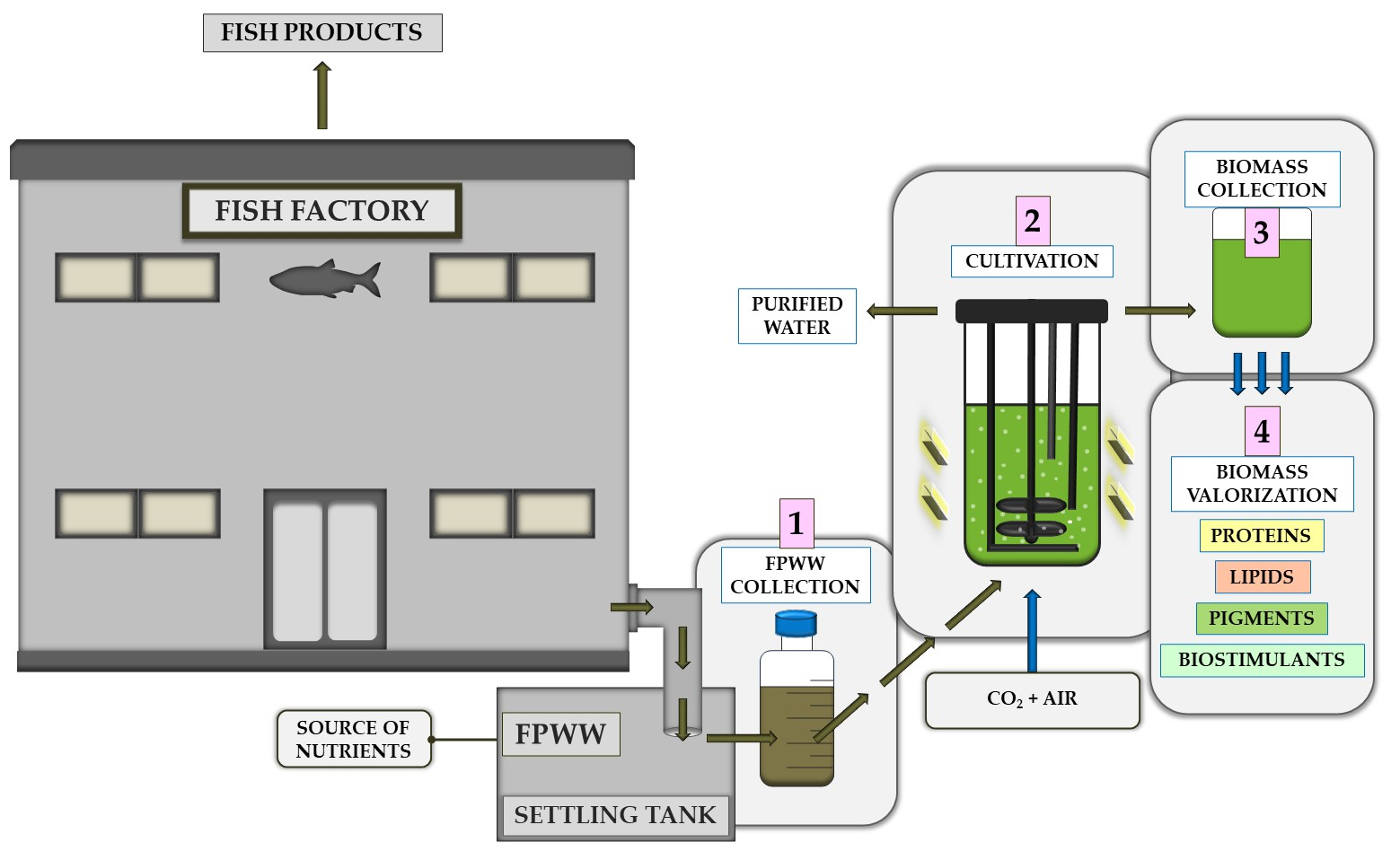
Incorporating microalgae into integrated biotechnologies facilitates rational resource management. Cultivation of microalgae in various types of wastewater offers a number of advantages: safe disposal of liquid waste, restoration of water resources, and the production of valuable products. This study presents a comparative analysis of the growth and biomass productivity of various algal strains in an unsterilized fish processing plant wastewater. Desmodesmus sp. EE-M8 demonstrated the most efficient growth, with a biomass yield of 2.21 ± 0.09 g L−1. The average biomass yield obtained during the growth of Chlorella vulgaris SB-M4, Chlorella sp. EE-P5, Micractinium inermum EE-M2, and Tetradesmus obliquus EZ-B11 ranged from 1.42 to 1.96 g L−1. Ammonium, phosphate, and sulfate ions were completely utilized from the wastewater during algal growth. In addition, the bacterial community structure of wastewater was found to change drastically toward the dominance of Alphaproteobacteria during the microalgal growth. The algal strains (in combination with bacterial partners) used to determine their biostimulant potential demonstrated a positive effect on the germination of garden cress seeds. These findings demonstrate that incorporating algae into the wastewater purification process will reduce the negative impact on the environment and produce valuable biomass for various purposes.

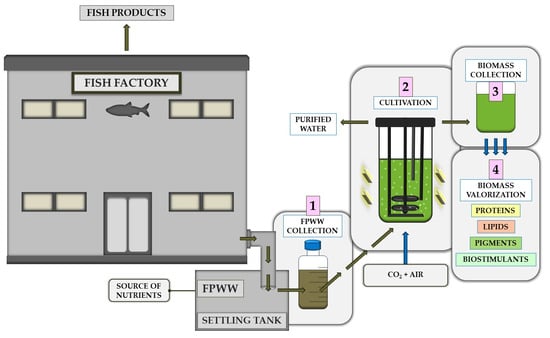
Graphical Abstract

1. Introduction

Fish products are an important source of protein in the human diet and also contain essential polyunsaturated fatty acids and various vitamins, which are indicators of high nutritional value. The growth in fish production observed in past years has led to an increase in the amount of waste generated during fish farming and processing [1,2]. The fish processing industry uses large volumes of freshwater, resulting in the formation of wastewater containing various pollutants. Fish processing wastewater (FPWW) contains a considerable amount of organic and inorganic matter. The high nutrient content in FPWW creates favorable conditions for the growth of microorganisms, including pathogenic bacteria [3,4]. In addition, FPWW contains detergents and disinfectants [5]. Therefore, liquid waste from fish processing plants, containing various contaminants and microorganisms, requires proper treatment for safe disposal.
Wastewater treatment is a multi-stage process that includes primary sedimentation of solid particles, decomposition of organic compounds, removal of inorganic compounds, and disinfection. Treatment technologies are based on physicochemical and biological methods. Despite the high efficiency of modern wastewater treatment methods, there are challenges associated with providing treatment facilities with energy resources and the formation of by-products, which also require safe disposal [6]. The transition to a circular economy, aimed at more efficient use of resources and waste management, has become an incentive to transform waste into useful products. Thus, proper treatment of wastes currently includes not only their disposal in accordance with established standards but also the production of valuable products [7].
A significant portion of wild or farmed fish destined for the market undergoes further processing to produce fish products. Fish processing generates solid (heads, viscera, scales, fins, bones, and muscle trimmings) and liquid (wastewater) wastes, which are valuable resources for the production of various useful products. Solid waste is reused for the production of animal feed, fertilizers, protein hydrolysates, gelatin, and collagen [2,8,9]. Liquid waste contains essential chemical compounds required for the growth of microorganisms useful in different biotechnologies. Sar et al. [10] used wastewater from herring processing for the efficient production of Aspergillus oryzae biomass. Fabiszewska et al. [11] reported the feasibility of using two types of fish waste to produce high-protein biomass of the yeast Yarrowia lipolytica. Urreta et al. [12] proposed an approach to enhance the value of tuna canning plant brines by partially converting them into protein-rich Thraustochytrid biomass. These approaches facilitate the simultaneous treatment of contaminated water and the production of useful products, thereby leading to the reuse of water resources and increasing the sustainability and profitability of fish processing [13].
Microalgae are highly effective in removing chemical compounds and accumulating marketable biomass when cultivated in wastewater from fish processing plants [14]. A substantial advantage of microalgae-based bioremediation technologies is the removal of a wide range of pollutants due to the algal metabolic plasticity [15]. The efficiency of nutrient removal depends on various factors, including the concentration of components in the nutrient medium, pH, temperature, lighting conditions, and algae-bacteria interactions [16,17,18,19]. Algal genera demonstrating high wastewater treatment efficiency and biomass productivity include Chlorella, Desmodesmus, and Scenedesmus [20,21]. Microalgae recommended for their inclusion in integrated production technologies should have high bioremediation potential and productivity of valuable compounds. Of particular importance is the ability of algae to suppress the growth of undesirable bacteria, which will determine the quality of the resulting biomass [22]. The removal of pathogens from wastewater using microalgae is based mainly on abiotic factors, competition for nutrients, and the release of antimicrobial compounds [23,24].
Algal biomass, rich in proteins, lipids, polysaccharides, and pigments, can be included in fish feed [22,25]. The high protein and lipid content in algal biomass makes it an alternative to fishmeal and fish oil, the demand for which is rapidly growing. The value of algae-based feed additives also stems from the content of chemical compounds essential for maintaining the health of aquatic animals. These act as precursors of vitamins, antioxidants, immunostimulants, and growth promoters. Various aquatic animals can directly consume live algal cells at the larval stage. Algae are the primary producers in the food chains of aquatic systems, in particular algae belonging to the genera Chlorella, Scenedesmus, Tetraselmis, Nannochloropsis, Chaetoceros, Skeletonema, and Phaeodactylum [26]. In addition, microalgae serve as a food source for rotifers and crustaceans, which in turn provide a food base for other aquatic animals [17].
Another developing area of application of microalgae is the production of plant growth biostimulants and fertilizers. Microalgae produce a number of biologically active compounds that have a positive effect on the growth and development of plants, including phytohormones, amino acids, polysaccharides, phenolic compounds, and antimicrobial compounds. The biostimulating effect of microalgae can be observed using various treatment methods. Seed treatment increases seed germination and biomass yield. Foliar spraying and root treatment increase shoot mass and also improve yields [27]. Several studies have demonstrated the effectiveness of using microalgae for seed treatment. For example, C. vulgaris [28,29], T. obliquus [30,31,32], Thalassiosira sp., and Nannochloropsis gaditana [33] had a positive effect on the germination of various seeds.
The main aim of this study was to evaluate the growth of several algal strains of the phylum Chlorophyta in FPWW and to determine their potential for incorporation into integrated biotechnologies. The effectiveness of the algal cultures was determined by biomass yield and the content of valuable components, such as proteins, lipids, chlorophylls, and total carotenoids. Another objective of the study was to determine the structure of prokaryotic communities in the fish processing wastewater before and after cultivation of microalgae. Several algal/bacterial cultures were then used to evaluate their biostimulant potential in tests with Lepidium sativum seeds.

2. Materials and Methods

2.1. Wastewater and Microalgal Strains

This study assessed the growth of several green algal strains in fish processing wastewater (FPWW). FPWW was collected from a settling tank located on the territory of the fish processing plant (Rybnaya Sloboda, Republic of Tatarstan, Russian Federation) in May 2025. The collected wastewater was transported to the laboratory and stored in a refrigerator at +2 °C. Samples of the collected water were analyzed for total solids, volatile solids, nitrogen compounds, phosphate, sulfate, and pH as described previously [16,18,34]. Urea level was determined using the commercial kit “Urea-1-Olvex” (Olvex Diagnosticum, St. Petersburg, Russia). Before cultivation, the wastewater was filtered through multilayer gauze to remove large solid particles.
Algal strains were isolated from rivers and lakes of the Republic of Tatarstan. In this study, cultures that demonstrated the ability to grow in other wastewaters [19], as well as new isolates, were tested. Standard agarized Bold’s basal medium (BBM) was used to isolate and maintain algal cultures. Further identification was based on the sequencing of the large subunit of the ribulose 1,5-bisphosphate carboxylase/oxygenase (rbcL) gene using a previously described method [34]. Among the studied strains, three strains belonged to the family Chlorellaceae (Chlorella vulgaris SB-M4, Chlorella sp. EE-P5, and Micractinium inermum EE-M2), and two strains belonged to the family Scenedesmaceae (Desmodesmus sp. EE-M8 and Tetradesmus obliquus EZ-B11).

2.2. Cultivation Conditions

The inoculum of each strain was obtained in standard BBM in glass Erlenmeyer flasks as detailed previously [18]. Algae were then cultivated in autoclavable bioreactors (BIOSTAT A-plus, Sartorius, Göttingen, Germany). Bioreactors provided control of the main parameters, such as temperature, pH, foam level, and medium agitation rate. The total volume of the culture vessels was 2.8 L, and the working volume was 2.0 L. To maintain a temperature at +30 °C, the bioreactors were connected to a cooling water recirculation system (A600, Termex, Tomsk, Russia). All experiments were carried out under continuous illumination, provided by four LED phytolamps (ULI-P10-18W/SPFR, Uniel Lighting Co., Hangzhou, China). They were located on both sides of the bioreactors. The light intensity, measured on the surface of the culture vessels with a photosynthetically active radiation meter (Apogee Instruments, Logan, UT, USA), was 800 µmol photons m−2 s−1. The medium was continuously sparged with an air-gas mixture containing 1.5% CO2, supplied by SmartTrak 50 controller/mass flow meters (Sierra Instruments, Monterey, CA, USA). A gas analyzer (Infors HT, Bottmingen, Switzerland) and a Labfors 5 Lux photobioreactor data display system (Infors HT, Bottmingen, Switzerland) were used to analyze the concentrations of O2 and CO2 at the outlet of bioreactors. pH was measured using EasyFerm Plus PHI K8 200 electrodes (Hamilton, OH, USA). The medium pH was maintained within the optimal range (7.0–7.5) and did not require control. The medium was stirred at 100 rpm to prevent sedimentation of cells and ensure uniform distribution of nutrients and dissolution of CO2 and O2. Foam control was performed by adding a sterile 2% Antifoam B solution (Sigma-Aldrich, St. Louis, MO, USA).

2.3. Analysis of Algal Growth Parameters

Daily growth was analyzed by measuring the optical density of the microalgal suspensions at 750 nm with a Lambda 35 spectrophotometer (Perkin Elmer, Singapore). The total biomass was collected after the algal cultures entered the stationary growth phase (day 5). One portion was then used as a plant growth biostimulant, while the other portion was placed in 50 mL Falcon tubes, and biomass was collected by centrifugation at 5000× g for 4 min. The obtained biomass was washed twice with distilled water. One portion of this biomass was dried at +60 °C for 24 h for further biochemical analysis, and the other portion was dried at +105 °C for 16 h for the final dry matter determination. Dry matter (dry weight, DW) and organic matter (volatile solids, VS, or ash-free dry weight, AFDW) contents were calculated as described previously [18]. Final biomass yield was estimated by subtracting the final DW from the initial DW. Biomass productivity (BP) was calculated on a batch basis using the equation: BP = (DW1–DW0)/T, where DW1 and DW0 are biomass concentrations (g L–1), calculated on a DW basis at the end of the growth and at bioreactor inoculation, respectively. T is the time (in days) from the start of cultivation to the end of cultivation. To evaluate the bioremediation potential of algal cultures, ammonium, phosphate, and sulfate utilization were assessed as described previously [18,34].

2.4. Evaluation of Pigment, Protein, and Lipid Content

The total chlorophyll and carotenoid levels were determined using the dimethyl sulfoxide extraction method as described recently [18,19]. The contents of proteins and lipids were estimated after collecting biomass and drying at +60 °C for 24 h (obtained data were then recalculated based on the full DW data obtained by drying at +105 °C). The dried biomass was then ground in a porcelain mortar with a pestle to powder, and the cells were destroyed by homogenization using a FastPrep-24 homogenizer (MP Biomedicals, Solon, OH, USA). The protein content was measured based on the Bradford assay using a Bio-Rad protein assay kit (Bio-Rad, Munich, Germany). The lipid content was estimated by using Folch’s extraction method. Pigments were excluded when calculating the lipid content. The complete protocols are presented in detail in our earlier works [16,18,19].

2.5. Microbial Community Structure Analysis

Ten-fold dilutions of water samples were performed to estimate the total microbial count (TMC) and total coliform bacteria (TCB) in untreated and microalgae-treated wastewater. TMC was determined by direct colony counting after 72 h of cultivation on meat-peptone agar at +30 °C. Coliform bacteria were counted after culturing on lactose-containing selective nutrient medium at +37 °C for 24–48 h. Bacteria were cultured in RI 53 Red Line thermostats (Binder, Tuttlingen, Germany).
The prokaryotic community structure in FPWW before and after algal growth (at the end of cultivation) was analyzed by using a MiSeq system (Illumina, San Diego, CA, USA). For the initial FPWW, 30 mL of water samples was centrifuged and subjected to total DNA extraction. Wastewater triplicates (after treatment by algal strains) were pooled (10 mL of each sample), centrifuged at 14,000× g for 10 min, and total DNA was extracted from pellets with a FastDNA spin kit for soil (MP Biomedical, Solon, OH, USA). The 16S rRNA gene was amplified by PCR using the primers Bakt_341F (5′-CCT ACG GGN GGC WGC AG-3′) and Bakt_805R (5′-GAC TAC HVG GGT ATC TAA TCC-3′). Sequencing of the 16S rRNA gene fragments was performed according to Illumina protocols. QIIME 2 was used for analysis and interpretation of the obtained data. For the taxonomic classification, the updated Greengenes2 (2024.09) database was used. All 16S rRNA gene sequences are available upon request.

2.6. Evaluation of the Biostimulant Potential

In the present study, seeds of the edible Lepidium sativum (garden cress) were used to test the stimulant potential of some algal/bacterial suspensions (these suspensions mainly consisted of algal biomass) after the wastewater treatment stage. Seed germination in the presence of final biomass was determined using the method described by Zucconi et al. [35] (gibberellin-like effect). Garden cress was selected as a fast-growing plant widely used for water quality analysis and ecotoxicological studies. For surface sterilization, seeds were soaked in 5% NaOCl for 10 min and rinsed twice with sterile distilled water.
After cultivation of algae in FPWW, cell suspensions were diluted with distilled water to concentrations of 0.25 and 0.5 g L–1. Three mL of cell suspensions was transferred to the lid of a sterile glass Petri dish lined with sterile filter paper (the bottom of the dish served as a lid). Twenty-five undamaged seeds of the same size were placed in the dish and incubated in a thermostat at +28 °C for 7 days in the dark (four replicates per treatment; 25 seeds × 4 Petri dishes according to the methods of the International Rules for Seed Testing). The experimental procedure was repeated three times for each algal strain. The humidity level in the thermostat was measured with a hygrometer and maintained by placing a dish with water inside. When necessary, 1 mL of sterile distilled water was added to each Petri dish. Sterile distilled water was used as a negative control in the experiments. A commercial product «Aminosil» (Moscow, Russia) for seed germination was used as a positive control according to the manufacturer’s instructions. In addition, the supernatant obtained after culturing T. obliquus EZ-B11 in FPWW was analyzed.
The effect of the applied treatments was assessed using the following equations:
GI (%) = G × W/Gc × Wc × 100,
where GI is the germination index, G is the number of germinated seeds, W is the weight of seedlings, and Gc and Wc are the values of the same parameters in the control treatment using distilled water. A GI of 100% refers to distilled water (control), and, therefore, only microbial cells that yielded values above 100% are considered to have biostimulant activity [32].
GP (%) = Gt/T × 100,
where GP is the germination percentage calculated after 1, 3, and 5 days, Gt is the number of germinated seeds on day t, and T is the total number of seeds in the biological replicate [36].
GE (%) = (Percentage of germinated seeds at the starting day of germination/Total number of seeds) × 100,
where GE is the germination energy [37].

2.7. Data Analysis

Cultivation experiments were conducted in triplicate, and data were presented as mean values ± standard deviation of the mean. Data for normal distribution were assessed using the Kolmogorov–Smirnov and Shapiro–Wilk tests. Data were then statistically compared using the Tukey method and 95% confidence with Minitab Statistical Software (ver. 22.4.0.0).

3. Results and Discussion

3.1. Growth and Productivity of Microalgae When Grown in FPWW

The characteristics of FPWW are presented in Table 1. Ammonium, nitrite, nitrate, and urea are the main sources of nitrogen in actual wastewater [19,38]. In our case, the NH4+–N concentration in wastewater was 62.5 ± 3.7 mg L−1, while only trace amounts of the last three components were detected.
Table 2 demonstrates the final DW and AFDW of obtained biomass. Although the determination of the optical density of the suspension and the cell count are widely used methods, the algal dry mass is the primary biomass parameter [39]. According to the obtained data, microalgae of the family Chlorellaceae accumulated biomass less efficiently compared to the representatives of the family Scenedesmaceae. Thus, the highest biomass yield and productivity were achieved when testing the strain Desmodesmus sp. EE-M8, which amounted to 2.21 ± 0.09 g L−1 and 0.44 ± 0.02 g L−1 day−1, respectively. The lowest biomass yield and productivity were obtained when cultivating the strain C. vulgaris SB-M4 in FPWW. It should also be noted that part of this biomass was represented by bacterial cells, but their abundance was much lower than that of algae. Despite different biomass yields, all available NH4+, PO43–, and SO42− were completely utilized by algae and bacteria (Table 2).
Desmodesmus sp. EE-M8 demonstrated a tendency to self-flocculation, which is an advantage for harvesting algal biomass. Excellent self-flocculation ability of another Desmodesmus sp. PW1 was also reported [40]. Another Desmodesmus sp. SNN1 showed higher efficiency in biomass accumulation compared to other strains when grown in domestic sewage [41]. In our work, another member of the family Scenedesmaceae, T. obliquus EZ-B11, had a lower biomass productivity value compared to that of Desmodesmus sp. EE-M8 but produced biomass more efficiently compared to the other three strains of the family Chlorellaceae. Similarly, Scenedesmus sp. accumulated biomass more efficiently compared to C. vulgaris when cultured in pig slaughterhouse wastewater (0.41 g L−1 vs. 0.2 g L−1) [42]. In another study [43], Scenedesmus sp. MJ23-R accumulated biomass more efficiently than Chlorella sp. MC18 when cultured in black powder manufacturing wastewater. In contrast, the biomass yield of Scenedesmus sp. was lower compared to that of Chlorella sp. in anaerobically treated slaughterhouse wastewater (1.17 g L−1 vs. 1.4 g L−1) [44]. The highest biomass yield and biomass productivity of Scenedesmus acuminatus CCALA 436 in synthetic municipal wastewater reached 1.71 g L−1 and 0.19 g L−1 day−1, respectively [45]. The biomass yield of Chlorella sorokiniana cultured in unfiltered FPWW was 0.99 g L−1 [14], which is lower than the values obtained in our study. The difference in biomass yield is due to the growth characteristics of the strains, the composition of the growth medium, and the presence of bacteria. Finally, FPWW is an available growth medium for cultivation of algae, but productivity varies significantly between strains. It is worth noting that algae belonging to the families Chlorellaceae and Scenedesmaceae are adapted to grow in wastewater of various origins, including slaughterhouse wastewater [19], food industry wastewater [46], household wastewater [47], urban leachates [48], and many others. Furthermore, these algae are widely commercialized because they produce many valuable metabolites [25,49], the content of some of which was further determined in this study.
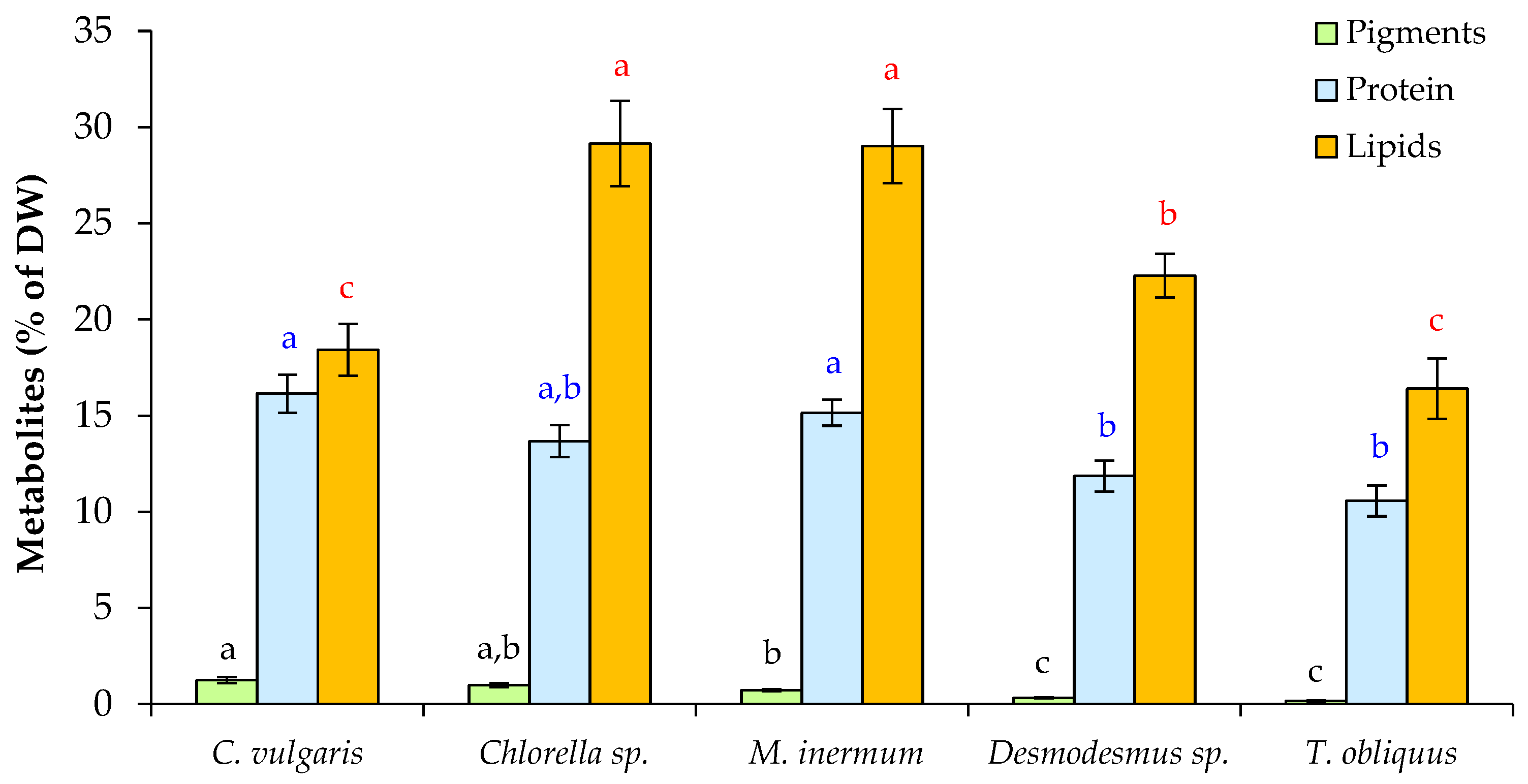
In this study, the potential of algae to produce chlorophyll a (Chl a), chlorophyll b (Chl b), and total carotenoids (Car) was assessed (Figure 1). Cultures of C. vulgaris SB-M4 and Chlorella sp. EE-P5 had the highest concentration of Chl a (9.90 ± 0.9 and 8.89 ± 0.8 mg L−1, respectively) and Car (3.44 ± 0.3 and 3.39 ± 0.4 mg L−1, respectively). Cultures of C. vulgaris SB-M4, Chlorella sp. EE-P5, and M. inermum EE-M2 efficiently accumulated Chl b (3.48 ± 0.6, 4.0 ± 0.4, and 4.41 ± 0.5 mg L−1, respectively). C. vulgaris SB-M4 had the highest total pigment content, which amounted to 1.19% ± 0.11 of DW (Figure 2).
Chl a, Chl b, and Car contents in cultures of C. vulgaris INACC 50026 cultivated in municipal wastewater were 2.21, 1.71, and 0.64 mg L−1, respectively, whereas Chl a, Chl b, and Car contents in cultures of T. obliquus INACC 50028 grown in the same wastewater were 2.07, 1.48, and 0.50 mg L−1, accordingly [50]. These data are significantly lower than the pigment concentrations found in our study for the same species. According to the results of Li et al. [51], the concentration of Chl a in cultures of another C. vulgaris strain grown in membrane-treated industrial distillery wastewater reached 6.48 mg L−1. When Chlorella fusca UTEX 343 was cultivated in 75% urban wastewater, the maximum concentrations of Chl a, Chl b, and Car were 11.38, 4.17, and 2.40 mg L−1, respectively [52]. The Chl a concentration reached 4.4 mg L−1 when culturing the strain Desmodesmus sp. SNN1 in domestic wastewater [41], which is comparable with the Chl a production by our strain Desmodesmus sp. EE-M8, which was 4.11 ± 0.4 mg L−1.
Green algae synthesize Chl a and Chl b, which are necessary for the light reactions of photosynthesis [53,54]. Microalgae also produce carotenoids, which act as antioxidants and are also required by cells in the thermal dissipation of excess energy in the photosynthetic apparatus [55,56]. The efficiency of pigment production by cells depends on several factors, including light wavelength, light intensity, temperature, pH, salinity, and the composition of the nutrient medium. Chlorophyll is used in the pharmaceutical, cosmetic, and food industries as a natural dye. β-carotene is a precursor of vitamin A and food coloring [57] and, along with lutein, is used in animal nutrition [58]. Another carotenoid, astaxanthin, has high antioxidant activity and is also used in salmon farming to enhance pigmentation [57]. Currently, these are the three carotenoids with the largest market share [55]. Ruales et al. [59] assessed the carotenoid profile of biomass of mixed algal cultures and found that the carotenoid profile was mainly composed of lutein, α-carotene, β-carotene, and zeaxanthin. Analysis of the carotenoid profile of C. vulgaris CCAP 211/11B revealed neoxanthin, violaxanthin, lutein, zeaxanthin, and β-carotene [60]. It was previously reported that pigments derived from algal biomass generally demonstrate higher antioxidant activity than plant-derived pigments [61].
Depending on the species and strain, dried algal biomass contains up to 60% of protein and up to 60% of lipids [62], which represent promising alternatives as feed additives [25]. Protein and lipid contents in the final biomass are demonstrated in Figure 2. Cultivation of Desmodesmus sp. EE-M8 and M. inermum EE-M2 in FPWW resulted in the most efficient protein production (up to 0.26 g L−1), while C. vulgaris SB-M4 biomass had the highest protein content of 16.1%. Among the tested strains, the highest lipid concentration in the biomass was observed after the growth of Chlorella sp. EE-P5, M. inermum EE-M2, and Desmodesmus sp. EE-M8, averaging 0.47–0.49 g L−1. The mean lipid content in the final biomass ranged from 16.4% to 29.1% of DW, with the highest values observed in the biomass after the growth of Chlorella sp. EE-P5 and M. inermum EE-M2. Finally, when selecting an algal strain, both the content of proteins/lipids in the biomass and the concentration of biomass itself should be taken into account.
In a recent study, the protein content in the biomass of T. obliquus strain B11 was increased from an average of 5% to 32% with increasing NH4+–N concentration in a synthetic medium [18]. Therefore, the protein content in the biomass found in our work can be increased by adding N-containing compounds to FPWW or by concentrating the wastewater. According to the results of other studies, the production of proteins and lipids depends on both the strain and the type of wastewater [63]. Thus, the mean protein content in the biomass of Chlamydomonas reinhardtii, T. obliquus, and Monoraphidium braunii grown in sewage water was 52.6%, 7.4%, and 11.2%, while the mean lipid content was 35%, 25%, and 42%, respectively. The authors noted that, compared to cultivation of algae in a synthetic medium, cultivation of algae in wastewater led to a decrease in protein content and an increase in lipid content in all cultures [63]. The protein and lipid contents in the biomass of Scenedesmus sp. SD07 grown in municipal wastewater were 35% and 33%, respectively [64]. Kusmayadi et al. [65] showed that C. sorokiniana SU-1, when cultured in dairy wastewater, accumulated 18% of protein and 12.5% of lipids (on a dry weight basis). The lipid content in a culture of T. obliquus grown in municipal wastewater under optimized growth parameters was 0.37 g L−1 [38], which is consistent with the results of this study (the mean lipid content in the culture of T. obliquus EZ-B11 under the tested conditions was 0.32 g L−1). According to Yu et al. [66], nitrogen starvation resulted in a significant increase in lipid concentrations (by 1.8–5.0 and 1.7–2.8 times for C. vulgaris and Auxenochlorella protothecoides cultured in effluents from anaerobic digesters, respectively). Thus, various types of wastewater can serve as the growth media for different microalgal species. Since the algae grew in non-sterile FPWW, it should also be noted that some proteins and lipids, albeit in small quantities, in the final biomass could have belonged to bacteria.

3.2. Microbial Community Structure of FPWW

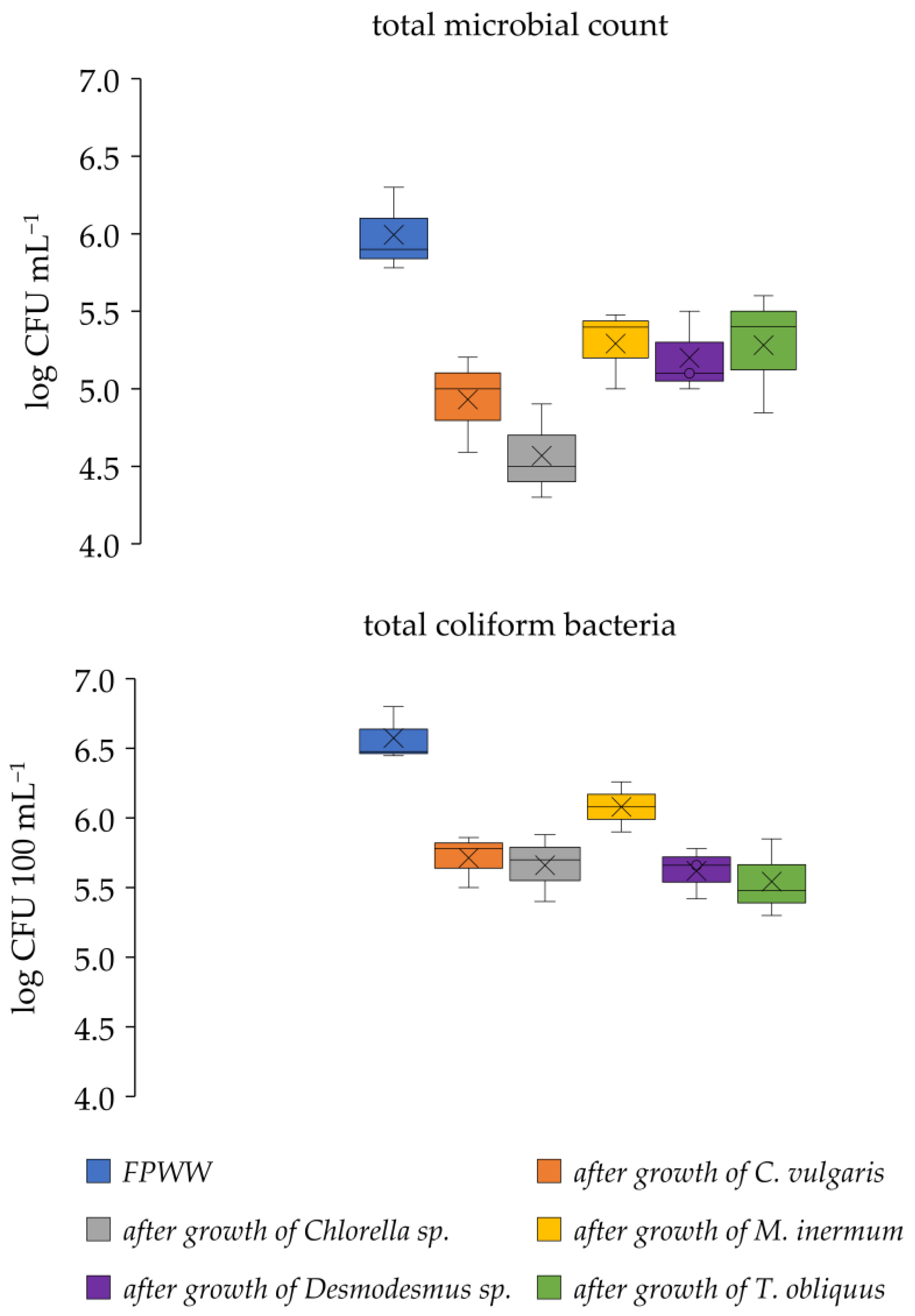
Since bacteria in wastewater can affect the growth of microalgae, we also analyzed the microbial composition of the original wastewater and the microbial community structure of the water after the algal growth. Initially, we analyzed the total microbial count (TMC) and the sanitary indicator group of microorganisms—total coliform bacteria (TCB) (Figure 3). In our case, we found that abiotic factors and the algal cultures themselves reduced the total bacterial count and contributed to the partial removal of coliform bacteria. However, despite the presence of bacteria in these systems, by the end of cultivation, algae constituted the majority of the resulting microbial community.
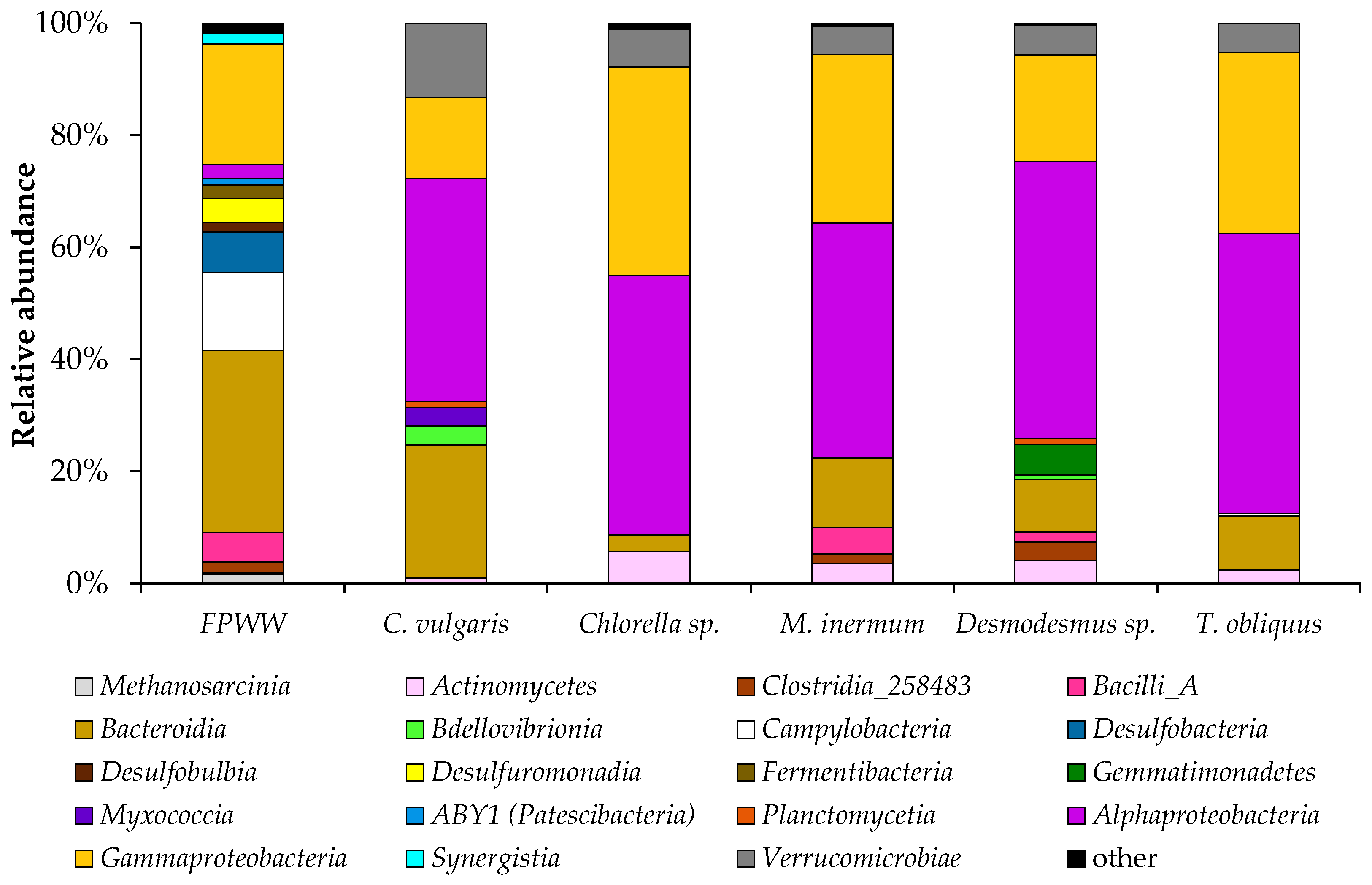
The prokaryotic community of untreated FPWW was diverse (according to sequencing of 16S rRNA gene amplicons). Thus, initial FPWW was mainly represented by members of the bacterial phyla Bacteroidota (32.5% relative abundance), Pseudomonadota (24.0%), Campylobacterota_A (13.8%), Desulfobacterota_G_459543 (9.0%), Bacillota_I (5.3%), Desulfobacterota_G_459546 (4.3%), Fermentibacterota (2.4%), Patescibacteria (2.3%), Bacillota_A_368345 (2.0%), Synergistota (2.0%), and members of the archaeal phylum Halobacteriota (1.6%). Representatives of several other minor phyla accounted for less than 0.7%. After cultivation of microalgae, the relative abundance of bacteria within the phylum Bacteroidota decreased in all experiments (to 3.0–23.8%, depending on the algal culture). The members of the archaeal phylum Halobacteriota and bacterial phyla Campylobacterota_A, Desulfobacterota_G_459543, Desulfobacterota_G_459546, Fermentibacterota, Patescibacteria, and Synergistota were eliminated completely during the growth of all microalgae. Relative abundance of Pseudomonadota in all treated wastewater samples increased substantially, ranging from 54.3% to 83.5%. In addition, the relative abundances of representatives within the phyla Actinomycetota and Verrucomicrobiota increased in algae-containing treatments.
Figure 4 demonstrates the differences in the prokaryotic community structure of the analyzed samples (class level). Thus, initial FPWW contained members of Bacteroidia (32.5% relative abundance), Gammaproteobacteria (21.5%), Campylobacteria (13.8%), Desulfobacteria (7.3%), Bacilli_A (5.3%), Desulfuromonadia (4.3%), Alphaproteobacteria (2.6%), Fermentibacteria (2.4%), Clostridia_258483 (2.0%), Synergistia (2.0%), Desulfobulbia (1.7%), Methanosarcinia (1.6%), and ABY1 (1.2%). After the growth of microalgae in FPWW, the important classes were Alphaproteobacteria (39.7%), Bacteroidia (23.8%), Gammaproteobacteria (14.5%), and Verrucomicrobiae (13.2%) (after the growth of C. vulgaris SB-M4); Alphaproteobacteria (46.3%), Gammaproteobacteria (37.2%), Verrucomicrobiae (6.8%), and Actinomycetes (5.7%) (after the growth of Chlorella sp. EE-P5); Alphaproteobacteria (42.0%), Gammaproteobacteria (30.1%), Bacteroidia (12.3%), Verrucomicrobiae (4.9%), and Bacilli_A (4.8%) (after the growth of M. inermum EE-M2); Alphaproteobacteria (49.3%), Gammaproteobacteria (19.1%), Bacteroidia (9.3%), and Verrucomicrobiae (5.2%) (after the growth of Desmodesmus sp. EE-M8); Alphaproteobacteria (50.1%), Gammaproteobacteria (32.3%), Bacteroidia (9.7%), and Verrucomicrobiae (5.2%) (after the growth of T. obliquus EZ-B11) (Figure 4).
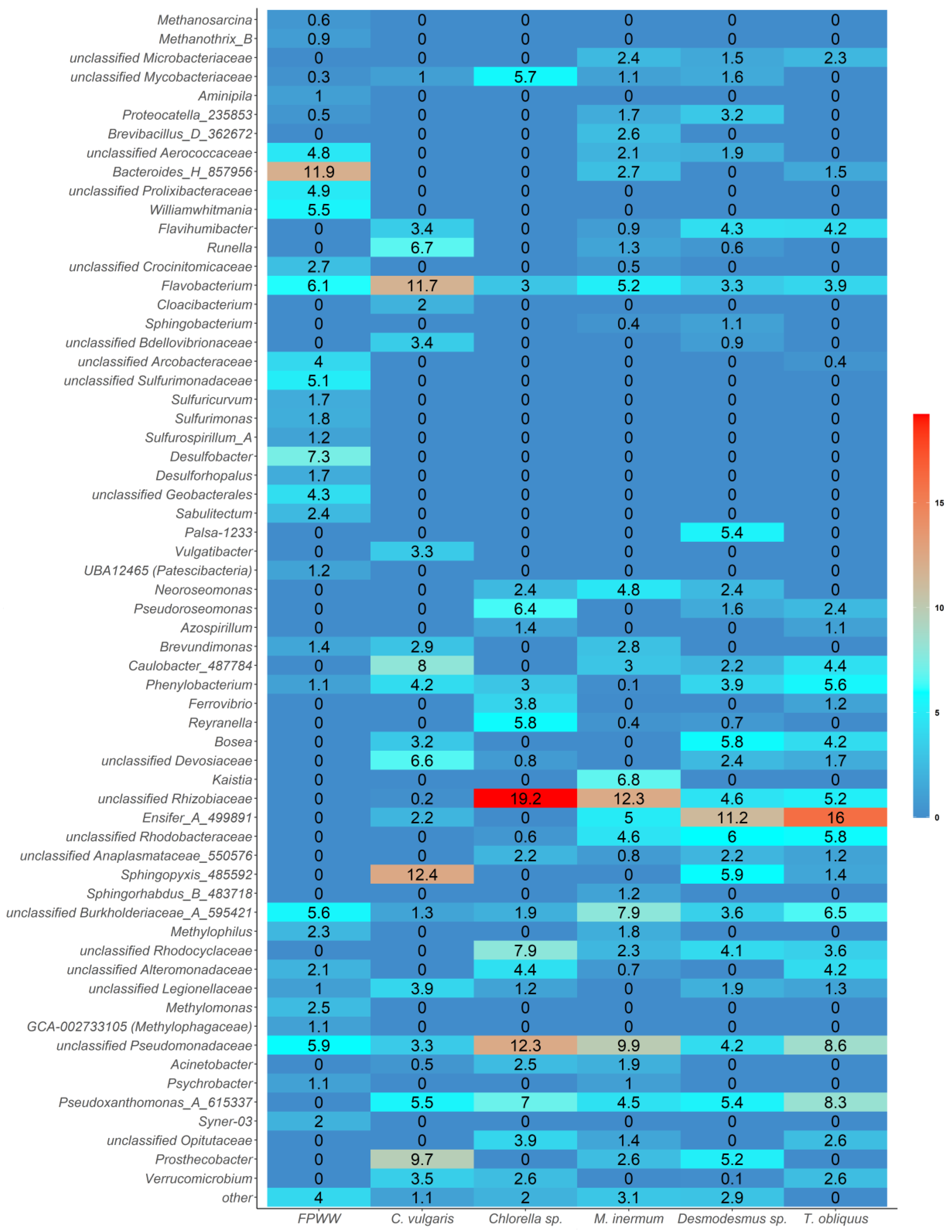
Figure 5 shows the differences in the prokaryotic community structure of the analyzed samples (genus level). The main bacterial genera in original FPWW included Bacteroides_H_857956 (11.9% relative abundance), Desulfobacter (7.3%), Flavobacterium (6.1%), and Williamwhitmania (5.5%), as well as unclassified Pseudomonadaceae (5.9%), unclassified Burkholderiaceae_A_595421 (5.6%), unclassified Sulfurimonadaceae (5.1%), unclassified Prolixibacteraceae (4.9%), and unclassified Aerococcaceae (4.8%). The relative abundance of archaeal representatives of the genera Methanothrix_B and Methanosarcina was 0.9% and 0.6%, respectively. A smaller proportion of the microbial community (mainly from 1% to 4%) consisted of members of the genera Aminipila, Sulfuricurvum, Sulfurimonas, Sulfurospirillum_A, Desulforhopalus, Sabulitectum, Brevundimonas, Phenylobacterium, Methylophilus, Methylomonas, and UBA12465, as well as unclassified Crocinitomicaceae, Alteromonadaceae, Geobacterales, and Arcobacteraceae. Bacteroides_H_857956 was not detected after treatment with C. vulgaris SB-M4, Chlorella sp. EE-P5, and Desmodesmus sp. EE-M8, and after treatment with M. inermum EE-M2 and T. obliquus EZ-B11, the relative abundance of representatives of this genus decreased to 2.7% and 1.5%, respectively. Members of the genera Desulfobacter, Williamwhitmania, Sulfuricurvum, Sulfurimonas, Sulfurospirillum_A, Desulforhopalus, Sabulitectum, and UBA12465, as well as unclassified bacteria within Prolixibacteraceae, Sulfurimonadaceae, and Geobacterales, identified in original wastewater, were not detected after culturing all algal strains.
The bacterial community in treated wastewater was mainly represented by Sphingopyxis_485592, Flavobacterium, Prosthecobacter, Caulobacter_487784, Runella, unclassified Devosiaceae, and Pseudoxanthomonas_A_615337 (after the growth of C. vulgaris SB-M4); unclassified Rhizobiaceae, unclassified Pseudomonadaceae, unclassified Rhodocyclaceae, Pseudoxanthomonas_A_615337, Pseudoroseomonas, Reyranella, and unclassified Mycobacteriaceae (after the growth of Chlorella sp. EE-P5); unclassified Rhizobiaceae, unclassified Pseudomonadaceae, unclassified Burkholderiaceae_A_595421, Kaistia, and Flavobacterium (after the growth of M. inermum EE-M2); Ensifer_A_499891, unclassified Rhodobacteraceae, Sphingopyxis_485592, Bosea, Palsa-1233, Pseudoxanthomonas_A_615337, and Prosthecobacter (after the growth of Desmodesmus sp. EE-M8); Ensifer_A_499891, unclassified Pseudomonadaceae, Pseudoxanthomonas_A_615337, unclassified Burkholderiaceae_A_595421, unclassified Rhodobacteraceae, and Phenylobacterium (after the growth of T. obliquus EZ-B11).
Analysis of the microbial community structure of original and treated FPWW revealed that the algal growth substantially affected both the diversity and relative abundance of various bacteria. It should also be noted that, despite an increase in the relative abundance of certain bacterial taxa in the presence of microalgae (based on 16S rRNA gene amplicon sequencing), the absolute numbers of culturable bacteria decreased. However, both methods—classical microbiological and molecular biological—have several drawbacks, so their comparison should be conducted with caution. The identified bacteria, belonging to the phyla Pseudomonadota, Bacteroidota, and Bacillota, are typical representatives of different types of wastewater [19,67,68,69]. While some bacteria experienced favorable growth conditions in the presence of microalgae, others experienced growth-limiting conditions. Wastewater treatment by microalgae suppressed the growth of individual anaerobic microbes (in particular, Methanosarcina, Methanothrix_B, Desulfobacter, and Desulforhopalus). Their suppression during the cultivation of microalgae can be explained by several conditions, including light intensity and elevated O2 concentration. Individual representatives, including members within the families Aerococcaceae, Arcobacteraceae, and Legionellaceae (within which pathogenic forms are found), could not develop in the presence of algae, or their relative abundance was substantially reduced. Inhibition of growth of several bacteria may additionally be associated with the production of antimicrobial substances by microalgae [17] and competition for resources [70].
We also observed an increase in the relative abundance of bacteria that could potentially stimulate the growth of algae in wastewater. Various studies have shown that bacteria of the family Rhizobiaceae stimulate the growth of microalgae. Rhizobium sp. was previously shown to predominate in the phycosphere of green algae and stimulate the growth of four strains (C. reinhardtii KCTC AG 20446, C. vulgaris KCTC AG 10032, Scenedesmus sp. KCTC AG 20831, and Botryococcus braunii UTEX 572) [71]. The positive effect of Rhizobium on the growth of C. variabilis F275, associated with an increase in the content of available nitrogen in the growth medium, was demonstrated in the study by Fei et al. [72]. The nitrogen-fixing bacterium Mesorhizobium loti increased the efficiency of carbon fixation by Chlorella sp. FACHB-5, which was attributed to the regulation of the carbon concentration mechanism through changes in the activity of extra- and intracellular carbonic anhydrase [73]. Co-cultivation of C. vulgaris and Mesorhizobium sangaii under nitrogen deficiency resulted in an increase in algal biomass and lipid productivities [74]. Considering that microalgae and representatives of the family Rhizobiaceae are capable of establishing mutually beneficial relationships, this explains the increase in the relative abundance of this group of bacteria after the treatment of FPWW using Chlorella sp., M. inermum, Desmodesmus sp., and T. obliquus. Bacteria of the genus Flavobacterium, initially present in FPWW, were also characteristic of all algae-treated systems, especially C. vulgaris SB-M4. Cho et al. [75] observed the enhanced growth of C. vulgaris OW-01 when co-cultivated with bacteria of the genera Flavobacterium, Hyphomonas, Rhizobium, and Sphingomonas, with the most positive effect observed for Rhizobium and Flavobacterium.
Flavihumibacter was detected in most algae-treated wastewater samples. In a recent study, Yang et al. [76] noted a synergistic interaction between Flavihumibacter and microalgae. Brevundimonas strain P1, isolated from a long-term laboratory culture of Chlorella ellipsoidea UTEX 247, stimulated the growth of the alga when co-cultured [77]. The increase in the growth rate of not only C. ellipsoidea but also the bacterial strain allowed the authors to note the symbiotic nature of the relationship between both microorganisms. Ensifer_A_499891 was detected in most of our microalgal-treated systems, with the exception of Chlorella sp. EE-P5. In a study devoted to plant-growth-promoting bacteria [78], a nitrogen-fixing bacterium of the Ensifer group, isolated from Spirodela polyrhiza (giant duckweed), and its interaction with the plant were thoroughly characterized using physiological, biochemical, and metabolic analyses. The authors noted that the bacterium was able to increase the nitrogen, chlorophyll, and RubisCO contents in duckweed, as well as the rate of photosynthesis. Stable N isotope analysis revealed that organic N compounds were transferred from the bacterium to the duckweed, which the authors associated with increased photosynthetic and growth activity. Representatives of the family Pseudomonadaceae in FPWW were able to grow in the presence of all studied algae. The beneficial effect of bacteria of the genus Pseudomonas was demonstrated when co-cultured with the alga C. vulgaris CCAP (211/19), resulting in increased lipid and starch content in the biomass compared to the algal monoculture [79]. In contrast, a study by Rose et al. [80] demonstrated the inhibition of the growth of the alga C. reinhardtii SAG 73.72 when co-cultivated with Pseudomonas protegens, which secreted antialgal compounds. Furthermore, Caulobacter sp. from the natural microbiota was found to have the strongest growth-promoting effect on C. reinhardtii NIES-2235 [81].

3.3. Biostimulant Activity of Microalgal/Bacterial Consortia

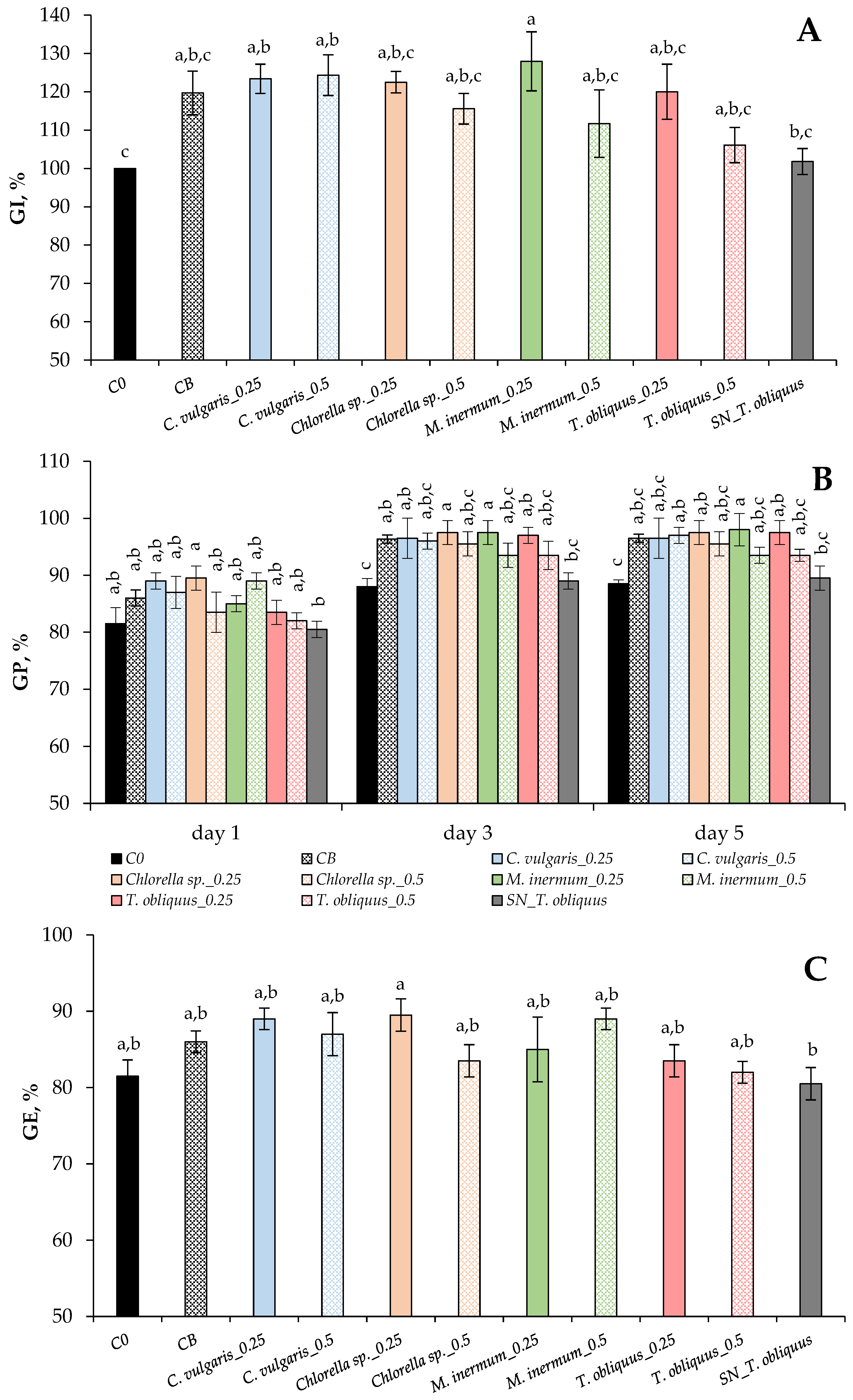
Figure 6 demonstrates the values of the germination index, germination percentage, and germination energy. All cultures had a positive effect on the germination of garden cress seeds. Biomass concentration is shown after the alga’s name and is designated as 0.25 and 0.5 for 0.25 and 0.5 g L−1, respectively. The GI for the M. inermum_0.25 test was 128 ± 7.7%, which is slightly higher than the GI obtained for the CB test (119 ± 5.7%). The tested algal/bacterial cells had a more pronounced stimulatory effect at a concentration of 0.25 g L−1 (except for tests with C. vulgaris). The GI for the SN test was at the same level as C0. Based on the GP and GE indices, it can be concluded that, overall, the biomass concentration of 0.25 g L−1 also had a more effective impact on seed germination (Figure 6). In conclusion, the biotests to evaluate the effectiveness of using microalgae grown in FPWW as a seed germination stimulant showed that all algal strains (along with their bacterial partners) had biostimulant potential.
The obtained data indicated that the biomass obtained during algal growth in FPWW can be used as a biostimulant for seed germination. It is worth mentioning the results of the work by Navarro-Lopez et al. [31], in which the authors showed promising results in increasing the germination of L. sativum seeds by T. obliquus cells grown in brewery wastewater. The biomass of microalgae A. protothecoides and T. obliquus, tested as agents for the cattle manure treatment, also demonstrated biostimulant activity for wheat and watercress seeds [32]. In particular, T. obliquus biomass at a concentration of 0.2 g L−1 increased the GI of watercress seeds by 34% compared to the control. In contrast, A. protothecoides biomass had no stimulating effect on watercress seeds but demonstrated high efficacy on the germination of wheat seeds at a concentration of 0.2 g L−1. According to Puglisi et al. [29], C. vulgaris extracts at distinct concentrations significantly increased the germination indices of Beta vulgaris (sugar beet). Extract of Scenedesmus quadricauda also positively affected sugar beet seed germination, although to a lesser extent than C. vulgaris extract. The obtained results allowed the authors to propose the use of the extracts of the tested algae as a priming treatment for sugar beet.
The researchers pay special attention to the processing of microalgae tested for seed germination and note the influence of the method of extract production on plant characteristics. When evaluating the biostimulant activity of extracts of C. vulgaris UAL-1, Chlorella sp. UAL-2, C. vulgaris UAL-3, and Chlamydopodium fusiforme UAL-4, obtained using water and sonication, it was found that algal extracts at concentrations of 0.1 and 0.5 g L−1 had a negative effect on the GI of watercress seeds (except for UAL-4 at a concentration of 0.1 g L−1). The authors attributed the negative effect to the method of microalgal cell destruction, noting that the ultrasonic treatment used in their study completely disrupted the cells. However, the biostimulant potential of algal extracts was noted in other bioassays, revealing auxin- and cytokinin-like activity [82].
According to the results of Navarro-López et al. [31], treatment of garden cress seeds with T. obliquus biomass without any pretreatment (at a concentration of 0.1 g L−1) was the most effective, increasing the GI by almost 40%. However, when using the enzymatically hydrolyzed algal biomass as raw material, GI values below 100% were obtained. The authors noted that the observed effect may be associated with an increase in the concentration of bioactive substances released during cell disruption. Thus, further research is needed to understand the bioactive activity of microalgal/bacterial biomass or their extracts and their impact on the growth characteristics of valuable vascular plants. This will allow us to fully assess the contribution of the obtained biomass to sustainable agriculture.

4. Conclusions

FPWW was considered to be an accessible nutrient medium for the studied algal strains belonging to the families Chlorellaceae and Scenedesmaceae. All strains grew in FPWW and demonstrated the efficient accumulation of several metabolites, including proteins, lipids, and pigments. Microalgal cultivation resulted in the complete removal of ammonium, phosphate, and sulfate ions from the growth medium, indicating the high bioremediation potential of the studied strains. Microalgal cultures with their bacterial partners showed biostimulant activity in germination tests with garden cress seeds. The obtained results demonstrate the multifaceted potential of the studied microalgae for involvement in integrated processes combining the treatment of wastewater from fish processing and the production of algal biomass or bioproducts based on it.

Author Contributions

Conceptualization, E.E.Z. and A.M.Z.; methodology, E.E.Z. and A.M.Z.; formal analysis, S.S.B., E.E.Z., and A.M.Z.; investigation, S.S.B., E.E.Z., and A.M.Z.; writing—original draft preparation, S.S.B. and E.E.Z.; writing—review and editing, A.D.T. and A.M.Z.; visualization, S.S.B., E.E.Z., A.D.T., and A.M.Z.; supervision, A.M.Z.; funding acquisition, S.S.B. and A.M.Z. All authors have read and agreed to the published version of the manuscript.

Funding

This research was funded by the Russian Science Foundation under project No. 25-24-00479 (https://rscf.ru/en/project/25-24-00479/, accessed on 1 December 2025).

Data Availability Statement

The data presented in this study are available on request from the corresponding author.

Conflicts of Interest

The authors declare no conflicts of interest.

References

  1. Al-Dawery, S.K.; AL-Yaqoubi, G.E.; Al-Musharrafi, A.A.; Harharah, H.N.; Amari, A.; Harharah, R.H. Treatment of fish-processing wastewater using polyelectrolyte and palm anguish. Processes 2023, 11, 2124. [Google Scholar] [CrossRef]
  2. Honrado, A.; Miguel, M.; Ardila, P.; Beltrán, J.A.; Calanche, J.B. From waste to value: Fish protein hydrolysates as a technological and functional ingredient in human nutrition. Foods 2024, 13, 3120. [Google Scholar] [CrossRef]
  3. Cristóvão, R.O.; Botelho, C.M.; Martins, R.J.E.; Loureiro, J.M.; Boaventura, R.A.R. Fish canning industry wastewater treatment for water reuse—A case study. J. Clean. Prod. 2015, 87, 603–612. [Google Scholar] [CrossRef]
  4. Paliaga, P.; Felja, I.; Budiša, A.; Ivančić, I. The impact of a fish cannery wastewater discharge on the bacterial community structure and sanitary conditions of marine coastal sediments. Water 2019, 11, 2566. [Google Scholar] [CrossRef]
  5. Venugopal, V.; Sasidharan, A. Seafood industry effluents: Environmental hazards, treatment and resource recovery. J. Environ. Chem. Eng. 2021, 9, 104758. [Google Scholar] [CrossRef]
  6. Silva, J.A. Wastewater treatment and reuse for sustainable water resources management: A systematic literature review. Sustainability 2023, 15, 10940. [Google Scholar] [CrossRef]
  7. Duque, A.F.; Campo, R.; Val del Rio, A.; Amorim, C.L. Wastewater valorization: Practice around the world at pilot- and full-scale. Int. J. Environ. Res. Public Health 2021, 18, 9466. [Google Scholar] [CrossRef]
  8. Coppola, D.; Lauritano, C.; Palma Esposito, F.; Riccio, G.; Rizzo, C.; de Pascale, D. Fish Waste: From Problem to Valuable Resource. Mar. Drugs 2021, 19, 116. [Google Scholar] [CrossRef] [PubMed]
  9. Gill, J.M.; Hussain, S.M.; Ali, S.; Ghafoor, A.; Adrees, M.; Nazish, N.; Naeem, A.; Naeem, E.; Alshehri, M.A.; Rashid, E. Fish waste biorefinery: A novel approach to promote industrial sustainability. Bioresour. Technol. 2025, 419, 132050. [Google Scholar] [CrossRef]
  10. Sar, T.; Ferreira, J.A.; Taherzadeh, M.J. Conversion of fish processing wastewater into fish feed ingredients through submerged cultivation of Aspergillus oryzae. Syst. Microbiol. Biomanuf. 2021, 1, 100–110. [Google Scholar] [CrossRef]
  11. Fabiszewska, A.; Wierzchowska, K.; Nowak, D.; Wołoszynowska, M.; Zieniuk, B. Brine and post-frying oil management in the fish processing industry—A concept based on oleaginous yeast culture. Processes 2022, 10, 294. [Google Scholar] [CrossRef]
  12. Urreta, I.; Suárez-Alvarez, S.; Virgel, S.; Orozko, I.; Aranguren, M.; Pinto, M. Recycling saline wastewater from fish processing industry to produce protein-rich biomass from a Thraustochytrid strain isolated in the Basque country. Bioresour. Technol. Rep. 2024, 29, 102016. [Google Scholar] [CrossRef]
  13. Tom, A.P.; Jayakumar, J.S.; Biju, M.; Somarajan, J.; Ibrahim, M.A. Aquaculture wastewater treatment technologies and their sustainability: A review. Energy Nexus 2021, 4, 100022. [Google Scholar] [CrossRef]
  14. Khalatbari, S.; Sotaniemi, V.-H.; Suokas, M.; Taipale, S.; Leiviskä, T. Microalgae technology for polishing chemically-treated fish processing wastewater. Groundw. Sustain. Dev. 2024, 24, 101074. [Google Scholar] [CrossRef]
  15. Wollmann, F.; Dietze, S.; Ackermann, J.U.; Bley, T.; Walther, T.; Steingroewer, J.; Krujatz, F. Microalgae wastewater treatment: Biological and technological approaches. Eng. Life Sci. 2019, 19, 860–871. [Google Scholar] [CrossRef]
  16. Ziganshina, E.E.; Bulynina, S.S.; Yureva, K.A.; Ziganshin, A.M. Optimization of photoautotrophic growth regimens of Scenedesmaceae alga: The influence of light conditions and carbon dioxide concentrations. Appl. Sci. 2023, 13, 12753. [Google Scholar] [CrossRef]
  17. Amaro, H.M.; Salgado, E.M.; Nunes, O.C.; Pires, J.C.M.; Esteves, A.F. Microalgae systems—Environmental agents for wastewater treatment and further potential biomass valorisation. J. Environ. Manag. 2023, 337, 117678. [Google Scholar] [CrossRef] [PubMed]
  18. Ziganshina, E.E.; Ziganshin, A.M. Influence of nutrient medium composition on the redistribution of valuable metabolites in the freshwater green alga Tetradesmus obliquus (Chlorophyta) under photoautotrophic growth conditions. BioTech 2025, 14, 60. [Google Scholar] [CrossRef]
  19. Ziganshina, E.E.; Yureva, K.A.; Ziganshin, A.M. Poultry slaughterhouse wastewater treatment by green algae: An eco-friendly restorative process. Environments 2025, 12, 331. [Google Scholar] [CrossRef]
  20. Abdelfattah, A.; Ali, S.S.; Ramadan, H.; El-Aswar, E.I.; Eltawab, R.; Ho, S.-H.; Elsamahy, T.; Li, S.; El-Sheekh, M.M.; Schagerl, M.; et al. Microalgae-based wastewater treatment: Mechanisms, challenges, recent advances, and future prospects. Environ. Sci. Ecotech. 2023, 13, 100205. [Google Scholar] [CrossRef]
  21. Geremia, E.; Ripa, M.; Catone, C.M.; Ulgiati, S. A review about microalgae wastewater treatment for bioremediation and biomass production—A new challenge for Europe. Environments 2021, 8, 136. [Google Scholar] [CrossRef]
  22. Han, P.; Lu, Q.; Fan, L.; Zhou, W. A Review on the use of microalgae for sustainable aquaculture. Appl. Sci. 2019, 9, 2377. [Google Scholar] [CrossRef]
  23. Kundu, P.; Dutta, N.; Bhattacharya, S. Application of microalgae in wastewater treatment with special reference to emerging contaminants: A step towards sustainability. Front. Anal. Sci. 2024, 4, 1513153. [Google Scholar] [CrossRef]
  24. Rehman, R.; Kazmi, S.F.; Irshad, M.; Bilal, M.; Hafeez, F.; Ahmed, J.; Shaheedi, S.; Nazir, R. Microalgae-assisted treatment of wastewater originating from varied sources, particularly in the context of heavy metals and antibiotic-resistant bacteria. Water 2024, 16, 3305. [Google Scholar] [CrossRef]
  25. Sheikhzadeh, N.; Soltani, M.; Heidarieh, M.; Ghorbani, M. Role of dietary microalgae on fish health and fillet quality: Recent insights and future prospects. Fishes 2024, 9, 26. [Google Scholar] [CrossRef]
  26. Ma, M.; Hu, Q. Microalgae as feed sources and feed additives for sustainable aquaculture: Prospects and challenges. Rev. Aquac. 2023, 16, 818–835. [Google Scholar] [CrossRef]
  27. Parmar, P.; Kumar, R.; Neha, Y.; Srivatsan, V. Microalgae as next generation plant growth additives: Functions, applications, challenges and circular bioeconomy-based solutions. Front. Plant Sci. 2023, 14, 1073546. [Google Scholar] [CrossRef] [PubMed]
  28. Alling, T.; Funk, C.; Gentili, F.G. Nordic microalgae produce biostimulant for the germination of tomato and barley seeds. Sci. Rep. 2023, 13, 3509. [Google Scholar] [CrossRef] [PubMed]
  29. Puglisi, I.; Barone, V.; Fragalà, F.; Stevanato, P.; Baglieri, A.; Vitale, A. Effect of microalgal extracts from Chlorella vulgaris and Scenedesmus quadricauda on germination of Beta vulgaris seeds. Plants 2020, 9, 675. [Google Scholar] [CrossRef]
  30. Mollo, L.; Norici, A. Biostimulant potential of three Chlorophyta and their consortium: Application on tomato seeds. Discov. Plants 2025, 2, 130. [Google Scholar] [CrossRef]
  31. Navarro-López, E.; Ruíz-Nieto, A.; Ferreira, A.; Acién, F.G.; Gouveia, L. Biostimulant potential of Scenedesmus obliquus grown in brewery wastewater. Molecules 2020, 25, 664. [Google Scholar] [CrossRef]
  32. Viegas, C.; Gouveia, L.; Gonçalves, M. Bioremediation of cattle manure using microalgae after pre-treatment with biomass ash. Bioresour. Technol. Rep. 2021, 14, 100681. [Google Scholar] [CrossRef]
  33. Puente-Padilla, B.L.; Romero-Villegas, G.I.; Sánchez-Estrada, A.; Cira-Chávez, L.A.; Estrada-Alvarado, M.I. Effect of marine microalgae biomass (Nannochloropsis gaditana and Thalassiosira sp.) on germination and vigor on bean (Phaseolus vulgaris L.) Seeds “Higuera”. Life 2025, 15, 386. [Google Scholar] [CrossRef]
  34. Ziganshina, E.E.; Bulynina, S.S.; Ziganshin, A.M. Comparison of the photoautotrophic growth regimens of Chlorella sorokiniana in a photobioreactor for enhanced biomass productivity. Biology 2020, 9, 169. [Google Scholar] [CrossRef] [PubMed]
  35. Zucconi, F.; Forte, M.; Monac, A.; De Beritodi, M. Biological evaluation of compost maturity. Biocycle 1981, 22, 27–29. [Google Scholar]
  36. Islam, A.K.M.M.; Kato-Noguchi, H. Phytotoxic activity of Ocimum tenuiflorum extracts on germination and seedling growth of different plant species. Sci. World J. 2014, 2014, 676242. [Google Scholar] [CrossRef] [PubMed]
  37. Ruan, S.; Xue, Q.; Tylkowska, K. Effects of seed priming on germination and health of rice (Oryza sativa L.) seeds. Seed Sci. Technol. 2002, 30, 451–458. [Google Scholar]
  38. Han, W.; Jin, W.; Li, Z.; Wei, Y.; He, Z.; Chen, C.; Qin, C.; Chen, Y.; Tu, R.; Zhou, X. Cultivation of microalgae for lipid production using municipal wastewater. Process Saf. Environ. Prot. 2021, 155, 155–165. [Google Scholar] [CrossRef]
  39. Schagerl, M.; Siedler, R.; Konopáčová, E.; Ali, S.S. Estimating biomass and vitality of microalgae for monitoring cultures: A roadmap for reliable measurements. Cells 2022, 11, 2455. [Google Scholar] [CrossRef]
  40. Chen, Z.; Shao, S.; He, Y.; Luo, Q.; Zheng, M.; Zheng, M.; Chen, B.; Wang, M. Nutrients removal from piggery wastewater coupled to lipid production by a newly isolated self-flocculating microalga Desmodesmus sp. PW1. Bioresour. Technol. 2020, 302, 122806. [Google Scholar] [CrossRef]
  41. Wang, P.; Shao, Y.; Geng, Y.; Mushtaq, R.; Yang, W.; Li, M.; Sun, X.; Wang, H.; Chen, G. Advanced treatment of secondary effluent from wastewater treatment plant by a newly isolated microalga Desmodesmus sp. SNN1. Front. Microbiol. 2023, 14, 1111468. [Google Scholar] [CrossRef]
  42. Medrano-Barboza, J.; Herrera-Rengifo, K.; Aguirre-Bravo, A.; Ramírez-Iglesias, J.R.; Rodríguez, R.; Morales, V. Pig slaughterhouse wastewater: Medium culture for microalgae biomass generation as raw material in biofuel industries. Water 2022, 14, 3016. [Google Scholar] [CrossRef]
  43. Mamani Condori, M.A.; Mamani Condori, M.; Villas Gutierrez, M.E.; Choix, F.J.; García-Camacho, F. Bioremediation potential of the Chlorella and Scenedesmus microalgae in explosives production effluents. Sci. Total Environ. 2024, 920, 171004. [Google Scholar] [CrossRef] [PubMed]
  44. Bedane, D.T.; Asfaw, S.L. Microalgae and co-culture for polishing pollutants of anaerobically treated agro-processing industry wastewater: The case of slaughterhouse. Bioresour. Bioprocess. 2023, 10, 81. [Google Scholar] [CrossRef]
  45. Onay, M.; Aladag, E. Production and use of Scenedesmus acuminatus biomass in synthetic municipal wastewater for integrated biorefineries. Environ. Sci. Pollut. Res. 2023, 30, 15808–15820. [Google Scholar] [CrossRef]
  46. Scarponi, P.; Frongia, F.; Cramarossa, M.R.; Roncaglia, F.; Arru, L.; Forti, L. Bioremediation of basil pesto sauce-manufactured wastewater by the microalgae Chlorella vulgaris Beij. and Scenedesmus sp. AgriEngineering 2024, 6, 1674–1682. [Google Scholar] [CrossRef]
  47. Göncü, S.; Şimşek Uygun, B.; Atakan, S. Nitrogen and phosphorus removal from wastewater using Chlorella vulgaris and Scenedesmus quadricauda microalgae with a batch bioreactor. Int. J. Environ. Sci. Technol. 2025, 22, 11877–11892. [Google Scholar] [CrossRef]
  48. Ortiz-Betancur, J.J.; Herrera-Ochoa, M.S.; García-Martínez, J.B.; Urbina-Suarez, N.A.; López-Barrera, G.L.; Barajas-Solano, A.F.; Bryan, S.J.; Zuorro, A. Application of Chlorella sp. and Scenedesmus sp. in the bioconversion of urban leachates into industrially relevant metabolites. Appl. Sci. 2022, 12, 2462. [Google Scholar] [CrossRef]
  49. Ilieva, Y.; Zaharieva, M.M.; Kroumov, A.D.; Najdenski, H. Antimicrobial and ecological potential of Chlorellaceae and Scenedesmaceae with a focus on wastewater treatment and industry. Fermentation 2024, 10, 341. [Google Scholar] [CrossRef]
  50. Fallahi, A.; Hajinajaf, N.; Tavakoli, O.; Sarrafzadeh, M.H. Cultivation of mixed microalgae using municipal wastewater: Biomass productivity, nutrient removal, and biochemical content. Iran. J. Biotechnol. 2020, 18, e2586. [Google Scholar]
  51. Li, F.; Amenorfenyo, D.K.; Zhang, Y.; Zhang, N.; Li, C.; Huang, X. Cultivation of Chlorella vulgaris in membrane-treated industrial distillery wastewater: Growth and wastewater treatment. Front. Environ. Sci. 2021, 9, 770633. [Google Scholar] [CrossRef]
  52. Arrojo, M.Á.; Regaldo, L.; Calvo Orquín, J.; Figueroa, F.L.; Abdala Díaz, R.T. Potential of the microalgae Chlorella fusca (Trebouxiophyceae, Chlorophyta) for biomass production and urban wastewater phycoremediation. AMB Expr. 2022, 12, 43. [Google Scholar] [CrossRef]
  53. Esteves, A.F.; Salgado, E.M.; Vilar, V.J.P.; Gonçalves, A.L.; Pires, J.C.M. A growth phase analysis on the influence of light intensity on microalgal stress and potential biofuel production. Energy Convers. Manag. 2024, 311, 118511. [Google Scholar] [CrossRef]
  54. da Silva, J.C.; Lombardi, A.T. Chlorophylls in microalgae: Occurrence, distribution, and biosynthesis. In Pigments from Microalgae Handbook, 1st ed.; Jacob-Lopes, E., Queiroz, M., Zepka, L., Eds.; Springer: Cham, Switzerland, 2020; pp. 1–18. [Google Scholar]
  55. Ren, Y.; Sun, H.; Deng, J.; Huang, J.; Chen, F. Carotenoid production from microalgae: Biosynthesis, salinity responses and novel biotechnologies. Mar. Drugs 2021, 19, 713. [Google Scholar] [CrossRef]
  56. Dolganyuk, V.; Belova, D.; Babich, O.; Prosekov, A.; Ivanova, S.; Katserov, D.; Patyukov, N.; Sukhikh, S. Microalgae: A promising source of valuable bioproducts. Biomolecules 2020, 10, 1153. [Google Scholar] [CrossRef]
  57. Begum, H.; Yusoff, F.M.; Banerjee, S.; Khatoon, H.; Shariff, M. Availability and utilization of pigments from microalgae. Crit. Rev. Food Sci. Nutr. 2016, 56, 2209–2222. [Google Scholar] [CrossRef] [PubMed]
  58. Shi, H.; Deng, X.; Ji, X.; Liu, N.; Cai, H. Sources, dynamics in vivo, and application of astaxanthin and lutein in laying hens: A review. Anim. Nutr. 2023, 13, 324–333. [Google Scholar] [CrossRef]
  59. Ruales, E.; Bellver, M.; Álvarez-González, A.; Carvalho Fontes Sampaio, I.; Garfi, M.; Ferrer, I. Carotenoids and biogas recovery from microalgae treating wastewater. Bioresour. Technol. 2025, 428, 132427. [Google Scholar] [CrossRef]
  60. Pinto, A.S.; Maia, C.; Sousa, S.A.; Tavares, T.; Pires, J.C.M. Amino acid and carotenoid profiles of Chlorella vulgaris during two-stage cultivation at different salinities. Bioengineering 2025, 12, 284. [Google Scholar] [CrossRef]
  61. Cao, K.; Cui, Y.; Sun, F.; Zhang, H.; Fan, J.; Ge, B.; Cao, Y.; Wang, X.; Zhu, X.; Wei, Z.; et al. Metabolic engineering and synthetic biology strategies for producing high-value natural pigments in microalgae. Biotechnol. Adv. 2023, 68, 108236. [Google Scholar] [CrossRef] [PubMed]
  62. Amit; Dahiya, D.; Ghosh, U.K.; Nigam, P.S.; Jaiswal, A.K. Food industries wastewater recycling for biodiesel production through microalgal remediation. Sustainability 2021, 13, 8267. [Google Scholar] [CrossRef]
  63. El-Sheekh, M.M.; Galal, H.R.; Mousa, A.S.H.; Farghl, A.A.M. Coupling wastewater treatment, biomass, lipids, and biodiesel production of some green microalgae. Environ. Sci. Pollut. Res. Int. 2023, 30, 35492–35504. [Google Scholar] [CrossRef]
  64. Silambarasan, S.; Logeswari, P.; Sivaramakrishnan, R.; Incharoensakdi, A.; Kamaraj, B.; Cornejo, P. Scenedesmus sp. strain SD07 cultivation in municipal wastewater for pollutant removal and production of lipid and exopolysaccharides. Environ. Res. 2023, 218, 115051. [Google Scholar] [CrossRef]
  65. Kusmayadi, A.; Lu, P.H.; Huang, C.Y.; Leong, Y.K.; Yen, H.W.; Chang, J.S. Integrating anaerobic digestion and microalgae cultivation for dairy wastewater treatment and potential biochemicals production from the harvested microalgal biomass. Chemosphere 2022, 291, 133057. [Google Scholar] [CrossRef] [PubMed]
  66. Yu, H.; Kim, J.; Lee, C. Nutrient removal and microalgal biomass production from different anaerobic digestion effluents with Chlorella species. Sci. Rep. 2019, 9, 6123. [Google Scholar] [CrossRef] [PubMed]
  67. Tyagi, I.; Tyagi, K.; Ahamad, F.; Bhutiani, R.; Kumar, V. Assessment of bacterial community structure, associated functional role, and water health in full-scale municipal wastewater treatment plants. Toxics 2025, 13, 3. [Google Scholar] [CrossRef]
  68. Ziganshina, E.E.; Ibragimov, E.M.; Ilinskaya, O.N.; Ziganshin, A.M. Bacterial communities inhabiting toxic industrial wastewater generated during nitrocellulose production. Biologia 2016, 71, 70–78. [Google Scholar] [CrossRef]
  69. Ziganshina, E.E.; Mohammed, W.S.; Ziganshin, A.M. Microbial diversity of the produced waters from the oilfields in the Republic of Tatarstan (Russian Federation): Participation in biocorrosion. Appl. Sci. 2023, 13, 12984. [Google Scholar] [CrossRef]
  70. Abate, R.; Oon, Y.-L.; Oon, Y.-S.; Bi, Y.; Mi, W.; Song, G.; Gao, Y. Diverse interactions between bacteria and microalgae: A review for enhancing harmful algal bloom mitigation and biomass processing efficiency. Heliyon 2024, 10, e36503. [Google Scholar] [CrossRef] [PubMed]
  71. Kim, B.H.; Ramanan, R.; Cho, D.-H.; Oh, H.-M.; Kim, H.-S. Role of Rhizobium, a plant growth promoting bacterium, in enhancing algal biomass through mutualistic interaction. Biomass Bioenergy 2014, 69, 95–105. [Google Scholar] [CrossRef]
  72. Fei, C.; Wang, T.; Woldemicael, A.; He, M.; Zou, S.; Wang, C. Nitrogen supplemented by symbiotic Rhizobium stimulates fatty-acid oxidation in Chlorella variabilis. Algal Res. 2019, 44, 101692. [Google Scholar] [CrossRef]
  73. Yao, D.; Li, Y.; Tian, K.; Wang, M.; Tan, D.; Fu, X.; Wu, Y.; Liu, Y.; Wang, H. Enhanced photosynthetic CO2 fixation in mutualistic Chlorella sp. and Mesorhizobium loti co-cultures. Chem. Eng. J. 2025, 516, 163671. [Google Scholar] [CrossRef]
  74. Wei, Z.; Wang, H.; Li, X.; Zhao, Q.; Yin, Y.; Xi, L.; Ge, B.; Qin, S. Enhanced biomass and lipid production by co-cultivation of Chlorella vulgaris with Mesorhizobium sangaii under nitrogen limitation. J. Appl. Phycol. 2019, 32, 233–242. [Google Scholar] [CrossRef]
  75. Cho, D.H.; Ramanan, R.; Heo, J.; Lee, J.; Kim, B.H.; Oh, H.M.; Kim, H.S. Enhancing microalgal biomass productivity by engineering a microalgal–bacterial community. Bioresour. Technol. 2015, 175, 578–585. [Google Scholar] [CrossRef] [PubMed]
  76. Yang, Y.; Shi, J.; Wan, N.; Huang, W. Efficiency and mechanism of moving bed bacterial-algal biofilm reactor (MB-BA-BR) in treating simulated coal chemical wastewater. Fuel 2025, 394, 135176. [Google Scholar] [CrossRef]
  77. Park, Y.; Je, K.W.; Lee, K.; Jung, S.-E.; Choi, T.-J. Growth promotion of Chlorella ellipsoidea by co-inoculation with Brevundimonas sp. isolated from the microalga. Hydrobiologia 2008, 598, 219–228. [Google Scholar] [CrossRef]
  78. Toyama, T.; Mori, K.; Tanaka, Y.; Ike, M.; Morikawa, M. Growth promotion of giant duckweed Spirodela polyrhiza (Lemnaceae) by Ensifer sp. SP4 through enhancement of nitrogen metabolism and photosynthesis. Mol. Plant Microbe Interact. 2022, 35, 28–38. [Google Scholar] [CrossRef]
  79. Tavakol, M.; Naeimpoor, F. Single and co-cultivation of Chlorella vulgaris and Pseudomonas aeruginosa: Efficient nutrient removal and lipid/starch formation by photoperiodic co-culture. Bioresour. Technol. 2025, 436, 132983. [Google Scholar] [CrossRef] [PubMed]
  80. Rose, M.M.; Scheer, D.; Hou, Y.; Hotter, V.S.; Komor, A.J.; Aiyar, P.; Scherlach, K.; Vergara, F.; Yan, Q.; Loper, J.E.; et al. The bacterium Pseudomonas protegens antagonizes the microalga Chlamydomonas reinhardtii using a blend of toxins. Environ. Microbiol. 2021, 23, 5525–5540. [Google Scholar] [CrossRef]
  81. Bai, Y.; Mori, K.; Tanaka, Y.; Toyama, T. Isolation and characterization of bacteria from natural microbiota regrown with Chlamydomonas reinhardtii in synthetic co-cultures. Algal Res. 2025, 86, 103954. [Google Scholar] [CrossRef]
  82. Morillas-España, A.; Ruiz-Nieto, Á.; Lafarga, T.; Acién, G.; Arbib, Z.; González-López, C.V. Biostimulant capacity of Chlorella and Chlamydopodium species produced using wastewater and centrate. Biology 2022, 11, 1086. [Google Scholar] [CrossRef] [PubMed]
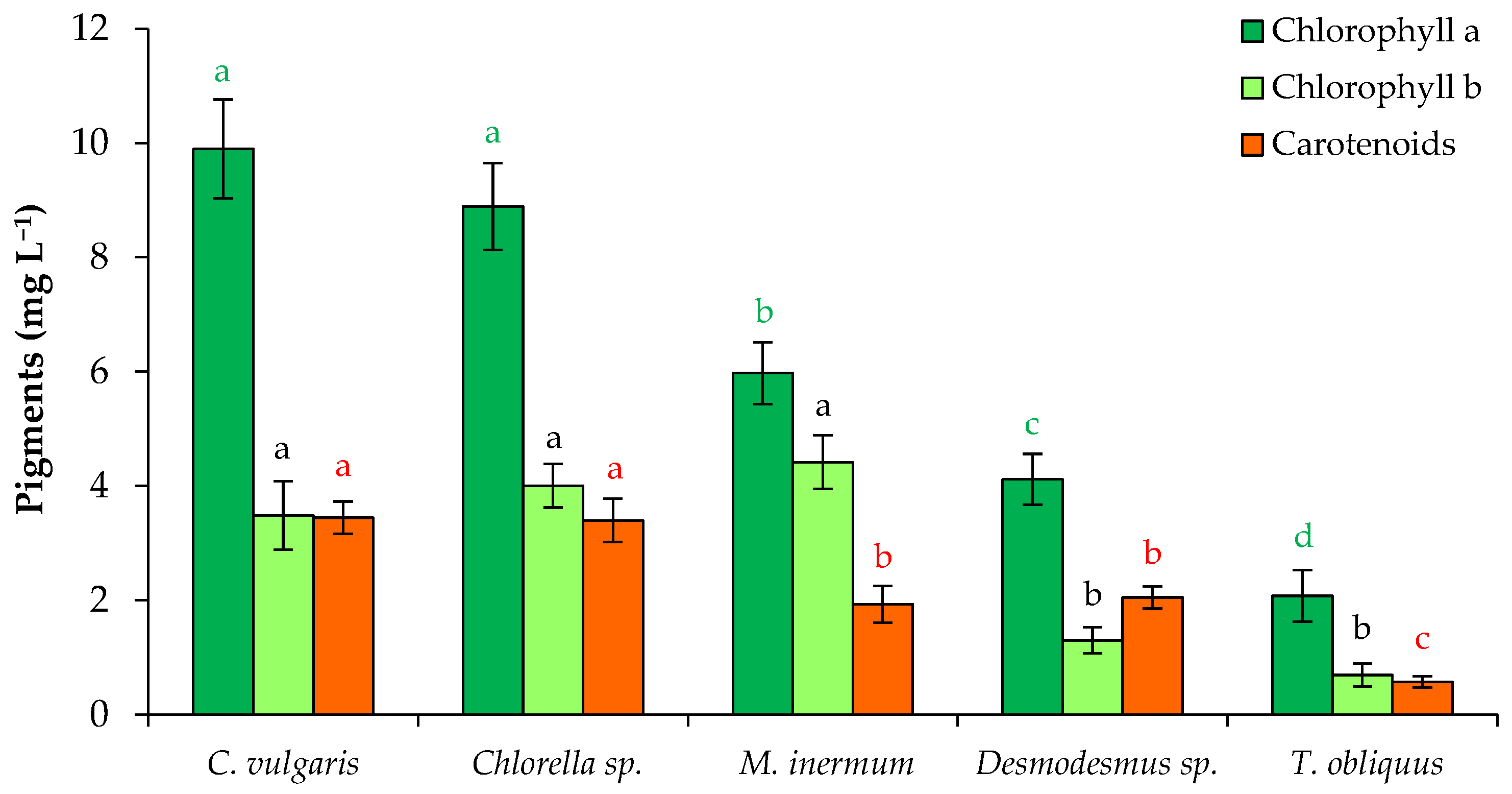
Figure 1. Final concentration of chlorophylls a, b and total carotenoids obtained during the growth of different algal cultures in wastewater. Means that do not share a letter are significantly different (Tukey method and 95% confidence; green letters refer to chlorophyll a concentration, black letters—chlorophyll b concentration, and red letters—carotenoid concentration).
Phycology 06 00002 g001
Figure 2. Pigment, protein, and lipid content in the biomass obtained during the growth of different algal cultures in wastewater. Means that do not share a letter are significantly different (Tukey method and 95% confidence; black letters refer to pigment content, blue letters—protein content, and red letters—lipid content).
Phycology 06 00002 g002
Figure 3. Bacterial loading in FPWW before and after cultivation of different algal cultures.
Phycology 06 00002 g003
Figure 4. Prokaryotic community structure of original FPWW and FPWW after cultivation of different algal cultures according to sequencing of 16S rRNA gene amplicons (class level).
Phycology 06 00002 g004
Figure 5. Heatmap demonstrating the relative abundances (%) of microbial taxa in original wastewater and wastewater after the cultivation of different algal cultures according to sequencing of 16S rRNA gene amplicons (genus level). Only taxa comprising at least 0.5% relative abundance in at least one sample are presented.
Phycology 06 00002 g005
Figure 6. Germination index (GI) (A), germination percentage (GP) (B), and germination energy (GE) (C) of L. sativum seeds treated with distilled water (C0), a commercial biostimulant (CB), microalgae, and supernatant (SN) after the growth of T. obliquus. Biomass concentration is indicated after the alga’s name and is denoted as 0.25 and 0.5 for 0.25 g L−1 and 0.5 g L−1, respectively. Means that do not share a letter are significantly different (Tukey method and 95% confidence). Means for GP were compared for each day separately.
Phycology 06 00002 g006
Table 1. Characteristics of fish processing wastewater.
ParameterValue
pH6.9 ± 0.08
TS (%)0.16 ± 0.1
VS (%)0.11 ± 0.1
NH4+–N (mg L−1)62.5 ± 3.7
PO43−–P (mg L−1)10.7 ± 1.2
SO42−–S (mg L−1)8 ± 1.7
NO2–N (mg L−1)trace amounts
NO3–N (mg L−1)trace amounts
Ureatrace amounts
Table 2. Final growth parameters of algal strains cultured in wastewater.
StrainDW, g L−1Biomass
Productivity,
g L−1 day–1
Ash-Free
DW, g L−1
NH4+/PO43−/ SO42−
Removal, %
C. vulgaris SB-M41.42 ± 0.10 d0.28 ± 0.02 d1.35 ± 0.09 d100
Chlorella sp. EE-P51.61 ± 0.05 c,d0.32 ± 0.01 c,d1.53 ± 0.05 c,d100
M. inermum EE-M21.70 ± 0.09 c0.34 ± 0.02 c1.61 ± 0.09 c100
Desmodesmus sp. EE-M82.21 ± 0.09 a0.44 ± 0.02 a2.12 ± 0.08 a100
T. obliquus EZ-B111.96 ± 0.06 b0.39 ± 0.01 b1.89 ± 0.06 b100
Means that do not share a letter are significantly different (Tukey method and 95% confidence).
Disclaimer/Publisher’s Note: The statements, opinions and data contained in all publications are solely those of the individual author(s) and contributor(s) and not of MDPI and/or the editor(s). MDPI and/or the editor(s) disclaim responsibility for any injury to people or property resulting from any ideas, methods, instructions or products referred to in the content.