Review

Microplastic-Mediated Dissemination of Antibiotic Resistance Genes in Marine Environments: Mechanisms, Environmental Modulators, and Emerging Risks

1
School of Bioengineering and Biosciences, Lovely Professional University, Phagwara 144411, India
2
Department of Microbiology, Graphic Era (Deemed to be University), Dehradun 248009, India
3
Amity Institute of Microbial Technology, Amity University Rajasthan, Rajasthan 303002, India
4
Amity Centre for Microbial Disease Diagnosis, Amity University Rajasthan, Rajasthan 303002, India
*
Authors to whom correspondence should be addressed.
Microplastics 2026, 5(1), 27; https://doi.org/10.3390/microplastics5010027
Submission received: 30 June 2025 / Revised: 16 September 2025 / Accepted: 10 December 2025 / Published: 6 February 2026

Abstract

The convergence of global plastic pollution and antimicrobial resistance crises has intensified concerns about the role of microplastics (MPs) in disseminating antibiotic resistance genes (ARGs) in marine environments. This review synthesizes the mechanistic pathways through which MPs act as vectors for ARG propagation, supported by a bibliometric analysis of 144 studies retrieved from Scopus. MPs possess distinct physicochemical properties such as nanoplastic formation, polymer-specific sorption, weathering-induced oxidation, and additive leachate release that facilitate microbial colonization and biofilm formation. These plastisphere biofilms, enriched with mobile genetic elements including integrons, transposons, and plasmids, promote ARG transfer via conjugation, transformation, and transduction. Environmental modulators like salinity, oxygen, nutrients, pH, UV exposure, and reactive oxygen species further accelerate horizontal gene transfer, while co-selection pressures from heavy metals and antibiotics amplify resistance dissemination. Bibliometric mapping reveals a sharp rise in publications since 2018, with China leading contributions and major research themes centered on horizontal gene transfer, metagenomics, nanoplastics, and biofilm-mediated resistome evolution. Overall, marine MPs substantially intensify ARG spread through complex microbe–plastic–pollutant interactions, posing significant ecological and public health risks. Addressing current gaps, such as limited field validation, underexplored nanoplastic mechanisms, geographic bias, and lack of standardized monitoring, requires harmonized surveillance, omics integration, pollutant mixture modeling, and One Health-based risk assessment to inform global policy interventions.

1. Introduction

The proliferation of microplastics (MPs) in marine ecosystems has introduced a novel and potent vector for the dissemination of antibiotic resistance genes (ARGs), posing complex ecological and public health challenges. Microplastics, characterized by their small size (typically <5 mm), high surface-area-to-volume ratio, and persistent nature, provide an ideal substratum for microbial colonization, forming dense and diverse biofilms referred to as the “plastisphere” [1]. These biofilms facilitate the accumulation and horizontal gene transfer (HGT) of ARGs among microbial communities. In a comprehensive investigation conducted in the East China Sea, Peng reported an enrichment of intracellular ARGs (iARGs) on marine microplastics ranging from 6- to 55-fold compared to surrounding seawater, while extracellular ARGs (eARGs) exhibited an even greater enrichment, up to 140-fold, highlighting the amplification potential of MPs as ARG carriers [2]. The sorptive properties of MPs enable them to adsorb antibiotics, heavy metals, and organic contaminants from the surrounding environment, thereby creating concentrated microenvironments of co-selection pressure that promote ARG persistence and horizontal transfer [3]. Specific polymer types exhibit differential impacts on ARG enrichment. For example, Huang demonstrated that polyethylene (PE) and polyvinyl chloride (PVC) increased ARG abundance in estuarine sediments by nearly one order of magnitude, with ARG concentrations reaching 8.1 × 10⁹ copies·g−1 for PE and 4.1 × 10⁹ copies·g−1 for PVC, whereas water-soluble polyvinyl alcohol (PVA) exhibited reduced ARG persistence [4]. Moreover, MPs act as active facilitators of various HGT mechanisms, including conjugation, transformation, and transduction. For instance, in a controlled marine model using the mussel Mytilus galloprovincialis, Milani observed that PE MPs significantly increased the conjugative transfer frequency of the tetracycline resistance gene tetM carried by Enterococcus faecium and Listeria monocytogenes, while plasmid-encoded ermB showed limited transfer under identical conditions [5]. This indicates that the presence of MPs can selectively modulate the dissemination pathways of specific ARGs. In addition to acting as physical vectors, MPs may directly influence microbial physiology at the cellular level, thereby enhancing gene transfer efficiency. Luo demonstrated that PVC MPs stimulated ARG acquisition in human pathogens such as Acinetobacter sp. and Salmonella sp. in anaerobic sludge systems by inducing reactive oxygen species (ROS) generation, altering membrane permeability, and upregulating ATP synthesis pathways, collectively promoting HGT [6]. Crucially, the impact of MPs on ARG dissemination is not uniform across environmental matrices. Recent metagenomic studies conducted in the northern Gulf of Mexico revealed that non-biodegradable polyethylene terephthalate (PET) hosted significantly higher multidrug resistance gene abundance (3.05 copies per 16S rRNA) compared to biodegradable polyhydroxyalkanoate (PHA) (2.05 copies per 16S rRNA), underscoring the importance of polymer chemistry in shaping resistome profiles [7]. As global plastic production surges past 400 million metric tons annually, with a substantial fraction entering aquatic ecosystems, the intersection of microplastic pollution and antibiotic resistance poses an escalating risk to marine biodiversity and human health alike [8]. The intricate interplay between MPs, microbial communities, ARGs, and environmental modulators demands comprehensive mechanistic investigations to elucidate the full scope of this emerging threat. Beyond summarizing existing evidence, this review aims to provide a novel synthesis by positioning microplastics not merely as passive carriers but as genetic reactors microenvironments where mobile genetic elements, co-selective pollutants, and dense biofilms converge to accelerate resistance evolution. To complement mechanistic evaluation, we also employ bibliometric mapping, not as an auxiliary exercise, but as a strategic tool to identify neglected research domains such as nanoplastics, multi-pollutant interactions, and geographic blind spots. By integrating mechanistic insights with bibliometric trends, this review situates the microplastic ARG nexus within a broader One Health framework, highlighting how marine plastispheres can amplify antimicrobial resistance risks at the environmental–human–animal interface. In doing so, we aim to clarify both the current state of knowledge and the critical future directions needed to advance predictive modeling, surveillance, and policy interventions.

2. Narrative Literature of Review

2.1. Microplastic Characteristics Affecting ARG Transfer

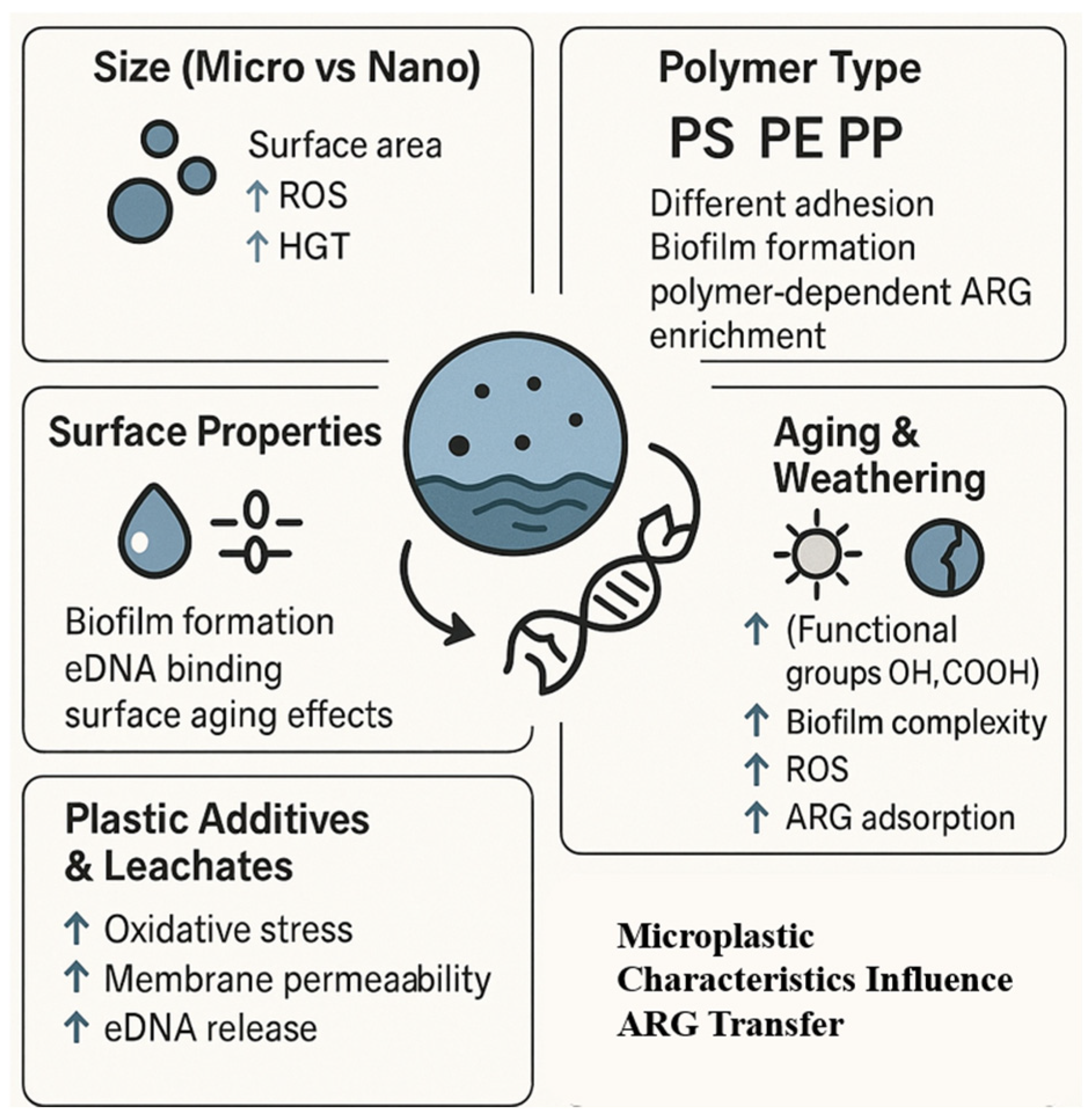
The intrinsic physicochemical characteristics of microplastics critically influence their role as vectors for ARG dissemination in marine ecosystems. Parameters such as particle size, polymer composition, surface charge, hydrophobicity, and degree of aging directly modulate microbial attachment dynamics, biofilm architecture, and horizontal gene transfer efficiencies (as shown in Figure 1). Furthermore, additives and chemical leachates embedded within polymer matrices may exert selective pressures that favor the enrichment of antibiotic-resistant bacterial communities, thereby amplifying the ARG burden within the marine plastisphere.

2.1.1. Size (Micro- vs. Nano-; Surface-Area-to-Volume Ratio)

The particle size of MPs exerts a profound influence on their capacity to facilitate ARG dissemination, primarily through modulation of surface area, biofilm density, and gene transfer dynamics. As MPs transition into the nanoscale, their surface-area-to-volume ratio increases exponentially, creating highly reactive interfaces that intensify microbial colonization and genetic exchange [9]. In controlled conjugation assays utilizing Escherichia coli donor–recipient systems, Zha et al. demonstrated that polystyrene nanoplastics (10 nm radius) elevated conjugative gene transfer efficiency significantly more than larger MPs (500 nm), with moderate-sized nanoplastics (50 nm) achieving peak transfer enhancement [10]. The mechanistic basis was linked to increased ROS production and elevated membrane permeability, which synergistically upregulated DNA uptake machinery. Furthermore, Wang et al. reported that polystyrene nanoplastics (10–500 mg/L) amplified the transformation efficiency of plasmid-borne ampicillin resistance genes (ampR) in E. coli by 2.8–5.4-fold and the transformation frequency by 3.2–8.4-fold compared to microplastic counterparts, highlighting the substantial amplification effect of nanoscale plastic particles [11]. The observed facilitation was attributed to nanoplastic-induced overproduction of ROS, activation of SOS response pathways, and alterations in membrane secretion systems that together augmented exogenous DNA uptake. Moreover, Chen et al. demonstrated that environmentally aged polystyrene nanoplastics, via photoaging processes, acquired multienzyme-like oxidase and peroxidase activities that further elevated ROS generation, thereby modulating both facilitation and inhibition of ARG transfer depending on concentration thresholds [12]. In marine systems, where hydrodynamic forces promote microplastic fragmentation, the prevalence of nanoplastics is increasing, raising concerns regarding their heightened capacity to serve as MGE hotspots. Luo et al. emphasizes that the elevated surface energy and nanoscale curvature of nanoplastics promote stronger interactions with extracellular DNA (eDNA), enhancing the persistence and horizontal mobility of ARGs across microbial consortia within the marine plastisphere [13]. Thus, the dimensionality of plastic debris from micro to nano critically determines their mechanistic role in ARG acquisition, persistence, and transfer, rendering nanoscale plastics particularly potent amplifiers of antimicrobial resistance propagation in marine ecosystems.

2.1.2. Polymer Type

The polymer composition of MPs critically governs their role as vectors for ARG dissemination, primarily through modulation of microbial colonization dynamics, surface reactivity, and co-selective pollutant sorption. Distinct physicochemical properties such as crystallinity, hydrophobicity, and functional group density create differential niches for microbial adhesion and HGT. In a controlled anaerobic sludge digestion experiment, Luo et al. demonstrated that low-density polyethylene (LDPE) promoted ARG abundance by 4.5–27.9% compared to controls, with higher enrichment correlating with increased particle dosage (10–80 particles/g-TS). LDPE enhanced bacterial proliferation, elevated oxidative stress levels, upregulated membrane permeability, and stimulated MGE-mediated HGT, ultimately amplifying both vertical and horizontal ARG transfer [13]. The capacity of MPs to serve as ARG carriers varies substantially across polymer types. In mangrove sediments, Sun et al. reported that polypropylene (PP) and high-density polyethylene (HDPE) exhibited superior ARG enrichment relative to polystyrene (PS), polyethylene glycol terephthalate (PET), and polycaprolactone (PCL). Specifically, multidrug-resistant bacteria harboring ARGs were more abundant on PP and HDPE particles, potentially due to their superior surface roughness and hydrophobicity, which enhance microbial adherence and biofilm maturation [14]. Polymer chemistry not only modulates microbial composition but also shapes resistome profiles. In metagenomic sequencing of eight polymers, Zhang et al. found 479 distinct ARGs across both biodegradable microplastics (BMPs), such as polybutylene adipate terephthalate (PBAT), polybutylene succinate (PBS), and polyhydroxyalkanoates (PHA), and non-biodegradable microplastics (nMPs), such as PS, PET, HDPE, and LDPE. Opportunistic human pathogens, including Vibrio campbellii, Vibrio cholerae, and Riemerella anatipestifer, were significantly enriched on BMPs, indicating that polymer degradability might exacerbate ARG dissemination risks through selective host enrichment and increased HGT potential [15]. Water-soluble polymers such as polyvinyl alcohol (PVA) may further exacerbate ARG mobilization. Zhou et al. observed that PVA exposure in seawater led to the highest ARG abundance (up to 1.05 × 10⁸ copies·L−1) compared to PE and PVC, suggesting that solubility-driven interactions with extracellular DNA (eDNA) and co-selective pollutants enhance gene transfer efficiency [16]. Collectively, these findings highlight that polymer identity exerts a primary control over ARG dynamics by shaping biofilm composition, favoring particular bacterial hosts, modulating physicochemical binding forces, and intensifying co-selection pressures in marine plastisphere systems.

2.1.3. Surface Properties (Hydrophobicity, Charge)

The surface characteristics of MPs particularly hydrophobicity, surface charge, and functional group composition play a central role in determining their capacity to accumulate ARGs via microbial attachment and HGT. Pristine MPs, often highly hydrophobic due to their carbon-rich polymer backbones, preferentially attract hydrophobic bacterial species and extracellular polymeric substances (EPS), which serve as scaffolds for dense biofilm formation [17]. This enhanced biofilm architecture promotes proximity between donor and recipient bacteria, directly increasing HGT frequency. Aging processes such as UV radiation, oxidative degradation, and mechanical abrasion alter the surface chemistry of MPs by introducing oxygen-containing functional groups (e.g., hydroxyl, carbonyl, carboxyl) that reduce hydrophobicity and shift surface charge toward more negative potentials [18]. These modifications significantly increase the surface roughness and specific surface area, thereby enhancing microbial adhesion and biofilm maturation [19]. In landfill leachate systems, aged MPs exhibited ARG enrichment ratios ranging from 5.7- to 103-fold relative to non-aged counterparts, underscoring the amplification potential conferred by altered surface energetics [17]. Experimental studies in aquatic environments have demonstrated that hydrophobic surfaces enhance conjugation efficiency by concentrating bacterial cells within confined microenvironments. Orevi et al. showed that increasing surface hydrophobicity significantly boosted plasmid transfer rates in Pseudomonas putida, largely due to enhanced microscopic wetness and increased donor–recipient contact frequencies [19]. Similarly, UV-aged MPs were found to promote biofilm formation and virulence gene upregulation (1.4- to 5-fold increase) in pathogenic Vibrio parahaemolyticus, further compounding the microbial risks associated with aged plastic surfaces [20]. Surface charge also governs the electrostatic interactions between MPs and negatively charged eDNA, facilitating its adsorption and stabilization on plastisphere surfaces, thus maintaining ARG reservoirs that are available for transformation-based gene transfer [21]. As aging introduces more negative functional groups, MPs become increasingly effective at sequestering eDNA and promoting its persistence in marine systems. Thus, the evolving surface properties of MPs critically shape the microbial ecology and genetic exchange potential of marine plastispheres, transforming MPs into dynamic hubs of ARG propagation.

2.1.4. Aging and Weathering Effects

The progressive aging and weathering of MPs in marine environments fundamentally transform their physicochemical characteristics, amplifying their capacity to accumulate, retain, and disseminate ARGs. Environmental weathering processes such as UV irradiation, oxidative degradation, mechanical abrasion, and microbial colonization collectively induce significant alterations in MP surface morphology and reactivity [22]. UV-photoaging is particularly impactful. In controlled laboratory experiments, Yuan et al. demonstrated that polystyrene microplastics exposed to 20 days of UV aging developed extensive surface oxidation, leading to a 6.6-fold increase in adsorption of E. coli harboring blaTEM-1, a 5.2-fold increase in plasmid pET29 (carrying blaNDM-1), and an 8.3-fold increase in adsorption of bacteriophage λ carrying aphA1 compared to pristine particles [23]. These aged MPs released significantly higher levels of dissolved organic compounds (TOC = 1.6 mg/g for aged vs. 0.2 mg/g for pristine), which further induced intracellular ROS generation, elevated cell membrane permeability, and upregulated HGT-associated gene expression. As a result, transfer frequencies of ARGs increased up to 4.7-fold for plasmid-borne resistance determinants. Similarly, Guo et al. observed that UV-aged MPs exhibited a 42.7–48% increase in adsorption capacity for antibiotic resistance plasmids in wastewater eco-coronas, with multilayer adsorption behavior emerging post-aging, thereby stabilizing extracellular ARG reservoirs [24]. The enrichment of oxygen-containing functional groups such as hydroxyl and carbonyl groups during photoaging creates strong electrostatic attractions with negatively charged eDNA, promoting ARG accumulation on MP surfaces [25]. Mechanical weathering, including fragmentation from hydrodynamic abrasion, further increases MP surface area and roughness, promoting bacterial colonization and biofilm maturation [26]. This enhances not only donor–recipient cell proximity but also the density of MGEs within the plastisphere. Luo et al. demonstrated that such aged MPs promoted vertical and horizontal transfer of ARGs by increasing bacterial cell proliferation, membrane permeability, oxidative stress, and MGE abundance, with ARG enrichment increasing up to 27.9% relative to unaged controls in anaerobic digestion systems [13]. Importantly, the synergistic effects of aging-induced ROS generation, increased eDNA stabilization, enhanced biofilm complexity, and co-release of leachates from polymer depolymerization collectively elevate the ARG dissemination potential of weathered microplastics in marine systems. This underscores the role of aging as a critical modifier in the plastisphere-mediated propagation of antimicrobial resistance.

2.1.5. Plastic Additives and Leachates

Beyond their physical surfaces, MPs release a wide spectrum of chemical additives and leachates that profoundly influence ARG dissemination by creating complex chemical stressors that select for resistant microbial populations and enhance HGT. These additives, including plasticizers, stabilizers, antioxidants, UV absorbers, pigments, and flame retardants, gradually leach into marine environments, altering microbial physiology, membrane integrity, and oxidative stress responses [27]. Li et al. conducted controlled co-exposure experiments using polystyrene microplastics combined with the plasticizer di-(2-ethylhexyl) phthalate (DEHP). They observed that the combined exposure significantly increased conjugative transfer frequencies of plasmid-borne ARGs by up to 3-fold relative to controls, primarily through enhanced membrane permeability, oxidative stress induction, and upregulation of genes involved in energy metabolism, DNA repair, and quorum-sensing pathways [28]. The transcriptomic data further revealed differential expression of membrane transporter genes that facilitate the uptake of extracellular DNA. In marine mesocosm experiments, Vlaanderen et al. demonstrated that leachates from polyvinyl chloride (PVC) alone, even in the absence of physical plastic surfaces, significantly enriched ARG subtypes associated with multidrug, aminoglycoside, and peptide resistance in seawater bacterial communities [29]. Notably, leachate exposure also promoted enrichment of virulence-associated secretion system genes, amplifying the pathogenic potential of marine microbiota. In landfill leachate systems, Jaafarzadeh and Talepour emphasized that MPs act as chemical and biological vectors simultaneously, where leachates containing heavy metals, bisphenols, and phthalates co-select for ARG-harboring microbial taxa, further enhancing ARG transfer frequencies through combined chemical and ecological stressors [30]. Importantly, emerging evidence indicates that leachates modulate the balance between iARGs and extracellular ARG pools (eARGs). Wang et al. highlights that leachate-induced oxidative stress and chemical toxicity elevate reactive oxygen species (ROS) production, destabilize cell membranes, and increase DNA release into extracellular matrices, where eARGs may remain bioavailable for transformation processes [31]. Collectively, plastic additives and their degradation products act as potent co-selective agents that synergize with physical MP surfaces to amplify ARG propagation via multiple chemical and genetic mechanisms in marine environments. Lastly, Table 1 summarizes the polymer type, particle size, aging method, and key physicochemical transformations (e.g., oxidation, biofilm enhancement, and additive leaching) that modulate microbial colonization and ARG mobility. These findings underscore how environmental aging processes intensify the role of MPs as ARG dissemination vectors. Notably, several studies demonstrate that smaller microplastic particles (typically <200 µm) exhibit disproportionately higher impacts on ARG dissemination due to their greater surface area, enhanced biofilm colonization, and increased potential for microbial uptake, underscoring particle size as a critical determinant in resistance propagation.

2.2. Biofilm Formation on Microplastics

MPs serve not only as passive substrates but as highly dynamic micro-niches that actively foster biofilm formation, transforming them into mobile hotspots for ARG acquisition and dissemination in marine ecosystems. The biofilm development process on MPs encompasses sequential phases: initial reversible microbial adhesion, irreversible attachment facilitated by extracellular polymeric substances (EPS), biofilm maturation characterized by complex microbial consortia, and eventual dispersal of resistant propagules. Compared to suspended or planktonic bacteria, MP-attached biofilms exhibit vastly elevated microbial densities, increasing opportunities for HGT events by multiple orders of magnitude. Study demonstrated that polyethylene microplastic biofilms elevated conjugative transfer frequencies of ARGs by 7.2- to 19.6-fold compared to suspended bacteria, due to the increased proximity of donor and recipient bacteria and the enhanced expression of genes related to conjugative pili synthesis, outer membrane proteins, DNA replication, and pairing systems [38]. The spatial confinement within biofilms intensifies cell-to-cell contacts, while the EPS matrix stabilizes eDNA, further facilitating transformation-mediated gene transfer. Beyond conjugation, MP biofilms also serve as potent platforms for natural transformation. Wang et al. reported that natural transformation frequencies of extracellular ARGs within MP biofilms were enhanced by up to 1000-fold compared to natural substrates, with small-sized and UV-aged MPs exhibiting the strongest promotion of eDNA uptake [39]. The biofilms displayed elevated expression of DNA uptake genes (pilX, comA) and biofilm formation regulators (motA, pgaA), directly promoting ARG acquisition. The microbial community composition within MP biofilms diverges sharply from surrounding marine water, enriching specific ARG-hosting taxa. Jia observed preferential colonization by Vibrio, Pseudomonas, and Acinetobacter, all well-established opportunistic pathogens and proficient ARG carriers [40]. In coral reef microenvironments, Zhou et al. found that Vibrio abundance correlated strongly with sul1 gene concentrations under elevated sulfonamide exposure, emphasizing the co-selection pressure exerted by antibiotic contaminants within plastisphere biofilms [41]. Moreover, MPs in marine mesocosms facilitate not only HGT but also vertical gene transfer (VGT) by stabilizing antibiotic-resistant bacterial (ARB) populations. Luo et al. demonstrated that biofilms on LDPE microplastics enhanced both vertical and horizontal ARG transfer, mediated by oxidative stress induction, cell membrane permeability changes, and quorum-sensing pathway activation [13]. The biofilm matrix protects ARB from environmental stressors, extending their survival and increasing ARG transfer opportunities. The role of biofilms extends even further when interacting with environmental nanoparticles and contaminants. Study demonstrated that the presence of nano-titanium dioxide particles further promoted conjugative ARG transfer within MP biofilms by generating ROS, upregulating membrane protein expression, and enhancing conjugation-related gene expression, though the biofilm’s EPS matrix provided some buffering against external nanoparticle toxicity compared to planktonic counterparts [42]. Crucially, biofilm-associated MPs act as vectors for MGEs, including plasmids, integrons, transposons, and bacteriophages, all contributing to ARG propagation. Michaelis and Grohmann highlighted that HGT events particularly conjugation, transformation, and transduction occur at significantly higher frequencies within biofilm structures compared to planktonic states, driven by enhanced physical proximity, stable DNA reservoirs, and interspecies quorum signaling [43]. Collectively, biofilm formation on MPs creates highly specialized microenvironments that amplify ARG acquisition and dissemination via multiple, tightly interlinked biological and chemical mechanisms, representing a substantial amplification node in the marine antibiotic resistance cascade.

2.3. Mechanisms of ARG Acquisition and Transfer on Microplastics

2.3.1. Conjugation

Conjugation represents the dominant mechanism driving horizontal transfer of ARGs within MP biofilms in marine environments. The physical attachment of donor and recipient bacteria on confined plastisphere surfaces dramatically enhances cell-to-cell contact frequencies, promoting the direct transfer of plasmid-borne ARGs via type IV secretion systems and conjugative pili [44]. Zhou et al. demonstrated that biofilms formed on polyethylene MPs in estuarine environments elevated conjugative transfer frequencies by 7.2- to 19.6-fold relative to planktonic systems, attributed to the upregulation of outer membrane protein genes, enhanced synthesis of conjugative pili, and accelerated formation of conjugative pairing systems [38]. The structural stability of conjugative pili is a critical determinant of transfer success under marine environmental stresses. Patkowski et al. revealed that the biomechanical adaptability of the F-pilus, mediated by phosphatidylglycerol incorporation, enables robust plasmid transfer even under thermochemical and mechanical stresses common in oceanic plastispheres, thus promoting the spread of IncF plasmids encoding multidrug resistance [44]. Experimental models involving marine organisms further confirm the amplifying effect of MPs on conjugation. In mussel (Mytilus galloprovincialis) microcosms, Milani et al. observed that polyethylene MPs significantly enhanced the conjugative transfer frequency of tetracycline resistance gene tetM carried by Enterococcus faecium and Listeria monocytogenes, while plasmid-encoded ermB showed limited transfer under identical conditions, suggesting gene-specific modulation of conjugation pathways [5]. Environmental factors also synergize with MPs to regulate conjugation dynamics. Dadeh et al. identified optimal conjugation frequencies at 15–19 °C in aquatic environments, while elevated concentrations of metals such as HgCl2 (≥3 μmol·L−1) and antibiotics like kanamycin (≥9.5 mg·L−1) further stimulated conjugative transfer by inducing oxidative stress and SOS responses [45]. Similarly, Ding demonstrated that non-antibiotic pharmaceuticals such as antidepressants (fluoxetine, duloxetine, sertraline) promoted conjugation frequencies of multidrug resistance plasmids by enhancing reactive oxygen species (ROS) production and upregulating conjugation gene expression [46]. Importantly, plasmid types such as RP4 (IncP group) have been shown to directly facilitate irreversible bacterial colonization on MPs. Zhang et al. demonstrated that RP4 plasmids enhanced conjugative pili expression, driving bacterial colonization and biofilm stabilization on MP surfaces, with ATP metabolism playing a supporting regulatory role [47]. Collectively, microplastic biofilms create densely packed microbial interfaces that maximize conjugation efficiency by elevating donor–recipient proximity, stabilizing extracellular genetic material, and activating plasmid transfer pathways, thereby transforming plastispheres into highly efficient ARG dissemination platforms within marine ecosystems.

2.3.2. Transformation

Transformation is the direct uptake and incorporation of eDNA into competent bacterial genomes, which plays a significant role in the MP-facilitated dissemination of ARGs in marine systems. MPs act as efficient eDNA stabilizers, adsorbing and protecting extracellular genetic material from degradation, thus sustaining a persistent gene reservoir for naturally competent bacteria [48]. In controlled experiments comparing MPs to natural substrates, study demonstrated that biofilms developed on MPs increased transformation frequencies up to 1000-fold relative to bacterioplankton and natural surface controls. Aged and smaller-sized MPs amplified transformation rates even further by 32.05-fold and 77.16-fold, respectively due to elevated bacterial densities and higher EPS content that stabilized both cells and DNA [39]. Mechanistically, MPs enhanced the expression of biofilm-associated genes (motA, pgaA) and DNA uptake machinery genes (pilX, comA), directly elevating bacterial competence levels. The size effect of nanoplastics is particularly significant. Another study demonstrated that polystyrene nanoplastics (10–500 mg/L) elevated the transformation efficiency of plasmid-borne ampR genes by 2.8–5.4-fold and the transformation frequency by 3.2–8.4-fold compared to their microplastic counterparts. The mechanistic pathways included nanoplastic-induced ROS overproduction, activation of the SOS response, elevated cell membrane permeability, and altered secretion systems that collectively promoted exogenous DNA uptake [11]. Transformation enhancement is further exacerbated by co-pollutants present in marine plastisphere systems. A study revealed that even trace concentrations of uranium (0.005–5 mg/L), frequently detected in nuclear-contaminated marine environments, amplified ARG transformation frequencies into E. coli by 0.10–0.85-fold through ROS generation, membrane damage, and upregulation of DNA uptake and recombination genes [49]. Similarly, non-antibiotic pharmaceuticals such as ibuprofen, naproxen, and propranolol elevated bacterial competence and transformation via increased oxidative stress, membrane permeability, and quorum sensing activation [50]. Certain polymer-associated contaminants directly interfere with transformation pathways. Zhang et al. demonstrated that bisphenol S (BPS), a common plastic additive, significantly enhanced the transformation frequency of ampR-harboring plasmids into E. coli up to 2.02-fold at environmentally relevant concentrations (0.1–10 μg/mL), primarily by stimulating ROS production, SOS activation, membrane fluidity, and increased ATP supply via TCA cycle upregulation [51]. Importantly, transformation-based ARG acquisitions may provide both genetic and epigenetic inheritance of resistance. Dalia and Dalia demonstrated that transformed DNA integrates as single-stranded intermediates, with rapid expression of acquired resistance genes prior to cell division, potentially stabilizing ARG dissemination within plastisphere microbial consortia [52]. Collectively, these findings demonstrate that microplastic biofilms, nanoplastic particle surfaces, and plastic-associated co-pollutants synergistically promote natural transformation by stabilizing extracellular ARG reservoirs, elevating bacterial competence, and inducing cellular responses that enhance eDNA uptake, establishing transformation as a potent contributor to ARG propagation in marine plastispheres.

2.3.3. Transduction

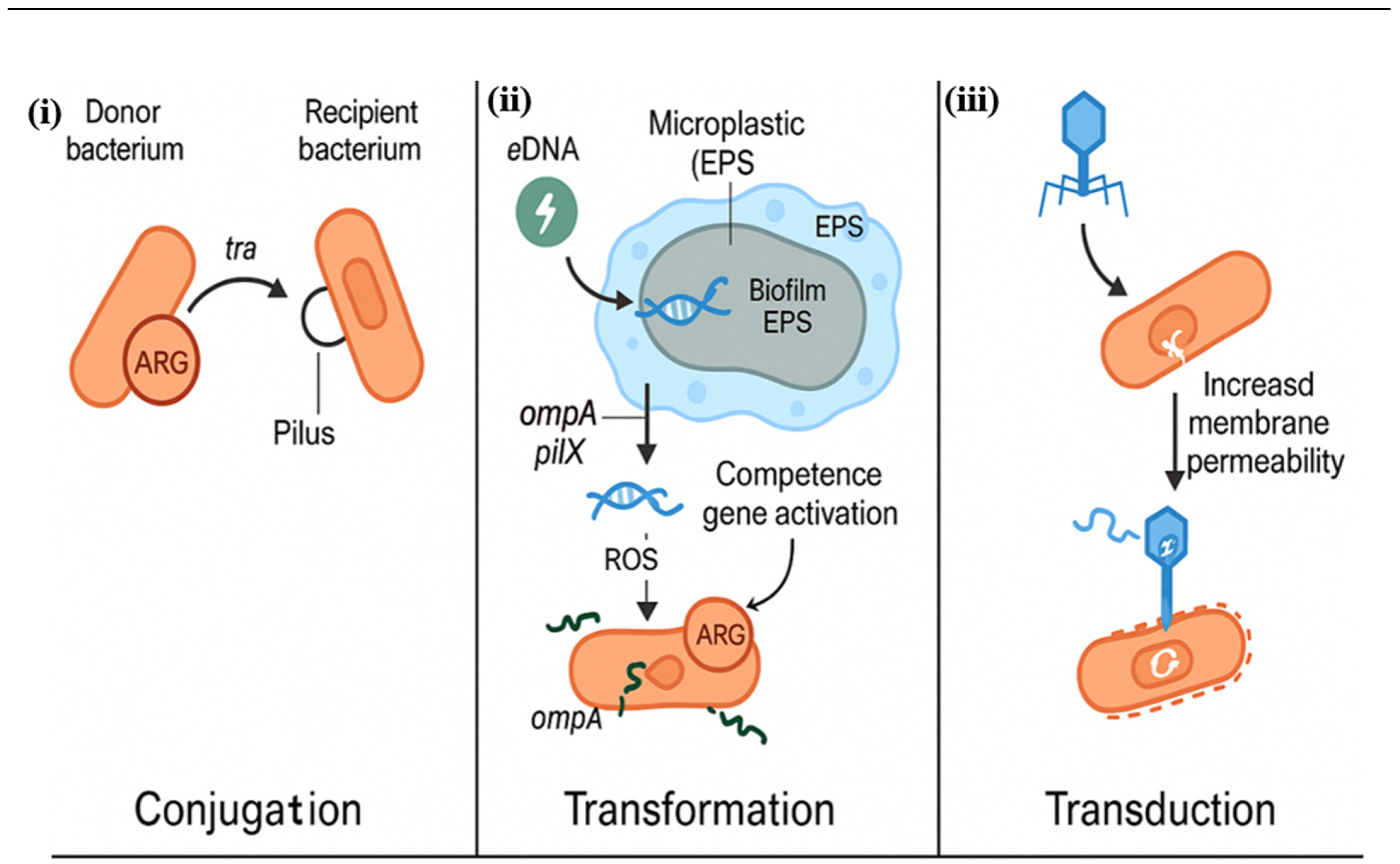
Transduction, mediated by bacteriophages (phages), serves as an important yet often underappreciated pathway for horizontal transfer of antibiotic resistance genes (ARGs) within MP-associated microbial communities in marine environments. Unlike conjugation and transformation, transduction enables gene transfer even in the absence of direct cell-to-cell contact, allowing phages to shuttle ARGs across phylogenetically distant bacterial taxa [53]. Phages are abundant in marine plastisphere biofilms, where high microbial densities provide optimal conditions for viral replication and gene packaging. Jiang and Paul demonstrated that in natural marine communities, transduction frequencies for kanamycin- and streptomycin-resistance plasmids ranged from 1.33 × 10⁻⁷ to 5.13 × 10⁻⁹ transductants/PFU in isolated bacterial strains, and from 1.58 × 10⁻⁸ to 3.7 × 10⁻⁸ transductants/PFU in natural mixed communities, with estimates suggesting up to 1.3 × 10¹⁴ transduction events per year occurring in Tampa Bay Estuary alone [54]. The complex biofilm matrix on MP surfaces further amplifies phage-mediated transfer. Silver nanoparticles (AgNPs), which often co-occur with MPs in marine systems, were shown by Zhang et al. to facilitate transduction by increasing oxidative stress and membrane destabilization, thereby enhancing phage infection efficiency in both planktonic and MP-attached biofilms. Specifically, at 0.1 mg/L AgNP exposure, transduction frequency significantly increased due to biofilm thinning and elevated phage-host interactions on roughened MP surfaces [55]. MPs may indirectly enrich phage-mediated ARG transfer by concentrating both bacterial hosts and mobile genetic elements within plastisphere biofilms. Metagenomic analyses show that a substantial percentage of marine phage particles carry ARGs and associated mobile genetic elements, serving as mobile resistomes [56]. A study emphasized that plastisphere aggregates may serve as critical hotspots where elevated bacterial densities, viral loads, and pollutant concentrations converge, collectively intensifying ARG transduction events [3]. Furthermore, co-selective environmental pressures, such as metals, antibiotics, and nanoplastics, synergistically increase transduction frequencies by triggering bacterial SOS responses and prophage induction, thereby enhancing ARG packaging into phage particles [57]. Collectively, microplastic biofilms create ecologically concentrated microenvironments that favor phage replication, lysogeny, and ARG packaging, transforming the plastisphere into a significant and highly active node of phage-mediated ARG dissemination across diverse marine bacterial populations. Lastly, Figure 2 shows a schematic representation of the three major HGT mechanisms facilitated by microplastics.

2.3.4. Mobile Genetic Elements (Plasmids, Integrons, Transposons)

Mobile genetic elements (MGEs) serve as fundamental molecular platforms that enable the horizontal dissemination of ARGs within MP-associated microbial communities in marine environments. These genetic vehicles, primarily plasmids, integrons, and transposons, function synergistically to amplify the mobility, persistence, and complexity of the marine resistome [58]. Plasmids, particularly conjugative plasmids from IncP, IncF, IncQ, and RP4 families, play a dominant role in ARG mobilization on MPs. A study demonstrated that the IncP RP4 plasmid not only mediates efficient conjugative transfer but also enhances bacterial colonization of MPs by upregulating pilus synthesis, ATP metabolism, and membrane transport systems [48]. Similarly, another study identified IncHI2 and IncI2 plasmids carrying the mcr-1 colistin resistance gene widely disseminated across aquatic and avian microbiomes, indicating their capacity for trans-ecosystem ARG transfer facilitated by both waterborne MPs and migratory bird-mediated dispersal [59]. Integrons represent specialized recombination systems that capture and express ARG cassettes via site-specific recombination at the attI integration site, mediated by integrase enzymes encoded by intI genes. Class 1 integrons dominate environmental plastisphere resistomes, enabling rapid acquisition and rearrangement of diverse ARGs [60]. Stalder et al. highlighted the environmental spread of class 1 integrons across marine and estuarine microbiomes, often co-located on conjugative plasmids and transposons within MP biofilms [61]. Transposons, particularly Tn3, Tn5, Tn5090/Tn402, and Tn916 families, serve as potent facilitators of ARG dissemination by enabling movement of integrons and resistance cassettes across diverse DNA contexts. Kamali-Moghaddam demonstrated that composite transposons flanked by insertion sequence (IS) elements like IS6100 allow mobilization of entire integron complexes onto small mobilizable plasmids, amplifying ARG spread across environmental compartments [62]. Recent large-scale metagenomic analyses revealed that transposable elements dominate the mobile resistome in aquatic environments, accounting for ~1.7 million recombinase-associated MGEs across marine microbial genomes, vastly exceeding phage-mediated ARG vectors [63]. Integrons frequently hitchhike with transposons, with 63% of integrons embedded within larger mobile composite structures. Importantly, MPs create highly stable plastisphere biofilms where these MGEs accumulate, exchange, and rearrange ARGs under co-selection pressures exerted by sorbed antibiotics, heavy metals, and plastic additives. Huang et al. demonstrated that ARG abundance in estuarine sediments enriched with PVC and PE MPs was strongly correlated with both transposon and integron abundances, confirming MGEs as the principal drivers of ARG proliferation on MP surfaces [4]. Collectively, MGEs serve as the genetic engines behind ARG amplification on microplastics, coordinating plasmid-mediated transfer, integron-driven gene capture, and transposon-facilitated mobility, thereby establishing microplastic plastispheres as potent genetic hubs of resistance gene evolution in marine environments. Lastly, Table 2 outlines key genetic pathways involved in conjugation, transformation, and stress-induced responses that facilitate ARG dissemination under microplastic-associated conditions. It highlights how microplastic biofilms, nanomaterial co-exposure, and environmental co-selectors (e.g., metals, antibiotics) synergistically enhance gene mobility through pathways such as increased ROS, MGEs, and outer membrane modifications.

2.4. Environmental Factors Modulating ARG Spread on Microplastics

Beyond the inherent physical and chemical properties of microplastics, a range of environmental factors substantially regulate the extent and efficiency of ARG dissemination within marine plastisphere communities. Physicochemical drivers such as salinity, temperature, dissolved oxygen, pH, nutrient availability, and solar irradiation directly modulate microbial metabolic activity, membrane permeability, HGT dynamics, and MGE mobilization (Table 3). Moreover, these factors interact synergistically with plastic aging processes and biofilm formation to create dynamic microenvironments that favor ARG amplification. In this section, we systematically dissect the mechanistic influence of these environmental variables on ARG propagation along marine microplastic pathways [66].

2.4.1. Physicochemical Parameters (Salinity, Temperature, Nutrients, pH, Dissolved Oxygen)

The physicochemical conditions of marine and aquatic environments strongly dictate the fate, transfer dynamics, and amplification of ARGs on MP surfaces by directly influencing microbial physiology, MGE activity, and HGT pathways. These parameters interact in highly dynamic plastisphere microenvironments, creating temporally fluctuating niches for resistance gene dissemination. Salinity plays a central role in shaping microbial community assembly, osmoregulatory stress, membrane permeability, and extracellular DNA stabilization on MPs. Huang et al. demonstrated that along estuarine salinity gradients in the Jiulong and Min Rivers, salinity shifts modified bacterial host populations such as Proteobacteria and Acidobacteria, indirectly altering ARG carriage profiles via host selection rather than directly modulating ARG abundance [74]. However, Piscon et al. reported that elevated salinity, coupled with osmotic pressure, reduced plasmid conjugation frequencies of IncP group plasmids by destabilizing cell membrane integrity and interfering with pilus assembly, despite increased transcription of certain tra genes [75]. Temperature serves as another master regulator of ARG mobility, influencing membrane fluidity, enzymatic kinetics, and microbial growth rates. In coastal Hong Kong, Lai et al. found a direct correlation between seasonal temperature elevation (up to 29 °C) and increased class 1 integron abundance, with intl1-associated ARGs rising to 4.45 × 10⁻² copies/16S rRNA [70]. Similarly, Jaffer demonstrated that tire wear particle (TWP)-associated MPs elevated conjugation frequencies of trimethoprim resistance plasmids by 10−3 at 30 °C, with high transfer rates persisting even at 25 °C in natural lake microbial communities [76]. Dissolved oxygen (DO) controls redox status, ROS production, and HGT efficiency by modulating oxidative stress and metabolic states. Feng showed that anaerobic hyporheic zone sediments exhibited elevated tetracycline and sulfonamide ARG abundances alongside increased MGEs under low DO conditions, with host shifts toward Firmicutes, Bacteroidetes, and Proteobacteria [66]. Bombaywala et al. further confirmed that hyperoxic (5.5–7 mg/L DO) conditions intensified ARG-MGE co-occurrence via ROS induction, promoting MGE activity and co-localization of ARGs within integrons and transposons [77]. Nutrient availability, particularly nitrogen loading, governs ARG propagation by modulating biofilm formation, eDNA release, and microbial trophic competition. You et al. observed that moderate nitrogen levels (0–2.5 g/L KNO3) enhanced extracellular kanamycin resistance gene enrichment on MP surfaces, while excessive nitrogen loads drove ARGs into intracellular compartments through accelerated biomass turnover [78]. Zeng et al. further demonstrated nutrient-induced shifts in nitrogen cycling taxa under MP exposure, with elevated efflux pump-associated ARGs (tetA, mexF) linked to nitrogen-induced ROS formation [79]. pH modifies electrostatic forces governing eDNA adsorption onto MPs, membrane permeability, and cellular stress responses. Liu et al. observed that conjugation frequencies were maximized at neutral to mildly alkaline pH (7–8), while extreme pH disrupted pilus assembly and DNA uptake, thereby suppressing ARG transfer [80]. Additionally, Chen et al. reported that photo-aged nanoplastics, exhibiting multienzyme-like oxidase activity, amplified ROS generation across pH fluctuations, producing non-linear effects on ARG uptake, sometimes facilitating and sometimes inhibiting HGT depending on concentration thresholds [12]. Finally, complex interactions among these parameters generate highly dynamic ARG propagation microzones within plastisphere biofilms, particularly in transitional estuarine zones where salinity, temperature, DO, nutrient loading, and pH co-fluctuate rapidly. Yang et al. emphasized that stochastic physicochemical gradients create strong ARG enrichment gradients across short spatial scales in these zones [81]. Although water depth itself has not yet been directly studied as a determinant of ARG enrichment on MPs, depth-associated factors such as oxygen availability, nutrient gradients, and light penetration likely shape resistome profiles, highlighting an important gap for future investigation.
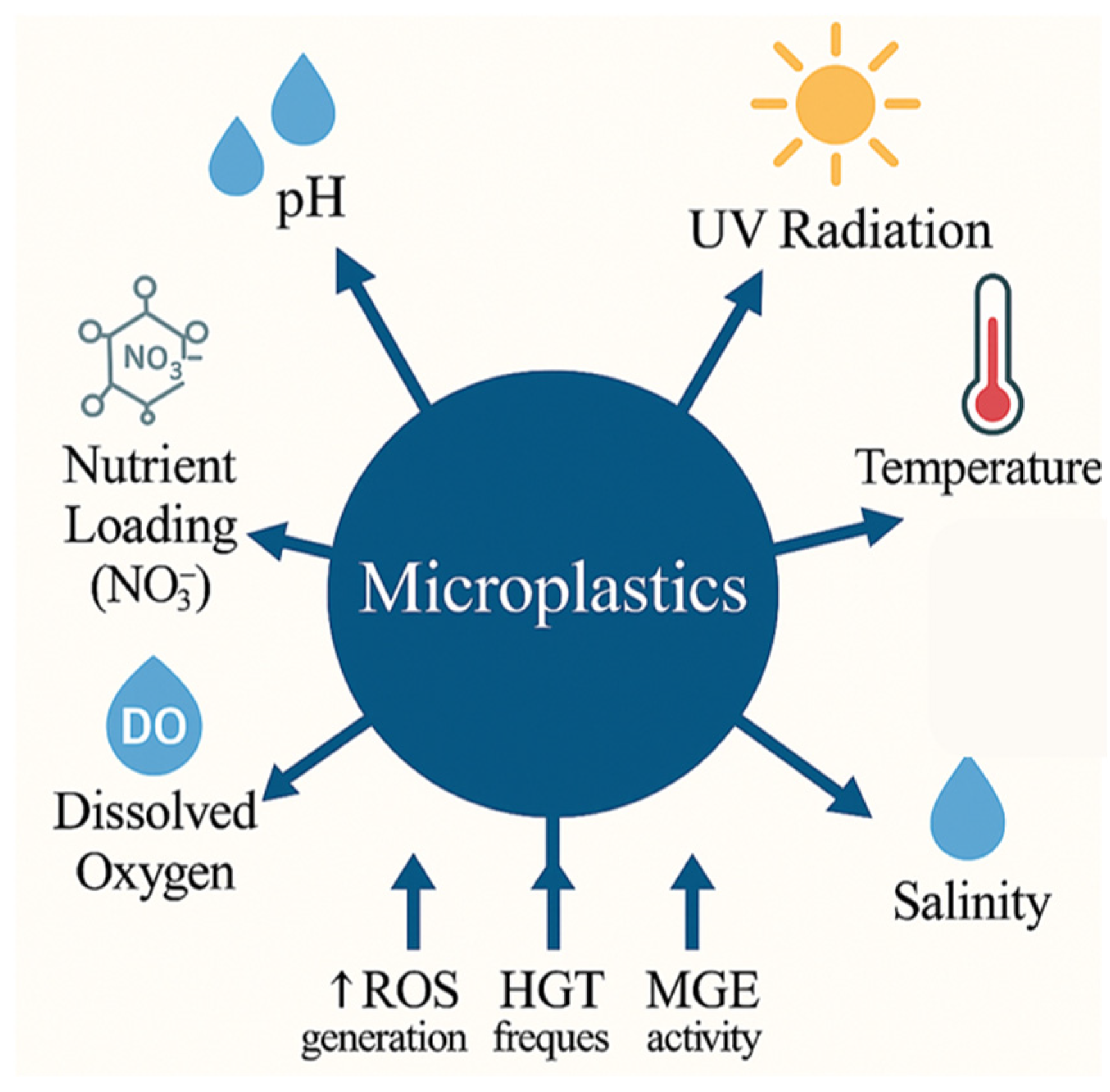
Taken together, ARG transfer on MPs is typically favored under moderate salinity, warm temperatures (25–30 °C), neutral to mildly alkaline pH (7–8), intermediate nutrient loads, and fluctuating oxygen conditions that promote ROS generation, reflecting the ecological “sweet spots” where microbial activity, biofilm stability, and MGE mobilization converge most efficiently. Collectively, these complex physicochemical drivers orchestrate (Figure 3) ARG dissemination on MPs, establishing the plastisphere as a highly sensitive node for environmental resistance gene evolution.

2.4.2. UV Radiation

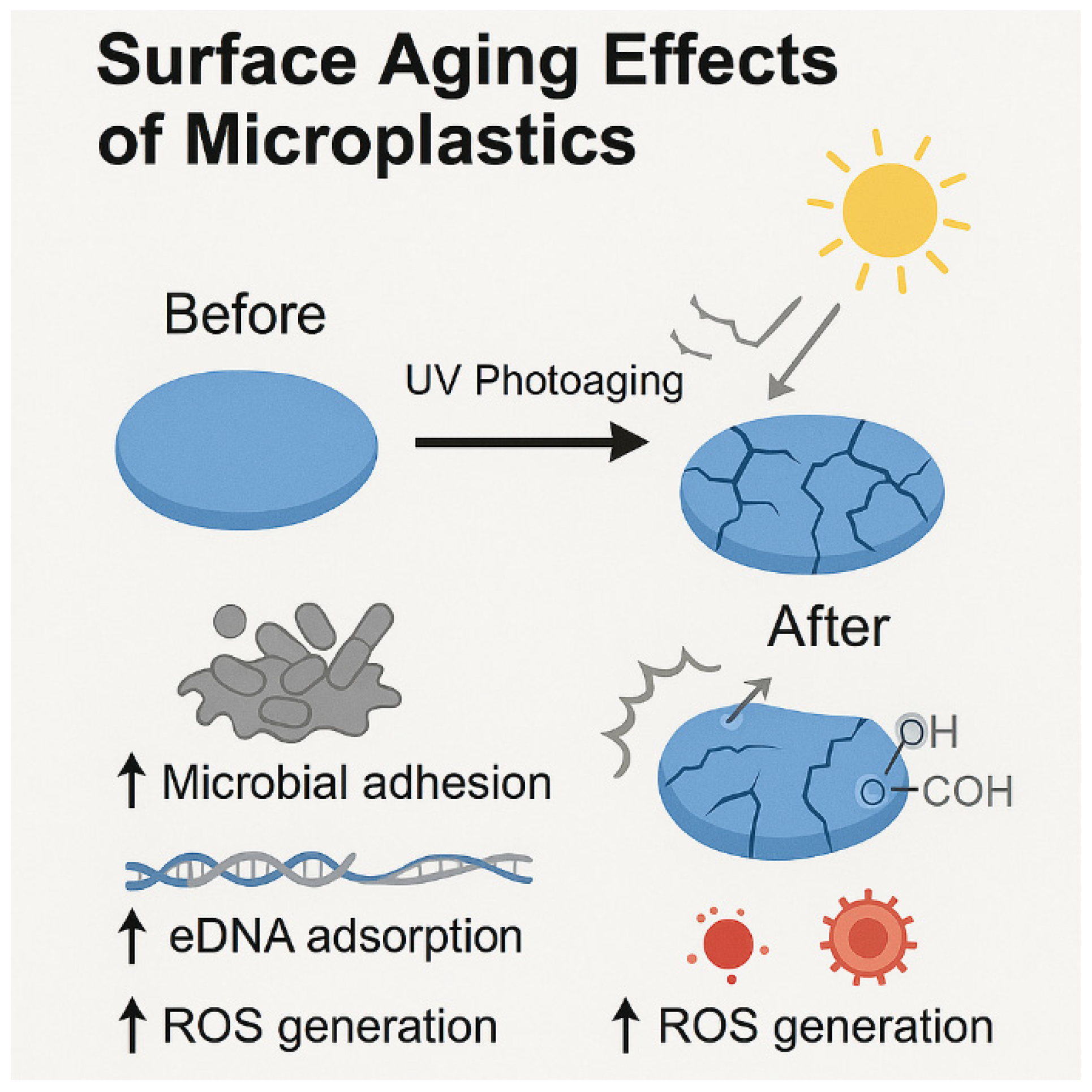
Ultraviolet (UV) radiation serves as one of the most critical environmental drivers modulating antibiotic resistance gene (ARG) dissemination on microplastics (MPs) through multiple tightly interlinked mechanisms: photoaging of plastic polymers, reactive oxygen species (ROS) generation, surface property alterations, and direct gene transfer modulation within microbial plastisphere communities. Upon prolonged UV exposure, MPs undergo significant photoaging (Figure 4), leading to oxidative cleavage of polymer chains, surface cracking, and enrichment of oxygen-containing functional groups such as hydroxyl, carbonyl, and carboxyl moieties. Yuan et al. demonstrated that 20-day UV-aged polystyrene MPs exhibited a 6.6-fold higher adsorption capacity for E. coli harboring plasmid-borne blaTEM-1, and up to 4.7-fold increase in plasmid transfer frequencies relative to pristine MPs, directly correlating with elevated ROS generation and membrane permeability [23]. UV-driven ROS production, including hydroxyl radicals (•OH), superoxide anions (•O2), and singlet oxygen (1O2), disrupts bacterial membranes, activates SOS response regulators (recA, lexA), and enhances HGT-related gene expression. Chen et al. observed that UV (254 nm) accelerated conjugative transfer of blaCTX and mcr-1 plasmids by up to 100-fold in E. coli, primarily mediated by oxidative stress pathways [82]. Beyond promoting HGT, UV-induced MP photoaging alters polymer integrity, releasing nanoplastics and leachates that further amplify ARG propagation. Zhang et al. showed that UV-irradiated polystyrene MPs released fragmented nanoplastics, which, via ROS-induced oxidative stress, elevated conjugative transfer frequencies more strongly than conventional MPs, especially for conventional plastics like PS over biodegradable PLA [73]. However, UV radiation may exert dual effects depending on exposure dose and context. At higher UV doses (>15–320 mJ/cm2), studies have shown that ARG degradation and bacterial inactivation become more dominant. Wang et al. demonstrated that UV/chlorine combined disinfection achieved 0.58–1.6 log ARG removal, with significant reduction in RP4 plasmid transfer frequencies due to photoreactivation inhibition and damage to type IV secretion system genes (vir4D, vir5B) [83]. Similarly, Guo and Kong reported that while UV disinfection at 1 mJ/cm2 suppressed conjugation frequency in surviving bacteria, reactivation through dark repair could restore ARG transfer potential post-disinfection [84]. The photoaging of MPs additionally generates diverse organic depolymerization products (total organic carbon ~1.6 mg/g after UV aging), which act as co-stressors, increasing cellular oxidative load, inducing membrane permeability shifts, and upregulating DNA recombination genes, thereby collectively enhancing ARG transfer frequencies [24]. Collectively, UV irradiation not only reshapes the physical and chemical properties of MPs but also synergistically enhances microbial ARG dissemination through tightly coupled ROS generation, gene regulation, biofilm destabilization, and MP fragmentation processes, thereby establishing UV-photoaged plastispheres as hyper-reactive ARG transfer hubs in sunlit marine environments.

2.4.3. Co-Selection Pressure from Heavy Metals and Antibiotics

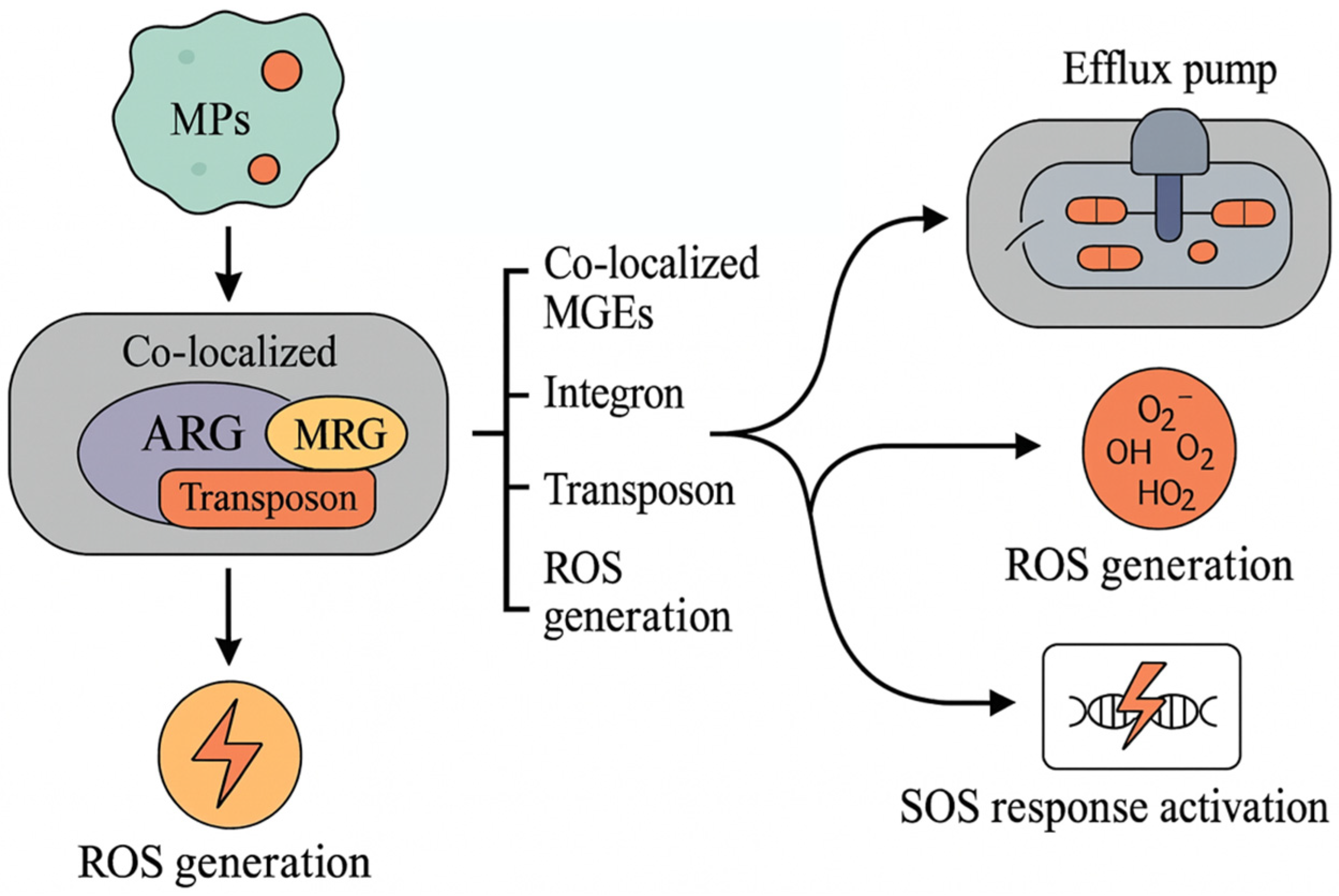
Heavy metals (HMs) represent one of the most potent and persistent co-selection forces shaping antibiotic resistance gene (ARG) propagation on marine microplastic (MP) surfaces (Figure 5 and Table 4). Unlike antibiotics, which are degradable, heavy metals such as cadmium (Cd), copper (Cu), zinc (Zn), lead (Pb), mercury (Hg), nickel (Ni), chromium (Cr), and arsenic (As) accumulate over time, maintaining chronic environmental pressure on microbial communities in marine plastisphere biofilms [65]. Co-selection operates primarily through co-resistance, cross-resistance, and co-regulation mechanisms. In co-resistance, heavy metal resistance genes (MRGs) and ARGs are physically co-localized on the same mobile genetic elements (MGEs), such as plasmids, integrons, transposons, and integrative conjugative elements (ICEs). Yu et al. demonstrated that co-exposure to cadmium (0.4–0.8 mg/L) and doxycycline (50–100 μg/L) in wetland systems significantly increased the stability of ARG–MGE complexes, with plasmid mobilization rates rising over 60% [85]. Cross-resistance occurs when shared efflux pumps transport both metals and antibiotics, conferring simultaneous tolerance. Major pumps implicated include czcCBA (Zn, Cd, Co), copA and cueO (Cu), merR (Hg), acrAB-tolC (multi-antibiotic), and mexF (fluoroquinolone/tetracycline) [86]. These efflux systems are upregulated under combined HM and antibiotic stress, further increasing horizontal gene transfer (HGT) efficiency. Co-regulation involves shared regulatory networks that simultaneously activate MRGs and ARGs in response to heavy metal exposure. Regulatory elements like merR, czcRS, and copRS sense metal ions and drive global gene expression changes favoring resistance [87]. At the gene level, integrons play a pivotal role in co-selection. Class 1 integrons (intl1) are frequently co-localized with merA, arsC, and czcA on plasmids and transposons, allowing bacteria to simultaneously acquire both ARGs and MRGs [60]. Transposons such as Tn21 and Tn3 frequently carry entire resistance clusters in aquatic plastispheres [88]. Real-world marine concentrations of HMs often overlap with these co-selection thresholds. For example, Sabry et al. observed seawater HM concentrations of Zn (5.3 mg/L), Cd (0.45 mg/L), Pb (4.22 mg/L), Ni (3.12 mg/L), and As (0.47 mg/L) all sufficient to select for ARG-bearing bacteria exhibiting pentametal co-resistance [89]. In riverine estuarine systems, Gupta et al. found strong correlations (r > 0.80, p < 0.05) between bioavailable Co, Zn, Ni, and Cd and ARG-MRG co-enrichment, confirming that elevated metal loads directly promote MGE mobilization and integron activity in mixed marine–freshwater interfaces [90]. In addition to nitrate concentrations, other aspects of sediment composition such as organic matter content, grain size distribution (sand, silt, clay), and background geochemical load have also been shown to influence ARG persistence and enrichment on MP-associated biofilms by shaping microbial community structure and adsorption processes. Pathogens capable of thriving under these selective pressures have been isolated directly from marine MPs. Pasquaroli et al. isolated Enterococcus hirae harboring both erm(B) (erythromycin resistance) and tcrB (Cu resistance) plasmids from marine sediment, demonstrating direct metal-mediated ARG transfer to human-pathogenic Enterococcus faecalis strains [91]. Tseng et al. further demonstrated that 80% of marine E. coli isolates simultaneously carried plasmid-borne MRGs (Arsenic, mercury, cadmium, and copper) and ARGs, with direct physical linkages confirmed in 40% of isolates [92]. Importantly, MPs themselves concentrate both metals and antibiotics through surface sorption and complexation, increasing local exposure concentrations by 10–100 fold relative to surrounding seawater. Imran et al. emphasized that MPs serve as genetic reactors, physically co-locating MGEs, ARGs, MRGs, and human pathogens within plastisphere biofilms where HGT rates are magnified substantially compared to planktonic systems [57]. Collectively, these synergistic molecular and ecological mechanisms confirm that heavy metal and antibiotic co-selection on marine MPs constitutes a primary accelerator of global ARG dissemination, transforming plastisphere biofilms into potent resistance gene amplification zones under chronic anthropogenic pressure. In summary, metals promote ARG dissemination on MPs through three principal mechanisms: (i) co-resistance, where ARGs and MRGs are co-located on MGEs; (ii) cross-resistance, where shared efflux pumps confer dual tolerance; and (iii) co-regulation, where metal-responsive regulators simultaneously activate MRG and ARG pathways. Importantly, metal concentrations strongly determine these effects: field studies have shown that bioavailable levels of Zn, Cd, Ni, and Pb frequently exceed thresholds required to trigger ARG–MGE co-enrichment, confirming that realistic environmental exposures are sufficient to drive resistance propagation.

2.5. Current Knowledge Gaps and Challenges

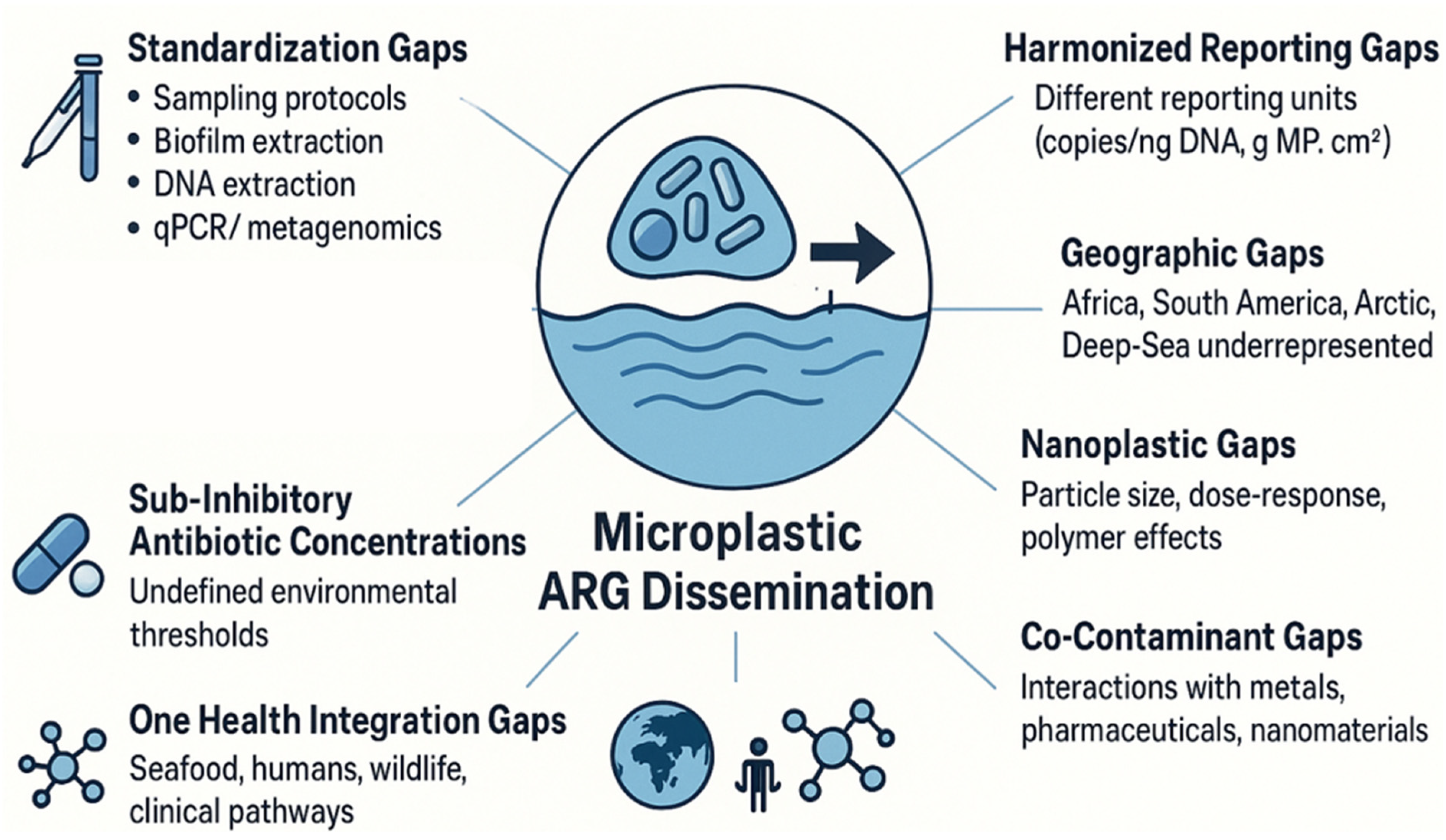
Despite substantial recent advances in understanding MP-mediated dissemination of ARGs, multiple critical knowledge gaps remain (as shown in Figure 6), which collectively limit comprehensive risk assessment, mechanistic understanding, and effective regulatory development. A major gap exists in the standardization of experimental methodologies across studies. Sampling protocols, biofilm extraction techniques, DNA extraction yields, and qPCR/metagenomic pipelines vary substantially, producing inconsistent quantification of ARGs, mobile genetic elements (MGEs), and microbial community profiles across plastisphere studies [31]. The lack of harmonized reporting units for ARG and MGE abundances (e.g., copies per ng DNA, per g MP, or per cm2 surface area) further complicates cross-study comparisons and meta-analyses [95]. Furthermore, most studies disproportionately emphasize laboratory microcosms with artificial MP spiking, simplified microbial communities, and controlled physicochemical conditions, which may not fully capture the environmental complexities of marine plastispheres. As Li and Zhang emphasize, few studies address in situ plasmid transfer frequencies under true marine environmental stressors such as salinity fluctuations, UV exposure, aging MPs, and co-contaminant mixtures [96]. Geographic biases also skew current data coverage. The majority of MP–ARG studies derive from heavily impacted Asian (China, India) and European coastal systems, while vast regions such as African, South American, Arctic, and deep-sea ecosystems remain severely understudied [97]. Given that plastic debris circulates globally via ocean currents, long-range MP-mediated ARG dissemination likely operates at planetary scales but remains largely unquantified [98]. The role of nanoplastics (NPs) in ARG transfer remains a particularly severe knowledge deficit. While early studies suggest that NPs may drive higher transformation frequencies by increasing reactive oxygen species (ROS), membrane permeability, and competence gene expression, systematic data on particle size, dose–response thresholds, and polymer-type specific effects remain scarce [99]. The interaction between MPs, ARGs, and non-antibiotic pharmaceuticals and nanomaterials is another emerging but poorly characterized co-stress mechanism. Nanoparticles (e.g., Ag, CuO, ZnO NPs) significantly elevate transformation rates by 11-fold via ROS induction and membrane damage [100], but few studies have fully integrated these multiple co-selective pressures into marine plastisphere models. The true environmental relevance of sub-inhibitory antibiotic concentrations remains poorly defined. Smalla et al. emphasizes that ARG transfer can occur under extremely low environmental antibiotic levels far below minimal inhibitory concentrations, yet the critical thresholds for many compound classes remain unresolved for plastisphere conditions [101]. Lastly, existing research often fails to fully integrate One Health frameworks addressing marine–terrestrial–clinical ARG exchange pathways. As Niu et al. highlights, current models rarely quantify the magnitude of ARG flows from plastispheres to seafood, humans, and wildlife, creating large epidemiological knowledge deficits [102].

2.6. Future Research Directions

The complexity of antibiotic resistance gene (ARG) dissemination via microplastics (MPs) in marine environments demands multi-disciplinary, highly integrated future research approaches to resolve persistent uncertainties and enable more predictive modeling. A critical priority is the development of standardized sampling, analytical, and reporting frameworks. Researchers emphasized upon the limitations in the current studies related to inconsistent biofilm sampling methods, variable DNA extraction protocols, and inconsistent reporting units, severely limiting cross-comparability and meta-analysis capacity [103]. Consensus guidelines for plastisphere resistome research similar to those established in clinical resistome surveillance are urgently needed. Long-term in situ marine field studies remain scarce and should be prioritized to complement existing short-duration laboratory microcosm experiments. As Li and Zhang proposed, future field investigations must assess real-world plasmid transfer frequencies, MGE mobilization rates, and ARG stabilization across full environmental gradients, including salinity, UV exposure, seasonal variation, and aging plastic surfaces [96]. The role of nanoplastics (NPs) demands intensive investigation. As Sivalingam emphasizes, systematic dose–response experiments with multiple NP size fractions (10–500 nm), polymer types, and realistic marine concentrations are needed to clarify their unique capacity to promote bacterial competence, horizontal gene transfer (HGT), and extracellular DNA stabilization [9]. Advanced multi-omics approaches should be fully integrated into plastisphere studies, incorporating resistome (metagenomic), mobilome (MGE sequencing), transcriptome (HGT gene activation), and proteome (efflux pump expression) datasets to comprehensively map ARG propagation pathways. Zhou et al. emphasized the power of metagenomic field-sequencing across estuarine gradients to capture real-time resistome shifts as MPs transition from riverine to marine environments [104]. Future work must incorporate multi-pollutant interaction models. MPs rarely act in isolation but co-occur with antibiotics, heavy metals, non-antibiotic pharmaceuticals, nanomaterials, and nutrient loads, all of which co-modulate ARG selection pressures via complex ROS, efflux pump, and MGE activation pathways [105]. Multi-factorial experiments simulating real marine contaminant cocktails are critically needed. Expansion of geographic and ecosystem coverage is also essential. As Niegowska et al. highlights, vast knowledge gaps persist across African coasts, polar marine systems, deep-sea ecosystems, and oligotrophic open ocean gyres [97]. Global plastisphere ARG mapping networks should be established to capture planetary-scale ARG dispersal patterns. Finally, integrated One Health quantitative risk models are urgently needed to link marine plastisphere ARG reservoirs with seafood contamination, human ingestion exposure routes, wildlife transmission pathways, and clinical resistome feedback loops [102]. These models will enable more accurate forecasting of global antimicrobial resistance emergence driven by marine microplastic vectors.

2.7. Policy and Management Implications

The mechanistic evidence linking microplastics (MPs) to antibiotic resistance gene (ARG) dissemination highlights an urgent need for integrated environmental management strategies, regulatory frameworks, and policy interventions targeting both plastic pollution and antimicrobial resistance (AMR) control. At the international level, One Health frameworks must explicitly incorporate microplastic–ARG interactions into AMR action plans. As emphasized by Sivalingam et al., the convergence of MPs, nanoplastics, heavy metals, and ARGs demands cross-sectoral coordination involving human, animal, and environmental health regulators under the One Health paradigm [9]. Strengthening wastewater treatment infrastructure is one of the most effective upstream control strategies. MPs and ARGs co-accumulate extensively in wastewater treatment plants (WWTPs), and conventional systems exhibit limited removal efficiency for small MPs and extracellular ARGs. Advanced tertiary treatment technologies including membrane bioreactors, advanced oxidation processes, and high-gradient filtration must be deployed to reduce plastisphere ARG reservoirs before effluent release [73]. At the regulatory level, stricter controls on plastic production, especially on micro- and nanoplastic-generating consumer products (e.g., personal care products, synthetic textiles, tire wear particles), are critical. Balta et al. advocates for global phase-outs of non-essential single-use plastics, together with binding global treaties for microplastic emission reductions, such as the proposed United Nations Global Plastic Treaty [86]. Environmental monitoring systems should be expanded to routinely quantify ARG–MP hotspots in marine, estuarine, aquaculture, and wastewater environments. Routine surveillance integrating ARGs, MGEs, heavy metals, and MP burdens across national marine monitoring programs is critical for early detection of emerging resistance reservoirs [106]. Co-contaminant management must also be prioritized. Regulation of industrial discharges containing heavy metals, antibiotics, and nanoparticles will indirectly reduce co-selection pressures amplifying ARG spread within plastisphere biofilms [107]. Finally, international governance bodies such as the United Nations Environment Program (UNEP), World Health Organization (WHO), Food and Agriculture Organization (FAO), and World Organization for Animal Health (WOAH) should formally recognize microplastic-mediated ARG transfer as a globally emerging environmental AMR pathway, integrating plastisphere research outputs into global AMR surveillance frameworks [108]. Collectively, these regulatory, technological, and governance-based interventions are urgently required to disrupt plastisphere-mediated resistance dissemination and mitigate emerging AMR threats amplified by marine microplastic pollution.

3. Bibliometric Analysis Methodology

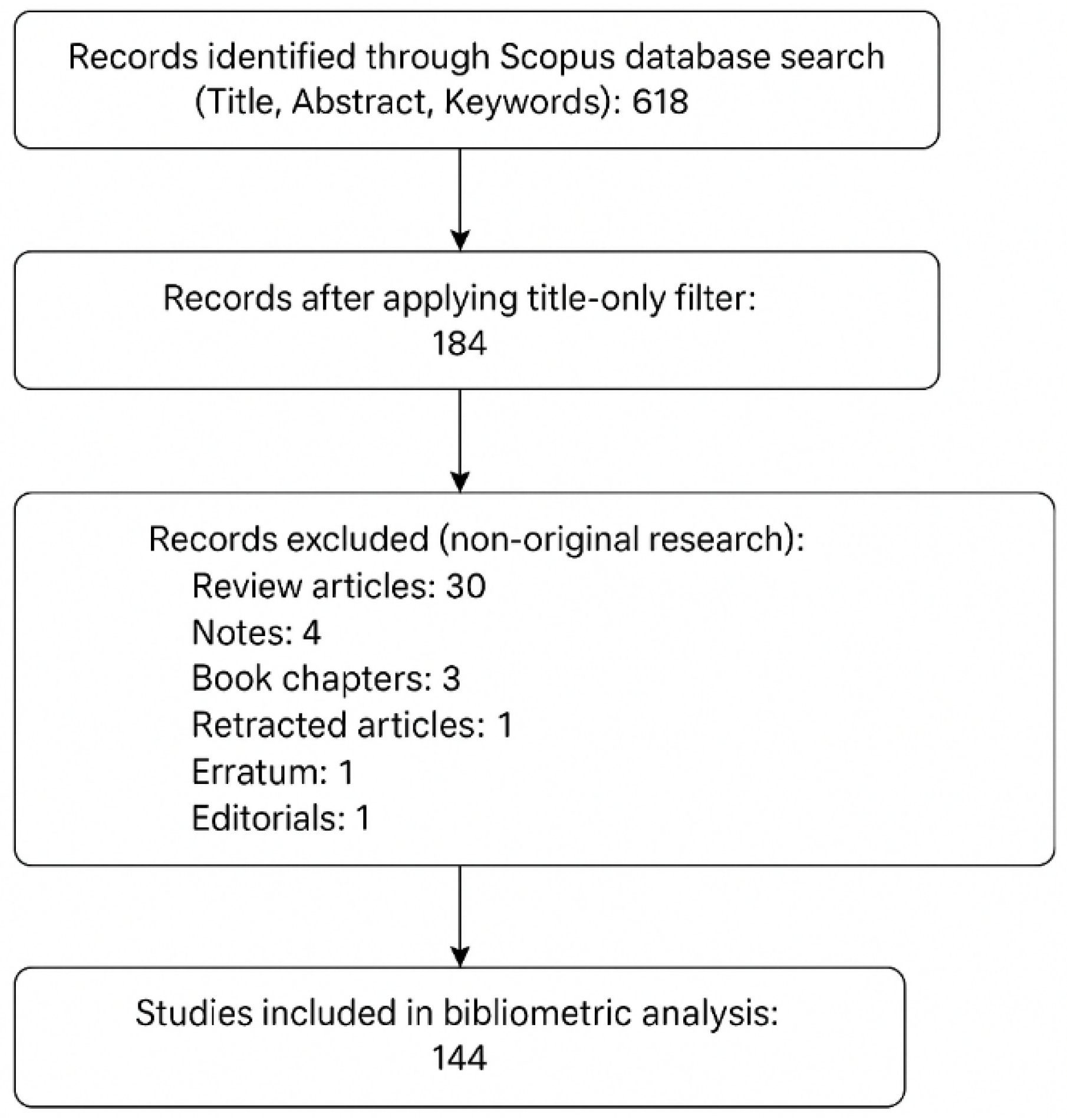
The present bibliometric analysis was performed to quantitatively map the scientific landscape on microplastic-associated antibiotic resistance gene (ARG) dissemination using Scopus as the sole data source, given its extensive multidisciplinary journal coverage and high indexing standards. The literature search was conducted by applying a comprehensive keyword combination designed to capture the full breadth of relevant studies, including the terms: “Microplastic” OR “Microplastics” AND “ARGs” OR “ARG” OR “Antibiotic resistance gene” OR “Antibiotic resistance” OR “ARB” OR “ARBs” OR “Antibiotic resistance bacteria”. An initial search across article title, abstract, and keywords yielded 618 publications. To improve specificity and minimize inclusion of peripheral topics, an additional filtration was performed by restricting the search to article titles only, which resulted in 184 records (Figure 7). These records underwent careful screening through strict inclusion and exclusion criteria, where only original research articles were retained, while reviews, editorials, book chapters, notes, errata, and retracted publications were excluded, yielding a final dataset of 144 eligible publications for analysis. The bibliographic data were exported in BibTeX and CSV formats and further curated using Zotero 7.0.30 reference management software for duplicate removal and consistency checks. The refined dataset was subjected to quantitative analysis using the R-based Bibliometrix package operated through the Biblioshiny interface within RStudio 4.5.2 software, ensuring reproducible and standardized bibliometric computations. Additional tabulation and figure preparation were performed in Microsoft Excel. The exclusion process removed 30 review articles, 4 notes, 3 book chapters, 1 retracted article, 1 erratum, and 1 editorial, thereby focusing the analysis strictly on peer-reviewed empirical research to maintain mechanistic relevance. To ensure methodological transparency, the bibliometric workflow was reported in alignment with PRISMA 2020 guidelines. A PRISMA-style flow diagram is provided (Figure 7) to illustrate record identification, screening, and inclusion. The PRISMA checklist has also been completed, with items not applicable to this narrative–bibliometric hybrid review marked as Not Applicable (N/A). It should be noted that the present article is not a systematic or scoping review, but a narrative literature review complemented by a bibliometric analysis; PRISMA elements are incorporated here solely to enhance reporting clarity and reproducibility.

4. Bibliometric Analysis

In addition to synthesizing mechanistic pathways, this review integrates bibliometric mapping as a strategic tool to clarify how the research field itself is evolving. The intent is not only descriptive but also to identify neglected domains such as nanoplastics, multi-pollutant interactions, and underrepresented geographic regions that require focused investigation. In this way, the bibliometric analysis strengthens the review’s forward-looking perspective by linking mechanistic insights with emerging research trajectories.
To complement the mechanistic evaluation, a bibliometric analysis was conducted to systematically map the global research landscape focusing on microplastic-mediated ARG dissemination. The bibliometric approach provides quantitative insights into publication trends, research productivity, thematic evolution, and collaborative networks within this rapidly emerging multidisciplinary field. The following sections present the detailed outcomes derived from the curated dataset of original research articles.

4.1. Publication Trend Analysis

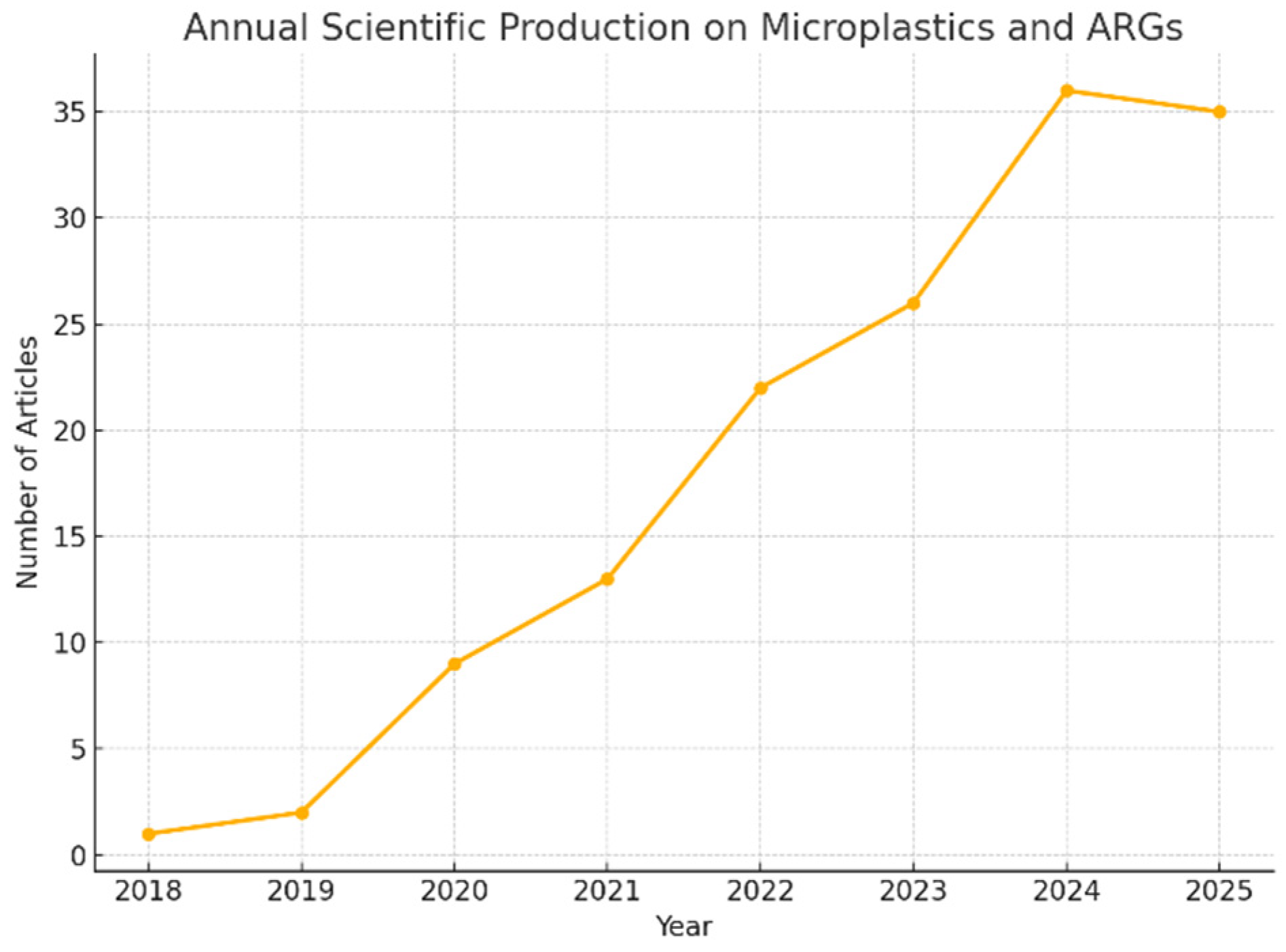
The temporal distribution of publications (Figure 8) reflects a clear and accelerating global research focus on microplastic-associated ARG dissemination in marine environments. The earliest publications appeared in 2018 with only 1 article, followed by a minimal increase to 2 publications in 2019. However, a distinct upward trajectory commenced in 2020 with 9 articles, which further expanded to 13 articles by 2021, indicating the emerging scientific recognition of this cross-disciplinary topic. A sharp rise occurred from 2022 onwards, with 22 publications, and continued growth reached 26 articles in 2023. The highest annual output was recorded in 2024 with 36 original research articles, while 2025 (partial year data) already demonstrates sustained productivity at 35 articles. This rapidly increasing trend suggests an exponential growth phase in the field, driven by the convergence of global concerns surrounding plastic pollution, antimicrobial resistance escalation, and their interconnected environmental health implications. The recent surge in publication frequency highlights not only the intensification of empirical research but also a shift towards mechanistic exploration of horizontal gene transfer (HGT), biofilm-mediated ARG propagation, and co-selection pressures driven by complex pollutant interactions. The cumulative growth curve suggests that microplastic-mediated ARG dissemination has emerged as a critical frontier within the One Health antimicrobial resistance research agenda.

4.2. Country-Level Scientific Output

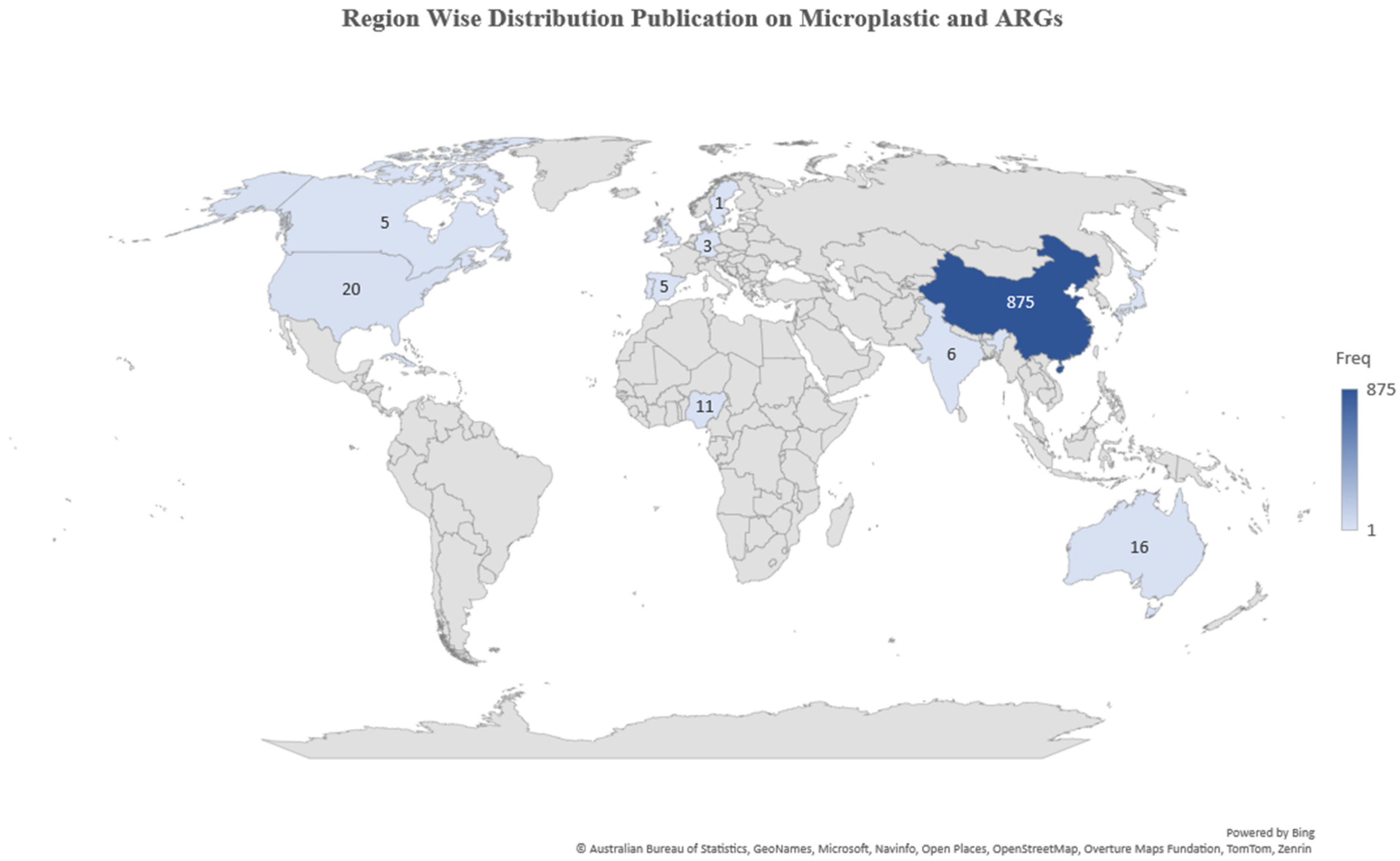
The geographical distribution (Figure 9) of research output in the field of microplastic-associated ARG dissemination exhibits significant regional disparities, highlighting both global research hubs and underrepresented regions. China emerges as the overwhelmingly dominant contributor, accounting for the highest publication frequency with 875 occurrences, underscoring its major leadership role in advancing mechanistic and empirical studies at the microplastic ARG interface. The United States ranks a distant second with a frequency of 20, followed by Australia with 16, Nigeria with 11, and Denmark and India both contributing at a frequency of 6 each. Several other countries, including Canada (5), Spain (5), Germany (3), Ireland (3), and Portugal (3), reflect smaller yet notable research footprints. Additional countries such as Cuba, the United Kingdom, Japan, and Sweden report lower frequencies (ranging from 1–2), indicating limited but emerging participation. This strong geographic concentration, particularly in East Asia, reflects the substantial research investment and institutional capacity in China to support complex experimental work on microplastic-driven ARG propagation. Notably, while ARG enrichment on microplastics has also been widely documented in freshwater and soil environments, the dominance of marine-focused studies in the global dataset largely reflects research priorities tied to seafood safety, aquaculture, and oceanic pollution rather than an inherent superiority of marine systems in promoting ARG transfer. Meanwhile, the relative scarcity of contributions from Africa, South America, and polar marine regions underscores persistent global knowledge gaps that warrant future collaborative expansion. The dominance of a few leading nations, particularly China, the United States, and Australia, in publication frequency reflects a regional concentration of research activity and investment, while other regions remain underrepresented in the current literature.

4.3. Thematic Structure and Strategic Mapping

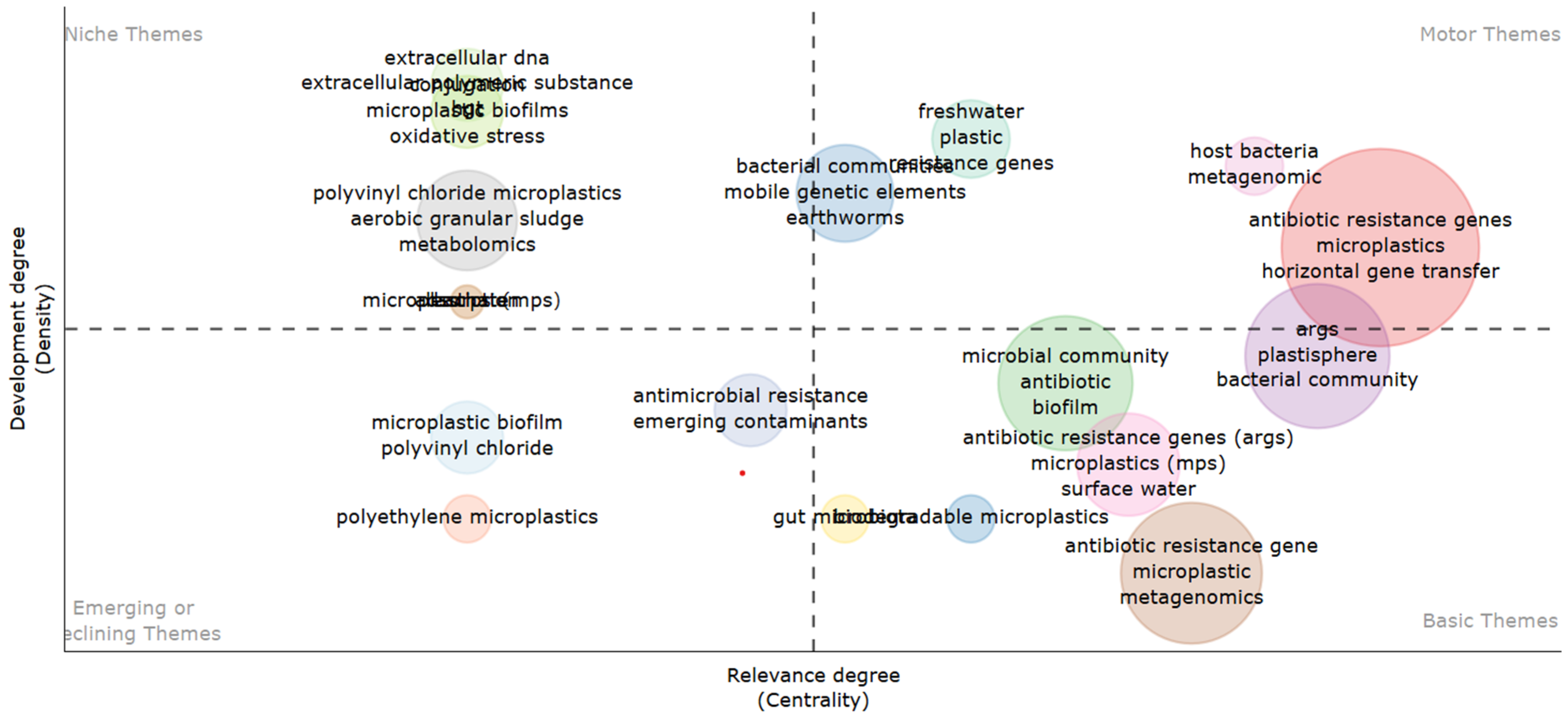
The conceptual structure of the microplastic-associated ARG research field was further evaluated through strategic diagram mapping based on keyword co-occurrence clustering (Figure 10). The thematic map, generated from the Bibliometrix analysis, classifies the field into four distinct quadrants according to centrality (relevance degree) and density (development degree), thereby reflecting both the maturity and connectivity of thematic clusters. The upper-right quadrant (“Motor Themes”) hosts the most mature, highly connected, and well-developed research areas that currently dominate scientific attention. Here, major clusters include “antibiotic resistance genes,” “microplastics,” “horizontal gene transfer,” “metagenomic,” “host bacteria,” and “plastisphere,” reflecting the central role of microbial community assembly, gene mobility pathways, and environmental resistome profiling in the field’s core investigative focus. The lower-right quadrant (“Basic Themes”) contains well-established but structurally simpler topics, including “antibiotic resistance gene,” “microplastic metagenomics,” “surface water,” “biodegradable microplastics,” and “antibiotic resistance genes,” which continue to underpin fundamental mechanistic research while offering opportunities for expansion into more complex networked studies. The upper-left quadrant (“Niche Themes”) identifies specialized, highly developed but less central areas such as “extracellular DNA,” “oxidative stress,” “microplastic biofilms,” “polyvinyl chloride microplastics,” “metabolomics,” and “aerobic granular sludge,” reflecting detailed mechanistic pathways and experimental models focused on biofilm-mediated gene uptake and oxidative pathways within plastisphere habitats. The lower-left quadrant (“Emerging or Declining Themes”) includes still-fragmented or underdeveloped research domains such as “microplastic biofilm,” “polyethylene microplastics,” “gut microbiota,” and “emerging contaminants,” indicating early-stage investigations that either await broader integration or may represent transient research niches. This strategic thematic structure reveals that while core mechanisms such as horizontal gene transfer and plastisphere microbiome dynamics are well-established, emerging areas related to nanoparticle interactions, gut microbiota pathways, biofilm microecology, and oxidative stress modulation remain fertile zones for advanced mechanistic exploration.

4.4. Conceptual Structure via Factorial Analysis

To explore the internal cognitive structure and latent thematic organization of the field, a factorial MCA was conducted using both Keywords Plus and Author Keywords as indexing parameters. This analysis elucidates the underlying multidimensional relationships between dominant scientific concepts driving the microplastic-associated ARG research domain.
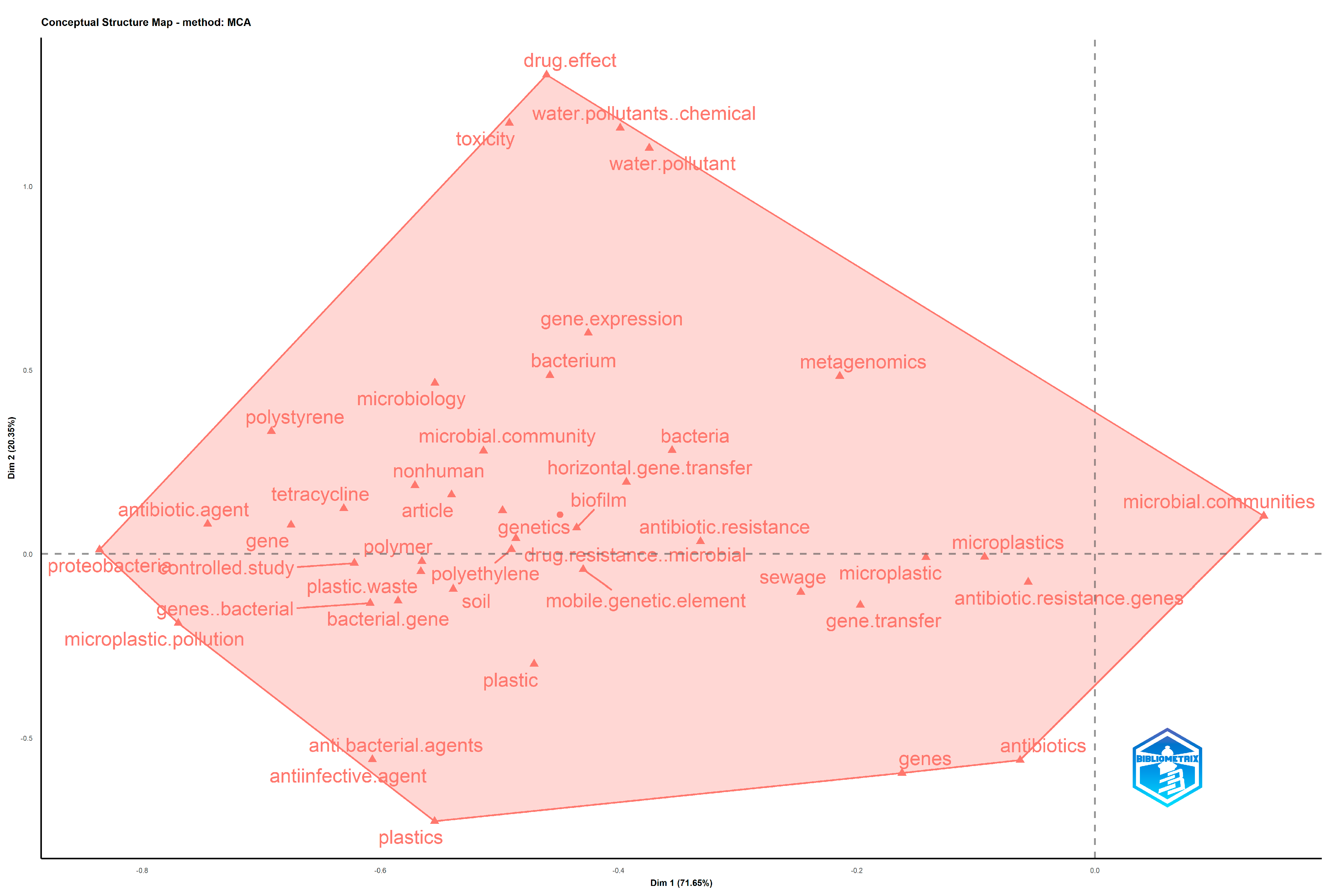
The Keywords Plus-based (Figure 11) factorial map demonstrates two principal dimensions explaining a cumulative variance of over 90%. The first dimension is heavily loaded with core mechanistic keywords such as “horizontal gene transfer,” “mobile genetic elements,” “biofilm,” “microplastics,” “antibiotic resistance,” “metagenomics,” “sewage,” and “bacteria,” reflecting the central research axis focused on gene transfer pathways, microbial community dynamics, and plastisphere-hosted resistome evolution. The second dimension highlights environmental pollutant overlays with terms such as “drug effect,” “toxicity,” “water pollutants,” “chemical exposure,” and “plastic waste,” emphasizing the interaction of chemical co-stressors with microbial ARG propagation pathways. Peripheral but increasingly relevant terms such as “polyethylene,” “polystyrene,” “tetracycline,” “proteobacteria,” and “metabolomics” indicate the emergence of polymer-specific studies and detailed taxonomic assessments that remain under further expansion.
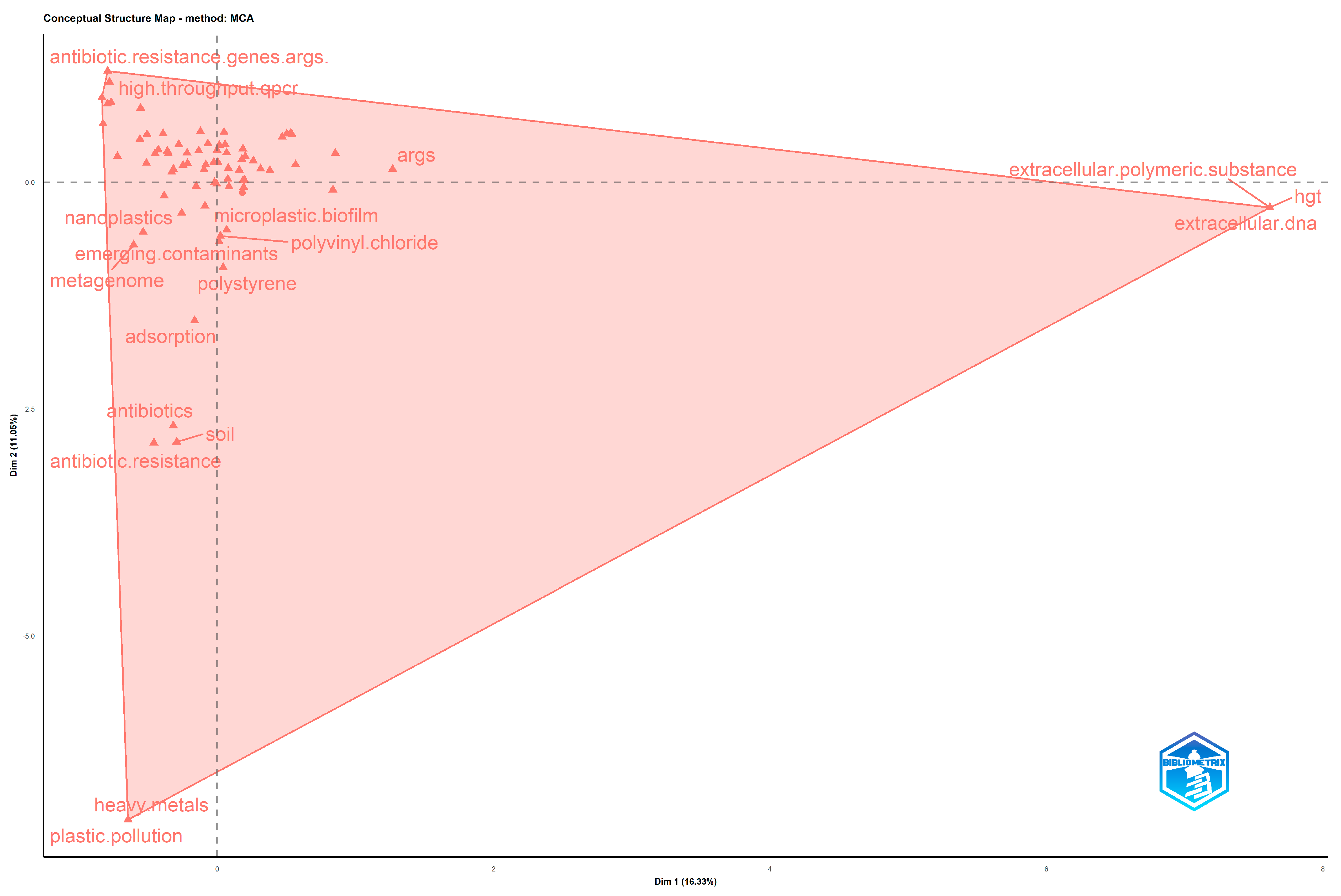
The Author Keyword factorial map (Figure 12) reveals a more focused and emerging mechanistic structure. Here, advanced molecular techniques are prominently situated, including “high-throughput qPCR,” “metagenome,” and “nanoplastics,” indicating the increasing use of cutting-edge genomic tools for resistome profiling in microplastic contexts. Highly specialized themes such as “extracellular polymeric substance,” “extracellular DNA,” and “horizontal gene transfer” cluster strongly, highlighting the mechanistic attention given to biofilm-mediated gene transfer microenvironments on microplastic surfaces. Parallel environmental co-selectors such as “heavy metals,” “plastic pollution,” and “emerging contaminants” confirm the integrative nature of multiple stressor interactions that modulate ARG mobilization dynamics.
Collectively, the factorial structure analysis underscores that while the field is firmly centered on gene transfer mechanisms and biofilm ecology within plastisphere matrices, it is simultaneously evolving towards multi-contaminant risk frameworks, advanced molecular surveillance technologies, and micro/nano-scale mechanistic resolution of plastic-hosted resistome interactions.

5. Conclusions

The mechanistic pathways through which MPs contribute to ARG dissemination in marine ecosystems are multifactorial and intricately coupled to plastic aging, biofilm formation, microbial ecology, and pollutant co-selection pressures. MPs act not merely as inert debris but as highly reactive genetic reactors, hosting dense plastisphere biofilms enriched with mobile genetic elements that accelerate HGT processes. Environmental stressors such as UV-induced photoaging, salinity gradients, fluctuating dissolved oxygen levels, nutrient loading, and pH variations directly modulate microbial metabolic activity, membrane permeability, and ARG mobilization frequencies. Co-selection driven by persistent heavy metals and sub-inhibitory antibiotics further intensifies ARG proliferation via co-resistance, cross-resistance, and co-regulatory gene networks, activating efflux systems and SOS responses that stabilize resistance determinants. While laboratory studies have elucidated many of these molecular mechanisms, substantial knowledge gaps remain in field validations, standardized methodology, nanoparticle-scale effects, geographic coverage, and integrated pollutant modeling. The concurrent bibliometric analysis confirms an exponential research expansion since 2018, with dominant research themes centering on gene mobility, biofilm-mediated HGT, nanoplastics, and metagenomic resistome surveillance. Moving forward, integrated multi-omics platforms, harmonized international monitoring frameworks, high-throughput resistome analytics, and One Health governance models will be essential to mitigate the escalating threat of microplastic-mediated antimicrobial resistance dissemination. The growing complexity and global scope of this environmental challenge demand urgent scientific, regulatory, and policy convergence to address this emerging One Health crisis at the interface of plastic pollution and antimicrobial resistance. In summary, this review advances a conceptual shift by framing microplastics not merely as passive carriers but as dynamic genetic reactors where mobile genetic elements, pollutant co-selectors, and microbial plastispheres converge to amplify resistance. By integrating mechanistic synthesis with bibliometric mapping, we highlight both dominant research frontiers and critical blind spots, thereby providing a structured framework for predictive modeling, targeted surveillance, and One Health risk assessment. This integrative perspective distinguishes the present work from purely descriptive reviews and offers a strategic roadmap to guide future research and policy development.

Author Contributions

Conceptualization, H.J., and G.K.; methodology, H.J., A.K., G.K.A., and R.S.; software, H.J. and A.K.; validation, G.K. and R.S.; writing—original draft preparation, H.J., A.K., G.K.A., and R.S.; writing—review and editing, G.K.; supervision, G.K. All authors have read and agreed to the published version of the manuscript.

Funding

This research received no external funding.

Data Availability Statement

No new data were created or analyzed in this study.

Acknowledgments

The authors are thankful to the management of Lovely Professional University, Phagwara, Graphic Era (Deemed to be University), and Amity University Rajasthan for providing the necessary facilities to carry out this study. Authors are thankful for DST-FIST Grant (SR/FIST/LS-1/2019/502) for establishing excellent infrastructure to conduct quality research at Amity University Rajasthan.

Conflicts of Interest

The authors declare no conflicts of interest.

References

  1. Marathe, N.P.; Bank, M.S. The Microplastic-Antibiotic Resistance Connection. In Microplastic in the Environment: Pattern and Process; Bank, M.S., Ed.; Environmental Contamination Remediation and Management; Springer International Publishing: Cham, Switzerland, 2022; pp. 311–322. [Google Scholar]
  2. Peng, R.; Xu, Y.; Li, R.; Wang, W.; Wang, H.; Zhang, X.; Yuan, Q. Marine microplastics enrich antibiotic resistance genes (ARGs), especially extracellular ARGs: An investigation in the East China Sea. Mar. Pollut. Bull. 2024, 209, 117260. [Google Scholar] [CrossRef]
  3. Liu, Y.; Liu, W.; Yang, X.; Wang, J.; Lin, H.; Yang, Y. Microplastics are a hotspot for antibiotic resistance genes: Progress and perspective. Sci. Total Environ. 2021, 773, 145643. [Google Scholar] [CrossRef]
  4. Huang, F.Y.; Yang, K.; Zhang, Z.X.; Su, J.Q.; Zhu, Y.G.; Zhang, X. Effects of microplastics on antibiotic resistance genes in estuarine sediments. Huan Jing Ke Xue = Huanjing Kexue 2019, 40, 2234–2239. [Google Scholar]
  5. Milani, G.; Cortimiglia, C.; Belloso Daza, M.V.; Greco, E.; Bassi, D.; Cocconcelli, P.S. Microplastic-mediated transfer of tetracycline resistance: Unveiling the role of mussels in marine ecosystems. Antibiotics 2024, 13, 727. [Google Scholar] [CrossRef]
  6. Luo, T.; Dai, X.; Chen, Z.; Wu, L.; Wei, W.; Xu, Q.; Ni, B.-J. Different microplastics distinctively enriched the antibiotic resistance genes in anaerobic sludge digestion through shifting specific hosts and promoting horizontal gene flow. Water Res. 2023, 228, 119356. [Google Scholar] [CrossRef] [PubMed]
  7. Sun, Y.; Cao, N.; Duan, C.; Wang, Q.; Ding, C.; Wang, J. Selection of antibiotic resistance genes on biodegradable and non-biodegradable microplastics. J. Hazard. Mater. 2021, 409, 124979. [Google Scholar] [CrossRef]
  8. Rajput, M.; Mathur, N.; Singh, A.; Bhatnagar, P. Microplastics aided augmentation of antibiotic resistance in WWTPs: A global concern. Water Air Soil Pollut. 2024, 235, 502. [Google Scholar] [CrossRef]
  9. Sivalingam, P.; Basha, S.F.; Easwaran, M.; Ganapathy, D.; Poté, J. Microplastics, nanoplastics and nanoparticles: Emerging dynamic carriers of extracellular dna antibiotic resistance genes in the environment. BioNanoScience 2025, 15, 198. [Google Scholar] [CrossRef]
  10. Zha, Y.; Li, Z.; Zhong, Z.; Ruan, Y.; Sun, L.; Zuo, F.; Li, L.; Hou, S. Size-Dependent Enhancement on Conjugative Transfer of Antibiotic Resistance Genes by Micro/Nanoplastics. J. Hazard. Mater. 2022, 431, 128561. [Google Scholar] [CrossRef] [PubMed]
  11. Wang, X.; Li, H.; Chen, Y.; Meng, X.; Dieketseng, M.Y.; Wang, X.; Yan, S.; Wang, B.; Zhou, L.; Zheng, G. A neglected risk of nanoplastics as revealed by the promoted transformation of plasmid-borne ampicillin resistance gene by Escherichia coli. Environ. Microbiol. 2022, 24, 4946–4959. [Google Scholar] [CrossRef]
  12. Chen, M.M.; Zhang, Y.Q.; Cheng, L.C.; Zhao, F.J.; Wang, P. Photoaged nanoplastics with multienzyme-like activities significantly shape the horizontal transfer of antibiotic resistance genes. J. Hazard. Mater. 2024, 475, 134884. [Google Scholar] [CrossRef]
  13. Luo, T.; Dai, X.; Wei, W.; Xu, Q.; Ni, B.J. Microplastics enhance the prevalence of antibiotic resistance genes in anaerobic sludge digestion by enriching antibiotic-resistant bacteria in surface biofilm and facilitating the vertical and horizontal gene transfer. Environ. Sci. Technol. 2023, 57, 14611–14621. [Google Scholar] [CrossRef] [PubMed]
  14. Sun, R.; He, L.; Li, T.; Dai, Z.; Sun, S.; Ren, L.; Liang, Y.Q.; Zhang, Y.; Li, C. Impact of the surrounding environment on antibiotic resistance genes carried by microplastics in mangroves. Sci. Total Environ. 2022, 837, 155771. [Google Scholar] [CrossRef]
  15. Zhang, W.; Geng, J.; Sun, M.; Jiang, C.; Lin, H.; Chen, H.; Yang, Y. Distinct species turnover patterns shaped the richness of antibiotic resistance genes on eight different microplastic polymers. Environ. Res. 2024, 259, 119562. [Google Scholar] [CrossRef] [PubMed]
  16. Zhou, S.Y.; Zhu, Y.G.; Huang, F.Y. Microplastic-induced alterations to antibiotic resistance genes in seawater. Huan Jing Ke Xue = Huanjing Kexue 2021, 42, 3785–3790. [Google Scholar] [PubMed]
  17. Su, Y.; Zhang, Z.; Zhu, J.; Shi, J.; Wei, H.; Xie, B.; Shi, H. Microplastics act as vectors for antibiotic resistance genes in landfill leachate: The enhanced roles of the long-term aging process. Environ. Pollut. 2021, 270, 116278. [Google Scholar] [CrossRef]
  18. Wang, J.; Wu, D.; Meng, L.; Men, R.; Li, Y.; Zhang, L.; Yang, P.; Li, X.; Ma, K. Microplastics in anoxic/aerobic membrane bioreactor (A/O-MBR): Characteristics, biofilms, degradation and carrier for antibiotic resistance genes. J. Water Process Eng. 2024, 62, 105395. [Google Scholar] [CrossRef]
  19. Orevi, T.; Sørensen, S.J.; Kashtan, N. Droplet size and surface hydrophobicity enhance bacterial plasmid transfer rates in microscopic surface wetness. ISME Commun. 2022, 2, 72. [Google Scholar] [CrossRef]
  20. Lim, J.H.; Kang, J.W. Assessing biofilm formation and resistance of vibrio parahaemolyticus on UV-aged microplastics in aquatic environments. Water Res. 2024, 254, 121379. [Google Scholar] [CrossRef]
  21. Shan, E.; Zhang, X.; Li, J.; Sun, C.; Teng, J.; Hou, C.; Zhao, J.; Sun, S.; Wang, Q. Alteration of microbial mediated carbon cycle and antibiotic resistance genes during plastisphere formation in coastal area. Chemosphere 2023, 344, 140420. [Google Scholar] [CrossRef]
  22. Tang, K.H.D.; Li, R. Aged microplastics and antibiotic resistance genes: A review of aging effects on their interactions. Antibiotics 2024, 13, 941. [Google Scholar] [CrossRef]
  23. Yuan, Q.; Sun, R.; Yu, P.; Cheng, Y.; Wu, W.; Bao, J.; Alvarez, P.J. UV-aging of microplastics increases proximal ARG donor-recipient adsorption and leaching of chemicals that synergistically enhance antibiotic resistance propagation. J. Hazard. Mater. 2022, 427, 127895. [Google Scholar] [CrossRef]
  24. Guo, Q.; Wang, M.; Jin, S.; Ni, H.; Wang, S.; Chen, J.; Zhao, W.; Fang, Z.; Li, Z.; Liu, H. Photoaged microplastics enhanced the antibiotic resistance dissemination in WWTPs by altering the adsorption behavior of antibiotic resistance plasmids. Sci. Total Environ. 2024, 919, 170824. [Google Scholar] [CrossRef]
  25. Huang, W.; Jiang, G.; Xie, L.; Chen, X.; Zhang, R.; Fan, X. Effect of oxygen-containing functional groups on the micromechanical behavior of biodegradable plastics and their formation of microplastics during aging. J. Hazard. Mater. 2024, 463, 132911. [Google Scholar] [CrossRef]
  26. Xu, Y.; Ou, Q.; van der Hoek, J.P.; Liu, G.; Lompe, K.M. Photo-oxidation of micro- and nanoplastics: Physical, chemical, and biological effects in environments. Environ. Sci. Technol. 2024, 58, 991–1009. [Google Scholar] [CrossRef]
  27. Fauser, P.; Vorkamp, K.; Strand, J. Residual additives in marine microplastics and their risk assessment—A critical review. Mar. Pollut. Bull. 2022, 177, 113467. [Google Scholar] [CrossRef] [PubMed]
  28. Li, Y.; Liu, X.; Guo, S.; Wang, L.; Tang, J. The combination of polystyrene microplastics and di (2-ethylhexyl) phthalate promotes the conjugative transfer of antibiotic resistance genes between bacteria. Ecotoxicol. Environ. Saf. 2025, 289, 117681. [Google Scholar] [CrossRef]
  29. Vlaanderen, E.J.; Ghaly, T.M.; Moore, L.R.; Focardi, A.; Paulsen, I.T.; Tetu, S.G. Plastic leachate exposure drives antibiotic resistance and virulence in marine bacterial communities. Environ. Pollut. 2023, 327, 121558. [Google Scholar] [CrossRef]
  30. Jaafarzadeh, N.; Talepour, N. Microplastics as carriers of antibiotic resistance genes and pathogens in municipal solid waste (MSW) landfill leachate and soil: A review. J. Environ. Health Sci. Eng. 2023, 22, 1–12. [Google Scholar] [CrossRef] [PubMed]
  31. Wang, X.; Li, J.; Pan, X. How micro-/nano-plastics influence the horizontal transfer of antibiotic resistance genes-A review. Sci. Total Environ. 2024, 944, 173881. [Google Scholar] [CrossRef] [PubMed]
  32. Zhao, S.; Liu, L.; Li, C.; Zheng, H.; Luo, Y.; Pang, L.; Lin, Q.; Zhang, H.; Sun, C.; Chen, L.; et al. Photodegradation of biobased polymer blends in seawater: A major source of microplastics in the marine environment. Front. Mar. Sci. 2022, 9, 1046179. [Google Scholar] [CrossRef]
  33. Shan, E.; Zhang, X.; Li, J.; Sun, C.; Teng, J.; Yang, X.; Chen, L.; Liu, Y.; Sun, X.; Zhao, J.; et al. Incubation habitats and aging treatments affect the formation of biofilms on polypropylene microplastics. Sci. Total Environ. 2022, 831, 154769. [Google Scholar] [CrossRef]
  34. Rozman, U.; Filker, S.; Kalčíková, G. Monitoring of biofilm development and physico-chemical changes of floating microplastics at the air-water interface. Environ. Pollut. 2023, 322, 121157. [Google Scholar] [CrossRef] [PubMed]
  35. Lionetto, F.; Esposito Corcione, C.; Messa, F.; Perrone, S.; Salomone, A.; Maffezzoli, A. The sorption of amoxicillin on engineered polyethylene terephthalate microplastics. J. Polym. Environ. 2023, 31, 1383–1397. [Google Scholar] [CrossRef]
  36. Gulizia, A.M.; Bell, S.C.; Kuek, F.; Santana, M.M.F.; Edmunds, R.C.; Yeoh, Y.K.; Sato, Y.; Haikola, P.; van Herwerden, L.; Motti, C.A.; et al. Biofilm development as a factor driving the degradation of plasticised marine microplastics. J. Hazard. Mater. 2025, 487, 136975. [Google Scholar] [CrossRef] [PubMed]
  37. Verma, C.R.; Pise, M.; Hýsek, Š.; Źółtowska, S.; Kumkar, P.; Kalous, L.; Gosavi, S.M. Occurrence and distribution of plastispheres in coastal sediments and waters along the Maharashtra Coast, India. Thalassas 2024, 40, 1245–1255. [Google Scholar] [CrossRef]
  38. Zhou, Y.; Zhang, G.; Zhang, D.; Zhu, N.; Bo, J.; Meng, X.; Chen, Y.; Qin, Y.; Liu, H.; Li, W. Microplastic biofilms promote the horizontal transfer of antibiotic resistance genes in estuarine environments. Mar. Environ. Res. 2024, 202, 106777. [Google Scholar] [CrossRef]
  39. Wang, H.; Xu, K.; Wang, J.; Feng, C.; Chen, Y.; Shi, J.; Ding, Y.; Deng, C.; Liu, X. Microplastic biofilm: An important microniche that may accelerate the spread of antibiotic resistance genes via natural transformation. J. Hazard. Mater. 2023, 459, 132085. [Google Scholar] [CrossRef]
  40. Jia, J.; Liu, Q.; Zhao, E.; Li, X.; Xiong, X.; Wu, C. Biofilm formation on microplastics and interactions with antibiotics, antibiotic resistance genes and pathogens in aquatic environment. Eco-Environ. Health 2024, 3, 516–528. [Google Scholar] [CrossRef]
  41. Zhou, Z.; Tang, J.; Tang, K.; An, M.; Liu, Z.; Wu, Z.; Cao, X.; He, C. Selective enrichment of bacteria and antibiotic resistance genes in microplastic biofilms and their potential hazards in coral reef ecosystems. Chemosphere 2024, 352, 141309. [Google Scholar] [CrossRef]
  42. Zhou, Y.; Zhang, G.; Zhang, D.; Li, W.; Zhu, N.; Bo, J.; Meng, X.; Chen, Y.; Qin, Y.; Liu, H. Effects of nano-titanium dioxide on the horizontal transfer of antibiotic resistance genes in microplastic biofilms. Water 2024, 16, 2155. [Google Scholar] [CrossRef]
  43. Michaelis, C.; Grohmann, E. Horizontal gene transfer of antibiotic resistance genes in biofilms. Antibiotics 2023, 12, 328. [Google Scholar] [CrossRef]
  44. Patkowski, J.B.; Dahlberg, T.; Amin, H.; Gahlot, D.K.; Vijayrajratnam, S.; Vogel, J.P.; Francis, M.S.; Baker, J.L.; Andersson, M.; Costa, T.R. The F-pilus biomechanical adaptability accelerates conjugative dissemination of antimicrobial resistance and biofilm formation. Nat. Commun. 2023, 14, 1879. [Google Scholar] [CrossRef]
  45. Dadeh Amirfard, K.; Moriyama, M.; Suzuki, S.; Sano, D. Effect of environmental factors on conjugative transfer of antibiotic resistance genes in aquatic settings. J. Appl. Microbiol. 2024, 135, lxae129. [Google Scholar] [CrossRef] [PubMed]
  46. Ding, P.; Lu, J.; Wang, Y.; Schembri, M.A.; Guo, J. Antidepressants promote the spread of antibiotic resistance via horizontally conjugative gene transfer. Environ. Microbiol. 2022, 24, 5261–5276. [Google Scholar] [CrossRef]
  47. Zhang, G.; Chen, J.; Li, W. Conjugative antibiotic-resistant plasmids promote bacterial colonization of microplastics in water environments. J. Hazard. Mater. 2022, 430, 128443. [Google Scholar] [CrossRef] [PubMed]
  48. Zhang, S.; Liu, X.; Qiu, P.; Chen, B.; Xu, C.; Dong, W.; Liu, T. Microplastics can selectively enrich intracellular and extracellular antibiotic resistant genes and shape different microbial communities in aquatic systems. Sci. Total Environ. 2022, 822, 153488. [Google Scholar] [CrossRef]
  49. Gao, Y.; Zhou, S.; Yang, Z.; Tang, Z.; Su, Y.; Duan, Y.; Song, J.; Huang, Z.; Wang, Y. Unveiling the role of uranium in enhancing the transformation of antibiotic resistance genes. J. Hazard. Mater. 2024, 479, 135624. [Google Scholar] [CrossRef]
  50. Wang, Y.; Lu, J.; Engelstädter, J.; Zhang, S.; Ding, P.; Mao, L.; Yuan, Z.; Bond, P.L.; Guo, J. Non-antibiotic pharmaceuticals enhance the transmission of exogenous antibiotic resistance genes through bacterial transformation. ISME J. 2020, 14, 2179–2196. [Google Scholar] [CrossRef] [PubMed]
  51. Zhang, J.; Zhu, S.; Sun, J.; Liu, Y. Bisphenol S. Promotes the transfer of antibiotic resistance genes via transformation. Int. J. Mol. Sci. 2024, 25, 9819. [Google Scholar] [CrossRef]
  52. Dalia, A.B.; Dalia, T.N. Horizontal gene transfer by natural transformation promotes both genetic and epigenetic inheritance of traits. bioRxiv 2019. [Google Scholar] [CrossRef]
  53. Muniesa, M.; Colomer-Lluch, M.; Jofre, J. Potential impact of environmental bacteriophages in spreading antibiotic resistance genes. Future Microbiol. 2013, 8, 739–751. [Google Scholar] [CrossRef] [PubMed]
  54. Jiang, S.C.; Paul, J.H. Gene transfer by transduction in the marine environment. Appl. Environ. Microbiol. 1998, 64, 2780–2787. [Google Scholar] [CrossRef]
  55. Zhang, Q.; Zhou, H.; Jiang, P.; Wu, L.; Xiao, X. Silver nanoparticles facilitate phage-borne resistance gene transfer in planktonic and microplastic-attached bacteria. J. Hazard. Mater. 2024, 469, 133942. [Google Scholar] [CrossRef]
  56. Lu, H.; Wang, Y.; Liu, H.; Wang, N.; Zhang, Y.; Li, X. Review of the presence and phage-mediated transfer of ARGs in biofilms. Microorganisms 2025, 13, 997. [Google Scholar] [CrossRef] [PubMed]
  57. Imran, M.; Das, K.R.; Naik, M.M. Co-selection of multi-antibiotic resistance in bacterial pathogens in metal and microplastic contaminated environments: An emerging health threat. Chemosphere 2019, 215, 846–857. [Google Scholar] [CrossRef]
  58. Partridge, S.R.; Kwong, S.M.; Firth, N.; Jensen, S.O. Mobile Genetic Elements Associated with Antimicrobial Resistance. Clin. Microbiol. Rev. 2018, 31, e00088-17. [Google Scholar] [CrossRef]
  59. Lin, Y.; Dong, X.; Wu, J.; Rao, D.; Zhang, L.; Faraj, Y.; Yang, K. Metadata Analysis of mcr-1-Bearing Plasmids Inspired by the Sequencing Evidence for Horizontal Transfer of Antibiotic Resistance Genes Between Polluted River and Wild Birds. Front. Microbiol. 2020, 11, 352. [Google Scholar] [CrossRef]
  60. Sabbagh, P.; Rajabnia, M.; Maali, A.; Ferdosi-Shahandashti, E. Integron and its role in antimicrobial resistance: A literature review on some bacterial pathogens. Iran. J. Basic Med. Sci. 2021, 24, 136. [Google Scholar] [CrossRef] [PubMed]
  61. Stalder, T.; Barraud, O.; Casellas, M.; Dagot, C.; Ploy, M.C. Integron involvement in environmental spread of antibiotic resistance. Front. Microbiol. 2012, 3, 119. [Google Scholar] [CrossRef]
  62. Kamali-Moghaddam, M. Co-Operative Recombination Mechanisms Promoting Gene Clustering and Lateral Transfer of Antibacterial Drug Resistance. Doctoral Dissertation, Acta Universitatis Upsaliensis, Uppsala, Sweden, 2001. [Google Scholar]
  63. Khedkar, S.; Smyshlyaev, G.; Letunic, I.; Maistrenko, O.M.; Coelho, L.P.; Orakov, A.; Forslund, S.K.; Hildebrand, F.; Luetge, M.; Schmidt, T.S. Landscape of mobile genetic elements and their antibiotic resistance cargo in prokaryotic genomes. Nucleic Acids Res. 2022, 50, 3155–3168. [Google Scholar] [CrossRef]
  64. Yu, X.; Zhou, Z.C.; Shuai, X.Y.; Lin, Z.J.; Liu, Z.; Zhou, J.Y.; Lin, Y.H.; Zeng, G.S.; Ge, Z.Y.; Chen, H. Microplastics exacerbate co-occurrence and horizontal transfer of antibiotic resistance genes. J. Hazard. Mater. 2023, 451, 131130. [Google Scholar] [CrossRef] [PubMed]
  65. Mazhar, S.H.; Li, X.; Rashid, A.; Su, J.; Xu, J.; Brejnrod, A.D.; Su, J.Q.; Wu, Y.; Zhu, Y.G.; Zhou, S.G.; et al. Co-selection of antibiotic resistance genes, and mobile genetic elements in the presence of heavy metals in poultry farm environments. Sci. Total Environ. 2021, 755, 142702. [Google Scholar] [CrossRef] [PubMed]
  66. Feng, R.; Duan, L.; Shen, S.; Cheng, Y.; Wang, Y.; Wang, W.; Yang, S. Temporal dynamic of antibiotic resistance genes in the Zaohe-Weihe hyporheic zone: Driven by oxygen and bacterial community. Ecotoxicology 2023, 32, 57–72. [Google Scholar] [CrossRef] [PubMed]
  67. Zarean, M.; Dave, S.H.; Brar, S.K.; Kwong, R.W.M. Environmental drivers of antibiotic resistance: Synergistic effects of climate change, co-pollutants, and microplastics. J. Hazard. Mater. Adv. 2025, 19, 100768. [Google Scholar] [CrossRef]
  68. Zhang, X.; Zhang, Y.; Zhang, Q.; Liu, P.; Guo, R.; Jin, S.; Liu, J.; Chen, L.; Ma, Z.; Liu, Y. Evaluation and analysis of water quality of marine aquaculture area. Int. J. Environ. Res. Public Health 2020, 17, 1446. [Google Scholar] [CrossRef]
  69. Deng, Y.; Mao, C.; Lin, Z.; Su, W.; Cheng, C.; Li, Y.; Gu, Q.; Gao, R.; Su, Y.; Feng, J. Nutrients, temperature, and oxygen mediate microbial antibiotic resistance in sea bass (Lateolabrax maculatus) ponds. Sci. Total Environ. 2022, 819, 153120. [Google Scholar] [CrossRef]
  70. Lai, H.Y.; Lau, C.P.Y.; Cheung, K.T. Exploring urban coastal areas: Investigating the urban coastal areas as a reservoirs of antibiotic resistance Genes★. Mar. Environ. Res. 2025, 204, 106874. [Google Scholar] [CrossRef]
  71. Ohore, O.E.; Ifon, B.E.; Wang, Y.; Kazmi, S.S.U.H.; Zhang, J.; Sanganyado, E.; Jiao, X.; Liu, W.; Wang, Z. Vertical changes in water depth and environmental variables drove the antibiotics and antibiotic resistomes distribution, and microbial food web structures in the estuary and marine ecosystems. Environ. Int. 2023, 178, 108118. [Google Scholar] [CrossRef]
  72. Li, Z.; Wang, M.; Fang, H.; Yao, Z.; Liu, H.; Zhao, W.; Chen, J. Solid-liquid interface adsorption of antibiotic resistance plasmids induced by nanoplastics aggravates gene pollution in aquatic ecosystems. Environ. Pollut. 2023, 316, 120456. [Google Scholar] [CrossRef]
  73. Zhang, X.; Wang, J.; Yang, Z.; Zhang, Z.; Wang, M.; Zhang, T.; Chen, Y.; Wu, X.; Liu, P.; Jia, H. Microplastics exacerbated conjugative transfer of antibiotic resistance genes during ultraviolet disinfection: Highlighting difference between conventional and biodegradable ones. Environ. Sci. Technol. 2025, 59, 834–845. [Google Scholar] [CrossRef] [PubMed]
  74. Huang, J.; Zhu, J.; Liu, S.; Luo, Y.; Zhao, R.; Guo, F.; Li, B. Estuarine salinity gradient governs sedimentary bacterial community but not antibiotic resistance gene profile. Sci. Total Environ. 2022, 806, 151390. [Google Scholar] [CrossRef]
  75. Piscon, B.; Pia Esposito, E.; Fichtman, B.; Samburski, G.; Efremushkin, L.; Amselem, S.; Harel, A.; Rahav, G.; Zarrilli, R.; Gal-Mor, O. The effect of outer space and other environmental cues on bacterial conjugation. Microbiol. Spectr. 2023, 11, e03688-22. [Google Scholar] [CrossRef]
  76. Jaffer, Y.D.; Abdolahpur Monikh, F.; Uli, K.; Grossart, H.P. Tire wear particles enhance horizontal gene transfer of antibiotic resistance genes in aquatic ecosystems. Environ. Res. 2024, 263, 120187. [Google Scholar] [CrossRef]
  77. Bombaywala, S.; Bajaj, A.; Dafale, N.A. Oxygen mediated mobilization and co-occurrence of antibiotic resistance in lab-scale bioreactor using metagenomic binning. World J. Microbiol. Biotechnol. 2024, 40, 142. [Google Scholar] [CrossRef]
  78. You, Z.; Wang, C.; Yang, X.; Liu, Z.; Guan, Y.; Mu, J.; Shi, H.; Zhao, Z. Effects of eutrophication on the horizontal transfer of antibiotic resistance genes in microalgal-bacterial symbiotic systems. Environ. Res. 2024, 251, 118692. [Google Scholar] [CrossRef]
  79. Zeng, Q.; Xiang, J.; Yang, C.; Wu, J.; Li, Y.; Sun, Y.; Liu, Q.; Shi, S.; Gong, Z. Microplastics affect nitrogen cycling and antibiotic resistance genes transfer of sediment. Chem. Eng. J. 2023, 454, 140193. [Google Scholar] [CrossRef]
  80. Liu, Y.; Gao, J.; Zhao, M.; Fu, X.; Zhang, Y.; Zhang, H. Removal of antibiotic resistant bacteria, genes and inhibition of plasmid-mediated horizontal transfer by peroxymonosulfate: Efficiency and mechanisms. Chem. Eng. J. 2023, 453, 139728. [Google Scholar] [CrossRef]
  81. Yang, P.; Hao, S.; Han, M.; Xu, J.; Yu, S.; Chen, C.; Zhang, H.; Ning, K. Analysis of antibiotic resistance genes reveals their important roles in influencing the community structure of ocean microbiome. Sci. Total Environ. 2022, 823, 153731. [Google Scholar] [CrossRef]
  82. Chen, X.; Yin, H.; Li, G.; Wang, W.; Wong, P.K.; Zhao, H.; An, T. Antibiotic-resistance gene transfer in antibiotic-resistance bacteria under different light irradiation: Implications from oxidative stress and gene expression. Water Res. 2019, 149, 282–291. [Google Scholar] [CrossRef]
  83. Wang, H.; Wang, J.; Li, S.; Ding, G.; Wang, K.; Zhuang, T.; Huang, X.; Wang, X. Synergistic effect of UV/chlorine in bacterial inactivation, resistance gene removal, and gene conjugative transfer blocking. Water Res. 2020, 185, 116290. [Google Scholar] [CrossRef]
  84. Guo, M.T.; Kong, C. Antibiotic resistant bacteria survived from UV disinfection: Safety concerns on genes dissemination. Chemosphere 2019, 224, 827–832. [Google Scholar] [CrossRef]
  85. Yu, M.F.; Chen, L.; Liu, G.; Liu, W.; Yang, Y.; Ma, L. Metagenomic deciphers the mobility and bacterial hosts of antibiotic resistance genes under antibiotics and heavy metals co-selection pressures in constructed wetlands. Environ. Res. 2025, 269, 120921. [Google Scholar] [CrossRef] [PubMed]
  86. Balta, I.; Lemon, J.; Gadaj, A.; Cretescu, I.; Stef, D.; Pet, I.; Stef, L.; McCleery, D.; Douglas, A.; Corcionivoschi, N. The interplay between antimicrobial resistance, heavy metal pollution, and the role of microplastics. Front. Microbiol. 2025, 16, 1550587. [Google Scholar] [CrossRef]
  87. Gillieatt, B.F.; Coleman, N.V. Unravelling the mechanisms of antibiotic and heavy metal resistance co-selection in environmental bacteria. FEMS Microbiol. Rev. 2024, 48, fuae017. [Google Scholar] [CrossRef] [PubMed]
  88. Chenia, H.; Jacobs, A. Antimicrobial resistance, heavy metal resistance and integron content in bacteria isolated from a South African tilapia aquaculture system. Dis. Aquat. Org. 2017, 126, 199–209. [Google Scholar] [CrossRef]
  89. Sabry, S.A.; Ghozlan, H.A.; Abou-Zeid, D.M. Metal tolerance and antibiotic resistance patterns of a bacterial population isolated from sea water. J. Appl. Microbiol. 1997, 82, 245–252. [Google Scholar] [CrossRef] [PubMed]
  90. Gupta, S.; Graham, D.W.; Sreekrishnan, T.R.; Ahammad, S.Z. Effects of heavy metals pollution on the co-selection of metal and antibiotic resistance in urban rivers in UK and India. Environ. Pollut. 2022, 306, 119326. [Google Scholar] [CrossRef]
  91. Pasquaroli, S.; Di Cesare, A.; Vignaroli, C.; Conti, G.; Citterio, B.; Biavasco, F. Erythromycin- and copper-resistant Enterococcus hirae from marine sediment and co-transfer of erm(B) and tcrB to human Enterococcus faecalis. Diagn. Microbiol. Infect. Dis. 2014, 80, 26–28. [Google Scholar] [CrossRef]
  92. Tseng, A.S.; Roberts, M.C.; Weissman, S.J.; Rabinowitz, P.M. Study of heavy metal resistance genes in Escherichia coli isolates from a marine ecosystem with a history of environmental pollution (arsenic, cadmium, copper, and mercury). PLoS ONE 2023, 18, e0294565. [Google Scholar] [CrossRef]
  93. Zhang, Y.; Gu, A.Z.; Cen, T.; Li, X.; He, M.; Li, D.; Chen, J. Sub-inhibitory concentrations of heavy metals facilitate the horizontal transfer of plasmid-mediated antibiotic resistance genes in water environment. Environ. Pollut. 2018, 237, 74–82. [Google Scholar] [CrossRef]
  94. Zhao, Y.; Gao, J.; Wang, Z.; Dai, H.; Wang, Y. Responses of bacterial communities and resistance genes on microplastics to antibiotics and heavy metals in sewage environment. J. Hazard. Mater. 2021, 402, 123550. [Google Scholar] [CrossRef]
  95. Lin, W.; Cao, S.; Wu, Q.; Xu, F.; Li, R.; Cui, L. Size effects of microplastics on antibiotic resistome and core microbiome in an urban river. Sci. Total Environ. 2024, 919, 170716. [Google Scholar] [CrossRef]
  96. Li, L.G.; Zhang, T. Plasmid-mediated antibiotic resistance gene transfer under environmental stresses: Insights from laboratory-based studies. Sci. Total Environ. 2023, 887, 163870. [Google Scholar] [PubMed]
  97. Niegowska, M.; Sanseverino, I.; Navarro, A.; Lettieri, T. Knowledge gaps in the assessment of antimicrobial resistance in surface waters. FEMS Microbiol. Ecol. 2021, 97, fiab140. [Google Scholar] [CrossRef]
  98. Zhao, X.; Niu, Z.; Ma, Y.; Zhang, Y.; Li, Y.; Zhang, R. Exploring the dynamics of antibiotic resistome on plastic debris traveling from the river to the sea along a representative estuary based on field sequential transfer incubations. Sci. Total Environ. 2024, 923, 171464. [Google Scholar] [CrossRef]
  99. Sarasamma, S.; Audira, G.; Siregar, P.; Malhotra, N.; Lai, Y.H.; Liang, S.T.; Chen, J.R.; Chen, K.H.; Hsiao, C.D. Nanoplastics cause neurobehavioral impairments, reproductive and oxidative damages, and biomarker responses in zebrafish: Throwing up alarms of wide spread health risk of exposure. Int. J. Mol. Sci. 2020, 21, 1410. [Google Scholar] [CrossRef] [PubMed]
  100. Zhang, S.; Lu, J.; Wang, Y.; Verstraete, W.; Yuan, Z.; Guo, J. Insights of metallic nanoparticles and ions in accelerating the bacterial uptake of antibiotic resistance genes. J. Hazard. Mater. 2022, 421, 126728. [Google Scholar] [CrossRef] [PubMed]
  101. Smalla, K.; Cook, K.; Djordjevic, S.P.; Klümper, U.; Gillings, M. Environmental dimensions of antibiotic resistance: Assessment of basic science gaps. FEMS Microbiol. Ecol. 2018, 94, fiy195. [Google Scholar] [CrossRef]
  102. Niu, L.; Liu, W.; Juhasz, A.; Chen, J.; Ma, L. Emerging contaminants antibiotic resistance genes and microplastics in the environment: Introduction to 21 review articles published in CREST during 2018–2022. Crit. Rev. Environ. Sci. Technol. 2022, 52, 4135–4146. [Google Scholar] [CrossRef]
  103. Wang, Q.; Qiu, J.H.; Sun, Y.; Ni, N.; Sun, S.J.; Li, X.L.; Yang, S.J.; Liu, Y.R.; Cui, Y.Y. Research progress on the effect of estuary microplastics on antibiotic resistance genes. Chin. J. Appl. Ecol. 2024, 35, 2916–2924. [Google Scholar]
  104. Zhou, R.; Huang, X.; Xie, Z.; Ding, Z.; Wei, H.; Jin, Q. A review focusing on mechanisms and ecological risks of enrichment and propagation of antibiotic resistance genes and mobile genetic elements by microplastic biofilms. Environ. Res. 2024, 251, 118737. [Google Scholar] [CrossRef]
  105. Zheng, Z.; Huang, Y.; Liu, L.; Wang, L.; Tang, J. Interaction between microplastic biofilm formation and antibiotics: Effect of microplastic biofilm and its driving mechanisms on antibiotic resistance gene. J. Hazard. Mater. 2023, 459, 132099. [Google Scholar] [CrossRef] [PubMed]
  106. Li, Z.; Junaid, M.; Chen, G.; Wang, J. Interactions and associated resistance development mechanisms between microplastics, antibiotics and heavy metals in the aquaculture environment. Rev. Aquac. 2022, 14, 1028–1045. [Google Scholar] [CrossRef]
  107. Liu, Y.; Liu, L.; Wang, X.; Shao, M.; Wei, Z.; Wang, L.; Li, B.; Li, C.; Luo, X.; Li, F.; et al. Microplastics enhance the prevalence of antibiotic resistance genes in mariculture sediments by enriching host bacteria and promoting horizontal gene transfer. Eco Environ. Health 2025, 4, 100136. [Google Scholar] [CrossRef]
  108. Ahmad, O.; Ahmed, S.; Khan, F.; Upmanyu, K.; Saif, M.; Haq, Q.M.R. Antibiotic resistant bacteria colonising microplastics in the aquatic environment: An emerging challenge. Discov. Sustain. 2024, 5, 465. [Google Scholar] [CrossRef]
Figure 1. Key microplastic characteristics influencing antibiotic resistance gene (ARG) transfer. Particle size (micro vs. nano) determines surface area and promotes reactive oxygen species (ROS) generation and horizontal gene transfer (HGT). Polymer type [polystyrene (PS), polyethylene (PE), polypropylene (PP)] affects microbial adhesion, biofilm formation, and ARG enrichment. Surface properties control biofilm development and extracellular DNA (eDNA) binding, while aging and weathering introduce oxygen-containing functional groups (–OH, –COOH), increasing biofilm complexity, ROS production, and ARG adsorption. Plastic additives and leachates contribute to oxidative stress, membrane permeability changes, and eDNA release.
Microplastics 05 00027 g001
Figure 2. Schematic representation of the three major horizontal gene transfer (HGT) mechanisms facilitated by microplastics: (i) conjugation via pili, (ii) transformation through uptake of extracellular DNA (eDNA) within biofilms, and (iii) transduction mediated by bacteriophages.
Microplastics 05 00027 g002
Figure 3. Environmental parameters such as pH, UV radiation, temperature, salinity, nutrient levels, and dissolved oxygen influence the dissemination of antibiotic resistance genes (ARGs) on microplastics through increased reactive oxygen species (ROS) generation, higher horizontal gene transfer (HGT) frequency, and enhanced mobile genetic element (MGE) activity.
Microplastics 05 00027 g003
Figure 4. Schematic representation of UV photoaging effects on microplastic surfaces. Photooxidation introduces oxygen-containing functional groups (–OH, –COOH), increases surface cracking, and enhances microbial adhesion, extracellular DNA (eDNA) adsorption, and reactive oxygen species (ROS) generation. These combined changes create favorable conditions for antibiotic resistance gene (ARG) propagation.
Microplastics 05 00027 g004
Figure 5. Role of co-selection pressure from heavy metals and antibiotics co-adsorbed on microplastics, leading to elevated ROS generation, activation of efflux pumps, and the mobilization of ARGs through mobile genetic elements (MGEs) such as integrons and transposons.
Microplastics 05 00027 g005
Figure 6. Major knowledge gaps hindering the understanding of microplastic-mediated ARG dissemination, including gaps in standardization, harmonized reporting, geographical coverage, nanoplastics, co-contaminants, and One Health integration.
Microplastics 05 00027 g006
Figure 7. PRISMA-like flowchart summarizing bibliometric filtering: from 618 initial records to 144 final articles included based on title relevance and research article type selection.
Microplastics 05 00027 g007
Figure 8. Temporal trend of annual scientific publications (2018–2025) related to microplastics and ARGs, showing a consistent increase in research interest and output in recent years.
Microplastics 05 00027 g008
Figure 9. Global distribution of publications on microplastics and ARGs, highlighting geographic research dominance, with China contributing the majority of studies, followed by the USA and Australia.
Microplastics 05 00027 g009
Figure 10. Thematic map based on Keywords Plus, categorizing research clusters on microplastics and ARGs into motor, niche, emerging, and basic themes, illustrating the centrality and development degree of key research areas.
Microplastics 05 00027 g010
Figure 11. Conceptual structure map using Multiple Correspondence Analysis (MCA) based on Keywords Plus, illustrating thematic interconnections among terms such as antibiotic resistance, biofilm, metagenomics, microplastics, and environmental pollutants. The visualization highlights major conceptual clusters and research axes in the domain.
Microplastics 05 00027 g011
Figure 12. Conceptual structure map using MCA based on Author Keywords, highlighting domain-specific vocabulary trends such as ARGs, extracellular polymeric substances, nanoplastics, HGT, and co-contaminants like heavy metals. This figure reflects targeted research foci from contributing authors.
Microplastics 05 00027 g012
Table 1. Microplastic Properties Influencing ARG Dissemination.
MP TypePolymerSize (µm/nm)Surface Properties (Aging Effects)Aging MethodKey Effect on ARG TransferReference
Polystyrene (PS)PS<200 µm↑ Oxygen-containing groups, surface crackingUV photoaging 20 days↑ Plasmid transfer 4.7-fold (blaTEM-1)[24]
Biodegradable PLA BlendPLA/PBAT/TPS200–500 µmLoss of starch fractions, ↓ OH groupsPhotodegradation in seawater↑ Small-sized MPs formation, ↑ surface cracks[32]
PolypropylenePP300–5000 µm↑ Oxygen groups, higher biofilm biomassAging and estuarine exposure↑ ARG enrichment in aged MPs[33]
PolyethylenePEFloating MPs↑ EPS formation, biofilm mass ↑ 30%Biofilm-mediated aging↑ Pb(II) adsorption +52%[34]
PETPET<150 µm↑ Surface area, ↑ amoxicillin bindingEnvironmental weathering↑ Antibiotic sorption capacity[35]
PVC + AdditivesPVC-DEHP/BPA<200 µmAdditive release, altered biofilmMesocosm aging 21 days↑ Biodegradative biofilm activity[36]
Mixed FragmentsPP/PE/PS300–5000 µm↑ Surface roughness, cracksField aging (India coast)↑ Biofilm colonization ~66% MPs[37]
Table 2. Molecular Mechanisms of Horizontal Gene Transfer (HGT) on Microplastics.
MechanismKey Genes/PathwaysFunctional RoleMP ContextReference
Conjugation (Pilus Formation)traF, traJ, trfAp, trbBpInitiates mating pair and plasmid transferPE MPs biofilms[38,64]
Outer Membrane Protein RegulationompA, ompC, ompFEnhances membrane permeability and conjugative contactPE MPs biofilms[38,64]
ROS-Mediated Stress Pathway↑ ROS, ↑ membrane permeabilityOxidative stress boosts SOS response and DNA uptakeNano-TiO2-exposed MPs[42]
Mobile Genetic Elements (MGEs)intI1, tnpA, ISCR1Integration/mobilization of ARG cassettesPE, LDPE MPs[58,63]
Vertical Gene AmplificationMGEs + Cell ProliferationIntracellular ARG replication via host proliferationLDPE MPs (anaerobic sludge)[13]
Nanomaterial Co-stressorNano-TiO2, ↑ conjugation genesPromotes membrane stress and conjugation gene expressionMPs + nanomaterials[42]
Increased Cell Collision↑ Biofilm densityIncreases donor–recipient contacts, aiding conjugationPE MPs biofilms[19]
Gene Regulatory ModulationrpoS, trbBp, traF, korA (↓)Enhanced conjugative gene expression, suppression of repressor genesPE MPs[47]
Environmental Co-selectors (Metals, Antibiotics)ARGs + metal resistance genesCo-selection via shared MGEs in contaminated habitatsMarine MPs + heavy metals[65]
Table 3. Environmental Parameters Influencing ARG Dissemination on Microplastics.
FactorTested RangeMechanistic EffectARG/MGE ImpactSupporting Studies
Dissolved Oxygen (DO)Anaerobic vs. 6 mg/LAnaerobic conditions promote shifts to Firmicutes/Proteobacteria; boost MGEs activity↑ sul1, intI1, tetA, sul2[67,68,69]
Salinity0–35 pptAlters host community (Proteobacteria, Bacteroidetes); modifies ARG profilesIndirect ARG redistribution, ↑ ARG richness[70,71]
Temperature20–30 °C↑ Bacterial activity, ROS stress, ↑ HGT↑ sul1, ereA, intI1, ARG-host taxa shift[67,69]
Nutrients (NO3)0.5–10 mg/L↑ Nutrient input stimulates microbial growth and eDNA turnover↑ intI1, sul1, ereA[69]
pH7–8Optimal pH promotes conjugation efficiency↑ conjugative plasmid transfer[72,73]
UV RadiationUV 254 nm, ≤15 mJ/cm2Induces ROS, increases membrane permeability, triggers DNA releaseUp to 100× ↑ plasmid transfer (e.g., mcr-1), ↑ ARG exchange[26]
Photoaged Nanoplastics0.1–10 µg/mL↑ ROS and leachates from surface oxidation; surface charge shiftBiphasic: enhances ARGs at low doses, inhibits at high doses[24]
Table 4. Co-Selection Pressure of Heavy Metals and Antibiotics on ARG Dissemination via Microplastics.
Heavy MetalsConcentrationCo-Selection MechanismCo-Localized GenesHost Bacteria/MP TypeReference
Cd + DoxycyclineCd 0.4–0.8 mg/L; DC 50–100 µg/L↑ Stable inheritance via plasmids and ICEsARGs on chromosomes: 50.4–70.6%Wetland biofilms[85]
Zn, Ni, Co, Cd, PbZn 5.3 mg/L, Ni 3.1 mg/L, Co 2.3 mg/L, Pb 4.2 mg/L↑ Integron recruitment; ↑ ARG-MRG co-localizationintI1, ermB, tetAUrban rivers (UK and India)[90]
Cu shock load10–100 mg/LRapid plasmid mobilization (6 h exposure)tnpA, blaCTXActivated sludge[93]
Cu, Zn, TC, AMP0.1–1 mg/L metals↑ Pathogenic gene transfer (ARG + MGE linkage)tnpA (avg 1.0 × 10⁷ copies/mL)PVC MPs biofilms[94]
Cu, CdMarine sedimentConjugative co-transfer of ARG+MRGerm(B) + tcrBEnterococcus hirae[91]
Cu, Zn, Ag, CrSub-inhibitory levels (ppb range)↑ HGT via ROS, SOS responsetetL, merE, oprDE. coli conjugation model[93]
Disclaimer/Publisher’s Note: The statements, opinions and data contained in all publications are solely those of the individual author(s) and contributor(s) and not of MDPI and/or the editor(s). MDPI and/or the editor(s) disclaim responsibility for any injury to people or property resulting from any ideas, methods, instructions or products referred to in the content.