Article

Automated Scale-Down Development and Optimization of [68Ga]Ga-DOTA-EMP-100 for Non-Invasive PET Imaging and Targeted Radioligand Therapy of c-MET Overactivation in Cancer


1
Nuclear Medicine Division, Azienda Ospedaliero-Universitaria di Parma, via Gramsci 14, 43126 Parma, Italy
2
Edinburgh Molecular Imaging Ltd., 9 Little France Road, Edinburgh EH16 4UX, UK
*
Author to whom correspondence should be addressed.
Biologics 2025, 5(4), 40; https://doi.org/10.3390/biologics5040040
Submission received: 18 September 2025 / Revised: 30 October 2025 / Accepted: 10 December 2025 / Published: 17 December 2025

Abstract

Background/Objectives: Overactivation of the HGF/c-MET pathway is implicated in various cancers, making its inhibition a promising therapeutic strategy. While several MET-targeting agents are currently approved or in advanced clinical development, patient selection often relies on invasive tissue-based assays. The development of a specific c-MET radioligand for PET imaging and radioligand therapy represents a non-invasive alternative, enabling real-time monitoring of target expression and offering a pathway to personalized treatment. Methods: Radiosynthesis of [68Ga]Ga-DOTA-EMP100 was performed using a GMP-certified 68Ge/68Ga generator connected to an automated synthesis module. The radiopharmaceutical production was optimized by scaling down the amount of DOTA-EMP-100 from 50 to 20 μg. Synthesis efficiency and release criteria were assessed according to Ph. Eur. for all the final products by evaluating radiochemical yield (RY%), radiochemical purity, presence of free gallium (by Radio-UV-HPLC) and gallium colloids (by Radio-TLC), molar activity (Am), chemical purity, pH, and LAL test results. Results: An optimized formulation of [68Ga]Ga-DOTA-EMP-100, using 40 μg of precursor, provided the best outcome in terms of radiochemical performance. Process validation across three independent productions confirmed a consistent radiochemical yield of 64.5% ± 0.5, high radiochemical purity (>99.99%), and a molar activity of 53.41 GBq/µmol ± 0.8. Conclusions: [68Ga]Ga-DOTA-EMP-100 was successfully synthesized with high purity and reproducibility, supporting its potential for multi-dose application in clinical PET imaging and targeted radioligand therapy.

1. Introduction

The cellular mesenchymal–epithelial transcription factor (c-MET) is a transmembrane receptor tyrosine kinase encoded by the MET gene in humans. It is primarily involved in various cellular processes, including growth, differentiation, motility, and survival, particularly in response to its ligand hepatocyte growth factor (HGF), also known as scatter factor [1].
The binding of HGF to c-MET triggers several downstream signalling pathways, such as the phosphoinositide 3-kinase/threonine-protein kinase (PI3K/AKT) pathway and the wingless-related integration site (Wnt) pathway, as well as other tumour-related functions [2,3,4,5]. The HGF/c-MET intracellular signalling pathway promotes cellular growth, invasion, and migration, which are important in normal development as well as in cancer progression [2,3,4], and it is significantly overactivated in several solid cancers [6].
An increasing number of studies have confirmed that inhibition of HGF/c-MET signalling is an effective therapeutic strategy for the suppression of multiple human cancers, such as non-small cell lung cancer (NSCLC), hepatocellular carcinoma (HCC), gastric cancer, colorectal cancer, ovarian cancer, bladder cancer, head and neck cancer, and cervical cancer [2,7,8,9,10,11,12,13].
High c-MET levels are associated with poorer overall and progression-free survival [14]. MET amplification, overexpression, and super-activation have been implicated in chemotherapy resistance; consequently, c-MET inhibition to overcome resistance has been explored as a single agent or in combination with chemotherapy [15]. However, most clinical trials testing c-MET inhibitors in cancer have yielded inconsistent results, and the lack of reliable biomarkers to identify responsive patients poses challenges [16,17]. Currently, patient eligibility for targeted MET therapy is determined by tissue-based assays, such as immunostaining, FISH, and NGS, which have many limitations, including sampling bias due to intratumoral and intertumoral heterogeneity, temporal and spatial heterogeneity, and sampling difficulties related to multisampling or inaccessible sites, such as in the brain.
Molecular imaging using positron emission tomography (PET), by enabling in vivo visualization and quantification of cellular and subcellular mechanisms using targeted radioligands, may overcome the limits of tissue-based assays. PET detects radioligands in tissues with high sensitivity at the picomolar level, providing a non-invasive, real-time map of target expression throughout the body. Finally, PET signals can be assessed quantitatively using standardized uptake value (SUV) metrics or derived quantification methods. A number of PET probes for imaging c-MET have been reported, and these are based on the HGF ligand, antibodies, peptides, and small molecules [18].
Several radiopharmaceuticals (RPs) targeting the c-MET pathway, including antibodies, peptides, and small molecules, have been radiolabeled for cancer detection ([64Cu]Cu-NOTA-rh-HGF, [89Zr]Zr-onartuzumab, [18F]F-AH113804, [11C]C-SU11274) [19,20,21,22,23], but these are not yet used in routine clinical practice. Current targeted therapies for the c-MET pathway primarily include tyrosine kinase inhibitors such as crizotinib, capmatinib, and tepotinib [23]; the MET-specific monoclonal antibody onartuzumab [24,25,26]; and the antibody-drug conjugate ABBV-399 [27]. The development of a specific c-MET radioligand for PET imaging could nonetheless pave the way for radioligand therapies, similar to how PSMA ligands are used in prostate cancer [28] or somatostatin ligands in neuroendocrine tumours [29]. Peptide probes based on the structure of EMI-137, a clinical-stage optical imaging agent, appear most promising [30]. One of the radiopharmaceuticals in this group is EMP-100, a water-soluble 26-amino acid cyclic oligopeptide. It binds with nanomolar affinity (3.0 ± 0.5 nM) to the human c-MET receptor, as determined by fluorescence polarization [31]. By conjugating EMP-100 to a DOTA chelator, [68Ga]Ga-DOTA-EMP-100 is developed as a PET ligand, building upon the same c-MET binding peptide used in EMI-137 [30]. The peptide-binding moiety was initially identified using phage display technology, selecting for binding to the extracellular domain of c-Met in the presence of its endogenous ligand, hepatocyte growth factor (HGF). This results in the peptide binding to a distinct site on the c-Met receptor, separate from HGF, ensuring high specificity for human c-Met across various conjugates. Crucially, the peptide does not compete with the native ligand nor interfere with the HGF/c-MET signalling pathway. Similarly, radiolabeling EMP-100 with gallium-68 (68Ga) does not impact receptor activation, proliferation, or phosphorylation within the HGF/c-Met pathway and shows no significant off-target binding across a panel of 70 therapeutically relevant receptors (yet unpublished data) [30]. [68Ga]Ga-DOTA-EMP-100 has already been administered in forty-two clinical cases without any observed adverse effects, delivering promising imaging results in metastatic renal cell carcinoma (mRCC), non-small cell lung cancer (NSCLC), and hepatocellular carcinoma [30].
The goal of the present research was to develop an automated radiosynthesis method for the standardized production of clinical batches of the radioligand. Automation improves consistency, quality, and operator safety in radiopharmaceutical manufacturing, thereby facilitating clinical translation. The synthesis has been optimized using a scale-down approach, testing different peptide amounts ranging from 20 to 50 µg of DOTA-EMP-100 to identify the best conditions for radiolabelling. Finally, we have validated both the radiosynthesis and quality control methods for the production of [68Ga]Ga-DOTA-EMP-100 using the GMP-grade precursor, demonstrating that all procedures, materials, equipment, and processes consistently yield the expected quality outcomes.

2. Materials and Methods

The precursor to [68Ga]Ga-DOTA-EMP-100, namely EMP-100, was purchased from Edinburgh Molecular Imaging Ltd. An aqueous stock solution of 1 mg/mL was prepared and kept at −20 °C.
All chemicals used for the radiolabelling reaction, i.e., saline (NaCl), ethanol, 2-[4-(2-hydroxyethyl)-1-piperazinyl]-ethanesulfonic acid (HEPES) buffer solution, PBS buffer solution, and water were of the highest available purity grade and commercially obtained as a single disposable kit (SC-01, ABX, Radeberg, Germany).
All chemicals used to perform quality controls, i.e., trifluoroacetic acid (TFA), water and acetonitrile (used for Radio-UV-HPLC), ammonium acetate, and methanol, were metal-free and purchased from Sigma Aldrich (Saint Louis, MO, USA).
All the medicinal products used in this study are commercially available and authorized for clinical use.
An automated synthesis module (Scintomics GRP® module, Fürstenfeldbruck, Germany) equipped with a disposable single-use cassette (SC-01, ABX) and a pharmaceutical grade, GMP-certified and compliant with European Pharmacopoeia 68Ge/68Ga generator (1850 MBq, GalliaPharm® Eckert and Ziegler, Berlin, Germany) were used, and both were placed in a GMP-grade A hot cell (NMC 68Ga, Tema Sinergie) to assess aseptic production.
The amount of detected metal impurities/68Ge breakthrough, as provided by the manufacturer, was less than the defined limit in the European Pharmacopeia monograph [32,33].
Activity counting was determined using a borehole counter (CRC® 25-PET, Capintec). Radio-UV-HPLC was performed using a Dionex Ultimate 3000 HPLC system (Thermo Fisher Scientific, Waltham, MA, USA) equipped with a BioBasic-18 column 5 µm 300 Å (250 mm × 4.6 mm, Acclaim™ 120 C18 Columns, Thermo Fisher Scientific) and coupled with UV and a γ-detector (Berthold Technologies, Milan, Italy). The Radio-TLC scanner used was Cyclone® Plus Storage Phosphor system (Perkin Elmer, Waltham, MA, USA). The test for endotoxins was performed with Nexgen PTS (Charles River, Wilmington, MA, USA).

2.1. Radiosynthesis

The synthesis template was identical to the already established synthesis template for [68Ga]Ga-PSMA [34] and [68Ga]Ga-DOTA-ECL1i [35].
The elution of 68Ge/68Ga generator (GalliaPharma®) was carried out using the GRP module 3 V automated synthesis system (Scintomics GRP® module). The generator was eluted with 0.1 M HCl 24 h before labelling to remove the accumulated stable 68Zn from 68Ga decay, and the elute [68Ga]GaCl3, obtained from the generator elution, was pre-concentrated on a strong cation exchange (SCX) cartridge, which separated the ions based on their net total surface area change. [68Ga]GaCl3 was recovered from the SCX by the eluent 5 M NaCl. The eluate was transferred into the reaction vial, previously loaded with DOTA-EMP-100 (20–30–40–50 μg in 1.5 M 2-[4-(2-hydroxyethyl)-1-piperazinyl]-ethanesulfonic acid (HEPES buffer solution) at pH = 4–4.5. The mixture was incubated at 95 °C for 10 min. After the completion of the labelling reaction, the crude product was cooled down and trapped with a Sep Pak C18 RP cartridge, washed with water for injection with Ph. Eur., and eluted with 2 mL of ethanol/water 1/1. The final product was diluted with phosphate-buffered saline (PBS) and sterilized through a 0.2 μm filter (millex GV) into a sterile 25 mL capped glass vial and diluted with PBS for the final formulation. The entire radiopharmaceutical production took 35 min and is summarized in Figure 1.

2.2. Quality Control and Process Validation

To ensure that the final injectable radiopharmaceutical product fulfils regulatory requirements related to contaminants, suitable production and quality control are crucial [36].
After synthesis, the radiopharmaceutical product was evaluated and the following parameters were determined: total product activity, 68Ga ion identity via half-life time and gamma spectroscopy, chemical and radiochemical purity by Radio-UV-HPLC and Radio-TLC, pH, radionuclide purity for 68Ge-breakthrough, and sterility/endotoxin assay via the sterility test and LAL test. The radiochemical purity and the stability of [68Ga]Ga-EMP-100 at room temperature were evaluated by Radio-TLC and Radio-UV-HPLC for 4 h.
For Radio-TLC, ITLC-SG (8 cm length, 1 cm thick) (Agilent Technologies, Santa Clara, CA, USA) was used as the stationary phase and ammonium acetate/methanol (1/1) as the mobile phase. The software OptiQuantTM (version 5.0) was used to analyze the chromatograms. The percentages of each fraction were determined relative to the total activity of the chromatogram.
For Radio-UV-HPLC, a standardized method was performed. Flow rate of the mobile phase was set at 0.6 mL/min, and the mobile phases used were A) 0.1% TFA in water and B) 0.1% TFA in acetonitrile, following a phase gradient: 0–1.7 min 0% B, 1.7–9 min 70% Band 9–12 min 3% B. The column (Acclaim™ 120 C18 Columns, Thermo Fisher Scientific) temperature was kept at 25 °C, and the samples were also monitored with a UV detector at 220 nm to detect chemical impurities in the final product. The software system Chromeleon 7 was used to assemble the information.
Reference solutions of [68Ga]GaCl3, DOTA-EMP-100 and the final radiopharmaceutical [68Ga]Ga-DOTA-EMP-100 were assessed using the same analytical conditions.
The chemical purity of [68Ga]Ga-DOTA-EMP-100 concerning the residual HEPES content was assessed according to Ph. Eur. Monograph (Gallium 2482), following our validated HPLC method [37]. For HPLC, a Waters Xbridge® column C18 (150 mm × 4.6 mm, 3.5 μm) connected to an UV detector set to a wavelength of 195 nm and a γ-detector (Berthold Technologies, Milan, Italy), was used as the stationary phase, and ammonium formate 20 mM pH 9.5 at an isocratic flow of 0.7 mL/min was used as the mobile phase. Residual ethanol was instead quantified using an Intuvo 9000 gas chromatograph (Agilent, Santa Clara, CA, USA). A 1.0 μL sample was injected into a macrogol 20,000 column (30 mm × 0.53 mm, 1 μm film) with helium as the carrier gas (10 mL/min). The column, injector and detector were maintained at 35 °C, 140 °C, and 220 °C, respectively. Ethanol was identified by a retention time of 2–4 min, and its concentration was calculated from the chromatographic peak area. The residual ethanol in the [68Ga]Ga-DOTA-EMP-100 preparation was required to be ≤10% v/v or 2.5 g.
The sterility tests were performed as described in the European Pharmacopoeia (EMA/CHMP/ICH/645592/2008), and the LAL test was conducted using Nexgen PTS (Charles River).
To validate the entire process of radiopharmaceutical production and quality control, three batches of [68Ga]Ga-DOTA-EMP-100 were produced on three different days under the same conditions set for typical routine preparations. Every batch was fully characterized from an analytical point of view, with the aim of verifying that the product met the acceptance criteria for all the established quality parameters.

2.3. Statistical Analysis

All experiments were performed in triplicate (n = 3) for each tested peptide amount (20, 30, 40, and 50 µg). Data are presented as mean ± standard deviation (SD). Statistical analysis was conducted using one-way analysis of variance (one-way ANOVA) to evaluate differences in radiochemical yield and molar activity across different precursor amounts. A p-value < 0.05 was considered statistically significant. Statistical analyses were performed using GraphPad Prism version 10.0 (GraphPad Software, San Diego, CA, USA).

3. Results

Labelling and Quality Control Results for Different DOTA-EMP-100 Loads and the Validated Synthesis

The fully automated production of [68Ga]Ga-DOTA-EMP-100 was performed using a scale-down approach to evaluate different precursor amounts of DOTA-EMP-100 peptide (50, 40, 30, and 20 μg). Each peptide amount was tested in triplicate, with three independent syntheses conducted per condition. Immediately after each synthesis, full quality control (QC) of the final product was carried out in order to assess the optimal setup parameters and identify the most suitable peptide quantity for reliable and efficient radiolabelling. The results were used to optimize the overall production process. Table 1 reports the mean ± standard deviation (SD) for all relevant parameters, including radiochemical purity, radiochemical yield, and molar activity obtained from the three replicates per condition.
Furthermore, statistical analysis was conducted to assess the significance of the differences observed among the tested peptide amounts. A one-way ANOVA was applied to compare radiochemical yield and molar activity across the four conditions. The analysis revealed a statistically significant increase in molar activity with decreasing peptide amounts (p < 0.01), as expected due to the inverse relationship between peptide mass and molar activity. In contrast, radiochemical yield showed a moderate but not statistically significant variation between 30 and 50 µg, while a significant drop was observed at 20 µg (p < 0.05), suggesting a suboptimal peptide amount for efficient radiolabelling at this lowest concentration.
These findings support the selection of 30–50 µg as the optimal range for routine preparation of [68Ga]Ga-DOTA-EMP-100, offering both high radiochemical yield and reproducibility while balancing molar activity for potential clinical translation.
As shown in Table 1, the precursor amount of 40 μg allows for the best radiochemical purity (>99.99%), high radiochemical yield (64.93% ± 0.5) (n.d.c.), and good molar activity (53.075 GBq/μmol ± 0.8).
Consequently, once the automated synthesis process was optimized, the production procedures were validated using 40 μg of peptide precursor, in compliance with regulatory standards, to ensure the robustness of the 68Ga labelling methods for DOTA-EMP-100. Some of the quality control (QC) parameters tested were based on the European Pharmacopoeia (11.0/0125) [32] (Table 2).
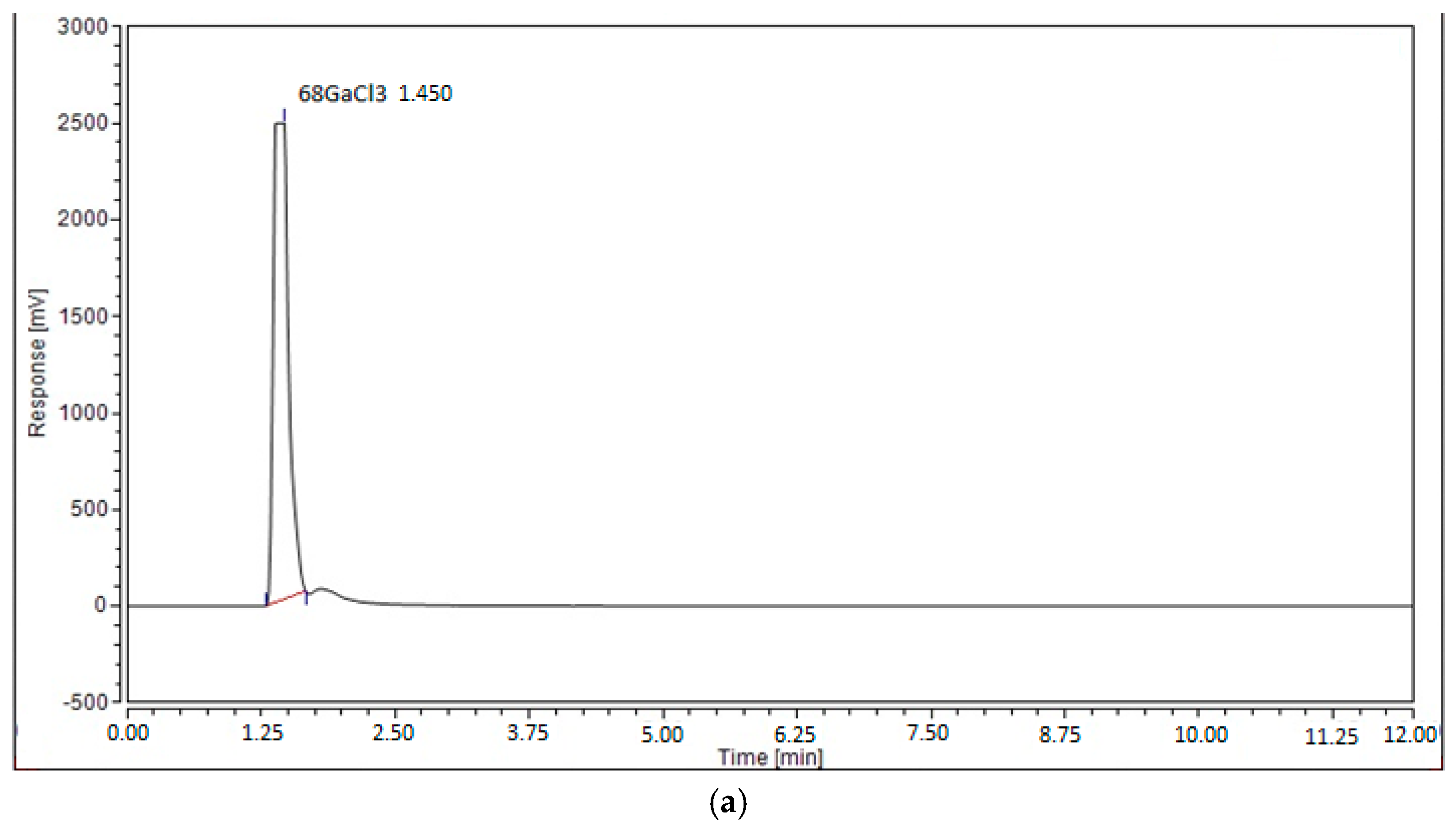
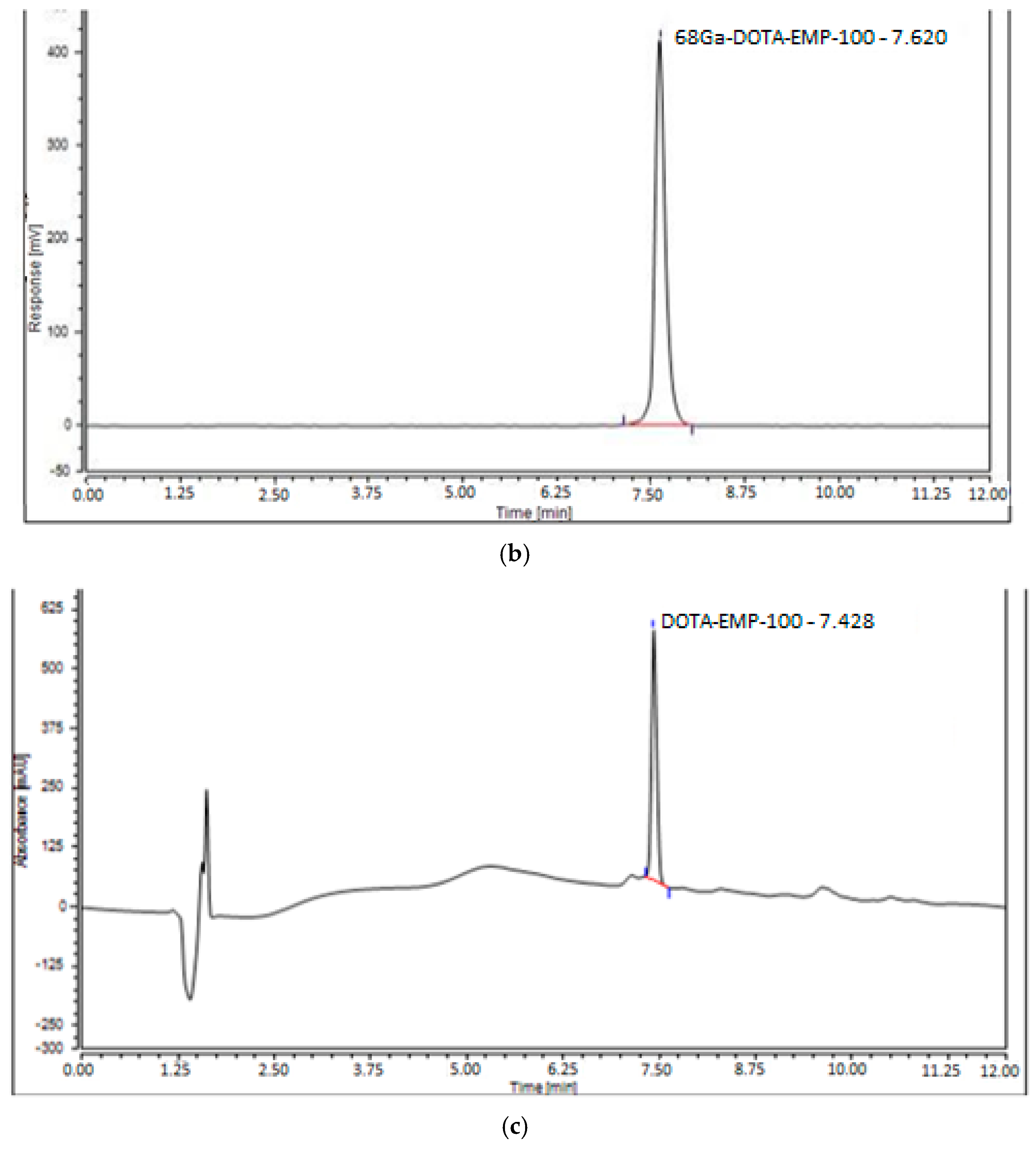
The radiochemical purity (RCP% = >99.99%-colloids-ions) was assessed by checking for the presence of free 68Ga (using Radio-UV-HPLC) and 68Ga colloids (using Radio-TLC). Using Radio-UV-HPLC, free 68Ga was identified at Rt = 1.450 min (Figure 2a), while 68Ga bound to DOTA-EMP-100 was detected at Rt = 7.620 min (Figure 2b) with a purity of >99.99%.
Acceptance criteria were based on the specifications reported in the European Pharmacopoeia, 11th ed., Monograph 0125 [32].
The reference solution of DOTA-EMP-100 exhibited a slightly different retention time (Rt = 7.428 min) compared to [68Ga]Ga-DOTA-EMP-100, which had a retention time of Rt = 7.620 min, as shown in Figure 2c. The difference in retention times is attributed to the use of different detectors (Radio and UV–VIS), as well as to a variation in the charge of the DOTA chelator following the incorporation of 68Ga. This change in charge affects the interaction with the column, leading to a slight alteration in the hydrophobicity of the entire molecule. The absence of the 68Ga-chelate in the standard solution leaves three free carboxylic acid groups, increasing the hydrophilicity of the standard and consequently modifying its retention time.
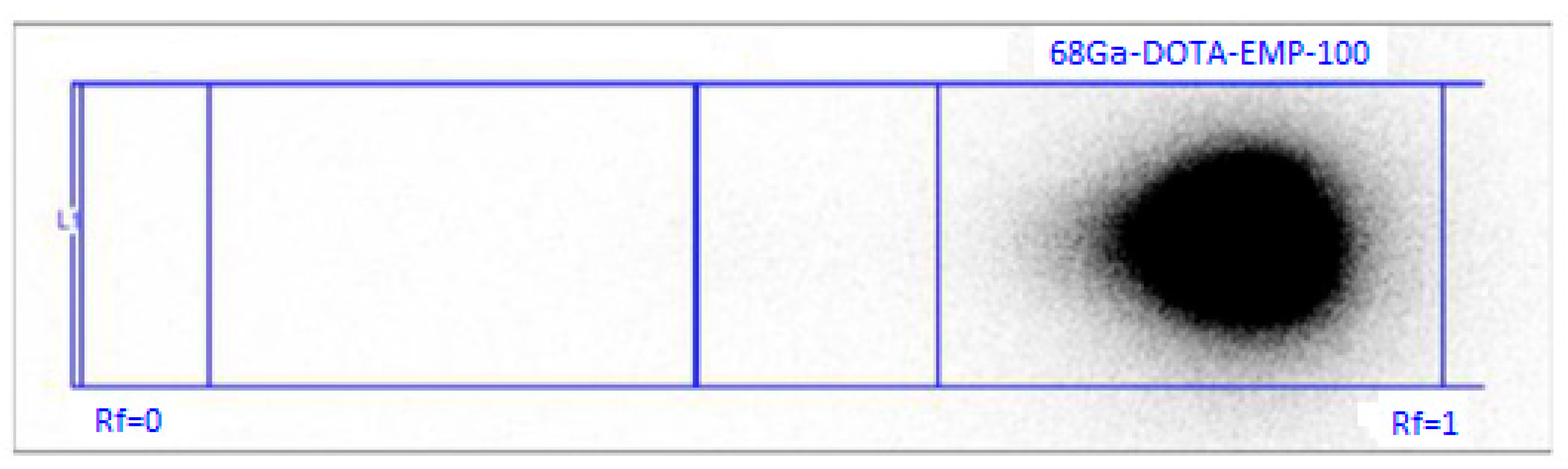
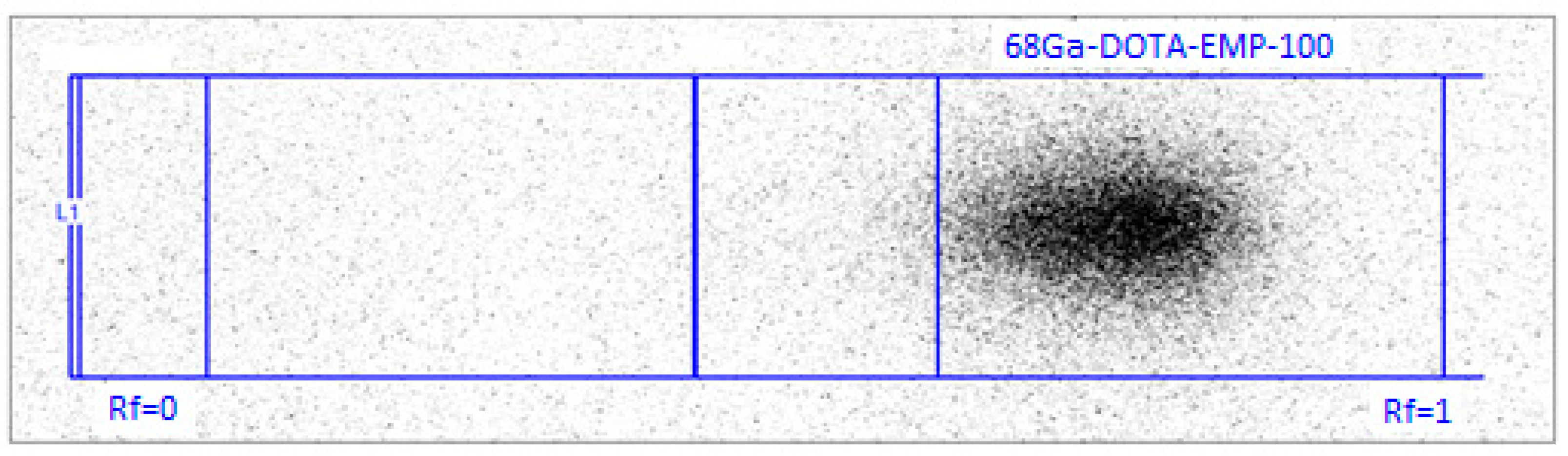
With Radio-TLC, no [68Ga]Ga-colloids could be detected at retention factor (Rf) = 0.2, and the radiopharmaceutical product was detected at Rf = 0.8 (Figure 3).
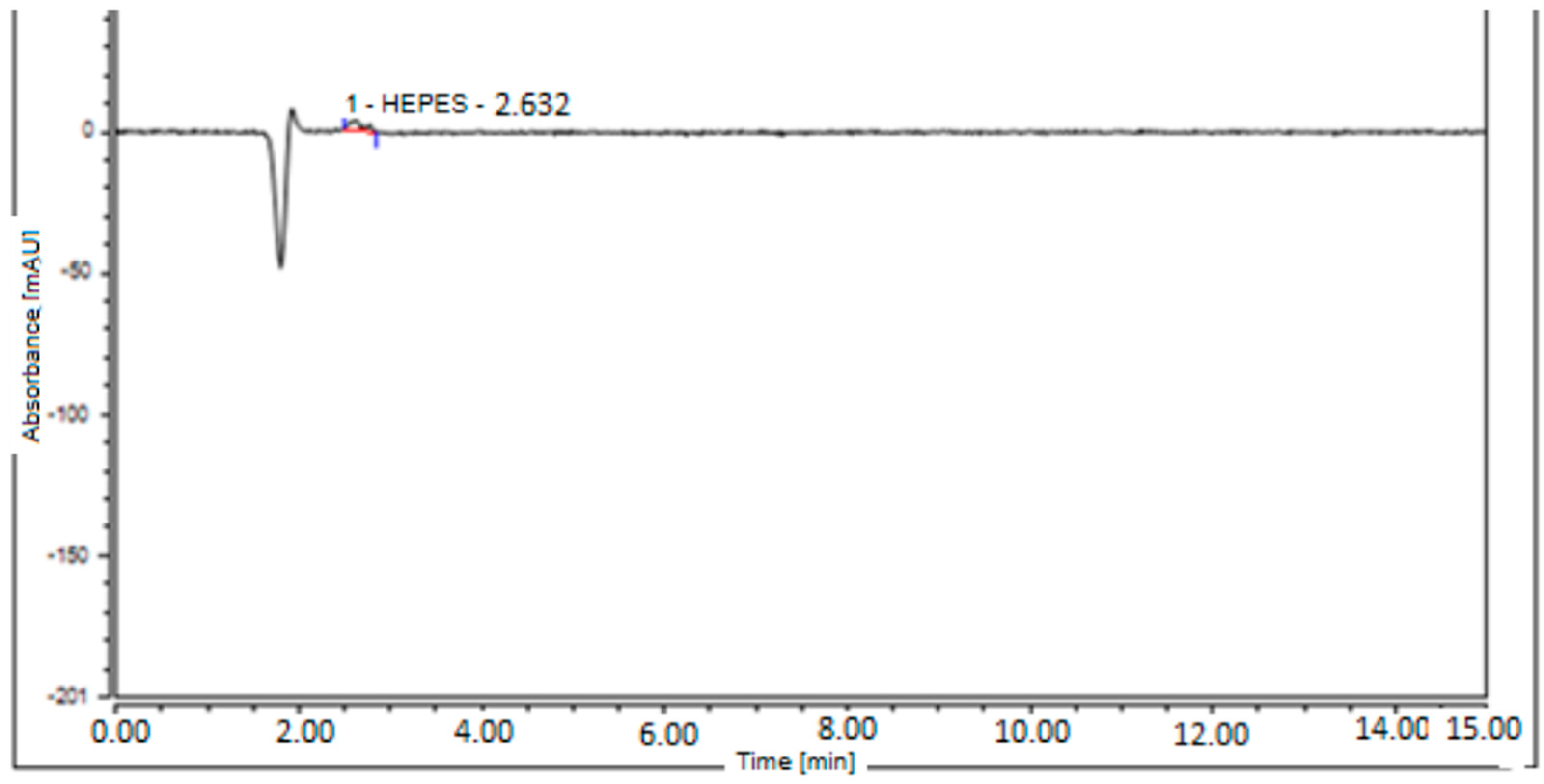
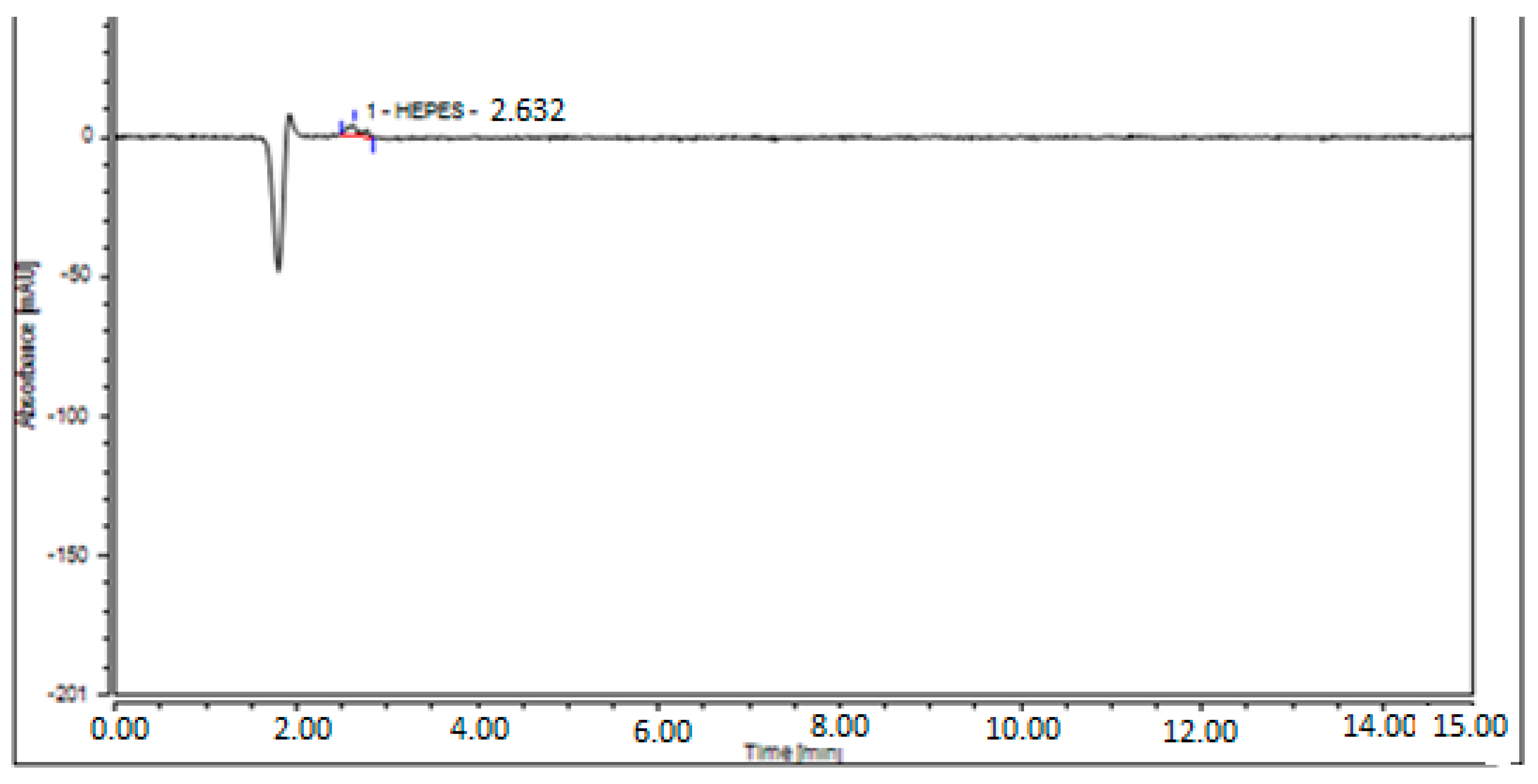
HPLC performed on the final radiopharmaceutical solution showed that the residual content of HEPES in the final preparation was lower in the HEPES test solution (12.5 µg/mL) (Figure 4). On the other hand, gas chromatographic analysis confirmed that the residual ethanol content in the [68Ga]Ga-DOTA-EMP-100 preparation was below the specified limit of 10% v/v (2.5 g), meeting the required quality standards.
Additionally, the product was tested for endotoxins, and the concentration was found to be below 17.5 EU/mL in all samples. Sterility testing confirmed that all samples were free from microbial contamination.
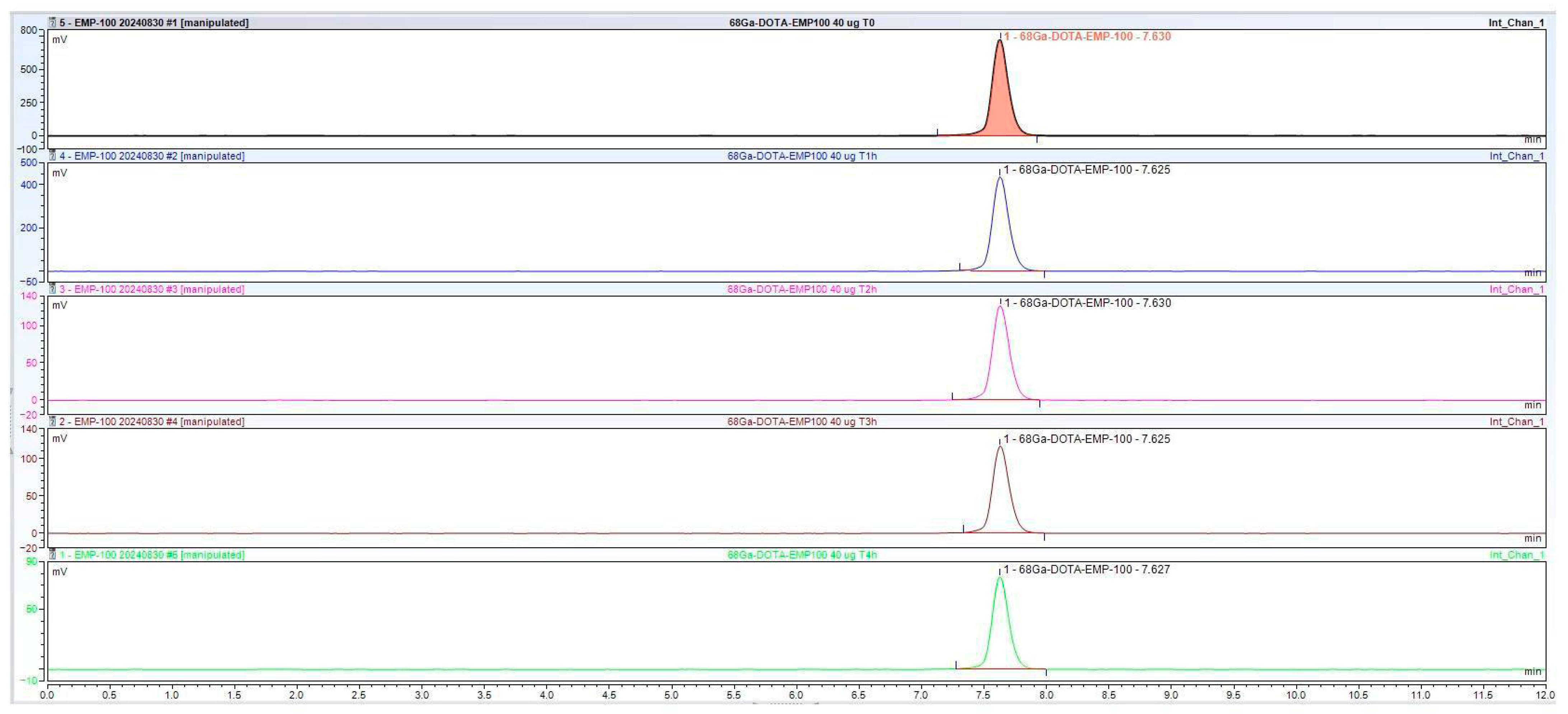
The stability of [68Ga]Ga-DOTA-EMP-100 in buffer solution at room temperature was evaluated for up to 4 h using Radio-UV-HPLC, RadioTLC, and pH measurements. As shown in Figure 5, [68Ga]Ga-DOTA-EMP-100 remained stable under the test conditions. No additional radioactive by-products or free 68Ga were detected during this period, and the RCP% stayed >99.99% over time.
The RCP% was also assessed and confirmed by Radio-TLC (Figure 6) over time, while the pH value remained stable at 7 throughout the 4 h period.

4. Discussion

The c-MET protein, a mesenchymal–epithelial transcription factor, is a transmembrane receptor tyrosine kinase encoded by the human MET gene. It is involved in various cellular functions, including growth, differentiation, and motility, making it an active target for drug discovery and development.
We hereby describe the development and validation of an automated synthesis method and QC system to label c-MET ligand (DOTA-EMP-100) with 68Ga. The process of developing and designing a new radiopharmaceutical typically involves the establishment and setup of radiosynthesis, along with the implementation of quality assessment methods for the final product. These assessments include evaluating release specifications such as RCP%, specific activity (As or Am), radionuclidic purity, chemical purity, radiochemical yield (RCY%), pH, sterility, and stability. A critical parameter in this process is the specific or molar activity (Am) of the final product, defined as the ratio between the radioactivity (in Bq) and the amount of peptide (in moles or grams). Achieving high Am is important to minimize the amount of non-radioactive (cold) peptide administered and thereby reduce the risk of receptor saturation and improve target-to-background ratios. Although the receptor-binding affinity is an intrinsic property of the compound and remains unaffected by Am, its in vivo receptor occupancy can be significantly influenced by the injected peptide mass. Conversely, excessively high Am may correspond to very low peptide amounts, potentially compromising labelling efficiency due to suboptimal complexation and altering the tracer’s pharmacokinetics and biodistribution. Therefore, a balance must be found between sufficient peptide mass and optimal Am to ensure reproducible synthesis, high radiochemical purity, and effective in vivo targeting.
In our study, the minimum peptide amount of 20 µg per batch was selected based on values commonly used in clinical-grade formulations of [68Ga]Ga-DOTA-TOC and DOTA-TATE, for which peptide masses between 20 and 50 µg per dose are routinely employed in both European Pharmacopoeia monographs and kit formulations [38,39]. This peptide mass range is widely recognized to provide an optimal compromise between labelling efficiency, product stability, and image quality, while minimizing the risk of receptor saturation.
For these reasons, five different amounts of DOTA-EMP-100 (50–40-30–20 μg) were evaluated for the production of [68Ga]Ga-DOTA-EMP-100, considering the affinity and specificity of the c-Met peptide EMP-100 Kd 3.0 ± 0.5 nM [31]. The results summarized in Table 1 demonstrate that 40 μg of DOTA-EMP-100 allows for the best radiochemical purity (>99.99%), high radiochemical yield (64.93% ± 0.5) (n.d.c.), and good molar activity (53.075 GBq/μmol ± 0.8).
We noticed that increasing radiochemical yield corresponded to increasing ligand amount up to 50 µg, but a lower RCP% for all the amounts of peptide precursor except for at 40 µg (Table 1), allowing us to determine the best amount of peptide for the production of [68Ga]Ga-DOTA-EMP-100. A higher molar activity (83.80 GBq/µmol ± 1.1) was observed for 20 μg of peptide precursor, but the lower radiochemical yield (54.75% ± 1.4) and radiochemical purity (99.52% ± 1.3) led us to validate the radiosynthesis of [68Ga]Ga-DOTA-EMP-100 starting from 40 μg of DOTA-EMP-100.
Standardization and harmonization of radiopharmaceutical production are essential for ensuring that radiopharmaceutical research can be reliably tested and transferred across laboratories. After optimization of the synthesis protocol, the process and final product were validated according to quality standards required for clinical translation. As shown in Table 2, three consecutive validation runs confirmed the robustness and reproducibility of the radiosynthesis. Radiochemical purity was consistently >99.99%, as assessed by both Radio-TLC and Radio-UV-HPLC, with an average radiochemical yield of 64.5% ± 1.1 and molar activity (Am) of 53.41 GBq/μmol ± 0.8. Furthermore, the formulation remained stable over 4 h post-synthesis, with no radiolysis or degradation observed. The final product was sterile and endotoxin-free, fulfilling all acceptance criteria established by the European Pharmacopoeia.
While Rusu et al. [31] reported the automated synthesis of [68Ga]Ga-EMP-100 for PET imaging of c-MET expression and evaluated key synthesis parameters such as the influence of DOTA-peptide amount on radiochemical yield, purity, and molar activity, our study extends this work by providing additional insights and optimizations within a similar automated framework. In particular, we conducted a systematic investigation of the optimal peptide amount for radiolabelling, evaluating five different precursor quantities (20–50 μg) and identifying 40 μg as the optimal amount to ensure high radiochemical purity, molar activity, and radiochemical yield. This optimization, absent in the previous study, is essential to balance the trade-off between labelling efficiency and peptide mass, which influences in vivo targeting and image quality.
Moreover, our work includes a full validation of the automated synthesis process, supported by a comprehensive analytical quality control profile to ensure reproducibility and product quality. These elements are critical to facilitate the standardization and scalability of radiopharmaceutical production for clinical routine and inter-centre reproducibility. Finally, our study highlights the potential theranostic application of [68Ga]Ga-DOTA-EMP-100 in c-MET–expressing tumours, laying the groundwork for future therapeutic strategies involving radiolabelled analogues such as [177Lu]Lu-DOTA-EMP-100.
Taken together, our findings extend the current knowledge by providing not only technical improvements in the radiosynthesis and formulation of this tracer, but also a framework for its broader application in nuclear medicine, particularly in the era of precision oncology.

5. Conclusions

The synthesis of [68Ga]Ga-DOTA-EMP-100 was successfully carried out through a fully automated process using the GRP Scintomics module. All quality control parameters, including radiochemical purity, pH, endotoxins, and sterility, were in compliance with the European Pharmacopoeia standards. Additionally, the product solution demonstrated stability for at least 3 h after production, as confirmed by Radio-UV-HPLC. As a result, [68Ga]Ga-DOTA-EMP-100 can be consistently and efficiently produced for routine clinical applications.

Author Contributions

S.M., A.G. (Anna Gagliardi), A.G. (Alessandra Guercio), M.S., G.B., A.G. (Alex Gibson), C.P. and L.R. have contributed to the organization of the content of this manuscript. S.M., A.G. (Anna Gagliardi), A.G. (Alessandra Guercio), A.G. (Alex Gibson), C.P. and A.G. (Alex Gibson) collected relevant information and prepared the draft. S.M., A.G. (Anna Gagliardi), A.G. (Alessandra Guercio), M.S., G.B., A.G. (Alex Gibson), and C.P. drafted the manuscript and L.R. revised the manuscript. All authors have read and agreed to the published version of the manuscript.

Funding

This study did not receive any financial support.

Institutional Review Board Statement

Not applicable.

Informed Consent Statement

Not applicable.

Data Availability Statement

The original contributions presented in this study are included in the article. Further inquiries can be directed to the corresponding author.

Conflicts of Interest

The authors declare no conflicts of interest. Co-authors Alex Gibson, Chief Executive Officer of Edinburgh Molecular Imaging Ltd., and Christophe Portal, Chief Scientific Officer of Edinburgh Molecular Imaging Ltd., declare no conflicts of interest, as reported in Disclosure of Potential Conflicts of Interest.

Abbreviations

The following abbreviations are used in this manuscript:
AsSpecific activity
CTComputed tomography
GMPGood manufacturing practice
GRPGood radiopharmaceutical practices
EANMEuropean Association of Nuclear Medicine
Eur. Ph.European Pharmacopeia
HEPES2-[4-(2-hydroxyethyl)-1-piperazinyl]-ethanesulfonic acid
HPLCHigh-pressure liquid chromatography
NBPNorme di Buona Preparazione in Nuclear Medicine
TLCThin-layer chromatography
TFATrifluoroacetic acid
PETPositron emission tomography
QCQuality control
RCYRadiochemical yield
RCPRadiochemical purity

References

  1. Fu, J.; Su, X.; Li, Z.; Deng, L.; Liu, X.; Feng, X.; Peng, J. HGF/c-MET pathway in cancer: From molecular characterization to clinical evidence. Oncogene 2021, 40, 4625–4651. [Google Scholar] [CrossRef] [PubMed]
  2. Konstorum, A.; Lowengrub, J.S. Activation of the HGF/c-Met axis in the tumor microenvironment: A multispecies model. J. Theor. Biol. 2018, 439, 86–99. [Google Scholar] [CrossRef] [PubMed] [PubMed Central]
  3. Boromand, N.; Hasanzadeh, M.; ShahidSales, S.; Farazestanian, M.; Gharib, M.; Fiuji, H.; Behboodi, N.; Ghobadi, N.; Hassanian, S.M.; Ferns, G.A.; et al. Clinical and prognostic value of the C-Met/HGF signaling pathway in cervical cancer. J. Cell Physiol. 2018, 233, 4490–4496. [Google Scholar] [CrossRef] [PubMed]
  4. Granito, A.; Guidetti, E.; Gramantieri, L. c-MET receptor tyrosine kinase as a molecular target in advanced hepatocellular carcinoma. J. Hepatocell. Carcinoma 2015, 2, 29–38. [Google Scholar] [CrossRef]
  5. Shen, Z.; Xue, W.; Zheng, Y.; Geng, Q.; Wang, L.; Fan, Z.; Wang, W.; Yue, Y.; Zhai, Y.; Li, L.; et al. Molecular mechanism study of HGF/c-MET pathway activation and immune regulation for a tumor diagnosis model. Cancer Cell Int. 2021, 21, 374, Erratum in Cancer Cell Int. 2021, 21, 672. https://doi.org/10.1186/s12935-021-02359-z. [Google Scholar] [CrossRef] [PubMed] [PubMed Central]
  6. Krause, D.S.; Van Etten, R.A. Tyrosine kinases as targets for cancer therapy. N. Engl. J. Med. 2005, 353, 172–187. [Google Scholar] [CrossRef] [PubMed]
  7. Mo, H.N.; Liu, P. Targeting MET in cancer therapy. Chronic Dis. Transl. Med. 2017, 3, 148–153. [Google Scholar] [CrossRef] [PubMed] [PubMed Central]
  8. Hu, C.T.; Wu, J.R.; Cheng, C.C.; Wu, W.S. The Therapeutic Targeting of HGF/c-Met Signaling in Hepatocellular Carcinoma: Alternative Approaches. Cancers 2017, 9, 58. [Google Scholar] [CrossRef] [PubMed] [PubMed Central]
  9. Bradley, C.A.; Salto-Tellez, M.; Laurent-Puig, P.; Bardelli, A.; Rolfo, C.; Tabernero, J.; Khawaja, H.A.; Lawler, M.; Johnston, P.G.; Van Schaeybroeck, S.; et al. Targeting c-MET in gastrointestinal tumours: Rationale, opportunities and challenges. Nat. Rev. Clin. Oncol. 2017, 14, 562–576, Erratum in Nat. Rev. Clin. Oncol. 2018, 15, 150. https://doi.org/10.1038/nrclinonc.2018.13. [Google Scholar] [CrossRef] [PubMed]
  10. Xu, X.; Zhu, Y.; Liang, Z.; Li, S.; Xu, X.; Wang, X.; Wu, J.; Hu, Z.; Meng, S.; Liu, B.; et al. c-Met and CREB1 are involved in miR-433-mediated inhibition of the epithelial-mesenchymal transition in bladder cancer by regulating Akt/GSK-3β/Snail signaling. Cell Death Dis. 2016, 7, e2088. [Google Scholar] [CrossRef] [PubMed] [PubMed Central]
  11. Furge, K.A.; Zhang, Y.W.; Vande Woude, G.F. Met receptor tyrosine kinase: Enhanced signaling through adapter proteins. Oncogene 2000, 19, 5582–5589. [Google Scholar] [CrossRef] [PubMed]
  12. Liu, X.; Sun, R.; Chen, J.; Liu, L.; Cui, X.; Shen, S.; Cui, G.; Ren, Z.; Yu, Z. Crosstalk Mechanisms Between HGF/c-Met Axis and ncRNAs in Malignancy. Front. Cell Dev. Biol. 2020, 8, 23. [Google Scholar] [CrossRef]
  13. Demkova, L.; Kucerova, L. Role of the HGF/c-MET tyrosine kinase inhibitors in metastasic melanoma. Mol. Cancer 2018, 17, 26. [Google Scholar] [CrossRef] [PubMed] [PubMed Central]
  14. Tanaka, A.; Ogawa, M.; Zhou, Y.; Namba, K.; Hendrickson, R.C.; Miele, M.M.; Li, Z.; Klimstra, D.S.; Buckley, P.G.; Gulcher, J.; et al. Proteogenomic characterization of primary colorectal cancer and metastatic progression identifies proteome-based subtypes and signatures. Cell Rep. 2024, 43, 113810. [Google Scholar] [CrossRef] [PubMed] [PubMed Central]
  15. Liu, Y.; Yu, X.F.; Zou, J.; Luo, Z.H. Prognostic value of c-Met in colorectal cancer: A meta-analysis. World J. Gastroenterol. 2015, 21, 3706–3710. [Google Scholar] [CrossRef] [PubMed] [PubMed Central]
  16. Gherardi, E.; Birchmeier, W.; Birchmeier, C.; Vande Woude, G. Targeting MET in cancer: Rationale and progress. Nat. Rev. Cancer 2012, 12, 89–103, Erratum in Nat. Rev. Cancer 2012, 12, 637. [Google Scholar] [CrossRef] [PubMed]
  17. Albadari, N.; Xie, Y.; Li, W. Deciphering treatment resistance in metastatic colorectal cancer: Roles of drug transports, EGFR mutations, and HGF/c-MET signaling. Front. Pharmacol. 2024, 14, 1340401. [Google Scholar] [CrossRef] [PubMed] [PubMed Central]
  18. Hughes, V.S.; Siemann, D.W. Have Clinical Trials Properly Assessed c-Met Inhibitors? Trends Cancer 2018, 4, 94–97. [Google Scholar] [CrossRef] [PubMed] [PubMed Central]
  19. Floresta, G.; Abbate, V. Recent progress in the imaging of c-Met aberrant cancers with positron emission tomography. Med. Res. Rev. 2022, 42, 1588–1606. [Google Scholar] [CrossRef] [PubMed] [PubMed Central]
  20. Luo, H.; Hong, H.; Slater, M.R.; Graves, S.A.; Shi, S.; Yang, Y.; Nickles, R.J.; Fan, F.; Cai, W. PET of c-Met in Cancer with 64Cu-Labeled Hepatocyte Growth Factor. J. Nucl. Med. 2015, 56, 758–763. [Google Scholar] [CrossRef] [PubMed] [PubMed Central]
  21. Jagoda, E.M.; Lang, L.; Bhadrasetty, V.; Histed, S.; Williams, M.; Kramer-Marek, G.; Mena, E.; Rosenblum, L.; Marik, J.; Tinianow, J.N.; et al. Immuno-PET of the hepatocyte growth factor receptor Met using the 1-armed antibody onartuzumab. J. Nucl. Med. 2012, 53, 1592–1600. [Google Scholar] [CrossRef] [PubMed] [PubMed Central]
  22. Arulappu, A.; Battle, M.; Eisenblaetter, M.; McRobbie, G.; Khan, I.; Monypenny, J.; Weitsman, G.; Galazi, M.; Hoppmann, S.; Gazinska, P.; et al. c-Met PET Imaging Detects Early-Stage Locoregional Recurrence of Basal-Like Breast Cancer. J. Nucl. Med. 2016, 57, 765–770. [Google Scholar] [CrossRef] [PubMed]
  23. Wu, C.; Tang, Z.; Fan, W.; Zhu, W.; Wang, C.; Somoza, E.; Owino, N.; Li, R.; Ma, P.C.; Wang, Y. In vivo positron emission tomography (PET) imaging of mesenchymal-epithelial transition (MET) receptor. J. Med. Chem. 2010, 53, 139–146. [Google Scholar] [CrossRef] [PubMed]
  24. Remon, J.; Hendriks, L.E.L.; Mountzios, G.; García-Campelo, R.; Saw, S.P.L.; Uprety, D.; Recondo, G.; Villacampa, G.; Reck, M. MET alterations in NSCLC-Current Perspectives and Future Challenges. J. Thorac. Oncol. 2023, 18, 419–435. [Google Scholar] [CrossRef] [PubMed]
  25. Spigel, D.R.; Edelman, M.J.; O’Byrne, K.; Paz-Ares, L.; Mocci, S.; Phan, S.; Shames, D.S.; Smith, D.; Yu, W.; Paton, V.E.; et al. Results from the Phase III Randomized Trial of Onartuzumab Plus Erlotinib Versus Erlotinib in Previously Treated Stage IIIB or IV Non-Small-Cell Lung Cancer: METLung. J. Clin. Oncol. 2017, 35, 412–420. [Google Scholar] [CrossRef] [PubMed]
  26. Comoglio, P.M.; Trusolino, L.; Boccaccio, C. Known and novel roles of the MET oncogene in cancer: A coherent approach to targeted therapy. Nat. Rev. Cancer 2018, 18, 341–358. [Google Scholar] [CrossRef] [PubMed]
  27. Wang, J.; Anderson, M.G.; Oleksijew, A.; Vaidya, K.S.; Boghaert, E.R.; Tucker, L.; Zhang, Q.; Han, E.K.; Palma, J.P.; Naumovski, L.; et al. ABBV-399, a c-Met Antibody-Drug Conjugate that Targets Both MET-Amplified and c-Met-Overexpressing Tumors, Irrespective of MET Pathway Dependence. Clin. Cancer Res. 2017, 23, 992–1000. [Google Scholar] [CrossRef] [PubMed]
  28. Sartor, O.; de Bono, J.; Chi, K.N.; Fizazi, K.; Herrmann, K.; Rahbar, K.; Tagawa, S.T.; Nordquist, L.T.; Vaishampayan, N.; El-Haddad, G.; et al. Lutetium-177-PSMA-617 for Metastatic Castration-Resistant Prostate Cancer. N. Engl. J. Med. 2021, 385, 1091–1103. [Google Scholar] [CrossRef] [PubMed] [PubMed Central]
  29. Strosberg, J.; El-Haddad, G.; Wolin, E.; Hendifar, A.; Yao, J.; Chasen, B.; Mittra, E.; Kunz, P.L.; Kulke, M.H.; Jacene, H.; et al. Phase 3 Trial of 177Lu-Dotatate for Midgut Neuroendocrine Tumors. N. Engl. J. Med. 2017, 376, 125–135. [Google Scholar] [CrossRef] [PubMed] [PubMed Central]
  30. Mittlmeier, L.M.; Todica, A.; Gildehaus, F.J.; Unterrainer, M.; Beyer, L.; Brendel, M.; Albert, N.L.; Ledderose, S.T.; Vettermann, F.J.; Schott, M.; et al. 68Ga-EMP-100 PET/CT-a novel ligand for visualizing c-MET expression in metastatic renal cell carcinoma-first in-human biodistribution and imaging results. Eur. J. Nucl. Med. Mol. Imaging 2022, 49, 1711–1720. [Google Scholar] [CrossRef] [PubMed] [PubMed Central]
  31. Rusu, T.; Delion, M.; Pirot, C.; Blin, A.; Rodenas, A.; Talbot, J.N.; Veran, N.; Portal, C.; Montravers, F.; Cadranel, J.; et al. Fully automated radiolabeling of [68Ga]Ga-EMP100 targeting c-MET for PET-CT clinical imaging. EJNMMI Radiopharm. Chem. 2023, 8, 30. [Google Scholar] [CrossRef] [PubMed] [PubMed Central]
  32. European Directorate for the Quality of Medicines & HealthCare (EDQM). Radiopharmaceutical preparations. General Monograph No. 0125. In European Pharmacopoeia, 11th ed.; Council of Europe: Strasbourg, France, 2023. [Google Scholar]
  33. European Pharmacopeia. Gallium (68 Ga) chloride solution for radiolabelling. European Directorate for the Quality of Medicines. Eur. Pharm. 2013, 2464, 1060–1061. [Google Scholar]
  34. Migliari, S.; Sammartano, A.; Scarlattei, M.; Serreli, G.; Ghetti, C.; Cidda, C.; Baldari, G.; Ortenzia, O.; Ruffini, L. Development and Validation of a High-Pressure Liquid Chromatography Method for the Determination of Chemical Purity and Radiochemical Purity of a [68Ga]-Labeled Glu-Urea-Lys(Ahx)-HBED-CC (Positron Emission Tomography) Tracer. ACS Omega 2017, 2, 7120–7126. [Google Scholar] [CrossRef] [PubMed] [PubMed Central]
  35. Migliari, S.; Scarlattei, M.; Baldari, G.; Ruffini, L. Scale down and optimized automated production of [68Ga]68Ga-DOTA-ECL1i PET tracer targeting CCR2 expression. EJNMMI Radiopharm. Chem. 2023, 8, 3. [Google Scholar] [CrossRef] [PubMed] [PubMed Central]
  36. European Pharmacopoeia Commission, Council of Europe. European Pharmacopoeia, 8th ed.; European Directorate for the Quality of Medicines & Health Care: Strasbourg, France, 2013. [Google Scholar]
  37. Migliari, S.; Scarlattei, M.; Baldari, G.; Silva, C.; Ruffini, L. A specific HPLC method to determine residual HEPES in [68Ga]Ga radiopharmaceuticals: Development and validation. Molecules 2022, 27, 4477. [Google Scholar] [CrossRef] [PubMed] [PubMed Central]
  38. Sinnes, J.P.; Nagel, J.; Waldron, B.P.; Maina, T.; Nock, B.A.; Bergmann, R.K.; Ullrich, M.; Pietzsch, J.; Bachmann, M.; Baum, R.P.; et al. Instant kit preparation of 68Ga-radiopharmaceuticals via the hybrid chelator DATA: Clinical translation of [68Ga]Ga-DATA-TOC. EJNMMI Res. 2019, 9, 48. [Google Scholar] [CrossRef] [PubMed] [PubMed Central]
  39. Hennrich, U.; Benešová, M. [68Ga]Ga-DOTA-TOC: The First FDA-Approved 68Ga-Radiopharmaceutical for PET Imaging. Pharmaceuticals 2020, 13, 38. [Google Scholar] [CrossRef] [PubMed] [PubMed Central]
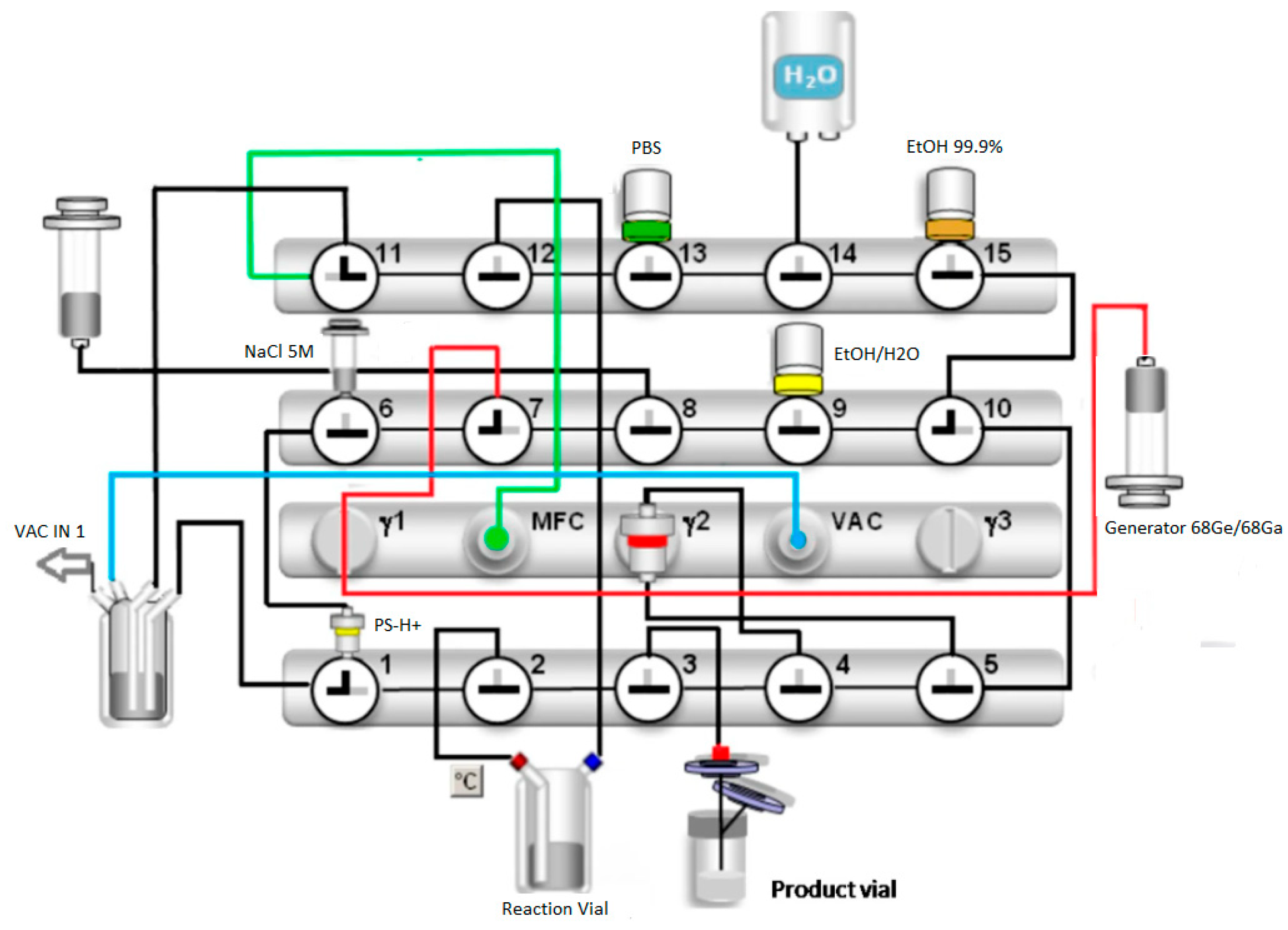
Figure 1. Configuration of the Scintomics GRP® module for the synthesis of [68Ga]Ga-EMP-100. The valves are numbered from 1 to 15. The figure shows the valve positions during the entire radiosynthesis process.
Biologics 05 00040 g001
Figure 2. The peaks have been integrated as shown in the figures: (a) Radio-UV-HPLC chromatogram of the eluate [68Ga]GaCl3; (b) radio-UV-HPLC chromatogram of [68Ga]Ga-DOTA-EMP-100; (c) radio-UV-HPLC chromatogram of DOTA-EMP-100.
Biologics 05 00040 g002aBiologics 05 00040 g002b
Figure 3. Radio-TLC chromatogram of [68Ga]Ga-DOTA-EMP-100.
Biologics 05 00040 g003
Figure 4. HPLC chromatogram of HEPES content in [68Ga]Ga-DOTA-EMP-100. The peak has been integrated as shown in the figure.
Biologics 05 00040 g004
Figure 5. Stability of [68Ga]Ga-DOTA-EMP-100 assessed by radio-UV-HPLC: the figure shows an overlay of chromatographic profiles obtained at different time points (blue dashed line: 0 h; pink: 1 h; red: 2 h; green: 3 h; black: 4 h), demonstrating the radiochemical stability of the compound over a 4 h period.
Biologics 05 00040 g005
Figure 6. Stability of [68Ga]Ga-DOTA-EMP-100 assessed by radio-TLC: the figure shows the chromatogram acquired at 4 h, demonstrating that the radiopharmaceutical remains stable over time.
Biologics 05 00040 g006
Table 1. Summary data of [68Ga]Ga-DOTA-EMP-100 quality controls (20–50 μg, n = 3).
Peptide (DOTA-EMP-100)
MW = 3709.7 g/mol
50 µg
(500 µL, 0.0135 µmol)
40 µg
(400 µL, 0.0108 µmol)
30 µg
(300 µL, 0.008 µmol)
20 µg
(200 µL, 0.005 µmol)
Radiochemical purity (radio-UV-HPLC)99.31% ± 1.8>99.99% 99.73% ± 1.299.52% ± 1.3
Radiochemical purity (radio-TLC)>99.99%>99.99%>99.99%>99.99%
pH7777
Radiochemical yield (n.d.c)68.17% ± 2.164.93% ± 0.564.56% ± 1.154.75% ± 1.4
Volume10 mL10 mL10 mL10 mL
ColourColourlessColourlessColourlessColourless
Molar activity37.42 GBq/µmol ± 2.153.08 GBq/µmol ± 0.864.63 GBq/µmol ± 1.183.80 GBq/µmol ± 1.1
Table 2. Summary data of three consecutive validation batches of [68Ga]Ga-DOTA-EMP-100 (40 μg).
TestBatch 1Batch 2Batch 3Acceptance Criteria
Radiochemical purity (radio-UV-HPLC)99.31%>99.99%99.73%>95%
Radiochemical purity (radio-TLC)>99.99%>99.99%>99.99%>95%
pH7774–8.5
Radiochemical yield (n.d.c)64.37%64.58%64.56%>40%
Radioactivity concentration75.6–52.4875.6–52.7775.6–52.70>50 MBq
Radioactivity 756–524.82756–527.67756–527.03>150 MBq
Volume 10 mL10 mL10 mL2–10 mL
Colour ColourlessColourlessColourlessColourless
Molar activity53.26 GBq/µmol53.52 GBq/µmol53.46 GBq/µmol1–60 GBq/µmol
Radionuclidic purity>99.99%>99.99%>99.99%99.9%
68Ge breakthrough0.00000036%0.00000033%0.00000035%<0.001%
EtOH amount3.73%3.68%3.45%<10% (v/v) (<2.5 g)
HEPES content9.45 µg/mL9.45 µg/mL9.45 µg/mLLess than 200 µg/V of HEPES in test solution
Endotoxins<17.5 IU/mL<17.5 IU/mL<17.5 IU/mL<17.5 IU/mL
Sterility testSterile SterileSterileSterile
Stability over 4 h (RCP%)>99.99%>99.99%>99.99%>99.99%
Disclaimer/Publisher’s Note: The statements, opinions and data contained in all publications are solely those of the individual author(s) and contributor(s) and not of MDPI and/or the editor(s). MDPI and/or the editor(s) disclaim responsibility for any injury to people or property resulting from any ideas, methods, instructions or products referred to in the content.