You are currently viewing a new version of our website. To view the old version click .
Biologics
  • Article
  • Open Access

1 December 2025

Risk of Developing Clostridioides Difficile Infection with the Use of Proton Pump Inhibitors in Patients with Inflammatory Bowel Disease


,
,
,
,
,
,
and
1
Division of Gastroenterology and Hepatology, University of Missouri School of Medicine, Columbia, MO 65212, USA
2
Division of Gastroenterology and Hepatology, Charleston Area Medical Center, West Virginia University, Charleston, WV 25302, USA
3
Department of Medicine, Washington University School of Medicine, St. Louis, MO 63110, USA
4
Department of Medicine, University of Missouri School of Medicine, Columbia, MO 65212, USA

Abstract

Introduction: Patients with inflammatory bowel disease (IBD) have an increased risk of Clostridioides difficile infection (CDI). While antibiotic exposure has been considered the most prominent risk factor for CDI, proton pump inhibitor (PPI) use is another potential risk factor. Methods: From January 2017 to April 2021, we examined the University of Missouri’s IBD patients’ medical records. Laboratory-confirmed CDI diagnosis was the main outcome of interest. The usage of PPIs was the exposure of interest. The odds ratio between CDI risk in PPI users and non-users was estimated using logistic regression models. We investigated CDI risk with PPI use duration using stratified analysis. Results: Overall prevalence of CDI was 9%. 358 patients (42%) reported using PPI, with an average duration of ~30 months, with a range of 0.1 to 255. PPI use was associated with a higher risk of CDI in both the unadjusted (OR = 1.58 [0.98–2.53]; p = 0.06) and adjusted models (9.23 [2.11–40.34]; p = 0.003). Only those who used PPIs for less than 30 months had a greater risk of CDI in the stratified analysis (OR = 2.10 [1.16–3.38], p = 0.014). Long-term use (≥30 months) did not increase the incidence of CDI (OR = 0.74 [0.29, 1.83]; p = 0.510). Discussion: This is the single largest study of the US general IBD population to evaluate the association between PPI use and risk of developing CDI. PPI therapy was linked to a significant elevation in CDI risk, restricted to PPI use for up to 30 months. Histamine-2 receptor antagonists (H2RAs) did not increase the risk of CDI.

1. Introduction

Studies have shown that patients with inflammatory bowel disease (IBD) have an increased risk of developing Clostridioides difficile infection (CDI) when compared to the general population. These patients tend to experience increased severity of CDI compared to non-IBD patients and have increased risk of short and long-term mortality compared to IBD patients without CDI [1]. In clinical practice, CDI can both mimic and precipitate a flare of IBD symptoms [2]. It must be recognized swiftly in these patients to mitigate complications and prevent worsening infection, since several IBD patients are empirically treated with corticosteroids for a presumed flare. Numerous explanations for the increased incidence of CDI in IBD patients have been hypothesized, including a dysbiotic gut microbiome, increased exposure to healthcare facilities, use of immunosuppressive agents, and antibiotic exposure [1,2].
While antibiotic exposure has extensively been considered the biggest risk factor for CDI, proton pump inhibitor (PPI) use has become increasingly recognized as another potential risk factor [1]. With the dramatic increase in the prescription of PPIs in the last two decades, many studies have investigated this association with conflicting results [3]. One meta-analysis demonstrated that PPI users had approximately twice the risk of developing CDI compared to non-users, and another found a 65% increase in CDI incidence among PPI users [3,4]. The proposed mechanism for the correlation between PPI use and CDI suggests that decreased acidity in the stomach alters the gut microbiome and allows for C difficile to proliferate [5]. While this association remains controversial, increasing evidence does support at least a modest relationship between PPI use and the development of CDI [5].
Among IBD patients, traditional risk factors, such as antibiotic use and frequent healthcare exposure, in combination with inherent risk due to IBD itself, are often considered to be the main culprits for higher rates of CDI. However, it has been shown that the majority of IBD patients contract CDI in the community rather than by nosocomial transmission [2,6]. Therefore, it is essential to evaluate other factors that may contribute to the higher rates of CDI in these individuals. Those suffering from IBD, particularly Crohn’s disease (CD), have been shown to have higher rates of PPI usage when compared to non-IBD patients [7]. One study found a significant association between PPI use and CDI than with previous antibiotic therapy in IBD patients, while another found no correlation [6,8].
Another proposed explanation for the increased risk of CDI is the use of immunosuppressive therapies in IBD patients, though this remains controversial. One study reported that, regardless of dose or duration, corticosteroid exposure has been shown to significantly increase the risk of CDI [9]. Another meta-analysis, however, found that the use of corticosteroids did not correlate with an increased risk of CDI [1]. The authors suggested that perhaps specific immunosuppressive regimens, rather than broad immunosuppression, are known to show the association between immunosuppressive medications and CDI.
We conducted a retrospective observational study to assess the risk of CDI among IBD patients who are PPI users after adjusting for antibiotic and corticosteroid use. Conversely, we analyzed the risk of CDI among IBD patients who are corticosteroid users after adjusting for antibiotic use.

2. Materials and Methods

2.1. Study Design and Participants

The study population included IBD patients, aged 17–94 years, who were receiving care through the University of Missouri Health Care System (UMHCS), from January 2017 through April 2021. Our research project was approved by the Institutional Review Board at the University of Missouri (#2013229). We evaluated the associations between CDI risk and the use of PPI and corticosteroids. As a secondary objective, we assessed the association between CDI risk and other therapeutic agents, including biologics and immunomodulators. We conducted a retrospective data review of the electronic medical records of eligible IBD patients and abstracted relevant variables of interest using a pre-designed electronic data collection template.

2.2. Data Collection

We included IBD patients receiving care through the UMHCS. Patients were included if they had at least one visit with a gastroenterologist, and IBD (CD or ulcerative colitis [UC]) was included in their list of medical diagnoses. A retrospective review of the UMHCS medical records was conducted to identify, among other things, IBD and CDI diagnoses, and the list of prescribed medications during their gastroenterology clinic visits. Patient-specific deidentified variables were abstracted into a pre-designed data collection template containing a pre-defined list of variables of interest, and the accepted range of values for continuous data. These included the IBD type, lesion localization, and documented prescription of medications, including PPIs, corticosteroids, histamine-2 receptor antagonists (H2RAs), immunomodulators, biologics, and antibiotics. Patients were considered users of a particular drug if the medication was documented during the GI clinic visit. Antibiotics used within 30 days from the time of diagnosis of CDI were included as patients on antibiotics. We estimated the duration of PPI use and documented the initial prescription date for PPIs. A list of socio-demographic variables was also included in the data collection template. Additionally, we reviewed the past medical history to abstract data on presenting comorbid conditions. The data collection template was used in the training of data collectors. Data were collected under the supervision of medical residents. Data were extracted electronically into the pre-designed HIPAA-compliant Excel (MS, Redmond, WA) template and subsequently reconciled by an independent data analyst. All data collectors used the same Excel template, with pre-specified variables of interest and an acceptable range of values.

2.3. Sample Size Considerations

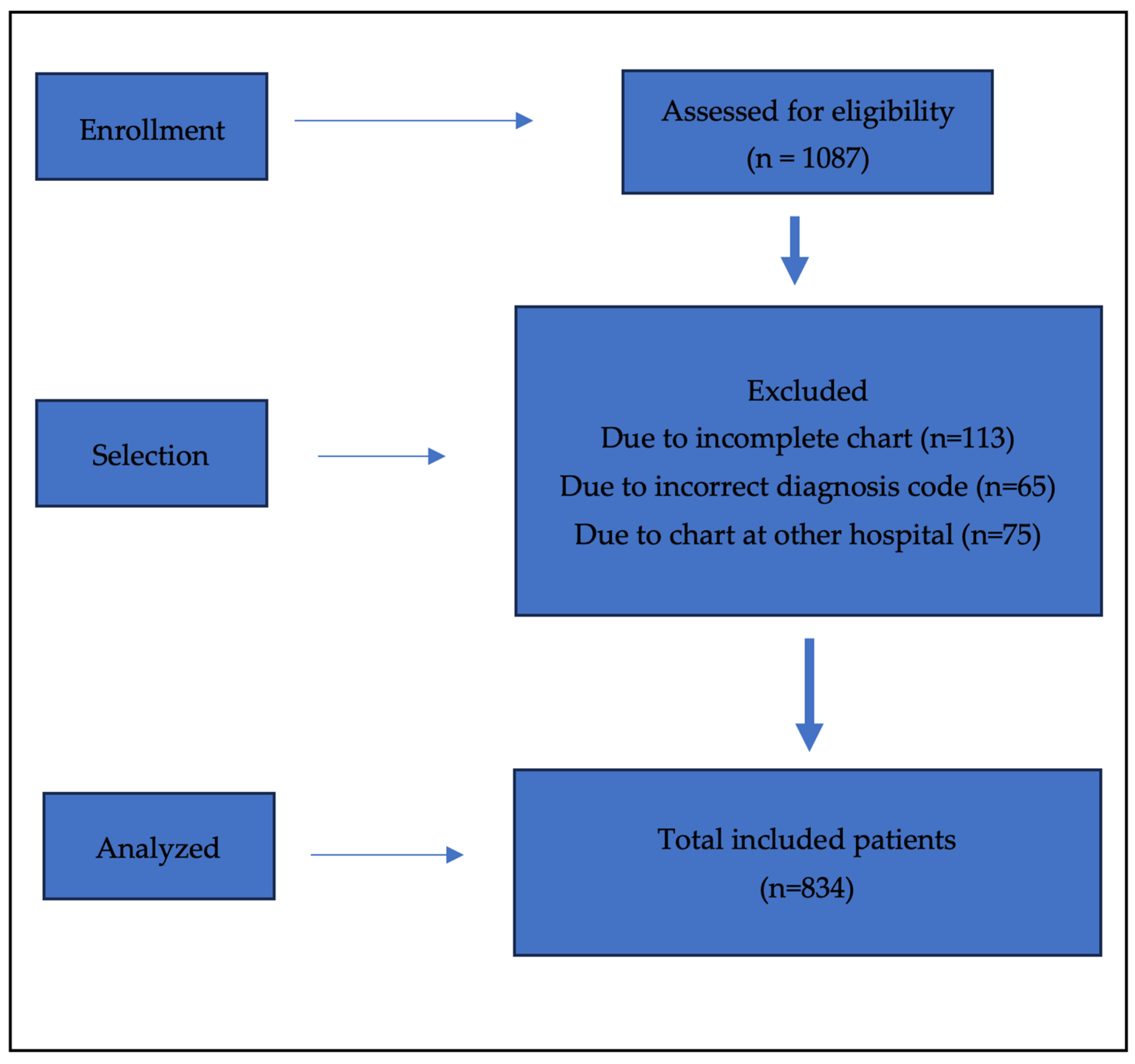
We implemented a conservative power estimation to detect a difference of 10% in CDI rates between corticosteroid users vs. non-users or between PPI users vs. non-users. Prior studies have associated PPI use with a more than 50% increase in CDI risk [10]. Our final analysis was restricted to IBD patients (n = 834) who had a complete dataset for age, IBD status, PPI use status, CDI status, and relevant confounders (Figure 1). With this sample size and ~9% prevalence in CDI rates, we estimated that we would be able to detect a 10% difference in the prevalence of CDI across groups defined by PPI or corticosteroid use, with a power of >80% and a 5% type-1 error rate.
Figure 1. CONSORT graphic of patient inclusion.

2.4. Definition

The primary outcome of interest was a laboratory-confirmed diagnosis of CDI in an IBD patient between January 2017 to April 2021. Exposure of interest was documentation of PPI. We estimated the duration of PPI use as the interval (in months) between the initial prescription date through the time of data collection. Duration of PPI use was stratified as PPI use duration < 30 months, PPI use duration ≥ 30 months, and PPI non-users. The segregation was directed by the estimation of the average PPI use duration in our patient population (i.e., average of about 30 months). All the tests for CDI were based on PCR and toxin assay, with most samples collected at the time of ongoing symptoms of diarrhea.

2.5. Statistical Analyses

All analyses were performed with STATA statistical software, release 17 (StataCorp, Austin, TX, USA). The odds ratio between CDI risk in PPI users and non-users was estimated using univariate and multivariate logistic regression models. Using a stratified analysis, we divided patients into three mutually exclusive groups of PPI use duration < 30 months, PPI use duration ≥ 30 months, and PPI non-users to investigate the relationship between PPI duration and CDI risk. Effect modification was assessed by the inclusion of interaction terms for potential effect modifiers. Statistical significance was defined as p < 0.05 for main effects and p < 0.1 for interactive effects. Variables with p-values < 0.1 were included in the final multivariate models. This included age, gender, race, and the prescribed therapeutic regimens. In the final models, statistical significance was defined as p < 0.05. Effect modification was assessed using interactive models, with significance defined as p < 0.1. LOWESS plots and error bars were interactive effects.

3. Results

3.1. Background Characteristics

The mean age of study participants was 47 years, ranging from 17 to 94 years, and approximately 60% of them were female. Our final analysis was restricted to a total of 834 IBD patients. The prevalence of CD and UC was 57% and 43%, respectively. About 9% of the IBD patients had at least one episode of CDI during the period of observation. PPI was prescribed to nearly 42% of study subjects, and the average duration of PPI use was estimated to be 30 months (ranging from 0.1 to 255 months). Other commonly prescribed therapeutic agents were biologics (53%), corticosteroids (42%), antibiotics (41%), and immunomodulators (33%) (Table 1).
Table 1. Baseline study population characteristics.

3.2. PPI Use and Risk of CDI

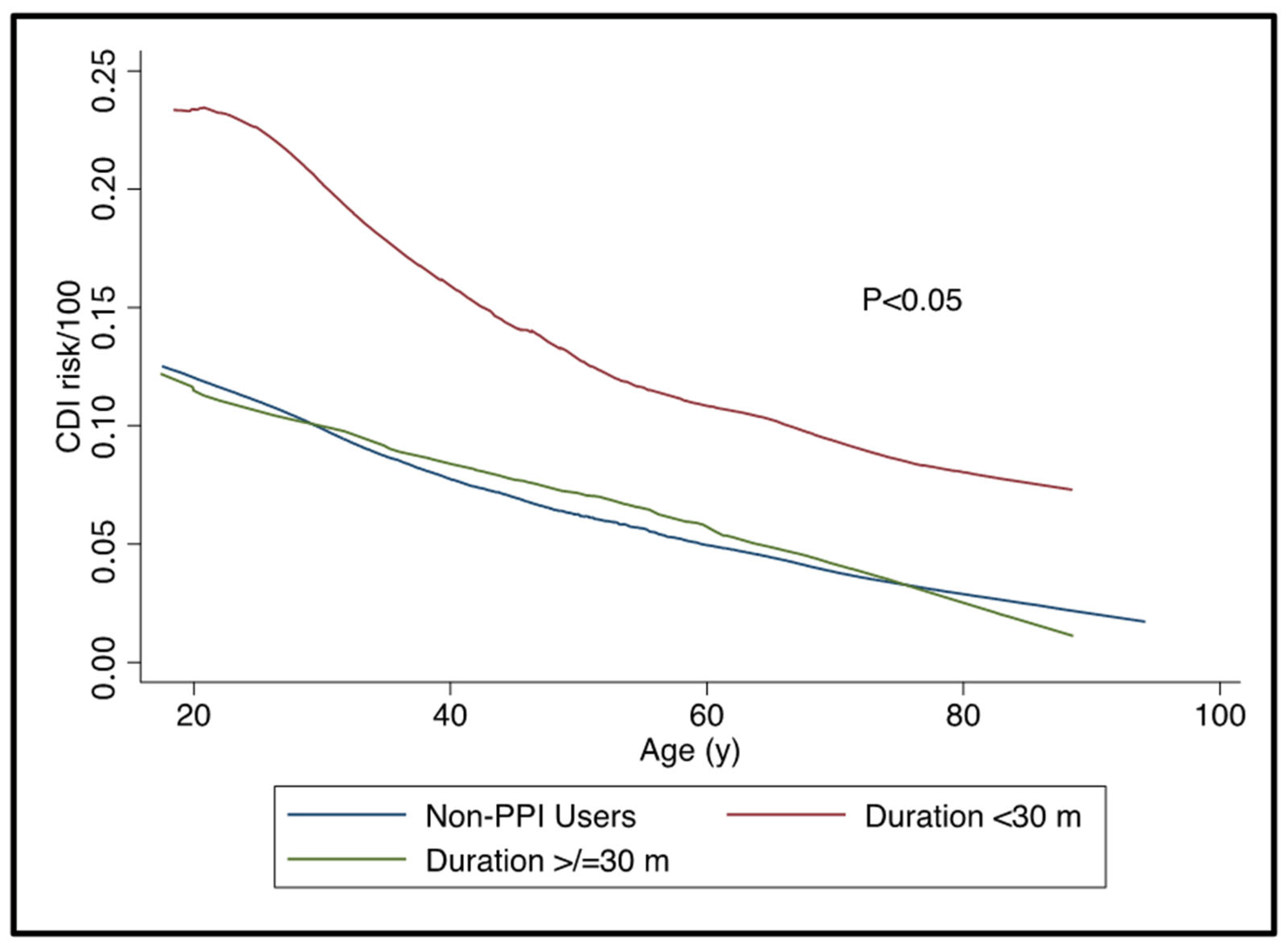
In the unadjusted model, the risk of CDI was increased by about 58% among patients who had a prescription for PPI (OR = 1.58 [0.98–2.53], p = 0.06; Table 2). After controlling for potential confounders, PPI use was associated with a more than 9-fold increase in the risk of CDI (9.23 [2.11–40.34] p = 0.003; Table 3). Only patients who used PPI for less than 30 months had a higher risk of CDI, according to the stratified analysis (Table 3) (OR = 2.10 [1.16–3.38] p = 0.014). However, no increase in CDI risk was seen with continuous usage (≥30 months) (OR = 0.74 [0.29, 1.83] p = 0.510). All age groups showed the same pattern of correlation (Figure 2).
Table 2. Unadjusted associations between Clostridioides difficile infection and commonly prescribed antacids and therapeutic agents.
Table 3. Association of Clostridioides difficile infection risk with proton pump inhibitor use in patients with inflammatory bowel disease.
Figure 2. Age-associated risk of Clostridioides difficile infection stratified by duration of proton pump inhibitor use among patients with inflammatory bowel disease. CDI: Clostridioides difficile infection; PPI: Proton Pump Inhibitor.

3.3. Corticosteroids, Biologics, and Immunomodulator Use and Risk of CDI

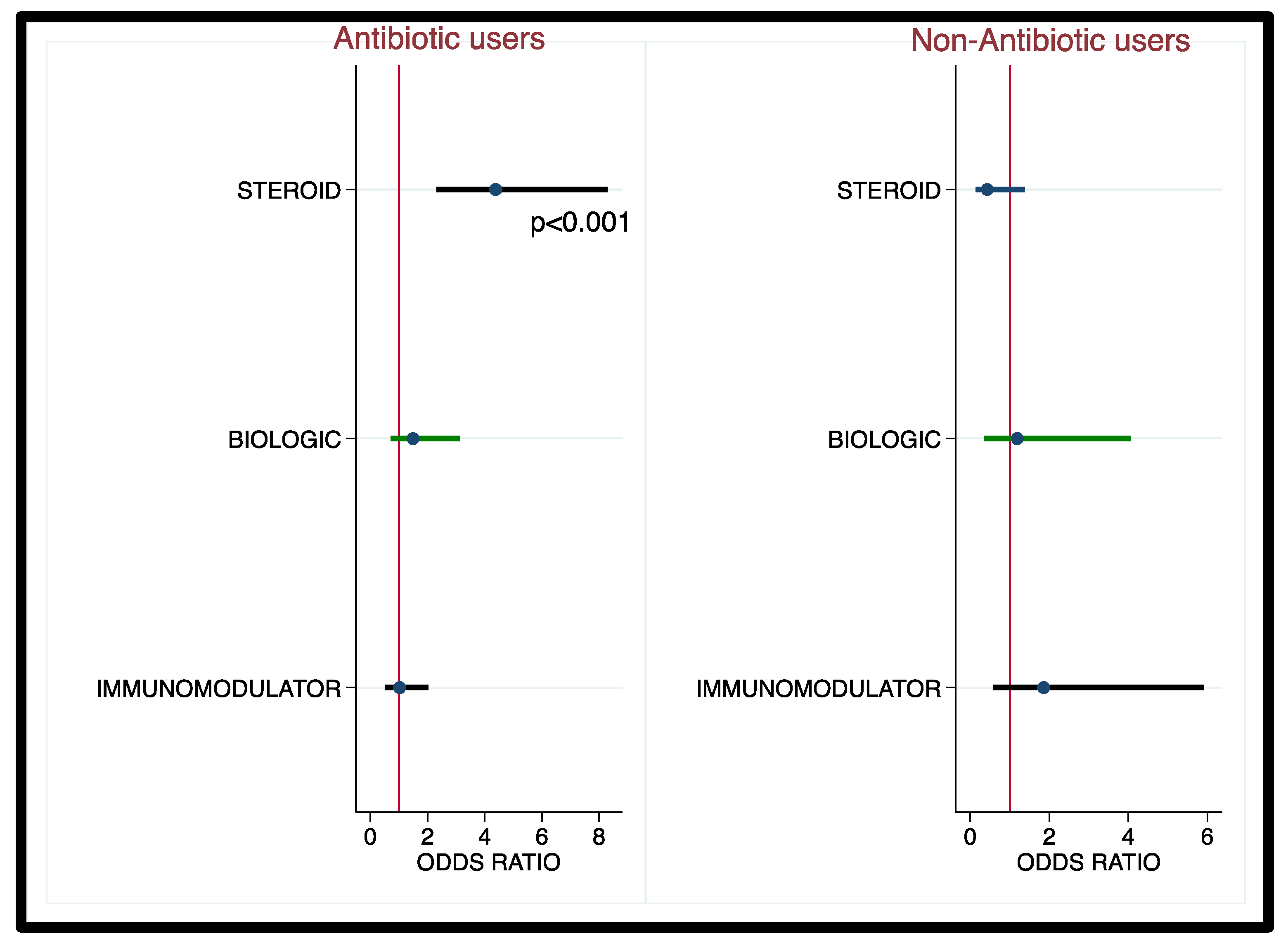
The use of biologics, immunomodulators, and corticosteroids was associated with a higher prevalence of CDI in univariate models. However, only corticosteroid users (p = 0.007) and biologic users (p = 0.06) had a significantly higher incidence of CDI after controlling for confounders; individuals who took immunomodulators did not. In all patients, corticosteroid use was associated with more than a 2-fold increased risk of CDI (Table 3). We observed a statistically significant interaction between steroid and antibiotic use in determining CDI risk (p < 0.01). Among antibiotic users, steroid use was associated with a nearly 4-fold increase in CDI (p = 0.001, Figure 3) (Table 4). Corticosteroid use was linked to an 88% decrease in CDI among non-antibiotic users (p = 0.055). CDI risk was only marginally increased in biological users, whereas immunomodulator use was not significantly associated with acquiring CDI. We also compared different variables in patients with CDI to those without and noted a significantly increased association of CDI in patients who had received antibiotics or in those patients on immunomodulators or biologic therapy (Table 5).
Figure 3. Use of immunosuppressive therapy and incidence of developing Clostridioides difficile infection in patients with inflammatory bowel disease.
Table 4. Associations between steroid use and risk of Clostridioides difficile infection among patients with inflammatory bowel disease, stratified by antibiotic use.
Table 5. Comparison of variables in those with and without CDI.

4. Discussion

Our study is the single largest study in the United States that evaluates the association between PPI use and risk of CDI in IBD patients. It is also the first study conducted using primary data collected from a tertiary referral center. The association between PPI use and CDI was first suggested by Yip et al. in 2001 [11]. Since then, there have been numerous observational studies, systematic reviews, and meta-analyses that have reported similar findings with varying degrees of increments in CDI risk with PPI use [3,4,12,13]. Even though there is some scientific literature suggesting an association between PPI use and CDI, several studies have been unsuccessful in establishing a clear association between the two [14,15,16]. It is important to be cognizant that IBD patients have alterations in their gut physiology that affect the immunological and microbiome of their bowels. There have been variations in the reported risk factors for CDI in IBD patients, with the common culprits being recent non-steroidal anti-inflammatory agent use, hospitalizations, and emergency department visits [17,18]. There is uncertainty in the existing literature regarding the role of PPI in increasing the risk of CDI, with some studies finding positive associations while others failing to do so [6,19,20,21]. About 42% of the patients in our study had used PPI, and therefore, the impact of PPI use in our study population has clinical significance. In our retrospective study of 834 IBD patients, we found that PPI use in this population was associated with a nine-fold increase in the risk of developing CDI. This has been postulated to be due to the alteration of the gut microbiome caused but the acid suppressive effect of PPIs. PPIs in our cohort were prescribed for various indications, including dyspepsia, reflux symptoms, esophagitis, and gastritis. However, detailed indication data were not available, preventing assessment of confounding by indication, such as use for ulcer prophylaxis during steroid therapy.
Another interesting finding of our study was that the risk of CDI increased only in patients who used PPI for less than 30 months, while those with a higher duration of use did not show an increased risk of infection. The reason for this effect remains unclear, although we theorize that the gut microbiome perhaps acclimatizes to the long-term use of PPI therapy and returns from a state of dysbiosis to normobiosis. This could potentially decrease the risk of acquiring CDI. There is a dearth of literature focusing on the risk of CDI when compared with the duration of PPI use. Despite this, the consensus is that prolonged PPI use alters the gut microbiome and continues to portend a risk of acquiring CDI [4,13,22,23]. Our findings are in contradiction to this generally established idea, which may be an area that merits further study. We did, however run several sensitivity analyses, but there was no evidence of overfitting or collinearity. However, after excluding patients who had been on PPI for more than 5 years, the OR changed to 2.86 (1.43–5.74; p of 0.003). We also noted that the lack of increase in CDI with PPI use greater than 30 months was consistent across all age groups, including the elderly. This finding is also in contradiction to most of the existing literature, which states that the risk of CDI increases in the elderly population [3,24]. It is unclear whether both these unique patterns of association are related to IBD or other factors. The 30-month threshold for prolonged PPI use was based on the mean exposure duration in our cohort rather than receiver operating characteristic (ROC) analysis. The apparent attenuation of CDI risk with long-term (≥30 months) PPI use contrasts with prior literature and should be interpreted with caution. Several alternative explanations may underlie this observation, including survivor bias, discontinuation of PPIs among patients who previously developed CDI, or potential misclassification of exposure duration in administrative data. Unfortunately, our dataset did not include sufficient longitudinal detail to examine these factors directly.
In addition, our study analyzed the risk of CDI in IBD patients who were treated with various therapies, which include corticosteroids, biologics, and immunomodulators. Commonly used corticosteroid preparations, such as budesonide and prednisone, were mainly employed in about 42% of the patients in our study for the treatment of acute flares of IBD. Multivariate analysis models revealed a significantly increased incidence of CDI in patients on corticosteroids. Further subgroup analysis of these corticosteroid users, into antibiotic users and non-users, revealed that the risk of CDI increased by nearly 4 times with corticosteroid use in patients who also used antibiotics. Nearly 41% of the patients in our cohort had used antibiotics during the study period. On the contrary, corticosteroid use in the absence of antibiotic use was associated with a decreased risk of developing CDI. Hence, we conclude that the increased CDI incidence in corticosteroid users was contributed to by the antibiotic use. Our study is the only one so far that analyzed CDI incidence in antibiotic users and non-users separately and found this unique association of a four-fold increased risk of CDI in patients using both antibiotics and corticosteroids. Steroid use was recorded as a dichotomous variable without details on cumulative dose, duration, or formulation (systemic vs. topical such as budesonide), precluding more granular analysis, which we recognize as a limitation of the study. We acknowledge that the risk of CDI may vary across specific medication classes and regimens, such as between different biologics (e.g., infliximab versus vedolizumab) or immunomodulators. However, due to the relatively low incidence of CDI in our cohort, further stratification by individual drug type or timing of exposure would have resulted in small subgroup sizes and unstable estimates, precluding meaningful statistical modeling. In addition, as several patients were receiving multiple therapeutic agents concurrently, isolating the effect of a single regimen was not feasible. We have noted this limitation and highlighted it as an area for future investigation in larger, multicenter datasets.
Additionally, while analyzing the effects of other immunosuppressive therapies, we found that biologics only marginally increased the risk of CDI, while immunomodulators showed no significant increase in the risk of infection. There is a lack of consensus on the role of these agents in the pre-existing literature, with some studies implicating immunomodulators and biologics as independent risk factors for CDI, while others failed to find a significant association and even argue a protective effect against CDI [1,19,20,22,25,26]. There are certain limitations to our study. It is a retrospective observational study that relies on data collected from historical visits; inconsistencies may be present due to incomplete or inaccurate information in the patient records. Even though there were repeated quality checks and efforts to ensure uniformity in data collection, discrepancies may arise based on individual data collectors. Given that our study is a retrospective review, it limits the data available to analyze the relation between CDI and the timing of treatments such as steroids, immunomodulators and biologics as well as the clinical situation of patients such as the severity of inflammation and disease activity. Since our study was focused on the risk of developing CDI, unfortunately it lacks the details of information on CDI treatment regimens (vancomycin, fidaxomicin, metronidazole) and outcomes such as recurrence, colectomy, intensive care unit (ICU) admission, or mortality. Fecal microbiota transplantation (FMT) was not available at our center during the study period, and therefore none of the patients in this cohort received FMT for recurrent CDI. This limitation may have influenced recurrence outcomes, as current guidelines recommend FMT for patients with multiple CDI recurrences, and its use has been associated with improved sustained response rates. The absence of FMT availability may thus partially account for the recurrence patterns observed in our study. Our study has numerous strengths, which include an in-depth chart review and data collection about various medications used in our patient population. This enabled the analysis of the risk of CDI depending on the duration of use of certain medications such as PPIs. Our study also provides a detailed analysis of the risk factors of CDI in patients with IBD.

5. Conclusions

Our study implies that PPI use significantly increases the risk of CDI in IBD patients. The study also suggests that corticosteroid use, along with use of antibiotics, was independently associated with an increased risk of developing CDI in IBD patients. Further studies are needed to investigate how this process occurs, especially in relation to changes in gut microbiome among users of various medications, especially PPIs. The introduction of newer forms of acid suppressive medications, potassium-competitive acid blockers, like Vonoprazan, may perhaps have a more acid suppressive effect and cause a further increase in risk of CDI [27]. Future studies are needed to further elaborate on the effects of this new class of drugs.
This article is a revised and expanded version of a paper entitled ‘Use of Proton Pump Inhibitors in Patients with Inflammatory Bowel Diseases and its Association with Clostridioides Difficile Infection’ which was presented at the Digestive Disease Week Conference in May 2023 in Chicago, USA.

Author Contributions

Conceptualization—Y.A.G. and H.K.C.; Methodology/Software—M.A.B., Validation—Y.A.G. and M.A.B., Formal analysis—M.G. and M.A.B., Investigation—E.B., K.L., M.G. and H.K.C., Data Curation—M.G., E.B. and K.L., Writing—Original Draft—M.G. and E.R., Writing—Review and Editing—Y.A.G., M.G. and H.K.C., Visualization—M.G. and E.R., Supervision—Y.A.G. and M.B., Project administration—Y.A.G., M.B. and M.G. All authors have read and agreed to the published version of the manuscript.

Funding

This research received no external funding.

Institutional Review Board Statement

The study was conducted in accordance with the Declaration of Helsinki, and approved by the Institutional Review Board of University of Missouri Institutional Review Board with protocol number #2013229 (19 October 2022).

Data Availability Statement

Data is unavailable due to privacy or ethical restrictions.

Acknowledgments

The authors have reviewed and edited the output and take full responsibility for the content of this publication.

Conflicts of Interest

Author Yezaz Ghouri received a speaker honorarium from the company Celltrion; Matthew Bechtold received a speaker honorarium from the company Nestle Nutrition Institute; Author Matthew Bechtold is a consultant for the company Medtrition.

References

  1. Balram, B.; Battat, R.; Al-Khoury, A.; D’Aoust, J.; Afif, W.; Bitton, A.; Lakatos, P.L.; Bessissow, T. Risk Factors Associated with Clostridium difficile Infection in Inflammatory Bowel Disease: A Systematic Review and Meta-Analysis. J. Crohn’s Colitis 2019, 13, 27–38. [Google Scholar] [CrossRef] [PubMed]
  2. Issa, M.; Ananthakrishnan, A.N.; Binion, D.G. Clostridium difficile and inflammatory bowel disease. Inflamm. Bowel Dis. 2008, 14, 1432–1442. [Google Scholar] [CrossRef]
  3. Deshpande, A.; Pant, C.; Pasupuleti, V.; Rolston, D.D.; Jain, A.; Deshpande, N.; Thota, P.; Sferra, T.J.; Hernandez, A.V. Association between proton pump inhibitor therapy and Clostridium difficile infection in a meta-analysis. Clin. Gastroenterol. Hepatol. 2012, 10, 225–233. [Google Scholar] [CrossRef] [PubMed]
  4. Janarthanan, S.; Ditah, I.; Adler, D.G.; Ehrinpreis, M.N. Clostridium difficile-associated diarrhea and proton pump inhibitor therapy: A meta-analysis. Am. J. Gastroenterol. 2012, 107, 1001–1010. [Google Scholar] [CrossRef]
  5. Pant, C.; Madonia, P.; Minocha, A. Does PPI therapy predispose to Clostridium difficile infection? Nat. Rev. Gastroenterol. Hepatol. 2009, 6, 555–557. [Google Scholar] [CrossRef]
  6. Ramos-Martínez, A.; Ortiz-Balbuena, J.; Curto-García, I.; Asensio-Vegas, Á.; Martínez-Ruiz, R.; Múñez-Rubio, E.; Cantero-Caballero, M.; Sánchez-Romero, I.; González-Partida, I.; Vera-Mendoza, M.I. Risk factors for Clostridium difficile diarrhea in patients with inflammatory bowel disease. Rev. Esp. Enferm. Dig. 2015, 107, 4–8. [Google Scholar] [PubMed]
  7. Singh, N.; Nugent, Z.; Singh, H.; Shaffer, S.R.; Bernstein, C.N. Proton Pump Inhibitor Use Before and After a Diagnosis of Inflammatory Bowel Disease. Inflamm. Bowel Diseases 2023, 29, 1871–1878. [Google Scholar] [CrossRef]
  8. Kariv, R.; Navaneethan, U.; Venkatesh, P.G.K.; Lopez, R.; Shen, B. Impact of Clostridium difficile infection in patients with ulcerative colitis. J. Crohn’s Colitis 2011, 5, 34–40. [Google Scholar] [CrossRef]
  9. Binion, D. Clostridium difficile Infection and Inflammatory Bowel Disease. Gastroenterol. Hepatol. 2016, 12, 334–337. [Google Scholar]
  10. Trifan, A.; Stanciu, C.; Girleanu, I.; Stoica, O.C.; Singeap, A.M.; Maxim, R.; Chiriac, S.A.; Ciobica, A.; Boiculese, L. Proton pump inhibitors therapy and risk of Clostridium difficile infection: Systematic review and meta-analysis. World J. Gastroenterol. 2017, 23, 6500–6515. [Google Scholar] [CrossRef] [PubMed]
  11. Yip, C.; Loeb, M.; Salama, S.; Moss, L.; Olde, J. Quinolone use as a risk factor for nosocomial Clostridium difficile-associated diarrhea. Infect. Control. Hosp. Epidemiol. 2001, 22, 572–575. [Google Scholar] [CrossRef]
  12. Leonard, J.; Marshall, J.K.; Moayyedi, P. Systematic review of the risk of enteric infection in patients taking acid suppression. Am. J. Gastroenterol. 2007, 102, 2047–2057. [Google Scholar] [CrossRef]
  13. Kwok, C.S.; Arthur, A.K.; Anibueze, C.I.; Singh, S.; Cavallazzi, R.; Loke, Y.K. Risk of Clostridium difficile infection with acid suppressing drugs and antibiotics: Meta-analysis. Am. J. Gastroenterol. 2012, 107, 1011–1019. [Google Scholar] [CrossRef]
  14. Beaulieu, M.; Williamson, D.; Pichette, G.; Lachaine, J. Risk of Clostridium difficile-associated disease among patients receiving proton-pump inhibitors in a Quebec medical intensive care unit. Infect. Control. Hosp. Epidemiol. 2007, 28, 1305–1307. [Google Scholar] [CrossRef] [PubMed]
  15. McFarland, L.V. Update on the changing epidemiology of Clostridium difficile-associated disease. Nat. Clin. Pract. Gastroenterol. Hepatol. 2008, 5, 40–48. [Google Scholar] [CrossRef] [PubMed]
  16. Shah, S.; Lewis, A.; Leopold, D.; Dunstan, F.; Woodhouse, K. Gastric acid suppression does not promote clostridial diarrhoea in the elderly. QJM Int. J. Med. 2000, 93, 175–181. [Google Scholar] [CrossRef]
  17. Micic, D.; Yarur, A.; Gonsalves, A.; Rao, V.L.; Broadaway, S.; Cohen, R.; Dalal, S.; Gaetano, J.N.; Glick, L.R.; Hirsch, A.; et al. Risk Factors for Clostridium difficile Isolation in Inflammatory Bowel Disease: A Prospective Study. Dig. Dis. Sci. 2018, 63, 1016–1024. [Google Scholar] [CrossRef]
  18. Regnault, H.; Bourrier, A.; Lalande, V.; Nion-Larmurier, I.; Sokol, H.; Seksik, P.; Barbut, F.; Cosnes, J.; Beaugerie, L. Prevalence and risk factors of Clostridium difficile infection in patients hospitalized for flare of inflammatory bowel disease: A retrospective assessment. Dig. Liver Dis. 2014, 46, 1086–1092. [Google Scholar] [CrossRef]
  19. Zhang, T.; Lin, Q.Y.; Fei, J.X.; Zhang, Y.; Lin, M.Y.; Jiang, S.H.; Wang, P.; Chen, Y. Clostridium Difficile Infection Worsen Outcome of Hospitalized Patients with Inflammatory Bowel Disease. Sci. Rep. 2016, 6, 29791. [Google Scholar] [CrossRef] [PubMed]
  20. Stoica, O.; Trifan, A.; Cojocariu, C.; Gîrleanu, I.; Maxim, R.; Stanciu, M.C. Incidence and risk factors of Clostridium difficile infection in patients with inflammatory bowel disease. Med. Surg. J. 2015, 119, 81–86. [Google Scholar]
  21. Gu, Y.B.; Zhang, M.C.; Sun, J.; Lv, K.Z.; Zhong, J. Risk factors and clinical outcome of Clostridium difficile infection in patients with IBD: A single-center retrospective study of 260 cases in China. J. Dig. Dis. 2017, 18, 207–211. [Google Scholar] [CrossRef]
  22. Lehault, W.B.; Hughes, D.M. Review of the Long-Term Effects of Proton Pump Inhibitors. Fed. Pract. 2017, 34, 19–23. [Google Scholar] [PubMed]
  23. Tawam, D.; Baladi, M.; Jungsuwadee, P.; Earl, G.; Han, J. The Positive Association between Proton Pump Inhibitors and Clostridium Difficile Infection. Innov. Pharm. 2021, 12, 10. [Google Scholar] [CrossRef] [PubMed]
  24. Dalal, R.S.; Allegretti, J.R. Diagnosis and management of Clostridioides difficile infection in patients with inflammatory bowel disease. Curr. Opin. Gastroenterol. 2021, 37, 336–343. [Google Scholar] [CrossRef] [PubMed]
  25. Rodemann, J.F.; Dubberke, E.R.; Reske, K.A.; Seo, D.H.; Stone, C.D. Incidence of Clostridium difficile infection in inflammatory bowel disease. Clin. Gastroenterol. Hepatol. 2007, 5, 339–344. [Google Scholar] [CrossRef]
  26. Navaneethan, U.; Venkatesh, P.G.; Shen, B. Clostridium difficile infection and inflammatory bowel disease: Understanding the evolving relationship. World J. Gastroenterol. 2010, 16, 4892–4904. [Google Scholar] [CrossRef]
  27. He, H.S.; Li, B.Y.; Chen, Q.T.; Song, C.Y.; Shi, J.; Shi, B. Comparison of the Use of Vonoprazan and Proton Pump Inhibitors for the Treatment of Peptic Ulcers Resulting from Endoscopic Submucosal Dissection: A Systematic Review and Meta-Analysis. Med. Sci. Monit. Int. Med. J. Exp. Clin. Res. 2019, 25, 1169–1176. [Google Scholar] [CrossRef]
Disclaimer/Publisher’s Note: The statements, opinions and data contained in all publications are solely those of the individual author(s) and contributor(s) and not of MDPI and/or the editor(s). MDPI and/or the editor(s) disclaim responsibility for any injury to people or property resulting from any ideas, methods, instructions or products referred to in the content.

Article Metrics

Citations

Article Access Statistics

Multiple requests from the same IP address are counted as one view.