
Review

Implications of Endothelial Cell-Mediated Dysfunctions in Vasomotor Tone Regulation
by
Carolina Mangana
1,2,
Margarida Lorigo
1,2 and
Elisa Cairrao
1,2,*
1
Health Sciences Research Centre (CICS-UBI), University of Beira Interior, 6200-506 Covilhã, Portugal
2
Department of Medical Sciences, Faculty of Health Sciences (FCS-UBI), University of Beira Interior, 6200-506 Covilhã, Portugal
*
Author to whom correspondence should be addressed.
Biologics 2021, 1(2), 231-251; https://doi.org/10.3390/biologics1020015

Submission received: 14 July 2021 / Revised: 3 September 2021 / Accepted: 6 September 2021 / Published: 8 September 2021
(This article belongs to the Section Cytokines and Allied Mediators)

Abstract

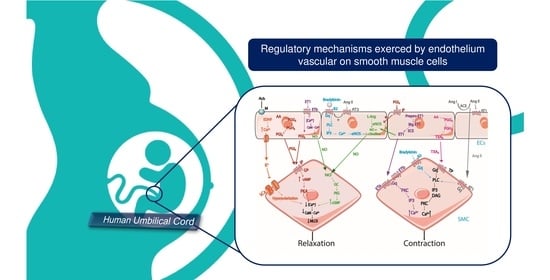
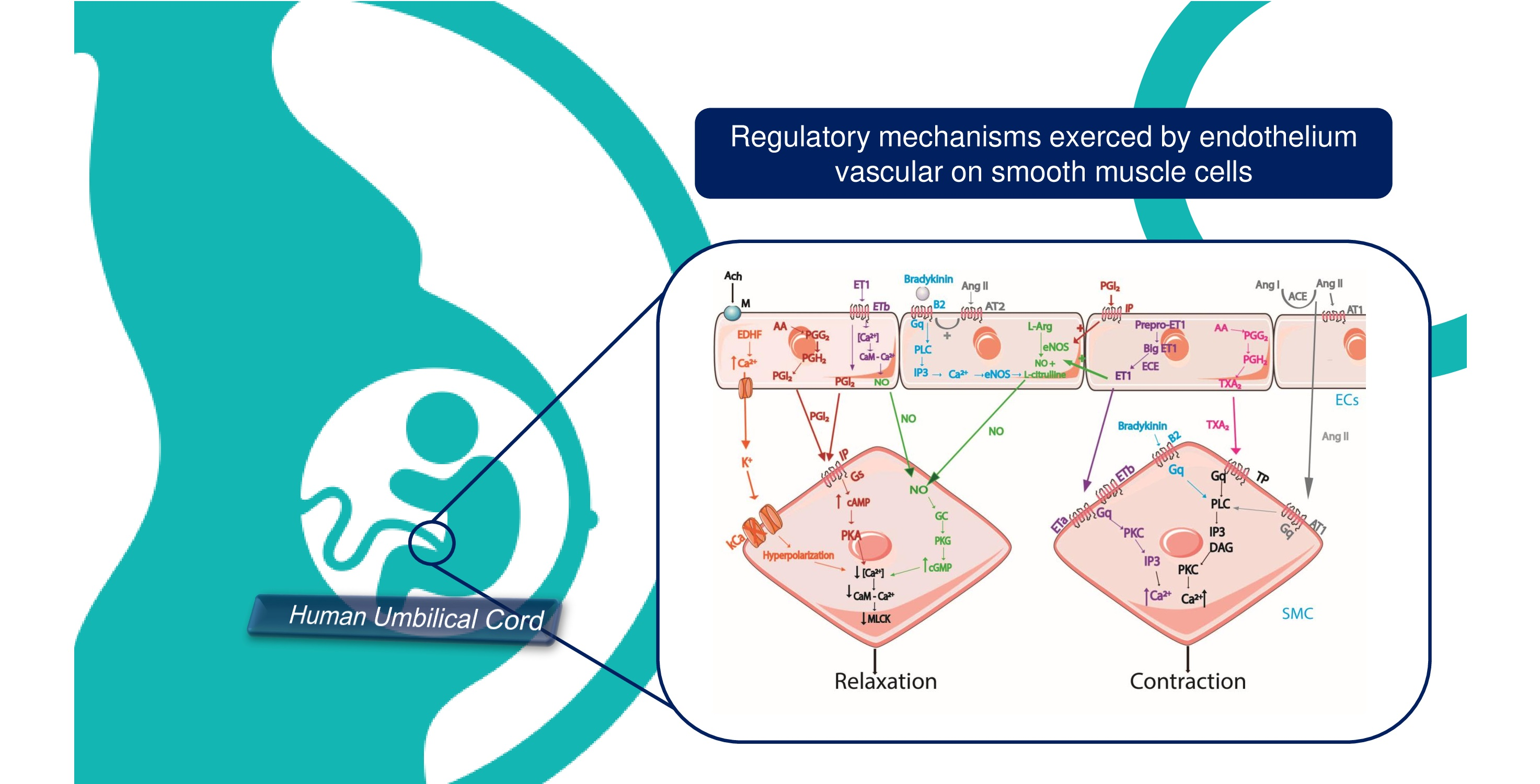
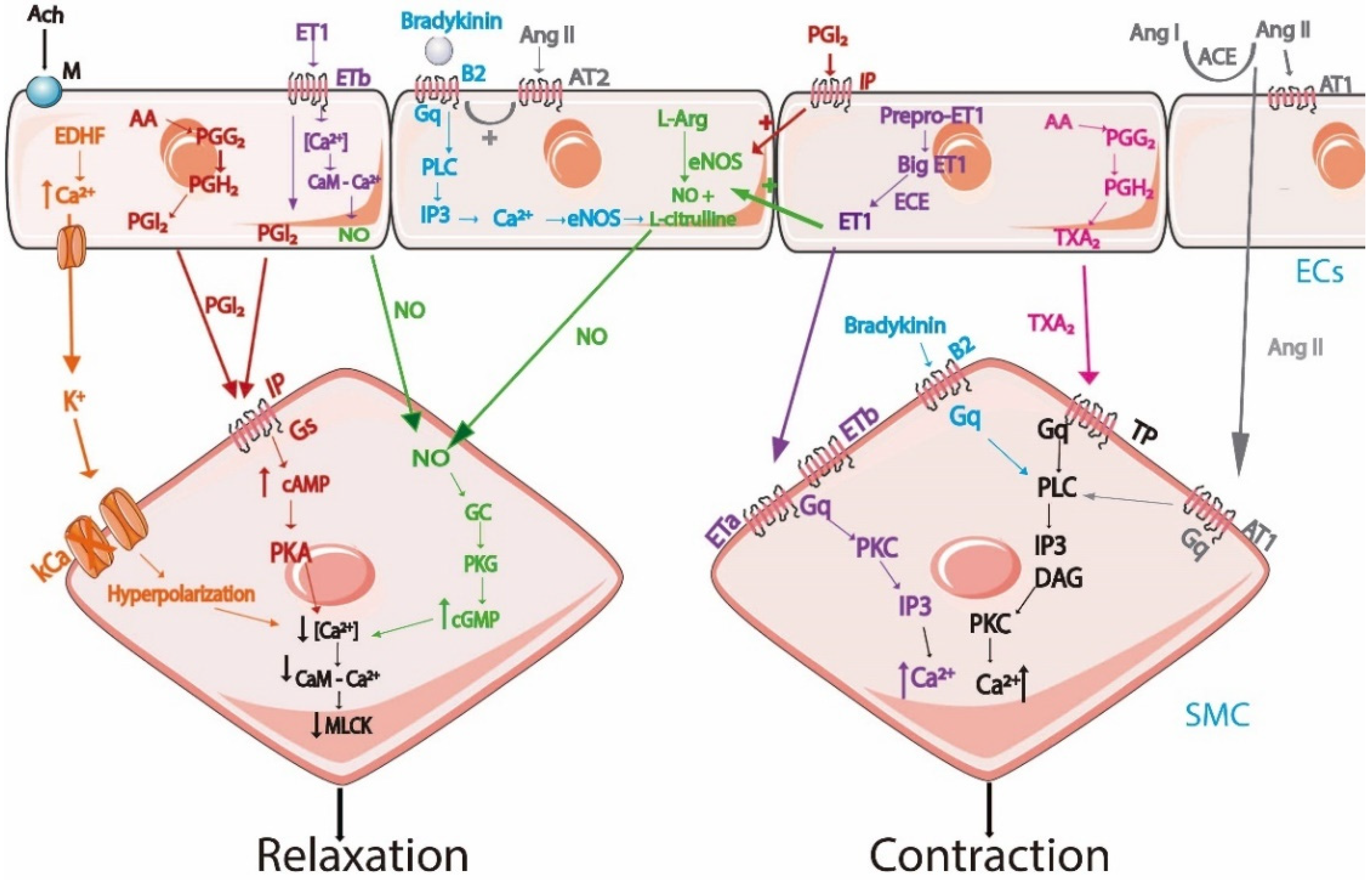
Cardiovascular diseases (CVD) constitute the major cause of death worldwide and show a higher prevalence in the adult population. The human umbilical cord consistsof two arteries and one vein, both composed of three tunics. The tunica intima, lined with endothelial cells, regulates vascular tone through the production/release of vasoregulatory substances. These substances can be vasoactive factors released by endothelial cells (ECs) that cause vasodilation (NO, PGI2, EDHF, and Bradykinin) or vasoconstriction (ET1, TXA2, and Ang II) depending on the cell type (ECs or SMC) that reacts to the stimulus. Vascular studies using ECs are important for the analysis of cardiovascular diseases since endothelial dysfunction is an important CVD risk factor. In this paper, we will address the morphological characteristics of the human umbilical cord and its component vessels. the constitution of the vascular endothelium, and the evolution of human umbilical cord-derived endothelial cells when isolated. Moreover, the role played by the endothelium in the vasomotor tone regulation, and how it may be associated with the existence of CVD, were discussed.
Keywords: endothelial cells; cardiovascular system; umbilical vein; umbilical artery; smooth muscle cells endothelial cells; cardiovascular system; umbilical vein; umbilical artery; smooth muscle cells
Graphical Abstract